
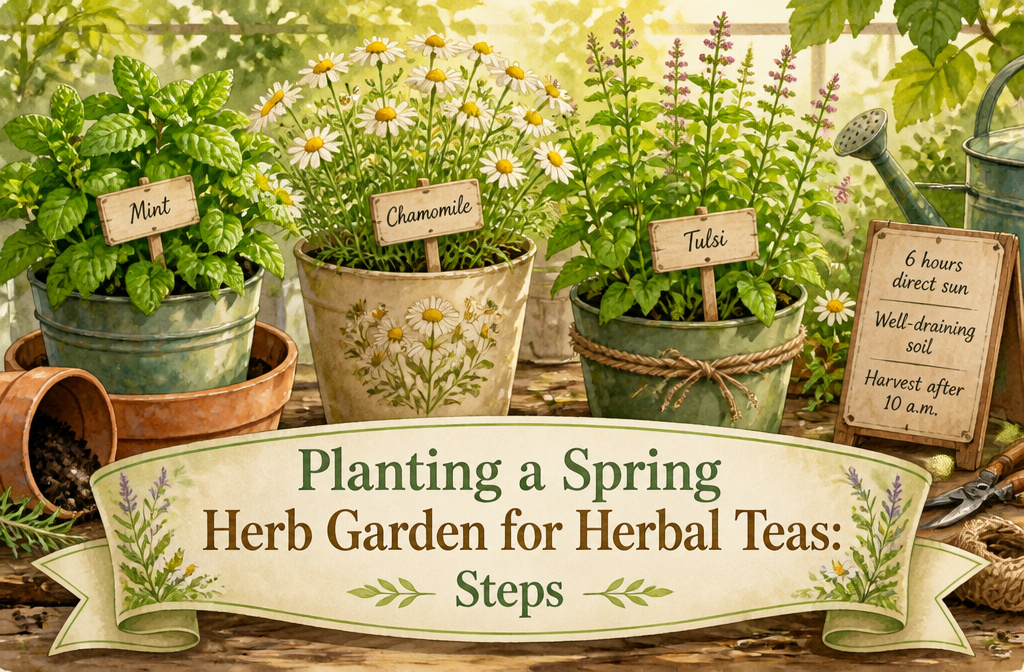
Planting a spring herb garden for herbal teas means timing your sowing to soil that actually drains and choosing plants that won’t overrun each other before summer.
Mint will take over an open bed by August if you don’t sink it in a contained pot, and chamomile harvested after 10 a.m. tastes flat because the sun has already driven off the oils.
Six hours of direct sun, a hole filled with water to check drainage, and keeping tulsi inside when frost threatens are the details that separate a usable harvest from a season of lessons.
1. Select a Location
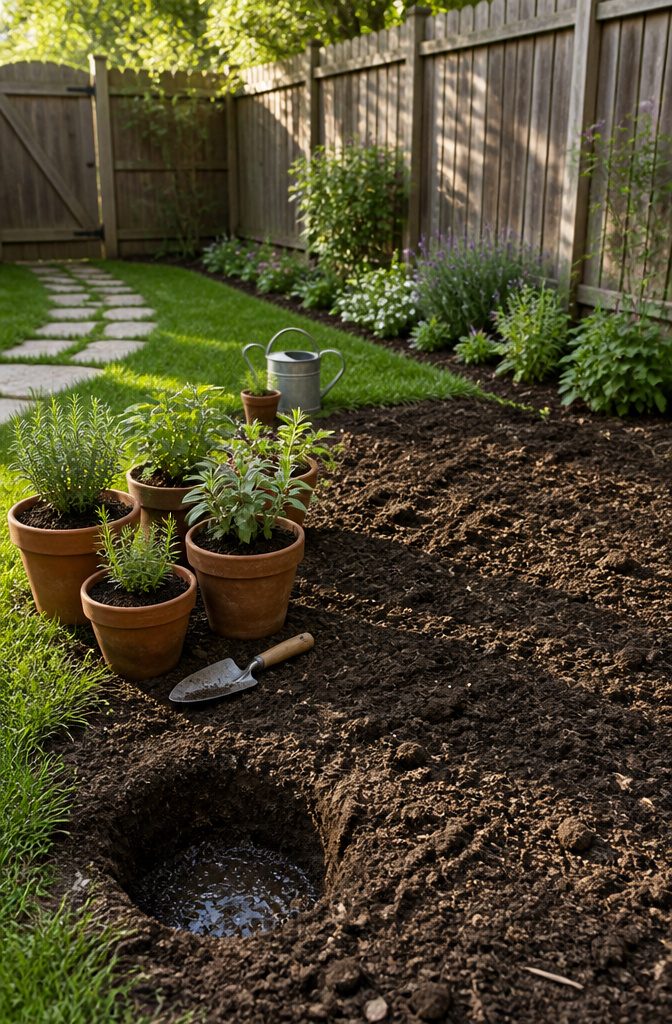
Most herbs for tea want six hours of direct sun each day and soil that drains well enough that water does not pool around the roots.
I check drainage by digging a hole about six inches deep, filling it with water, and watching how fast it disappears.
If it is still there after a couple of hours, that spot will hold too much moisture for lavender or rosemary, both of which prefer drier roots.
Containers solve this if your only growing space is a patio or balcony. A pot with drainage holes and a well-draining potting mix lets you control the soil rather than fighting what is already in the ground.
Mint especially belongs in its own container; it grows aggressively enough to crowd out anything planted nearby, and a pot keeps it where you want it.
Water runs through faster in containers, so you will need to check more often than you would for plants in the ground.
2. Choose Herbs to Grow
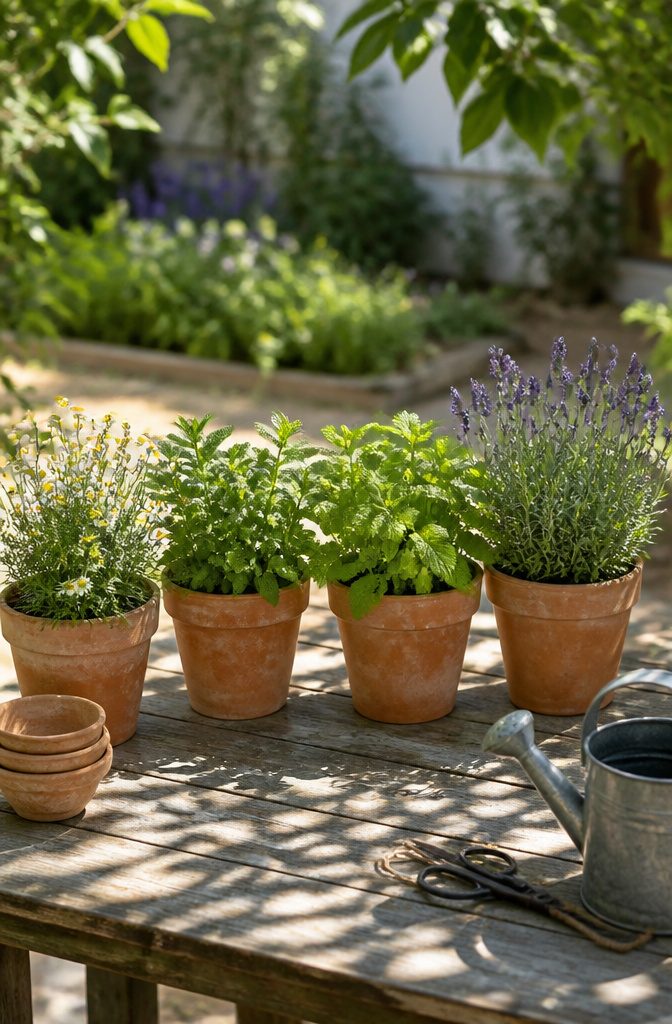
Chamomile (Matricaria recutita) was the first herb I grew for tea, mostly because the dried flowers from the store tasted like dusty hay and I figured fresh had to be better.
It does; the apple-like sweetness comes through clean and mild, and a cup before bed stills the kind of busy thinking that keeps you awake.
Peppermint (Mentha × piperita) is the opposite kind of calm, a digestive so reliable that I keep it in rotation after heavy meals. The menthol bite clears the head too, though it can bully quieter flavors in a blend.
Lemon balm (Melissa officinalis), another mint family member, carries a softer citrus note and pairs with chamomile for nerves or stomach trouble. Bees find it fast, so pots on my patio buzz by June.
Holy basil (Ocimum tenuiflorum), or tulsi, needs warmth to start, around 70 degrees to germinate, and the flavor is sweeter than the basil you’d put on pizza.
Anise hyssop (Agastache foeniculum) brings licorice and a faint peppermint coolness; it’s American-native and easy from seed.
Lavender (Lavandula angustifolia) in tea divides people, I think because they use too much, but a light hand gives a floral calm that works iced with lemon balm in July.
Bee balm (Monarda citriodora) grows tall, three to five feet, with pink flowers that pull in butterflies and hummingbirds, and the leaves steep into something lemon-herbed and bright.
Rosemary (Rosmarinus officinalis) in tea surprised me, savory and almost pine-like, good for mornings when you want alertness without caffeine. Stevia (Stevia rebaudiana) leaves are the sweetener I reach for instead of honey, one or two dropped in the pot.
Lemon verbena (Aloysia triphylla) is the most intensely lemon of the lot, a tender perennial that can hit six feet where it winters over, and it sharpens into its best flavor when the plant flowers.
Keep tulsi and verbena inside if frost threatens; both drop fast below freezing.
3. Plant Seeds or Starter Plants
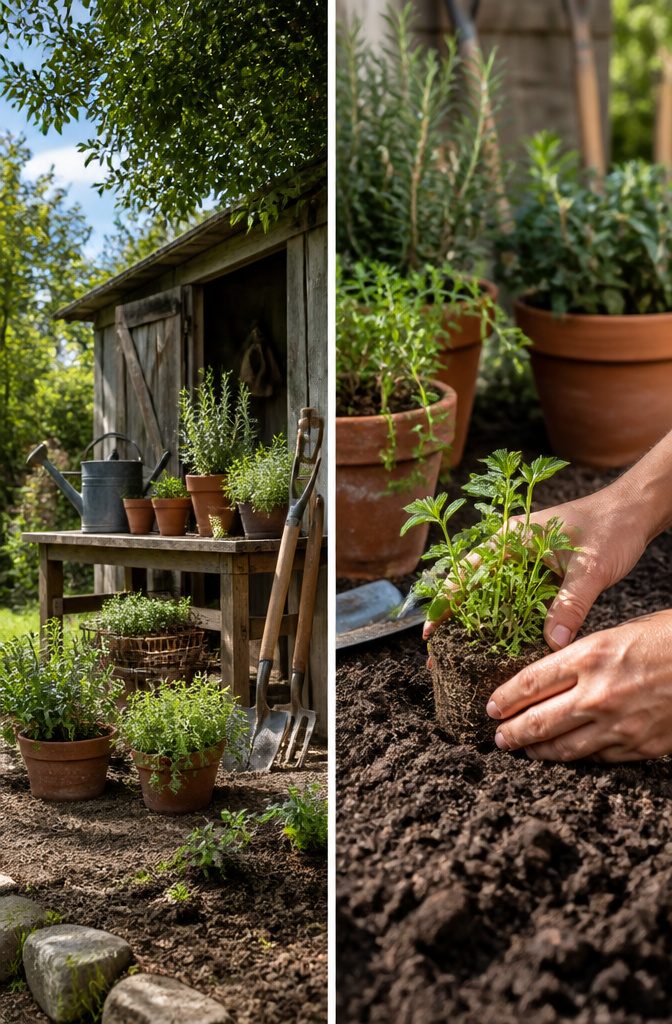
Direct sowing works for most tea herbs once nights stay above freezing. Basil, lemon balm, chamomile, and stevia all go in fine this way.
I wait until the last frost date passes, then scratch the soil loose and drop seed in. The back of each packet gives the depth and spacing; I follow it exactly rather than eyeballing.
Starter plants from a local nursery shave off those early weeks of uncertainty. Last spring I set out lemon balm seedlings that already had true leaves, and they took off while my direct-sown basil was still thinking about germinating.
Starter plants win if your season starts late or you’re antsy for the first harvest.
Holy basil is where I split the difference. Temperate tulsi, the kind that reseeds itself and tastes like bubble gum, germinates readily from direct sowing.
The clove-scented varieties, Amrita, Krishna, and Vana, need more warmth and patience than I usually have in April, so I buy those as starts or skip them.
Full sun and soil that holds moisture without staying soggy keeps either path from turning leggy and sad.
4. Water Regularly
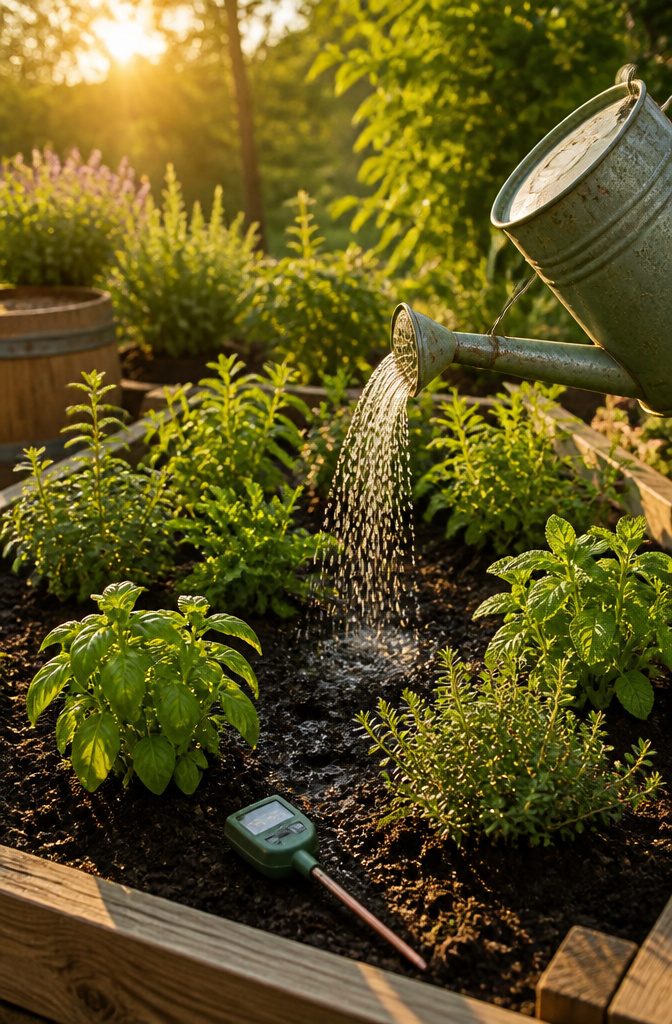
Young herb plants for tea need steady moisture while their roots are still shallow.
Check the soil 1 to 2 inches deep before you water, not just the surface. If it feels dry at that depth, it is time.
Basil wants more water than you might expect for tender leaf growth, while chamomile, once established, prefers lower, consistent moisture.
Mint is the thirstiest of the bunch, happiest in a self-watering pot or in soil that never fully dries. I learned the difference between overwatering and underwatering the hard way.
Leaves that yellow and droop with wet soil usually mean roots sitting in water; leaves that crinkle and go limp with dry soil mean the plant is parched. Basil shows the first faster than almost anything in the bed.
Grouping herbs with similar needs helps.
Keep the mint and basil where you can water heavily, chamomile where you can hold back. A moisture meter removes the guesswork if your finger is not calibrated yet, and it saves more plants than I care to admit.
5. Harvest at the Right Time
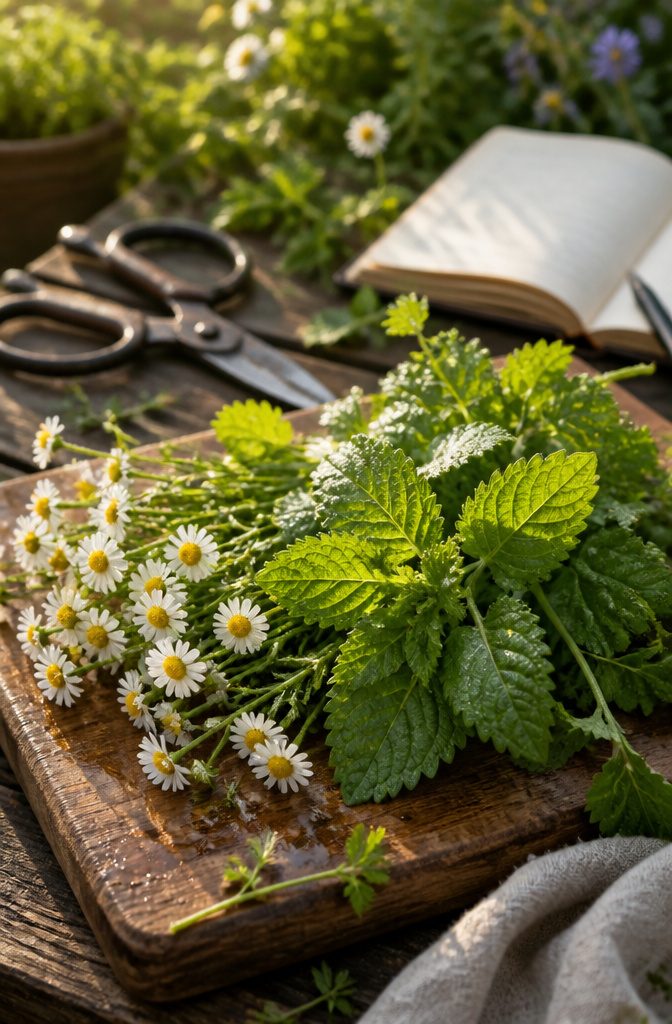
The best harvest window for tea herbs is early morning, after dew has dried but before the sun heats the leaves.
That narrow stretch of time matters because heat drives essential oils out of the plant, and wet foliage dilutes what remains while inviting mold.
I learned this the hard way with lemon balm two Junes ago.
I cut stems at noon on a bright Saturday, figuring dry leaves were dry leaves. The dried batch tasted flat, almost grassy, and I could not understand why until I read that oils peak in concentration just after dawn.
The difference showed up in chamomile too: flowers picked at eight in the morning carried a honeyed depth that ten o’clock blooms simply did not have.
Wait for a sunny day, then work fast.
Cut herbs before bloom when you can; oils run strongest then. Strip large leaves like lemon balm from their stalks for drying, but leave small needle-leaved herbs such as thyme and rosemary intact on the stem.
Move cuttings straight into shade to sort, never let them sit in direct sun, and spread them in a dry, airy spot out of the light.
Depending on your humidity, drying takes anywhere from a few days to two weeks. Check daily, turn the leaves, and pull them before they brown.
6. Dry Herbs for Storage
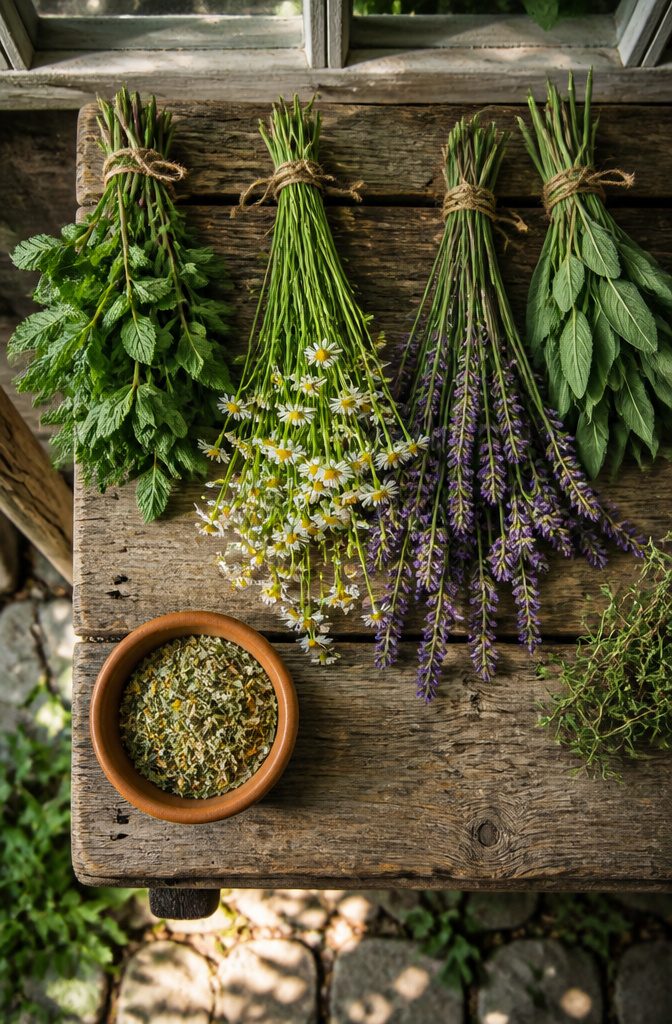
Drying mint for tea took me two tries to get right. The first summer I hung bundles upside down in my kitchen, where afternoon sun hit the wall and half the leaves turned brown before they ever crisped.
A dark, dry spot with moving air is what actually works: a closet shelf near a vent, or a basement corner with a small fan.
Strip lower leaves so nothing touches where you tie the stems, check after five days, and most herbs crack cleanly between your fingers by day seven or eight.
My dehydrator changed the math.
Same mint, same harvest time, but set to the lowest temperature and done in two to three hours. The leaves keep more color, more of that bright menthol smell.
The tradeoff is space; a dehydrator tray holds what three hanging bundles would, and the upfront cost only makes sense if you dry more than herbs. For a single tea garden, hanging still wins.
Either way, store in airtight jars out of light. I learned that last part after a jar of lemon balm went musty in three months on my windowsill.
7. Brew Tea
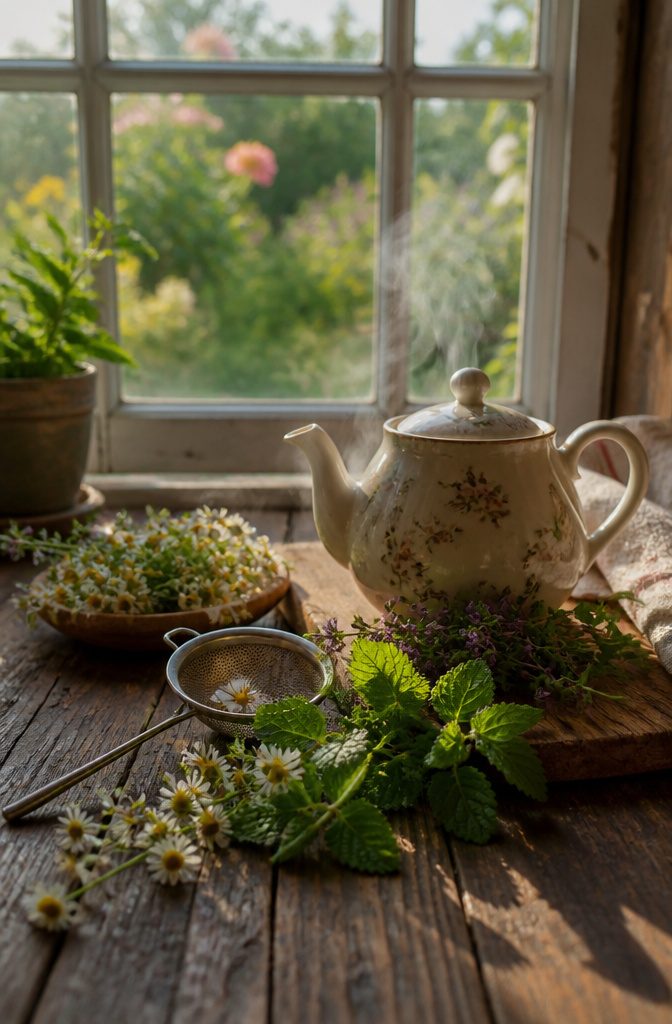
Most herbs can handle a full rolling boil at 212 °F, but I learned the hard way that some blends ask for less.
A lemon verbena and hibiscus mix I tried last spring came out flat when I hit it with straight boiling water; the package said 195 °F, and the second cup proved it.
Steep for 5 to 10 minutes as your baseline, though tougher plant parts like rose hips need a full ten minutes of active boiling to give anything up, and chamomile flowers stay sweet even at fifteen.
Fresh leaves take longer than dried ones, which fall apart faster in the water.
I used to yank the strainer at exactly five minutes on a timer, afraid of bitterness, but most garden herbs do not turn bitter the way tea leaves do.
That fear cost me a lot of thin cups before I relaxed and let the mint sit.
Flavor Profiles and Pairings
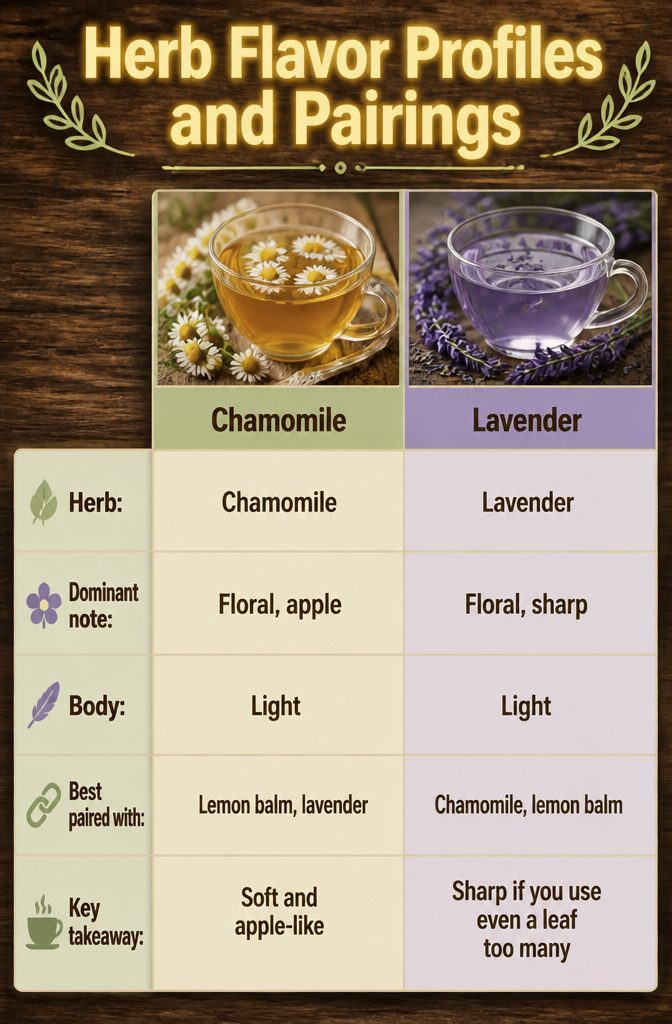
Chamomile and lavender both read as floral, but split apart in a cup: chamomile is soft and apple-like, while lavender turns sharp if you use even a leaf too many.
A single teaspoon of dried lavender per cup is the ceiling before it tastes like soap. Lemon balm and lemon verbena share that citrus family resemblance too, though verbena carries the cleaner, brighter note and holds up better hot.
Mint and bee balm both run cooling, yet bee balm adds a faint oregano edge that works best with anise hyssop’s licorice sweetness.
Holy basil and stevia are your sweet options; stevia does the sugar work without calories, but a little goes far.
Rosemary stands alone.
It is strong, resinous, almost bitter, and easy to let overpower a blend. The Clemson guide pairs it with lemon balm for iced tea, which makes sense: the citrus cuts through the pine.
| Herb | Dominant note | Body | Best paired with |
|---|---|---|---|
| Chamomile | Floral, apple | Light | Lemon balm, lavender |
| Mint | Cooling, sharp | Medium | Bee balm, stevia |
| Lemon balm | Citrus, mild | Light | Lemon verbena, chamomile |
| Holy basil | Sweet, clove | Medium | Anise hyssop, stevia |
| Anise hyssop | Licorice, mint | Medium | Holy basil, bee balm |
| Lavender | Floral, sharp | Light | Chamomile, lemon balm |
| Bee balm | Minty, faint spice | Medium | Anise hyssop, mint |
| Rosemary | Pine, resin | Strong | Lemon balm, lemon verbena |
| Stevia | Sweet | Neutral | Mint, holy basil |
| Lemon verbena | Bright lemon | Light | Rosemary, lemon balm |
For a garden tea blend, the Fifth Season mix starts with holy basil as the base, adds chamomile bulk, then accents with lavender and lemon balm.
The proportions matter: three parts tulsi to two parts chamomile, then half-part everything else. That ratio keeps any one voice from shouting.
Growing Conditions by Herb
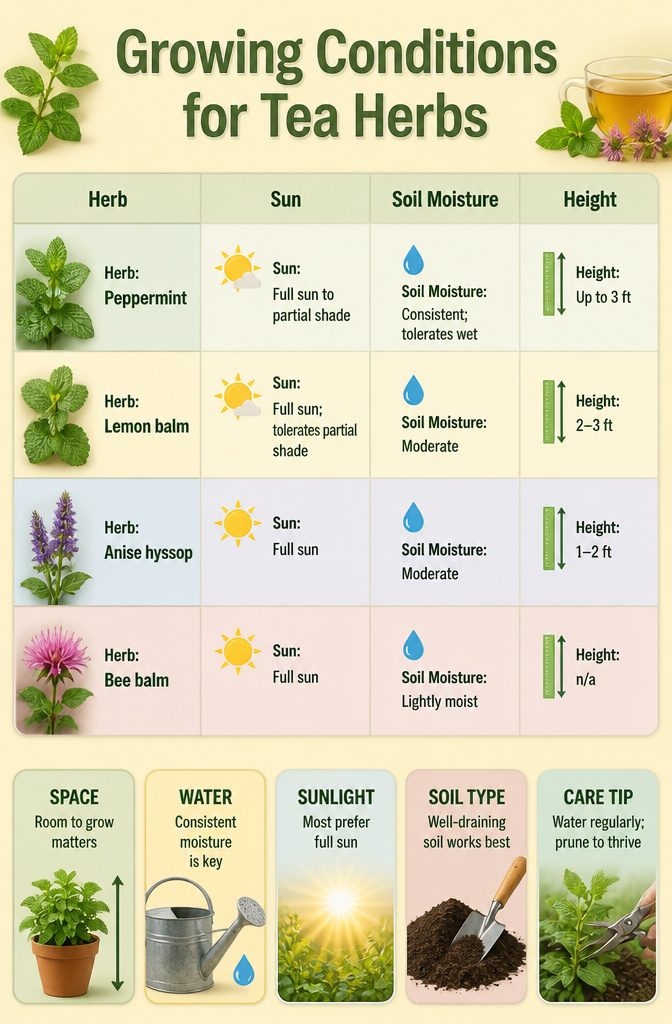
Most of the tea herbs I planted fall somewhere between full sun and "will tolerate less," which matters when your only bed is tucked beside a patio wall or competing with a neighbor’s maple.
Lemon balm surprised me by thriving in the dappled light where my basil sulked; the sources had it right that it prefers full sun but will grow in partial shade.
Peppermint, at up to 3 feet, and lemon balm, 2–3 feet, both need room and consistent moisture.
Anise hyssop stays shorter, 1–2 feet, and demands full sun once established. Bee balm fits the same full-sun slot but wants lightly moist soil, not the wet feet peppermint accepts.
| Herb | Sun | Soil Moisture | Height |
|---|---|---|---|
| Peppermint | Full sun to partial shade | Consistent; tolerates wet | Up to 3 ft |
| Lemon balm | Full sun; tolerates partial shade | Moderate | 2–3 ft |
| Anise hyssop | Full sun | Moderate | 1–2 ft |
| Bee balm | Full sun | Lightly moist | n/a |
If your space is limited and dry, bee balm and anise hyssop are the lower-maintenance bets. Lemon balm and peppermint will fill a corner fast, but only if you keep them watered.
What I Got Wrong the First Season
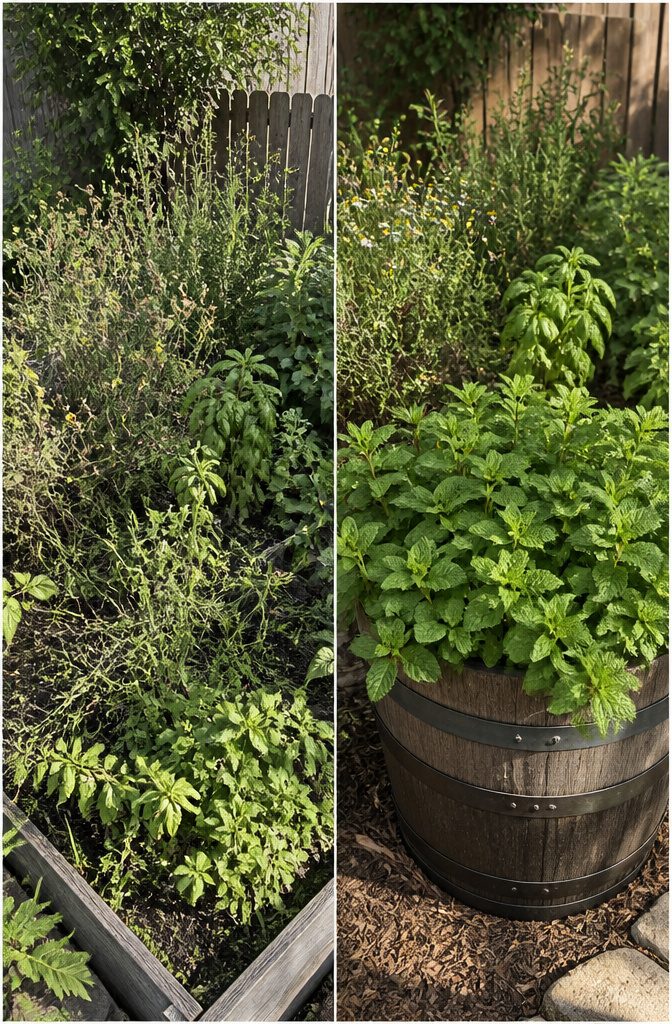
Mint taught me the first lesson the hard way. I tucked a single plug into a corner bed without any barrier, and by August it had elbowed out the chamomile and sent runners halfway across the patio.
Contain mint in a pot sunk into the ground, or it will own your garden.
The second mistake came from convenience. I harvested leaves at noon because that was when I had time, but the oils had already burned off in the sun.
Morning cutting, before ten, gives you the fuller flavor you’re planting for. I also dried bunches on a windowsill that got direct light, which bleached the color and flattened the taste.
Shade drying, or a dark closet with a small fan, keeps what you grew. These three errors cost me most of a season’s tea supply.
Herb Combinations for Tea Blends
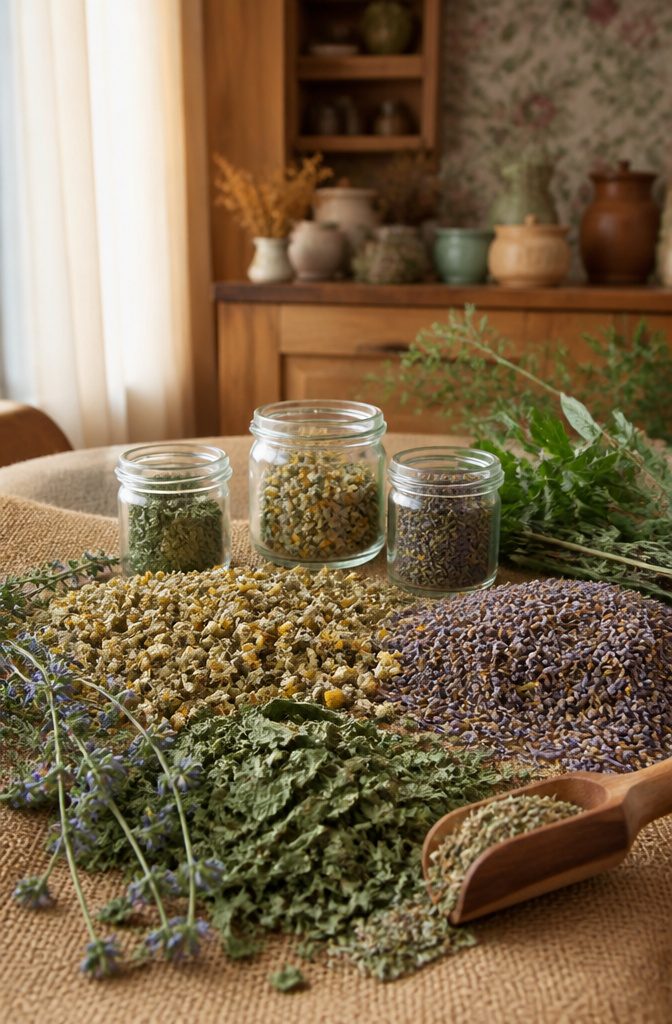
Some pairings just work better than others because the plants grow on the same schedule and one flavor fills in where the other leaves off. These are the combinations I keep coming back to when I plant for tea.
- Chamomile with lemon balm is the one I make most often. Roman chamomile spreads low by runners and hits about ten inches when it flowers; lemon balm shoots up taller and bushier from the same mint family. The chamomile gives that soft, apple-like base and the lemon balm adds a bright note without turning sour. Both like steady moisture and roughly six hours of sun, so they fit in the same bed or a wide pot without one stealing water from the other.
- Mint as a mixer, not a soloist. A few leaves of apple mint stirred into chamomile lifts the whole cup. I learned the hard way to keep mint in its own container; the same running habit that makes it easy to harvest also makes it a thug in open soil. Added to lemon balm, mint doubles the cooling effect, though I pull the mint back to a quarter of the blend or it drowns everything else.
- Lavender and lemon balm for iced tea. This one surprised me. Lavender can read soapy if you overdo it; a small pinch with lemon balm leaves gives a clean, almost honeyed cold drink that needs no sweetener. I started making it in July when the lemon balm was bushy enough to take heavy cutting and the lavender had fresh buds still tight.
Stevia leaves work as a natural sweetener if you want to skip honey entirely, though I find a little goes a long way and too much reads bitter.
Frequently Asked Questions
What herbs are best for tea?
Chamomile, peppermint, lemon balm, holy basil, anise hyssop, lavender, bee balm, rosemary, stevia, and lemon verbena all grow well for tea.
Chamomile brings apple-like sweetness for evenings, peppermint aids digestion, and holy basil offers a clove-scented calm. Match the herb to your goal: lemon verbena for bright citrus, rosemary for morning alertness without caffeine, or stevia leaves as a natural sweetener.
How do I dry herbs for tea?
Hang small bundles upside down in a dark, dry spot with moving air, like a closet shelf near a vent or a basement corner with a fan.
Strip lower leaves so nothing touches the tie point, then check after five days; most herbs crisp between your fingers by day seven or eight.
A dehydrator set to its lowest temperature finishes the job in two to three hours and keeps more color and scent, though it holds less per batch than hanging.
When is the best time to harvest herbs for tea?
Cut herbs early morning, after dew dries but before sun drives the essential oils out of the leaves.
That narrow window gives the fullest flavor because heat dissipates oils and wet foliage both dilutes taste and invites mold. Pick on a sunny day and move cuttings straight into shade to sort; never let them sit in direct sun.
How do I brew herbal tea?
Steep most herbs in boiling water at 212 °F for 5 to 10 minutes as a baseline, though tougher plant parts like rose hips need a full ten minutes of active boiling and chamomile flowers stay sweet even at fifteen.
Delicate leaves and flowers such as lemon verbena do better with cooler water around 195 °F so heat does not flatten their oils.
Fresh leaves need longer than dried ones, and unlike true tea leaves, most garden herbs will not turn bitter with extra steeping time.






