
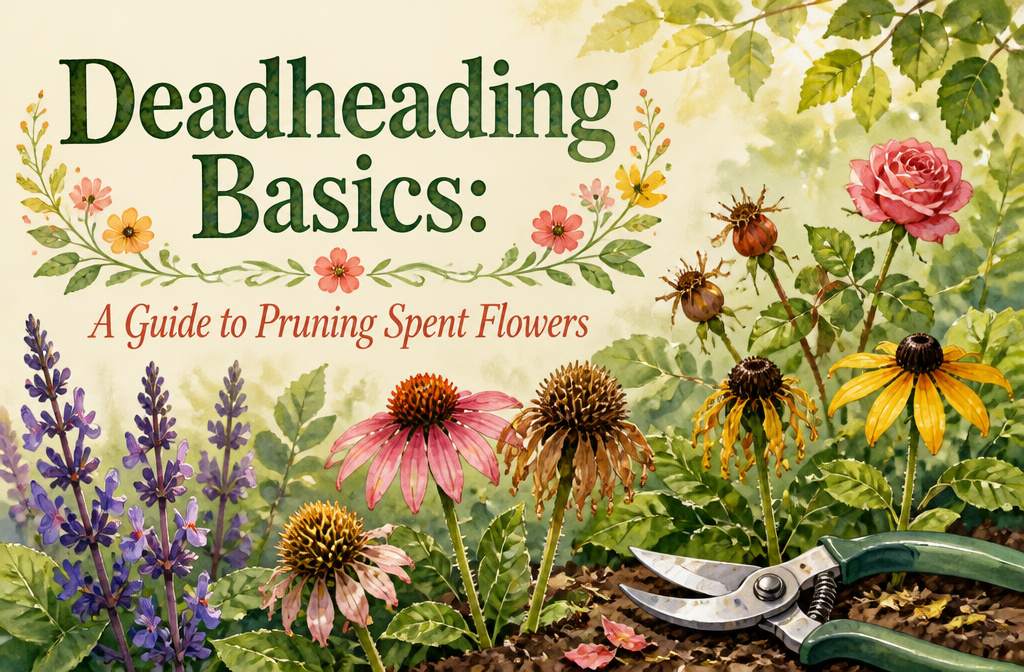
Deadheading is the removal of spent flowers to redirect a plant’s energy from seed formation back into bloom production. The catch is timing: wait too long and the plant has already shut down for the season, which is why checking beds weekly matters. I cut my salvia back in late June after the first purple spikes browned, and fresh buds appeared by mid-July.
What Deadheading Means
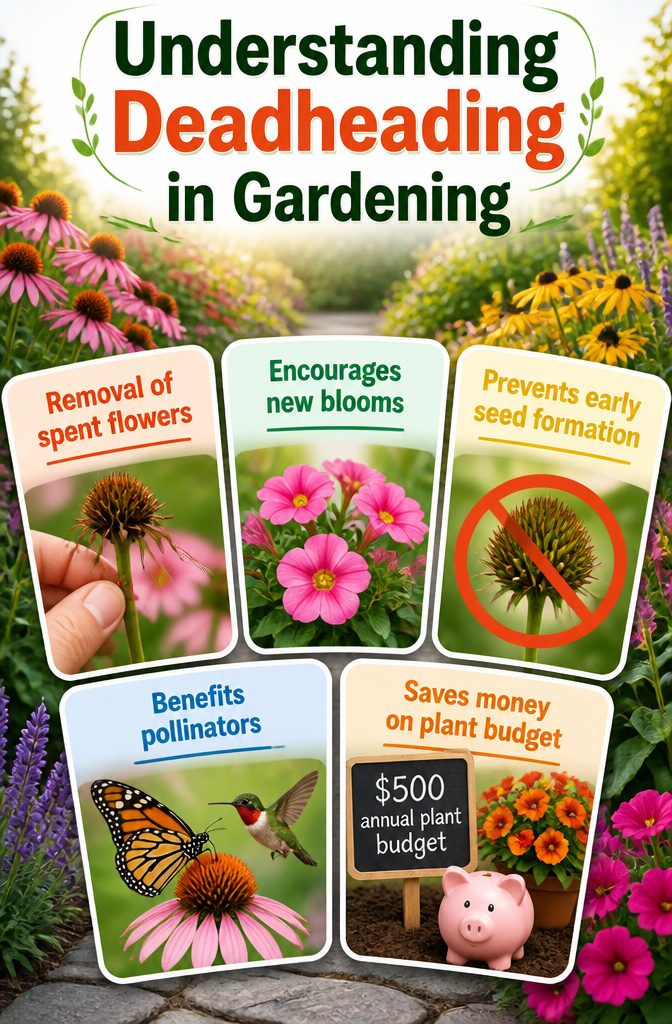
Deadheading is the removal of spent flowers from annuals, perennials, roses, and flowering shrubs. The practice keeps plants producing new blooms instead of shifting energy into seed formation. That redirection matters because once a plant sets seed, its flowering season often ends early.
The difference in appearance is immediate. Pinched-off brown blossoms leave only fresh color, and fallen petals stop rotting against lower leaves. A plant that would have looked tired by late July stays neat through August.
Pollinators benefit too. Butterflies and hummingbirds feed on open blooms, not seed heads. Longer flowering means more visits to a patio or small yard where every square foot counts. I’ve noticed the monarchs and ruby-throats linger longer on plants I keep deadheaded than on ones I let go.
Some gardeners skip it to save seedlings for next year. That tradeoff is valid, but unwanted self-seeding can overrun a small bed fast. For a $500 annual plant budget, replacing rogue seedlings with chosen varieties gets expensive.
Spent Flowers to Remove
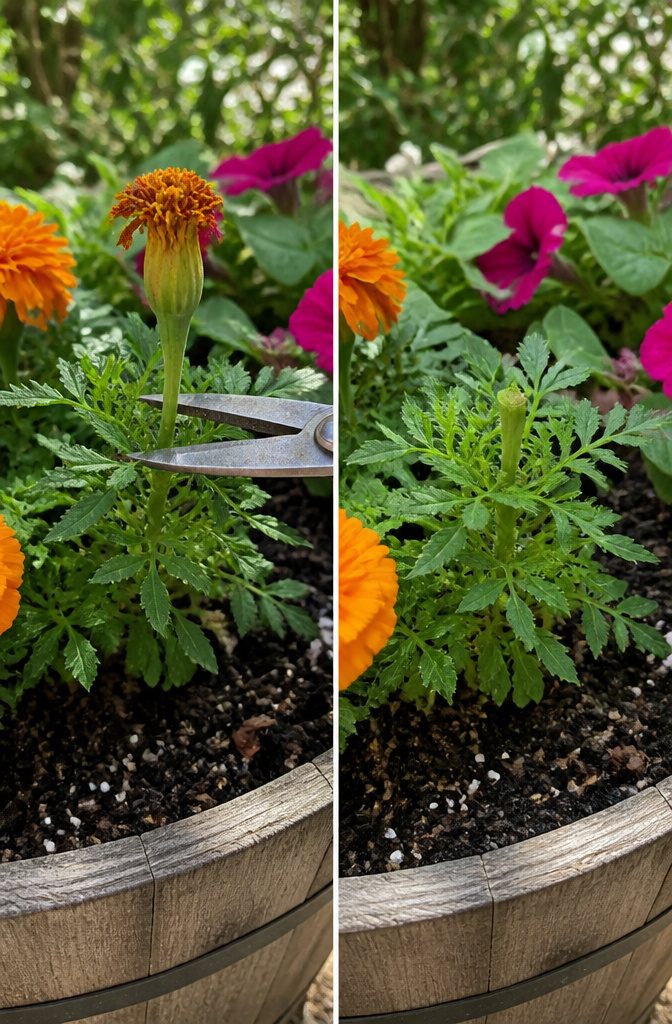
The spent bloom gives itself away once you know what to look for. Color drains first, petals loosen and splay, or the whole head browns and papery bracts curl inward. On some plants the stem beneath the flower yellows before the petals drop; that stem is still part of what needs to go.
Cut just above the nearest set of healthy leaves or a bud when removing the faded flower. Run your eyes down the stem from the spent bloom and look for the first set of leaves that still looks firm and green, or for a swelling node that promises another round. Pinch or snip there. For plants that carry their flowers in clusters, individual spent blooms within the cluster can come off as they fade, leaving the rest to finish. Once every flower in that cluster has browned, the whole stem gets taken back to that same healthy junction or, for plants like iris or hosta with basal foliage, all the way to the base.
Tools That Work
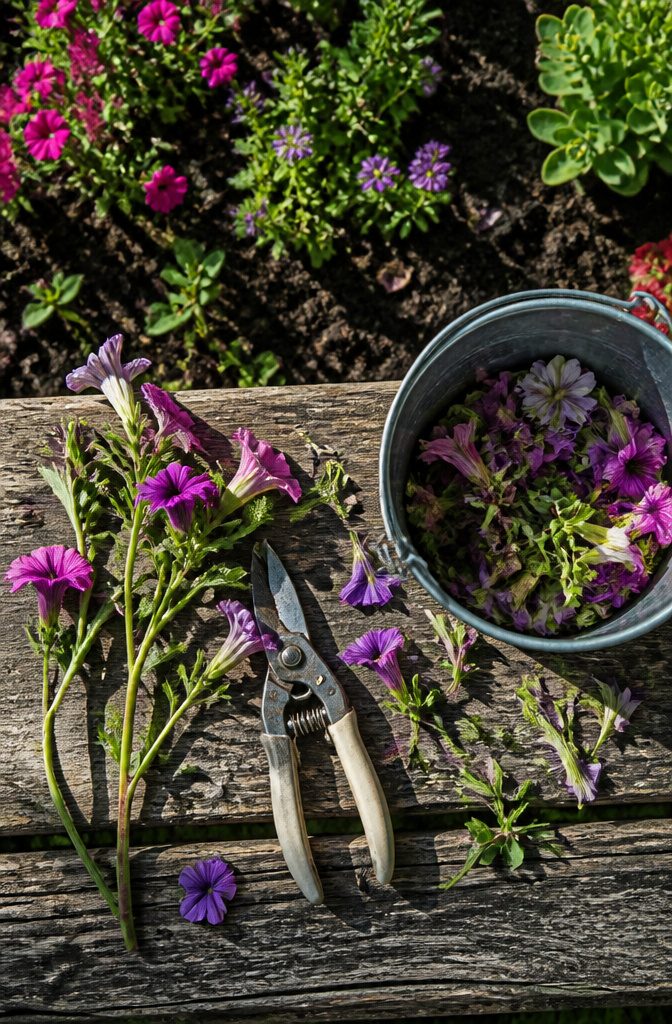
Soft-stemmed annuals like petunias and marigolds often need nothing more than a pinch between finger and thumb. The same motion removes the bloom and the short stalk behind it, though on leggy plants I take a little foliage too to keep the shape tidy.
For anything thicker, sharp blades make clean cuts about a quarter inch above a leaf or bud. Dull tools crush the stem and leave ragged tissue that heals slowly. I keep a pair of floral snips or household scissors handy for delicate flowers and summer bedding plants; the short blades give better control in tight clusters than full-size shears.
Woodier stems on roses or hydrangeas call for secateurs. The stronger pivot handles the force without tearing, and the angled blade lets you snip close enough that no awkward stub sticks out above the new growth. Clean cuts matter more than the label on the tool. A quick wipe between plants keeps sap and any hitchhiking trouble from spreading around the garden.
Where to Cut
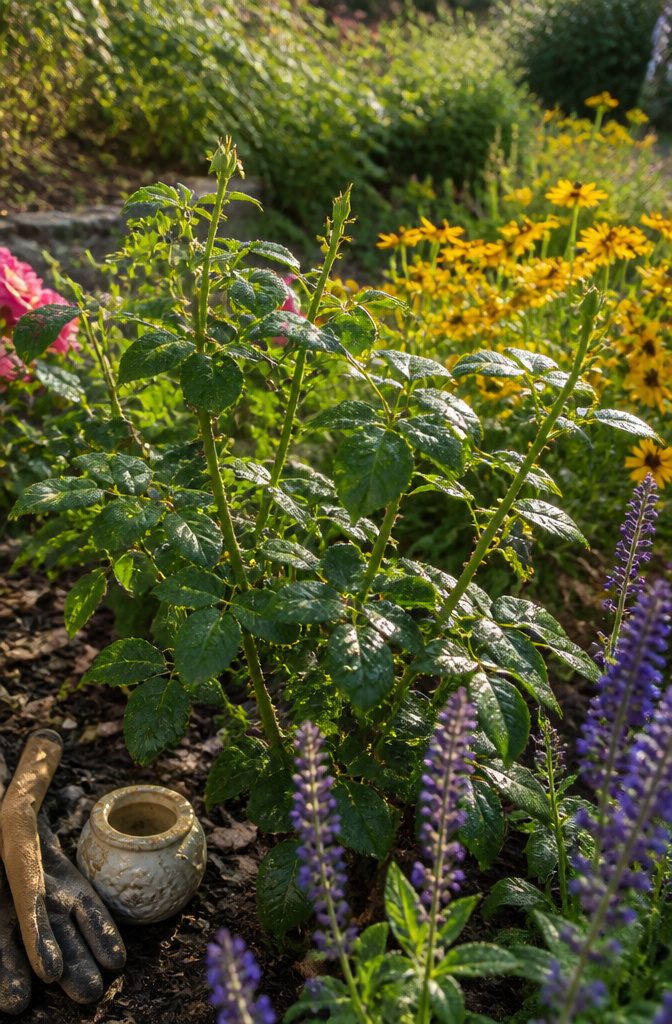
The cut matters more than most beginners realize. Snip about 1/4 inch above the nearest healthy set of leaves or buds, leaving enough stem for the plant to seal the wound but not so much that a withered stub sits there to rot.
Too high, and you leave dead wood that invites disease and looks ugly. Too low, and you risk damaging the node itself, the point where new growth should push out. The node usually shows as a slight swelling on the stem, sometimes with the tiniest bump of a nascent bud. On roses, that means counting leaflets: cut above a 3-leaflet leaf on young plants, a 5-leaflet leaf on established ones, keeping at least two of those fuller leaves on the shoot so the plant keeps feeding itself.
Angle the cut roughly parallel to the leaf’s angle so water runs off rather than pooling. On clustered bloomers, remove individual spent flowers as they fade, then take the whole stem down to that leaf or bud once the cluster finishes.
Cleanup After Cutting
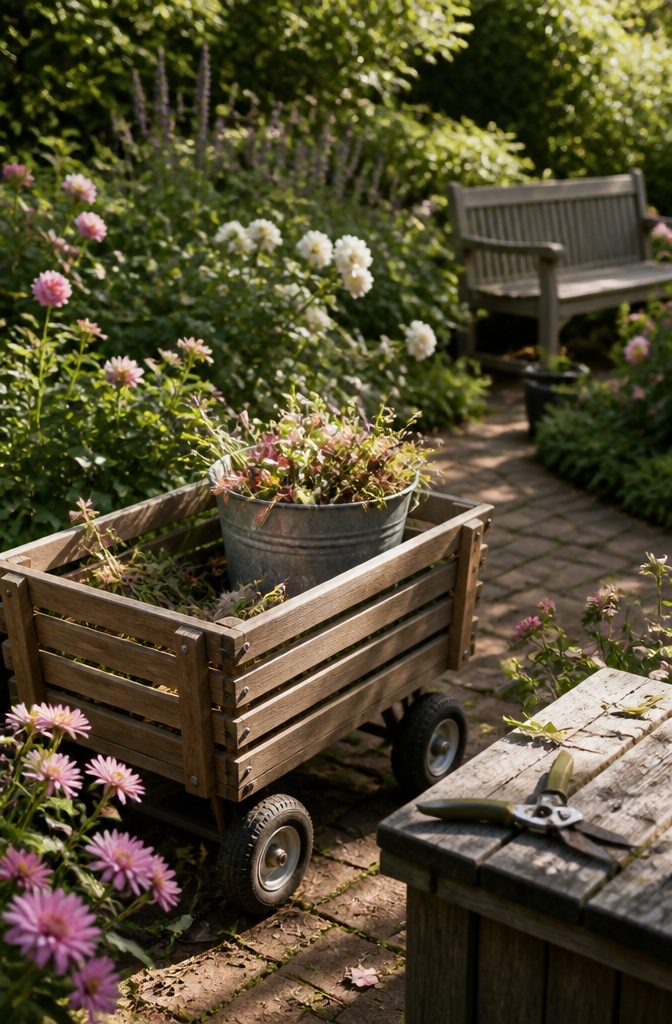
A small bucket or basket kept within arm’s reach makes the difference between a quick job and a chore that trails debris across the patio. I drop each snipped bloom directly into the container as I work, which keeps the soil surface clean and saves disease spores from splashing back onto the plant during the next rain or watering. Those spent petals and stems can go straight to a compost pile if your setup gets hot enough to break them down, or into a municipal green-waste bin if not. Leaving them tucked under the foliage looks untidy in a small space and gives rot a foothold. Clean shears with rubbing alcohol between plants, too; the same cut that removes a faded flower can carry fungus to the next stem if the blade stays dirty.
What New Growth Looks Like
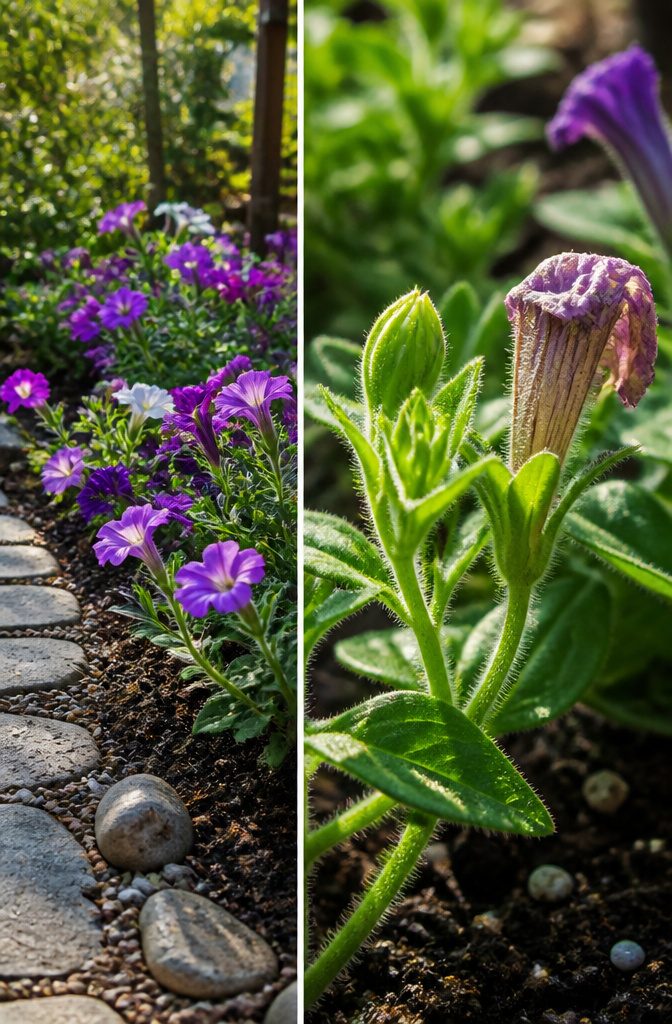
A fresh bud and a spent flower look nothing alike once you train your eye. The bud is rounded, firm, and usually green or the color of the coming bloom; the spent flower is papery, often browning at the edges, and the petals have loosened or dropped. Pinch through both a few times and the difference becomes obvious in your fingers too.
During bloom season I check my plants every week. That rhythm catches the spent flowers before they start setting seed, which is what signals the plant to slow down. New growth after a cut tends to show within days on annuals like marigolds and petunias, a little slower on perennials such as Rudbeckia and Echinacea. For roses, I watch for the flush of new stems just below where I snipped after the first bloom cycle. Clusters need closer attention: nip individual faded flowers as they go, then cut the whole stem back to the next healthy bud once every bloom in the cluster has finished.
Water and Feed After
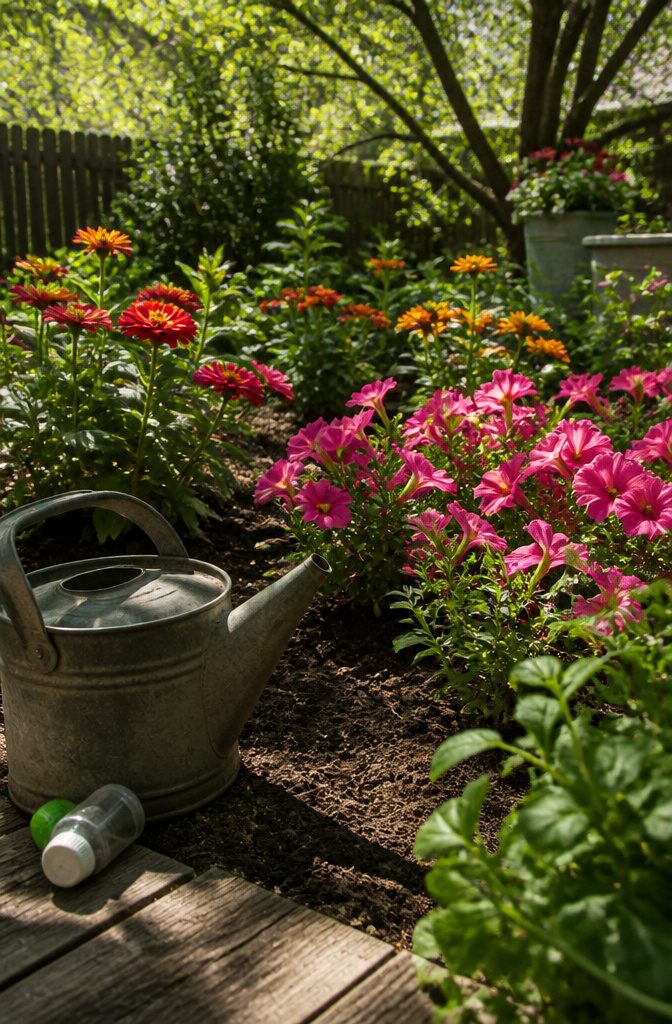
Deadheading redirects energy the plant had set aside for seed production, and that new growth needs water to move nutrients through the stem. I wait until the cut surface has dried, usually an hour or two, then give the soil a slow, deep soak rather than a light sprinkle that only wets the top inch. A light feeding with a balanced fertilizer, something like a 10-10-10 at half the label strength, supports the flush of buds forming at the leaf nodes without pushing so much soft growth that the stems flop.
The line between helping and overdoing it is visible within days. Leaves turn a deep, almost artificial green and the space between nodes stretches, meaning the plant is racing on nitrogen instead of building flowers. Stop feeding and flush the soil with plain water if growth gets lanky; the plant will recover, but a bloom cycle may be lost. In my own pots, I have learned that a starving plant asks for food with pale lower leaves, while an overfed one shouts with rank, hollow stems. The first is easy to fix. The second takes weeks.
Annuals That Respond
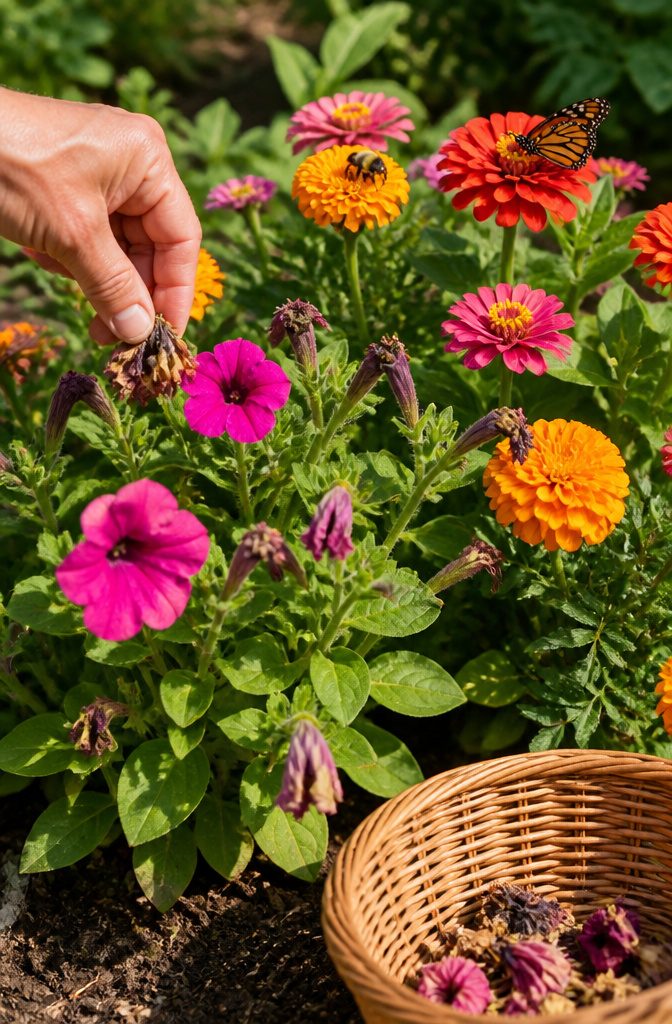
Annuals live to flower, set seed, and die. Removing spent blooms before that final step keeps them producing.
Here are the ones that respond best:
- Marigolds — Pinch faded heads back to the next leaf joint. They brown quickly in summer heat, so I check mine every few days.
- Petunias — Most need regular snapping off; some newer varieties are self-cleaning and drop flowers on their own. Check the tag before you commit to a schedule.
- Zinnias — Cut the stem back to a lateral bud, not just the flower head. This is the one where I get lazy and regret it; partial snips leave stubs that rot.
- Cosmos — Deadhead early and often. They go to seed fast, and once that starts the plant slows down dramatically.
- Geraniums — Twist the entire flower stalk at its base; it separates cleanly with a little pressure. The stems snap if you pull upward.
- Snapdragons — Clip individual spent blooms or shear the whole spike after the bottom flowers fade. A light shear buys you a second, shorter flush in fall.
Perennials That Bloom Longer
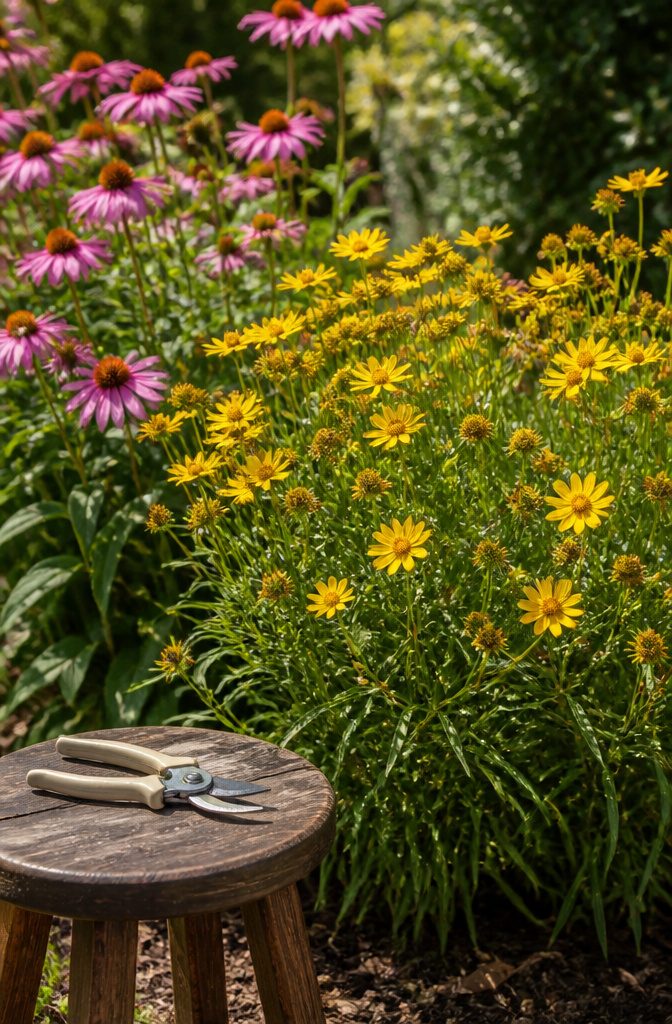
Perennials pay back the effort more slowly than annuals, but several will keep producing buds if you stay after them.
- Salvia often sends up a whole new flush after the first stalks finish; the plant looks reborn, not merely tidied.
- Echinacea keeps blooming longer with regular removal, though it will also reseed if you miss a few.
- Coreopsis is one where deadheading truly extends the bloom period; let the seed heads form and the show ends early.
- Garden phlox works the same way. Snip spent flower clusters and the bloom period stretches noticeably; leave them and the plant shifts to reseeding.
- Shasta daisy will rebloom if cut back promptly; wait too long and it calls the season done.
I cut my salvia back in late June after the first purple spikes brown, and fresh buds appeared by mid-July. The phlox beside it needed the same treatment every ten days or so to keep the color coming.
Roses and Their Timing
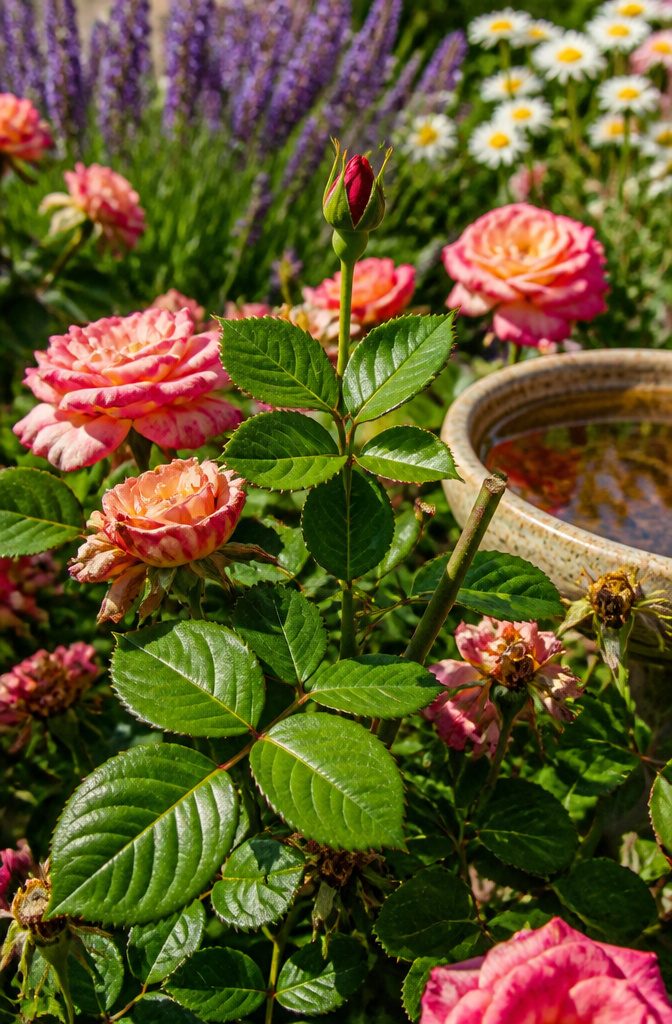
Roses ask for a little more thought than a petunia that only needs a pinch. Hybrid teas, grandifloras, and floribundas all rebloom on the same principle, but the cut changes depending on how established the plant is. On a first-year rose, I snip the spent flower just above the uppermost three-leaflet leaf. Taking more foliage than that steals energy from a root system still building itself out. Once the bush is established, I cut back to a five-leaflet leaf, keeping at least two of those leaves on the shoot, with the cut about a quarter inch above and angled parallel to the leaf. The angle matters; water pools on a flat cut and invites trouble.
The timing has a hard stop. Around late August or September, I leave the last faded blooms in place. Rose hips form, the plant slows, and that slowdown is what hardens it off for winter. Deadhead through the season for repeat flush, then let the hips finish the year.
Plants to Leave Alone
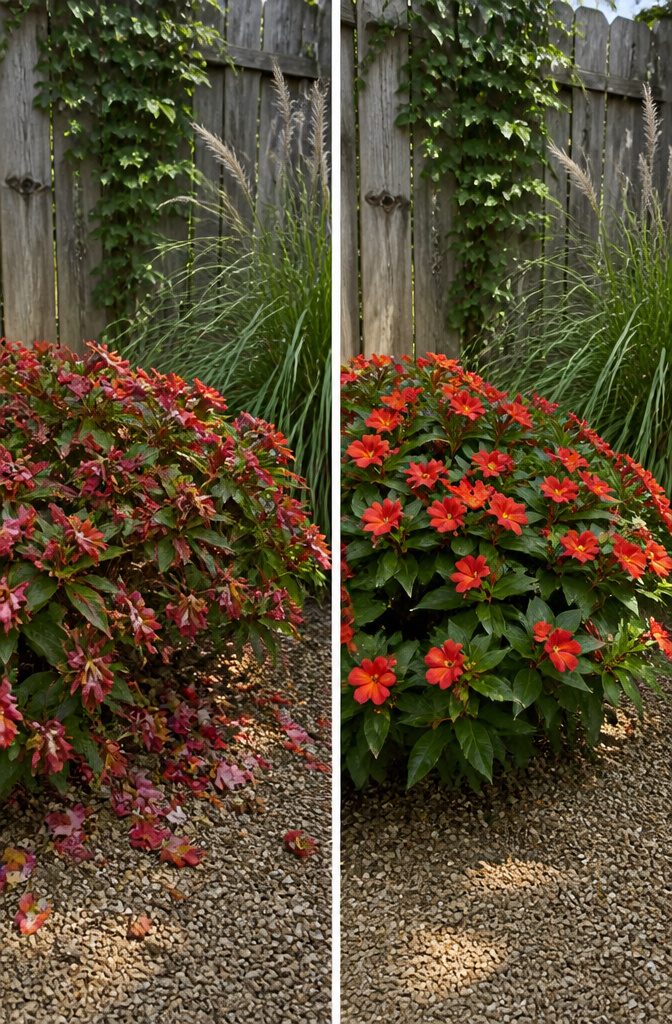
Some plants handle the cleanup on their own, and chasing spent flowers on these only wastes your afternoon.
- Impatiens drop their faded blooms without any help, so the stems stay neat and keep pushing out new color.
- Crocuses and other small spring bulbs let the whole flower fall away once it is done, leaving nothing to pinch.
- Ornamental grasses do not form true spent flowers that need removing; their seed heads are the whole point, and the plant moves on without you.
- Certain begonia varieties are bred to shed old blooms themselves, a trait usually labeled "self-cleaning" at the nursery.
The self-cleaning habit means the plant already knows when a flower is finished and has a mechanism to drop it. Snipping anyway interrupts that process and costs you time you could spend on something that actually responds, like the roses or the zinnias that are sitting there waiting.
Shearing Versus Snipping
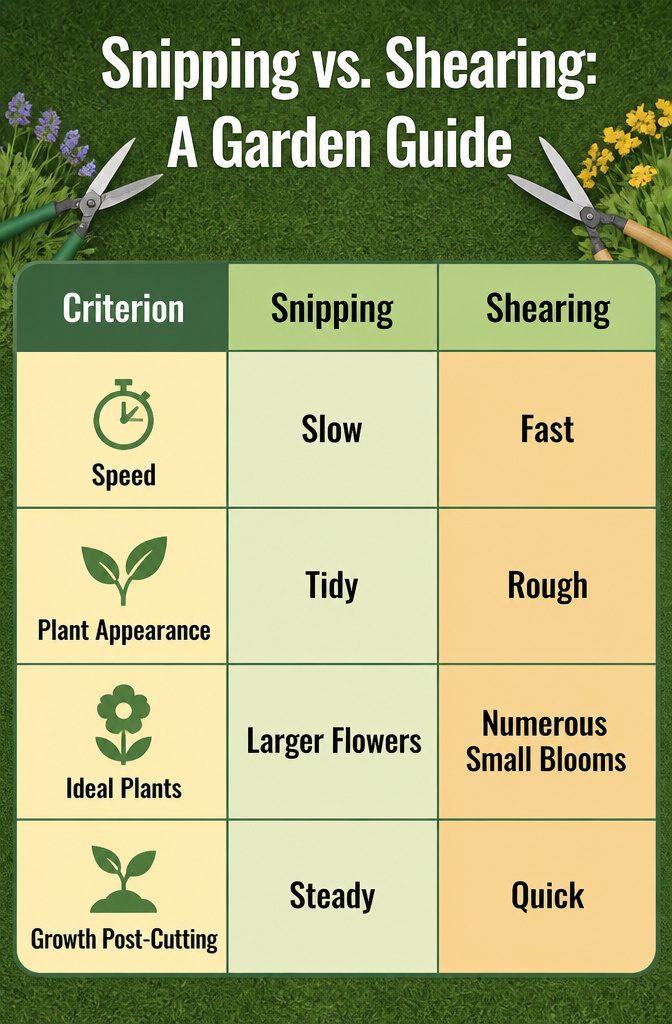
Some afternoons the choice between snipping and shearing is the only thing standing between me and a tidy border. For plants loaded with tiny blooms, hardy geranium being the clearest example, I grab handfuls of stems and cut whole sections at once. The plant looks rough for a week or two, then pushes fresh growth and another round of flowers.
Shearing works when the blooms are small and numerous, covering the plant so completely that individual cuts would take an hour. Tickseed falls into this camp too. The tradeoff is visual: you sacrifice the plant’s looks temporarily for speed and eventual rebloom.
Larger, spaced-out flowers demand the slower route. Roses, dahlias, and lavender need stem-by-stem attention, cutting down to the next set of leaves or side shoots. With daylilies, I pinch each faded bloom as it goes, then remove the whole stem to the base once every flower on it has finished.
Plants that tolerate shearing tend to be herbaceous and spreading, not woody. Penstemons and salvias can be reduced by half, but cutting them entirely to the base is a different operation, more rejuvenation than deadheading. Geranium phaeum may not rebloom at all after either treatment, though shearing still cleans it up. Know which camp your plant belongs to before you pick up the pruners.
Seed Heads for Wildlife
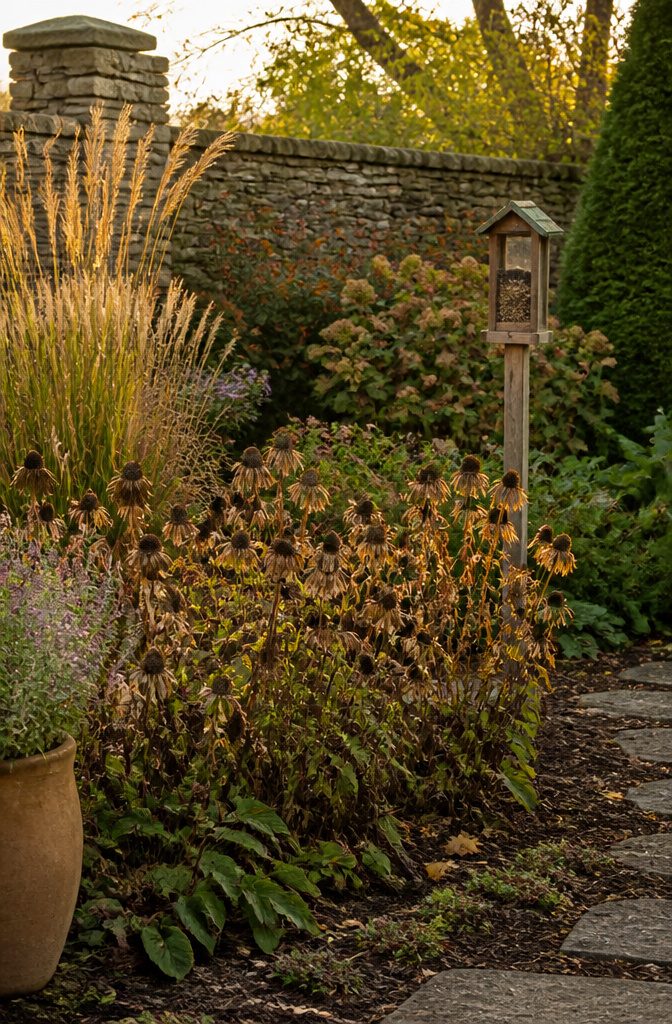
Last summer I stopped deadheading my echinacea halfway through August. Goldfinches arrived in September, clinging to the browned cones and picking them clean of seed. The tradeoff became clear: cut spent blooms for more flowers, or leave them standing for the birds that need that food through autumn and winter.
Roses, lavender, sunflowers, and teasel work the same way. Their seed heads feed blackbirds and other species, especially in urban yards where forage is scarce. In a small space, splitting the difference is practical. I deadhead the front half of a clump for tidy regrowth and leave the back half alone for wildlife. Or I shear one plant completely and let its neighbor go to seed.
Some seed heads also carry the garden through winter visually. Ornamental grasses, honesty, and phlomis look architectural after frost, catching light on frost mornings in a way bare soil never will.
While deadheading is useful in keeping plants flowering for longer, not doing so can benefit the garden and its wildlife in other ways. As with many aspects of gardening, balance is key.
That balance looks like choosing two or three plants per bed to leave untouched, not treating every bloom as a chore to remove. Your cleanest performers, like annual zinnias, can keep getting snipped while the coneflowers stand.
Frequently Asked Questions
What is deadheading?
Deadheading is the removal of spent flowers from annuals, perennials, roses, and flowering shrubs. The practice keeps plants producing new blooms instead of shifting energy into seed formation. Once a plant sets seed, its flowering season often ends early.
Why is deadheading important?
Deadheading improves plant appearance, encourages more blooms, and prevents unwanted seed formation. It keeps fresh color showing instead of brown blossoms, stops fallen petals from rotting against lower leaves, and extends the flowering season. Pollinators also benefit because butterflies and hummingbirds feed on open blooms, not seed heads.
How do you deadhead flowers?
Remove spent blooms by pinching or cutting just above the nearest set of healthy leaves or a bud. Run your eyes down the stem from the faded flower and look for the first firm, green leaves or a swelling node, then pinch or snip there. For plants with flower clusters, remove individual spent blooms as they fade, then cut the whole stem back once every flower in the cluster has browned.
Which plants should be deadheaded?
Many annuals and perennials respond well, including marigolds, petunias, zinnias, cosmos, geraniums, snapdragons, salvia, Echinacea, coreopsis, garden phlox, and Shasta daisy. Roses also benefit, though they need slightly different cuts depending on the plant’s age. Some plants like impatiens, certain begonias, crocuses, and ornamental grasses are self-cleaning or do not need deadheading.
When should you deadhead?
Deadhead regularly during the bloom season to catch spent flowers before they start setting seed. Check plants every week during peak bloom. For roses, stop deadheading around late August or September and leave the last faded blooms in place so hips can form and the plant hardens off for winter.






