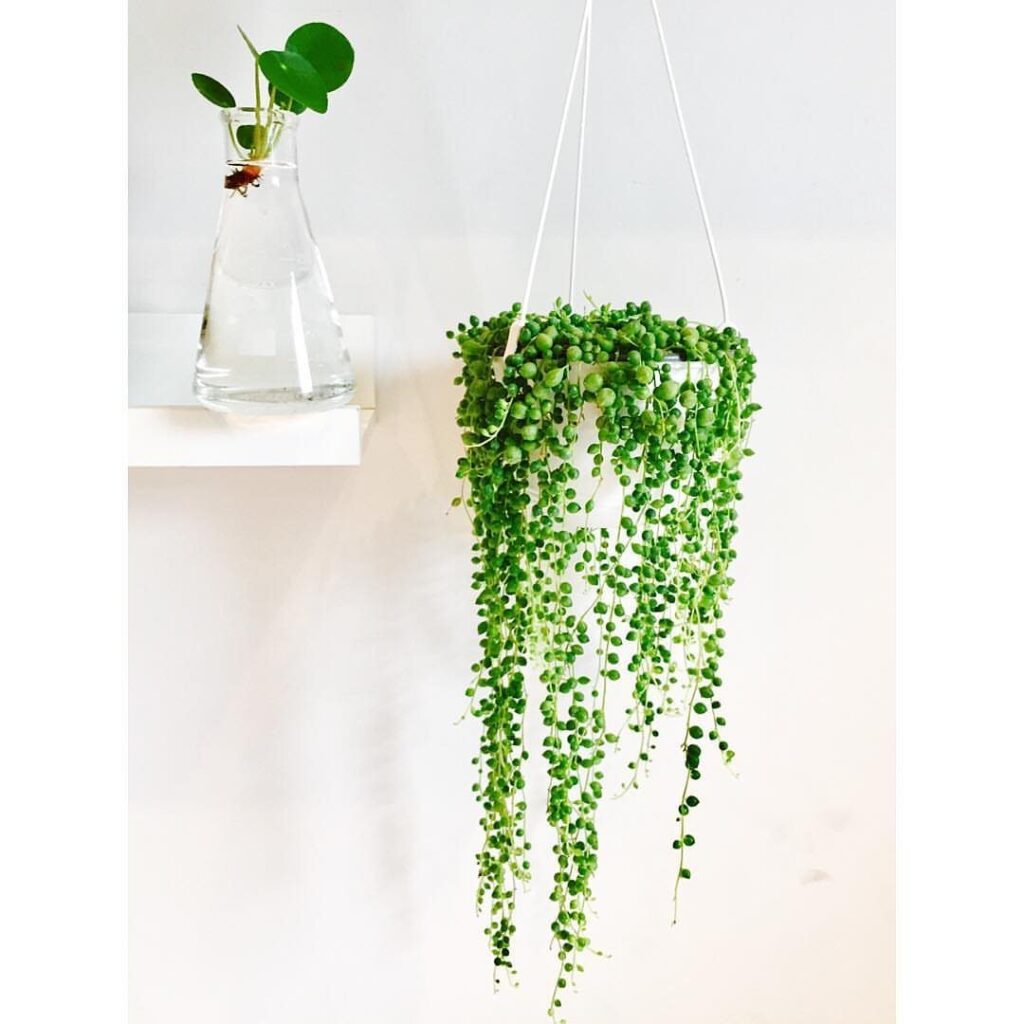
These 8 trailing succulents range from a beginner-friendly String of Bananas to the sculptural Dancing Bones that took me two seasons to learn to water by eye.
The single question that sorts them is how much attention you want to give, because some store weeks of water in thick leaves while others signal thirst only through subtle stem cues you have to learn to read.
I would hang Burro’s Tail where no one brushes past, since those jelly-bean leaves drop at the lightest touch.
1. Burro’s Tail
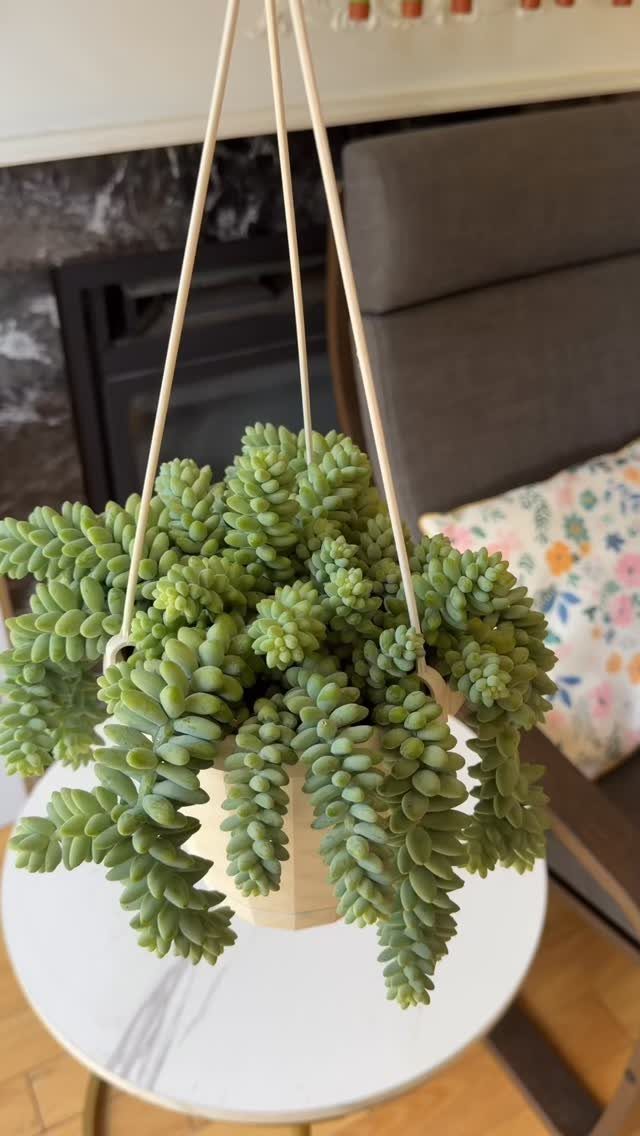
Burro’s Tail hangs in thick ropes of jelly-bean leaves that break off at the lightest touch, so I site mine where no one brushes past.
The plump leaves store weeks of water; I water mine half as often as my pothos and it still grows heavy enough to bend its hanger.
A bright living room corner, a few feet back from a south window, gives enough light to keep the leaves tight and pale green, not so much that they bleach.
I would choose a plastic or resin pot over terracotta; the weight of mature stems plus wet soil cracks clay, and you do not want to lift this plant to repot it more than once.
Burro’s tail is hardy outdoors in USDA Hardiness Zones 10 to 11 and is considered nontoxic.
2. String of Pearls
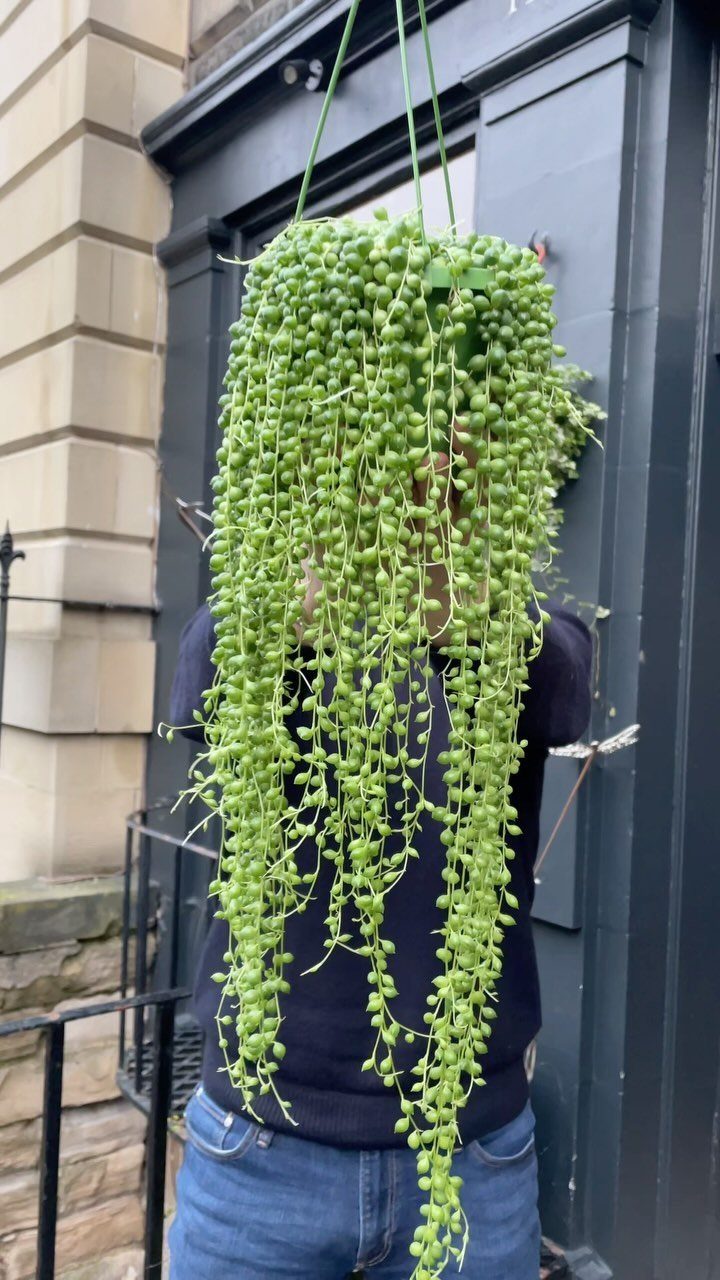
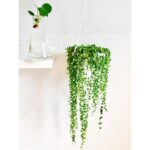
String of Pearls looks like a green bead necklace spilling over the pot rim, and that shape is exactly why I think it suits a reader who wants impact without floor space.
The pea-shaped leaves line each thread-thin stem, and the whole plant stays narrow enough for a small shelf or the edge of a tall cabinet.
I keep mine in bright, indirect light; direct sun through glass cooks the round leaves to flat, yellow disks.
Water when the top inch of soil dries and the pearls start to soften slightly, not before. A nursery pot in the right size gives the same look in miniature within a season if the light is right.
3. Ruby Necklace
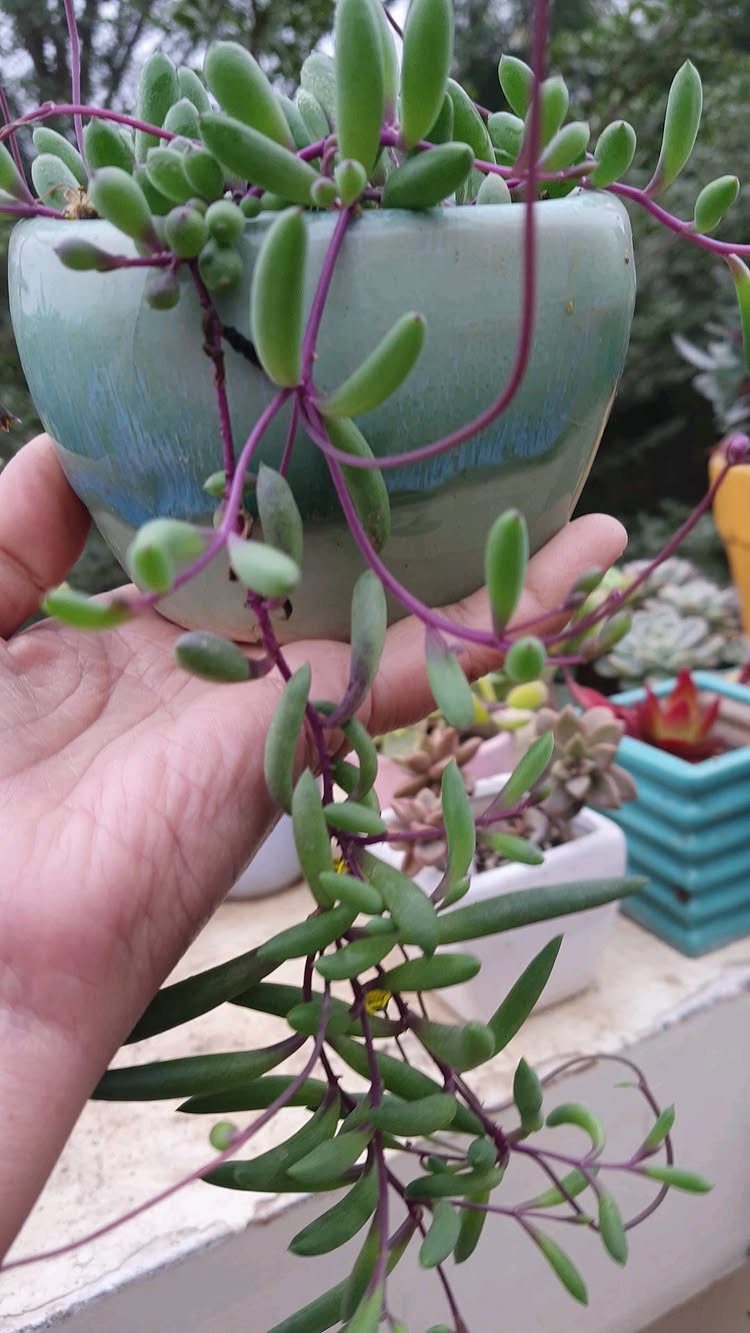
Ruby Necklace earns its name from the stems, which color up deep wine-red in bright light and stay green in shade.
I would put this one where the afternoon sun hits, because the contrast between those purple-red stems and the blue-green leaves is the whole point.
A light blue pot sets off the red stems without competing; I would copy that choice over a plain terracotta.
Water more often than you would a desert cactus, less than a fern: the stems wrinkle when thirsty and plump back within a day of a good drink.
I have found it roots easily from cuttings, so one plant becomes several for a windowsill row.
4. Hindu Rope
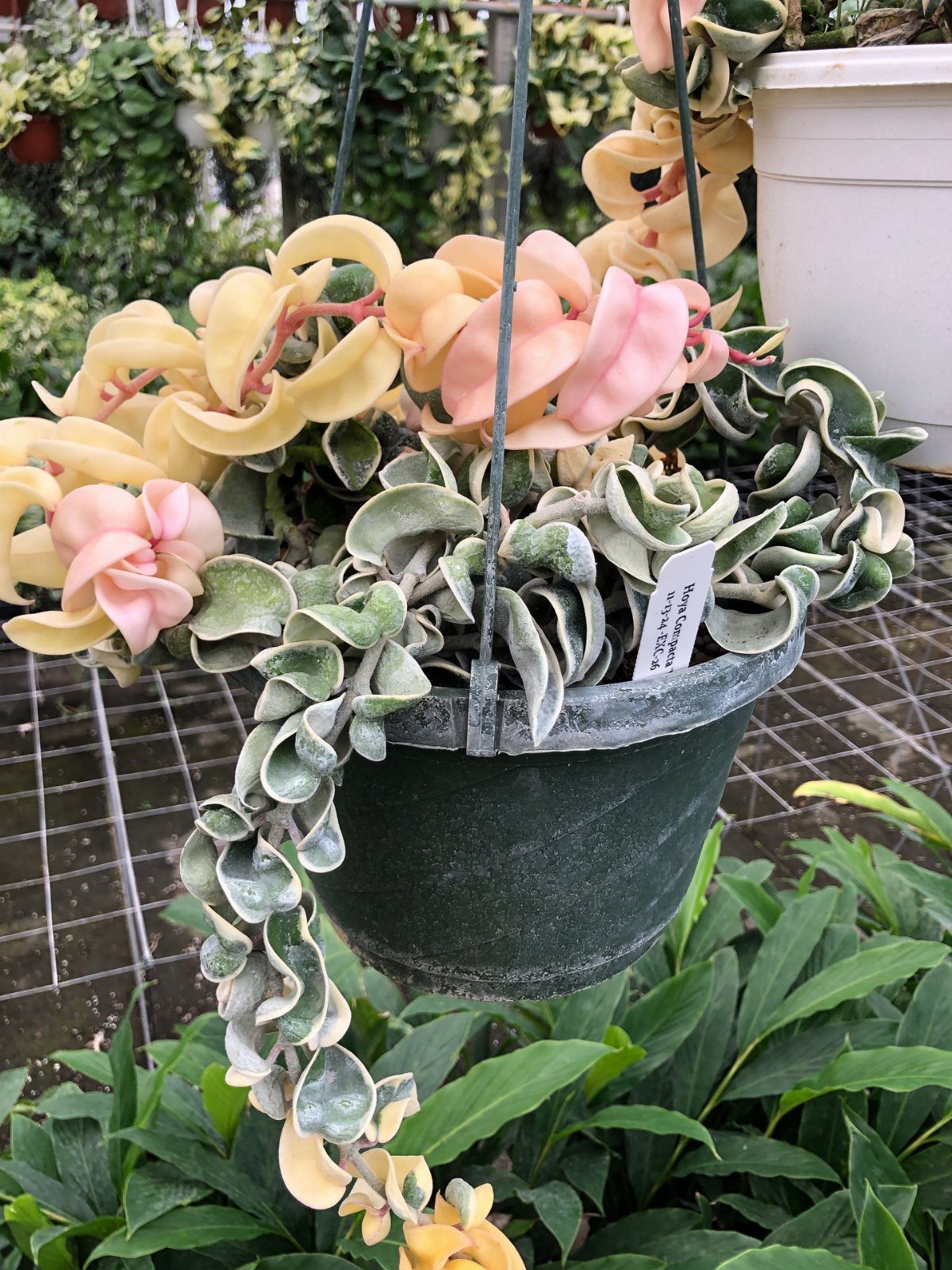
Hindu Rope, or Hoya compacta, twists its leaves into tight curls that look almost braided, and that waxy surface holds moisture so well that I let mine dry almost completely between waterings.
Nurseries sometimes sell it simply as Hindu Rope, and either label gets you the same plant.
I give mine morning sun and afternoon shade, which keeps the pink tones in new growth without scorching the older leaves. It flowers once mature, with small star-shaped blooms in cream and pink that smell like chocolate at night.
I wait for buds rather than force them; too little light or too much nitrogen in the fertilizer keeps it leafy and bare.
5. String of Bananas
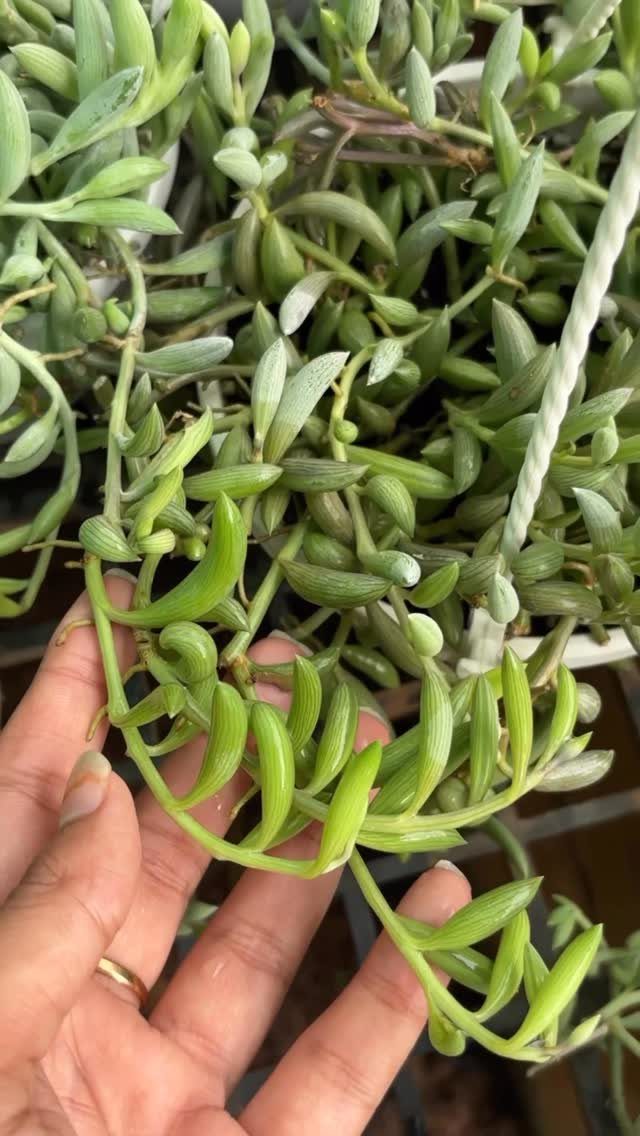
String of Bananas trails in curved, crescent leaves that really do look like tiny green bananas, and I find it easier than String of Pearls for a beginner.
The leaves are thicker, less prone to the rot that kills whole strands of pearls if you water a day too soon.
Give the stems room to drop and they will reach past the pot in a growing season with good light. A porous cactus mix, not standard potting soil, keeps the roots from sitting wet.
I water when the bananas soften slightly and the soil is dry to my second knuckle. It tolerates more direct sun than most hanging succulents, so a west-facing balcony works.
6. String of Nickels
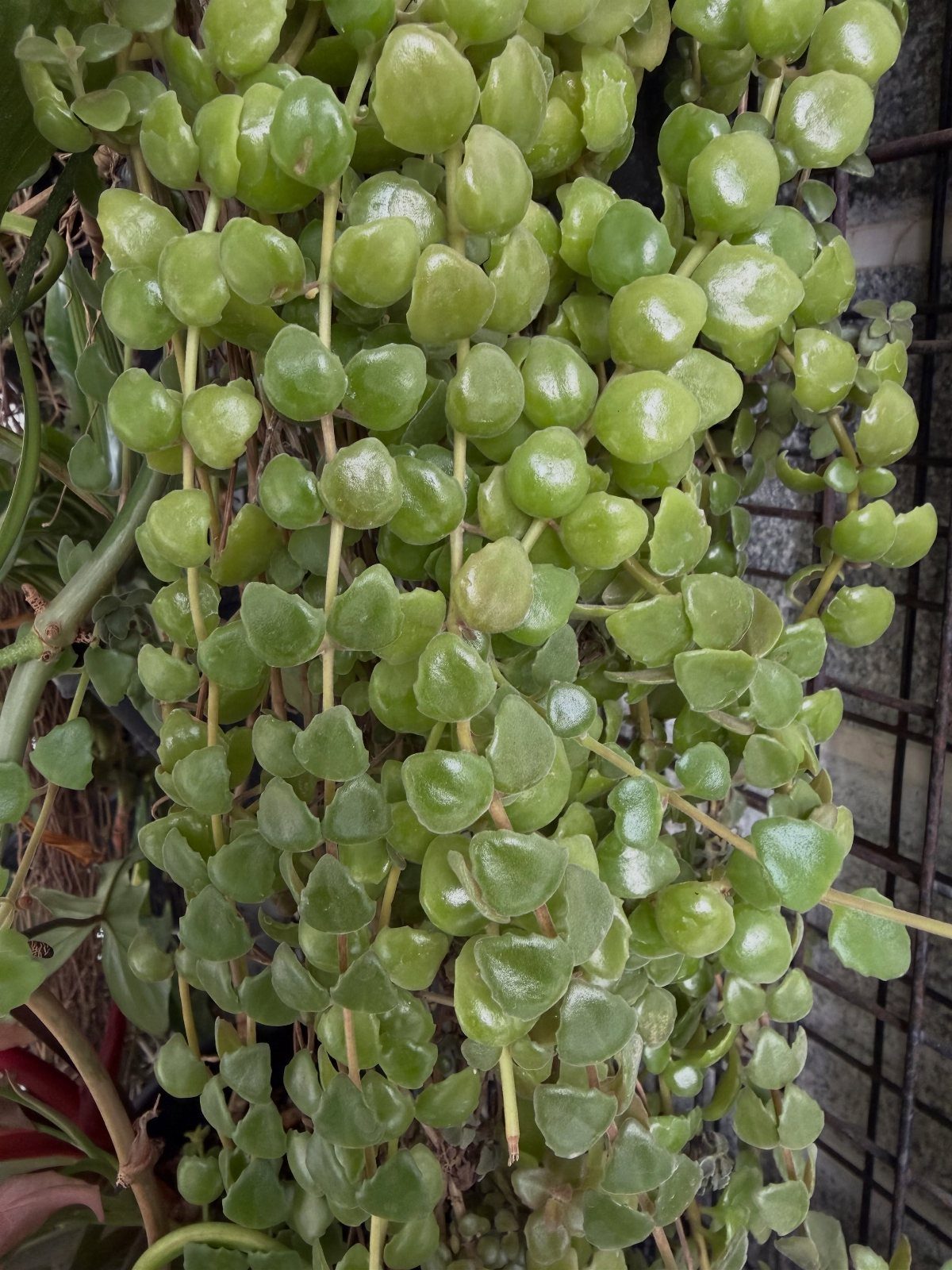
String of Nickels spreads flat, round leaves like small coins along thin stems, and that low profile makes it my pick for a narrow hanging frame or a shallow wall planter where thicker succulents would crowd.
The leaves press almost flush to the surface behind them, which shows how well this plant fills a vertical plane without bulging.
I keep mine in bright, filtered light; the leaves turn yellow and drop in deep shade, and direct midday sun bleaches them pale. Humidity matters more than for most succulents.
I mist mine lightly in dry winter rooms, or set the pot on a tray of damp pebbles. The stems root where they touch soil, so I layer long strands back into the pot to thicken the plant.
7. Jade Necklace
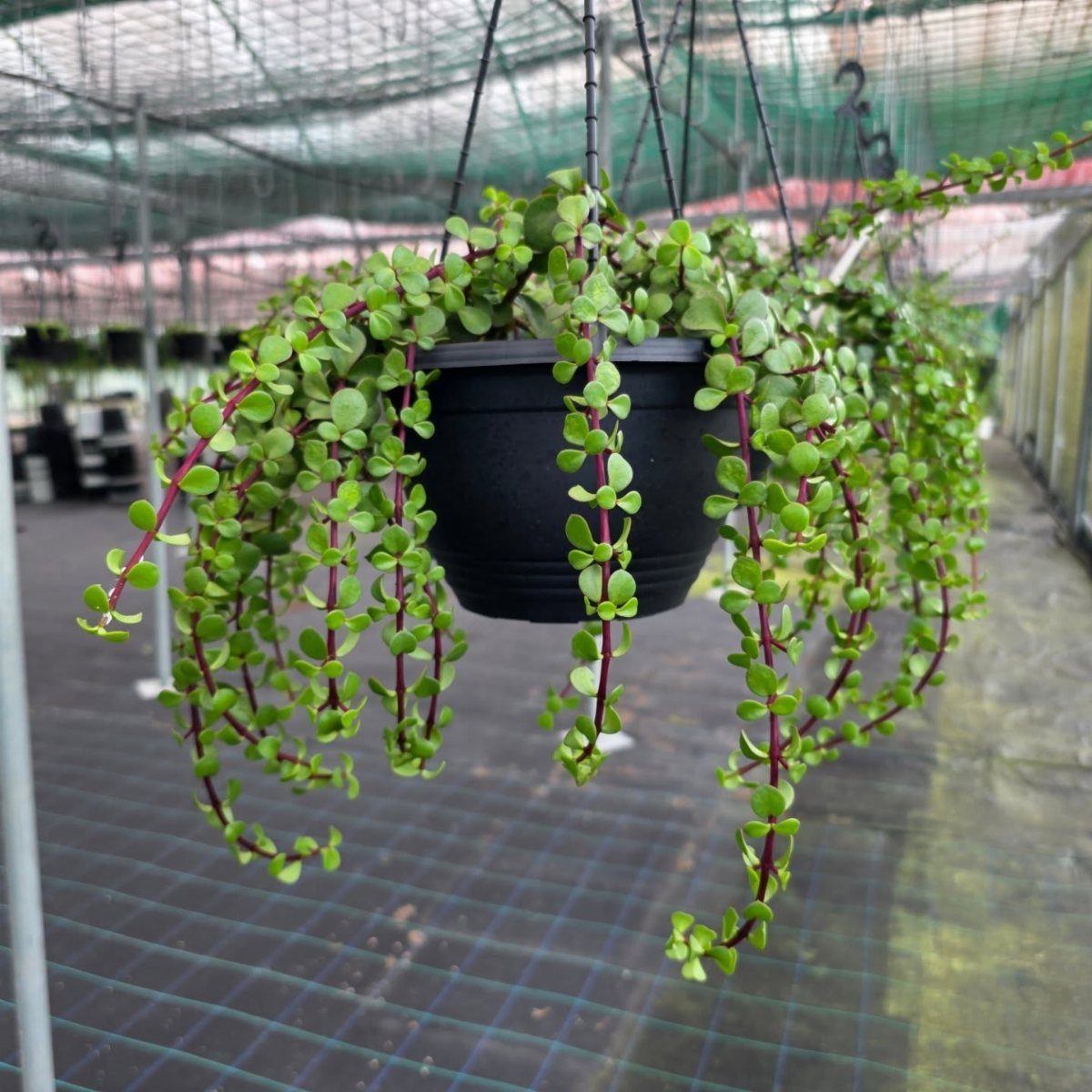
Jade Necklace trails in thin, cascading stems with tiny green leaves that flush red at the tips when the light is strong, and that jungle origin means it wants more humidity than desert succulents.
I would hang it in a bathroom with a small window, or set the pot on a saucer of damp pebbles in winter when heating dries the air.
The small leaves drop fast if the soil stays wet, so I let a finger depth dry between waterings rather than follow a schedule.
A plastic hanging pot keeps the weight reasonable for a hook in drywall, and the black color recedes so the plant itself reads as a green waterfall.
8. Dancing Bones
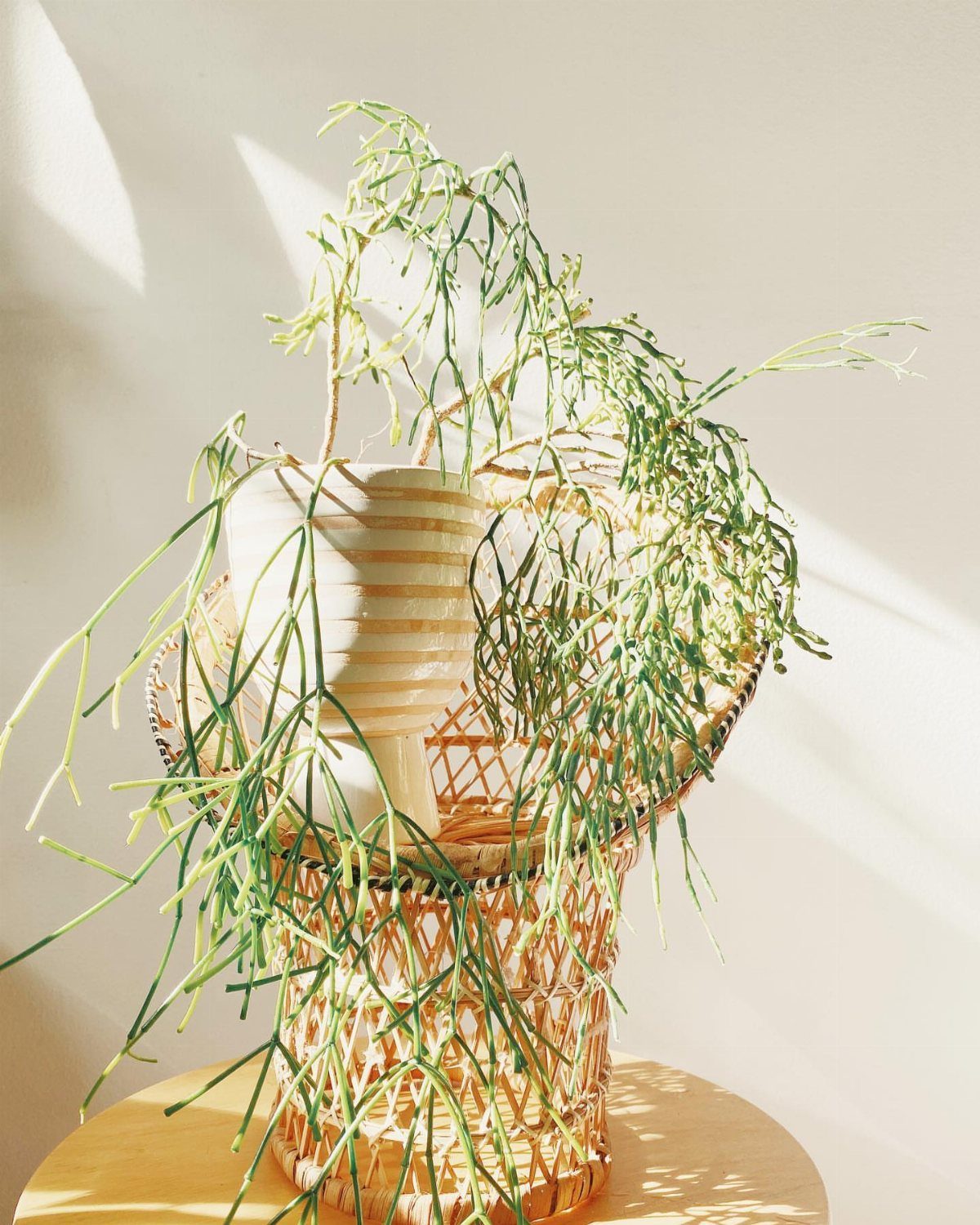
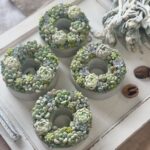
Dancing Bones builds its arch from thin, jointed stems that look almost like a stacked backbone, and that bare structure carries the show; the leaves are small and short-lived.
I would treat this as a sculptural piece on a table rather than hang it, since the stems grow outward and down in a loose dome that wants space around it.
White ceramic sets off that pale green geometry without competing with it.
Water only when the joints start to draw inward and narrow, a subtle cue that took me 2 seasons to read; before that I watered on guesswork and lost lower stems to rot.
A wicker basket outer pot hides the cache dish and keeps the plant from tipping once those stems lengthen and shift the center of gravity.
Care Tips for Hanging Succulents
A standard potting mix holds too much water for any trailing succulent.
I buy cactus and succulent mix, or I make my own by cutting regular potting soil with coarse sand and perlite until water runs through in seconds rather than pooling on top.
That drainage matters more than fertilizer type; these plants pull nutrients from lean soil and a half-strength feeding in spring is plenty.
I check dryness with a finger to the first knuckle, not a calendar.
The top inch can feel dry while the center stays wet, especially in a plastic pot, so I lift the nursery pot to judge by weight when I am unsure.
A pot with a built-in saucer traps runoff; I empty it the same day. In winter, when growth slows, I stretch the interval by several days and I skip fertilizer entirely.
Light Requirements
Bright, indirect light is the safe starting point for most hanging succulents, and I adjust from there based on how the plant responds.
Leaves that stretch tall and thin, or spaces that widen between leaf pairs, mean the spot is too dim. Color that bleaches to pale yellow, or leaves that turn soft and flat, signals too much direct sun.
A few feet back from a south window works for most of the plants I have hung indoors. East or west glass gives stronger direct beams for part of the day, and I watch those more closely.
Morning sun hits softer than afternoon; a plant that handles early-day exposure may burn once the sun swings higher and the rays intensify.
Outdoor hanging baskets need more attention. Dappled shade under a pergola or the bright side of a covered porch matches the indoor conditions these plants are bred for.
Full outdoor sun works only for varieties that specifically take it, and even those I move out gradually so they harden off without scorching.
Toxicity Information
Crassula species sit on my keep-away list for households with cats or dogs. Calico Kitten and String of Buttons both belong to this genus, and the ASPCA lists Crassula as toxic to pets.
Chewing any part can cause vomiting, lethargy, or worse. I hang these high, on ceiling hooks well above a leaping cat, or I choose a different plant if the household includes a determined climber.
Children under 5 put things in their mouths without asking.
I treat the same plants as off-limits in a nursery or playroom, not because I know of specific child poisonings, but because the risk is easy to avoid and the consequence is not.
The succulents in my list above are not the ones I worry about.
Burro’s Tail, String of Pearls, Ruby Necklace, Hindu Rope, String of Bananas, String of Nickels, Jade Necklace, and Dancing Bones are not flagged by the sources I have.
I still would not let a pet chew any houseplant as a habit; stomach upset from fiber or soil bacteria is common even when toxicity is not.
Frequently Asked Questions
What are the best succulents for hanging baskets?
Burro’s Tail, String of Pearls, String of Bananas, Ruby Necklace, Hindu Rope, String of Nickels, Jade Necklace, and Dancing Bones are all solid choices, and I have grown each one indoors with success.
Burro’s Tail builds thick ropes of leaves heavy enough to bend a hanger, while String of Pearls gives the same trailing look in a narrower footprint for small shelves.
String of Bananas is easier for beginners than String of Pearls because its thicker leaves resist rot better if you water a day early.
Do succulents prefer shallow or deep pots?
Shallow pots suit most hanging succulents because the roots spread wide rather than deep, and a shallow container dries faster.
A deep pot with a small root zone holds wet soil below the roots where fungus gnats and rot take hold.
I match the pot depth to the plant’s spread: String of Nickels fills a shallow wall planter beautifully, while a mature Burro’s Tail needs enough soil volume to anchor its weight without tipping.
What to put in the bottom of a hanging planter?
Nothing; a layer of gravel or shards at the bottom does not help drainage and can actually raise the wet zone closer to the roots. Any built-in saucer gets emptied the same day so roots never sit in runoff.