
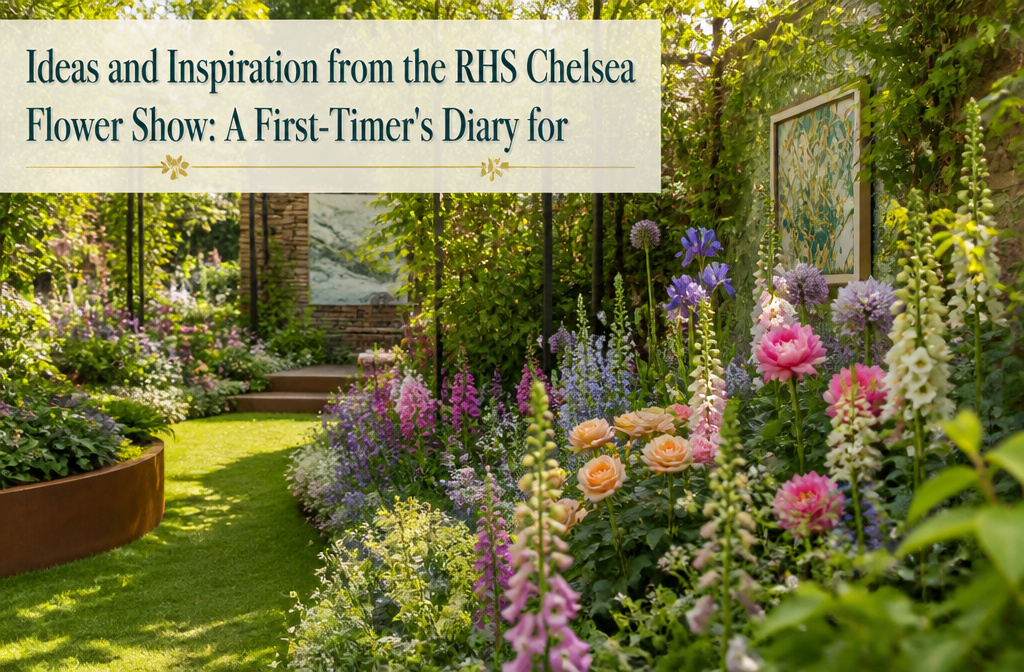
The RHS Chelsea Flower Show spans everything from £99 member tickets to fourteen-month garden builds, and the difference that matters is whether you treat the day as a checklist or accept you will miss most of it. The "Chelsea cough" from plane-tree pollen is real, the metal walkways throw serious glare, and by hour five your eyes will glaze over unless you planned for fatigue as the real limiting factor. I watched visitors spend thirty seconds in front of a garden that took a year to design, then move on to photograph the next.
1. Planning Your Visit
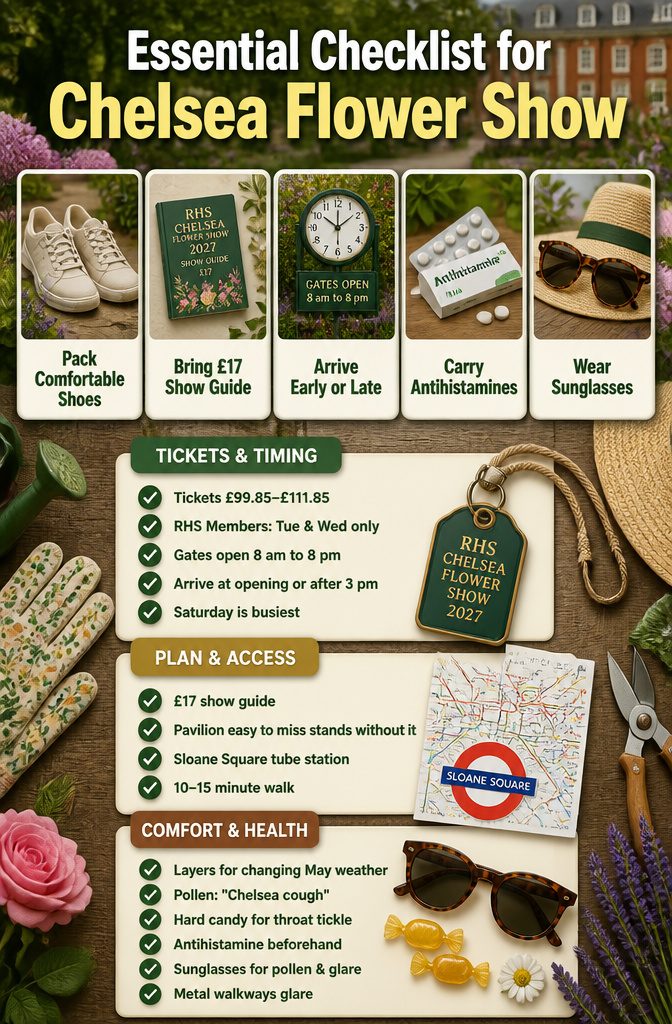
The 2027 RHS Chelsea Flower Show runs May 18–22 at the Royal Hospital Chelsea in London, gates open 8 am to 8 pm. Tickets run £99.85 for RHS members up to £111.85 for the public, and the £17 show guide is worth packing; the Pavilion alone has enough entrances and exits that you’ll miss stands without it. Sloane Square tube station puts you a 10–15 minute walk away.
Crowds thicken by late morning. Two windows work better: arrive at opening and head straight for whatever you most want to see, or slip in after 3 pm when coach parties thin out. Tuesday and Wednesday stay members-only, so if you’re holding public tickets, expect Saturday to be the busiest day of your options.
Comfortable shoes matter more than outfit planning, though layers do too; May weather shifts fast and the metal walkways by the show gardens throw serious glare when the sun hits. The plane trees along Eastern Avenue release enough pollen to earn their own nickname, the "Chelsea cough." A hard candy helps with the throat tickle, and if hay fever hits you hard, an antihistamine beforehand beats suffering through it. Sunglasses pull double duty against both pollen and that walkway glare.
2. Show Gardens

The thirteen show gardens, nine large and four small, are what most people picture when they think of Chelsea. These are not modest backyard plots. They are full-scale constructions built on the grounds over weeks, with mature trees craned in, stone walls laid by hand, and planting schemes that cost more than most annual garden budgets.
A first-timer should expect to feel slightly overwhelmed. The large gardens especially reward standing still longer than the crowd around you permits. I watched visitors last year spend thirty seconds in front of a garden I later learned took fourteen months to design, then move on to photograph the next. The details that make a scheme coherent, the repeated leaf shape or the way a sightline frames a borrowed view from the hospital beyond the fence, need time to register.
The four small gardens, now called All About Plants gardens, compress the same ambition into tighter footprints. They are easier to take in whole, which makes them useful warm-ups. I would start with one or two of these, letting your eye adjust to the density of information, before tackling the large gardens where the full composition only reveals itself from specific angles.
Tuesday morning brings the medal announcements and, mid-morning, the Best in Show presentation. If you position yourself near the main gardens then, you may catch the filmed moment when designers learn their result. Last year Kazuyuki Ishihara won for his Japanese Tea Garden, and the crowd that gathered was part of the experience. Arrive with a short list of two or three gardens you want to see slowly, not a checklist of all thirteen.
3. Planting Displays
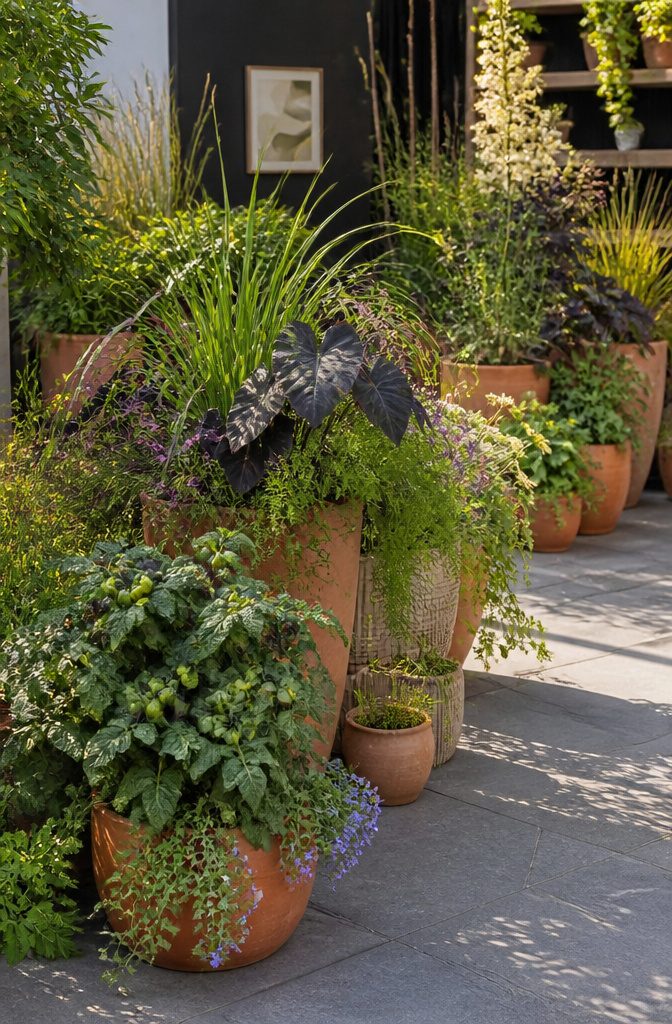
Planting displays at Chelsea sit apart from the full show gardens, and that distinction matters for anyone working a small patio or balcony. These are the balcony and container gardens on Ranelagh Avenue, plus the designed trade stands inside the Great Pavilion, built by emerging designers to solve real constraints of space and budget. In 2026 there will be nine of these small-space gardens: five container gardens and four balcony gardens. Their whole purpose is to send you home with ideas you can actually use.
What struck me walking through was how the best ones handled texture. Lupins paired with fennel, grasses threaded through cottage-style plantings, the crinkly deep-green leaves of a ‘Patio Plum’ tomato against galvanized metal. The designers weren’t chasing rare specimens; they were combining ordinary plants so the leaves did the work when flowers faded. Layering helped too, even in a single pot: a low trailer, a mid-height mound, one vertical spike to pull the eye upward. Repeat two or three plant shapes and a restrained palette, and a collection of containers starts to read as one intentional space rather than whatever was on sale at the garden center.
The trade stands nearly matched the show gardens for planting ideas. Pelargoniums massed in a greenhouse display, raised beds built from upcycled tubs around a small structure: these are solutions scaled for renters and small yards. I took photos of the galvanized tubs knowing my own balcony has room for exactly that footprint. The designers admitted these gardens are also meant to support local wildlife and personal health, which sounds lofty until you realize a single insect hotel and a few pollinator-friendly plants cover both aims in under ten square feet.
4. Trade Stands and Exhibitors
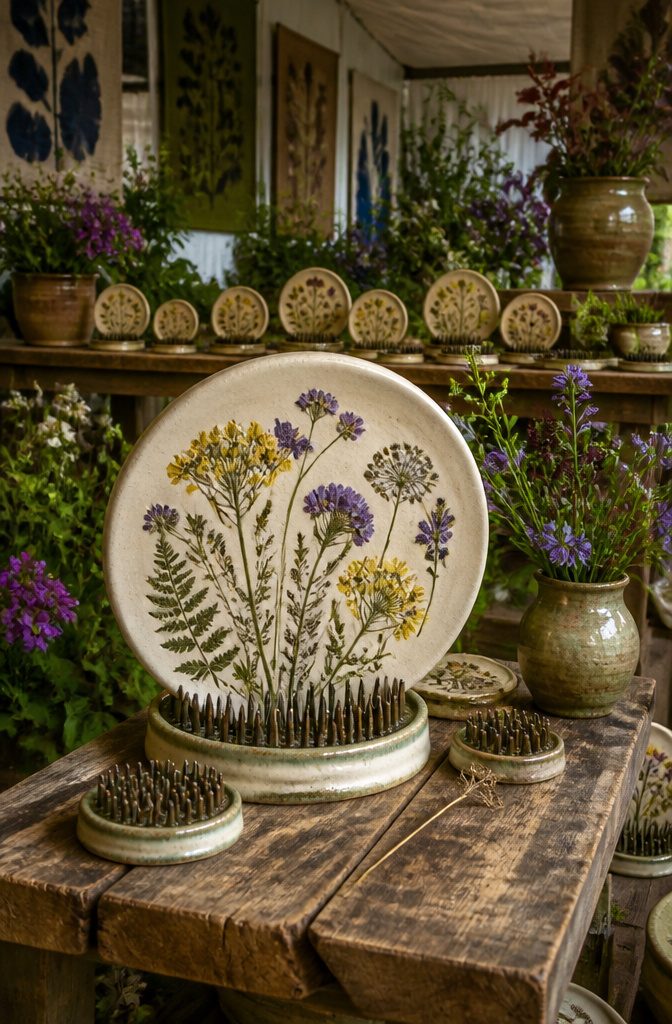
The trade stands run along avenues draped in flowers and foliage, and you could burn a full day just walking them. I nearly missed the ceramics entirely until I spotted a crowd three-deep at one booth. Melissa Waudby’s ceramic flower frogs were almost sold out by day two, and her husband had already driven back to Cambridgeshire to fire the kiln for emergency restock. That tells you what moves at Chelsea.
Louise Condon, now in her fourth year there, presses actual flowers into clay so their silhouettes stay preserved. She keeps smaller pieces visitors can carry home alongside larger commissions that become statement work. The balance matters: one fills your bag today, the other fills a wall for years.
Plant sales are tight because of space limits. Most nurseries take orders rather than hand over stock. If you want a bargain, wait until Saturday after 4 p.m., when exhibitors sell off remaining plants cheap. Greenhouses and bigger items sometimes carry show-only deals, so ask before you leave.
5. Common Mistakes
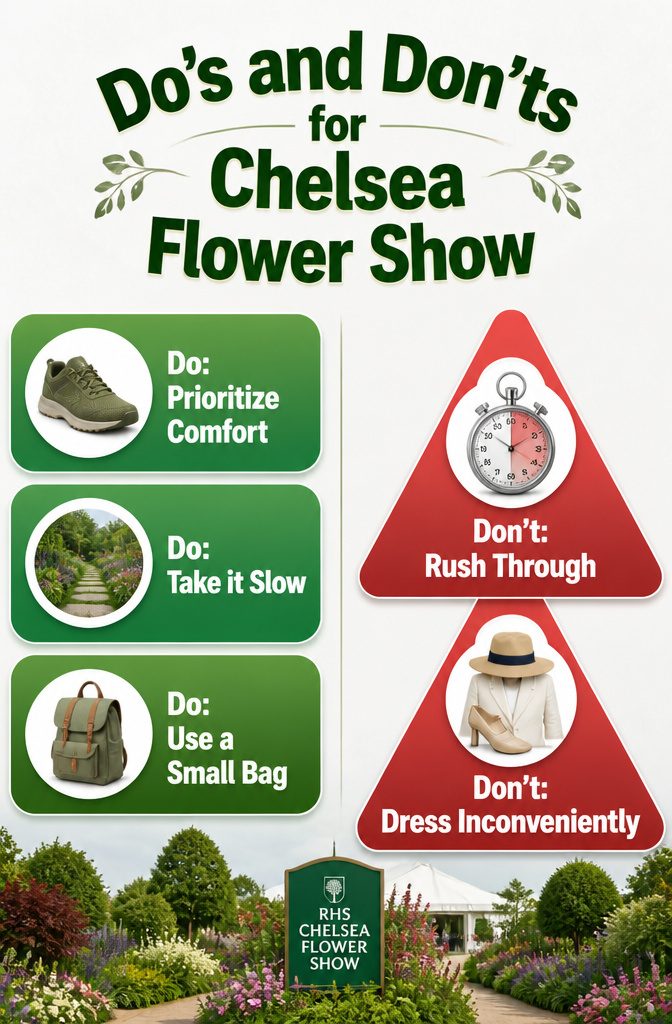
The biggest trap at Chelsea is treating the day like a checklist to conquer. Grounds this size, with this much to look at, will wear you down faster than you expect. I have learned this the hard way at other big shows: by hour three the feet hurt, by hour five the eyes start glazing over, and anything after that is half-seen at best. Plan for fatigue as your real limiting factor, not the closing time on the ticket.
Dressing up sounds tempting for a prestigious event, but the crowds, the standing, and the unpredictable English weather make comfort the only sensible priority. A small rucksack or shoulder bag keeps your hands free for photos and notes; a loaded tote, however pretty, drags on your shoulder and bumps into strangers in tight aisles.
Rushing is the third mistake, and it ties the other two together. If you are hurrying to "see everything," you are too tired to notice the smaller displays where some of the best moments hide. A few anchor experiences, studied slowly, beats a blur of every garden half-glimpsed. Curiosity over conquest: that is the mindset that makes the ticket worth the price.
6. Practical Tips
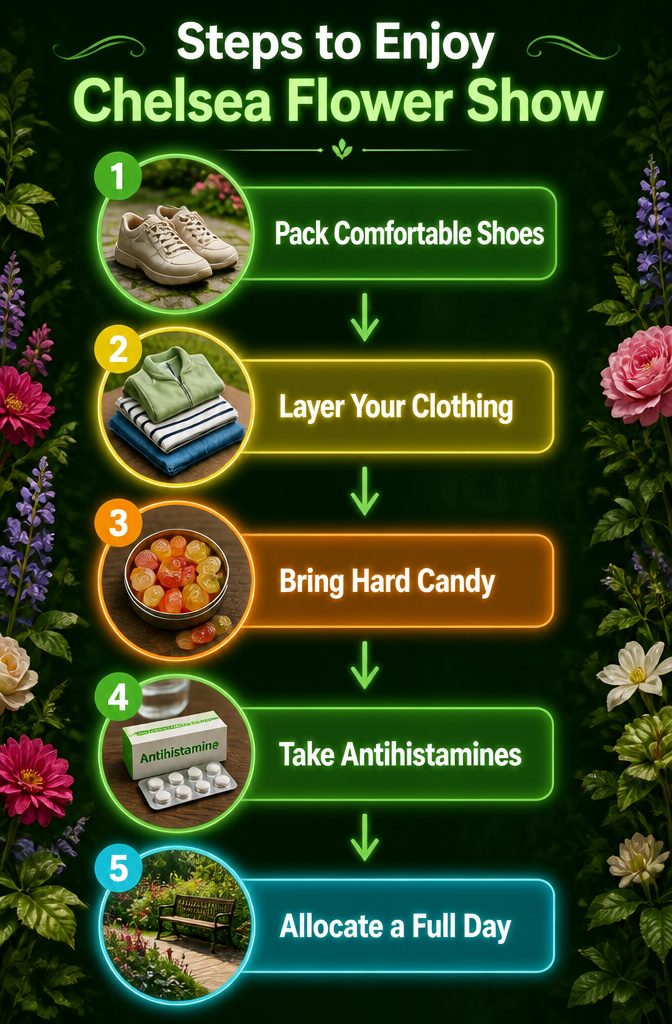
Comfortable shoes matter more than almost anything else at Chelsea. The ground looks elegant in photographs, but a full day on your feet on hard surfaces adds up fast, and the last thing you want is to cut a garden visit short because of blisters. I learned to dress in layers after my first May trip, when London weather swung from damp chill to bright sun inside three hours. A light jacket you can tie around your waist beats any single "perfect" outfit.
The plane trees along Eastern Avenue release enough pollen in peak flowering to trigger what’s locally called the Chelsea cough, a throat tickle that can nag at you for hours. A hard candy to suck helps, and if you are prone to hay fever, taking an antihistamine before you arrive is worth it. Sunglasses pull double duty: they cut the glare bouncing off metal walkways by the show gardens, and they keep swirling construction dust out of your eyes when the wind picks up after dry spells.
A full day is the minimum for a first visit. What looks like a few hours of garden browsing stretches out once you factor in revisiting favorite plantings, sitting down to actually see the details, and pausing for coffee before your feet stage a revolt. The show is more enjoyable when you build in that mental space, rather than moving through it with constant urgency.
What to Expect
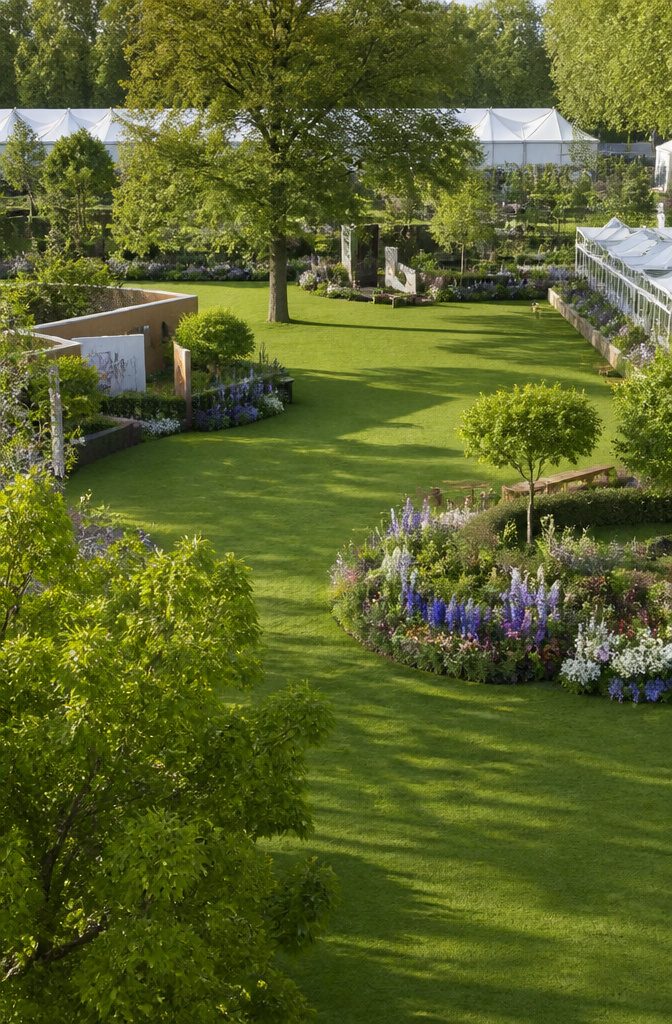
Thousands of visitors move through the gates each day, and the crowd itself becomes part of the experience. You will queue, you will weave between bodies in front of the best-known show gardens, and you will still feel the shared enthusiasm that defines the place. The grounds hold show gardens, artisan stands, the Great Pavilion with its growers and nurseries, and shopping avenues selling tools and outdoor décor. First-timers often try to absorb it all in one sweep, but the day works better at a measured pace. The planting, the design, the craft, the people-watching, the photography, the sheer garden enthusiasm, it is concentrated and visually rich. You will not take it all in at once, and that is the point. Accept the density, plan for the walking and standing, and let the event unfold rather than chase it.
Chelsea in Bloom
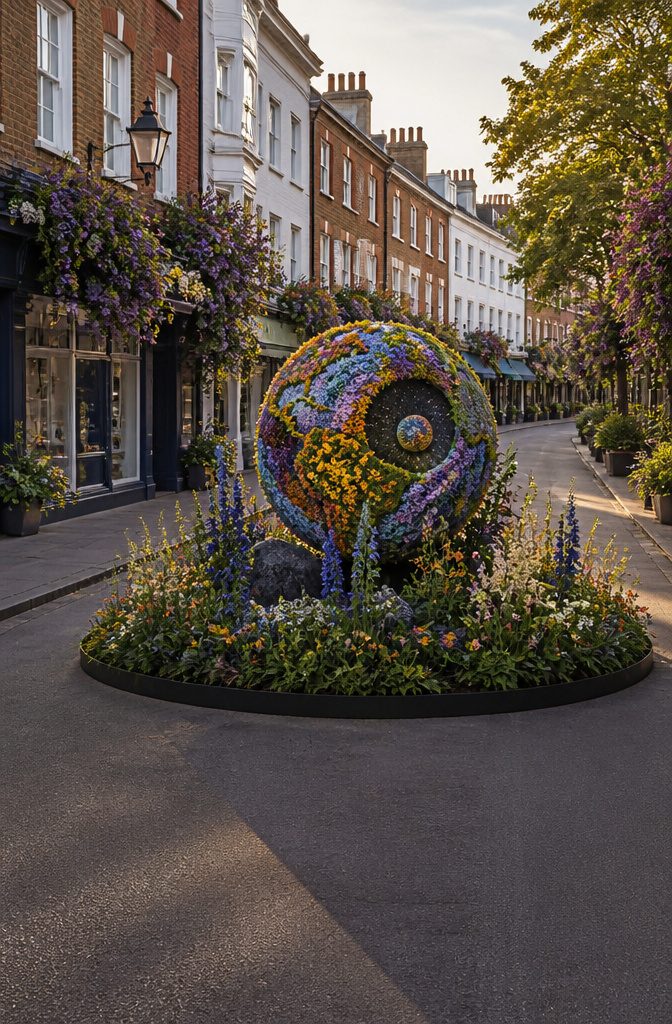
Chelsea in Bloom runs the same week as the flower show itself, and it is easy to walk right past it if you do not know to look. The streets around the grounds become an open-air gallery of fresh flower installations, put on by more than 125 shops, restaurants, and hotels. In 2025 the festival drew 1.58 million visitors, which gives you some sense of the scale.
The 2026 theme is "Out of this World." Sloane Square gets a zodiac-inspired floral constellation. Pavilion Road has a UFO installation suspended overhead. Sloane Street carries a four-meter dragon and Pegasus done in flowers. For 2026 there is also a giant floral globe on King’s Road marking David Attenborough’s hundredth birthday.
You do not need a ticket to the main show to see any of this. That matters if you are visiting with someone who does not want to spend the day on garden grounds, or if you are priced out of the Chelsea entry itself. Walking tours and rickshaw rides run alongside the displays, though I would plan my own route and move at garden-visit pace rather than wait in line for either. The installations stay up through show week, so an early morning walk before your ticketed entry, or an evening stroll after, fits neatly into a single trip without costing more.
Timing Your Day
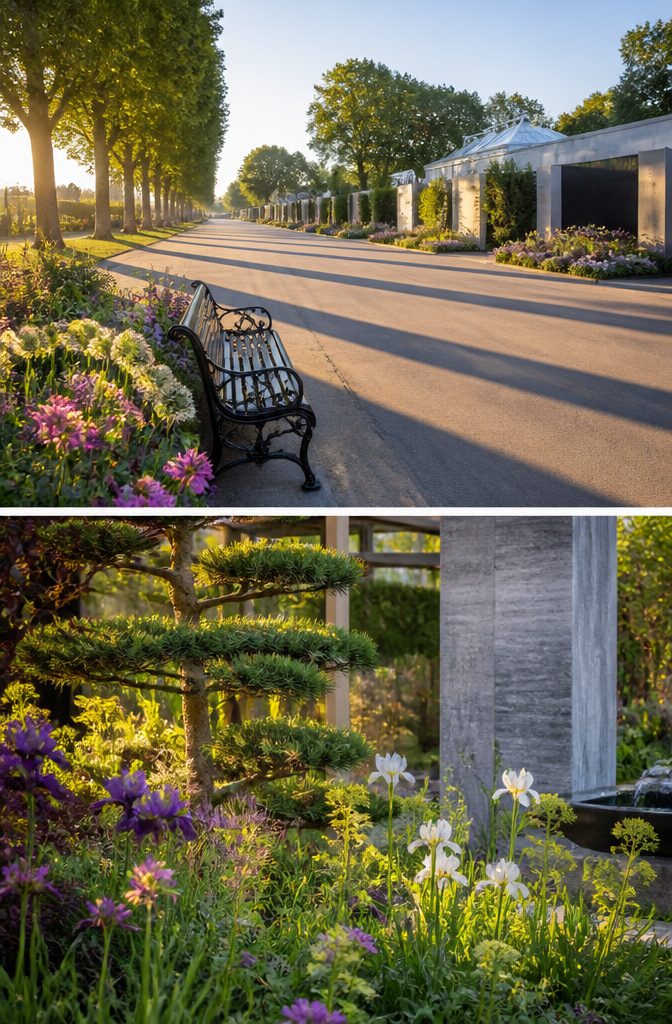
Gates open at 8 a.m., and the first hour is the only time Main Avenue feels open rather than a queue with plants. I would head straight for the one show garden I most wanted to see in full, because by late morning the crowds are several people deep and you are looking at backs instead of borders.
The rhythm flips after 3 p.m. Coach parties thin out, the light softens, and you still have five hours until closing at 8 p.m. The side paths of each garden, easy to skip when you are fighting upstream at noon, suddenly become the better route: designers build these spaces to be read from every angle, and the edges give you that view without the press.
If your ticket allows it, the Friday evening slot from 5:30 p.m. runs later with music in Ranelagh Gardens. Tuesday and Wednesday stay quieter simply because they are members-only days. Saturday I would avoid entirely unless there is no other option.
Talking to Designers
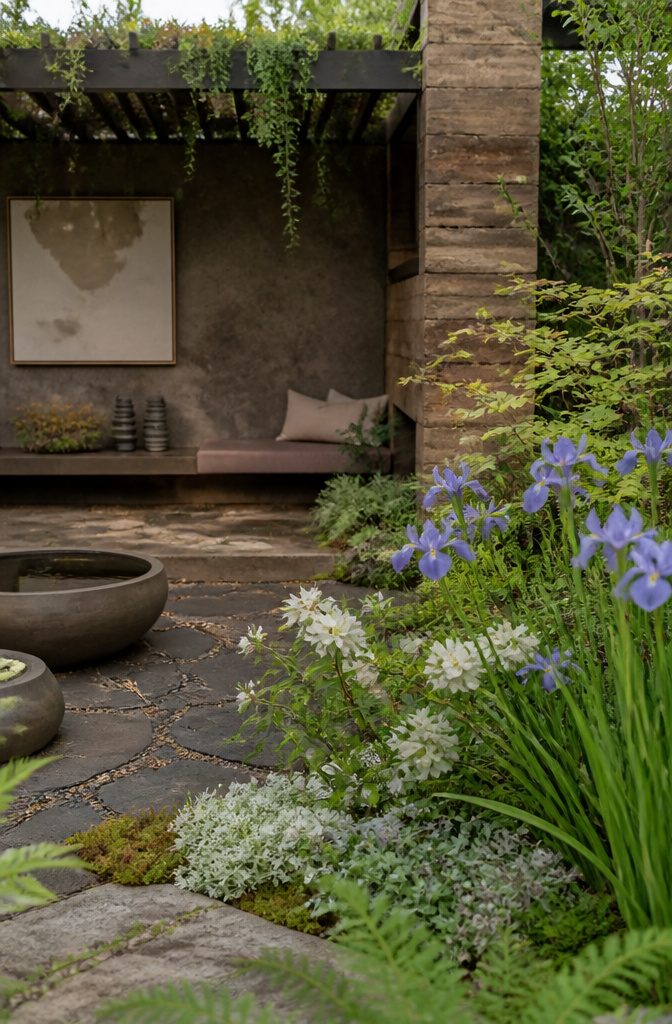
The designers at Chelsea are there to talk, but the ones who will actually teach you something are easiest to catch before the gates get busy. Early weekday mornings, before the crowds thicken around the show gardens, a designer might have ten uninterrupted minutes to explain why they used Astrantia instead of Geranium in a particular border. That is the window to ask the questions that matter to your own yard: what failed in the practice build, which plant proved too tender even for London, how they adapted when the specified stone did not arrive.
The right questions are rarely about inspiration. Ask instead for the boring parts: soil depth on the build, the one substitution they wish they had not made, whether the client or the sponsor forced a change. Designers remember the disasters more vividly than the successes, and those details are what you can actually use back home.
After the show, a brief note through their website or studio, mentioning the specific garden and the detail they told you, gets a better response than a generic compliment. Follow up within a week, while the build is still fresh in their memory. Trade stands will hand you cards for free; a designer’s time is harder to claim, and more worth keeping.
Frequently Asked Questions
What should I wear to the Chelsea Flower Show?
Comfortable shoes matter more than anything else, since a full day on hard surfaces adds up fast. Dress in layers; May weather in London can swing from damp chill to bright sun inside three hours. A light jacket you can tie around your waist beats any single fixed outfit. Sunglasses help against both pollen from the plane trees and glare bouncing off metal walkways by the show gardens.
How long should I plan to stay at the Chelsea Flower Show?
A full day is the minimum for a first visit. What looks like a few hours of garden browsing stretches out once you factor in revisiting favorite plantings, sitting down to see details, and pausing for coffee before your feet give out. The show runs 8 am to 8 pm, and using that full span with built-in breaks beats rushing through in half the time.
Can I buy plants at the Chelsea Flower Show?
Plant sales are limited because of space constraints; most nurseries take orders rather than hand over stock on the spot. If you want a bargain, wait until Saturday after 4 pm, when exhibitors sell off remaining plants cheap. Greenhouses and bigger items sometimes carry show-only deals, so ask before you leave.
What are common mistakes first-time visitors make?
The biggest trap is treating the day like a checklist to conquer. Grounds this size wear you down faster than expected; by hour three your feet hurt, by hour five your eyes glaze over. Dressing up instead of dressing for comfort is another error, as is rushing past smaller displays where some of the best moments hide. A few anchor experiences studied slowly beats a blur of every garden half-glimsed.