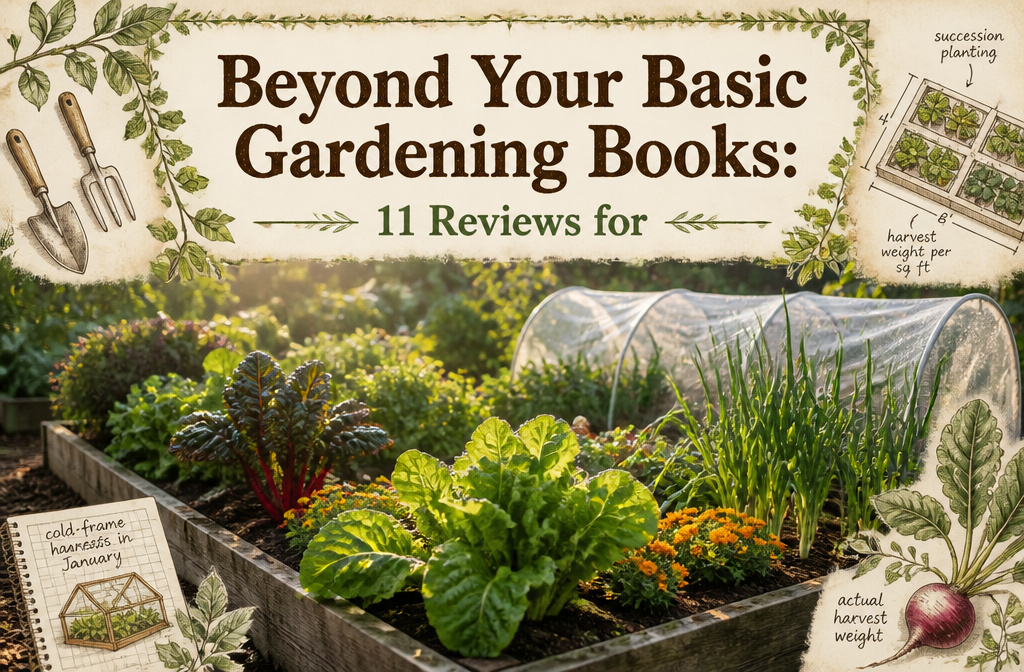
These eleven books are for gardeners who already know how to sow a row and want to stop treating a 4-by-8 bed like a hobby display.
The catch is that most guides stop at the basics; these ones cover succession planting, cold-frame harvests in January, and the arithmetic of actual harvest weight per square foot.
McCrate and Halm’s spiral-bound manual stays flat in the dirt where glossy books fail, and that alone tells you who wrote it for.
High-Yield Vegetable Gardening
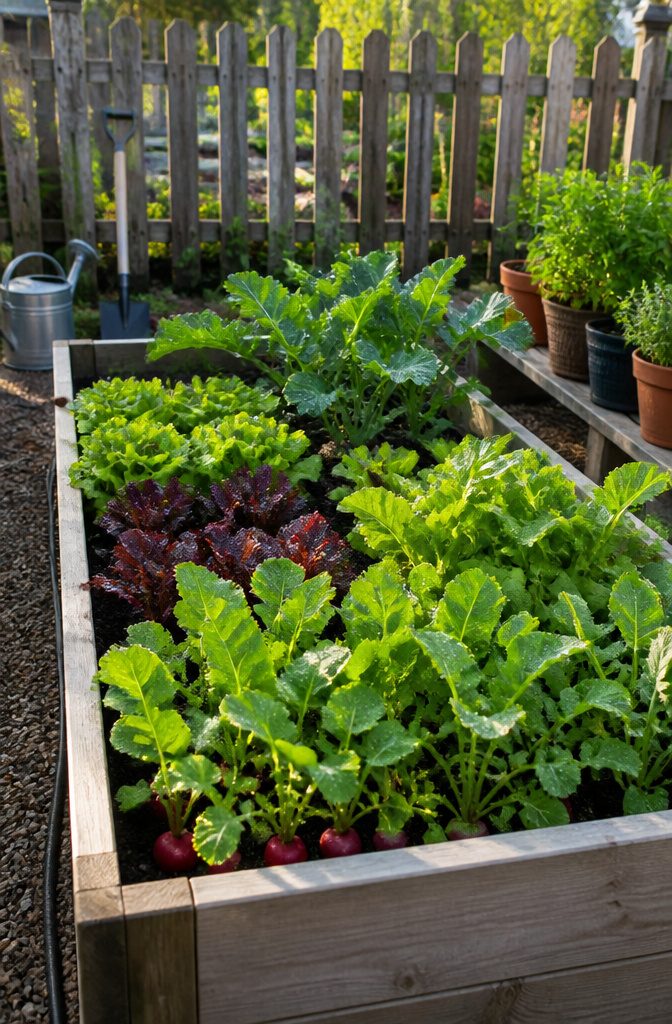
High-Yield Vegetable Gardening by Colin McCrate and Brad Halm reads like a field manual from people who actually spend their mornings in dirt rather than conference rooms.
The spiral binding and lack of glossy photos tell you immediately what you’re getting: a workbook for gardeners ready to treat a 4-by-8 bed or a cluster of containers like a production plot, not a hobby display.
McCrate and Halm run the Seattle Urban Farm Company, and their method centers on succession planting and interplanting in tight rotations.
For small-space growers, the payoff is squeezing three or four crops from the same square footage in a single season instead of one.
The soil management chapters focus on keeping that turnover sustainable: building organic matter fast enough that constant planting doesn’t deplete what you’ve got.
They walk through choosing varieties bred for density rather than size, timing plantings so the next crop goes in before the previous one fully clears, and managing fertility without the gap weeks basic guides assume you have.
The book assumes you already know how to sow a row and water it.
What it adds is the arithmetic of harvest weight per square foot, and the specific sequences that keep a container tomato operation or a single raised bed producing from April frost date to October.
For gardeners working a patio or balcony on limited space, that shift in thinking matters more than another variety encyclopedia.
Epic Tomatoes
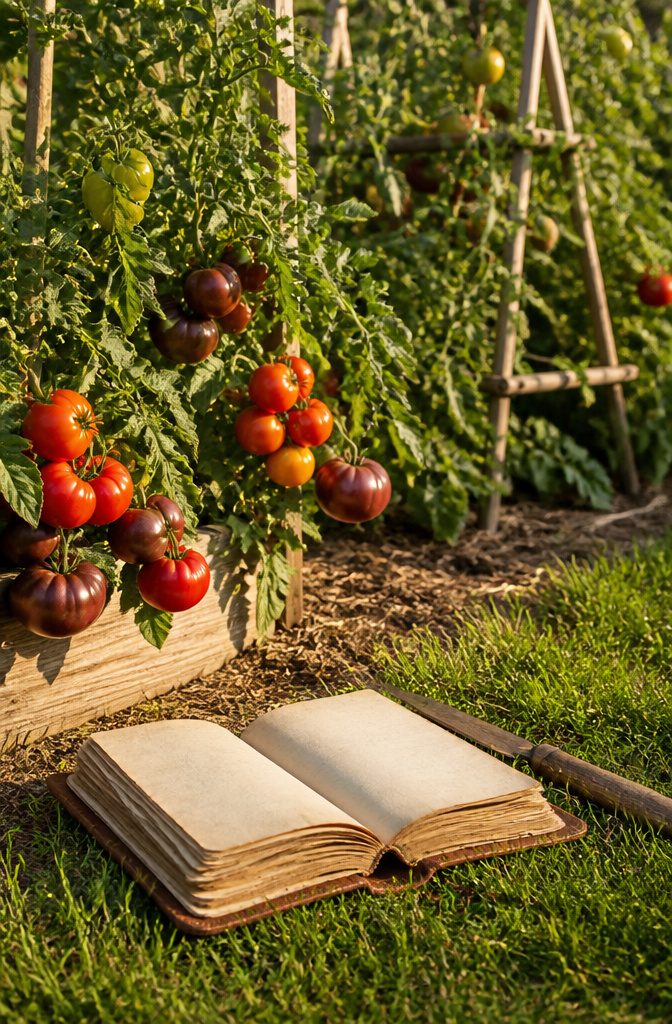
Craig LeHoullier’s Epic Tomatoes is the book that finally stopped me from losing half my plants to blight and blossom-end rot.
What sets it apart from the basic guides is the sheer depth of variety knowledge: LeHoullier has grown and trialed hundreds of heirlooms, and he tells you which ones actually perform in humid summers, which tolerate cooler nights, and which are worth the extra staking for their flavor payoff.
The cultivation techniques come from decades of his own experimentation, not rehashed advice.
His dense-planting method for seedlings, developed through years of refining spacing in his own beds, lets you start more plants in less space without the leggy weakness that dooms most home-started tomatoes.
For gardeners in that second or third season still guessing at varieties, the zone-by-zone reliability notes are the closest thing to a guarantee you’ll get with heirlooms.
The photographs matter too. You see the actual fruit color, the leaf shape, the growth habit, so you know what you’re aiming for and what might have gone wrong when your plant looks different.
That visual reference, paired with the history of each variety, turns variety selection from a gamble into something you can reason through.
Complete Compost Gardening Guide
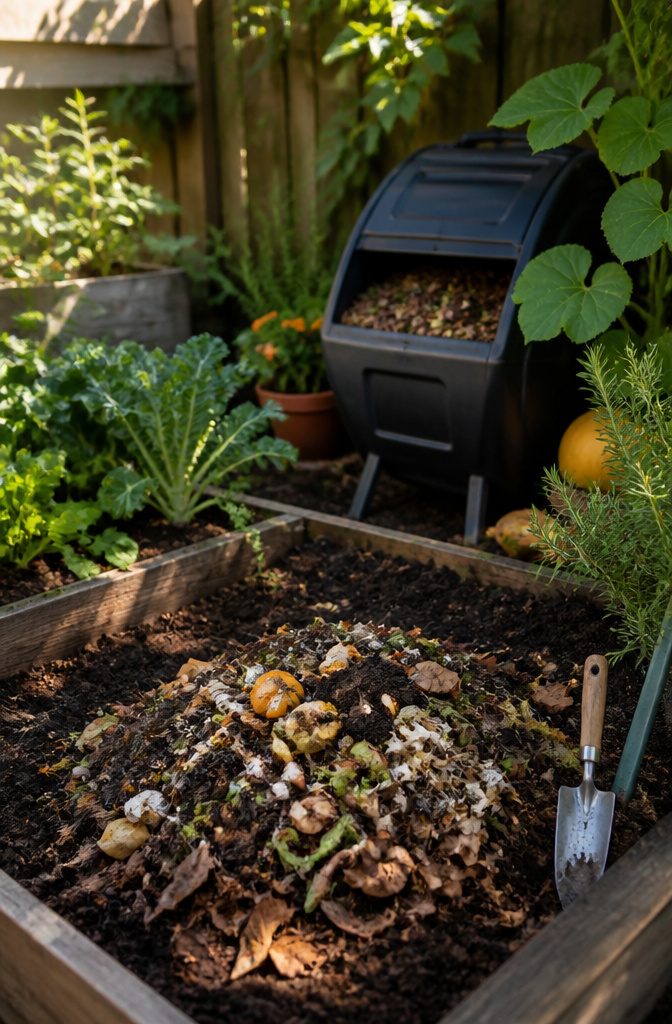
Composting in a small patio or balcony space used to feel like something that required acreage and a pitchfork.
Barbara Pleasant and Deborah Martin’s 2008 book convinced me otherwise. Their banner batch method lets you compost directly in a garden bed or a tucked-away corner, no bin required, which saves the back-and-forth hauling that makes small-space gardeners quit.
The authors lay out several approaches: classic piles, enclosed bins, trenches, and worm composting for the truly tight footprint.
For kitchen scraps, they recommend the usual greens, coffee grounds, and vegetable trimmings, balanced with browns like dried leaves or shredded paper.
What changed my thinking was their grow heap technique, composting right where you plan to plant, so the nutrients never move.
The book also runs through which crops respond best to fresh compost and how to time your batches so you are not staring at a half-finished pile when planting season hits.
The photos help, especially when you are trying to judge whether a pile looks too wet or too dry by sight. At roughly $15–$25 used, it pays for itself in saved bagged soil amendments within a season or two.
The Well-Tended Perennial Garden
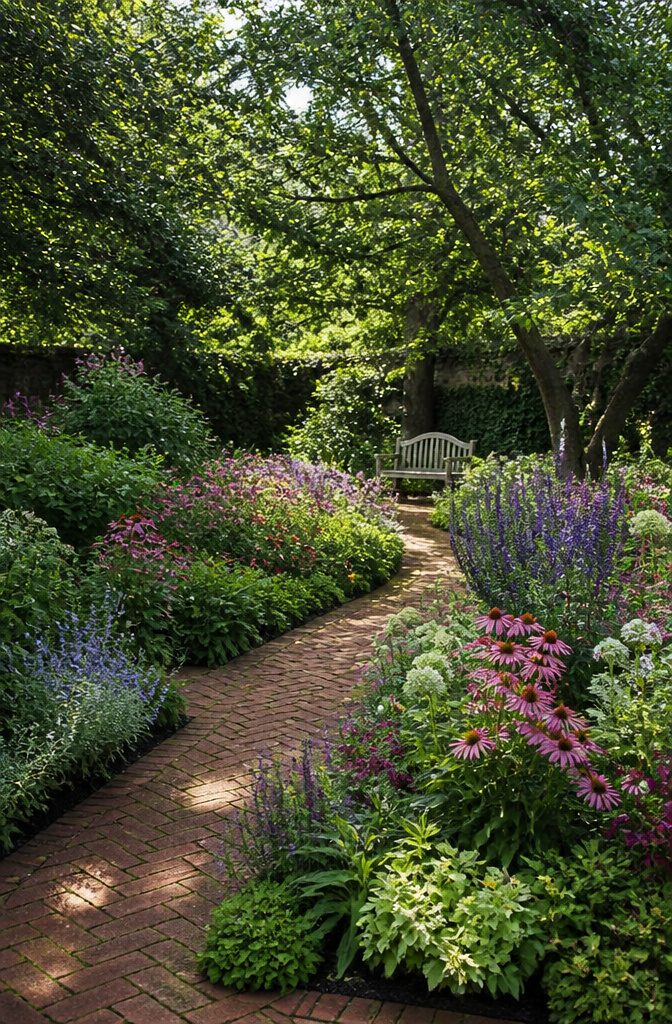
The first time I read The Well-Tended Perennial Garden, I was spending about $600 a year on annuals that died off every October and left my beds bare.
Tract DiSabato-Aust’s book changed how I thought about cost. She maps out deadheading, pinching, and thinning as routine maintenance rather than optional fuss, and that discipline is what keeps a perennial bed performing for years without the replanting bill.
Her monthly schedule matters most for gardeners working small spaces. If you are fitting plants between a patio and a fence, you cannot afford a bed that looks spent by July.
DiSabato-Aust pairs that timing with specific cultivars, so you are not guessing which coneflower or salvia will survive your zone.
The design advice has aged well too; she was writing layered borders before they became the default look on gardening accounts.
For a tighter budget, the book pays for itself quickly. One season of not buying flats of annuals covers the cover price.
The wildlife and native plant sections are thinner than in dedicated titles, but as a working manual for beds that return on their own, it has stayed on my shelf longer than trendier guides.
Attracting Native Pollinators
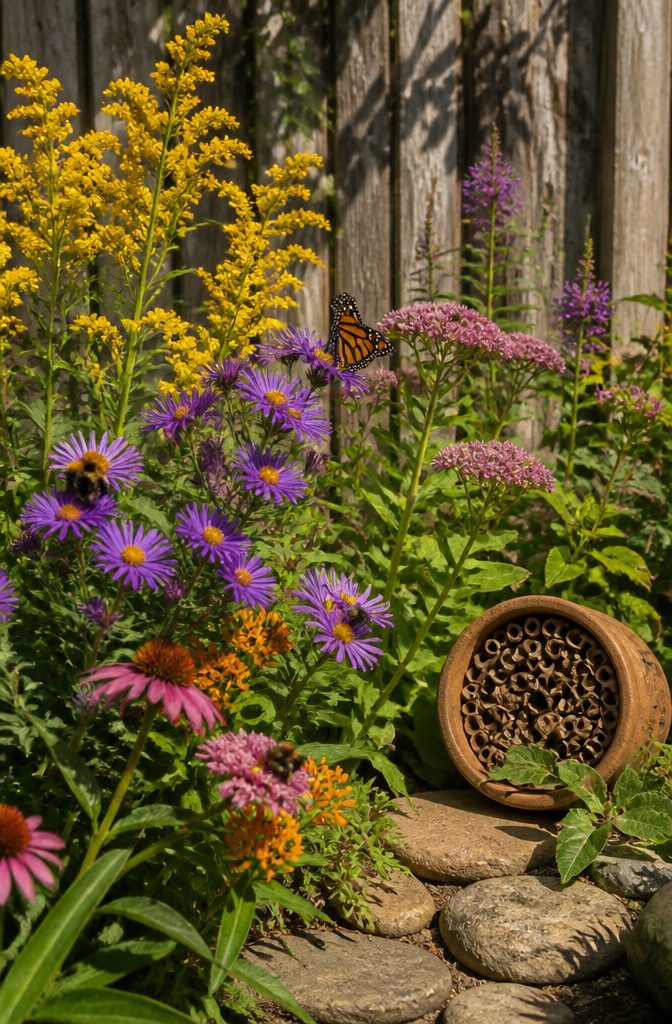
Attracting Native Pollinators has been my go-to reference since it came out in 2011. The Xerces Society packed it with practical guidance on the 4,000-plus species of native bees across North America, plus the butterflies that share our gardens.
What keeps me opening it is the specificity: which plants actually feed which pollinators, photographed clearly enough that I can match them at the garden center.
For a small patio or balcony plot, this matters more than most gardeners realize.
Native bees and butterflies are the workhorses behind squash, tomatoes, and berries. Without them, yields drop even when flowers look fine.
The book maps out plant pairings that keep pollinators present from early spring through late fall, which is the gap most small gardens have. One flush of blooms in June does not feed a bee colony through August.
The habitat advice scales down well.
A few clustered asters or goldenrods in a corner container, left standing through winter, beats a tidy bare bed for nesting sites. The photos of bees on their target plants make the case better than any list could.
The Vegetable Gardener’s Bible
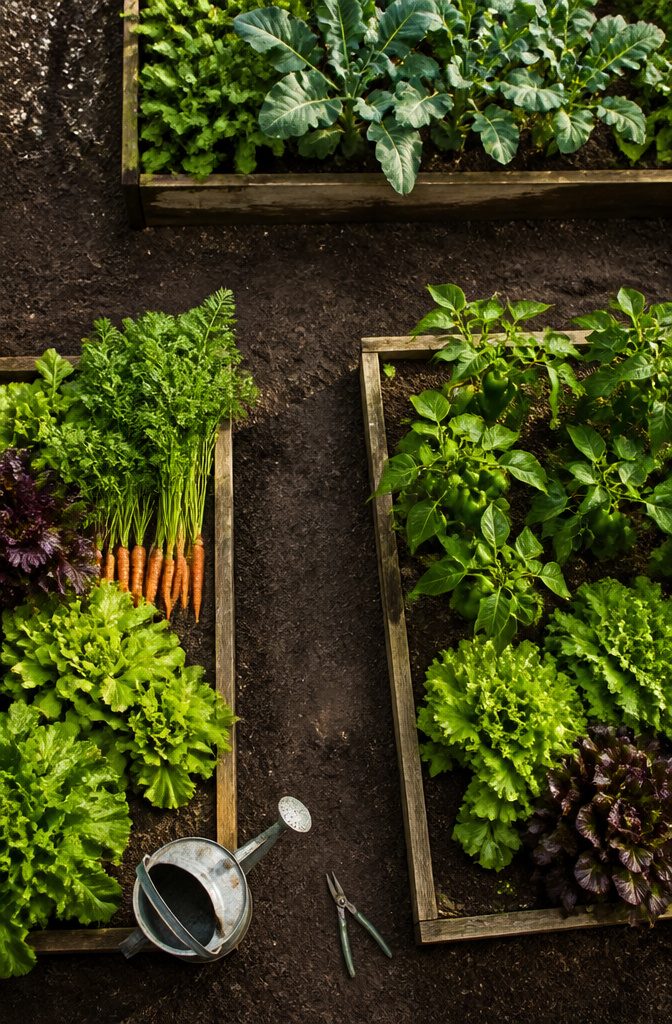
Edward C. Smith’s The Vegetable Gardener’s Bible earned its spot on my shelf the hard way, by surviving twenty years of actual use.
The book builds around wide rows, organic methods, raised beds, and deep soil, with raised beds set at a depth that lets roots develop properly rather than fighting compacted ground.
Soil preparation, crop rotation, and seasonal planning for small plots all live in the same place, which matters when you are standing in the garden at 7 a.m. trying to remember what went where last spring.
The variety profiles saved me more than once. Smith runs through hundreds of popular vegetables with the specifics I need: soil preference, planting timing, harvest signals, and fertilization that matches each crop rather than dumping the same feed on everything.
The illustrations clarify what the text describes, especially for spacing and trellising decisions that look simple until you are doing them wrong.
For gardeners working limited space, the book functions as a reference you reach for repeatedly rather than reading once.
The seasonal planning sections keep a small plot productive without requiring expansion, and the crop rotation guidance prevents the soil depletion that hits hardest when you are already tight on ground.
Rodale’s Basic Organic Gardening
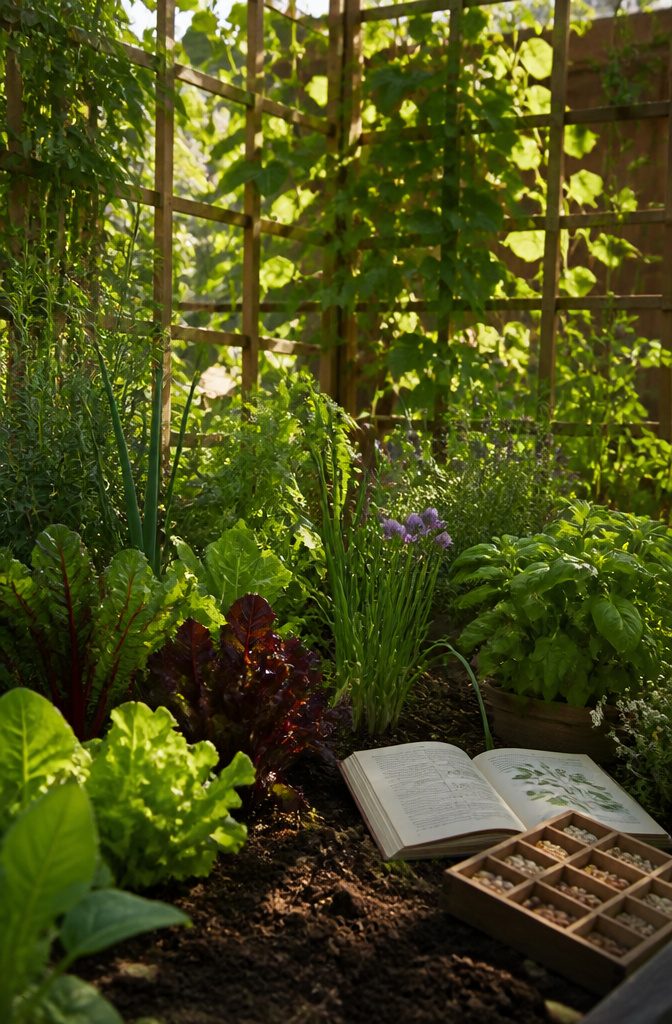
Deborah L. Martin’s Rodale’s Basic Organic Gardening organizes itself around the questions beginners actually ask, from whether you need to dig at all to how much water hits the mark.
The growing-season structure means you open to the chapter that matches whatever is happening outside right now, which solves the paralysis of not knowing where to start.
What sets this apart from generic how-to guides is its treatment of soil and pests as connected systems rather than separate problems.
The composting guidance builds toward living soil that resists disease pressure on its own, and the pest section leans on observation and physical barriers before suggesting any organic input.
For someone working a patio or small yard who wants to avoid synthetic chemicals entirely, that sequencing matters.
You learn to spot trouble early, to identify whether a bug is actually causing damage, and to introduce predators or remove pests by hand before reaching for approved sprays.
The troubleshooting section acknowledges that experiments fail, which keeps the tone practical rather than preachy.
At roughly the price of two bags of premium potting mix, it pays for itself the first season you skip an unnecessary fertilizer purchase because you already built the soil right.
Gaia’s Garden
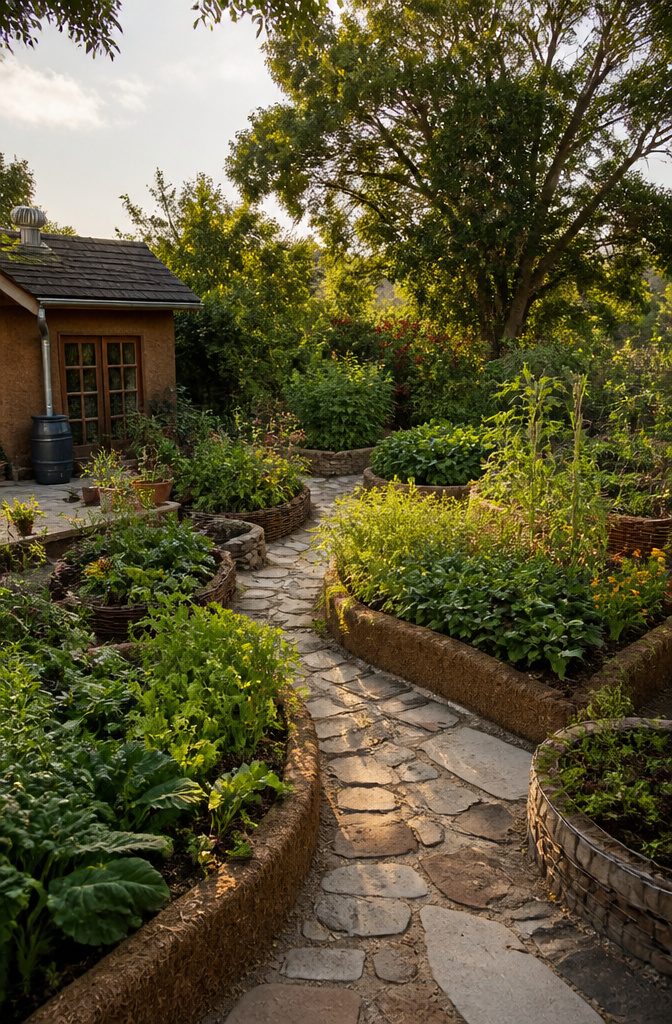
I picked up Gaia’s Garden after killing my third round of container tomatoes with the same schedule of water-and-fertilizer that worked fine for my neighbor.
Toby Hemenway’s argument is that a garden designed like an ecosystem gets easier as it matures, not harder.
The book walks through home-scale permaculture: stacking functions so every element does several jobs, placing plants by how they interact with water and shade and each other, and building soil rather than importing it in bags.
Greywater from the washing machine feeds a swale.
A plum tree on the south side cools the patio in summer. The insectary hedge brings in predators for the aphids you were about to spray.
Over 1,000 Amazon reviewers have kept it at a 4.8-star rating, which tracks; the appeal is less about new techniques and more about seeing your small yard as a system you can tune rather than a list of chores to complete.
Four-Season Harvest
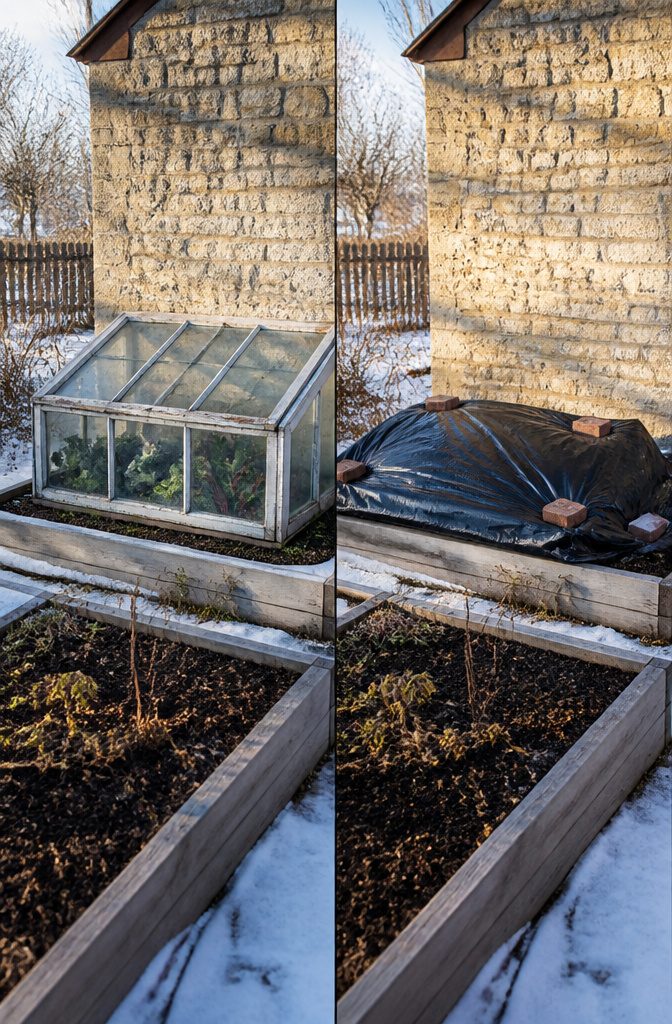
Year-round vegetable gardening in Nova Scotia taught Niki Jabbour that cold frames and hoop houses can pull a harvest through January without a heated greenhouse.
She gardens in a climate most of us would call challenging, yet she eats from her plot 365 days a year by layering simple structures and timing her plantings right.
The method works because it treats the shoulder seasons as real growing time, not just frost-free bonus rounds.
A cold frame, basically a bottomless box with a clear lid, traps enough solar gain to keep soil workable when air temperatures drop below freezing.
Hoop houses, bent conduit or PVC covered with greenhouse plastic, do the same for row-length plantings. Neither requires building skills beyond a Saturday afternoon and materials that run well under a typical season’s budget.
Succession sowing matters as much as the structures themselves. Jabbour plants new crops in late summer and early fall so mature plants sit dormant through winter rather than trying to start seeds in cold soil.
The same principle shows up in Edward Smith’s wide-row approach, where dense plantings create their own microclimate. Smith also pushes organic matter deep, building soil that holds warmth longer and drains faster in spring thaws.
For a gardener working a patio or small yard, the takeaway is modular. One cold frame against a south-facing wall extends salad greens into December.
A PVC hoop house over a raised bed keeps kale harvestable until true cold sets in. The upfront cost stays low because each piece works alone or stacks with others as ambition and space allow.
The Organic Gardener’s Handbook of Natural Pest and Disease Control
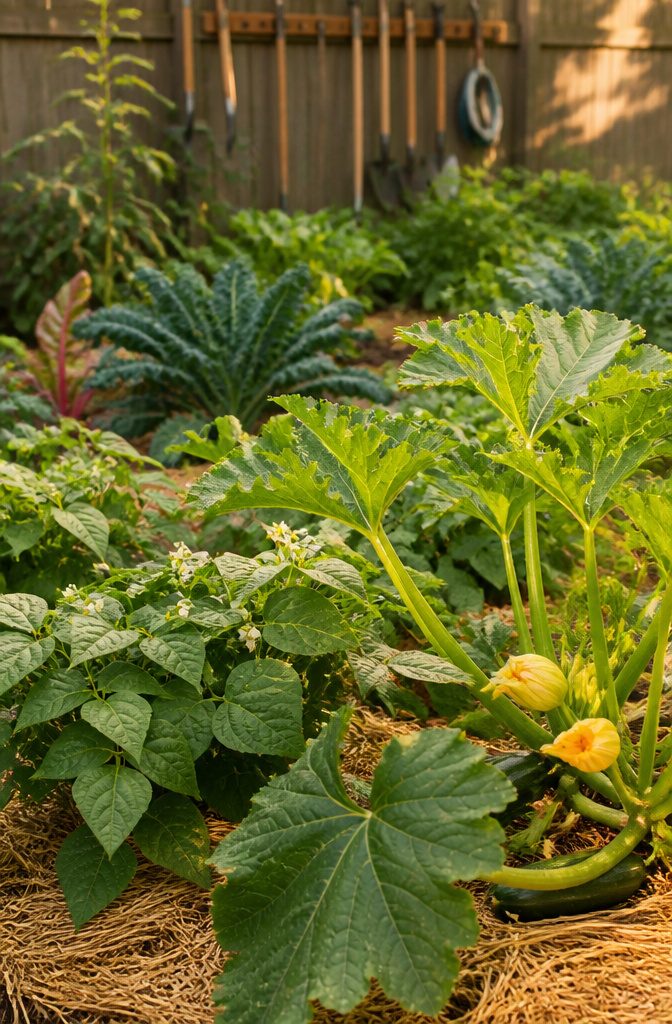
The photos in this handbook are what sold me.
When you find a beetle on your squash leaves at 7 a.m., you need to know right then whether it is a pest or a garden friend that eats pests. The images let you decide without scrolling through forums.
The book is built around identifying problems early, before they become problems. That matters in a food garden where you are eating what you spray.
The authors, Fern Marshall Bradley, Barbara W. Ellis, and Deborah L. Martin, organize pests and diseases by what you actually see: chewed leaves, spotted fruit, wilting stems. Then they give the organic fix, not the chemical one.
I have learned to walk the beds with coffee in hand, checking leaf undersides.
The handbook rewards that habit. It tells you which insects show up first, what they signal, and whether row covers, hand-picking, or a blast of water will handle it.
For diseases, it pushes resistant varieties and proper spacing so air moves through the canopy. Prevention reads as the main strategy; intervention is the backup.
The natural methods here are safe for food gardens because they do not leave residues you would worry about eating.
Neem, insecticidal soaps, and biological controls appear, but so do simpler moves like timing plantings to miss a pest’s peak or using trap crops to draw damage away from your tomatoes.
The book assumes you want to harvest without a waiting period after treatment.
The Pruning Answer Book
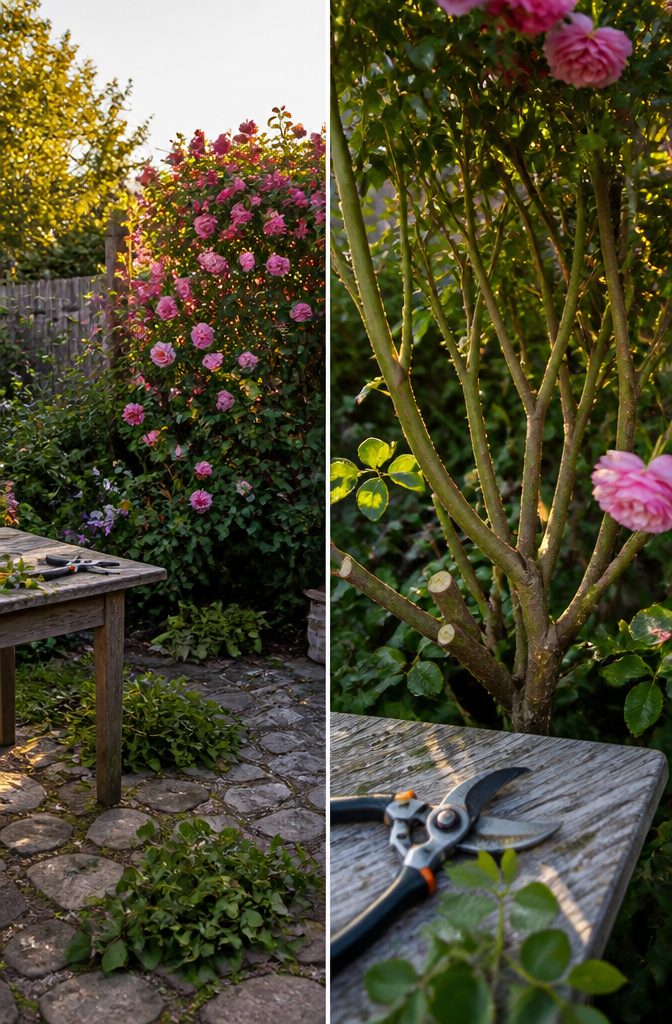
The first time I pruned a tomato plant wrong, I watched it sulk through July with half the fruit it should have carried. That season taught me timing matters more than technique for most backyard growers.
The Pruning Answer Book breaks down when to cut what: spring for summer bloomers like butterfly bush, midsummer for spring-flowering shrubs, late winter for most fruit trees before sap runs.
In a patio garden where one sprawling branch shades out three other plants, that calendar keeps every specimen earning its square footage.
The book also sorts woody from herbaceous, old wood from new, so you stop guessing whether your hydrangea blooms on last year’s growth or this year’s.
I still open it in February when the shears come out, because one cut at the wrong month can cost a season’s flowers or a year’s fruit.
Composting Techniques That Actually Work
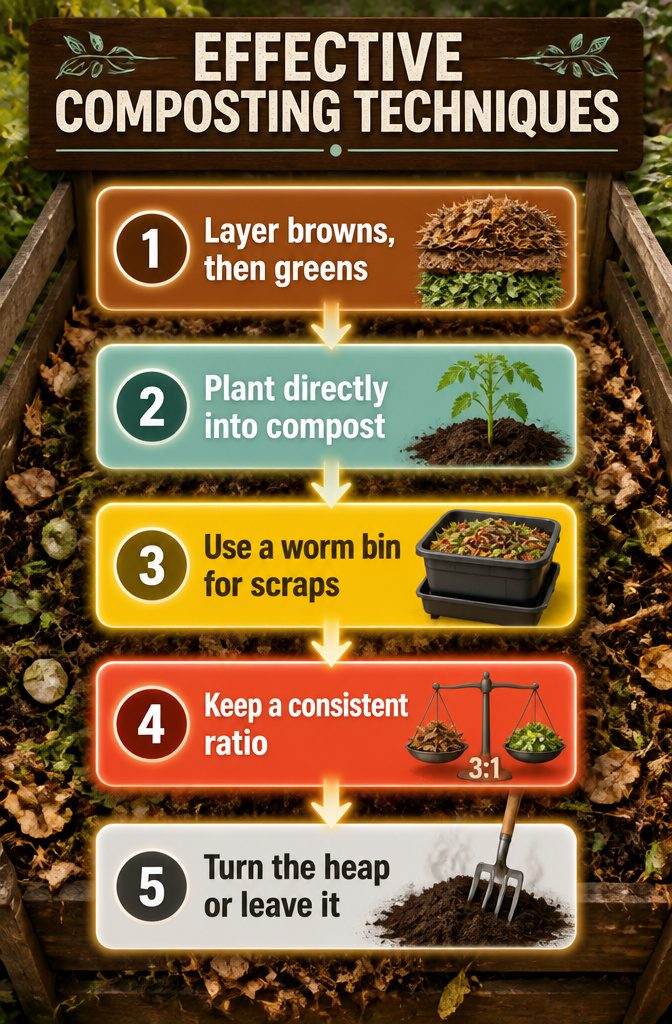
The Complete Compost Gardening Guide and the Rodale Book of Composting both treat composting as something you do in the garden, not off to the side.
Banner batches, grow heaps, and trench composting let you skip the step of hauling finished compost across the yard.
I like the banner batch method for a small patio plot: you lay down a thick bed of browns, add greens in layers, and plant directly into it once it has cooked down.
The Rodale book pushes this further with its carbon-to-nitrogen charts for dozens of inputs, so you know whether your coffee grounds count as green or your shredded leaves count as brown without guessing.
Worm bins get attention in both sources, though the Complete Compost Gardening Guide makes them feel less like a science project.
An enclosed bin under the kitchen sink handles a week’s scraps for a two-person household; the leachate drains into a tray below.
For apartment gardeners, this is often the only practical route, and the Rodale book includes specific guidance for small-scale setups that won’t offend neighbors or attract flies.
What changed my approach was the grow heap: a pile started in fall directly where spring tomatoes will go.
By May, the spot is pre-fertilized and the soil structure improved. The key ratio to remember is roughly three parts brown to one part green by volume, not weight, which the Rodale charts make clearer than most online calculators.
Turn the heap when it cools, or don’t; cold composting takes longer but demands less labor, and the Complete Compost Gardening Guide shows both paths without judgment.
Organic Pest Management Without Chemicals
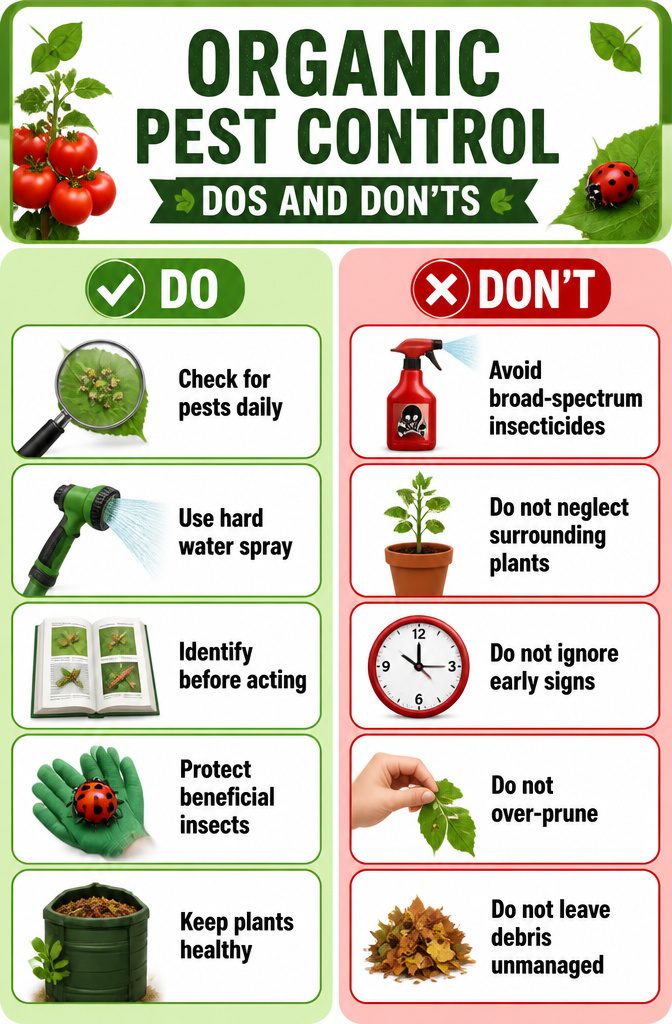
The first season I grew tomatoes on my balcony, aphids moved in before the fruit even set.
I reached for a bottle of insecticidal soap because I did not know what else to do, and I killed a cluster of ladybug larvae along with the pests.
That mistake sent me looking for a better system, and the plant-by-plant symptom guide in The Organic Gardener’s Handbook of Natural Pest and Disease Control is what I found.
The book works as a field guide, not a philosophy text. You look up your plant, match the damage to the photos, and get a ranked list of actions.
For my tomatoes, that meant learning to check the undersides of leaves at dawn for aphid clusters, then knocking them off with a hard spray of water before the population exploded.
The handbook lists this as the first intervention for most soft-bodied insects, and it costs nothing but a few minutes every other morning.
The same reference covers 200 popular plants, from vegetables to fruit trees, with an encyclopedia of insects and diseases that includes the visual symptoms to watch for.
I still misidentify things, but now I pause and flip to the photos before I treat anything.
The difference is that I know what I am looking at, or at least I know when I do not know and should wait.
Vegetable Gardening Fundamentals
Edward C. Smith’s The Vegetable Gardener’s Bible sits open on my workbench every February when I sketch out beds I have no business expanding.
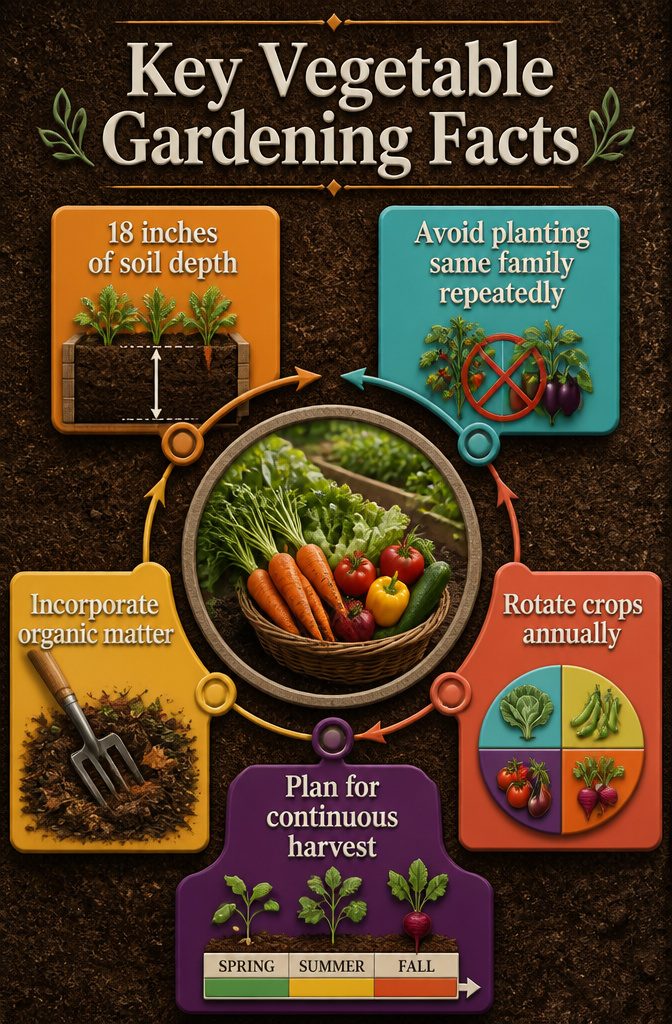
The wide-row method he lays out, built on raised beds and deep, loose soil, changed how I think about root space.
Smith argues for 18 inches of workable soil as the floor for healthy vegetables, not a luxury, and after switching to his system I stopped losing carrots to forked stubs.
Soil preparation is where this book earns its keep. Smith walks through building that depth with organic matter, not dumping compost on top but working it through the profile so tomatoes can sink roots straight down instead of circling.
The raised bed frame keeps the structure intact and the gardener out of mud.
Crop rotation comes next, and Smith makes it mechanical: never plant the same family in the same spot twice running.
I map my four main beds in pencil because ink commits me to mistakes I will not repeat. Nightshades follow brassicas follow legumes follow roots, and the soil gets a year off under cover crop when I can manage it.
For continuous harvest, Colin McCrate and Brad Halm’s High-Yield Vegetable Gardening fills the gap Smith leaves.
Their succession and interplanting schedules run like factory logic: pull spring peas, drop summer beans in the same row, seed fall beets before the beans finish.
McCrate and Halm teach readers to think in weeks of harvest rather than plant-by-plant, and their spiral-bound pages stay flat in the dirt where glossy books fail.
Supporting Pollinators in Small Spaces
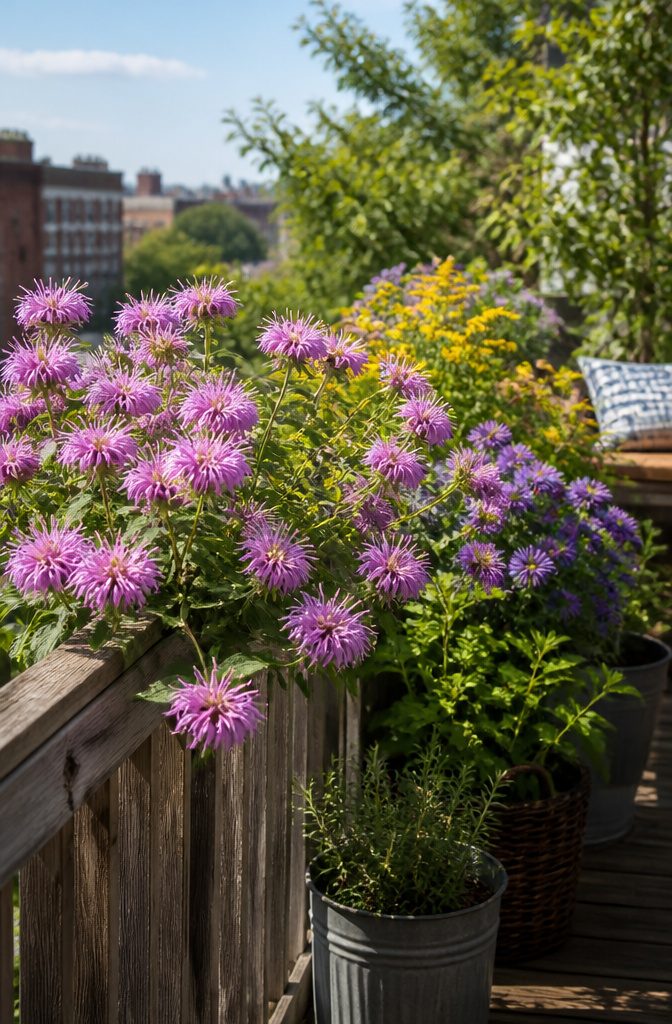
A balcony six feet deep still has room for a pollinator stopover if you stack the bloom times.
I learned this from Attracting Native Pollinators, which treats a 4,000-species roster of native bees and butterflies as neither decorative afterthought nor research project, but as neighbors you can house deliberately in tight quarters.
The book’s plant lists run toward species that work at patio scale: asters, goldenrods, mountain mints, each timed so something is open from March through hard frost.
Placement matters more than square footage. A single cluster of wild bergamot where morning sun hits a railing can draw more bee traffic than a scattered row of the same plants in open ground.
The authors group bloom by season and height, so you can read a 10-by-10-foot corner as a vertical calendar rather than a color bed.
Three continuous bloom periods matter more than plant count for small spaces. The book’s habitat plans include a "pocket meadow" template measured in yards, not acres, with notes on bare ground patches where ground-nesting bees tunnel.
On my own patio, I skipped the tunneling substrate; renters with concrete floors will too. But the bloom sequencing translated directly.
I swapped their recommended swamp milkweed for a drier Asclepias species suited to my containers, kept the aster and goldenrod backbone, and had bees working the space from June until the last hard freeze in November.
The photography helps with identification when you cannot tell a sweat bee from a small fly, though the real payoff is the calendar: knowing what to plant so that when one flower closes, another opens the same week.
Extending Your Growing Season
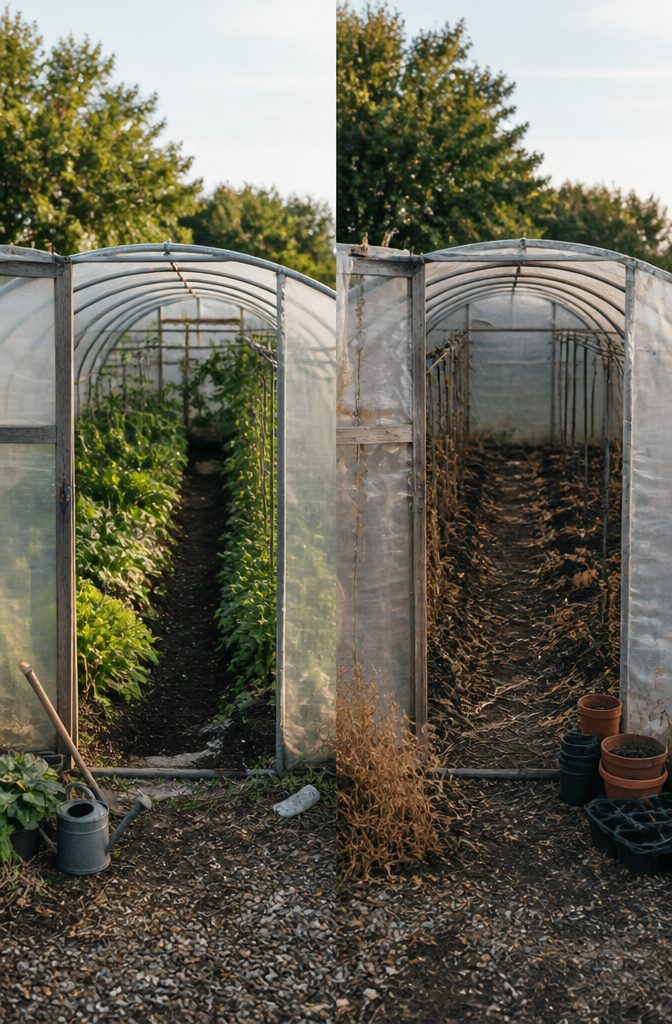
Cold frames and hoop houses let you pull weeks, sometimes months, past your zone’s last frost in spring and first frost in fall.
Niki Jabbour, gardening in Nova Scotia, wrote the book on this literally: The Year-Round Vegetable Gardener documents how she harvests through winter using row cover, plastic tunnels, and careful variety selection.
Her methods work in milder climates too, where the same structures buy you enough time for a second succession of snap peas or a fall crop of carrots that actually sizes up.
The real payoff is choosing varieties bred for cold soil and short days, not just throwing July tomatoes at October.
Edward C. Smith’s Vegetable Gardener’s Bible pairs well here; his wide-row, deep-soil approach gets plants established fast so they mature before the light gives out.
Between the two, you have both the protection hardware and the plant genetics to garden well past the dates on your seed packet.
Frequently Asked Questions
What are the best gardening books for beginners?
Rodale’s Basic Organic Gardening earns the top spot by organizing itself around questions beginners actually ask, from whether you need to dig at all to how much water hits the mark.
It treats soil and pests as connected systems rather than separate problems, and its growing-season structure means you open to the chapter that matches whatever is happening outside right now.
The troubleshooting section acknowledges that experiments fail, which keeps the tone practical rather than preachy.
How can I attract pollinators to my garden?
Plant native flowers timed so something blooms from early spring through late fall, which is the gap most small gardens have.
Attracting Native Pollinators recommends clustered plantings over scattered rows; a single patch of wild bergamot where morning sun hits can draw more bee traffic than the same plants spread across open ground.
Three continuous bloom periods matter more than plant count for tight spaces.
What are the best practices for composting?
Keep a rough ratio of three parts brown to one part green by volume, not weight, and compost directly in the garden rather than hauling finished material across the yard.
The banner batch method lets you layer browns and greens in a bed or corner and plant into it once it cooks down.
Worm bins under the kitchen sink handle a week’s scraps for a two-person household with no odor or flies when managed properly.