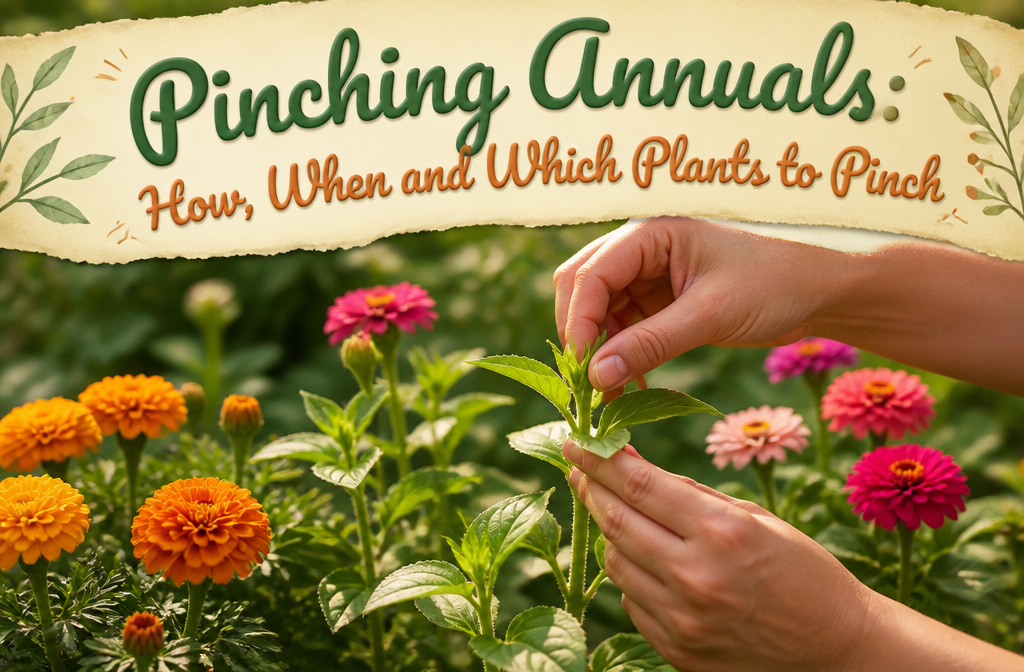
Pinching annuals means snipping off the soft top growth of a young plant so energy shifts into side shoots instead of a single tall stem. The catch is timing: cut too late, after buds have formed, and you remove the only bloom that stem was going to give you. Wait until seedlings are 6 to 12 inches tall with three to five sets of true leaves, then remove just the top 1 to 3 inches above a leaf node. Do it early, in May or soon after planting, and a single pinch can triple your total flower count by forcing two or more new stems from every cut.
What Pinching Back Means
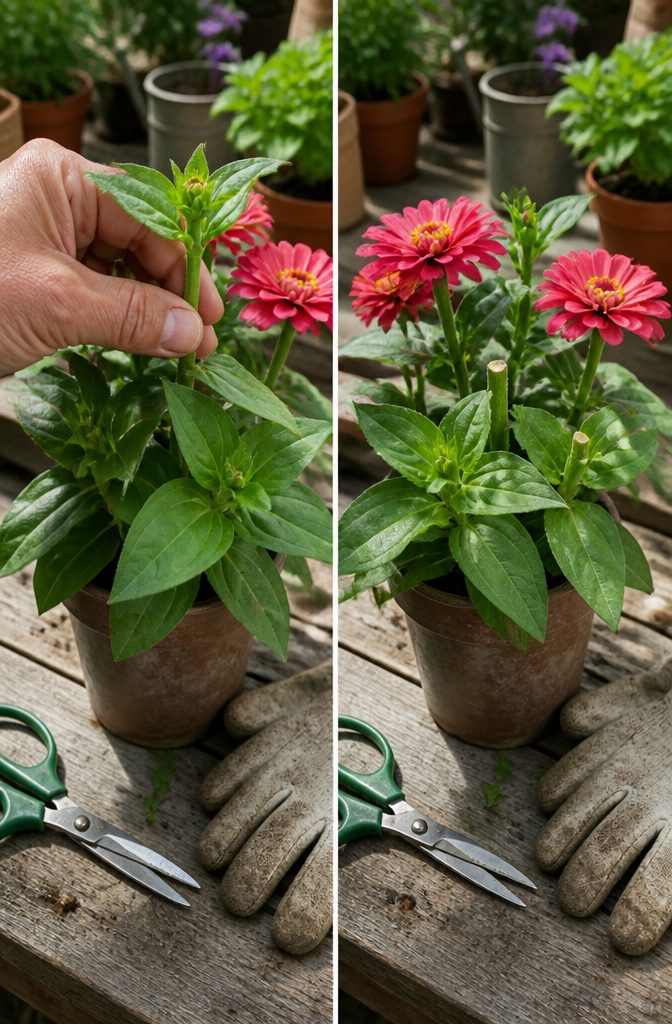
Pinching back means removing the top growth of a young annual, usually the soft stem tip and the first set of leaves, so the plant sends energy into side shoots instead of racing upward. The cut redirects the plant’s focus from flowering to vegetative growth; within days, two or more new stems push out from the node just below where you pinched. More stems mean more flowers later, and the plant stays lower and fuller rather than stretching into a single tall spike.
Deadheading is the other pruning move gardeners make on annuals, but it happens for a different reason and at a different time. You deadhead once flowers have already opened and faded, snipping off the spent bloom before it sets seed. Pinching happens much earlier, before the first buds even form, to build the framework that will later carry those blooms. Skip the early pinch and you get rangy plants with fewer stems; skip deadheading and the plant pours its energy into making seed instead of fresh flowers.
Why Pinching Works
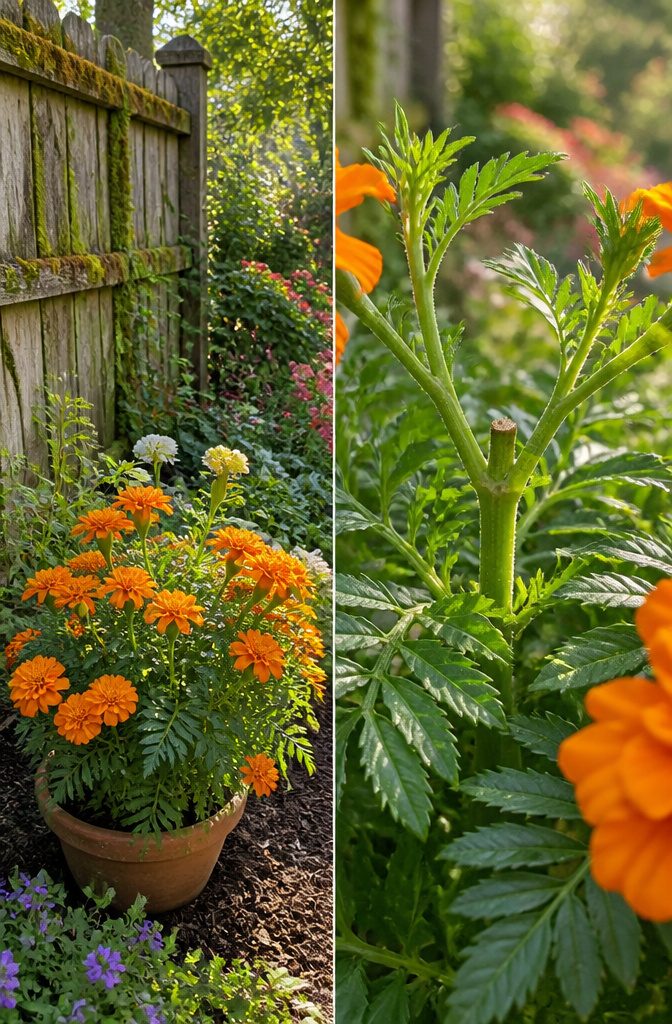
Pinching back an annual feels brutal the first time, standing over a seedling you nursed from dust and snipping off its only bud. The plant’s entire biological purpose, after all, is to flower and set seed before autumn kills it. Removing that stem tip sends a signal that something went wrong, that the reproductive rush must double. Energy the plant had committed to a single bloom gets rerouted into two or three new flowering stems, each emerging from the node just below your pinch. Those lower buds, previously dormant, wake up too, so the base fills in as the top branches out.
The arithmetic compounds fast. Each new stem can itself be pinched and branch again; by delaying that first flush of flowers for a few weeks, you can triple or quadruple your total bloom count, with some growers reporting up to five times the flowers on a pinched plant versus one left alone. The result is not just more stems but a bushier, more substantial plant that stands up better in wind and reads fuller from the patio. Left untouched, the same annual grows tall and thin, pouring everything into one early show and then looking spent by August.
When to Pinch
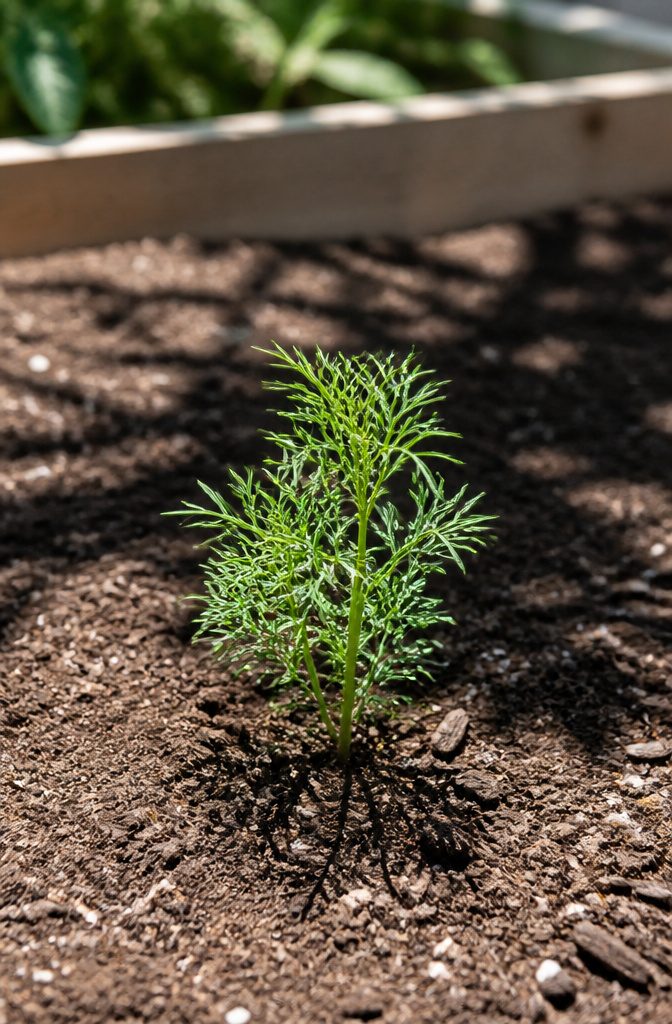
Timing is where most of my early pinching went sideways. Annuals need to be young enough to bounce back but established enough to survive the loss of growth. The sweet spot lands when transplants are 6 to 12 inches tall with 3-5 sets of true leaves, still in that vegetative stage before any buds form. At that size, the plant has enough foliage to keep photosynthesis humming while it redirects energy into new side shoots.
"Pinching back should be done when annuals are young and tender… when the plant is around 6 inches tall and has produced multiple sets of leaves. When you pinch back a plant, you will delay blooming, so you want to pinch early so the plants have time to recover and produce blooms."
That last part is the detail I missed my first season. I pinched zinnias in late June, thinking I was being proactive. They recovered, but blooming started three weeks later than my untouched plants and never quite caught up in total flower count. Early pinching, especially in May or soon after planting, buys the recovery time that later pinching steals from the season. For gardeners in longer-season zones, a second pinch in midsummer on plants that have gone leggy can still work; for shorter seasons, one early cut is all the calendar allows.
How to Make the Cut
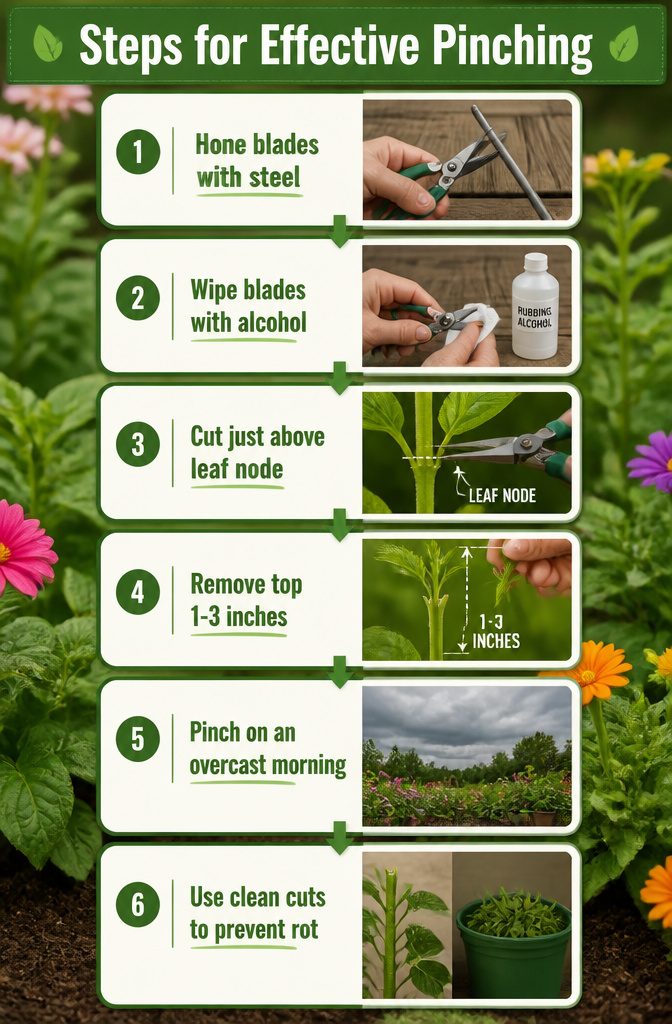
Clean, sharp snips matter more than expensive ones. I run mine over a honing steel before I start, then wipe the blades with rubbing alcohol. Fingers work too for soft growth, but only if the stem bends easily between thumb and nail.
The cut itself goes just above a leaf node, that slight swelling where leaves meet stem. Take the top 1 to 3 inches, no more. On a seedling with three to five sets of leaves, that usually means removing roughly a third of its height. Angle the snips so the blade slices rather than crushes.
Some growers pinch on overcast mornings. Direct sun right after cutting can stress the plant while the wound is still fresh, so I schedule this task when clouds are forecast or the light is soft.
One clean cut heals fast. A ragged tear from dull blades or a too-distant cut above the node invites rot and pests. Drop the removed tips in a bucket for compost; don’t leave them on the soil to harbor anything that might spread.
What to Do After Pinching
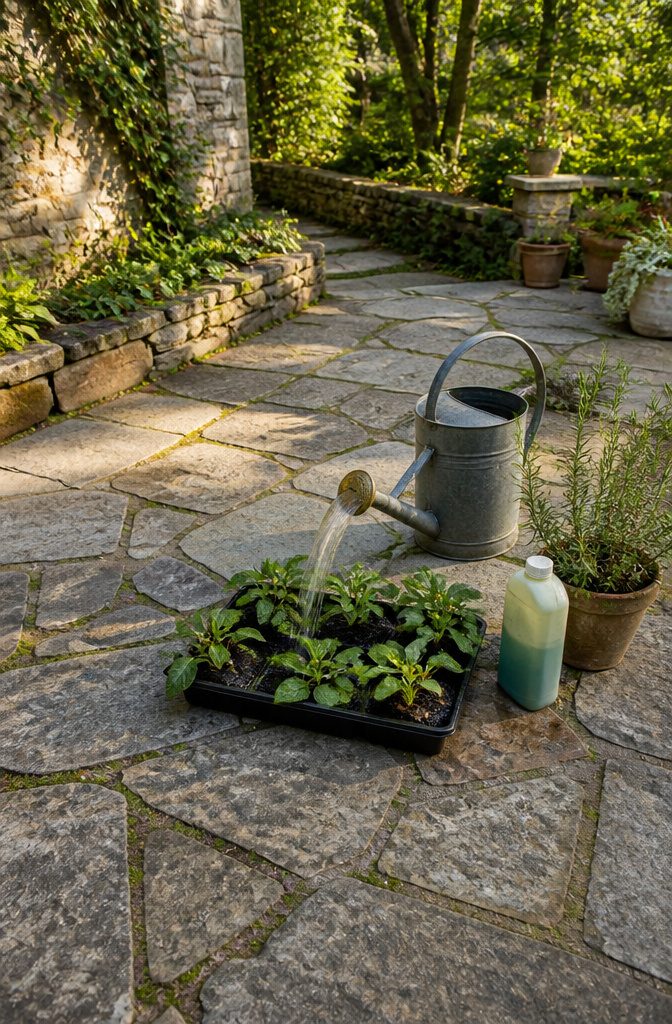
Water the plants well right after pinching, since the stress of losing that top growth makes them thirstier than usual. I usually give them a full drink then, and if it has been more than a couple of weeks since I fed them, a half-strength dose of balanced liquid fertilizer goes in with it. The real work after that is waiting and watching: new side shoots should start pushing out from the nodes just below where you cut, and those two new stems are the whole point of the exercise.
Check back in three or four days. If you see swelling at the pinch site, the plant has already rerouted its energy. If nothing shows by the end of the week, make sure the soil has not dried out and that the plant is getting enough light; sometimes a slow start just means conditions were already marginal.
By midsummer, even a well-pinched annual can stretch out again, especially in the long season the South gets. A second pinch in July on anything that has gone tall or spindly will force that same branching response and give you a second flush of blooms before fall. The delay hurts less then, since you still have August and September ahead of you.
Annuals That Want Pinching
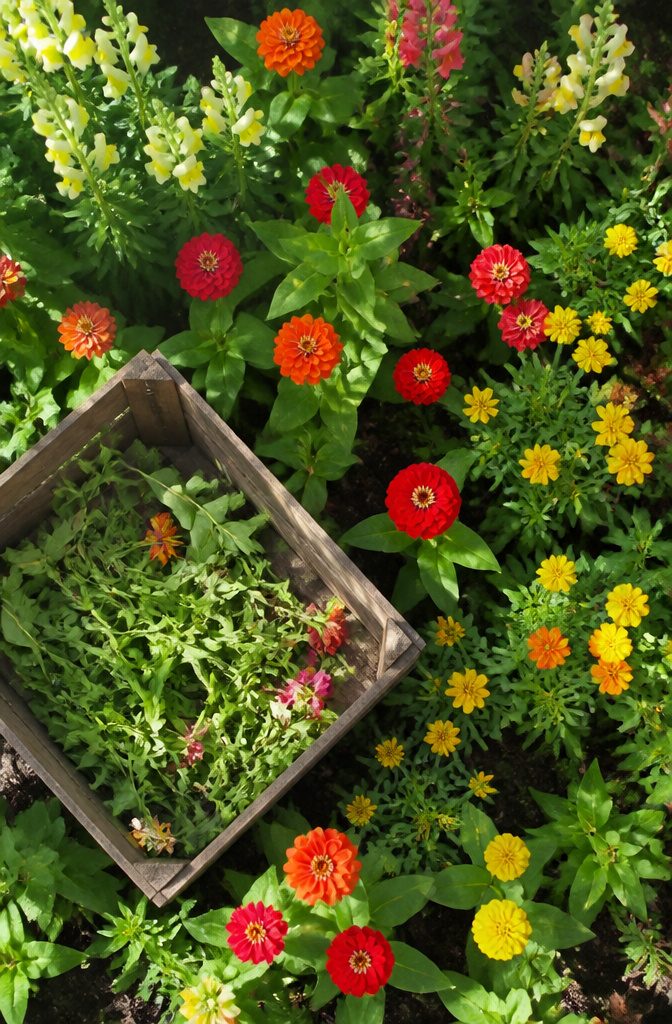
Not every annual in the flat benefits from a pinch. The ones that do are the cut-and-come-again kind, the ones that send up multiple flowering stems from a single plant.
Pinch these annuals early to force side branches and more blooms:
- Zinnias
- Cosmos
- Marigolds
- Snapdragons (the branching kinds, not single-stem varieties)
- Petunias
- Impatiens
- Coleus
- Verbena
- Salvia
- Amaranthus
- Branching sunflowers
- Dahlias
These herbs also want regular pinching to keep fresh leaves coming and delay flowering:
- Basil
- Thyme
- Sage
- Tarragon
- Dill
If your plant produces just one flower on one stem, leave it alone. The list above all share the same habit: lateral buds waiting behind the tip, ready to push out once you remove it.
Annuals to Leave Alone
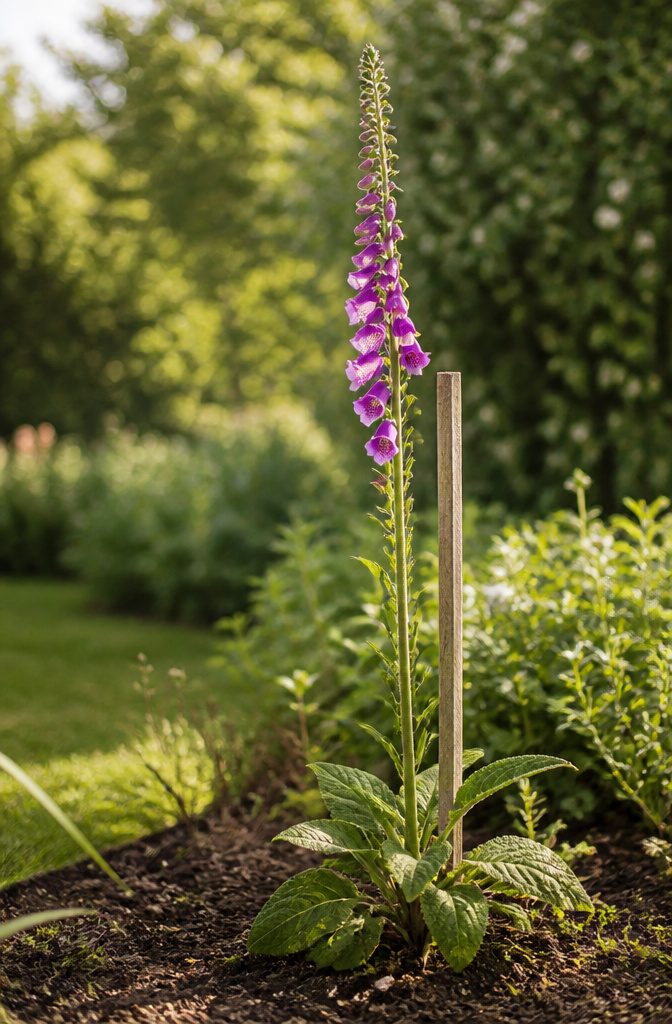
Some annuals are built for a single spectacular show, and pinching them only removes the one bloom they were ever going to give you. Single-flower varieties should never be pinched, because the stem you cut is the stem that flowers.
Leave these alone:
- Foxglove — Each tall spike carries one line of bells. Cut the tip and the plant has no backup plan; it simply grows leaves where the flowers should have been.
- Peony — A mature root sends up thick stems with one bud at the top. Pinch that terminal bud and you’ve bought a leafy bush with no payoff for the year.
- Delphinium — The central spire is the whole point. Side shoots may appear after the first flush on some varieties, but the initial stem is not replaceable.
- Single-stem sunflowers — The classic giant types rise on one stalk to one head. Branching varieties exist and want pinching, but the single-stem kinds offer no second chances.
These plants operate on a one-and-done schedule. The energy goes into height and that single stem, not into a branching framework that could rally after a cut. Let them grow straight to their one flower and plan your pinching energy elsewhere.
Pinching Versus Deadheading
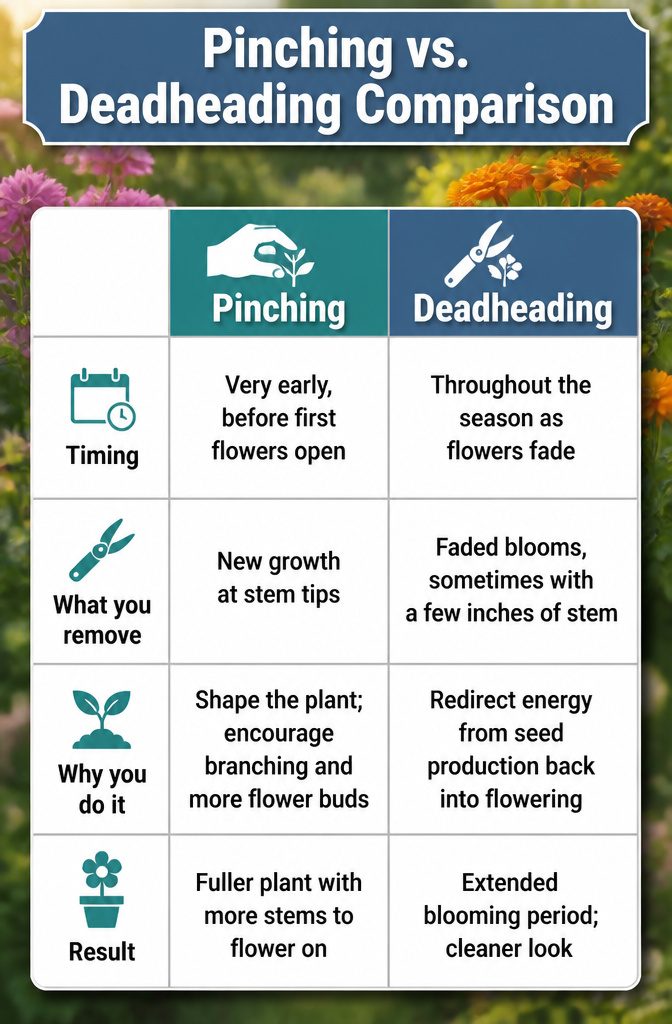
Pinching and deadheading both nudge an annual into producing more flowers, but they serve different moments in the plant’s life. Pinching removes the growing tip of a young plant before it blooms, forcing energy down into side shoots so the whole thing bushes out. Deadheading comes later, snipping off spent flowers once petals fade so the plant does not waste resources on seed production.
| Pinching | Deadheading | |
|---|---|---|
| Timing | Very early, before first flowers open | Throughout the season as flowers fade |
| What you remove | New growth at stem tips | Faded blooms, sometimes with a few inches of stem |
| Why you do it | Shape the plant; encourage branching and more flower buds | Redirect energy from seed production back into flowering |
| Result | Fuller plant with more stems to flower on | Extended blooming period; cleaner look |
I used to conflate the two and would deadhead my zinnias while they were still young, wondering why they stayed so leggy. The plant needs that early tip removal to build the structure; without it, you are managing decline rather than directing growth.
Pinching Herbs for Leaves Not Flowers
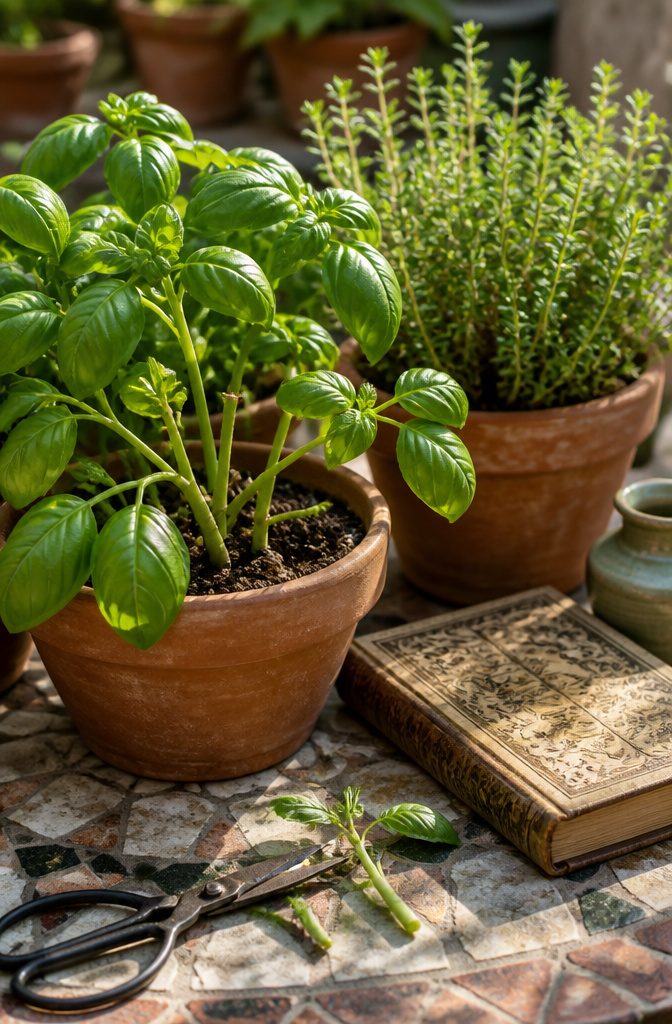
Herbs get mentioned in passing when people talk about pinching annuals, but the advice usually stops at "pinch basil." The real goal with herbs is different: you are not chasing flowers at all. You want leaves, and you want them for as long as possible before the plant bolts.
Basil, thyme, sage, tarragon, and dill all respond to the same cut above a leaf node that flowering annuals do. The difference is what you are preventing. A basil plant left alone will shift to bloom mode in late June or July, and once those flower stalks form, leaf production slows to a trickle. Cut at least one-third of the top growth right above a set of leaves every couple of weeks, and the plant keeps pushing out tender new foliage instead.
Thyme and sage handle heavier treatment than you might expect. Thyme in particular performs best when pinched back by half, and then again after any flowering it manages to sneak through. The woody base stays, but the soft new growth you actually cook with keeps coming.
Dill is worth a separate mention because it confuses people. Sources disagree on whether to pinch it at all; some list it as a plant not to touch. The distinction matters. Dill bolts fast no matter what, and once the yellow umbels open, the leaves turn bitter. Cutting flower stalks as they appear can stretch the harvest by a week or two, but dill is ultimately a short-term crop. Plant succession sowings every three weeks rather than fighting the plant’s nature with your fingernails.
Mistakes I Made Early On
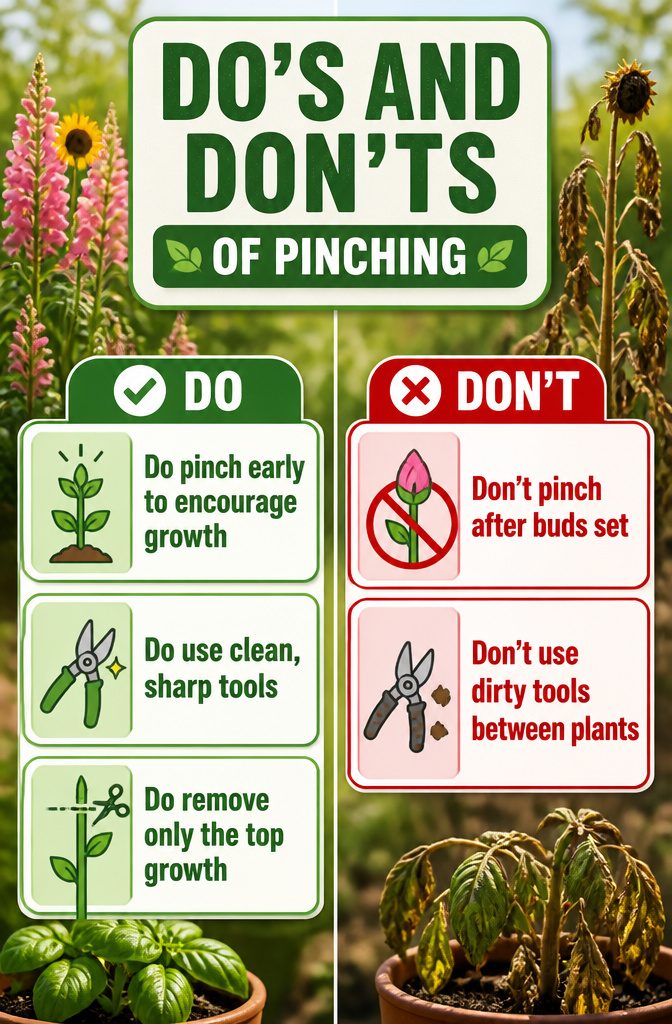
My first attempt at pinching annuals came in mid-July, after reading a general tip somewhere that "pinching helps plants bush out." I took clean scissors to a row of snapdragons that had already set buds, snipped the tops clean off, and waited for the promised branching. They never recovered. The cut stems browned back, and the plants sat there, stunted, for the rest of the season. Pinching too late removes the one chance a plant has to bloom, and some annuals simply don’t have the calendar left to rebuild.
That same summer, I pinched a single-stem sunflower, one of the "one-and-done" varieties that only flower from the central stalk. It never branched. It became a stick with leaves, then a stick without them. Single-stem annuals like Bombay celosia, foxglove, or annual poppies don’t respond to pinching; you remove their only bloom site with nothing to replace it.
Dirty tools cost me a basil plant later that season, spreading what looked like a fungal infection from one pot to the next through the pruning snips. Now I wipe blades with rubbing alcohol between plants, every time, even when I’m in a hurry.
Frequently Asked Questions
What is pinching back?
Pinching back means snipping off the top growth of a young annual, usually the soft stem tip and the first set of leaves, so the plant puts energy into side shoots instead of growing straight up. The cut redirects the plant from flowering to vegetative growth, and within days two or more new stems push out from the node just below where you pinched. This builds a fuller plant with more stems to carry blooms later on.
When should I pinch back my annuals?
Pinch when transplants are 6 to 12 inches tall with 3-5 sets of true leaves, before any buds form. Annuals need to be young enough to bounce back but established enough to survive losing that top growth. Early pinching, in May or soon after planting, buys the recovery time that later pinching steals from your blooming season.
Which plants should I pinch back?
Pinch annuals that produce flowers on multiple stems, including zinnias, cosmos, marigolds, snapdragons, petunias, impatiens, coleus, verbena, salvia, amaranthus, branching sunflowers, and dahlias. Herbs like basil, thyme, sage, tarragon, and dill also benefit from regular pinching to keep fresh leaves coming. Skip any plant that produces just one flower on one stem, such as single-stem sunflowers, foxglove, or peonies, since pinching removes their only bloom site.
What happens if I pinch too late?
Pinching too late can delay blooming and reduce total flower production for the season. Annuals pinched after buds have already formed may never recover fully, especially in shorter growing seasons where the calendar runs out before plants can rebuild. Some annuals simply sit stunted rather than branching if the cut comes after they have shifted to reproductive growth.