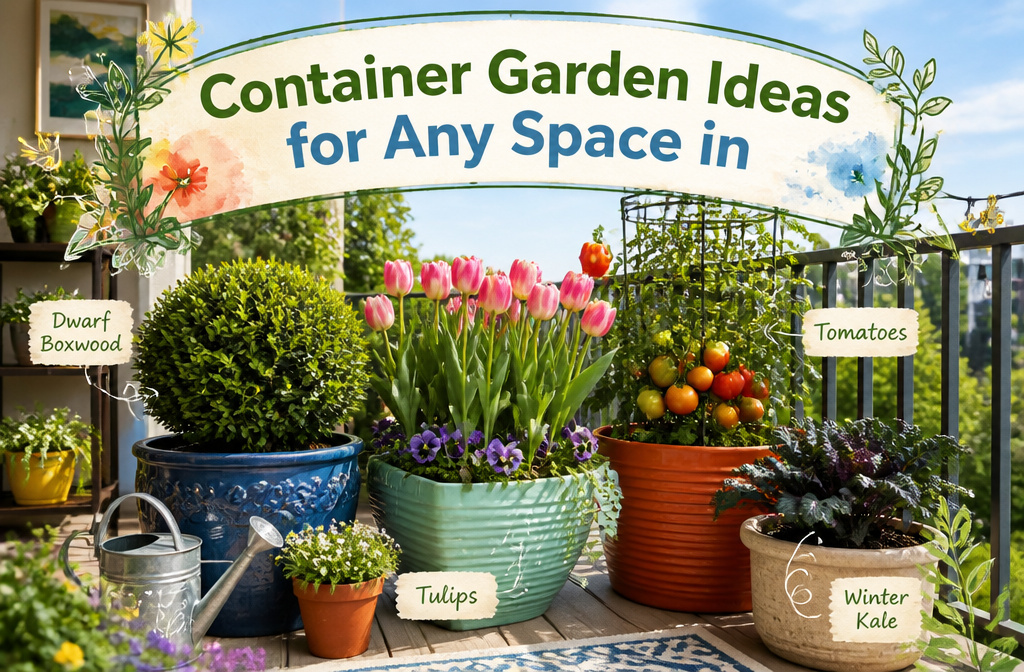
Container garden ideas range from a single dwarf boxwood that stays put for years to seasonal rotations of tulips, tomatoes, and winter kale.
The deciding factor is not how much space you have but how much attention you are willing to give: a 14-inch pot holds roughly a tenth of the soil a ground-planted shrub can mine, so permanent plantings demand feeding every two to four weeks or they slowly yellow and thin.
Match that commitment to the container, and even a balcony with six hours of morning sun becomes productive ground.
1. Containers as Problem-Solvers
Bad soil stops more gardens than bad luck ever did. My first in-ground tomatoes sat in clay so thick the roots circled the pot shape I’d planted them in, and I watered for weeks before realizing nothing was drinking.
A container filled with bagged potting mix sidesteps all that; you’re building the root zone from scratch instead of fighting what is already there.
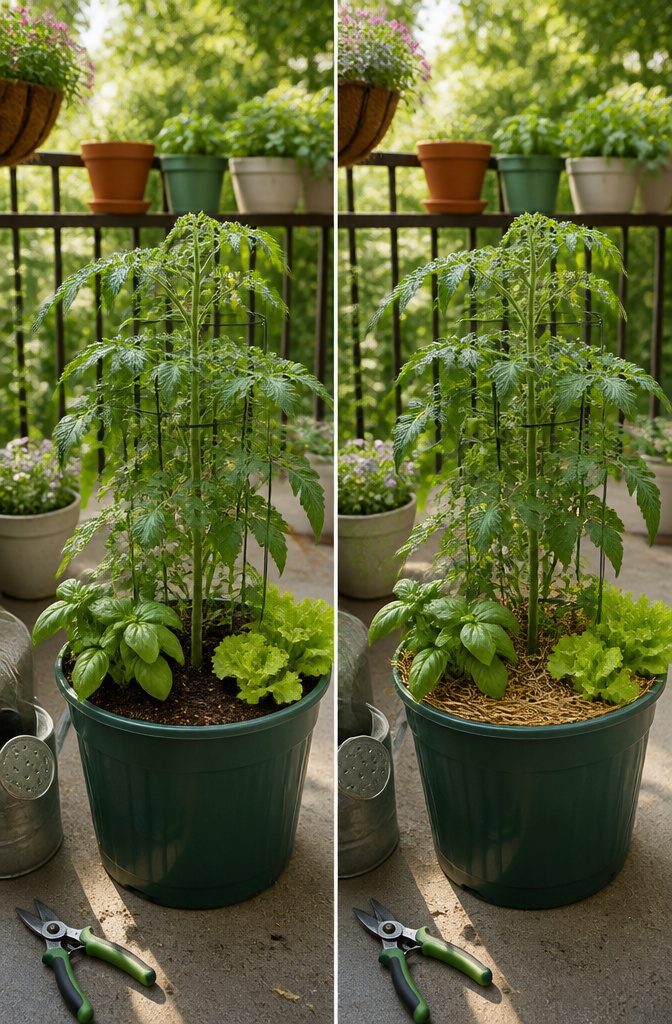
A 10-gallon pot holds about 1.5 cubic feet of soil, enough for one indeterminate tomato or a cluster of basil with lettuce tucked around the edges early in the season before the canopy fills in.
Space works the same way. A balcony with six hours of morning sun becomes productive ground when the pots move with the light, and rolling caddies make that shift something you actually do instead of plan to do.
I keep mint in a plastic pot for exactly this reason; it travels to the railing for sun and back to the corner when the afternoon heat starts dropping leaves.
Terracotta would dry it out in a day up there, unglazed clay being porous enough to lose moisture straight through the walls.
Plastic holds water longer, which I need in July, though I have learned to check the drainage holes because it holds too much in a thunderstorm.
Metal heats up fast enough to cook roots on a south-facing deck, so I skip it for summer annuals and save the galvanized buckets for spring lettuce that prefers cool soil.
Aggressive spreaders become manageable this way too. Bamboo, running mint, oregano gone woody in the center: all behave in a pot where the boundary is physical and absolute.
The alternative is digging trenches or installing root barriers, and I have never once finished that project the same season I started it.
2. One and Done Containers
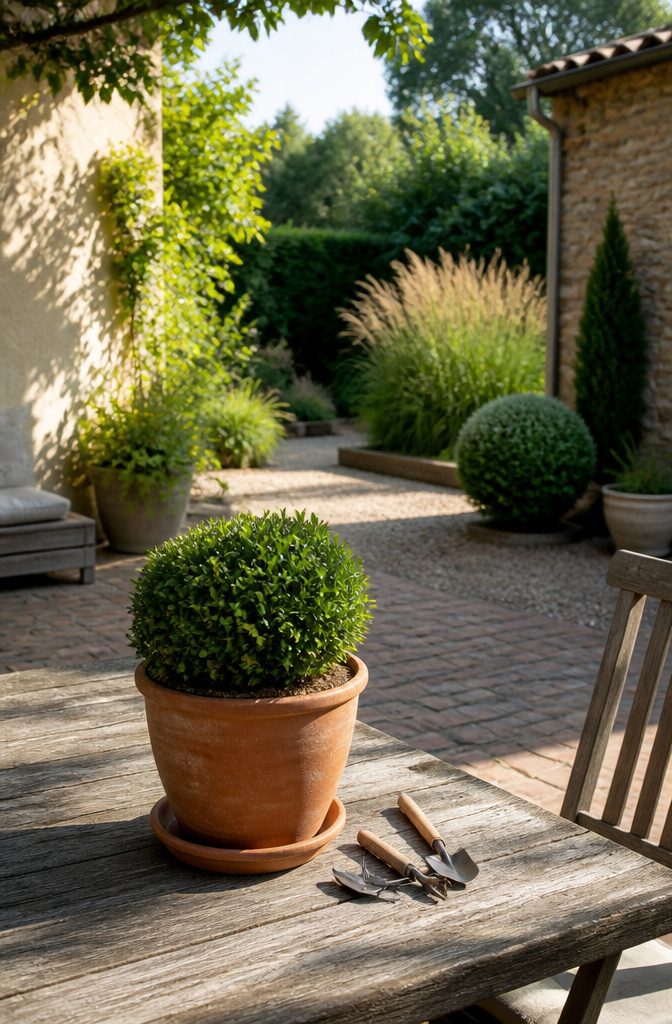
Some of the containers on my patio have not been emptied in three years. A dwarf boxwood in a terracotta pot gets a haircut in early spring and otherwise sits there, green in January, green in July.
The same approach works with compact evergreens like ‘Bearr’s Lime’, slow-growing shrubs, or perennial grasses such as foxtail fern: plant once, let the plant mature in place, and skip the seasonal swap-outs that exhaust most container gardeners.
The catch is nutrition. A shrub in a 14-inch pot has maybe a tenth of the soil a plant in the ground can mine for nutrients, and every rain or watering washes a little more out.
Potting mix with starter fertilizer buys you a few weeks, then the plant is on its own unless you step in.
I feed mine with water-soluble fertilizer every two to four weeks through the growing season, mixed to the label rate and poured until it runs from the drainage holes.
Granular slow-release is the lower-effort alternative, but I have had better color and steadier growth with the liquid routine on plants I am asking to live permanently in a cramped box.
Skip this and the evergreen slowly yellows, the grass thins in the center, and you are left wondering why a plant rated for your zone failed in a pot it should have owned.
3. Placing Containers Within the Garden Bed
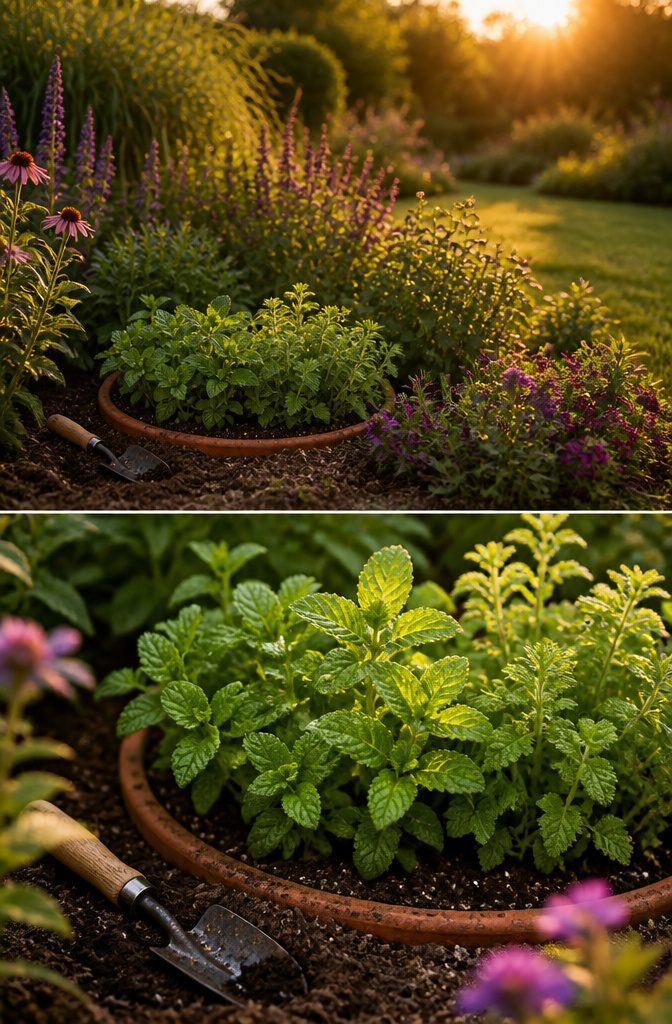
Sinking a pot directly into a garden bed is one of the quieter tricks that changed how I use my space.
A container set flush with the soil line corrals mint, lemon balm, or any spreader that would otherwise own the bed by August.
It also let me swap a spent summer annual for a fall chrysanthemum last year without disturbing the roots of the surrounding perennials.
The fit matters more than I expected. The pot rim should sit level with or just above the surrounding soil, not buried below it, or drainage chokes and the plant rots.
I leave an inch or two of clearance on all sides when I dig the hole so the pot lifts back out without a shovel fight.
Winter storage depends on what the pot is made of. Terracotta left in the ground in a cold zone absorbs water, freezes, and cracks; I learned that on a single December night in zone 6.
Plastic or resin weathers storage in a shed or garage far better, so those are the materials I sink now if I intend to lift them come November.
4. Year-Round Focal Points
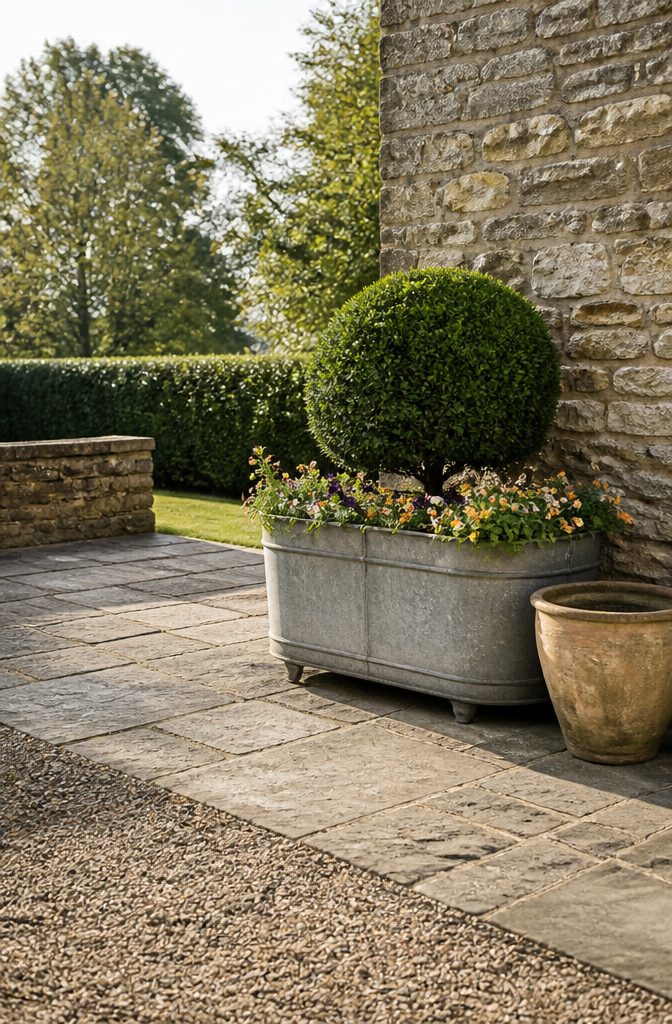
Evergreen containers anchor a space when everything else has dropped its leaves.
A clipped boxwood topiary or a rosemary ‘Tuscan Blue’ keeps its structure through January, and you can ring it with seasonal annuals in warmer months, calibrachoa in spring, pansies in fall.
The pot itself can do the same work. An empty urn with real presence, an oversized zinc planter weathering to soft gray, or a tall narrow vessel tucked against stone, holds the eye without any plant at all.
I have learned to place these where summer flowers once dominated, so the eye travels there by habit.
Winter survival is simpler than the catalogs suggest.
Elevate containers on pot feet or broken brick so drainage holes stay open once the ground freezes. Cluster pots near a wall or hedge for windbreak, not out in the open where dessicating wind strips moisture from dormant branches.
That is usually enough for USDA zone 7 and up. Colder than that, accept that some containers go dormant or move to the garage, and let the empty painted pot carry the garden until March.
5. Showcasing Personality
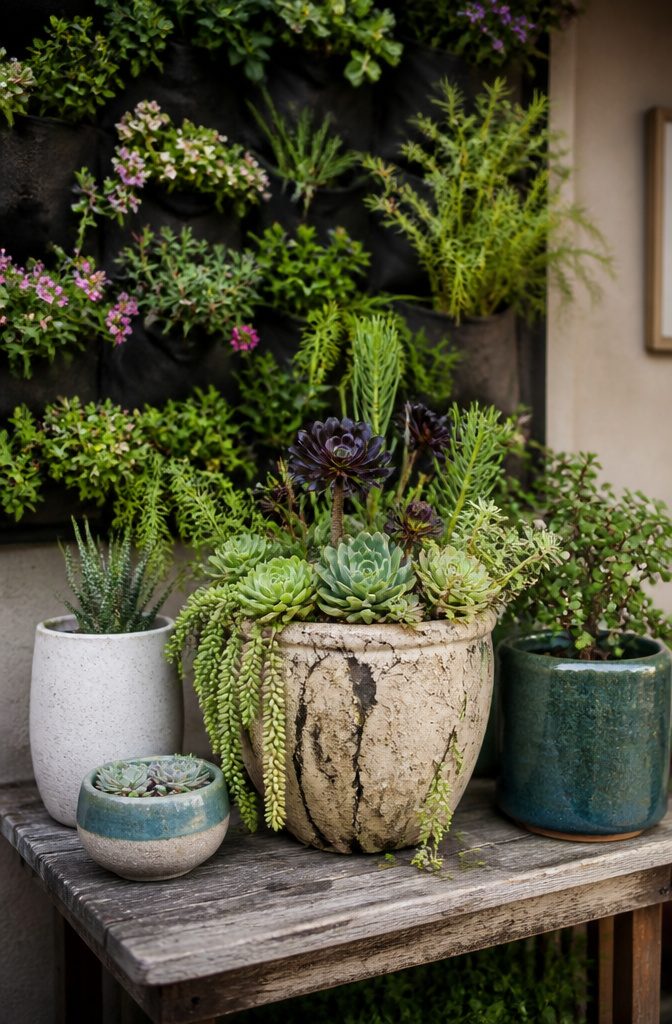
The container garden ideas that stick with me are the ones where something of the gardener’s actual life shows up in the pot.
A cracked antique crock, a shell filled with succulents, a concrete head lifted from a mantelpiece and given sunburned aloe for hair. These objects carry history the way a new terra-cotta cylinder cannot.
Color works the same way. One gardener I read about groups traditional clay pots in vignettes, then sets a weathered wooden bucket or galvanized pail beside them so the contrast tells you someone made choices here, not bought a set.
Another keeps to oversized baskets and half wine barrels for a country feel that matches a Montana ranch.
The repetition of one material or one plant ties the space together, but the odd number of pots, three or five rather than two or four, keeps it from reading as staged.
Freeland Tanner’s classical European urn, Mike Lucas and Gary Ratway’s propane tank heads clipped with boxwood balls.
These are not subtle. They are also not apologetic.
The planted chair, the old lantern housing a pot, the wheelbarrow from a vintage shop spilling trailing greenery. Each one says: this came from somewhere, and I put it here on purpose.
6. Seasonal Container Gardens
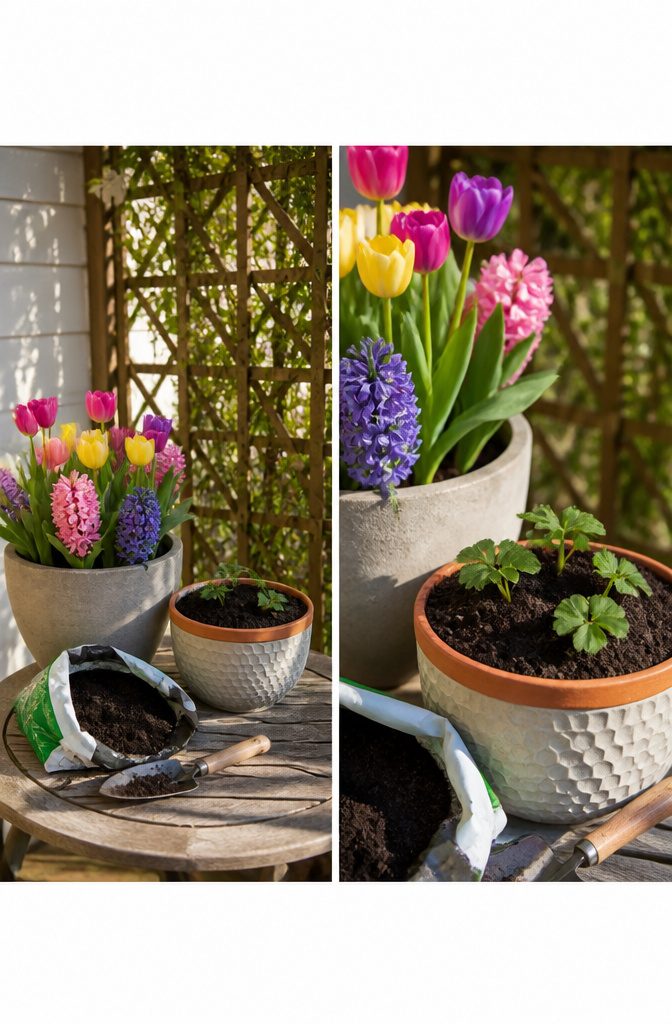
A container planted in March with tulips and hyacinths can hold calibrachoa and geraniums by June, then transition to kale, pansies, and tucked-in pinecones once summer annuals go leggy.
That rhythm of change keeps a small patio from going static, but the soil beneath each round of plants wears out.
Remove old roots completely before dropping in the next season’s planting. The previous tangle of stems and root balls steals pore space and can harbor problems that show up later.
Mix in compost or fresh potting mix to restore what the last round took out. Soil structure breaks down faster in pots than in ground beds, and a container crammed with new plants needs somewhere for water to go.
The evergreen approach works too.
A clipped boxwood stays put year-round as the backbone, while the surrounding annuals rotate in and out around it. Less disruption, less soil turnover, though you still refresh the outer ring each swap.
For the cleanest restart, replace the soil entirely every one to two seasons. That is the point where most potting mixes have given up their nutrients and compacted past the benefit of a top-off.
7. Unique Container Ideas
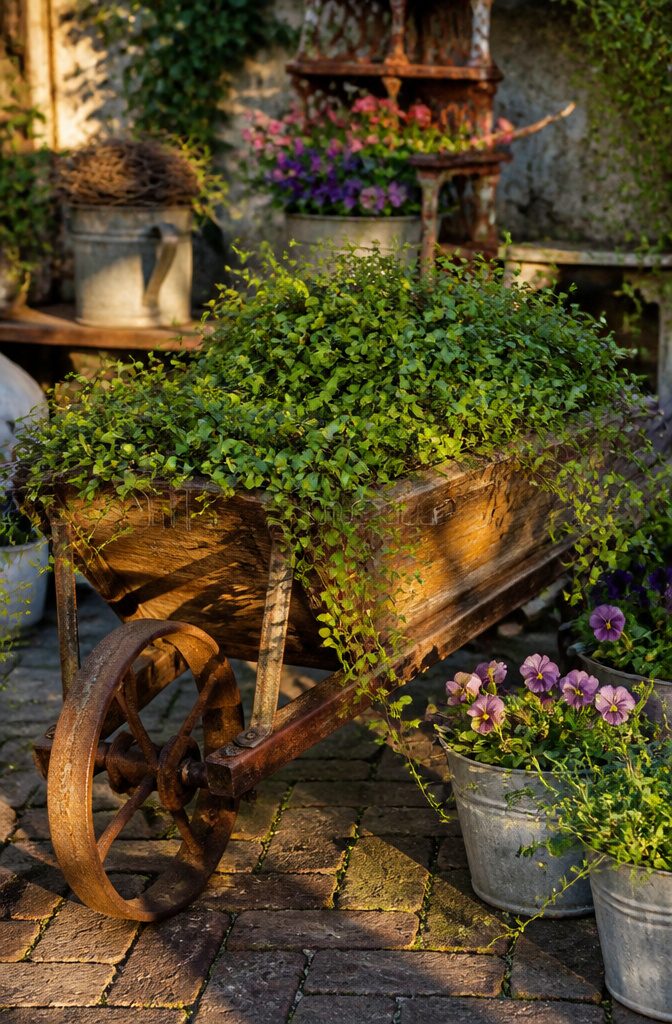
The best containers are sometimes the ones that were never meant to hold dirt at all.
An old wooden wheelbarrow from a vintage shop, rusted just enough at the edges, makes a natural home for trailing greenery that spills over the sides.
Galvanized buckets from HomeGoods run cheap and age faster than you’d expect; the soft gray against bright annuals is a combination that keeps working even after the metal starts to spot.
I have watched half wine barrels outlive three seasons of summer blooms on a Montana porch, their bulk anchoring a space that lighter pots would lose to the wind.
The catch with anything repurposed is drainage. Without holes, water sits against the roots and rots them.
A regular twist bit handles plastic, but switch to masonry for unglazed terra-cotta and glass or tile bits for hard-glazed surfaces. Drill before you fill, not after the soil is wet and heavy.
I have skipped this step once on a metal lantern I wanted to use as a planter, and the sedentary water turned the whole thing into a mosquito farm by July.
A liner pot with proper drainage dropped inside a decorative vessel will save you if the container itself is too fragile or too precious to drill.
8. Edible Container Gardens
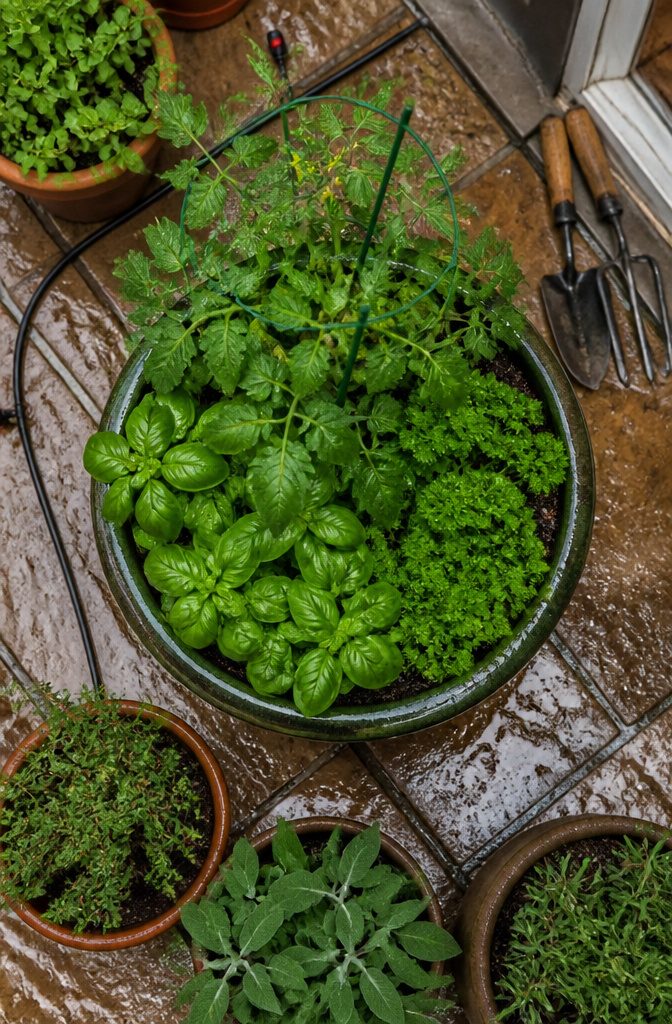
Basil, parsley, and thyme were the first edibles I trusted myself to keep alive in pots, and they repaid the faith by forgiving every late watering.
Almost any vegetable or herb will grow in a container if you give it enough root room and soil that actually feeds it.
A 10-gallon pot, filled with about 1.5 cubic feet of soil, handles one full-sized tomato or pepper comfortably, with space left at the edges for basil tucked in early before the main crop claims the territory.
Terracotta looks right on a patio but dries out fast enough to demand daily attention; glazed pots hold moisture two to three days between waterings.
Either way, drainage holes are non-negotiable, and the soil in the pot needs to be a nutrient-rich mix rather than whatever came out of the nearest bed.
Pack the bottom of oversized containers with empty nursery pots to cut the soil bill and the weight; keep the growing depth around 18 inches where you can.
9. Thriller, Filler, Spiller
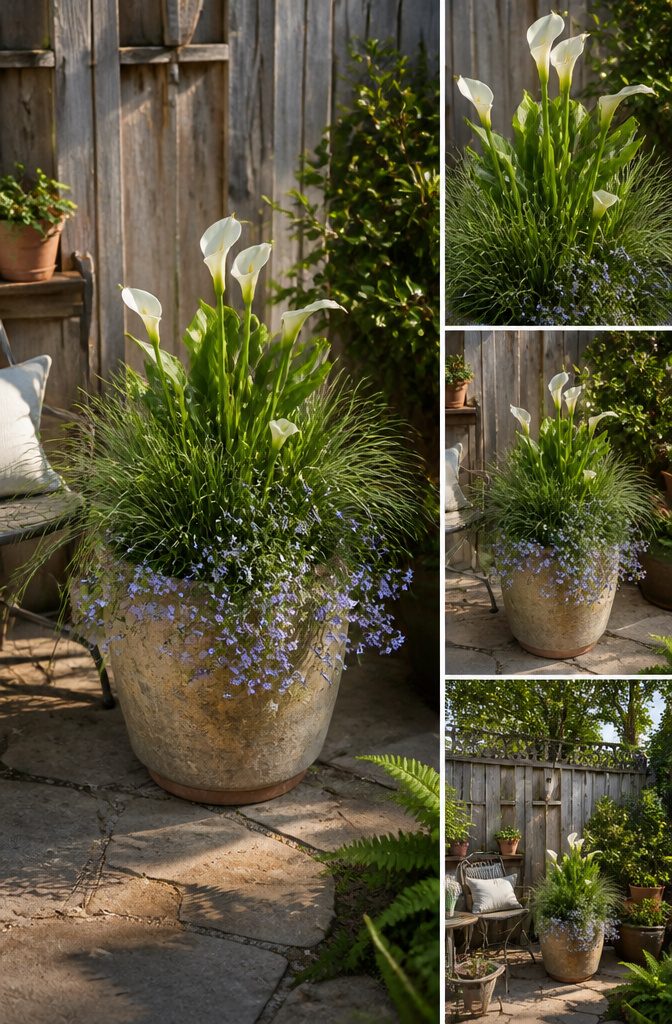
The thriller, filler, spiller formula is the one rule that actually earns its hype. Tall drama in back or center, mid-height plants packed around it, something soft trailing over the lip.
Purple salvia worked as my thriller once, with pale lantana filling in and lobelia spilling. The finished pot looked professional for about six weeks, then the salvia outgrew the lantana’s light needs and one side went leggy.
That mismatch is where this formula breaks.
Thrillers like calla lilies want consistent moisture. Pair them with drought-tolerant Livingstone daisy ‘Mezoo Trailing Red’ as your spiller and someone suffers.
The sources agree: match light and water needs before you match colors. Persian shield needs shade; put it with sun-loving lantana and you are nursing two problems in one pot.
Nurseries group plants by light for a reason. I start there now.
Sun section first, then check water labels. Two thirsty plants together, two dry ones together.
The thriller can be a single shrub in its own pot if you are clustering several containers. Filler and spiller become optional when the pot itself is part of a larger arrangement.
Container Materials Compared
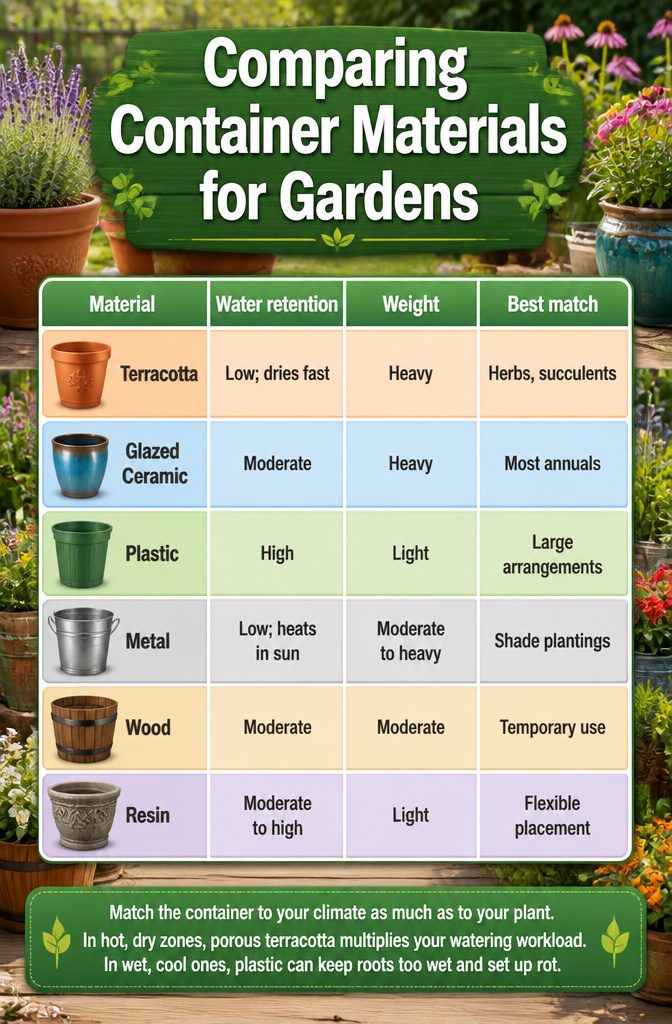
Terracotta pots dry out fast enough that daily watering becomes routine in summer, so I reserve them for lavender and other herbs that prefer their roots on the drier side.
Glazed ceramic holds moisture two to three days longer, a better fit for thirsty annuals. Plastic keeps water in even longer and stays light enough to move around, though it can look cheap unless you hunt down the better-made lines.
Metal buckets and washtubs give a garden real character, but they heat up in full sun and cook roots if you are not careful about placement. Wood rots eventually, even with treatment, so I treat it as temporary.
Resin is the compromise I keep coming back to: weatherproof, lightweight enough to shift when I want to fill a gap in a border, and the better ones convincingly mimic stone or lead without the back-breaking weight.
| Material | Water retention | Weight | Best match |
|---|---|---|---|
| Terracotta | Low; dries fast | Heavy | Herbs, succulents, dry-climate plants |
| Glazed ceramic | Moderate | Heavy | Most annuals, moisture-tolerant plants |
| Plastic | High | Light | Large arrangements, plants that hate drying out |
| Metal | Low; heats in sun | Moderate to heavy | Shade plantings, short-season displays |
| Wood | Moderate | Moderate | Temporary or seasonal use |
| Resin | Moderate to high | Light | Flexible placement, mimics heavier materials |
Match the container to your climate as much as to your plant.
In hot, dry zones, porous terracotta multiplies your watering workload. In wet, cool ones, plastic can keep roots too wet and set up rot.
Watering and Drainage Rules
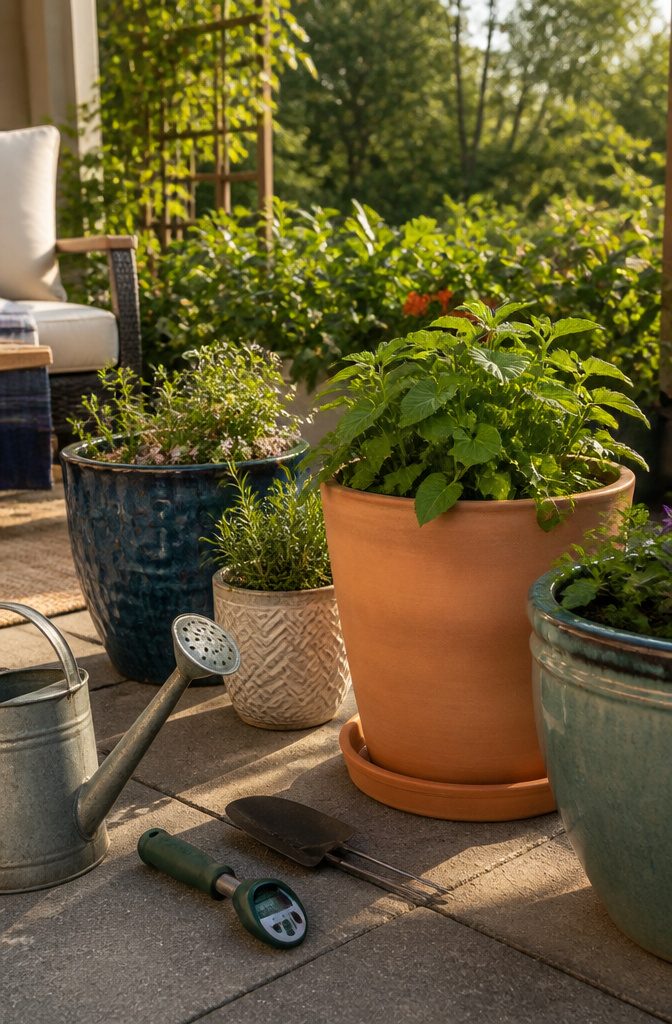
A container without drainage holes is a planter in name only.
Water that pools at the bottom rots roots fast, so every pot needs an exit for excess water. Plastic containers take a regular twist drill bit; terra cotta and unglazed ceramic need masonry; hard-glazed surfaces need glass or tile bits.
How often to water depends on what the pot is made of.
Terra cotta is porous and pulls moisture from the soil, so daily watering is common in summer heat. Glazed pots hold water longer, stretching that to every two or three days.
Small pots dry out faster than large ones for the simple reason that there is less soil to store water. The finger test still wins: one inch down, dry means water; damp means wait.
Overwatering shows up as yellowing leaves and soil that stays wet.
Underwatering means wilting that perks up after watering. Drip kits automate the schedule if mornings get away from you, and a soil moisture meter removes the guesswork entirely.
Fertilizing Container Plants
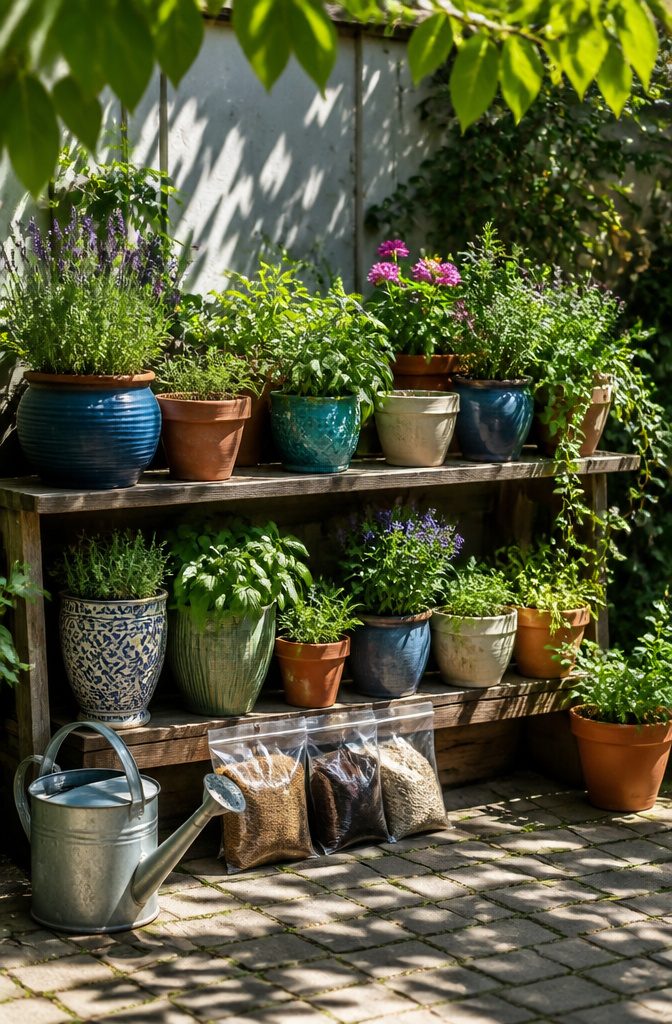
Potting mix with built-in fertilizer gets a container off to a decent start, but that nutrition washes out or gets used up faster than most beginners expect.
I learned this the hard way after a season of watching my tomatoes yellow despite what I thought was rich soil.
Feed every two to four weeks with either a slow-release granular or a liquid fertilizer, because limited root space means nutrients deplete fast.
A "balanced" label on fertilizer means equal parts nitrogen, phosphorus, and potassium, the N-P-K numbers you will see printed on the front.
Something like 10-10-10 covers leafy growth, flowering, and root health without tipping too far in any direction. Annuals especially are heavy feeders, so skipping weeks costs you blooms.
Come fall, cut back or stop feeding altogether. Plants slow their growth as the days shorten, and extra nitrogen sitting in cool, wet soil can damage roots or force soft new growth that frost will kill.
I mark the shift on my calendar when I swap out summer annuals for cold-hardy replacements, because the same schedule that kept pots thriving in July will work against them by October.
Vertical Space and Hanging Baskets
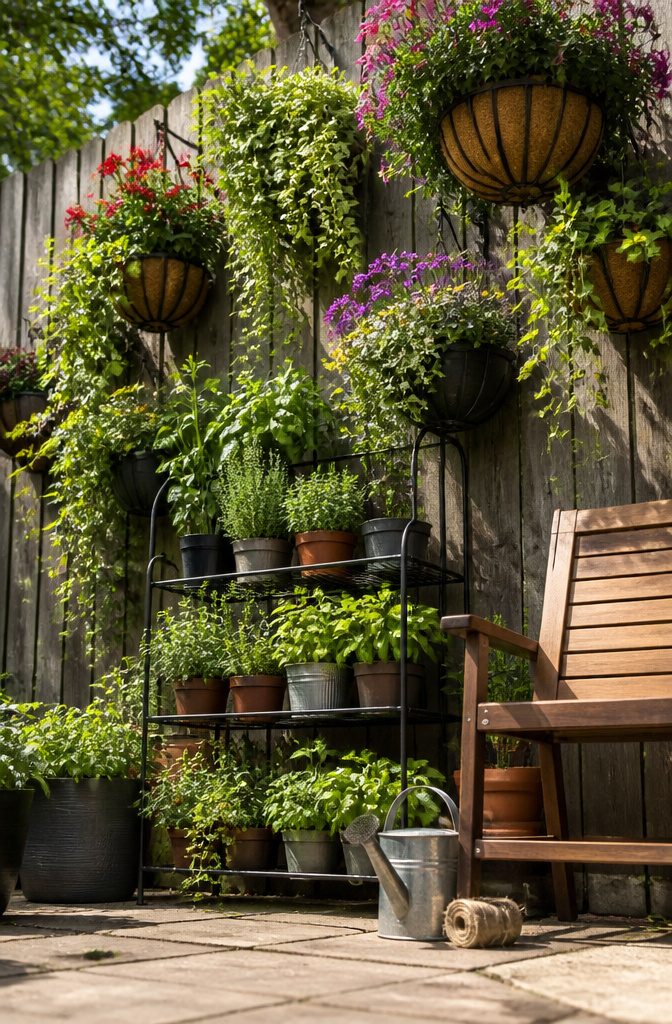
Small patios and balconies leave the floor to the furniture, so the plants have to live somewhere else.
I started with a three-tier metal stand that held six-inch pots on each level and immediately gained about two square feet of growing space without giving up the chair.
Wall-mounted pockets and rail planters work the same way, though the weight adds up faster than you think.
A saturated six-inch clay pot weighs roughly three pounds, and four of them on a narrow balcony rail can stress brackets that looked fine when they were empty.
Hanging baskets solve the rail problem by dropping the load below the bracket point, but they need a solid anchor.
I have watched a shepherd’s hook lean and eventually pull free from loose garden soil after a rain; the ones that stayed put were driven twelve inches into packed dirt and checked seasonally for wobble.
For renters or anyone without ground to sink into, a heavy freestanding base with a vertical arm costs more but keeps the basket where you put it.
The limit is real: if the structure moves when you push it, it will move when the wind does.
Companion Planting in Pots
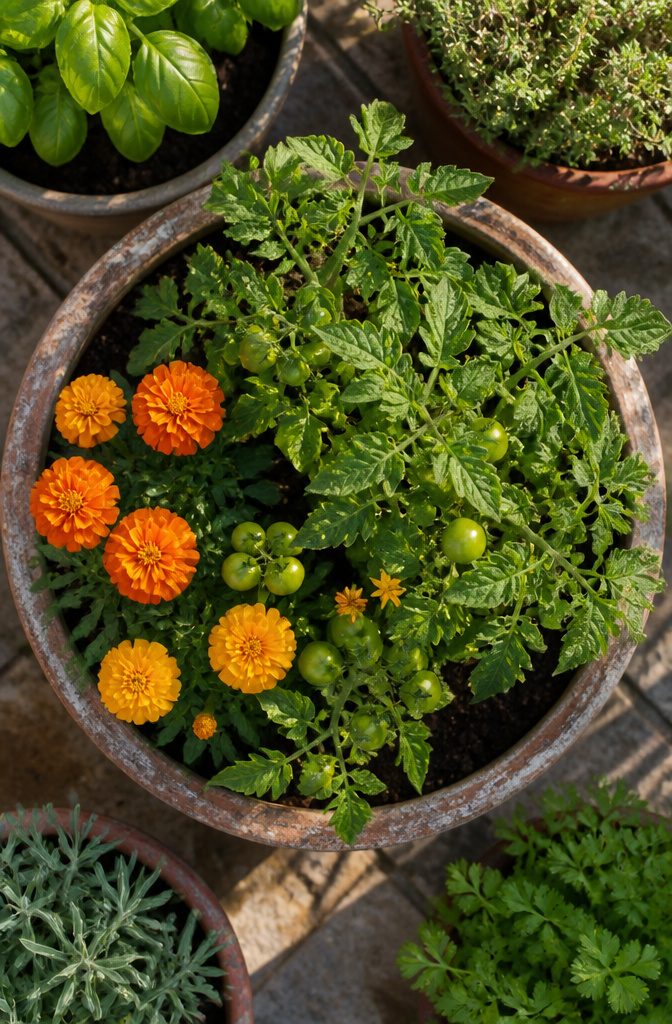
Marigolds tucked around a patio tomato can cut whitefly pressure enough that you may skip a spray you would have needed otherwise.
Basil set beside peppers seems to draw fewer aphids to the pepper leaves, though the basil itself needs pinching before it bolts and shades its neighbor.
Nasturtiums work best as a trap crop only if you check them every few days and remove the aphid clusters by hand; otherwise you have bred pests, not trapped them.
The catch in a pot is that companions share the same soil volume and the same hours of direct sun.
A tomato that wants six hours and steady moisture will not pair with lavender that wants dry roots and all-day glare.
I have killed pairings by matching looks instead of water needs; the plant that dries out first wilts, and the one that stays wet rots, and both die faster than either would alone.
Start with the water and light profile, then find the companion pairing that fits it.
In a half-day sun pot that you water every morning, marigolds and a determinate tomato are a honest match. In a hot afternoon pot that you miss sometimes, leave the basil out and let the peppers alone.
Frequently Asked Questions
How often should I water container plants?
Most containers need watering once a day in hot weather, though the exact schedule depends on the pot material.
Terra cotta dries out fast enough to demand daily attention in summer, while glazed ceramic holds moisture two to three days between waterings.
Small pots dry out faster than large ones because there is less soil to store water. The finger test still wins: one inch down, dry means water; damp means wait.
What are the best plants for container gardening?
Look for plants that thrive in your lighting conditions and will not outgrow their pot. Match water and light needs before you match colors: two thirsty plants together, two dry ones together.
Almost any vegetable or herb will grow in a container if you give it enough root room, and aggressive spreaders like mint or bamboo actually behave better when their boundary is a physical pot.
Do containers need drainage holes?
Yes—drainage holes are essential to prevent waterlogged roots. Water that pools at the bottom rots roots fast, so every pot needs an exit for excess water.
If your pot does not have holes, drill them or use a liner pot with proper drainage dropped inside the decorative container. Drill before you fill, not after the soil is wet and heavy.
Can I grow vegetables in containers?
Almost any fruit or vegetable plant can be grown in a container, provided your container is large enough and the soil is nutrient-rich.
A 10-gallon pot, filled with about 1.5 cubic feet of soil, handles one full-sized tomato or pepper comfortably, with space left at the edges for basil tucked in early.
Drainage holes are non-negotiable, and the soil needs to be a nutrient-rich mix rather than whatever came out of the nearest bed.
How do I refresh my container soil?
Remove old roots completely before dropping in the next season’s planting, then mix in compost or fresh potting mix to restore nutrients and structure.
The previous tangle of stems and root balls steals pore space and can harbor problems that show up later.
For the cleanest restart, replace the soil entirely every one to two seasons, which is the point where most potting mixes have given up their nutrients and compacted past the benefit of a top-off.