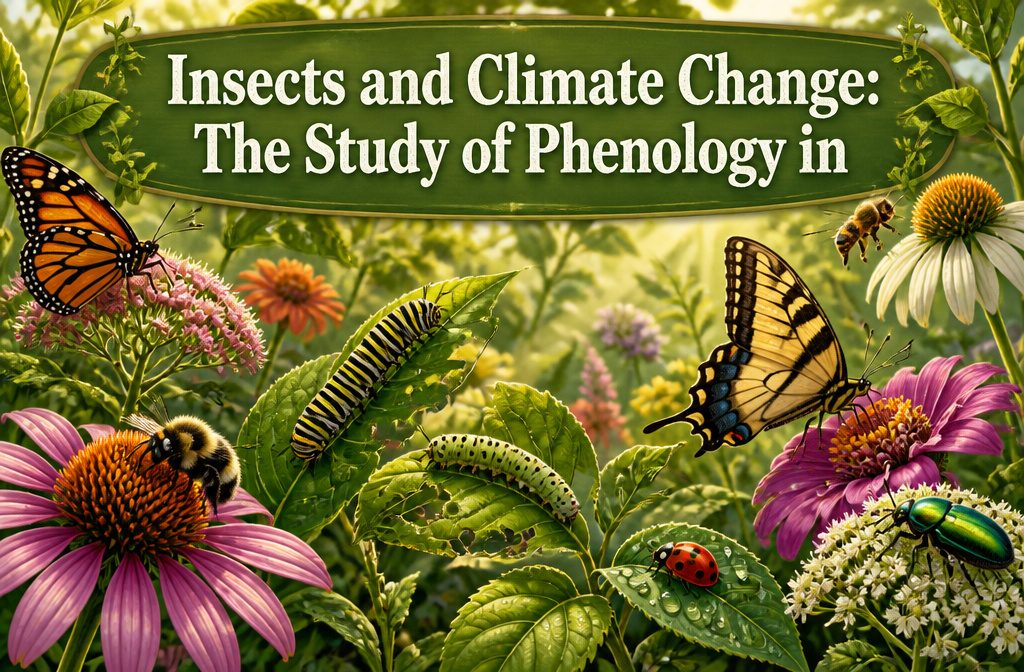
Phenology is the study of seasonal life-history stages in plants and animals, and it has become one of the clearest measures of how climate change disrupts ecosystems.
The catch is that plants and insects are not shifting in step with each other: temperate-zone plants have advanced their spring timing by about 10 days since the early 1970s, but they are moving four times faster than the insects that depend on them.
A 34-year European study of more than 1,500 herbivorous insect species found that 60% have already fallen out of sync with their host plants, leaving caterpillars to hatch into foliage too tough to eat and pollinators to miss blooms that peaked without them.
Phenology
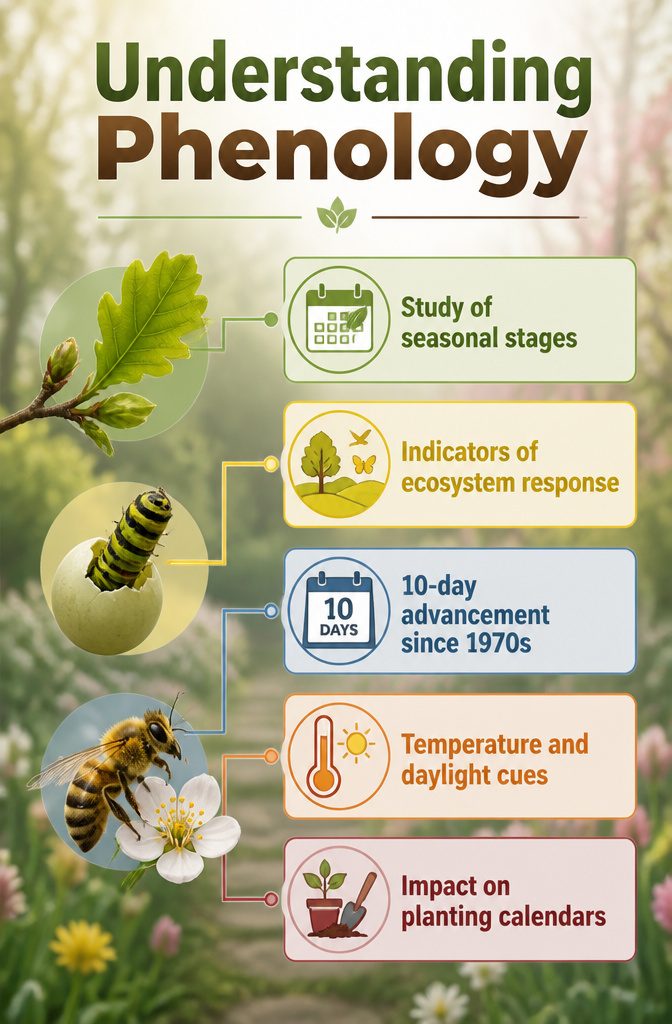
Phenology is the study of seasonal life-history stages in plants and animals, and it serves as one of the most reliable indicators of how ecosystems respond to environmental shifts.
When oak buds break, when caterpillars hatch, when bees first appear at flowers; these events are tied to temperature and daylight cues that have been dependable for millennia. Now those cues are drifting.
In temperate climates, phenological events have advanced by about 10 days since the early 1970s. The average day of onset for breaking leaf buds now falls on April 25, the 116th day of the year.
That shift sounds small until you track what else moves with it. Insects that timed their emergence to match leaf flush now arrive to older, tougher foliage.
Pollinators that once found nectar waiting find blooms that have already peaked. The 10-day shift is not uniform; some species lag while others race ahead, and the gaps between them widen.
For a gardener, this means the planting calendar written for your grandmother’s zone may already be a week and a half behind the biological reality in your yard.
Climate Change Effects
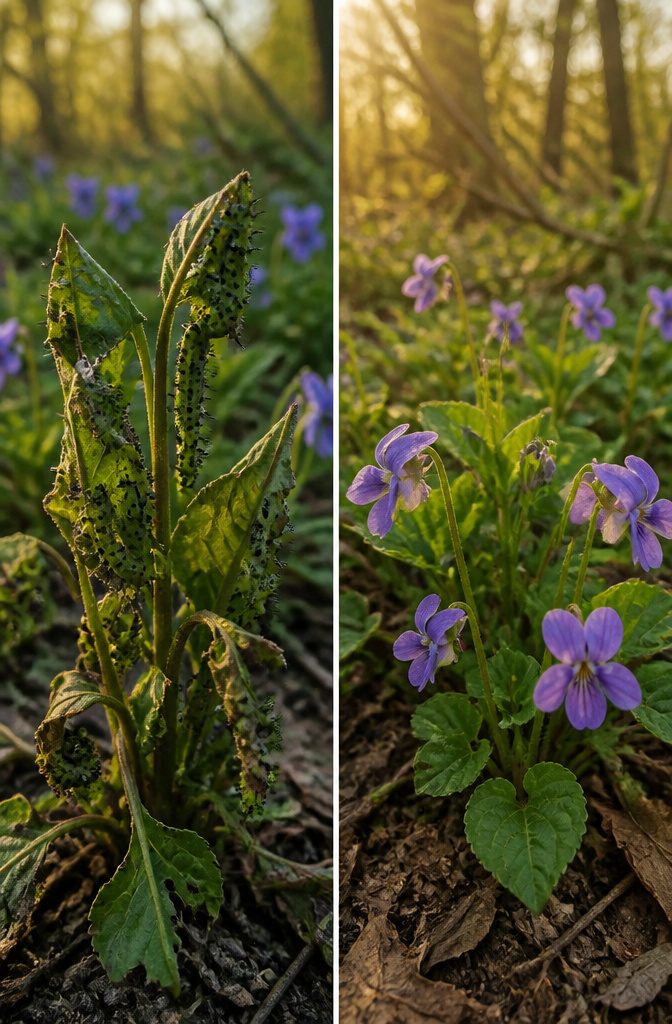
Spring in my garden used to mean the dog-violets opened, and a week or two later the first dark green fritillary would drift through.
That gap is the whole story now, only it is widening. Plants are shifting their seasonal timing four times faster than insects as temperatures rise, and the two groups are falling out of step with each other.
A 34-year study across Europe tracked more than 1,500 herbivorous insect species and found that 60% of plants and insects are now out of sync because of climate change. The mismatch is not uniform.
Butterflies and moths feel it most sharply. The dark green fritillary’s caterpillars still need those violets, but the violets are blooming earlier than the caterpillars can hatch to meet them.
Insects that raise only one brood per year are hit harder than multi-brood species, which have more chances to line up with their food.
Unusually warm days can push insect flight onset earlier, sometimes by significant margins, but not enough to catch the plants.
The result is less pollination, less herbivory where it belongs, and a quiet unraveling of timing that took millennia to calibrate.
Phenological Mismatch
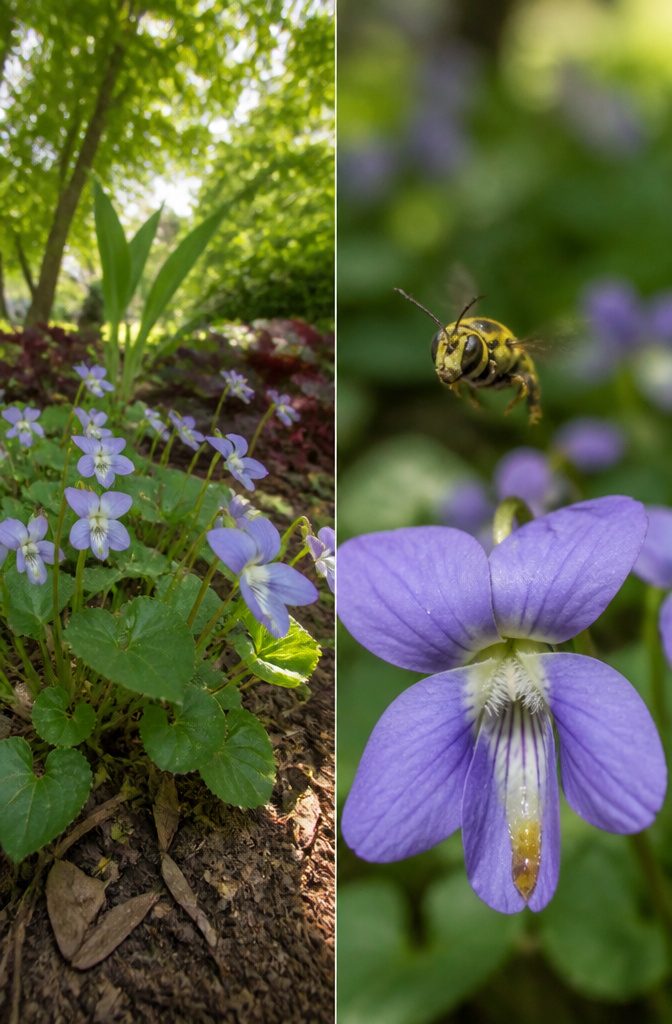
Phenological mismatch is the growing gap between when plants bloom and when the insects that depend on them emerge.
Plants are advancing their spring timing about four times faster than insects in response to warming temperatures, and the two partners in an interaction that once ran like clockwork now miss each other entirely.
The consequences ripple outward quickly. A butterfly whose caterpillar stage needs young dog-violet or marsh violet leaves arrives to find the plant already past its tender window.
The common yellow-faced bee, the Eurasian bee beetle, and the silver-ground carpet moth face the same problem across Europe, where a 34-year study found that 60% of herbivorous insect species have already fallen out of synch with their host plants.
Insects laying just one brood per year get hit hardest; they have no second chance to catch the right moment.
Pollination efficiency drops when the overlap between flower and pollinator shrinks. Fewer visits mean fewer seeds, which means fewer plants next season to support the insects that remain.
The cycle tightens toward collapse. In Europe alone, 84% of crops rely directly on insect pollination, so the breakfast table, not just the meadow, ends up shortchanged.
Drivers of Phenological Change
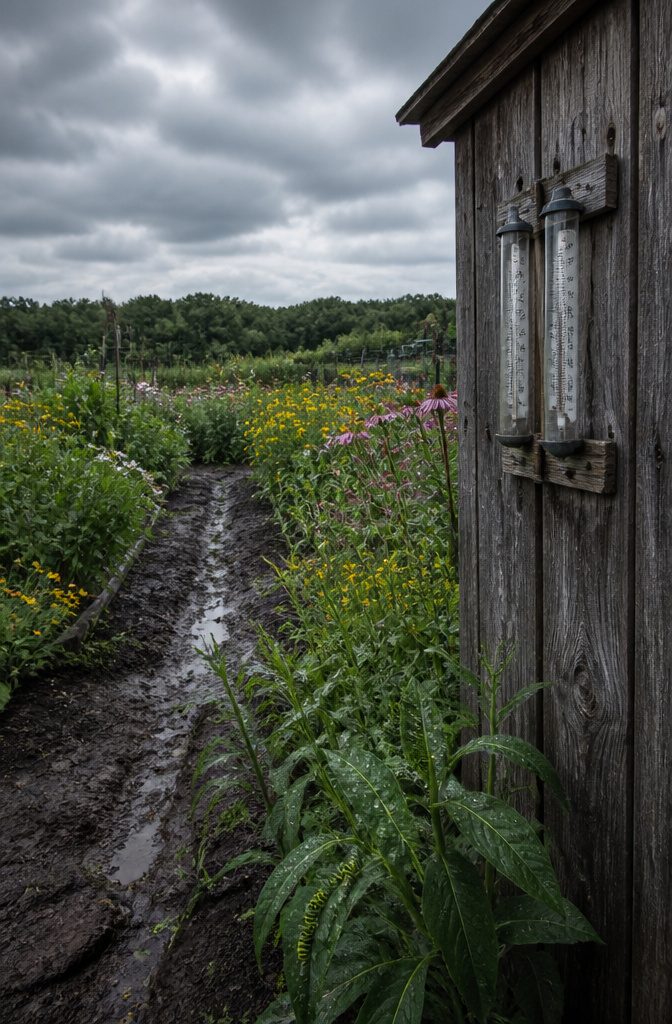
Temperature is the main force pushing insect phenology around, though the relationship is messier than a simple earlier-everywhere story. Spring emergence is advancing for many species as winters warm, with some insects now showing up weeks ahead of historical schedules.
But not all follow this pattern. Photoperiod, the day-length cue many species use to trigger diapause, does not shift with climate.
When a warming spring tricks an insect into emerging early but the day-length signal for entering dormancy stays fixed, the result can be a truncated season or a mistimed second generation.
Diapause itself complicates forecasting: some populations require a cold period to break dormancy, so milder winters can actually delay spring activity by failing to reset that physiological switch.
Precipitation and extreme weather add another layer.
Drought can harden soils before burrowing insects are ready, or desiccate eggs laid on drought-stressed host plants. Sudden cold snaps after a warm spell kill tender stages that emerged on a false spring.
The IPCC projection of 1.5 °C warming within the next twenty years matters here not as a smooth slope but as a recipe for more of these lurches.
What looks like a population-level delay is sometimes just higher mortality among the early cohorts, leaving the survivors to appear later and sparser.
Forecasting which species will advance, which will lag, and which will simply collapse requires knowing their particular mix of temperature thresholds, photoperiod dependencies, and diapause requirements.
Phenological Shifts
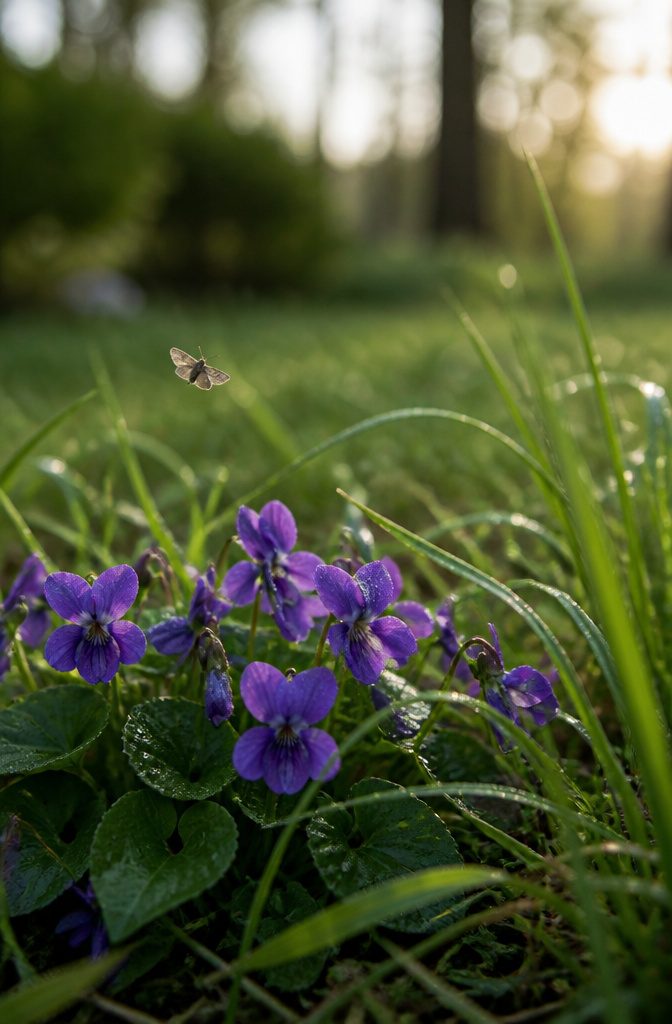
Many studies indicate insects are emerging earlier as temperatures rise, but this advance is not universal across species.
Some insects experience delays in emergence instead, tied to how their life cycles interact with day length and diapause, that dormant period they enter to survive unfavorable seasons.
Photoperiod acts as a fixed cue that does not shift with warming, so a species relying heavily on day length may fail to respond even when spring comes sooner.
Diapause requirements can create similar friction, locking an insect into a schedule that no longer matches its environment.
Since 1980, several European Lepidoptera species have added extra generations to their annual cycle, moving from one or two generations to two or three. Finnish moth populations show the same pattern, with more species becoming multivoltine as summers lengthen.
These changes in voltinism illustrate how warming can reshape insect life histories beyond simple shifts in timing, though diapause schedules still interfere with the process in ways that vary by species and location.
Voltinism Changes
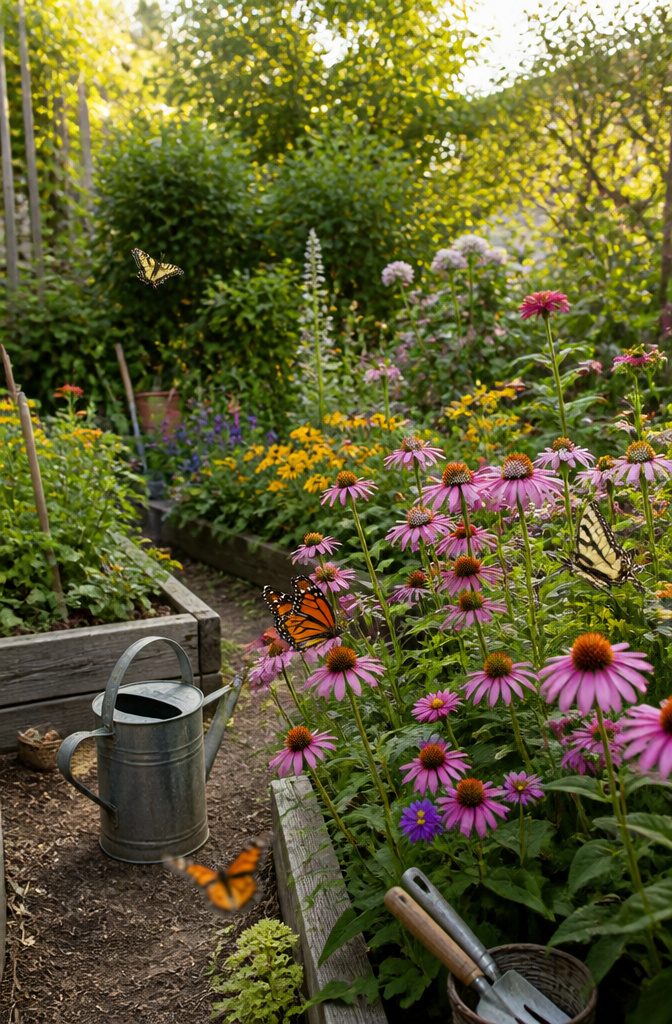
Longer and warmer growing seasons are letting many insects squeeze in extra generations each year.
Since 1980, several European moth and butterfly species have shifted from one or two generations annually to two or three. Finnish moth populations have shown the same pattern, with more species becoming multivoltine as summers stretch out.
Predicting these voltinism changes is tricky, because many insects still rely on day length to trigger diapause.
That built-in calendar does not shift with the thermometer, so a population can find itself caught between enough heat to breed again and the shortening days telling it to shut down for winter.
North American spruce beetles may face this exact tension as warming allows more time on the clock but the photoperiod cue stays fixed.
The extra generations matter for more than head count. More cycles per season means faster population growth and wider range expansion, which changes what gardeners and forest managers see from one year to the next.
Ecosystem Impacts
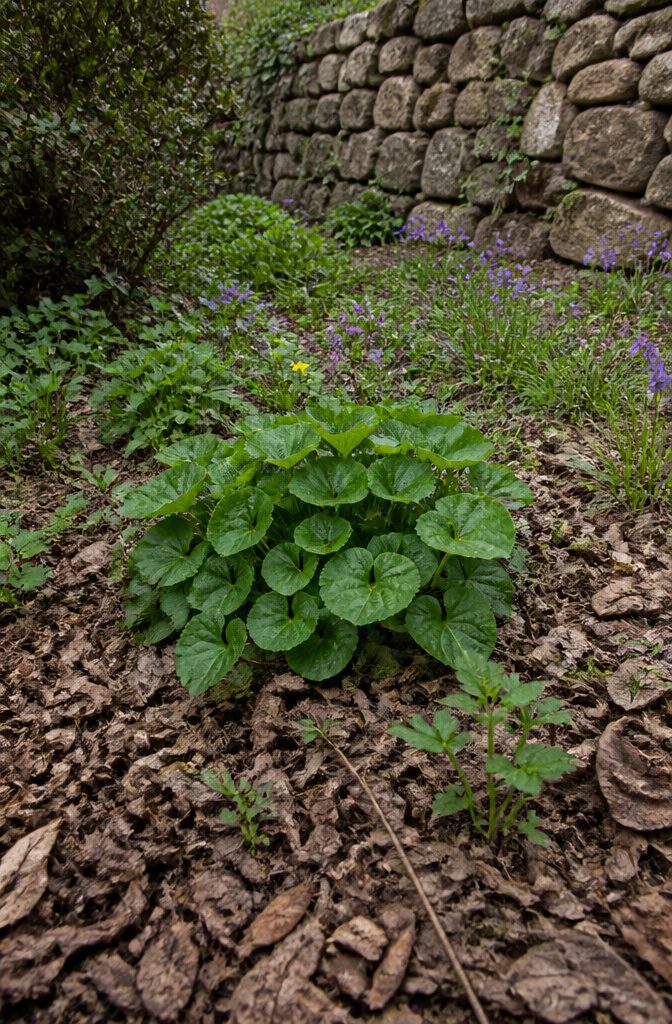
When a caterpillar hatches two weeks after its host plant has already leafed out and toughened, that is not a scheduling conflict. It is starvation.
The Oxford and Chinese Academy of Sciences study tracking 1,500 European herbivorous insect species across 34 years found 60% of insects are already falling behind the plants they depend on, and the gap is widening because plants are shifting their seasonal timing four times faster than insects.
Butterflies and moths feel this most acutely.
The dark green fritillary now misses the window when dog-violet and marsh violet are soft enough for its caterpillars to eat. Single-brood species, those laying one egg batch per year, get no second chance if that window slams shut.
The breakfast test makes the risk concrete. Berries, almonds, tea, coffee: 84% of European crops rely directly on insect pollination.
When bee emergence drifts past bloom time, the flower does not get visited and the bee does not get fed. The food web loses links at both ends, and the network itself starts to fray.
Data Collection
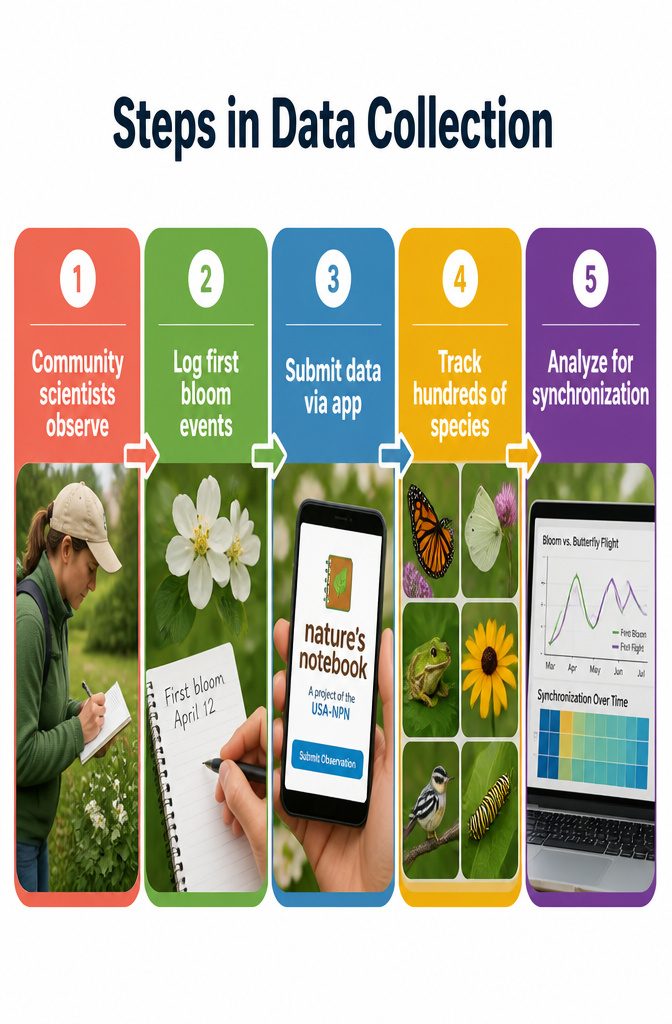
Long-term phenological records are what separate real insight from educated guesses about how climate change is reshaping insect life.
A single warm April or late frost tells you nothing; you need decades of observations to spot whether a species is actually shifting its flight period or just rolling with one odd year.
That is where community scientists become the backbone of the research.
The USA National Phenology Network runs the largest effort of this kind in the country, with volunteers tracking hundreds of species through a program called Nature’s Notebook.
Participants log simple observations: first bloom, first flight, first egg mass. The network now aggregates data across more than 2,000 species of plants and animals globally, a scale no single research team could match.
A 70-year study of Lepidoptera across the Eastern USA, drawing on natural history collections and weather records, found something the averages had missed:
"Understanding phenological responses under global change must account for unusual weather events, especially given they are predicted to increase in frequency and severity."
— Nature
What this means for gardeners: your own notes on when the first cabbage white appears, or when the monarchs pass through, matter more than you think.
The USA-NPN makes participation straightforward; you pick a site, choose species to track, and submit observations through their app. No special training required, just consistency across seasons.
The data feeds directly into studies of whether plants and insects are staying synchronized or drifting apart, a question with cascading consequences for pollination, pest outbreaks, and the food webs that run through your own backyard.
Frequently Asked Questions
Are plant and animal species responding differently to climate change?
Yes. Plants are shifting their seasonal timing about four times faster than insects as temperatures rise, so the two groups are falling out of step with each other.
A 34-year study across Europe found that 60% of herbivorous insect species have already fallen out of synch with their host plants.
Insect-pollinated plants are flowering earlier, but pollinator activity is not shifting forward to the same extent, which reduces visits and seed set.
How does climate change affect insect phenology?
Warming generally pushes spring emergence earlier for many insects, though the advance is not universal across species. Some insects experience delays instead, tied to fixed photoperiod cues or diapause requirements that do not shift with temperature.
Unusually warm days can push flight onset earlier, but sudden cold snaps after a warm spell often kill the early cohorts, leaving survivors to appear later and sparser.
Since 1980, several European moth and butterfly species have added extra generations per year as summers lengthen.
What is phenological mismatch?
Phenological mismatch is the growing gap between when plants bloom and when the insects that depend on them emerge.
Plants are advancing their spring timing about four times faster than insects, so interacting species now miss each other entirely. The dark green fritillary’s caterpillars, for example, arrive to find dog-violet and marsh violet already past their tender, edible window.
Single-brood species get no second chance to catch the right moment, and pollination efficiency drops when flower and pollinator overlap shrinks.