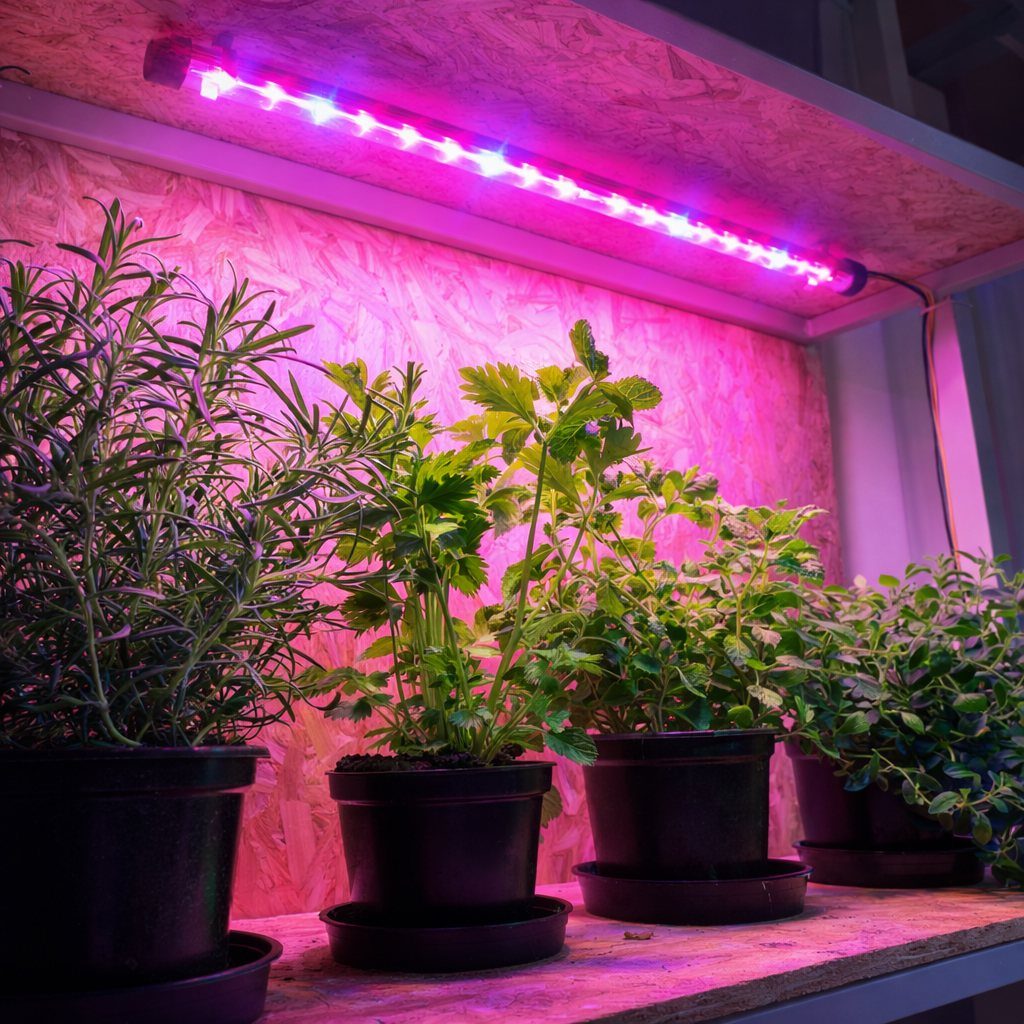
The setups below range from a $30 LED bulb in a desk lamp to full-spectrum units costing hundreds, and the deciding factor is your space, not your budget.
Renters need portable options like tripods or clamp lamps that move with you; homeowners planning a permanent plant wall can ceiling-mount an overhead fixture with a timer.
1. Fluorescent Tube Lights for Plants on a Shelf
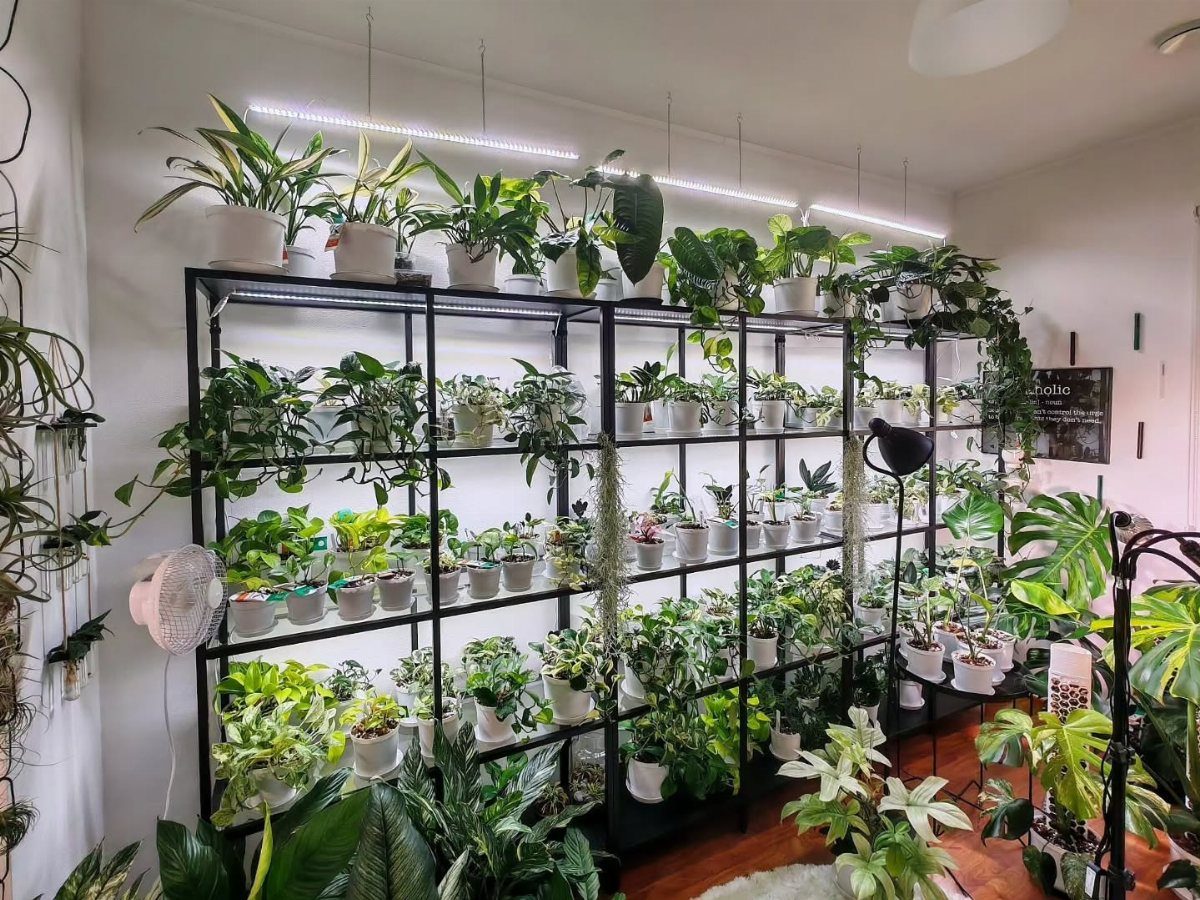
Fluorescent tube lights mounted above a shelving unit give even coverage to a whole row of plants at once. I like this setup for anyone starting out with several small plants, since one fixture replaces several individual bulbs.
A standard wire shelving unit matches the length of common shop-light fixtures. A small fan clipped to the side handles air movement, something I would add to any shelf setup to cut down on mildew.
2. Tri-head Grow Light
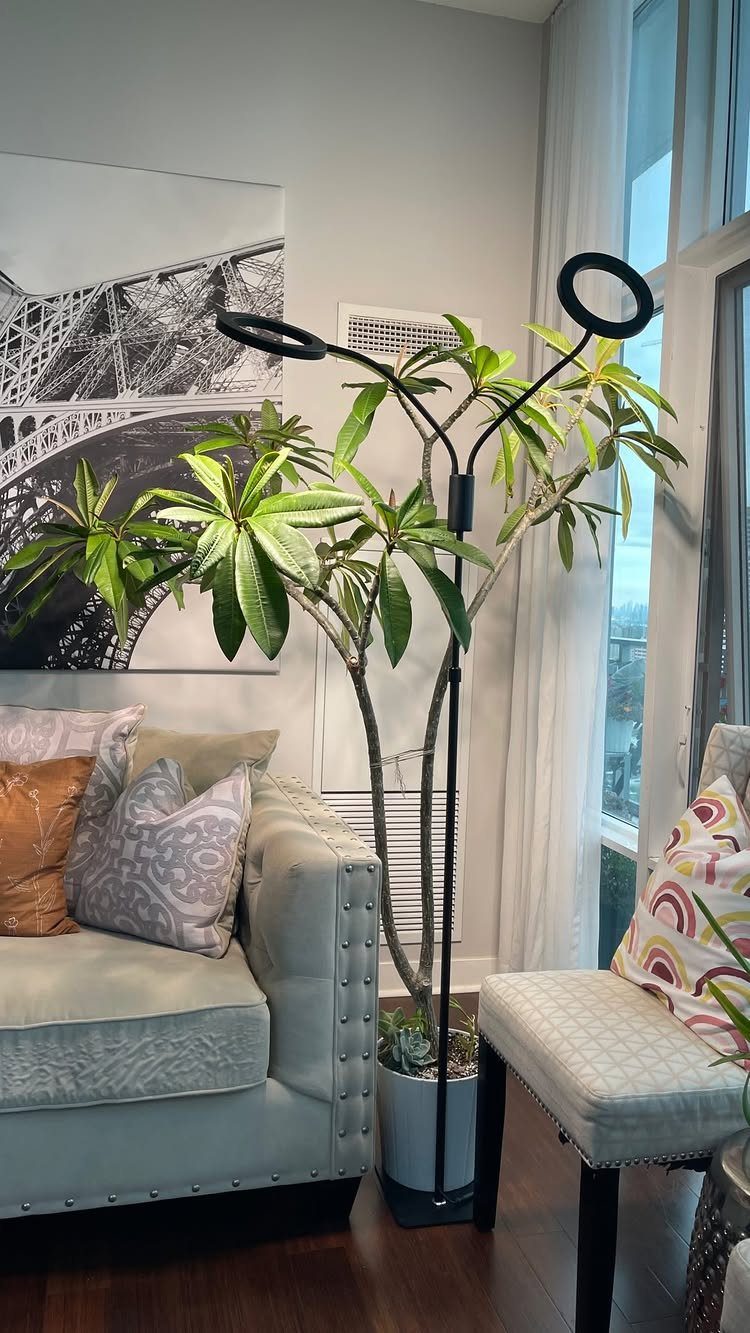
A single plumeria filling most of a pot needs broad, strong light from above, and three adjustable heads on one stand can aim at different angles across that spread.
I would set each head close enough to reach the foliage and adjust as the plant fills out.
The tri-head format keeps the footprint small while the coverage stays wide, which matters in a living room, not a dedicated grow space. For one large statement plant, this beats stringing together several small clip lights.
3. Adjustable Grow Lights
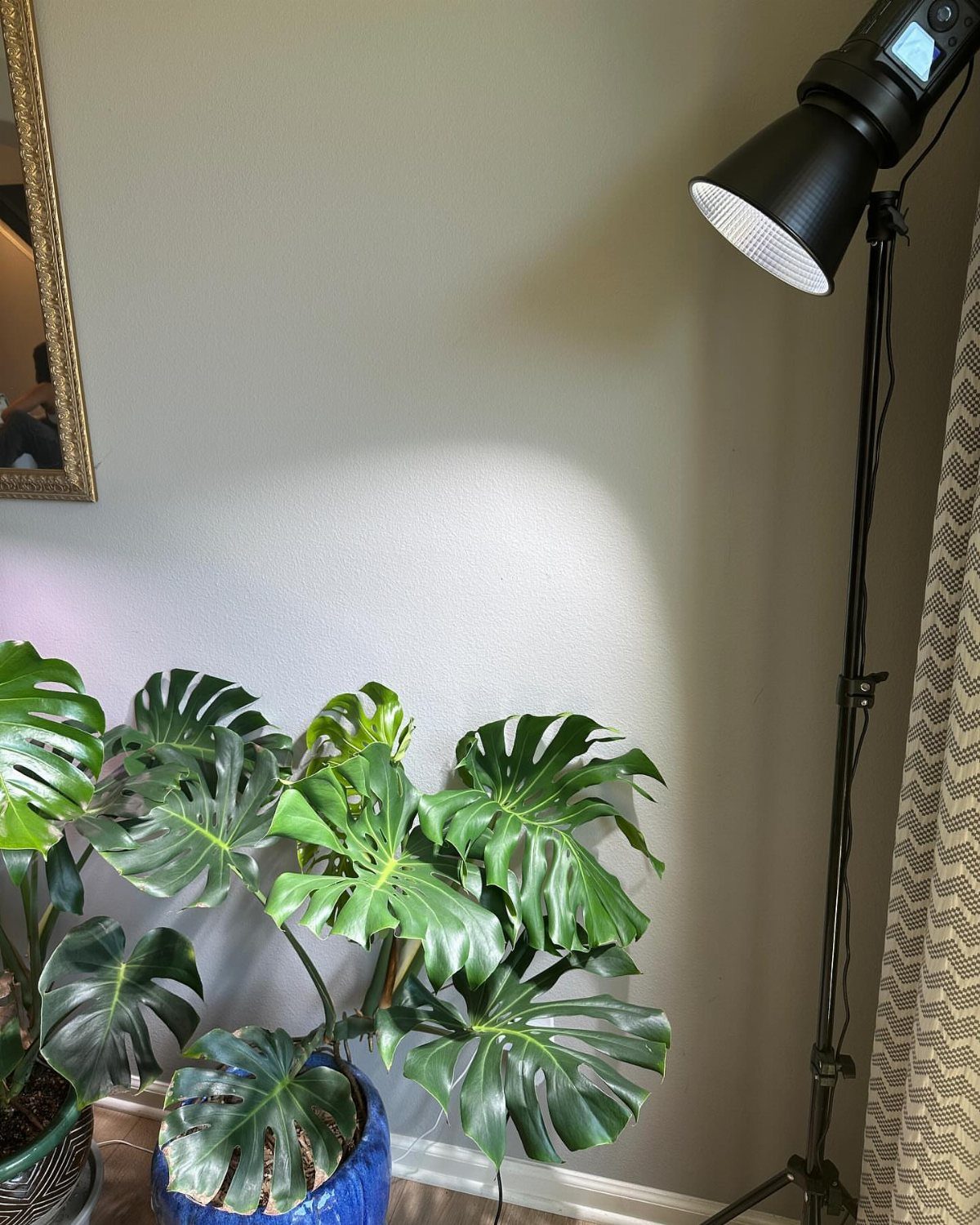
A floor lamp format lets you move light closer or farther from a tall plant like Monstera without rearranging furniture.
I prefer adjustable arms with a dimmer switch, not just height changes, because a plant pushing new growth in spring can take more intensity than the same leaves in a dry winter room.
For a plant on a table, I would reverse the stand and aim upward into the canopy instead of angling down.
4. Track Lighting for Houseplants
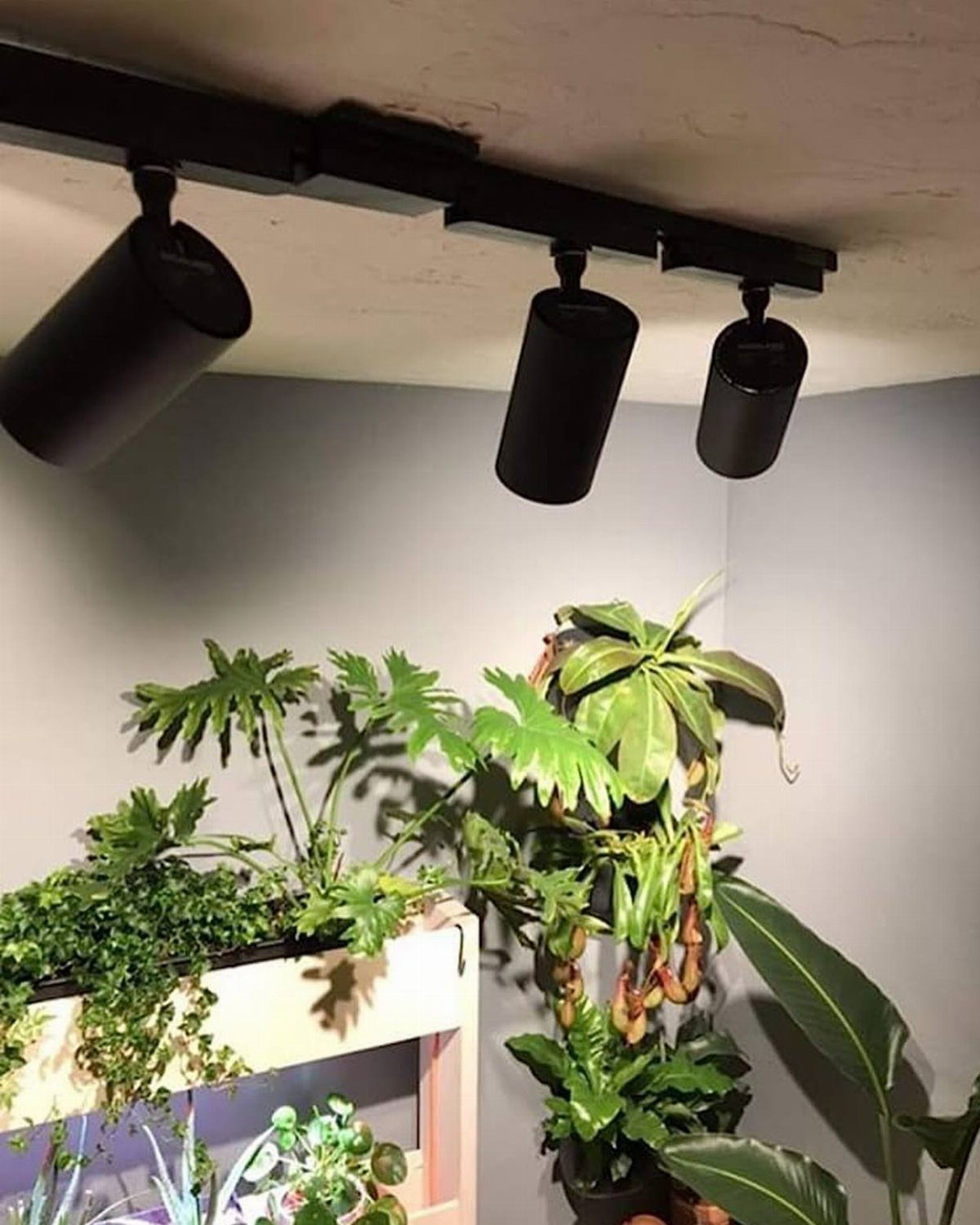
Ceiling track with cylindrical spotlights turns houseplant lighting into something you plan once and adjust for years.
I have seen renters hesitate on this, but modern track systems mount to a standard ceiling box with the same bracket as any pendant, and the individual heads twist to follow plants as you move them.
Track lighting belongs in a designed room, not a grow room: it looks like ordinary lighting because it is, just aimed at leaves instead of a reading chair.
5. Overhead Grow Light Fixture with Timer
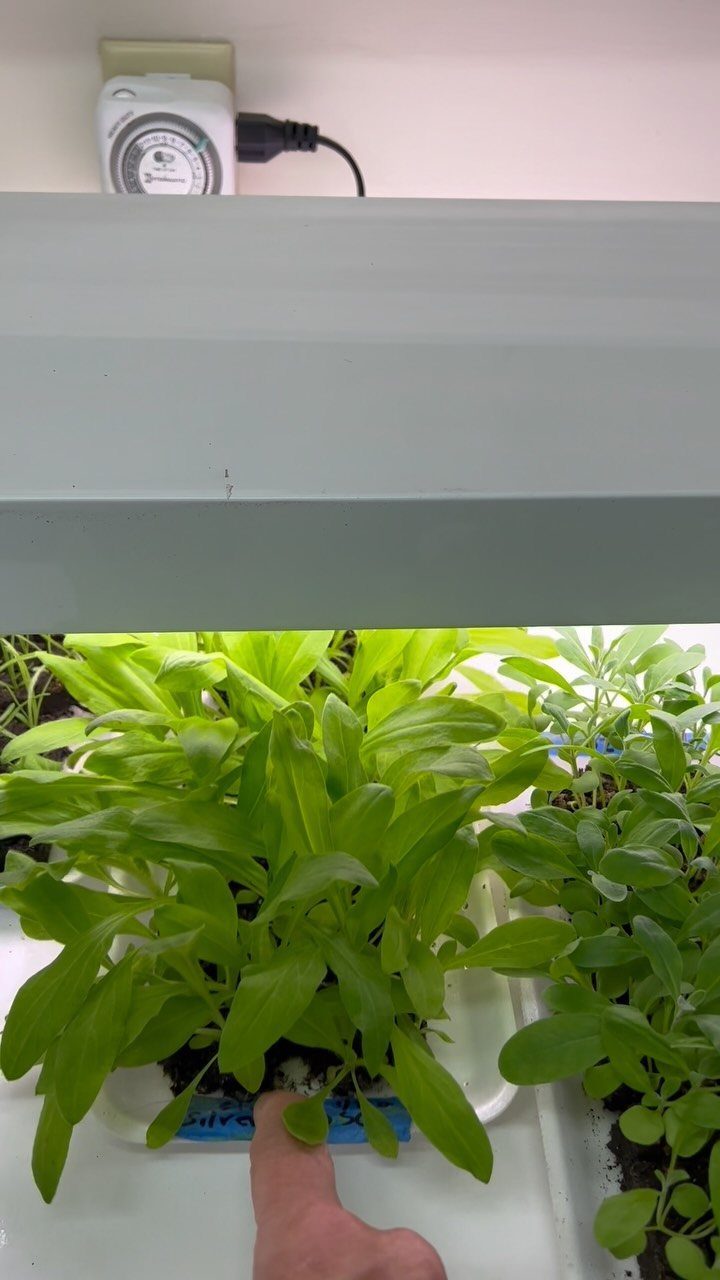
An outlet timer wired to an overhead fixture removes the daily guesswork of when to turn lights on and off.
I run mine longer in winter when natural light is scarce, then dial back once spring strengthens the daylight coming through the windows.
For that many small plants at once, a timer matters more than wattage. I would check that the timer can handle the fixture’s draw; standard LED grow fixtures stay well within what most household timers can manage.
6. Plant Stand with Integrated Lights
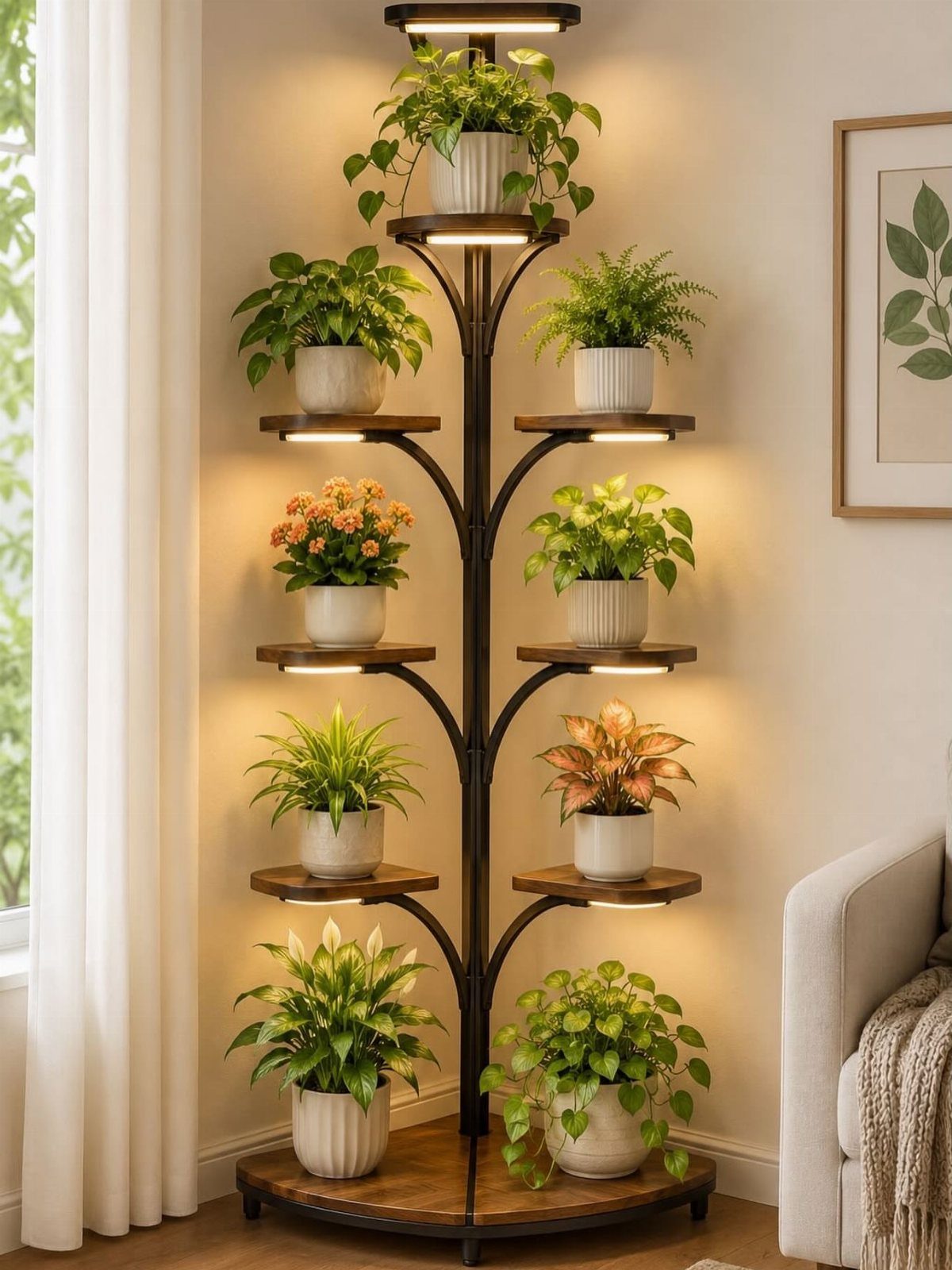
Built-in strips under each shelf of a tiered stand solve the problem of lower plants getting shaded by upper ones.
The warm LED tone reads closer to standard indoor lighting than the harsh purple of some grow lights, which I prefer for a living room beside a sofa and curtain.
Black metal with wood shelves is a common combination; I would check that the wood is sealed against moisture before buying, since watering on a multi-tier stand gets messy.
For someone with a dozen small plants and no windowsill space, this is the neatest all-in-one I know.
7. Tripod Vertical LED Light
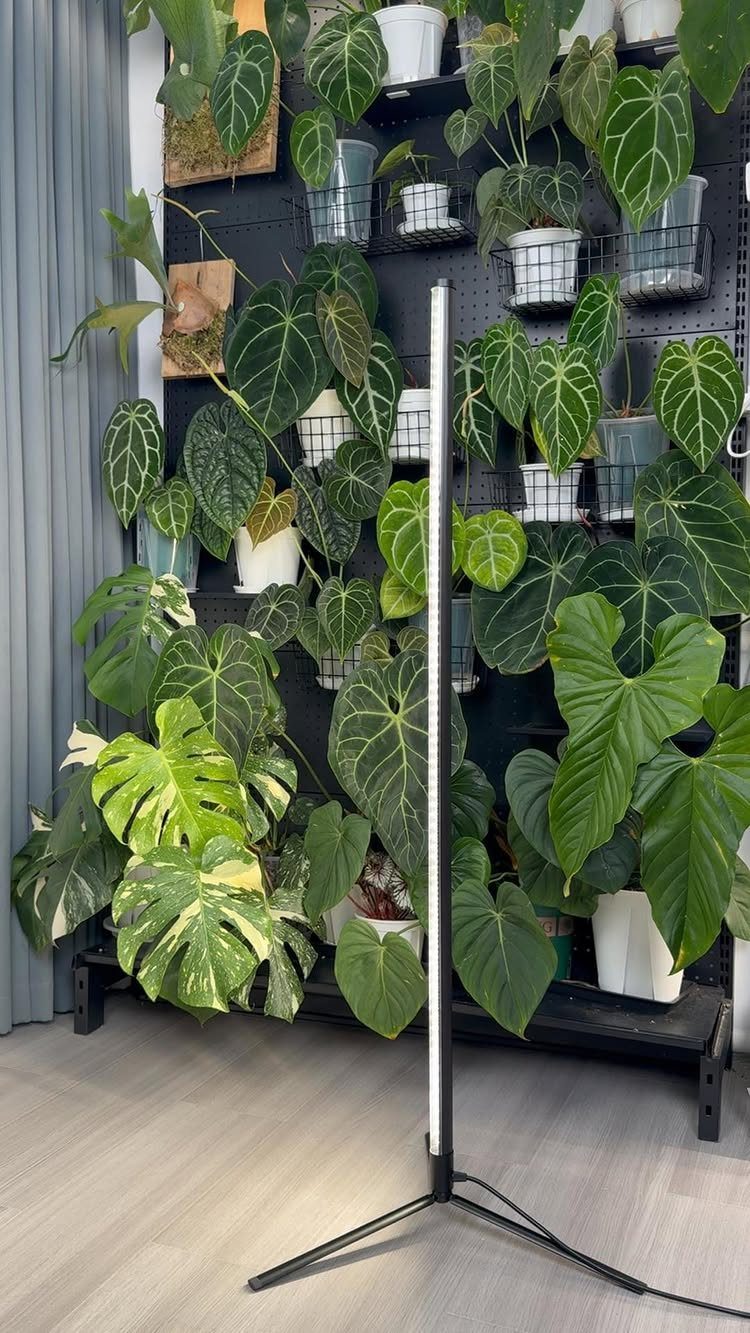
A vertical LED panel on a tripod sends light sideways across a wall of shelves instead of down onto a single surface.
I like this for renters who cannot ceiling-mount anything; the tripod folds flat and moves with you. The black finish and slim bar read more floor lamp than lab equipment, which matters when the plants live in your main room.
I would position it close enough to reach the foliage and angle the panel to graze leaves at multiple depths. For a single dramatic wall of plants, this beats spreading clip lights everywhere.
Understanding Plant Light Needs
Vegetables need more intensity than most houseplants because fruiting and flowering demand it. Succulents also need strong light, but the color mix should lean toward harsh midday sun rather than the dappled light a fern gets under trees.
Seedlings are the exception: they burn under the same light that keeps a tomato productive, so dimmable fixtures matter for anyone starting plants from seed.
Full spectrum covers all of these cases, but the distance between fixture and foliage does the actual tuning.
Start a seedling at double the distance you’d keep a mature succulent, then inch it closer once the stems stiffen and the leaves thicken.
Placement Considerations
A clip-on or desk lamp fits where floor space is tight: a narrow kitchen counter, a bathroom ledge, the corner of a desk already crowded with books.
Panel LEDs and hanging fixtures need headroom and footprint both, so they suit a dedicated plant corner or a room you have already cleared for this.
Ceiling height limits hanging fixtures more than people expect. I would measure the drop plus the plant height plus the recommended distance to the light before buying any pendant or panel.
A fixture that hangs too low crowds the room; one hung too high spreads its useful intensity across too much floor.
Energy Efficiency
LED fixtures draw less power than the fluorescent or HID setups they replace, and the bulbs last years longer.
One LED bulb in a regular fixture costs around $30; a full-spectrum professional unit runs into the hundreds. I would not assume the higher price buys proportionally more plant growth, but it often buys better control: dimming, scheduling, spectrum switching.
The heat output is low enough to place most LED units close to foliage without scorching leaves. That matters more than the wattage saved, since tight placement means less light lost to distance.
Frequently Asked Questions
What type of light is best for indoor plants?
Full-spectrum light covers the needs of most houseplants, from low-light ferns to succulents that want intensity closer to midday sun.
The fixture format matters as much as the spectrum: a fluorescent tube above a shelf, an adjustable floor lamp for a tall Monstera, or track lighting aimed at a statement plant each solve a different placement problem.
I would match the light to the plant’s size and the room you have, not just the bulb type.
Can too much LED light hurt plants?
Yes, especially seedlings, which burn under the same intensity that keeps a mature tomato or succulent productive.
A dimmable fixture lets you hang a seedling twice as far from the bulb as a full-grown plant, then move it closer as the stems toughen and the canopy fills in.
Even full-grown foliage can take more light in spring during active growth than in a dry winter room, so adjustable intensity matters year-round.
Can any light bulb be used as a grow light?
Standard household bulbs emit some light plants can use, but the spectrum and intensity are usually too narrow and weak to sustain healthy growth for long.
A full-spectrum LED grow bulb in a regular fixture runs about $30 and works for one plant if you can position it 6 to 9 inches away, but popping it into a ceiling light wastes the spectrum across too much distance.
Fluorescent tubes or dedicated LED fixtures give better coverage for multiple plants or larger specimens.
Do house plants like artificial light?
Many houseplants thrive under artificial light, and some setups suit them better than a dim windowsill.
Vegetables and succulents need more intensity than most foliage houseplants, but even a fern does fine under a full-spectrum LED if the distance is right.
Renters with north-facing windows or deep rooms often run tripod stands or clip track lighting along a wall to keep a whole row of plants going through the winter.