The plants below include a pothos cutting small enough to start in water on a windowsill and a floor palm in a ribbed planter tall enough to clear a media console, and most need only a watering schedule you can read from the leaves themselves.
The one detail that decides which plant belongs in your space is light: a north-facing window blocked by neighboring buildings limits you to ZZ plants and snake plants, while direct sun for a good stretch of the day opens the door to aloe vera and succulents in unglazed ceramic bowls.
I group mine on pebble trays when winter heating drops humidity below 25%, and I rotate every pot when I water to keep growth even in rooms where light comes from one direction only.
1. Pothos in Hanging Baskets
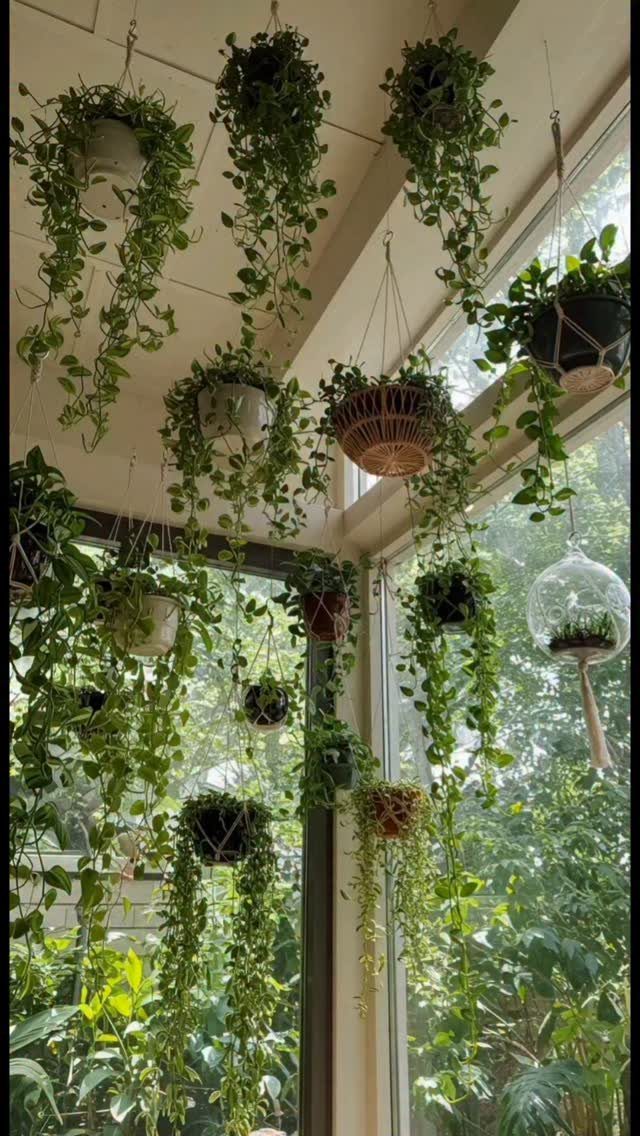
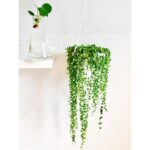
A pothos in a hanging basket gives you green without eating your floor space. I hang mine where the vines can trail freely without brushing shoulders with anyone walking by.
Water when the top inch of soil dries; the leaves droop slightly when they are thirsty, which I find easier to read than a calendar reminder.
Bright indirect light keeps the variegation sharp, though the plain green version handles lower light without sulking.
2. ZZ Plant
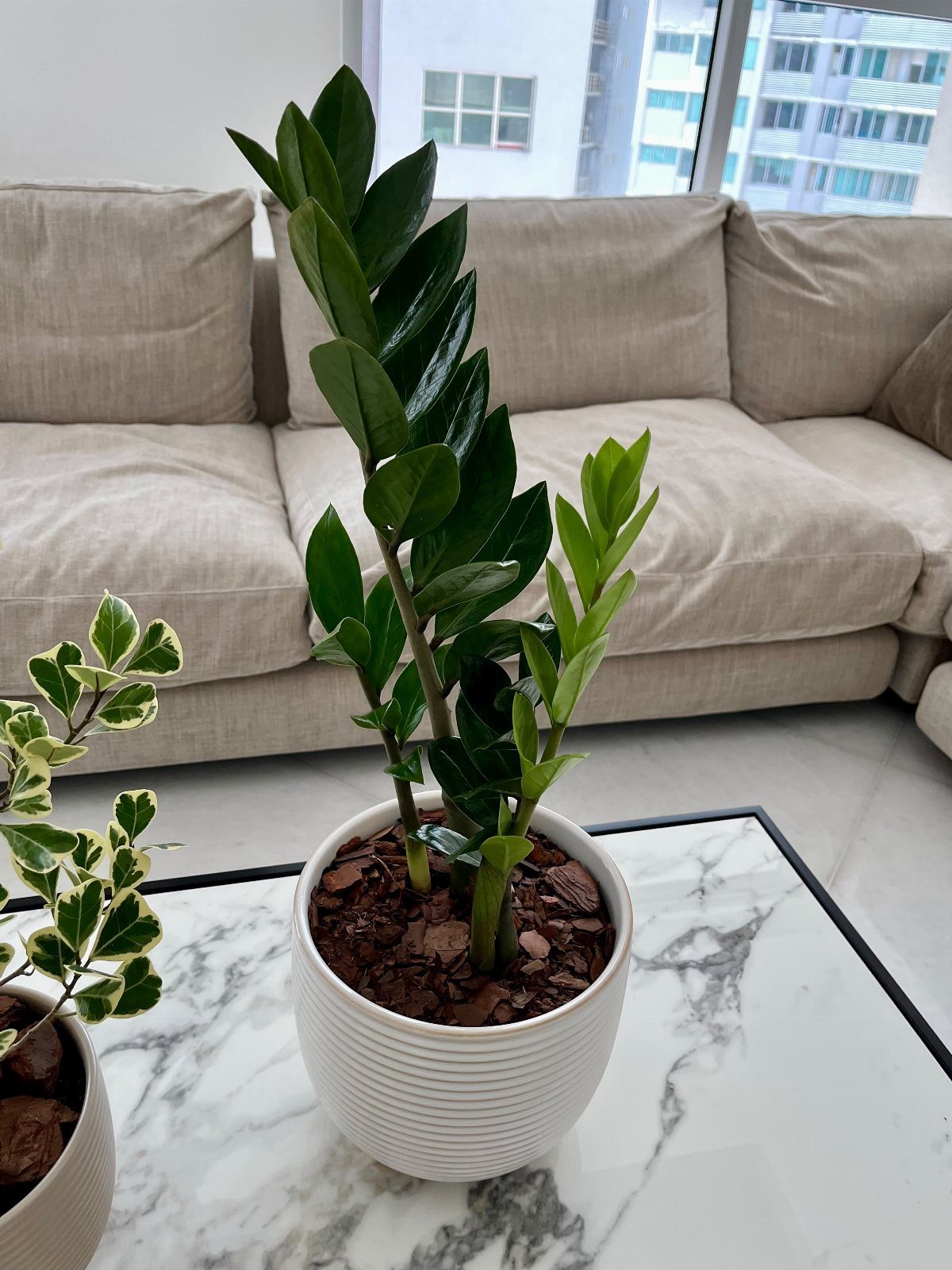
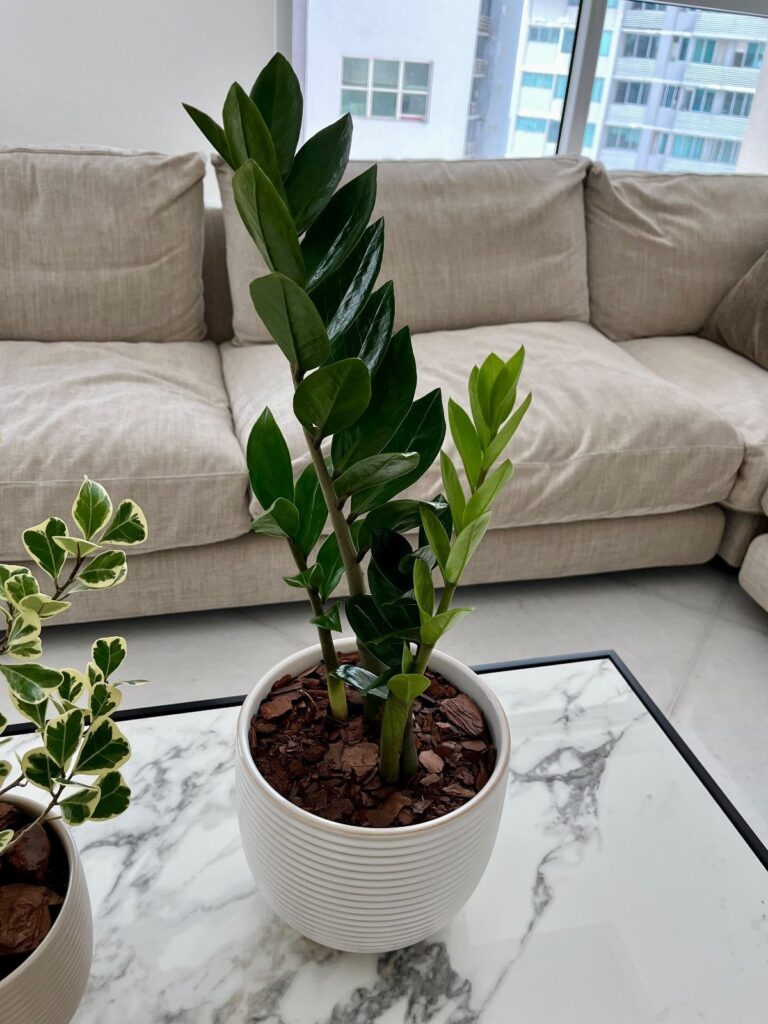
The ZZ plant asks so little that I have forgotten one in a back room and found it still glossy and upright.
Its thick stems and dark leaves store water the way a cactus does, so overwatering rots it faster than drought ever will.
I use a pot with a drainage hole and let the soil go nearly dry between drinks. Low light, fluorescent office light, or a bright corner; it does not seem to care which.
3. Snake Plant
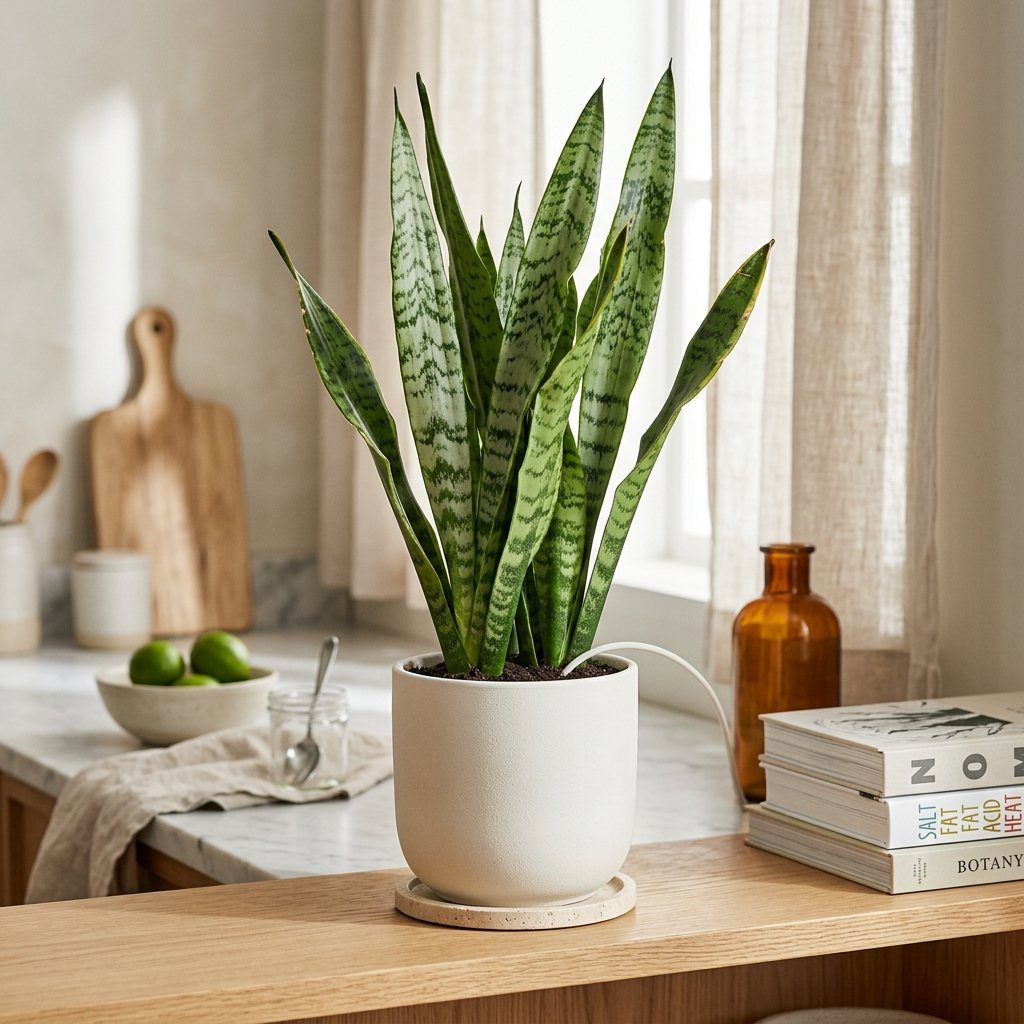
Snake plant leaves stand straight up, so you can tuck one into a narrow gap between a counter and a wall where a bushy plant would splay and brown.
I water mine sparingly in winter, less than you think it needs, and I wipe the flat leaves when dust builds up so the light reaches the surface evenly.
It handles a dim bathroom or a sunny kitchen; the only mistake is keeping the soil wet.
4. Succulents
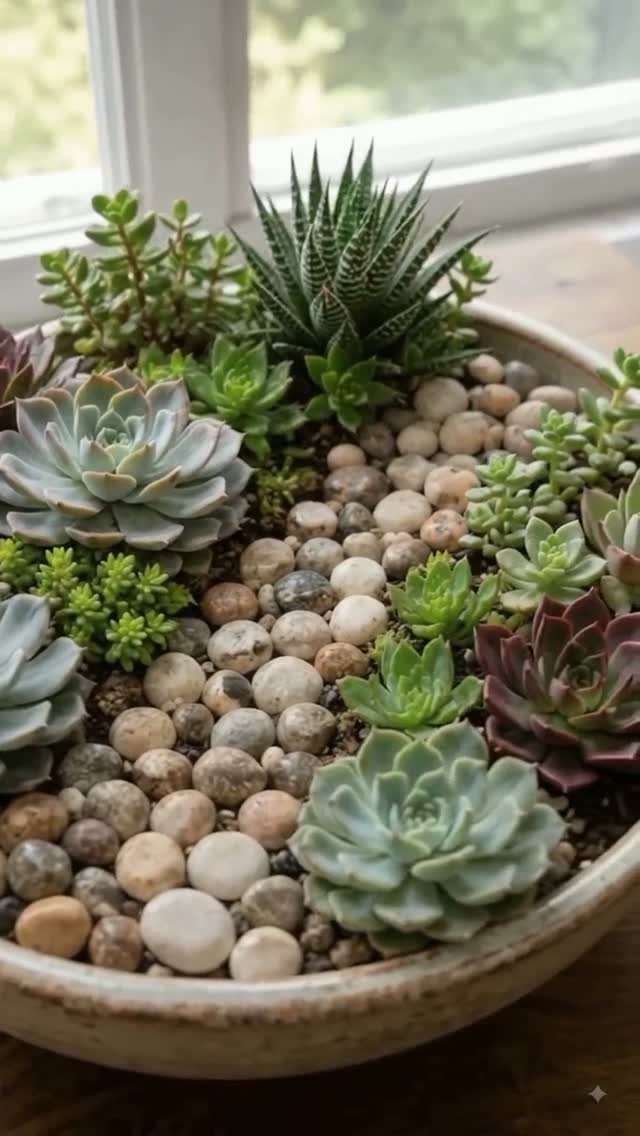
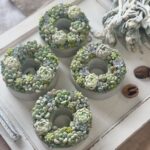
Succulents in a shallow bowl let you arrange several plants as one piece without needing deep soil or heavy pots.
I use unglazed ceramic or terra cotta so the mix dries fast, and I top with pebbles to keep the leaves from resting on damp soil.
Give them a south or west window and water only when the leaves soften slightly; in a bowl without drainage, I tip out any excess soon after watering.
5. Aloe Vera
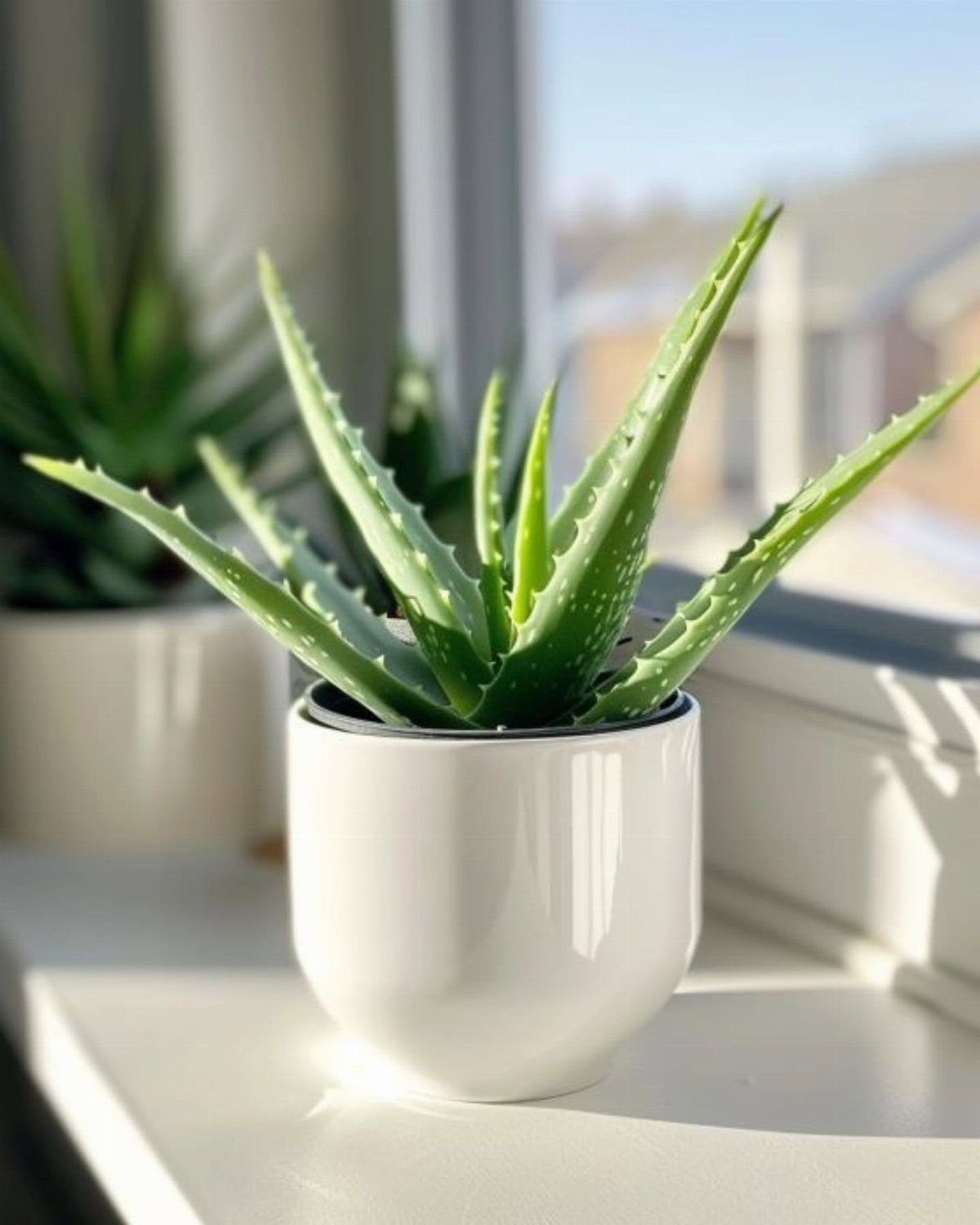
Aloe vera wants the sunniest spot you have, and it rewards that light by growing tight and plump rather than stretching pale and thin.
I let the soil dry completely, then soak it and let it drain; the gel inside those thick leaves is what I reach for after a kitchen burn.
It is not a plant for sharing a dark apartment, but if your windowsill gets direct sun for a good stretch of the day, it will sit there for years.
6. Air Plants
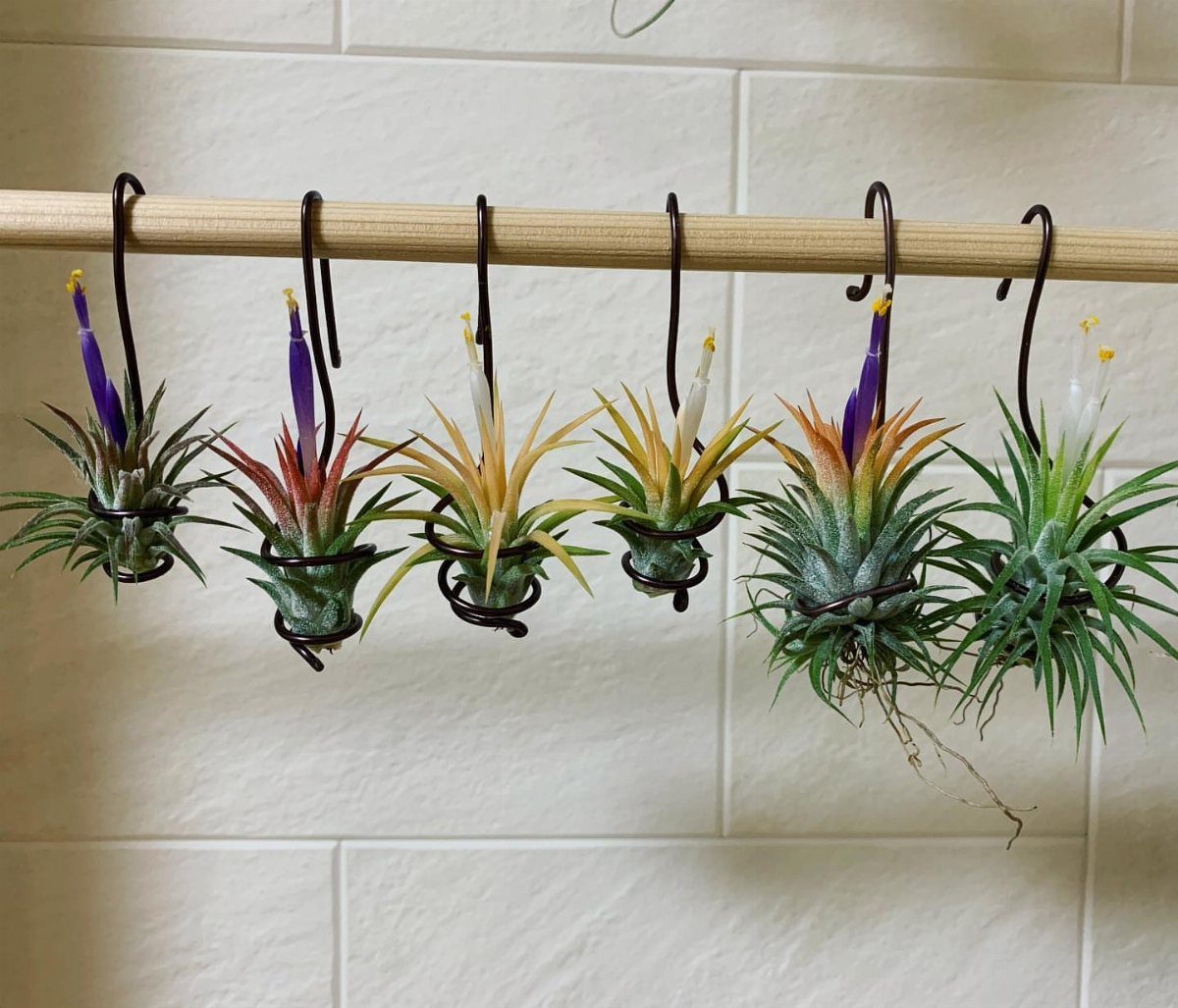
Air plants need no soil, which means no potting mix to store, spill, or replace.
I soak mine in a bowl of water once a week, then dry them upside down so water does not collect in the base and rot the center.
Wire holders keep them visible and off your shelf space; I have also set them on driftwood or in small glass globes, though those need more careful drying. Bright indirect light and good air circulation keep the color crisp.
7. Chinese Money Plant
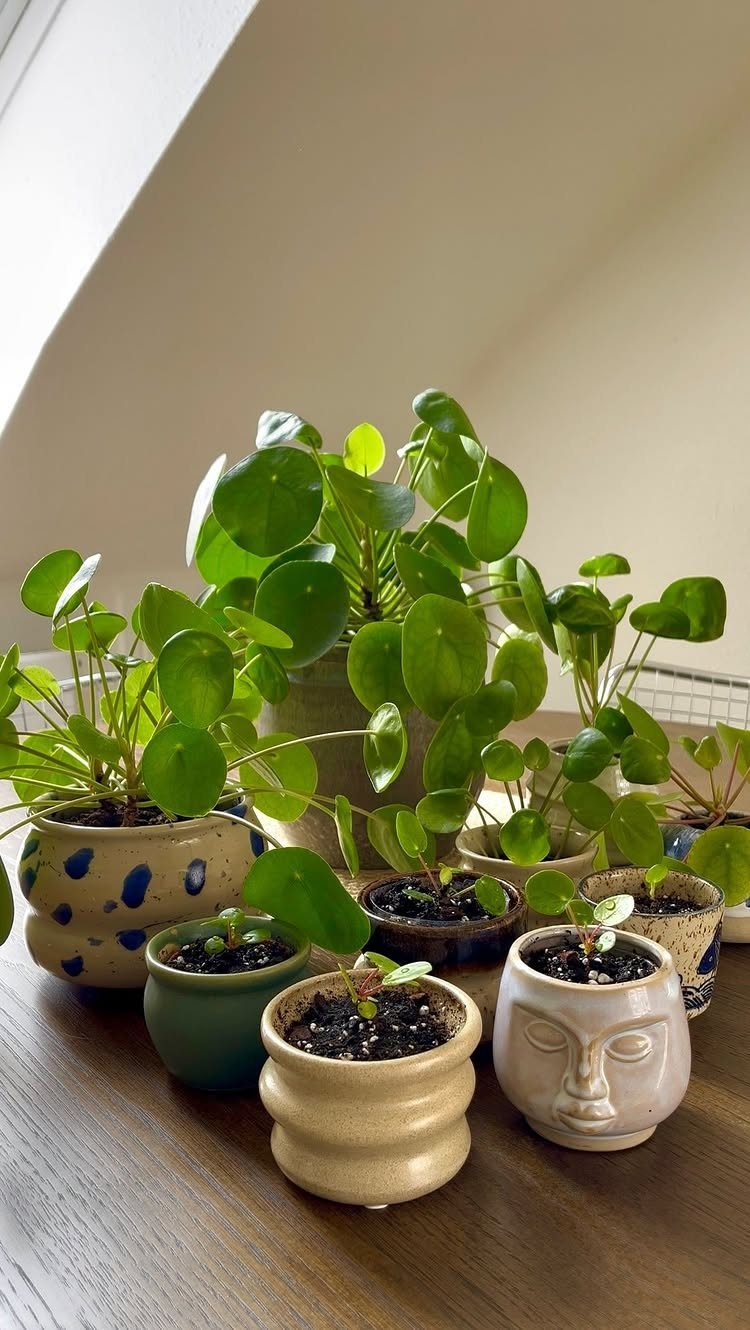
The Chinese money plant’s flat, coin-shaped leaves stack on upright stems like someone pressed them from above.
I keep mine in a small ceramic pot with drainage and rotate it every few weeks so the stems grow straight toward the light rather than leaning.
Bright indirect sun keeps the leaves firm and dark green; too little light and they go pale and droop.
The plant sends up tiny versions of itself on thin runners, which I cut and root in water to fill more pots or hand to friends.
8. Lucky Bamboo
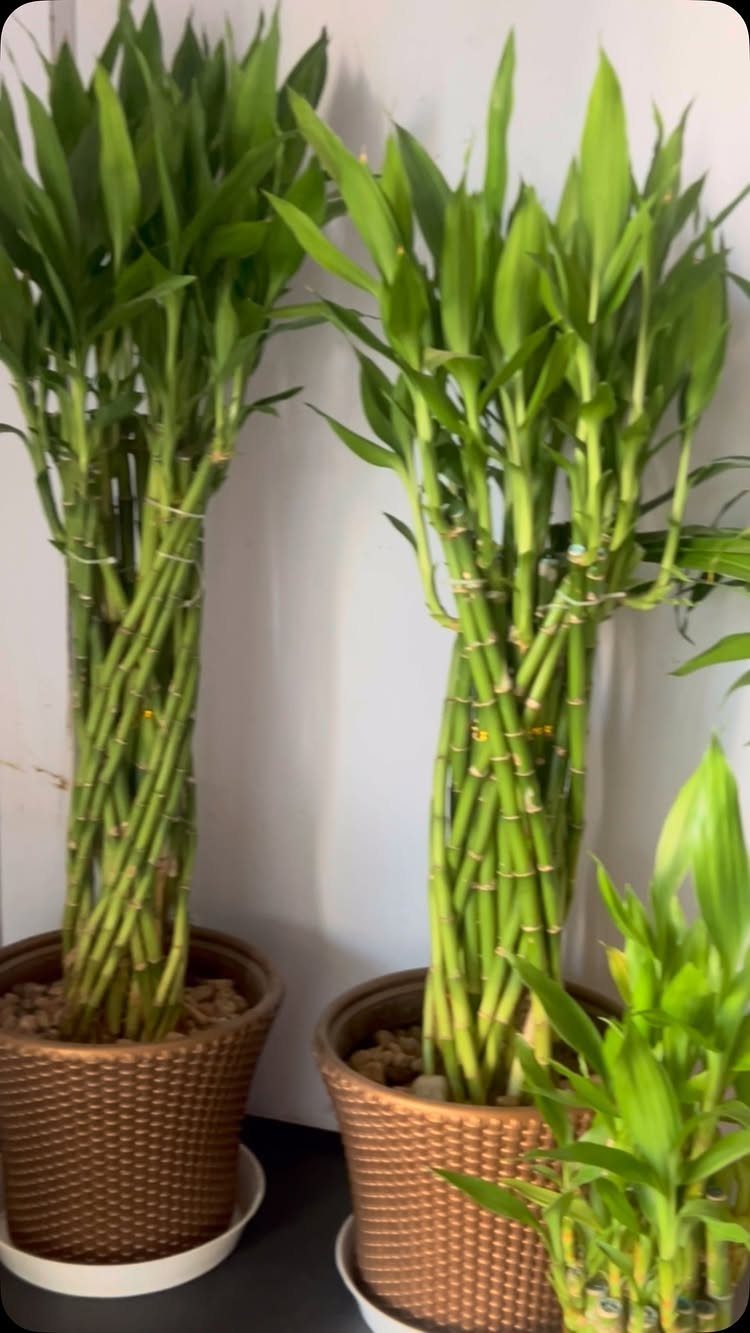
Lucky bamboo is a dracaena, not a bamboo at all, and it grows fine in water alone or in soil.
A few stalks in a simple pot suit a windowsill or desk without clutter. I keep mine in water with a few pebbles for steadiness, changing it before it sours.
Indirect light keeps the leaves from yellowing; direct sun burns them. It is a slow grower, which I like in a small apartment where an aggressive plant would need constant cutting back.
9. Peperomia
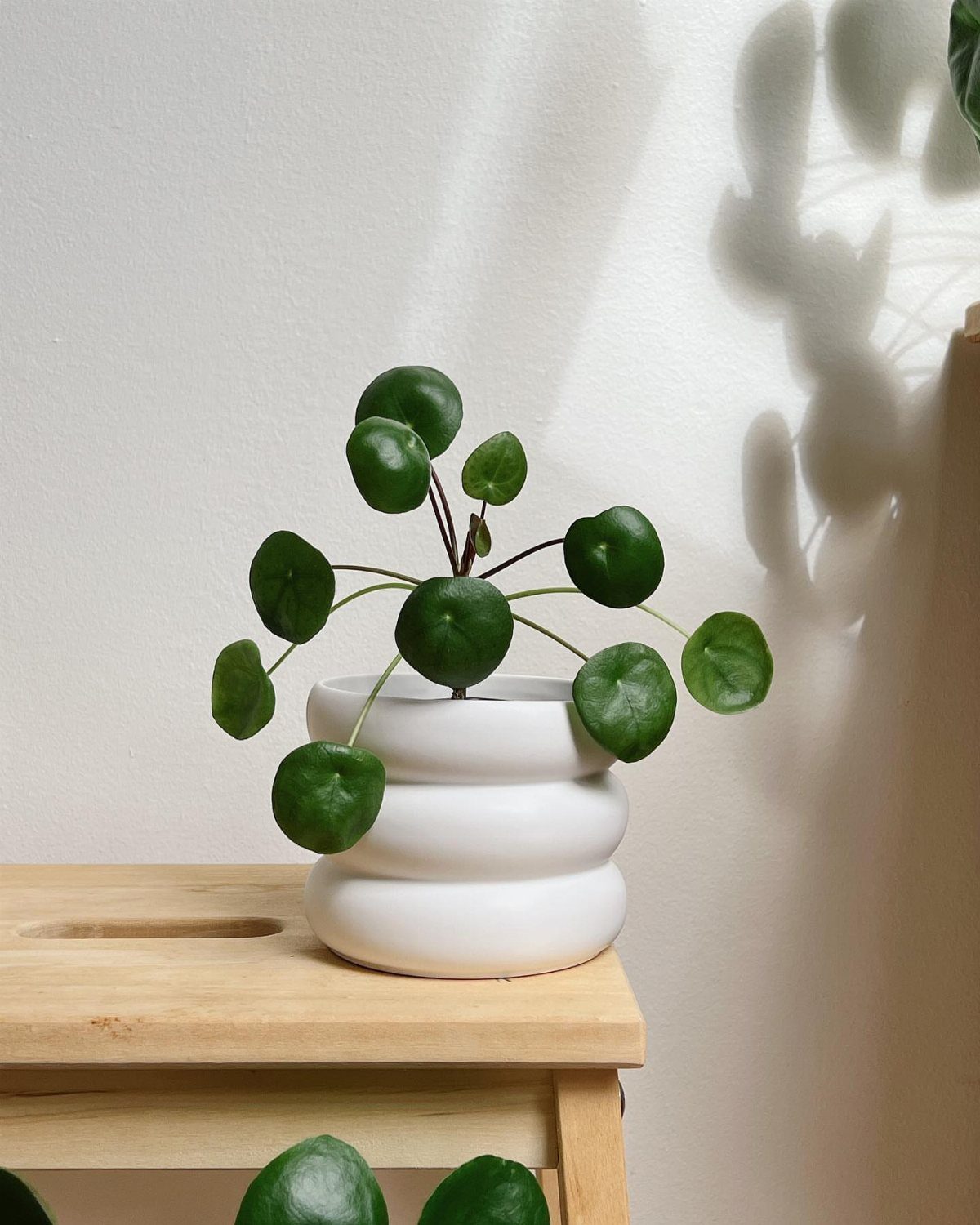
Peperomias stay small enough for a windowsill or a crowded desk, rarely outgrowing the pot you bought it in.
A plain, light pot shows off its rounded, almost succulent leaves without competing for attention. I let the soil dry to about an inch down, then water thoroughly; the thick stems store moisture, so it forgives a missed week.
Bright indirect light brings out the leaf gloss, though it tolerates lower light than most small plants. I would choose this genus for a shelf where height would block the view.
10. Fittonia
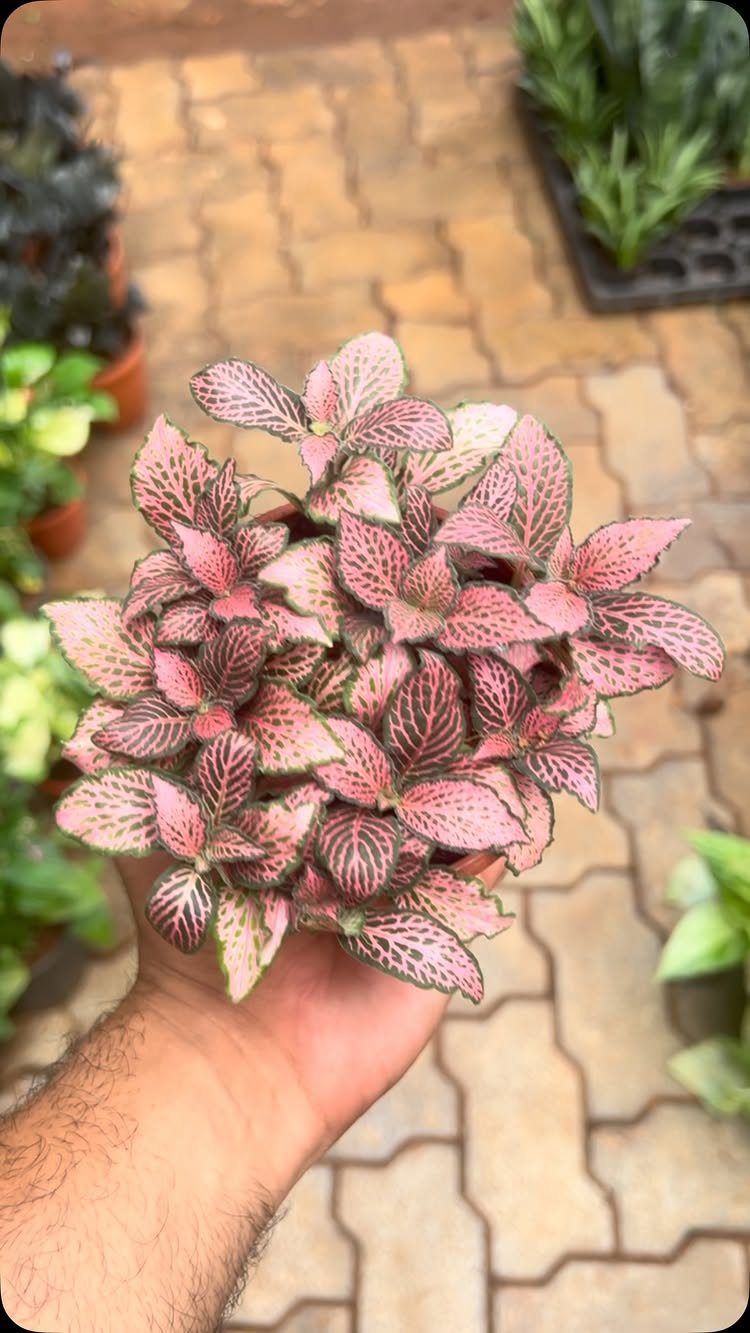
Fittonia leaves carry veining in pink or white that reads as color even in a dim corner, and the plant stays low enough to sit under taller ones on a tiered stand.
The pink-veined variety fits a small pot you can move around without strain.
I keep the soil lightly damp, not wet, and I mist it when the air is dry; it wilts dramatically when thirsty but perks within hours of water.
11. Spider Plant
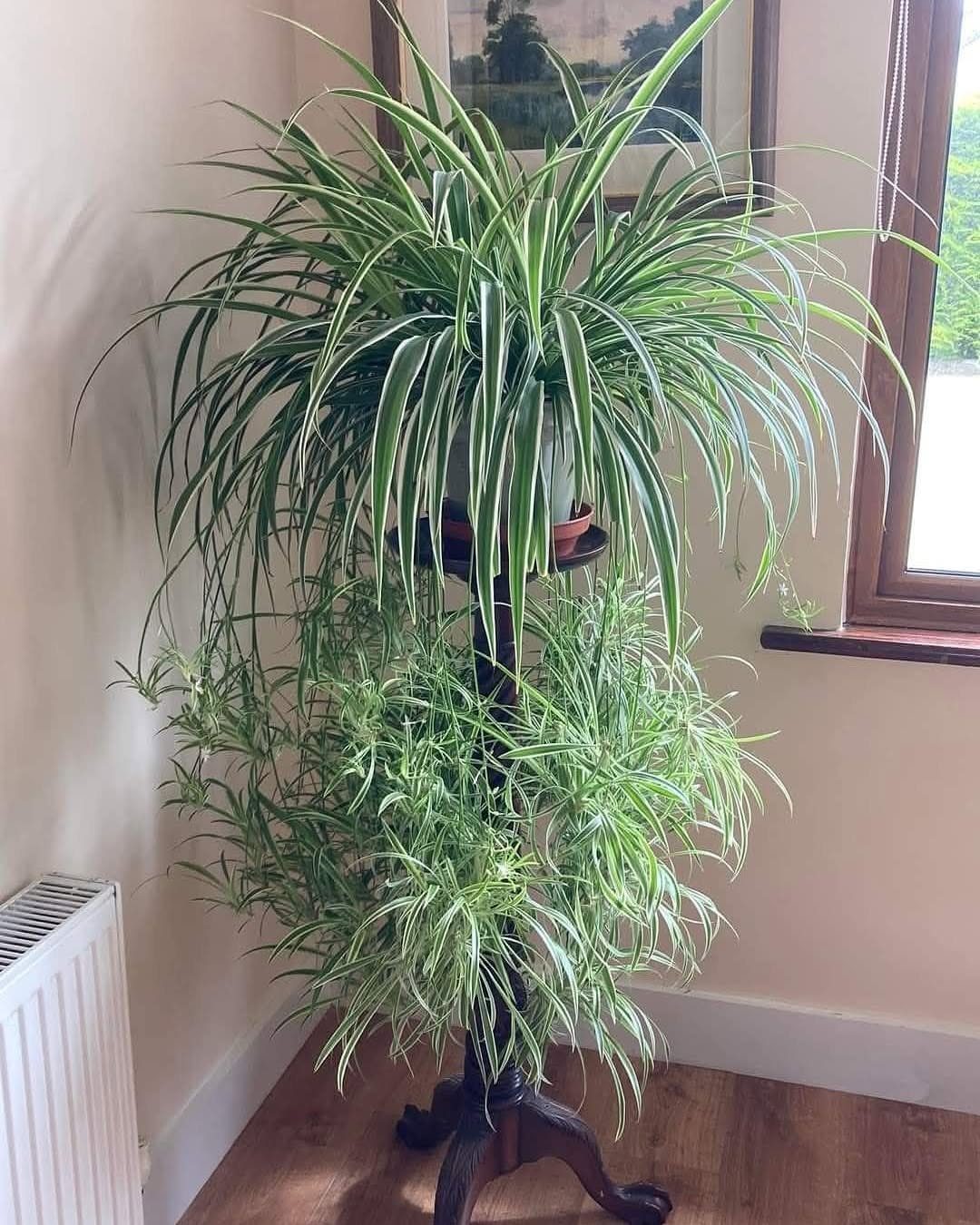
A spider plant‘s arching leaves spill over the pot edge without demanding floor space, and the variegation catches light even from across a room. White-striped leaves shine against dark furniture or a wooden stand.
I water when the top of the soil feels dry, and I feed it lightly in spring; it sends out stems with tiny plantlets that root in water and give you starters for friends or other rooms.
It handles bright indirect light and some direct morning sun without bleaching.
12. Indoor Ferns
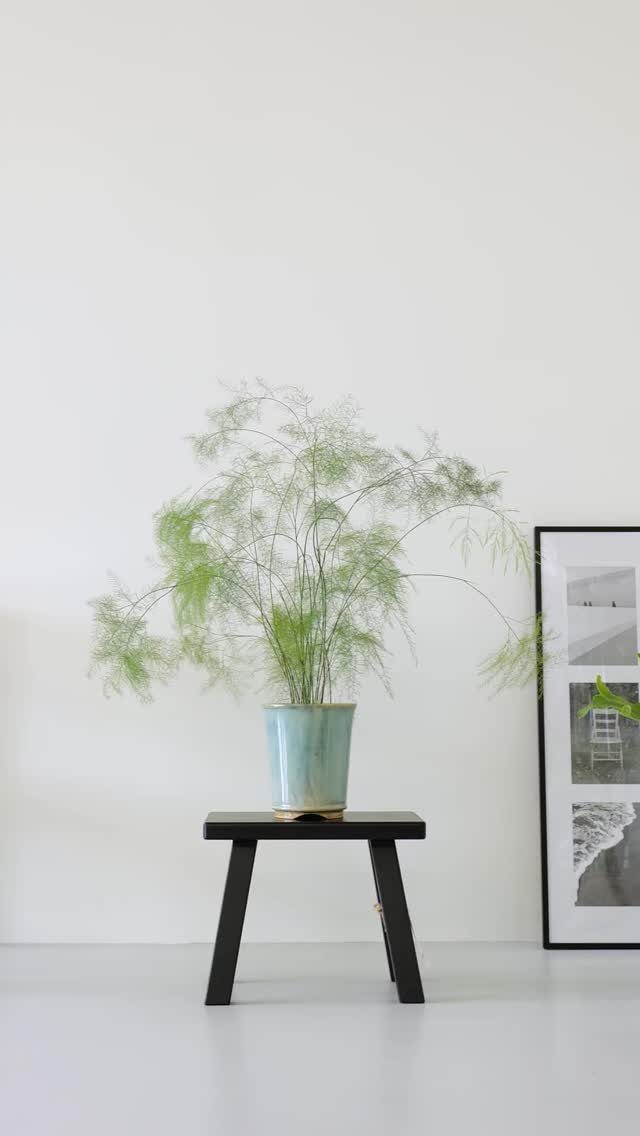
Indoor ferns give you soft, feathery texture that softens hard edges in a room with lots of right angles.
A cool-toned pot and dark stand set off that texture with contrast. Keep the soil consistently damp, not soggy, and set the pot on a tray of pebbles with water to raise the humidity around it.
Most ferns want bright indirect light without direct sun, which scorches the fronds. In a dry heated apartment, I find them needier than snake plants or ZZ plants, but the look they give is hard to match with anything tougher.
13. Indoor Palm
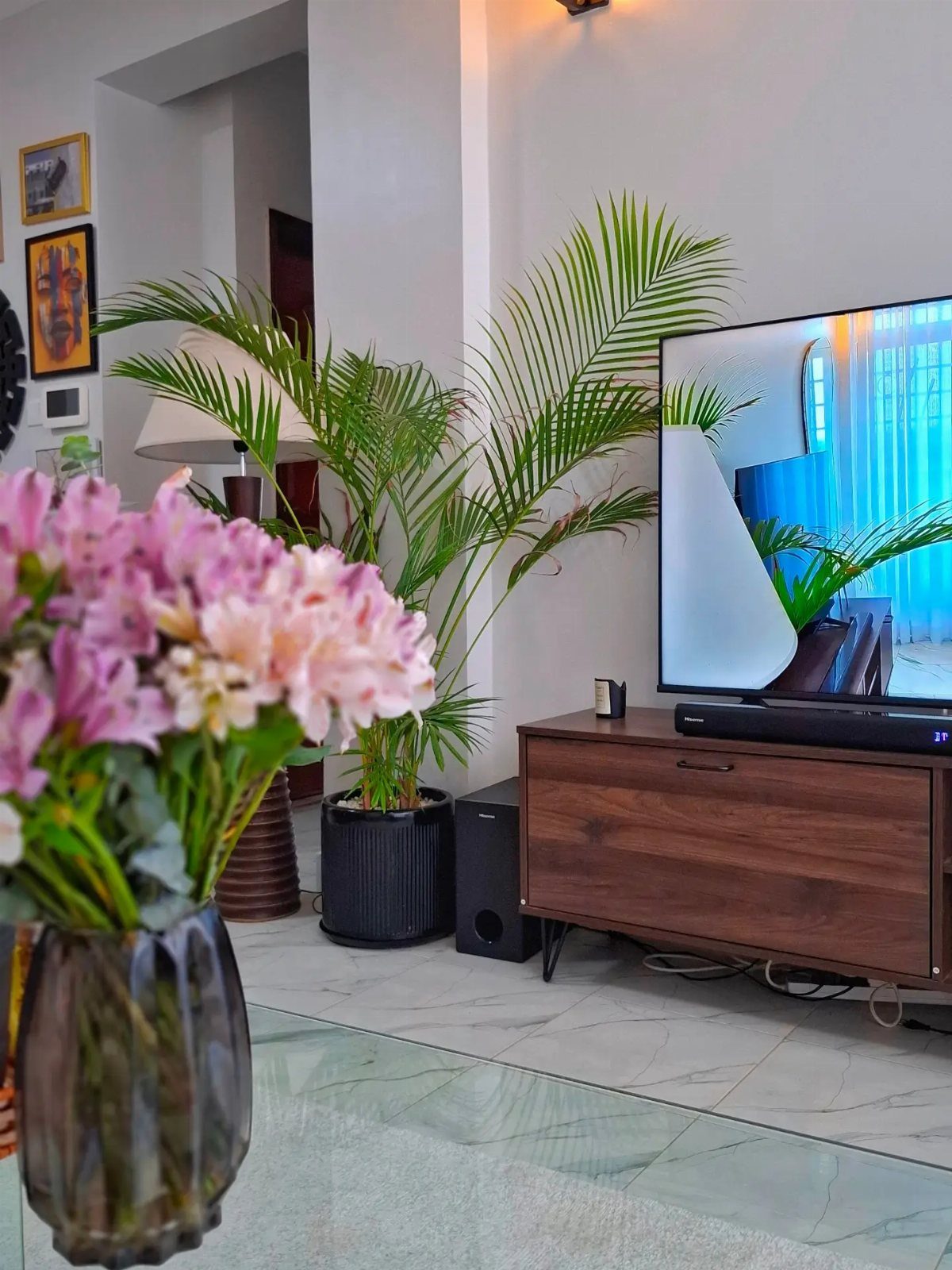
A tall indoor palm in a black ribbed floor planter fills vertical space beside a media console without spreading wide. I place mine where the fronds clear the ceiling and the pot anchors a corner that would otherwise look empty.
Keep it near an east or north window and the fronds stay green; park it in a west-facing spot without a sheer curtain and the tips crisp up fast.
Water when the top 2 inches of soil dry, and mist the leaves if your apartment runs dry in winter.
Palms are slower and thirstier than snake plants or ZZ plants, but the height and soft texture they add to a room are hard to get from anything smaller.
Benefits of Houseplants
Houseplants do more than fill a corner. Research ties them to measurably cleaner air, lower stress, and faster recovery after illness, which matters when your living space is also your workspace and your sleep space.
The air in a small apartment can stagnate. Plants raise humidity and pull dust and some toxins from the air, though you would need dense coverage to match what a modest air purifier does.
Still, a cluster of green near where you sit adds oxygen and breaks the visual monotony of walls and screens.
The psychological effect is harder to quantify but easy to feel. Research in the Journal of Physiological Anthropology found that active interaction with indoor plants, even brief, lowered blood pressure and self-reported stress more than computer tasks.
Watering, rotating, simply looking up from a screen to leaves that move slightly with the air: these small acts interrupt the day with something that does not demand a reply.
Care Tips for Apartment Plants
Well-draining soil is non-negotiable in an apartment where a pot sits in a saucer and has nowhere to drain freely.
I mix one part perlite into standard potting mix for most plants, more for succulents, and I never let a pot sit in standing water after watering.
Overwatering kills more apartment plants than neglect. I check the soil with my finger to the second knuckle before adding water; for succulents, I wait until leaves soften slightly.
A plant that wilts from dryness often recovers within hours. One rotting from wet feet usually does not.
Light is your other hard limit. A north-facing window or a view blocked by neighboring buildings gives you low light by definition.
Set plants within a couple feet of the window, and add a full-spectrum LED lamp on a timer if the leaves start to pale or stretch toward the light.
Rotate pots every few weeks so growth stays even; in a small space, light comes from one direction and plants lean hard toward it.
Winter heating drives humidity below 25%, which ferns and fittonias feel immediately. I group plants on trays lined with pebbles and water, creating a small zone of moisture without misting constantly.
I also keep a small airtight bin under the sink with potting mix, a tiny trowel, and perlite; repotting a compact plant needs no heavy sack or garage full of tools.
Maximizing Space with Plants
Floor space in an apartment is usually spoken for. I look up instead.
Ceiling hooks near windows let trailing plants hang without touching a surface. Wall-mounted pocket planters or lightweight floating shelves above a desk or sofa turn bare drywall into growing space.
A 3-tiered corner stand occupies roughly 1 square foot of floor and holds 5 to 7 small pots at staggered heights, which reads as more plants than the count suggests.
I coordinate pot colors, matte white or terracotta or a single pastel, so the eye reads the arrangement as intentional rather than accumulated. This matters when the same surface holds your mail, your laptop, and your dinner.
Rotation becomes more important in tight quarters. A plant backed against a wall gets light on one side only, and in a small apartment that orientation is fixed.
I turn pots when I water, a small habit that keeps growth symmetrical and prevents the lean that makes a plant look untended in an otherwise tidy space.
Trailing plants suit this strategy best: pothos, string of hearts, small spider plants. Their growth hangs downward, occupying air rather than shelf, and the vertical line draws the eye up, which helps a low ceiling feel less immediate.
Frequently Asked Questions
What herbs can you grow in an apartment?
Basil, parsley, and thyme all grow well in apartments. A sunny window or a full-spectrum LED lamp running 6 to 8 hours a day suits most herbs, and their compact size fits a windowsill or tiered stand without crowding the room.
Which is best for indoor plants?
That depends on your light and how often you water. Snake plants and ZZ plants suit low light and forgetful waterers; pothos and spider plants handle brighter indirect light and reward a bit more attention.
I choose based on the window I have and how much time I want to spend tending.