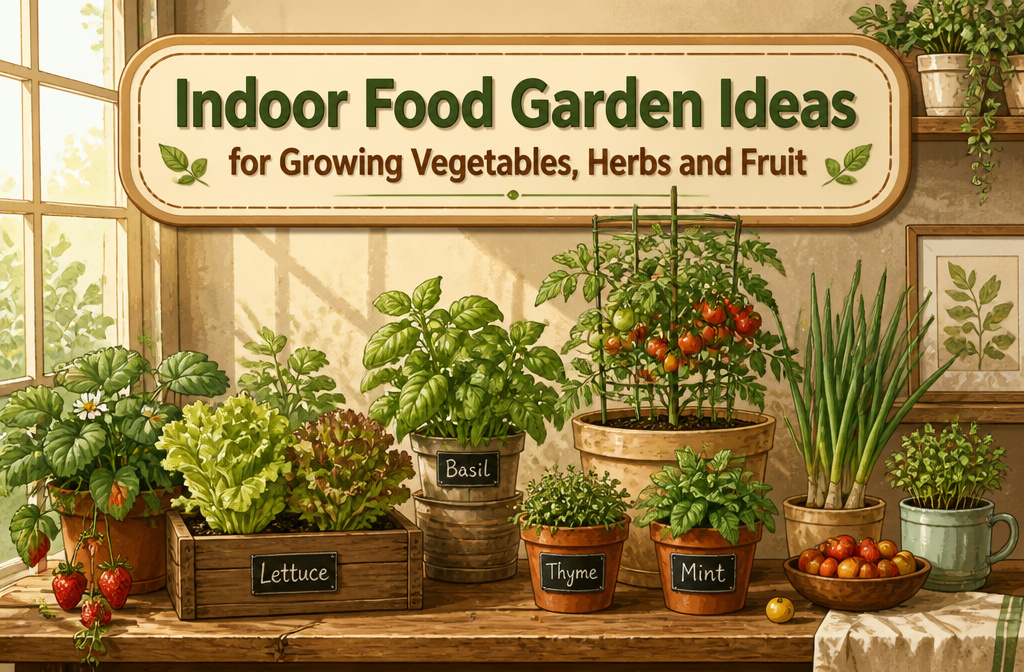
Indoor food garden ideas range from nearly free to a serious electric bill, and the difference is light. A south-facing window handles lettuce and scallions through summer, but once autumn shortens the days, anything beyond cress on wet paper towels needs a timer on an LED fixture running 12 to 16 hours. My own basil turned pale and leggy in November 2022 before I accepted that the sun alone was not enough.
1. Microgreens
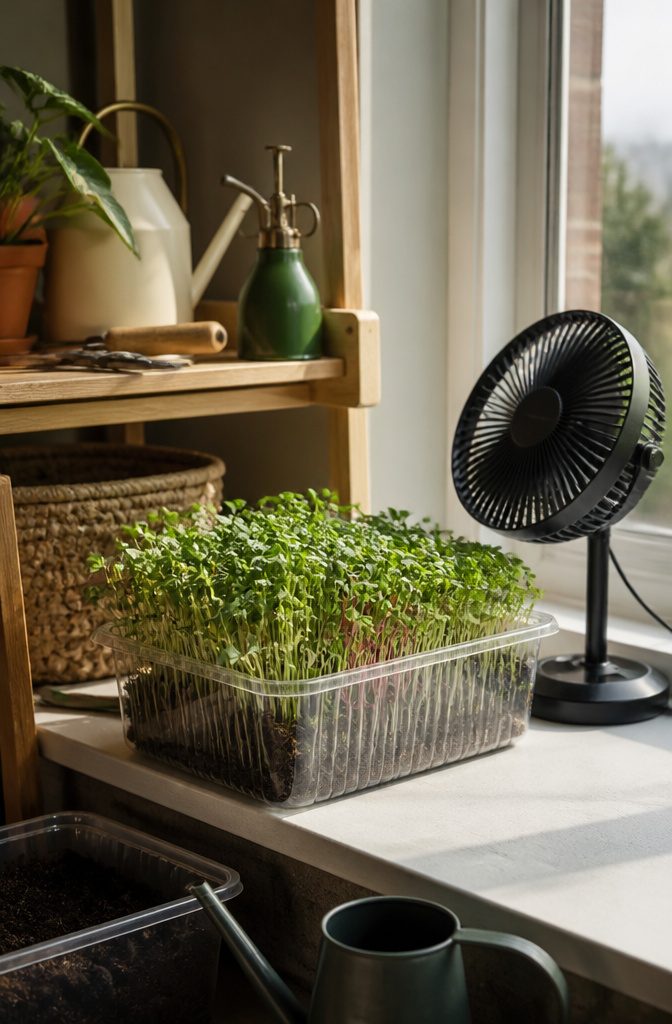
Microgreens are the fastest food crop you can grow inside, with most ready to cut in 7 to 21 days from seeding. I started my first batch in a recycled clear plastic salad container with about an inch of potting mix, set it on a sunny windowsill, and watered from the bottom so the seeds stayed put. The greens shot up fast, but I made the mistake of leaving them too wet and too still; damping off killed most of the tray before I got a single harvest. Now I run a small oscillating fan nearby and sow more sparsely, and I get dense mats of broccoli and radish to clip with clean scissors at the first true leaf stage. The cut-and-come-again approach does not really apply here the way it does with lettuce; once microgreens are harvested, that tray is done. For a non-stop supply, I start a new tray every two weeks, sometimes banding different seeds together if they mature in the same window.
2. Leafy Greens
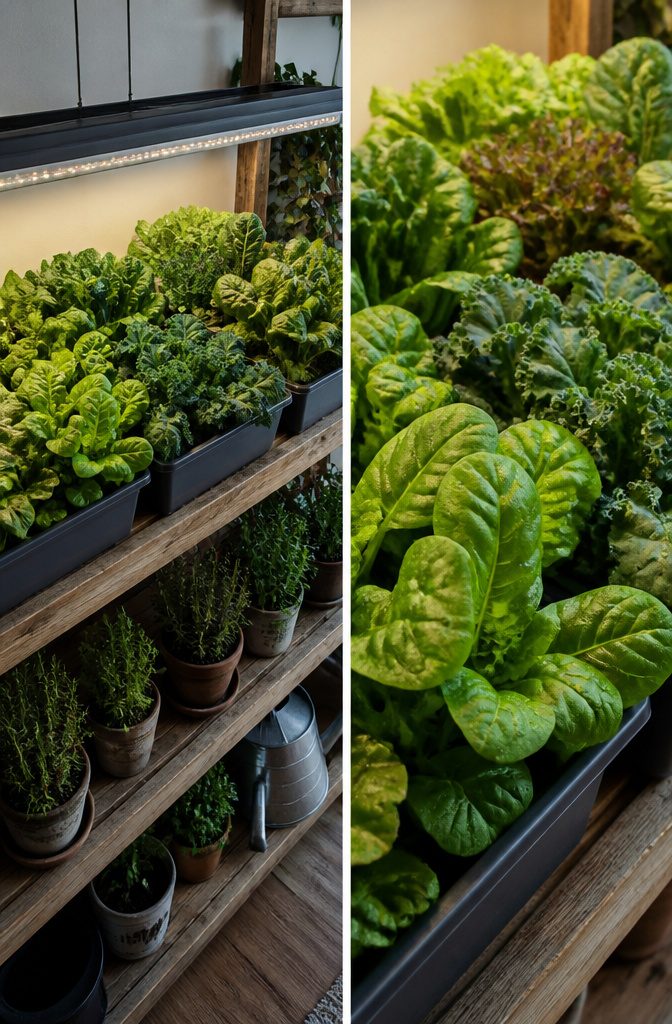
Lettuce, spinach, and kale all move fast indoors, with most varieties ready to start picking in 4 to 6 weeks. They prefer the same moderate range, roughly 65–70°F, which happens to match most living rooms year-round. Sowing seeds about 2 inches apart and later thinning to 4 to 8 inches gives each plant enough room without wasting space early on.
The cut-and-come-again method stretches a single planting across multiple harvests. I take only the outer leaves, cutting about an inch above the soil line, and never more than a third of the plant at once. The center keeps pushing new growth for a surprisingly long time.
In my own setup, loose-leaf lettuces and baby kale under a standard LED grow light regrew reliably for several rounds. Butterhead varieties held on longer than romaine types. Spinach did fine until the ambient temperature in my apartment climbed past 75°F for a few summer days; at that point it bolted straight to seed and turned bitter. A fresh tray started every two to three weeks keeps the supply steadier than hoping any single planting lasts forever.
3. Herbs
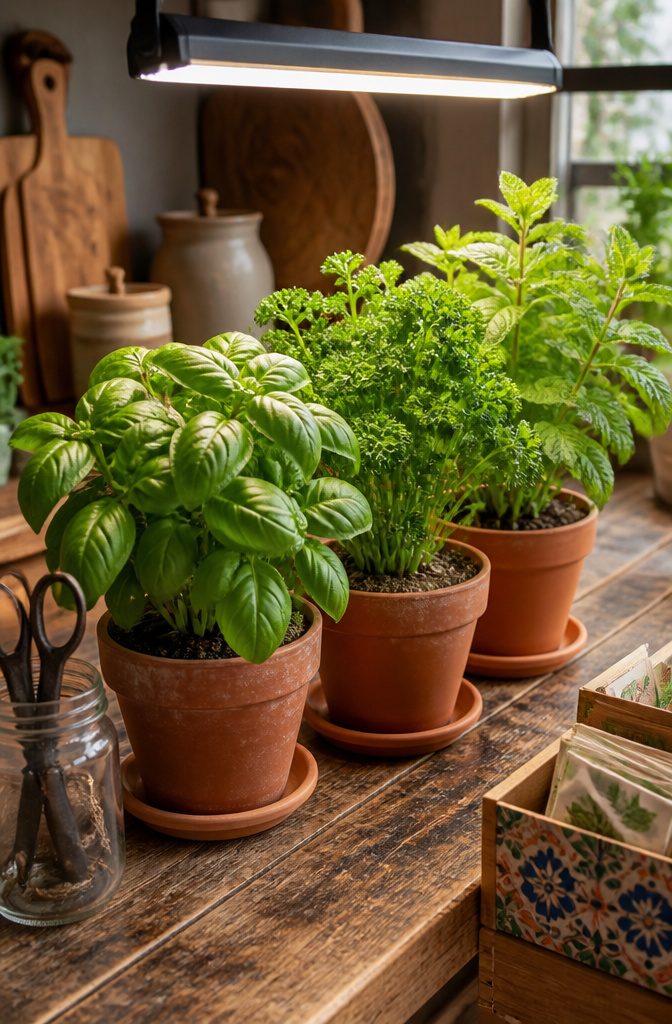
Basil, parsley, and mint are the three herbs worth starting with indoors, and all of them need 12–16 hours of light daily to produce anything worth cutting. That is more than a sunny window usually delivers in winter, so a simple LED grow light on a timer pays for itself in plants that do not stretch thin and pale.
I keep these three because they survive different kinds of bad habits. Basil and parsley tolerate my tendency to let the soil dry too long; they wilt dramatically but bounce back after a good soak. Mint is the opposite. I have killed more mint with overwatering than any other plant, rotting the roots while the leaves still looked green. The ones I neglected, left in small pots with fast-draining mix, outlasted my careful attention.
Continuous harvesting keeps all three bushy. Snip stems just above a leaf node and the plant branches there. Beginners often wait too long, then shear half the plant at once and stress it into bolting or dying. A few leaves every few days, never more than a third of the plant, gives you steady growth and a healthier plant long-term.
4. Root Vegetables
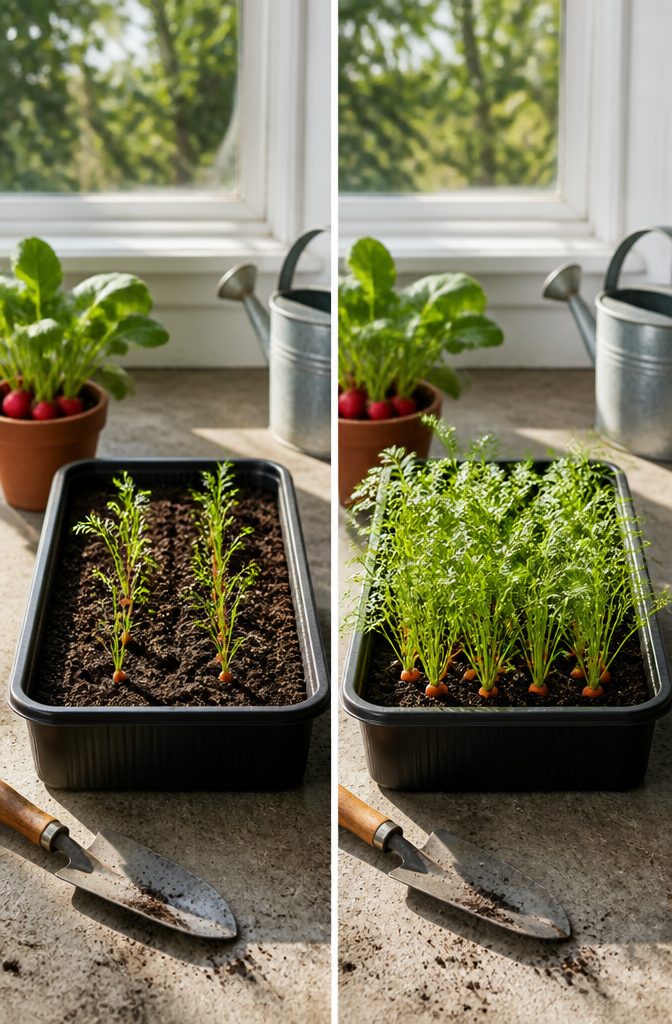
Root vegetables taught me the difference between a container that looks deep enough and one that actually is. My first attempt at indoor carrots ended in a forked mess because I used an eight-inch pot, figuring the greens looked fine so the roots must be fine too. A 12-inch depth is the minimum for carrots, and even then, shorter varieties like Tonda di Parigi or Little Finger save you space and guesswork. Harvest them at the baby stage in about 40 days if your setup runs shallow, or wait 60–75 days for full maturity with proper depth and 4–5 hours of light.
Radishes are where I’d send anyone who needs a win early. They sprout within a week, mature in 30–45 days, and only need a 6-inch container with loose, well-drained soil. Space them 3 inches apart in every direction, sow fresh seed every two weeks, and you have a continuous crop of roots and edible greens. The leaves are milder than you’d expect; I add them to eggs.
Beets fall somewhere between the two for patience, though the same depth rule applies. All three want that deep watering when the top inch dries, water running out the bottom, not a daily sprinkle. Fertilize only at sowing; more later feeds the leaves, not the root.
5. Fruiting Plants
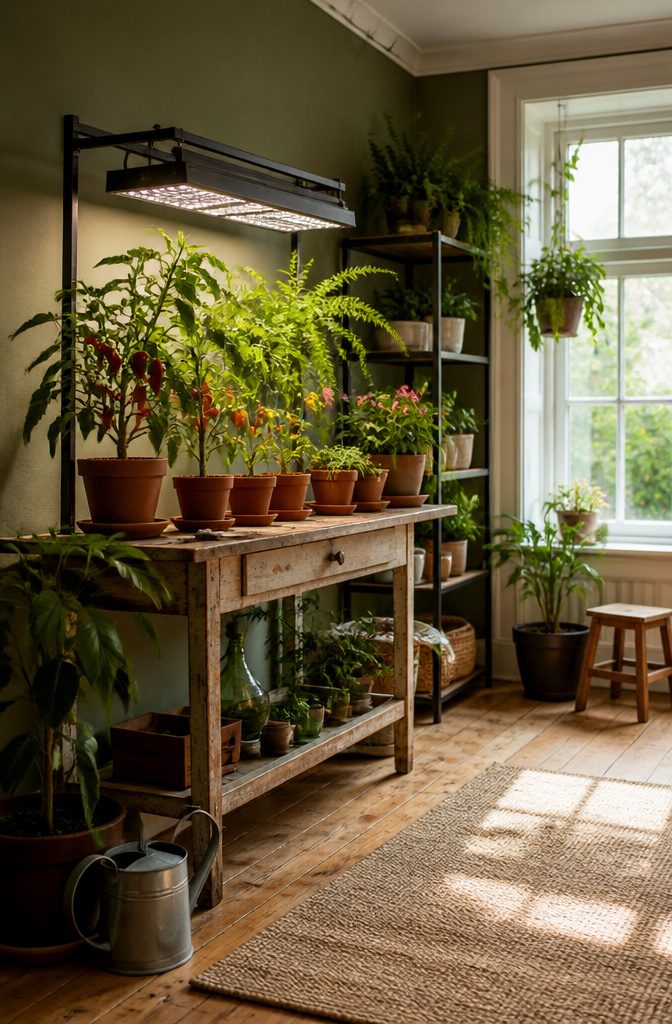
Tomatoes and peppers are where indoor food garden ideas start to feel like a real gamble. Both need full-spectrum light running 14 to 20 hours a day and temperatures around 70°F just to stay alive, let alone set fruit. Without bees or breeze to move pollen, hand-pollination with a fine paintbrush becomes your job, transferring pollen from anther to stigma on every bloom you want to become a tomato or pepper.
I learned about blossom drop the hard way. Twice I watched indoor tomato plants flower abundantly, then shed every bloom before fruit formed. The cause was temperature: my apartment dropped below what the flowers needed, or swung too far when the radiator kicked on. Peppers germinate best at 85°F and stay happier than tomatoes once past that seedling stage, but both demand consistency I failed to give them.
Air circulation helps, too. A low fan running a few hours daily strengthens stems and nudges pollen around, though I still pollinate by hand to be sure. Cherry tomatoes are the conventional starting point, though some growers have luck with larger varieties. My own harvests have been modest enough that I now treat these as winter experiments rather than meaningful food sources.
6. Cress
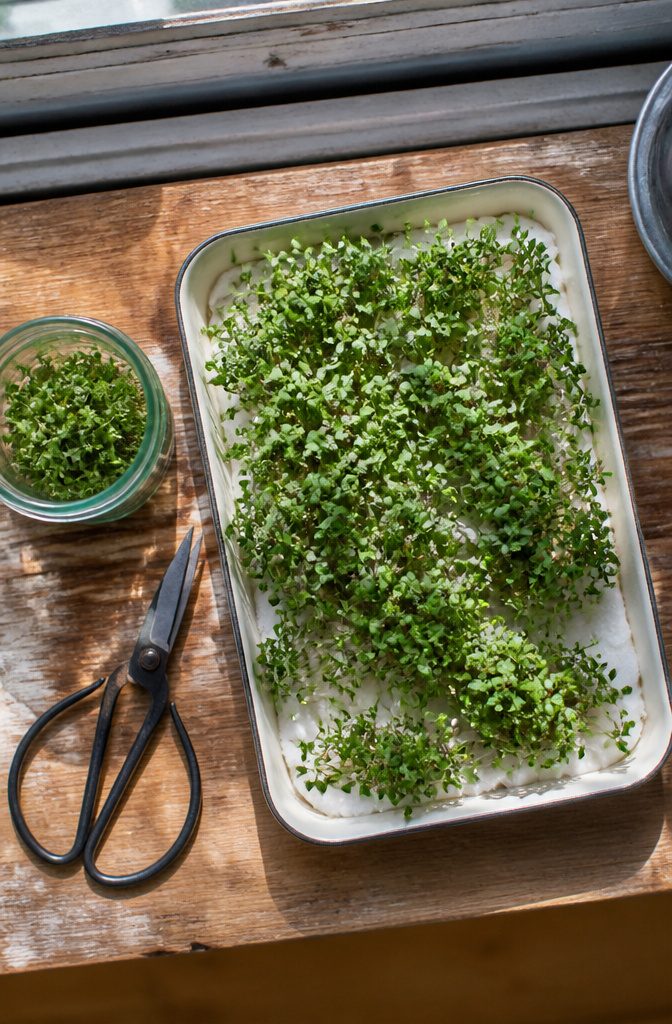
Garden cress was the first thing I ever grew that actually made it to my plate, and the whole experiment cost maybe three dollars. Fine curled cress, or plain cress if that is what the rack holds, needs nothing more than a shallow tray, wet paper towels or cotton wool, and a warm windowsill with decent light. Press the seeds in, keep the paper damp but not swimming, and shoots appear within a week. Snip them at 3–5 cm high with scissors; the peppery bite works on an egg salad sandwich or straight into a lunch bowl.
That early win mattered more than the harvest itself. After killing a basil plant and a tray of lettuce seedlings in short order, cress gave me proof that I could keep something alive long enough to eat it. Harvest comes in days, not months, which still makes it the crop I point friends toward when they want to test whether indoor growing is for them before spending real money on lights and pots.
7. Scallions
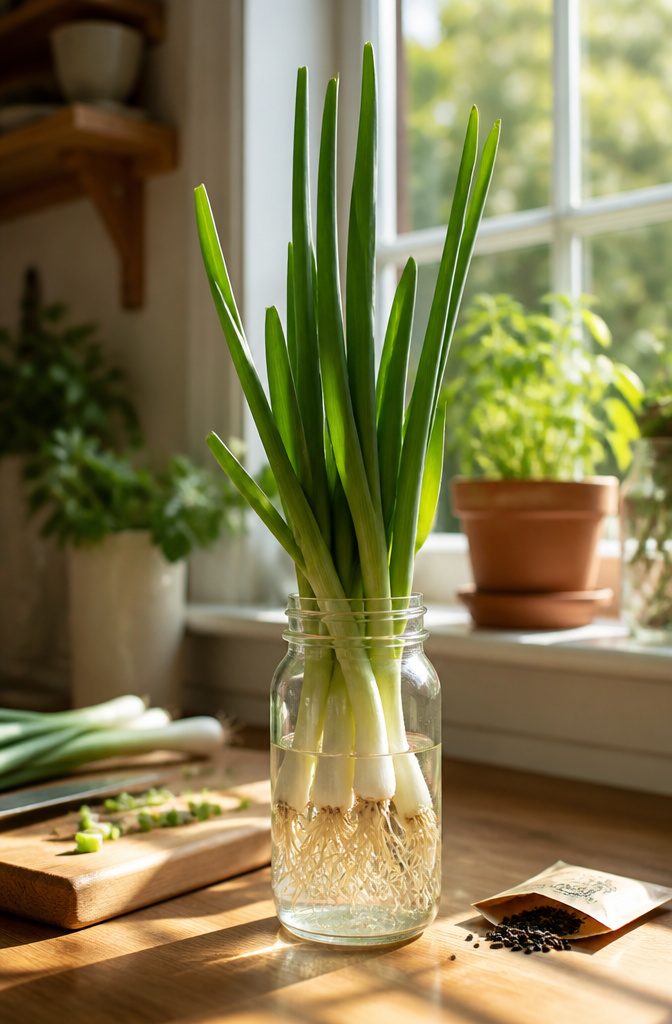
A bunch of scallions from the store can keep producing for months with almost no setup. Cut the greens off for cooking, leaving about two inches of white stem with the roots attached, and stand those root ends in a jar with an inch of water. Change the water every few days so it stays clear. The greens shoot back up within a week, and you can harvest again by snipping down to an inch above the root plate.
This works in a sunny south-facing window without any extra equipment. The flavor stays sharp through three or four cutting cycles in water alone, which in my experience is the practical limit. After that the regrown stalks go thin and the taste flattens out. Once the roots reach a few inches long, transplant the whole clump into a shallow container of potting mix to reset the plant and keep it going. In soil, scallions multiply from the base, forming a clump you can pull apart later to start new plants. Seed-grown scallions take 60–65 days from planting, but grocery-store roots skip that wait entirely.
8. Garlic Greens
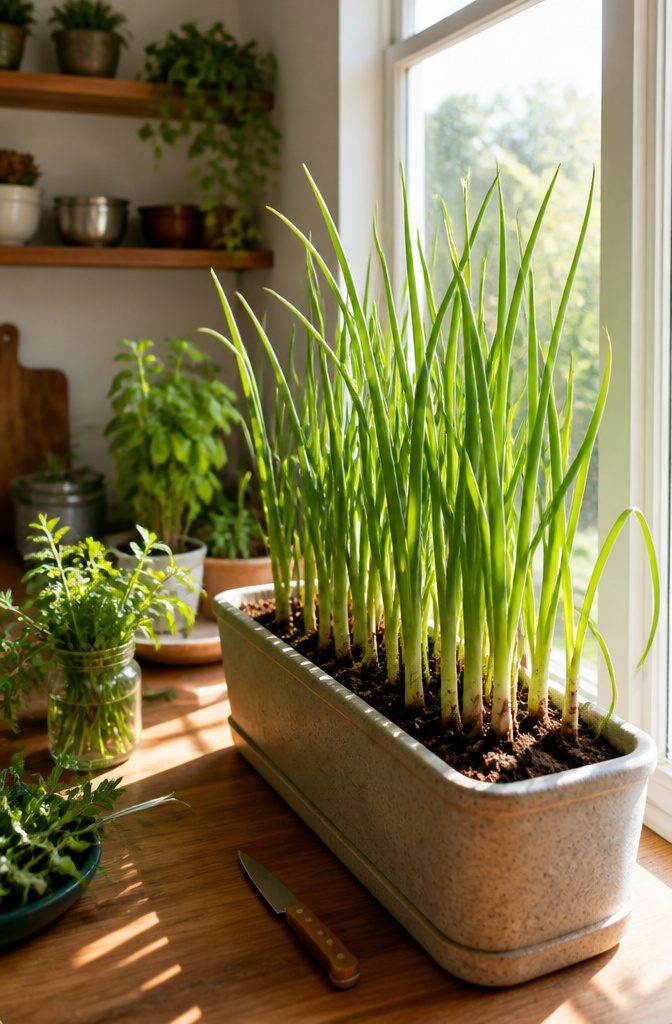
Garlic grown inside will not form a bulb. The cold stretch it needs underground never arrives, so the plant stays leafy and you harvest garlic greens on a cut-and-come-again schedule instead. The flavor sits somewhere between garlic and onion, mild enough to chop raw into eggs or finish a stir-fry with.
I plant cloves pointy-end up, 2 inches deep and 2 inches apart in a window box. In 14 to 21 days the shoots stand 6 to 8 inches tall and I take the first cut. Slicing the green stem an inch or two above the soil line leaves enough growth point to send up another round. I got three cuts from my last clove before the reserves ran dry and the shoot turned thin and pale. Some growers divide and replant the cloves yearly to keep the stand vigorous, though the plant is technically perennial if you leave it alone.
9. Strawberries
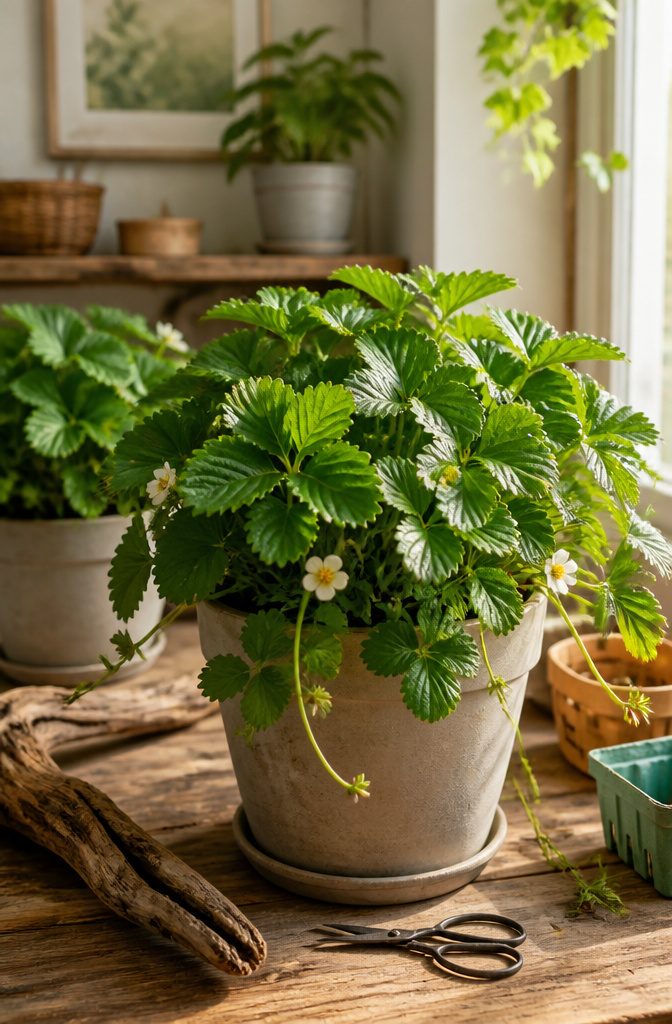
Day-neutral strawberries are the only kind worth the indoor effort. Unlike June-bearers that need shortening days to fruit, varieties like ‘Albion’ or ‘Seascape’ produce steadily under a grow light running 12 to 16 hours daily. I start with bare-root plants soaked for half an hour, then pot them in 10 to 12 inch containers with a slow-release organic fertilizer mixed in.
Runner management separates neat plants from a tangled mess. Indoors, every runner the mother sends out is energy diverted from berries. I snip them as they appear, which keeps the plant compact and productive in a small space.
Hand pollination is where indoor strawberry growing taught me humility. Each flower carries both male and female parts, so a soft dry paintbrush swept across the center should, in theory, transfer enough pollen. Some flowers still drop without setting fruit, and after two seasons I still cannot predict which ones. The flowers look identical, the brushwork feels identical, yet maybe one in four shrivels while the others swell into pale green nubs. Fruiting indoors is mostly for the satisfaction of watching it work, not for any meaningful harvest. The berries are small, the yield is modest, and the grow light runs up the electric bill. Still, pulling a ripe strawberry from a January windowsill has its own quiet reward.
10. Peas
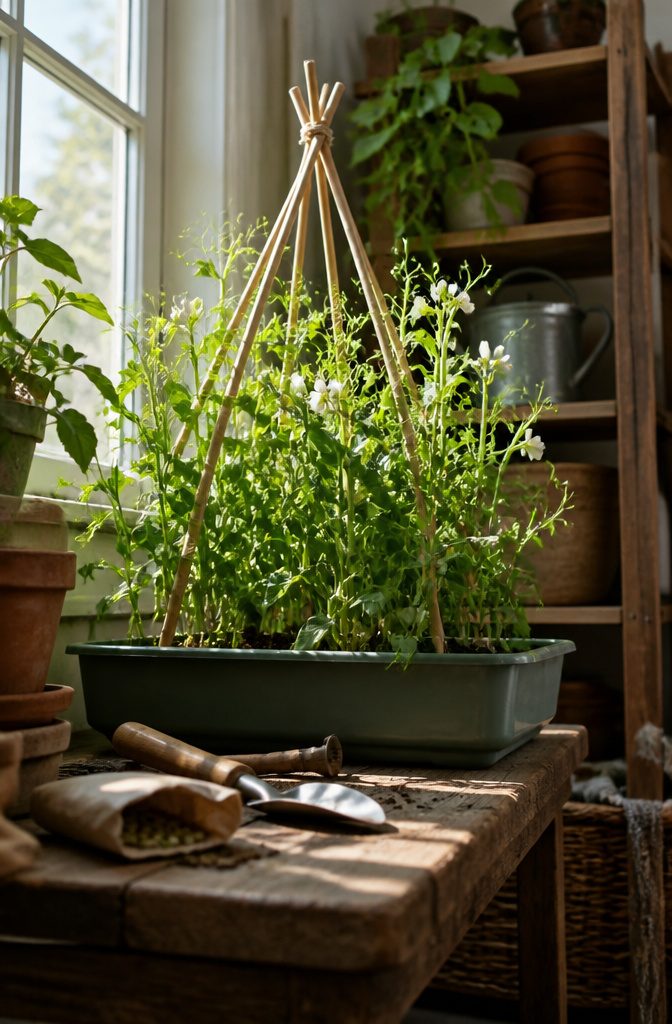
Peas taught me the hard way that vine length matters more indoors than out. My first attempt was a standard tall snap pea, the kind that hits six feet or more in a garden bed. Within weeks it had wrapped around my grow-light frame, pulled the fixture sideways, and shaded everything below it. I cut it back, tied it up, and still lost the crop to poor light distribution.
For a second try I switched to dwarf varieties bred for tight spaces. Tendersweet stays around 18 inches upright and needs no trellis, though a small teepee keeps the vines tidy at harvest time. Bush types like Sugar Daddy and Green Arrow stay even more compact, and all three give edible shoots, flowers, and pods. If your light is marginal, harvest the shoots at 21 days instead of waiting 65–75 days for full pods; the flavor is sweeter before the stems turn fibrous.
11. Citrus
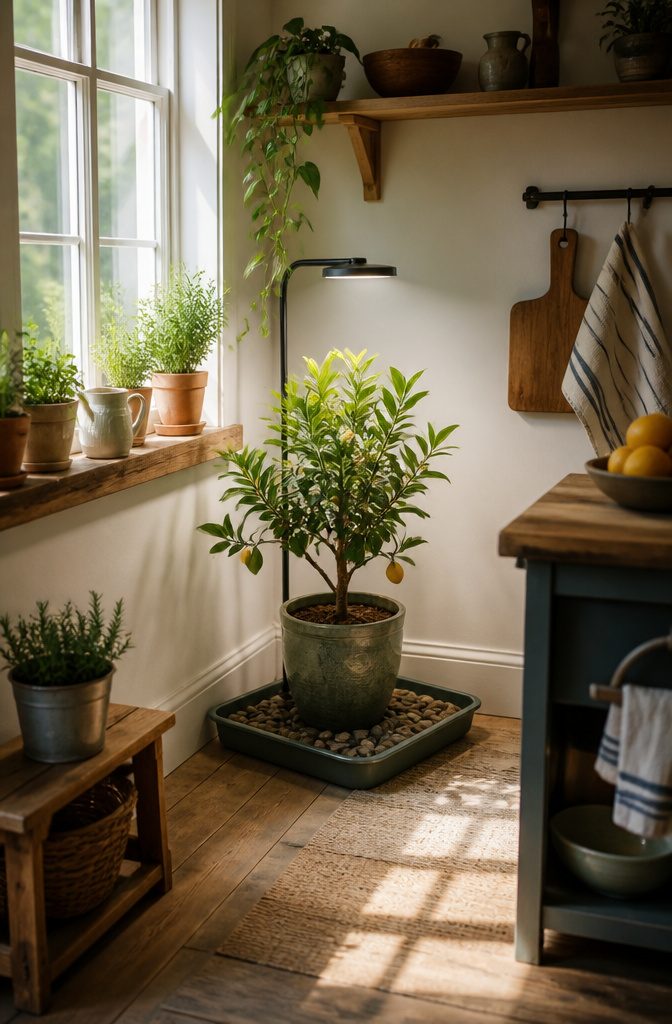
Meyer lemons are where most indoor growers should start. The tree is a cross between a lemon and a mandarin orange, and it flowers and fruits year-round once it gets going. Ten to twelve hours of light daily is the threshold; anything less and the tree survives but does not thrive. A grow light from late autumn through late winter is worth the outlet space in northern windows.
My own tree sat leaf-green and stubborn for two full years before it produced a single flower. Patience is not optional with indoor citrus. When the blooms finally arrived, their fragrance alone justified the wait, but the fruit required one more step. Outdoors, bees handle pollination. Indoors, you are the bee. I learned this the hard way after watching a first flush of flowers drop cleanly off with no swelling behind them. A dry cotton swab, twirled gently between blossoms to transfer pollen, solved it. The same tool works for any indoor fruiting plant that needs help. I have used a fine paintbrush since, but the swab is what I had on hand that first season, and it was enough to set two lemons that winter.
Humidity matters almost as much as light. A tray of pebbles under the pot, filled with water that evaporates upward, keeps the leaf edges from browning in heated rooms. Water deeply when the top inch of soil dries, but do not let the roots sit wet. The leaves curl downward when the tree is thirsty; that signal is reliable once you learn to read it.
Light I Actually Use
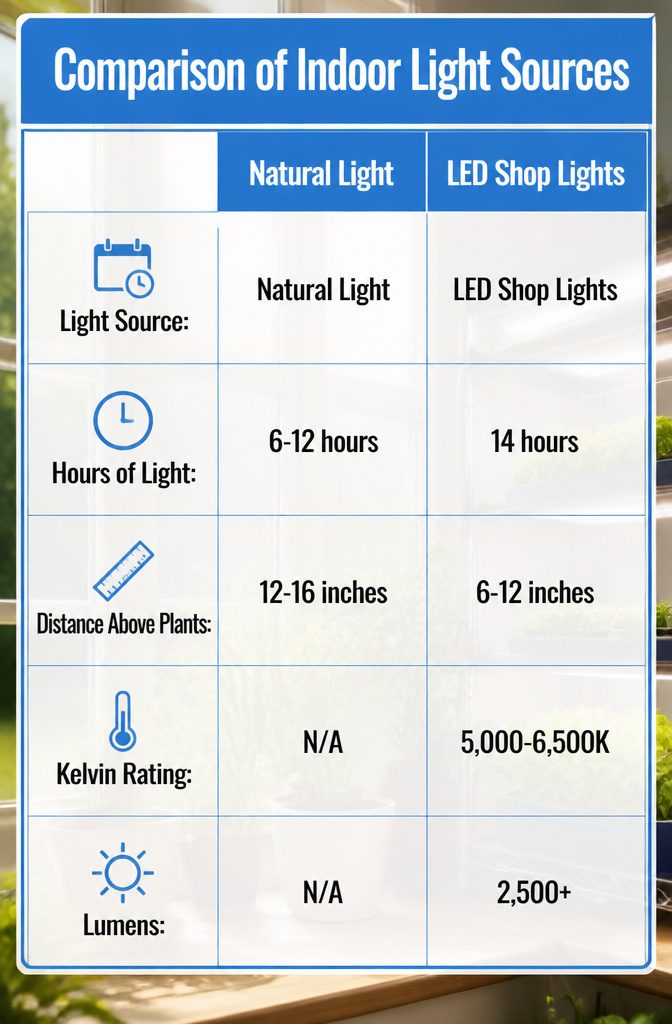
Most vegetables and herbs need at least 6 hours of direct light each day, though 12 hours gets you growth that actually looks like growth rather than a slow-motion struggle. My south-facing window manages this from March through September. The rest of the year, the sun sits too low and the days end too early, so the plants stretch toward what little light exists and turn pale while they’re at it.
That’s where the timer comes in. I run Barrina LED shop lights on a 14-hour schedule, 6 a.m. to 8 p.m., from October through February. The bulbs sit 12–16 inches above leafy greens and herbs, dropping to 6–12 inches once tomatoes or peppers hit the fruiting stage. Before I set the timer, I’d forget to flip the switch for whole weekends or leave lights blazing overnight; the leggy basil I grew in November 2022 taught me that irregular light is almost as bad as too little. The Kelvin rating matters more than the fixture price: 5,000–6,500K with at least 2,500 lumens handles seedlings and greens without the markup of specialty housings. For fruiting plants, full-spectrum LEDs or CMH lights are worth the step up, since standard shop bulbs leave them hungry for the red wavelengths that trigger flowering.
Soil and Containers That Drain
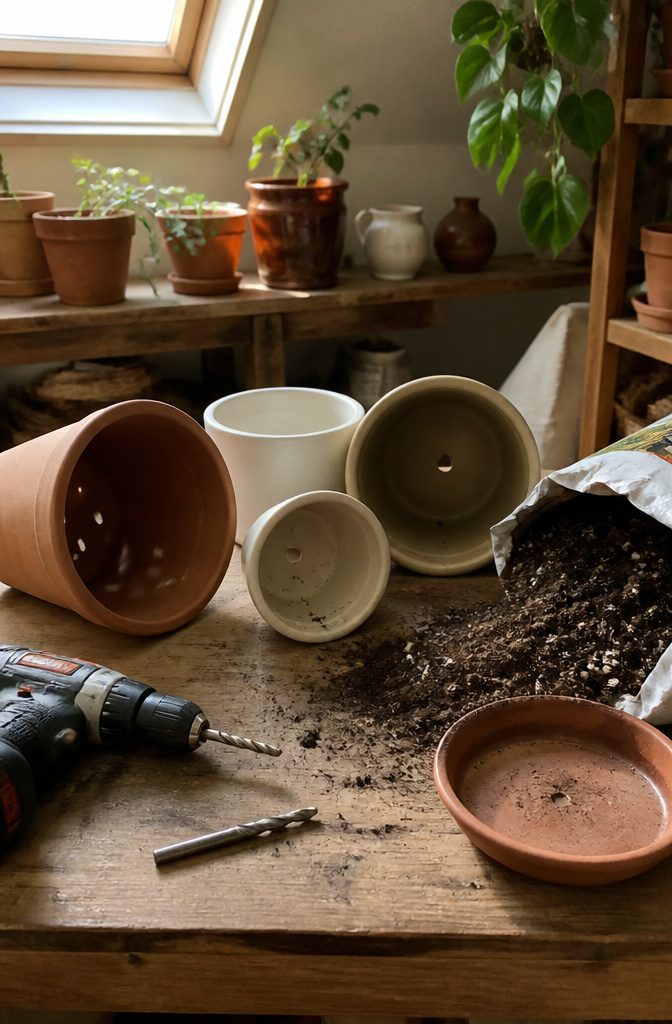
Three basil plants died before I took drainage seriously. Root rot set in within two weeks of bringing them home from the nursery, and the stems turned black right at the soil line. The potting mix I had grabbed was dense, held water like a sponge, and the decorative containers had no holes in the bottom. I learned that potting soil is not actually soil but a mix of perlite, vermiculite, and peat moss or coco coir that stays loose enough for roots to breathe.
After those losses, I switched to Miracle-Gro Performance Organics All-Purpose Container Mix. It is light, fluffy, and contains aged compost that feeds plants without me adding anything extra at the start. I never use garden soil or topsoil indoors; it compacts too fast and can carry pests inside with it.
For containers without drainage holes, I drill one myself. A quarter-inch drill bit works through most plastic and ceramic, though I go slow with glazed pots to keep the surface from chipping. I set the pot on a scrap of wood, angle the bit slightly at first to keep the drill from skating, then drill straight through. A saucer underneath catches the runoff and protects whatever surface the pot sits on. Terra cotta, plastic, wood planters, even fabric pots with a drip tray beneath them all work, as long as water has a path out.
Watering Without Drowning
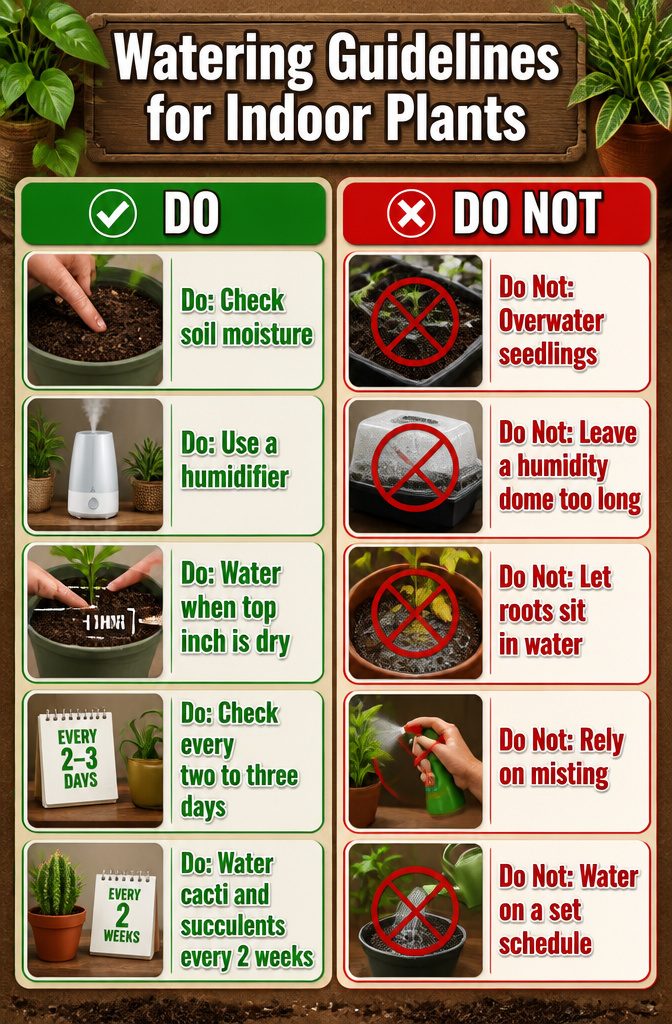
Overwatering killed more of my seedlings last winter than underwatering ever has. The top inch of soil has to actually feel dry before I add more water, which for most of my indoor vegetables and herbs means checking every two to three days with a finger pressed straight in. Tropical fruiting plants like my dwarf tomato want that same dry inch, while cacti and succulents sit closer to two weeks between drinks.
Dry winter air from the heating system was another problem I solved the hard way. My calathea leaves started crisping at the edges in December, which pushed me to buy a small room humidifier I now run near the food garden zone. It keeps the relative humidity around 50%, the point where most indoor plants stop struggling.
Before that purchase, I set out a pebble tray under a grouping of pots. Water filled the tray but stayed below the stones so roots never sat in it. The evaporation helped some, though not enough for the fussier plants. A humidifier works better than misting, which barely shifts the moisture in the air at all.
Temperature and Air Flow
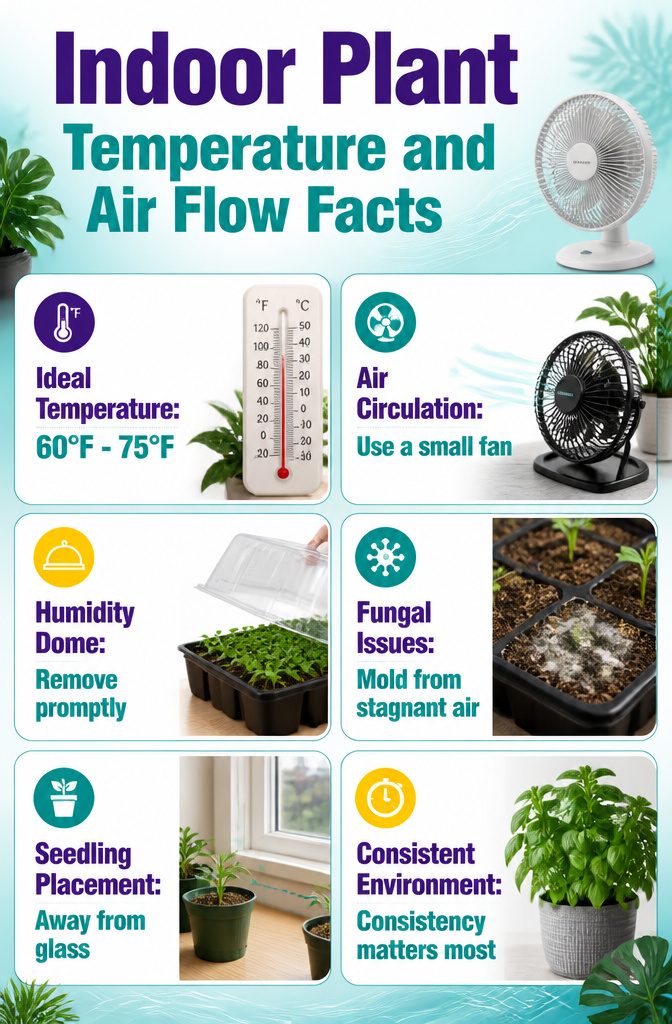
Most plants settle in between 60°F and 75°F, and the consistency matters more than chasing a perfect number. I learned that the hard way when I tucked a tray of seedlings against a south-facing window in February. The glass radiated cold at night, then baked them by noon. Half the basil turned pale and stalled out before I moved the whole setup inward by about eight inches.
Air circulation was the other piece I ignored too long. A small oscillating desk fan, maybe six inches across, now runs on a mechanical timer for a few hours each day. The breeze is barely enough to ruffle leaves, but it prevents the mold and fungus that thrive on still, damp air. Sources note it also strengthens stems the way outdoor wind does, and with fruiting plants like tomatoes, that gentle movement helps pollination along.
My worst mistake was leaving a humidity dome on pepper seedlings three days past when I should have pulled it. The soil surface stayed wet, and within a week I had fungus gnats threading through the tray. Now I lift covers the moment the first true leaves show, even if the room air feels dry. The seedlings adapt. The pests don’t get their opening.
Feeding Schedule I Follow
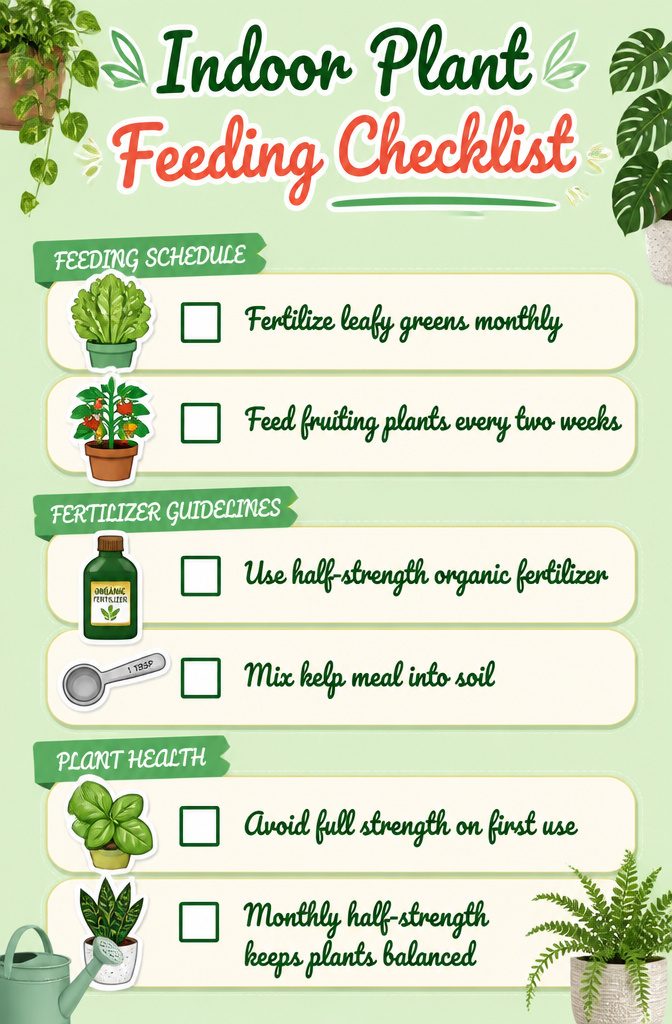
Indoor plants exhaust their potting soil within a couple of months, sometimes sooner if the mix started lean. I fertilize on three different schedules rather than one blanket rule. Leafy greens and herbs get fed monthly. Fruiting plants, tomatoes and peppers especially, need it every two weeks once they set flowers or the yield collapses.
I use liquid organic fertilizer, fish or seaweed based, and I cut it to half the label strength. Full strength once burned the edges of my basil so badly I had to cut the whole plant back to stubs and wait three weeks for new growth. The manufacturer printed one tablespoon per gallon; I now mix one tablespoon per two gallons and apply that instead. Granular fertilizer costs less per feeding since you are not paying to ship water, but I find liquid easier to control indoors where runoff matters.
Kelp meal mixed into potting soil at two tablespoons per gallon gives seedlings a micronutrient head start, though it does not provide enough nitrogen, phosphorus, and potassium on its own. I add that balanced liquid on top. Fruiting plants pull hard on potassium once they start producing; leafy greens and herbs are lighter feeders and monthly half-strength keeps them from going leggy on too much nitrogen.
Frequently Asked Questions
What vegetables can I grow indoors?
You can grow microgreens, leafy greens like lettuce and spinach, herbs such as basil and mint, root vegetables including carrots and radishes, and even some fruiting plants like tomatoes, peppers, and strawberries. Fast starters like cress and scallions from the grocery store also work well if you want to test indoor growing before buying equipment.
How much light do indoor plants need?
Most vegetables and herbs need at least 6 hours of direct light daily, though 12 hours gets you growth that actually looks like growth rather than a slow-motion struggle. Herbs need 12–16 hours, and fruiting plants like tomatoes and peppers require 14 to 20 hours under full-spectrum light. A timer on your grow light keeps the schedule consistent.
How do I maintain humidity for indoor plants?
A room humidifier set to about 50% relative humidity works better than misting, which barely shifts air moisture. You can also set pots on a tray of pebbles with water below the stone line so evaporation rises without soaking roots. This matters especially in winter when heated indoor air dries out fast.
What type of soil is best for indoor gardening?
Use a light, fluffy potting mix made for containers, not garden soil or topsoil, which compacts too fast and can bring pests inside. Look for one with perlite, vermiculite, and peat moss or coco coir so roots can breathe. Mixing in a little kelp meal at planting gives seedlings a micronutrient head start.
How often should I water my indoor plants?
Water when the top inch of soil feels dry to your finger, which for most indoor vegetables and herbs means checking every two to three days. Pour deeply until water runs out the bottom, then let the pot drain; do not let roots sit wet. Overwatering kills more seedlings than underwatering.