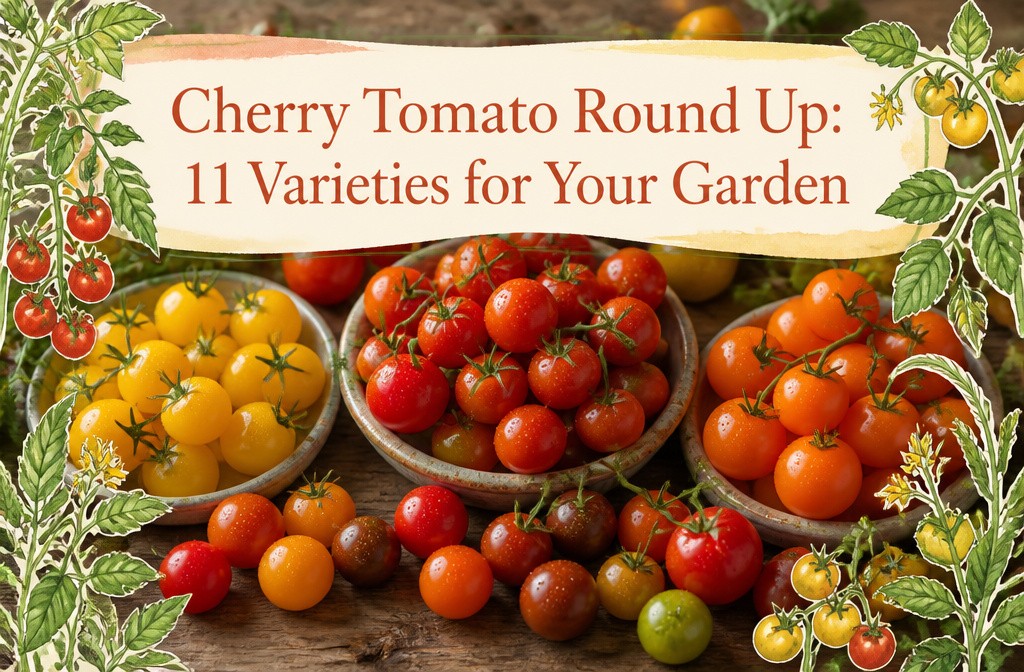
A cherry tomato round up is only worth reading if it tells you which varieties will actually survive your specific growing conditions. The eleven below range from the six-foot indeterminate Sun Gold, which can yield over a thousand fruits per season, to the 12-inch Tiny Tim that needs no cage at all. One of them will fail in your soil; the rest depend on whether you have a balcony railing or a full bed.
Sun Gold
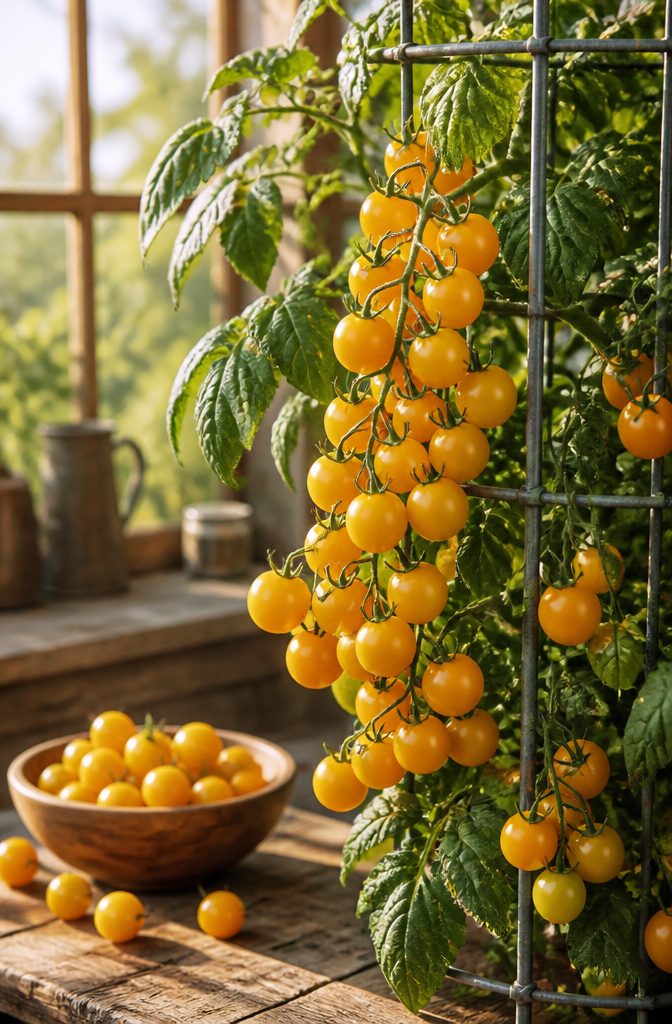
Sun Gold is the reason I stopped writing off yellow tomatoes as milder versions of red ones. The fruits ripen early, hanging in heavy clusters that can push past a thousand tomatoes on a single plant over a season. That number sounds like exaggeration until you are picking every other day in late July, filling a bowl from one vine while more blush on the next cluster over.
The plant grows indeterminate, which means it keeps climbing until frost kills it, so a cage or tall stake is non-negotiable. I learned that the hard way the first season, when a loaded branch snapped from its own weight during a thunderstorm. The flavor is what brings people back: exceptional sweetness with almost no acid edge, the kind of thing you eat in the garden and never make it to the kitchen with. Snacking is honestly its best use; cooking seems wasteful when the sugar is that high.
Black Cherry
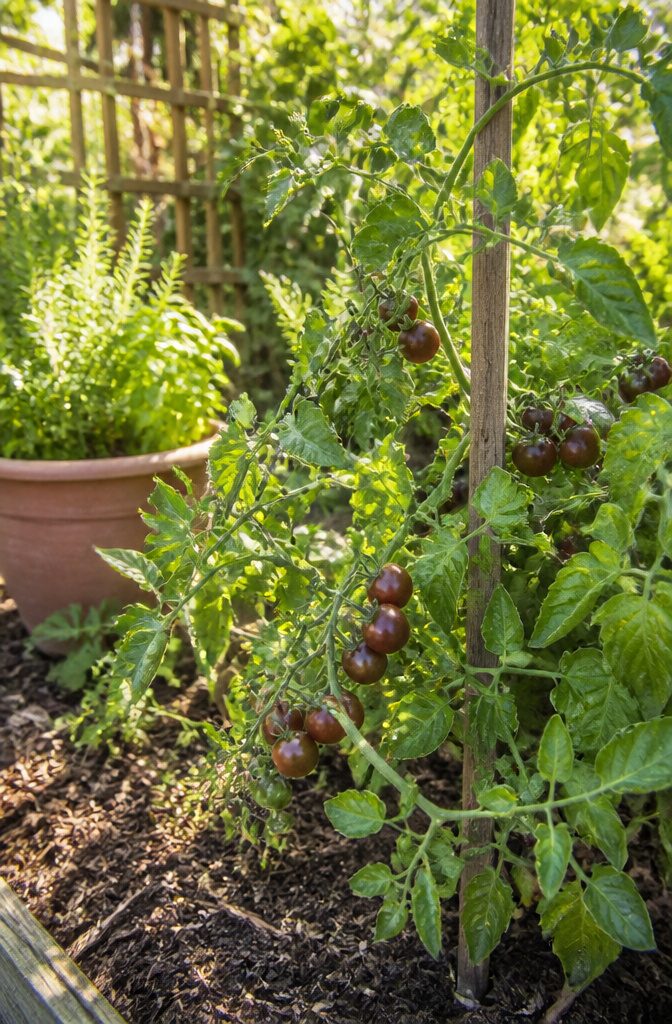
Black Cherry carries a flavor profile that sets it apart from every red and yellow cherry on this list. The one-inch fruits ripen to a deep mahogany-brown, almost dark enough to lose in the foliage until you learn to spot the slight gloss, and the taste is sweet, rich, and smoky in a way that reads more like a full-sized heirloom than a snack tomato.
The plants are vigorous with decent disease resistance, though the skins run thicker than most cherries and production is moderate rather than overwhelming. Fruits arrive slightly later in the season too, so this is not the variety to stake your whole summer harvest on. Still, I keep finding space for it. The dark color alone breaks up a bowl of brighter cherries, and that complex flavor is what you reach for when you want something that actually tastes like late August instead of just sugar.
For a gardener working a small space and deciding what earns its real estate, Black Cherry asks for patience and offers character in return. One plant is plenty.
Sweet 100
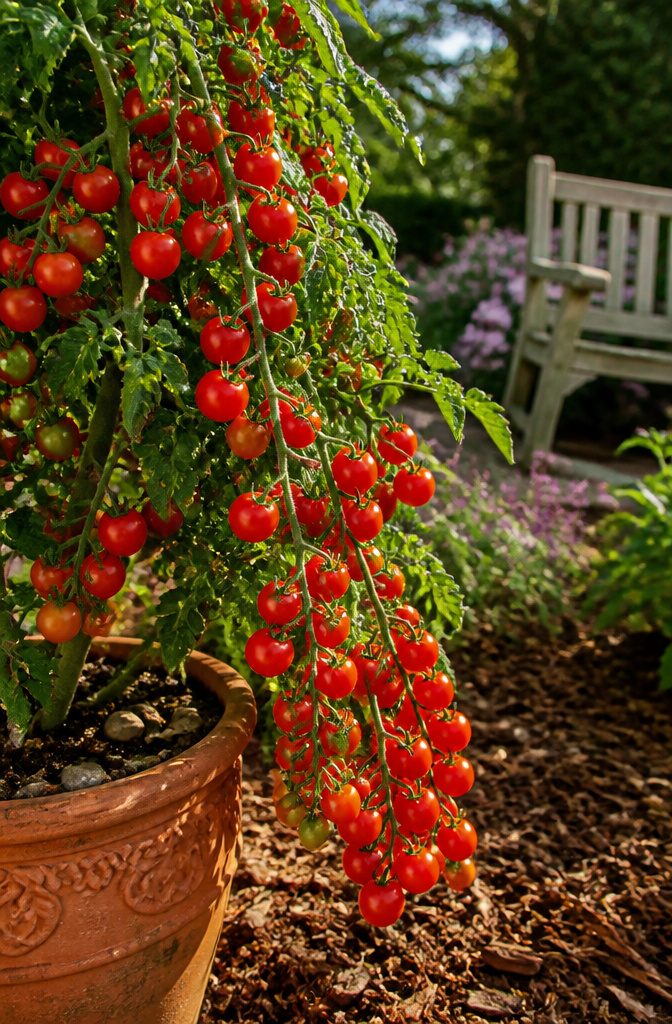
Sweet 100 lives up to the "100" in its name. The plant pumps out long branched clusters of small, bright red fruits that keep coming from early summer until frost finally takes the vines. One standard plant can feed a family of four through the season, so a single pot on a balcony still leaves you with a daily handful to snack on or toss into a salad.
The fruits are spherical, about thumb-tip size, and bred for resistance to both Fusarium and Verticillium wilt. That disease package matters more than it sounds like it does: once those soil-borne wilts hit a container or small bed, they tend to stay, and starting with a resistant variety is cheaper than replacing soil every spring.
Flavor runs toward the candy-sweet end of the spectrum rather than acidic. Some gardeners find it almost too sweet for cooking down, but for fresh eating straight off the vine, that sugar level is the point. The tradeoff is softness; these tomatoes split faster after rain than firmer varieties, so I pick them slightly underripe if a storm is coming and let them finish on the counter.
Yellow Pear
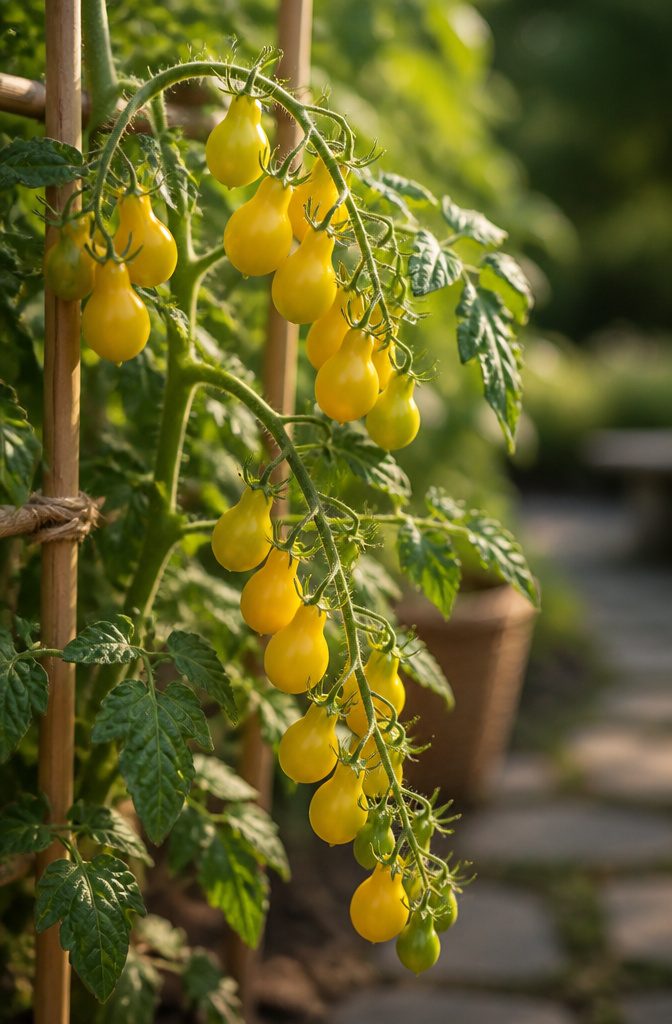
Yellow Pear is the heirloom that breaks the round-cherry mold entirely. Its fruits hang in clusters of tiny yellow pears, each one tapering to a point that round varieties never manage. That shape matters in the kitchen: the pointed end slips neatly between other ingredients in a pasta salad, and the whole thing roasts without rolling around the pan.
The vines grow indeterminate and vigorous, so a cage or stake is not optional. Mine have always sprawled until I learned to corral them early. Flavor is milder than most cherries, more juice than sugar, which makes it a good fit for gardeners who find Sun Gold cloying after the third handful. The tradeoff is straightforward: you grow Yellow Pear for looks and steady production, not for the sweetest bite in the row.
Green Grape
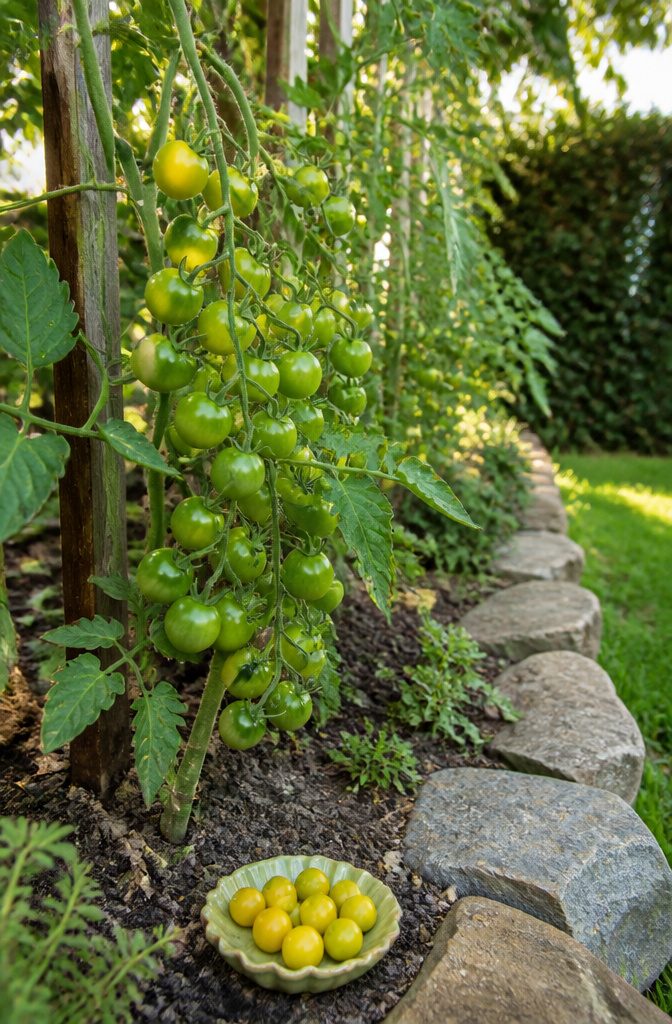
Green Grape tomatoes stay yellowish-green all the way through ripening, which took me a full season to trust. The first year I grew them, I kept waiting for a color shift that never came and left half the crop on the vine too long. Ripeness on this variety shows in a slight yellowing and a gentle give under your thumb, not the red or gold flush most cherry tomatoes advertise.
The flavor is mildly sweet rather than tart, and the plants held up better to blight pressure than my Black Cherries in the same bed. That disease resistance matters when you’re working a small space and can’t rotate crops the way larger gardens do.
For timing harvest, check the whole cluster daily once the first fruits soften. Green Grape ripens unevenly on the truss, and the ripe ones pull easily while their neighbors still need a week.
Isis Candy
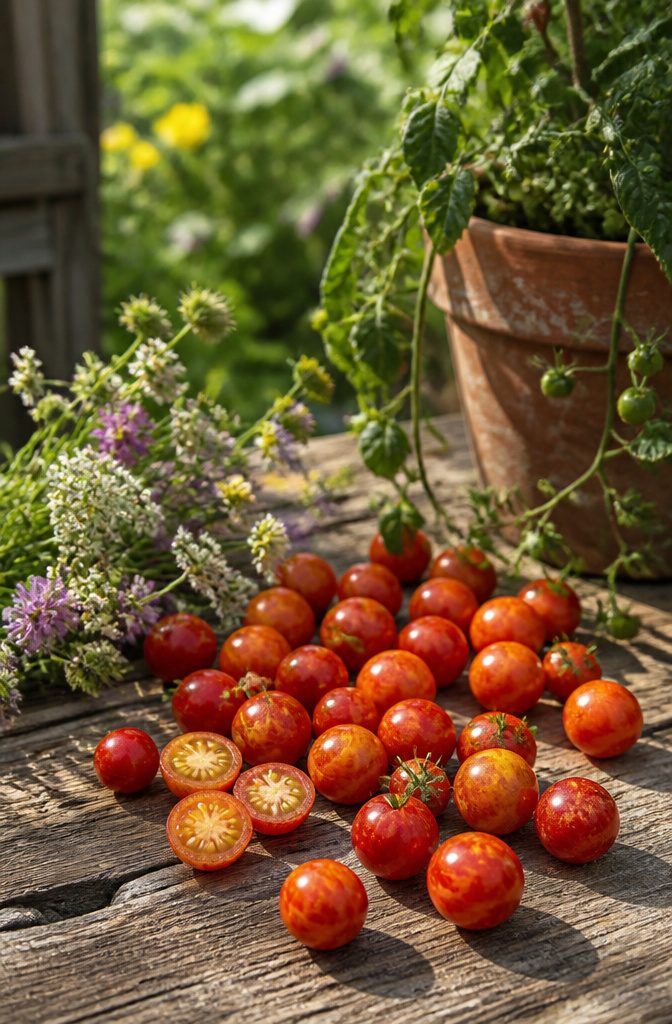
The skin on a ripe Isis Candy splits like hard candy that’s been warmed in the sun, marbled orange, red, and yellow all the way through. Most carry a golden starburst pattern on the blossom end that shows up inside the flesh too, so slicing one open still gives you something to look at. Each fruit runs about three-quarters of an inch across, thin-skinned and tender, with a sweetness that tastes more like actual tomato than pure sugar.
I keep this one around despite the smaller harvest. It is not a prolific plant; you will get fewer pounds per vine than from a Sweet 100 or a Sun Gold. The trade is visual. A bowl of these on the counter looks like ornament, not produce, and that matters more to me in a small patio garden where every plant has to earn its square foot. Flavor peaks if you let them go fully soft on the vine; pulling early leaves you with pretty color and not much else.
Sweet Pea Currant
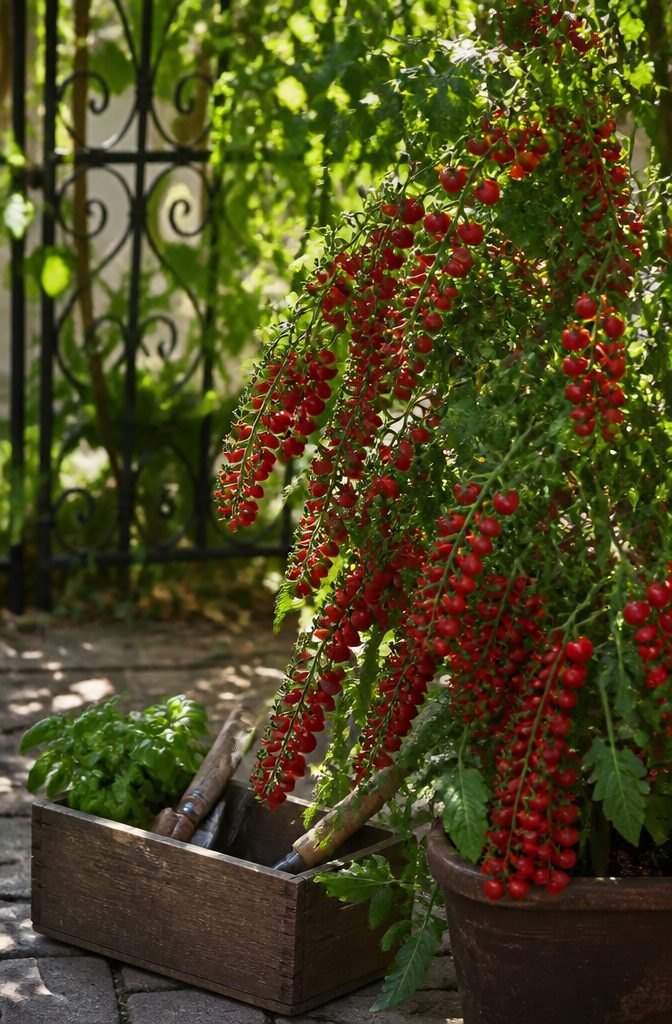
Sweet Pea Currant tomatoes are about half the size of a standard cherry tomato, which changes how you use them in the garden and in the kitchen. The fruits grow so small, roughly pea-sized, that they read more as berries than tomatoes, and they cluster along the vine in dense bunches that ripen to a deep red.
I first noticed them because the clusters looked almost like grapes from a distance, just much smaller. The flavor is intensely sweet, not tangy, which makes them ideal for eating straight off the vine rather than cooking down. My advice is to plant them somewhere you walk past daily; the temptation to snack is real, and the clusters are easier to spot at eye level than hidden in foliage. They also work well in containers since the fruit load stays light per cluster, though the vines themselves get bushy and need a cage or stake to keep the fruit off the ground.
Cherry Punch
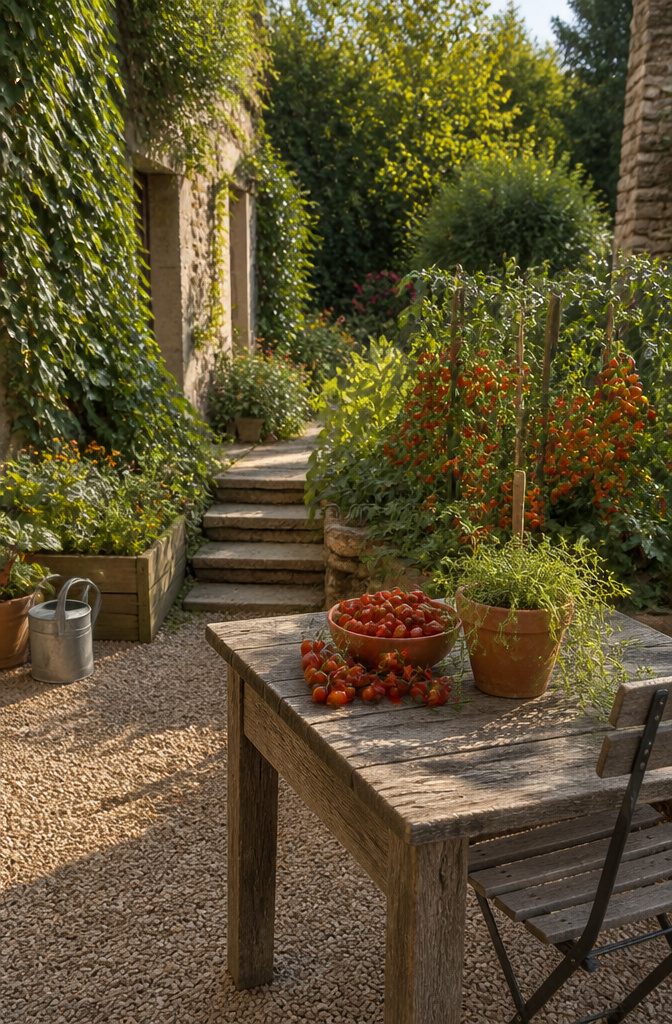
Cherry Punch tomatoes are small and round, about one inch across, and ripen to a bright red. The flavor lives up to the name: a sweet-tart punch that means you get sugar up front with enough acid behind it to keep them from tasting like candy. That balance matters on a patio, because a tomato that reads as only sweet can taste flat in a summer salad next to vinegar or salty cheese.
The plants stay compact, reaching roughly two feet tall with a three-foot spread, so they work in containers, hanging baskets, or window boxes without taking over. Mine went into a 12-inch pot on the balcony and sprawled just enough to drape over the edge. They are indeterminate, which means the vines keep producing until frost, and they start earlier than other small-fruited types I have tried. You can pick them at first blush, but the flavor fills out if you wait for full red on the vine.
Fantastico
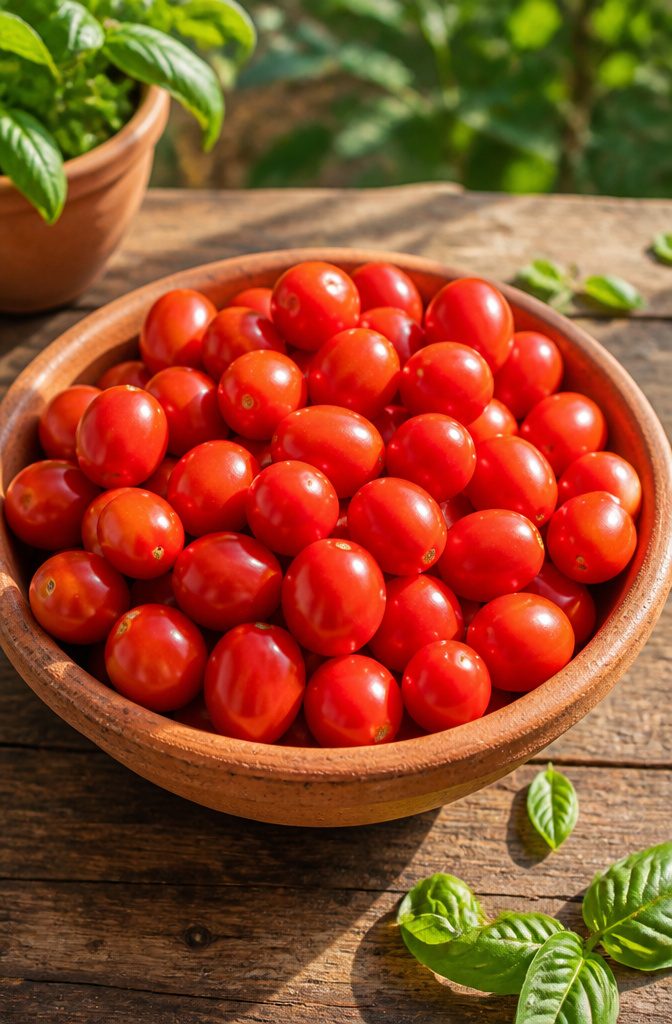
Fantastico is a grape tomato that keeps its size so even from fruit to fruit that a pint jar fills without the usual sorting and trimming that irregular cherry tomatoes demand. I noticed the same consistency in the kitchen as in the garden: slice one in half for a quick sauce and the next six behave identically, so you are not adjusting heat or timing mid-batch.
The plants start producing early, which matters when you are waiting out late-spring weather and want something to show for the effort before the main-season varieties kick in. The skins hold up to that early push without the splitting that follows a hard rain on thinner-skinned types. I have picked these after a soaking and found them still intact, which is not something I can say for every grape tomato I have grown.
For preserving, that uniform shape means whole-pack jars or frozen pints where every bag looks like the last. You spend less time cutting to fit and more time just processing.
Tiny Tim
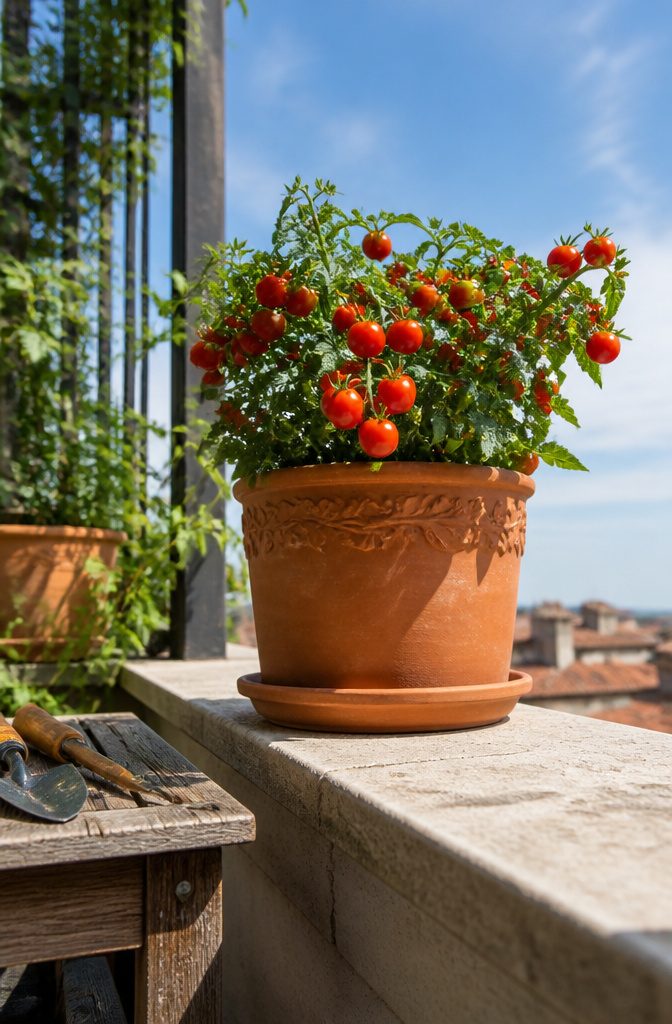
Most cherry tomatoes want to climb six feet and spread sideways, which rules them out for a balcony railing or a kitchen windowsill. Tiny Tim stops at 12 to 18 inches tall, a true dwarf that never outgrows its space.
I first noticed the difference when I was hunting for something that would not shadow out the basil on my narrow ledge. The habit is bushy and self-supporting, no cage required, so a six-inch pot on a saucer is enough to get fruit. That changes where tomatoes live. A sunny shelf, a fire-escape step, a table pushed against the glass: all fair game now. The stems stay thick and the leaves small, dark green and crinkled, more houseplant than vine.
Fruit sets early and ripens in tight clusters of round red cherries. Flavor is mild and sweet, nothing that will stop a conversation, but the plant’s real argument is the footprint. For someone gardening in the space between the grill and the door, that trade is worth making.
Everglades Tomato
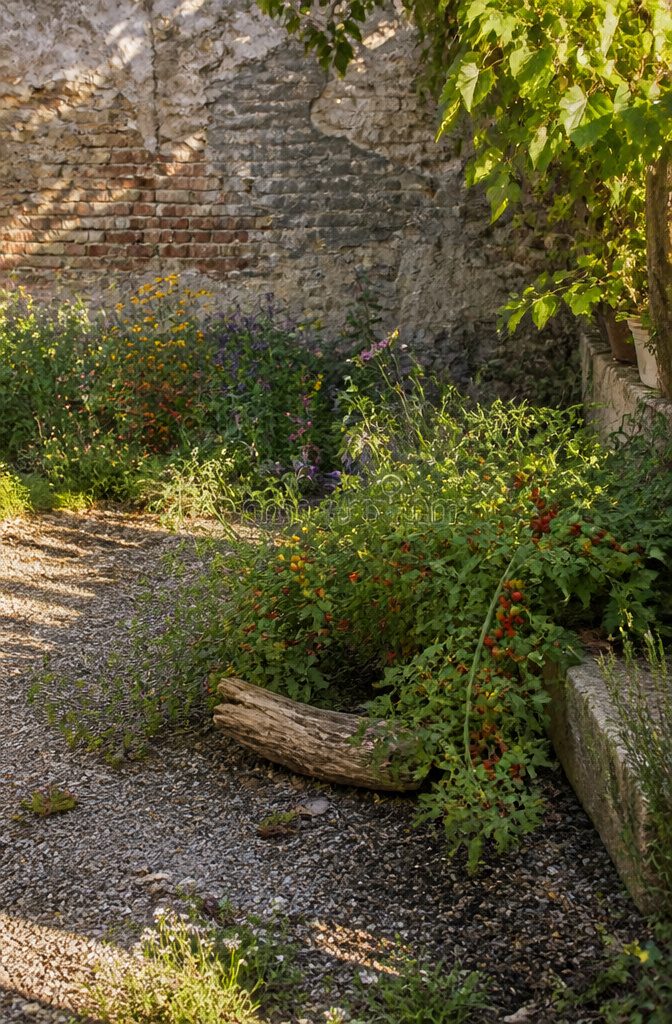
The Everglades tomato is a wild-type that hasn’t been bred for grocery store shelves, which means the fruit is small, thin-skinned, and packed with more flavor than the thick-walled varieties bred to survive trucking. Mine run about a quarter to a half inch across, pea-sized to currant-sized depending on which botanist you ask, since the exact identity is still debated. Some classify it as Solanum lycopersicum, others as Solanum pimpinellifolium, and the University of Florida herbarium suspects it may be a natural hybrid of the two.
What drew me to it was the toughness. This plant handles alkaline soil, brackish water, salt wind, and the kind of humid heat that makes standard hybrids wilt. The growth habit is indeterminate and sprawling, more vine than bush, and it will self-seed year after year if you let fallen fruit lie. I would not try to cage it like a determinate Roma; it needs room to scramble, and the stems root where they touch soil. You will not find these at big box stores, so check specialty seed shops or ask around local gardeners for a cutting to start.
What the Letters on the Packet Mean
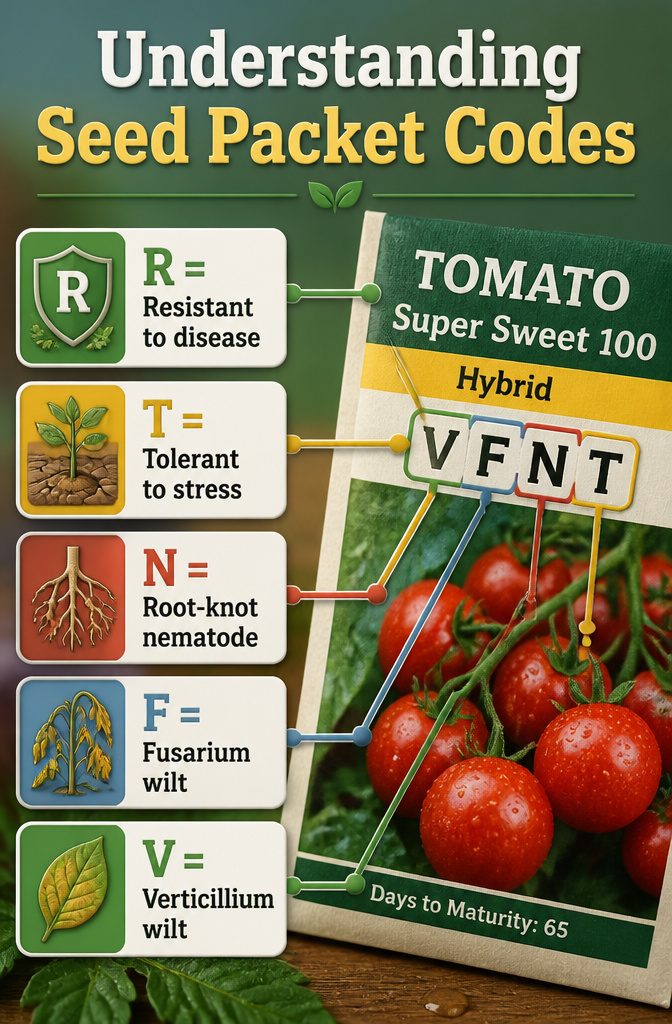
The letters on a seed packet read like a weather report for your soil. R means resistant, T means tolerant, and the rest flag specific threats: N for root-knot nematode, F for fusarium wilt, V for verticillium wilt. I used to skip right past them to the days-to-maturity number, then lost half my Juliet plants to wilt in a wet July and started paying attention.
R and T are not the same thing. Resistant varieties block the disease outright; tolerant ones survive it but may still show some damage and yield less. For a small-space gardener buying one packet, that distinction matters more than the catalog description of flavor.
A packet marked VFNT carries four layers of protection, which is why hybrids like Super Sweet 100 and BHN 268 carry so many letters stacked together. Nematodes in particular are invisible until the plant yellows and wilts despite regular water; by then the roots are already galled. If your previous tomatoes struggled mid-season for no clear reason, N is the letter to hunt for.
Reading the code is simple once you know the alphabet, but using it means matching the packet to problems you’ve actually seen. No point in nematode resistance if your real issue is early blight, which none of these letters address.
Light, Soil, and Water
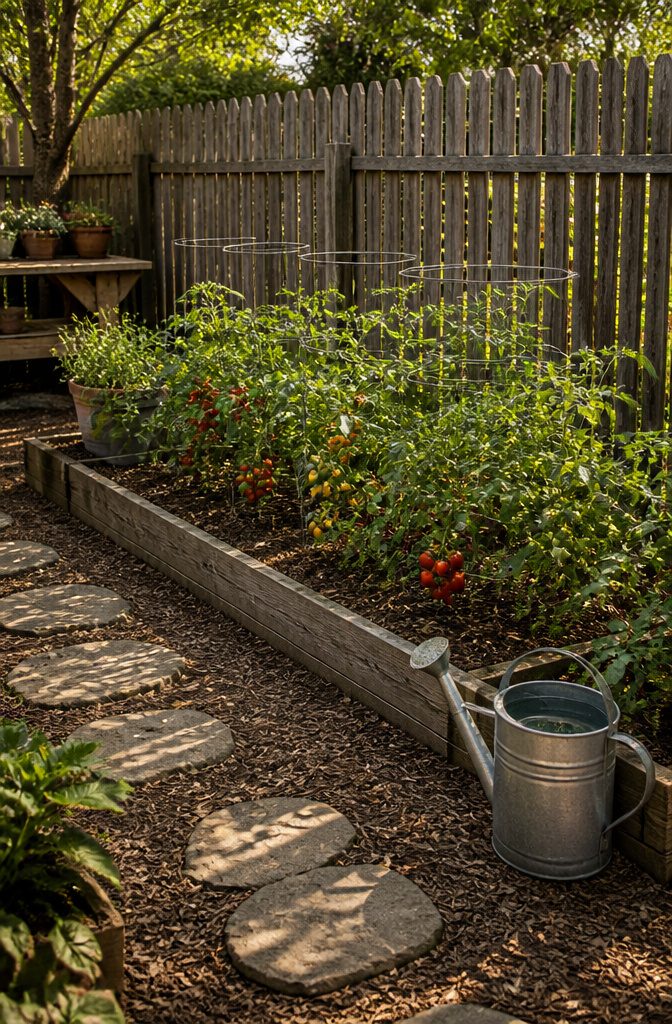
Every cherry tomato variety I have grown has taught me the same lesson: the plant’s genetics matter less than whether I put it in the right spot. Six to eight hours of direct sun is the minimum, and eight to ten hours is better if you can manage it. Anything less and the vines stretch, the fruit stays small, and you end up waiting all summer for tomatoes that never quite turn.
Soil needs to drain. I have planted in native clay that held water like a bathtub, and the roots rotted before I figured out why. Now I work compost or well-aged manure into the bed before planting, or I use a commercial potting mix for containers and skip the native soil entirely. A slightly acidic pH, around 6.2 to 6.5, keeps the nutrients available.
Watering is where I have made my costliest mistakes. Tomatoes need even moisture, especially for the first three to four weeks after transplanting. After that, I let the top two to three inches dry before watering again. Mulching helps, though I still check the soil with my finger rather than guessing.
The one thing I watch now is nitrogen. A 6-8-8 fertilizer at planting and mid-season is plenty. Once flowers and fruit set, extra nitrogen pushes leaves over fruit, and I have delayed harvests by weeks trying to correct that imbalance.
When to Pick and How to Store
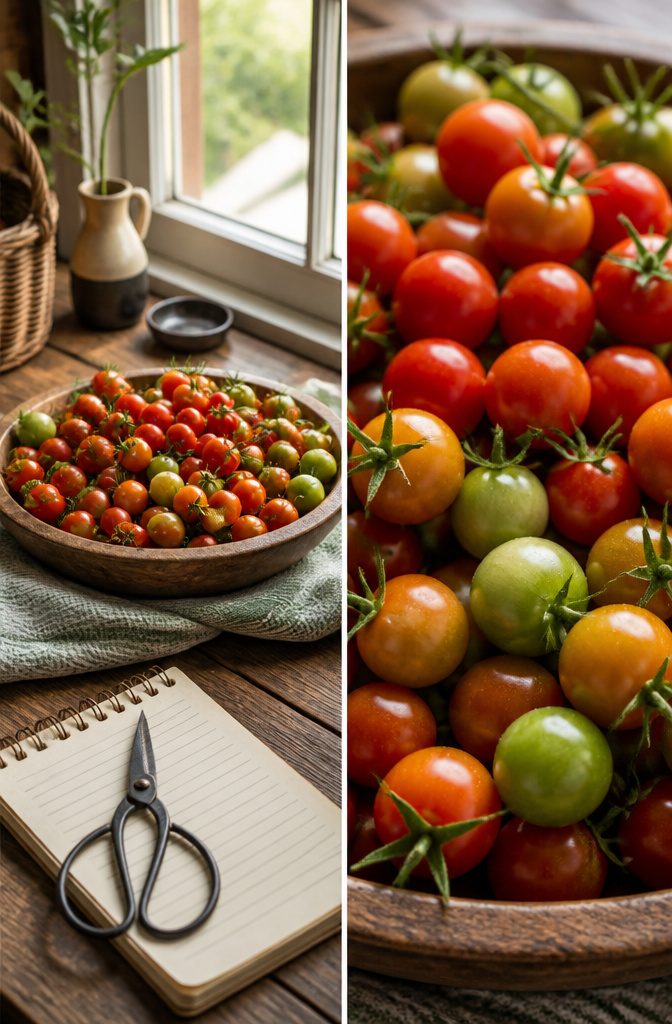
Color change is your only reliable signal. A cherry tomato seals itself off from the vine the moment its mature color appears, red or yellow or purple, and nothing the plant does after that point changes what happens inside the fruit. Walking the rows every other morning during heavy production catches most at that first blush, which matters because a dry spell followed by one hard rain can split half a crop overnight. The skin simply cannot stretch as fast as the fruit pulls water in.
Store cherry tomatoes at room temperature, around 70°F, for the best flavor and to avoid the mealy texture refrigeration causes. Under normal conditions with relative humidity near 95%, they keep up to 10 days depending on ripeness at harvest. If your house runs warm, the refrigerator extends shelf life to about 5 days, but unripe tomatoes will not finish ripening in there, and even ripe ones need to come back to room temperature before eating if you want any sweetness back. Leave them unwashed until use, and sort through any prewrapped batch immediately for softer spots that spread.
Which Ones Fit in Pots
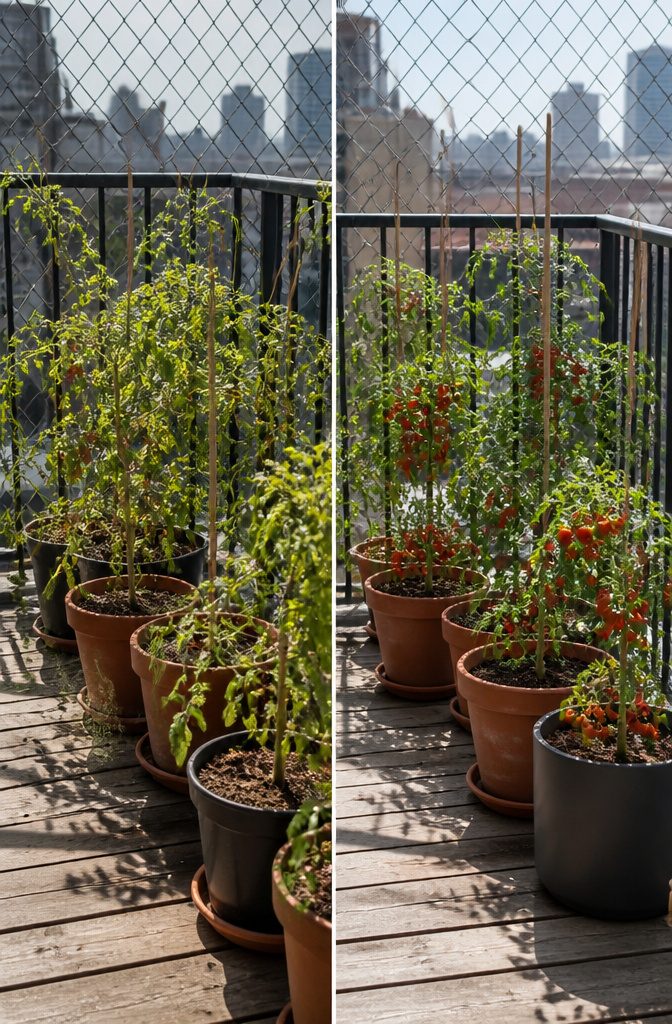
Not every cherry tomato wants to sprawl across your balcony railing. Some varieties stay small enough that a deep pot on the floor is all the real estate they need.
Tiny Tim and Cherry Punch both top out around two feet high with maybe a three-foot spread, which makes them workable in patio containers, hanging baskets, or window boxes. These are your determinate or bush-type plants: they stop growing at a set size, produce their fruit over a shorter window, and generally behave themselves without daily wrestling.
Compare that to the indeterminate vines most people picture when they think cherry tomatoes. Those keep growing, keep branching, and will produce all season if you let them, but they need something tall to climb and a much larger footprint. A determinate plant in a container still benefits from a stake or small cage to keep fruit off the ground, yet the support is modest next to the six-foot trellis an indeterminate vine demands.
A five-gallon pot is the practical floor for almost any cherry tomato, determinate or not, since the root system does not shrink just because the top growth does. Skimp on soil volume and you will water twice a day in July, maybe three times. Give the compact varieties their gallonage and a basic stake, and they will repay the small space with fruit you can actually reach.
Frequently Asked Questions
What are the best cherry tomato varieties?
Sun Gold, Black Cherry, and Sweet 100 top most lists for flavor and reliability. Sun Gold delivers exceptional sweetness with almost no acid edge and can produce over a thousand tomatoes per plant. Black Cherry offers a complex, smoky flavor more typical of full-sized heirlooms. Sweet 100 pumps out long clusters of bright red fruits with candy-like sweetness and strong disease resistance.
How do you grow cherry tomatoes?
Cherry tomatoes need six to eight hours of direct sun minimum, well-drained soil with a pH around 6.2 to 6.5, and even moisture especially for the first three to four weeks after transplanting. Let the top two to three inches of soil dry between waterings after that initial period. Use a 6-8-8 fertilizer at planting and mid-season, but avoid extra nitrogen once fruit sets or you will push leaf growth over production.
When should you harvest cherry tomatoes?
Pick cherry tomatoes when they reach their mature color, whether red, yellow, purple, or greenish-yellow depending on variety. The fruit seals itself off from the vine at first blush, so checking every other morning during heavy production catches them at the right moment. Store them at room temperature around 70°F for best flavor; refrigeration causes mealy texture and kills sweetness.