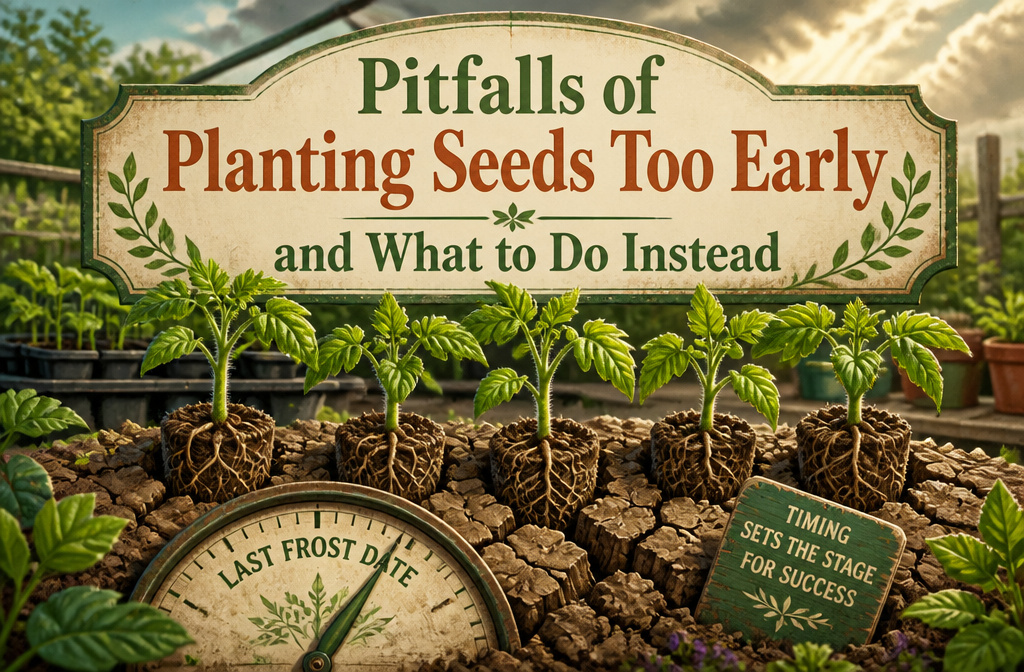
Starting seeds indoors before your last frost date is standard practice, but move too early and the math turns against you. Seedlings that sit inside for ten weeks hit the ceiling of their trays with roots circling the bottom, forcing repeated potting-ups that still produce stunted plants. I learned this after burning through bag after bag of potting mix on tomato seedlings that never recovered.
1. Too Little Light
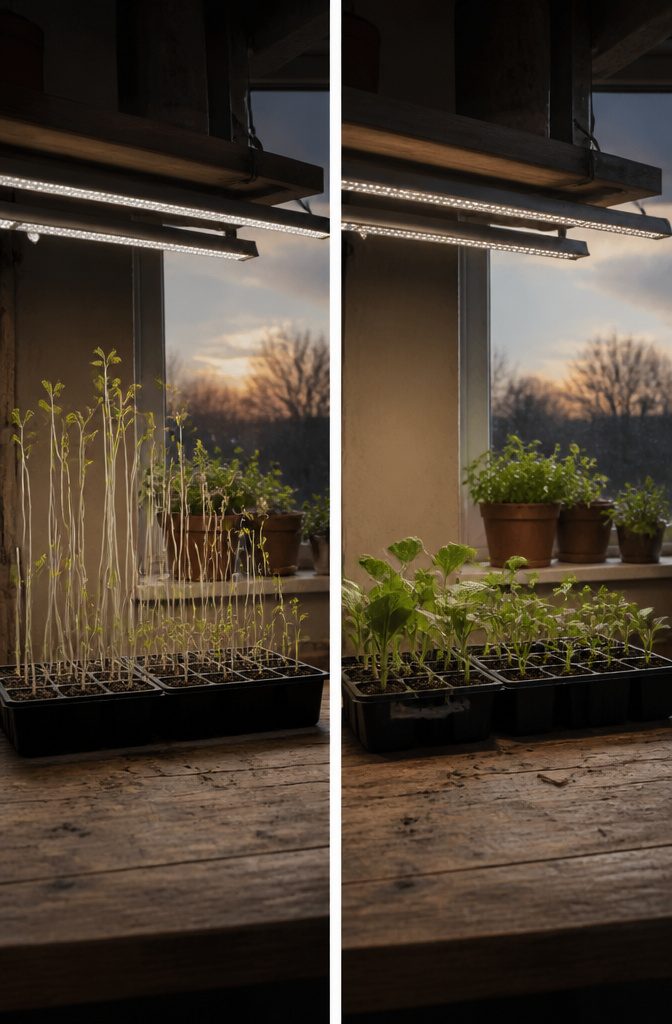
Seedlings started too early in late winter stretch toward any light they can find, and the result is leggy, top-heavy growth that flops over before transplant day. That weak, spindly habit happens because most windows simply cannot deliver the 12–16 hours of bright light seedlings need daily. Even a south-facing window, the best indoor option, fails in February and March; the sun sits too low and the days are too short.
I learned this the hard way after two seasons of tilting trays toward the glass and rotating them twice a day. The seedlings survived, but they were pale and fragile, and several damped off at the soil line. The switch to artificial light changed everything. I now run basic 40-watt LED shop lights on a timer for 14 hours, hung just a couple inches above the leaves and raised as the plants grow. The fixtures cost less than a few packs of replacement seedlings, and the stems come out thick and self-supporting. Pale or scorched leaves mean the light is too close or running too long; adjust and the seedlings recover fast.
2. Overgrown Seedlings
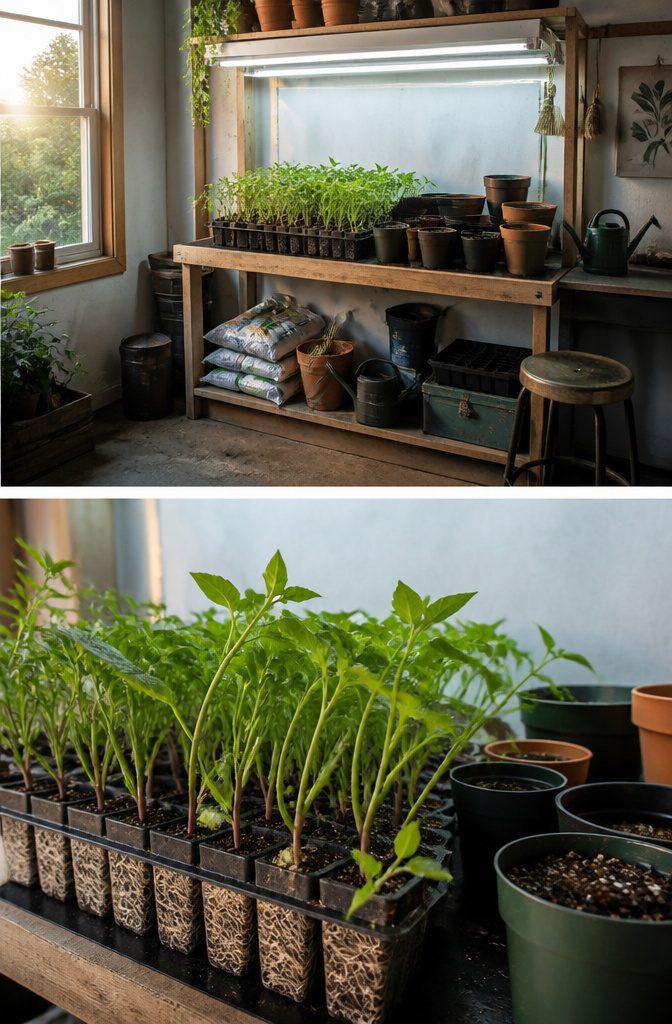
Tomato seedlings started ten weeks before my last frost date hit the ceiling of their 72-cell tray by week six. The roots had already circled the bottom and begun to mat; root-bound seedlings this young rarely recover fully, and these were still two months from planting out. I moved them into 3-inch pots, then again into gallon containers when the stems kept stretching, burning through bag after bag of potting mix and every flat surface near a south window.
That second potting-up is where the math turns against you. Each round demands fresh growing media, larger containers, and square footage under lights that most apartment dwellers do not have. My Brandywines and paste tomatoes ended up short and stunted anyway, their root systems confused by repeated disturbance rather than deepening naturally. The peppers fared worse; they sulked after the first transplant and never regained the growth rate of ones I started on time the following year.
Plants want a single, uninterrupted stretch in a cell just large enough to hold them until soil warms. Give them eight to ten weeks indoors and you force a choice: let them strangle in place, or spend money and space on a relay race of progressively bigger pots that still produces weaker plants than waiting would have.
3. Bolting Before You Transplant
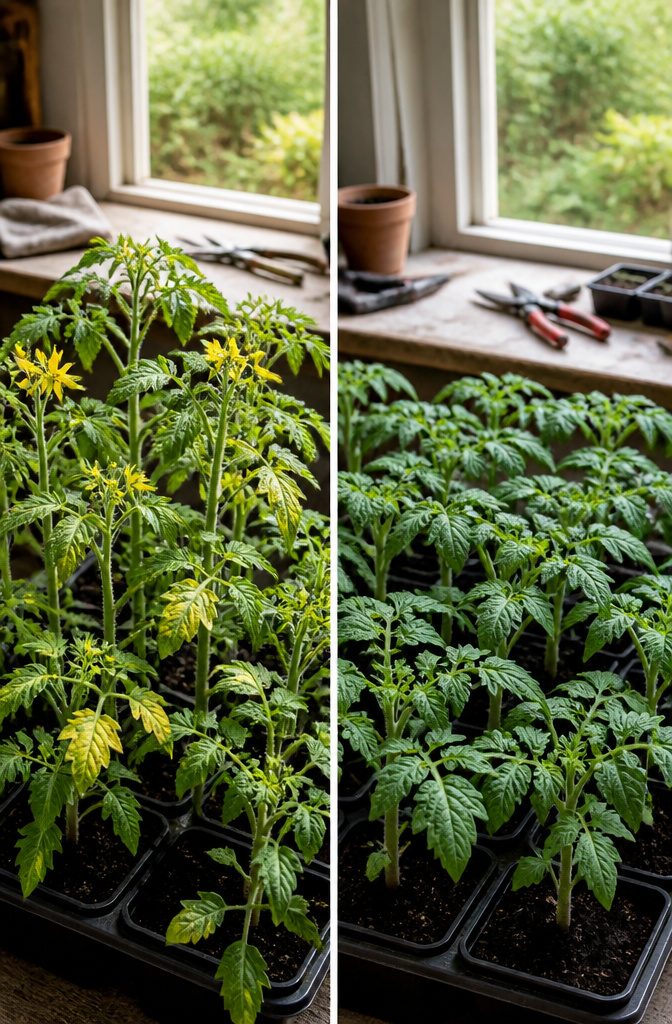
Tomatoes are the crop I still have to talk myself out of starting too soon. Six to eight weeks from sowing to transplanting is the window that actually works, and every mid-February impulse to beat that has ended the same way: a plant in flower while there is still frost on the ground. Once those first yellow blossoms appear, the plant has shifted from leaf-making to fruit-making, and it will not revert. You can transplant a flowering tomato, but the yield you pictured in July is already compromised.
Greens bolt faster and more quietly. Arugula, spinach, and the brassicas can run to seed without any dramatic show, just a slight thickening of the stem and a sudden bitter leaf. I have tried pinching off broccoli flower clusters in March, hoping to reset the clock. The plants grew, but the heads stayed small and split early; the stress of crowding in their cells had already made the decision for them. Root-bound stress reads to the plant the same way passing seasons do, and a seedling that thinks it has survived a full life cycle will not start over just because you finally moved it outside.
When to Actually Start Seeds
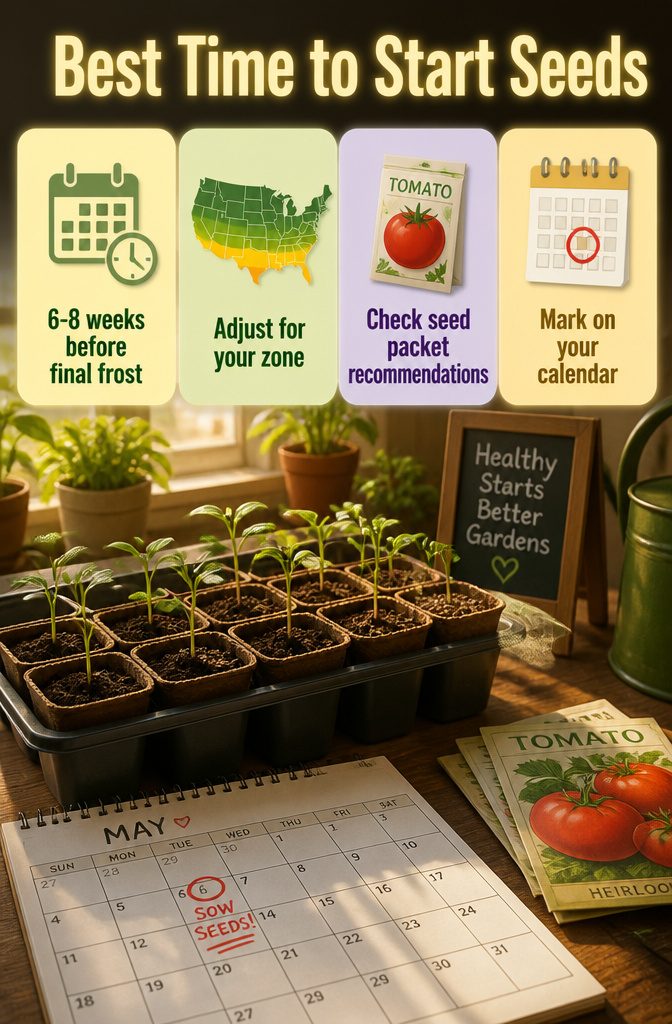
Most seed packets tell you to sow indoors six to eight weeks before your last frost date. That window is the best general rule I have found, but the packet rarely tells you how much variation hides inside it.
I garden in a northern zone where the printed date on the back of a tomato packet can be two or three weeks too aggressive. The breeder wrote it for a longer season, and if I follow it blindly I end up with the leggy, stressed seedlings that outgrow their pots before the soil outside is workable. I now look up my own last frost date, count backward, and write that sowing date directly on my wall calendar so the number in front of me is mine, not the packet’s.
Regional variation matters more than the seed industry admits. A packet that says "start indoors early spring" might mean March in zone 7 and still be unsafe for zone 4 in April. My calendar note saves me from guessing which version of "early" the printer had in mind.
Light Setups That Work Indoors
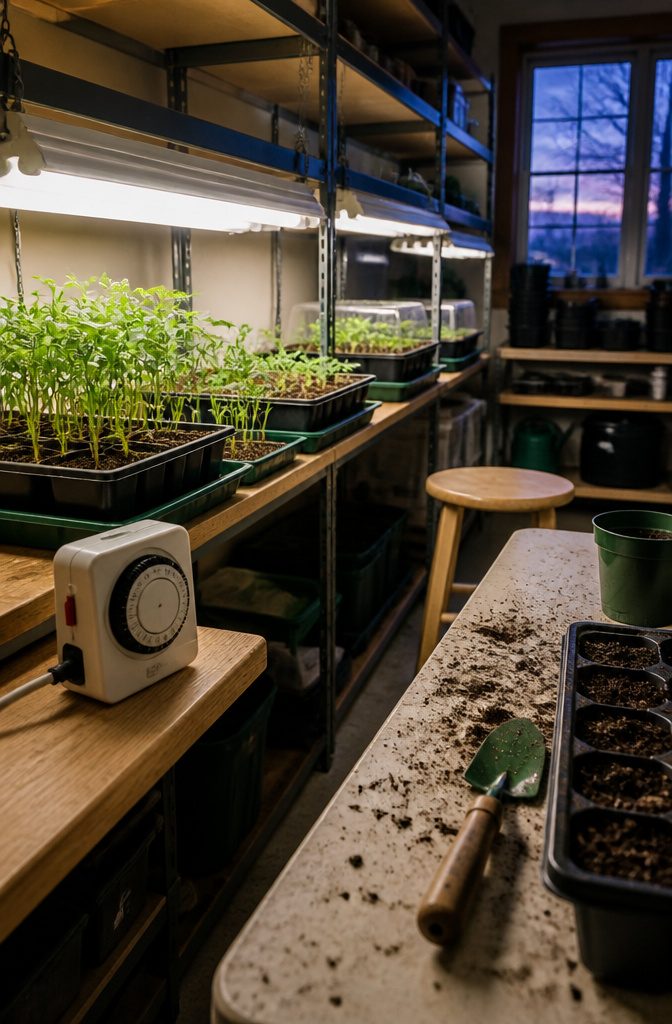
Seedlings started indoors need 12 to 16 hours of light daily, and a cheap outlet timer handles this better than my memory ever did. I run mine from 6 a.m. to 10 p.m. through late February, then dial back to 12 hours by mid-March as daylight stretches.
Distance matters more than bulb type. My first year I hung shop lights four inches above the soil line and watched peppers stretch anyway. The fixture was too weak; the leaves were reaching. Now I keep T5 fluorescents or basic LED shop bulbs two to three inches from the canopy, raising the chain as plants grow. A $15 hardware-store LED strip and a $10 mechanical timer outperformed a window sill every time, and the whole setup cost less than one fancy grow panel.
By April I cut the timer to 10 hours, then 8, letting the lengthening days finish the job. The plants stay stocky that way, and I avoid the leggy seedlings that come from guessing.
Water Without Drowning Them
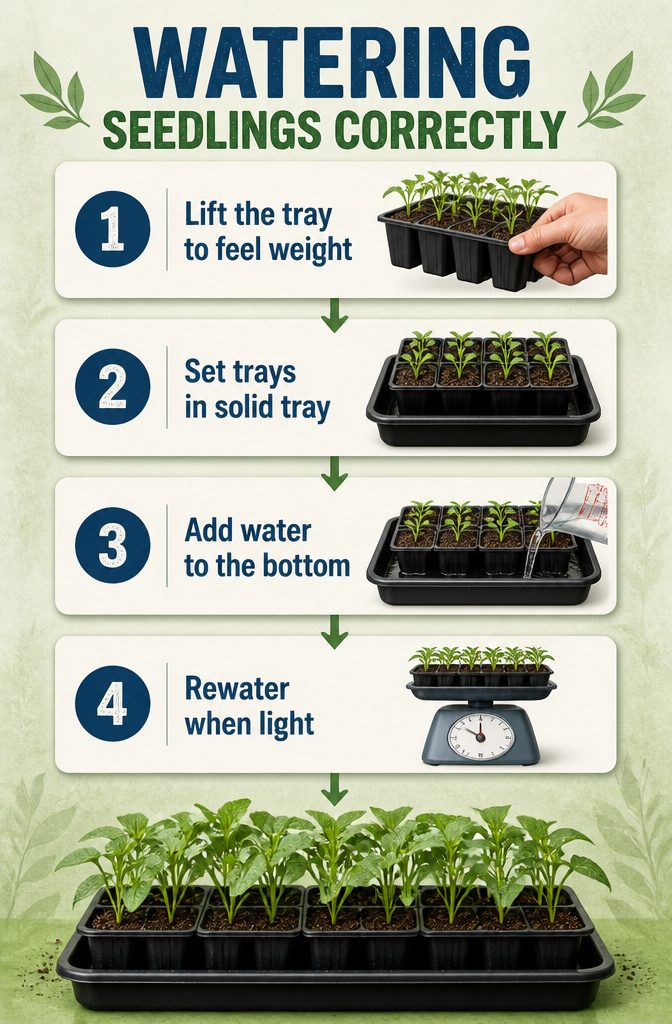
Bottom watering changed how I start seeds, and it took a tray of collapsed pepper seedlings to make the switch. I had been spraying the surface daily, keeping the mix visibly wet, and within a week the stems pinched to a thread at soil level and fell over. Damping off. The moisture had been constant but wrong: saturated, not just damp.
The mix should feel moist and no wetter, a middle point you learn by lifting the tray. A fully saturated tray that has drained holds the maximum water the mix can take, called field capacity; as it dries, the weight drops. That lighter feel is your signal.
Now I set seed trays with drainage holes into a solid tray, pour water into the bottom, and let the mix draw up what it needs. The surface stays undisturbed, fragile roots stay put, and the mix stops when it has had enough. I check daily and rewater when the tray feels light, usually every two to three days under my grow lights. The top can look dry while the lower mix still holds moisture, especially with heat mats running, so I go by weight, not appearance.
Soil Mix for Seedlings
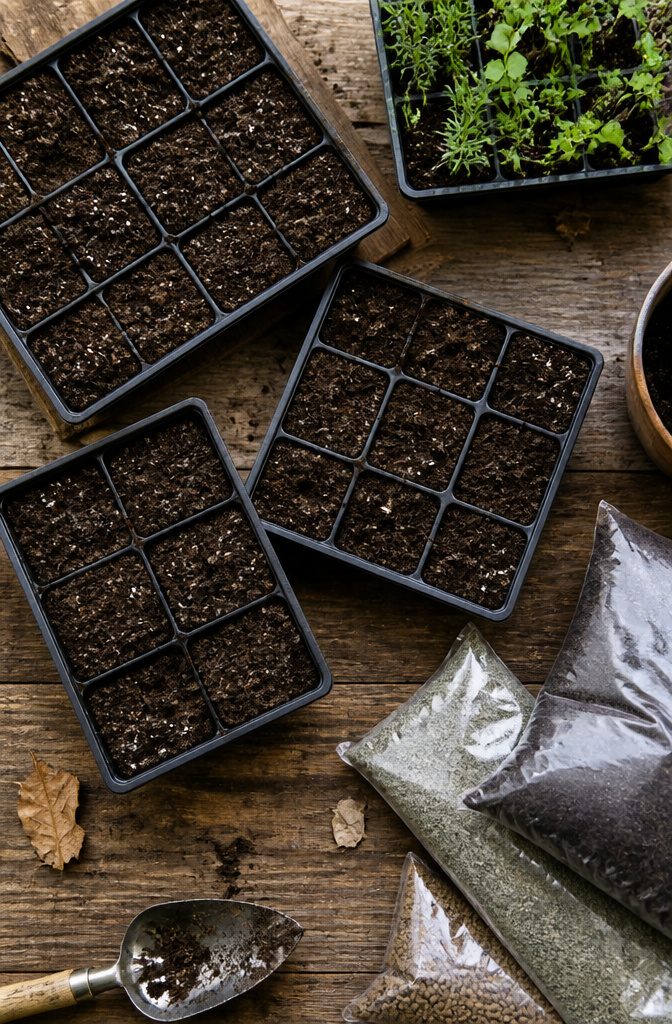
Garden soil from the yard packs down tight in a small seed tray, and the lack of drainage inside four walls turns a heavy mix into a soggy grave for new roots. The same soil also carries whatever fungi or pests wintered in your beds, so a seedling that already struggles with early light and timing can damp off before it ever greens up.
I tried making my own mix once, measuring out peat and perlite and compost from the bin out back. It looked light enough in the bucket, but by week two the surface had crusted hard and the roots were stunted, circling the plug instead of pushing through. Now I buy bagged seed-starting mix, usually Pro-Mix or a similar peat-perlite blend with vermiculite worked in, and I keep a small bag of worm castings to blend in at no more than 30 percent once the first true leaves show. The bagged stuff is sterile, fluffy, and forgiving of the overwatering that comes easy to new hands indoors.
Hardening Off for 7–10 Days
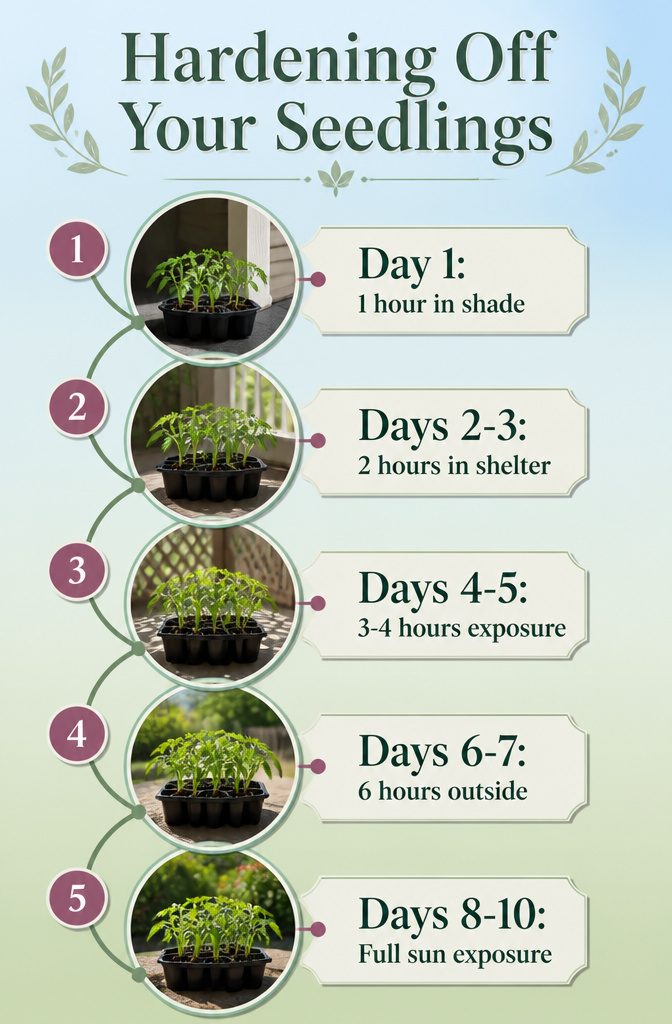
Hardening off is the step that separates seedlings that survive from ones that fry. The process takes 7–10 days, and the schedule matters more than I used to think.
-
Day 1: one hour in deep shade, no wind. A covered porch or the shadow of a fence works. I once skipped this and set a tray of tomatoes on the patio table in what I thought was "part shade." The afternoon sun shifted, and by 3 p.m. the leaves had blistered white. I lost six plants.
-
Days 2–3: two hours, still sheltered. Morning light only, no direct midday sun.
-
Days 4–5: three to four hours, including a half hour of dappled direct sun if the weather is mild.
-
Days 6–7: six hours, with some full sun exposure and light breeze.
-
Days 8–10: all day outside, including a few full nights before transplanting if temperatures stay above 50°F.
The trap is cloudy weather early in the stretch. Seedlings that never saw real sun on days 1–3 will still burn on day 4 if the clouds clear and you leave them out the full planned time. I now cut the session short if the forecast flips to bright; building the schedule back up by 30 minutes beats replacing sun-scalded leaves.
Frequently Asked Questions
What happens if you plant seeds too early?
Planting seeds too early produces leggy seedlings that stretch toward weak winter light, overgrown plants that become root-bound in their trays, and bolting plants that shift to flowering before you can move them outside. Each problem weakens the plant and reduces your eventual harvest, even if the seedling technically survives.
How do I know when to start seeds indoors?
Start most seeds indoors six to eight weeks before your last frost date, but look up your own local date rather than trusting the seed packet blindly. Mark that sowing date directly on your calendar so you are working from your region’s actual timing, not a generic recommendation meant for a longer growing season.
How much light do seedlings need?
Seedlings need 12 to 16 hours of bright light daily, which windows cannot provide in late winter even at their best. Hang LED or fluorescent shop lights two to three inches above the leaves and run them on a timer; the stems will grow thick and self-supporting instead of pale and floppy.