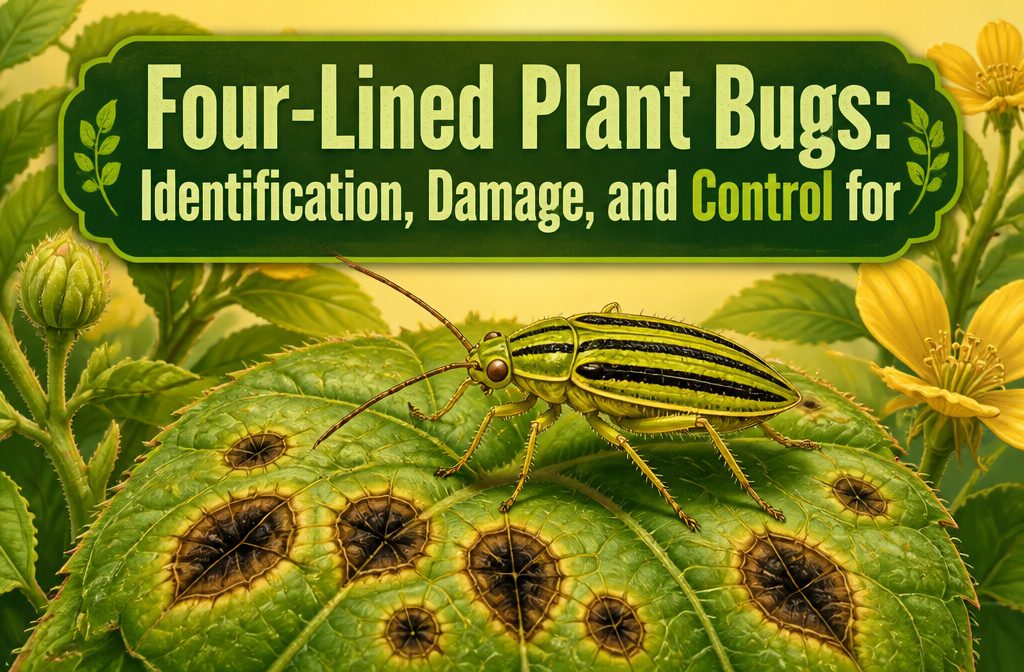
Four-lined plant bugs are small yellow-green insects with four black stripes that pierce leaves and suck out chlorophyll, leaving dark sunken spots that gardeners often mistake for fungus. The real trouble is their timing: nymphs hatch in mid-May and feed for roughly thirty days before they can fly, which means the damage is already heavy before most people notice. One thorough fall pruning of the two to three inch egg slits on bare stems buys a measurable reduction the following spring.
What Four-Lined Plant Bugs Look Like
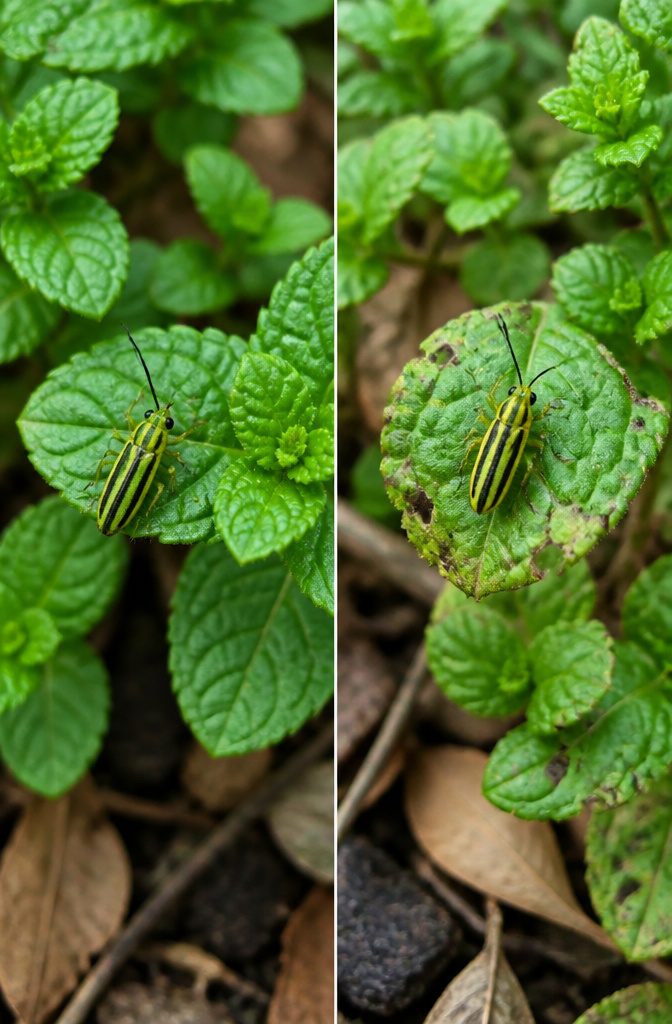
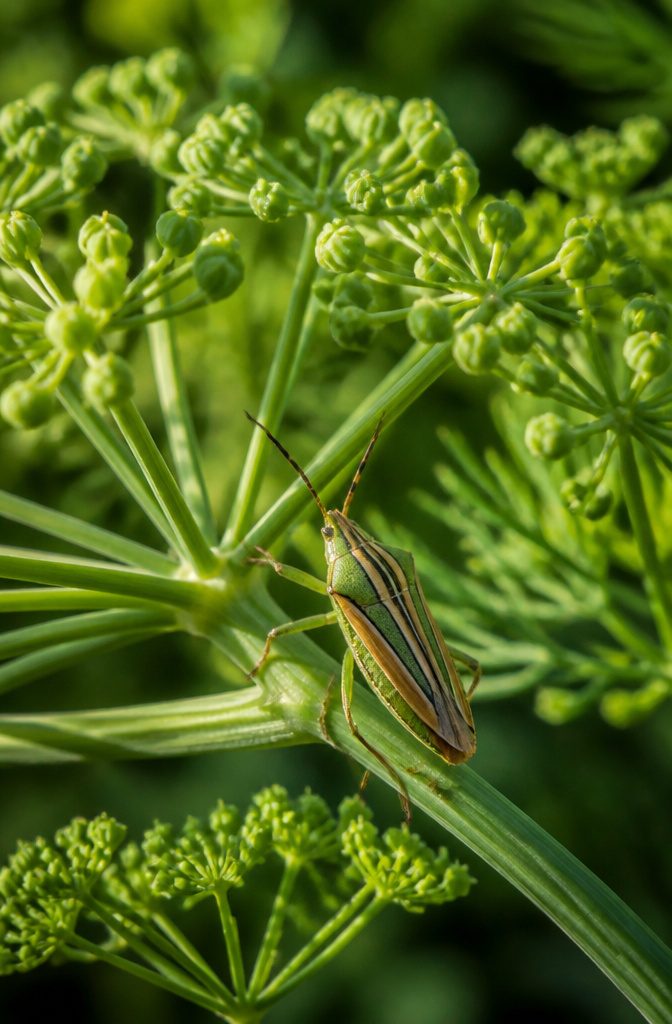
Adults of Poecilocapsus lineatus are small enough to overlook at first: about 1/4 inch (6.3 mm) long, with a yellow-green to bright yellow body and four crisp black stripes running from head to wing tip. The head carries the same yellow tone, marked by large dark eyes and black antennae. When the wings fold, the leathery front sections show those stripes clearly, while the membranous parts behind them read as black.
The nymphs look like a different insect entirely. They are smaller, wingless, and colored anywhere from reddish-orange to bright yellow. Black spots line their abdominal segments in rows, and the wing pads grow a bit more with each of the five molts. Only the final instar shifts toward orange before the adult coloring takes over.
How They Feed and What the Damage Looks Like
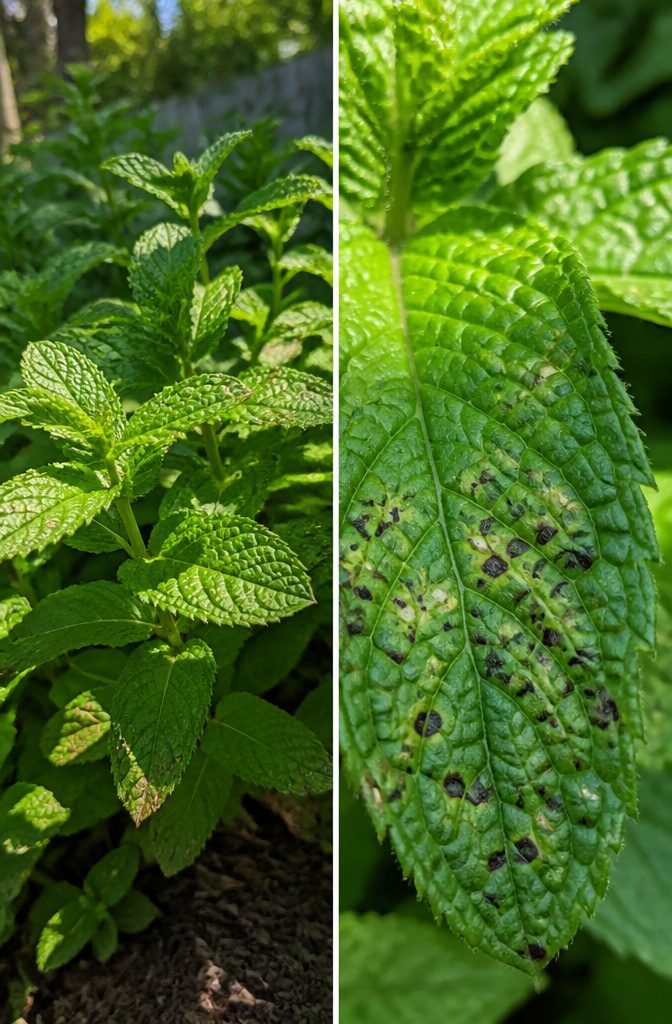
Both adults and nymphs feed the same way, piercing leaf tissue with needle-like mouthparts and sucking out chlorophyll. The wound leaves a dark, round, sunken spot about 1/16 to 1/8 inch wide. I missed this my first season, brushing the speckles off as some kind of leaf spot fungus until the pattern became too regular to ignore.
The spots sometimes turn translucent or black. After a few weeks the damaged tissue can drop out entirely, leaving what looks like tiny shot holes. Severe feeding on new growth may brown leaves or cause wilting.
Telling this from actual disease takes a close look. Fungal and bacterial spots vary in size and usually show discolored margins. Four-lined plant bug damage stays uniform: same size, same shape, no halos. On my mint the holes clustered where the nymphs had worked systematically along the stem, not scattered the way spores land.
Their One-Year Life Cycle
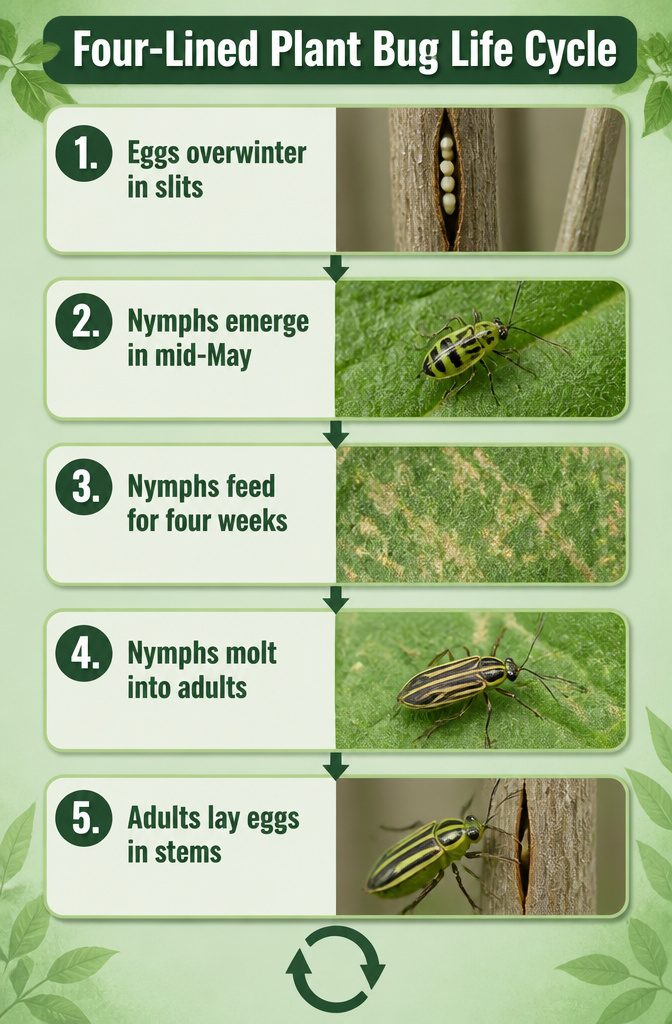
Eggs spend the winter tucked into vertical slits on plant stems, each cut about two to three inches long. The nymphs emerge in late spring, roughly early to mid-May once foliage is out, and feed on leaf surfaces for roughly four weeks while passing through five instars. By early summer they molt into adults, feed and mate through about six more weeks, then females slice fresh egg slits into stems before the cycle ends. One generation per year is all you get, which sounds manageable until you realize the nymphs do most of the damage because they barely move.
Start checking plants by mid-May for stippled or bronzed leaves, since catching the nymph stage matters more than chasing the quicker adults later on. The egg slits become easy to spot after leaf drop in fall, dark lines against bare wood, which is when pruning them out actually works.
Plants They Target
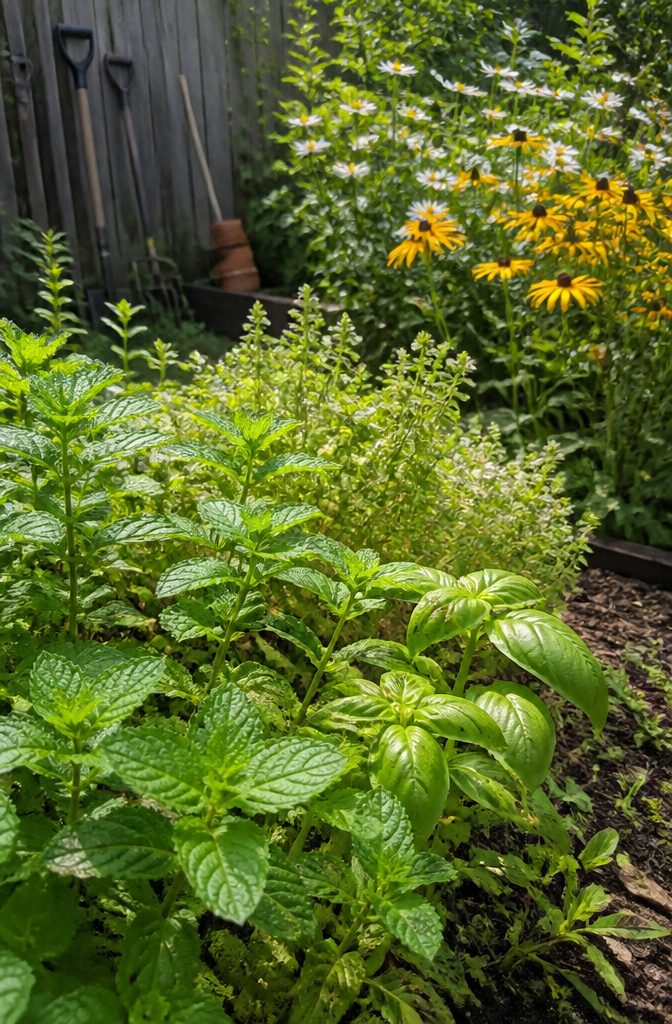
The four-lined plant bug’s appetite is broad enough to make most gardeners nervous. Over 250 plant species sit on its menu, and the damage shows up the same whether it is hitting your herbs or your shrubs.
Here is where I have found them, and where the reports cluster:
- Herbs — mint, basil, sage, and rosemary are repeat targets, with mint and basil seeming to draw the worst concentration
- Perennials — chrysanthemum, daisy, coreopsis, rudbeckia, and shasta daisy
- Woody shrubs — azalea, dogwood, forsythia, viburnum, and weigela
- Annuals — marigold and zinnia
- Vegetables — peppers and lettuce
- Berries — currant and gooseberry
The sheer range means crop rotation or simply swapping plant families will not save you. One bed of basil can be clean while another three feet away, tucked between daisies and a dogwood, turns spotted by mid-June.
Fourlined plant bugs can feed on about 250 species of plants.
— University of Minnesota Extension
That number is the practical problem. A gardener who waits to see which plants "they really like" in her particular yard often loses the first six weeks of growing season before accepting that nearly everything is fair game.
Monitoring and Physical Removal
-
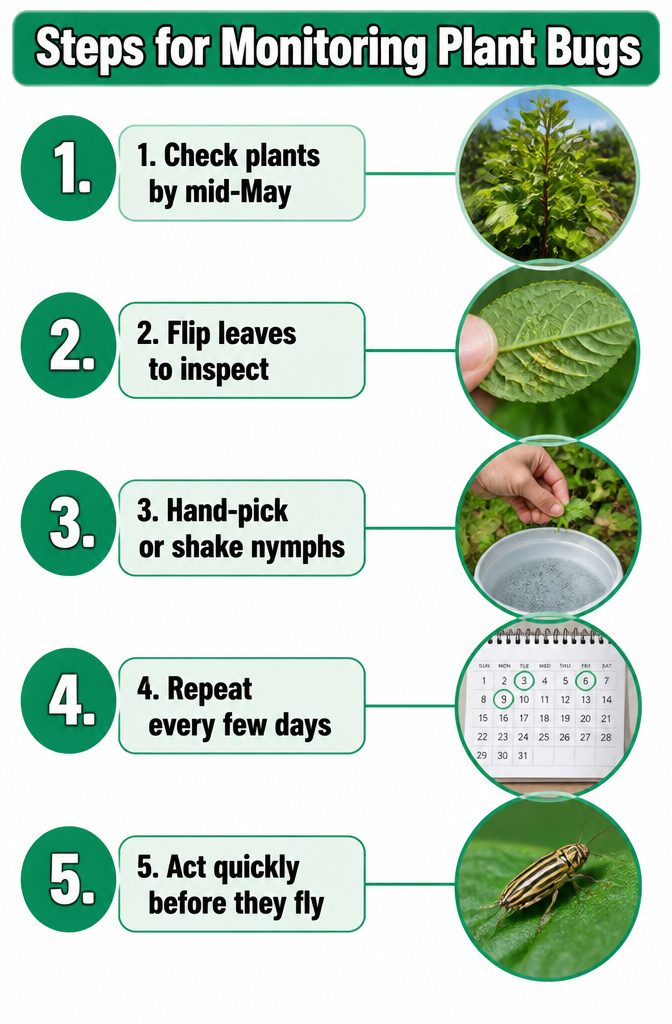
Start checking plants by mid-May, before the damage becomes obvious. Eggs hatch shortly after foliage appears in late April or early May, so nymphs are already feeding on the undersides of leaves by then.
-
Flip leaves and look at the undersides, where nymphs cluster and do most of the feeding. Adults move faster, but nymphs are relatively immobile and cannot fly.
-
Hand-pick any bugs you find, or hold a bucket of soapy water under the foliage and shake the plant. The nymphs drop off easily and have difficulty crawling back up; adults may try to escape, so work quickly.
-
Walk through again every few days and repeat. Eggs do not hatch all at once, so new nymphs keep appearing through spring and into early summer.
-
The window matters because nymphs feed for about thirty days before becoming winged adults. Once they can fly, shaking them into a bucket gets harder, and the discoloration they cause adds up fast.
Pruning Out Egg Sites
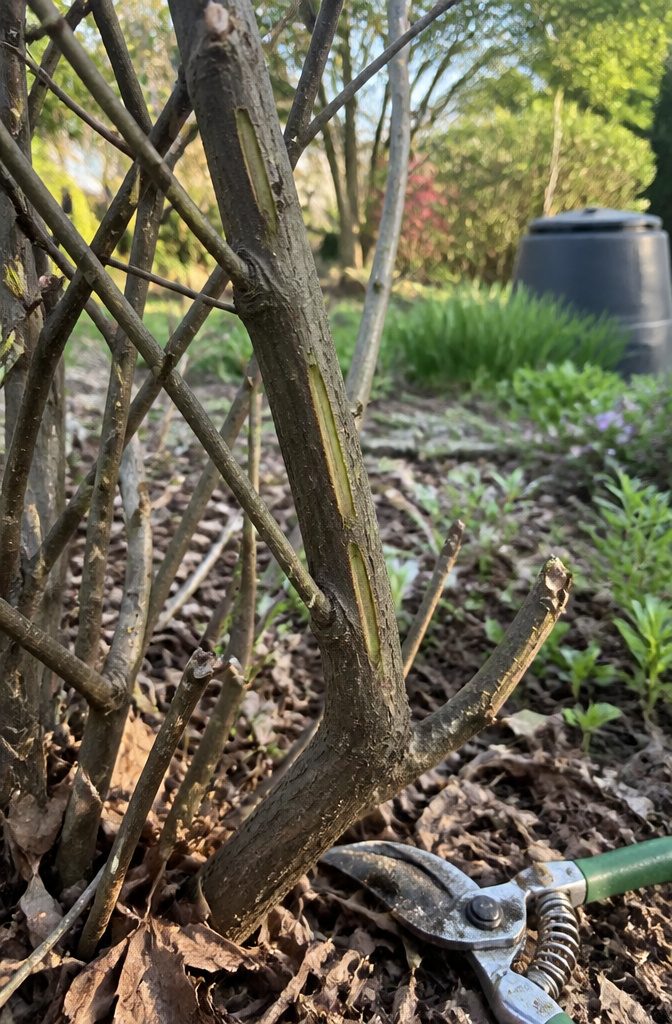
Fall cleanup is where you can make the biggest dent in next year’s four-lined plant bug numbers. After leaves drop, the egg-laying slits become visible as two to three inch vertical cuts along the stems of woody plants and shrubs. I scan each branch with pruning shears in hand, looking for those straight, narrow lines where females deposited their eggs before dying off.
The slits stand out once you know the shape: clean, lengthwise incisions that look almost too deliberate to be natural. When I find them, I cut the stem back well below the damage and drop the whole piece into a yard waste bag bound for municipal composting, not my own pile. The eggs survive winter cold just fine, so leaving pruned material on the ground or in an open compost heap only reintroduces the problem come spring.
This step works best on shrubs and small trees where the slits are easy to spot against bare bark. On dense herbaceous growth, the task gets harder, and I focus my energy where the visual check is quickest. One thorough pass in late November or early December, after a hard freeze has finished the leaf drop, takes me an hour for the whole border and buys a measurable reduction in nymphs the following May.
When to Use Insecticidal Soap or Chemicals
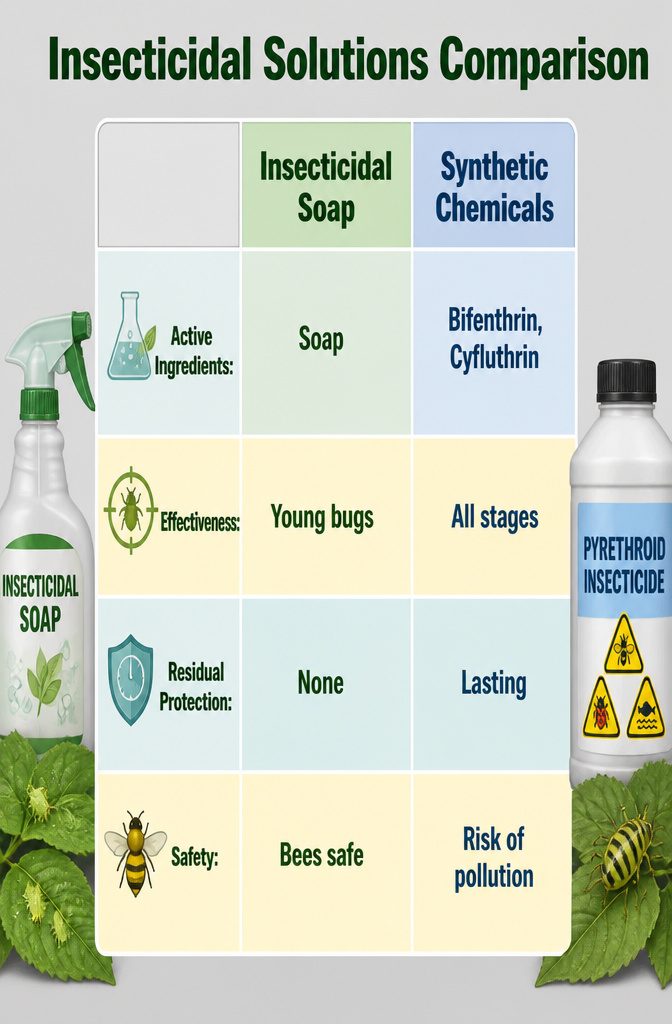
Insecticidal soap is where I start when nymphs show up on my plants. It works against the young stages of four-lined plant bugs, though adults shrug it off. The soap has to hit the insect directly to kill it, and once it dries, there is no residual protection, so I plan on repeating the spray.
If the population is heavy and the damage is spreading, I move to something with staying power. Bifenthrin, cyfluthrin, lambda-cyhalothrin, and permethrin are the active ingredients to look for on shelf products. These are conventional synthetic pyrethroids, not organic options, and they will linger on the plant surface long enough to catch bugs that crawl through later. That same residual effect means they do not discriminate: bees, lady beetles, and other helpers can take a hit too.
The label on the bottle is the only guide that matters. I check that my specific plant, vegetable, or herb is listed, note the days-to-harvest interval, and follow the mixing rate exactly. Organic gardeners can stay with insecticidal soap and accept the more frequent applications. Conventional gardeners get longer gaps between sprays but trade away some of the insect life they might otherwise want keeping the garden in balance.
Fall Cleanup and Sanitation
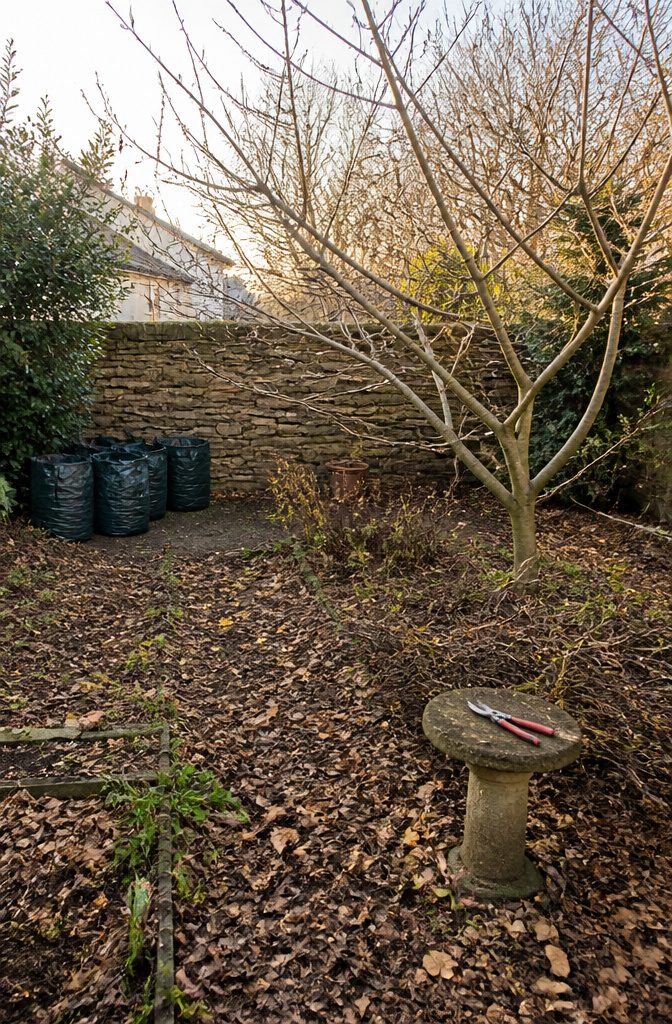
Fall cleanup matters more than I used to think. Female four-lined plant bugs cut slits into stems and deposit a half dozen or more eggs into each one, and those eggs sit through winter inside the plant material they were laid in. Eggs left on the ground can still hatch successfully come spring, so raking up and removing that debris is only half the job.
I time this with my pruning. After the leaves drop, those egg slits become visible on the woody stems of trees and shrubs, and I cut out the branches that carry them. The pruned material goes straight into bags or the compost heap, not left lying in beds or borders where the cycle could restart. The same goes for any herbaceous host plants that held eggs; they come out too, buried or composted well away from the garden.
Early spring works for cleanup if fall got away from you, though you are racing the hatch. The nymphs emerge shortly after foliage appears in late April or early May, and once they are feeding, the damage is already done.
Natural Predators That Help
Damsel bugs and big-eyed bugs both hunt four-lined plant bugs, though you will not hear them discussed much in gardening circles. I first learned their names while paging through extension bulletins looking for something, anything, that explained why my mint looked shredded one July. These insects move fast and eat soft-bodied pests at a pace that adds up over a season.
The trick is keeping them around once they arrive. Damsel bugs like low, dense plantings where they can hide from their own predators. Big-eyed bugs need open ground or mulch to hunt effectively. Planting a mix of flowering herbs such as dill, cilantro, and fennel gives both species nectar when prey is scarce, and the herbs self-seed if you let them. Leave a little wildness at the edges of beds rather than cultivating every inch. A strip of unmown grass or an unturned corner invites the insects that four-lined plant bugs fear.
I stopped mowing a narrow band behind my tomato cages two years ago. That small change brought more of these hunters into the garden than any purchased product I had tried before.
Damage vs Disease
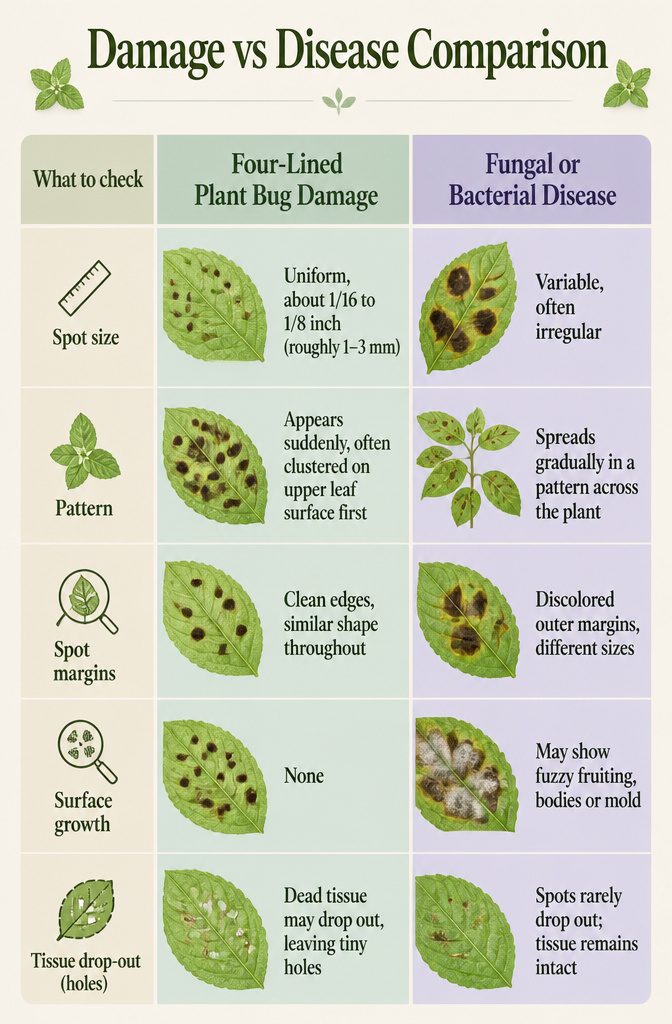
The spots four-lined plant bugs leave behind look almost identical to fungal leaf spot at first glance, which is why I spent a full afternoon last June convinced my mint had caught something. Both create dark, round markings, but bug damage carries a few giveaways once you know to look for them.
| What to check | Four-lined plant bug damage | Fungal or bacterial disease |
|---|---|---|
| Spot size | Uniform, about 1/16 to 1/8 inch (roughly 1–3 mm) | Variable, often irregular |
| Pattern | Appears suddenly, often clustered on upper leaf surface first | Spreads gradually in a pattern across the plant |
| Spot margins | Clean edges, similar shape throughout | Discolored outer margins, different sizes |
| Surface growth | None | May show fuzzy fruiting bodies or mold |
The dead tissue from bug feeding sometimes drops out after a few weeks, leaving tiny holes. Disease spots rarely do this. If you are not seeing the bugs themselves, flip the leaf and check the underside, or look for the piercing-and-sucking damage rather than a spreading pathogen.
Frequently Asked Questions
What are four-lined plant bugs?
Four-lined plant bugs are small insects that reach about 1/4 inch long, with a yellow-green body marked by four crisp black stripes running from head to wing tip. Both adults and nymphs feed by piercing leaf tissue and sucking out chlorophyll, which leaves dark, round, sunken spots on foliage. They complete only one generation per year, but the nymph stage does most of the damage because the young insects barely move and feed for roughly thirty days.
How do you control four-lined plant bugs?
Start checking plants by mid-May and flip leaves to find nymphs clustered on the undersides, then hand-pick them or shake them into soapy water. Prune out egg-laying slits from woody stems during fall cleanup, cutting well below the damage and removing the debris from your property. Insecticidal soap works on nymphs but requires direct contact and repeat applications; synthetic pyrethroids such as bifenthrin or permethrin provide residual control when populations are heavy, though they also harm beneficial insects.
What damage do four-lined plant bugs cause?
Their feeding leaves dark, round, sunken spots about 1/16 to 1/8 inch wide on leaves, sometimes turning translucent or black before the tissue drops out entirely to create tiny shot holes. The damage stays uniform in size and shape with clean edges, unlike fungal or bacterial spots which vary and show discolored margins. Severe feeding on new growth can brown leaves or cause wilting, and the nymphs often cluster along stems to work systematically rather than scattering randomly.