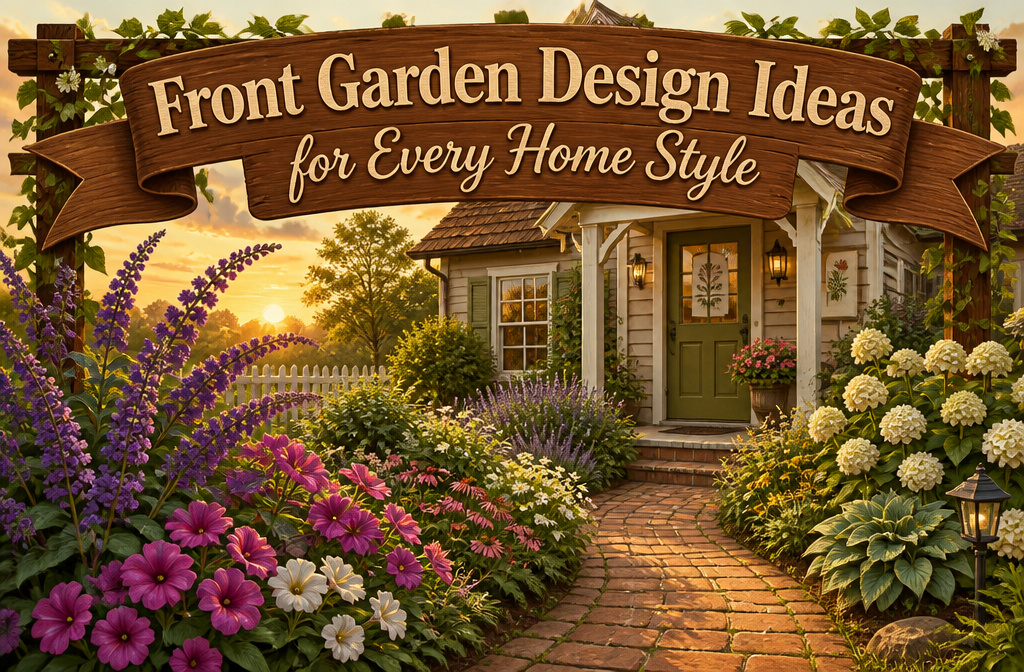
The right front garden design depends on how much time you actually spend maintaining it, not how it looks in June.
A cottage border that reads romantic by summer needs deadheading and dividing by August, while a xeriscape with gravel and succulents trades watering for raking stone back into place.
Even a small mixed shrub border at $500–800 annually spreads real cost across years of Saturday mornings you may not have.
1. Cottage Garden
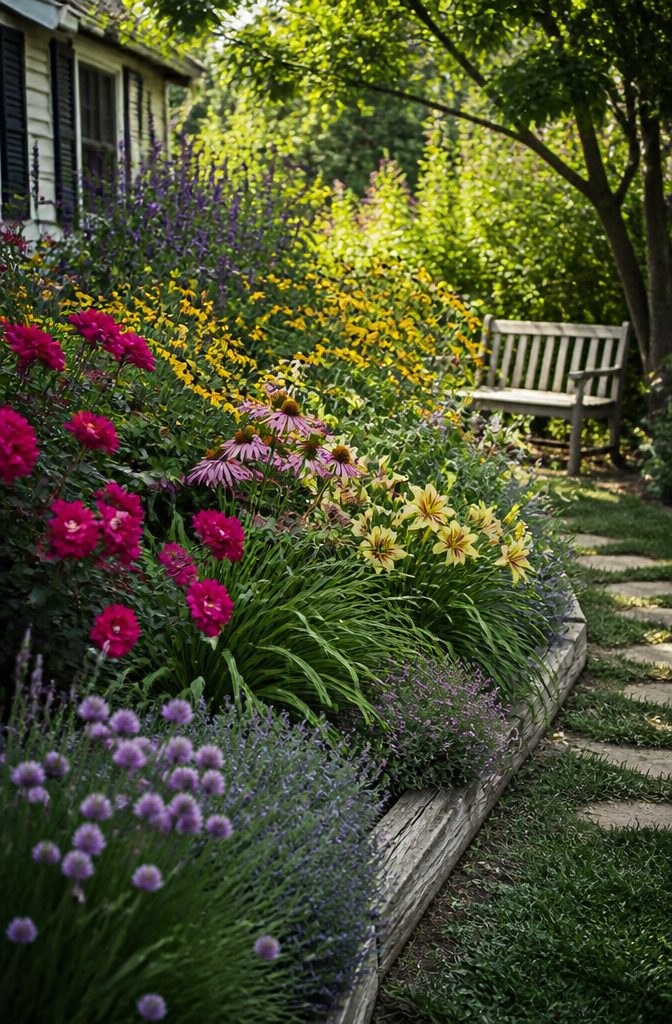
A cottage garden reads as romantic because it is packed almost to the point of chaos.
The traditional version was functional first, grown for food and medicine, which is why herbs still belong in the mix. Basil, thyme, and chives thread through the flowers without looking out of place.
The planting needs to be layered to work. Tall perennials such as wild indigo and black-eyed Susans go at the back of the bed, with daylilies and coneflowers filling the middle, and low growers spilling toward the front.
Give each plant its full spacing, even when the goal is density. Overcrowding weakens the stems and invites rot where air cannot move.
Knock-Out roses add structure without the spraying schedule older roses demand.
The informality is deliberate, but the hardiness is not. Choose plants that tolerate your zone’s worst summers, because a cottage garden that thins out in August loses its whole point.
2. Pollinator Garden
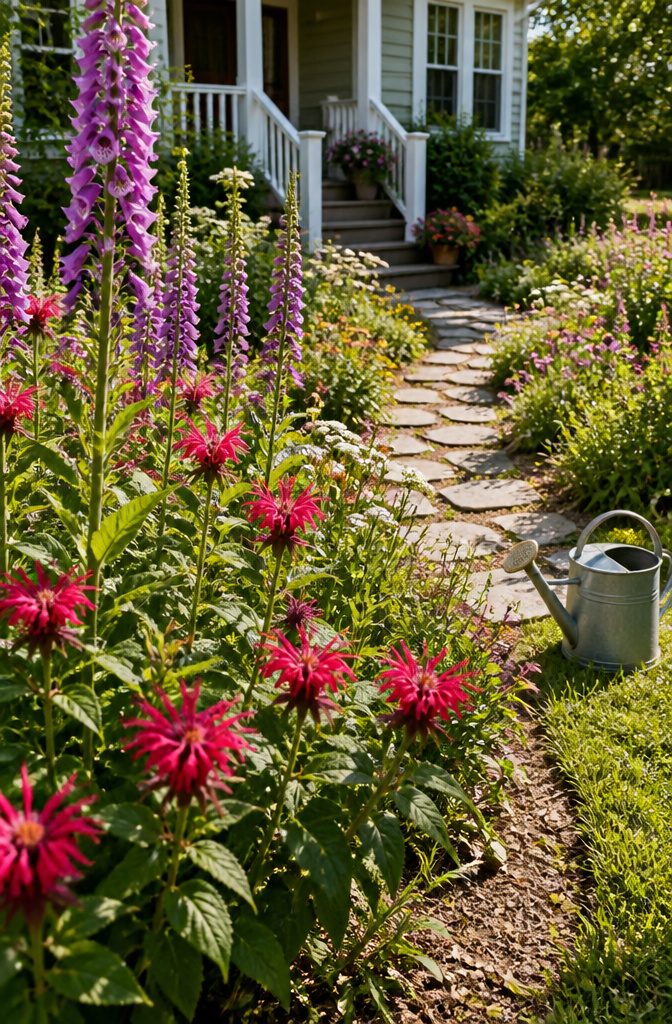
A pollinator garden fills the front yard with motion, bees and butterflies moving between blooms while you stand at the mailbox. The trick is planting natives that match your actual zip code, not just your hardiness zone.
Bee balm (Monarda) and foxgloves are two that earn their keep: bee balm brings a red-hot July flush that hummingbirds fight over, and foxgloves spike up in soft bells through late spring, self-seeding politely if you let the stalks fall.
The North American Native Plant Society Native Plant Database and Audubon’s Native Plant Database both let you punch in your location and get a list of what belongs there.
I spent an hour toggling between them last winter and found they sometimes disagree on whether a cultivar counts as "native enough," so cross-checking saves a season of disappointment.
Either way, both databases flag the pollinator magnets, and either beats buying a generic "butterfly bush" tag that turns out to be invasive in your county.
3. Vegetable Garden
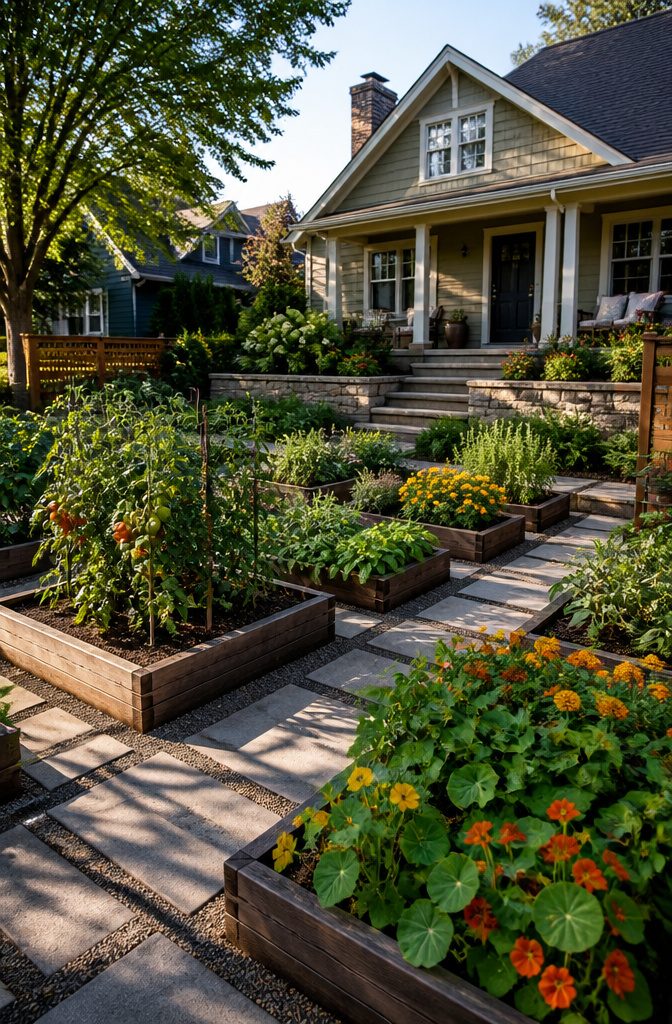
A front yard vegetable patch only works if the neighbors believe you meant it to look that way.
I learned this after swapping a strip of lawn for tomatoes one spring and watching the mail carrier pause at the curb for three days straight.
The fix was structure: raised beds with clean edges read as intentional, not neglected, and they solve poor or contaminated soil without announcing the problem to the street.
Mixing is what sells the look. Marigolds and nasturtiums threaded among the vegetables add the color neighbors expect from a front garden, and they draw the pollinators your edibles need.
Flowering herbs like chives do the same double duty. I tuck tricolor sage and red shiso into spots where plain ornamentals would sit, because they look good enough to hold a window box on their own.
The parking strip, if you have one, is fair game for expansion, though local ordinances vary enough that a quick check saves trouble later.
For renters or the hesitant, sneaking a tomato plant into an existing perennial bed tests the idea without committing the whole yard.
The front yard often gets better sun than the back; working with that instead of against it is the whole point.
4. Shade Garden
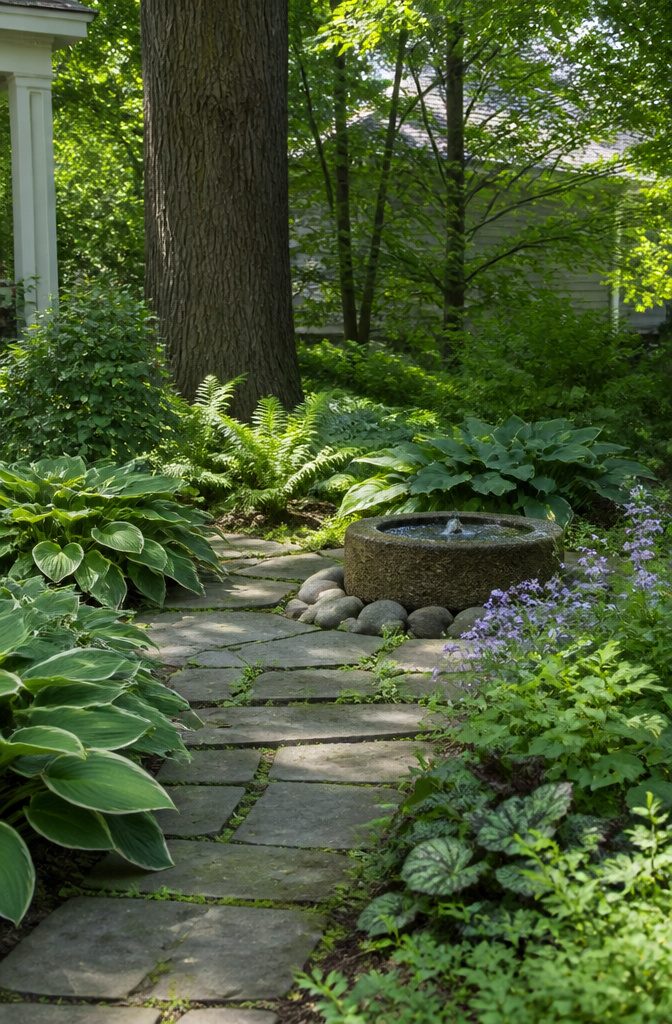
Grass usually gives up under mature trees, and the bare dirt left behind reads as neglect even when you are trying.
I swapped lawn for a mix of ferns, hostas, and native ground covers in my own narrow side yard three years ago, and the shift from patchy mud to something intentional happened faster than I expected.
Start with foliage, not flowers.
Shade perennials that bloom tend to flash and fade, but texture carries the garden through the season. Hostas give you structure in dozens of sizes, from tidy edging types to specimens that spread three feet across.
Ferns layer in behind them for that woodland depth, and wild ginger or green and gold will creep into the gaps so you are not looking at mulch all summer.
For color that actually holds, woodland phlox and columbine handle the spring reliably, and a few Knock Out roses or floribundas will take partial shade if your spot gets a few hours of direct light.
The trick is not to fight the dimness with bright blooms alone, but to build enough variety in leaf shape and height that the eye travels.
A stone path or a low millstone fountain helps too; it gives the garden a destination when flowers are not the point.
5. Rose Garden
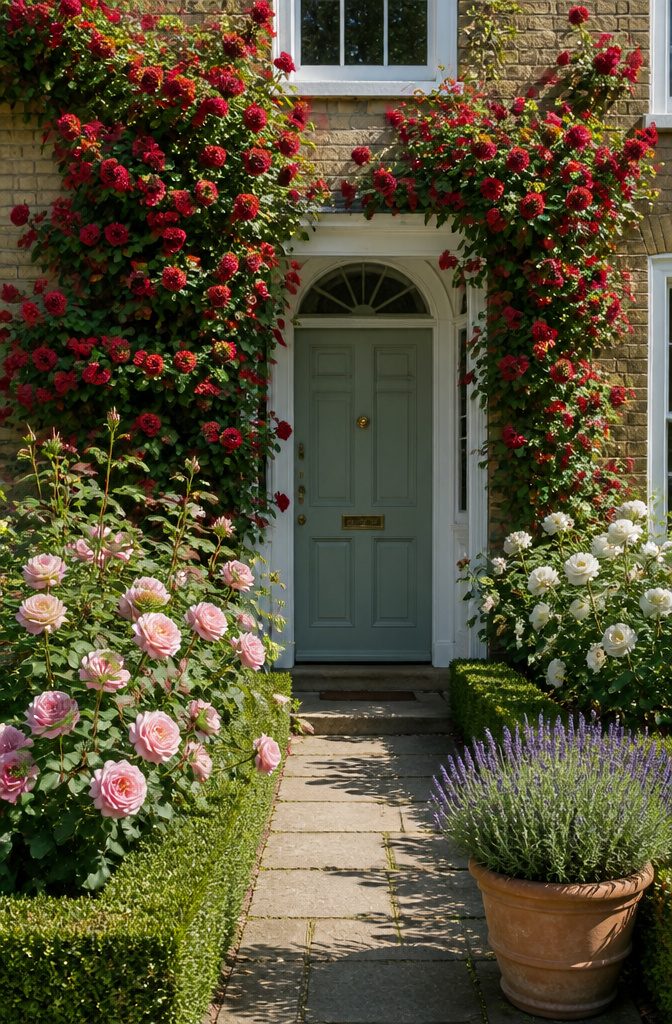
A pair of climbing roses framing the front door sets the tone without requiring a full estate planting. ‘Blaze’ works well on an arbor, and nearly thornless varieties like pink ‘Zéphirine Drouhin’ or white ‘Madame Alfred Carrière’ keep the entry friendly if you brush past them with groceries.
Floribundas, hybrid teas, and grandifloras mixed along a walkway give structure, but a tidy boxwood hedge or low evergreen shrubs behind them keeps the winter from looking bare.
The key is scaling the formality to your house, not a mansion you do not own.
A Colonial with symmetrical beds can carry lavender punctuated by standard roses and a matching arbor. A smaller cottage or bungalow reads better with a few accent roses, some iris or yarrow tucked in, and no forced mirroring.
If the pruning schedule feels like too much, start with two or three plants and see whether the habit sticks before you commit to a full border.
6. Low-Maintenance Garden
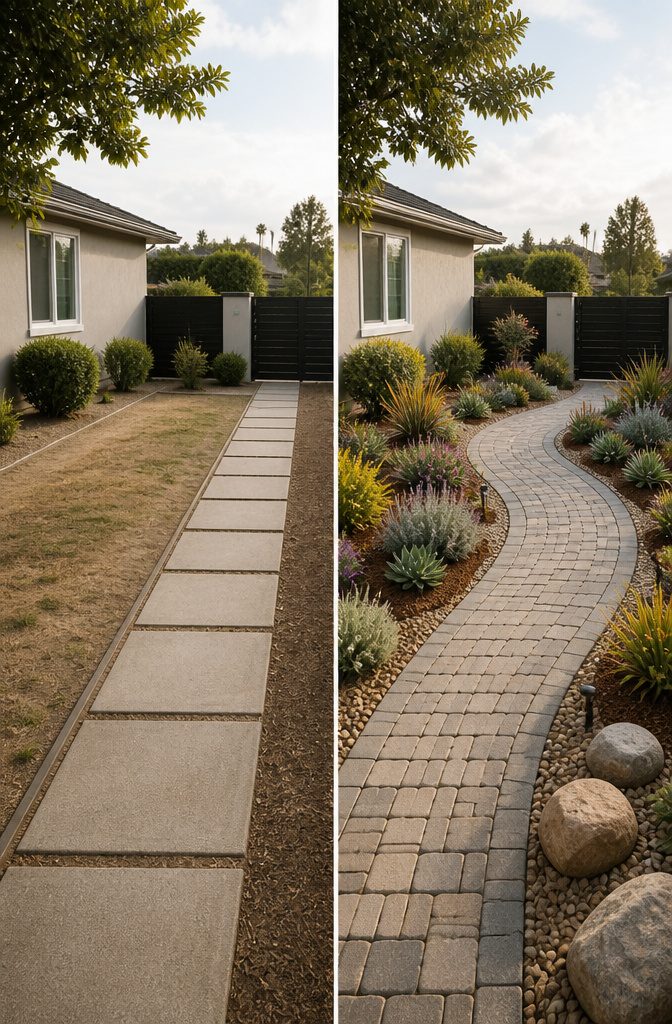
Eco-Lawn, a blend of several fescue seeds, grows into a drought-tolerant lawn that needs roughly half the mowing and almost no watering once established.
I first noticed it while reading up on alternatives to the flat, thirsty bluegrass that dominates most front yards, and the idea of a grass that could handle a hillside going dormant in summer made immediate sense.
For anyone who still wants that soft surface underfoot, shrinking the lawn to a small connector strip between garden beds cuts the weekly workload sharply.
Cynthia Bee, who works with a Utah water conservancy district, suggests treating grass as a side note rather than the main event, and that framing stuck with me: a narrow ribbon of green linking larger planted areas, not a carpet demanding constant attention.
Permeable pavers and gravel for walkways eliminate edging and feeding altogether, while native perennials, ornamental grasses, and succulents handle the bulk of the visual interest with little input after the first season.
The soil in former lawn areas is usually compacted and depleted, so amending before planting is non-negotiable if you want the easy-care promise to hold. Mulch thickly after that, and the weeding drops to a few minutes a month.
7. Formal Garden
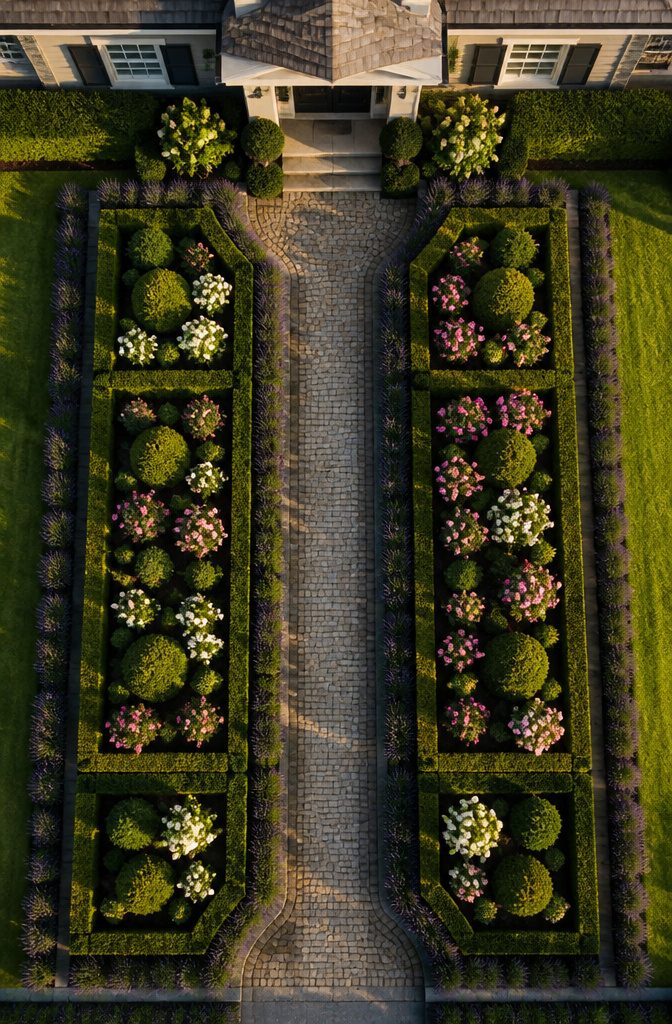
A formal garden lives or dies by its geometry. Beds mirror each other across a central path, hedges get clipped into crisp lines, and every plant earns its place by keeping a shape rather than spilling over.
I tried this once with a pair of boxwoods flanking my front steps, and the difference between them looked like a mistake until I pulled one and started over with matching sizes.
The plant roster runs tighter than a cottage garden’s free-for-all. Sources point to boxwoods for evergreen structure, roses trained against fences with hoop arches for support, and lavender anchored by standard roses for height discipline.
Clematis montana climbs the arbor, timed to flower with the roses beneath it. Nothing self-seeds where it pleases; each side of the door repeats the other exactly.
Maintenance is the trade you make for that calm.
A cottage garden forgives a missed week; a formal one broadcasts it. Hedges need shearing three or four times a season to keep those straight edges, and the lawn wants brick edging and regular mowing to match the hard lines.
The payoff is a front garden that reads as intentional from the curb, especially paired with a symmetrical house where the garden finishes what the architecture started.
8. Wildflower Meadow
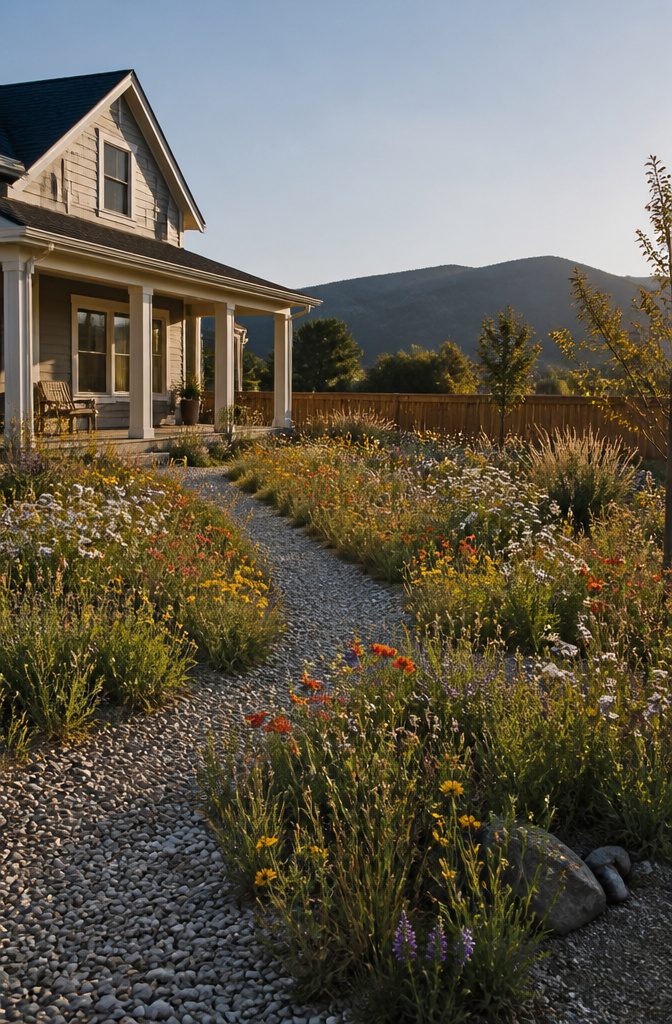
A wildflower meadow reads as intentional only when the edges are sharp. I learned this after my first attempt bled into the lawn and the neighbor asked if I was letting the place go.
Now I cut a clean border with a half-moon edger and keep the first two feet nearest the sidewalk in low grasses that stay under knee height.
The taller stuff sits farther back, so the height builds in layers rather than looking like a vacant lot.
Start with a stripped seed bed in late fall, raked bare and walked on to press the seed into firm contact with soil.
Most meadow mixes need that cold winter to break dormancy, and spring sowing often fails from drought or weed competition.
The first two years look disappointing, thin and weedy, which is where most people quit. By year three the perennials have found their footing and the annuals that filled gaps start self-sowing in pockets rather than everywhere.
Mowing is the signal that this is a choice, not neglect. I cut mine once in late March to knock back cool-season invaders, then leave it alone until everything sets seed in late summer.
After that, a single hard cut to four or five inches, with the clippings left to rot where they fall. The stalks look architectural through winter, and the birds work the seed heads until March comes around again.
9. Terraced Garden
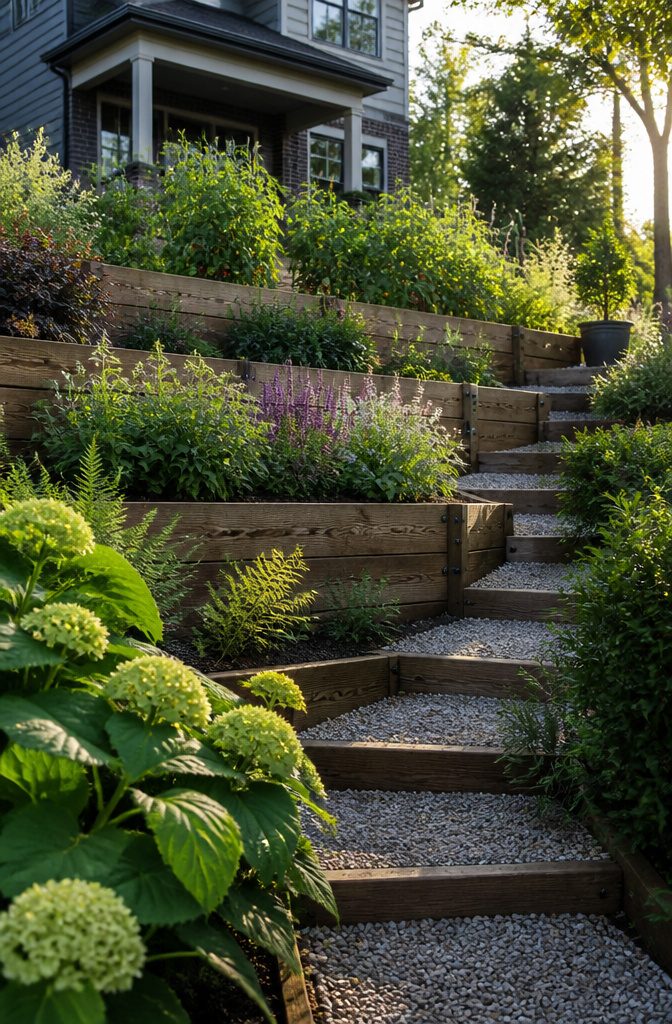
A sloped front yard that fights you every time it rains is really a stack of flat gardens waiting to happen.
Terraces cut a hill into level planting zones, each one held by a retaining wall or built frame that gives soil a place to sit instead of washing toward the street.
I watched a neighbor wrestle with this for two seasons before she gave up on lawn altogether.
She put in three timber-framed levels, each about four feet deep front to back, stepping down the grade from her porch to the sidewalk.
The change was immediate: water soaked in instead of running off, and she gained distinct microclimates. The top terrace, driest and warmest, went to herbs and a few compact tomatoes.
The middle held a mix of annuals, perennials, and small evergreens for something green once the annuals faded. The bottom, where moisture collected, suited ferns and a dwarf hydrangea she had nearly killed twice in her flat backyard beds.
The hardscape itself can fight for attention or step back.
One approach I keep returning to uses the same stain or paint color on stairs, bed frames, and any trellis so the structure goes quiet and the plants read as the design.
Brown tones do this well; they disappear against bark mulch and weathered soil in a way that gray concrete or bright white pickets never quite manage.
Drainage improves because each terrace sheds excess water to the next level rather than concentrating it all at the bottom of the slope.
You still want a gravel base behind any retaining wall and a way for water to weep through, but the terraced form does much of the work that buried pipes would otherwise face alone.
Cost stays manageable for a small yard if you build in stages, one level per season, and use pressure-treated lumber or salvaged stone rather than mortared walls.
The real limit is your own grade: too gentle a slope and terraces look forced, too steep and the retaining structure needs engineering beyond a weekend project.
10. Xeriscape Garden
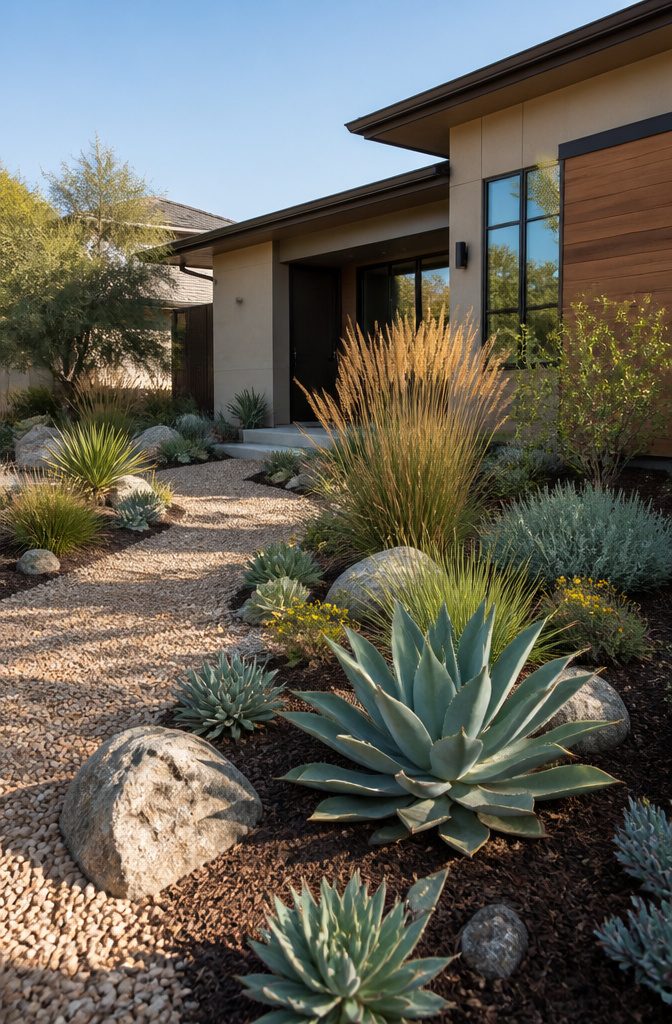
A xeriscape front garden is built around one goal: cutting water use, not just saving time. That distinction matters because the plant choices and the ground cover both serve the drought strategy rather than general ease.
Gravel and mulch do the heavy lifting here. A layer of gravel over soil creates drainage and reflects heat, while wood, bark, pine needles, or chopped autumn leaves applied 1 to 3 inches deep insulate roots and slow evaporation.
Keep mulch several inches clear of stems to avoid rot. Permeable pavers mixed with gravel for walkways let rainfall sink in rather than run off.
Plant selection narrows to what survives on established rainfall.
Succulents, native grasses, ornamental grasses, and drought-tolerant perennials fit the brief. The mix reads contemporary with clean lines, but the same palette adapts to traditional facades if you vary the layout and add structural shrubs for year-round form.
The real payoff comes after the first growing season.
Once roots are down, these plants typically need no supplemental watering. Check your local rules first; some HOAs and cities restrict or prohibit traditional lawns in arid zones, which makes xeriscaping a compliance move as much as a design one.
Soil prep still matters: compacted former lawn needs amendment for drainage before planting, or the drought-tolerant choices drown in the first heavy rain.
Rain Garden
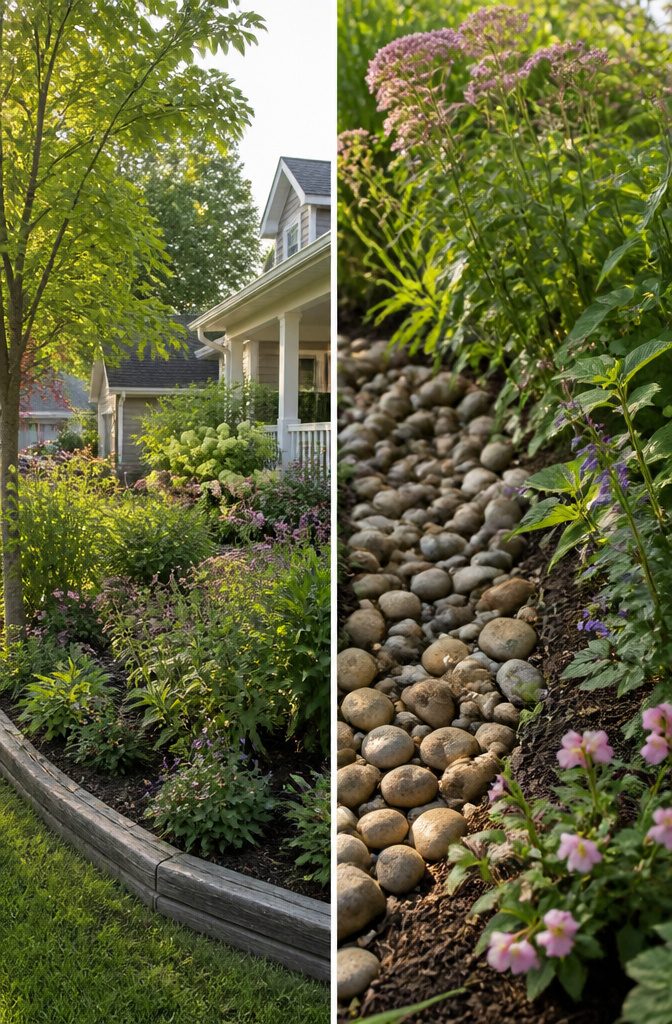
A rain garden is a planted depression that catches runoff from your roof or driveway and lets it sink into the ground slowly.
The spot matters: set it at least 10 feet from your foundation and where water already travels naturally, like the path from a downspout.
Dig a shallow bowl, 4 to 8 inches deep at center, and line the lowest point with river rock. The stone slows the water, stops erosion, and reads as a dry creek bed between storms.
I have seen this work as a quiet, functional layer inside cottage plantings, formal borders, even xeriscape yards: it does not need to look like a separate garden.
Plants must handle both soaked roots and dry spells. Joe-pye weed, pink turtlehead, dwarf sweet flag, and lobelia all manage the wet periods; their height and density hide the utilitarian parts from the street.
A rain garden planted this way filters pollutants before they reach storm drains, and it earns its space even in a small front yard where every square foot counts.
Vertical Gardening
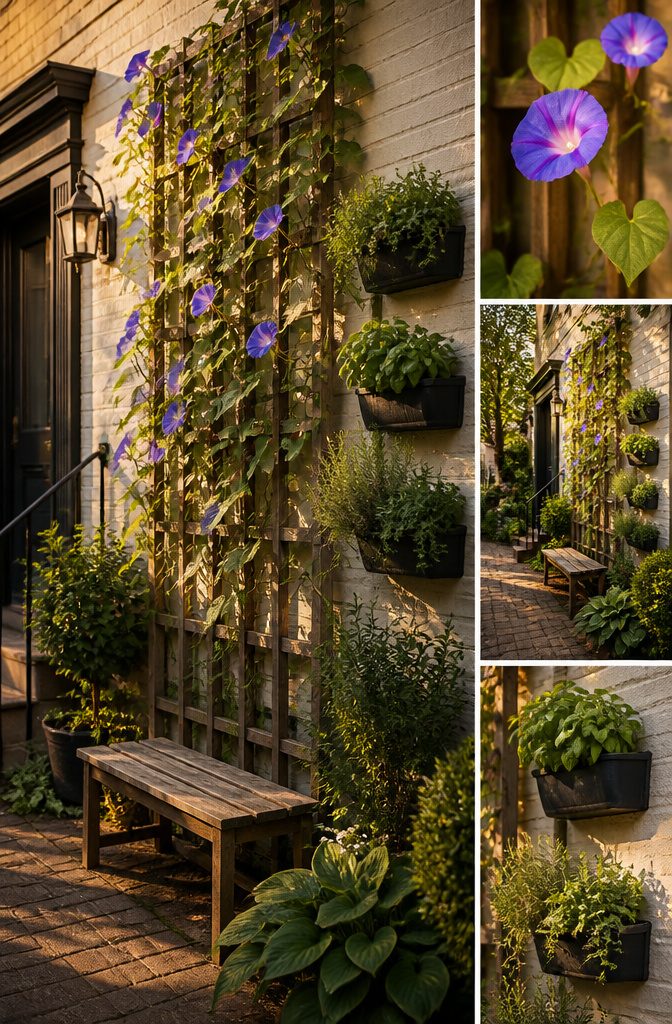
A narrow front yard or a tight planting bed along the foundation leaves almost nowhere to step back and look, which is exactly where vertical gardening earns its keep.
A simple wooden trellis against the wall, or a pair of metal arbors flanking the front walk, pulls the eye upward and makes the space feel larger without eating a single extra square foot of ground.
Wall-mounted planters work the same trick on a blank facade or a garage wall that faces the street.
Sweet peas and morning glories will climb a trellis in one season; climbing hydrangea takes longer but fills in thick enough to screen an air conditioning unit or the neighbor’s recycling bins.
I have seen tuteur trellises used in threes along a cottage-style bed, the vertical lines breaking up all that low horizontal growth so the garden reads in layers rather than one flat plane.
The real payoff is function dressed as ornament. A vine-covered arbor over the front gate gives you privacy from the sidewalk and a sense of arrival, all from plants that were going to grow somewhere anyway.
In a small yard, vertical elements should do at least two jobs: add height, and hide what you do not want to see.
Paths and Functional Spaces
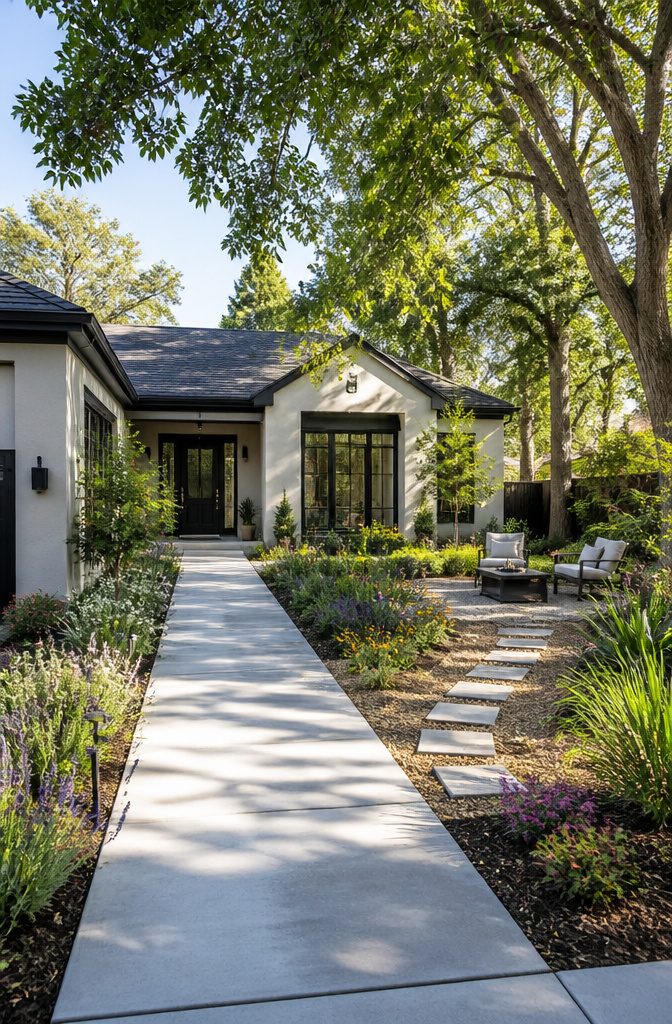
A front yard stops being just a view from the curb once you give yourself somewhere to actually sit.
I added a small bench beside my path last spring, angled to catch late-afternoon sun, and found myself outside with coffee most mornings. The change was immediate: the garden went from something I maintained to something I used.
Walkways need to be at least wide enough for two people side by side, which sources consistently put at roughly 48 inches for comfort.
Anything narrower and you are single-file, which feels like a service entrance, not a welcome. For secondary paths or stepping-stone routes alongside a driveway, 18 to 24 inches works, though you will be walking in sequence, not conversation.
Materials matter less than honesty about maintenance. I used poured concrete for the main walk because I did not want to reset stones every other year.
Gravel shifts, pavers heave in freeze-thaw cycles, and brick needs weeding between joints. Each has its look; each has its labor.
The path should connect three points deliberately: street, door, and wherever people actually park. Most houses need two paths, even if the second is barely more than stepping stones.
I watched visitors cut across my bed for two seasons before I admitted my single straight walk ignored where the driveway emptied. The garden recovered, but the lesson stuck: follow the worn grass, then pave it.
Seasonal Interest
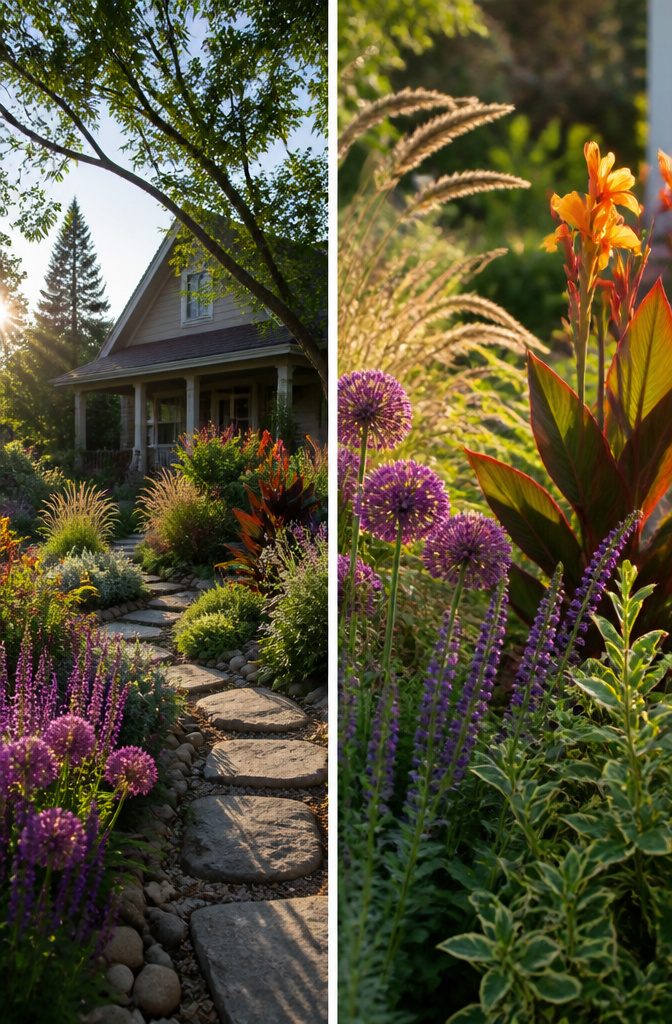
A front garden that peaks in June and looks spent by August is the mistake I made my first two years, and it comes down to where you place what.
Spring bulbs go where later perennials will hide their yellowing foliage. I tuck giant allium and salvia toward the middle of beds so summer growers like canna lily or Japanese forest grass fill in as the bulb leaves die back.
Summer perennials need the front edge, where their bloom gets seen before fall foliage takes over.
The real fix is planting so off-season plants die back out of sight.
Limelight hydrangeas work tucked into pockets between shrubs rather than standing alone; when they brown, surrounding gold thread cypress or boxwood still reads as intentional structure. Evergreen shrubs carry winter, while ornamental grasses hold seed heads that catch frost.
Fall color needs planning now, not October.
Chartreuse Japanese forest grass turns bright before it goes dormant, and burgundy tones in arbor wood or Japanese maple bark echo it. Mixing foliage colors, not just flowers, keeps the bed readable when nothing is in bloom.
If your garden looks empty by late summer, you likely planted for one moment instead of layering for the year.
Maintenance Realities
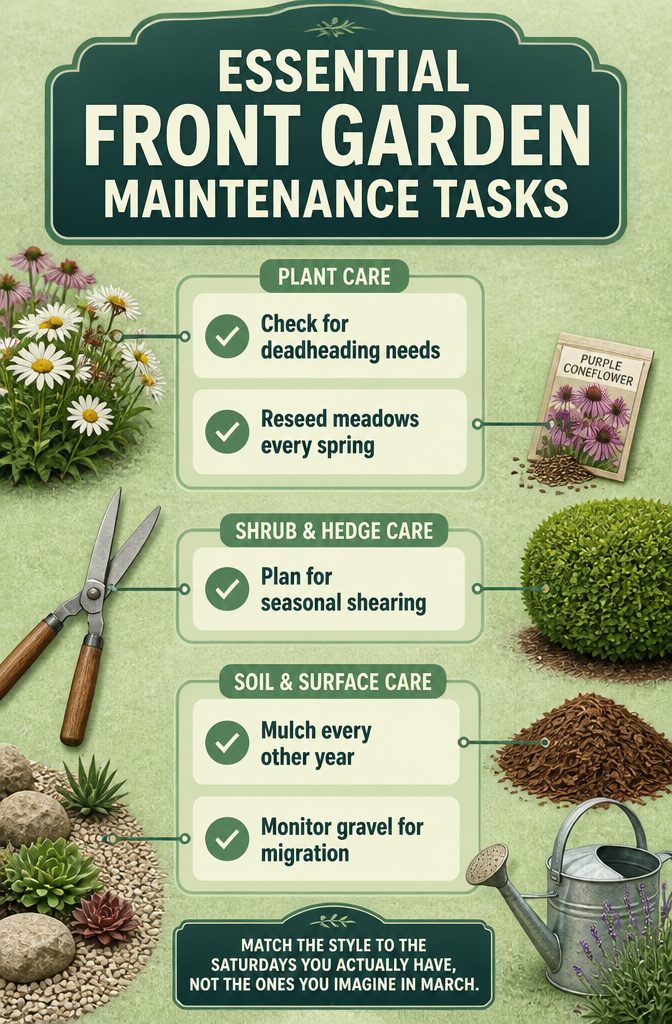
A cottage-style front garden planted in April looks romantic by June and exhausted by August without the deadheading and dividing it quietly demands.
I learned that rhythm the hard way after watching a border of Shasta daisies turn into a brown seed-head factory while I was away for two weekends.
Styles that read "effortless" in magazines often hide the most hours, and the gap between planting day and year-five reality is where budgets quietly bleed.
Formal clipped hedges need shearing three or four times a season, which means either owning a decent electric trimmer or paying someone who does.
Wilder meadow plantings look cheaper up front, but reseeding species like purple coneflower can swallow an afternoon of thinning every spring if you want any path to remain walkable.
A small xeriscape with gravel and succulents cuts the watering bill sharply, yet even gravel migrates; raking it back into place and weeding what colonizes the gaps is still maintenance, just a different kind.
For that $500–800 annual range, a mixed shrub border with groundcover underneath spreads the cost across years.
The shrubs need one hard prune every second spring, the groundcover chokes out most weeds, and one bag of mulch every other year covers the whole bed.
Match the style to the Saturdays you actually have, not the ones you imagine in March.
Frequently Asked Questions
What are some front yard landscaping ideas?
Cottage gardens, pollinator gardens, vegetable gardens, shade gardens, rose gardens, low-maintenance gardens, formal gardens, wildflower meadows, terraced gardens, and xeriscape gardens all work well for front yards.
The article covers ten distinct styles, each with specific plant palettes and design rules that suit different house types and maintenance budgets.
How do I choose plants for my front yard?
Match plants to your actual sunlight, soil, and zip code rather than just hardiness zone. Native plants adapt naturally to local conditions, and tools like the North American Native Plant Society database or Audubon’s database let you search by location.
For year-round interest, mix evergreen structure with deciduous plants and stagger bloom times so something is always showing.
What is a rain garden?
A rain garden is a planted depression that catches runoff from roofs or driveways and lets it sink into the ground slowly.
Set it at least 10 feet from your foundation and line the lowest point with river rock to slow water and prevent erosion. Plants like Joe-pye weed, pink turtlehead, and lobelia handle both soaked roots and dry spells.
How can I make my front yard low-maintenance?
Shrink lawn to a narrow connector strip between beds, or replace it with Eco-Lawn fescue blends that need roughly half the mowing and almost no watering once established.
Use permeable pavers and gravel for walkways, and fill beds with native perennials, ornamental grasses, or succulents that need little after their first season. Amend compacted soil before planting so the easy-care promise actually holds.
What plants attract pollinators?
Bee balm and foxgloves are two strong choices: bee balm brings a red flush in July that hummingbirds fight over, and foxgloves spike up in soft bells through late spring, self-seeding politely if stalks are left to fall.
The key is planting natives matched to your actual zip code, not generic tags that may turn out invasive in your county.