
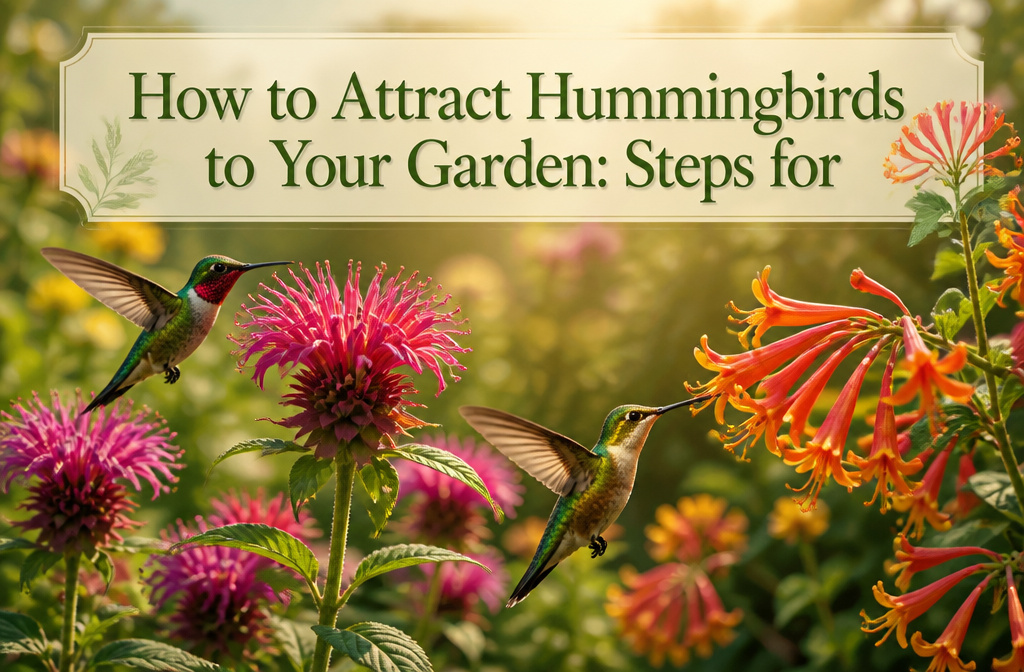
Attracting hummingbirds to the garden means matching your plants to a bill shaped like a needle and a metabolism that burns through half its body weight daily.
The catch is that color alone won’t do it: tubular flowers are required, and native species like bee balm or coral honeysuckle produce more nectar than hybrids bred for petal count.
A 1-to-4 sugar water mix in a glass feeder helps, but only if you replace it every 3 to 4 days before it clouds.
1. Choose the Right Plants
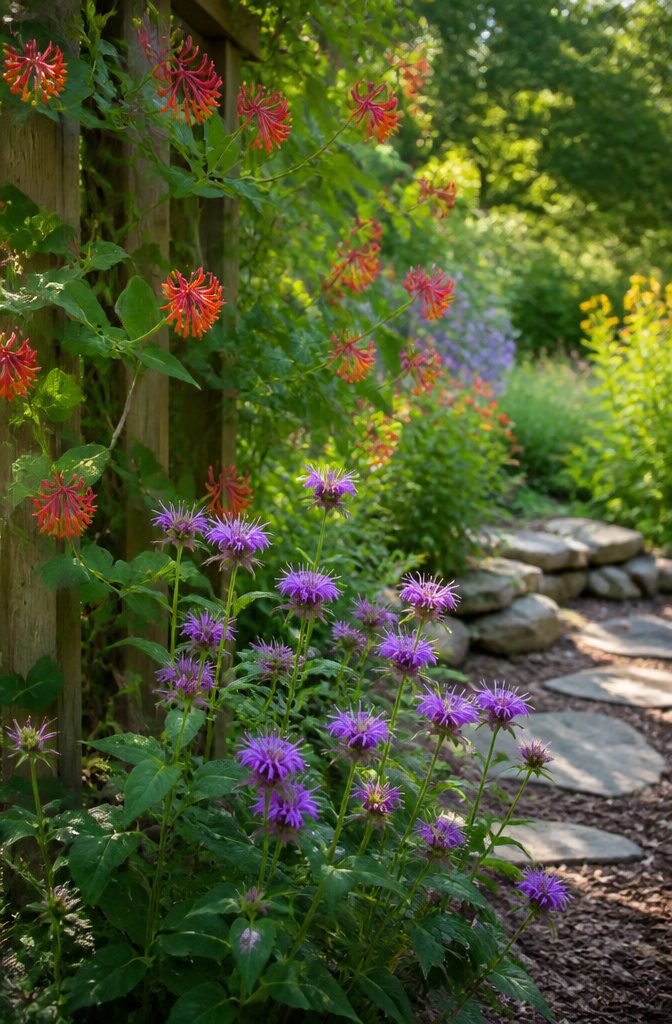
A hummingbird’s bill is built like a needle, long and narrow, with a grooved tongue that can only draw nectar from flowers shaped like a tube.
That shape matters more than almost anything else in attracting hummingbirds to the garden. Flat-faced daisies or wide-open roses might feed bees, but a hummingbird needs something it can probe.
Scent doesn’t draw them either. These birds hunt by sight, and their eyes lock onto red, orange, and purple.
I’ve watched them dart past a bed of fragrant white blooms to investigate a traffic cone or a red shirt drying on the line. The color signals food, and the tubular form makes it accessible.
Native plants evolved this partnership.
A bee balm or a salvia growing in your region developed alongside the hummingbirds that migrate through it, timing its bloom to their arrival and producing nectar matched to their needs. The Audubon Society puts the benefit plainly:
Grow native plants like trumpet honeysuckle, bee balm, and hummingbird sage, which provide much more nectar than hybrids and exotics.
That gap matters. A coral honeysuckle or a trumpet vine from a local nursery will outfeed almost any flashy exotic bred for petal count.
For gardeners in the southeast, coral honeysuckle covers a fence with red tubes from April onward. Bee balm runs shorter, about two to three feet, in red or purple clusters that also draw bees you want around.
Salvias range widely: scarlet sage in the southeast, Gregg sage in Texas, pitcher sage along the Pacific coast. Check a native plant database for your zip code, because a plant native somewhere is not native everywhere.
Group them in clusters so a hummingbird can defend a patch, and mix early bloomers with late ones so something is flowering from May until frost. One window box with the right plant beats a yard full of wrong ones.
2. Install Hummingbird Feeders
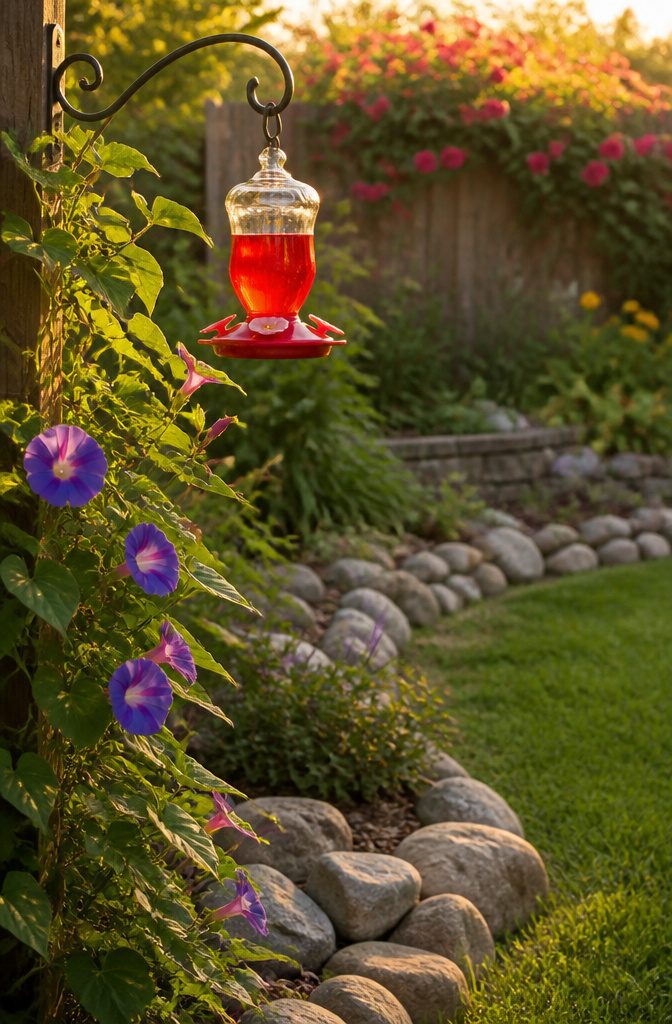
I hang my hummingbird feeders with a solution of 1 part white sugar to 4 parts water, boiled for 2 to 4 minutes before it cools.
That boiling step matters; it keeps the nectar fresh longer, though I still dump and replace it every 3 to 4 days. In the peak of summer heat, that stretches to more often, sometimes daily if the mixture clouds.
Glass feeders win on cleaning. The slick surface lets mold wipe away with a vinegar rinse, and I can see when the nectar turns cloudy without squinting.
Plastic hangs lighter and costs less, but it scratches over time, and those tiny grooves trap black gunk that no bottle brush reaches.
If the ports start looking grimy, I pull the feeder entirely rather than risk sick birds. Either material works; what fails is the care, not the container.
3. Provide Water Sources
Hummingbirds need water for more than nectar.
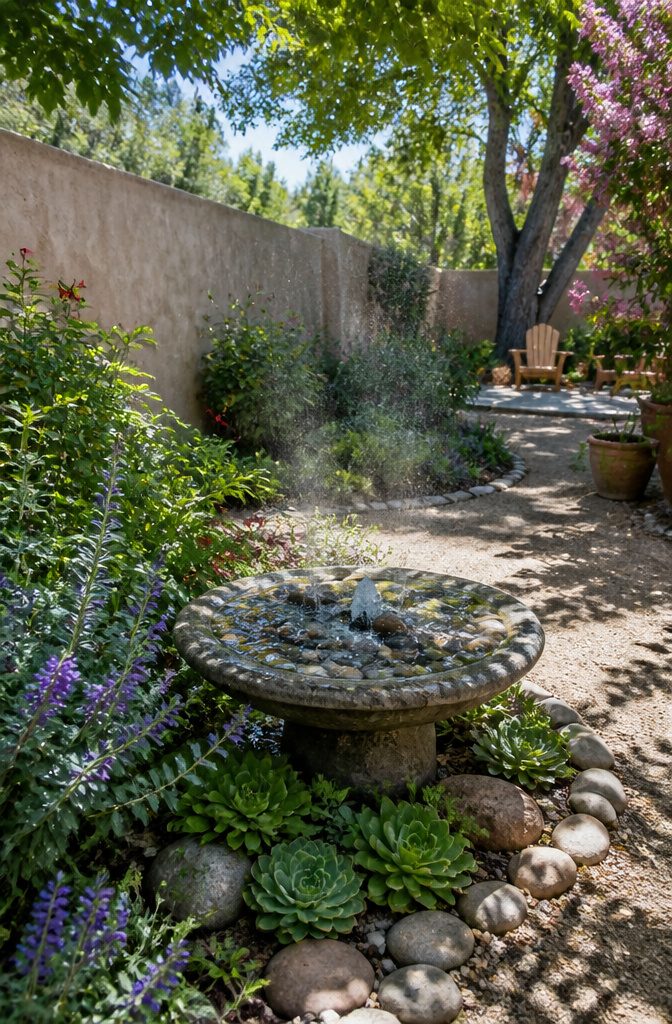
They drink it, and they bathe in it, often several times a day. A shallow birdbath works, but moving water draws them far better than still.
In my own reading, the accounts that stuck with me described hummers flying straight through sprinklers or hovering in garden hose spray like they could not help themselves.
A mister or small fountain attachment on a shallow bath gives you that motion without much space. Solar-powered bubblers run about the size of a grapefruit and sit right in the basin.
For a balcony, a drip fountain that clips to a railing does the same job. If the water is too deep for the birds to stand, add a flat rock or two so they can land and dip.
A very shallow pan with pebbles also brings in butterflies and dragonflies, which is a side benefit I had not expected until I saw it mentioned.
The misting devices seem to be the ones people remember watching; the fine spray lets hummingbirds hover and dart through without landing at all.
4. Create Perches
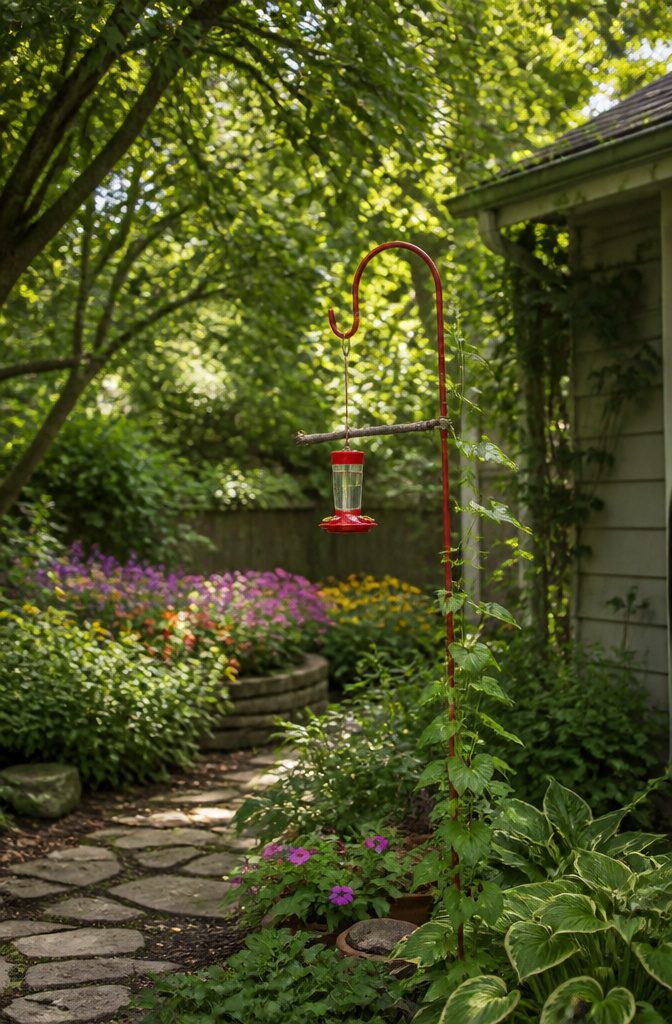
Hummingbirds burn through energy so fast that resting is not optional for them.
A small branch or thin wire hung near a feeder gives them a place to drop out of the air and still keep an eye on their food source.
I use pruned twigs from my shrubs, wedged into a fence or tied to the shepherd’s hook, and they sit there longer than you’d think a bird with a heart rate in the hundreds would tolerate sitting.
The catch is that one perch usually means one hummingbird owning it.
Males especially will claim a feeder and chase every other bird that comes near, because in the wild a flower patch only holds so much nectar and defense pays off.
Space multiple perches at least 15 feet apart, ideally with feeders out of sight of each other, and the same bird cannot patrol the whole yard.
More birds get to drink, and you get to watch more than one at a time.
In open areas where there is nothing obvious to land on, a couple of feet of surveyor’s tape flutters like a bright flag.
The movement and color pull hummingbirds in from a distance, and once they are close the feeder or flowers finish the job. Hardware stores carry it, though any bright tape works in a pinch.
5. Avoid Pesticides
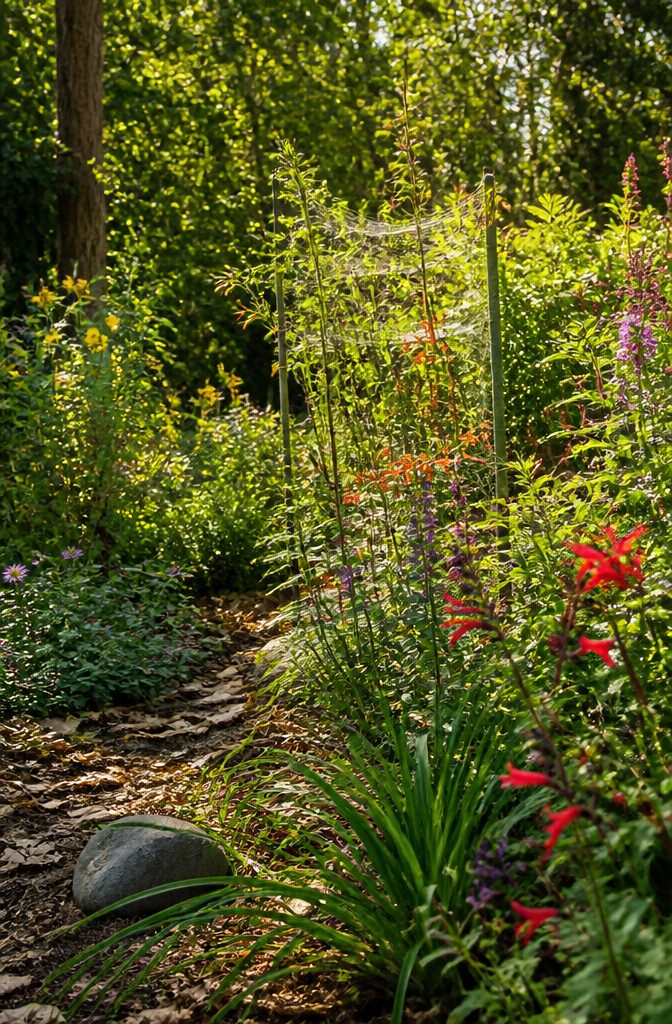
Stop spraying, and the insects hummingbirds need will come back on their own. About one-third of a hummingbird’s daily diet is insects and spiders, not nectar, and those arthropods are almost the entire diet of chicks still in the nest.
Chemical pesticides wipe out the mosquitoes, flies, gnats, and aphids the adults hunt from the air or glean from leaves. Without that protein source, nesting success drops and adults struggle to maintain their own bodies and grow new feathers.
Leave the spider webs alone, too. Hummingbirds harvest silk strands to bind their nests together and anchor them to branches.
No spiders means no silk, which means no nest construction. Hand-weeding and dense planting that crowds out unwanted growth handles most garden problems without bringing out the sprayer.
If you want to go further, a basket of overripe fruit or banana peels hung near a feeder draws tiny fruit flies the birds will pick off.
Native plants support more insects than alien ornamentals, so the more local species you grow, the busier your yard becomes as a hunting ground.
6. Plan for Continuous Blooming
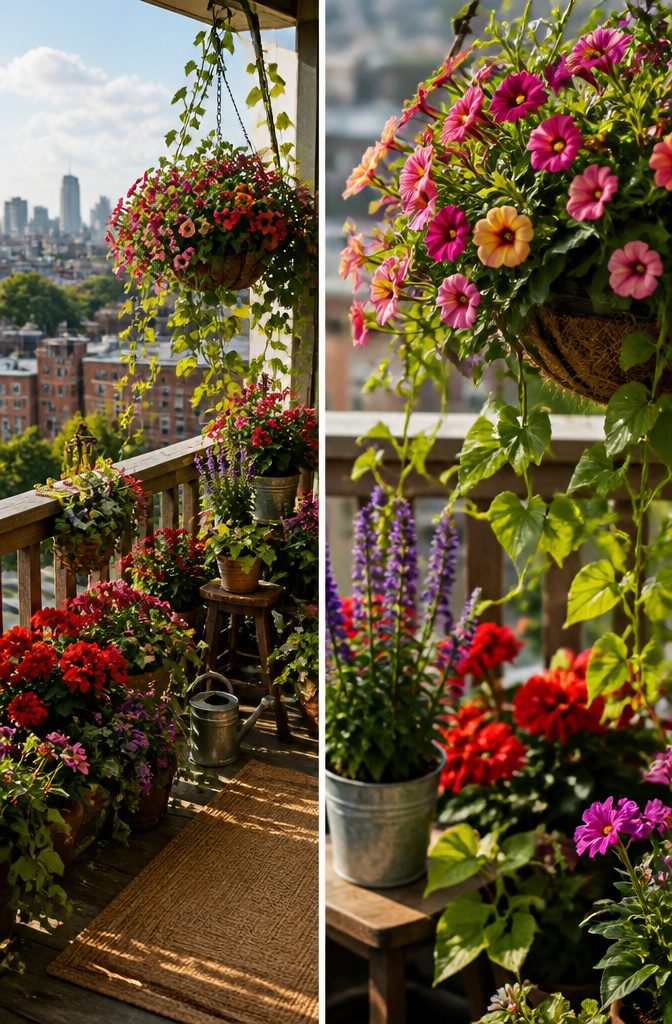
Ruby-throated Hummingbirds, the ones most of us east of the Mississippi see, start showing up in April and May and need nectar straight through until frost.
Plan for something blooming in every window, or they will move on to a yard that does.
I used to pack my small patio with early spring columbines and assume the job was done.
By late July the bed looked tired, and so did the hummingbird traffic. Annuals turned out to be the fix.
Zinnias and fuchsia, tucked into gaps between perennials, kept the supply going when my bee balm and salvia had finished. A hanging basket of calibrachoa near the railing filled another hole in August.
The stagger is what matters.
Map your perennials by bloom week, then spot the gaps. A two-week hole in mid-September, right when migrants are fattening up for the trip south, costs you more than a bare patch in June.
One flat of annuals at the garden center, maybe six dollars, bridges that gap for the season.
Flowers That Draw Them
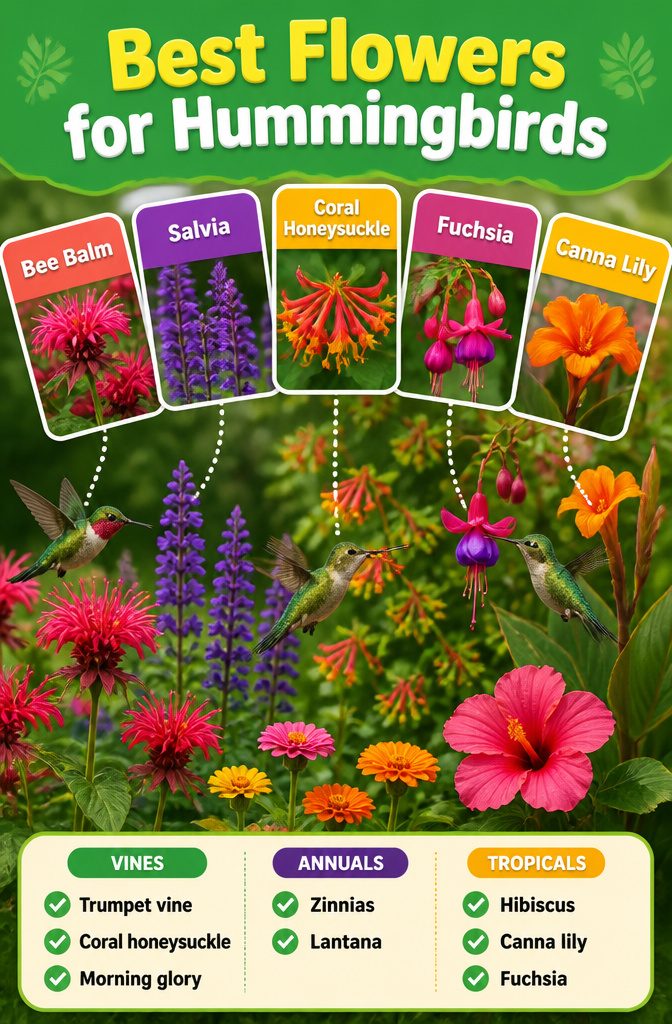
The ten plants below are the ones I keep coming back to after reading through the guides that actually work for small-space gardeners.
- Bee balm opens in summer with red, pink, or purple blooms and fits fine in a medium container if you keep it watered
- Salvia carries tubular flowers from May straight through October; the blue-purple kinds prove hummingbirds ignore the old red-only rule
- Trumpet vine needs a trellis but rewards you with orange or red flowers from summer into fall, though it wants room to climb
- Coral honeysuckle (look for ‘Major Wheeler’) blooms in red and gold from summer through fall and stays non-invasive, a rare trait in a fast vine
- Fuchsia is built for hanging baskets and keeps producing, which matters when your space is a balcony rail
- Zinnias are simple annuals that fill gaps between perennial flushes
- Hibiscus gives tropical bulk if you have a large pot and full sun
- Morning glory climbs fast and opens its trumpets early, a good match for the first hummingbird scouts
- Lantana takes heat and containers without complaint; deer and rabbits leave it alone too
- Canna lily adds height at the back of a border or a big planter, with that broad leaf the birds use as a staging point between feeds
I would skip trumpet vine entirely if you only have a patio. It covers fences up to ten feet and will own your railing by August.
Feeder Care Schedule
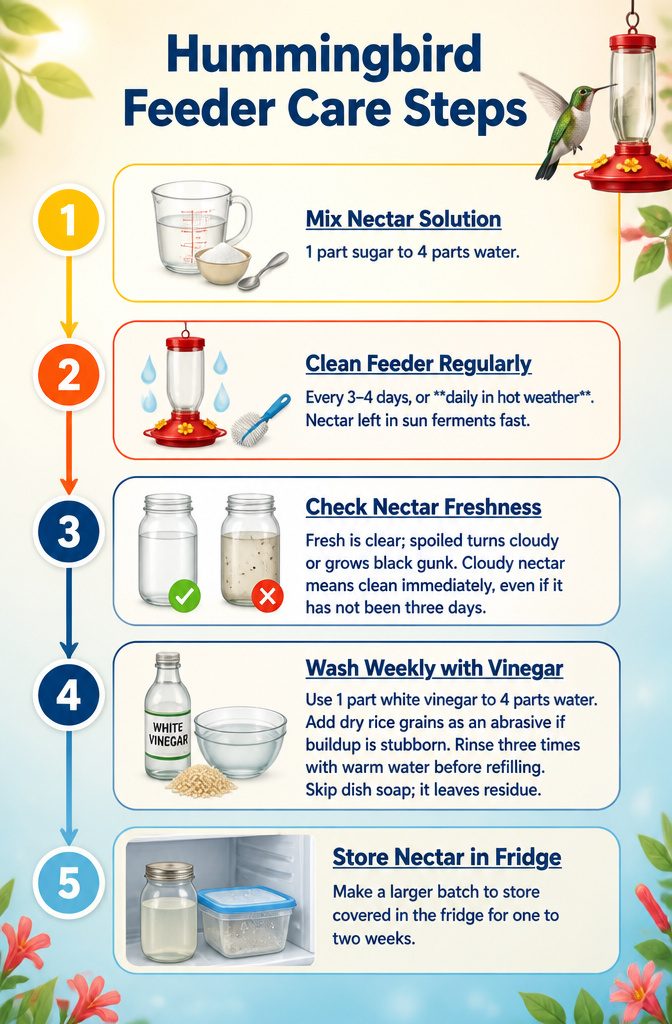
- Mix one part refined white sugar with four parts water. Boil for one to two minutes if you want it to keep longer in the fridge; otherwise, shaking in a clean jar until dissolved works fine. Never add honey, brown sugar, red dye, or anything else.
- Clean the feeder every 3–4 days, or daily in hot weather. Nectar left in sun ferments fast.
- Check the nectar each time you refill. Fresh is clear; spoiled turns cloudy or grows black gunk. Cloudy nectar means clean immediately, even if it has not been three days.
- Wash with hot water and a weak solution of one part white vinegar to four parts water once a week. Add dry rice grains as an abrasive if buildup is stubborn. Rinse three times with warm water before refilling. Skip dish soap; it leaves residue.
- Make a larger batch to store covered in the fridge for one to two weeks.
What Hummingbirds Actually Need
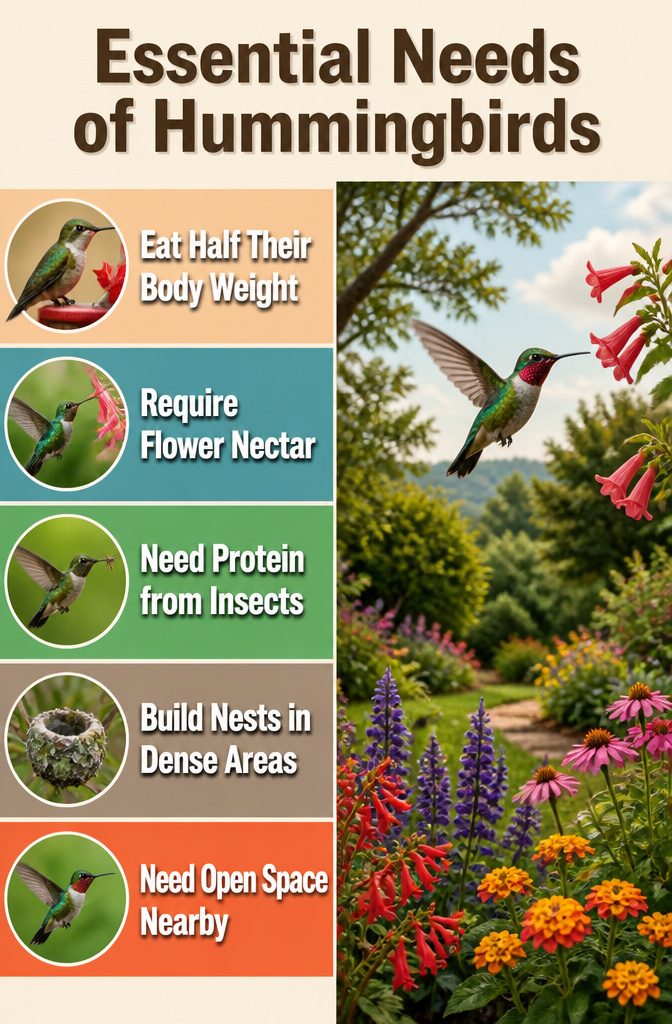
A hummingbird burns through fuel at a rate that seems impossible for something so small.
Most weigh little more than a coin and need to eat at least half their body weight daily just to keep flying. That energy comes almost entirely from flower nectar, which supplies the sugar their metabolism demands.
But nectar alone is not enough. When females are building nests and raising young, they need the protein and nutrients that only small insects and spiders can provide.
The other half of the picture is structure. Hummingbirds choose nesting spots in dense shrubs or trees, often along property edges where branches slope downward and a clear sightline meets shelter from weather.
Nests are built with moss and lichens, held together with spider silk, and sized to half a chicken egg.
Females also need open space nearby to watch males perform their aerial displays during mating season, which is why nectar-rich plantings work best 10 to 15 feet from trees, not pressed against them.
This is why the six steps ahead are not isolated fixes.
A feeder without perching branches nearby leaves birds exhausted. Tubular flowers without insect habitat starve the next generation.
Shrubs without adjacent open space break the mating cycle. Each need connects to the others, and the garden only works when all three are present.
Urban Garden Adjustments
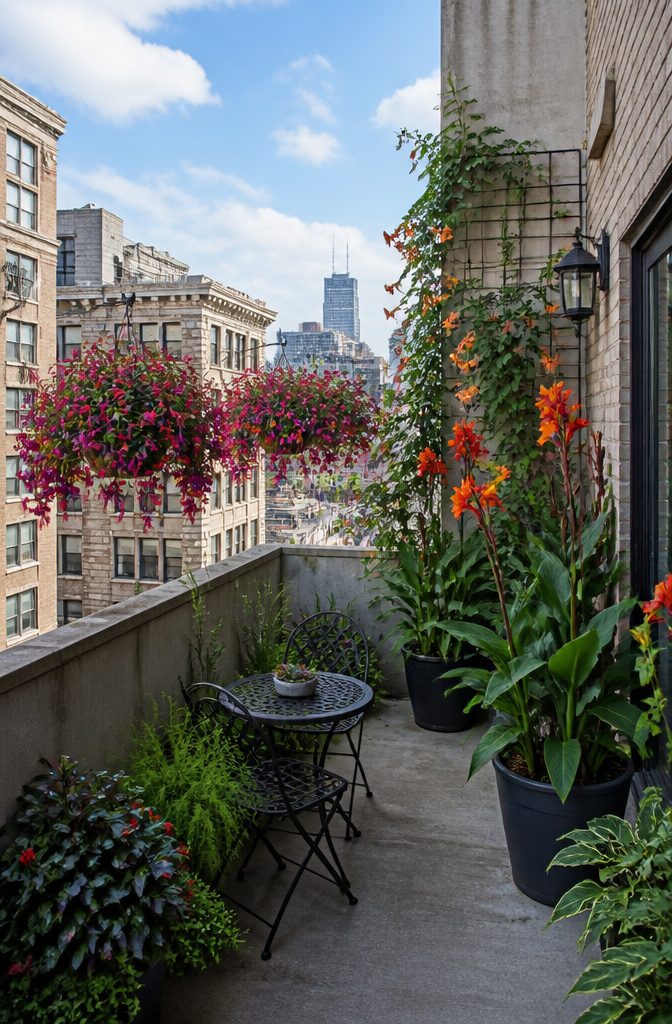
A balcony twelve feet off the ground can still pull hummingbirds in, though it takes a different approach than an open yard.
Container plantings are the starting point, and three annuals in particular have worked reliably for me: fuchsia in hanging baskets, salvia guaranitica in standard pots, and canna lily in larger planters where the height can rise two to three feet.
All three bloom heavy enough through summer that the birds notice from flight paths below.
The fuchsia especially draws them, not because the flowers are red but because the shape is right. That old rule about hummingbirds needing red is mostly myth; they forage plenty of other colors once they know the nectar is there.
Vertical space matters when floor space is tight. A trumpet vine trained up a trellis or balcony railing gives the birds a feeding lane at eye level, which also means you see them without craning.
On my own setup, I keep the trellis back from the railing edge so the vine does not become a wind sail.
Feeder placement takes more thought in tight quarters. I hang mine within three feet of a window I sit near, close enough to watch detail but not so far that the birds build speed before the glass.
That distance, roughly an arm’s length plus a step, seems to be the range where they slow to hover rather than strike.
Clean the feeder weekly in hot weather; sugar water sours fast on a sun-struck balcony and the birds will simply stop coming.
Color and Shape
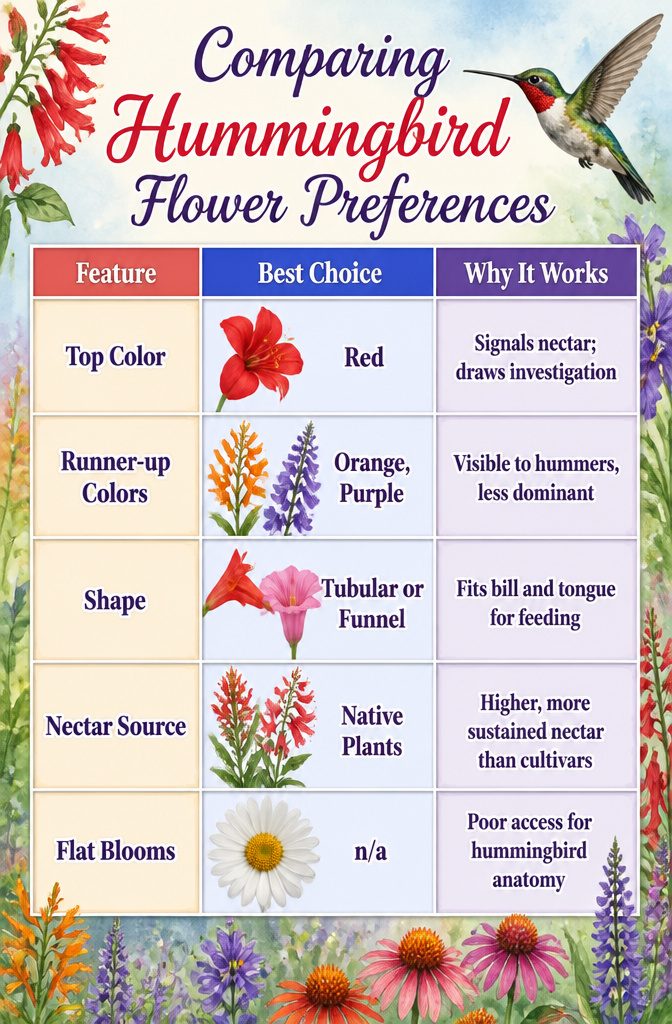
Hummingbirds notice red first. I’ve watched them swerve toward red taillights and even a sunburned nose, so the draw is real.
Orange and purple work too, but red registers as a signal for high nectar. Yellow or white flowers fade into background noise for them.
The shape matters just as much. Tubular or funnel-shaped blooms let a hummingbird slip its slender beak and tongue inside to reach the nectar.
Flat, daisy-like flowers leave that long bill with nowhere to go. Tubular shape beats color every time if the bird can’t feed.
Native plants generally carry more nectar than bred cultivars, and they produce it more reliably through the season. Non-natives might flash bright for a week, then fizzle.
| Feature | Best Choice | Why It Works |
|---|---|---|
| Top color | Red | Signals nectar; draws investigation |
| Runner-up colors | Orange, purple | Visible to hummers, less dominant |
| Shape | Tubular or funnel | Fits bill and tongue for feeding |
| Nectar source | Native plants | Higher, more sustained nectar than cultivars |
| Flat or daisy blooms | n/a | Poor access for hummingbird anatomy |
Frequently Asked Questions
How do I attract hummingbirds to my garden?
Plant native, tubular flowers in red, orange, or purple, and hang feeders with a 1:4 sugar-water mix.
Add moving water, perches spaced 15 feet apart, and stop using pesticides so insects return. Group blooms in clusters and stagger early and late bloomers so something flowers from May until frost.
What is the best nectar recipe for hummingbirds?
Mix 1 part refined white sugar with 4 parts water, then boil for 2 to 4 minutes before cooling.
Never add honey, brown sugar, red dye, or artificial sweeteners. The boiling step keeps nectar fresh longer, though you should still replace it every 3 to 4 days.
How often should I clean my hummingbird feeders?
Clean feeders every 3 to 4 days, or daily in hot weather when nectar sours faster.
Wash with hot water and a weak vinegar solution once a week, rinse three times, and skip dish soap since it leaves residue. Pull any feeder immediately if the nectar clouds or ports look grimy.
What flowers attract hummingbirds?
Tubular blooms in red, orange, or purple work best: bee balm, salvia, coral honeysuckle, trumpet vine, fuchsia, zinnias, hibiscus, morning glory, lantana, and canna lily.
Native plants produce more sustained nectar than hybrids. Blue-purple salvias prove hummingbirds will visit colors beyond red once they learn the flower shape holds food.
Do hummingbirds migrate?
Yes, most species migrate seasonally. Ruby-throated Hummingbirds, common east of the Mississippi, arrive in April and May and stay until frost.
Feeding them in fall does not delay migration; they leave by instinct when ready, not because food ran out. In the southern United States and coastal California, some species stay year-round.






