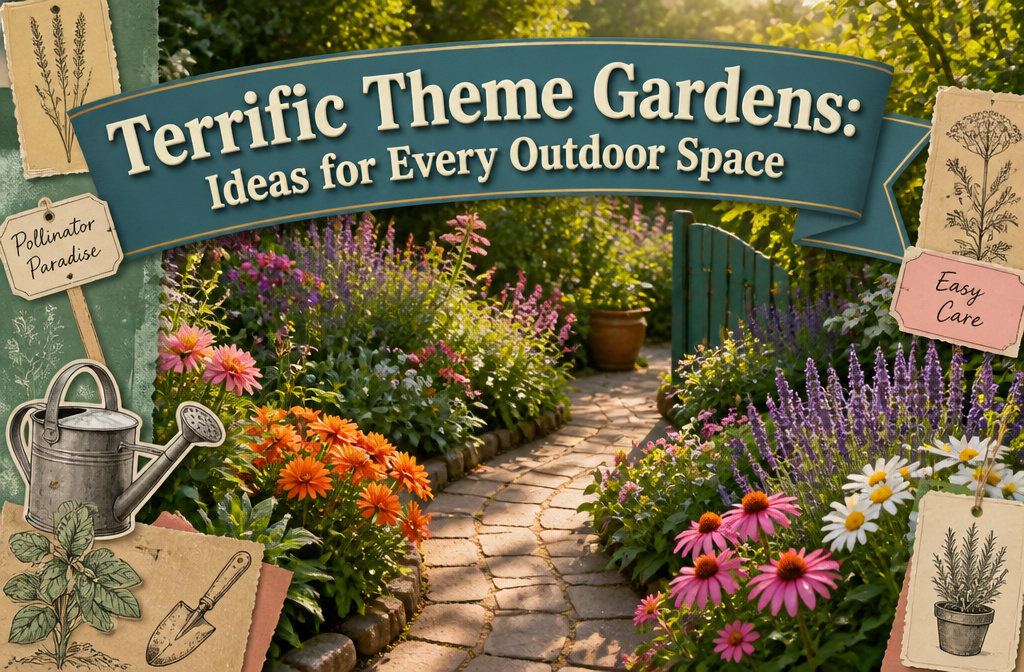
A theme garden works when the idea fits the gardener, not the other way around. The mismatch costs time and sun exposure: a true tea plant needs three to five years before its first real harvest, and by then most people have moved on to something faster. The cottage garden only looks effortless because forget-me-nots and love-in-a-mist are doing the real work of filling gaps you did not plan.
What separates the ten designs below is how each one solves a specific problem of space, patience, or maintenance rather than adding another chore to the weekend.
1. Cottage Garden
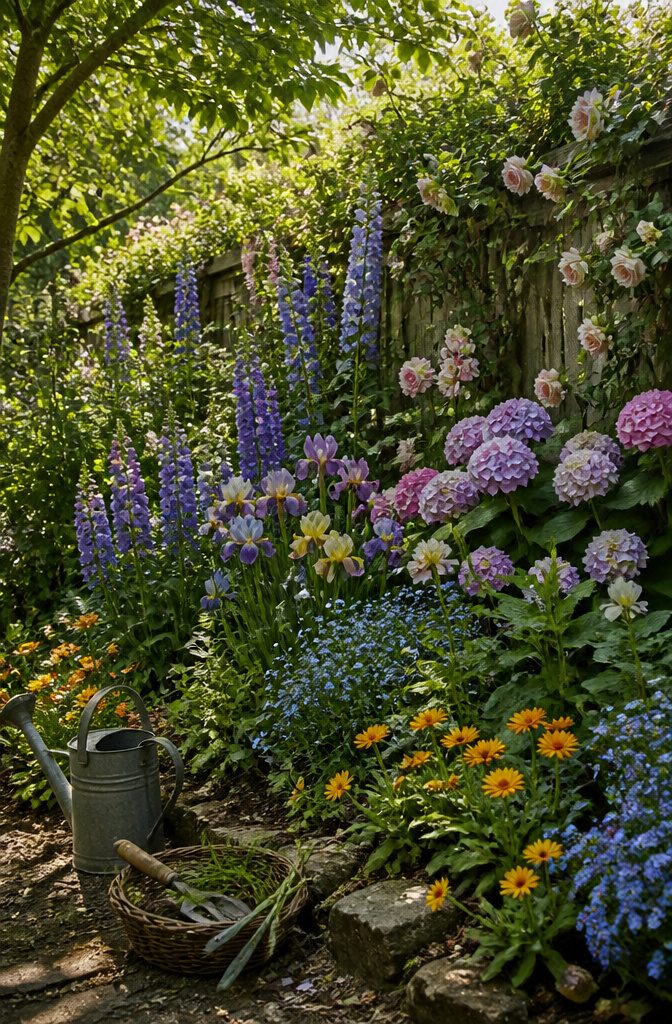
A cottage garden looks thrown together, but that looseness takes more planning than a formal border. I start with a backbone of old-fashioned flowers: hydrangeas for summer bulk, irises for the spring gap, delphiniums drawing the eye upward, and climbing roses to soften a fence or arbor. The trick is stacking heights so something blooms at every level, from ground-hugging cranesbill to six-foot foxgloves that seed themselves into cracks you did not know you had.
Self-seeders do the real work of filling gaps. Forget-me-nots, love-in-a-mist, and calendula drift between the intended plants and hide the edges where one variety meets another. In my second year, a volunteer poppy turned up between two dahlias and looked more right than anything I had planted on purpose. The informality is managed; you just stop managing the parts that manage themselves.
2. Tea Garden
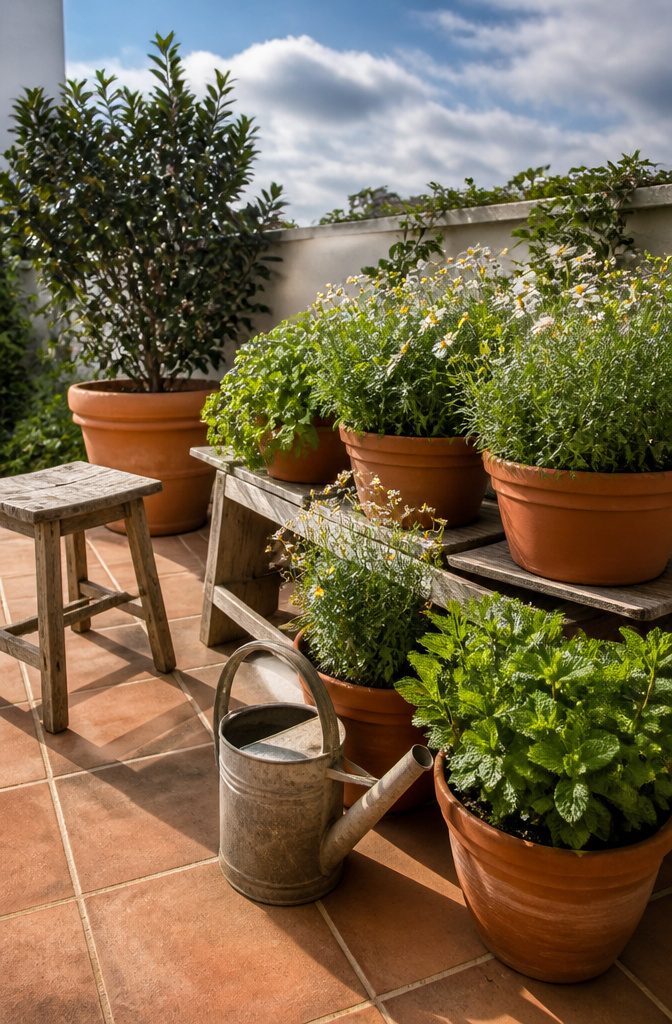
A tea garden narrows the herb bed to plants worth steeping. Chamomile and peppermint are the easy starts: chamomile wants full sun and lean soil, while peppermint spreads so aggressively it belongs in a pot sunk into the ground or sitting on the patio. Both leaf and flower dry within days on a screen and hold flavor for months in a jar.
Camellia sinensis, the true tea plant, needs hardiness zones 8 to 11, full sun, and humidity high enough that you will probably be watering it more than its neighbors. I have not grown it myself; what stops me is the timeline. The shrub takes three to five years to reach a size worth harvesting, and even then you are plucking only the new growth. For a gardener two seasons in, that patience is a real cost. Start it in a container you can move indoors if your zone dips, or commit the southernmost corner of a border and mark the calendar.
3. Pizza Garden
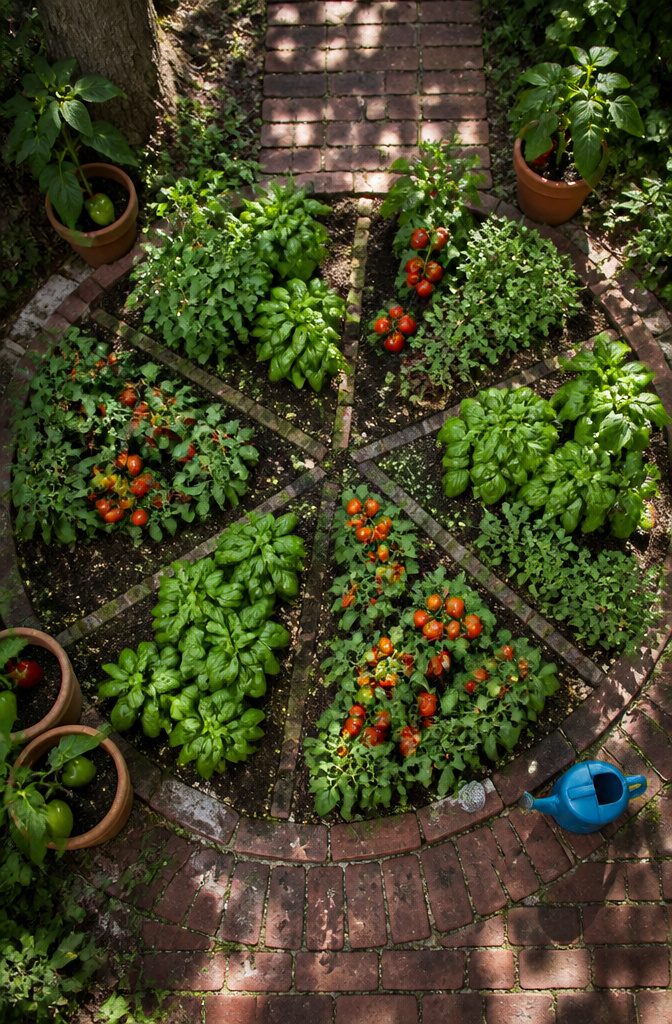
A pizza garden arranges tomatoes, basil, oregano, and peppers in a circle or wedge pattern that mirrors a sliced pie, so the harvest looks exactly like the meal it feeds. The shape makes the connection obvious even to visitors who have never planted anything; kids spot the pizza before they spot the weeds, which is half the battle in getting them to help water.
Oregano and basil can go straight in the ground or sit in containers tucked between the larger plants, whichever your patio or small yard allows. I like the container option for a balcony, since it lets you shift the herbs to catch sun without rearranging the whole bed.
The real payoff is the harvest walk: a child can circle the wedge and fill a bowl with everything for sauce, no guesswork about what belongs.
4. Goth Garden
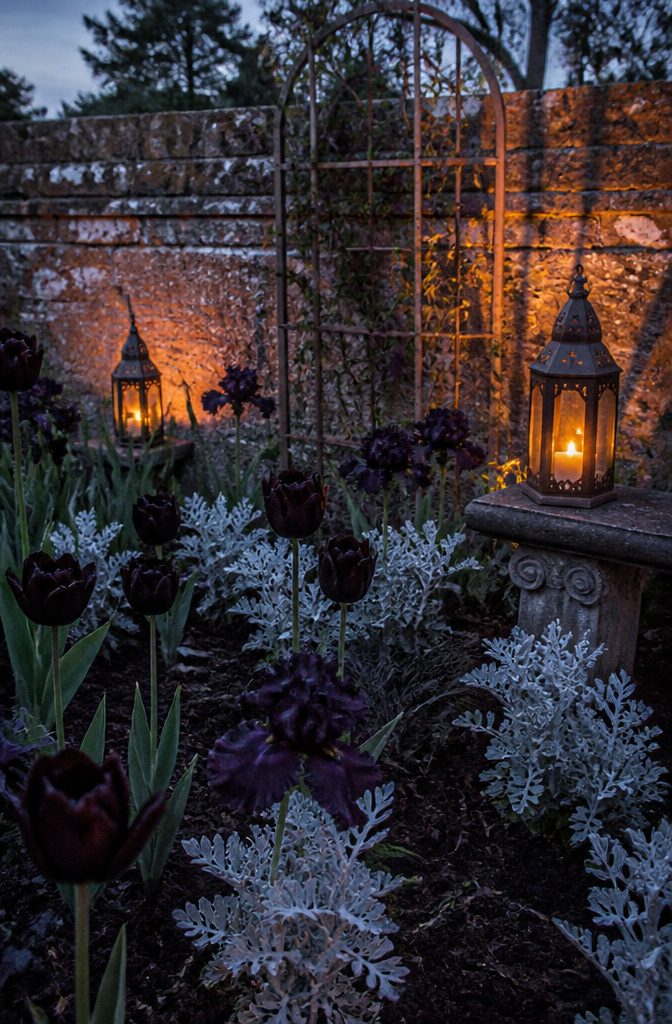
Dark petals read one way at noon and another at dusk, which is half the point of planting them. Black tulips and near-black irises hold their color in full sun but turn almost liquid in low light, while deep purple heuchera shifts from wine to soot as the evening comes on. Silver accents, something like artemisia or dusty miller, keep the bed from turning into a flat photograph; that flash of gray catches what little light remains and gives the eye somewhere to rest.
The Victorians built this mood with crumbling stone and overgrown paths, but a balcony or small yard needs a tighter edit. A single thorny climber on a narrow trellis, a few ornamental lanterns, and the dark palette do most of the work without the garden becoming unlivable. Souvenir du Docteur Jermain roses bring that blood-red note if you have the space and the patience for climbers.
What convinced me, reading through the designs that actually succeed, is that the goth garden lives or dies on contrast: without the silver, without the light shifting across the petals, you have only a dim flower bed.
5. Fairy Garden
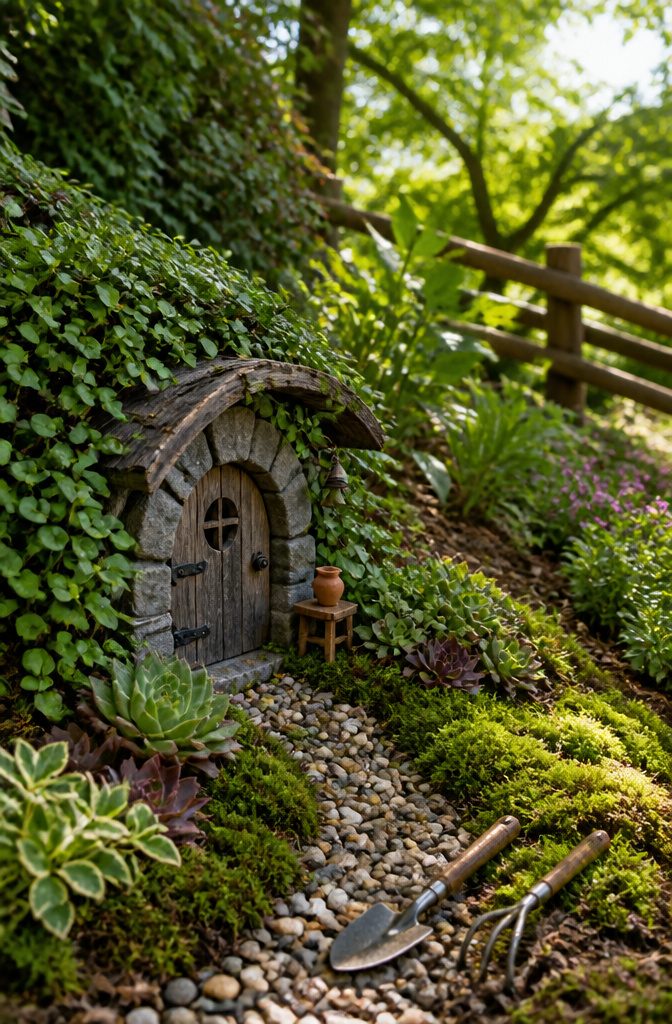
A fairy garden lives or dies on scale, and the plants are what betray you first. Baby’s tears and hens-and-chicks stay small enough to read as trees beside a miniature door, but left alone for a season they will swallow the scene whole. I learned to treat the shears as part of the toolkit, not an afterthought: a weekly trim keeps the moss carpet from climbing the figurines and the groundcovers from turning your village into a meadow.
The accessories get the attention, yet moss is what sells the illusion. Press it between stones, let it soften the edges of a tiny path, and suddenly the plastic door belongs there. Check soil moisture with a finger before watering; overwatering rots the moss and the succulents both, and recovery in a space this small means starting over. Containers work best for control, though a corner of an existing bed can host a fairy outpost if you edge it with stone and stay ruthless about invaders from the lawn.
6. Sensory Garden
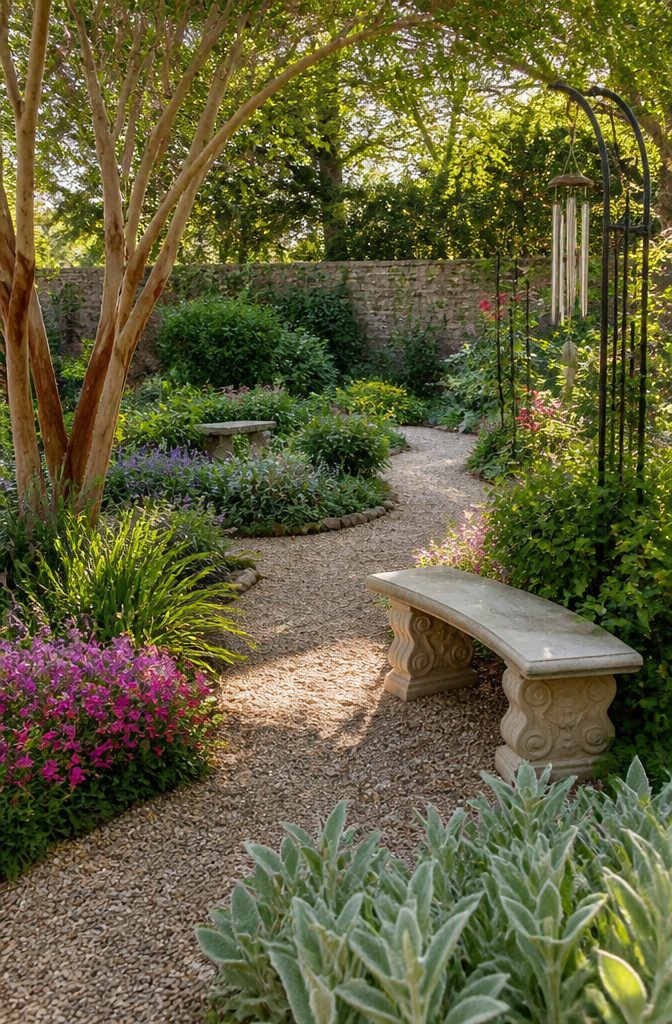
A sensory garden slows you down whether you plan it to or not. I learned that after watching visitors stop at the same spot on my path, heads tilted toward a honeysuckle vine they hadn’t noticed from three feet back. Fragrant climbers like honeysuckle and wisteria work best where the breeze carries them toward the walkway, not tucked against a back fence where you only catch the scent when you remember to look.
Texture comes from plants you want to touch without thinking. Lamb’s ear leaves that soft, almost rubbery gray, or a crape myrtle trunk with bark that peels in thin sheets. I run my fingers over both every time I pass, which is the whole point. The garden should invite that.
Sound needs more than plants. Wind chimes hung low enough to catch garden-level air currents, not just rooftop wind, give you something steady without demanding attention. Gravel paths do the rest: the crunch underfoot announces your own movement, makes you conscious of pace in a way concrete never would.
The design itself enforces the slowness. A straight path lets you rush. Curves, or a loop that returns you past the same lavender from the opposite angle, keep the walk to ten minutes even in a space that measures forty across. Group by sense or mix them; either works if the transitions feel accidental, discovered rather than signed.
7. Pollinator Garden
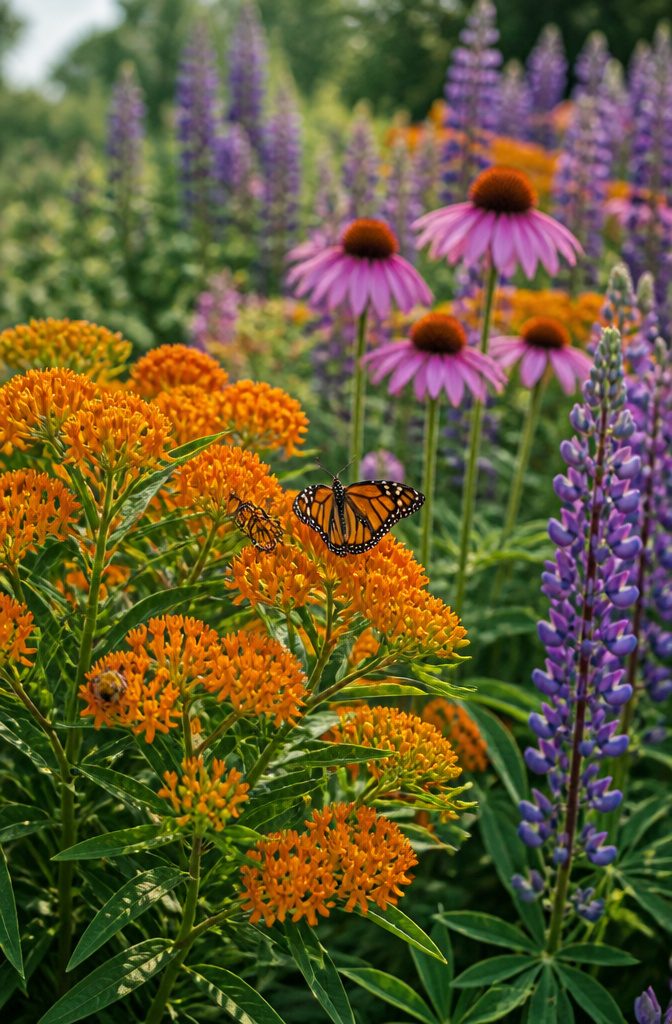
A pollinator garden lives or dies on whether there is something blooming when the insects are actually flying. I learned this the hard way after watching my first attempt sit empty for weeks, then suddenly swarm with activity once the single clump of butterfly weed finally opened in July.
Native plants matter because local pollinators recognize them as food. The coevolution between a monarch and a milkweed, or a bumblebee and a purple coneflower, means insects find the blooms faster and can feed more efficiently than on ornamentals bred for petal count instead of nectar. Exotics are not poison, but they are often invisible.
The fix is a seasonal sequence. Spring starts with wild lupine and penstemon, summer hands off to milkweed and coneflower, fall closes with asters and goldenrod. Three distinct waves, no dead months. A single butterfly bush will draw adults to nectar, but without milkweed leaves in June, no caterpillar survives to become the next generation. Plant both, or you are running a restaurant with no kitchen.
8. Rain Garden
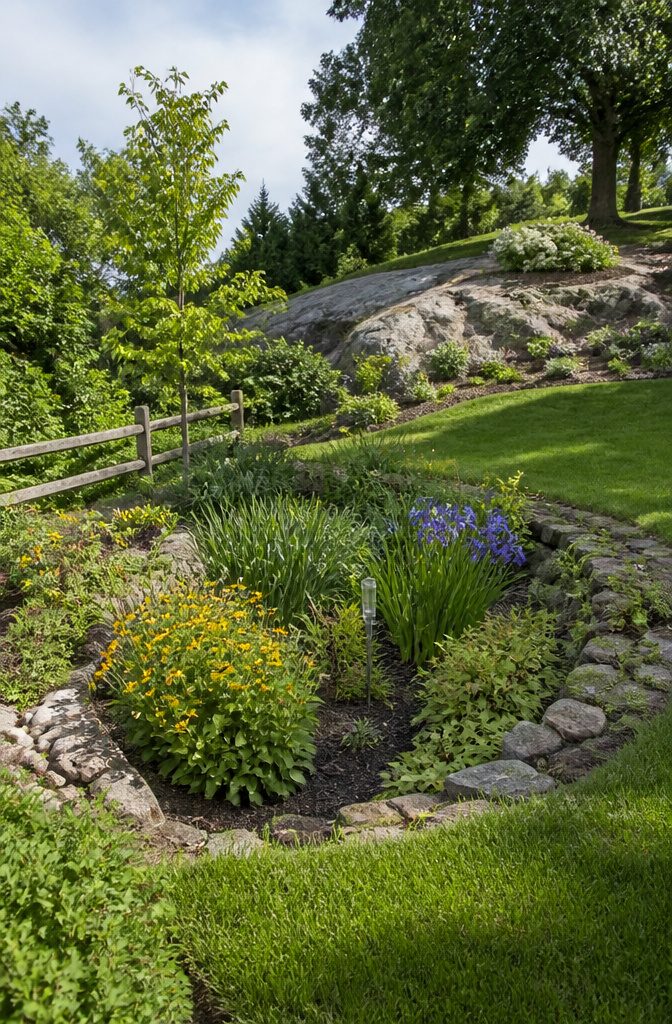
A rain garden is a shallow depression planted with native species that soaks up stormwater runoff from your roof, driveway, or patio before it can puddle against your foundation. The trick is placement: set it at least 10 feet from your house and on a natural slope where water already travels, not where it will back up toward basement walls.
The soil mix matters as much as the location. Compost-heavy, permeable soil absorbs rainfall rather than letting it sit. Done right, the garden cuts erosion, filters contaminants, and keeps you from fighting lawn diseases that follow extra moisture.
Plant selection is where most rain gardens fail. You need natives that tolerate wet feet after storms but also survive dry spells between them. Think switchgrass, blue flag iris, or black-eyed Susan rather than moisture-loving species that will crisp up in August. A decorative rain gauge tucked among the plantings marks the spot without shouting for attention.
9. Shade Garden
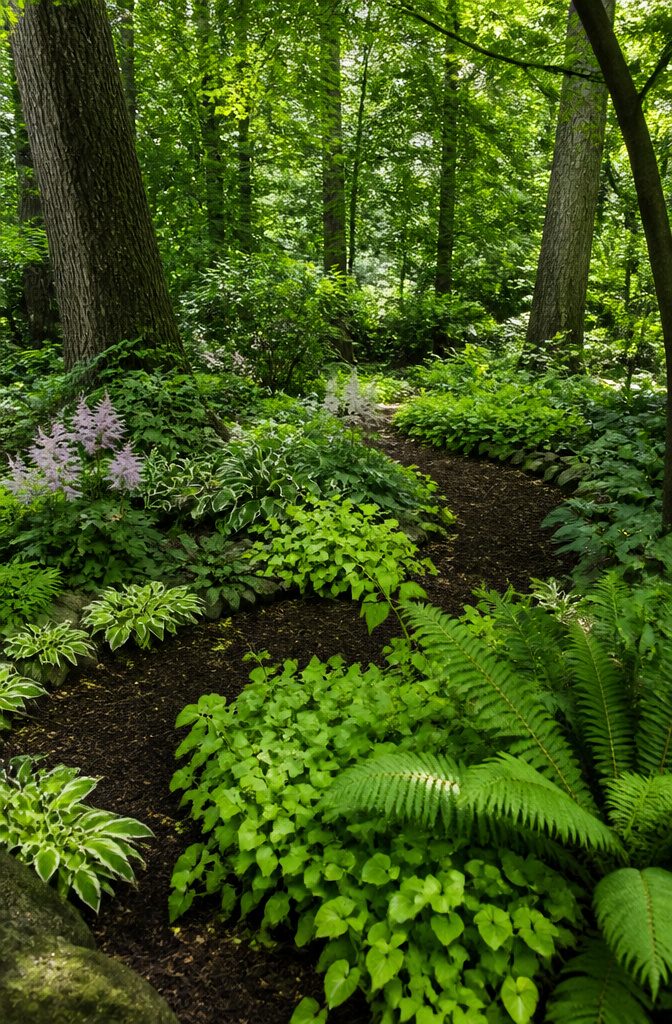
Most shade gardens fail because the gardener treats "shade" and "dry" as the same thing. They are not. Dry shade sits under mature trees with thirsty roots; damp shade gathers where runoff pools or morning fog lingers. Knowing which you have decides whether your hostas crisp at the edges or your ferns rot at the crown.
For dry shade, epimedium carries the season. Its heart-shaped leaves tolerate root competition that would starve lesser groundcovers, and in spring the tiny flowers hover like colored moths just above the foliage. Hostas will manage here only if you water through July and August without fail, which most people do not.
Damp shade is where astilbe earns its keep. The plumed flowers need steady moisture to develop fully; let them dry out and you get brown, stunted spikes that look like spent bottle brushes. Ferns, too, prefer this side of the equation, especially the Japanese painted types with their silvered fronds.
The common mistake is assuming shade somehow means less watering overall. Tree canopies intercept rain, and mature roots drink first. A shade bed often needs more supplemental water than the sun border, not less, because so little reaches the ground intact. Test with your finger before you decide the soil is wet enough; the top inch can read moist from humidity while the root zone below is dust.
10. Rock Garden
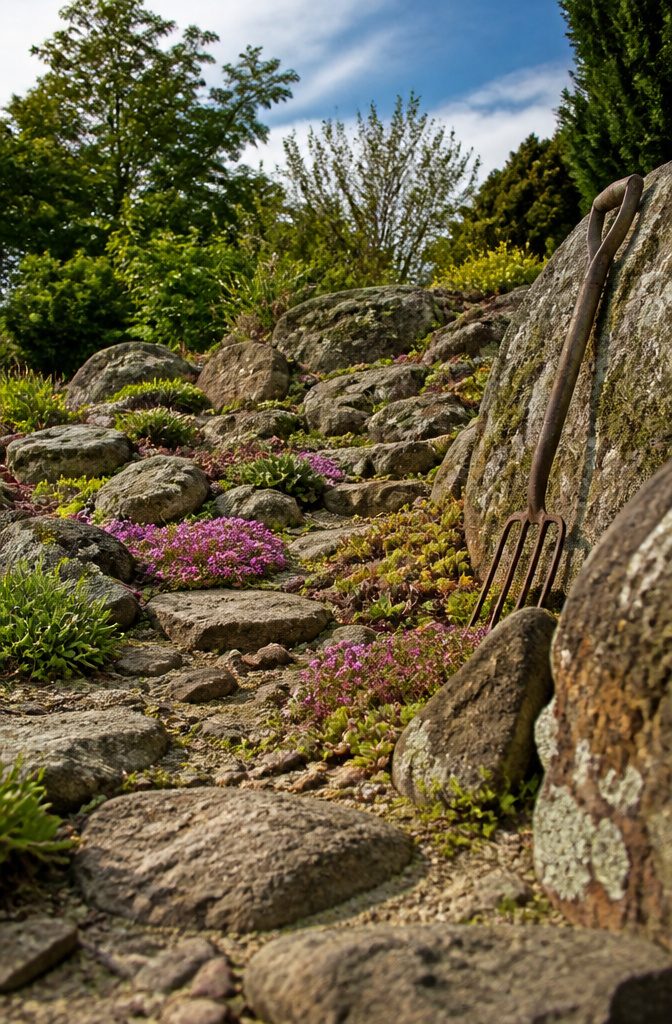
Stones do the real work in a rock garden, not the soil beneath them. I learned this after losing a tray of sedums to a bed that looked dry on top but held water like a sponge underneath. Now I build every rock garden on a slope, even a slight one, and I start by digging out the existing soil to a depth of about six inches before backfilling with a mix of coarse sand, fine gravel, and just enough compost to hold the roots. Drainage matters more than soil depth because the alpines, succulents, and cacti that thrive here evolved for thin, fast-draining ground; their roots rot in anything that stays damp past morning.
The stones themselves become part of the growing system. Sun-warmed rock creates thermal mass that extends the growing day for cold-hardy alpines, and the gaps between stones channel water away from crown-sensitive plants like agaves and ice plants. I tuck small species into crevices where roots can find purchase without sitting in pooled moisture, and I leave the soil surface visibly gritty. A rock garden in USDA Zones 6 to 9 needs little supplemental water once established, and the lower maintenance suits the budget. The tradeoff is patience: these plants grow slowly, and the garden looks sparse the first season. By year two, the stones disappear under mats of color, and the watering can stays in the shed.
Frequently Asked Questions
What plants work well in a cottage garden?
Hydrangeas, irises, delphiniums, climbing roses, foxgloves, and cranesbill form the backbone, with self-seeders like forget-me-nots, love-in-a-mist, and calendula filling the gaps between them. The key is stacking heights so blooms appear at every level, from ground cover to six-foot spires. Self-seeders hide the edges where varieties meet, giving the bed its characteristic loose, informal look.
How do I create a sensory garden?
Plant fragrant climbers like honeysuckle and wisteria where breeze carries scent toward the walkway, add touchable textures such as lamb’s ear and peeling-bark crape myrtle, and hang wind chimes low enough to catch garden-level air currents. Curved or looping paths slow the pace; gravel underfoot adds sound that makes visitors conscious of every step. Group by sense or mix them, letting transitions feel discovered rather than arranged.
What is a pollinator garden?
A pollinator garden provides nectar and host plants for butterflies, bees, and other beneficial insects across three blooming waves: spring wild lupine and penstemon, summer milkweed and coneflower, fall asters and goldenrod. Native plants matter most because local pollinators recognize them as food and feed more efficiently than on ornamentals bred for petal count. A single butterfly bush draws adult nectar-seekers, but without milkweed leaves, no caterpillar survives to become the next generation.