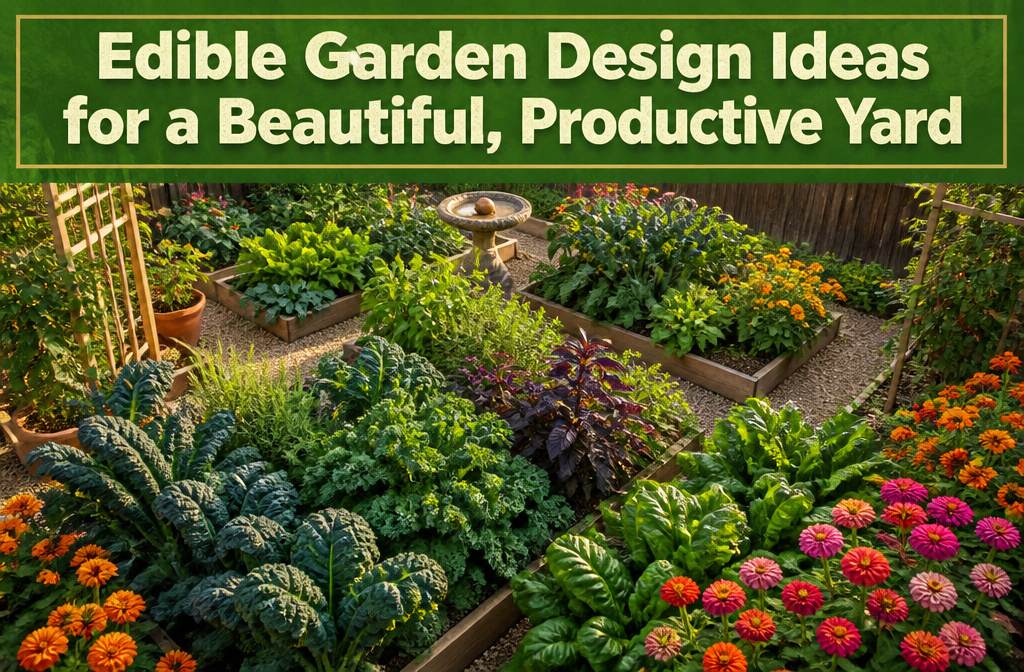
Edible garden design ideas are plans for planting food where the flowers used to be, and doing it on purpose.
The catch is that both plants need the same sun, water, and spacing or the pairing fails, like kale and zinnias sulking together in partial shade.
Brie Arthur proved a quarter acre is plenty to feed a household while keeping the HOA satisfied.
Foodscaping
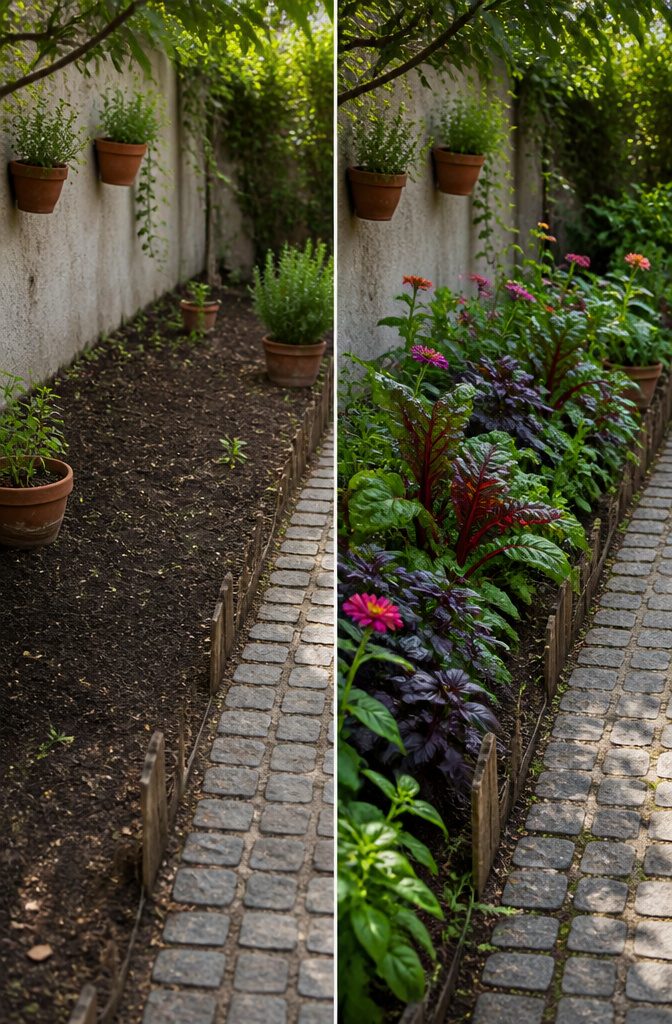
Kale and zinnias taught me the hard way that foodscaping only works when both plants want the same thing. I planted them together in partial shade, figuring the zinnias’ coral and magenta blooms would hide the kale’s leggy summer stretch.
The kale sulked; the zinnias mildewed. Neither got enough sun, and the grouping looked accidental, like volunteers that had blown in from a neighbor’s yard.
The fix is matching cultural needs first, aesthetics second.
Rainbow chard with its ruby stems reads as ornamental foliage against a drift of purple basil. Compact ‘Patio’ tomatoes carry enough visual weight to anchor a bed of marigolds without looking like an afterthought.
Edibles placed among flowers need the same spacing rhythm; a lone pepper stuck between daylilies looks lost, three in a staggered row reads as intentional.
With the average American landscaping footprint at 1,250 square feet, most of us are not working with estate grounds. A quarter acre lot like Brie Arthur’s original experiment is plenty of room to feed a household while keeping the HOA satisfied.
The vegetables do not need their own zone; they need to carry their visual weight inside the one you already have.
Permaculture Principles
Permaculture starts with watching instead of digging.
Spend a full season noting where water pools, which corners bake by July, and where birds already gather. That observation shapes everything else.
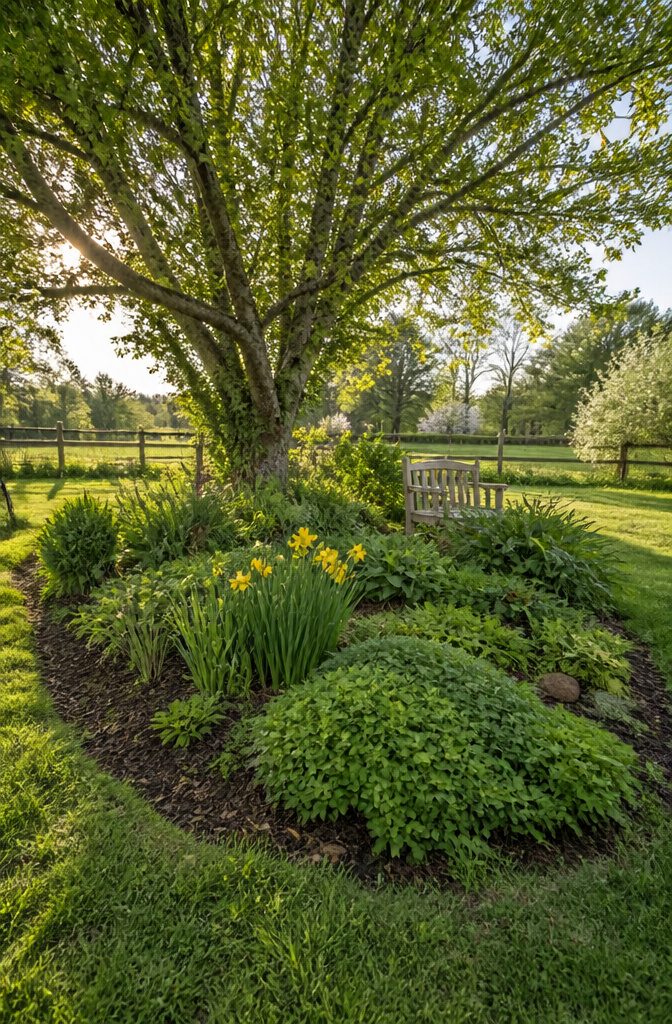
The real power is in edges and layers. A tree canopy, a shrub understory, ground cover, and roots at different depths all harvest light and nutrients the same yard would waste in a lawn.
Planting in guilds, like a fruit tree ringed by comfrey, daffodils, and clover, lets each species do work for the others. Comfrey mines deep minerals; daffodils block grass; clover fixes nitrogen.
My first attempt at guilds failed because I planted them too close together.
By August the comfrey had smothered the understory and I was cutting it back weekly. Give guilds the spread they need or you are managing a brawl, not a system.
Feeding this kind of garden means buying organic matter, not fertilizer.
About 80% of a typical garden budget goes to compost and other organic materials. Fertilizer cannot replace that; it does not build the soil food web that makes plants self-reliant against pests and drought.
Spread compost two inches deep on the surface and mix it into just the top few inches. After a few years, the soil biology will work it down for you.
Edible Borders
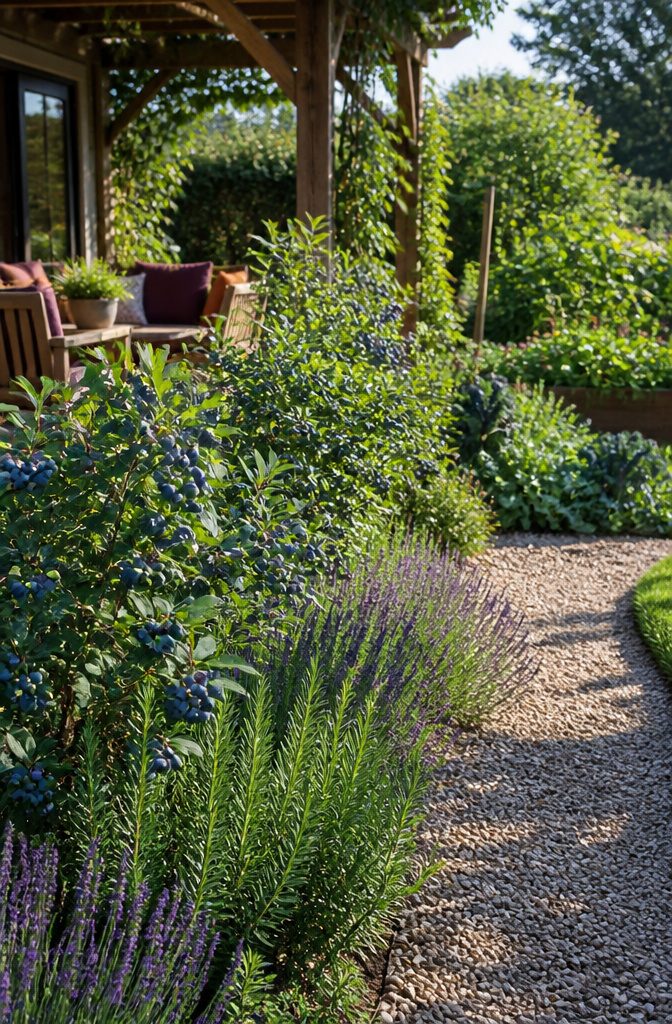
Edible borders give a yard structure while keeping the grocery bill in mind.
A hedge of blueberry bushes sits at a height that screens a patio from the street, and once the plants settle in, a single established hedge can yield about 12 pounds of fruit a year.
Space them 2–4 feet apart so the row fills in without choking itself; the exact gap depends on the variety.
Currants thicken up faster and take pruning with less fuss, which makes them useful where patience runs short. Rosemary and lavender read as classic evergreen edging until you brush against them and remember they are also dinner ingredients.
For something more architectural, dwarf fruit trees held to 4–6 feet give a corner or path edge the same visual weight a boxwood would, except the fall crop is actual apples or pears.
The tradeoff is the wait; trees need longer to look like a deliberate boundary rather than a stick in the ground.
I lean toward blueberries or currants when someone wants the hedge to behave like a hedge inside of two seasons, and toward the dwarf trees only if the long shape of the yard calls for vertical punctuation.
Vertical Gardening
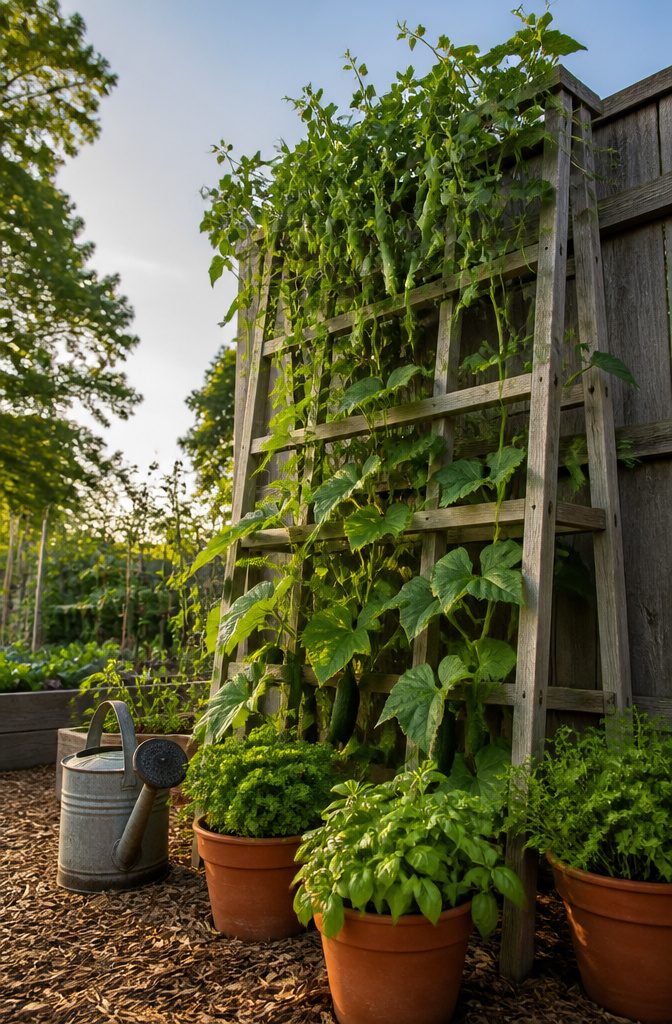
Vertical gardening buys back square footage you thought you had lost.
A wall, a fence, or a freestanding trellis turns bare air into growing space for herbs and climbers, and the setup costs little more than the structure itself plus twine or clips to train the vines.
Trellises come in a few practical shapes. A flat panel leaned or anchored against a wall suits peas and cucumbers.
An A-frame or teepee gives beans room to spiral and makes picking easier from both sides. A single tall stake with crossbars, the classic tomato cage scaled up, keeps indeterminate tomatoes off the ground and fruit clean.
What you choose depends on what you are growing and whether the spot is permanent or something you move each season.
Peas, pole beans, cucumbers, and indeterminate tomatoes all climb readily with a little guidance.
Beans are the simplest start. Poke them 1 inch deep and 4 inches apart at the base of their support, and they find the poles on their own.
Pole bean varieties run to color if you want it: purple pods, yellow pods, spotted ones like the heirloom ‘Rattlesnake’.
Most vegetables want 6 to 8 hours of direct sun to produce well.
The catch with vertical structures is the shade they throw. A tall trellis along a south-facing fence can screen the bed behind it for hours you did not intend.
Place the tallest climbers on the north end of your plot, or where afternoon shadow falls on a path rather than on lower plants that still need light.
Leafy herbs such as parsley or chervil handle partial shade if they must, but fruiting plants will not forgive the loss.
Container Gardens
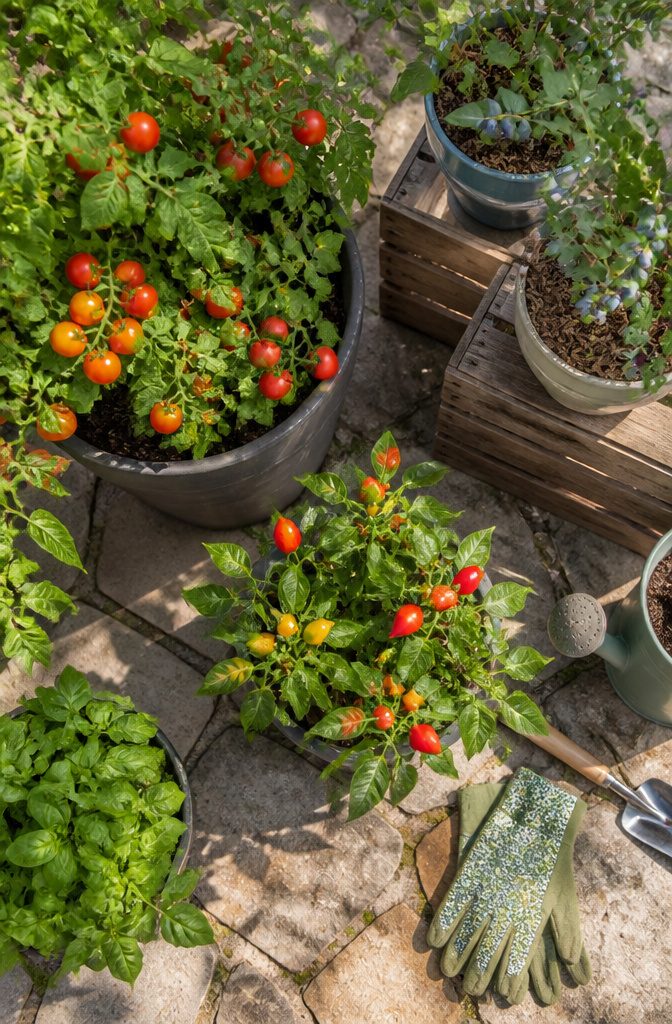
Most vegetables in containers need more room than the label suggests. A 3–5 gallon pot, roughly 12 inches across, is the minimum for a productive cherry tomato or pepper plant, and anything smaller starves the roots faster than you’d think.
I learned that the hard way with a poblano last spring: the nursery tag said 8-inch pot, I used a 2-gallon, and by July the leaves were yellowing and the fruit stayed golf-ball sized.
The plant survived, but it never thrived.
Drainage holes matter more than the pot’s looks. Without them, water sits at the bottom and the roots rot in days.
I line the bottom with a few broken pottery shards, then fill with bagged potting mix, never garden soil. Garden soil compacts in a pot, turns concrete-hard, and strangles whatever you planted.
Some plants genuinely prefer pots. Determinate tomatoes, bush beans, and compact peppers like the Husky Gold series stay manageable and productive in that 3–5 gallon range.
Dwarf blueberries, such as North Country at 20 inches mature height, excel in containers and move indoors for winter in cold zones.
Cucumbers mostly sulk in pots; the exception is Little Leaf, which sets fruit without pollination and handles container stress better than standard varieties.
Standard cucumbers, zucchini, and corn? They’ll grow, but the yield rarely justifies the effort on a small patio.
Layered Planting
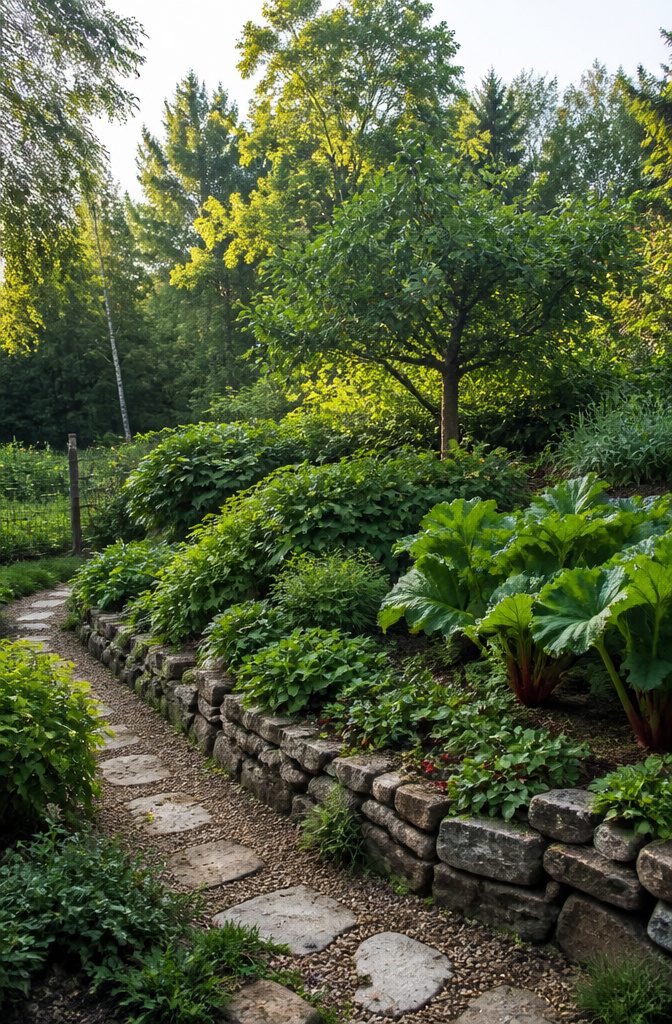
A layered edible garden stacks perennials and annuals into four working levels.
The canopy holds dwarf fruit trees like apples or plums. Beneath them, berry bushes such as blueberries or currants form an understory that catches light the taller trees filter.
Perennial herbs and vegetables like asparagus and rhubarb occupy the middle ground, while strawberries or creeping thyme spread as living ground cover that suppresses weeds and holds moisture.
This structure copies forest edges, where plants evolved to share space rather than compete for the same resources.
Roots reach different depths: tree roots plunge deep, shrub roots spread wide, and shallow ground cover threads through the upper inches of soil.
The root layer, often forgotten, is where soil life thrives because varied root sizes keep channels open for air and water instead of leaving the ground dense and prone to runoff.
I have planted dwarf apples over currants, with rhubarb at their feet and strawberries threading between.
The currants fruited sooner than the apples, so something productive happened while the trees matured. The rhubarb shaded out most weeds by June, and the strawberries kept the soil surface from crusting in dry weeks.
Nothing crowded because each layer accessed different light and soil depths; the only adjustment I made was pulling strawberry runners that tried to climb the rhubarb crowns.
Seasonal Color Schemes
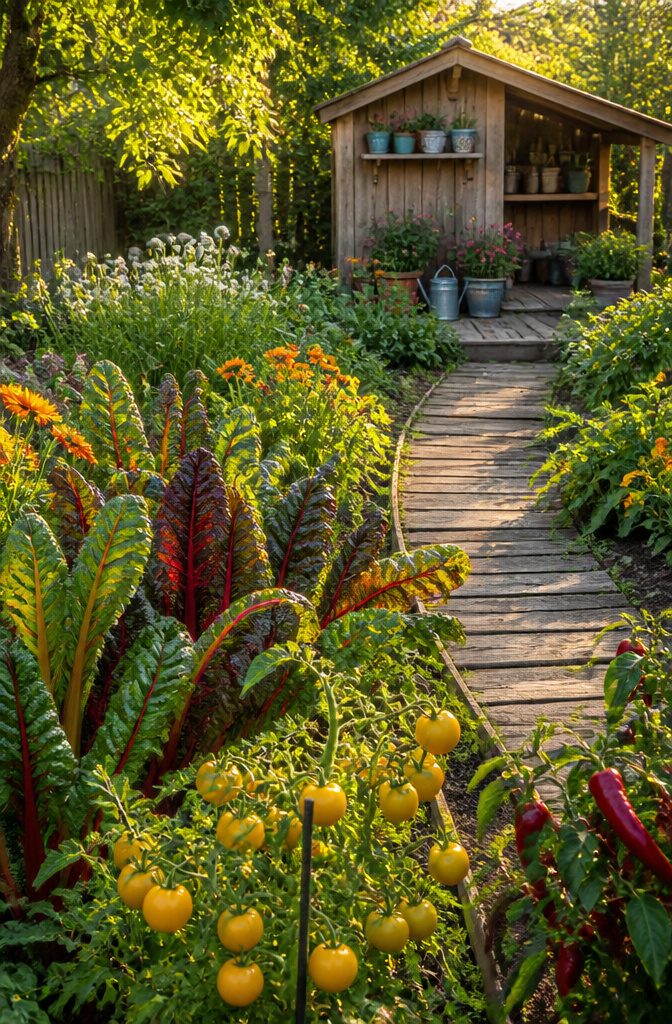
Color in an edible garden works best when you treat it like paint on a palette rather than a grab bag.
Purple basil, red mustard, and rainbow chard give you leaf color that holds for weeks; golden tomatoes, purple beans, and yellow zucchini add their fruit color later in the season.
The trick is sequencing so one color peaks as another fades, not planting everything at once and hoping for a constant show.
I learned the hard way that massing similar colors together can backfire.
One spring I grouped every purple thing I owned, red Russian kale alongside purple basil and eggplant, expecting a bold statement. Instead the tones bled into one another and the bed looked muddy from five feet away.
Contrast matters more than repetition: a block of red mustard against green lacinato kale reads as intentional, while purple on purple just reads as dim.
For a sequence that works, start spring with white garlic chives and calendula, shift into yellow chard and cherry tomatoes by midsummer, then let red fall peppers and crimson rhubarb stalks carry the bed into autumn.
The French potager tradition of lining paths with these color blocks turns the whole garden into a chart you read as you walk.
Herb Spirals
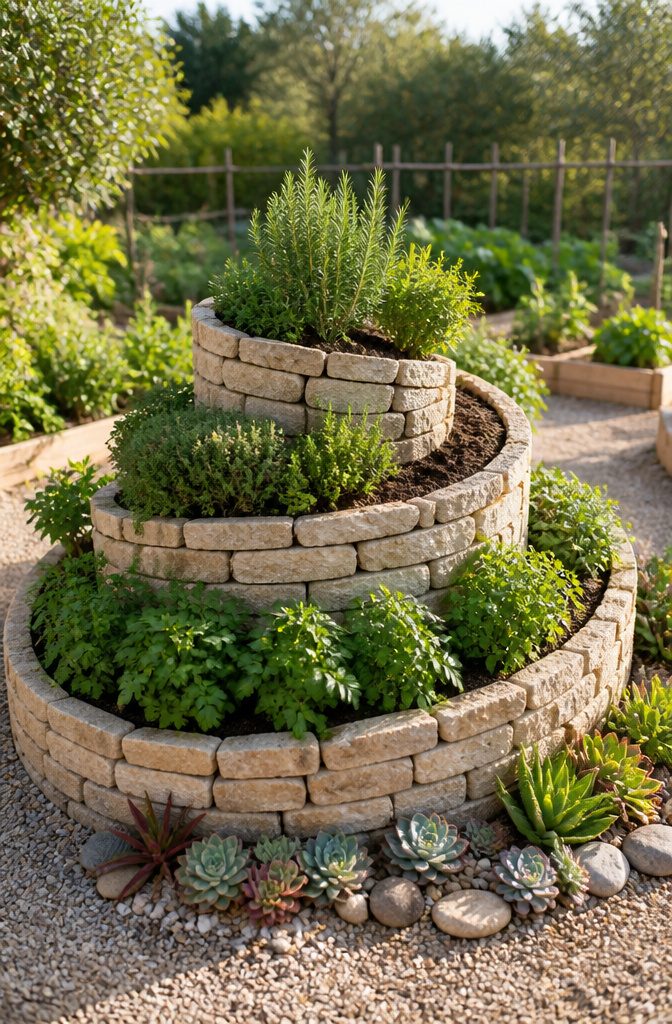
A stone or brick spiral about three feet across and two feet tall turns a single planting bed into several climates at once.
I built mine with soft reclaimed bricks one fall, and by spring the freeze-thaw cycles had crumbled them into sand. Use hard-fired brick or stone that can handle your winters.
The bottom of the spiral stays wettest, so that is where parsley, chives and cilantro go.
The top dries fastest, which suits rosemary, thyme and oregano perfectly. The south-facing side catches the most sun for basil and sage; the north side stays cooler and shadier, where mint and lemon balm spread without complaint.
Fill the spiral with lean, gritty soil on top and richer mix below. The height difference does the watering work for you, since water runs down to the base while the crown stays almost dry.
I replanted with limestone blocks after the brick failed, and the same herbs in the same spots have lasted four years now.
What Edible Landscaping Means
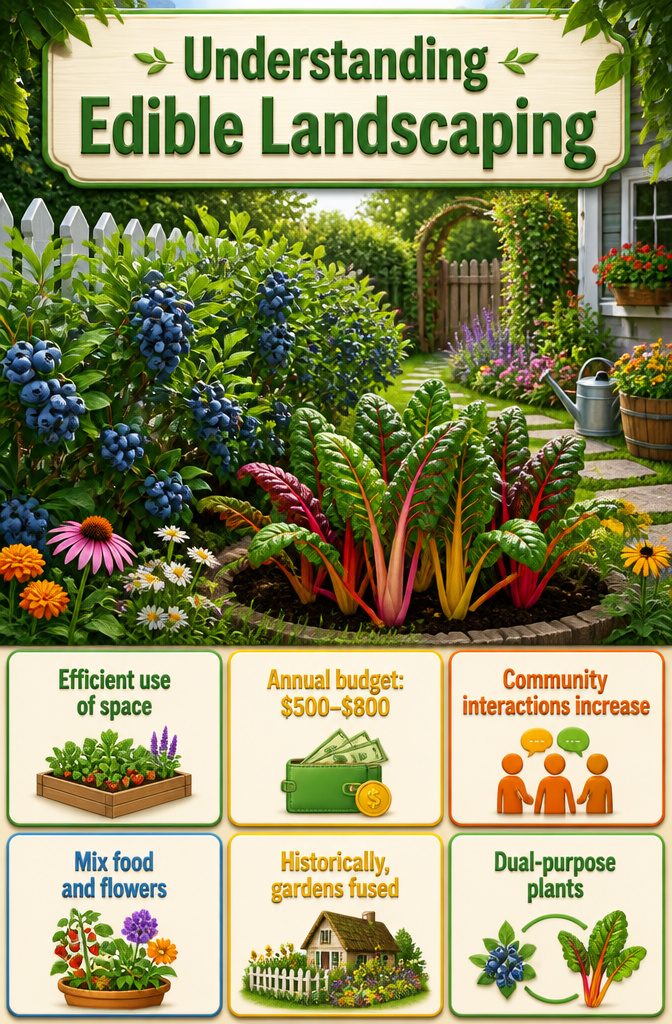
Edible landscaping means planting food where the flowers used to be, and doing it on purpose.
A blueberry hedge does the same privacy work as a boxwood but hands you fruit in July. Rainbow chard fills a border with color that rivals any hosta bed, and you can still harvest the stalks for dinner.
What keeps this practical for small yards is that one plant now earns its spot twice: looks and calories.
On a $500–$800 annual garden budget, that efficiency matters. You’re not maintaining two separate systems, one pretty and one productive; the same compost, the same water, the same hour with the pruners serves both goals.
The community piece surprised me, reading through the accounts.
A productive front yard breaks the script of weather-chat with neighbors. Someone stops to ask if those really are strawberries in the parking strip, and suddenly you’re trading cuttings or splitting a harvest.
Kids who wouldn’t touch a supermarket cherry tomato will eat one warm from the bush, then want to know how it grew.
The real question is why you’d keep the edible and ornamental zones separate at all. Historical cottage gardens never did.
The modern split into "vegetable garden back there, flower garden up front" is the anomaly. Folding them back together saves space, lowers the grocery bill slightly, and gives you something genuine to talk about when the dog walker stops.
Plants That Look Good and Feed You
Black raspberries were my first edible shrub, chosen mostly because they tolerate shade and stay where you put them.
Unlike other brambles, they grow in clumps; the red winter canes, spring flowers, and dark summer fruit give three seasons of interest without the battle of runners taking over the bed.
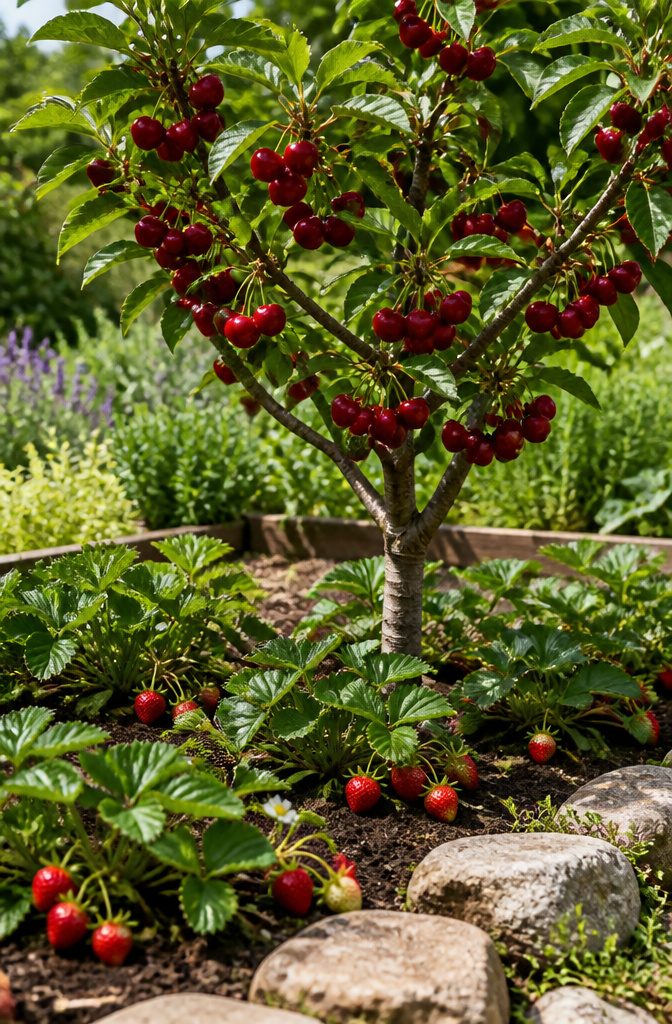
For ground-level coverage, strawberries beat any purely ornamental carpet.
Creeping varieties spread into a low mat that handles light foot traffic, while alpine strawberries stay as neat clumps along an edge and bear small fruit all season without sending out runners.
The flavor is concentrated, almost perfumed, compared with the watery grocery version.
A compact cherry tree works as the vertical anchor most small yards need. It flowers, fruits, and provides enough structure that the space reads as designed rather than accidental.
Tuck herbs at its feet; thyme in particular fills gaps between stones or along a path, releasing scent when brushed and forgiving the dry soil that tree roots create.
The plants that succeed here serve at least two purposes.
Passionflower vine, for instance, gives Gulf fritillary butterflies a host, produces fruit and tea leaves, and carries exotic blooms through summer heat. Start with what you will actually eat; beauty follows when the plant is healthy in its chosen spot.
Sunlight, Soil, and Compatibility
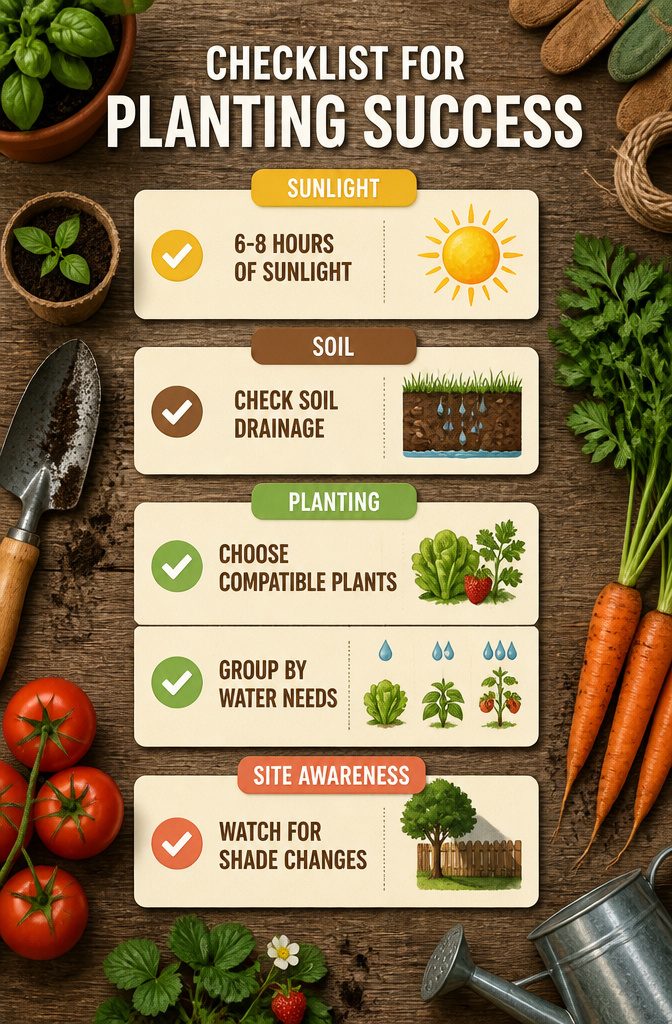
Most vegetables need six to eight hours of direct sun each day to produce well, so the first thing I do before planting anything is watch how light moves across my space.
A spot that looks sunny at 9 a.m. might be in deep shade by 2 p.m. once the neighbor’s fence or my own tomato vines start filling in.
I learned that the hard way when I planted lettuce on the south side of indeterminate tomatoes in July.
By mid-August the lettuce had bolted to seed in a week, starving for light while the tomatoes above it grew past six feet.
Soil matters just as much as sun. My front beds drain fast and stay dry, so I plant drought-tolerant edibles there and save the richer, moisture-retentive ground near the hose for thirsty crops.
Grouping plants by water need saves time and keeps nothing from sitting soggy or drying out between waterings.
Chervil and parsley handle partial shade; most herbs and fruiting vegetables do not. Alpine strawberries and currants will tolerate less sun, but they still need enough hours to set fruit.
Start with what your site actually offers, not what you wish it did. Match the plant to the place, or you are fighting your own yard.
What Ongoing Care Actually Looks Like
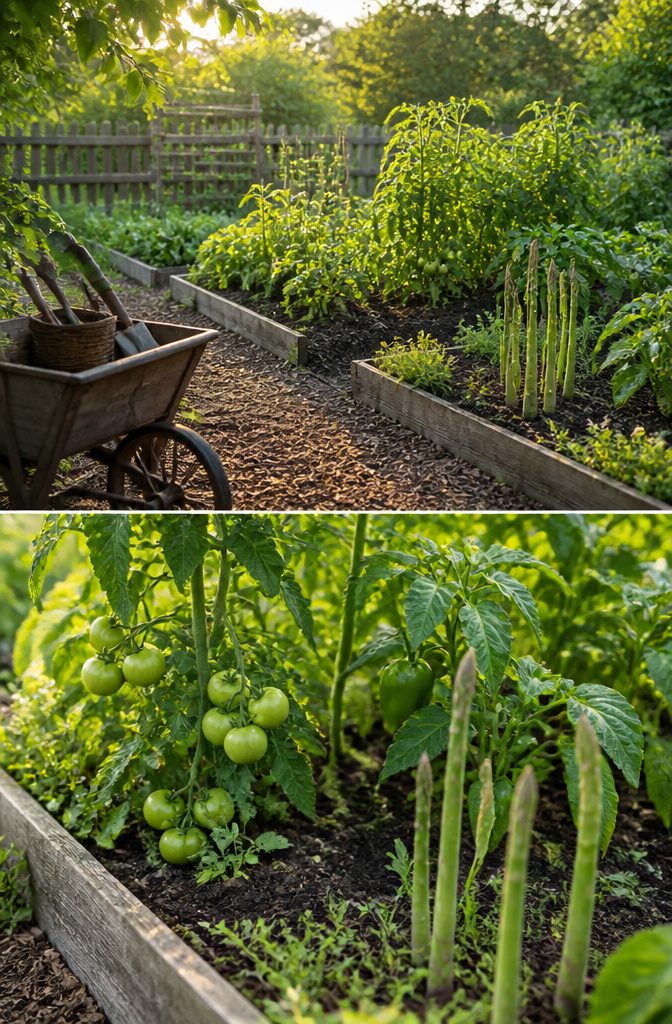
Monthly rhythms in an edible garden shift more than I expected when I started.
April means sowing and the occasional light watering; by July I am out there most evenings, hose in hand, checking for the first stippling of spider mites or the ragged holes of cabbage worms.
The jump in time is real: expect to triple your garden hours from spring to peak summer, and plan for it before you plant.
Perennials change that math. My asparagus bed and the sage hedge along the path need nothing like the steady attention the annual tomatoes and peppers demand.
Annual vegetables want consistent moisture and regular fertility; perennials, once their roots have found their depth, often get by on rainfall and a single top-dressing each year.
I learned this the hard way after trying to keep a front yard of nothing but annuals looking presentable through August.
The gaps after harvest looked worse than I had pictured, and filling them on a full-time work schedule meant weekend scrambles I had not budgeted for.
Now I combine the two.
The backbone of my yard is perennial: herbs, a few small fruits, and asparagus that comes back on its own. Annuals fill the beds I can reach easily and the containers on the patio, where I notice problems fast.
Pest checks are a reaction, not a calendar item; I look when I am already out there watering, and I act that same evening if I find aphids clustering on the tender growth.
Winter cleanup is minimal for the perennials, a simple cutback of dead stems, while the annual beds get stripped and composted in fall.
The design that actually works for someone with a job and a life is the one that does not pretend July is April.
Frequently Asked Questions
Why should I consider edible landscaping?
Edible landscaping lets one plant earn its spot twice: for looks and for food. On a typical $500–$800 annual garden budget, that efficiency matters because you are not maintaining two separate systems.
A blueberry hedge screens the patio like a boxwood would, but hands you fruit in July. The practice also tends to spark conversation with neighbors and gets kids interested in eating what grows.
How can I make my edible landscape visually appealing?
Match cultural needs first and aesthetics second. Rainbow chard with ruby stems reads as ornamental foliage against purple basil, and compact ‘Patio’ tomatoes anchor a bed of marigolds without looking like an afterthought.
Place edibles in rhythmic groupings; three peppers in a staggered row look intentional, while one lone pepper between daylilies looks lost.
What are some easy edible plants to start with in my landscape?
Black raspberries tolerate shade and stay where you put them, giving red winter canes, spring flowers, and dark summer fruit.
Creeping strawberries spread into a low mat that handles light foot traffic, while alpine strawberries stay neat along edges and bear concentrated, perfumed fruit all season.
A compact cherry tree flowers, fruits, and provides enough structure that a small yard reads as designed.
How can I incorporate vegetables into my edible landscape?
Choose vegetables where the harvested part is the fruit or leaf, so the plant keeps producing and stays presentable.
Rainbow chard, purple basil, and red mustard give leaf color that holds for weeks; golden tomatoes and purple beans add fruit color later.
Sequence plantings so one color peaks as another fades, rather than planting everything at once and hoping for a constant show.