
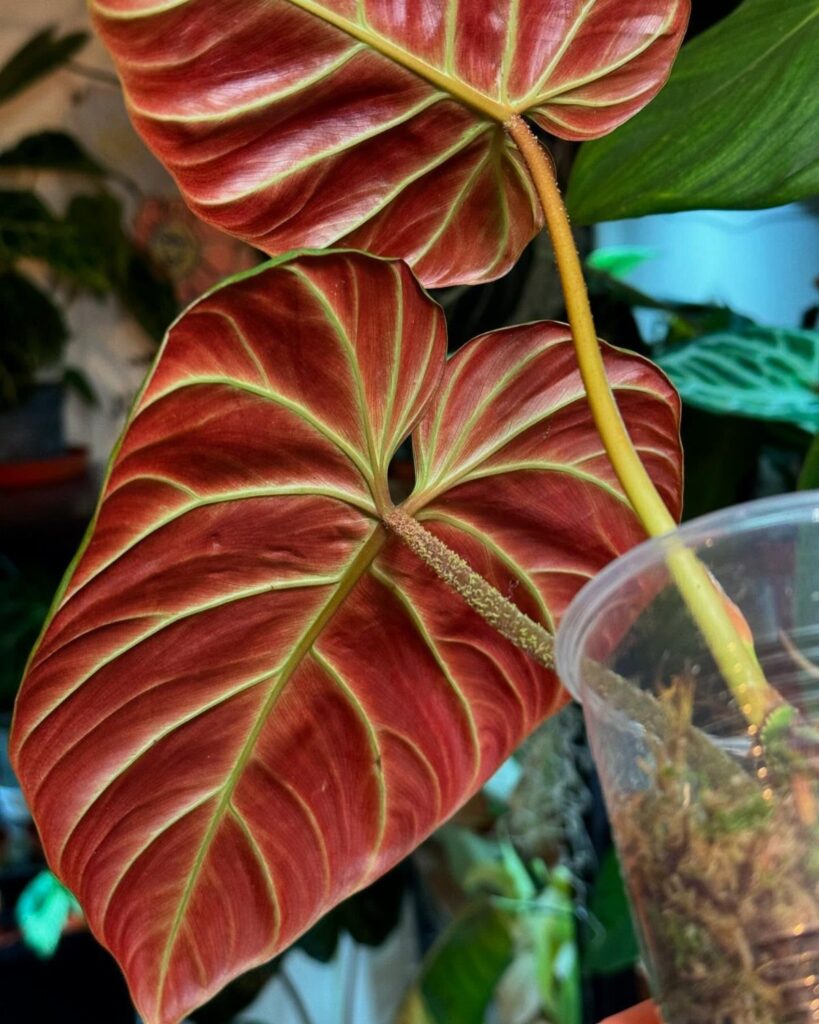
The houseplants below range from a small air plant to a braided money tree that anchors a corner for years, with most landing in a modest price range for a starter pot.
The one that belongs in your space is the one whose light you actually have; a south window with sheer curtain opens different options than a north-facing bathroom ledge, and the plants below cover a range of those conditions.
The lithops, those living stones that split open to push a new leaf pair through, ask so little and look so little like a plant at all.
1. Pebble Plants
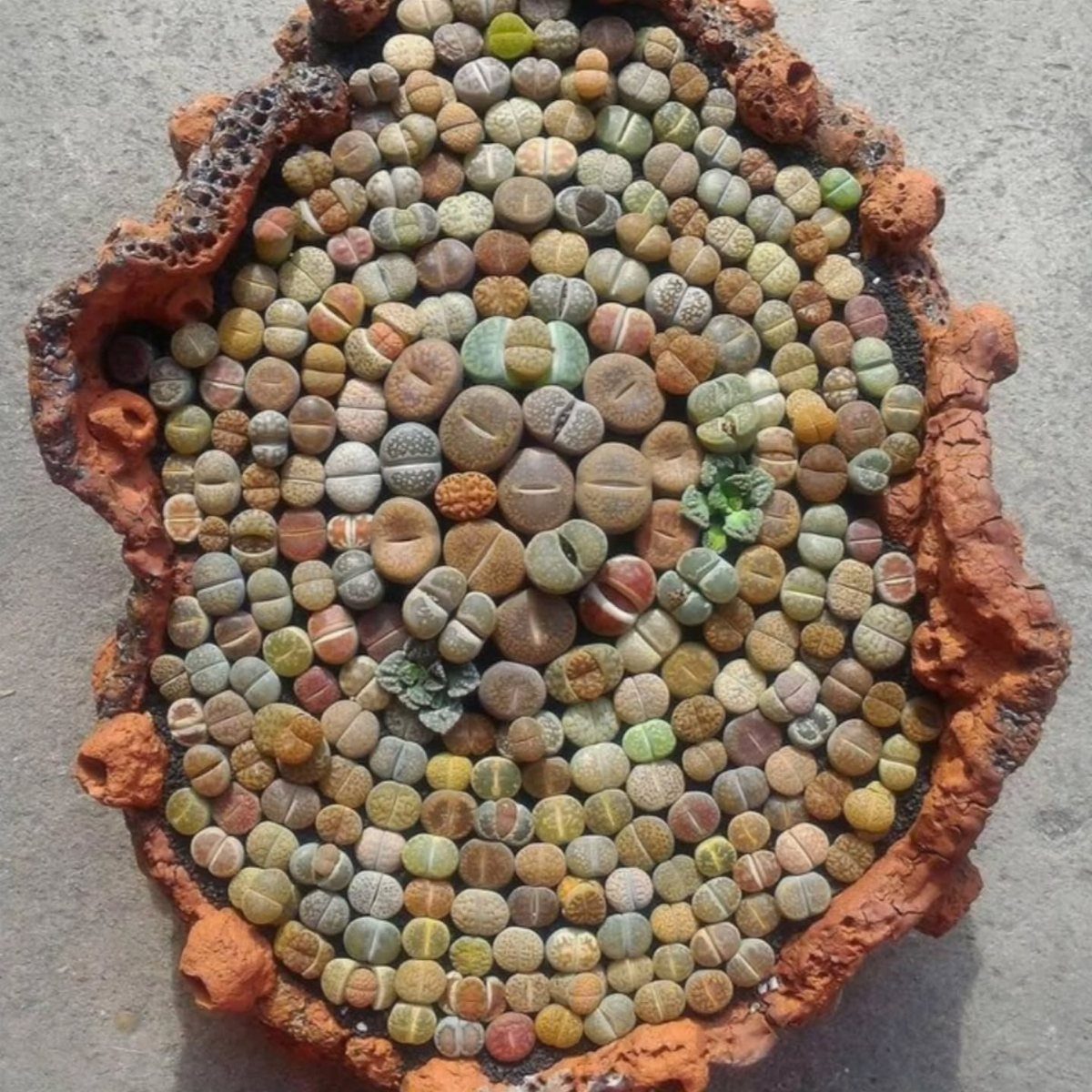
Lithops sit so flat and still they look like scattered river stones until you catch one splitting to show a new leaf pair pushing through. That living rock trick makes them a quiet conversation piece on a windowsill.
They want almost nothing: gritty mix, a south or west window, and water only when the old leaves shrivel to paper. Overwatering rots them fast; I skip them if I travel often in summer.
Pebble plants read as a cluster in a shallow pot; singles spaced apart lose the effect. The pattern of stone-like bodies touching stone-like bodies is the whole point.
2. Pineapple Plant
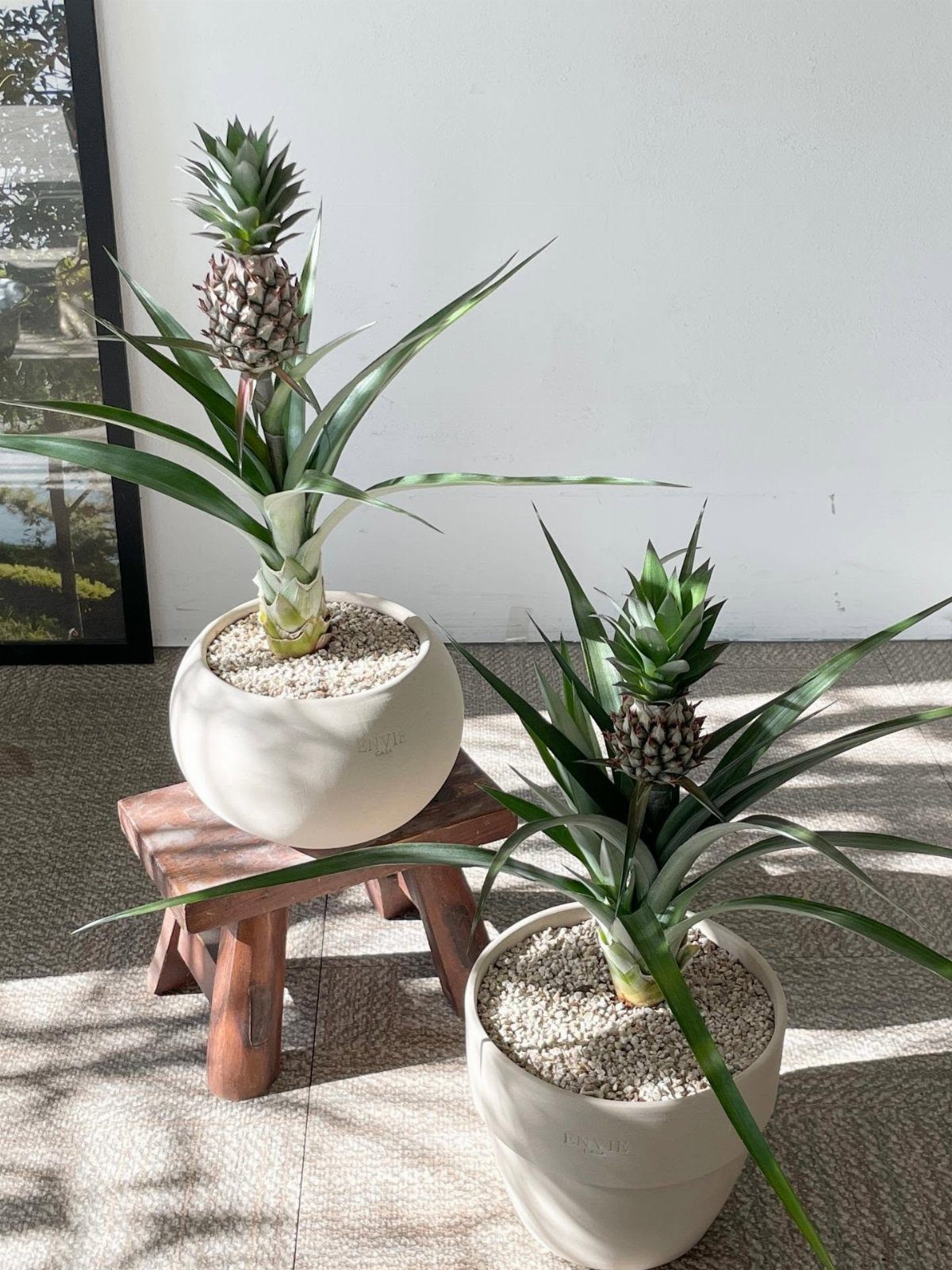
A pineapple plant in a white pot on a stool turns a kitchen corner into something that feels plucked from a greenhouse catalog. The fruit starts small and pinkish, then swells and colors up over months.
It wants bright light and humidity most homes lack in winter; a pebble tray helps, or grouping it with other plants. The mother plant dies after fruiting, but pups at the base carry on.
Two plants in one pot on a wooden stool keeps the scale simple; nothing competes for attention. That restraint keeps a tropical novelty from reading as tiki-bar excess.
3. Hoya Heart
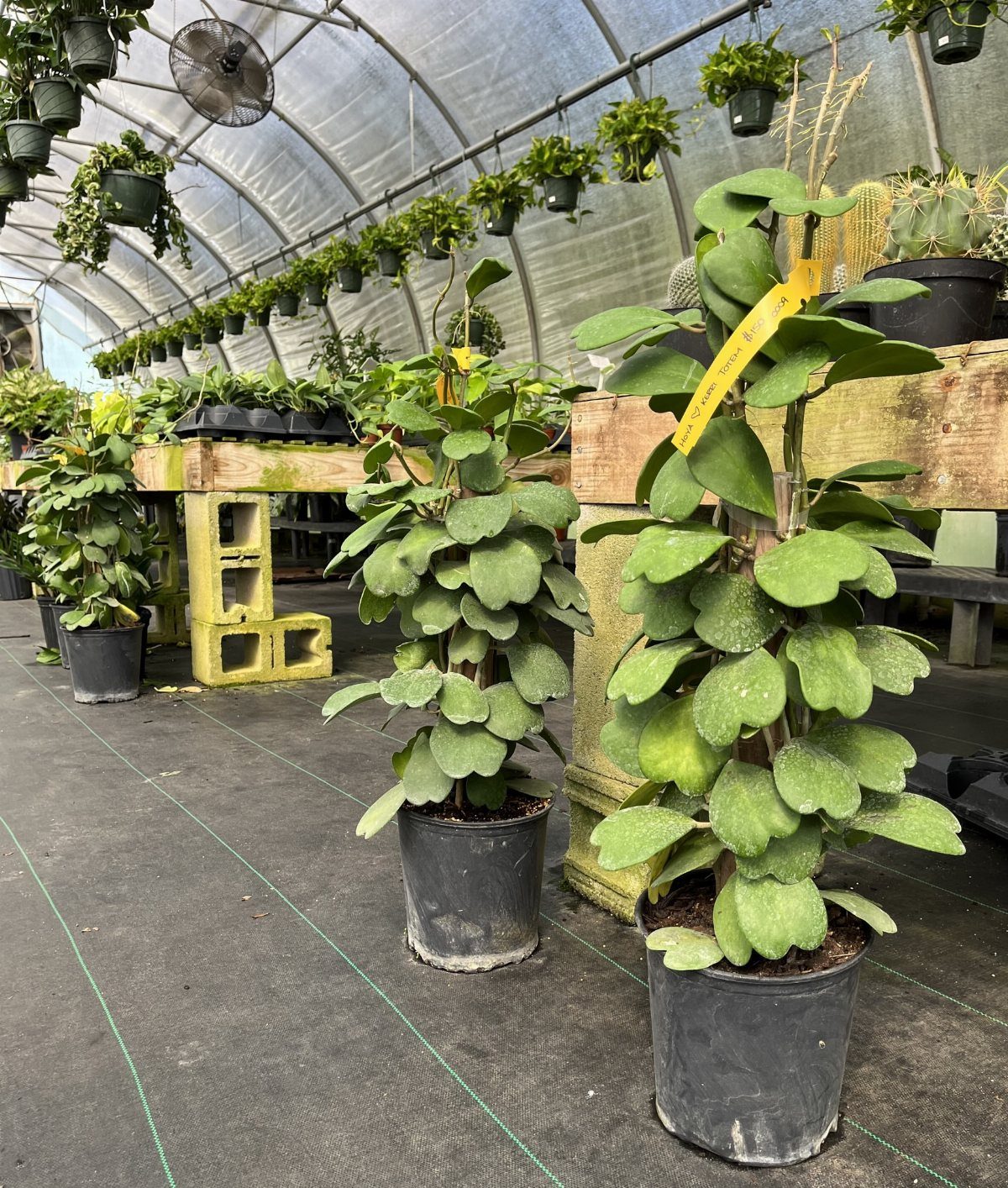
Hoya kerrii sells as a single heart-shaped leaf in a tiny pot, a living valentine that roots slowly and sometimes never vines. Fuller plants mean either waiting or buying up.
Thick leaves store water; let the mix dry between drinks.
A hanging basket suits the vining habit, though a shelf where stems trail works too. East or filtered light keeps leaf color even.
I find the single-leaf version a patience test. Multiple hearts already growing give you something to watch move rather than something to will into growing.
4. Staghorn Fern
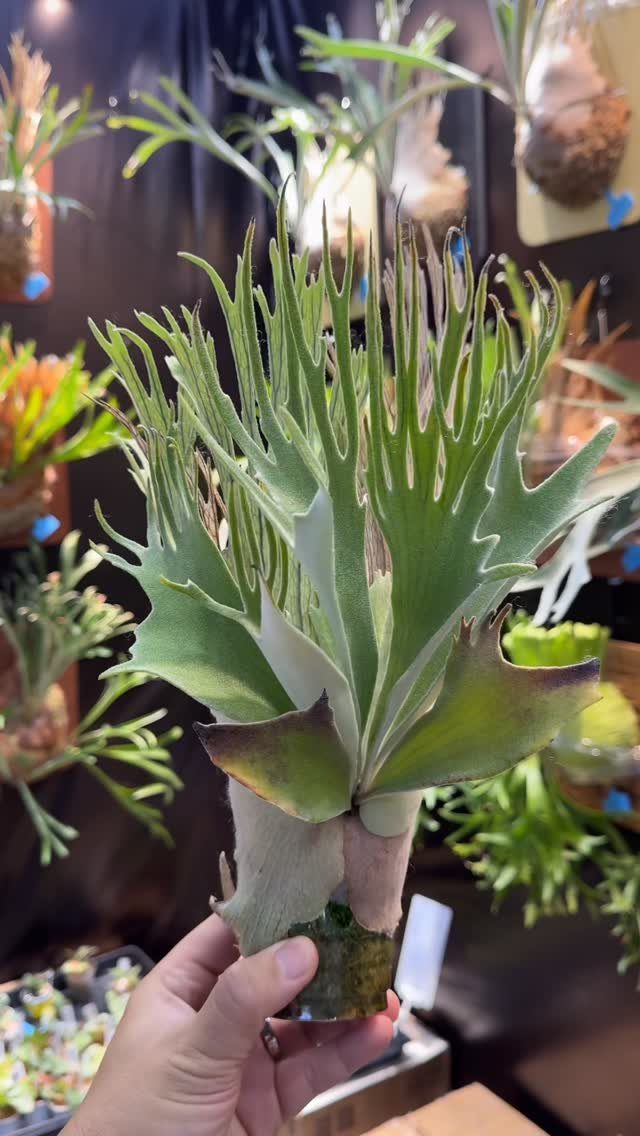
Staghorn ferns mount on wood or hang in baskets, their forked fronds spreading like hands reaching in several directions at once. The antler-like fertile fronds contrast with the round, papery shield fronds at the base that catch debris for nutrients.
Bright indirect light and regular soaking suit them; a bathroom with window light can work if humidity stays high. I have killed them with too much direct sun and with letting them dry too long.
The nursery pot is only a starting point. Mounting on cork or wood, hardware included in kits from most growers, shows the plant the way I prefer it.
5. Ponytail Palm
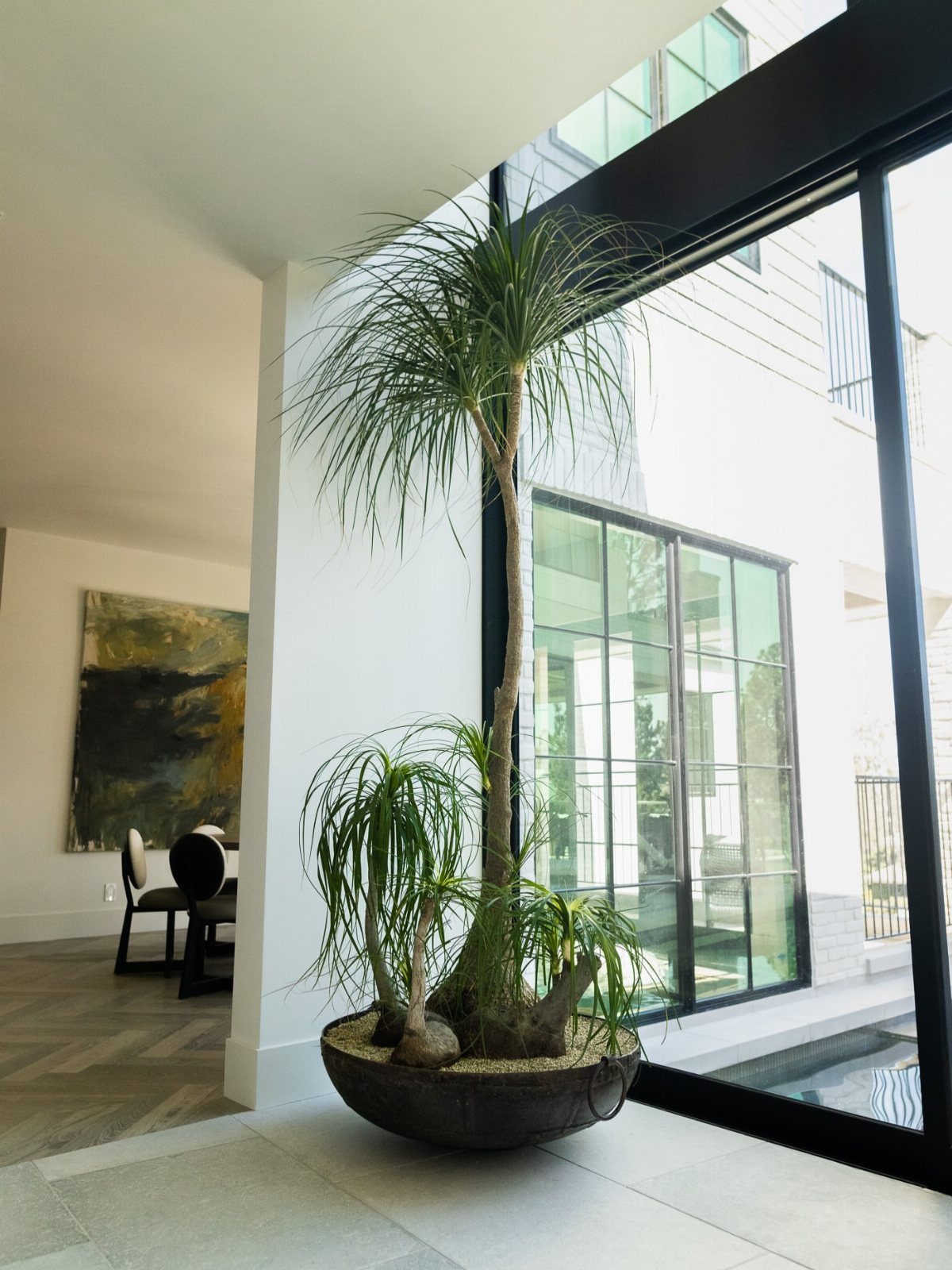
The swollen trunk base stores water like a camel’s hump, so Beaucarnea recurvata shrugs off the forgetful waterer. Thin, arching leaves fountain from the top, giving the palm-like silhouette without any actual palm in its DNA.
It grows slowly to ceiling height in decades, not years; the plant in the dark bowl by the window reads as settled furniture, not a fast project.
Full sun to bright indirect both work, though lower light stretches the leaves thinner.
A low bowl suits this plant better than a tall narrow pot; the trunk needs room to flare. The trunk wants to spread at soil level, and a wide container lets it sit there comfortably.
6. Rubber Tree
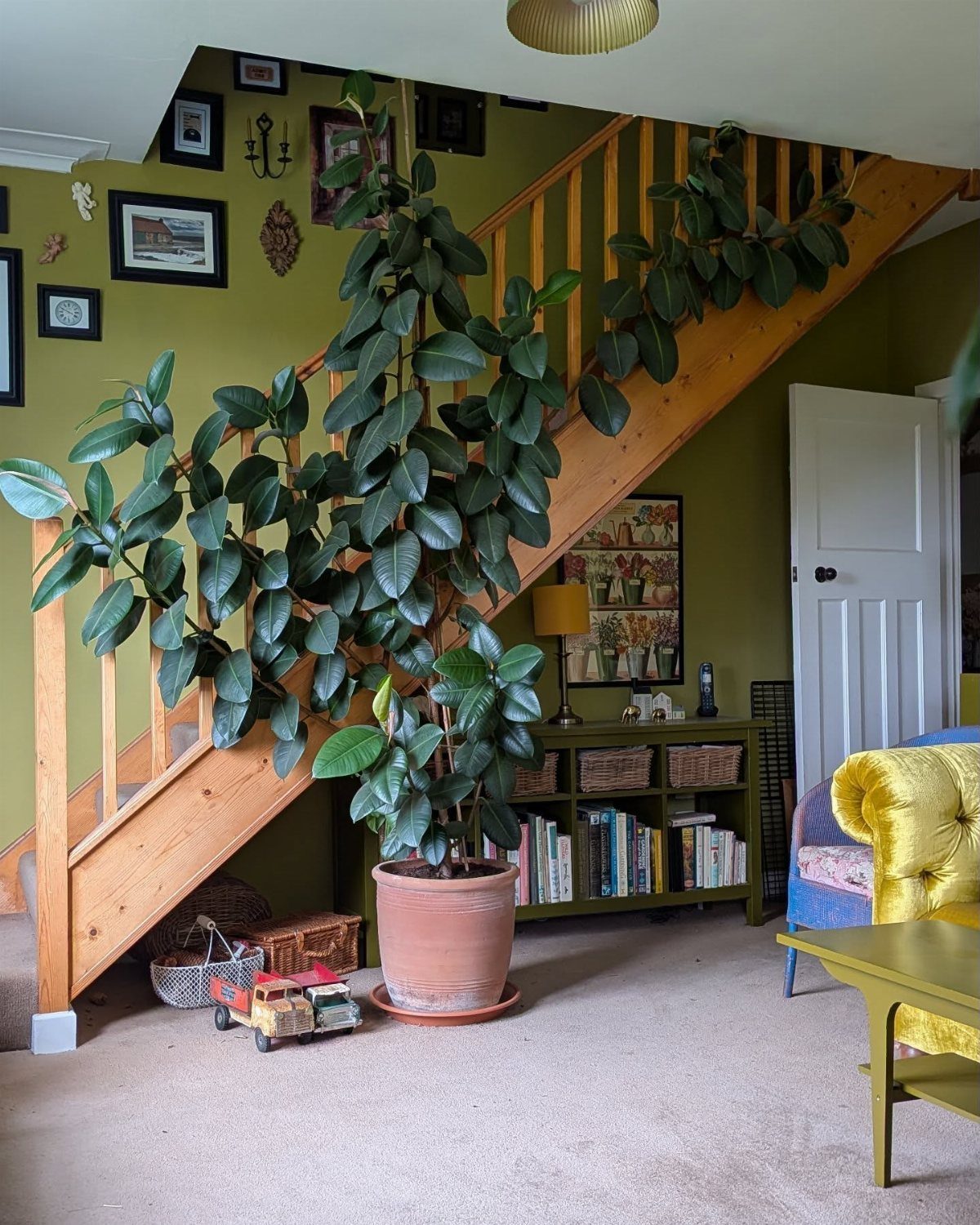
Ficus elastica fills a corner with broad, glossed leaves that read as almost artificial in their perfection. The plant by the wooden stairs shows the scale it reaches when given years and room; younger specimens start bushy and branch lower.
It tolerates lower light than most tropicals but grows faster and fuller in bright indirect. Wipe leaves monthly; dust dulls the shine and blocks what light reaches them.
I treat it as a structure plant, not a detail. Terracotta grounds all that gloss against the green walls; a glazed or plastic pot would feel too slick for my taste.
7. White Fusion Calathea
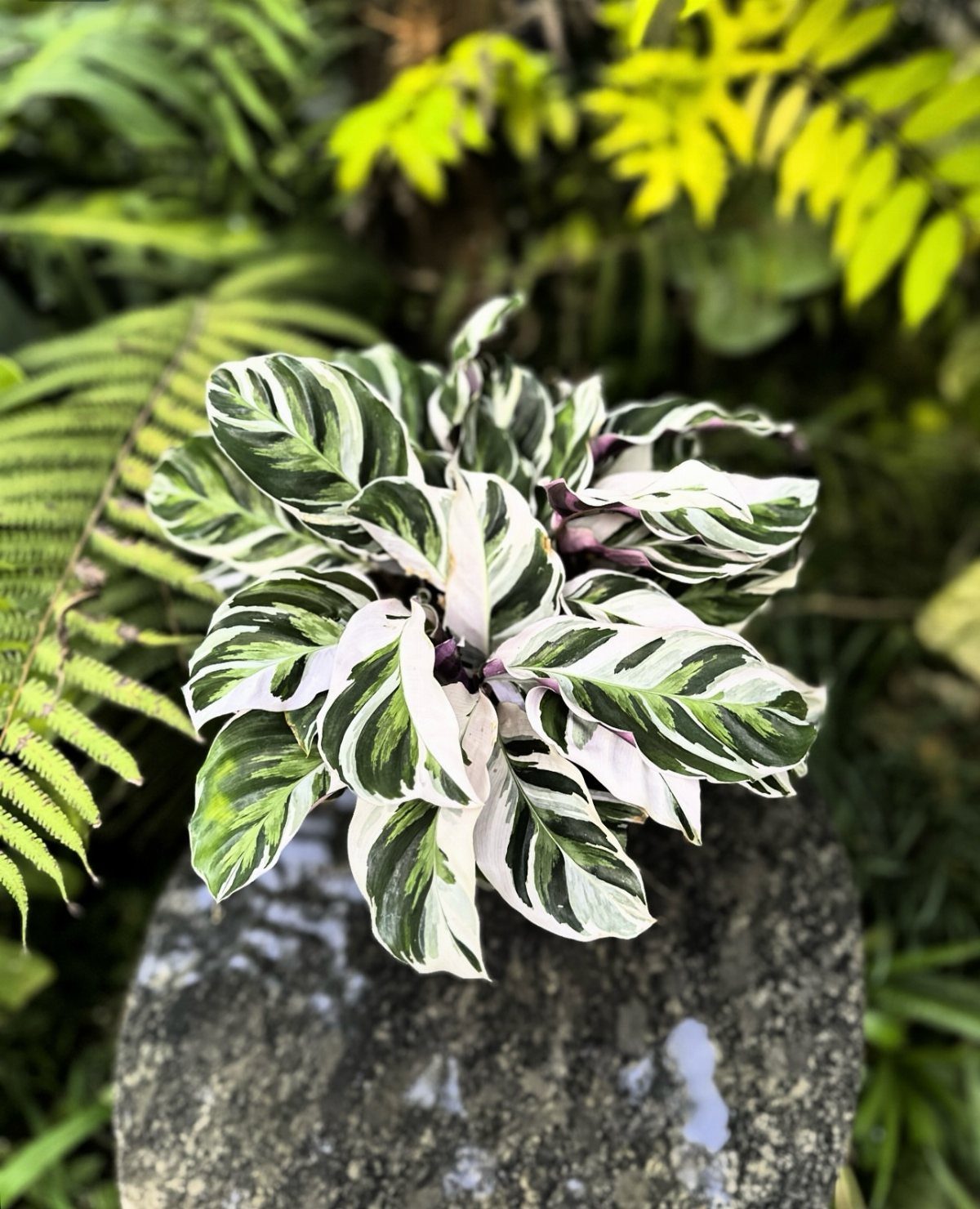
White Fusion Calathea leaves carry watercolor streaks of white threading through green, each one painted differently enough that the plant looks hand-tinted rather than grown. A quiet, neutral pot lets the variegation do the work without competition.
Calatheas in general flag in dry air and tap water, and this cultivar is no tougher.
Group it with other plants, or set it on a humidity tray, and use filtered water if your leaves brown at the edges. It wants bright indirect light; direct sun bleaches the white to yellow.
I would not buy one as a first plant. The leaf pattern rewards attention, but only if you are already in the habit of checking soil moisture with your finger.
8. Air Plants
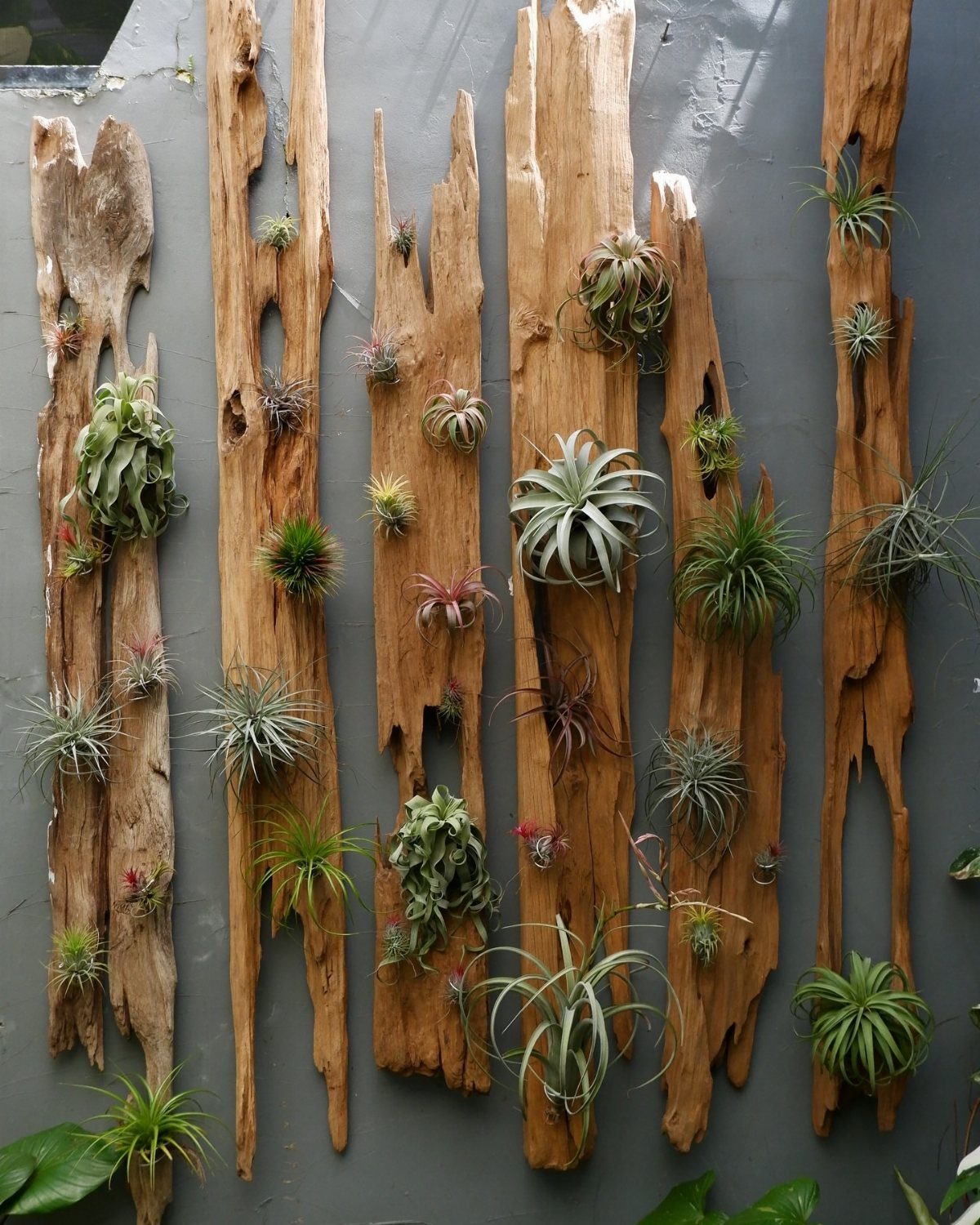
Tillandsia species root only to anchor, drawing moisture and nutrients through leaf scales instead of soil. Driftwood mounts free them from pots entirely; the wood is not decoration, it is the whole setup.
Mist twice weekly in dry rooms, or dunk and shake dry in humid ones. Air circulation matters more than bright light; a bathroom with a window suits some species, though most prefer the brighter air of a living space.
A pale wall behind them reads as gallery space, which is the right instinct: treat each plant as a small sculpture with its own grain and curve.
I buy singles and arrange my own clusters rather than accepting a pre-mounted set. The spacing ends up truer to each plant’s size.
9. String of Dolphins
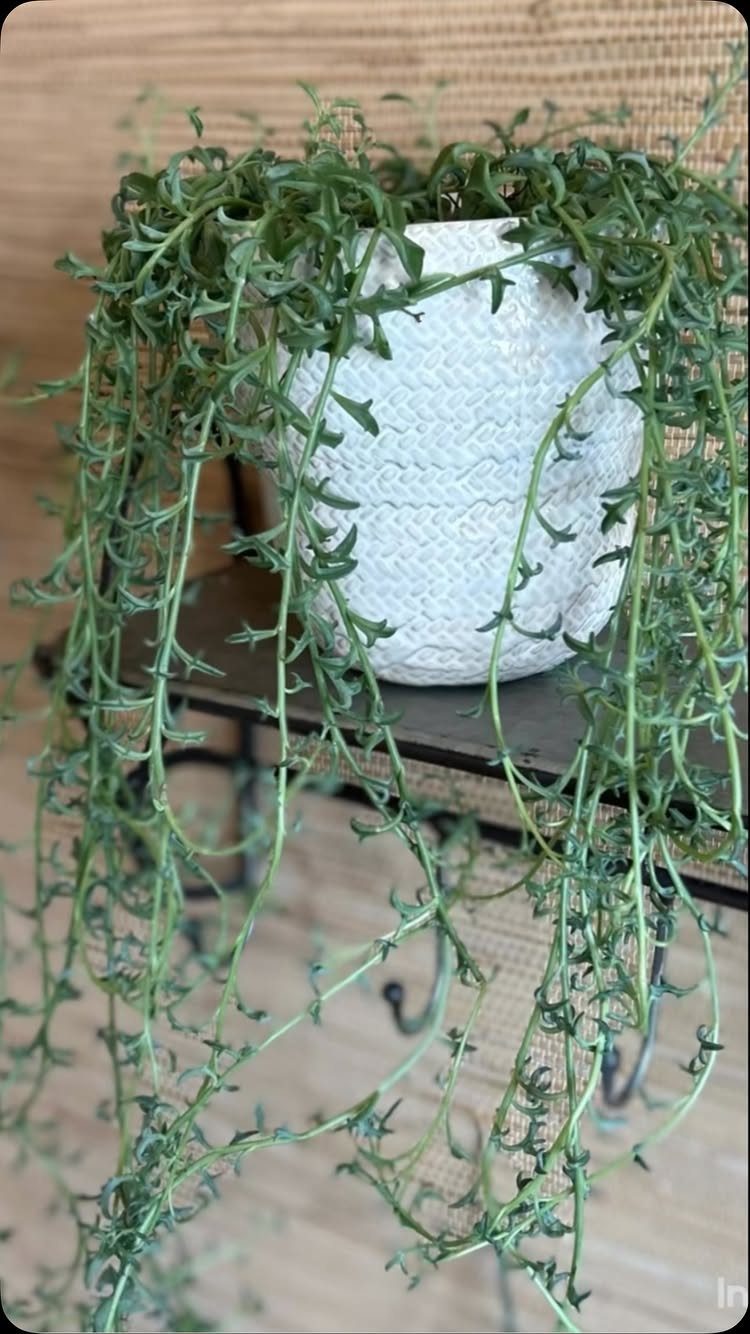
Senecio peregrinus leaves curve to a point with a fin-like dip on either side, so the trailing stems read as a pod of dolphins mid-leap.
A textured white pot gives the eye somewhere to rest; a busy pattern would fight the novelty of the foliage.
It wants the standard succulent deal: gritty mix, water when the leaves soften slightly, and as much light as you have without baking it through glass.
The stems grow fast enough to need a trim or a higher shelf by year two; the cuttings root easily in the same mix.
I find the dolphin shape holds best in strong light. Lower light stretches the gaps between leaves and the figures lose their definition.
10. Lucky Money Tree
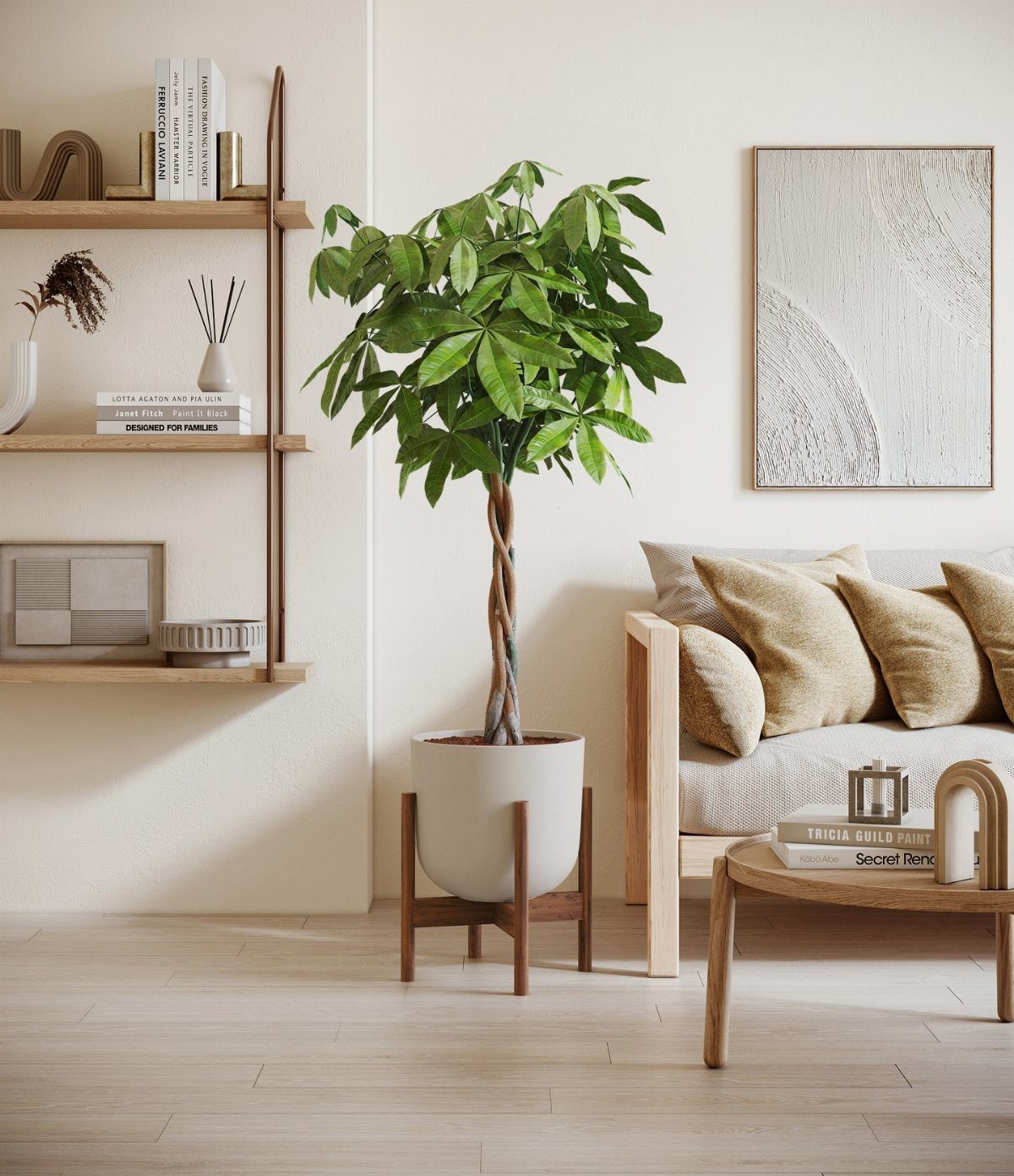
Pachira aquatica arrives with its trunk already braided, stems woven while young and pliable, then trained upward into a small tree shape.
Bright indirect light and water when the top inch dries suits it through most of the year.
It drops leaves in drafty winter air or if left wet, but recovers from neglect more readily than most tropicals. The braid needs no maintenance; it simply grows thicker in its set pattern.
I treat the prosperity symbolism as a bonus, not a reason to buy. The plant itself is an easy structural piece that softens a corner without demanding floor space.
Care Tips for Houseplants
Most houseplants want bright indirect light, not the direct sun that burns leaves through glass. A north or east window suits the majority; west and south need sheer curtain or a few feet of setback.
Well-draining mix matters more than any single ingredient. I use whatever lets water exit the bottom in under a minute; sitting wet rots roots faster than any other mistake.
Peperomia, with its water-retaining leaves and stems, forgives the forgetful waterer better than most. It fits a 4-6 inch pot or a hanging basket, needs little fertilizer, and comes in enough varieties that one usually matches the space you have.
Humidity helps, but I raise it simply: plants grouped together share transpiration, or a pebble tray under the pot adds local moisture without misting that wets furniture.
Filtered water prevents the leaf-edge browning that hard tap water causes in sensitive species.
Unique Plant Features
The visual hook of an unusual plant is what justifies the counter space.
Marimo moss balls read as living green spheres in water, dolphin succulents carry leaves shaped like leaping figures, and zebra plants stripe their foliage in contrasting bands. These shapes start conversations because they do not read as generic greenery.
Chinese money plant carries round, coin-shaped leaves on upright stems; the silhouette is tidy and architectural against a wall.
Color variation matters too: some Peperomia varieties run purple, a tone rare enough among houseplants to catch the eye from across a room.
Texture completes the effect. The succulent-like stems of Peperomia read as plump and almost waxy, while the trailing or upright habit determines whether a plant suits a shelf edge or a tabletop center.
I choose based on what the room already contains: a space with many vertical lines wants something rounded, a cluttered surface wants clean height.
The Panda Plant stores plenty of water in its thick, fuzz-covered leaves, which means less watering! And the unique velvety texture over light green leaves with dark tips will add an interesting touch to any side table, desk or shelf.
Plant Maintenance
Regular watering means checking soil, not marking a calendar.
I stick a finger to the first knuckle; dry at that depth gets water, damp waits. Peperomia’s stored moisture buys extra days, but most tropicals flag quickly once dry.
Light preferences vary by species. Bright indirect light suits Peperomia, Chinese money plant, and the majority of unusual houseplants listed; direct sun demands are the exception and need explicit confirmation before you move a plant to a southern window.
Soil specificity matters for a few. Slightly acidic mix suits Chinese money plant; standard bagged potting soil often needs amendment with peat or a targeted blend.
Fertilizer is occasional, not monthly.
Peperomia often wants none at all. I feed half-strength only during active growth, spring through early fall, and skip entirely for plants that store their own resources.
Humidity trays and filtered water prevent the edge browning that sends people to diagnose disease where the cause is simply their tap.






