

A beetle bank or bump is a raised mound of soil planted with native bunchgrasses and flowers to attract ground beetles that eat garden pests.
It only works as pest control if you build it close enough; keep it within 20 feet of your vegetables or the beetles stay put and your cabbages still get shredded.
My first sat sixty feet away, full of prairie dropseed and switch grass, and the slugs never stopped winning.
1. Why a Beetle Bank Belongs Near Your Garden
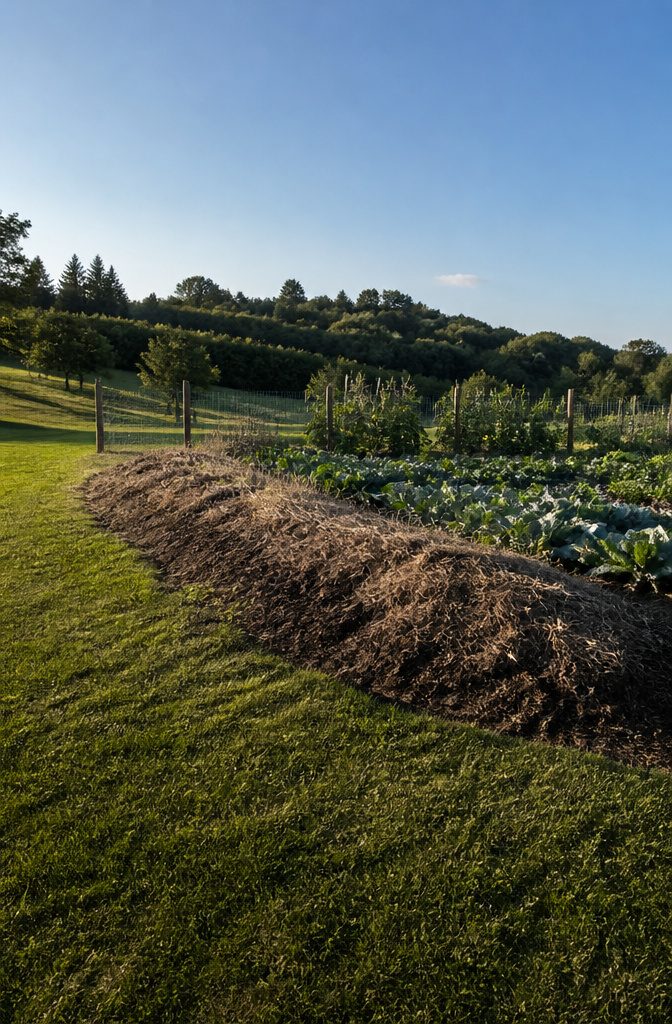
My first beetle bank sat at the far end of my yard, a good sixty feet from the vegetable beds, because that was where the spare soil was and I did not want it in the way.
I planted prairie dropseed and switch grass, mounded the dirt to eighteen inches, and waited.
The grasses grew thick and green. The beetles never came.
Or rather, they came to the bank, but my cabbages three rows over still got shredded by slugs every morning while the ground beetles stayed put in their tidy refuge, too far to bother with the commute.
Keep the bank within 20 feet of the garden if you want it to do actual pest control work.
Ground beetles forage, but they are not commuters. A bank tucked around the corner or behind the shed becomes a beetle preserve, not a beetle workforce.
Light matters just as much. My second attempt landed under the partial shade of a maple, which seemed sensible for summer shelter.
The beetles moved in, but they stayed sluggish through the cool, damp mornings when slugs were busiest. A sunny or partly shaded spot gets them warmed and mobile earlier.
I moved the mound to the south edge of the beds, still close enough to catch the first sun, and finally watched the population start working the row covers.
2. Bank or Bump
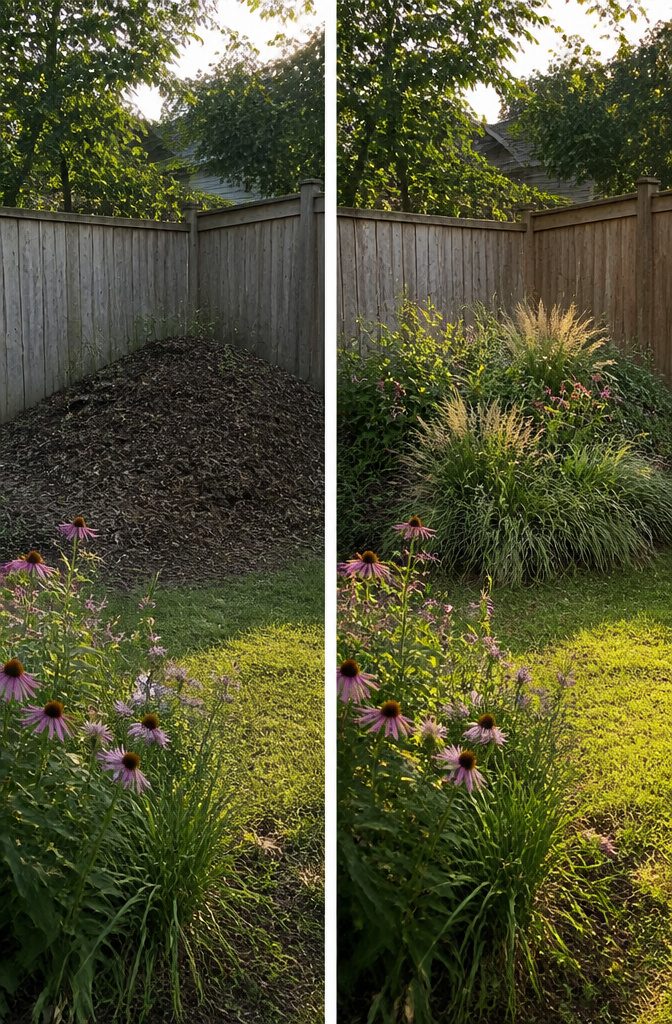
A classic beetle bank runs two to four feet wide in a long berm, while a beetle bump needs at least four feet across and works as a raised circle tucked into a corner of lawn or an open bed.
The shape decides how many grass species you can fit and how the mound handles weather.
A narrow bank dries faster on the shoulders and sheds water to the sides; a wider bump holds moisture more evenly but asks for more square footage than some patios allow.
I started with a bank along my back fence, thinking the length would give beetles more room to roam.
By midsummer the center had settled to about four inches, the edges closer to two, and the whole thing looked like a forgotten speed bump.
The next spring I switched to a bump in an unused corner of the yard, roughly five feet across and mounded to about twelve inches.
It settled to eight by fall, which still left enough height for drainage, and the round shape let me pack in five grass clumps instead of three strung in a line.
Height is your other variable. Sources suggest anything from four to eighteen inches depending on how much soil you have and how dramatic you want the lift.
My advice: start taller than you think, because settling is guaranteed and a flattened bank stops being a beetle refuge and starts being a weird stripe in the lawn.
3. Mounding the Soil
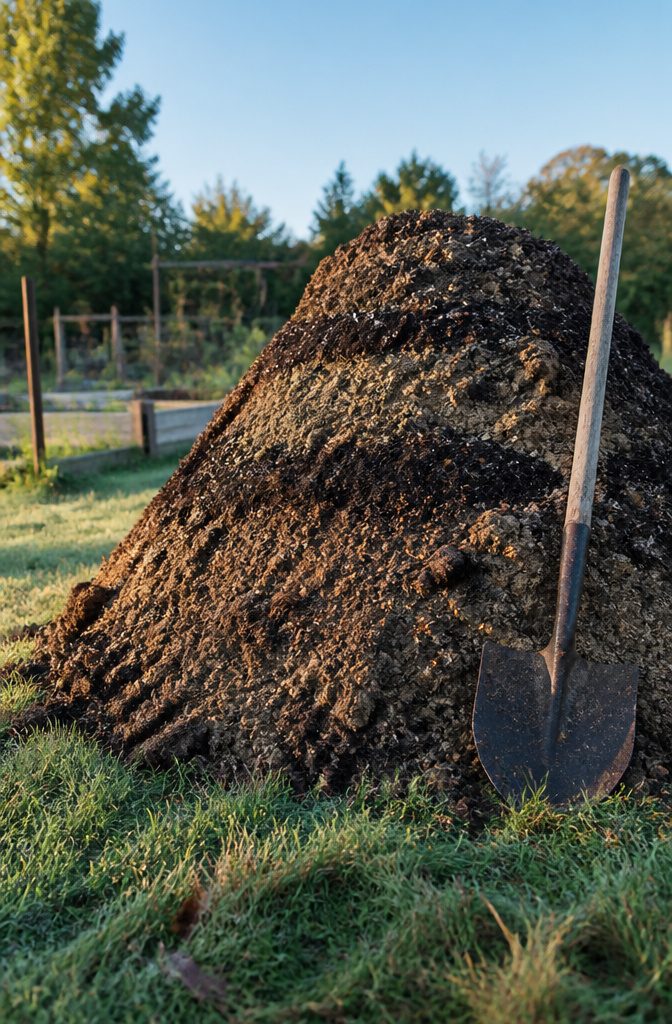
A beetle bank needs real height to do its job. 12 to 18 inches is the working range, with 4 to 6 inches serving as an absolute floor you should treat as a last resort.
Ground beetles climb upward to escape moisture, and a low mound won’t hold the dry pockets they need through a wet season.
For the mix, I used what I had on hand: topsoil from a bed I was reshaping, rough compost that still had some stick and leaf matter in it, and a few spadefuls of the clay subsoil I hit while digging.
The clay was the binder. Without it, or without stomping the mound firm as I built it in layers, the first hard rain would have slumped the whole thing into a puddle.
I tamped each load with the back of the shovel, working from one end to the other, then walked the crown to feel for soft spots.
My first attempt I made too low, maybe 5 or 6 inches because I was eyeing it and tired of hauling.
By July it had settled and spread until it was barely a ripple in the lawn, and the beetles I saw in spring did not stay.
The second one I measured with a stake and string, built to 15 inches, and that mound has held its shape through three years now.
Form a berm at least 4 to 6 inches high… After the grasses are well established, sit back and let the beetles do their work!
That 4 to 6 inch minimum is for farm equipment working at scale. In a backyard, aim higher and pack tighter, or you will be rebuilding come summer.
4. Grasses and Flowers That Bring Beetles In
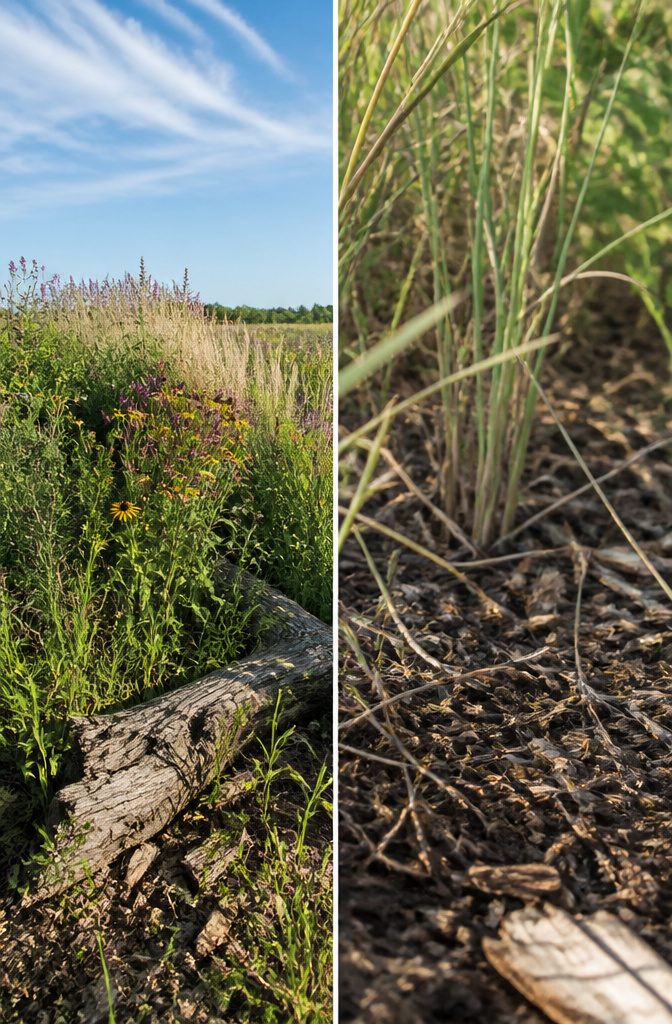
You need at least three species of native bunchgrasses in a beetle bank or bump, plus flowers that produce nectar.
Prairie dropseed, switch grasses, and feather grasses give the structure beetles crawl through and hide under. For flowers, bee balm and coneflowers bring in the nectar even predatory beetles will take.
Non-native turf grasses fail here because they spread into dense mats instead of growing in loose clumps. Beetles need gaps to move through, and turf roots choke out the wildflowers that feed them.
For sunny spots, moss phlox and gray goldenrod work well. I found the shade alternatives later in my own reading: green-and-gold, sold as Goldstar, and wild strawberry both handle lower light and still draw the insects you want.
5. Watering and the First Year of Maintenance
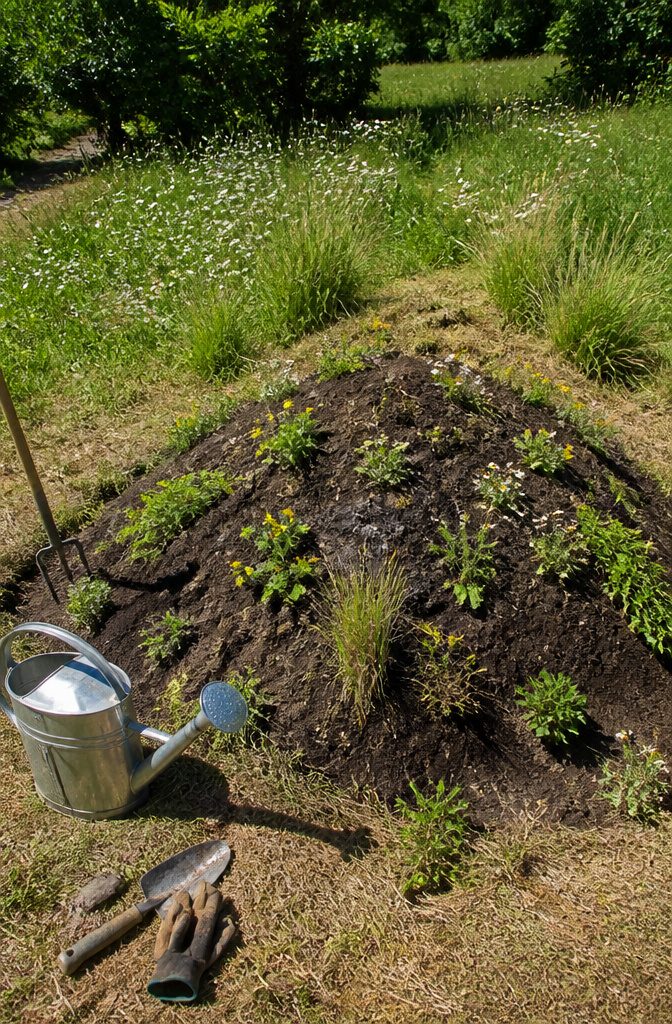
New grass on a beetle bank needs steady water through its first summer.
I watered mine twice a week when rain stayed away, more often during the dry stretches in July and August, until the roots could find their own depth. After that first season the tussocks hold on well enough.
Weeding never fully stops.
Bramble and dock seed in fast, and thistle will try to take the center if you let it. I pull what I can by hand through the season rather than spray.
Once a year, in late fall after the flowers have seeded, I cut the whole bank down with shears or a string trimmer. The clippings stay where they fall.
I skipped that cut one November. The grasses stood through winter matted and half-rotted, and by April a thick thatch had built up.
The ground beetles I saw that spring were different: fewer of the big, fast hunters that patrol open ground, more of the smaller species that burrow through litter.
It still worked as habitat, but not the same kind. A beetle bank is not a set-and-forget feature.
6. Leaving It Alone
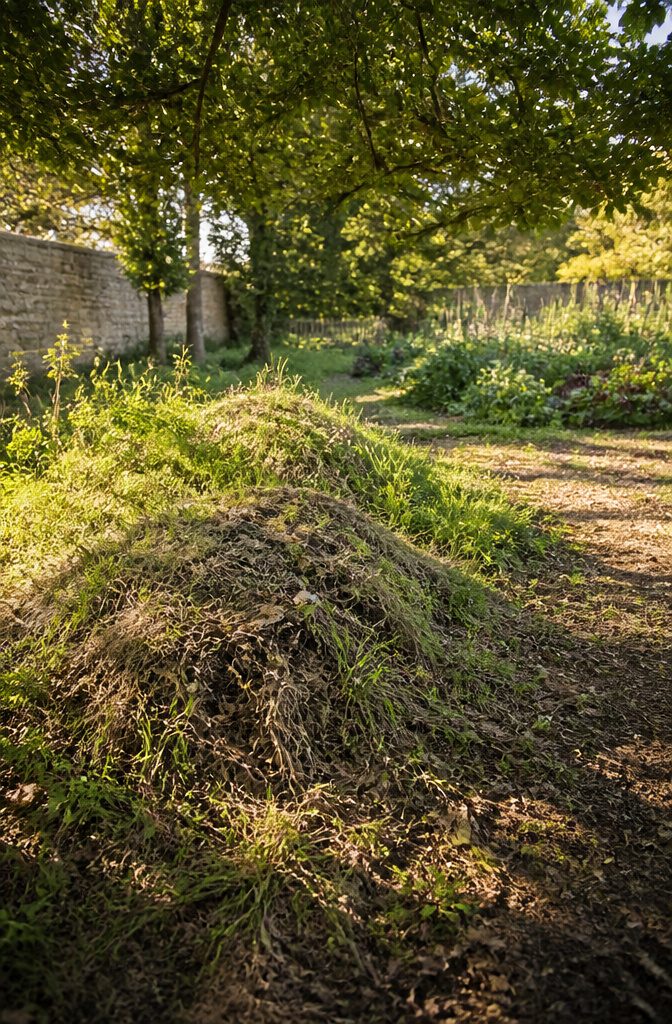
The hardest part of building a beetle bank or bump turned out to be leaving it alone.
By late spring, mine looked like a neglected heap of dried grass and last year’s leaf litter, and I came close to ripping it out for a small raised bed where I could tuck in some annuals.
The tidy gardener in me saw wasted space.
I stopped only because I spotted a ground beetle darting under a clump of dead fescue one morning.
After that, I started checking more carefully. The undisturbed soil and piled plant litter had formed the layered shelter these beetles need: cool gaps at ground level for daytime hiding, and deeper pockets of compacted debris for overwintering.
Cut those grasses back to about 8 inches in fall and leave the trimmings right there on the mound; that rotting material is the insulation that gets them through cold months.
Now I pull an occasional invasive, but otherwise the bank sits untouched at the edge of my plot, roughly twenty feet from the vegetables it protects. The beetles stay put for generations, and so does my impulse to tidy.
What Ground Beetles Actually Do Out There
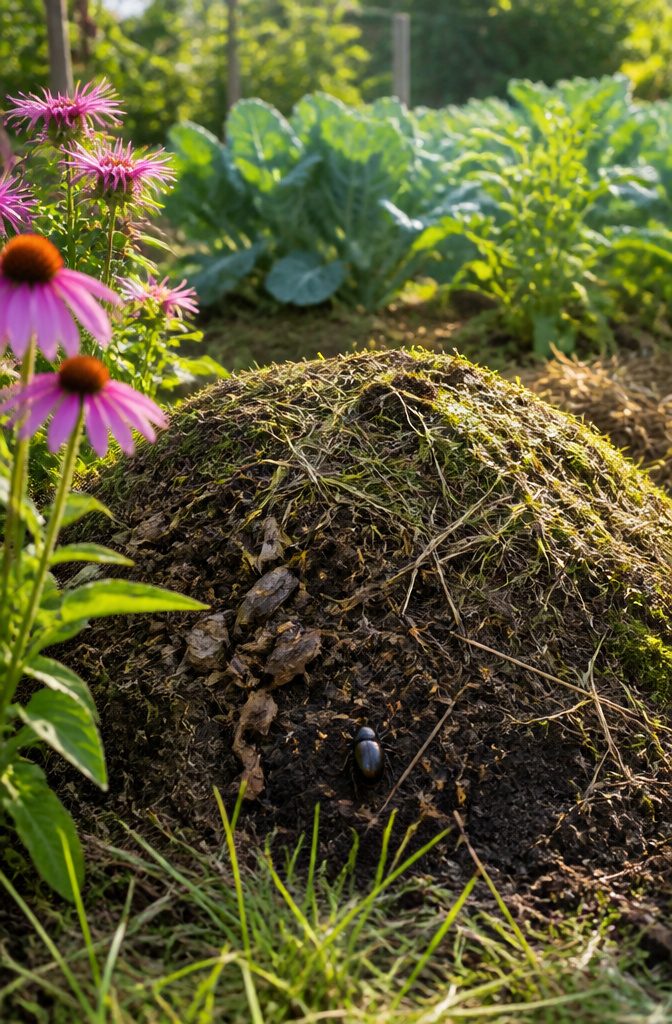
Ground beetles work the night shift while you sleep.
Both adults and larvae scour the soil surface for slugs, aphids, caterpillars, earwigs, cutworms, and vine borers, and each beetle can eat more than its own body weight in prey insects nightly.
That kind of appetite adds up across a season, though not overnight.
A single beetle bank might only shelter a few dozen individuals the first year; by the second or third season, the population can expand enough that slug damage on lettuce or aphid clusters on beans start showing up half as often, then less.
The change is gradual because beetles move slowly, reproduce once a year in most species, and need undisturbed ground to overwinter. Patience pays off here.
Chemical shortcuts kill the beetles along with the pests, and you are back to zero. A established bank, left alone, builds a predator population that trims pest pressure year after year without another purchase or application.
When to Build
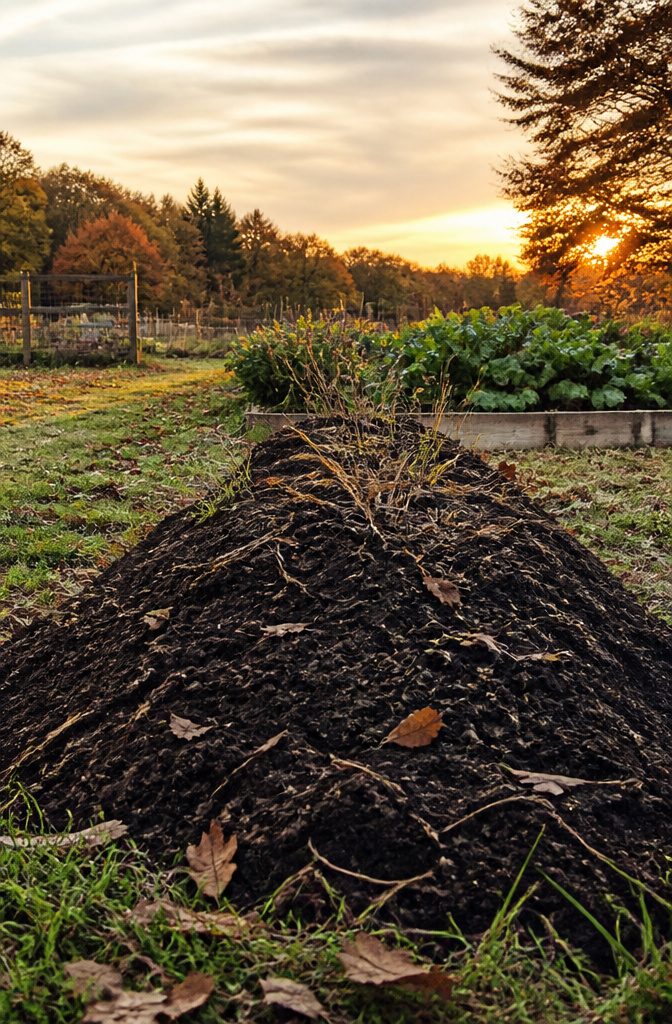
Fall gets the most recommendations for starting a beetle bank, and the reasoning is solid.
Cool soil temperatures let grasses and perennials establish root systems through late autumn and early winter, so the structure is anchored and ready when ground beetles become active in spring.
The plants enter dormancy on their own schedule, not fighting heat stress while they settle in.
I tried spring planting once, and the summer drought window nearly killed the whole effort.
The young roots hadn’t spread enough to find moisture below the surface, and keeping that mound watered through July and August became a daily battle I eventually lost.
A few clumps of switchgrass hung on, but the bank never filled in the way I’d planned, and beetle numbers stayed low that whole first season.
Build in fall so the bank is established before summer stress arrives. The cool-season head start matters more than I expected, especially on a raised mound that drains faster than flat ground.
Three Grasses That Work in Most U.S. Gardens
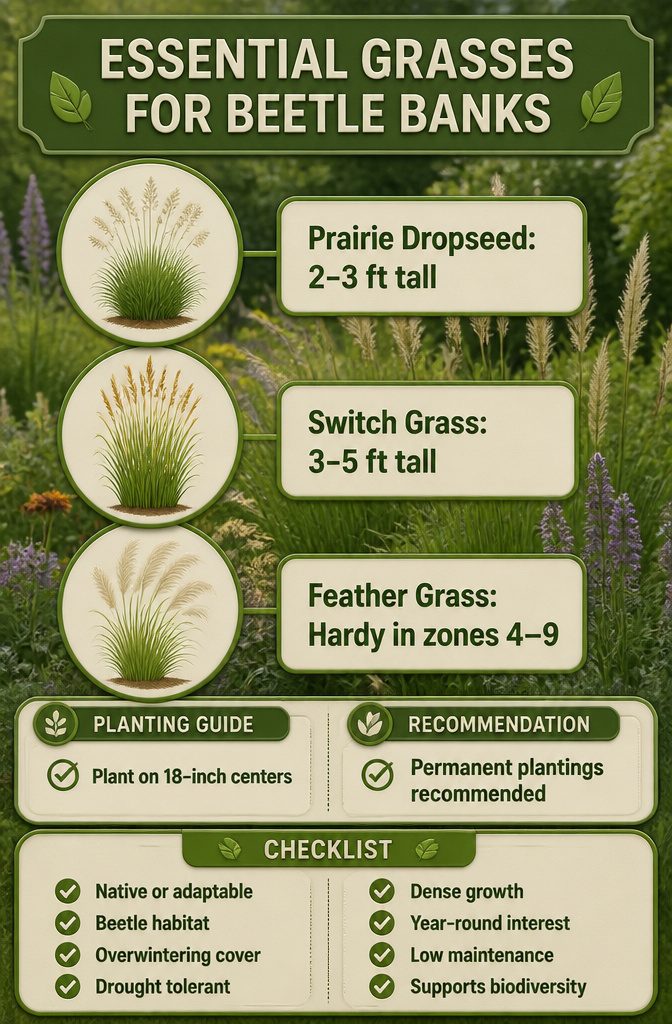
Three bunchgrasses keep coming up as the backbone of most beetle banks, and each one earns its spot differently.
- Prairie dropseed stays the shortest of the three at roughly 2–3 feet, including the airy seed heads. It is native from the central plains east to Ohio and south to Texas, and it forms dense tufts that give beetles ground-level cover without crowding out lower-growing wildflowers you might add later.
- Switch grasses stand taller, usually 3–5 feet depending on the cultivar, and they tolerate a wider moisture range than the others. They are native or adaptable across most of the lower 48, which makes them the safe default if you are unsure about your exact zone match.
- Feather grasses are the visual carry of the group, with the fine, hair-like plumes that hold up into winter. They reach about 2–3 feet and give beetles vertical structure plus tangle for overwintering; they are hardy in zones 4–9 so they slip into most plans without question.
I budget these as permanent plantings: one division or plug of each, spaced on roughly 18-inch centers, covers the back or center of a modest beetle bank without annual replacement costs.
Frequently Asked Questions
What is a beetle bank?
A beetle bank is a raised mound of soil planted with native grasses and wildflowers that gives ground beetles and other beneficial insects a place to hide, overwinter, and stay close enough to your garden to hunt pests at night.
It works as permanent habitat rather than a one-season fix, so the beetles settle in for generations instead of moving on.
How do I attract ground beetles to my garden?
Build a beetle bank or bump within 20 feet of your vegetable beds, mound the soil 12 to 18 inches high, and plant at least three species of native bunchgrasses plus a few nectar flowers like bee balm or coneflower.
Ground beetles are not commuters; if the shelter sits too far away, they will stay put and your cabbages will still get shredded.
What plants should I use for a beetle bank?
Start with three native bunchgrasses such as prairie dropseed, switch grasses, and feather grasses, then add nectar-producing flowers like bee balm, coneflowers, gray goldenrod, or moss phlox for sunny spots.
Avoid turf grasses; their dense mats choke out the gaps and wildflowers beetles need to move through and feed.