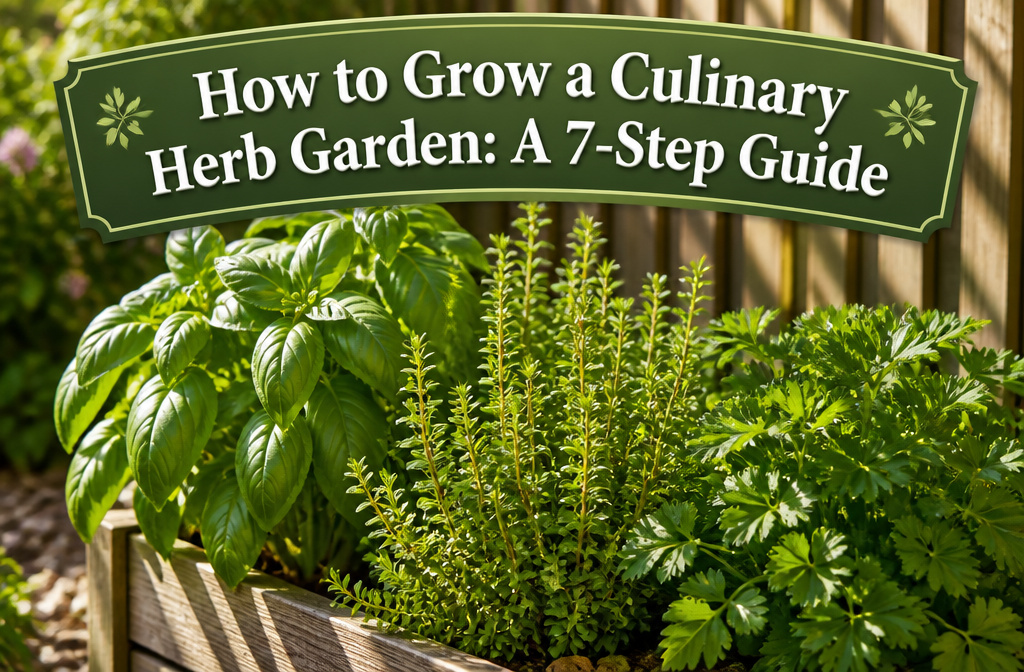
Growing a culinary herb garden is the practice of cultivating edible plants like basil, thyme, and parsley for kitchen use. The catch is that most failures come from watching the sun at breakfast and assuming the pattern holds; a single fence or tree can shade a bed by two o’clock and leave you with pale, leggy plants. I learned this after mapping a narrow strip along my back fence, planting carefully, and watching the neighbor’s privacy fence ruin the whole bed by midsummer.
Choose a Location
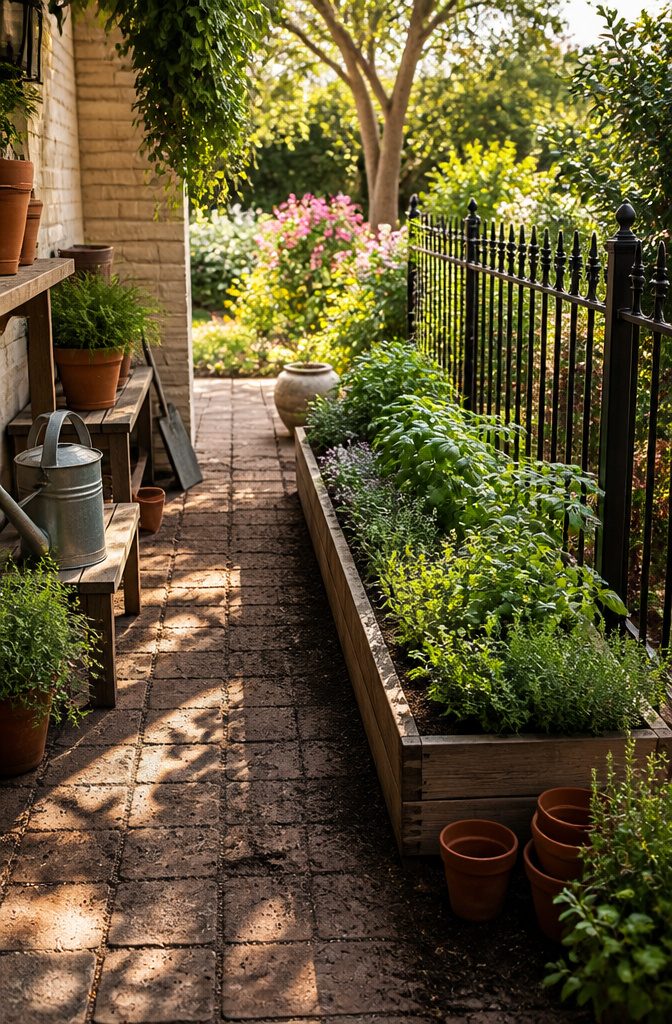
Most culinary herbs need at least six hours of direct sunlight daily, and eight hours produces noticeably fuller growth. That figure comes from the extension guides, but I learned it the hard way my first season. I had mapped a narrow bed along my back fence, measured morning sun through noon, and called it good. What I failed to track was the neighbor’s six-foot privacy fence, which threw the whole strip into shade by two o’clock just as summer peaked. The basil stretched pale and leggy. The thyme sat there, alive but barely growing, for months.
Yard, patio, or balcony, the same rule applies. Spend a day watching the actual light, not just checking it at breakfast. Track where sun falls at midmorning, noon, and midafternoon. A spot that reads sunny at nine can turn disappointing fast if a building, fence, or tree line cuts the afternoon short. Containers help here. On my balcony years later, I kept wheeled pots I could shift as the season changed and the sun angle dropped. The mobility cost maybe thirty dollars at a big-box store, and it saved me from repeating the fence mistake.
Select Your Herbs
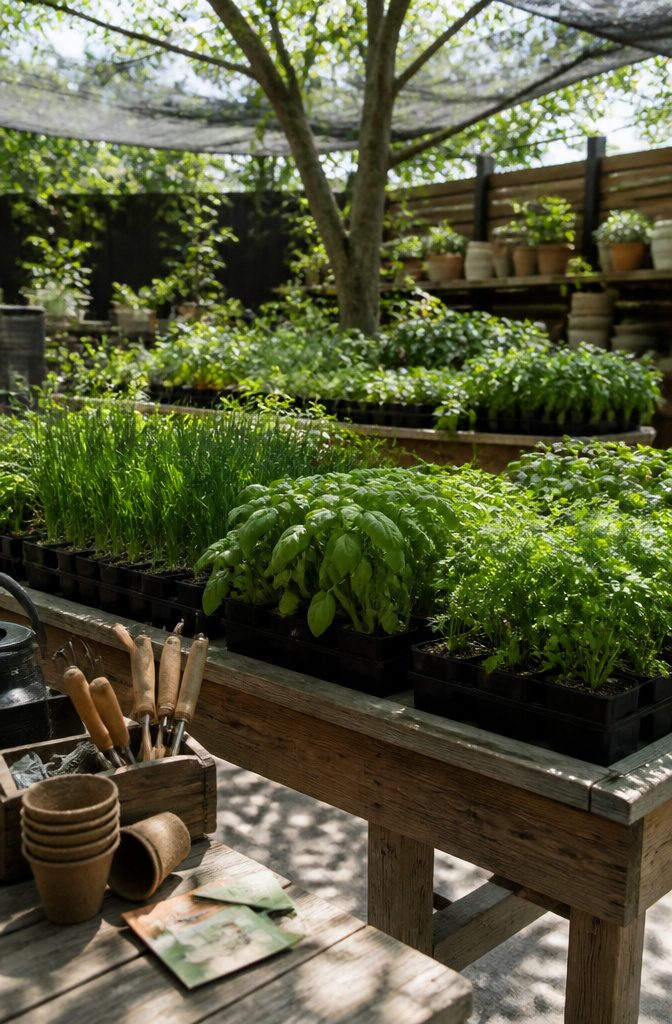
The nursery in May is a trap. Everything looks lush and possible, and before you know it you are carting home six-packs of basil and rosemary because the leaves smelled good in the parking lot. I have done this, and I have killed most of them.
Choose herbs by what you cook, not what looks pretty. If you make tomato sauce once a week, basil and oregano earn their keep. If you roast chicken, rosemary and thyme are the workhorses. Parsley and cilantro reward almost daily use in salads and salsas, but cilantro bolts fast in heat and may need replanting twice a season. Chives, dill, and sage fill the gaps for eggs, fish, and holiday stuffing.
Mint is the outlier here. It grows so aggressively it needs its own pot, period, but if you drink iced tea or make pesto, the space is worth it.
My own mistake was rosemary. I bought it three years running before I accepted that my zone is too cold for it to survive winter outside. Thyme and oregano, by contrast, come back reliably. Sage hangs on if I mulch it well. Know your zone before you commit, because the nursery tag says "full sun" but not "will die in January."
Prepare the Soil
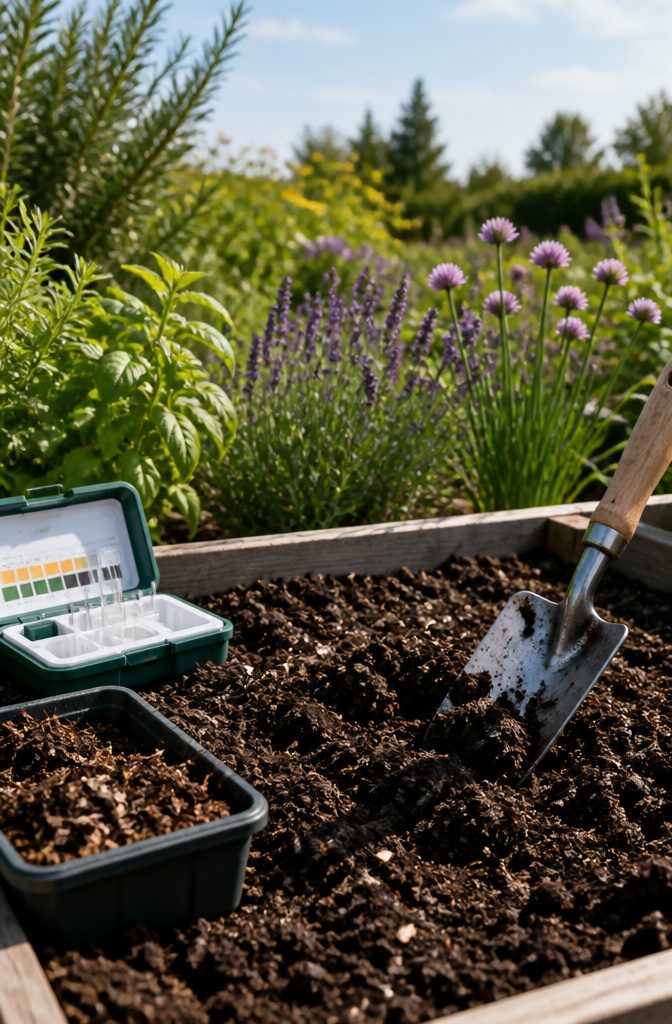
Well-drained soil sits at the root of every herb garden that lasts. Most culinary herbs want a pH between 6.0 and 7.5 and soil that lets water pass through rather than pooling around the roots. Heavy clay or soggy ground will kill them faster than almost any other mistake.
I learned that the hard way my first season. I bought bagged "garden soil," filled my raised bed with it, and planted basil that turned yellow and collapsed within two weeks. That soil held water like a sponge. When I finally dug up a plant, the roots had rotted into brown mush.
Now I run a simple drainage test before I plant anything. I dig a hole about a foot deep, fill it with water, and let it drain completely. Then I fill it again and time how long the second batch takes to disappear. If it takes more than an hour, the soil needs work.
The fix is compost. I mix in two to three inches and turn it through the top six to eight inches of native soil. For containers, I skip the garden soil label entirely and use a potting mix labeled for containers, making sure the pot has drainage holes. Rich, heavily amended soil actually works against you with herbs; it pushes fast, leafy growth and dials down the essential oils that give the leaves their flavor.
Plant Herbs
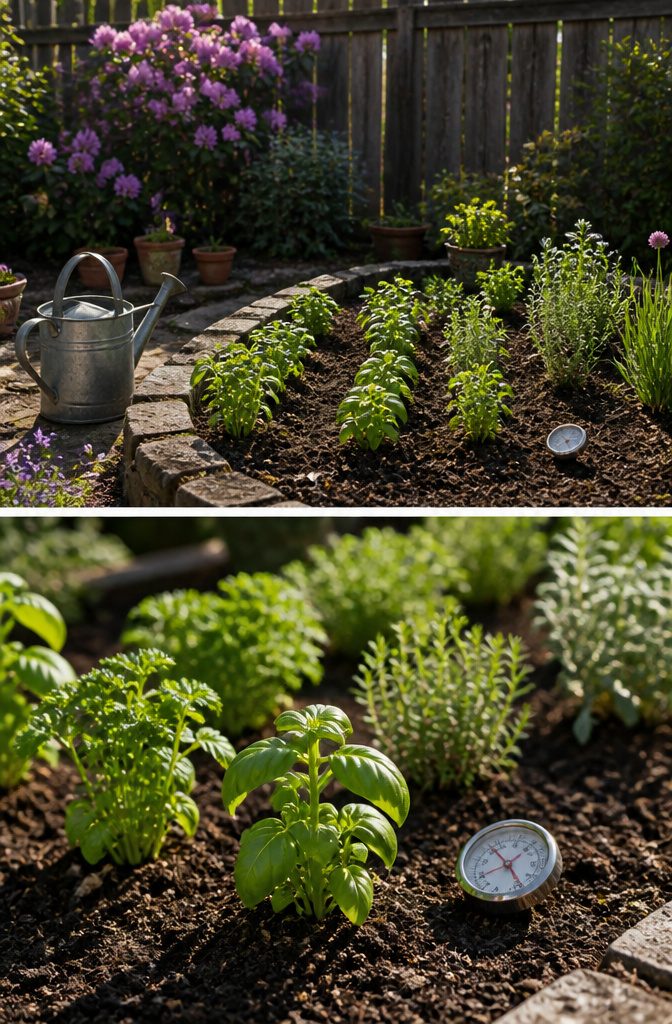
Wait until the last frost date has passed before putting anything in the ground. I learned this the hard way with basil, which sulks in soil below 50°F and often rots before it ever takes off. Seeds need warmer soil than transplants do, so the gap between "safe for seedlings" and "safe for direct sowing" can be two or even three weeks. These days I check with a soil thermometer I picked up for $12 rather than guessing based on the calendar.
For a first herb garden, seedlings from the grocery or garden store save weeks of waiting and remove the germination gamble entirely. Parsley, basil, thyme, oregano, and rosemary are widely available this way and repay the initial cost with harvests that outlast anything bought in those small fresh boxes. Starting from seed only makes sense if you are growing at scale or have an indoor setup with grow lights. I have done both, and for a small patio or balcony plot, the seedling route wins on speed and reliability every time.
Water Regularly
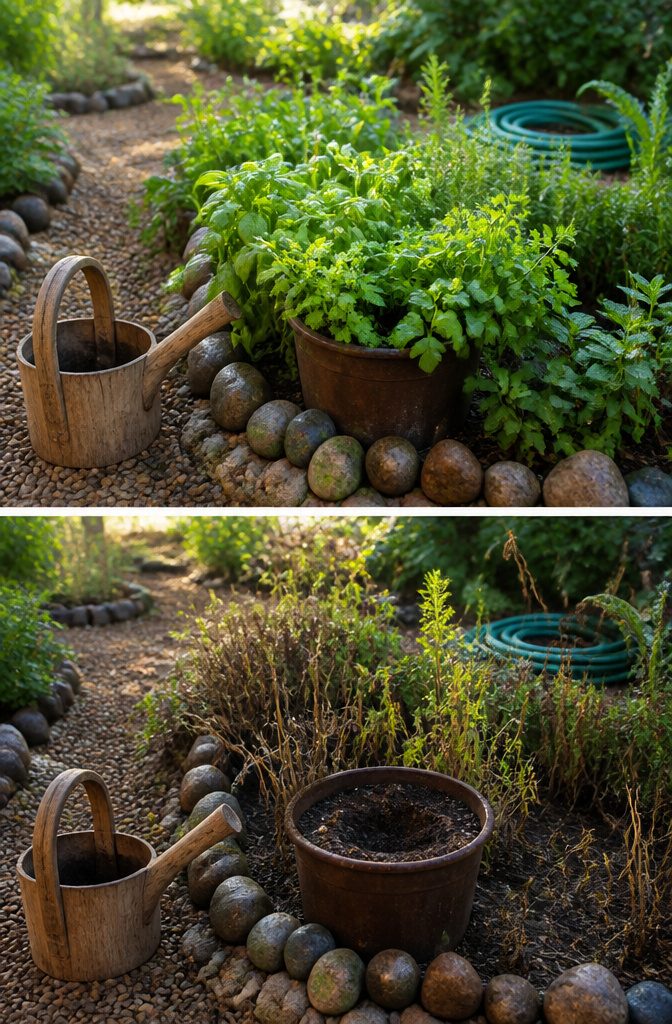
Watering herbs looks simple until one plant dies from the exact care that keeps another alive. Outdoor herbs need one deep soak per week, enough to reach about eight inches down, rather than light sprinkles every morning. Let the top half inch dry for indoor pots before you add more.
Basil and cilantro want steady moisture; their leaves wilt fast and recover slow if you miss a day. Thyme and rosemary come from drier ground and prefer the soil to go dry between drinks. I treated my first thyme plant like basil, keeping its pot damp, and the roots rotted within two weeks. The foliage stayed green almost until the end, which made the mistake harder to catch.
Container herbs on a hot patio can need daily water in July, so the once-weekly rule is for garden beds with room to hold moisture. Soggy soil breeds root rot in every herb, but drought-tolerant kinds forgive neglect far better than they forgive drowning.
Harvest Appropriately
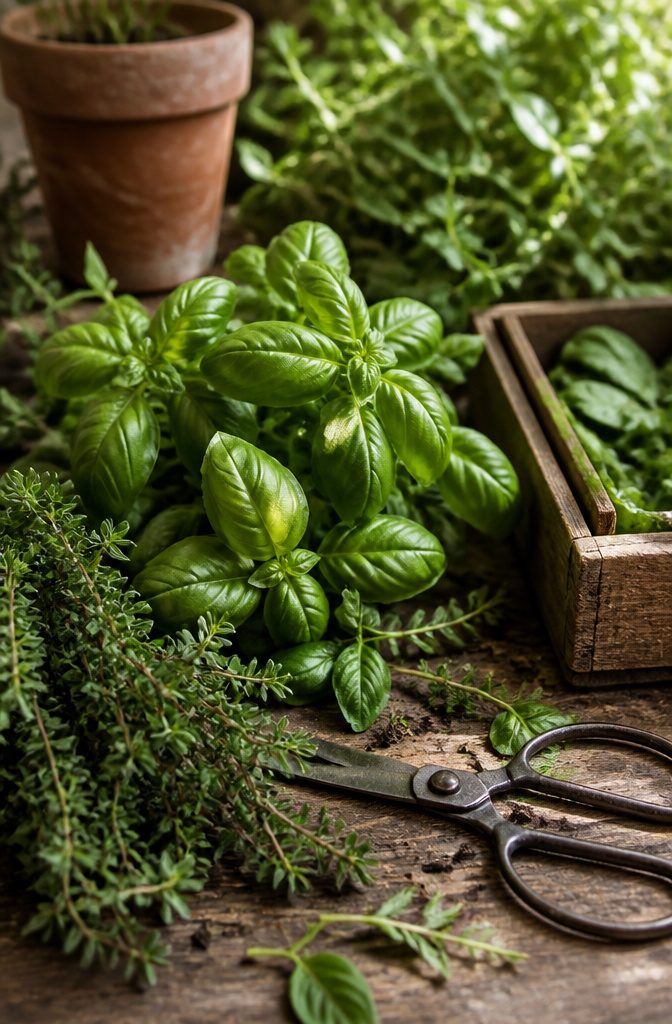
Regular snipping keeps herbs in their leaf-making stage longer. Pinch off the top few sets of leaves on basil as soon as it reaches about six inches, and the plant branches lower instead of shooting up to flower. The same habit works across most soft-stemmed herbs: remove a little often, and the plant stays bushy and productive.
Flowering changes everything. Once an herb shifts to its reproductive phase, leaf production slows or stops, and the leaves that remain turn bitter, grassy, or tough. This process is called bolting, and cilantro is the one most gardeners learn it on. I let mine flower the first summer because the bees loved it, which was true, but by the time I cut it back the leaves had turned soapy and sharp. Now I keep one plant pruned for the kitchen and let a second go to seed if I want coriander or pollinator traffic. After any herb does flower, cut it back hard to force bushy new growth from the base.
Maintain the Garden
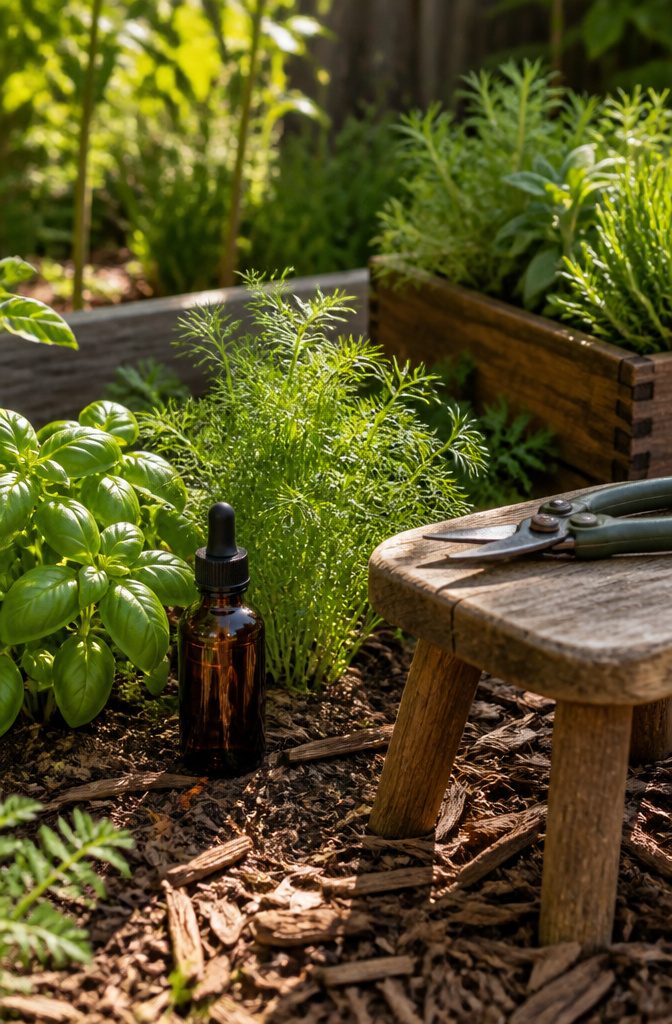
Aphids showed up on my dill the second week of June, and I told myself they were just passing through. By the third week they had spread to the basil, the parsley, and a sage plant I had nursed through winter. Neem oil and insecticidal soap are the only controls I keep on hand now; I spray in early morning or evening, never in full sun, and I check the undersides of leaves where spider mites weave their fine webbing before you ever see the mites themselves.
Pruning is simpler than it sounds. I snip herbs back to a leaf node just above where two new shoots are forming, which forces bushier growth and delays flowering. With dill, once the umbels form, leaf production drops fast, so I cut hard and often through early summer.
The organic approach takes patience. Neem works by disrupting feeding and breeding, not by knockdown, so a heavy aphid colony needs two or three applications four days apart. Insecticidal soap kills on contact but leaves no residue; it is my first move against spider mites and my backup for aphids when the oil is not enough. Either way, I test a few leaves first. Burned basil taught me that.
Best Herbs for Beginners
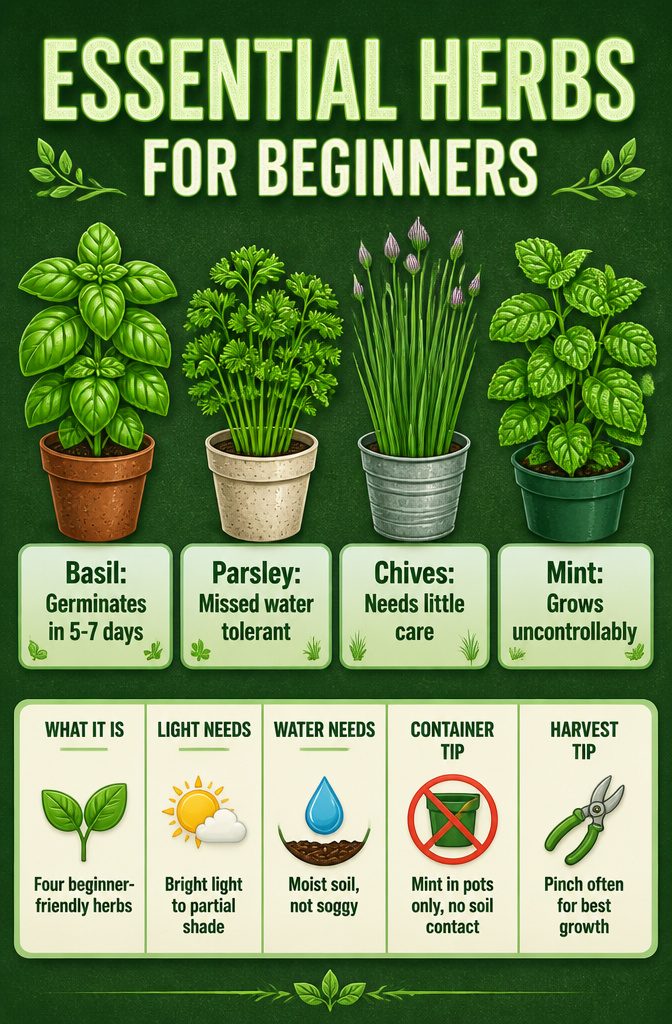
Four herbs keep showing up on every beginner list for good reason, and three of them stayed where I put them. Basil germinates in warm soil within five to seven days and keeps producing if you pinch the flower heads, which I forgot to do exactly once and still harvested until October. Parsley takes longer to sprout but handles a missed watering better than cilantro, and the two look nearly identical at seedling stage so the labels matter more than you think. Chives ask for almost nothing, just a split every few years when the clump gets crowded.
Mint is the one I warn people about from actual loss. I planted a single peppermint start in a twelve-inch pot, set that pot on the ground inside my raised bed, and by late July it had rooted through the drainage hole and colonized three feet of the bed. The runners spread under the soil surface, not over it, so I did not notice until the stems were pushing up between my lettuce rows. I now grow mint only in containers sitting on pavement, with no bottom contact with soil. The plant itself is bulletproof, bright light or partial shade, moist soil, and one plant supplies a full season of leaves if you keep pinching it back. Just do not trust it near open ground.
Sunlight and Water Needs by Herb
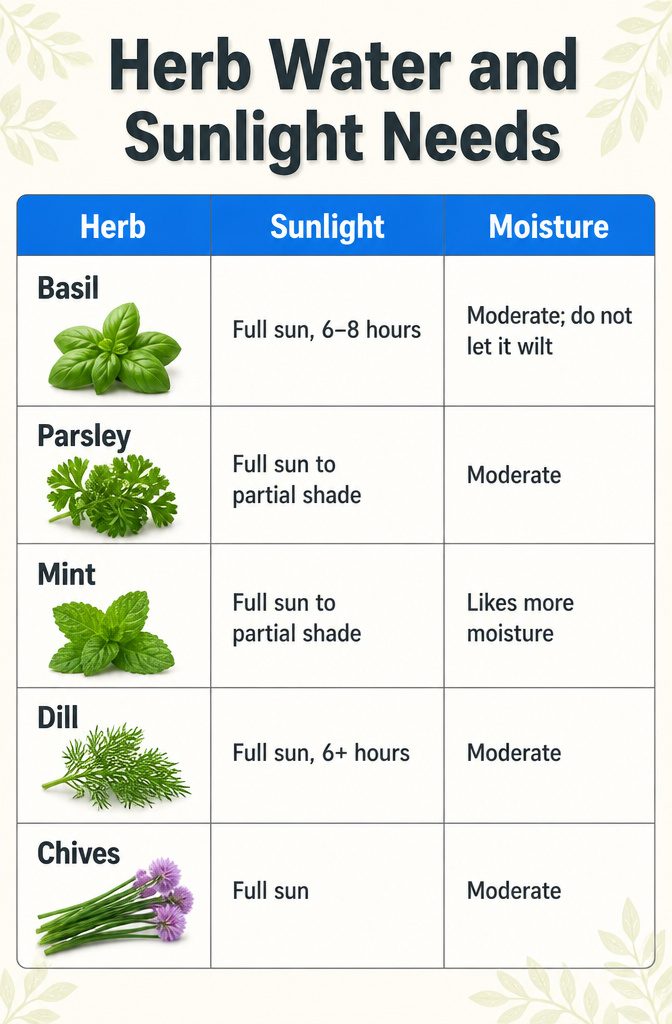
Most culinary herbs want six to eight hours of direct sun each day, though a few break that pattern. Grouping plants by how much water they actually need matters more than treating them all the same.
| Herb | Sunlight | Moisture |
|---|---|---|
| Basil | Full sun, 6–8 hours | Moderate; do not let it wilt |
| Parsley | Full sun to partial shade | Moderate |
| Mint | Full sun to partial shade | Likes more moisture |
| Dill | Full sun, 6+ hours | Moderate |
| Chives | Full sun | Moderate |
The Mediterranean herbs, rosemary and thyme and oregano, lean drier once established. I water mine less often than the parsley row, and they stay compact and oil-heavy for it. Mint is the outlier: give it damp soil or a pot you can keep wet, and it will reward you. Let basil dry out even once and the leaves flag; that stress also opens the door to pests. If your only sunny spot is a kitchen window, most of these will struggle unless it faces south and stays bright most of the day.
Growing Herbs in Containers
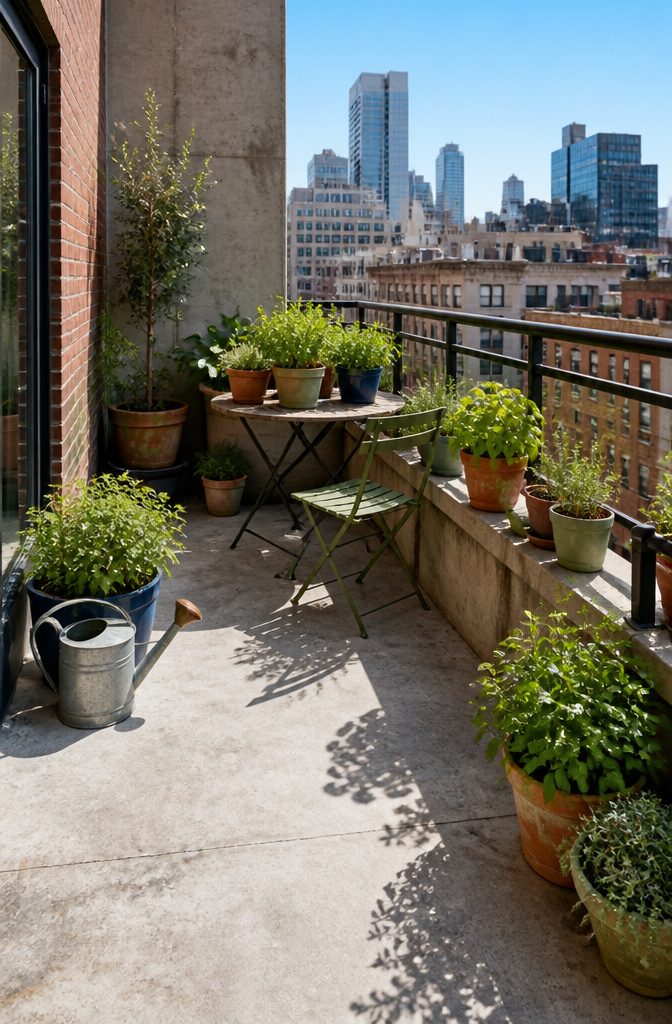
Most herbs in containers need drainage holes and a well-drained potting mix, not garden soil. University guidance puts the pH between 6.0 and 7.5, and warns against heavy or soggy mixes because rich soil actually weakens flavor by pushing leaf growth over oil production.
Pot size depends on the plant. A single basil or parsley plant fills a six-inch pot comfortably. Rosemary wants more root room and lasts years given an eight-inch minimum. Thyme and oregano cascade nicely from slightly smaller ones, though they still need that drainage.
Watering is where containers diverge sharply from in-ground beds. Outdoor garden herbs get a deep soak to eight inches once a week. Container herbs on a hot patio may need water daily. Indoors, the rule flips: wait until the top half-inch is dry before watering. Constant moisture indoors rots roots fast.
Grouping matters too. Rosemary, lavender, and thyme share drier preferences; basil, mint, and chives want more water. I keep mint in its own pot regardless, since it spreads aggressively even in containers. One large shared container only works if every herb inside agrees on water needs.
Harvesting Techniques That Keep Herbs Producing
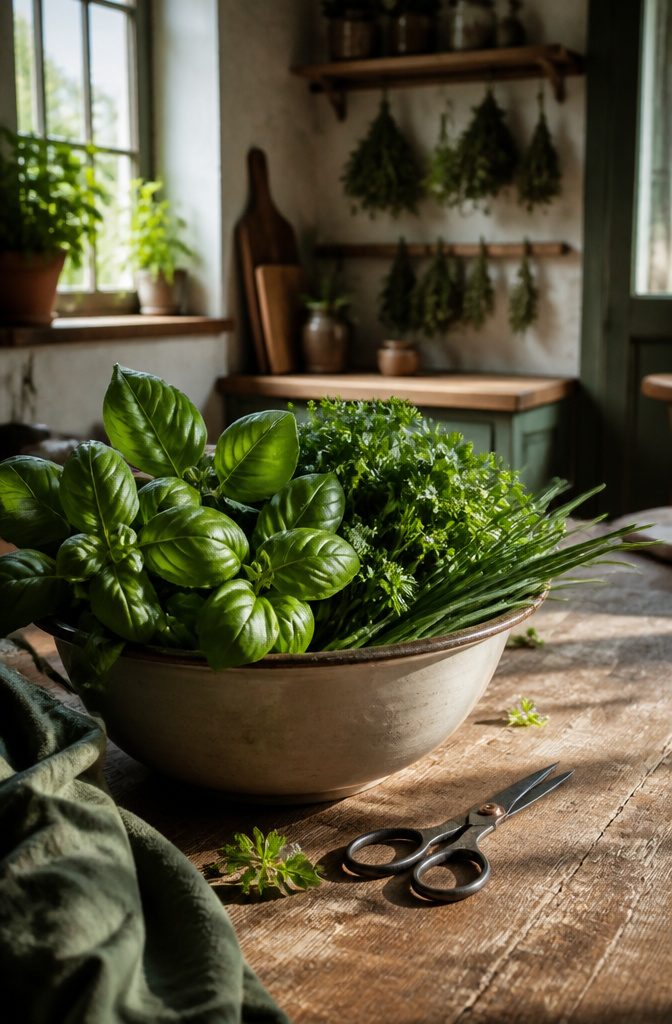
Harvesting herbs the right way changes how long they stay useful. Snipping stems regularly keeps plants in their leaf-making phase, which is where the flavor lives. Once an herb shifts to flowering, leaf production slows or stops, and those leaves can turn bitter, grassy, or woody. The rule is simple: cut before buds form, and cut often.
Different herbs need different handling. For basil, pinch just above a leaf pair to force two new stems. Woody herbs like rosemary and thyme get a harder trim, removing several inches of stem to keep the plant from getting leggy. Parsley and cilantro come from the base, outer stems first, so the center keeps pushing new growth. Flowering can be delayed by harvesting kitchen herbs often, but if buds do appear, cut them off immediately and cut the plant back by about a third to restart bushy growth.
When fresh growth outpaces your cooking, process the extra before it wastes. Dry herbs in small bunches hung upside down in a dark, airy spot; strip the leaves once they crumble between your fingers. Freeze tender herbs like basil and cilantro in oil or water in ice cube trays. Dried herbs carry a more concentrated flavor, so the swap runs about one part dried to two or three parts fresh.
What I Do Not Plant Together
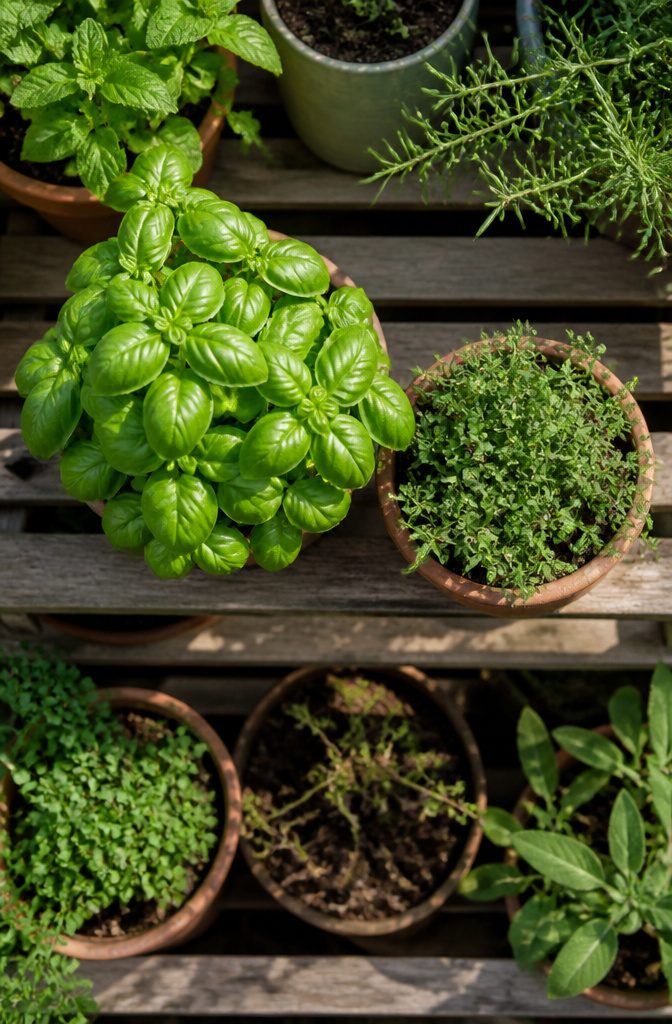
Most advice about companion planting tells you which herbs grow well side by side, but the pairings to avoid matter just as much. I learned this the hard way after watching a single spearmint cutting colonize an entire raised bed in one season. Mint belongs in its own container, period, whether you sink that pot into the ground or leave it on the patio. Anything in the mint family reseeds aggressively and will choke out neighbors.
Water needs create the other common mismatch. Basil, chives, and mint want consistent moisture, while rosemary, thyme, and lavender prefer soil on the drier side. Grouping these together in one box leaves somebody underwatered or somebody rotting. I now plant moisture-loving herbs together in one container and keep the drought-tolerant ones separate, which means my rosemary and thyme share a pot while basil gets its own space nearby.
Frequently Asked Questions
What are the best herbs to grow for beginners?
Basil, parsley, chives, and mint are the easiest herbs for a first garden. Basil germinates in warm soil within five to seven days and keeps producing if you pinch off flower heads. Parsley handles a missed watering better than cilantro, and chives ask for almost nothing beyond dividing the clump every few years. Mint is bulletproof in any light, but it must grow in its own container because it spreads aggressively through underground runners.
How much sunlight do herbs need?
Most culinary herbs need at least six hours of direct sunlight daily, and eight hours produces noticeably fuller growth. Track light at midmorning, noon, and midafternoon before choosing a spot; a fence or tree line can cut afternoon sun short and leave plants pale and leggy. Containers on wheels help on patios or balconies, since you can shift them as the sun angle changes through the season.
How often should I water my herbs?
Outdoor garden herbs need one deep soak per week, enough to reach about eight inches down, rather than light sprinkles every morning. Container herbs on a hot patio may need daily water in midsummer. Let the top half inch of soil dry before watering indoor pots. Basil and cilantro want steady moisture, while thyme and rosemary prefer the soil to go dry between drinks.
What is the best way to harvest herbs?
Snip stems regularly to keep herbs in their leaf-making stage, which is where the flavor lives. For basil, pinch just above a leaf pair when the plant reaches about six inches tall to force two new stems. Remove outer stems from parsley and cilantro first so the center keeps pushing new growth. Once an herb flowers, leaf production slows or stops and the remaining leaves often turn bitter or tough.
Can I grow herbs indoors?
Most herbs struggle indoors unless you have an unobstructed south-facing window that stays bright most of the day. Most homes are also too dry for herbs, which stresses plants and invites pests. If outdoors is not an option, put herbs in the brightest spot available, even if it is inconvenient to the kitchen, and expect slower growth than you would get outside.