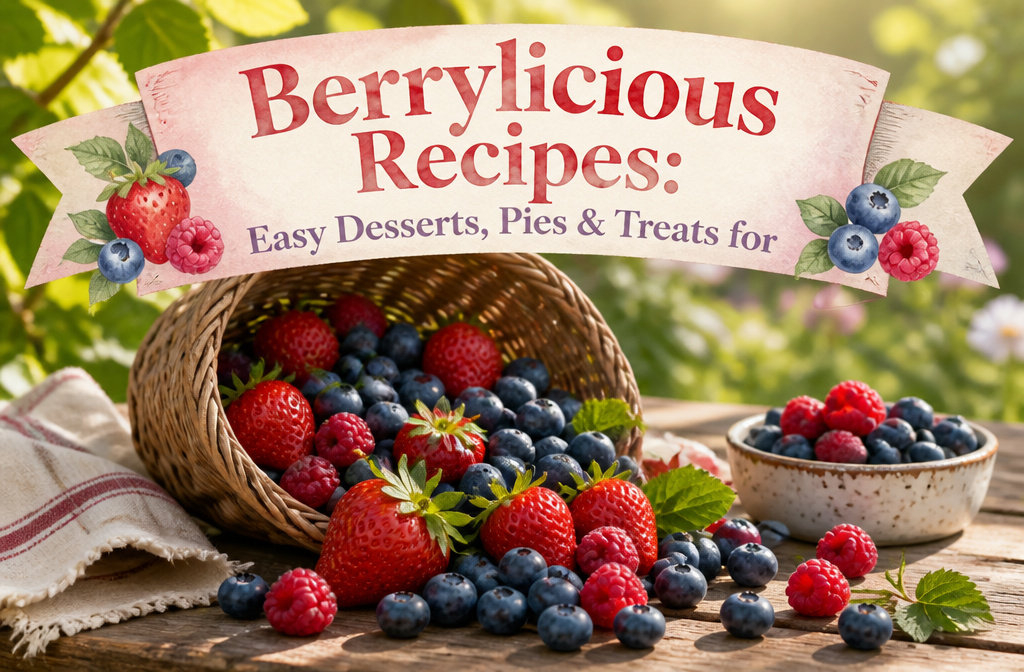
These berrylicious recipes span from a three-ingredient dump-and-bake bar to a French tart requiring pastry cream brought to exactly 170°F. What settles the choice is how much time you actually have before the berries soften past saving, and whether you own a thermometer or just a stick of butter.
The forgiving end includes blueberry pie bars made from yellow cake mix, butter, and canned filling that still bake up fine even with cold butter and a spoon.
1. Easy 3 Ingredient Blueberry Pie Bars
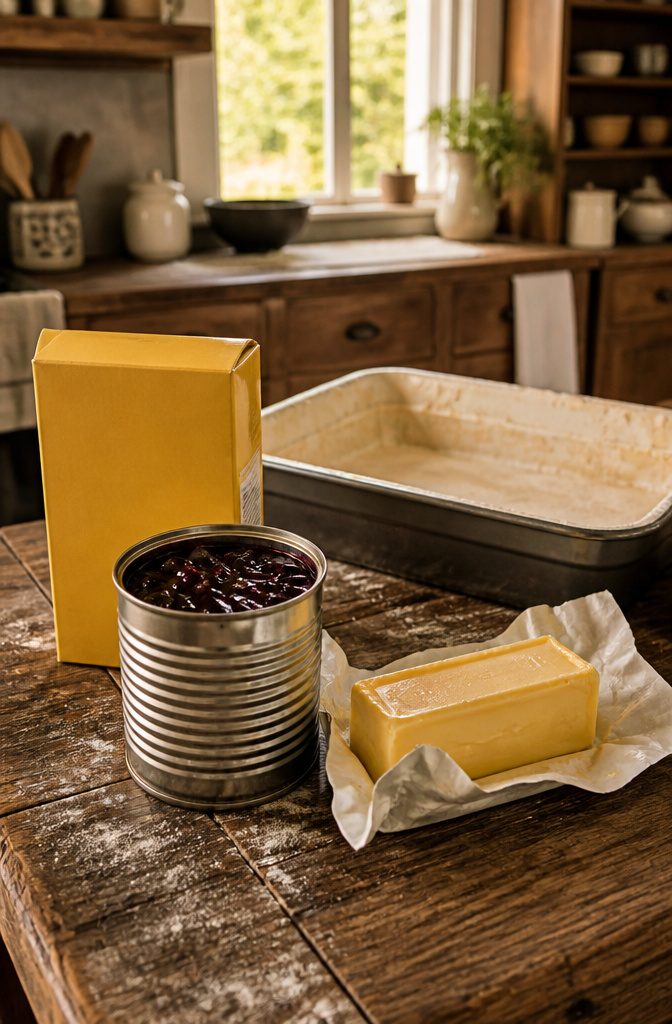
Three ingredients sit on the counter, and the oven is barely warm. That is the whole story of these blueberry pie bars, and that is why they have stayed in my summer rotation since the first time I needed a dessert for a Tuesday night cookout and had twenty minutes to make it happen. A box of yellow cake mix, a can of blueberry pie filling, and a stick of butter. The cake mix forms the crust and the crumb topping both; the butter binds it into something that bakes like shortbread. The pie filling does the rest.
The bars cut clean once they cool, which matters more than it should when you are bringing something to a neighbor’s patio and do not want to serve a pile of crumbs with a spoon. They also travel well in the pan you baked them in, covered with foil, which eliminates the transfer-to-a-plate step I always botch. For anyone who has never made a crust from scratch and does not plan to start, this is the entry point that still feels like a real dessert rather than a compromise. The sugar in the cake mix caramelizes at the edges, and the blueberry layer stays soft and jammy in the middle. I have made them with a spoon instead of a mixer, with cold butter instead of melted when I forgot to soften it, and they still bake up fine. That forgiveness is what earns them a spot in a collection of berrylicious recipes aimed at cooks who are one season into gardening and maybe two seasons into baking.
2. Minty Strawberry-Lime Icebox Pie
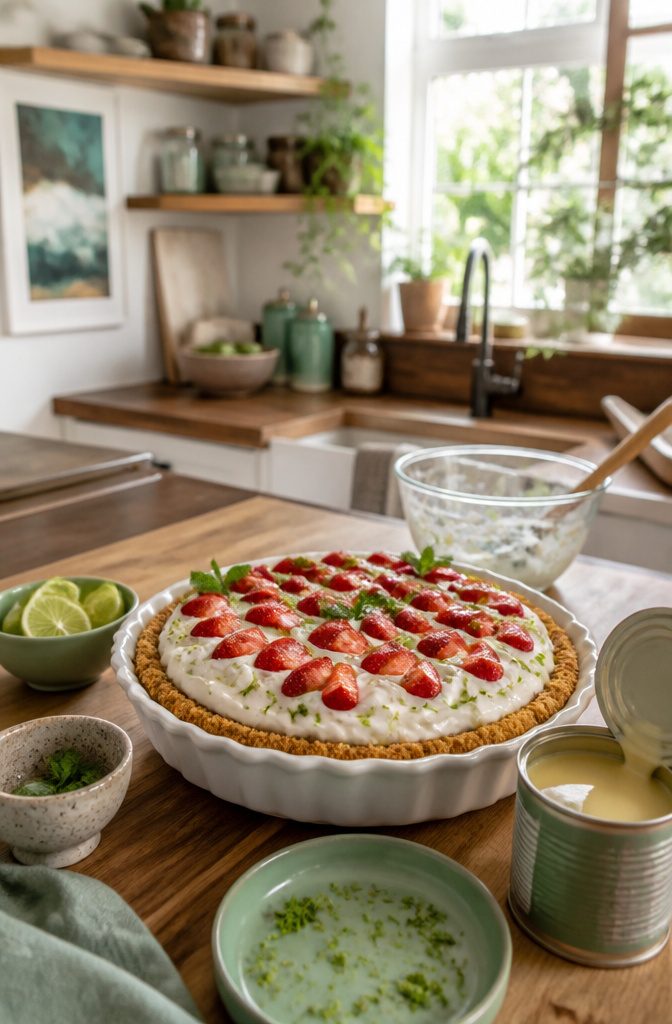
Fresh strawberries need something sharp to keep them from turning flat and sugary in a dessert. Lime juice does that work, and a few torn mint leaves pushed into the cream layer wake the whole thing up so it reads as cool rather than just cold. The icebox method means no oven, no stovetop, nothing that heats the kitchen in July. You crush graham crackers with melted butter for the crust, pack it into a pie plate, and pour in a filling of sweetened condensed milk, lime zest, whipped cream, and those chopped berries folded in at the last minute so they stay intact. Four hours in the fridge sets the slice clean, though overnight is safer if your freezer is crowded and the back shelf runs warm. I tried rushing one with extra lime juice, thinking acid would firm it faster. The pie set, but the curdled cream turned grainy. Patience, or a stint in the actual freezer for the first hour, fixes that.
3. BerryWorld Mixed Berry Pavlova
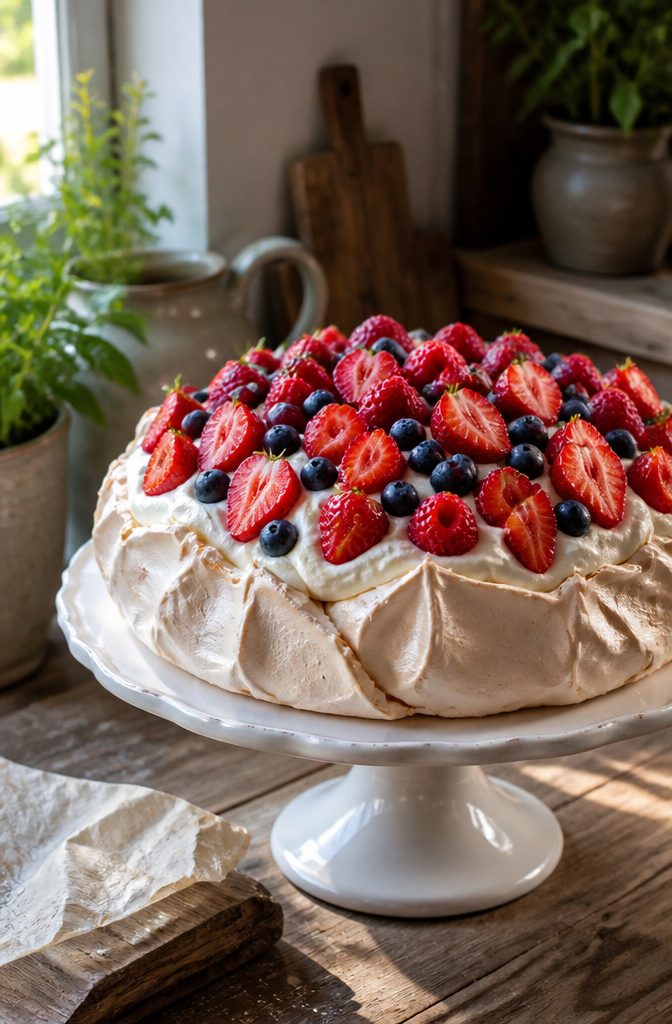
A pavlova resolves the summer problem of having three strawberries, a handful of raspberries, and not quite enough blueberries for anything on its own. The meringue base bakes to a crisp shell that shatters softly, giving way to a marshmallow center, and the whipped cream underneath catches any juices before they make the base soggy.
I build the meringue the afternoon before, let it cool in the turned-off oven overnight, and assemble just before serving. The mixed berries go on whole, no cooking required, so each keeps its own flavor and texture. Someone always picks off a raspberry first, someone else goes for the strawberries, and the plate empties either way.
The contrast is the point: dry sweetness against tart, juicy fruit, the crack of the shell against the give of cream. It looks dramatic for the effort involved, which is why this one comes out when I want to look like I planned more than I did.
4. Strawberry Delight
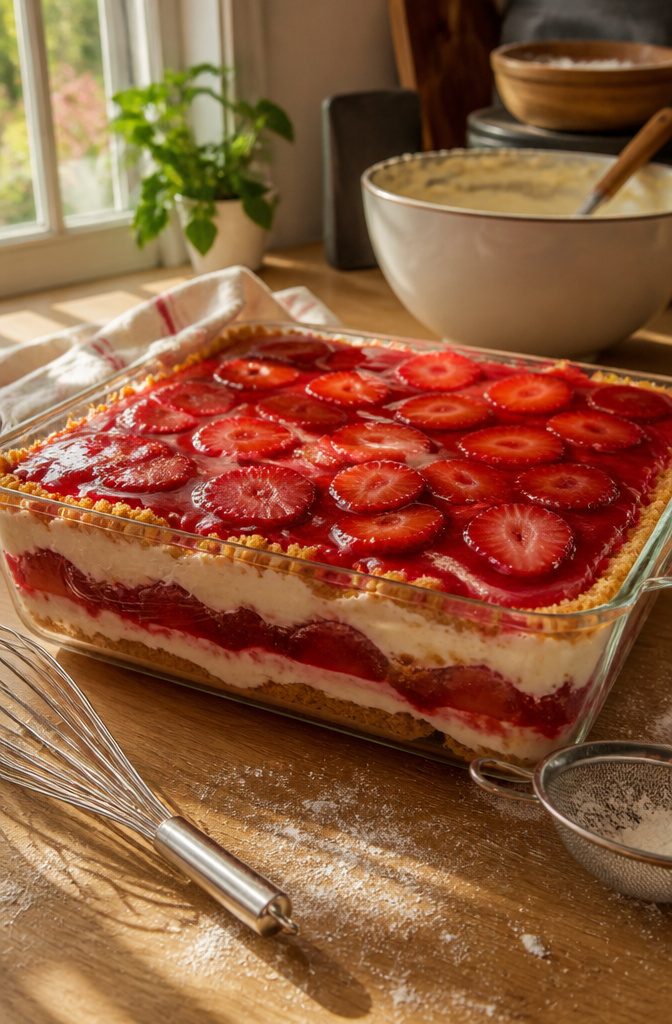
A strawberry delight starts with a graham cracker base pressed into a 9 by 13 pan, then layered with sweetened cream cheese, strawberry gelatin folded with whipped topping, and fresh sliced berries on top. I let it set overnight in the fridge so the layers firm up enough to cut clean squares.
The no-bake structure means you are not wrestling with a pie tin or worrying about a soggy crust on the drive over. It sits flat, travels in the same pan you built it in, and feeds a crowd without needing a serving knife sharper than a butter knife. At summer potlucks where five people brought brownies and three brought macaroni salad, this one empties fast. The name sounds vintage because it is; my grandmother’s church cookbook had three versions, and the only real argument is whether the middle layer needs chopped nuts. I skip them, since allergies are common now and the strawberries carry enough texture on their own.
5. Raspberry Frozen Yogurt
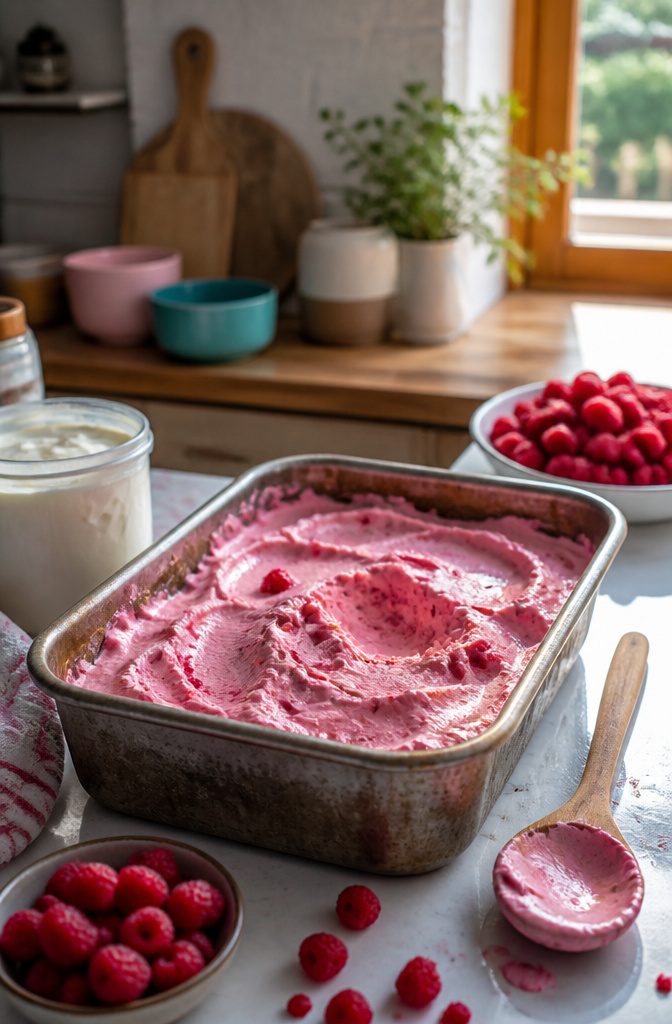
The tartness of raspberries against yogurt’s tang is what makes this work instead of fighting itself. Fresh raspberries carry enough acid to balance the cultured bite of Greek yogurt, and that tension keeps the finished dessert from reading as either too sweet or too sour. I freeze the mixture in a shallow metal pan, scraping it with a fork every twenty minutes for the first two hours. The scraping breaks up ice crystals before they set into a block, and the metal pan chills faster than glass or plastic would. A food processor finishes the job, blitzing the frozen shards into something smooth enough to scoop. No ice cream maker, no custard base, no waiting overnight. The result is softer than premium ice cream, closer to the texture of a thick sorbet, and the fat content sits low enough that a second scoop does not feel like a mistake.
6. Blueberry Cream Cheese Danish with Crescent Rolls
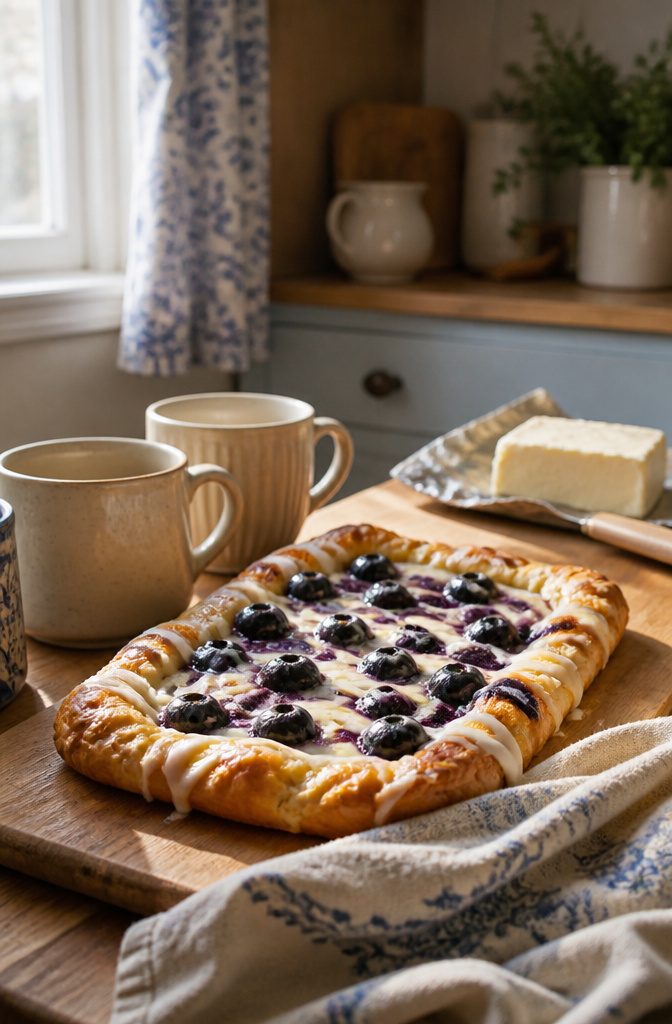
Store-bought crescent roll dough makes this danish possible on a Tuesday morning when you realize you need something for the office potluck. The trick is a thin layer of cream cheese spread directly onto the raw dough before you add the blueberries; it creates a barrier that keeps the bottom from turning into a wet, doughy mess during baking.
I learned that the hard way after my first attempt pooled juice underneath and the whole center lifted off the pan in soggy strips. Now I soften about four ounces of cream cheese with a little sugar and lemon zest, spread it edge to edge, and pile the berries on top. The dough puffs around the filling, the cream cheese sets into a rich layer, and the bottom stays crisp enough to pick up with your fingers.
A light glaze after cooling, just powdered sugar and milk, makes them look like you stopped at a bakery. Twenty-five minutes in the oven, and they are done before the coffee finishes brewing.
7. Easy Strawberry Pie
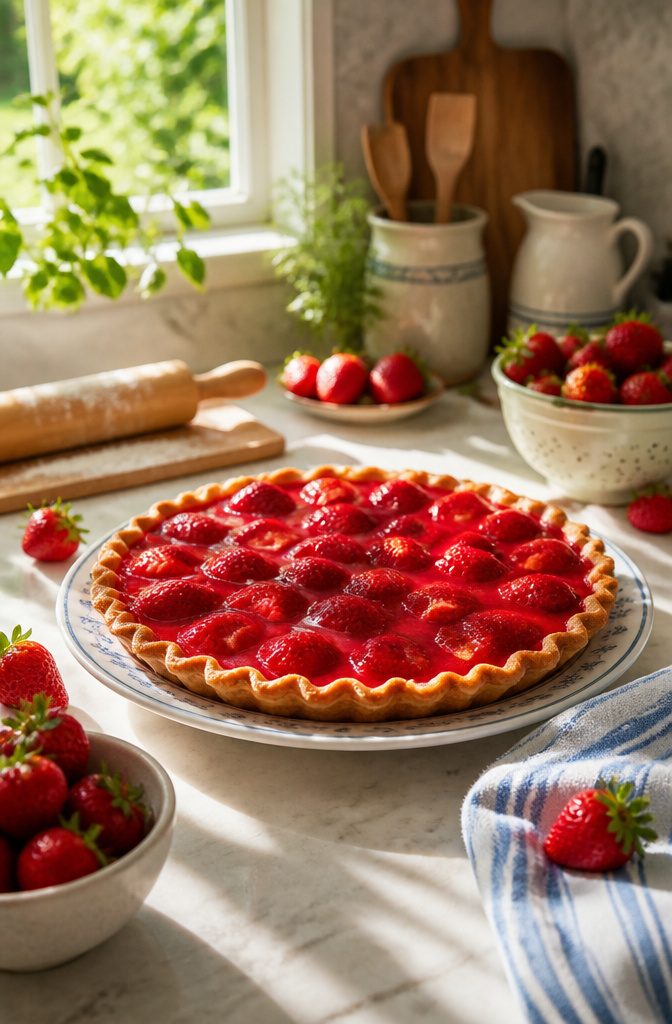
A fresh strawberry pie lives or dies by its glaze. Cornstarch cooked with sugar and water gives you a clear, soft set that lets the berries look like themselves; a packet of strawberry gelatin stirred into hot syrup sets firmer and carries that unmistakable pink tint. I have made both, and the cornstarch version wins for texture every time, though the Jello route is what most church cookbooks from the 1970s call for.
The catch with either glaze is the berry itself. June-bearing strawberries picked at full ripeness collapse under too much sugar and turn weepy by day two. A barely-sweetened glaze, about one-third the sugar you think you need, keeps the slice clean. This is why the pie peaks in June, when roadside stands sell berries that need no help and the kitchen stays cool enough for the glaze to set without the refrigerator stealing flavor. By August, the same recipe wants more sugar to cover bland fruit, and the whole thing slides toward candy.
8. BerryWorld Hazelnut Meringue Layer Cake
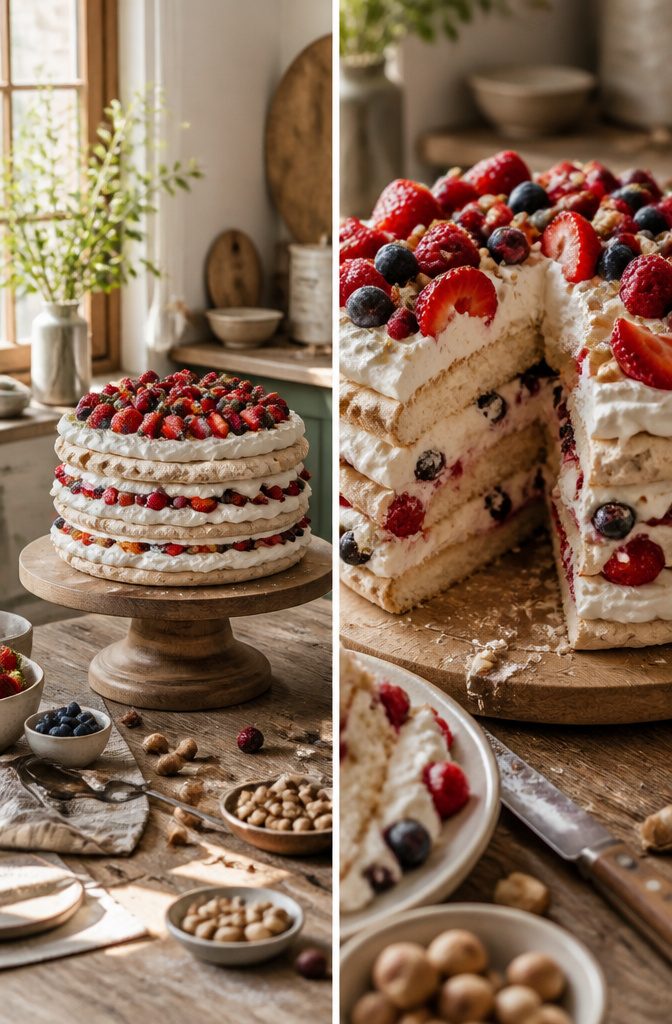
Nut meringue demands patience I do not always have, but the payoff is a cake that actually improves overnight. I built this one with hazelnut meal ground fresh from blanched nuts, though almond flour works if that is what your store stocks; the flavor shifts lighter and sweeter, still good, just different. The meringue layers bake low and slow until they lift cleanly from the parchment, then cool completely before you stack them with whipped cream and berries.
Assembly wants a light hand. Cream between each layer, berries tucked in so juices seep slightly into the meringue, and a finished cake that sits in the refrigerator for a full day develops a texture worth waiting for. The meringue softens from crisp into something like a delicate nougat, holding its structure without shattering when sliced. After twenty-four hours it starts to weep, so the window is real. I have pushed it to thirty hours once; the bottom layer turned gummy while the top stayed intact. Stick to that one-day hold and you get the best version without gamble.
9. Creamy Blueberry Pie
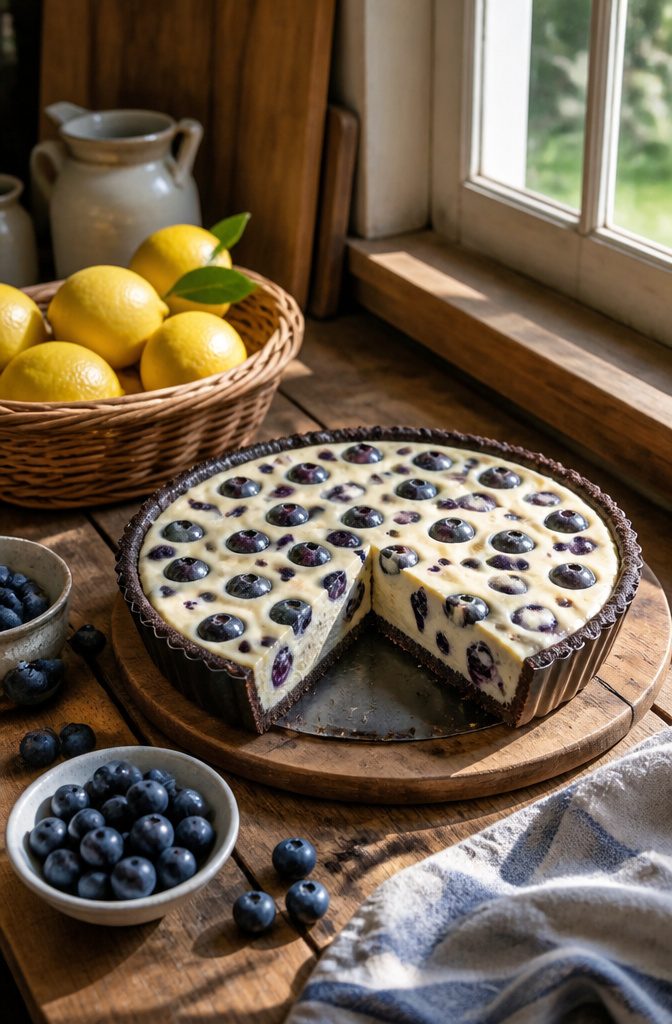
A custard-style blueberry pie swaps the usual fruit filling for a sour cream or cream cheese base that bakes into something closer to cheesecake territory. The berries stay whole and suspended rather than cooked down to jam, so you get pockets of tart fruit against a dense, tangy layer. I like this version when standard pie feels too sweet or too loose; the dairy sets firm enough to slice cleanly once chilled.
Cream cheese gives the most structure, but sour cream yields a lighter, more quivering center. Either way, the crust needs to be fully blind-baked first. Wet custard will turn raw dough gummy long before the filling cooks through. I learned that the hard way with a rushed summer pie that never crisped on the bottom.
A little lemon zest in the base keeps the richness from flattening out. Some recipes add a sour cream topping after baking, almost like a baked cheesecake finish, but I prefer the simpler single layer. It travels better and doesn’t weep in humidity.
10. Strawberry Lemon Tart
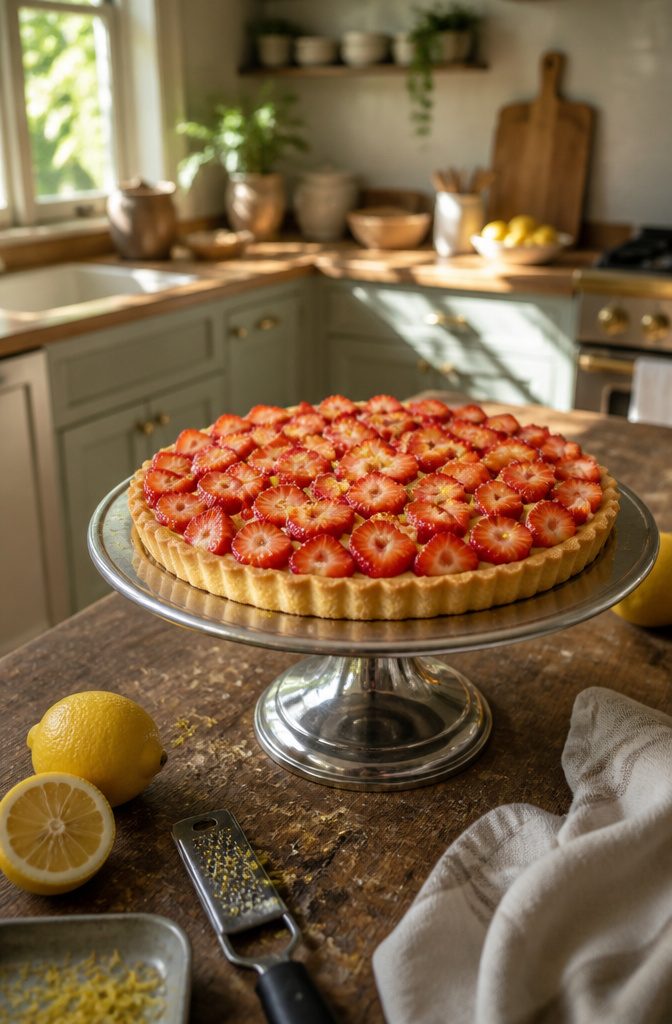
A tart shell filled with sharp lemon curd and capped with sliced strawberries is one of those combinations that sounds simple but depends entirely on balance. The curd needs real acidity, not just sweetness, or the berries flatten into generic fruitiness. I learned this the hard way with a batch that used Meyer lemons alone; the result was pleasant enough but the strawberries tasted like candy, not like themselves.
A curd bright enough to make your jaw tighten slightly is what pulls the berry flavor forward and keeps the finish clean. I now use a mix of standard Eureka lemons and a smaller amount of Meyer for depth, never the other way around.
For the shell, a classic pâte sucrée holds up to the moisture better than shortbread, which can go sodden where the curd pools. Blind bake it fully; any pale spots will turn leathery against the wet filling. The strawberries go on after the curd sets, sliced thin enough to bend slightly against the curve of the tart rather than doming awkwardly. A light brush of warmed apricot jam on the fruit adds sheen and buys you a few extra hours before the juices start weeping.
11. Blueberry Tarts with Lemon Mascarpone Cream
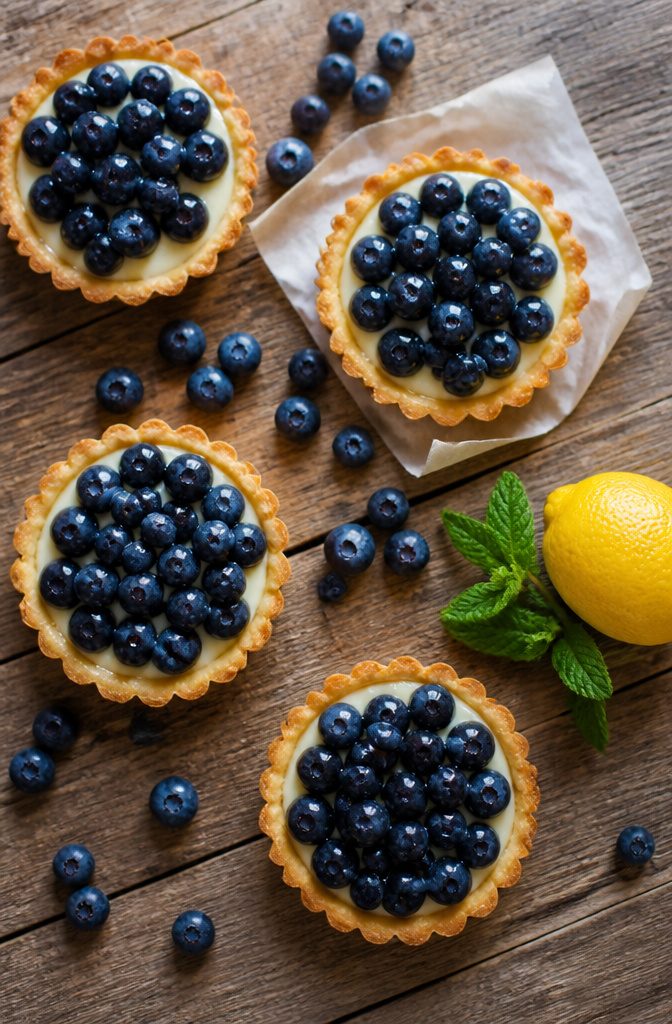
Mascarpone is the soft Italian cream cheese that makes the filling in these tarts worth the extra stop at the store. Regular cream cheese turns grainy when you fold in lemon zest and a little juice; mascarpone stays silky and carries the sharp citrus without splitting. I look for it in the specialty cheese case, not the standard dairy wall, and I check the date because it turns fast once opened.
The individual tart shells are the move here. A full 9-inch tart looks dramatic until you try to slice it at a backyard gathering and the cream smears, the blueberries roll, and someone ends up with mostly crust. Individual portions hold their shape on the plate, travel better to a neighbor’s porch, and let guests pick up what they actually want. A 3-inch ring mold or a standard muffin tin pressed with sweet shortcrust works fine; blind bake until the base is dry and blond, not wet and pale, or the mascarpone will weep into soggy pastry within the hour.
12. BerryWorld Mixed Berry Cheesecake
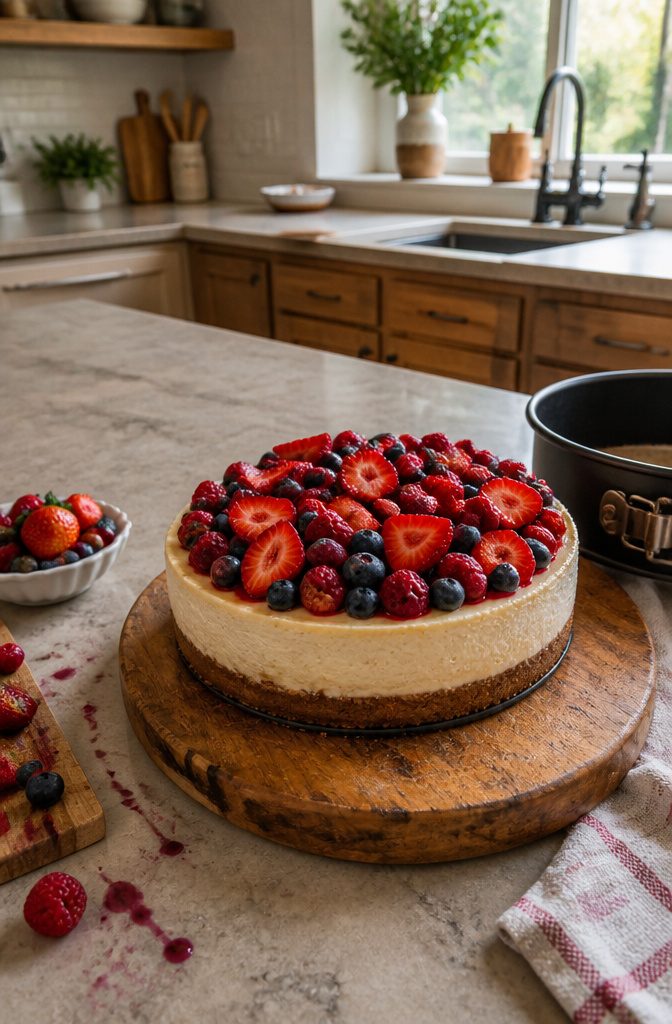
A baked cheesecake cracks. It sinks in the middle. The surface browns unevenly. Mixed berries cover all of it. A full crown of strawberries, blueberries, and raspberries turns a flawed cheesecake into a BerryWorld Mixed Berry Cheesecake, and no one asks what happened underneath.
I learned this the hard way on my third attempt, when the top cracked clean across and I had twenty minutes before guests arrived. Piled the berries high, added a thin glaze from the juice, and the cake looked intentional. Now I plan for it. Bake the cheesecake a day ahead, chill it thoroughly, and let the berries go on cold so they stay firm.
The mix matters for coverage and flavor. Strawberries slice flat and anchor the design. Blueberries fill gaps. Raspberries add height and a tart note against the dense filling. I arrange in concentric circles working from the outside in, which hides the edge where crust meets filling and often cracks first.
A springform pan is non-negotiable for clean sides. Run a knife around the edge while the cheesecake is still warm, then again after chilling, before you unlatch the pan. The berries go on after that second release, not before, or you risk dragging them against the rim and tearing the arrangement.
For the glaze, warm a spoonful of apricot jam with a splash of water until it brushes easily. It sets the berries in place and gives the surface a slight sheen without looking wet. Skip this step and raspberries especially will wander when you slice.
The cheesecake underneath should be simple. Cream cheese, sugar, eggs, a little sour cream for tang. Anything more elaborate competes with the berries, which are the whole point of calling it BerryWorld.
13. Raspberry Mascarpone French Toast Casserole
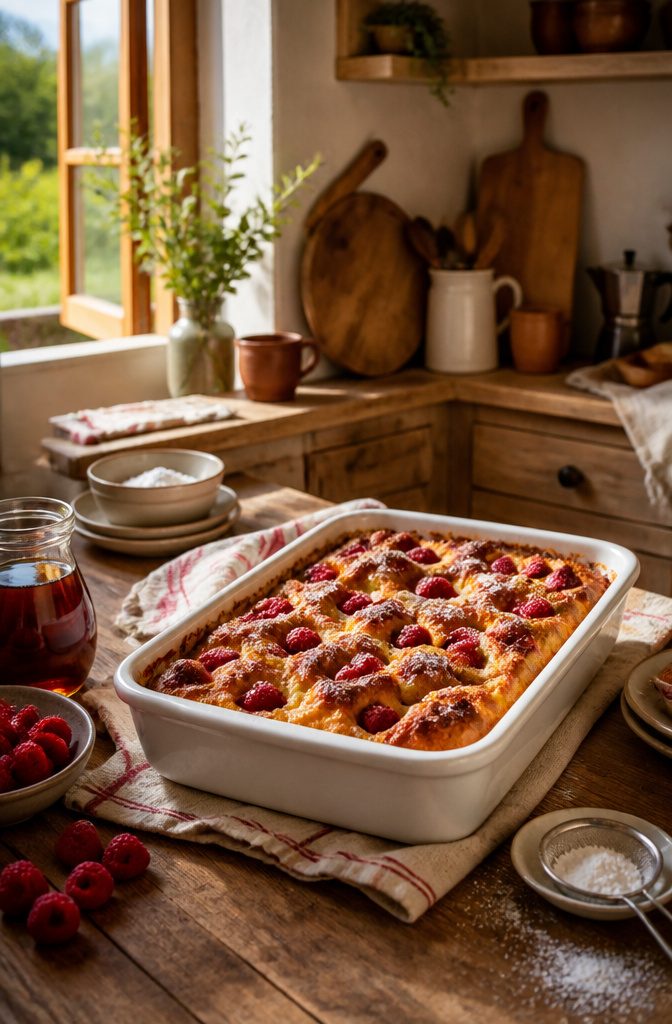
Raspberries hold their shape in the oven better than strawberries, which is why this overnight bake works for a crowd. The berries stay whole and tart against the creamy mascarpone, rather than collapsing into jam the way softer fruit tends to.
The real advantage is the make-ahead step. Everything goes into the dish the night before, the bread soaks up the custard slowly in the fridge, and in the morning you slide it into the oven while coffee brews. A 30-minute rest at room temperature before baking helps it cook evenly, especially if your refrigerator runs cold.
I’ve learned the hard way that frozen raspberries bleed too much color into the custard. Fresh is worth the extra dollar or two here, and the slightly underripe ones hold up best. The finished casserole is rich enough that small portions satisfy, so one 9-by-13-inch pan feeds more people than you’d expect.
14. Mixed Berry and Yogurt Popsicles
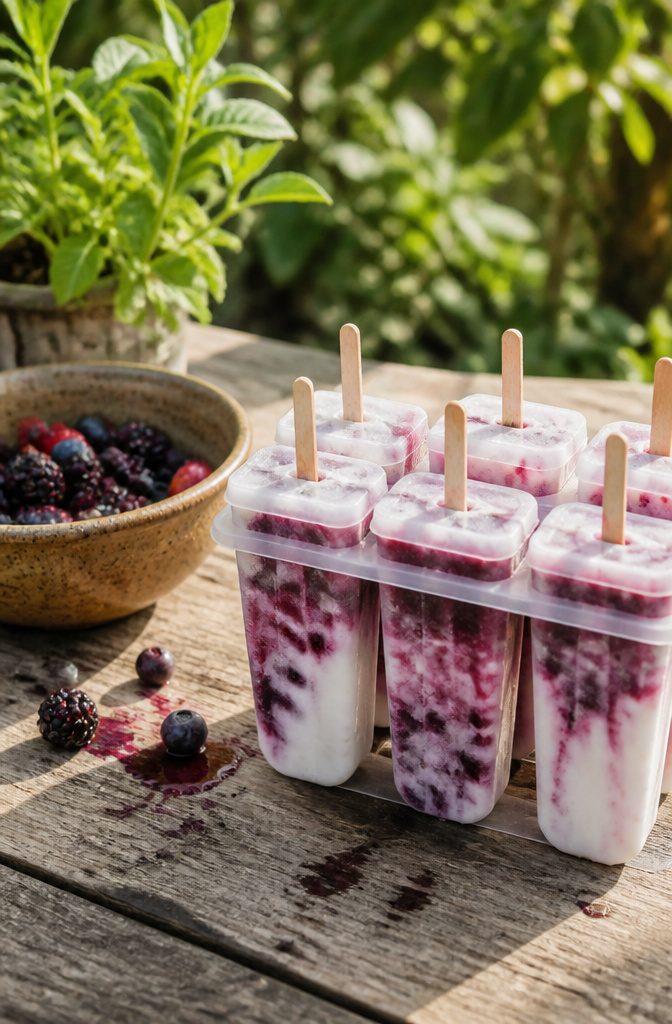
A blender and a few minutes of freezer time turns yogurt and berries into something better than the sum of its parts. I keep plain whole-milk yogurt on hand for this, though Greek works if you want a denser pop. The berries go in still soft, even slightly overripe, the ones you would not serve on their own. That slight give means more juice and a stronger flavor once frozen.
I blend roughly two parts yogurt to one part berries, taste, and only then add honey if the batch needs it. Overripe strawberries or blueberries already carry plenty of sugar. The mixture goes into molds, though small paper cups with wooden sticks work just as well. Four to six hours in the freezer sets them firm without turning icy, the yogurt’s fat content doing the work.
The real use is that Tuesday afternoon discovery of berries you forgot in the drawer. These popsicles accept soft fruit without complaint, and the result tastes intentional, not like a rescue.
15. Fresh Strawberry Tart
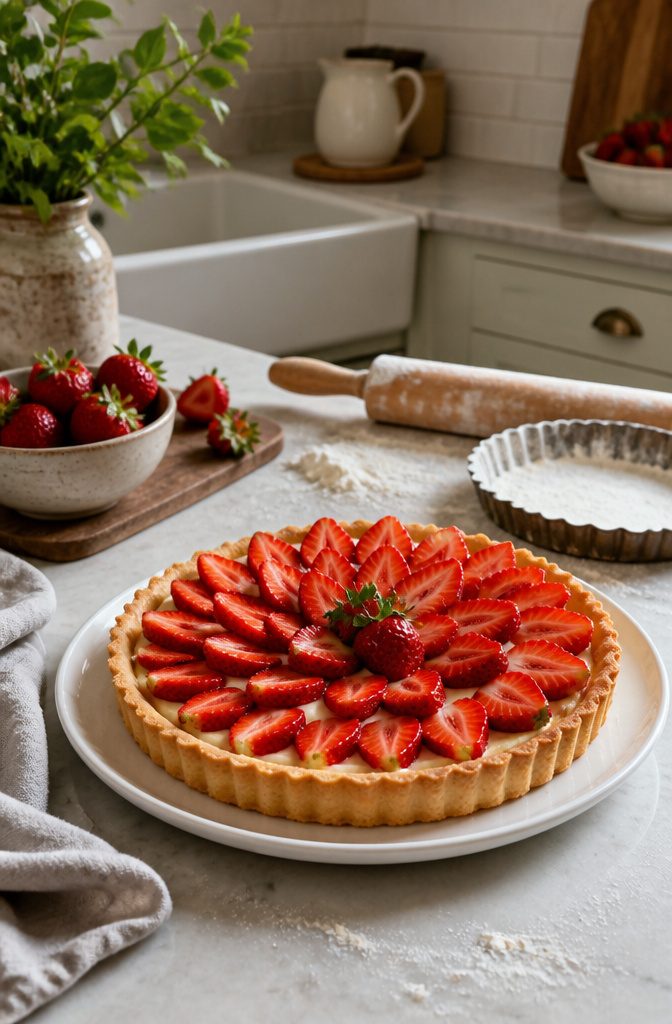
A fresh strawberry tart sits at the opposite end of the effort spectrum from the easy strawberry pie also on this list. Where that one bakes berries under a lattice and calls it done, this version demands pastry cream cooked to exactly 170°F on the stove and berries left raw, then glazed with a thin apricot layer so they glisten without weeping.
The specific name matters here. In older cookbooks and at most bakeries, this is the tarte aux fraises, and the custard base is non-negotiable. I have tried shortcuts, vanilla pudding mix once, and the slice collapsed on the plate because the filling lacked the structure that egg yolks and cornstarch set as they cool. The shell must be fully blind-baked too, or the cream turns the bottom to paste.
Glazing the berries separately, off the tart, works better than brushing them once arranged. The jam sets faster, the shine stays even, and you spot the soft ones before they ruin the top. Apricot is traditional; red currant jelly runs prettier but tastes thinner.
For a gardener with June berries and an hour, this is the recipe that makes guests ask where you bought it.
16. Easy Berrylicious Cake
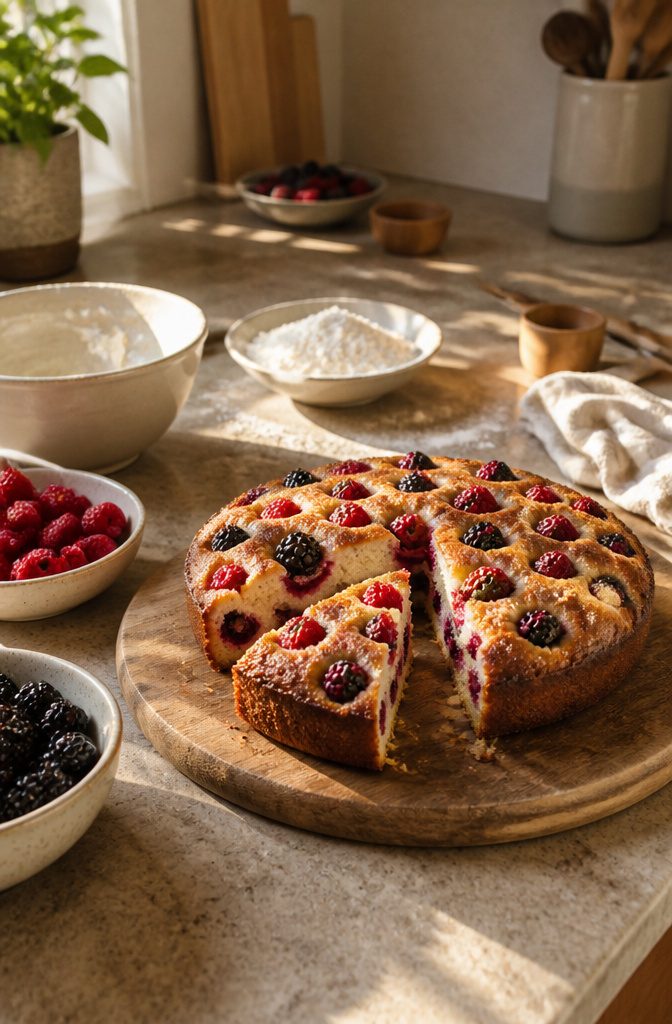
A simple sheet cake loaded with raspberries and blackberries was the first berry dessert I ever baked without a disaster. The berries sink during baking and leave behind jammy pockets that read as filling without any extra work. I learned the hard way that tossing them in a tablespoon of flour first keeps them from dropping straight to the bottom, though a few always make the journey anyway. Those deep-buried ones become the surprise bites people fight over.
For a layer cake version, a buttermilk batter holds up to the extra moisture better than standard yellow cake. The crumb stays tight rather than gummy where the berries weep. I once tried folding whole strawberries into the same formula and ended with soggy strata; halved or sliced berries work, but the small ones like raspberries and blackberries need no knife. A dusting of powdered sugar on top is enough. Frosting fights the fruit.
17. Strawberry Cobbler
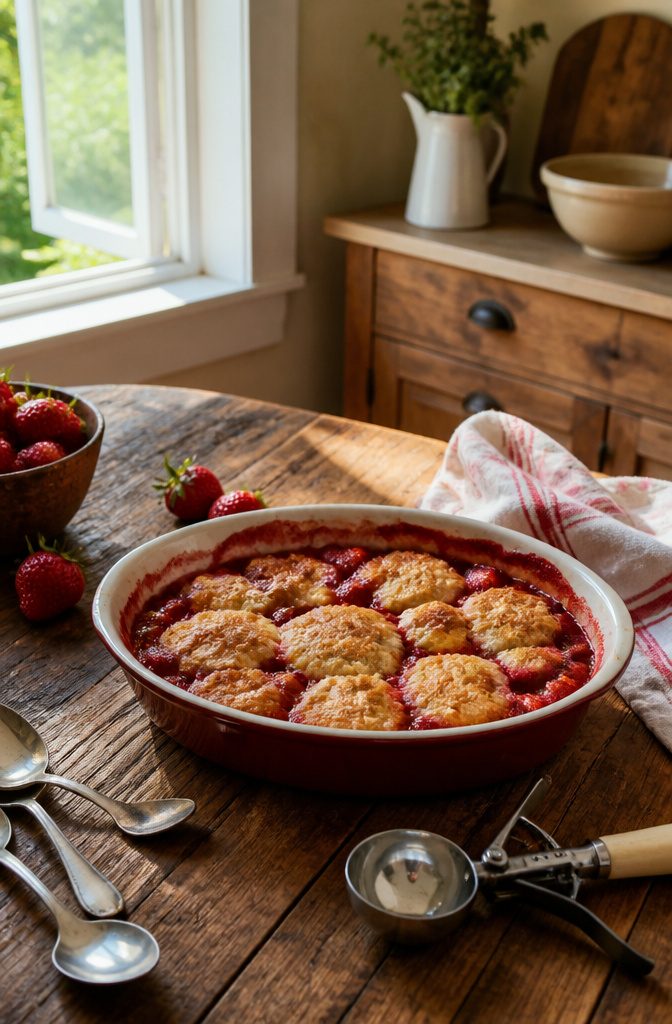
Drop biscuits win here because they skip the rolling pin entirely. You spoon the buttermilk dough straight onto the berries, which saves roughly fifteen minutes and keeps the cobbler in the category of things you can start after dinner and still serve warm. The batter spreads in the oven into rustic, craggy lids with more surface area for browning than a neat rolled crust would give you.
Danielle Kartes calls her version a simple drop biscuit strawberry cobbler, and that simplicity is the point. She bakes it in a 13 x 9 inch dish, the same size you’d use for a sheet cake, which feeds a crowd without fussing with ramekins or a pie plate. The berries need no pre-cooking; they slump into their own juices while the biscuits set on top.
I have rolled biscuits for cobbler before, and the result is prettier but the gap between wanting dessert and eating it stretches past my patience. The drop method turns out a cobbler that looks homemade in the best way, the kind of thing you eat outside with a scoop of vanilla ice cream before summer slips away.
18. Lemon Blueberry Cookies
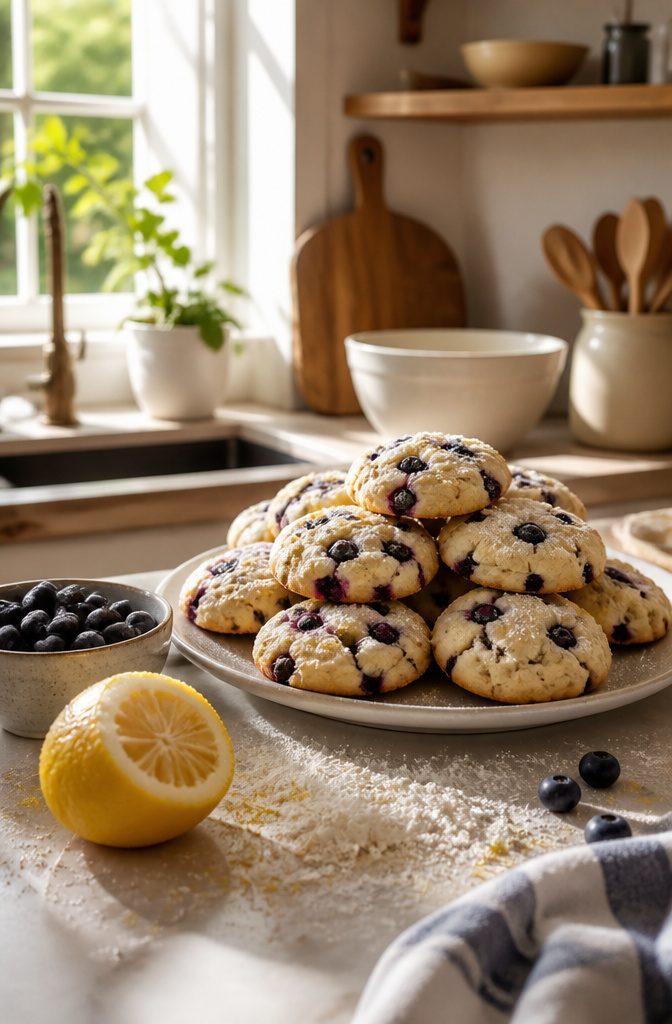
Fresh blueberries carry enough water to turn a batch of soft lemon cookies into flat, purple-streaked puddles. The first time I made these, I learned that the hard way. Now I toss fresh berries in a spoonful of flour before folding them into the dough; the coating absorbs surface moisture and slows the bleed. Dried blueberries skip the problem entirely and give a chewier, more concentrated burst. Either way, keep the lemon zest generous and the bake time short; these are meant to stay soft in the center, not crisp at the edges.
19. Berry Cream Cheese Cookie Cups
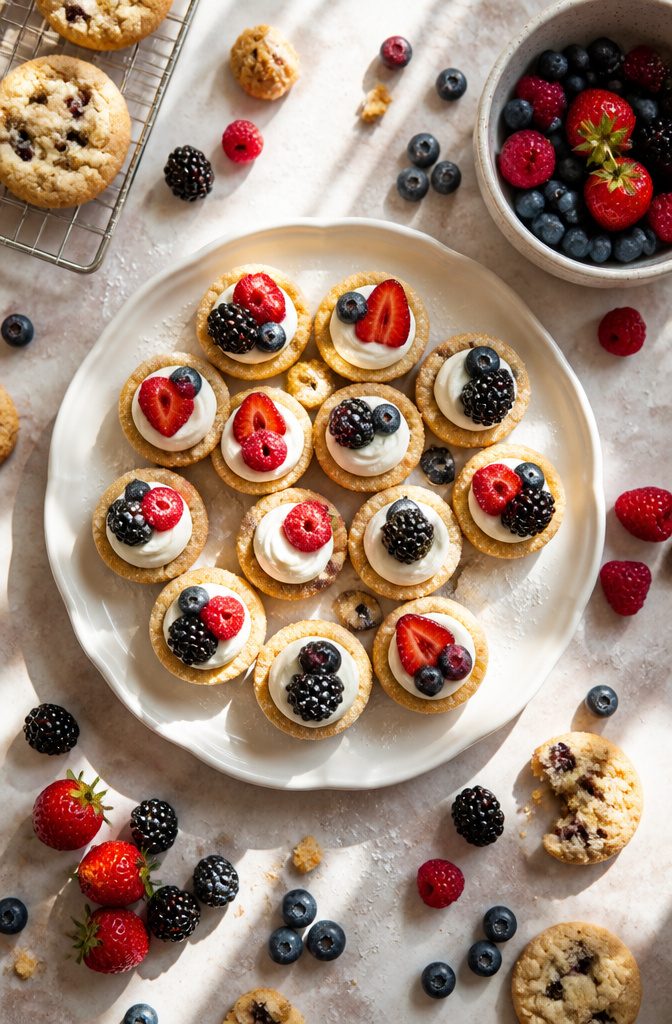
Mini cookie shells baked in a muffin tin make the perfect vessel for a cream cheese filling capped with fresh berries. The trick is pressing the dough up the sides of each cup before baking, creating a well that holds the filling without running over.
I like to underbake the shells slightly, about a minute less than you think, so they stay chewy against the cold topping. Sweetened cream cheese whipped smooth pipes in easily, then berries go on just before serving so they don’t weep into the base.
Raspberries and blueberries hold up best if these sit out at a summer gathering. Strawberries look beautiful sliced, though they soften faster, so I save those for plates I’m eating myself.
20. Blueberry Lemon Muffins
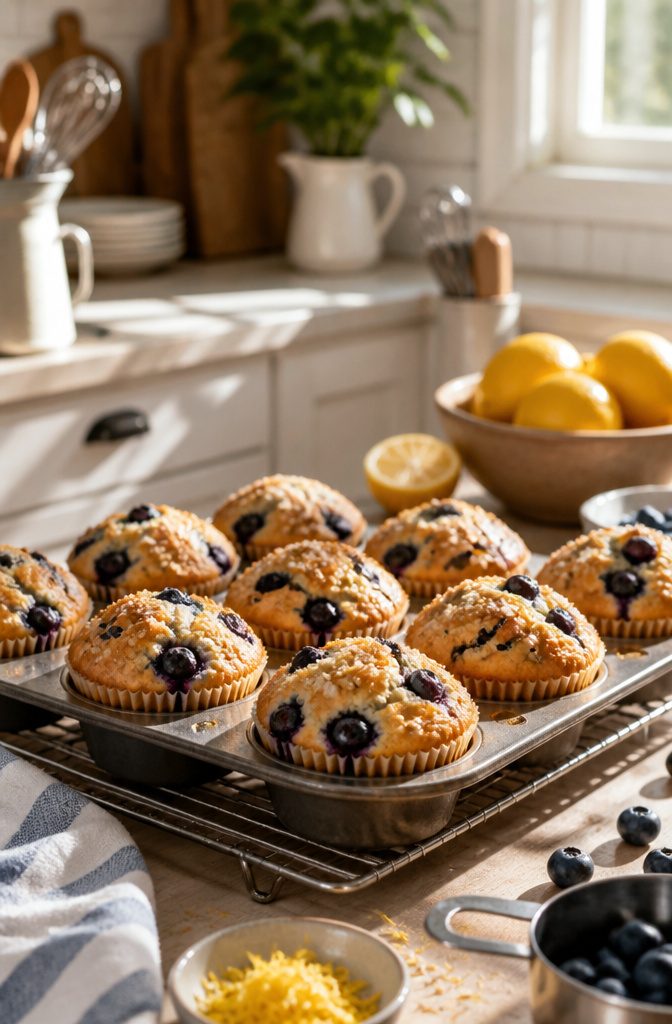
A bakery-style blueberry muffin lives or dies on the lemon, and the lemon lives or dies on the zest. The oils in the colored peel carry the fragrance; juice only adds water and acid that can toughen the crumb. Microplane the zest directly into the sugar and rub it between your fingers until the sugar turns pale yellow and smells like a lemon grove. That step takes under a minute and perfumes the whole batch.
Frozen blueberries work fine here, but don’t thaw them first. The bleed turns the batter an unappealing gray, and the berries collapse into jam pockets instead of holding their shape. Toss them still-frozen in a spoonful of the flour mixture to keep them from sinking.
For the streusel, cold butter cut into brown sugar, flour, and a pinch of cinnamon gives that craggy, crackled top people reach for first. A plain sugar-crusted dome is quicker and still respectable, especially if the lemon sugar is sharp enough. Either way, fill the cups to the rim; the high oven heat creates the overhang that defines the bakery look.
21. Raspberry Coffee Cake
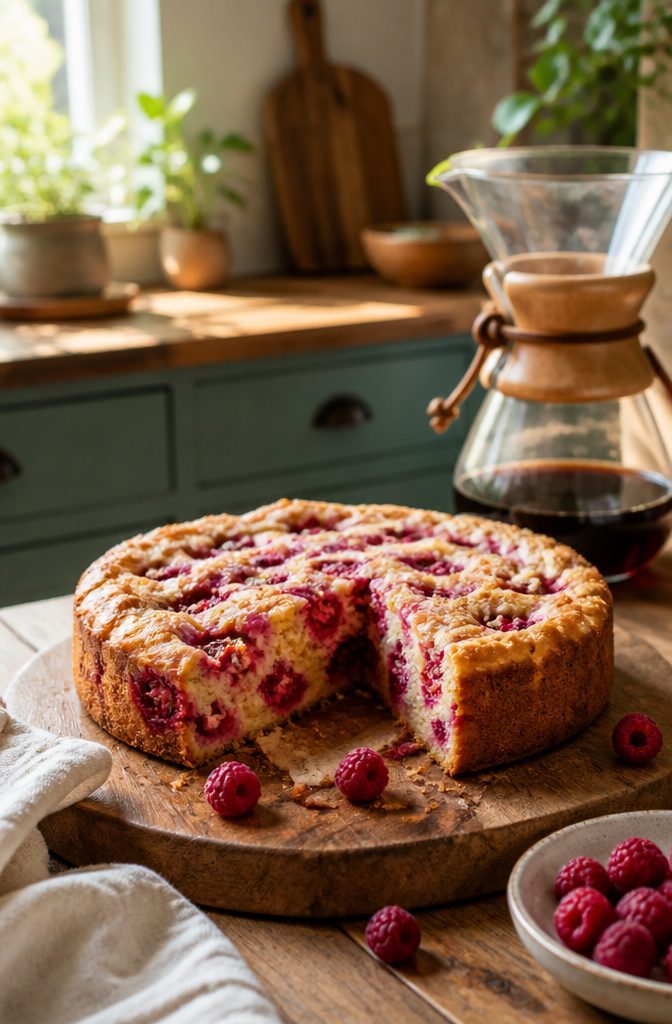
Fresh raspberries bleed into batter the moment you fold them, turning streaks of pink through what should be a pale crumb. In most cakes that is a flaw. In this one, the swirl is the whole point.
I build it in three layers: half the batter goes down, then the raspberry filling, a quick swirl with a knife, and the rest of the batter spread across the top. The berries sink and spread in the oven, leaving ribbons of tart fruit through a dense, buttery cake that reads as intentional rather than failed.
The color bleed becomes marbling. What looks messy going in comes out looking like you planned it, which, of course, you did.
I cut mine into twelve small slices. The pieces are rich enough that a thin wedge holds up to coffee, and the cake keeps well under a dome for two mornings if your household does not finish it the first.
22. No Bake Blueberry Crisps
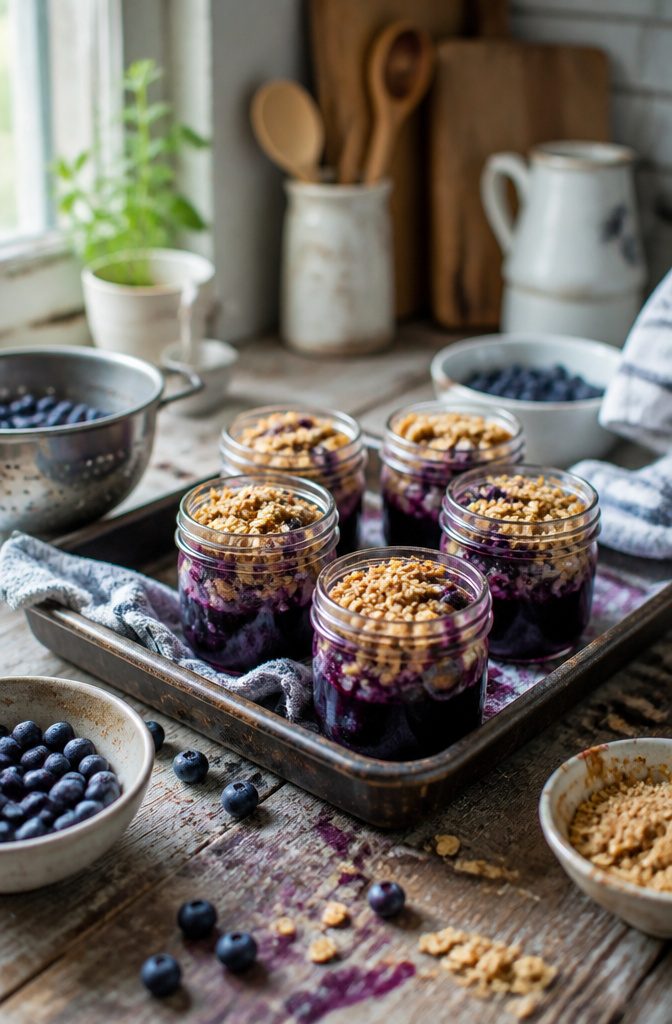
Individual servings work best when the filling thickens on the stovetop before it ever meets a dish. I cook the blueberries down with sugar and a little cornstarch slurry until the mixture turns glossy and holds its shape on the back of a spoon, then divide it among small jars or ramekins while it is still warm. The crumble stays separate, which is the whole point of keeping this out of the oven. Toasted oats and brown butter mixed with chopped almonds give you a crisp, nutty layer you sprinkle on at the last minute so it keeps its snap. Raw is an option too, a sandy mix of flour, butter, and sugar that softens slightly against the hot fruit, though I find the toasted version holds up better if the crisps sit for more than an hour. Either way, the berrylicious recipes that work on ninety-degree afternoons are the ones where the only heat in the kitchen came from a single burner and your own two hands.
23. Pineapple Strawberry Popsicles
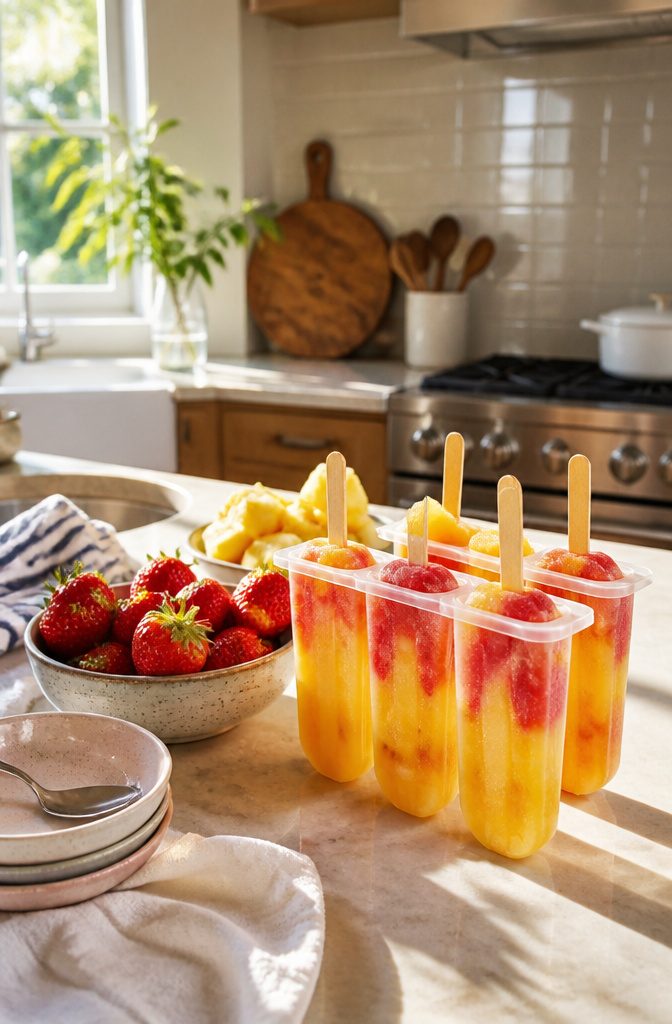
Pineapple juice keeps these popsicles soft enough to bite without waiting, something water-based versions never manage. The sugars and a small amount of fat in the juice interfere with ice crystal formation, so the texture stays closer to sorbet than an ice cube on a stick.
I make these with just pineapple juice and fresh strawberries, nothing else. The pineapple brings enough sweetness that added sugar feels unnecessary, and the strawberries streak through in thick, tart ribbons. A quick blend, a pour into molds, and four hours later they pull free with that gentle give that makes them actually pleasant to eat.
For anyone watching sugar intake, the natural fruit sugars here are still sugars, but there is no added source beyond what the fruit carries itself. The color comes only from the strawberries, so the pops look like something you would expect from a freezer case but without the dye labels.
24. Red White and Blue Cookie Pizza
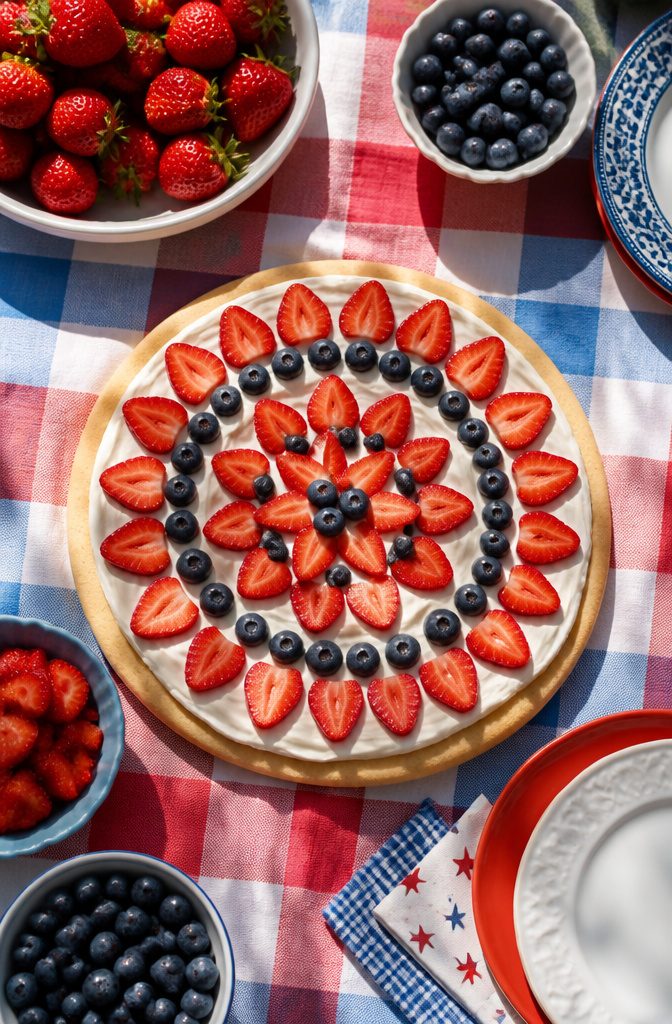
A sugar cookie base baked in a pizza pan is what turns this into shareable July fare rather than another tray of bars. I have made it both ways: from scratch when the kitchen is already hot, and with a store-bought sugar cookie mix when I’d rather be outside. The mix works. No one at the gathering asks.
The frosting is a simple cream cheese spread, not too sweet, because the berries bring plenty. Strawberries and blueberries arranged in stripes or bursts do the patriotic work without any food coloring.
Kids can place the fruit if you want the help, though the pattern rarely survives their enthusiasm. The cookie cools in the pan, which saves a transfer step and a probable crack. Slice it at the table like actual pizza; the wedges hold together better than you’d expect.
25. Very Berry Coffee Cake
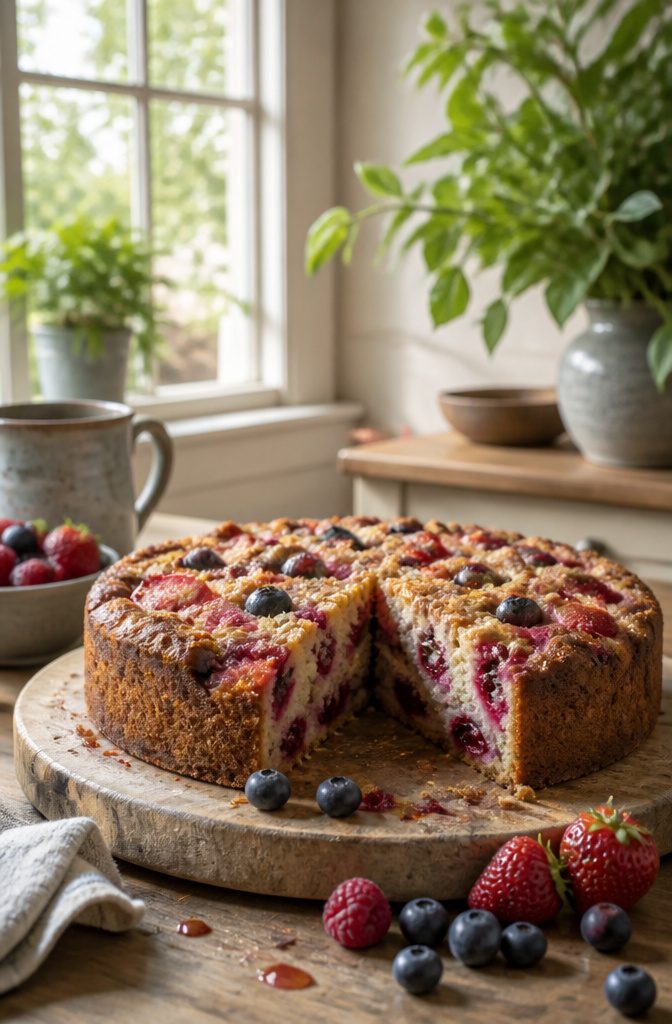
A mixed berry coffee cake works because the berries don’t all behave the same way in the oven. Strawberries collapse into soft pockets and shed more juice than you’d expect, so the batter around them stays almost pudding-like. Blueberries hold their shape and bring a sharper, more direct acidity that cuts the sweetness of the streusel. Raspberries fall apart entirely, leaving tart streaks and a denser crumb where they sit.
I learned to account for this by staggering how each berry goes in. Strawberries get diced small and tossed with a spoon of flour so the surrounding cake doesn’t turn gummy. Blueberries go in whole, pressed just under the surface so they don’t burst on top and look burned. Raspberries get folded in last, barely, so they stay as ribbons rather than disappearing entirely.
The result is a cake with actual texture variation: some bites soft and jammy, others with that clean blueberry pop, others where the raspberry tartness makes you notice the brown sugar in the streusel more than you would have. A single-berry version tastes flat by comparison once you’ve had it this way.
26. Strawberry Blueberry Tart
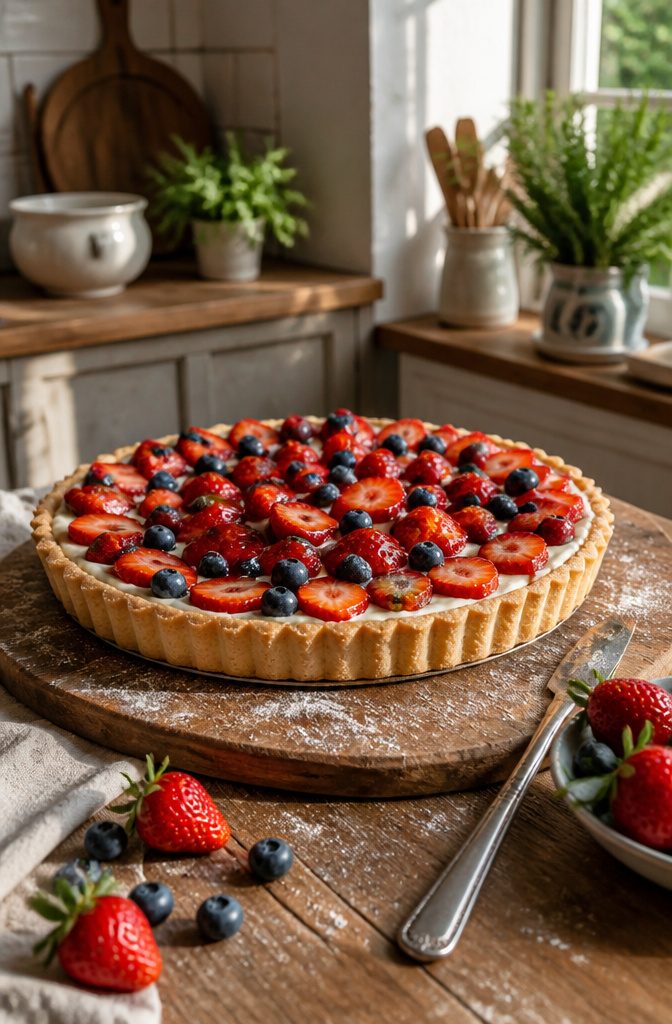
Red and dark blue berries against pale pastry never quite looks real the first time you pull it from the oven. The contrast is that sharp. I make this strawberry blueberry tart when I want something that reads as fancy without the actual work of fancy: a no-bake cream cheese filling, berries piled on top, and a shell that can be store-bought if the day is already warm.
The two-berry pairing does more than look good on a plate. Strawberries give you height and juice; blueberries fill the gaps and hold their shape. Together they cover the surface without looking arranged, which suits summer when I’d rather be outside than fussing with tweezers in the kitchen.
This one travels well to potlucks and backyard dinners, and it holds up in August heat better than anything with whipped cream alone. The cream cheese base sets firm in the fridge, so slices stay clean even after twenty minutes on a picnic table.
27. Strawberry Fluff Salad
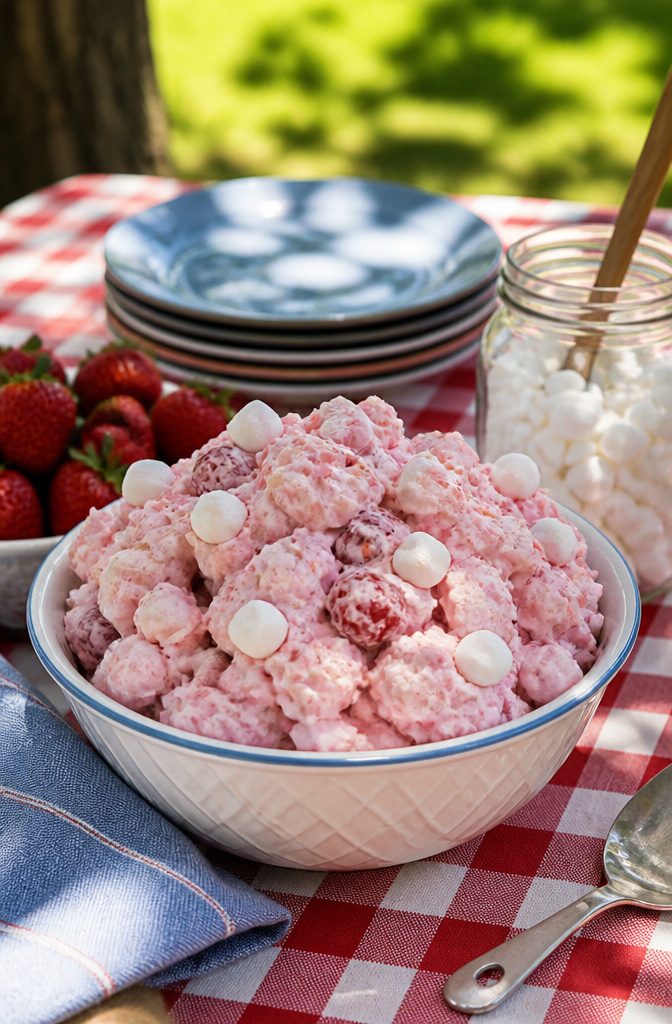
Cool Whip and miniature marshmallows turn sliced strawberries into something that travels well and feeds a crowd without demanding a cooler full of ice cream. The Midwest has been making this work since at least the 1960s, when church basements and picnic tables needed desserts that could sit out through a whole afternoon of potluck grazing.
What keeps it alive is the name, mostly. "Salad" lets you pretend you’re choosing responsibly even as you’re spooning up whipped topping and marshmallows. The strawberry version, sometimes called Strawberry Fluff or just Pink Salad, shows up at every graduation party and Fourth of July gathering I’ve ever attended, usually in the same glass bowl somebody’s aunt brought back from a gas-station promotion.
The construction is nearly impossible to mess up: fold thawed berries into the whipped topping, add marshmallows, maybe some crushed pineapple if you’re feeling ambitious. Some versions call for instant pudding mix to stiffen the whole thing, which helps on humid July days when the Cool Whip wants to weep.
It will never win a baking competition. It doesn’t need to. It exists for the moment when somebody’s cousin shows up with an extra guest and the dessert table needs to stretch.
28. Raspberry Trifle Cups
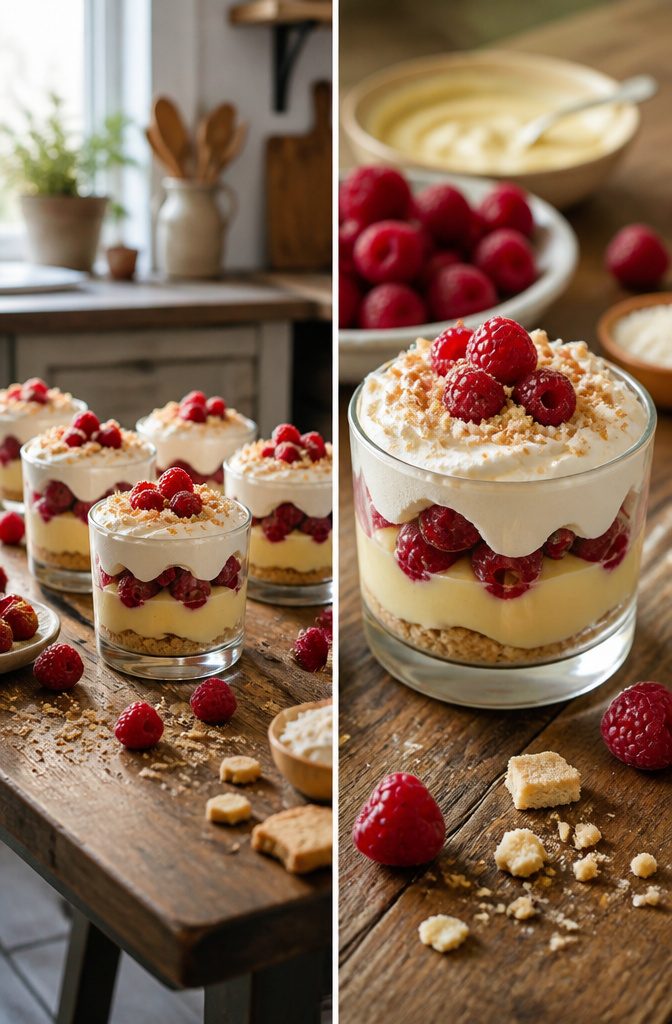
Raspberry trifle cups work because the glass does half the job for you. The sides show off each stripe, so the pressure is on keeping those layers from bleeding into one another.
I build from the bottom up with something absorbent first, a thin layer of cake or crushed shortbread that soaks up any juice trying to work upward. That gets a quick brush with raspberry syrup, just enough to taste, not so much it turns to mush. Next comes the custard, room temperature or cold, never warm enough to melt what sits below it. A set custard holds its line; a loose one seeps and the whole thing muddles into pink soup.
Whipped cream goes on last, right before serving if I can manage it. Early prep means the layers sit in the fridge, assembled save the top, and I pipe the cream on at the table. The raspberries themselves I tuck between custard and cake, not loose on top where they weep and streak. A single layer, cut side against the glass, gives the cleanest look.
29. Strawberry Filling Cupcakes
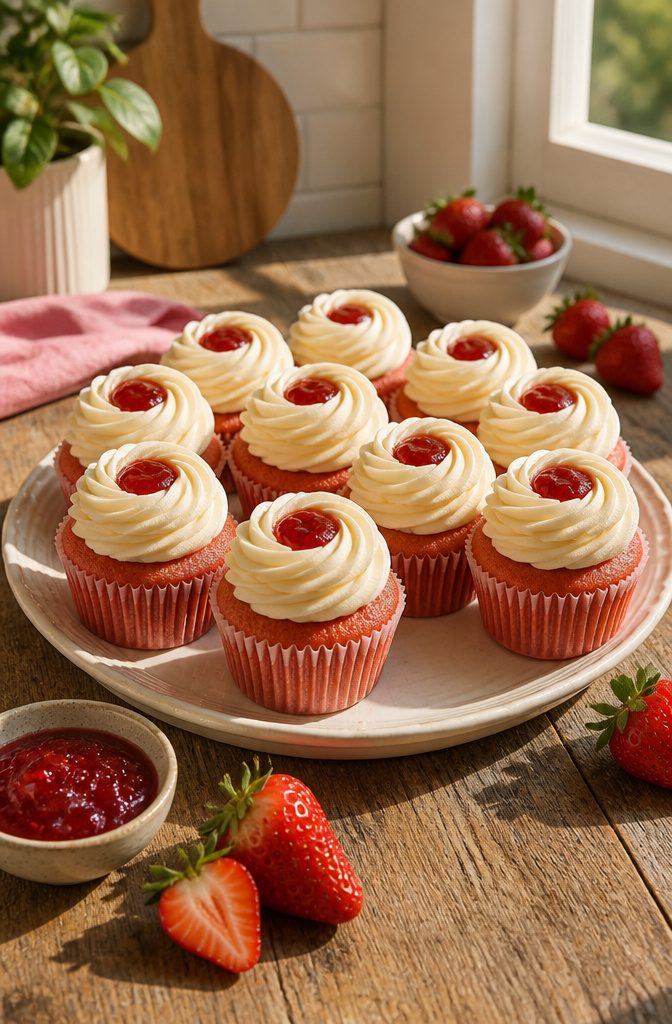
Strawberry filling cupcakes work best when the compote goes inside the cake, not just on top. I core a small cone from the center of each cooled cupcake with a paring knife, saving the little cap, then spoon in a tablespoon of thick strawberry compote before pressing the cap back on as a plug. That hidden pocket keeps the fruit moist because the cake walls absorb some of the compote’s juice while still protecting the surrounding crumb from going soggy. The compote itself needs to cook down enough to cling rather than run; mine simmers until a spoon dragged through the pan leaves a clean trail that fills in slowly. Too thin and it soaks straight through the base, too thick and it reads as jammy against the buttercream. I finish these with a simple vanilla buttercream rather than anything competing, so the strawberry center stays the point of the bite.
30. Red White and Blue Fruit Kabobs
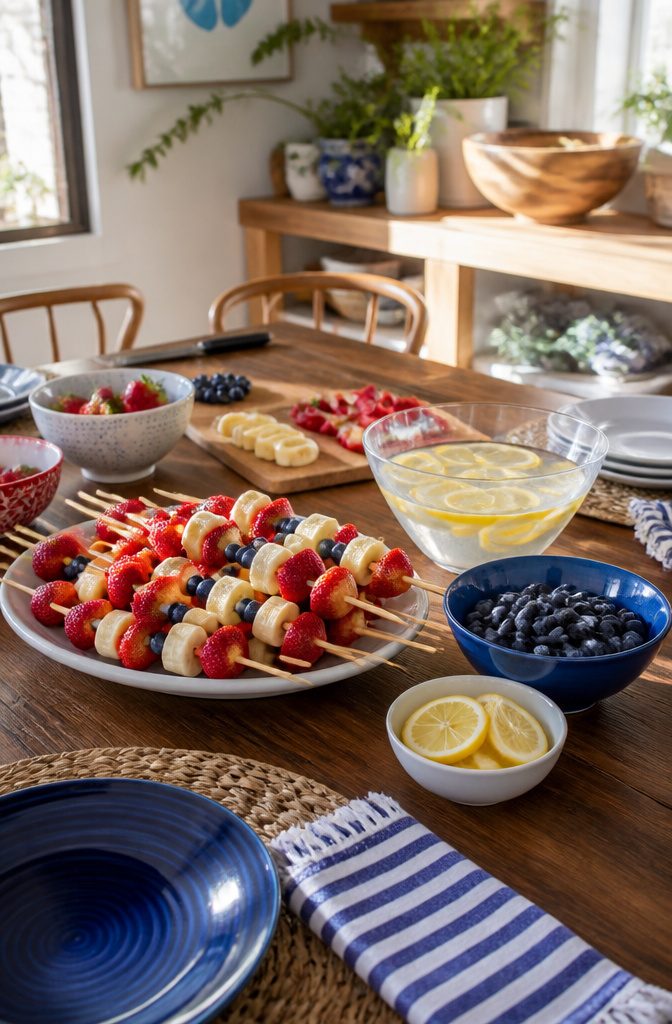
Red white and blue fruit kabobs are the easiest thing to bring to a July cookout when you need something that looks planned but took twenty minutes. I thread blueberries, halved strawberries, and banana chunks onto bamboo skewers in that order, and the flag effect sells itself. The banana is what gives you the white stripe, though apple works if you want something that holds longer. Either way, lemon juice is what keeps the white fruit from browning in the bowl before anyone grabs one. I toss those pieces in a squeeze of juice while I’m still at the cutting board, not after they’ve sat out ten minutes and started turning. Cold water with lemon works too if the acid straight up tastes too sharp on apple. These skewers travel well on ice, and kids eat them because they’re on a stick, which is half the battle at any summer gathering.
31. Simple Strawberry Tart
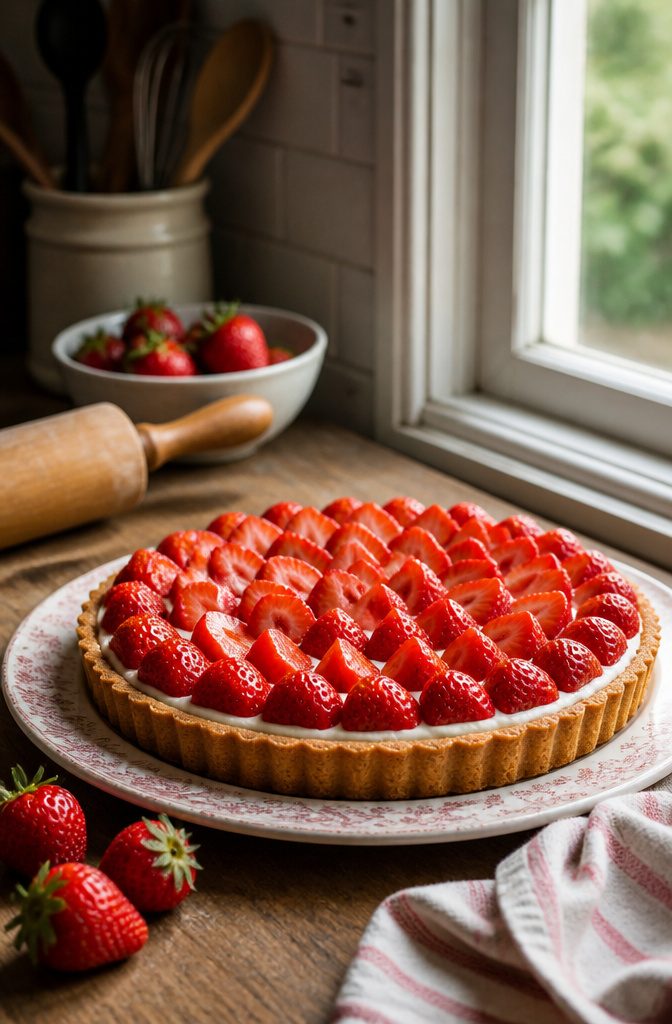
A classic strawberry tart layered with pastry cream and glazed berries looks beautiful on a bakery shelf, but the home version asks a lot: blind-baking, tempering eggs, reducing jam for mirror finish. For weeknight dessert or a first attempt, simpler is better.
I make a plain tart with sweetened mascarpone and raw berries instead. No stove work, no glaze. Cold butter gets rubbed into flour and sugar for a press-in crust that bakes in twenty minutes while you stem the fruit. The mascarpone needs only a spoonful of honey and a drop of vanilla. Spread it into the cooled shell, pile strawberries on top, and call it done.
The crust stays short and sandy rather than flaky, which suits the soft cheese. Macerating the berries even ten minutes makes them weep; I slice them just before serving. Without the pastry cream, the tart holds for a day in the refrigerator, though the crust softens slightly. That trade suits me fine. I would rather eat something I actually finished than admire a perfect recipe I abandoned at the custard stage.
32. Strawberry Breakfast Bars
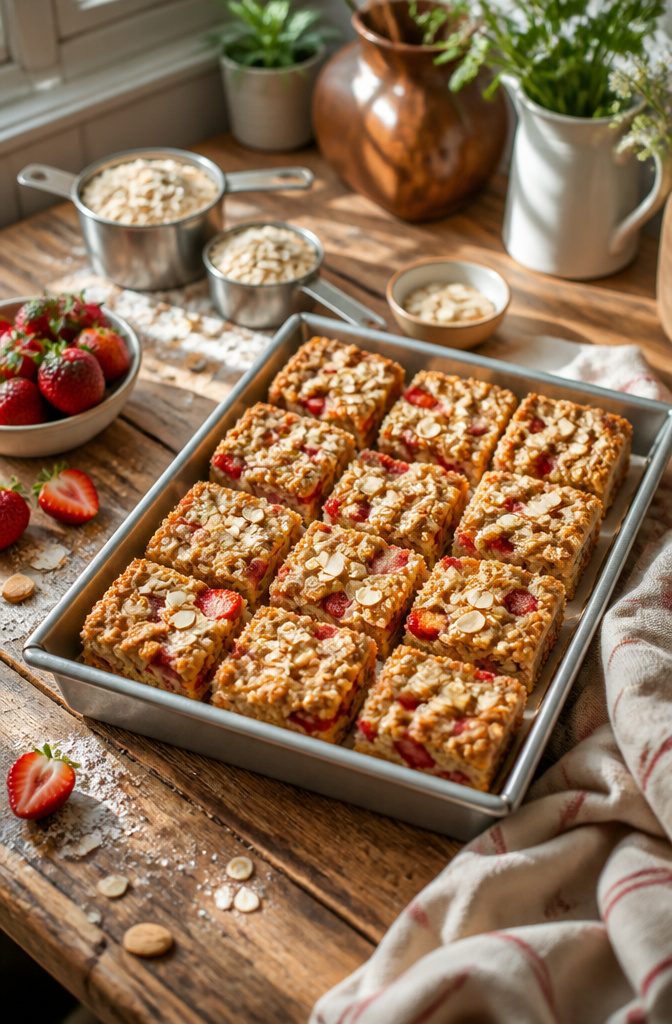
Oat-based bars built for the morning pull back on sugar and keep the fruit closer to fresh than jammy, which gives them a chewier, more restrained crumb than dessert bars built on butter and brown sugar. The original recipe that started this whole category ran under the name Berrylicious Cookie Bars, and the name stuck because it caught that exact middle ground: sweet enough to feel like a treat at 7 a.m., structured enough that you can eat one walking to the car without wearing it.
The structural difference comes down to the bake. Dessert bars usually layer a shortbread base with a thick fruit filling and a crumble cap, aiming for contrast between crisp bottom and jammy center. Breakfast bars press most of the oats straight into the dough, so the berry layer sits shallow and the whole thing slices into something closer to soft granola than pie. You get fruit in every bite, but the bar holds together.
A 13-by-9-inch pan yields the standard batch, baked at 350 degrees for about 35 minutes. The dough mixes in a stand mixer: butter first, then brown sugar and baking powder, then egg and vanilla, then flour, with oats stirred in by hand at the end. Half the dough gets pressed into the pan, berries and sliced almonds go on top, and the reserved half gets crumbled over. Cool completely before cutting, or the center slumps.
Spring and Summer Berry Season
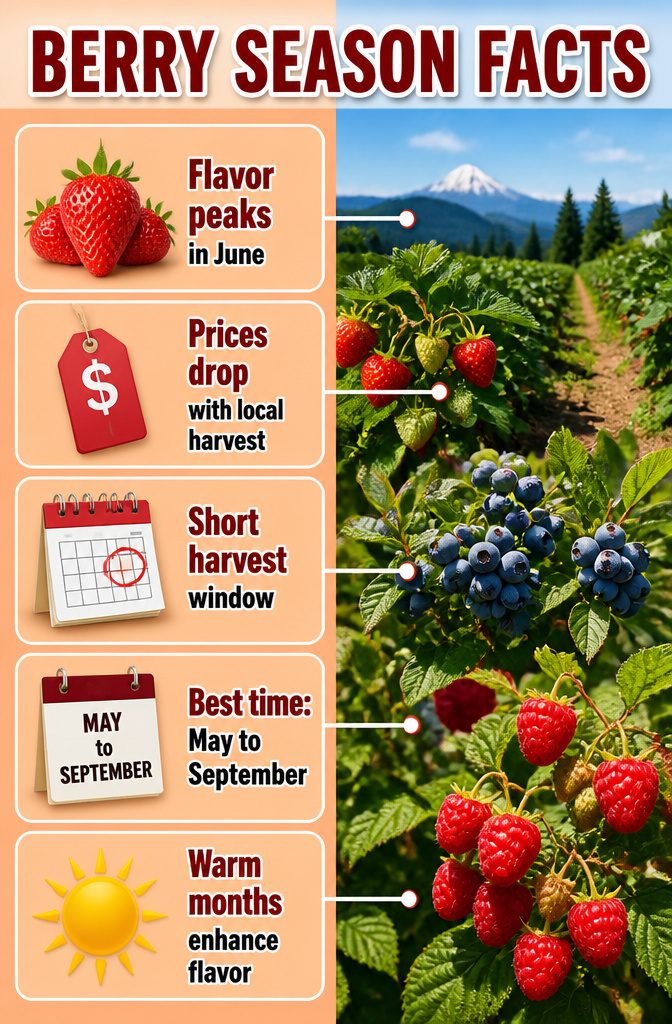
Strawberries hit their stride in June across the Pacific Northwest, and that timing shapes how I plan my berry baking. The fruit is local then, which means flavor peaks while prices drop, and the window is short enough that I freeze flats for August when the bushes are bare.
Summer heat does the same work for blueberries and raspberries, pushing sugars up as the season rolls from late spring into July and August. Warm months pull these recipes together naturally; a strawberry cobbler topped with vanilla ice cream makes sense when the fruit was picked that morning and the evening air still holds heat. The same pie in January relies on shipped fruit that never developed the same intensity, and the cost per pint can double or triple once domestic fields go dormant.
This is why the bulk of berrylicious recipes cluster between May and September. The ingredients are at their best, and the eating suits the weather. A chilled strawberry-lime icebox pie or a mixed berry pavlova belongs on a patio table in June; it loses something beside a January radiator.
Berries That Work in These Recipes
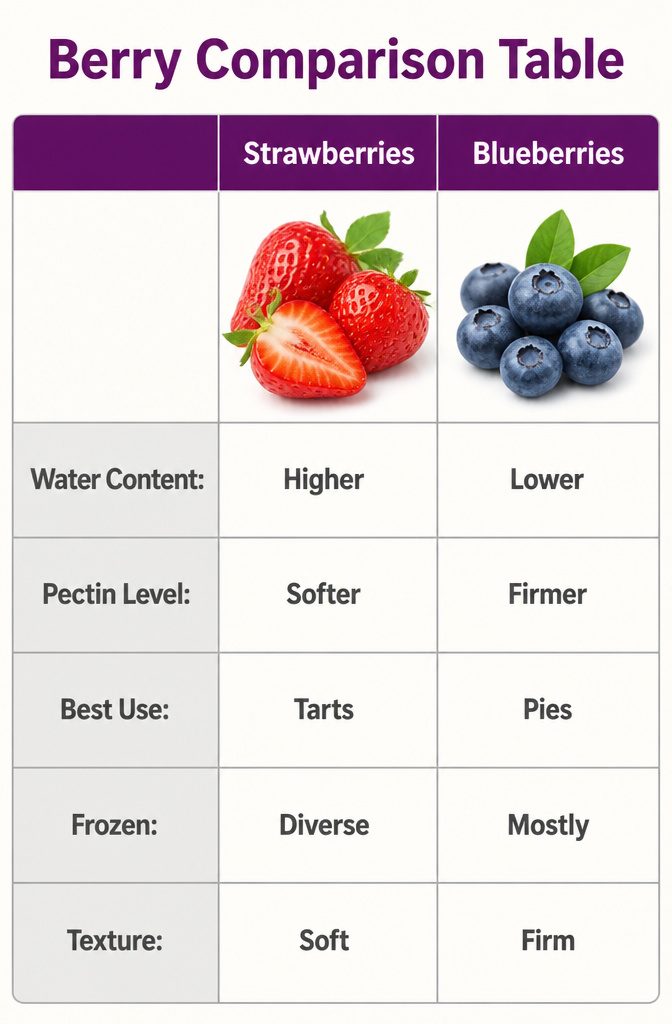
Strawberries, blueberries, raspberries, and blackberries carry most berry desserts, though not every recipe treats them as interchangeable. A single-berry bake, like all-strawberry or all-blueberry, needs that specific fruit for structure. The berry’s water content and pectin level change how a filling sets; strawberries collapse softer than blueberries, which hold their shape longer in heat.
Frozen mixed berries work anywhere the recipe calls for a blend. I keep bags of the four-berry mix on hand from late fall through early spring, and they swap straight across in bar cookies, crisps, and most cobblers. The only adjustment needed is a few extra minutes of bake time while the fruit thaws and releases moisture in the oven.
Save fresh berries for recipes where their texture shows: tarts with uncooked fruit, shortcakes where the berry sits on top, anything finished with a raw garnish. Heat destroys that firmness anyway, so frozen saves money and waste in baked fillings without a flavor loss I can detect.
When a recipe specifies one berry, respect that call. Raspberry seeds add bitterness that blueberries never would; blackberries bleed dark purple that stains a light batter gray. Substitute within reason, but know what you’re trading away.
Why Dessert Dominates Berry Recipes
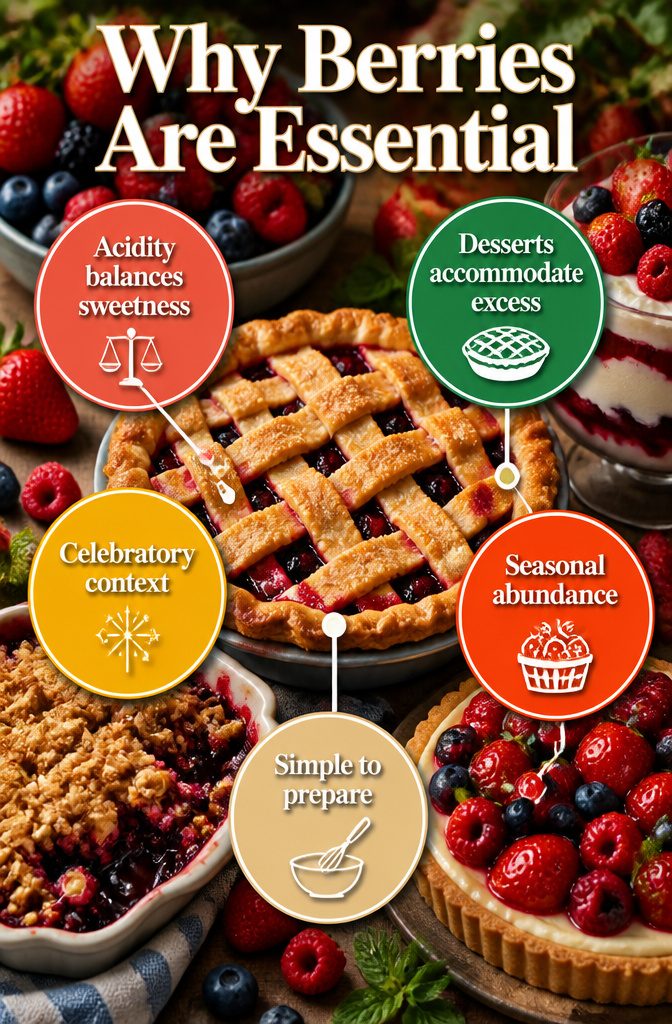
Berries carry enough acid to cut through sugar without disappearing into it, which is why a strawberry can hold its own in a pastry cream that would bury a peach. That balance means the fruit still reads as fruit after baking, not just a purple sweetness. I notice this most when the season’s first raspberries show up at the market and I start reaching for dessert recipes automatically, even though I eat them plain all week.
The gathering part matters too. Berry picking is a brief window, a few weekends in June or July, and you come home with more than you meant to. Dessert is the obvious place to park the excess: a pie feeds eight, a crisp stretches a pint into something generous. The celebration context follows from that abundance. Birthdays and July 4th and casual Sunday dinners all land in berry season, so the recipes accumulate there naturally. A berry dessert is usually the simplest thing you can make that still feels like an occasion, which fits the way most of us actually cook when people are coming over.
No-Bake Options for Hot Days
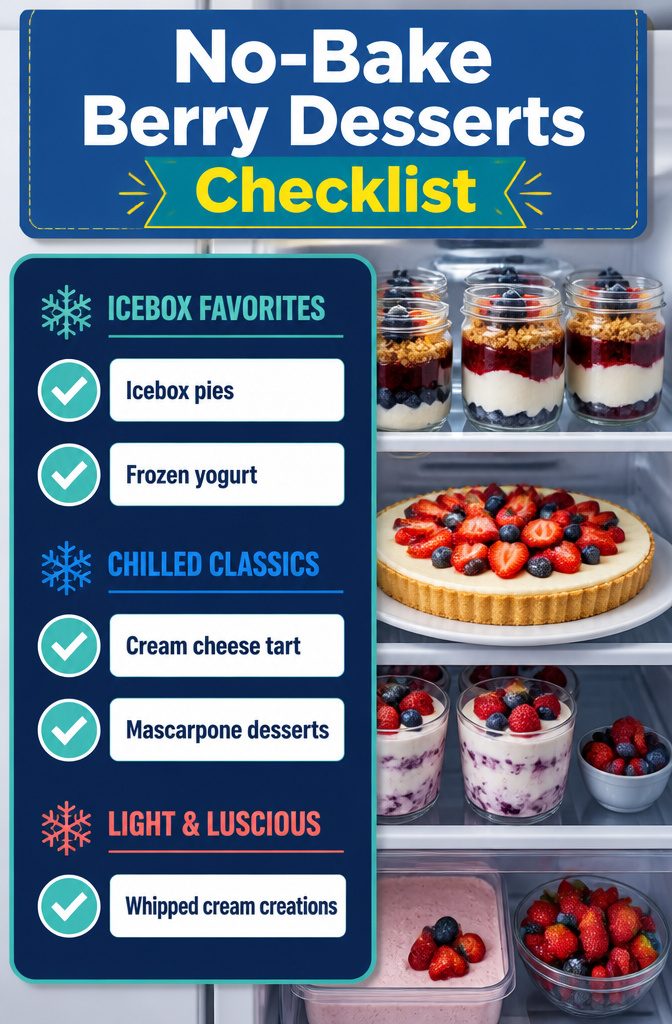
Some of the best berrylicious recipes in my collection never see the inside of an oven. No-bake blueberry crisps layered in jars and that strawberry-blueberry tart with a cream cheese base both come together while the kitchen stays cool, which matters more than most people admit until August hits and the thermostat won’t drop below 78.
The method is icebox or freezer time in place of heat. A cream cheese tart sets firm after a few hours chilling, and those jarred crisps use a stovetop crumble or even a raw oat-brown sugar topping that softens into something cookie-like as it sits. The freezer route works for anything you want sliceable by dinner time; the refrigerator gives you a softer set that spoons out like pudding.
I tried baking a mixed berry pavlova on a 92-degree day once. The meringue wept, the kitchen hit 87, and I served warm soup instead of dessert. Now I keep a running list of what skips the oven: icebox pies, frozen yogurt bases, mascarpone tarts, anything built from whipped cream and berries and patience. The tradeoff is planning ahead, not skill. Most no-bake berry desserts need four to eight hours to set properly, so they fail when you start at 4 p.m. for a 7 p.m. dinner. Start the night before, and the payoff is a cool kitchen and a dessert that tastes like you worked harder than you did.
Lighter Berry Desserts
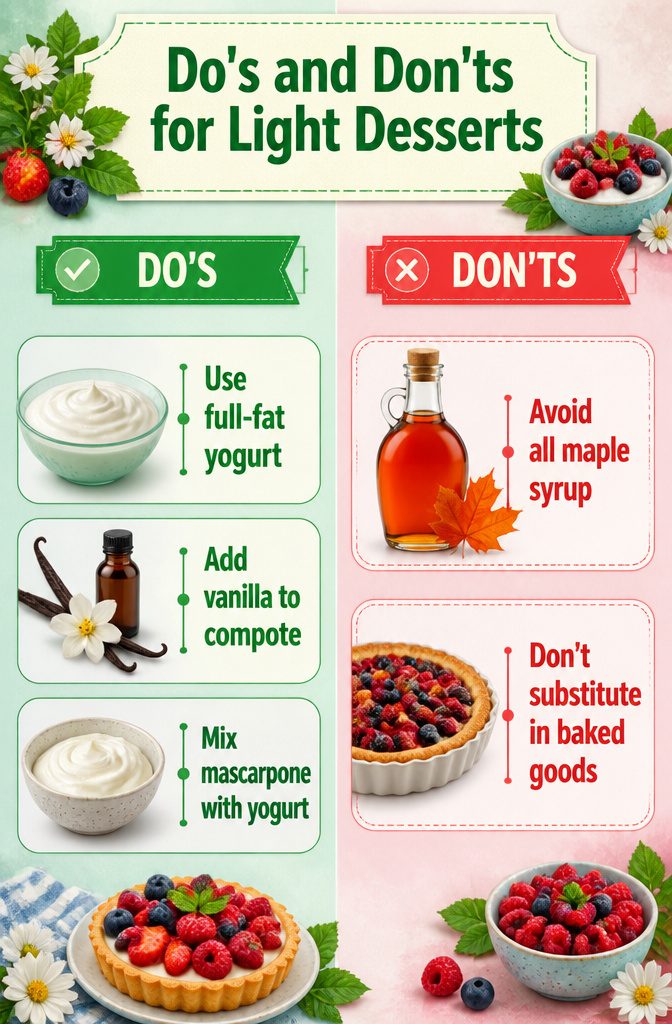
Yogurt-based desserts are where most of my berry experiments land now, though it took some failures to get there. Swapping Greek yogurt for whipped cream works only if the yogurt is full-fat and you drain it through cheesecloth for at least four hours; anything less, and the filling weeps within a day. I learned that the hard way on a strawberry tart meant for a neighbor’s barbecue.
For sugar reduction, halving the standard amount in a berry compote is usually invisible if you add a splash of vanilla or a pinch of salt. The berries carry more than people expect. What does not hold up: replacing all sugar with maple syrup in baked applications; the liquid throws off the set, and the molasses note fights with delicate raspberries.
Mascarpone mixed half-and-half with yogurt gives body without the full calorie load of cream, though I would not use it in anything frozen; the texture turns waxy. In no-bake situations, it is my default now.
Frequently Asked Questions
What are some easy berry dessert recipes?
The article covers 32 berrylicious recipes ranging from no-bake options like Minty Strawberry-Lime Icebox Pie and Mixed Berry and Yogurt Popsicles to simple baked treats like Easy 3 Ingredient Blueberry Pie Bars and Lemon Blueberry Cookies. Many use shortcuts such as store-bought crescent roll dough or yellow cake mix to keep prep time under 30 minutes.
How do I make a berry cobbler?
Use the drop biscuit method: spoon buttermilk dough straight onto fresh berries in a buttered baking dish without rolling. Bake at 375°F for 45–50 minutes until the fruit bubbles and the biscuit top turns light golden brown. The berries need no pre-cooking; they slump into their own juices while the biscuits set on top.
What berries can I use in desserts?
Strawberries, blueberries, raspberries, and blackberries all work well across these recipes. Raspberries hold their shape best in baked goods like the French toast casserole. Small berries like raspberries and blackberries sink into cake batter without slicing. Strawberries work raw on tarts or cooked into pie filling, depending on the recipe.