
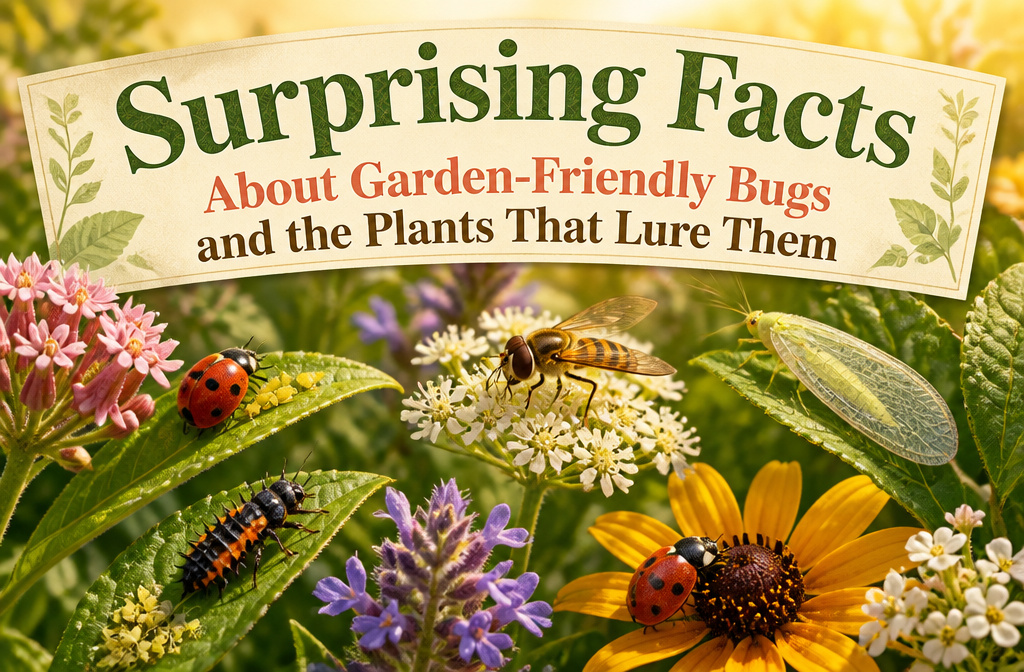
Garden-friendly bugs are predatory insects that eat the pests eating your plants, but only if you can recognize them through every life stage. I once sprayed a cluster of what I thought were mealybugs on my milkweed and killed a whole brood of larval lady beetles, which look nothing like the spotted adults and consume roughly 50 aphids per day before they ever get their shells.
Ladybugs
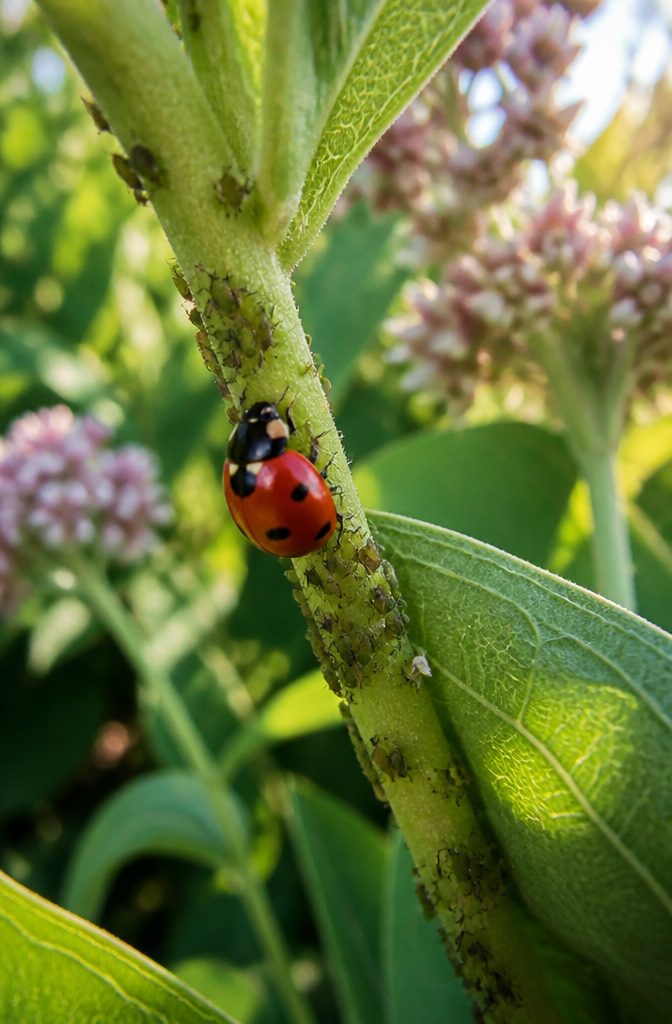
A single ladybug can eat up to 5,000 aphids in its lifetime, and the real workhorses are the larvae, which pack away roughly 50 aphids per day before they ever get their spotted shells. North America hosts more than 480 species of these beetles, though most gardeners only notice the classic red-and-black adults.
The larvae look nothing like that. They are dark, flattened, and covered in spines, and I killed a cluster of them one spring before I learned to check twice. I had spotted what I thought were mealybugs on a milkweed stem and sprayed, then read later that evening what larval lady beetles actually look like. The shape is distinct once you know it: elongated, segmented, and actively crawling where mealybugs bunch and stay still. Now I count to ten and look for movement before I reach for anything.
The adults handle soft scales, whiteflies, and mites too, but aphids remain their main target. That appetite is why a garden with lingering aphid pressure often ends up with ladybugs on its own, provided the chemicals stay on the shelf.
Green Lacewings
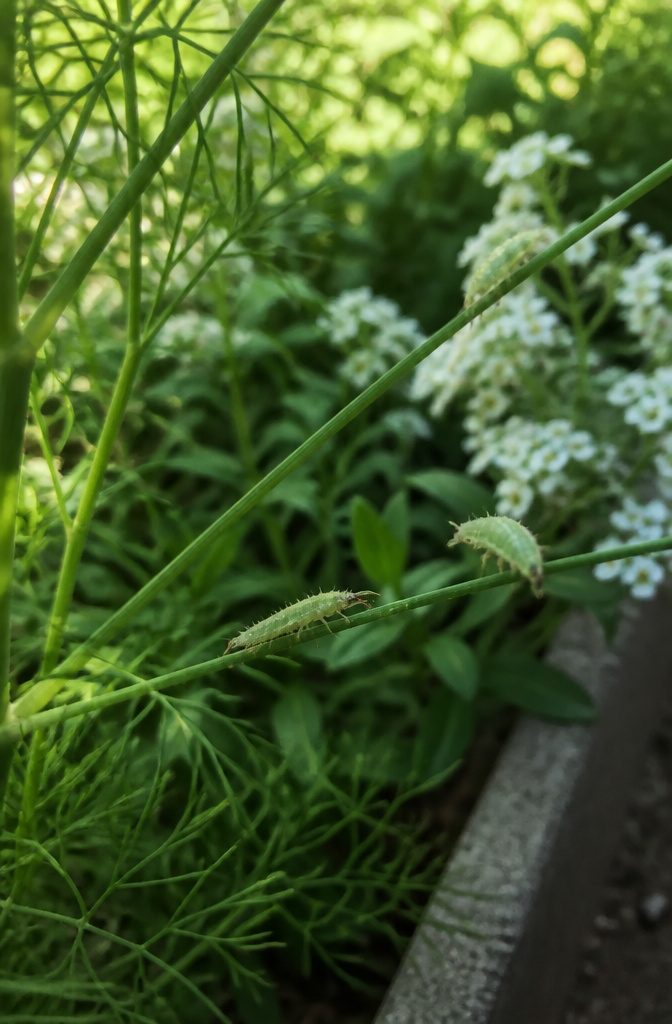
Green lacewing larvae earn the name aphhid lions for good reason. Each one consumes roughly four hundred insects over its short developmental period, taking down aphids, thrips, whiteflies, and even small caterpillars. They become active in early spring, right when seedlings are most vulnerable.
The adults look almost too fragile to be useful, pale green with large, clear wings held tent-like over the body. They feed mainly on nectar and other fluids, though some species do take small insects.
The eggs are what nearly got me. They sit on thin stalks, tiny white ovals like miniature balloons on threads. I found a cluster on my tomato stems one morning and reached for the neem, assuming they were some pest I had not met yet. Something made me pause and check first. Good thing: those stalked eggs belong to one of the most useful predators you can have in a small garden. Now I leave them alone, and by late spring the lacewing larvae are patrolling for me.
Praying Mantises
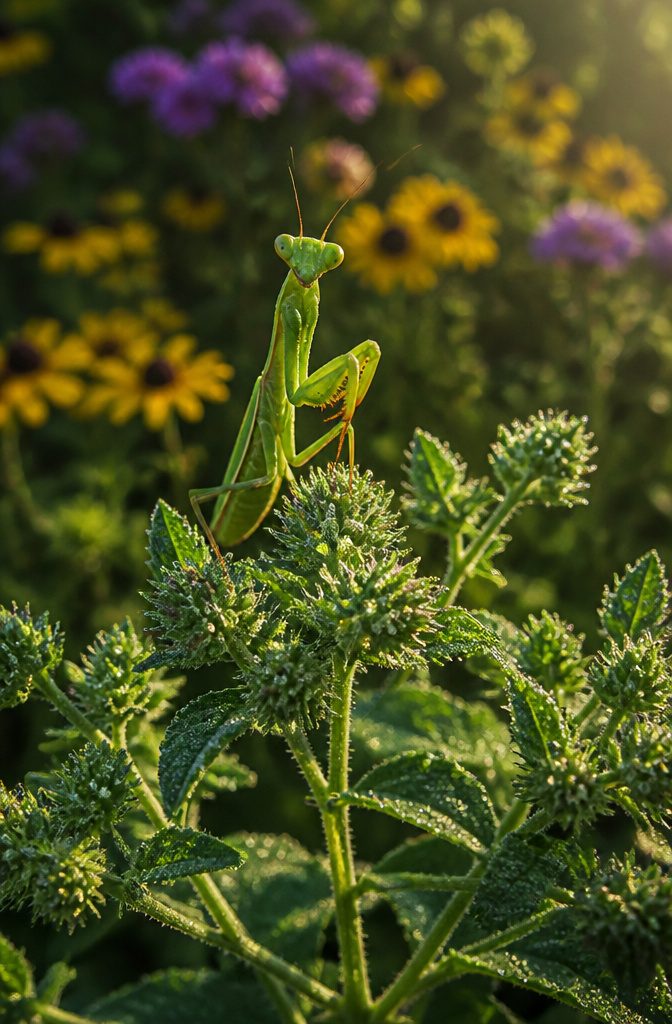
A praying mantis will clear out grasshoppers fast, and moths, beetles, flies, whatever crosses its path. The problem is that path is wide open. They are generalist predators with no loyalty, a point that landed hard one August morning on my patio.
I had planted a patch of mountain mint the season before to draw pollinators, and it worked. Bumblebees moved in, the big fuzzy ones that knock the stems around. I was watching one work a flower cluster when a mantis I had not noticed, green and still as a leaf, struck. The bee never had a chance. The mantis ate it head-first while I stood there with my coffee, still thinking of this insect as one of the good guys.
That moment rewired how I see them. Mantises also take butterflies, other bees, and in some cases even hummingbirds. They will eat each other given the opening. They are not pest control you can aim; they are simply hungry, and your garden’s beneficial visitors are equally fair game.
I still find them fascinating. Their heads swivel 180 degrees, those forelegs folded like a gesture of patience before the lunge. Birds and frogs eat them, so they feed back into the system. But I no longer hope to spot one near my pollinator plants. The mantis does not distinguish my allies from my problems, and that makes it a complicated neighbor at best.
Hoverflies
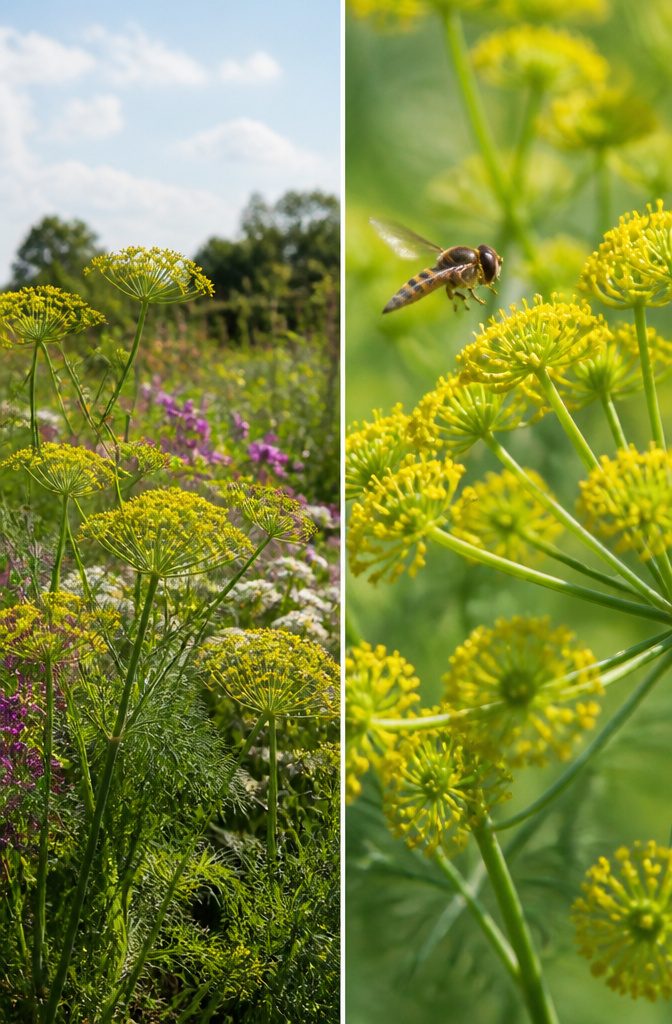
The first time a hoverfly paused in midair beside my dill, I thought it was a bee about to sting. A closer look showed the giveaway: one pair of wings instead of two, and eyes that wrap around the head like a helmet. That hovering flight, wings beating several hundred times per second, is how they earned their name.
Adult hoverflies work flowers for nectar and pollen, moving pollen as they go. The real payoff comes from their larvae: each one eats up to 50 aphids a day, sometimes 400 across the whole larval stage. The female lays eggs directly in aphid colonies, so her offspring hatch to a ready meal.
I started recognizing that helicopter-hover a few years back. Now I plant more dill, plus alyssum and marigold, to keep them coming. No stinger, no downside.
Soldier Beetles
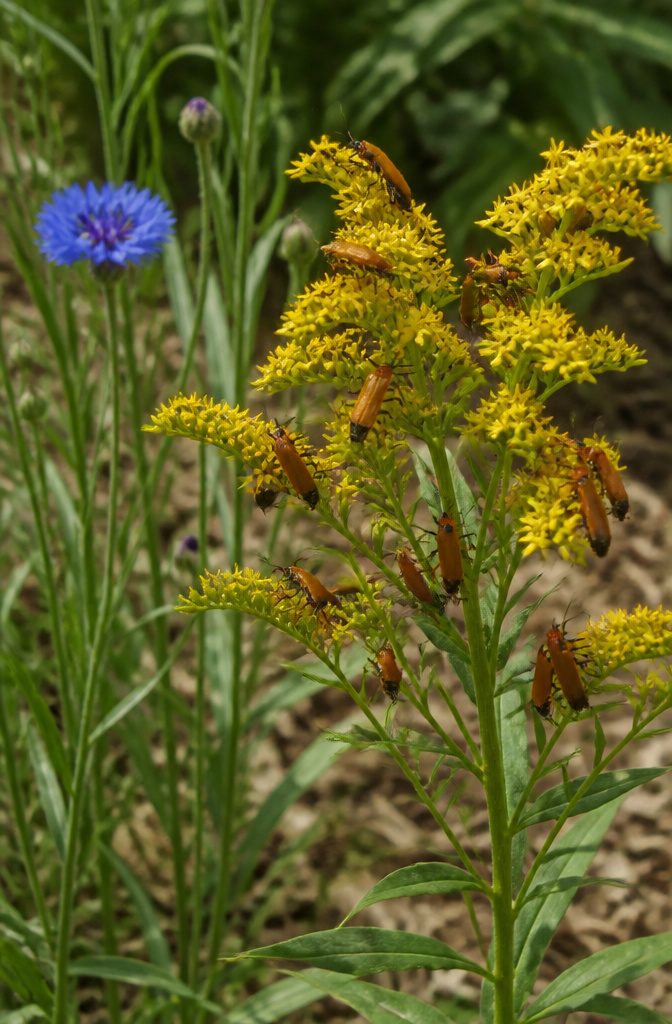
The first time I saw soldier beetles, they were blanketing a stand of goldenrod in late August, and I reached for the spray. Their orange-yellow bodies looked like trouble massed against the blue sky. Then I noticed they were moving, hunting, and the plants beneath them had no aphids at all.
Soldier beetles earned their name from the fabric-like wing covers that resemble old uniforms, not from any military order. Both adults and larvae prey on soft-bodied pests: aphids, caterpillars, beetle larvae, and grasshopper eggs. The adults also tackle cucumber beetles and corn rootworms. Goldenrod draws them in, along with milkweed and hydrangeas. Now I let that patch of goldenrod run a little wild at the edge of the bed, and I check it like a weather report.
Ground Beetles
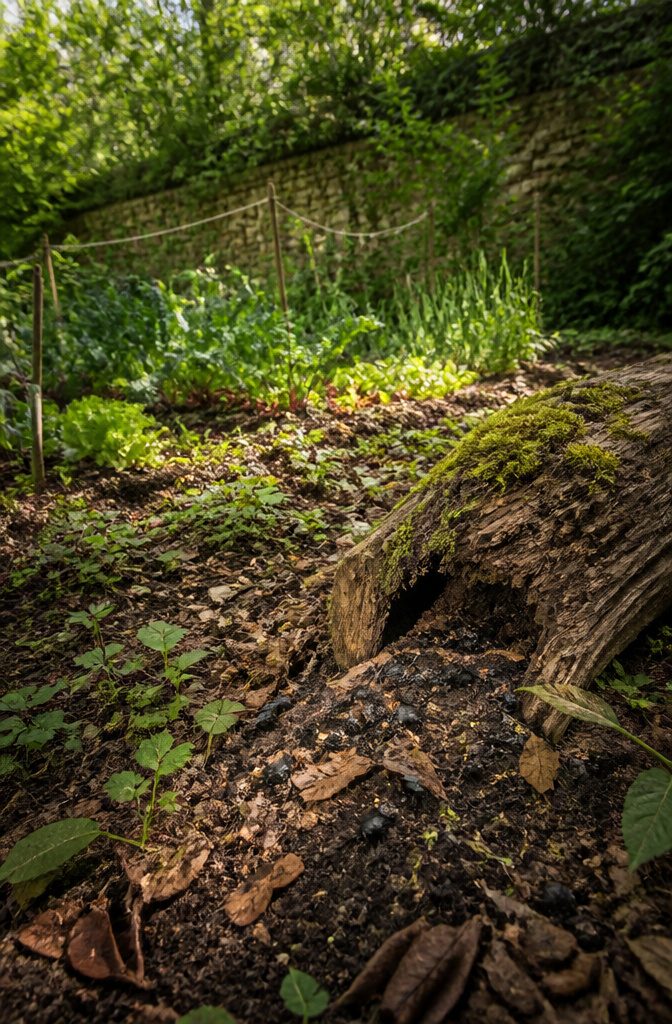
Ground beetles do their real work after dark. The adults hunt slugs, cutworms, and caterpillars at night, while their larvae stay in the soil eating eggs and other pest larvae. Both stages together eat roughly their body weight in prey daily, and the larvae often kill more than they can eat, which keeps soil pest numbers down faster than you’d expect.
I used to rake my beds clean every spring, scraping mulch down to bare dirt before laying fresh stuff. Then one evening I flipped a rotting log at the bed’s edge and found eight or nine beetles underneath, all headed different directions like a highway I’d been paving over. The tidy mulch had been wiping out their daytime cover. Now I leave old leaf litter in place and lay new mulch over the top, which gives them somewhere to wait out the day. A lip on any slug trap helps too; ground beetles can’t fly and will drown in beer bait if the rim sits flush with the soil.
Parasitic Wasps
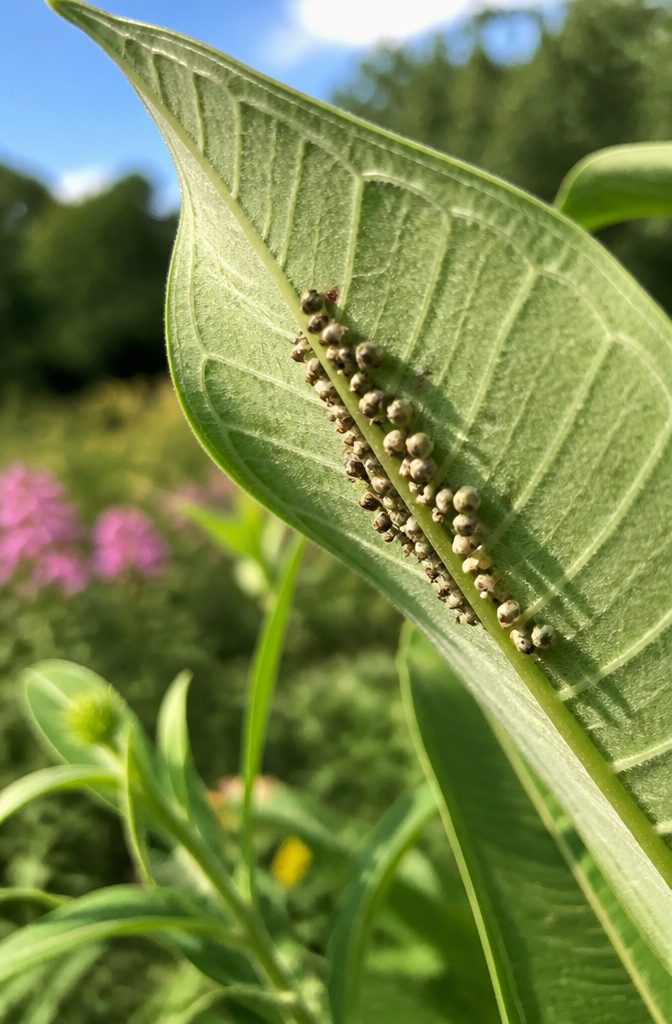
The first time I found aphid mummies clustered on the underside of my milkweed, I assumed some new blight had swept through. The swollen, papery husks looked like something gone wrong, a plant disease in its final stage. I almost pinched them off.
Those tan or black shells are the opposite of a problem. A female braconid wasp, sometimes called an aphid wasp, found my patch and began laying single eggs inside live aphids. The larva hatches and eats its host from the inside, leaving the dried outer shell as proof. That papery husk means pest control is already working, and at a scale no spray reaches. Other parasitic wasps do similar work on tomato hornworms, cabbage worms, and whiteflies, sometimes spinning tiny white cocoons on or near the dead host. The adults stay smaller than one-eighth of an inch, so I never see them. Now I hunt for the mummies instead, and leave them where they sit.
Spiders
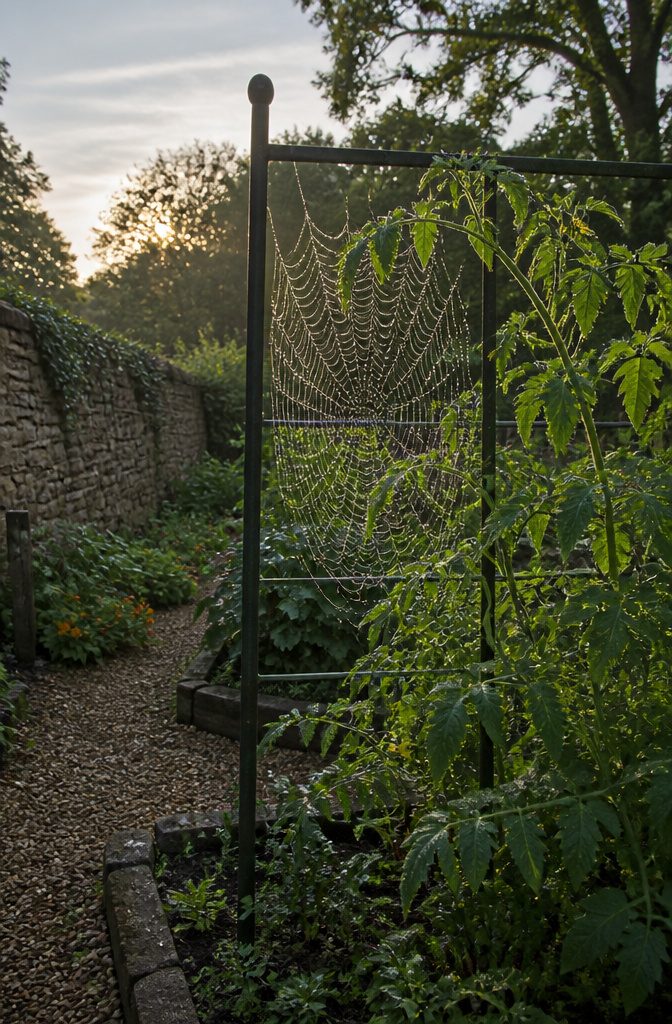
Spiders sit in a separate class from insects entirely, arachnids, with eight legs and two body regions rather than six and three. That distinction mattered less to me than the fact that they were in my garden at all, until I started counting bodies. A single orb-weaver’s web near my tomato trellis trapped enough mosquitoes one July that I began leaving the corner alone on purpose. Wolf spiders and jumping spiders do the same work without any web at all, hunting beetles, caterpillars, leafhoppers, and aphids directly on soil and foliage. Most garden spiders pose no threat to humans. Leave their webs intact in corners and low-traffic areas; the mosquito reduction alone justifies the slight unease of sharing space.
Tachinid Flies
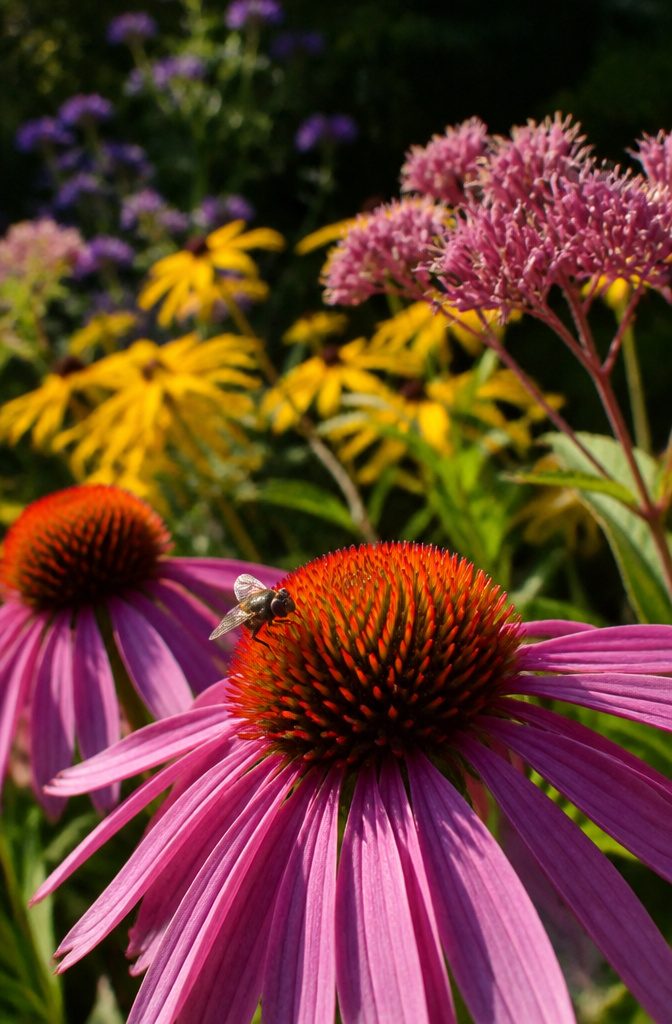
Tachinid flies carry roughly 1,000 species across North America, each one built like a house fly that has been hitting the protein: thicker through the thorax and covered in dark bristles that catch the light. The females lay eggs on or inside caterpillars, beetle larvae, and true bugs, usually parking each egg near the host’s head. The larva hatches almost immediately and tunnels inward, feeding for a week or more before the host dies.
The adults feed on nectar, tree sap, and the honeydew that aphids and scale insects leave behind, so they pull double duty as pollinators while they search for the next host. Their flight is a zig-zag stutter, nothing like the straight-line purpose of a bee, and that erratic hovering can look at first like a damaged insect struggling to stay aloft.
I followed one once, thinking it was a wounded moth, and it led me straight to a tomato hornworm infestation I had missed. The fly was not injured. It was hunting. The clumsy flight is the giveaway, and once you spot it, you start noticing these bristly parasites working the same flowers as the pests they control.
Assassin Bugs
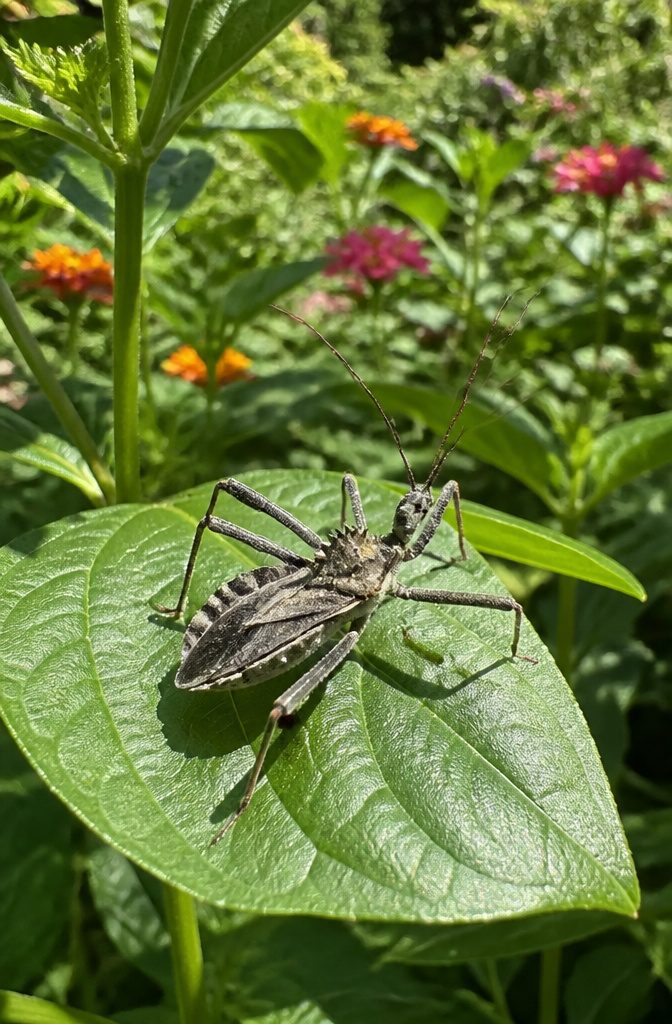
Assassin bugs earn their name with methodical aggression. These predators ambush prey as large as six times their own size, piercing with a curved beak to inject venom that dissolves tissue from the inside out. Caterpillars, aphids, Japanese beetles, and mosquitoes all vanish into their appetite. Some species kill more than they can eat, a hunger that makes them rough allies for any gardener.
The wheel bug, gray and armored with that cog-like thorax, is the one I met. I reached into a tomato cage without looking, felt a sharp jab, and spent the next week with a swollen knuckle that throbbed when I bent my finger. Painful is not a strong enough word for the bite of a large assassin bug. Now I part leaves with my eyes first, letting the plant move before my hand ever does.
About 160 species roam North America. Many wait on flowers, sipping nectar between hunts, patient as long as pests keep coming.
Why Beneficial Bugs Matter

My first season gardening, I sprayed everything that moved. Aphids on the tomatoes meant a trip to the hardware store for whatever bottle promised fastest results. The tomatoes survived, mostly, but so did the aphids once the spray wore off. By my third season, I had stopped spraying entirely and started watching instead. The same plants that once needed weekly chemical rescue were now patrolled by insects I had previously swatted away.
Less than 1% of insects worldwide are actually pests. That figure reframed my whole approach. The rest are doing jobs I had been paying to undo. Pollination is the obvious one, bees and flies moving between blossoms so fruit sets at all. But the quieter service is pest control. Predatory insects eat the species that eat your plants, often before you even notice damage. A garden with lacewings and soldier beetles handles aphid surges on its own, no bottle required.
The chemical sprays I reached for first were wiping out both sides, not just the problem. That created the cycle I kept finding myself in: more sprays, more rebounds, more sprays again. Letting the beneficial population build meant accepting some chewed leaves early in the season while the predators established themselves. The payoff came weeks later, when pest numbers stayed down without my intervention.
How I Attract Them

Diverse flowering plants keep beneficial insects around my patio from early spring straight through fall. I grow dill and fennel for their flat-topped clusters that lacewings and parasitic wasps work over for nectar, yarrow for its dry soil tolerance and constant bloom, and alyssum low along the edges where ground beetles hunt. Last fall I added crimson clover, mostly to fix nitrogen in a bare patch, but the early flowers this spring pulled in hoverflies before anything else opened.
I stopped spraying insecticides three years ago and lost fewer plants to aphids after that, not more. The insects that eat pests recovered faster than the pests themselves.
A few logs and a light mulch layer against the fence give spiders and ground beetles somewhere to spend the heat of the day. I do not move those logs anymore. Something useful is always living under them.
Life Stages I Learned to Read
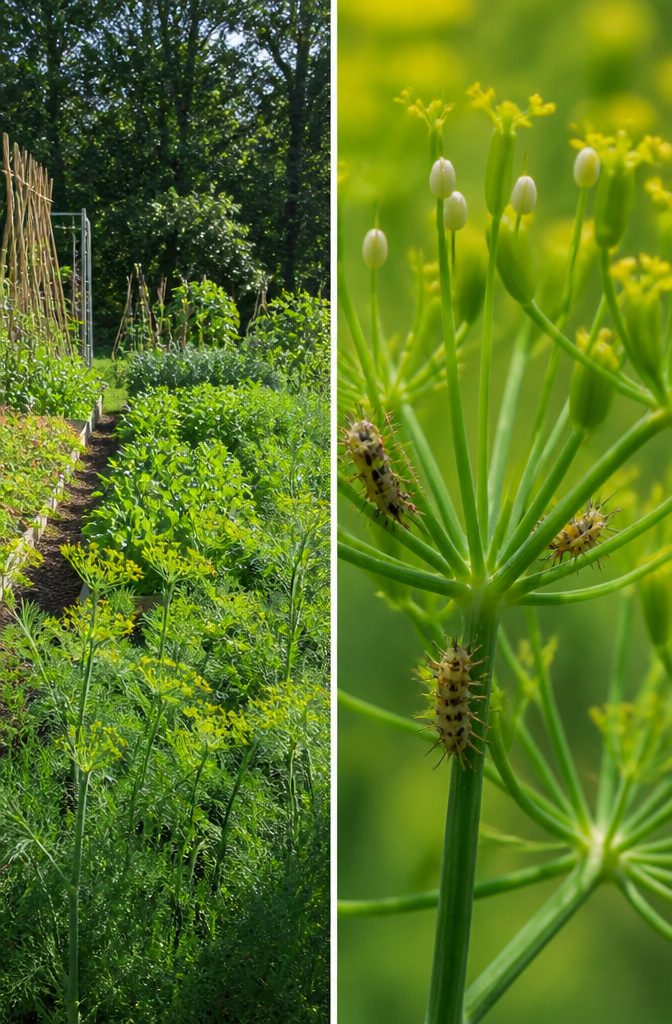
The first time I spotted a lacewing larva, I squashed it. It looked like a tiny alligator crossed with a slug, nothing like the delicate green insect with transparent wings that had floated through my dill the week before. That was my introduction to how radically garden-friendly bugs change between life stages.
Adult green lacewings feed on pollen and nectar. Their larvae, nicknamed "aphid lions," are the predators, and they start hunting in early spring. A single ladybug larva can eat up to 40 aphids an hour, which means the spiky, elongated creatures cruising your stems are often doing more pest control than the spotted adults we recognize.
The mistake that cost me a season of free aphid control was assuming the unfamiliar form was a threat. Now I check before I act. Lacewing eggs are small white ovals on slender stalks, a clear sign the alligator stage is coming. Ladybug larvae look nothing like their parents either, but both forms belong in your garden.
Plants That Bring Them In
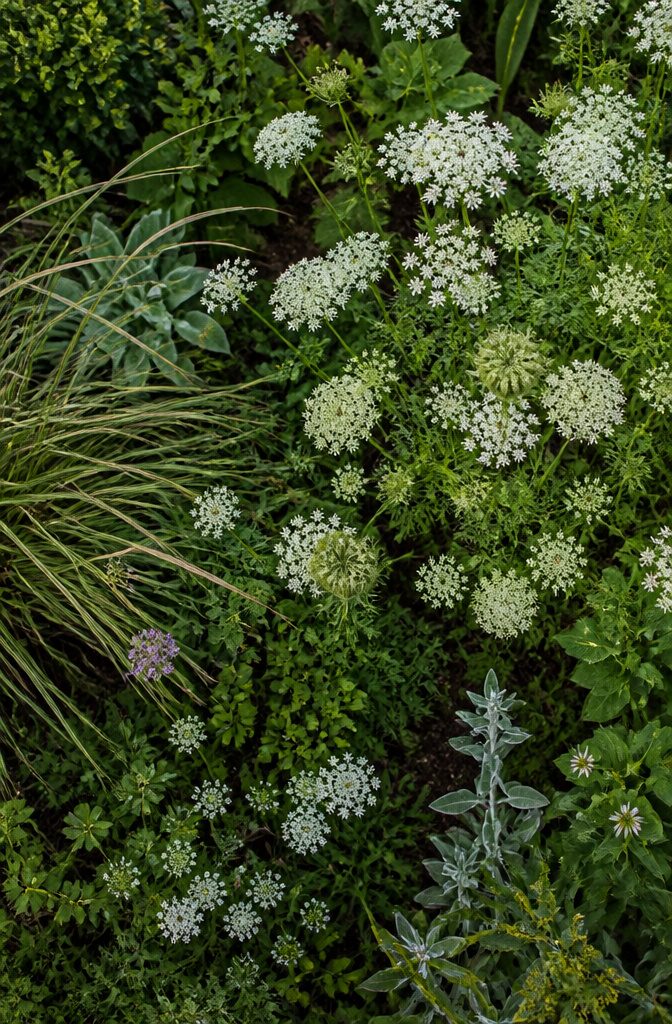
The plants that pull in lacewings and hoverflies share one shape: flat-topped clusters of tiny flowers, the kind botanists call umbels. In my yard, the old-fashioned Ammi majus and the weedy but willing wild carrot do this work. They read as filler to some gardeners, but the insects find them fast. Queen Anne’s lace, the same plant roadside mowers hate, keeps the lacewings laying eggs near my tomatoes.
For soldier beetles, the sources split two ways. Compound blossoms like yarrow bring the adults in to feed on aphids; goldenrod and milkweed do the same job later in the season. I plant both because the beetles’ larvae live in soil and need soft-bodied pests to eat, so keeping adults around means next year’s pest control starts underground.
Ground beetles want something simpler: low cover they can hide under during the day. A thick mat of creeping thyme or even unmowed clover near the vegetable beds gives them darkness and moisture. They run at night, eating slugs and cutworms, so the cover needs to sit right where the damage happens, not across the yard.
Frequently Asked Questions
What are beneficial insects?
Beneficial insects are garden-friendly bugs that either pollinate plants, control pests, or both. They include predators like ladybugs, lacewings, and soldier beetles that eat aphids and other pests, plus pollinators like bees and hoverflies that move between flowers so fruit can set. Less than 1% of insects worldwide are actually pests; the rest are doing jobs gardeners often pay to undo with sprays.
How do I attract beneficial insects to my garden?
Plant diverse flowering plants that bloom from early spring through fall, especially flat-topped clusters like dill, fennel, yarrow, and alyssum. Stop spraying insecticides so predator populations can recover faster than pests. Add low cover such as leaf litter, logs, or creeping thyme near vegetable beds for ground beetles and spiders to hide under during the day.
Do ladybugs really help gardens?
Yes. A single ladybug can eat up to 5,000 aphids in its lifetime, and the larvae are even more voracious, packing away roughly 50 aphids per day before they develop their spotted shells. The adults also handle soft scales, whiteflies, and mites. North America hosts more than 480 species of these beetles.
Are praying mantises always helpful?
No. Mantises are generalist predators with no loyalty to your garden’s goals. They will eat grasshoppers and moths, but they also take butterflies, bees, and even hummingbirds when the opportunity arises. They do not distinguish pests from pollinators, which makes them a complicated neighbor rather than targeted pest control.