
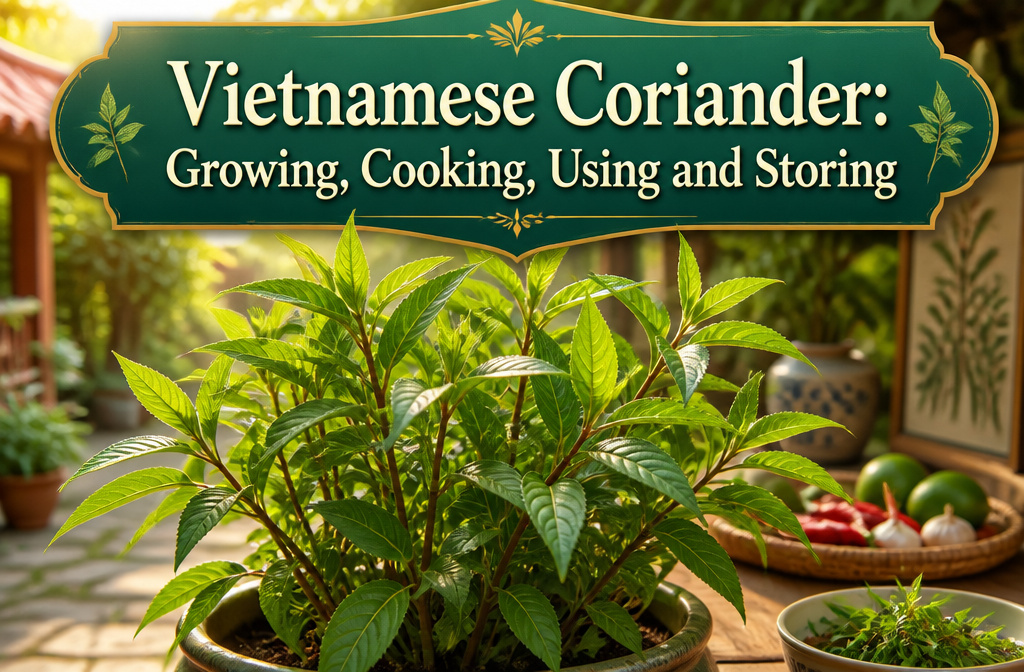
Vietnamese coriander is a leafy Southeast Asian herb that tastes like cilantro sharpened with black pepper and lemon, and it survives summer heat that makes true cilantro bolt to seed. The catch is moisture: let the soil dry even slightly and the leaves turn papery at the edges, but waterlog the roots and they rot into sludge. I keep mine where morning sun hits then shade arrives by one or two o’clock, and I check the pot every morning in July.
Choose a Location
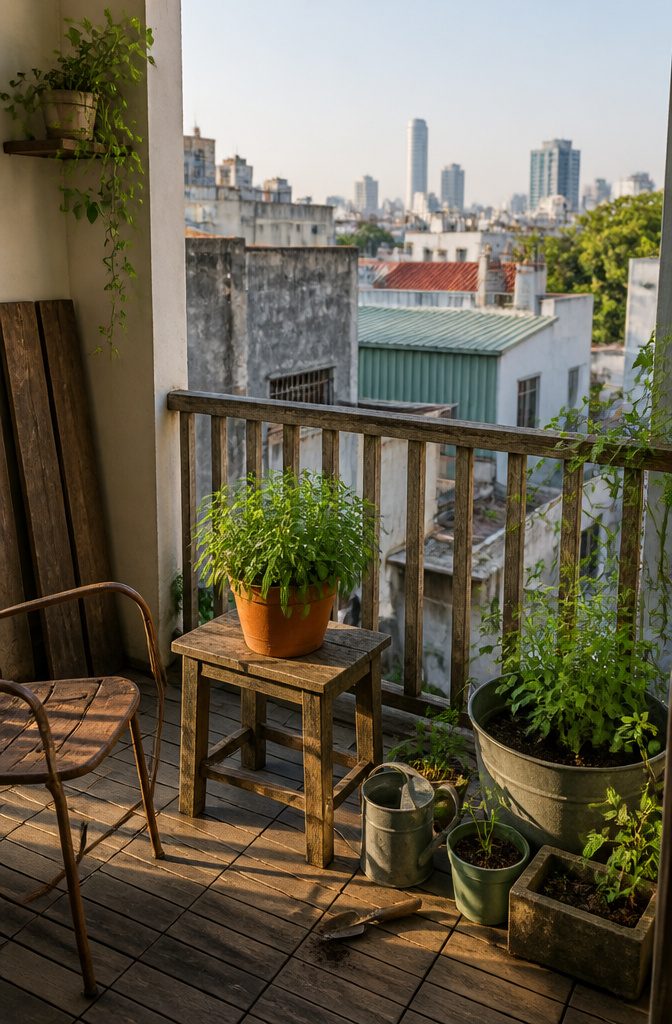
Vietnamese coriander handles more sun than you might expect from a leafy herb, though partial shade wins in zone 9 and up once July hits. The sources split on this: some list full sun as acceptable, others call part shade preferable. My own reading suggests the difference comes down to soil moisture and whether your afternoons bake the way a concrete patio does.
On my small balcony the afternoon glare off the railing turns pots into ovens. Vietnamese coriander in those conditions wilts by 3 p.m. unless the soil stays almost wet. A spot that gets direct morning light then slips into shade by one or two o’clock keeps the leaves thick and the flavor sharp without that stressed, bitter edge full sun can bring.
If your only option is a west-facing wall or open yard, afternoon shade from a taller neighbor, a portable umbrella, or simply positioning the pot where a structure blocks the worst hours will keep the plant from shutting down in August. The sources note it can manage full sun with constant moisture and moving air, but that is a higher-maintenance bargain than most small-space gardeners need to make.
Prepare the Soil
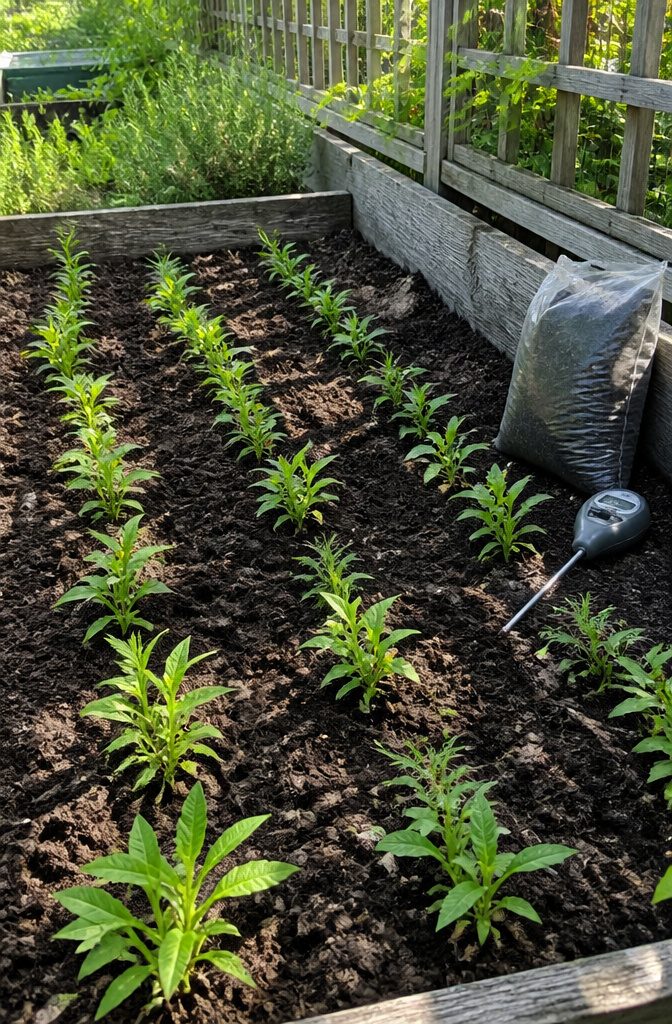
Vietnamese coriander wants soil that drains fast and sits at a pH between 6.0 and 7.0, slightly acidic to neutral. I used to skip testing and just dump plants into whatever was in the bed, figuring compost would fix anything. The first time I tried this herb, the leaves yellowed within three weeks and the stems turned soft at the base. Water was pooling where I couldn’t see it, and the roots had rotted before I realized.
Now I work compost or aged manure into the top few inches every spring, and I check pH with a cheap meter from the hardware store. If my reading drifts toward the alkaline side, above 7.0, I mix in a little peat or pine needles the season before I plant. The organic matter keeps the texture loose enough that water moves through rather than sitting, and that root structure stays firm and white instead of collapsing into sludge.
Planting
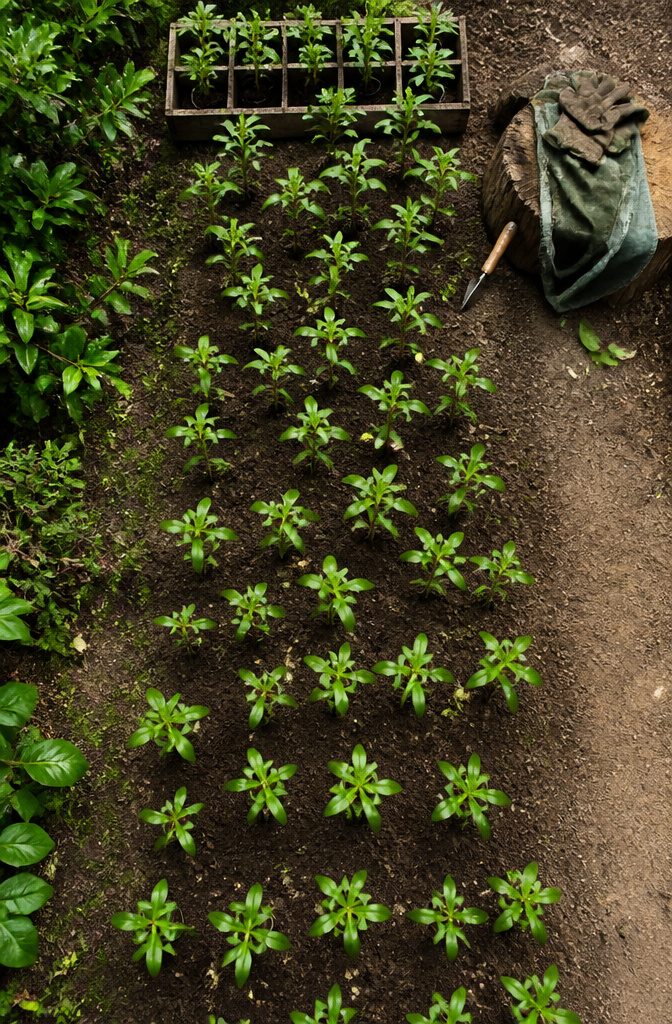
Vietnamese coriander spreads to about 18 inches at maturity, so space plants 6 to 12 inches apart to give each one room to fill out without crowding. I learned the hard way that 4-inch starts planted at 6 inches merge into a single mat by July, which looks lush but makes harvesting a tangle.
Moist soil means the ground feels like a wrung-out sponge: damp to the touch, never muddy, never dusty. Water until a handful squeezed in your fist holds together and releases a few drops, not a stream. Soggy roots rot fast in this herb, and dry spells send it wilting by afternoon. A low spot in the garden that holds moisture after rain works well, or level ground with a mulch of straw or shredded leaves to slow evaporation. I check my planting with a finger to the second knuckle; if it comes up clean, it is time to water.
Watering
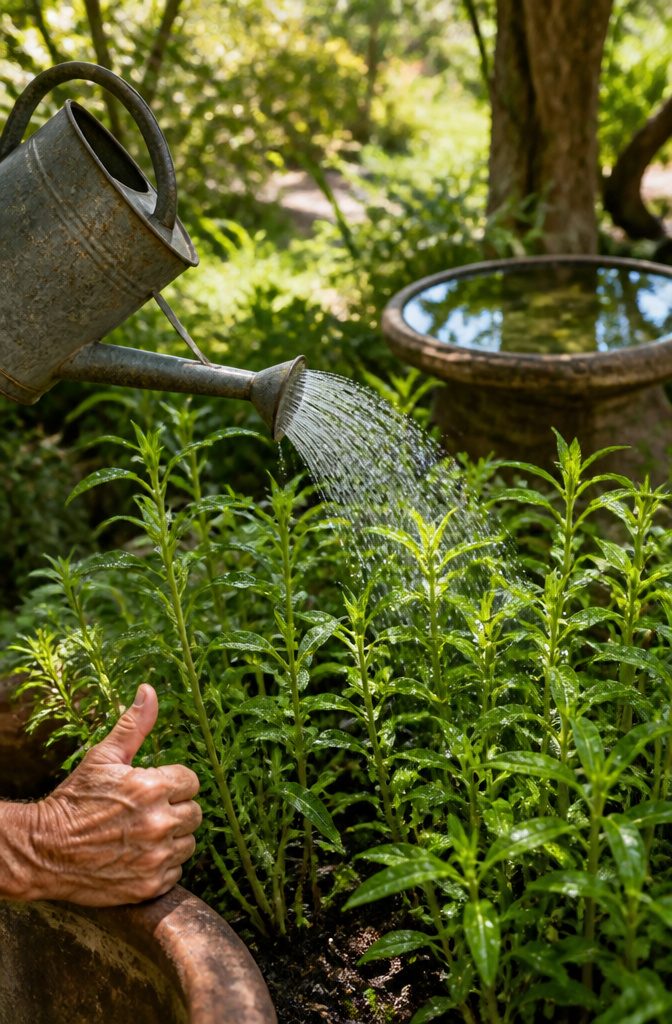
Vietnamese coriander wilts fast when the soil dries even a little, so keeping the mix damp but not soggy is the whole job. In my first season I let a pot go maybe thirty-six hours past thirsty, and the leaves turned papery at the edges. A soak revived it, but the top growth never filled back in quite right.
Waterlogging looks like surface puddles that sit for hours, or soil that smells sour and packs tight when you poke a finger in. Roots in that situation rot instead of drink. The plant wants the steady moisture of a low garden spot where water collects after rain, not a swamp.
In practice, containers need a check every morning in summer heat. If the top half inch is dry, water until it runs through. Garden plants in that natural low spot can go two or three days between drinks if the weather stays mild, but a dry spell means daily attention. A straw or leaf mulch buys you a little margin by slowing evaporation and keeping weeds down.
Fertilizing
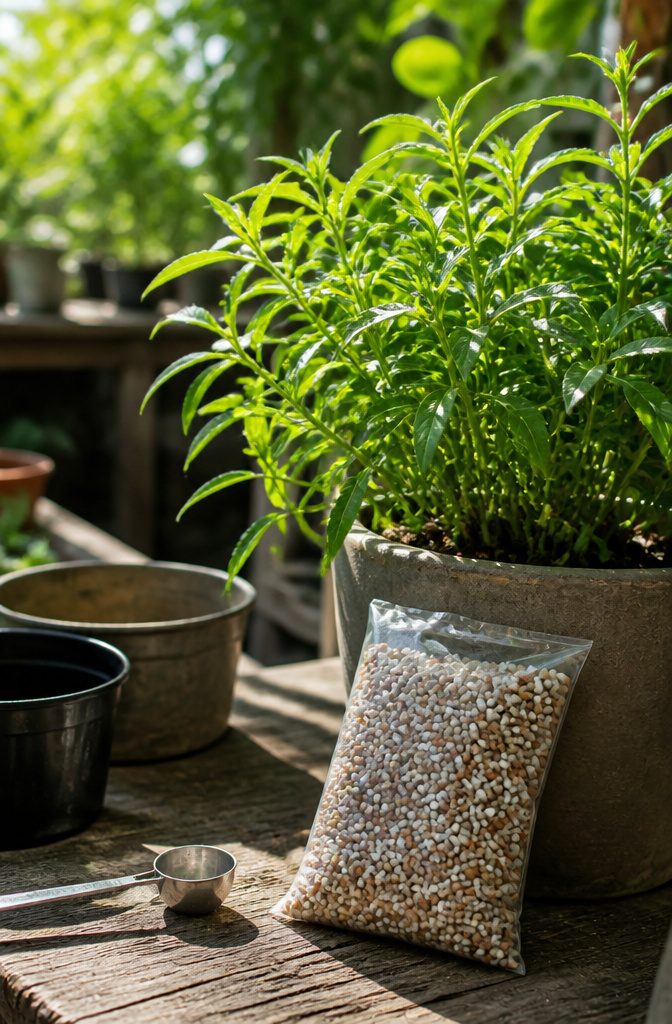
A balanced fertilizer keeps Vietnamese coriander producing those long, pointed leaves through the warm months. I look for the three numbers on the package to match or come close: something like 10-10-10 or 20-20-20, which signals equal parts nitrogen, phosphorus, and potassium. The nitrogen in that mix matters especially for this plant, since extra nitrogen pushes leafier growth.
In the ground, feeding every four to six weeks from spring through early fall covers the growing season. Potted plants need more frequent attention because water running through the container washes nutrients out with it. For containers, a liquid feed every two weeks in warm weather and once a month when temperatures drop keeps the plant from yellowing and slowing down. I have skipped the mid-season feeding on potted plants and watched them go pale and stall; the recovery after a dose of liquid fertilizer takes about ten days, but the lost growth does not come back.
Pruning and Harvesting
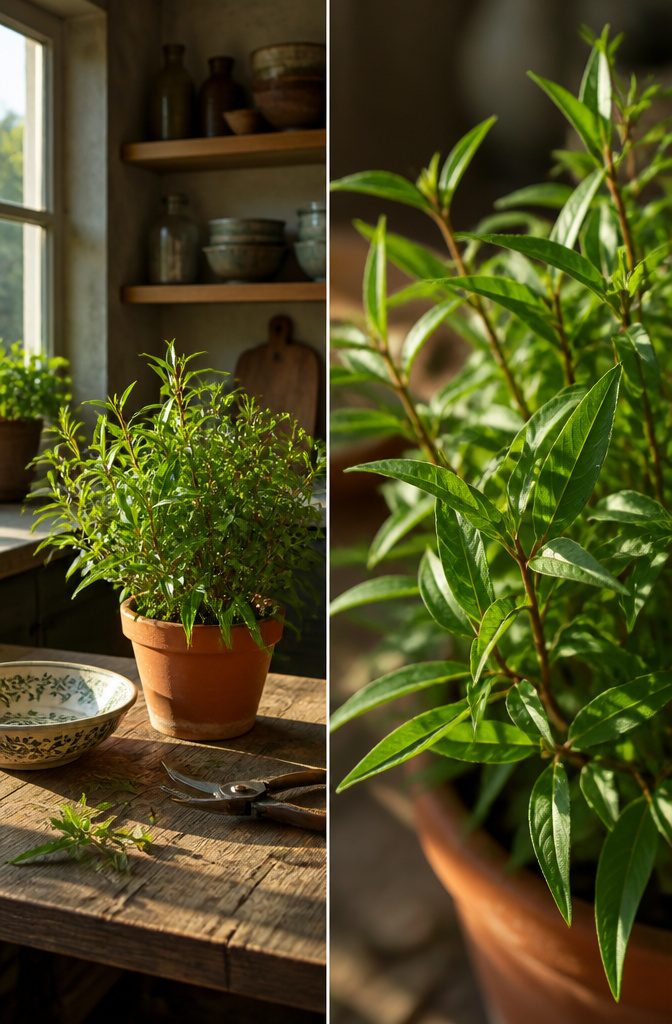
Wait until your Vietnamese coriander stands 4–6 inches tall before you start taking leaves. Anything shorter and the plant is still building its root system; pull too early and you set the whole thing back by weeks. The first harvest is really just a light pinch of the outer leaves, enough for a bowl of pho or a single batch of dipping sauce.
Regular pruning makes the difference between a lanky, floppy stem and a compact bush you can actually use. Snip stems that wander outside your pot or bed, and pinch the growing tips as you harvest. The plant responds by pushing out two new shoots from each cut, so the more you take, the denser it gets.
Let it go too long and Vietnamese coriander turns woody at the base. The older stems get tough and the flavor dulls, almost soapy. Once that woodiness sets in, you cannot prune it back to softness; the plant has already shifted into its next phase and the best leaves are gone. I check mine every five days in summer, sometimes more often if the weather is hot and the growth is fast.
Culinary Uses
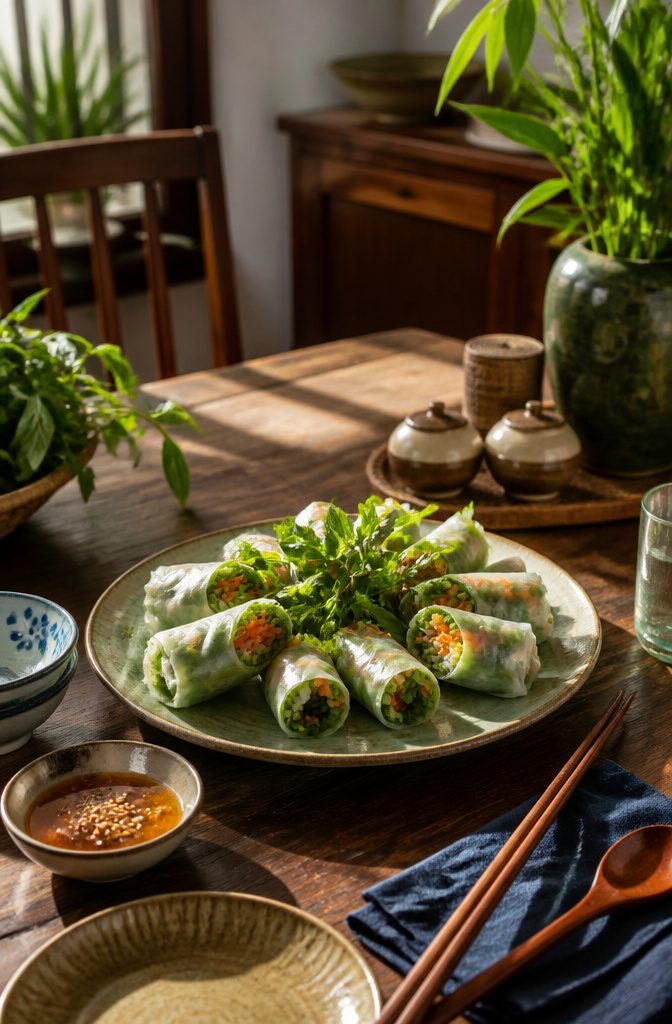
Vietnamese coriander lands in the bowl at the last minute, and that timing matters. The leaves lose their punch fast under heat, so tearing them over pho or tucking them into fresh spring rolls keeps that cilantro-mint-pepper bite intact. I learned this the hard way the first time I stirred it into a hot pot too early and ended up with faded green ribbons that tasted of almost nothing.
The herb’s real skill is balance. Strong-smelling proteins, seafood, even balut, Vietnamese coriander cuts through and cleans up the finish. In Cambodia it goes into soups and stews as chi krasang tomhom; in Malaysia and Singapore it’s laksa leaf, non-negotiable in that spicy noodle soup. Laos builds its national dish, larb, around it with raw beef and aromatics. Across Southeast Asia it shows up in asam pedas, tamarind-sour fish curries, rice dishes, and marinades where it stands in for cilantro or mint when the cook wants something sharper.
Raw is the default. Salads, summer rolls, garnishes, quick finishes on stir-fries. The cooked applications exist, but they are gentle: a brief wilt into noodles, a float on top of stew, never a long simmer. Treat it like a final seasoning, not a base note, and it rewards you.
Medicinal Uses
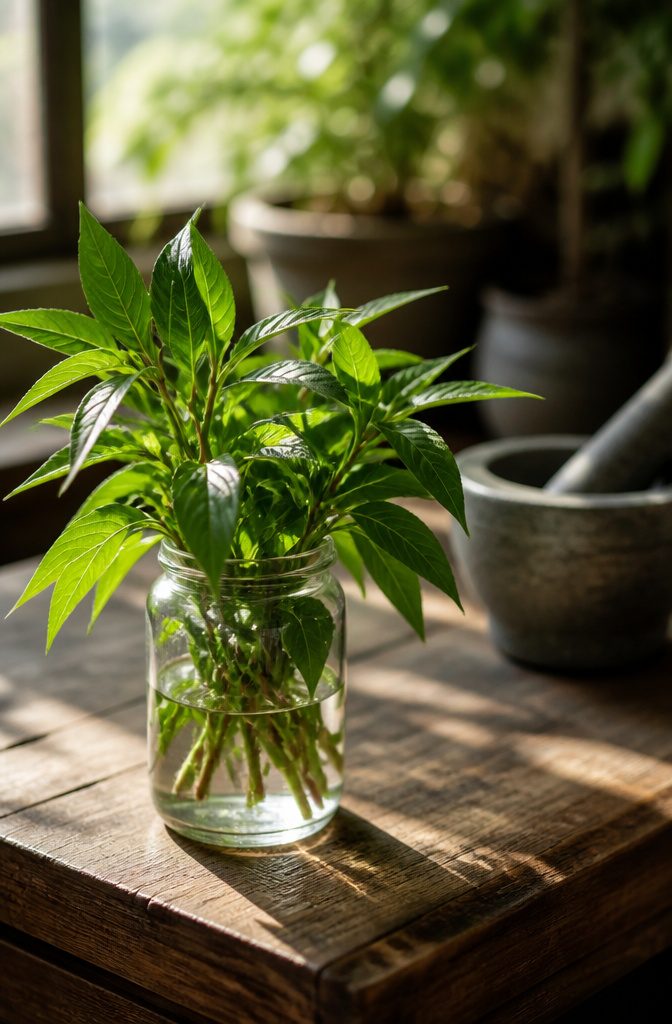
Traditional medicine across Southeast Asia has turned to Vietnamese coriander for digestive complaints, skin trouble, and as a general antiseptic. I keep a pot on my patio partly for this history, though I treat the claims with the same skepticism I bring to any kitchen remedy. The leaves and seeds go into decoctions for bloating and stomach pain, and the essential oil gets worked into scalp treatments for dandruff. Modern research has identified flavonoids and oxalic acid in the plant, chemicals with documented antioxidant and antimicrobial effects. One chemical component has shown some ability to inhibit cancer cell growth in laboratory settings.
The gap between tradition and proof is real and worth noting. WebMD currently lists the evidence for most of these uses as insufficient, including constipation, diabetes, flatulence, and the claim that Vietnamese coriander reduces sexual desire. That last one sits in direct tension with other traditional sources, which describe it as boosting rather than suppressing libido. The antiseptic properties hold up better in studies, with extracts showing activity against bacteria, viruses, and fungi. For scabies and ringworm, the plant has been applied topically for generations, and this is where I see the strongest overlap between folk use and what labs can measure. If you are experimenting at home, the digestive applications are the safest starting point; a mild tea from fresh leaves is unlikely to do harm and may help with post-meal discomfort.
Flavor Profile
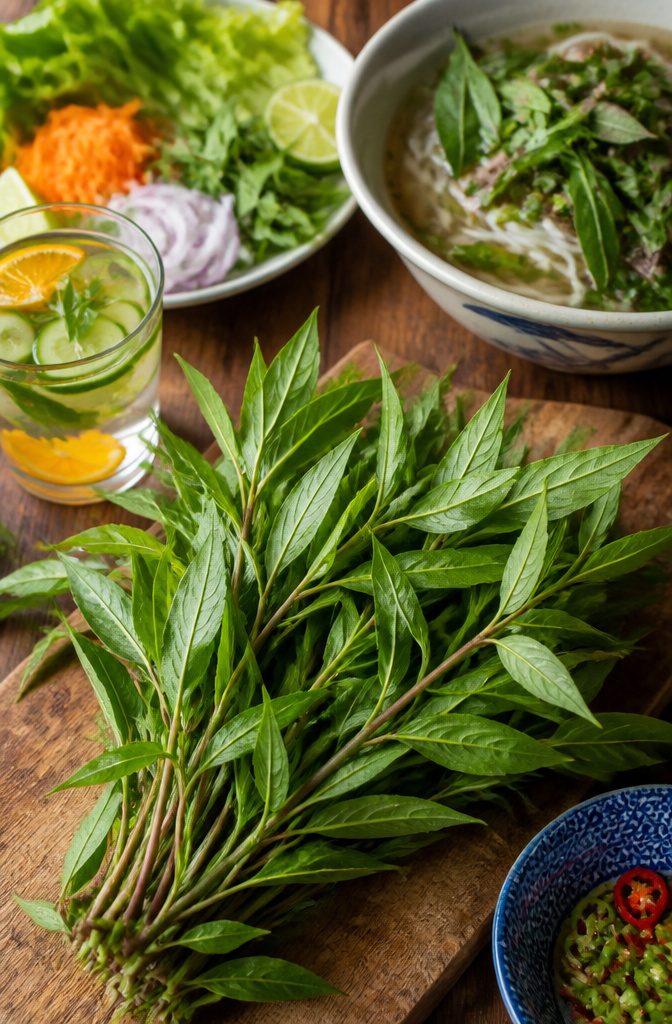
Vietnamese coriander lands on the tongue like cilantro that got impatient. The familiar green-soap brightness is there at first, but it sharpens into pepper and citrus almost immediately, a one-two punch that explains why some cooks call it hot mint. That heat is not chili heat; it is the prickle of black pepper carried on a lemony lift that cleans the palate instead of lingering.
The leaves also change their mind as they age. Young growth, picked when the stems are still tender enough to snap between your fingers, gives you the fullest expression of that pepper-lemon bite. Older leaves toughen and flatten out, their oils thinning until you are chewing greenery rather than tasting it. For the kitchen, I harvest from the top six inches and leave the woody lower growth alone.
What Vietnamese Coriander Is
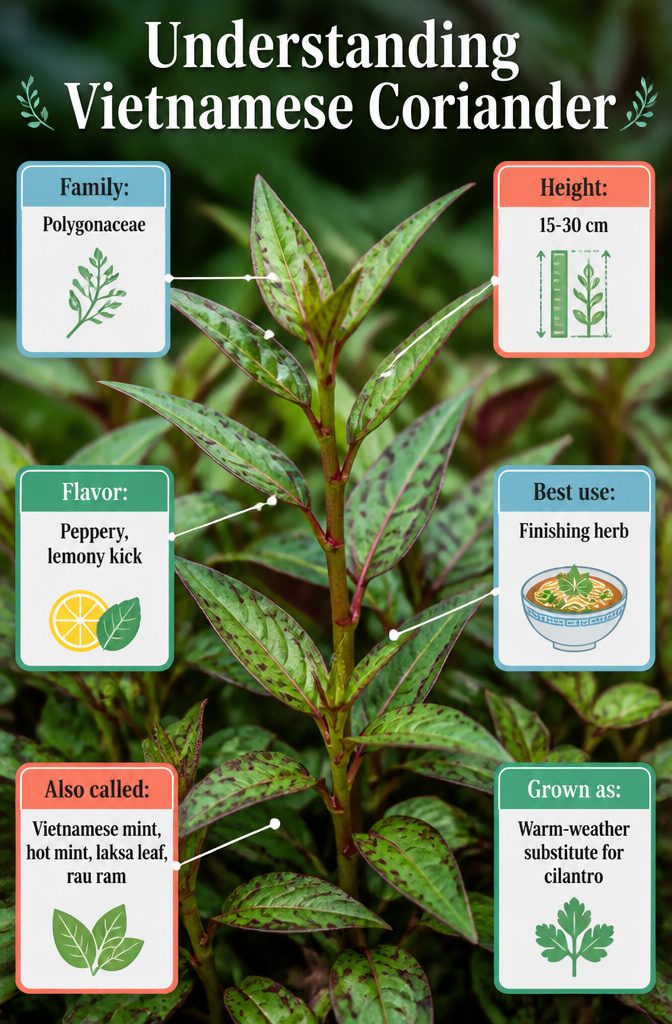
Persicaria odorata, the plant sold as Vietnamese coriander, belongs to the Polygonaceae family, the same group that includes knotweed and buckwheat. The herb stays low to the ground, topping out at 15 to 30 centimeters in ordinary growing conditions, though it can stretch taller when given ideal warmth and humidity. Its stems run green with a reddish tint, and the narrow leaves carry a purplish underside with chestnut-colored spots on top, so the plant reads as darker and more dramatic than standard cilantro at a glance.
The flavor lands somewhere between cilantro and mint, which explains the string of common names that trail behind it: Vietnamese mint, hot mint, laksa leaf, rau ram. In practice, cooks in Vietnam, Malaysia, and Singapore treat it as a finishing herb for soups, curries, and noodle dishes rather than a long-cooked background note. Outside Southeast Asia, gardeners in the United States grow it mainly as a warm-weather substitute for cilantro, which bolts fast once summer heat arrives. The plant contains antioxidants, though the kitchen value is what justifies the space it takes in most home plots.
Vietnamese Coriander Versus Cilantro
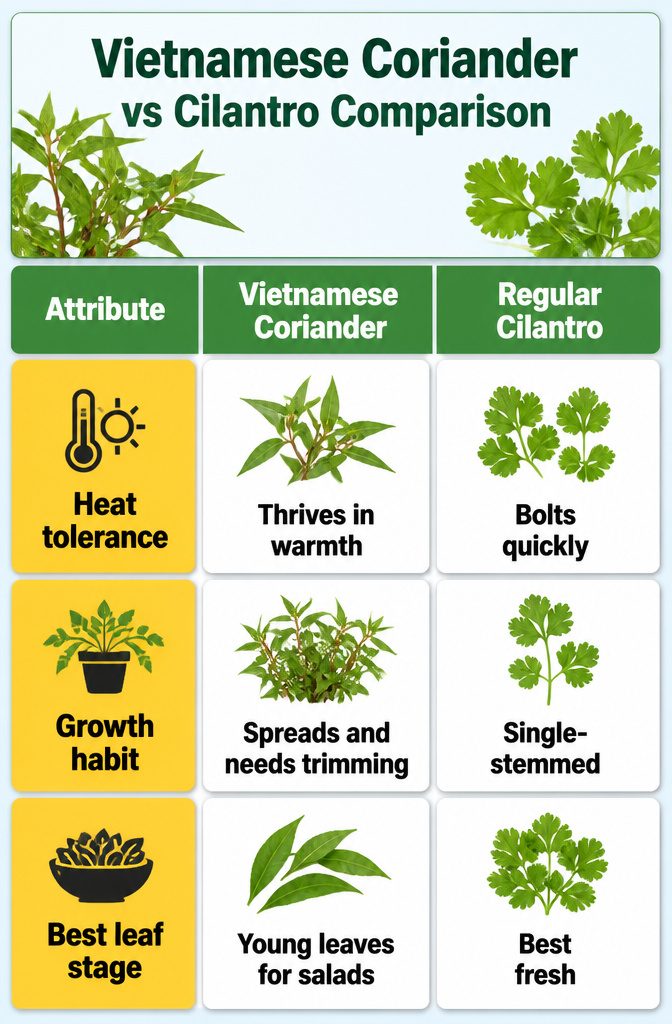
Vietnamese coriander carries a peppery, lemony kick that sits somewhere between cilantro, mint, and black pepper. Young leaves pack the best flavor; older ones toughen and fade. For anyone who has watched regular cilantro shoot to flower the moment July arrives, this distinction matters.
The two herbs diverge sharply where growing conditions begin.
| Attribute | Vietnamese Coriander | Regular Cilantro |
|---|---|---|
| Heat tolerance | Thrives in warm weather; perennial in zones with long summers | Bolts quickly above 75°F |
| Growth habit | Spreads like mint; needs trimming or containment | Single-stemmed; gone in weeks once flowering starts |
| Best leaf stage | Young leaves for salads; holds up in cooked dishes | Best fresh; cooking muddies the flavor |
I gave up on cilantro in my own garden after three summers of racing the clock. Vietnamese coriander solved that problem outright. It does not bolt. The plant keeps producing through heat that would send cilantro straight to seed, and in pots it survives until the first frost. For a small-space gardener working a patio or balcony, that reliability is worth the swap.
Growing It in Pots
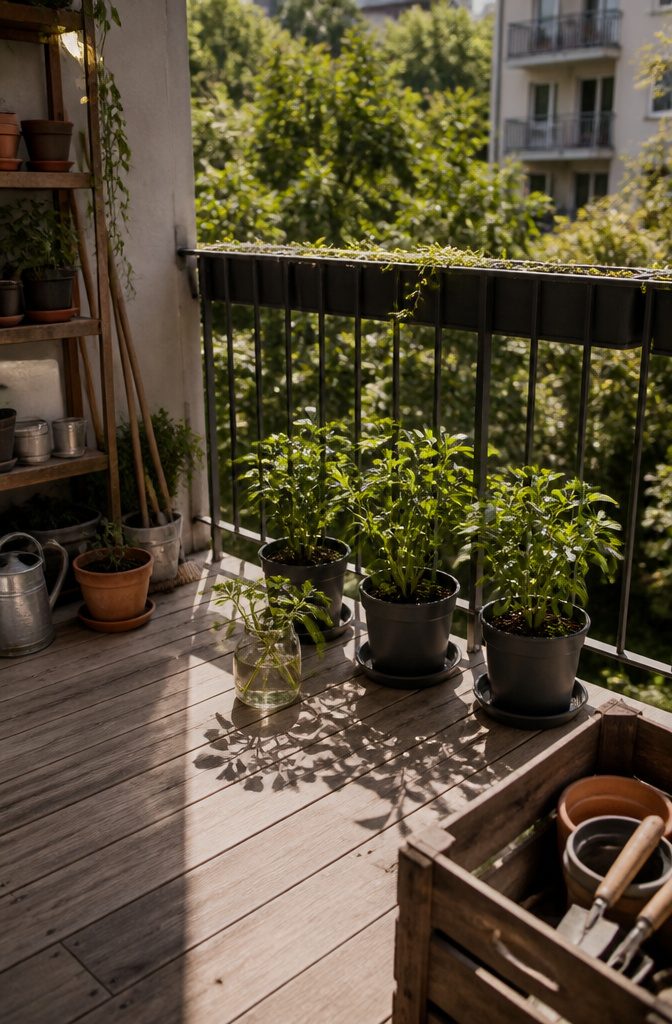
Vietnamese coriander grows well in pots or straight in the garden, though most patio gardeners end up using containers so they can move the plant when temperatures drop. The simplest way to start is from cuttings, which root so easily in water that this is the method almost everyone actually uses.
Take a thick, healthy stem about six inches long and strip off roughly half the leaves. Trim the bottom to the first healthy internode, then set the cutting in a clean glass container so you can watch the roots form. Making three or four cuttings at once gives you backup if one fails. A piece of plastic film stretched across the top with small holes poked through will keep them upright and separated. Replace the water every few days, and roots 0.39–0.79 inches long should appear below the lowest node in short order. Once they look healthy, transplant into soil. From that point, expect to start harvesting in about two months.
In cooler zones, the standard move is to pot young plants, leave them outside through the warm months, then bring them indoors before freezing weather hits. Some growers skip the overwintering struggle entirely and just buy fresh bunches from Asian markets each spring, since rooting new cuttings is almost effortless.
Freezing and Storing
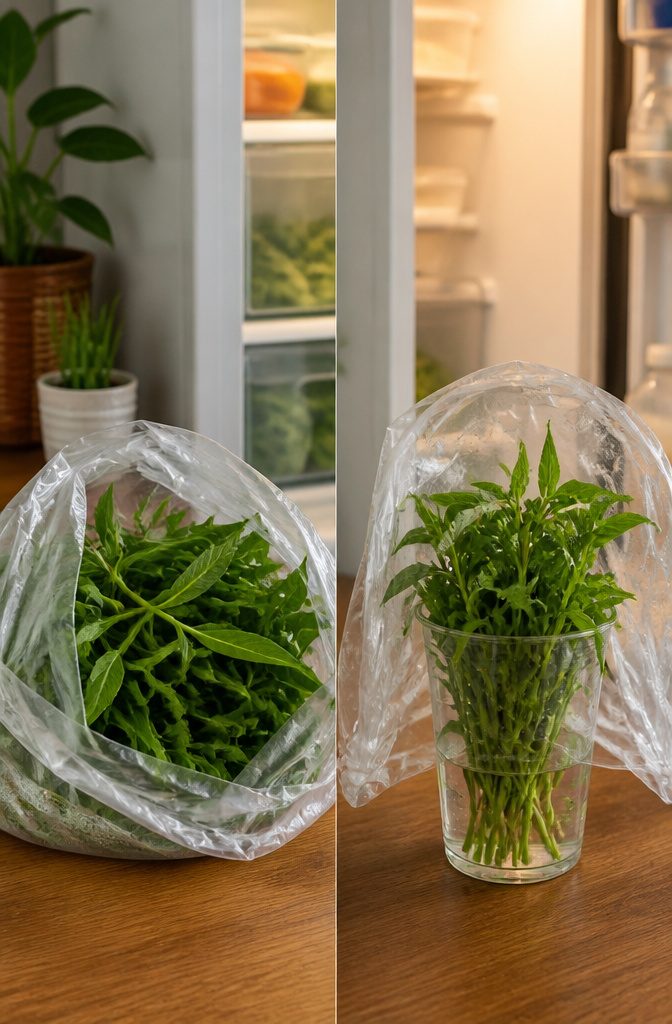
Freezing damages Vietnamese coriander leaves badly enough to make them unusable. Ice crystals rupture the cell walls, so what comes out is dark, limp, and nothing you’d want to fold into a fresh salad or sprinkle over pho. Refrigerate cut stems instead, and use them within a week.
I store mine two ways, depending on how much I have. For a small bunch, I rinse and dry individual leaves, then slip them into a plastic bag in the crisper. For a larger harvest, I set several cut stems in a container of water, drape a plastic bag over the leaves like a tent, and keep the whole thing on a refrigerator shelf. Both methods buy about the same window: seven days before the flavor fades and the edges start to blacken.
When the plant really takes off in late summer, a week’s worth piles up fast. I’ve learned to treat that glut as a signal to cook, not to hoard. The leaves hold up fine in cooked dishes where texture matters less, so a big batch of canh chua or a simmered pot of lentils takes the pressure off the refrigerator.
Frequently Asked Questions
What does Vietnamese coriander taste like?
Vietnamese coriander tastes like cilantro sharpened with pepper and citrus, a combination that earns it the nickname hot mint. The flavor hits in stages: first the familiar green-soap brightness of cilantro, then a lemony lift with the prickle of black pepper. Young leaves carry the fullest expression of that bite; older growth flattens out into generic greenery.
Can you freeze Vietnamese coriander?
Freezing ruins Vietnamese coriander leaves. Ice crystals rupture the cell walls, leaving them dark, limp, and unfit for any dish you’d actually want to eat. Refrigerate cut stems instead, either wrapped in a plastic bag in the crisper or set in water with a bag tented over the top, and use them within about seven days.
How do you grow Vietnamese coriander?
Vietnamese coriander needs warm, humid conditions and soil that stays damp but never waterlogged, with a pH between 6.0 and 7.0. Give it partial shade in hot zones, especially where afternoon sun bakes hard, and space plants 6 to 12 inches apart so they can spread to their full 18-inch width. Start new plants easily from six-inch cuttings rooted in water, then transplant once roots reach roughly half an inch to three-quarters of an inch long.






