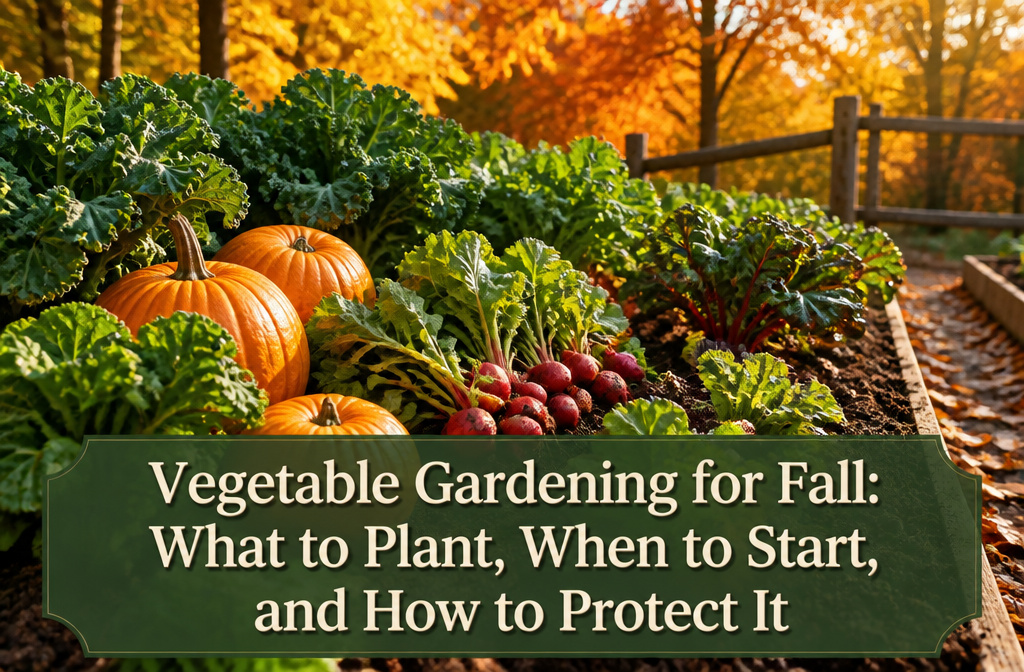
Vegetable gardening for fall is the practice of timing a second planting so crops mature as days shorten and cool, not as they lengthen and warm.
The trap is assuming your summer soil is ready; late August ground can still hit 140°F at the surface, hot enough to kill lettuce seed before it sprouts.
Success means counting backward from your first frost date and adding two to three weeks of buffer, since shorter days slow growth more than seed packets admit.
Lettuce
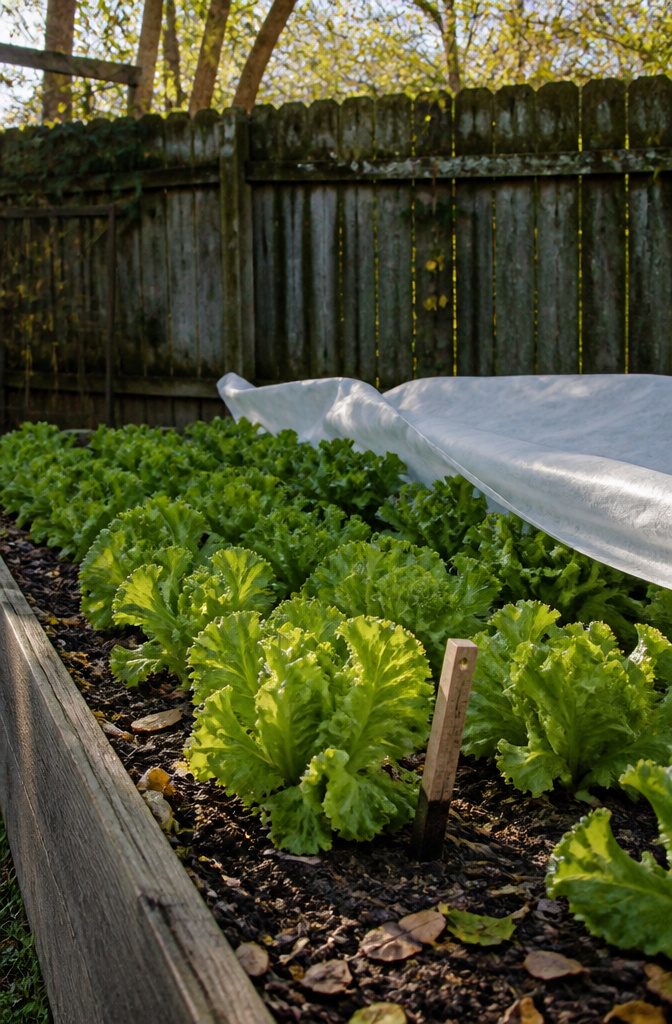
Lettuce is one of the first things I plant when the summer heat finally breaks.
Soil temperatures above 75°F will stop germination cold, so timing matters more than calendar date. Sow seeds 4 to 8 weeks before your first expected frost, which in most zones means late August through early September.
The real payoff comes from treating lettuce as a cut-and-come-again crop. Snip outer leaves with scissors and the same plant keeps producing for weeks.
I succession plant every two weeks, setting a small row each time, so the harvest rolls rather than floods. One planting feeds the kitchen for a stretch, then the next takes over as the first slows.
A cold frame or row cover buys extra weeks once hard frost arrives.
Without protection, lettuce is half-hardy, meaning a hard freeze will take it down. With it, you can pull leaves well past the date you thought the garden was finished.
Kale
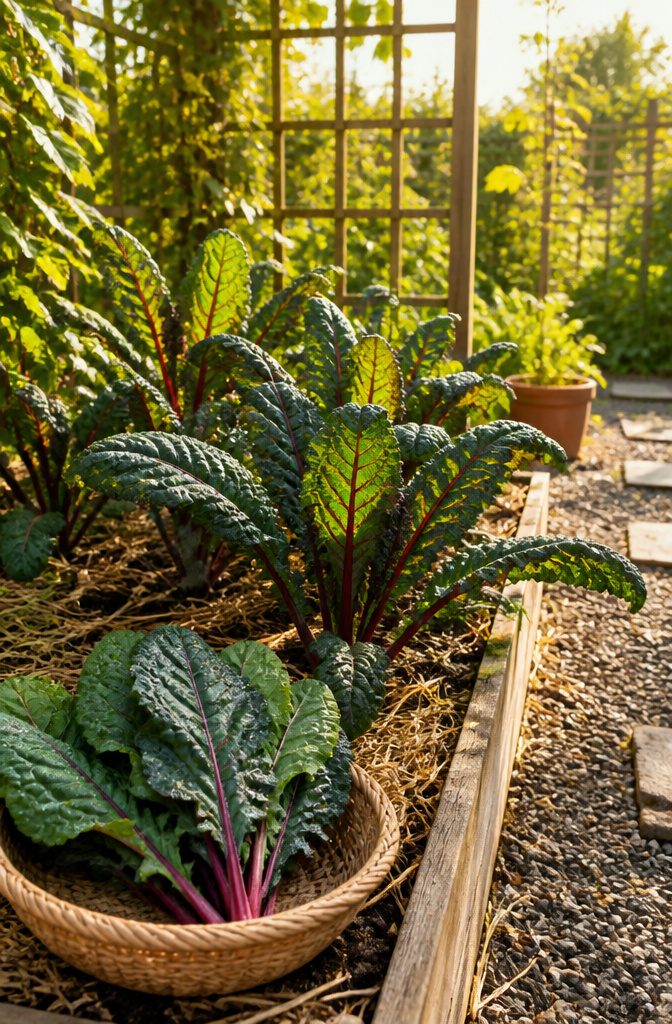
Kale changes after a frost in a way that makes me plant it every fall without question.
When cold temperatures arrive, the plant converts stored starches into sugars that act as a natural antifreeze for its cells. That chemical shift translates directly to flavor: leaves become noticeably sweeter than any summer harvest.
In zones 8 through 10, you can keep planting straight through fall and harvest leaf by leaf deep into winter, even brushing snow off the plants to gather dinner.
Timing matters.
Count backward from your first expected frost and sow seeds 6 to 8 weeks ahead. A late heat wave will slow growth and the plants may sulk, but cool weather revives them quickly.
For variety, ‘Lacinato’ with its dark, puckered leaves remains the standard for cold-season beds, while ‘Red Russian’, brought to North America in 1885, carries red veining and wavy edges that look as good as they taste.
Baby greens from ‘Red Russian’ come in as early as 21 days if you need something fast.
Spinach
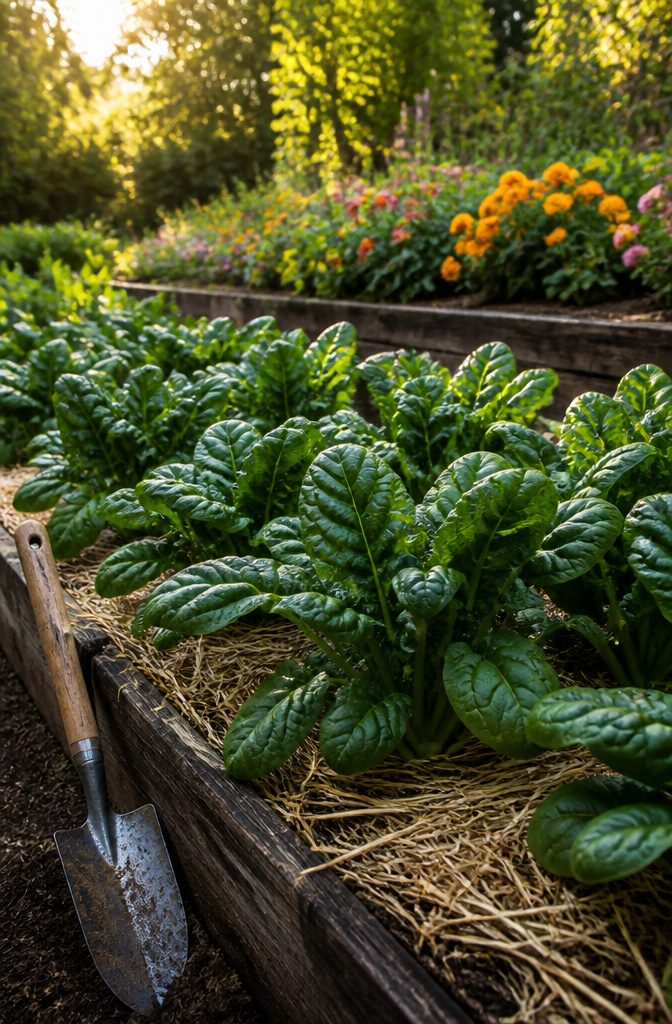
Spinach does not wait for your permission to survive cold weather.
Where tender greens turn to mush after the first light frost, mature spinach stands firm through temperatures below freezing, provided the plant had time to size up before the chill arrived.
That hardiness makes it the backbone of my fall planting, and the reason I keep coming back to it even when other crops fail.
For a continuous harvest through autumn and into winter, I plant ‘Bloomsdale’, an open-pollinated savoy type with deeply crinkled leaves that shrug off cold better than any flat-leaf variety.
The savoy structure matters here; those crinkles are not just for show. They trap air and resist frost damage in a way smooth leaves simply cannot match.
I sow seeds about an inch apart if I want baby greens in roughly 28 days, or space them wider and let individual plants mature for repeated cuttings of outer leaves.
Either approach works, but the outer-leaf method keeps the plant producing longer, which is the whole point of fall spinach: not one harvest, but many, stretching past when other beds have gone empty.
Arugula
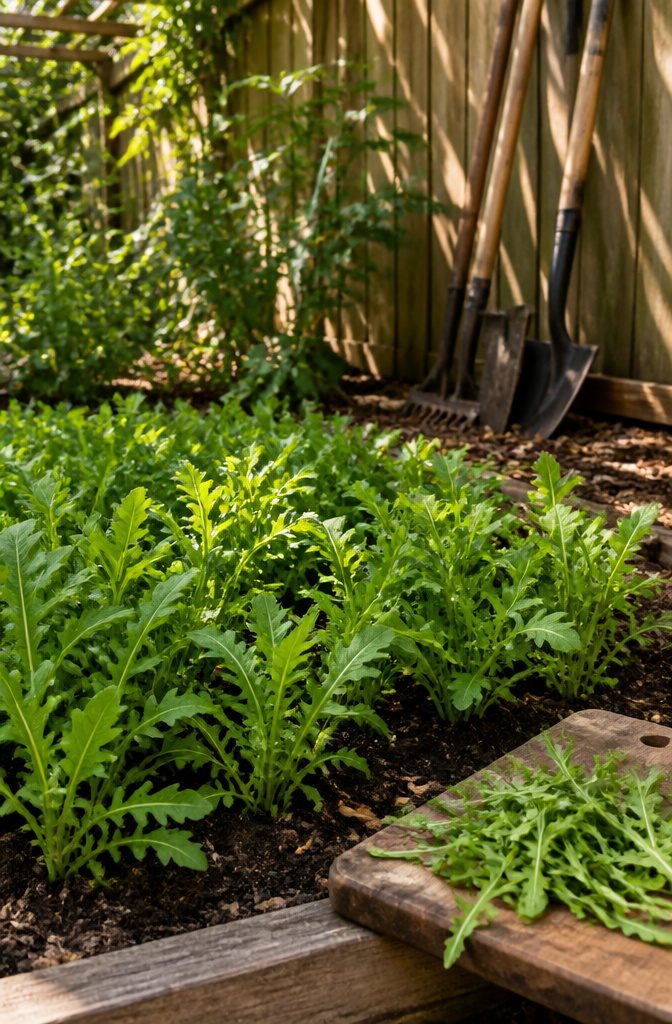
Arugula is one of those crops that taught me fall gardening has real advantages. The same plants that turn bitter and bolt on me by June keep producing sweet, peppery leaves right through the first frost.
In my experience, the flavor actually improves as the temperature drops; that sharp bite becomes more complex, almost nutty, without ever getting harsh.
The growth speed is what makes it practical. Most varieties hit harvest size in 30 to 35 days, which means you can still sow in late August or early September in many zones and get multiple cuttings before cold shuts things down.
I plant every two weeks once daytime highs stay reliably below 75, and the later sowings often last longer under a simple row cover than my spring plantings ever would.
Heat is the real enemy here.
Anything much above 80 and arugula races to flower, turning the leaves tough and nearly inedible overnight. That same sensitivity becomes your ally in autumn, when shorter days and cooler nights keep the plants in leaf for weeks.
Pick the outer leaves and the center keeps pushing new growth, so one healthy plant yields far more over time than a single harvest and replant.
Beets
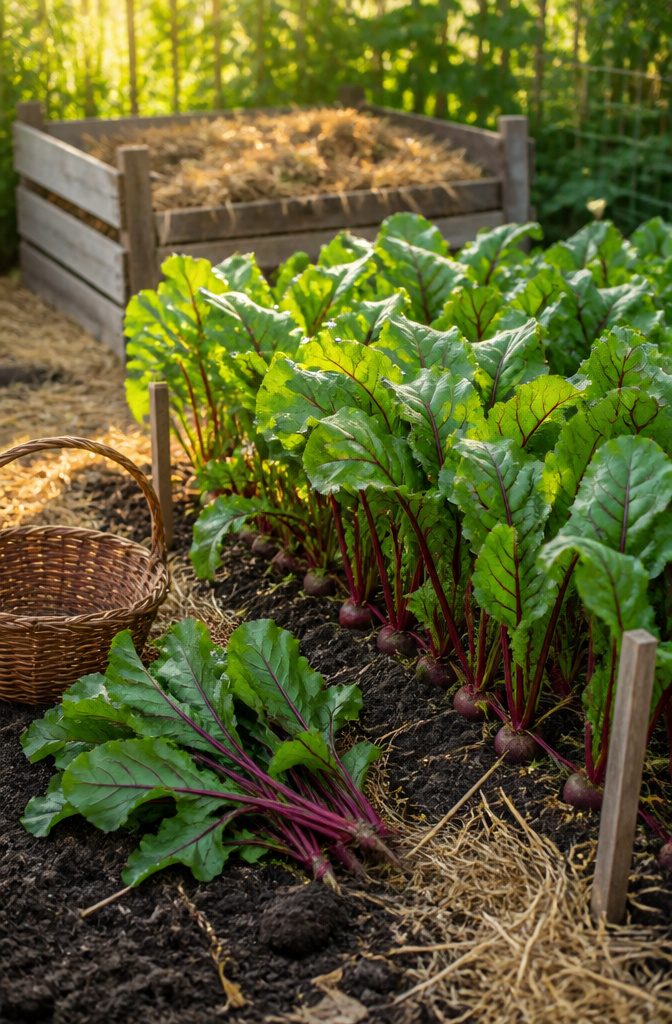
Beets convert their stored starches into sugars once cold weather arrives, which is why a root pulled after the first frost tastes markedly sweeter than one lifted in August.
Start seeds 10 to 12 weeks before your first expected frost, and you will have time for the flavor to develop before any real cold sets in.
Both parts of the plant are edible. The greens are best when small, around four to five inches, and taking only a few leaves from each plant keeps the root from stalling.
Younger roots are more tender, so if you plant in succession you can harvest the thinnings early and let the remaining beets size up into fall.
With a layer of heavy mulch and row cover, beets will survive winter in USDA zones 6 and higher.
That means you can continue pulling them after frost, sometimes well into December or beyond, when the sugars have peaked and the ground has not yet frozen solid.
Carrots
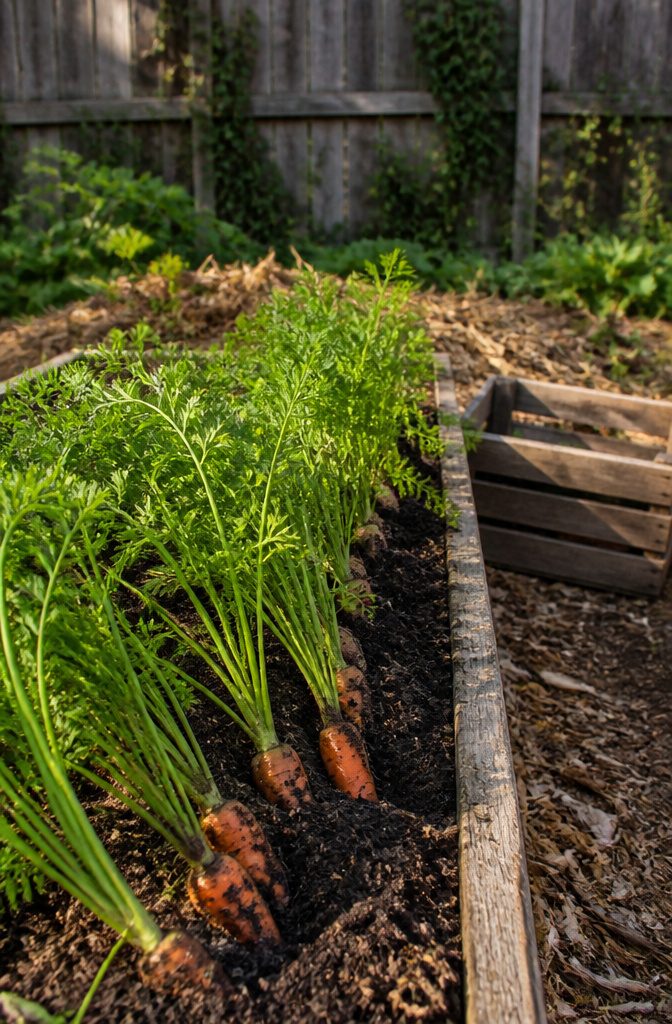
Carrots planted in late summer hit their stride once nights cool down. The cold triggers the roots to convert starches to sugars, so a carrot pulled in October tastes markedly sweeter than one lifted in August heat.
That same cold tolerance means the row doubles as cold storage; carrots left in the ground stay crisp and usable through early January, and a hard freeze only deepens the sweetness.
Sow seeds about 0.25 inch deep in loose, worked soil. Germination needs consistent moisture and still-warm soil, so an August planting window lines up well for most zones.
Once the tops are established, a mulch layer six to ten inches deep over the row insulates the roots against December and January freezes and lets you harvest as needed rather than clearing the bed all at once.
Radishes
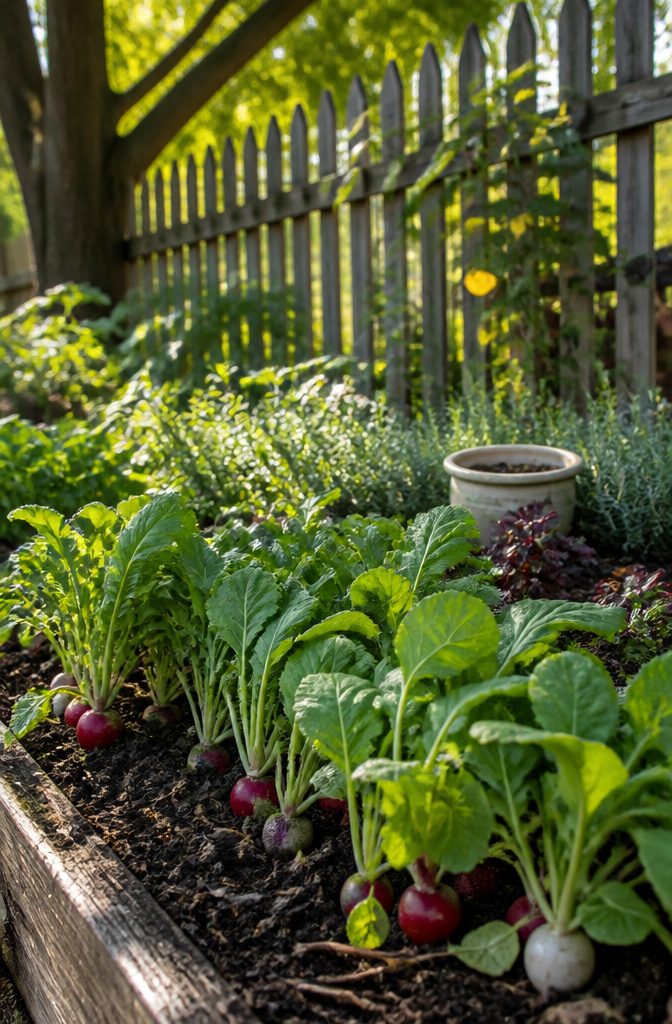
Radishes are the crop that turned my first fall garden from a waiting game into something I could actually eat.
Twenty-two days from seed to harvest is not a typo; some varieties really move that fast. That speed matters when you are planting four weeks before first frost and every day of warmth still counts.
I use them to fill the gaps that slower vegetables leave behind. Pull the last of the summer bush beans and the soil is still warm enough for a quick radish sowing while the broccoli transplants settle in next door.
By the time the broccoli needs that space, the radishes are already out and on the plate.
Cornell’s planting calendar has them going in as late as seven weeks before frost, which around my zone means mid-August to early September still works.
The cold hardiness helps too. Radishes tolerate frost better than the seed packets suggest, and winter varieties mature early enough that you often harvest before the real cold arrives.
The only mistake I still make is leaving them in the ground too long; they turn woody fast once they size past their prime. Check them often and pull when they look ready, not when the calendar says so.
Broccoli
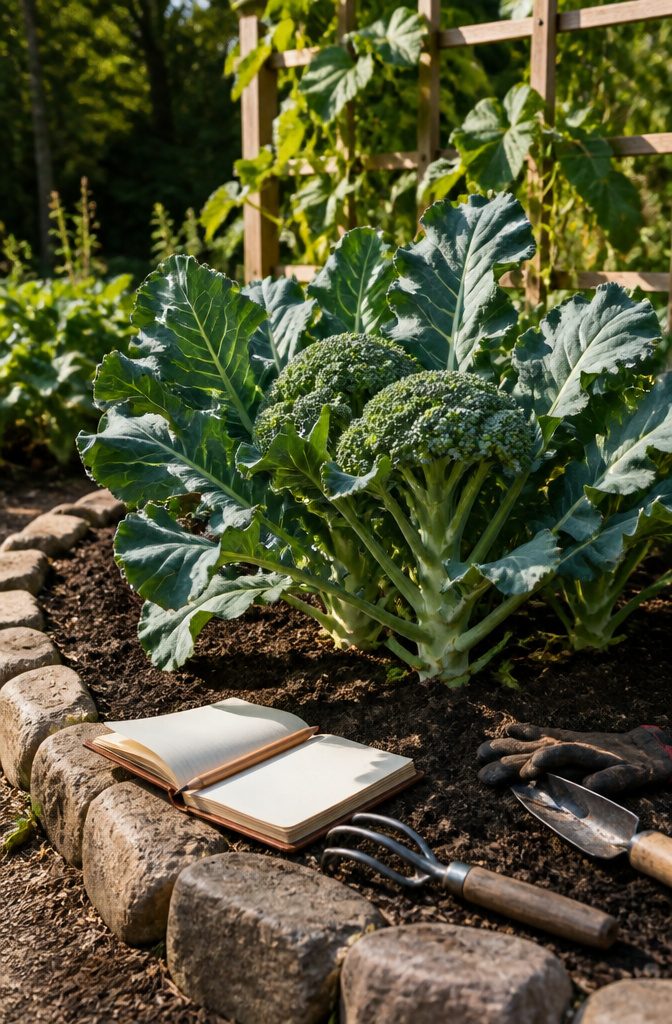
Broccoli tolerates cold better than almost anything else in the fall garden, but that tolerance only matters if the heads have time to form before hard frost arrives.
Most varieties need 60 days from transplant, and the transplants themselves need about 15 weeks of growth before they go in the ground.
I start mine in mid-June for a September planting, counting backward from my first frost date the way you would for any fall crop.
"Look for seeds that are labeled ‘Early Season’… Also check the ‘Days to Harvest’ to find varieties with shorter growing times… De Cicco broccoli (50 days)."
That shorter window matters because broccoli does not speed up for your schedule. De Cicco at 50 days gives you more margin than a standard 60-day variety, and the difference can mean harvestable heads versus frozen plants.
Even after the main head is cut, side shoots keep coming for weeks if cold does not finish them. Those secondary florets are smaller, but in a small garden they extend the season without extra space.
Steady moisture matters more than I expected my first year. Letting the soil dry between waterings produces loose, bitter heads.
I water deeply twice a week and mulch after the first real cold snap to keep roots stable. Broccoli survives frost above 20°F, but fluctuating wet-dry cycles stress it more than cold ever will.
Brussels Sprouts
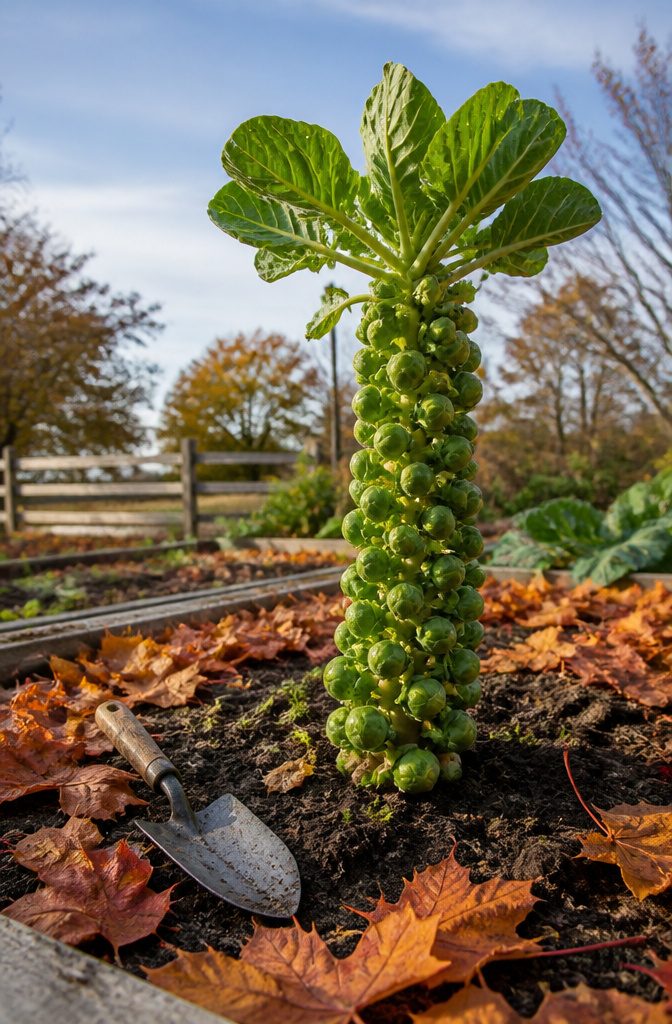
Brussels sprouts ask more of your calendar than almost anything else in a fall vegetable garden.
Count backward 90 to 120 days from your first expected frost and seed then, or start transplants in midsummer if your autumns stay warm long past Labor Day.
I have learned to mark the planting date in my calendar the day I set them out, because the wait feels endless and it is easy to forget what went in when.
The variety called Long Island Improved has been the garden standard since the 1890s for good reason.
It produces tight, blue-green orbs about an inch to an inch and a half across, packed densely up the main stalk beneath that tuft of leaves at the top that gives the plant its odd palm-tree silhouette.
Heirloom reliability matters when you are only gardening a small space and cannot afford a dud.
Here is the part that justifies the patience.
A light frost triggers the plant to convert stored starches into sugars, the same winter sweetening that improves carrots and kale. The sprouts become noticeably less bitter, more worth the space they occupied all season.
The plants will stand through freezes that flatten lesser crops, and I leave mine in the ground through several light frosts before I bother harvesting. By then the flavor has shifted into something genuinely worth waiting for.
Cabbage
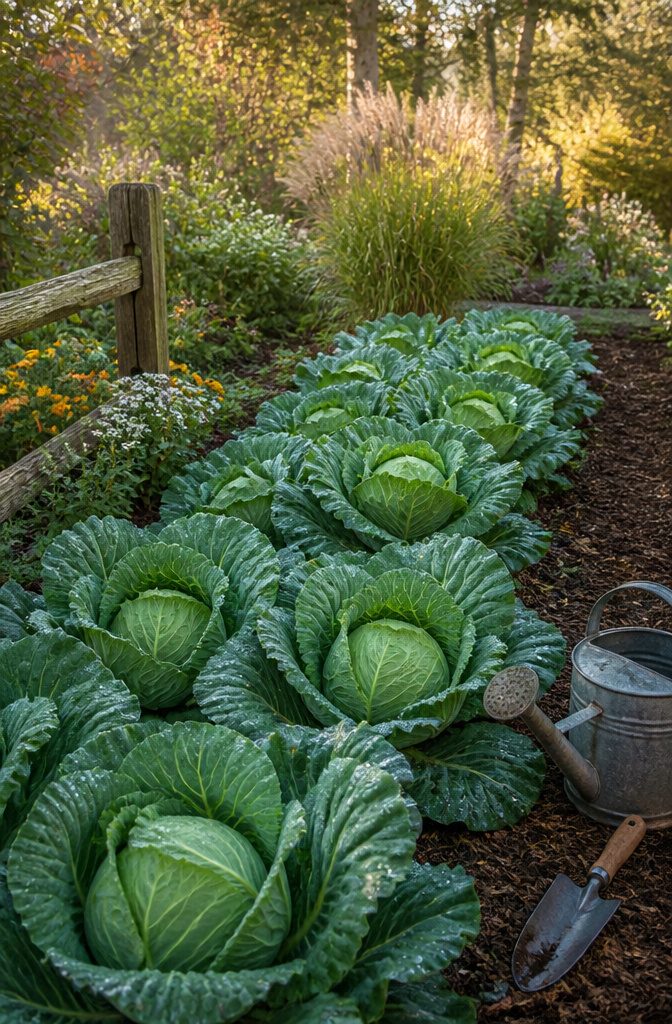
Cabbage earns its spot in a fall garden through sheer toughness. The heads keep forming through frost and stay productive down to about 20 degrees, which in most zones buys you weeks of harvest after tender summer crops have collapsed.
That hardiness pairs with storage value: a dense, well-grown head wrapped in its own outer leaves will sit in a refrigerator for two months or longer, and fermented into sauerkraut it stretches even further.
The real decision is timing. Early varieties mature fast enough for a late fall harvest, while late types sit through winter in milder regions or hold in cold storage where winters turn serious.
Start seeds indoors 6 to 12 weeks before first frost, narrowing that window based on whether you chose an early or late variety.
Transplant at 3 to 4 weeks old into full sun, then keep water steady. Uneven moisture stunts heads or cracks them, and cool temperatures plus consistent watering are what turn cabbage sweet rather than sharp.
Cauliflower
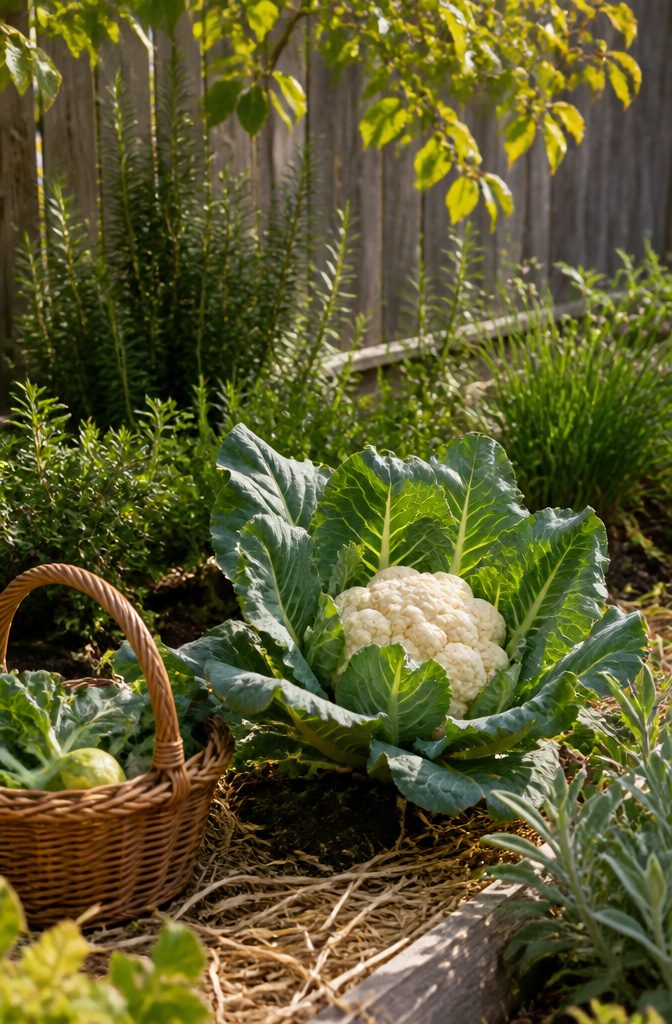
Cauliflower demands more precision than its brassica cousins. Where broccoli forgives a week of early cold, cauliflower heads will button, split, or rot if a deep freeze arrives before maturity.
The heads tolerate frost only once fully formed; immature tissue turns mushy at 28–32°, a narrower window than broccoli’s hard-freeze threshold of 25–28°. That gap matters.
I start seeds indoors twelve weeks before first frost, not the ten I use for broccoli, and I do not trust September heat waves.
Last year I lost half a flat to a late transplant under an 80° afternoon; the stress stunted root development and the plants never recovered.
Now I hold seedlings in partial shade for a few days before they go in ground, and I plant a few each week rather than the whole batch at once.
The self-blanching varieties help. ‘Snowball Y’ curls its own leaves around the developing head, which saves the trouble of tying leaves by hand and protects against sun scald besides.
The heads run about six inches across and hold in the garden once mature, so the staggered planting does not create a harvest crisis. I still check soil moisture daily; uneven watering is what turns tight curds into ricey disappointment.
Collards
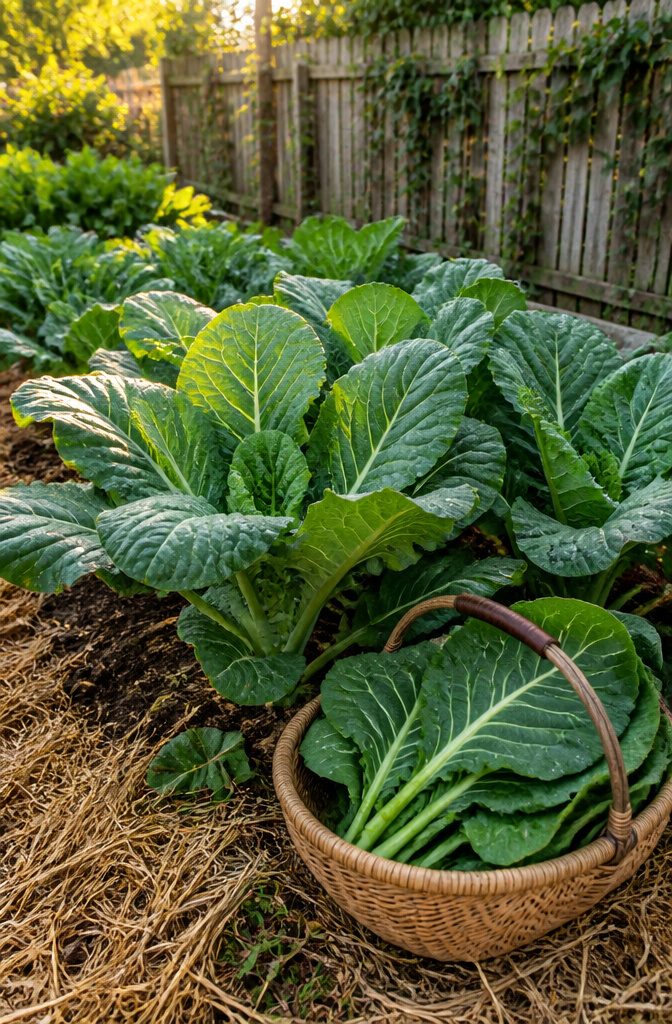
Collards carry a reputation as a southern crop, but they deserve space in any fall garden that sees cold.
They are among the most cold-hardy greens you can grow, and the leaves turn sweeter and less bitter after a frost converts starches to sugars. In zones 8 through 10, they will keep producing straight through winter.
Set them out 6 to 8 weeks before your first expected frost. They tolerate partial shade, though 4 hours of direct sun gives the best flavor.
Because they are heavy feeders, start them in rich soil and plan to feed them again through the season; a plant that keeps throwing harvestable leaves needs fuel to do it.
Direct seeding works fine, or start transplants 5 to 6 weeks ahead if you want a head start.
Turnips
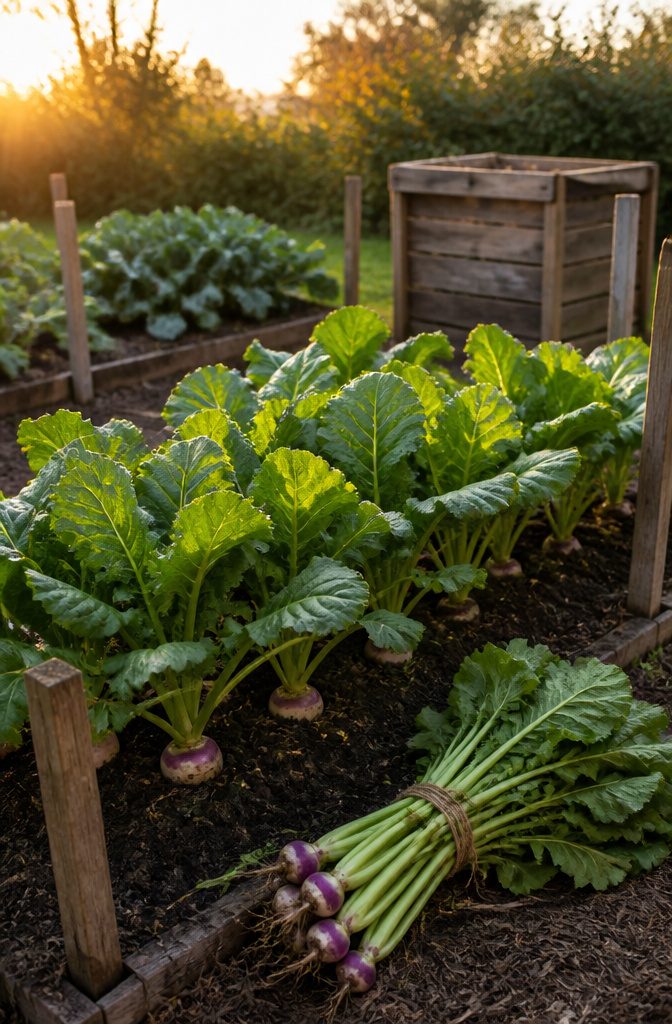
Turnips earn their keep twice over, which matters when bed space is tight and the budget runs about $500 a year.
The roots roast or pickle, and the greens cook down like any other pot green. ‘Market Express’ gives you 2-inch baby turnips in 30 days if you want them mild and raw for salad, or full 4-inch to 5-inch globes in 40 days for roasting. ‘Purple Top White Globe’ carries the classic look: purple shoulders above the soil line, creamy white below.
Plant them roughly two months before your first frost date. They take light frost standing up, and a thick mulch buys you more time into early winter.
The roots need lifting before the ground freezes solid, though. Mulch slows that freeze; it does not stop it.
Here is the choice turnips offer.
Pull them before frost and the flavor stays mild, almost fruity. Leave them through a frost or two and the cold triggers winter sweetening, the same starch-to-sugar shift that makes fall carrots and beets taste different from summer ones.
The roots do not change overnight, but give them that time and they come out of the ground noticeably sweeter. I usually split the row and test both.
Swiss Chard
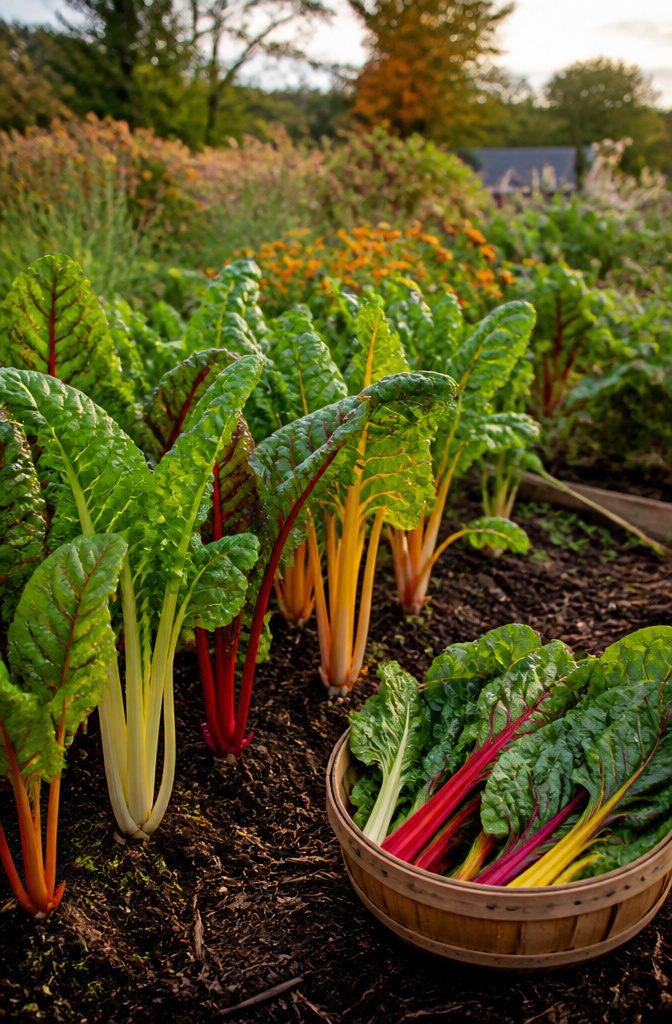
Swiss chard handles a light frost without much fuss, which makes it one of the more forgiving crops for a fall garden.
I start mine about ten weeks before the first expected frost, moving seedlings outside once they hit four weeks old. Full sun works, though partial shade does fine too.
Newer gardeners often confuse chard with spinach, and the mistake is understandable: both give you broad, tender leaves for cooking.
The difference is that chard keeps producing through cool weather that would slow spinach down, and the stalks add real structure to the harvest.
You can pick leaves as soon as they are large enough to eat, with the young ones tasting the sweetest.
Where space is tight, the stalk color alone, white, yellow, red, or hot pink, earns it a spot among flowers or in a front bed.
It reads as food and as ornament, which matters when your garden is a patio or a balcony and every square foot counts.
Garlic
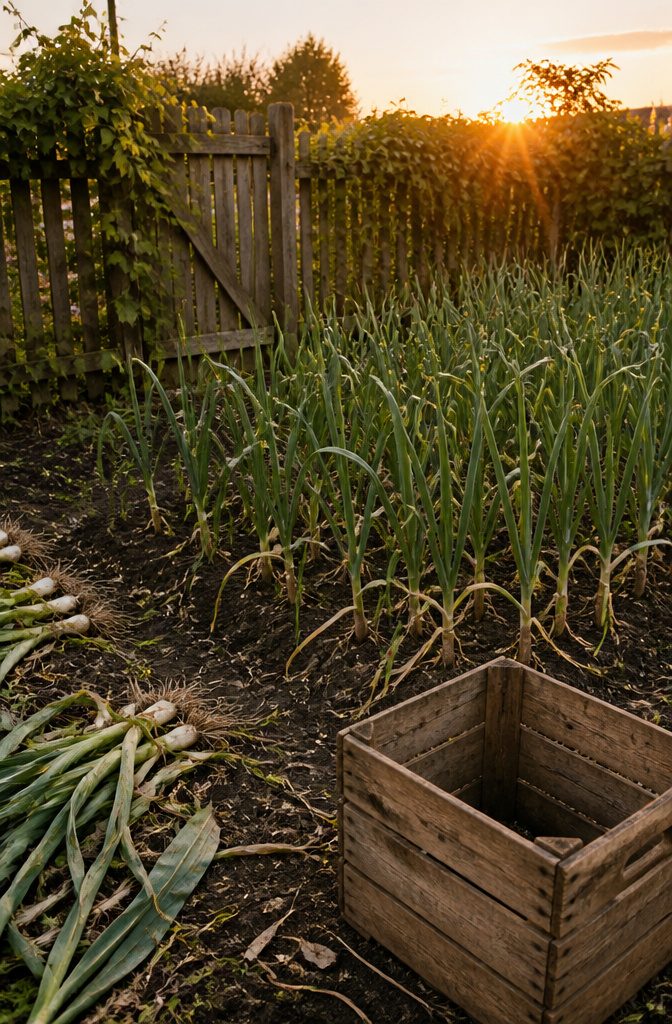
Garlic runs on the opposite schedule from everything else in a fall garden.
While lettuce and kale race to mature before frost, garlic goes into the ground in October and sits there, slowly rooting through winter for a harvest the following summer.
That long underground development is why timing matters: the cloves need several weeks of cool soil around 50°F to establish roots before the ground freezes solid, but not so early that top growth starts and gets nipped.
Hardneck varieties suit colder zones, roughly 3–6, while softneck types handle the warmer end, about zones 5–9.
I planted softneck my first autumn in a zone 7b backyard and pulled it the next June, which felt like forgetting about a savings account and finding money later.
Plant roughly one to three weeks before your first expected frost, and you can keep going up to two or three weeks after; the cloves will still settle in if the soil hasn’t locked up yet.
The work after planting is minimal.
Cut the scapes in spring if they appear, wait for the leaves to brown, then dig, cure for two to three weeks, and store. Nearly a year from planting to pantry, with almost nothing required of you in between.
Peas
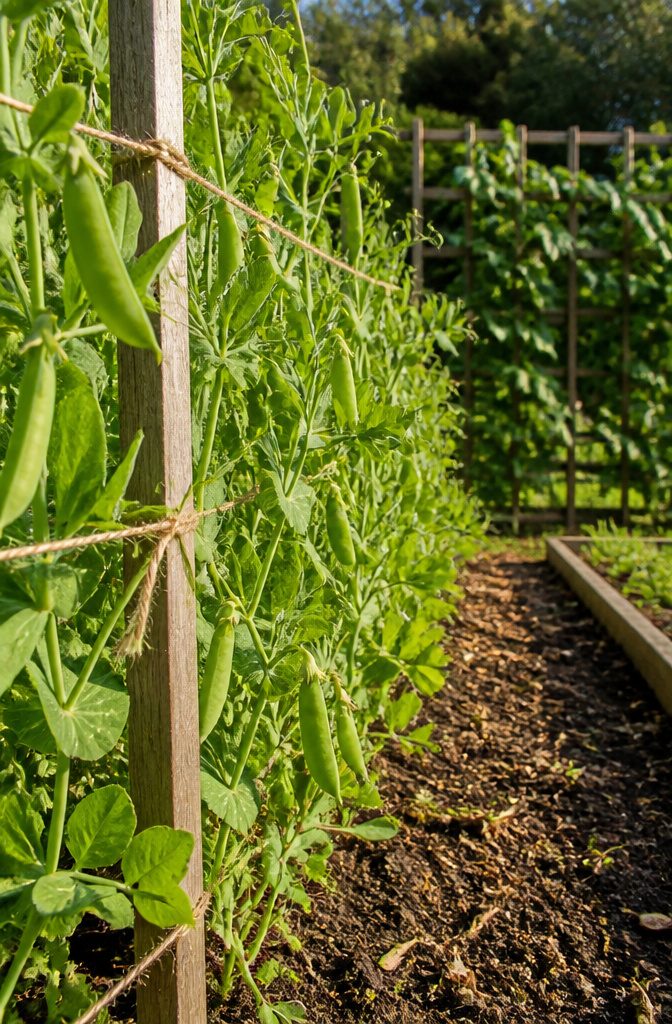
Peas for a fall crop sit in a narrow window that demands real attention to dates.
Soil still needs to be warm enough for germination, roughly the 40–60°F range that peas tolerate for sprouting, yet the plants must mature and set pods before a hard freeze takes them down.
That balance is trickier than spring planting, where the season only lengthens.
Count back 70–90 days from your first expected frost and add another two weeks. Days shorten and cool as fall progresses, so growth slows compared with spring.
Shorter varieties or those labeled for late-season growing buy you back some time. Shade cloth and steady moisture help seedlings through any late heat waves that roll through.
Once cold arrives, a layer of insulating fabric over hoops can carry mature plants through light frosts, though it will not save flowers or pods from a true hard freeze.
When to Plant
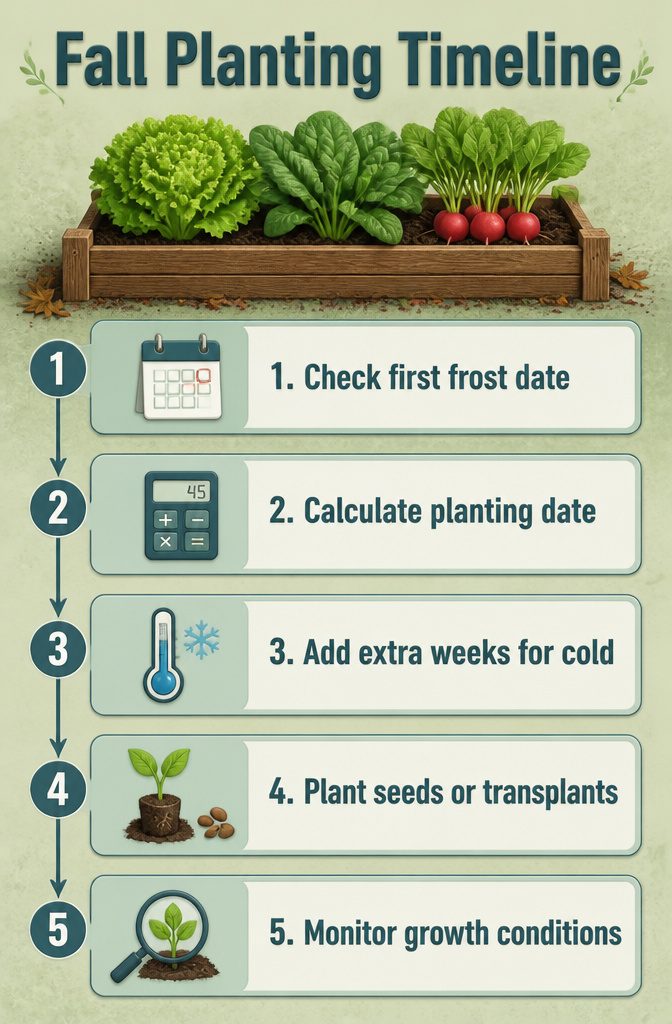
The math for fall planting is simple once you know your numbers.
Take your area’s average first frost date and subtract the days to maturity listed on the seed packet. That gives you your plant-by date.
Here is how it works in practice. If your first frost typically lands around October 15 and you are sowing a lettuce variety with a 45-day maturity, you would plant by September 1 to let the crop finish.
Olympia spinach at 45 days follows the same calculation. Cherry Belle radishes, with just 22 days, would go in much later.
Seed packets have a reputation for optimism. The days to maturity they print often assume ideal spring conditions, long days, and warm soil.
Fall brings shorter daylight and cooler temperatures, so the actual growing time stretches. Adding two to three weeks to that printed number gives you a buffer against reality.
For transplants, the math shifts slightly.
Days to maturity starts counting from the day you move the seedling outdoors, not from when you started it inside. Brussels sprouts started indoors five or six weeks ahead need that extra time built into your calendar.
Your real drop-dead date is not the first frost itself, but the point at which cold slows growth enough that the plant stalls out completely. That is the number worth protecting against.
Soil Between Seasons
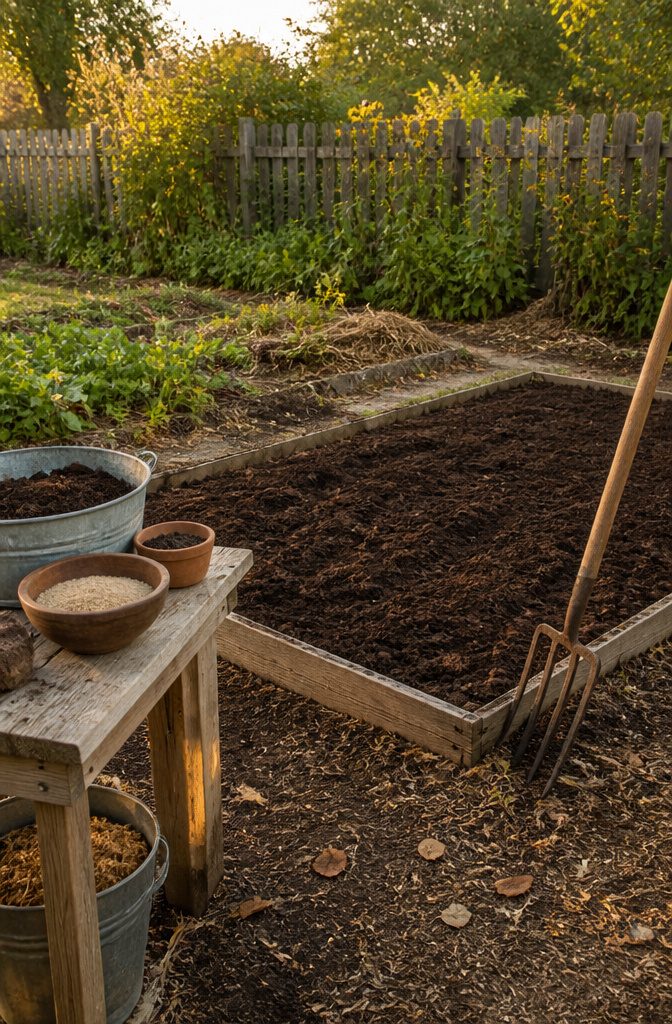
Summer vegetables pull a lot out of the ground, and fall crops need that fertility back.
I amend my beds with a couple inches of compost worked into the top 5 to 6 inches of soil, which is about what a standard garden fork reaches without turning the whole profile upside down.
The target pH for fall vegetables sits between 6.0 and 6.8, with 6.5 right in the sweet spot for most of what you’ll plant.
A cheap test kit from the hardware store runs under ten dollars and beats guessing by a mile; I skipped testing two years ago, planted straight into what I assumed was fine dirt, and watched my broccoli stall out for weeks before I finally tested and found the bed had drifted to 5.4.
Lime went down in late August that year, which was too late to help the crop I’d already put in. Now I test in July, amend in early August, and plant with actual numbers in hand.
Watering Fall Starts
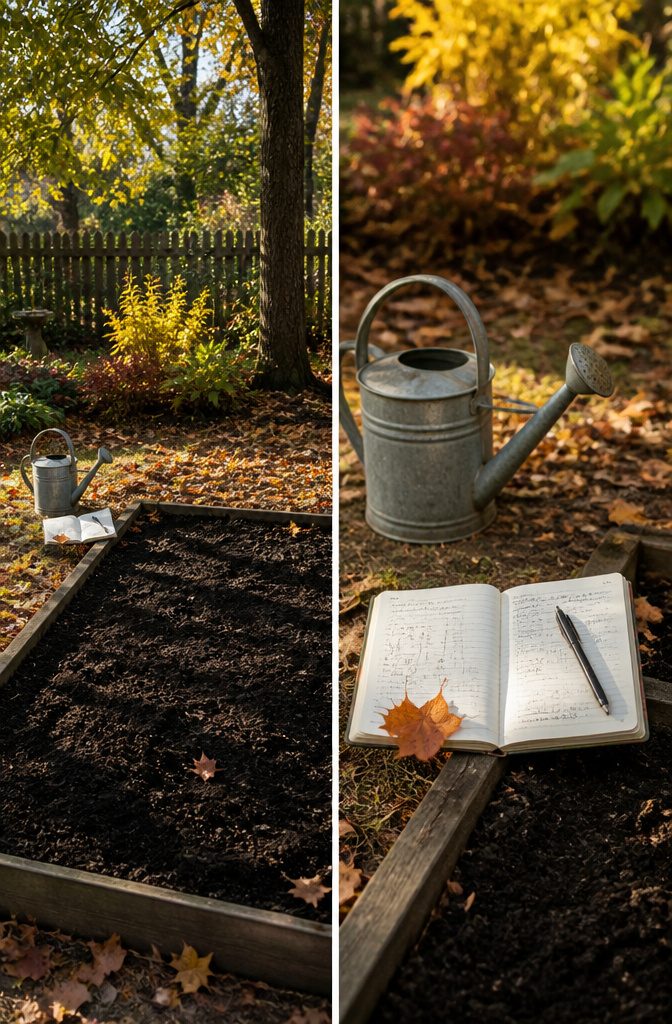
Late August soil can hit 140°F at the surface, which will cook a lettuce seed before it ever thinks about sprouting.
I water fall starts twice a day for that first week, morning and evening, keeping the top quarter-inch damp without washing seeds away.
The air might feel like autumn by mid-September, but the ground is still holding July’s heat, and that gap between cool air and hot soil is what trips people up.
They see sweater weather and cut back to once daily, then wonder why their carrots never came up.
Once seedlings break ground, I drop to a single deep watering, then settle into one or two good soaks per week depending on whether rain shows up.
A strip of shade cloth or even cardboard over the row for those first few days buys insurance against the worst of it.
I pull it off the moment green pokes through, sometimes a little too eagerly, and have learned to check underneath daily rather than guess.
What Pest Pressure Actually Looks Like Now
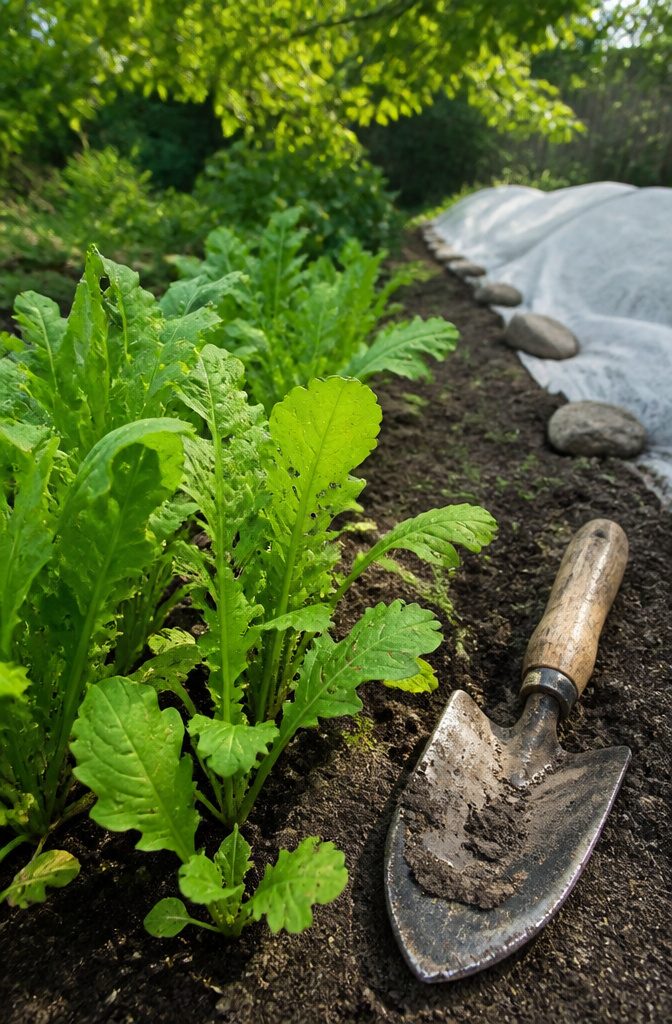
Fall pest pressure drops off noticeably, but the insects that remain can do damage fast if you stop watching.
In my beds, flea beetles are the ones that catch me off guard now; they love cool weather and will pepper arugula and young mustard with pinholes before I notice.
Row cover, held off the leaves with wire hoops, stops them cold and stays on until the plants are established enough to outrun the damage.
Cabbage loopers and other caterpillars are still laying eggs in September, and because the plants grow slower in cooling soil, the chewing does more harm than it would in June.
I check the undersides of brassica leaves twice a week and squash what I find, or use Bt if the count gets past what I can handle by hand.
Squash bugs are finally slowing down as nights drop, but the nymphs that hatched late summer cluster on stems and leaf joints through early fall.
I still patrol the zucchini and winter squash every few mornings, knocking them into soapy water, because a single missed cluster can weaken a plant right when it is trying to ripen its last fruit.
Row Covers and Cold Frames
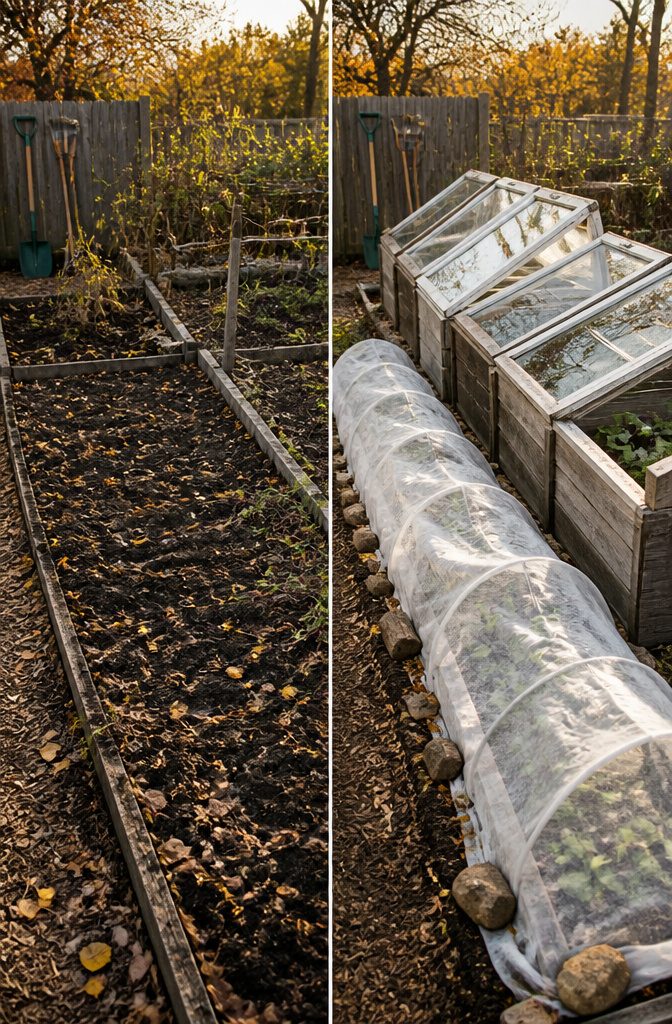
Season extenders turn a light frost into a non-event and buy real weeks at the cold end of fall. The catalogs sell an impressive spread, but most gardeners end up with a much smaller kit.
- Row covers are lightweight fabric you drape over a bed and pin down with U-stakes, rocks, or boards. They let air, sun, and water through while raising soil temperature about 5 degrees. Leave slack so plants can push the fabric up as they grow. The same cover blocks birds and insect pests during the day.
- Cloches suit single plants or small groupings. Glass domes, plastic sheeting over PVC hoops, or a cut liter soda bottle all work. If you use the hoop-and-plastic kind, vent the sides during daylight or the trapped heat cooks what you are trying to save.
- Cold frames handle harder cold than row covers. A simple box with an old window or clear plastic lid angled toward the sun traps daytime warmth for lettuce, spinach, and other cool-season crops through most garden zones. Kits exist, but a cold frame is also a reasonable afternoon project with scrap lumber and a salvaged window.
A hot bed adds an electric heat mat or manure layer beneath the soil, though that crosses from season extension into small-scale heated growing. Most patio gardeners stop at the cold frame.
Succession Planting for Continuous Harvest
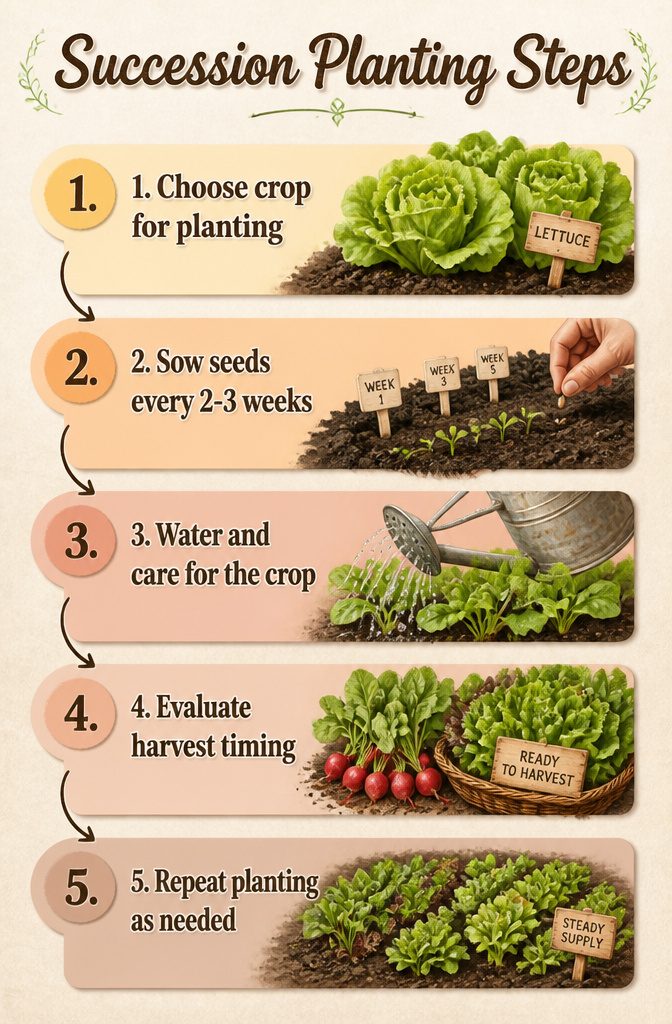
The biggest mistake I made my first fall was sowing an entire packet of lettuce on the same Saturday.
Three weeks later I had more salad than my household could eat, and by week five the plants were bitter and bolted.
Succession planting every two to three weeks fixes this completely. Instead of one glut, you get a steady supply that matches actual appetite.
Lettuce is the obvious place to start. A small pinch of seed covers a short row; water it in, and while that first batch is sizing up, you sow again in a fresh strip.
Radishes move even faster, often ready in under a month, so staggered sowings keep the crunch coming without ever filling the crisper with more than you need.
Arugula follows the same rhythm, though it will ask for partial shade if an Indian summer stretches into October.
The math is simple. Work backward from your first frost date, add the extra two to three weeks the seed packet lists to account for shorter days, and sow only what you will harvest in that window.
Then do it again. The bed never empties entirely, and neither do you.
Varieties That Made the Difference
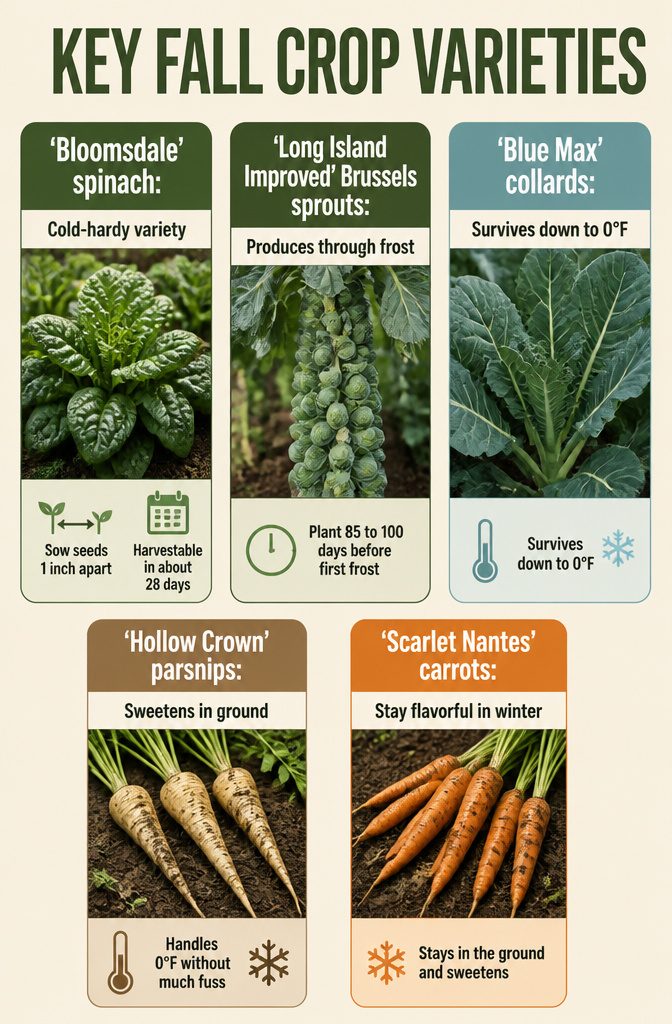
‘Bloomsdale’ spinach is the variety that convinced me variety choice matters more in fall than in summer. In spring, almost any spinach will germinate in warm soil and long days.
In the shortening light of August and September, the margin for error shrinks, and an open-pollinated strain developed in the early 1800s still outperforms newer flat-leaf types because its deeply crinkled leaves hold up to cold.
I sow seeds 1 inch apart for baby greens and get harvestable leaves in about 28 days.
The same principle applies across the fall garden. Here is what I have settled on after a few seasons of watching some varieties thrive while others quit early:
- ‘Long Island Improved’ Brussels sprouts produce 1 to 1½-inch blue-green orbs developed in the 1890s. The palm-tree look of the mature plant is a bonus; the point is that this heirloom remains the garden standard because it keeps producing through frost, which actually improves the flavor. Plant 85 to 100 days before first frost.
- Savoy-type spinach like ‘Winter Bloomsdale’ or ‘Tyee’ survive colder nights than flat-leaf varieties. The crinkled leaf structure is not decorative; it is the difference between a crop that handles a hard freeze and one that turns to slime.
- ‘Blue Max’ collards outlast every kale I have tried. When ‘Lacinato’ and ‘Red Russian’ are wilted and brown, this variety keeps holding through temperatures down to 0°F.
- ‘Hollow Crown’ parsnips and ‘Scarlet Nantes’ or ‘Autumn King’ carrots stay in the ground and sweeten. The parsnips in particular handle 0°F without much fuss.
I start with a mixed lettuce packet now and let the garden show me which varieties handle my specific microclimate. The survivors get noted, and the next year I order those by name.
Frequently Asked Questions
When should I plant my fall vegetable garden?
Plant by counting backward from your average first frost date using the days to maturity on the seed packet, then add two to three weeks as a buffer for shorter fall days and cooler soil.
For example, with an October 15 frost date and 45-day lettuce, sow by September 1. Soil temperature matters as much as calendar date; lettuce seeds won’t germinate above 75°F, and late August soil can still hit 140°F at the surface.
What vegetables can I plant in the fall?
Cool-season vegetables that mature in cold or improve after frost: lettuce, kale, spinach, arugula, beets, carrots, radishes, broccoli, Brussels sprouts, cabbage, cauliflower, collards, turnips, Swiss chard, garlic, and peas.
Many taste sweeter after cold triggers starch-to-sugar conversion, including kale, carrots, beets, turnips, and Brussels sprouts.
How do I protect my fall garden from frost?
Use row covers, cold frames, or heavy mulch to extend harvest past first frost. Lettuce under cover lasts weeks beyond a hard freeze; six to ten inches of mulch over carrots lets you harvest through January in many zones.
Mulch slows ground freezing for beets and turnips but won’t stop it entirely, so lift roots before soil locks solid.