
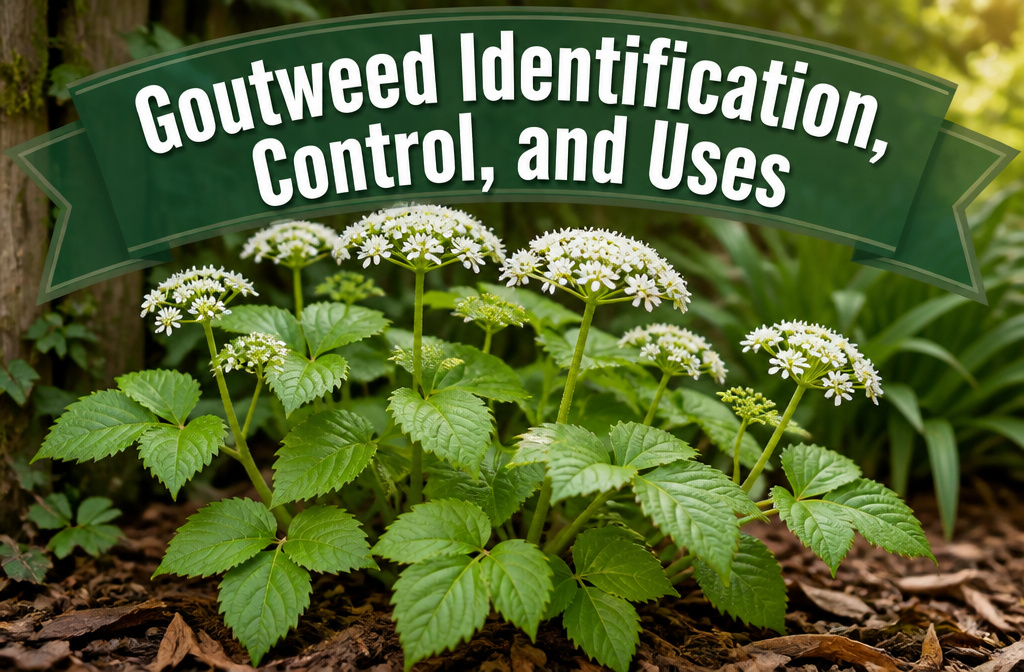
Goutweed is a perennial ground cover that spreads by rhizomes, forming dense mats of toothed, three-part leaves topped with flat white flower clusters in late spring. The catch is that even a one-inch root fragment left in soil will restart the entire colony, which is why hand-digging a patch along my fence turned a two-hour job into a season-long excavation that still produced fresh shoots three weeks later.
What Goutweed Looks Like
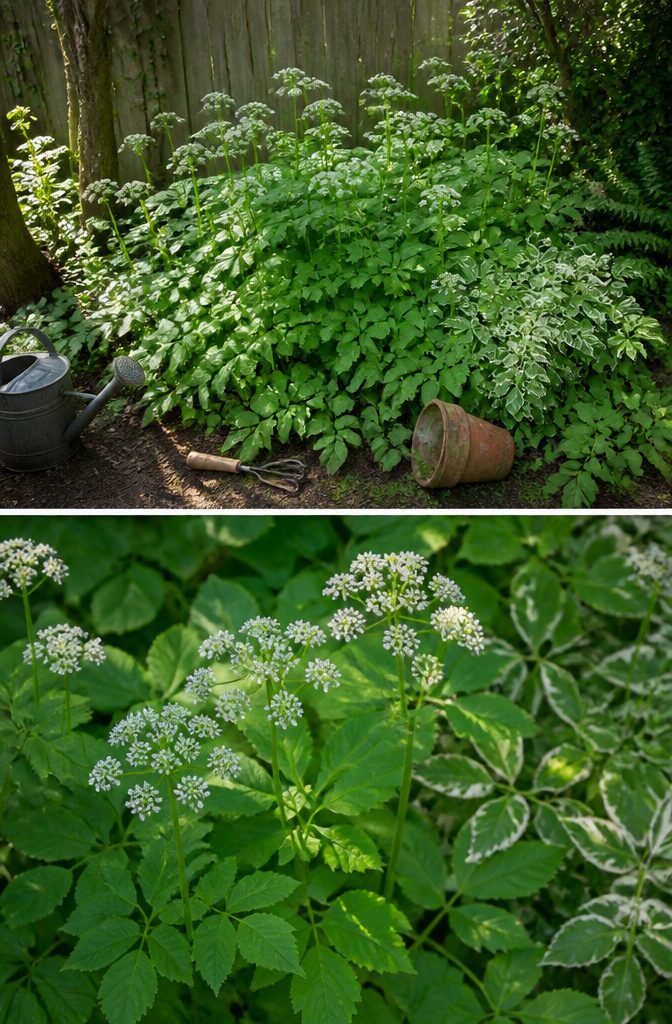
Compound leaves split into three leaflets apiece, each one toothed and roughly egg-shaped, form the base of a goutweed plant that stands one to three feet tall once flowering stems push up. Those stems carry flat-topped white umbels, umbrella-shaped clusters that open late spring into early summer and draw plenty of insect traffic.
The plant runs in two forms worth telling apart. Wild-type leaves stay a solid medium green. Garden varieties carry variegated foliage, pale green or gray with white edging, and this version grows somewhat less aggressively. Shade can flip the script: variegated leaves may turn entirely green to grab more light, so the plant you identified by its creamy margins in sun might look like the plain type under trees.
Goutweed also answers to bishop’s weed, ground elder, and snow-in-the-mountain. It favors moist soil and light shade, though it settles for less of both. Flowers need at least partial sun to form; deep shade produces leafy carpets without a bloom.
How It Spreads Underground
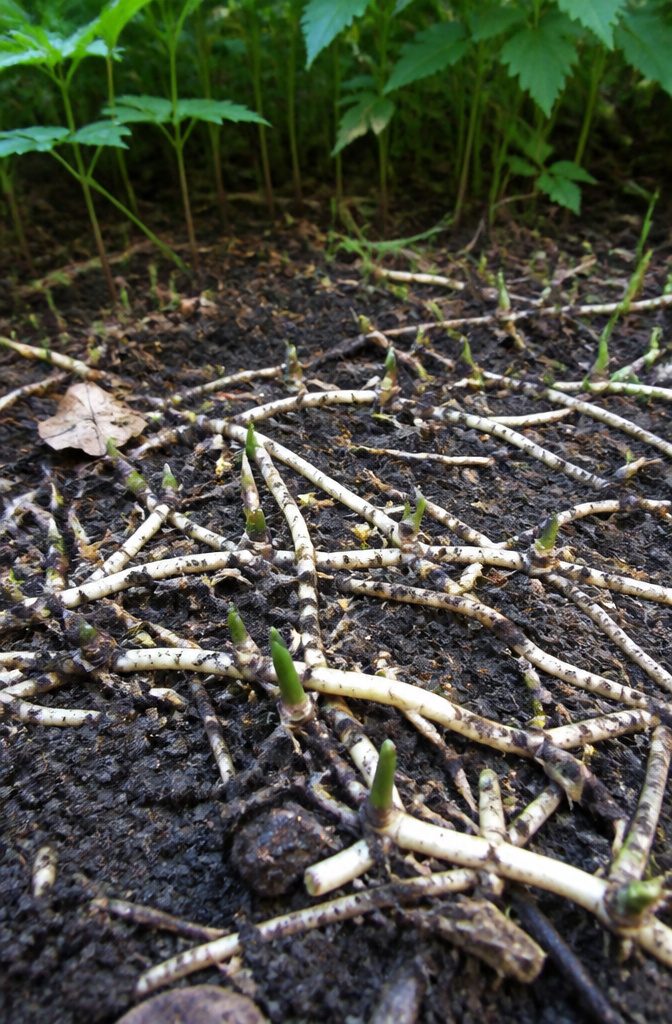
Rhizomes are the real engine of goutweed’s spread, not the seeds. A single parent plant sends these underground stems outward up to 8 feet or more, and every node along their length can push up a fresh shoot. The result is a dense, matted patch that looks like dozens of individual plants but is often one connected colony.
That density is what makes removal so punishing. Break a rhizome while digging and the fragment left behind treats it as a fresh start, not a wound. In my own beds I have learned to assume a root system extends well past the visible edge of green; the foliage is only the aboveground report on what the rhizomes decided to claim months earlier.
The displacement of native species happens gradually enough that you might not notice the shift until the goutweed patch is already dominant. Soil chemistry shifts with it, as the thick canopy alters moisture and light at ground level. By the time the change is obvious, the underground network is usually entrenched far beyond what hand-pulling can reach in an afternoon.
The Damage to Nearby Plants
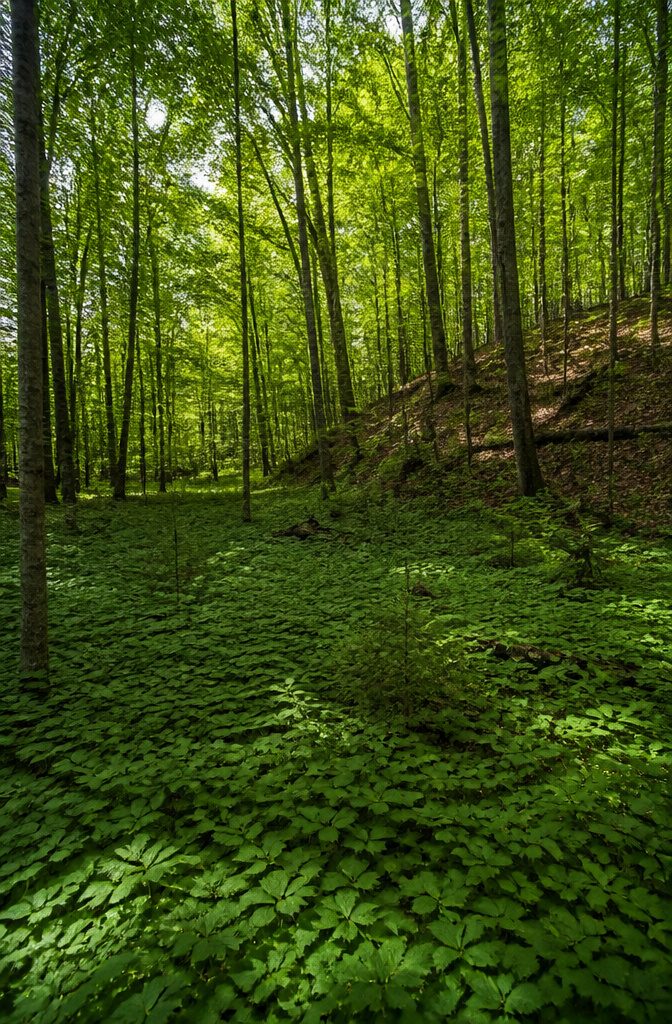
Goutweed does not stop at your property line. In forested areas it forms dense mats that reduce light and raise humidity at ground level, conditions that stop shade-tolerant tree seedlings like white pine, black spruce, and balsam fir from establishing. Plant diversity drops sharply where it takes hold, and the plant may shift how nutrients cycle through the soil and how leaf litter breaks down.
For a home gardener, this means the patch creeping under your fence into the wooded lot next door is doing more than looking untidy. It is actively changing what can grow there for decades. In your own beds the same process plays out smaller: the rhizomes fill every gap, and the altered soil chemistry and thick canopy leave little room for anything you might try to plant afterward. I learned this the hard way after clearing a corner I thought was ready for ferns. The soil looked fine, but only more goutweed came back.
Digging Out the Roots
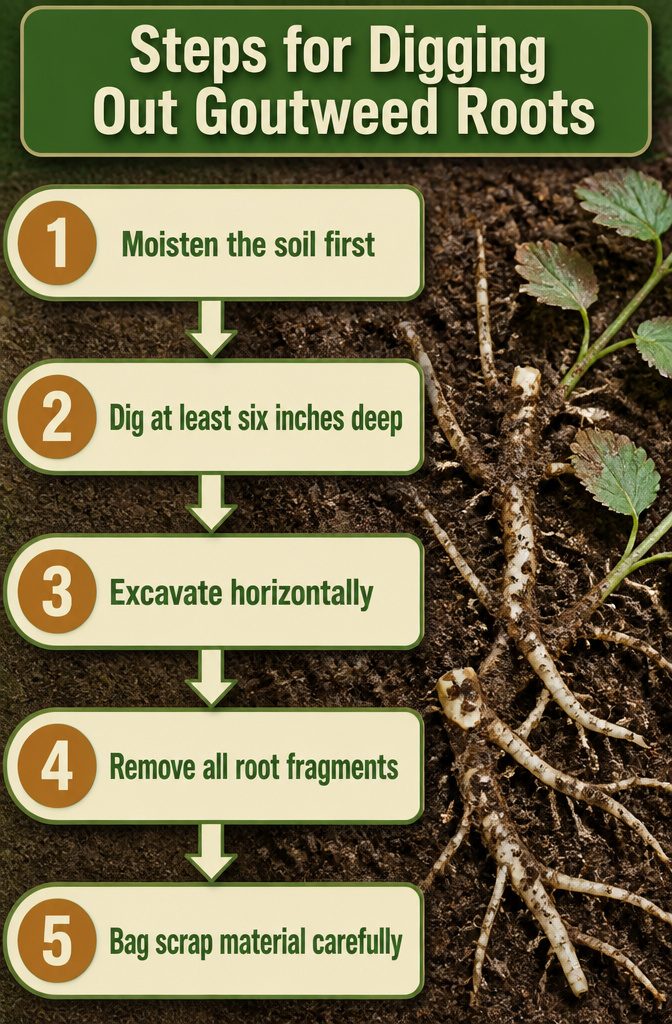
Digging out goutweed by hand works only if you treat it as an excavation, not a pull. The rhizomes run shallow, usually in the top six to eight inches of soil, but they spread horizontally in a dense mat that fragments at the slightest tug. Leave even a one-inch piece and the plant returns. Moist soil after rain or a deep watering gives you the best shot at lifting intact roots without snapping them.
I started one spring after a light rain, thinking two hours would clear a three-foot patch along my fence. The roots had crossed beneath the pickets and wrapped around a peony crown I had not noticed. By the time I traced the farthest runners, I had filled a wheelbarrow with soil and root fragments and still found fresh white shoots three weeks later. That second dig took half a day.
For a small infestation, this is still the place to begin. No herbicide drift, no waiting months under plastic, and you see exactly where the plant has traveled. The labor is real, though. Expect multiple passes, and bag every scrap for trash. Compost or yard debris bins will only spread the problem.
Mowing to Weaken the Plant
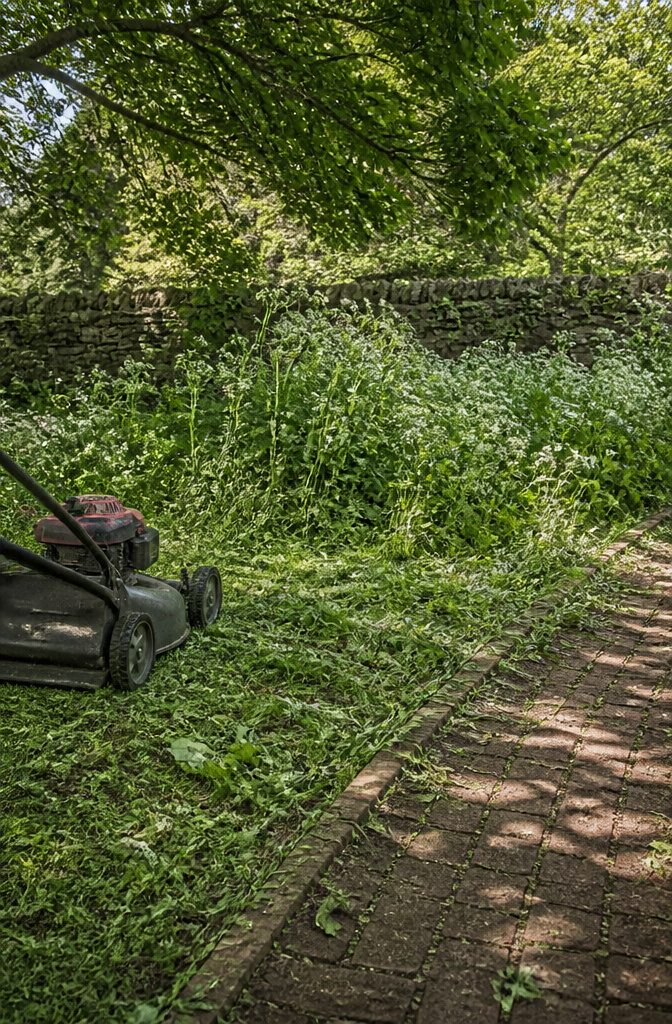
Goutweed flowers on upright stems that can hit three feet, and letting those umbels open is how a patch turns into a neighborhood problem. Mowing knocks those stems down before seed sets, which matters because the plant spreads plenty fast on rhizomes alone. The catch is you have to keep at it. One cut in June and a forgotten August is not suppression; it is a pause. Frequency beats height every time, and short is fine, but showing up every week or two through the season is what actually exhausts the above-ground growth.
What mowing will not do is kill the root system. Established rhizomes sit under the cut line, sending up fresh leaves with the same energy reserves whether the mower passed or not. I treat this as a holding action for spots where digging is impossible, or as prep work while I plan something stronger. The Pennsylvania notes suggest cutting right after full leaf-out, then sheeting the patch. Maine is less optimistic about sheeting, but both agree: mowing alone only slows a large colony. Use it to buy time, not to finish the job.
Smothering With Black Plastic
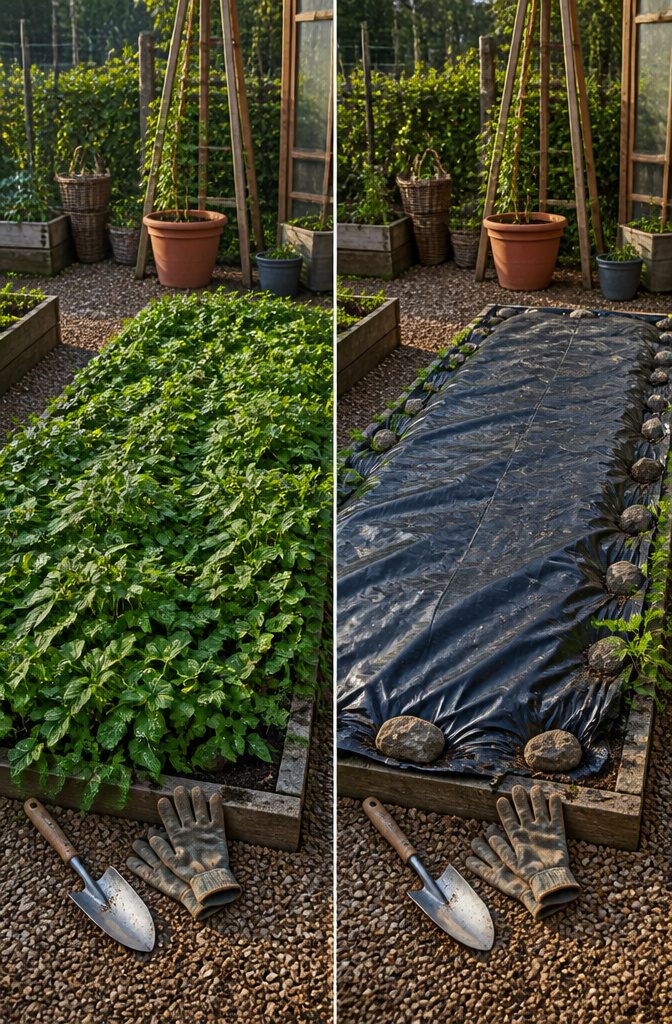
Black plastic sheeting works by blocking every photon of light and trapping enough heat to cook the roots underneath. I laid it over a goutweed patch one April and left it down through the whole growing season, at least several months in practice, which in my case meant pulling it up the following March. The timing matters: starting in spring lets the plant spend its stored energy trying to reach light that never comes, exhausting the rhizomes instead of letting them sit dormant.
This method has hard boundaries. The area has to stay completely undisturbed that entire time; no walking the dog across it, no shifting the tarp to grab a tool. Every edge needs weight or burial, because goutweed finds any gap and sends white shoots toward it. When I finally peeled mine back, the top growth had rotted to slime but a few pale, stringy rhizomes near the perimeter still showed life. The center was dead. The margin was not. It is a useful tool for a bed you can take fully offline, and nearly useless for anything bordering lawn or paths you still need.
When to Use Herbicide
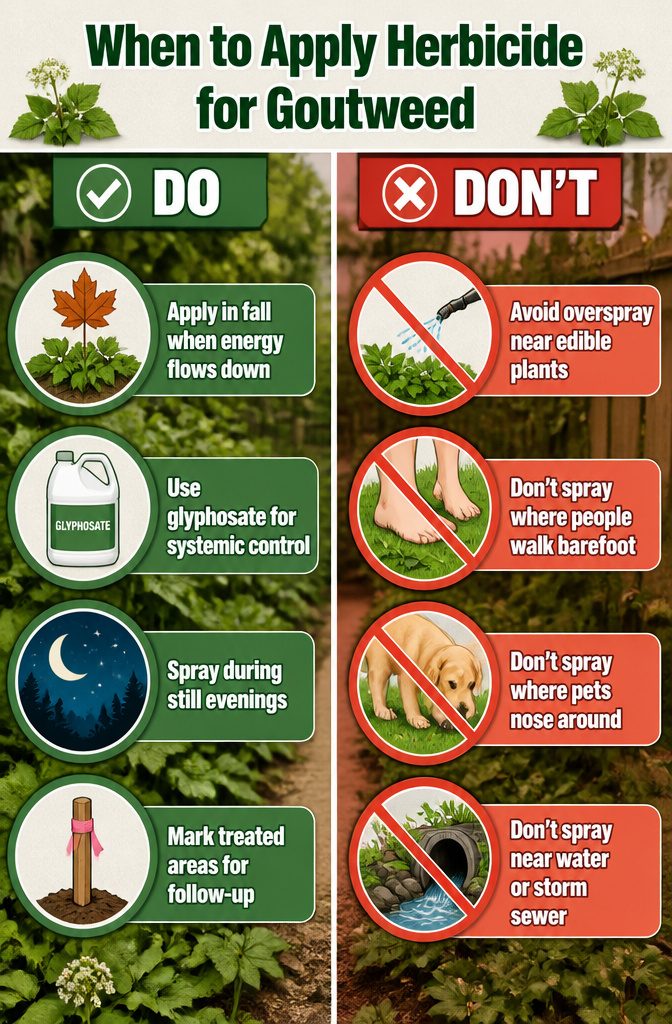
Systemic herbicides like glyphosate work on goutweed only when the plant is moving energy downward, which happens in fall. Fall application sends the chemical into the rhizomes, not just the leaves you sprayed. Spring treatments have shown weaker results in trials, since the plant’s flow is running the other direction then.
I put off herbicides for two seasons, digging instead and watching the patch resprout from every missed root fragment. The black plastic smothering failed too. When the goutweed started climbing into my neighbor’s fence line, glyphosate became the least bad option left.
Safety limits matter more with this plant than most. Goutweed grows where people walk barefoot and where pets nose around. Any spray drifts onto soil where you might later grow food, or toward water that drains to a storm sewer. I kept the application band narrow, sprayed on a still evening, and stayed clear of the vegetable bed six feet away.
One spraying rarely finishes the job. The patch looked cooked by late October, but I marked the spot with a stake and checked again the following May. New white shoots came up in two places. A second fall application, and another year of watching, finally broke the cycle.
Watching for Comeback
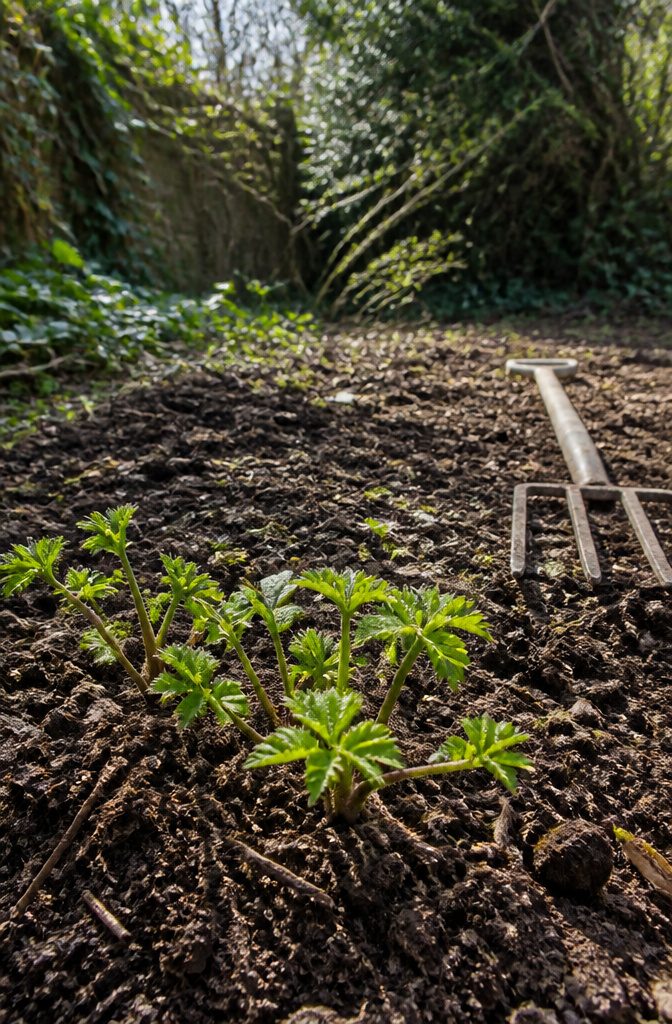
New shoots from a rhizome fragment you missed are not a sign that you failed. They are the predictable next round of a multi-season fight, and spotting them early is exactly what separates a cleared bed from one that reverts to a carpet of goutweed in two years. Check the site at least two full growing seasons, because a section of root no larger than a fingernail clipping can sit dormant through one cycle and push up leaves the next spring.
The regrowth looks softer and lighter green than the mature plant, often rising in a tight cluster from a single point rather than spreading evenly. That is the moment to act: dig it out immediately, trace any connecting runner, and remove the whole piece before it can reestablish its starch reserves. Herbicide works best in fall, when the plant is moving carbohydrates downward and carries the chemical with them, but hand removal in spring can still starve a young shoot if you are thorough.
What stops most people is not the work itself but the gap between effort and visible payoff. A bed looks clean for months, then a sprout appears, and the temptation is to shrug and let it go. That is the error that costs you the previous season entirely. The plant does not tire; it only needs you to tire first.
Eating the Young Leaves

The young leaves of goutweed have a mild, spinach-like flavor that works raw in salads or wilted into soups. European settlers brought the plant across the Atlantic for exactly this purpose, cultivating it as a reliable spring green before true spinach could be sown. Harvest only from late April through May, before the flower stalks emerge, since leaves picked afterward turn sharply bitter and carry a laxative effect.
I found a patch spreading behind my neighbor’s garage, in soil that had clearly gone untended for years. The translucent, bright green leaves were easy to spot once I knew to check the vein pattern: each vein runs straight to the tip of a tooth on the leaf margin, never stopping between teeth the way poison hemlock’s do. I gathered a small handful, washed them thoroughly, and added them to a warm potato soup. The flavor was pleasant enough, milder than spinach with a slight aromatic edge, though not distinctive enough that I’ve gone back for a second harvest.
The foraging rule here is absolute: goutweed belongs to the carrot family, and that family includes water hemlock, a plant that can kill. Positive identification comes from leaf detail, not flower shape. Harvest only from unsprayed ground well away from road runoff and anywhere pets frequent.
The Plant’s Medicinal Reputation
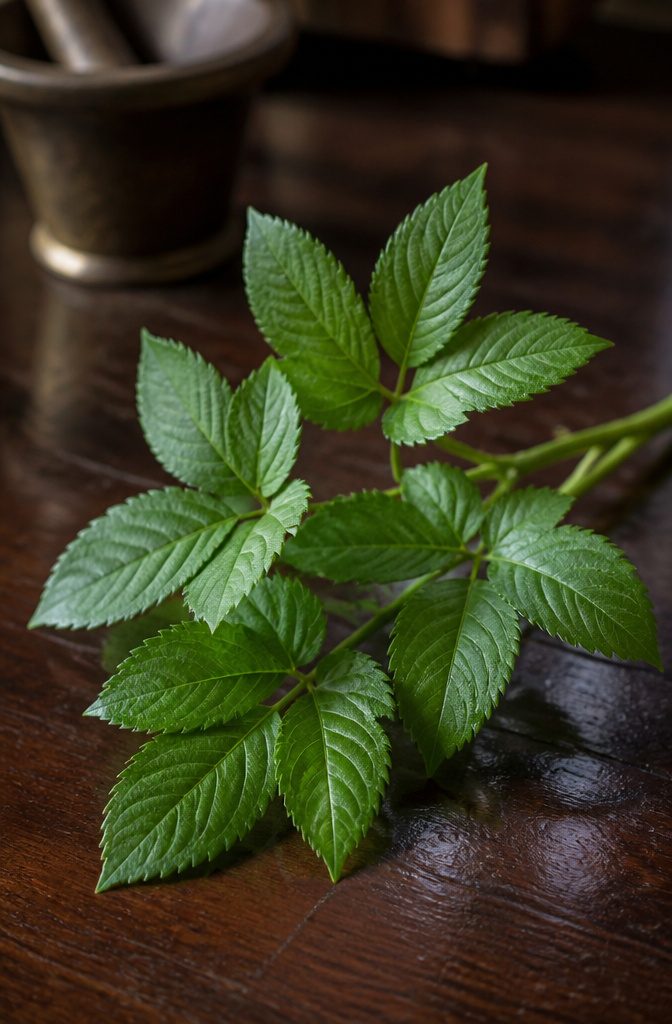
The Latin name Aegopodium podagraria carries the whole story: podagra was the old word for gout, the kind of joint pain that swollen a bishop’s toe and kept him from his boots. Medieval herbalists pounded the leaves into poultices for exactly that, and the plant kept the name. Folk use also ran to rheumatism, sciatica, kidney trouble, and bladder complaints, with the leaves brewed into tea or crushed fresh against the skin.
In traditional folk medicine, [goutweed] was known as a remedy for gout (arthritis) and also used to relieve rheumatism or sciatica.
What catches my eye in that history is how little of it I can verify for myself. The chemical breakdown looks promising on paper: anti-inflammatory and diuretic compounds, antioxidant activity, the full list. But no modern clinical trial backs the doses or safety of eating or applying this plant for any condition. RxList, which tracks herbal medicine, rates goutweed as having "insufficient evidence" for every traditional use it lists.
Mixing up plants in the carrot family is easier than most gardeners want to admit. Several Apiaceae species are toxic; a beginner harvesting for home medicine could grab the wrong leaf on the same walk. I will not grow an aggressive spreader I already fight to contain just to gamble on unproven benefits. For those who want to explore the traditional preparations, herbal medicine references exist that lay out the historical protocols in detail.
Growing the Variegated Form Safely
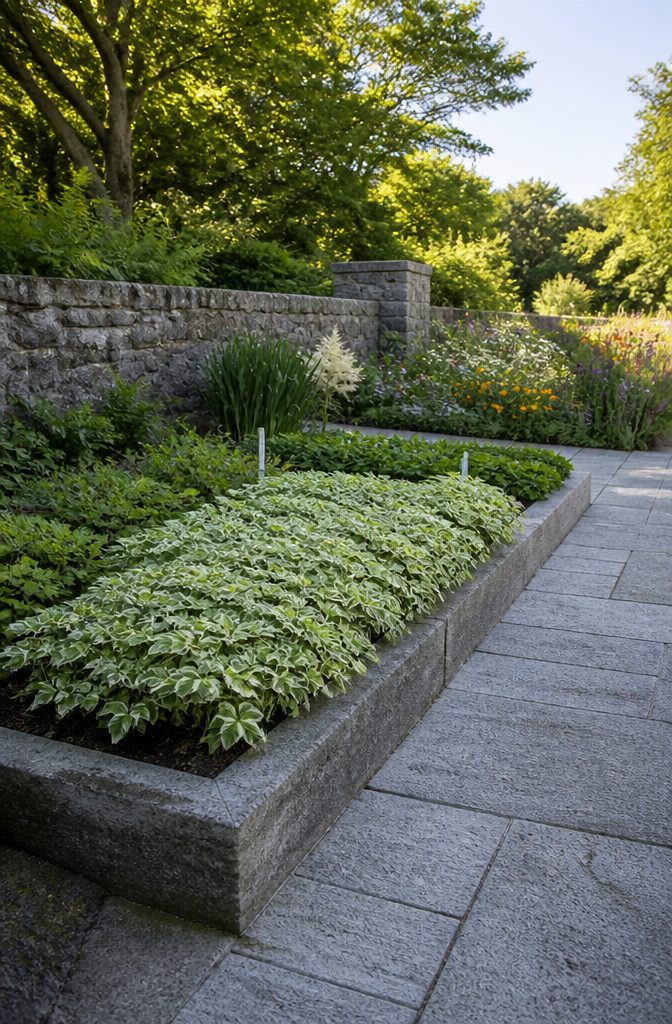
Variegated bishop’s weed, Aegopodium podagraria ‘Variegatum’, spreads less aggressively than its all-green form, but "less aggressive" still means aggressive. I have seen it used in two places where that tradeoff almost makes sense: contained beds bordered by hard paving on all four sides, and the narrow strip between a sidewalk and a building foundation where dense shade and tree-root competition have killed everything else.
Hard barriers and regular maintenance are non-negotiable. Rhizomes will find any gap, any low point in a concrete edge, and push through. The variegated form also reverts: colonies often begin producing green leaves that revert to the wild type, which spreads faster and seeds freely. Removing flowers before seed set helps, but monitoring for reversion is the part most gardeners skip.
The honest math is this: if it escapes, eradication takes years. Digging must remove every rhizome fragment; the smallest piece left in soil forms a new plant. Several states have banned sales outright. For a $500–$800 annual garden budget, three years of containment labor is a steep cost. I would not plant it on any property backing onto woods, wetlands, or a neighbor’s unmaintained edge. The risk is real, and the escape is not reversible.
What I Would Do Differently
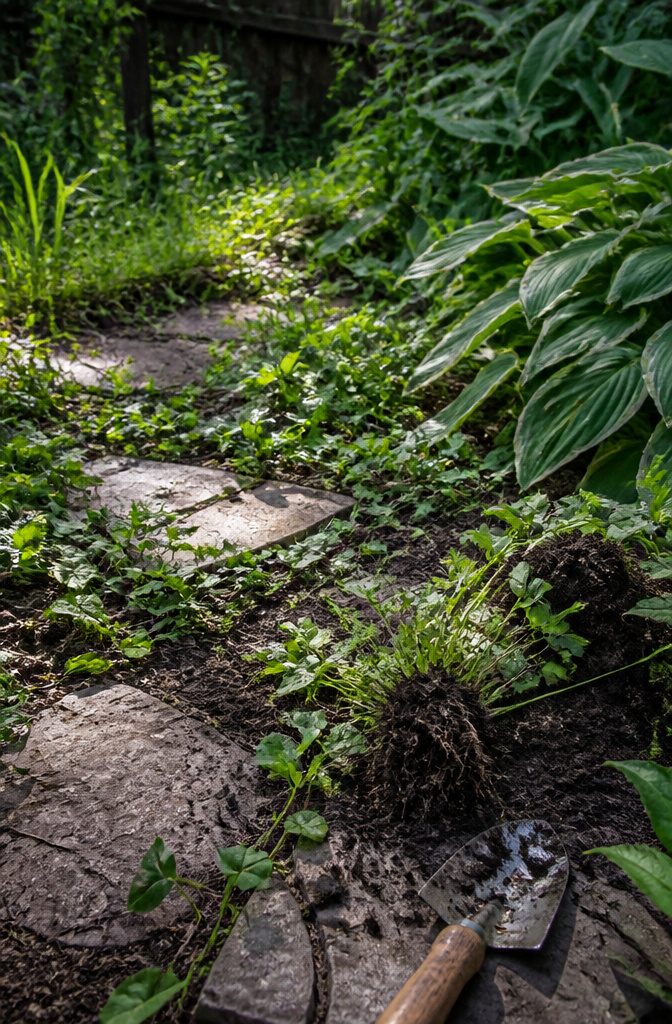
The worst mistake I made with goutweed was treating it like any other aggressive ground cover. I planted the variegated form without a root barrier, figuring the white-edged leaves meant it was tamer. A single rhizome fragment can restart the whole colony, and within two seasons it had crossed under a stepping-stone path into a bed of hostas. Digging it out only spread pieces farther.
I also assumed mowing would exhaust the plant. The sources that recommend short, frequent mowing usually pair it with black plastic sheeting right after; I skipped the plastic, and the goutweed leafed out lower but no weaker. What actually worked better than expected was a small bed I smothered with black plastic for a full growing season, then monitored each fall for any pale shoots sneaking back from the edges.
Harvesting the young leaves for the kitchen was another miscalculation. By the time I remembered they were edible, the stems had turned tough and the flavor had gone bitter. The window is early spring, before flowering, and I kept missing it.
If goutweed just showed up in your yard this season, start checking the perimeter in fall; that is when perennial weeds move carbohydrates into their roots, and any shoot you spot then signals a rhizome you have not found yet.
Frequently Asked Questions
What is goutweed?
Goutweed (Aegopodium podagraria) is a creeping perennial plant also known as bishop’s weed, ground elder, and snow-in-the-mountain. It grows one to three feet tall with compound leaves split into three toothed, egg-shaped leaflets, and produces flat-topped white flower clusters in late spring to early summer. The plant spreads aggressively through underground rhizomes and is considered invasive in many areas, though it was originally brought to North America by European settlers as a spring green and medicinal herb.
How do you control goutweed?
Effective control requires combining methods: dig out the shallow rhizome mat completely, removing every fragment since even a one-inch piece resprouts; mow repeatedly through the season to weaken the plant and prevent seeding; smother with black plastic for several months starting in spring to exhaust energy reserves; or apply systemic herbicides like glyphosate in fall when the plant moves nutrients downward into the rhizomes. Most approaches need multiple passes across two or more growing seasons.
Is goutweed edible?
The young leaves are edible and have a mild, spinach-like flavor suitable for salads or soups, but only harvest from late April through May before flower stalks emerge. Leaves picked later turn bitter and can act as a laxative. Because goutweed belongs to the carrot family, which includes deadly water hemlock, positive identification from leaf vein patterns is essential, and you should gather only from unsprayed ground away from roads and pet areas.






