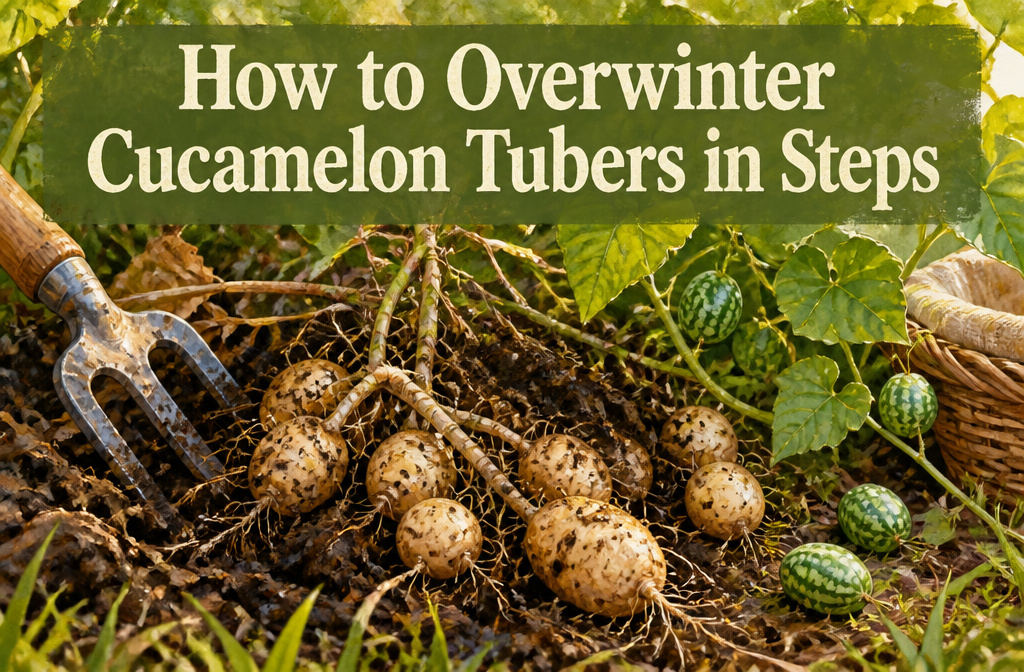
Overwintering cucamelon tubers gives you a 60–75 day head start on harvest, but only if you dig before the first hard freeze snaps the vines. Most growers lose their tubers in storage, not in the ground: the wrung-out-sponge moisture level is the detail that separates a sprouting tuber in April from a rotted lump in January.
1. How to Dig Up Cucamelon Tubers
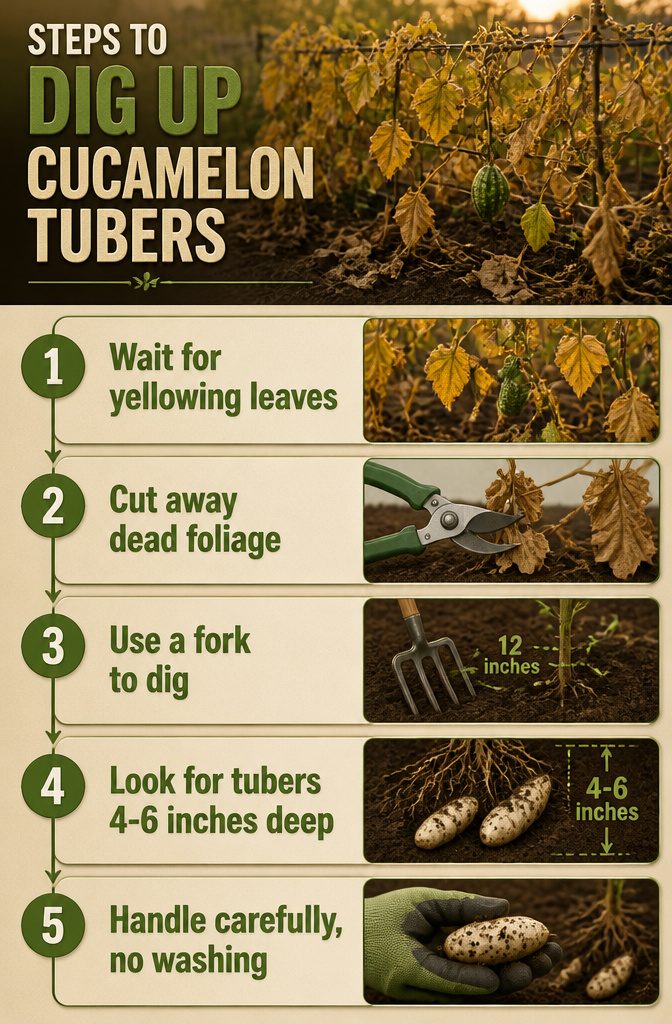
Wait until the leaves yellow and collapse after a few hard frosts. Cucamelons won’t survive temperatures below 50°F for long, so the vines themselves are already finished by the time you dig.
Cut the dead foliage away first. Pulling the vines to lift the tubers out usually snaps them, and damaged tubers rot in storage. A garden fork or shovel pushed into the soil about 12 inches from the main stem lets you lever the whole root mass up gently.
The fibrous roots sit in the top foot of soil, but the tubers themselves can run deeper. If you don’t see any white, knobby growth at first, dig a little farther down or work through the soil by hand. Most tubers run 4 to 6 inches long, though some stay smaller. Handle them carefully; bruises open the door to decay over winter, and there’s no need to wash them. The soil they came from is what they’ll sleep in for the next several months.
2. How to Store Tubers Through Winter
-
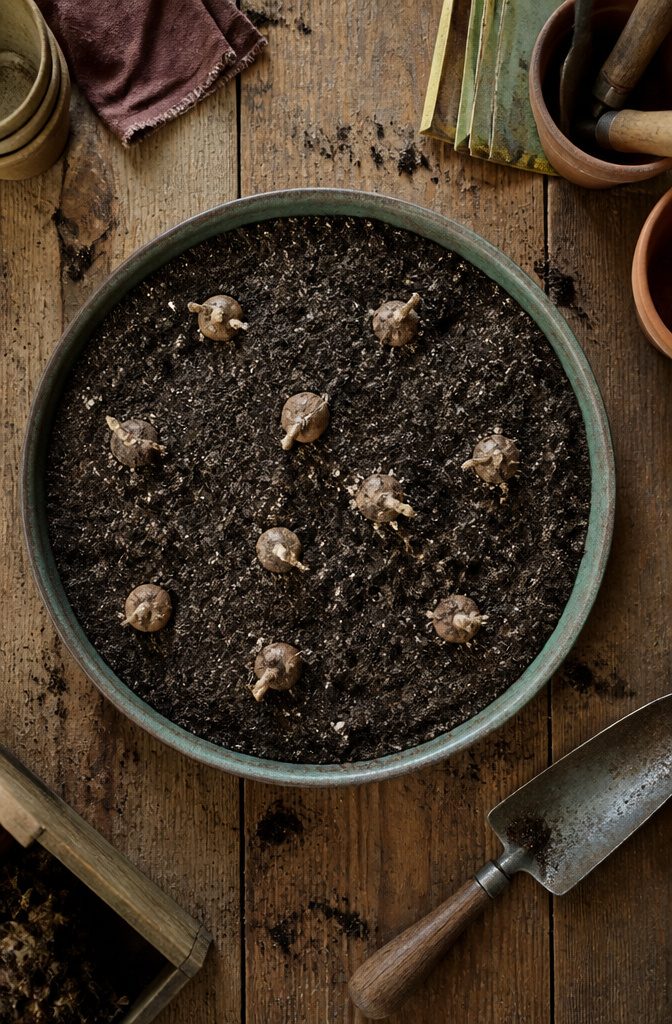
Fill a container with a few inches of slightly moistened potting soil, peat moss, or horticultural sand. Lay the tubers on top without letting them touch, then cover with another few inches of the same damp medium. Repeat in layers if you have more tubers to store.
-
"Slightly moist" means the mix feels like a wrung-out sponge: damp enough to hold together when squeezed, but no water drips out. Too wet and the tubers rot; too dry and they shrivel and die. Erring on the dry side is the safer mistake.
-
Store the container in a cool, dark spot that stays frost-free, ideally between 40–50°F. A basement, root cellar, garage, or spare closet works. Check the medium every few weeks and dampen very lightly if it dries out.
3. How to Start Tubers in Spring
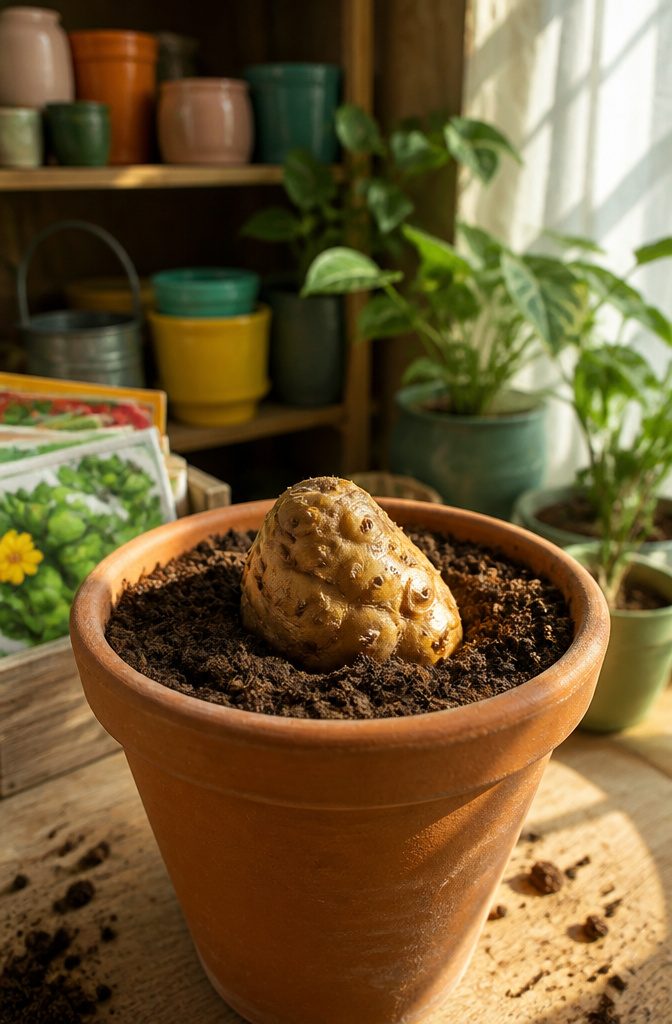
Early April, or whenever your last frost date sits, marks the starting line. Count back eight weeks and block that morning for potting.
-
Pre-moisten your potting soil before it ever touches a tuber. Dry mix wicks moisture away from the root instead of welcoming it back to life.
-
Fill an eight- to ten-inch pot two-thirds full with that damp soil. Settle a tuber on top and cover with one more inch of the same mix. The pH sweet spot runs 6.0 to 6.8; most bagged potting soils land there already, but a cheap meter spares you a season of wondering why growth stalled.
-
Water well and move the pot to the sunniest window you have, or park it under grow lights. The 60–75 day maturity window means every week of head start shortens that wait to first harvest.
-
Keep the soil moist as shoots emerge. A balanced liquid organic fertilizer every few weeks feeds the early growth without pushing it.
-
Hold off on the garden transplant until frost risk passes. That patience pays out in plants already climbing by the time direct-seeded neighbors are barely breaking soil.
4. How to Harden Off Young Plants
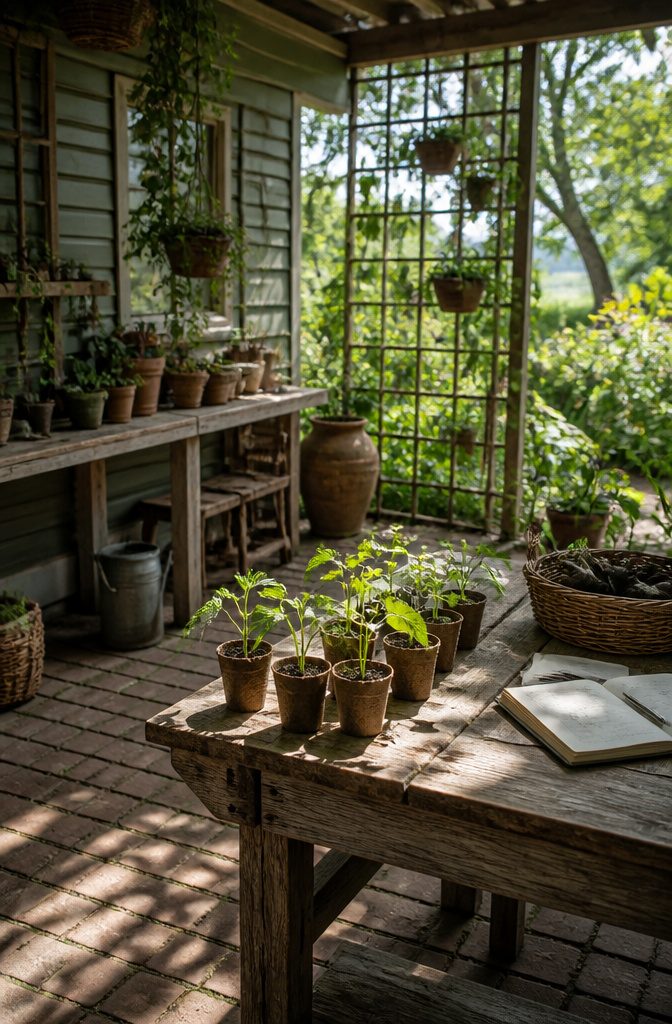
Cucamelons started from tubers indoors grow soft in their pots, and a sudden move outside will set them back for weeks. I begin hardening off once night temperatures hold steady above 50°F and the last frost date has passed, since freezing temperatures will kill the vines entirely.
The first day, the plants sit outside in dappled or morning sun for two to three hours, then back under cover. Each day I add an hour of direct exposure, working up to a full afternoon by day five. Wind matters as much as light; a sheltered porch the first few days keeps stems from snapping, then I shift them to more open spots so the foliage toughens.
Nights are the real test. I leave the plants out overnight only when lows stay reliably above 55°F. Leaves that bleach pale or cup inward mean too much sun too fast. Stems that lean or leaves that blacken at the edges signal cold damage, and those plants need another week of coddling before they go in the ground.
5. How to Transplant to the Garden
-
Wait until the risk of frost has fully passed before moving your overwintered tubers outside. I check my local county extension’s frost dates, then wait another week to be safe; a late spring freeze can still damage tender new growth.
-
Choose a spot with full sun and well-draining soil. These vines need six to eight hours of direct light and will rot if water sits around the roots. Work in leaf compost if your soil is thin or compacted.
-
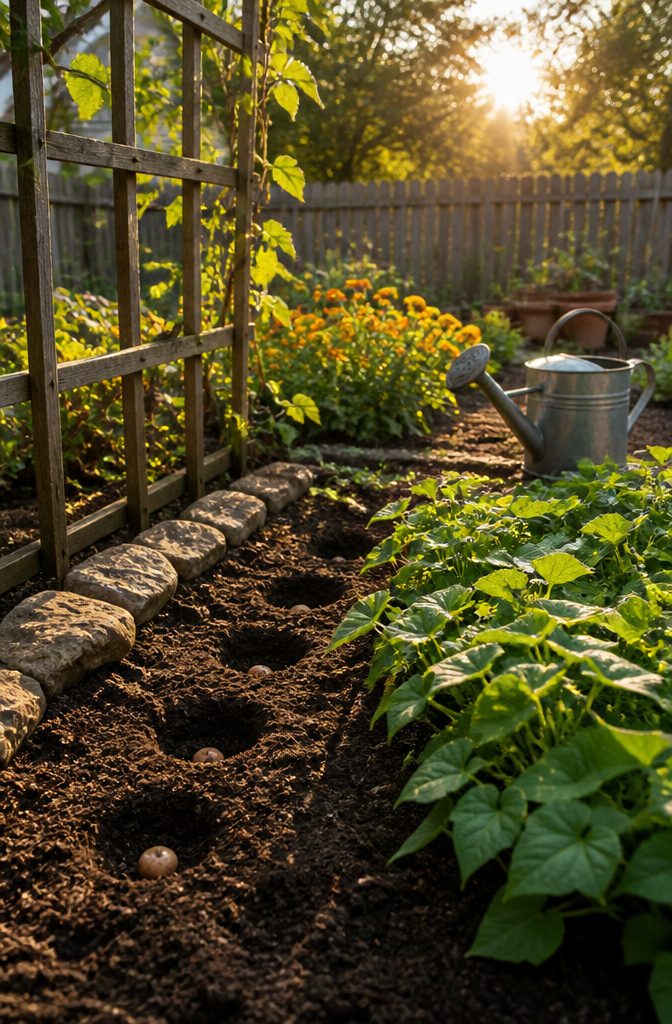
Dig shallow planting holes, setting tubers only an inch or two below the surface. The emerging tendrils are thin and need easy passage through the soil.
-
Space plants about a foot apart and install your trellis or support immediately. Waiting until vines tangle makes the work harder and risks breaking stems.
-
Water thoroughly right after planting, then settle into a routine of roughly one inch per week. The tubers store some moisture, but consistent watering prevents stress and keeps fruit production steady through summer.
What Cucamelons Need to Grow
Cucamelons look like cucumbers but need different treatment. I learned that the hard way my first season, when I treated them like bush slicers and ended up with a tangled mess on the ground and half-rotted fruit.
Here is what actually works:
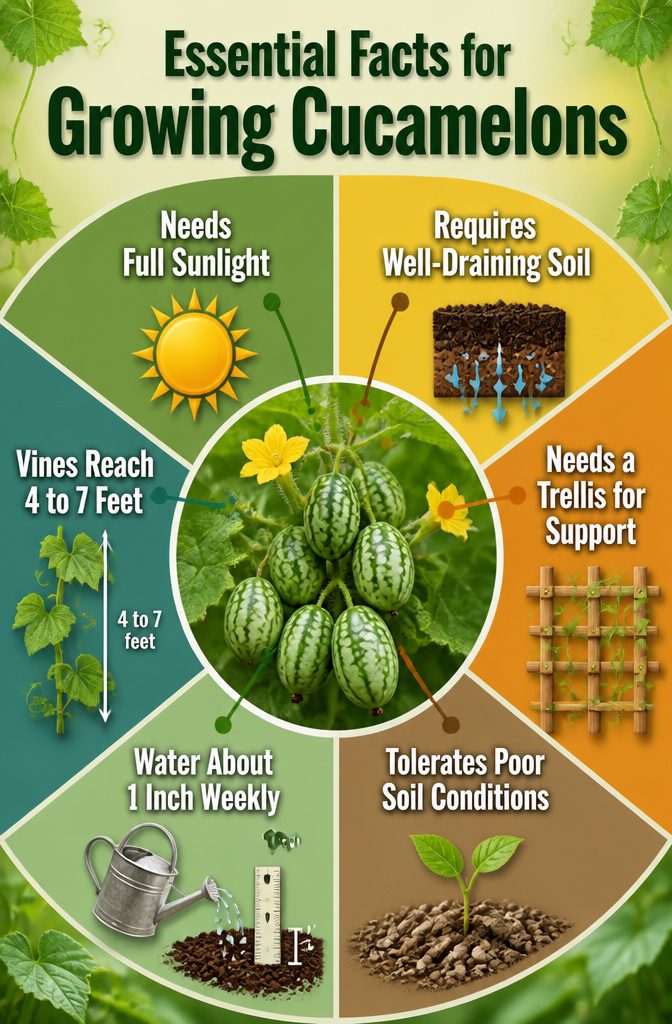
- Full sun keeps them productive. Some afternoon shade is acceptable in very hot climates, but deep shade means less fruit.
- Well-draining soil is non-negotiable. They tolerate poor, nutrient-deficient soil and do not require heavy feeding. Aim for a soil pH between 6.0 and 6.8.
- A trellis is essential. Unlike regular cucumbers, which can sprawl or climb depending on variety, cucamelon vines reach 4 to 7 feet with thinner stems and smaller leaves than cucumber vines. Without vertical support, the fruit sits on damp soil and rots.
- Water about 1 inch weekly, keeping soil lightly moist but never soggy. A deep watering once or twice per week beats light daily sprinkles.
The trellis matters most. Cucumber vines can muscle through some ground contact; cucamelon stems are too delicate and the fruit too small to tolerate it. Give them something to climb, or you will not get a harvest worth storing tubers from.
Starting from Seed Instead
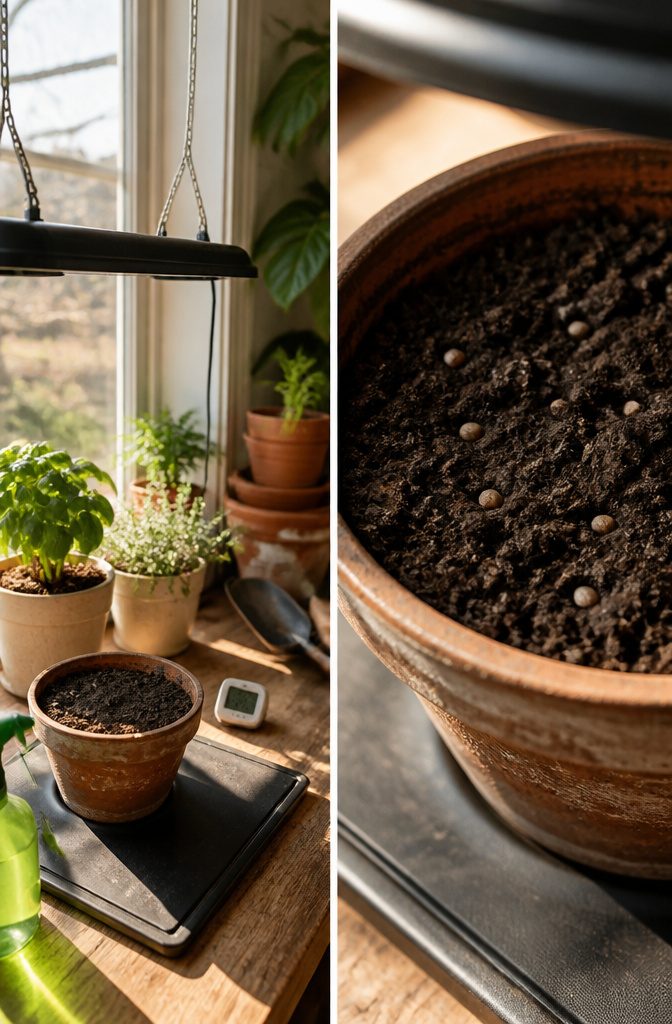
Starting from seed is the fallback most of us end up using, either because our tubers rotted in storage or because we are new to cucamelons and have no tubers yet. The seeds are tiny, and they demand warmth and steady moisture to germinate. Sow them about a quarter inch deep in small pots of sterile seed-starting mix, keep the soil damp, and hold the temperature around 75 to 80°F. A heat mat helps. Germination takes 7 to 14 days, and the seedlings want bright light immediately after.
The timeline stretches longer than overwintering tubers. Where a stored tuber sprouts into an established plant as soon as soil warms, a seed started four to six weeks before the last frost still needs hardening off and transplanting. You also lose the head start on harvest that tubers provide. The trade is reliability: seeds are cheap, they ship anywhere, and a failed tuber does not end your season. For first-time growers or anyone who opened their storage bin to mush, seeds are the practical restart.
Cucamelon seeds thrive in warm conditions, so maintaining a temperature around 70-75°F (21-24°C) will encourage germination, usually within 7-14 days.
That temperature range is the make-or-break detail for anyone starting in a chilly garage or windowsill; without it, the seeds simply sit.
Harvesting and Eating
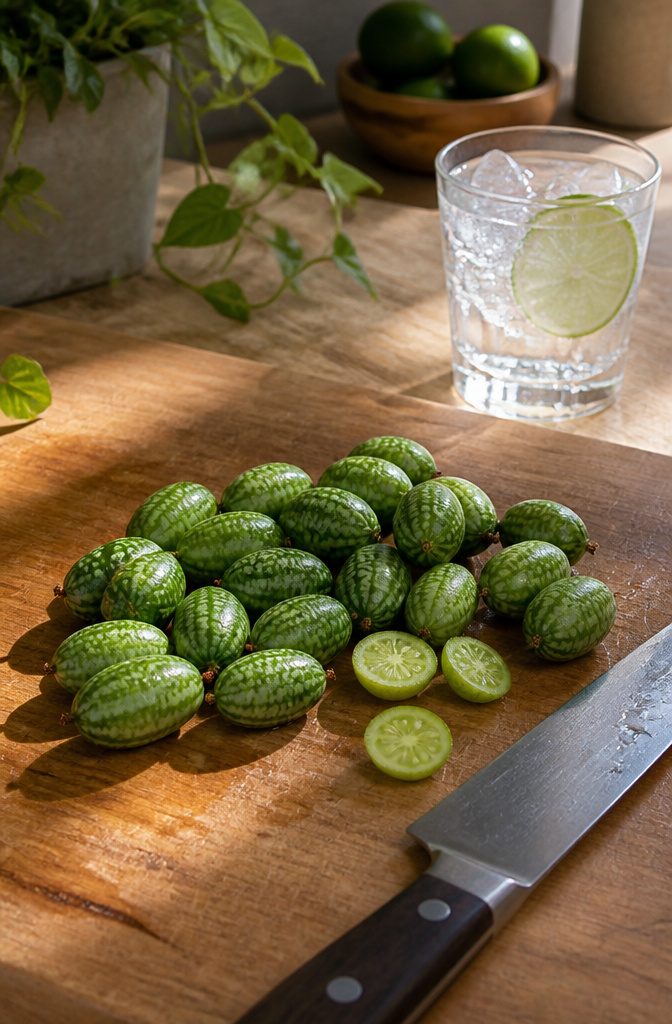
Pick cucamelons when they are grape-sized and still firm, roughly 70 days after planting. The skin should give slightly under gentle pressure. Leave them longer and the flesh turns seedy and bitter, sometimes taking on an almost water-rind hardness that makes the whole bite unpleasant.
Raw is the simplest way to eat them. The flavor lands somewhere between cucumber and lemon-lime, crisp enough to pop between your teeth. I pickle them in quick brine when the vines overload, and they disappear fastest dropped into a gin and tonic where that citrus edge does the work of a slice.
Nutritionally they carry vitamins C, A, and K, plus lycopene and beta-carotene. Not a superfood by any stretch, but a respectable return for something that basically grew itself.
The late-season fruit is where my patience gets tested. Last October I found a handful I had missed, still green but slightly softened. The initial crunch was gone, replaced by a faint soapy bitterness that built as I chewed. The seeds had hardened too, turning what should have been a bright snap into something I spat out. They had passed from edible to compost in maybe a week.
Pest and Disease Resistance
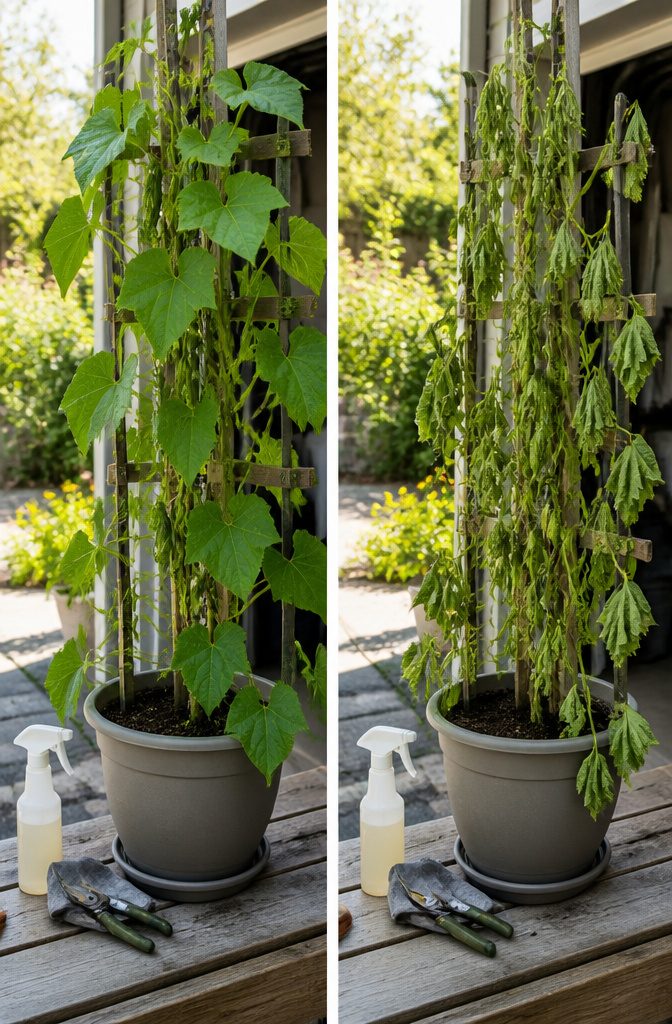
Cucamelons carry a useful edge over their cucumber cousins when it comes to staying healthy through the season. Powdery mildew, the white dust that coats squash and cucumber leaves by late summer, tends to pass them by. Cucumber beetles, those striped pests that shred young cucurbit vines, also show little interest. That resistance is real but limited, not a free pass. Aphids, whiteflies, and caterpillars can still show up. Downy mildew may appear during stretches of warm, wet weather, showing as angular yellow patches that can deform fruit and invite sunscald.
What this means in practice is fewer spray sessions and less anxious checking, not zero attention. I still walk the row once a week to catch early trouble. Neem oil every 7 to 10 days outside of flowering handles most mild issues. For heavier downy mildew, copper fungicide on the same schedule brings it back under control. The tuber you are overwintering will be worth more if the vine above it stayed relatively clean, so this reduced burden is one more reason the extra fall effort pays off.
Frequently Asked Questions
How do you overwinter cucamelon tubers?
Dig them up after the leaves yellow and collapse following a few hard frosts, then store in a container of slightly moistened potting soil, peat moss, or sand at 40–50°F in a frost-free spot. Layer the tubers so they do not touch, with a few inches of damp medium between each layer. Check every few weeks and dampen lightly if the mix dries out.
What do cucamelons taste like?
They taste like cucumber with a citrus edge, somewhere between cucumber and lemon-lime. The flesh stays crisp when picked at grape size, and that bright acidity makes them popular pickled or dropped into drinks.
How long do cucamelons take to grow?
About 60 to 75 days from planting to harvest. Starting from overwintered tubers indoors eight weeks before your last frost date gives you a head start that shortens the wait for first fruit.
Can cucamelons be grown in pots?
Yes, and container gardeners can even overwinter the whole pot. Snip off dead foliage in fall and store the pot in a cool, frost-free area. In spring, remove the tubers and replant in fresh containers, or start them in eight- to ten-inch pots indoors before transplanting outside.