
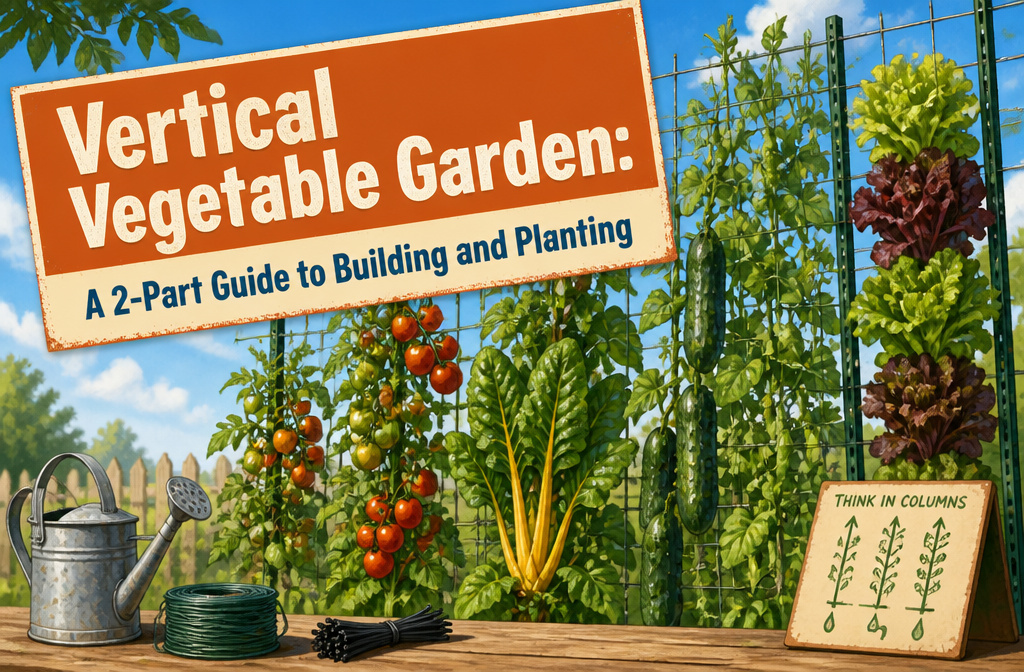
A vertical vegetable garden only works if you think in columns, not rows. Light, water, and access must all run upward from the same starting point, and the first mistake most people make is treating a wall like a flat bed tilted ninety degrees. Hose reach matters more than aesthetics; build within spitting distance of a spigot or commit to carrying water twice a day by July. A single roll of welded wire at about $35 can cover more ground than store-bought panels twice the price, and it lasts years if you zip-tie it to T-posts spaced every four to six feet.
Choose a Location
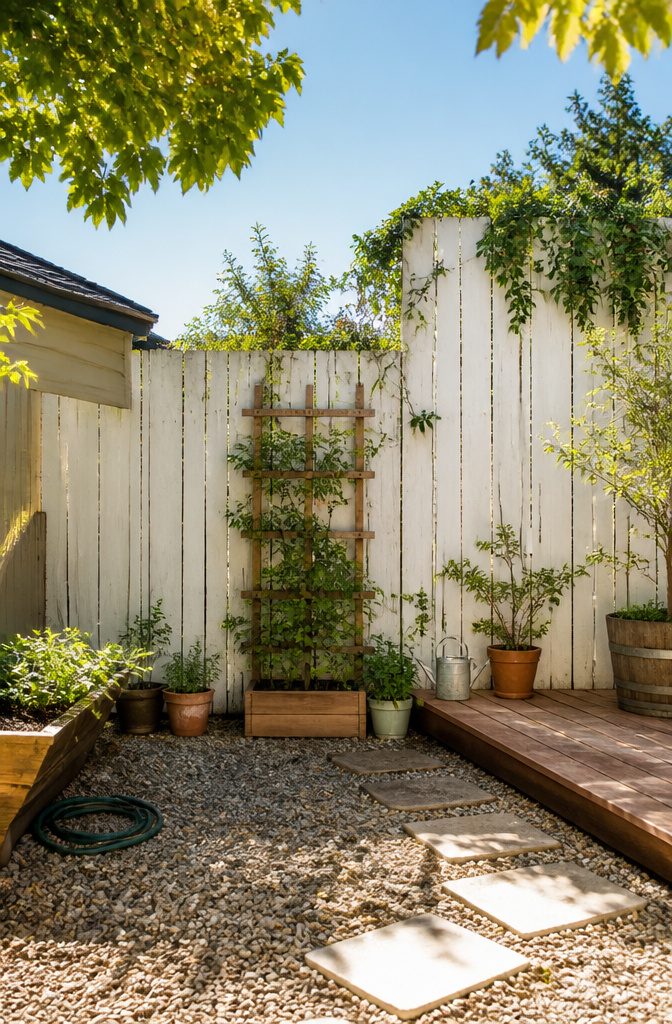
Most vegetables need at least 6 hours of direct sun to produce anything worth harvesting, so the first thing to check is which wall, fence, or corner of your patio actually gets that light. I start tracking in early spring before the trees leaf out, because a spot that looks bright in March can turn half-shade by June.
Water access matters just as much as sun. Last season I placed a trellis at the far end of my yard, figuring I’d just carry a watering can. By July, that meant two trips every evening while the tomatoes wilted. Now I set up within hose reach of a spigot or a rain barrel, and the time saved adds up fast when the weather turns dry. A south-facing orientation tends to give the steadiest light, though east-facing works if that’s what your balcony offers. The real mistake to avoid is assuming you can move water later; run the hose or set the barrel first, then build around it.
Select Plants
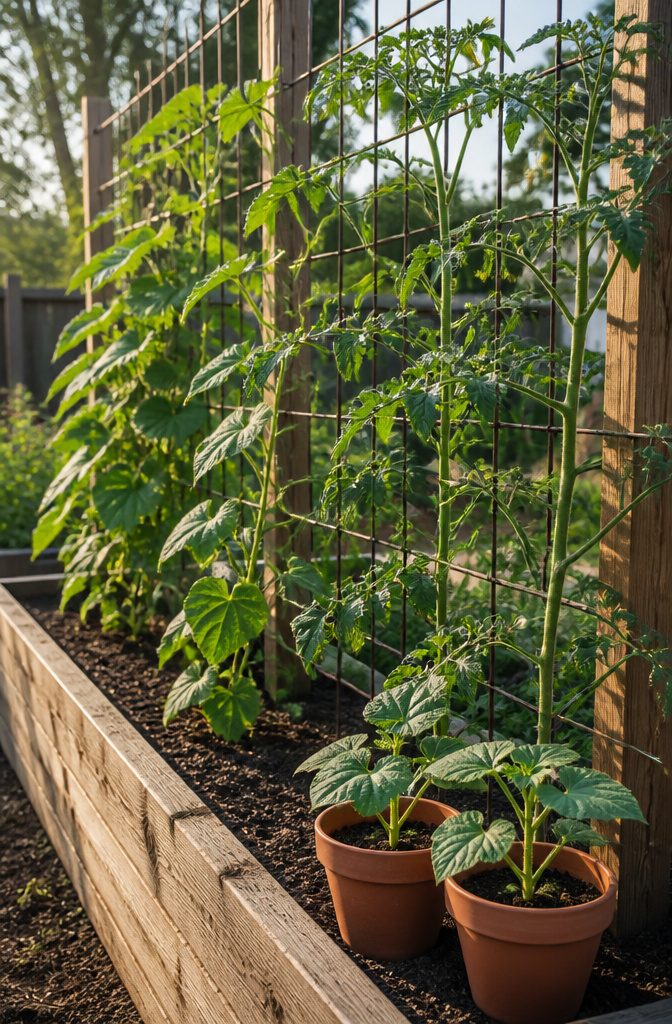
Some vegetables take to a vertical vegetable garden naturally, and others fight you every week until you give up and let them sprawl. Tomatoes, cucumbers, beans, and peas are the ones that actually cooperate. Indeterminate tomatoes can shoot up to 8 feet and will keep climbing as long as you keep tying, so that height needs to be in your plan from day one, not an August surprise.
Cucumbers and peas climb on their own, cucumbers with little side tendrils that wrap around anything they touch, peas with stems that twine straight up a pole. Beans work the same twining way, pole beans or runner beans especially, and you can start them in small pots in late spring to drop into spots where early peas finished by midsummer.
The seed packet matters more than the photo. Bush beans, bush cucumbers, determinate tomatoes, these are bred to stay low and will sulk if you force them upward. Read the label for vining or indeterminate or pole, or you will spend July wrestling a plant that wanted to be a shrub all along.
Build or Set Up a Trellis
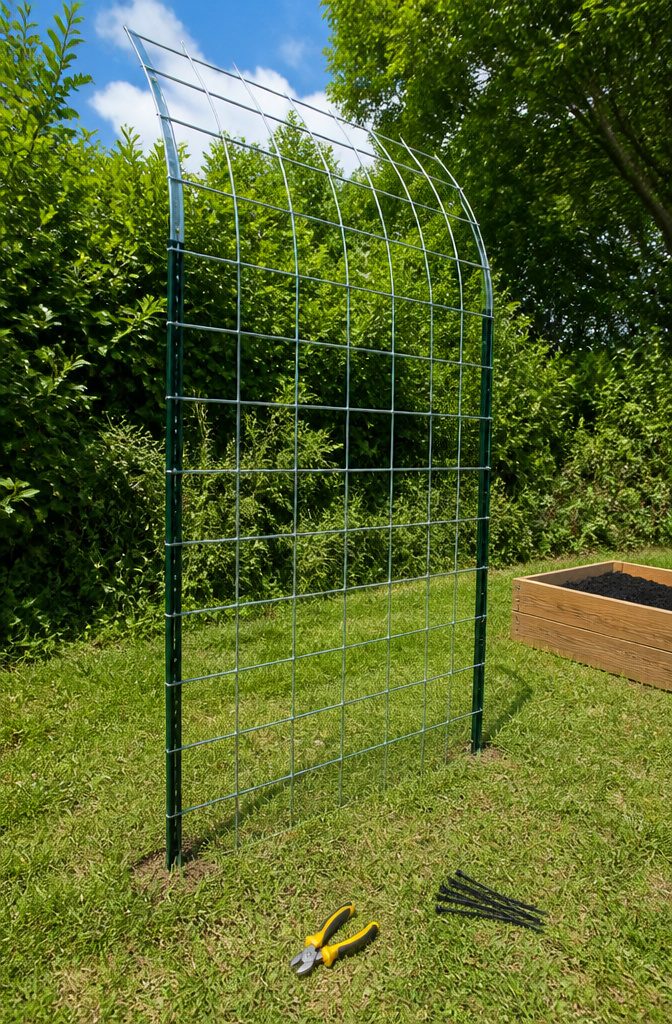
Welded wire at 3 feet by 50 feet runs about $35, and that single roll can cover more wall or bed edge than most store-bought trellis panels twice the price. I usually pair it with T-posts at roughly $4 each, spaced every four to six feet, and zip-tie the wire tight. The setup takes an afternoon of unrolling and cutting, but the material lasts years.
For something taller and more dramatic, cattle panels run about $30 and bend easily into arched tunnels. Two people can anchor the short ends to T-posts with heavy zip ties, then walk the panel upright into an arch. A single arch gives you six to seven feet of headroom underneath; string several side by side and you have a walkable tunnel that beans or indeterminate tomatoes will colonize by July. A trellis should be at least 6 feet tall for vining plants; anything shorter and cucumbers or pole beans overrun the top by August and collapse back down.
Wood works too, though I would not trust it alone for heavy fruit. Old pallets with center boards removed make decent frames for lighter climbers if you line the back wall for soil retention. Metal bed frames or window frames also get a second life this way. Chicken wire is cheaper at about $20 for 25 feet, but the coated poultry netting rusts faster and will not hold a melon. Use it for peas or decorative gourds, nothing more.
Plant Seeds or Seedlings
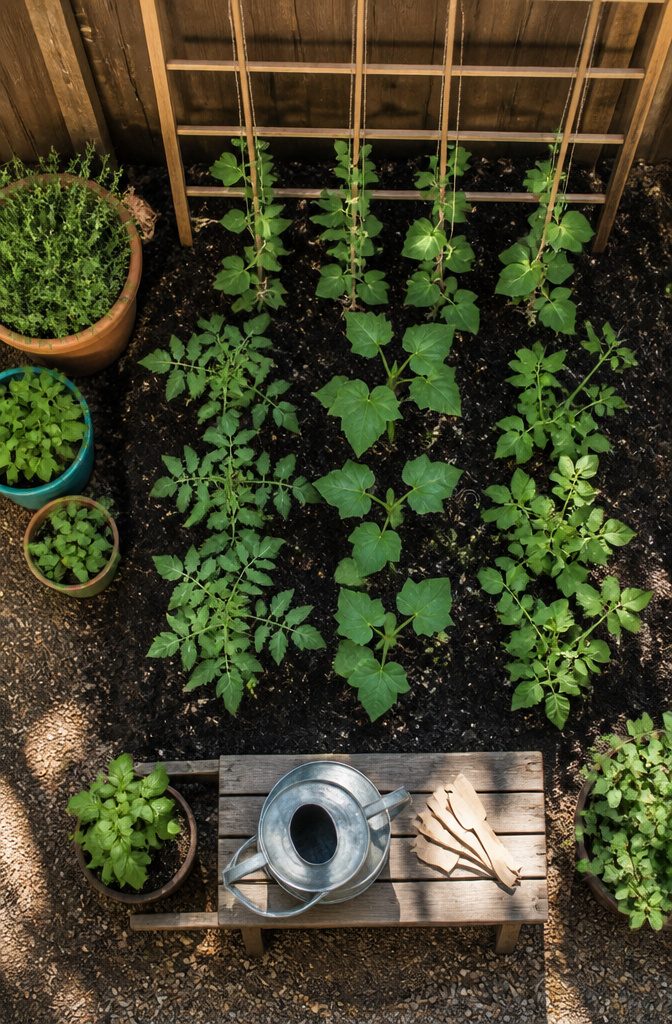
Beans and peas, cucumbers, melons, squashes and tomatoes all climb well once they have something to hold. Set seeds or seedlings at the base of the trellis, spaced for the mature plant rather than the seedling size. Vining crops on a support can go closer together than they would on open ground, which is part of what makes vertical gardening useful on a small patio.
I like the look of mixing things, but keeping the same family on one structure saves headaches. Peas and beans share water habits, while tomatoes want something different. If you do mix, put thirstier plants where they are easier to reach with a watering can.
Underneath climbing crops, lettuce or carrots can use the ground the vines would have shaded out anyway. Flowers work too, and they draw pests away from the vegetables. That lower level is easy to forget once the vines take off, so plant it while the soil is still open and visible.
Train Plants to Climb
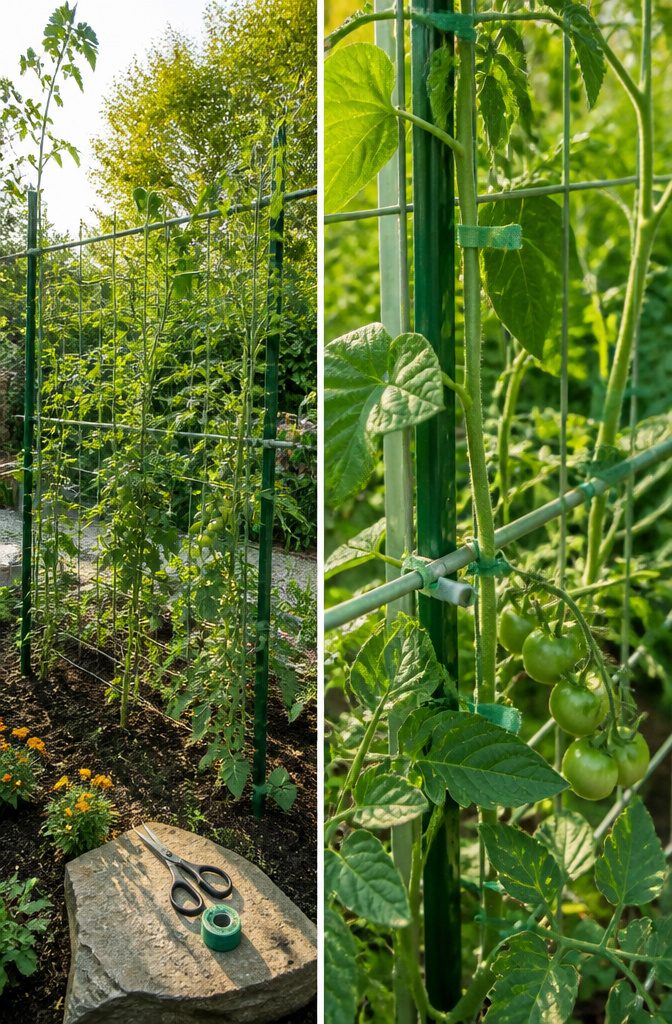
Cucumbers send out thin side shoots that wrap around a trellis on their own, but in my first season I assumed that meant hands-off growing. By mid-July the vines had tangled into a single mass at the base, blocking air and light from reaching the lower fruit. Now I check the climbers every Saturday morning, using soft plant ties or small clips to lift any wandering stem back toward its vertical line before it sets its own path.
Green beans twine their whole stem around a support, which looks self-sufficient but still needs direction early on. I guide the first six inches of growth toward the pole or netting; once the spiral starts, the plant takes over. Tomatoes are another matter entirely. They do not climb at all. Long branches on indeterminate varieties will sprawl and break under the weight of fruit unless you tie them to the trellis at intervals, working upward as the plant gains height.
The habit forms quickly. After two or three weekends of adjusting ties, the walk to the vertical vegetable garden becomes automatic: scan for new growth, secure what has drifted, snip anything that refuses to train. The five minutes you spend then saves the half-hour untangling you would face by August.
Water and Maintain
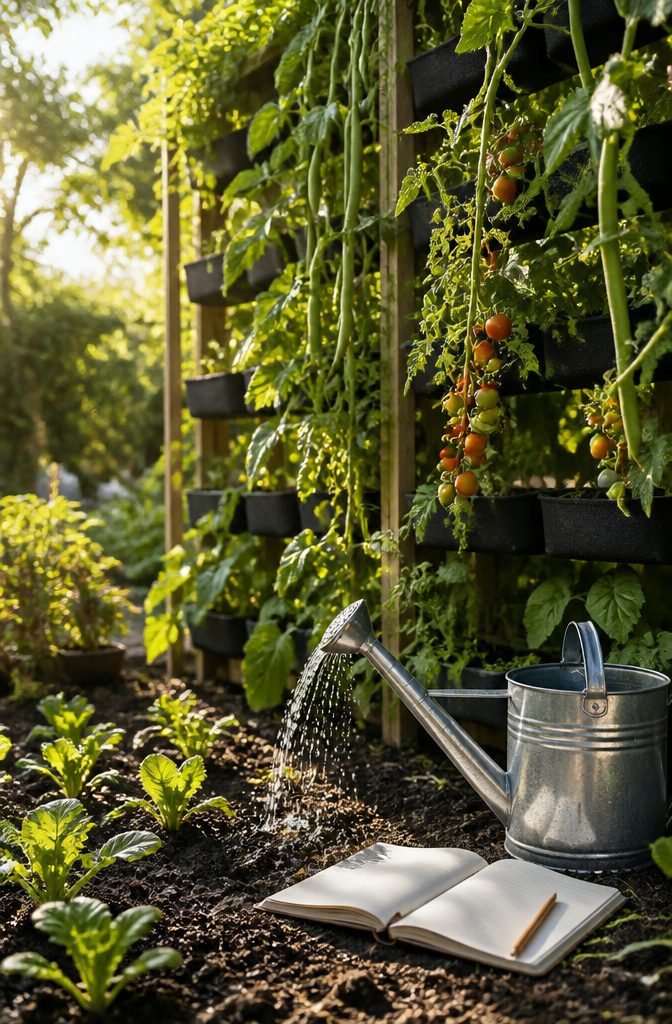
A vertical vegetable garden dries out faster than a flat bed, so water every 1–2 days during warm months and check the top few inches of soil with your finger before you commit. Gravity and airflow pull moisture downward quickly, which means the bottom can stay damp while the top turns dusty. I water from the top and let it travel down through the soil rather than aiming at individual pockets; the structure itself handles distribution if the mix is loose enough.
That same airflow is why I bother with vertical growing in the first place. Leaves get space and light on all sides instead of matting together in humid layers against the dirt. Powdery mildew, the gray fuzz that wrecked my bush beans two summers ago, needs still, moist air to take hold. Train vines up a trellis and the breeze reaches places it never would at ground level. I still prune suckers and crowded growth, but the mildew pressure drops enough that I am not fighting it weekly.
The tradeoff is vigilance. Skip two days in July and the top tiers wilt before the lower ones even notice. A container that drains well and a schedule you actually keep matter more here than in any raised bed I have worked.
Ten Vegetables for Vertical Growing
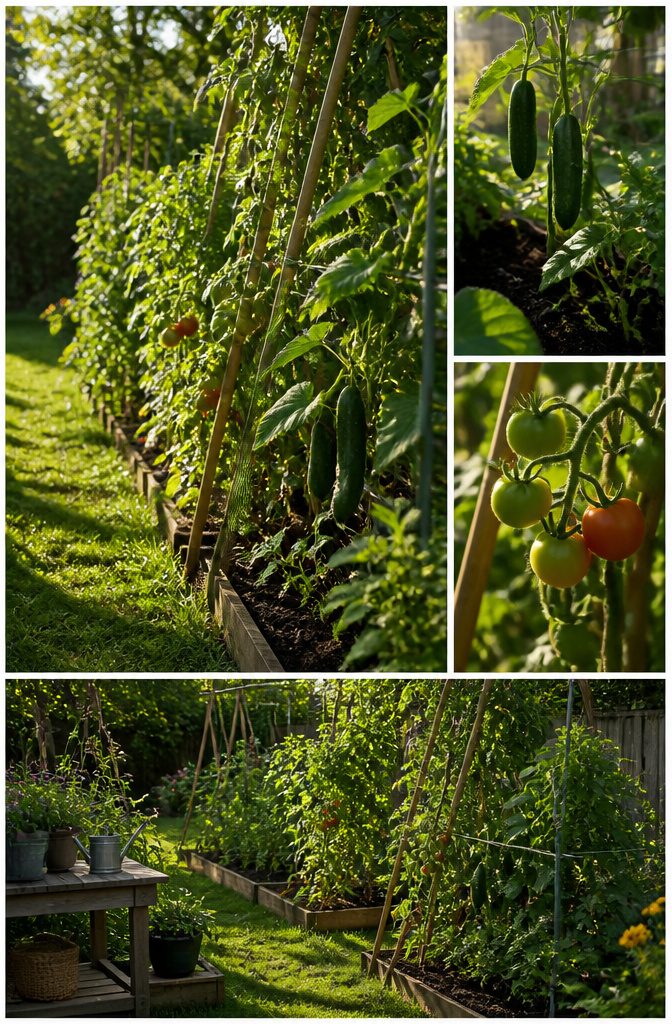
Vertical growing works for more crops than most gardeners realize, though each one has its own habits and limits. Here are ten that climb or adapt well, with the catches worth knowing before you plant.
- Tomatoes need indeterminate varieties and sturdy cages or trellises; read the packet, since determinates stay bush-shaped and won’t cooperate.
- Cucumbers climb readily on sturdy supports, staying cleaner and straighter than sprawled fruit.
- Pole beans and runner beans twine up naturally; bush types won’t, so check the label. I start them in small pots in late spring and move them where the peas finish.
- Peas grasp with delicate tendrils, though some snap pea varieties are bush types that won’t climb at all.
- Squash saves horizontal space grown up, but smaller varieties like acorn or summer zucchini handle it best; they must be trained and tied since their tendrils don’t grip like cucumbers.
- Melons need more intervention than you’d expect; once fruit sets, cradle each one in a sling or hammock so weight doesn’t snap it from the vine.
- Eggplants grow top-heavy under fruit load and bend or break without support.
- Strawberries, herbs, and gourds all adapt to vertical planters and hanging systems.
- A Garden Tower 2 fits roughly fifty plants in four square feet if you need container density that tight.
Benefits of Growing Up
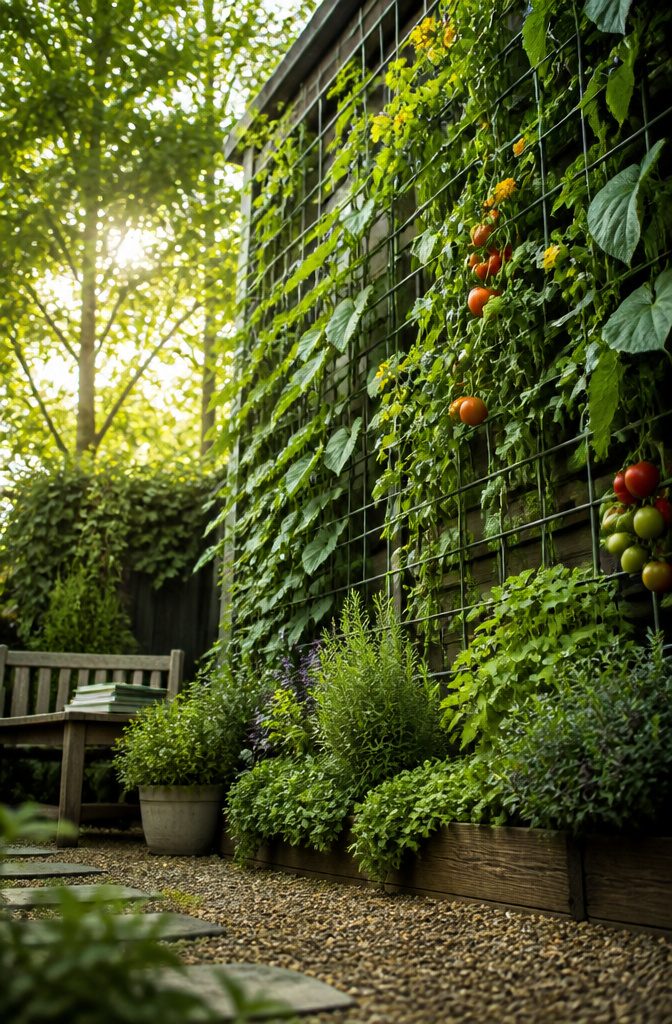
A squash plant sprawled on the ground needs roughly 20 square feet. Train that same plant up an arched trellis and the footprint drops to a few square feet, leaving room underneath for herbs or lettuce. That is the space math that convinced me to try vertical growing.
The air moves better between upright plants, which keeps leaves drier and means fewer fungal issues. I have also noticed that aphids and slugs do not travel upward as readily as they spread across soil, so pest pressure drops without any spraying.
Harvesting at eye level saves my knees and my patience. Last season I walked past a zucchini I had missed three times when it was hiding under foliage on the ground. Vegetables that hang in front of you get picked at peak ripeness, which keeps the plant producing longer.
A wall of living green also beats a bare fence or railing. Peas on one side of a trellis, tomatoes in the middle, basil tucked below, and you have something worth looking at from the kitchen window.
Trellis Designs That Hold
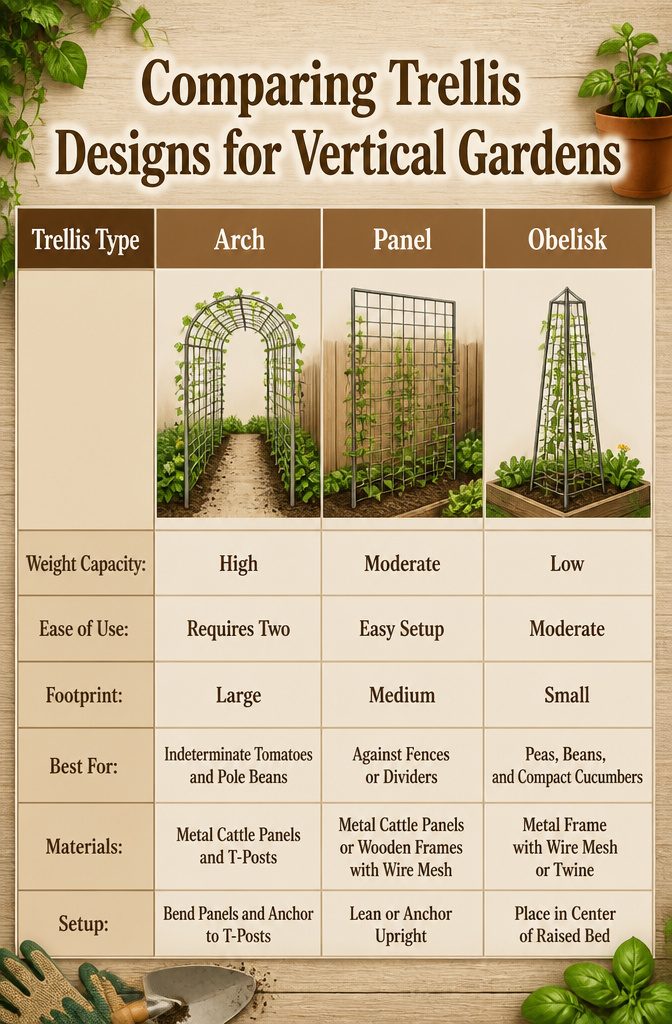
The trellis you choose for a vertical vegetable garden has to carry more weight than most people guess. A mature cucumber vine loaded with fruit can pull down lightweight wire, and a summer squash will flatten plastic netting by August. These three designs have held up for me:
- Arch trellises give you a tunnel you can walk through, with vegetables hanging at picking height. I bend 4-foot by 16-foot cattle panels into arches and anchor them to T-posts with heavy zip ties. Two panels side by side make an 8-foot tunnel; four make a 16-foot walkthrough that indeterminate tomatoes and pole beans will cover by midsummer. It takes two people to bend the panel and fasten the second side.
- Panel trellises are flat grids, usually 4 to 8 feet wide, leaned or anchored upright. They work against a fence or as a divider between beds. Metal cattle panels last longer than wood here; wooden frames with wire mesh are common, but the wood rots where soil meets it.
- Obelisk trellises are the narrow four-sided pyramids you see in herb gardens, but built larger they support peas, beans, and compact cucumbers. They take less footprint than a panel and fit the center of a raised bed.
Avoid treated lumber and most plastics for anything food plants will touch. Pressure-treated wood leaches; cheap plastic netting snaps under load and tangles in vines. Raw cedar or metal for the structure, and galvanized wire or untreated twine for the climbing surface, are the safer bets.
DIY Ideas from What You Have
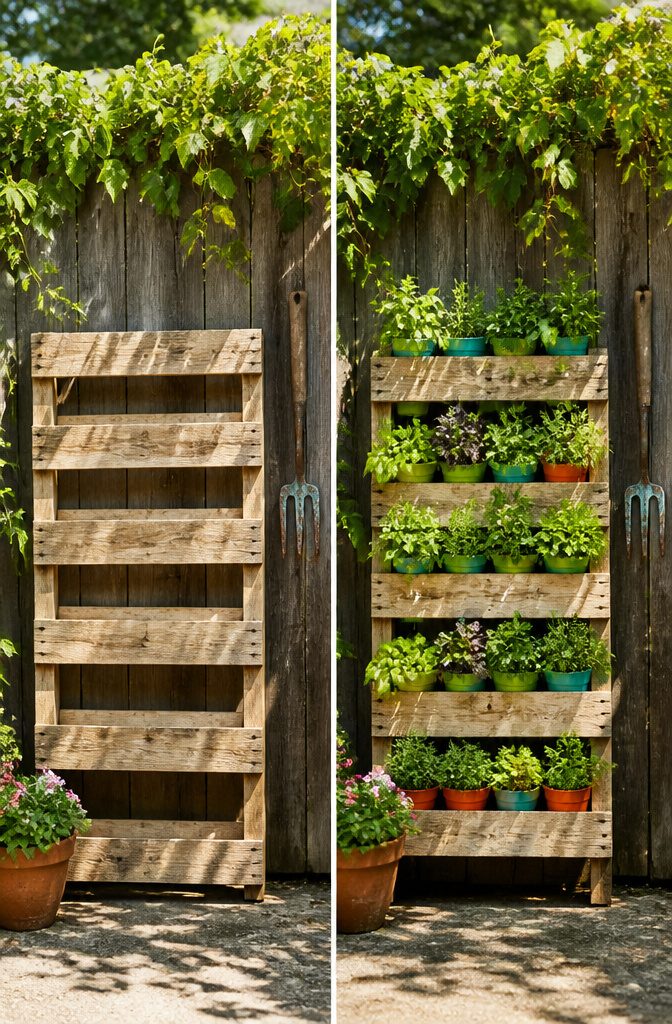
A shipping pallet is the most common starting point for a vertical vegetable garden, and the reason is simple: the slats already hold pots in place with a little wire. Stain it if you want, hang it, and you have rows ready for herbs or compact greens.
Here is what else works from what you probably have sitting around:
- Rain gutters drilled with bottom holes nail to a fence in stair-step rows and give lettuce or strawberries a long, shallow run of soil. The drainage is built in once the holes are there.
- A dresser pulled outside makes a cascading planter if you stagger how far each drawer opens. Soil fills the frames, and the stepped fronts catch sun at different angles through the day.
- Two-liter soda bottles with a side hole and a string hanger line a clothesline fastened to a wall or fence. One bottle, one plant, no shared soil to rot.
- An over-the-door shoe organizer hung on a fence turns each pocket into a mini bed; fill with soil and slide in herbs or shallow-rooted greens.
- An old bike frame, wheels partly buried for ballast, gives vining vegetables something to climb. Soil goes along the wheels and the frame itself.
One caution on pallets: know where it has been. Shipping pallets are often treated or have carried chemicals, and watering drives whatever is in the wood toward the roots. Use it only as a ladder to hold pots, or keep it to flowers.
Companion Planting Up the Wall
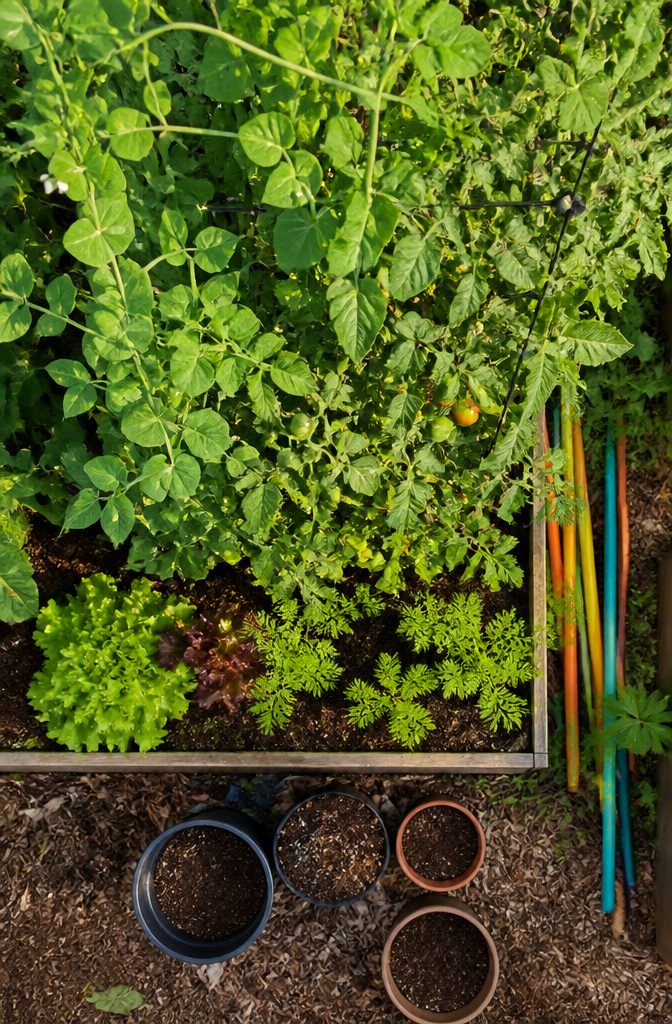
The first year I tried a vertical vegetable garden, I packed every rung of the trellis with the same indeterminate tomatoes. They climbed fine, but come July the aphids found a monoculture buffet and spread fast. The lesson stuck: mix the wall, don’t match it.
Beans and peas fix nitrogen as they climb, and that surplus feeds whatever shares their soil. Tuck lettuce or carrot seedlings underneath a legume trellis and the greens get shade from summer heat plus a slow-release fertilizer from above. Carrots break up soil compaction while lettuce cools the surface roots, a pairing that works sideways or stacked.
For pest patrol, basil threaded through tomato vines repels aphids and, anecdotally, sharpens the tomato’s flavor. Nasturtiums or calendula at the base of any climbing crop draw pollinators up and confuse the insects hunting your vegetables by scent alone.
One practical limit: matching water needs matters more than matching color. A trellis split between thirsty cucumbers and drought-tolerant rosemary means one plant always suffers. Same-family groupings, say all cucurbits or all legumes, keep irrigation simple and still let you rotate companions at ground level each season.
Frequently Asked Questions
What vegetables grow well in a vertical garden?
Tomatoes, cucumbers, beans, and peas are the most reliable climbers for a vertical vegetable garden. Indeterminate tomatoes can reach 8 feet, cucumbers grip with side tendrils, and beans and peas twine naturally up poles. Bush varieties of any of these will not climb, so check seed packets for vining, indeterminate, or pole labels.
How do you build a vertical vegetable garden?
Start by choosing a location with at least 6 hours of direct sun and water access, then install a trellis at least 6 feet tall. Welded wire paired with T-posts costs about $35 for 50 feet and lasts years, or bend cattle panels into arched tunnels for walkable structures. Set seeds or seedlings at the base and train vines to the support as they grow.
Can you grow vegetables vertically in containers?
Yes, many vegetables adapt well to container-based vertical systems. The Garden Tower 2 fits roughly fifty plants in four square feet, and DIY options include rain gutters nailed in stair-step rows, soda bottles hung on a clothesline, or over-the-door shoe organizers with herbs or shallow-rooted greens. Containers dry out faster than ground beds, so water every 1 to 2 days in warm weather.
What are the benefits of a vertical vegetable garden?
A vertical vegetable garden saves space, a sprawling squash plant drops from 20 square feet to just a few. Air circulates better between upright plants, which reduces fungal issues and some pest pressure, and harvesting at eye level means fewer missed vegetables and less bending. The structure itself can also screen a bare fence or railing with living green.
How do you maintain a vertical vegetable garden?
Water every 1 to 2 days during warm months because vertical beds dry out faster than flat ones, and check the top few inches of soil with your finger before watering. Train plants weekly by lifting wandering stems back to their vertical line with soft ties or clips, and prune crowded growth to keep air moving. The five minutes spent each weekend saves half-hours of untangling later.






