
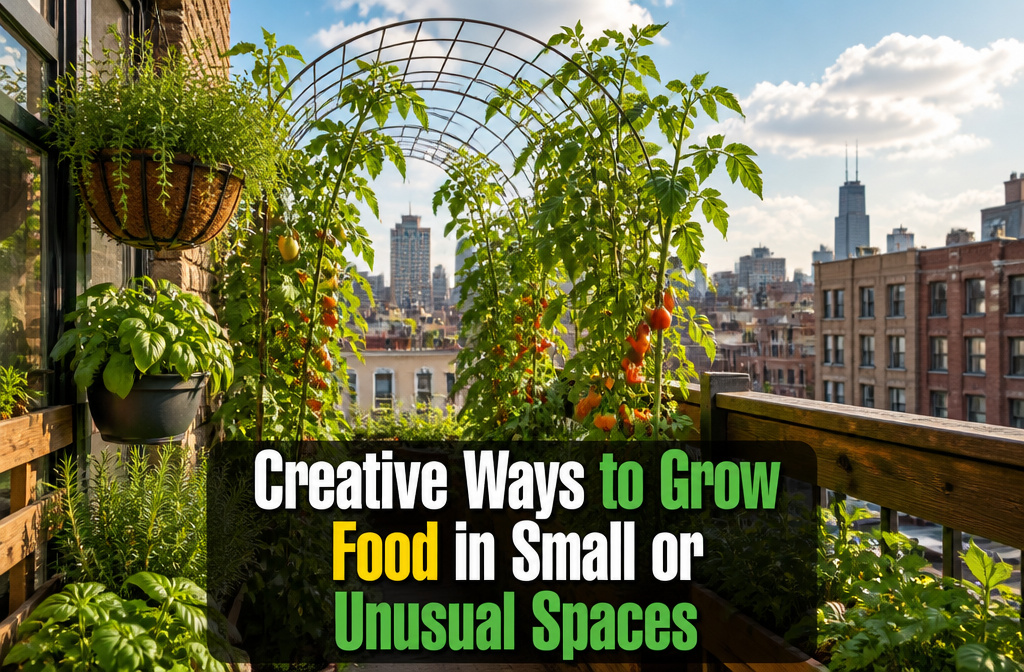
You do not need a yard to grow most of what you eat. The real limit is weight: a square foot of wet soil can hit 75 pounds, which bowed my Chicago balcony floor until the landlord intervened.
Once you account for that load, a single cattle-panel arch and two indeterminate tomatoes can replace six sprawled buckets, with herbs tucked underneath in a grid.
1. Growing in Unusual Containers
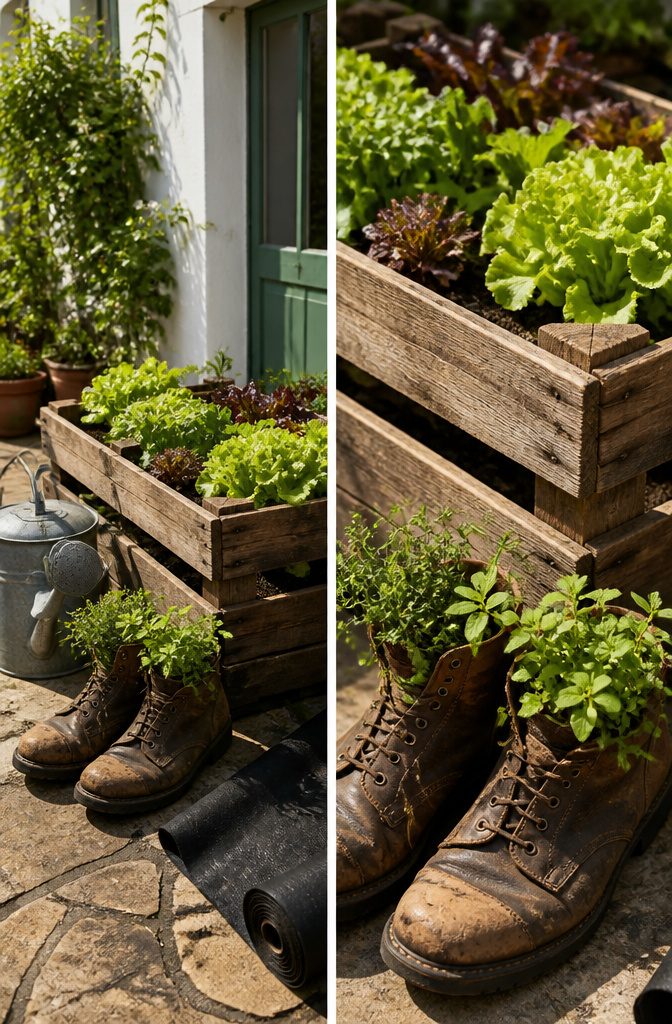
Any vegetable that grows in the ground can grow in a container, and the container itself is where the creativity starts.
I have planted salad greens in old wooden crates and tucked herbs into a pair of worn-out boots on my patio railing.
The boots looked charming for about six weeks, then the leather started to hold too much moisture and the roots sat wet. A drainage hole matters more than the aesthetic, and anything that cannot shed water will rot or leak.
Old clothing works better as a liner inside a sturdier frame than as the container itself.
I tried a canvas grow bag made from salvaged material one season; it dried quickly but the seams split by August under the weight of wet soil and a determinate tomato.
Wooden crates have held up better for me, though I line them with landscape fabric to keep the soil from washing through the slats.
Tomatoes, peppers, even compact raspberry canes, have all done fine in containers set where the sun is best, including one year when my only flat spot was atop a large rock.
2. Vertical Gardening
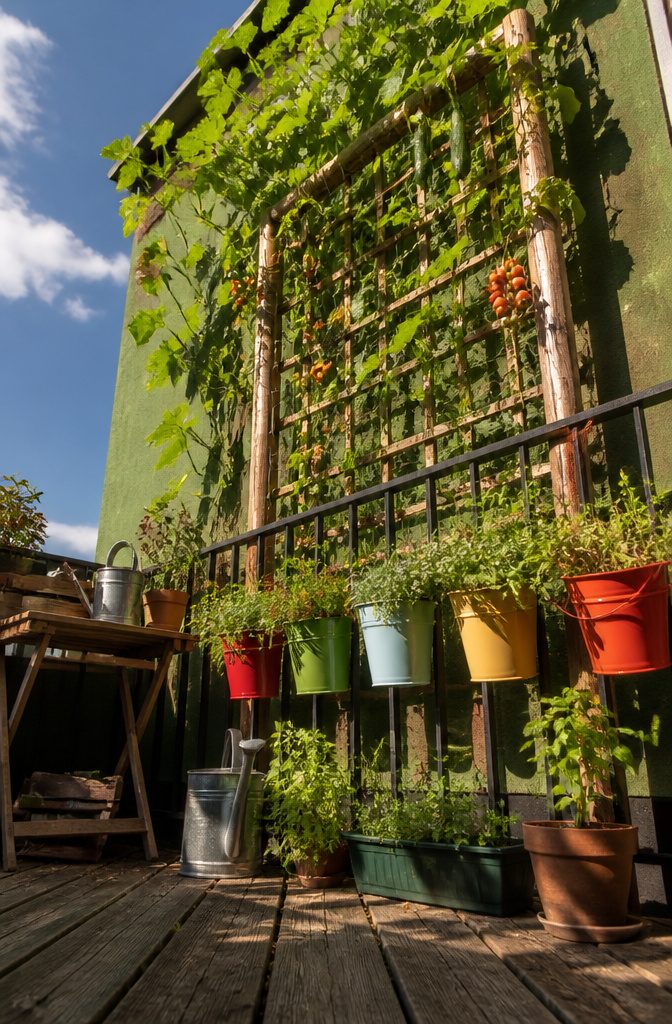
Growing vertically instead of letting plants sprawl across the ground saves about 75% of space, which matters when every square foot counts. Trellises and wall-mounted systems turn empty air into productive growing area.
Peas, cucumbers, beans, and tomatoes climb naturally once you give them something to grip. Butternut squash can be trained upward too, though it needs a sturdier frame than netting or string alone.
For balconies and tight spots, hanging buckets flipped upside down work well for tomatoes, peppers, or eggplants, letting gravity do the training while you reclaim floor space.
The frame itself can be almost anything: electrical conduit, cattle fencing, wood, or simple netting stretched across a basic structure.
What breaks the system is weight, not looks. A sagging trellis under a loaded squash vine teaches the lesson fast.
I learned to test sturdiness by pushing hard before the first seed goes in. If it wobbles, the plant will eventually win.
3. Hydroponics
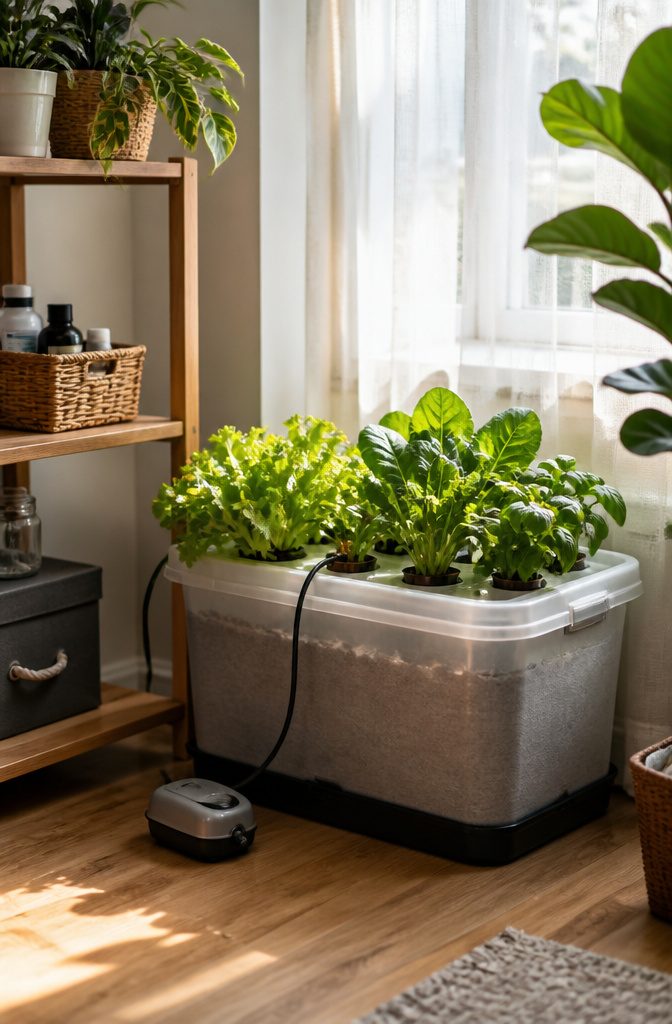
Most guides to hydroponics jump straight to diagrams of industrial-scale NFT channels or deep-water culture vats built from fifty-gallon barrels. What I needed starting out was the opposite: a sense of what a single shelf in my apartment actually demanded.
A small-scale system is basically a container of nutrient solution, a pump to move it, and something to hold the plants above the water so only their roots touch.
Lettuce, herbs, and compact greens do the heavy lifting here. Tomatoes and peppers can work, but they want more light and more tinkering than a first-timer usually has patience for.
The daily rhythm surprised me. Checking pH takes thirty seconds with a cheap meter.
Topping off water every few days matters more than any grand weekly feeding schedule. Algae blooms if light hits the reservoir, so opaque containers or a sleeve of black poster board around a clear tote solves that before it starts.
What I spent to get running stayed below the cost of a modest raised bed build, mostly because I skipped the all-in-one kits.
A basic air pump, net pots, and hydroponic nutrients from a garden center got me growing while I figured out whether I liked the work.
Start with a single Kratky jar or a small bubbler bucket. You will know within a month if you want to scale up, and you will have grown something edible by then.
4. Aquaponics
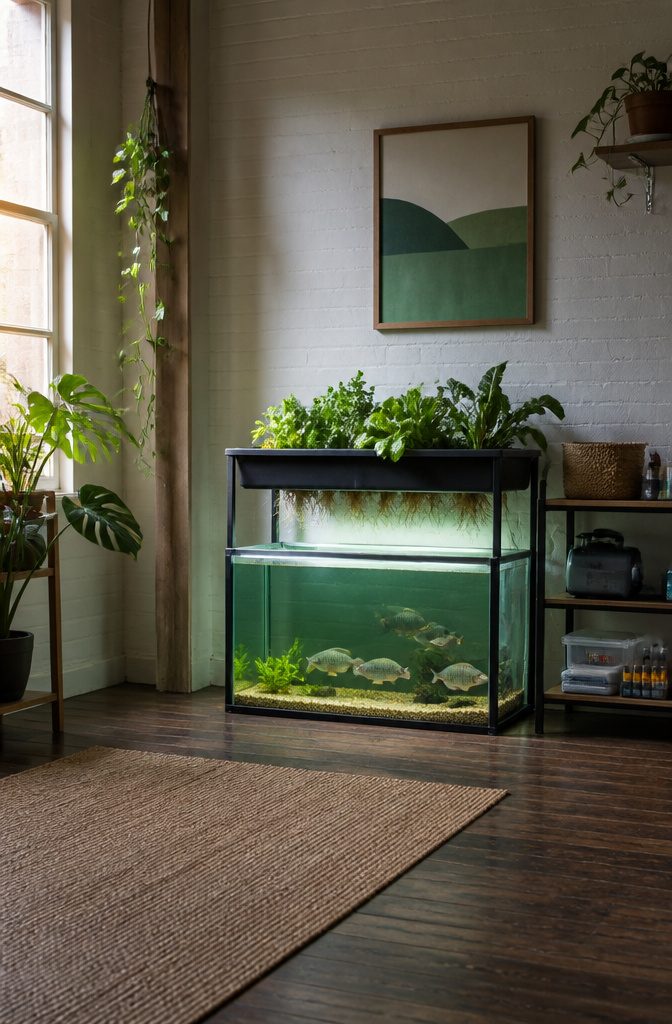
Aquaponics runs on a simple closed loop: fish live below the plants, and the waste produced by the fish acts as a fertilizer for the plants, which clean the water.
That cleaned water cycles back to the fish tank, so you are growing protein and produce in the same footprint.
My first tank failed because I rushed the cycling. I added tilapia before the bacteria colony could handle their waste load, and the ammonia spike killed half the fish in four days.
The plants above them never got the nutrients they needed either, because dead fish do not produce much waste.
I learned to wait the full three weeks for the biofilter to establish, testing the water every other day with a cheap aquarium kit, before stocking more than two fish per ten gallons.
The system works in any small space with electricity for the pump and a stable indoor temperature. A 20-gallon tank under a two-square-foot grow bed fits on most apartment balconies and feeds one person salad greens through the winter.
The fish, usually tilapia or goldfish to start, add a protein source if you are willing to harvest them. Most beginners keep the fish as fertilizer engines and eat only the plants.
Start with leafy greens; tomatoes and peppers need more nutrients than a small tank can reliably supply.
Watch the pH, which drifts toward the plants’ preference and can stress the fish. A buffer of crushed oyster shell in the grow bed usually keeps both sides happy.
5. Community Gardens
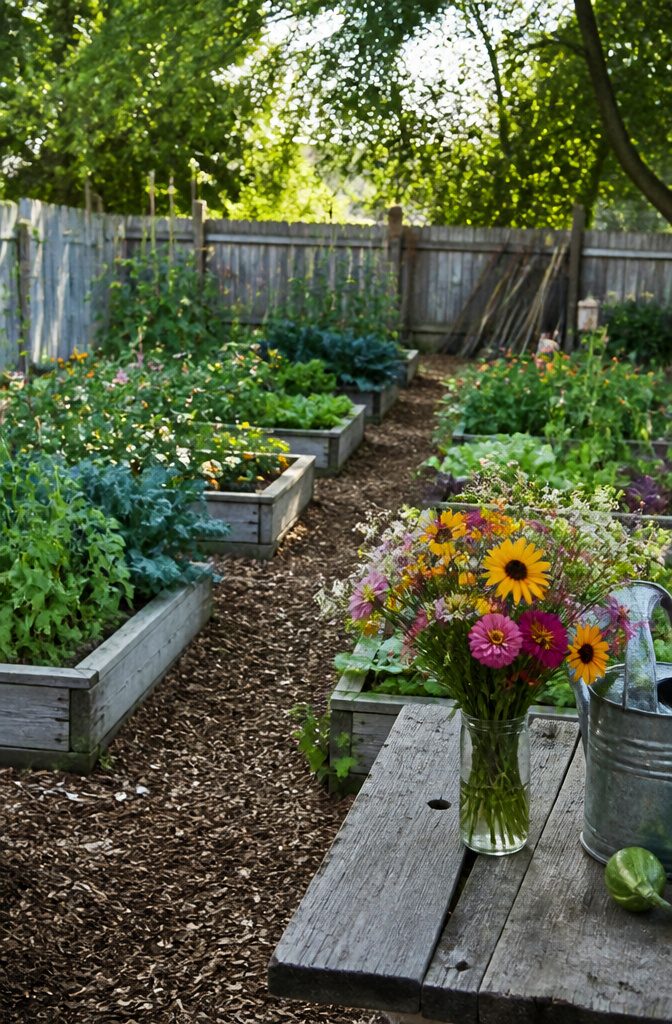
Community gardens stretch your square footage by pooling land with neighbors, a trade that matters when your own plot is a patio slab or a balcony rail.
The UN’s Food and Agriculture Organization, working with growers in Dakar and Pikine, reports that more than 4,000 residents have started micro-gardens that produce 30kg of vegetables per square metre every year.
That yield, enough to feed a family with surplus to sell, comes from collaboration rather than solo effort on rented or borrowed ground.
Finding one starts with your city’s parks department or a local gardening nonprofit, which usually keeps a waitlist or a map of existing sites.
Starting one takes more legwork: securing permission on vacant land, hashing out how plots are assigned, and deciding who buys the communal tools.
The social dynamics caught me off guard. Shared beds mean shared blame when the tomatoes get early blight, and the gardener who waters at dawn may resent the one who shows up after work to harvest.
Clear rules on boundaries and chores, written down before the first seed goes in, prevent most of the friction I worried about.
6. Rooftop Gardens
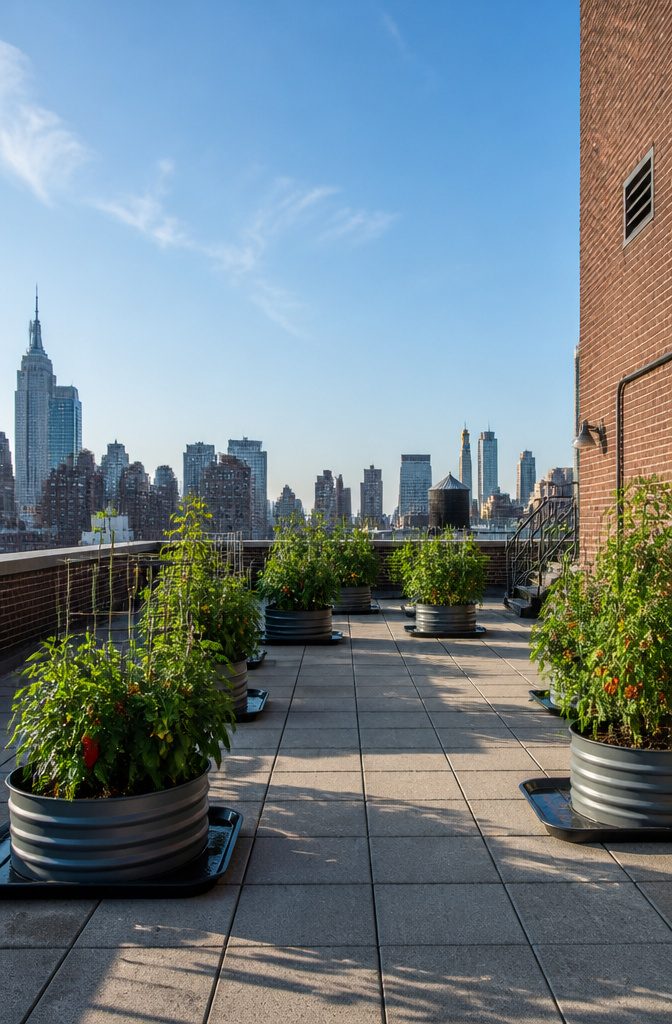
Flat roofs in cities get more sun than most ground-level plots, which makes them one of the more creative ways to grow food if you can work around the wind.
Up there, a five-gallon bucket that sits fine on a patio becomes a sail.
I learned this the hard way my first season: standard nursery pots dried out in hours and toppled twice before I switched to square-foot planting in wide, low containers and added a basic trellis for tomatoes and cucumbers to climb.
That first summer, my real mistake was drainage. I set pots directly on the rubber membrane with saucers underneath to catch runoff, which seemed tidy until a week of rain in July left roots sitting in water.
Rot set into two pepper plants before I caught it. Now I raise every container on slatted platforms and let water run through.
Weight is the other limit you cannot guess at. Saturated soil runs heavy fast, and most roofs were not built to hold it.
A structural check is not optional if you are adding more than a few scattered containers. Wind exposure means lettuces and tender greens often burn or tear; bush beans and compact peppers hold up better.
7. Edible Landscaping
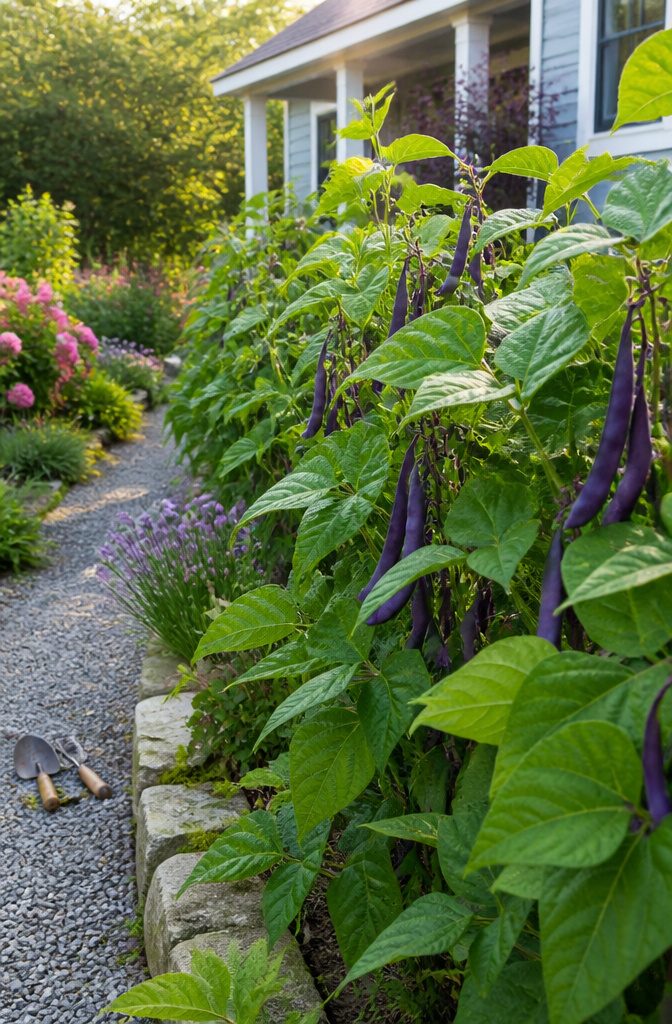
Purple-podded bush beans look as good in a border as any annual, and the foliage holds clean and upright where lower flowers would flop.
I tucked them between drift roses in my front bed and stopped mowing the strip by the sidewalk three years ago.
The neighbors noticed the summer I tore out the last of the Kentucky bluegrass: two people asked whether I was selling, one left a note about "property values," and by August a third had ripped out her own parkway to plant currants.
Lettuces with oakleaf or burgundy coloring read as foliage plants from the street, and chives bloom lavender right when spring perennials are fading.
A formal layout helps. I laid the front garden on a rough four-square plan with gravel paths, so even when the tomatoes sprawled it looked tended rather than abandoned.
Bee balm and borage draw pollinators through the vegetable rows, and the mixed planting seems to confuse the flea beetles that used to shred my eggplants in straight rows out back.
The space was dead expense before: watered, fertilized, cut weekly, feeding nobody. Now it grows maybe sixty pounds of food in a season and costs less to maintain than the lawn did.
8. Succession Planting
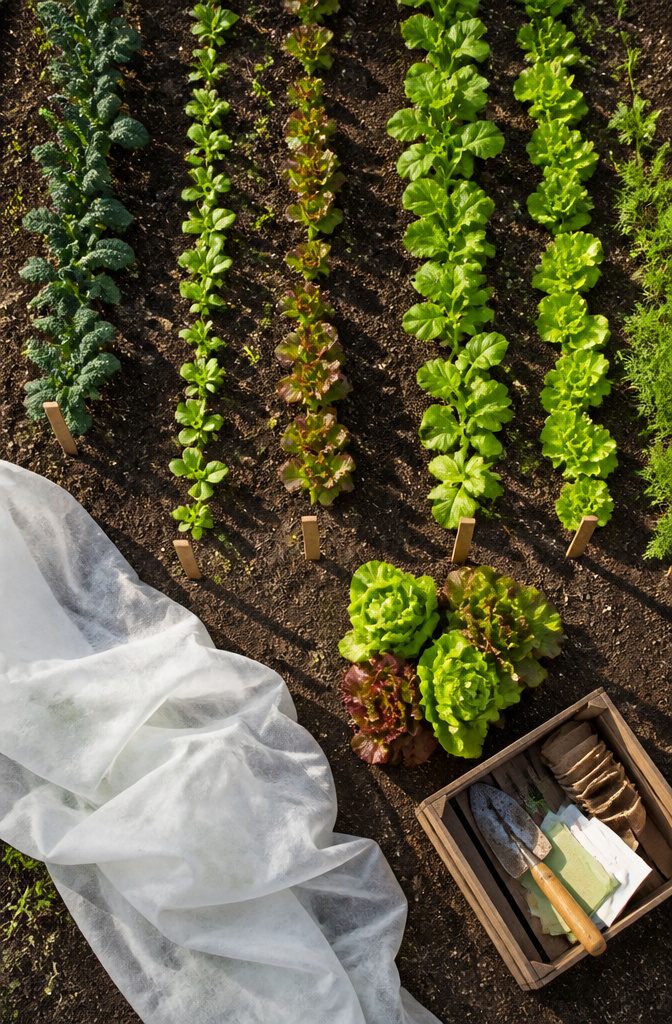
Planting the same vegetable multiple times over periods of time is what makes succession planting work.
I put lettuce in the ground in March, then again four weeks later in April; the first batch is clean gone before the second turns bitter and bolts.
Beans get the same treatment, a new sowing every three weeks from late spring straight through July if the heat holds.
The catch is the calendar can lie.
Two seasons back I set out a full flat of tender lettuce starts on a mild April 10, watched them settle in and green up for ten days, then lost the whole planting to a hard freeze on the 21st.
Late frost kills succession plantings just as dead as early ones, and the second round stings worse because you had the first to compare it to.
Now I keep row cover handy and never trust the last frost date past tax season.
9. Intercropping
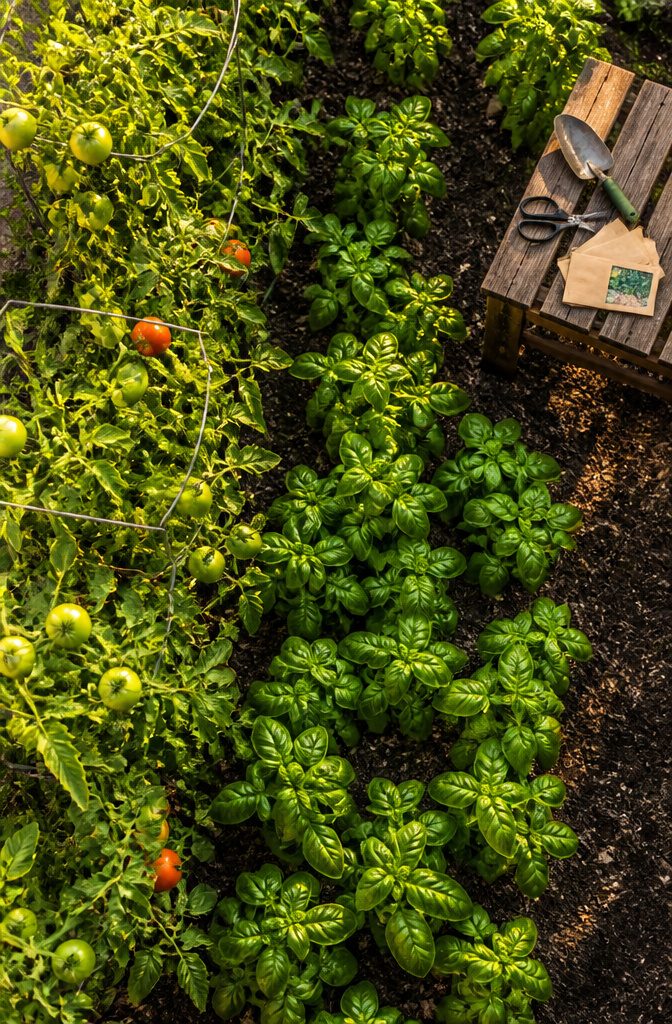
Planting two crops in the same bed at once takes more attention than timing alone.
Tomatoes with basil worked out better than expected last season; the basil filled the gap while the tomatoes were still small, and once the vines took over, the basil had already been harvested.
Carrots with onions is another pairing that held up, since the carrots root deep and the onions stay shallow, so neither starves the other for space.
Lettuce tucked between taller rows gets shade it actually wants in midsummer, which keeps it from bolting two weeks early.
The pairing that failed was two heavy feeders side by side in a dry spell. Both crops drew hard from the same soil level, and neither produced.
Intercropping only saves space when the plants want different things; same-layer competition for water turns the bed into a race neither wins. Now I check root depth and nutrient appetite before I double up a spot, not just calendar dates.
10. Regrowing Kitchen Scraps
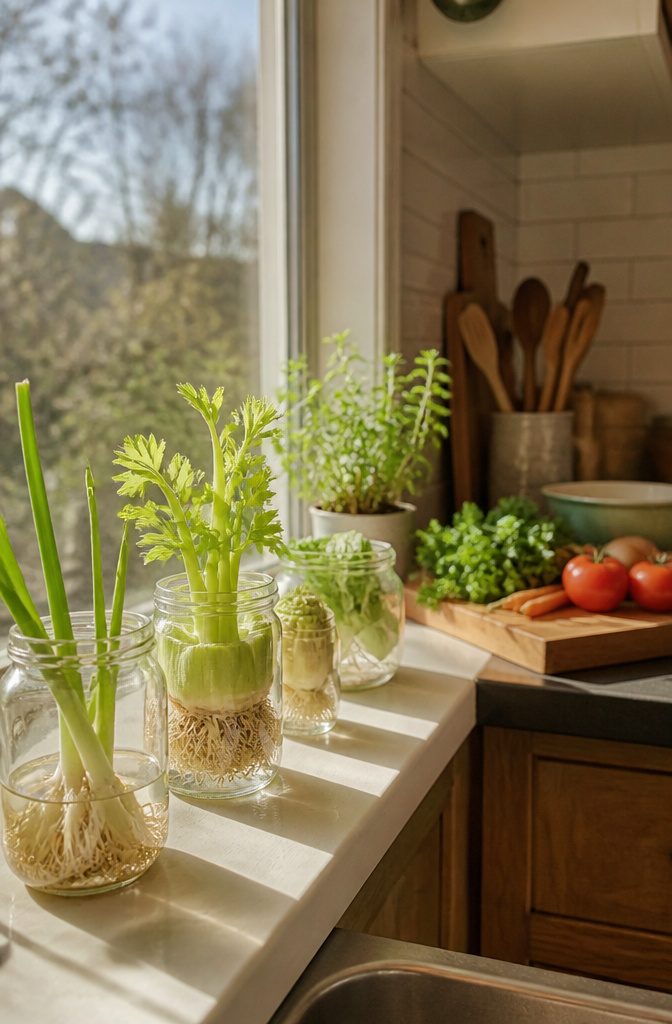
The celery ends and scallion roots sitting in my windowsill dish were supposed to be the easy win, and sometimes they are.
Green onions in an inch of water will show new growth in about a week, and within two weeks you have something worth chopping again.
Celery bases need more patience, closer to two to three weeks before the first pale leaves stand up, and even then what you get is more of a leafy garnish than a full stalk; the flavor concentrates in those thin regrown ribs, but the bulk never really returns.
Romaine lettuce hearts behave similarly, pushing up tender inner leaves that work for a sandwich but won’t replace a head from the store.
Garlic cloves left too long in the fridge sometimes sprout green shoots that taste fine in stir-fries, though planting them in soil yields the real second crop.
What stopped me was the sweet potato half submerged in water. It rooted, it sprawled, it climbed my curtain rod over a month, and produced exactly zero tubers.
Same with the avocado pit that cracked and grew a foot of stem before I admitted the tree wouldn’t fruit in my lifetime, or in my apartment.
Carrot tops in water grow only leaves, never another carrot; the root is finished.
Those leafy tops make decent pesto, but calling it "regrowing food" overstates the case. The honest list of scraps that repay the effort is short: alliums, celery, certain lettuces, and little else.
Soil Health
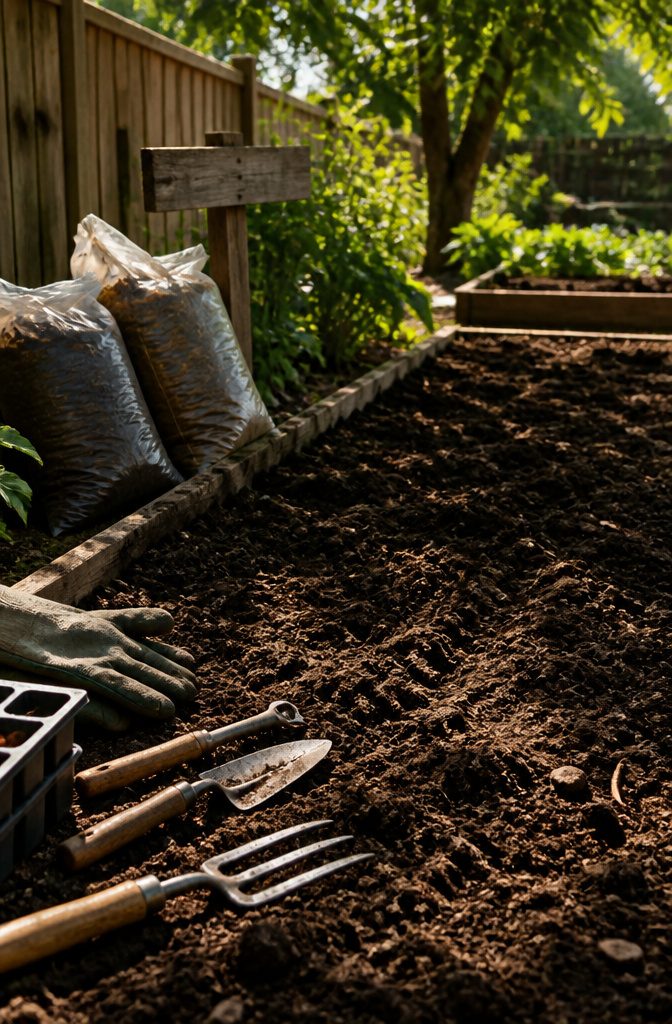
Healthy soil is where every creative growing method starts, whether that means a stack of five-gallon buckets on a fire escape or a gutter mounted to a balcony rail.
Without it, yields stay small no matter how clever the container. I build mine with compost, aged manure, and shredded leaves, aiming for a dark, crumbly texture that holds water without turning to mud.
Each spring I send a sample to my county extension office. The report tells me what my mix is actually offering, not what the bag promised.
Last season my nitrogen ran low and my phosphorus sat high, so I sidedressed with fish emulsion instead of the balanced organic blend I had been using blindly.
A soil test costs about fifteen dollars and saves you from guessing your way through a disappointing harvest.
I refresh containers every season because nutrients leach faster in small volumes than in ground beds. For my raised beds, I top-dress with an inch of compost and turn it under shallowly.
Worm castings go into anything I am starting from seed; the biology in finished compost does more for root development than any single nutrient spike I have tried.
Seasonal Planting
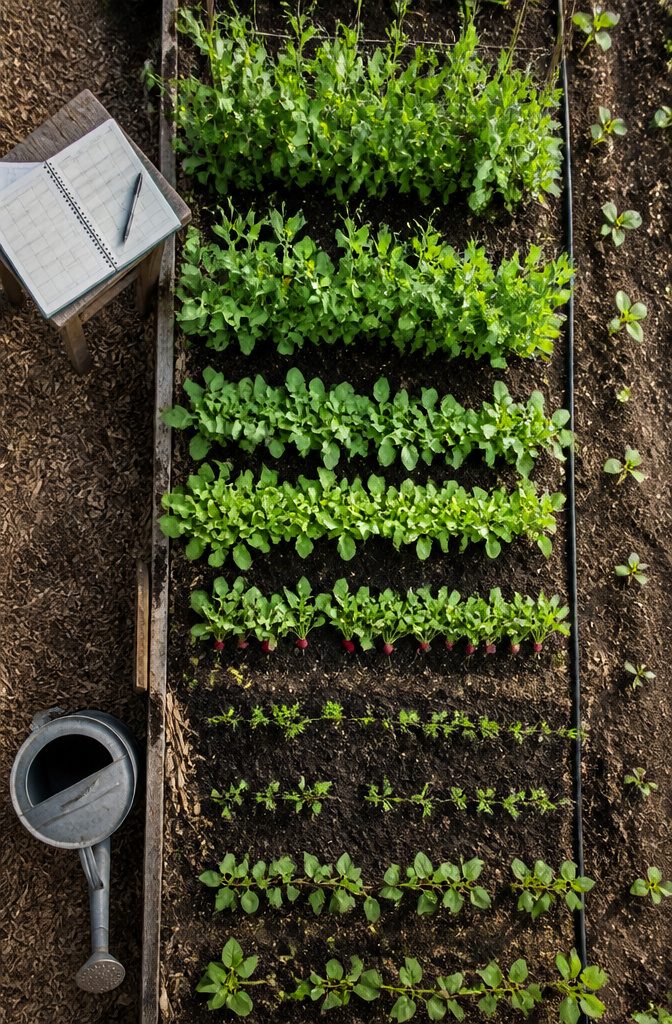
The USDA Plant Hardiness Zone Map divides the country into 10-degree F zones and 5-degree F half zones based on average annual extreme minimum winter temperature, and that number is the first thing I check before ordering seeds.
My region falls in zone 6b, which gives me roughly 150 frost-free days to work with, enough room to run two full waves of warm-season crops if I plan it right.
Cool-season crops like lettuce, peas, and radishes can withstand frost, so they go in first, sometimes six weeks before the last frost date.
Warm-season crops, tomatoes and cucumbers and beans, wait until after that date, since frost will kill them outright.
I learned the hard way that maturation time matters just as much: a tomato needing 80 days planted in late July won’t beat the first fall frost.
The map updated in 2023 after a decade, with rising temperatures shifting boundaries northward.
I pull the current version each winter, then mark my calendar with two dates: last frost in spring, first frost in fall. Everything else flows from there.
For my second planting, I move to fresh ground. The first tomatoes are still producing in August when my second batch goes in, so overlap is unavoidable.
The payoff came clear one year when early blight hit my May tomatoes hard; the August planting stayed clean and carried harvest to October.
Space Optimization
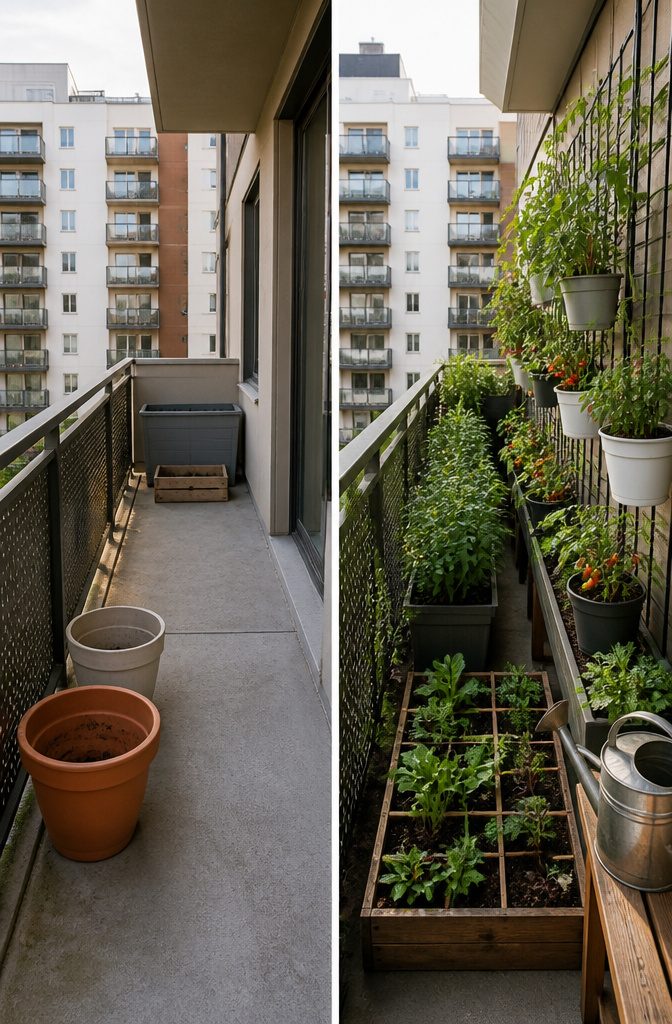
Creative ways to grow food start with knowing what your space can actually handle, not what you wish it could.
I learned that the hard way on my second-floor balcony in Chicago, where I once packed in six tomato plants in five-gallon buckets, two pepper pots, a strawberry jar, and a half-barrel for herbs.
By mid-July the floor joists had visibly bowed and the landlord left a note about structural inspections. A square foot of container space can weigh 50–75 pounds saturated, and I had never done that math.
Vertical growing changes the equation entirely. A trellis system for vining crops like tomatoes, cucumbers, or beans can cut your horizontal footprint by about three-quarters compared to letting them sprawl.
The same balcony that held those six tomato buckets in a row could have held two indeterminate plants trained up a cattle-panel arch, with room underneath for shallow-rooted greens or herbs in a grid.
Square foot gardening pushes this further: one square foot fits sixteen herbs or one melon, depending on spacing needs, and a wooden grid keeps you honest so you do not overplant like I did.
The real assessment is weight plus light plus access. My balcony got six hours of sun only on the railing edge; the back wall sat in shadow by noon.
Hanging buckets for upside-down tomatoes solved the light problem but doubled the cantilevered load. A wall-mounted trellis against brick, not railing, would have kept the weight vertical and the landlord calm.
Measure your square footage, then halve it for pathways and tending space. That is your working number, and sticking to it beats an eviction notice.
Pest Management
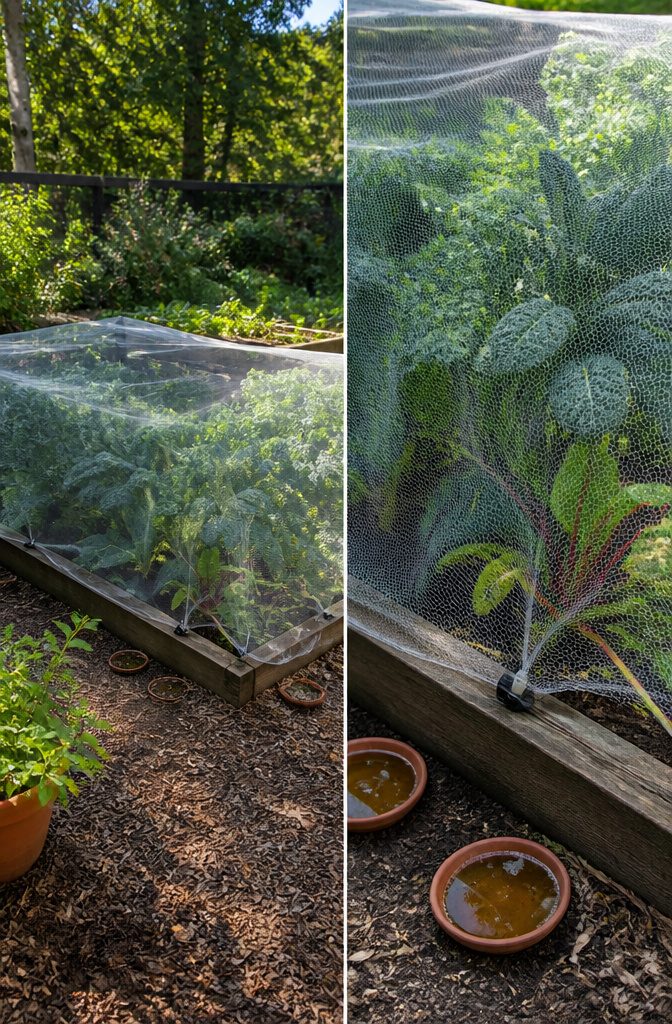
Insect netting changed how much kale actually reaches my plate.
The season I used nothing, flea beetles turned the leaves into lace by late June; the next spring I draped a fine mesh over the bed the day after transplanting, and those same varieties stayed whole until harvest.
The mesh lets sun and water through while the hinged frames I built from scrap wood keep it from sagging onto the foliage.
Slugs were the harder lesson. One wet July I lost half a row of young lettuce to them, not because I lacked traps but because I checked them lazily and the population exploded after two weeks of rain.
Now I set beer traps at soil level, empty them every other morning, and still net the brassicas regardless.
Organic pest control in a small space is mostly this: noticing early, acting that same day, and accepting that some crops need physical barriers while others need patrols.
Frequently Asked Questions
What are some creative ways to grow food?
Vertical gardening, hydroponics, aquaponics, and unusual containers all turn tight or odd spaces into productive plots.
A trellis can cut a plant’s horizontal footprint by about 75%, while a single shelf can run a small hydroponic system for lettuce and herbs. Even old boots or wooden crates can hold soil if you punch drainage holes first.
How can I grow food in a small space?
Stack methods: train vines upward, tuck quick crops among slow ones, and replant the same bed two or three times per season.
A 20-gallon fish tank under a two-square-foot grow bed fits on most balconies and feeds one person salad greens through winter. Weigh your containers, though; saturated soil hits 50–75 pounds per square foot, enough to stress a balcony.
What is aquaponics?
Aquaponics is a closed loop where fish waste fertilizes plants and the plants clean the water for the fish.
You need a tank, a pump, and about three weeks to establish bacteria before stocking fish. Start with leafy greens; tomatoes and peppers need more nutrients than a small tank can reliably supply.






