Early blooming perennials are flowering plants that return each year to bridge the gap between snowmelt and the main spring show, but the trick is matching each plant to the condition it actually tolerates rather than the one you wish it would.
Hellebore pushes through frost in December where winters stay mild, yet it sulks in soil that stays wet; that single limitation determines whether it earns space in a small yard.
Hellebore
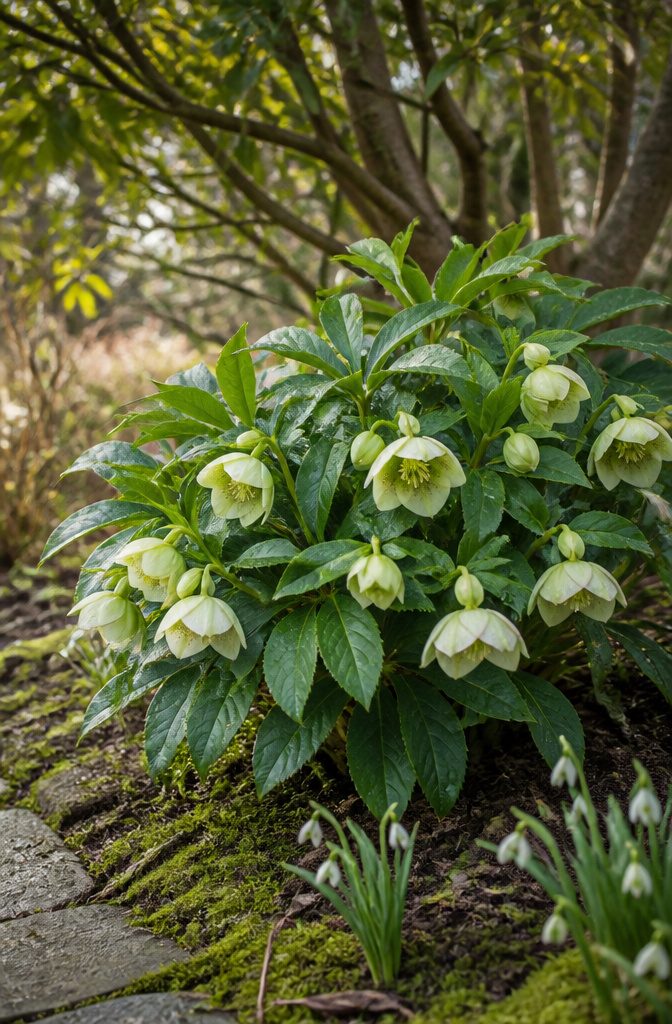
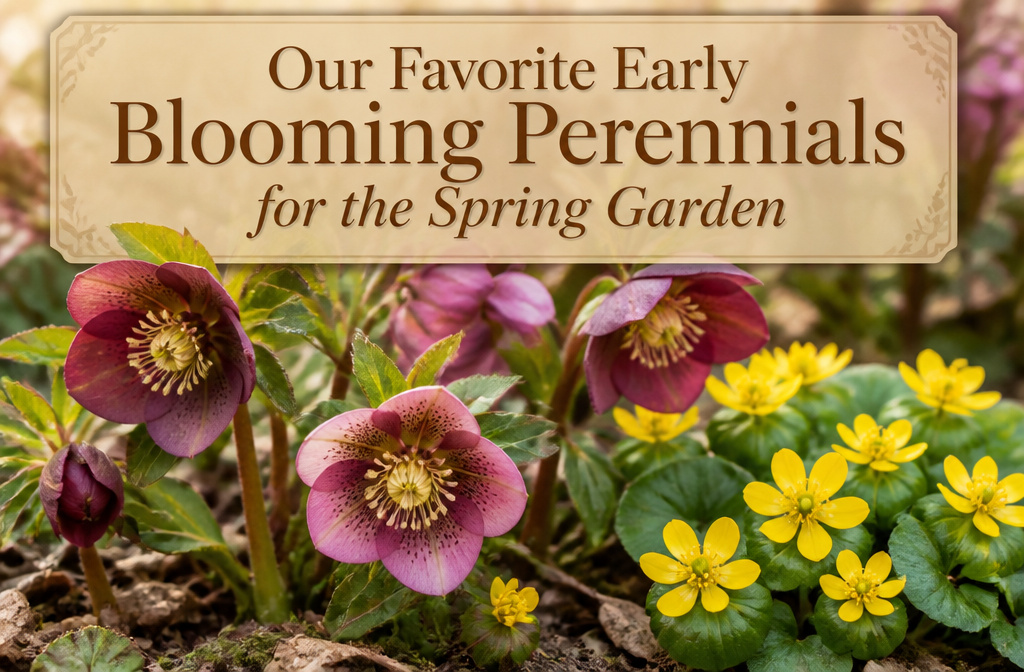
The Lenten Rose, or Helleborus orientalis, opens its nodding blooms as early as December in mild winters and keeps flowering through April.
That makes it the most widely recommended early perennial across gardening references, and after watching mine push through frost while the rest of the yard sleeps, I understand why.
Partial shade and well-drained soil are its two non-negotiables.
Mine sits under a deciduous shrub where summer sun filters through but spring light reaches it fully. The evergreen foliage stays presentable year-round, which matters in a small space where every plant has to earn its keep.
Bees and the first butterflies find it when little else is open.
The flowers face downward, so I plant mine where I look up a slight slope or stand at the path’s edge, otherwise the blooms hide their faces from human eyes.
Deer pass it by, which in my neighborhood counts as a genuine advantage.
Size runs about 18 inches tall and 24 inches wide, though varieties differ. Give it room; a mature clump looks substantial by its third spring and can live for decades with no division required.
Bleeding Heart
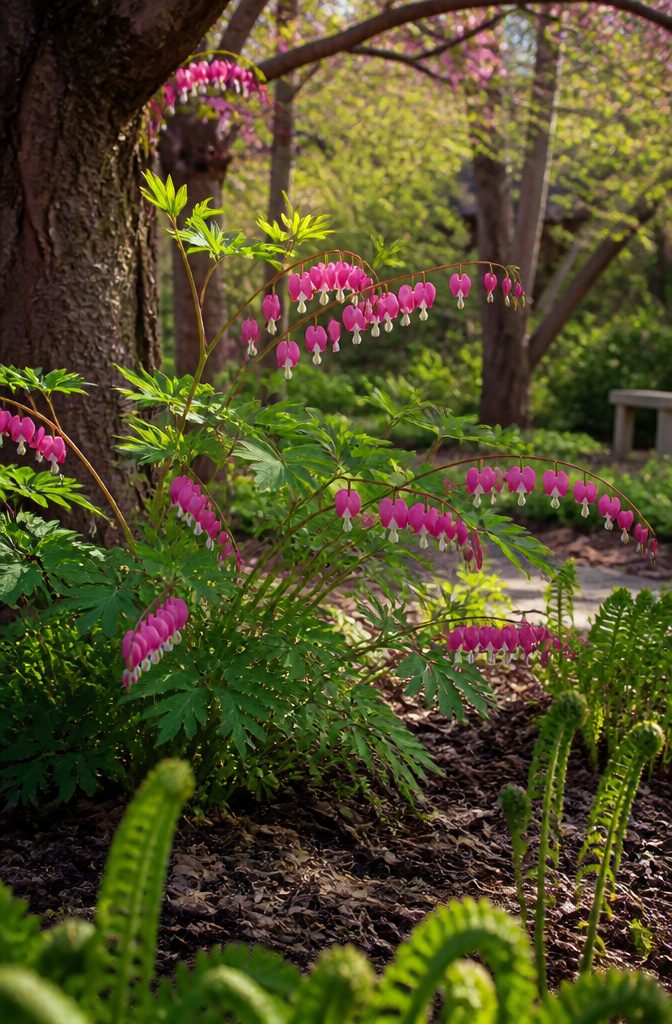
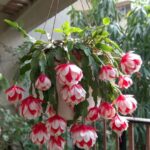
Lamprocapnos spectabilis carries its flowers on long, arching stems that curve outward like a drawn bow, each dangling heart in deep pink or clean white.
The plant reaches 2 to 3 feet tall, a useful height that lets it stand behind lower spring bulbs without crowding them, and its bloom period runs early through mid-spring before the heat arrives.
The shade tolerance is what makes this plant genuinely practical for most backyards.
It handles partial shade up to full shade, which means it thrives along north-facing foundations, under deciduous trees that have not yet leafed out, or in the dim corner where a fence meets the garage.
The soil needs to stay moist and slightly acidic, so a spot that dries to dust by June will not work without amendment or regular water.
I have planted bleeding heart twice in the wrong place: once in too much sun where the foliage yellowed by May, and once against a wall where reflected heat baked the roots.
Both times the plant died back early and skipped the following year. The third attempt went at the base of a redbud where morning light filters through, and that one has persisted for four seasons now.
Creeping Phlox
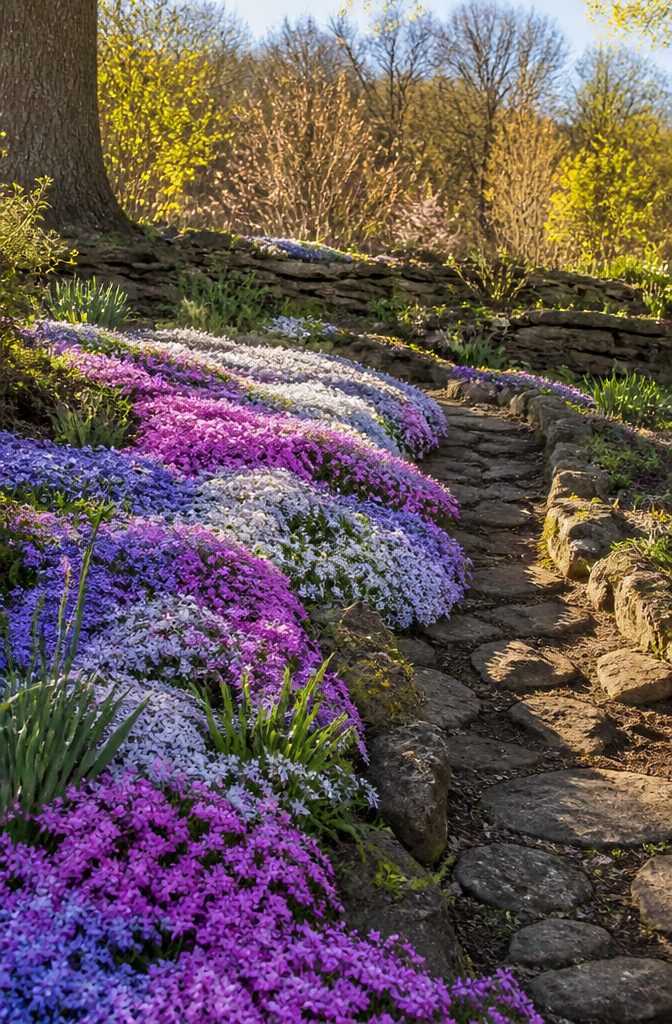
Creeping phlox, Phlox subulata, is the ground cover that made me finally stop fighting my front slope.
April arrives, and the whole thing turns into a solid sheet of pink, white, or blue stars so thick you lose the foliage underneath.
Full sun and sharp drainage are non-negotiable; the plant sulks in wet soil and rots out fast where water sits.
The mat-forming habit is what sells it for problem spots. Mine spreads into a low, weed-smothering carpet that holds soil on a grade and softens rock garden edges without any mowing.
Once the roots are established, it rarely needs watering, and the early bees and returning hummingbirds find it before much else is open.
The color range runs from white through pastel and hot pink into several blues. After the bloom fades in late April to May, the green mossy clump stays put through winter and comes back reliably the next spring.
Two things to watch: the plant can turn aggressive in ideal conditions, and it wants that slightly acidic, sandy or pebbly soil to do its best.
In the right spot, though, it is as close to plant-it-and-forget-it as spring color gets.
Lungwort
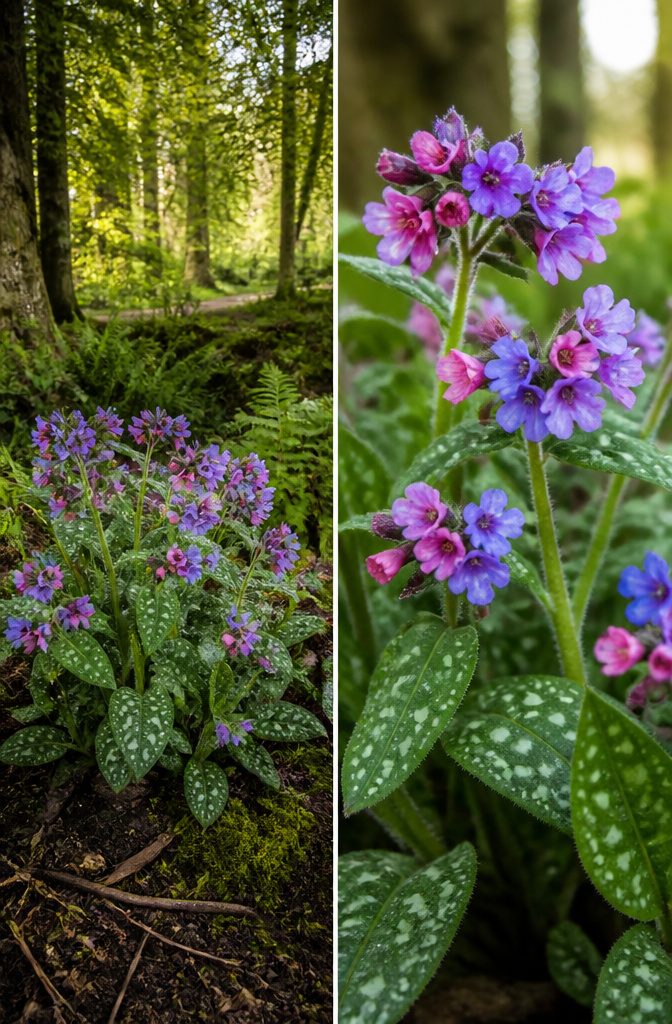
Pulmonaria’s common name comes from a medicinal history that has nothing to do with its looks.
The plant pushes up pink buds in early spring that shift to blue as the flowers mature, a color change that happens because younger pink blooms carry more pollen and nectar, signaling pollinators where to land.
Bees, which see well into the ultraviolet spectrum, read that shift clearly. The foliage carries the show after flowering finishes, silver spots scattered across the leaves like someone flicked a paintbrush at them.
This one belongs in the spots where little else thrives, the damp shade under trees or along north-facing foundations where soil stays moist. It handles zones 3 through 8, or 4 through 8 depending on the variety, and asks for rich, slightly acidic soil.
The bloom period runs long for early spring, often several weeks where hellebores give you days. I plant it where I can watch that pink-to-blue transition happen up close, usually from a path edge or a container I pass daily.
Virginia Bluebells
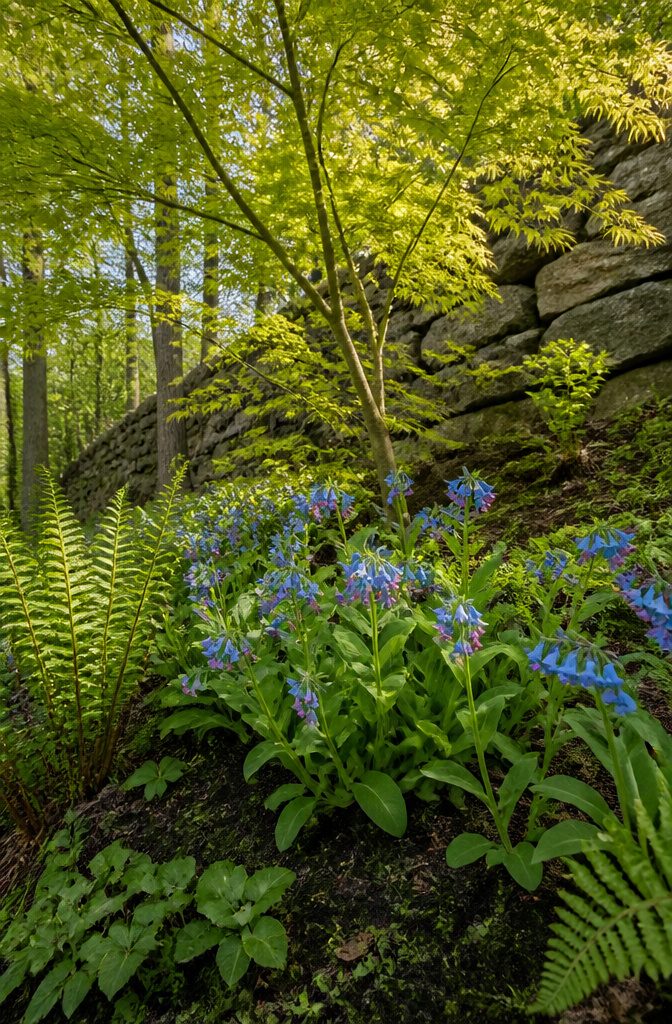
Mertensia virginica stays compact at 12–24 inches tall, just the right scale for edging a shaded path or tucking under a small tree where later perennials will take over.
The flowers open from pink buds into a clear sky blue, hanging in loose clusters that read as bells from a few steps back. Bumblebees and butterflies find them early, when little else is open.
The catch is its timing.
By early summer the whole plant yellows and collapses, leaving bare soil where a neat clump once sat. I plan for this now, interplanting with ferns or hostas that expand slowly to cover the gap.
It wants moisture, the kind of damp woodland edge where moss grows between stones, and it is native through much of the eastern United States.
In a small patio garden with a dry balcony, this one asks for more than you likely have.
For a shaded corner with a soaker hose or a spot that stays damp after rain, the two-week show is worth the planning.
Bergenia
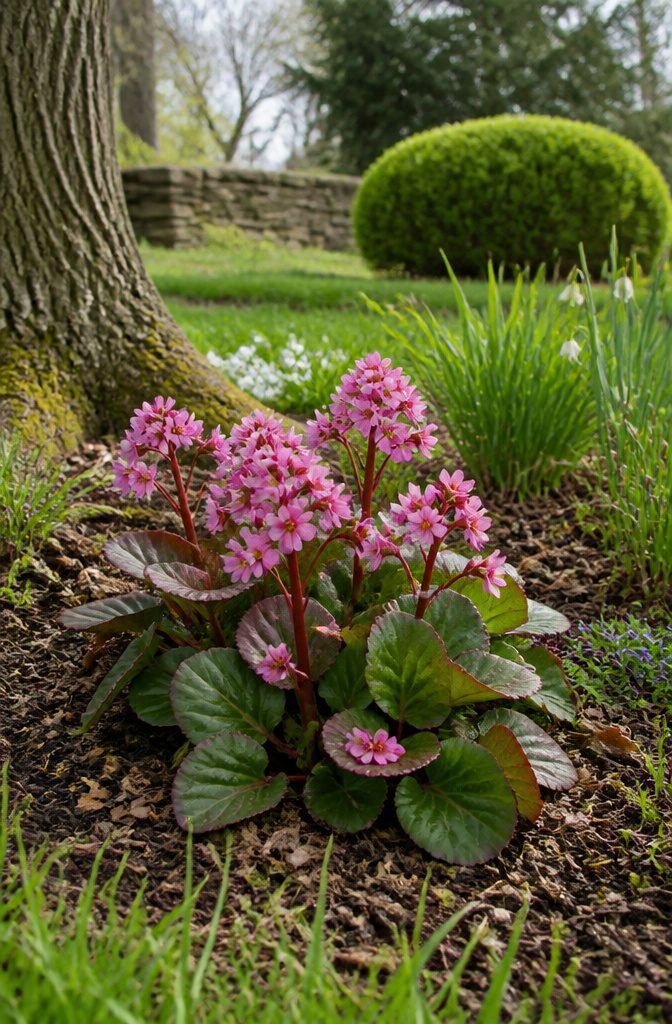
Bergenia, or Pigsqueak, earns its nickname from the squeak of rubbed leaves, a sound that still makes me stop and do it every spring.
The plant forms a low clump 12–18 inches tall with thick, leathery evergreen leaves that look presentable even in February mud. In early spring, it sends up clusters of pink flowers on short stems above that foliage.
Dry shade under established trees defeats a lot of plants.
Bergenia handles it once its roots have had a season or two to settle in. The burgundy leaf color deepens in cold weather, so the plant carries interest through months when nothing else is growing.
I cut away any winter-damaged leaves with sharp pruners as soon as the ground thaws, which lets the new flower stems push through clean.
The honey-scented blooms are an early treat for pollinators.
Deer usually pass it by. If your soil is thin or your light is limited, this is one of the more forgiving perennials to start with.
Candytuft
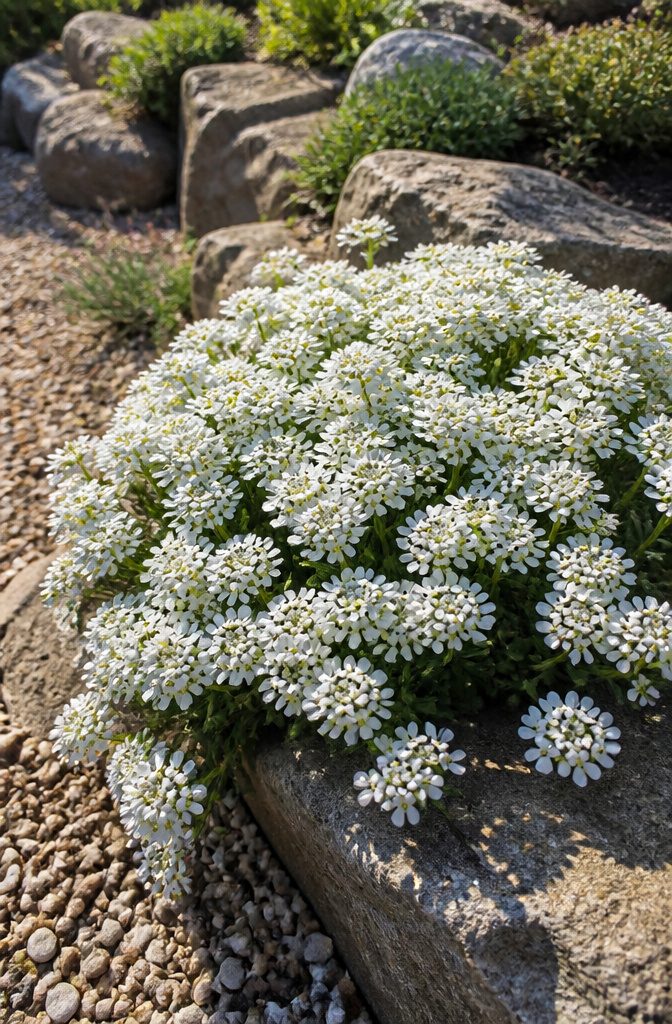
Iberis sempervirens, the evergreen candytuft, starts the show in March and keeps blooming through May with low mounds of bright white flowers that sit like fresh snow on deep green foliage.
The plant reaches 8–12 inches tall and spreads about 18 inches wide, making it a natural choice for edging a path or tucking into a rock garden where its compact habit can spill over stone without swallowing the walkway.
This one wants full sun and lean, well-drained soil; give it rich, damp ground and it sulks.
I space plants roughly 2–3 feet apart to let them fill in without crowding, and I water regularly through the first hot season until the roots have settled.
The evergreen foliage stays tidy year-round, which matters more than I expected in a small garden where every bare patch shows through winter.
Bees and butterflies find it early, when little else is open. That alone has kept it on my list despite a few losses in spots where I underestimated the drainage.
Now I plant it where the gravel is thin and the sun bakes the ground by afternoon, and it rewards the neglect.
Primrose
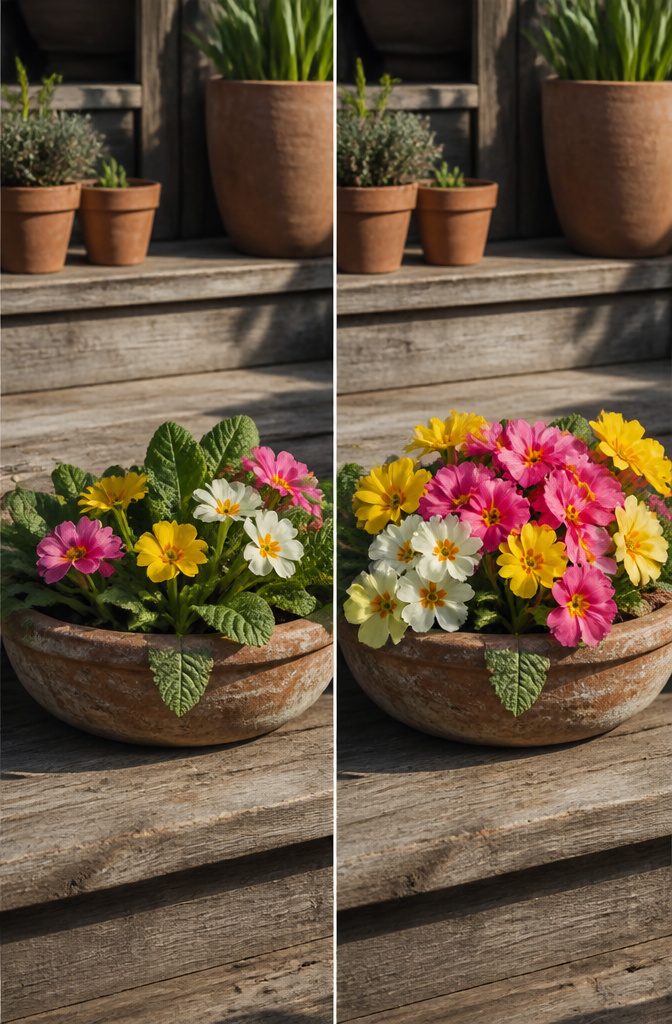
Primrose sits low to the ground, topping out at 3 to 6 inches tall, which makes it ideal for the front edge of a border or tucked into a pot where you can actually see the flowers.
The colors run saturated and clear: yellow, pink, purple, and white, often with a contrasting eye in the center that reads from several feet away.
I have mine in a shallow container on the patio steps, where the cool spring air keeps them happy while the afternoon sun is still gentle.
The catch is the moisture. Primroses want cool, damp conditions and will sulk the moment summer heat arrives.
In the ground, that means stream edges, boggy spots, or anywhere the soil stays reliably wet. In a pot, it means checking more often than you think and moving the container out of direct sun once temperatures climb.
Gardeners in hotter zones often treat them as annuals and replace them each spring, though in cooler climates they will return year after year and slowly spread into a soft mat.
Pasque Flower
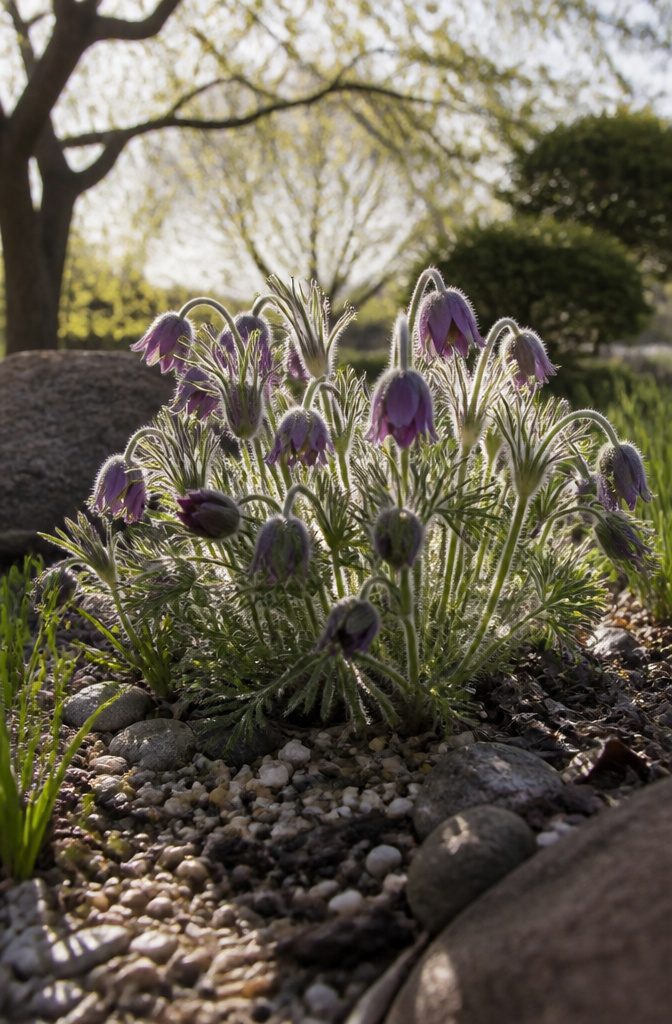
Pasque flower, Pulsatilla vulgaris, is one of the earliest performers in my spring border, usually opening those soft purple blooms right around Easter.
The whole plant stays low, 6 to 12 inches tall, which makes it perfect for the front edge of a bed where you want color before anything else has even thought about waking up.
The foliage is what sells me, though. Silvery and fuzzy, it catches morning light and holds onto dew like nothing else.
That soft hairiness isn’t just for show; it is the plant’s way of coping with cold nights and dry air while other things are still huddled underground.
The taproot runs deep, and once the plant has settled in, it asks for almost nothing. Drought tolerance comes with that territory, but the catch is drainage.
Pasque flower wants well-drained, slightly alkaline soil and will sulk or rot in clay that holds water. I have lost one to a wet spring and amended the spot with grit before trying again.
Full sun suits it best, and in zones 4 through 8 it is reliably hardy. The flowers fade, the feathery foliage lingers a while, and then the whole plant retreats underground as the tree canopy fills in above it.
Jacob’s Ladder
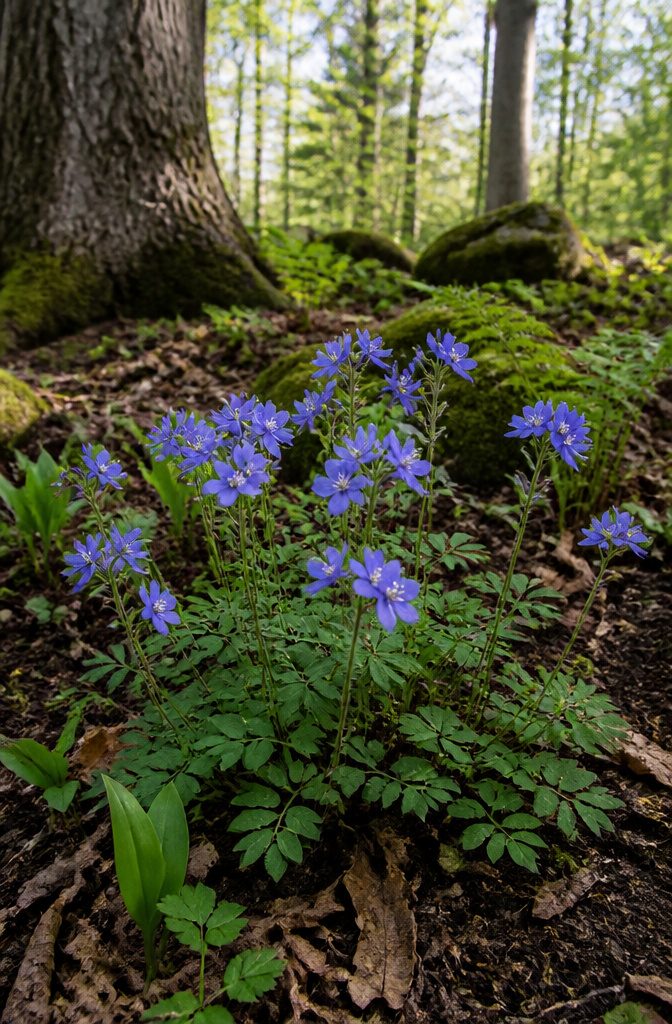
The leaf arrangement on Polemonium reptans is what gives Jacob’s Ladder its common name: pairs of small leaflets line each side of the stem like rungs.
Loose clusters of blue flowers open in early spring, each bloom a narrow bell with five flared lobes.
The plant is native to moist woodlands across the eastern half of the country, and that habitat tells you where it belongs in a garden: dappled shade, soil that stays workable through the season, not the baked edge of a driveway.
I have planted it where afternoon sun barely reaches and watched it seed around modestly, enough to fill gaps but not to become a nuisance.
The self-seeding is moderate, a useful trait if you want a drift without buying more plants, less so if you prefer everything to stay exactly where you put it. Seedlings pull easily when young if they land somewhere wrong.
Bloodroot
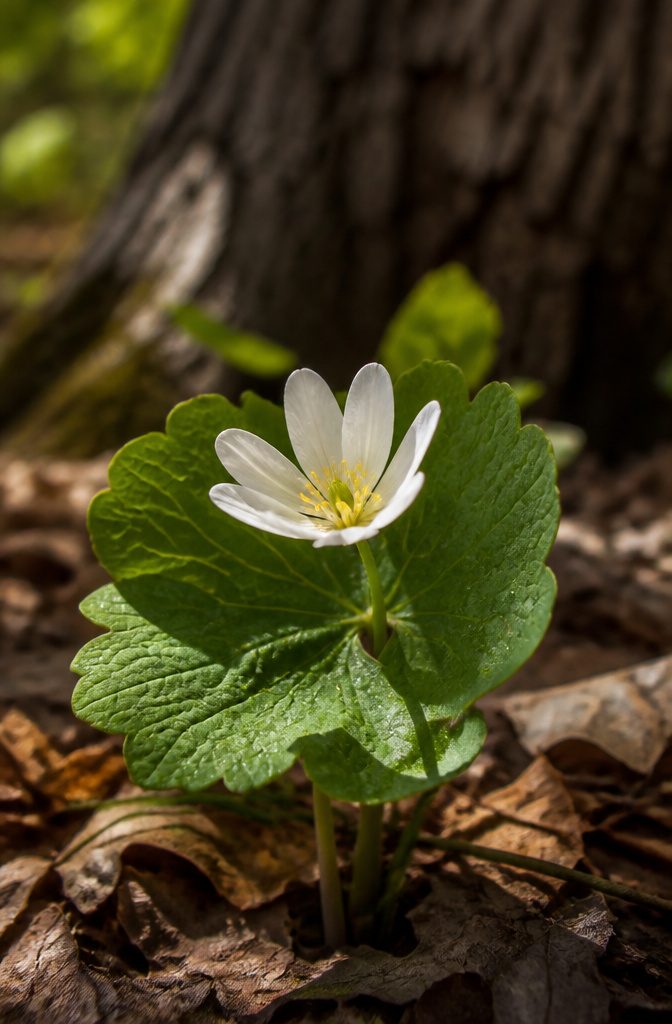
Bloodroot opens before the lawn has even thought about greening up.
The white flower lasts only a day or two, sometimes less if the weather turns warm, and then the single lobed leaf unfolds to catch what light it can before the forest canopy above closes.
That brief above-ground life is what makes Sanguinaria canadensis a true ephemeral: by June, the whole plant has retreated underground, not dead but waiting.
The common name comes from the red sap that runs from a broken root or stem, dramatic enough that historical sources used it as dye.
In the garden, bloodroot handles part sun to full shade and spreads slowly into colonies where the soil stays moist and slightly acidic. Native mining bees and sweat bees find it early, when few other flowers have opened.
Hardiness is not one of its concerns. Bloodroot persists in USDA zones 3 through 8, shrugging off late freezes that would blacken less prepared plants.
The trick is placement: too much spring sun and the bloom shortens further; too dry and the leaf flags before it can feed next year’s growth.
I have mine at the base of an old maple where nothing else bothered to grow, and it returns each March without any work from me.
Celandine Poppy
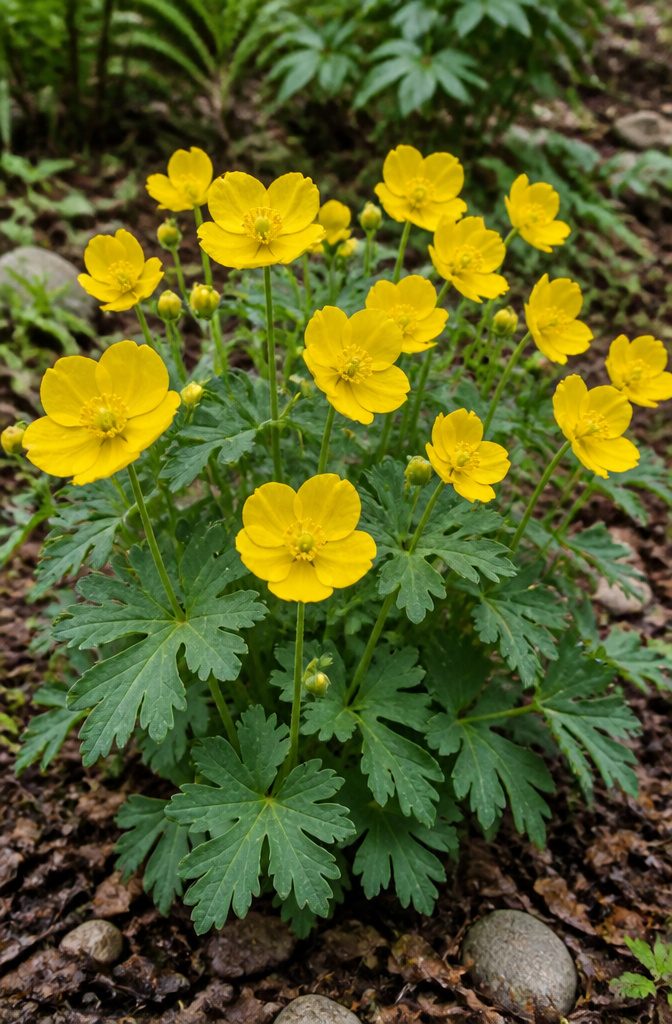
Stylophorum diphyllum, the celandine poppy, carries soft yellow blooms above bluish-green lobed foliage that looks almost dusty in the right light.
It is native to eastern North American woodlands, which tells you straight away that it wants shade and soil that stays reasonably moist.
In my own garden, the plant has proven a true perennial where the ground does not dry out, returning reliably each spring rather than disappearing by June like so many woodland ephemerals.
The foliage holds cleanly through the season if the roots are kept happy, making it useful as a ground-covering element even after the flowers pass.
Give it leaf litter or compost to keep that moisture steady, and avoid planting it where afternoon sun bakes the soil.
For a gardener working a shady corner with heavy spring rains or a downspout nearby, this is one of the easier native poppies to keep going year after year.
Trillium
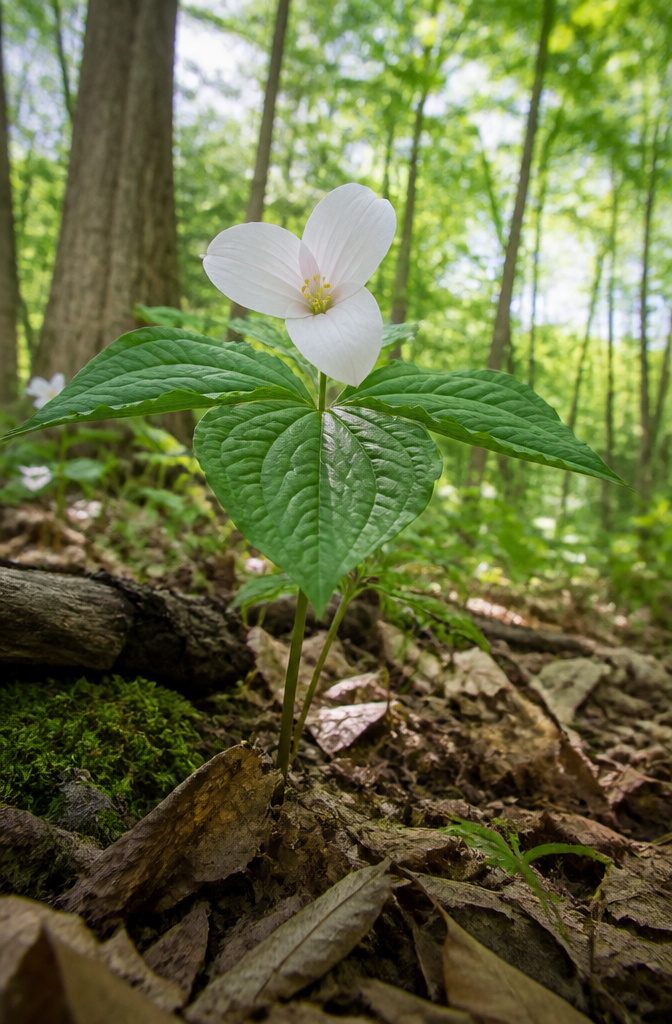
Trillium carries itself like something from an older forest, three white or red petals held above a whorl of three leaves in a symmetry that looks designed rather than grown.
The white form opens pale and ages to a faint rose; the red starts deeper and holds its color through the weeks it stays in bloom.
Both ask for shade, leaf litter, and time. A trillium grown from seed can need seven years before that first flower, which is why most gardeners buy nursery plants and still wait a season or two for establishment.
The root system forms a short, thick rhizome that resents disturbance.
Transplanting an established clump usually kills it, and even planting too deep or mulching too heavily can set it back. I have learned to site trillium where it can stay, work the soil once, and then leave the roots alone.
Once settled, it spreads slowly into a colony that returns each spring with no further help, one of the quiet payoffs of choosing a native that evolved for exactly the conditions a shaded yard already has.
Dutchman’s Breeches
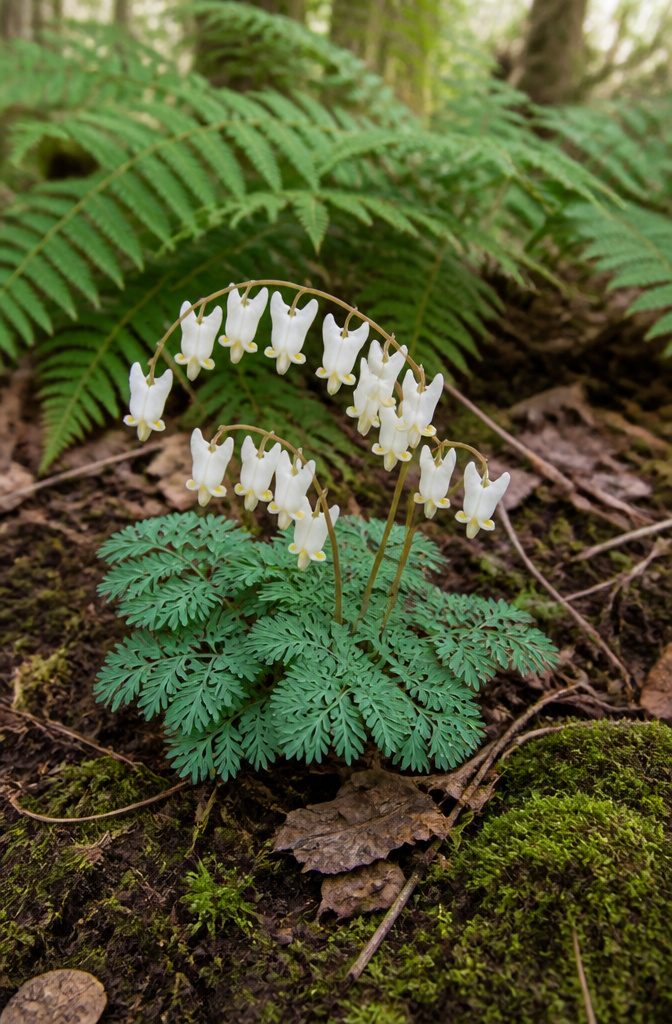
Dicentra cucullaria carries one of the stranger common names in the garden: Dutchman’s Breeches. The white flowers hang in pairs from an arched stem, each one puffed into a shape that really does suggest tiny pantaloons clipped to a clothesline.
Below them, the foliage stays low and ferny, a soft blue-green that works well against the sharper textures of spring bulbs.
This is a true woodland native, and the plant acts like one. It wants the cool, moist humus of a forest floor and goes dormant by early summer once the canopy above fills in and the ground dries.
That brief window, maybe two or three weeks of bloom, is the tradeoff. I treat mine as a seasonal event rather than a structural plant, interplanting it near later-emerging hostas or ferns that will cover the bare spot.
The relation to Bleeding Heart is obvious once you know to look for it: the same divided leaves, the same heart-shaped family history in the flower structure, though Dutchman’s Breeches keeps its petals fused into that single inflated pouch.
For a small shady corner where you want something odd and early, it earns its space. Just don’t let the soil bake in summer, or you will lose the colony.
Prairie Smoke
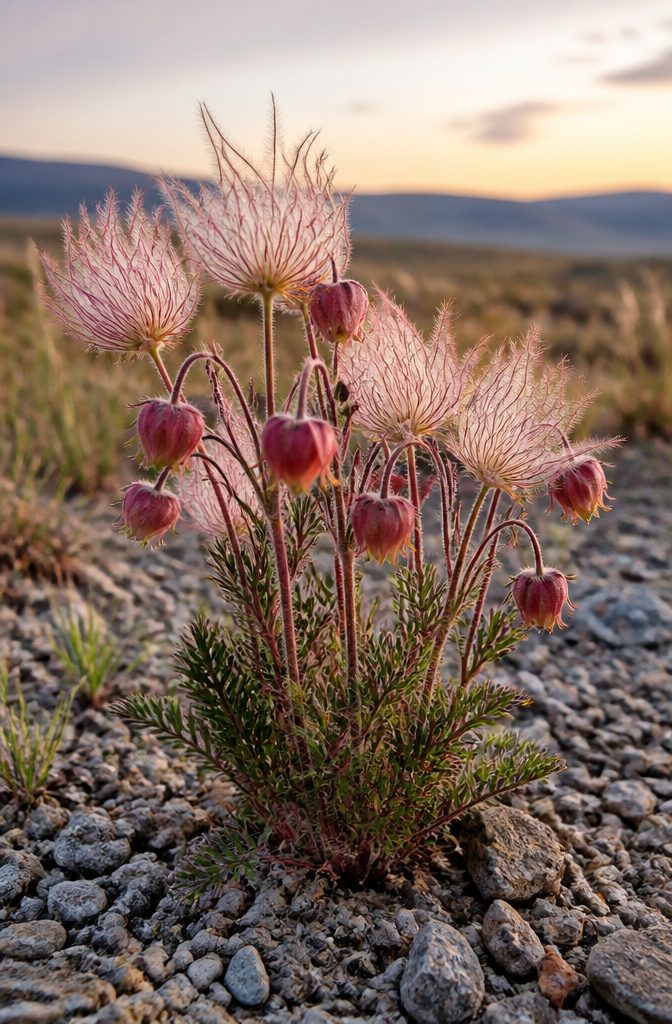
Geum triflorum carries a quiet drama that most spring perennials never achieve. The nodding pink buds cluster tight in threes, hanging like small lanterns just above the low foliage.
They open briefly, then the real show begins: the feathery seed heads that give prairie smoke its name, rising on slender stalks and catching light like pulled cotton candy.
I first noticed it in a dry corner of a public garden in Minnesota, where it was thriving in gravelly soil that would have cooked a hosta.
The whole plant stays under a foot tall, which makes it easy to work into the front of a border or along a path edge where you can look down into those smoky plumes.
The seed stage lasts far longer than the bloom, so you get weeks of ornamental interest from a plant that asks for almost nothing.
The dry prairie heritage means established plants laugh at drought.
Wet winter soil will kill it faster than any summer dry spell, so I would not try it in clay unless I were planting on a slope or in a raised bed.
Give it full sun and lean, fast-draining ground, and it will seed around politely enough to fill gaps without becoming a nuisance.
Wild Geranium
Geranium maculatum carries itself differently than most spring ephemerals, which is exactly why I keep finding room for it.
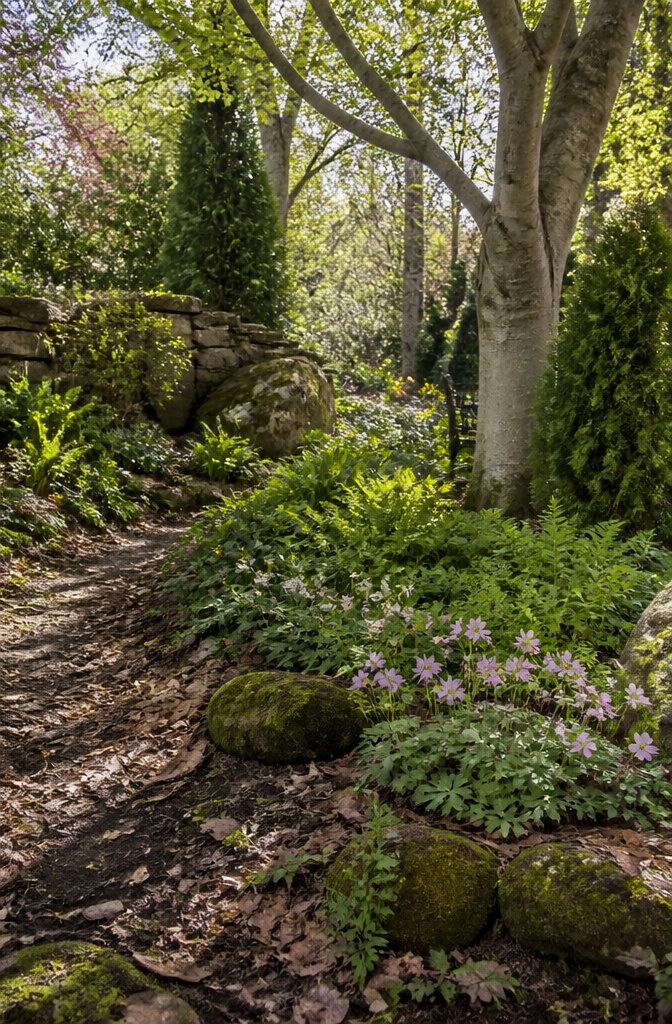
Where bloodroot and Virginia bluebells vanish by June, this eastern native keeps its pink-lavender, five-petaled flowers coming from April through July, a stretch that feels almost greedy once you have lived through the usual April-to-May rush.
The leaves give it away as a woodland plant, each one deeply cut into five to seven narrow lobes that read almost like a hand spread open.
In its native spots, shaded woodlands and forest edges, it spreads politely into loose colonies without ever reading as aggressive.
I have seen it hold that same character in garden beds that get only morning sun or dappled shade all day, though it will take more sun than people assume if the soil stays reasonably moist.
Hardiness runs zone 3 to 8, which covers most of the country where anyone is trying to garden. It wants soil on the richer side, slightly acidic, with steady moisture but not wet feet.
The plant I put in two years ago under a serviceberry has tripled in footprint without any prompting from me, seeding around just enough that I have extras to move or give away.
That self-reliance matters when you are working a small space and every plant needs to earn its keep across multiple seasons rather than flash and disappear.
Grecian Windflower
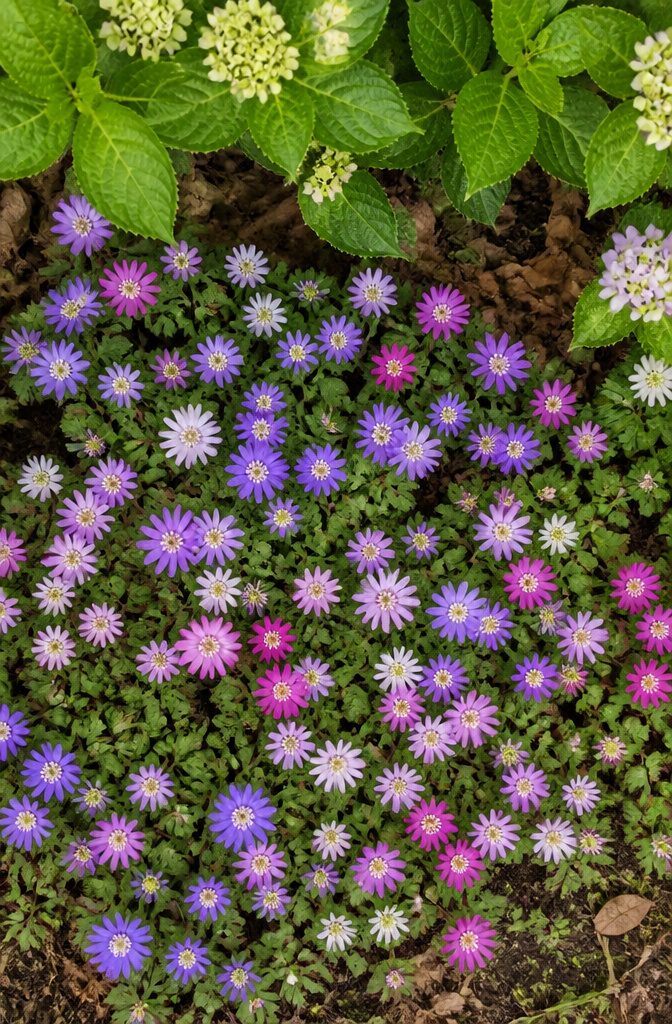
Anemone blanda, the Grecian windflower, spreads low mats of daisy-like blooms in blue, pink, or white just as the last snow melts.
The flowers sit only a few inches above ground, but they come on thick enough to read as a carpet from the edge of a path.
What makes them practical for a small space is the tuberous root system: small, knobby rhizomes you plant in fall, roughly two to three inches deep and a few inches apart.
They do not ask for much beyond well-drained soil and the dappled light under deciduous trees, where they finish blooming before the canopy leafs out and steals the sun.
The whole show lasts perhaps two to three weeks, brief enough that you will want something else ready to take over the same ground. Left alone, though, the windflower naturalizes politely, seeding around and filling gaps without turning invasive.
In my own shade bed, the blue strain has spread into a soft patch under a hydrangea, and I do not remember planting half of what is there now.
The foliage dies back cleanly by early summer, so you can drop summer annuals or later perennials on top without the usual mess of rotting leaves.
Trout Lily
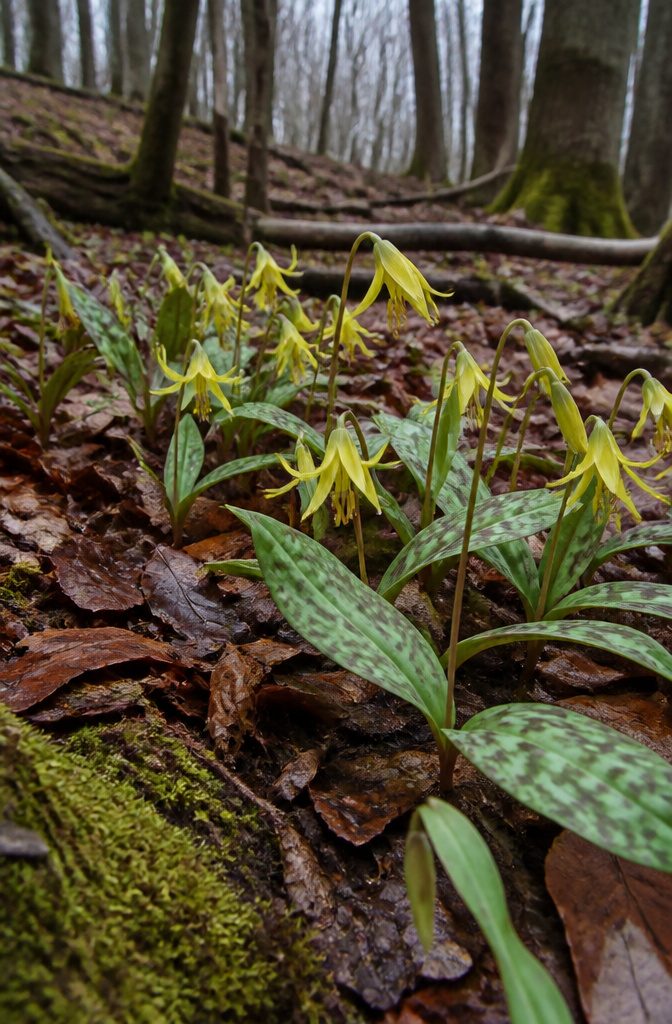
The mottled leaves of Erythronium look exactly like the speckled sides of a brook trout, which is how the common name stuck.
In early spring, before the canopy closes, colonies of these low growers spread through moist woodland edges and damp shady corners where other plants struggle.
The nodding yellow or white flowers hang like small lanterns for a brief window, often finishing before the surrounding trees even leaf out.
That short season is the tradeoff. Trout lilies die back to the bulb by mid-spring, leaving bare ground for months.
I plant them where later-emerging hostas or ferns will fill the gap, or along a wooded path where their early presence reads as a pleasant surprise rather than a missing plant.
They prefer soil that stays reasonably damp and dappled light, not the deep dry shade of mature tree roots. Given those conditions, they spread slowly into quiet drifts that return year after year with almost no attention.
Pink Lady’s Slipper
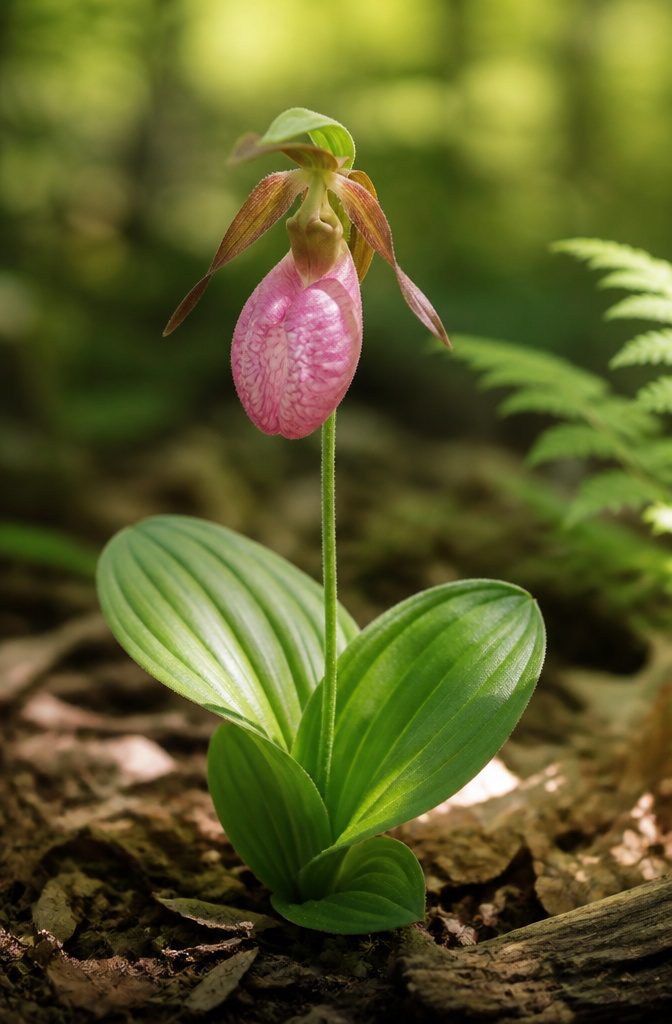
Cypripedium acaule, the pink lady’s slipper, is a native orchid whose pouch-shaped bloom looks almost too odd to be real, like a small shoe inflated with bubblegum.
I have never grown one myself, and after reading what it takes, I am not sure I would try.
The plant needs a specific fungus in the soil, a mycorrhizal partner that feeds the seedling until it can manage its own photosynthesis.
Without that living relationship, the orchid simply does not establish. Digging one up from woods where it already grows almost always kills it, both because the root system breaks and because the fungal network does not transplant with it.
Many states list it as protected or endangered for exactly this reason, so collecting from the wild is not merely unwise but illegal in a lot of places.
Specialist native plant nurseries do sell nursery-propagated plants, grown from seed in labs where the fungus is introduced artificially. The cost runs high and the failure rate for home gardeners still runs higher.
For most of us working a patio or small yard on a limited budget, the pink lady’s slipper is better admired on a hike than installed in a bed.
English Daisy
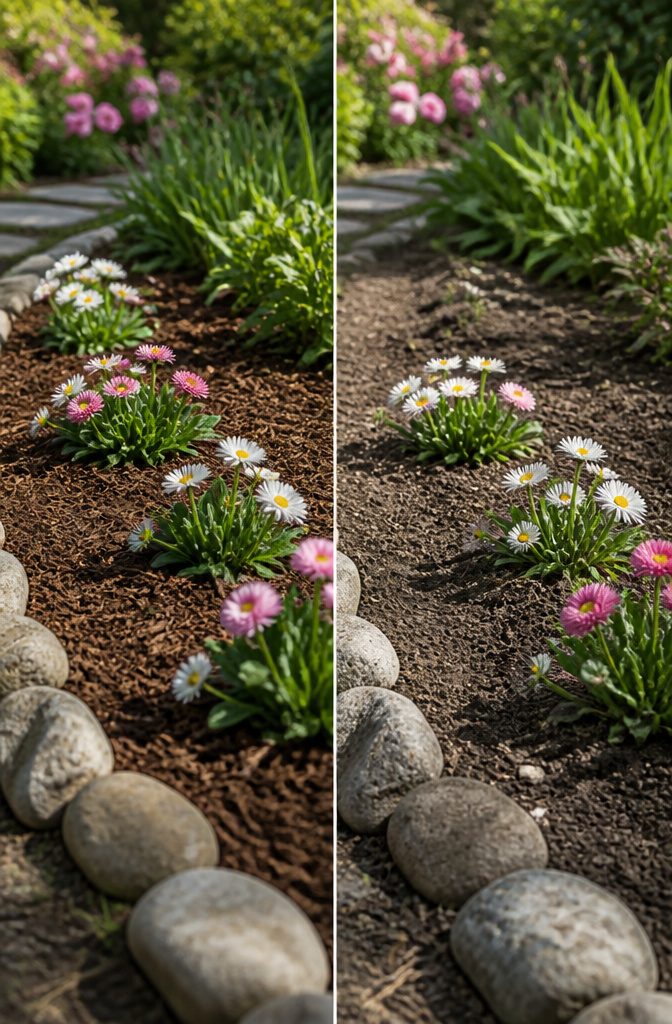
Bellis perennis stays low to the ground, usually under six inches, with button-like flowers in white, pink, or red that open early and keep coming if the weather stays mild.
I plant it along path edges where the soil cools faster in shade, and the foliage stays neat enough that it reads as a proper border rather than a weed patch trying to happen.
The catch is the heat. In a summer that stays consistently hot, this plant acts more like a biennial than a perennial, finishing its life cycle in two years and sometimes dying back entirely by August.
Give it afternoon shade and steady moisture if your summers run warm, or treat it as a short-term filler you replace every other season.
Cooler zones with real winter see it persist far longer, sometimes self-seeding into patches that need thinning by the third spring.
What Early Bloomers Need
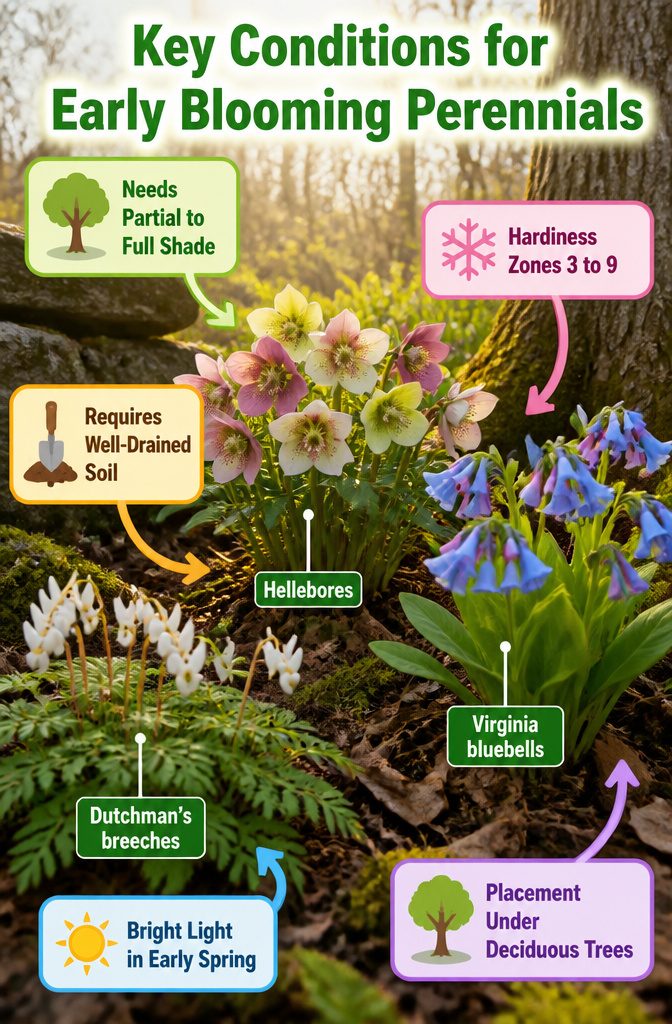
Most favorite early blooming perennials share a narrow set of conditions that took me a while to read correctly.
Partial to full shade is the common thread, since these plants evolved to work the brief window before deciduous trees leaf out. That timing matters more than I first thought.
Hellebores open while snow still lingens, and the true ephemerals, like Virginia bluebells and Dutchman’s breeches, complete their whole cycle in that same late winter to early spring slot, then retreat underground once the canopy closes and summer heat arrives.
Hardiness runs wide, zones 3 through 9 for most, but siting is what makes or breaks them.
Well-drained soil is non-negotiable, wet feet rot the dormant roots fast. The sharper trick is placing them where they get bright, unfiltered light in February and March but are shaded by May.
Under deciduous trees is the classic solution, though you will need to plan for the bare ground they leave behind. I tuck ephemerals among hostas or coral bells so the later plants fill the gap without my intervention.
Pollinators in the Spring Garden
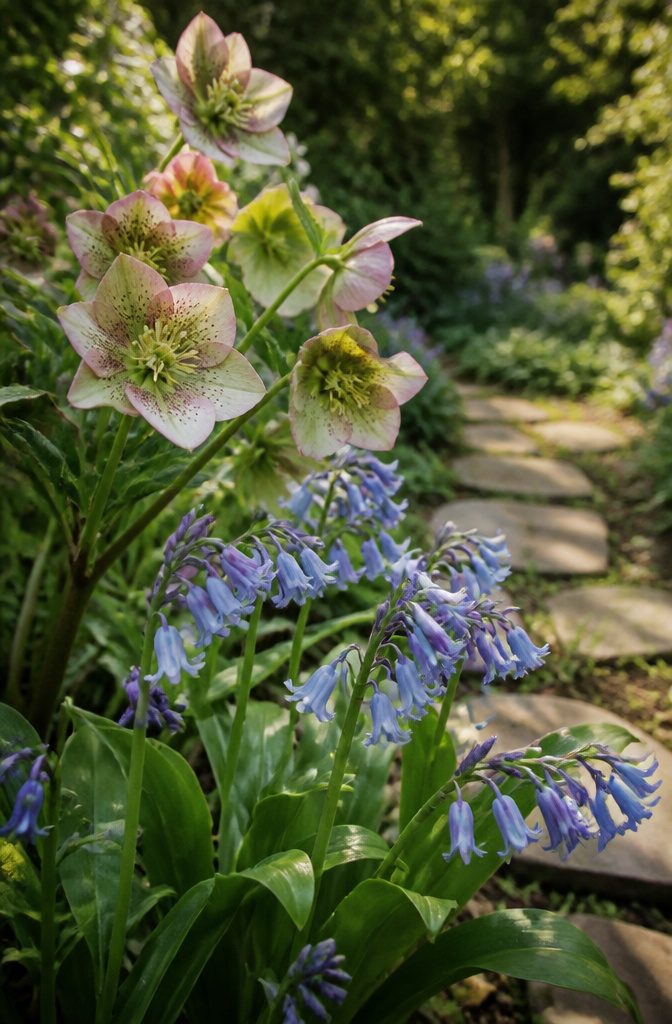
Early perennials fill a gap that most gardeners never think about until they watch a single bee circle a bare patio in March, searching.
Hellebores open while snow still sits in shady corners, their nodding flowers offering pollen and nectar when almost nothing else will.
Virginia bluebells follow close behind, those pink buds shifting to blue as bumblebees and butterflies find them. Both grow in shade and damp soil, which means they fit spots where summer annuals would sulk and die.
The real value sits in timing.
Annuals and later perennials need warm soil and longer days. That leaves a hungry stretch from February through April when pollinators are active but food sources are scarce.
Native early bloomers evolved for this exact window. They leaf out, flower, set seed, and finish before the tree canopy closes, which makes them a bridge the whole garden depends on even if you never see the traffic.
I plant them in clusters where I can watch from the kitchen.
The bees show up first; butterflies need slightly warmer mornings. Either way, the movement reminds me that a garden doing nothing visible is still feeding something.
Native Plants Worth Keeping
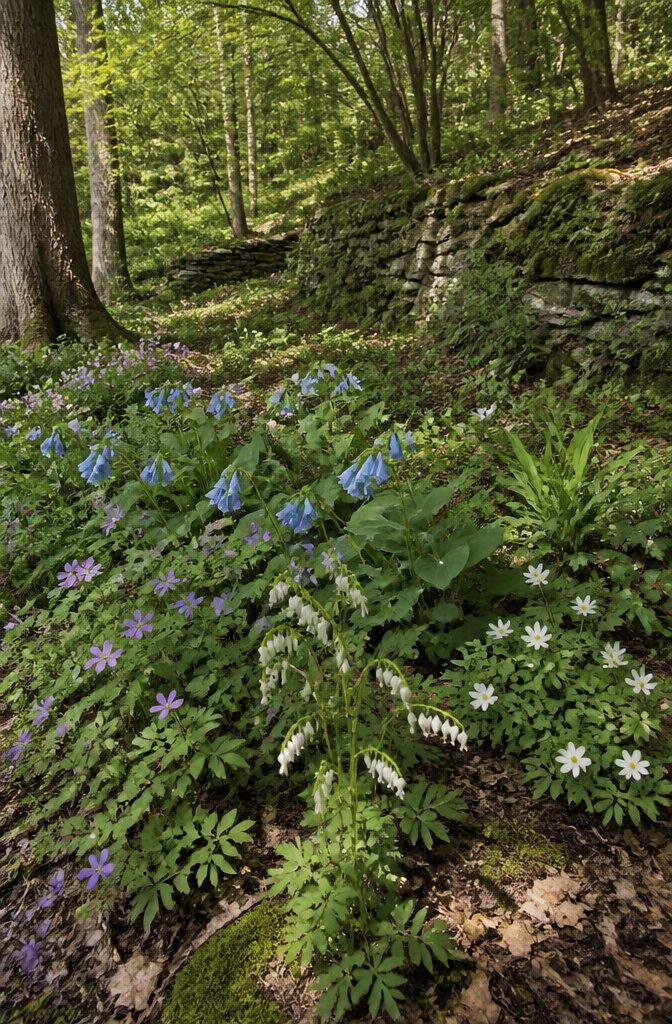
Native early bloomers earn their place in the garden long before the first bud opens. Virginia bluebells, bloodroot, Dutchman’s breeches, and wild geranium have already spent centuries adapting to the same soils and weather patterns your yard sees.
That history matters. These plants handle spring cold snaps, summer dry spells, and local pests without asking for supplemental water or fertilizer once established.
The payoff shows up in pollinators too.
Virginia bluebells draw bumblebees and butterflies in zones 3 to 9, even under nearly full shade where non-native options languish. Wild geranium stretches its bloom from April through July in zones 3 to 8, outlasting flashier imports that peak and fade in weeks.
Specialist bees evolved alongside these plants, timing their emergence to match the bloom, and they find little to eat in bred-up cultivars that never saw this continent before last decade.
Dutchman’s breeches and bloodroot complete the early sequence, carpeting damp woodland edges while soil temperatures still discourage most growth.
The tradeoff is patience: these plants move slowly, sometimes sleeping underground their first season. I plant them in fall, water through the following spring, then step back and let the local conditions do the rest.
Pairing for Continuous Bloom
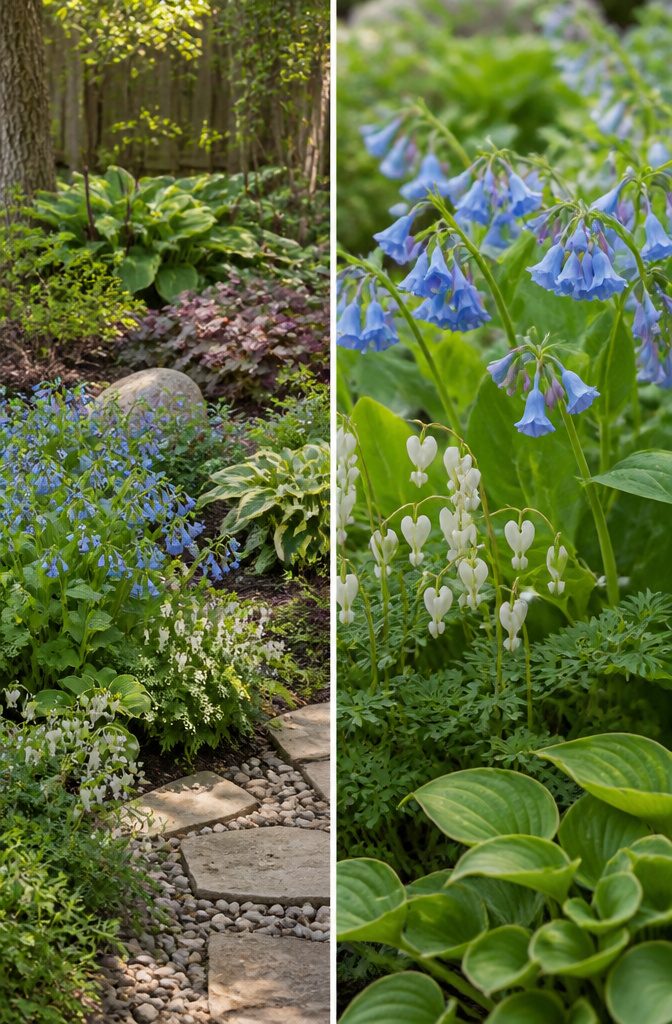
Spring ephemerals leave behind empty soil just as summer perennials reach their stride, so the placement matters as much as the plant.
I tuck Virginia bluebells and Dutchman’s breeches near hostas or coral bells, letting the later plantings fill in while the early ones retreat underground.
The hosta foliage expands slowly, timing its full spread for when the spring flowers have already finished their cycle.
Foliage plants earn their space by covering gaps without demanding a turn in the spotlight.
A bed of lungwort or bleeding heart looks fine on its own in April, but by June it benefits from neighboring leaves that keep the ground from looking abandoned.
I learned this after watching a cluster of trillium vanish by Memorial Day, leaving a bare circle of mulch that stayed bare until August.
The practical move is planting in layers: shallow-rooted ephemerals beneath deeper-rooted perennials that share the same light preferences. Spring ephemerals need companions that leaf out late enough to give them sun, then grow dense enough to hide the retreat.
Coral bells work because their mounding habit fills the middle ground without shading out what’s below. The result is a bed that reads as continuous, even as the cast changes completely.
Frequently Asked Questions
What are the best early blooming perennials?
Hellebore, Bleeding Heart, Creeping Phlox, and Lungwort are among the most reliable choices for American gardens.
Hellebore opens as early as December in mild winters and flowers through April, while Bleeding Heart thrives in shady spots where many other plants fail.
Creeping Phlox turns slopes into solid sheets of color in April, and Lungwort handles damp shade while shifting from pink to blue blooms.
Each earns its place by solving a specific garden problem rather than just looking pretty for a few weeks.
When do early blooming perennials bloom?
Most begin in March or April, though hellebores can open as early as December in mild winters and keep flowering through April.
The majority of early bloomers finish by late May or early June, with some true ephemerals like Bloodroot and Dutchman’s Breeches lasting only two or three weeks before retreating underground.
Planning for this brief window means pairing them with later-emerging plants such as ferns or hostas that fill the gaps they leave behind.
How do I care for early blooming perennials?
Match the plant to the spot and leave it alone once established.
Hellebore needs partial shade and well-drained soil; Creeping Phlox demands full sun and sharp drainage or it rots. Bleeding Heart wants moist, slightly acidic soil in shade, while Bergenia handles dry shade under trees after its roots settle in.
Most early bloomers need no division and minimal watering once established, though woodland natives like Virginia Bluebells and Celandine Poppy need steady moisture through the season.