
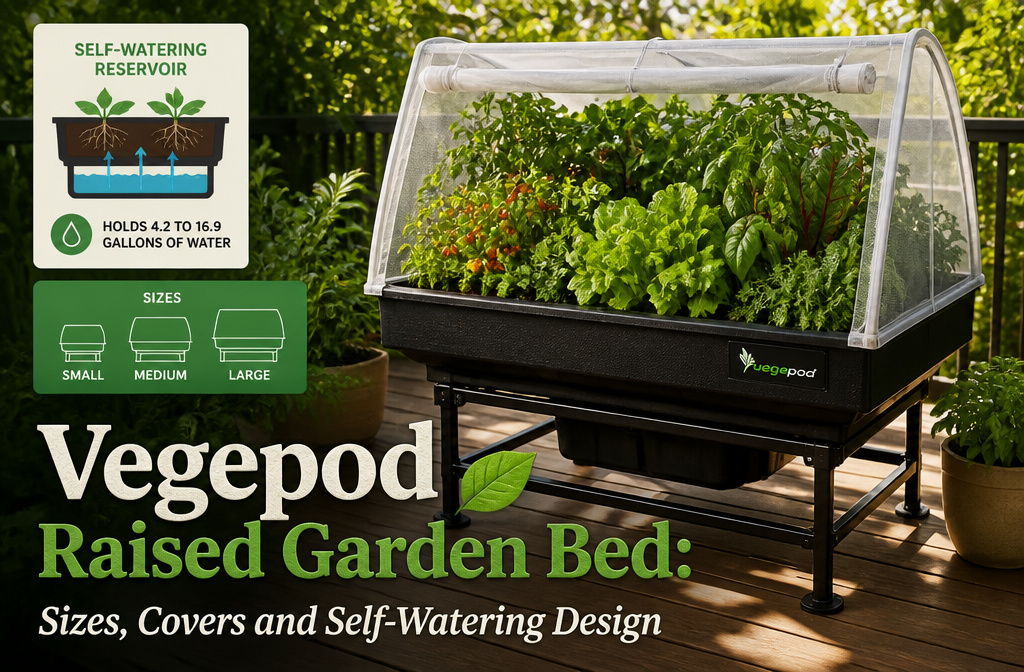
A Vegepod is a raised garden bed built around a self-watering reservoir and a mesh pest cover, designed for patios, decks, or small yards. The catch is weight and cost: a medium on its stand costs roughly double the bed alone and can sail across a balcony in wind unless you weigh it down. The reservoir holds enough water, 4.2 to 16.9 gallons depending on size, that established plants can go weeks between refills.
What a Vegepod Is
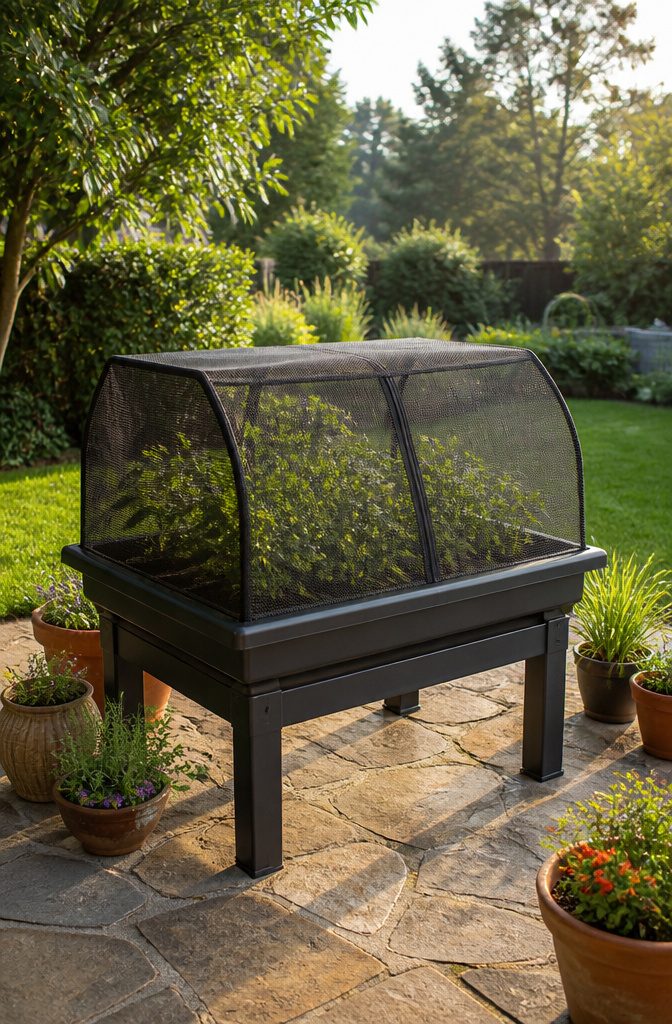
A Vegepod is a raised garden bed built around a self-watering reservoir and a mesh pest cover, designed for growing vegetables, herbs, or flowers on a patio, deck, or small yard. The growing depth is 11 inches, and with the cover in place the total height reaches 40 inches.
What separates it from a standard raised bed is the closed system. The reservoir at the base holds enough water that established plants can go weeks between waterings, wicking moisture up as the soil dries. The agricultural-grade mesh cover zips over the top, keeping rabbits, raccoons, and opossums out while still letting in 83% of sunlight and allowing rain and air through.
Self-watering, raised bed planters like Vegepods allow you to grow a lot of food in a small space, weed-free, and with minimal pest or disease damage.
For a household gardener working a balcony or patio with limited time, that combination means less daily maintenance and fewer losses to the animals that usually beat you to the harvest.
Size Options
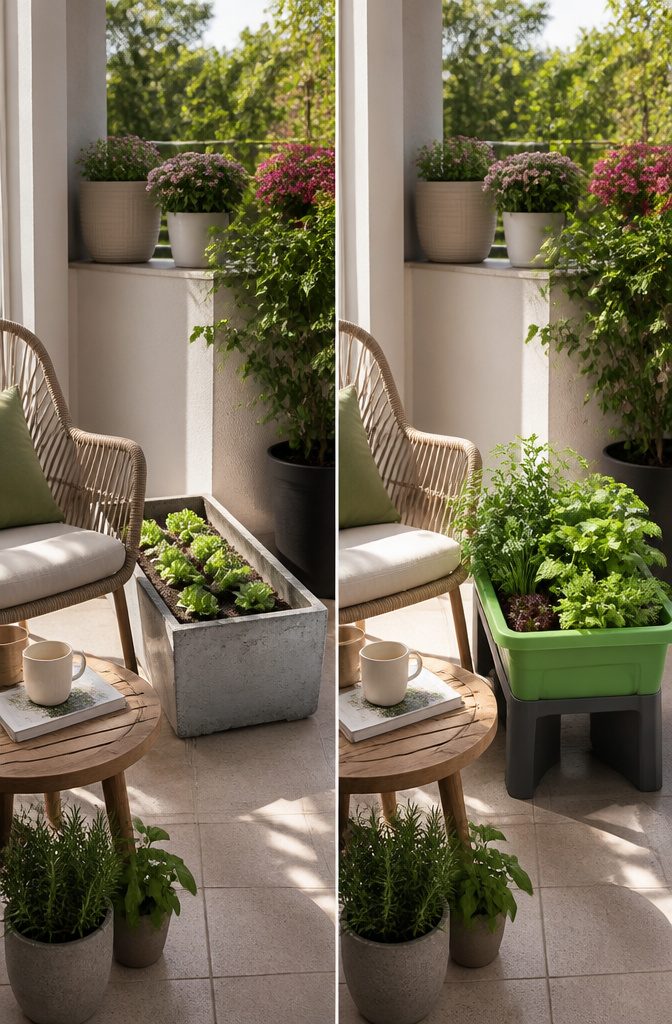
The small Vegepod measures 19 by 39 inches, giving you 5.1 square feet of growing space. That footprint fits most apartment balconies and still leaves room for a chair. The medium doubles the width to 39 by 39 inches, or 10.6 square feet. I see this one most often on patios, and the square shape makes row planning simpler than you’d expect. The large runs 78 by 39 inches for over 21 square feet, basically a full raised bed that happens to sit above ground.
Your budget and your square footage decide this more than any feature list. The small holds 4.2 gallons in its reservoir; the medium holds 8.5 gallons; the large holds 16.9 gallons. More water capacity means longer stretches between refills, but it also means more soil to buy up front and more weight on a deck. A medium on the stand runs about the same floor space as a patio table for two. The large needs the kind of open corner you usually commit to a permanent piece.
If you’re working a balcony with a weight limit, start small. If you’ve got a sunny back deck and $800 a year for this garden, the medium probably earns its space back in salad greens by August. The large only makes sense when you know you’ll actually fill 21 square feet, because an underplanted Vegepod still needs its reservoir topped and its cover zipped.
Self-Watering Reservoir
The reservoir is what separates a Vegepod from every other raised bed I have looked at. Each size holds a specific volume: the small carries 4.2 gallons, the medium 8.5 gallons, and the large 16.9 gallons. That water sits beneath the soil in a sealed base, and a wicking bed design draws it upward through the potting mix directly to the roots.
The physics are simple enough. The soil acts as a wick, pulling moisture up from below through capillary action. Roots grow down toward that steady water source instead of spreading wide and shallow looking for surface moisture. Established plants with deep root systems can pull from that reservoir for weeks without any top watering at all. Vegepod’s own testing left beds running for six weeks through an Australian summer with no intervention and no losses; a July stretch in the U.S. would demand the same discipline from any other bed I have used.
My own rhythm with a medium bed settled at about ten to fourteen days between top-ups once tomatoes and peppers had filled out. Seedlings needed more frequent attention until their roots found the bottom, but by mid-July I was filling the reservoir roughly twice a month and ignoring the hose otherwise. The limit is real: the reservoir empties, and shallow-rooted herbs or fresh spring plantings will not reach it. For anything established and deep-rooted, though, the buffer against a missed weekend or a hot spell is the feature that justifies the price.
Pest and Weather Covers
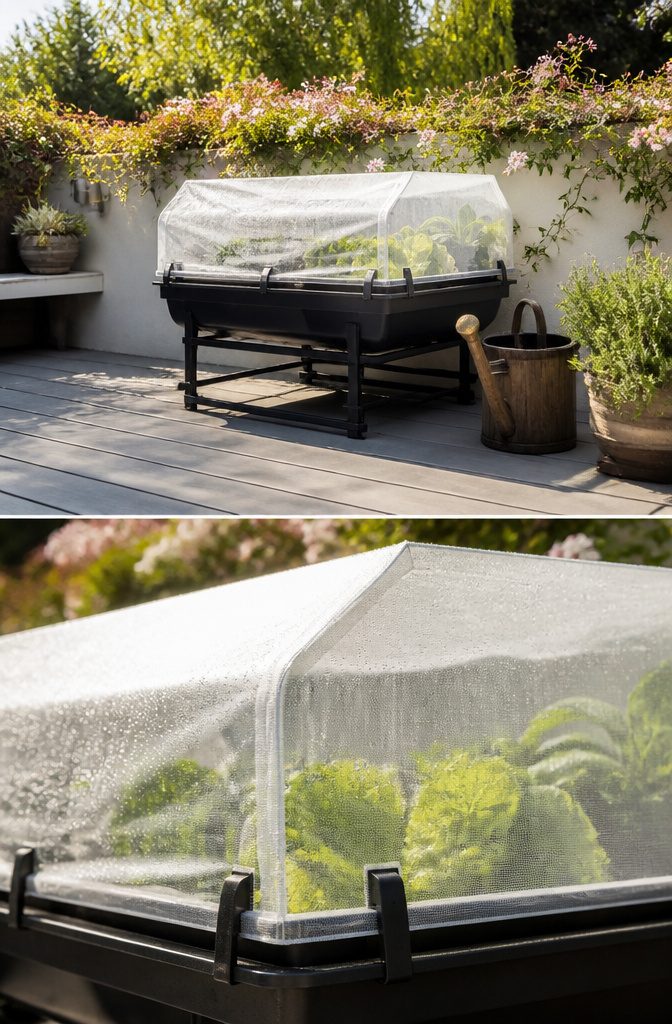
The mesh pest cover that comes with every Vegepod is lightweight enough that sunlight, air, and rain pass straight through, yet it stops rabbits, deer, birds, and cabbage worms from reaching your plants. I have watched high spring winds and small hail hit that mesh and bounce off without tearing it, though a determined squirrel can still chew through if it wants in badly enough.
When temperatures drop, the 12-millimeter PVC frost cover slides over the mesh and turns the bed into a miniature greenhouse. The switch matters for timing: the PVC goes on in early spring, comes off when nights stay above freezing, then returns in autumn before the first hard frost. In zone 5, kale and spinach under that double layer survived my entire winter.
With either cover clipped to the hinged frame, the total height reaches 40 inches, enough headroom for mature greens but not for indeterminate tomatoes. The PVC traps more warmth than light; on overcast winter days, growth slows even inside.
Optional Stand for Height
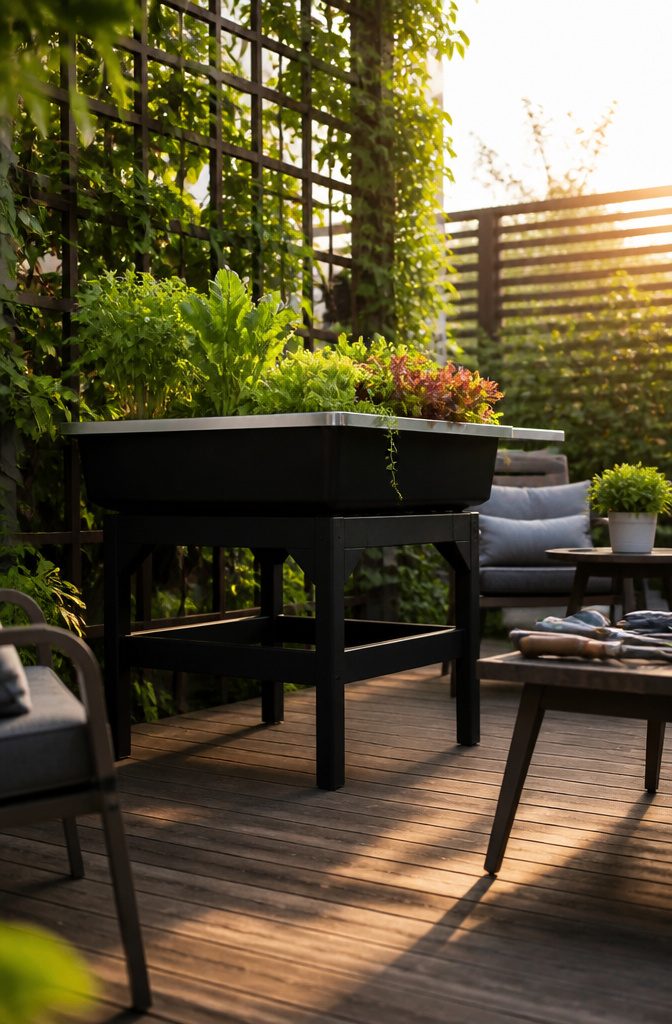
The optional stand lifts a Vegepod to 31 inches, waist-high for most people and easier on the back if you bend to weed or harvest. At roughly $150 extra, the stand costs about half what the bed itself does, which made me pause. For a patio or balcony, the raised profile also means a higher center of gravity. Wind catches the cover like a sail, and on a smooth concrete surface the whole unit can shift unless you weigh the legs down with pavers or sandbags. I skipped the stand for my first pod and set it directly on the ground, partly to save the money and partly because my patio gets gusty afternoons. For gardeners with limited mobility or who simply prefer standing work, the height is worth testing with a temporary cinder-block lift before committing the cash.
Durability and Materials
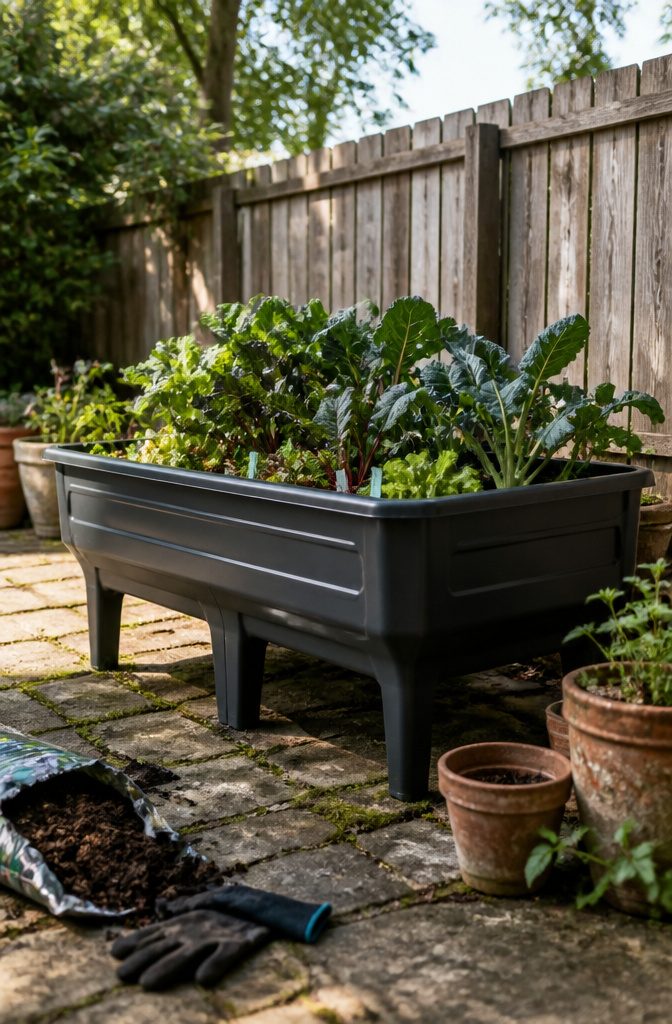
The Vegepod shell feels like the kind of molded plastic you’d find on a quality outdoor storage bin, not the thin stuff that cracks after one hard freeze. After three seasons sitting on my patio, the walls still snap together tight and the color hasn’t chalked out the way cheaper planters do. The company claims the material is recyclable, which matters to me since I try to limit what ends up in a landfill, though I haven’t had to test that yet because nothing has broken.
What I have tested is full sun through a Texas July and a Colorado winter, and the pod came through both without warping or getting brittle. The mesh cover is the only part showing real age: the zipper pull frayed in year two, and the fine weave has a few snags from my tomato cages. The frame tubes that hold the cover haven’t rusted where the coating wore off, which surprised me. If I were buying again, I’d replace that cover around year four rather than replace the whole unit.
Assembly in About 30 Minutes
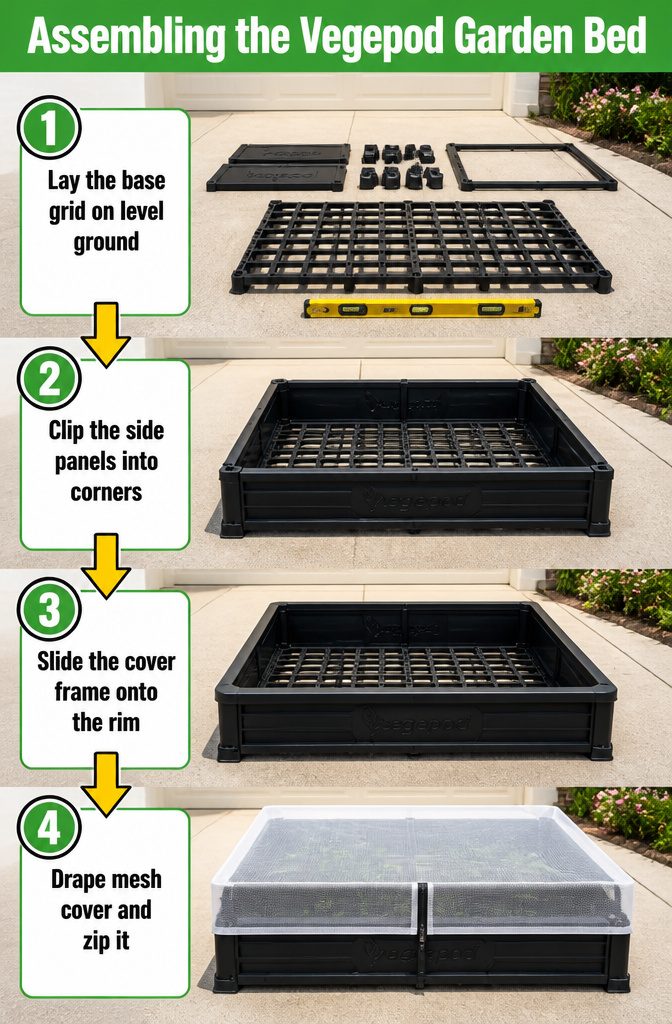
The Vegepod ships in a flat box with panels that clip together at the corners. I laid everything out on the driveway first, which saved me from the mistake of snapping a side panel upside down; the channels only line up one way, but the plastic is forgiving enough that you can force it wrong and only notice when the cover frame won’t seat later.
-
Lay the base grid on level ground first. It is the reference for everything else, and even a slight tilt here throws off every corner after. I used a scrap 2×4 to check mine.
-
Clip the four side panels into the grid corners. They go in dry; no screws, no tools. The clips are stiff plastic, so palm pressure is enough but thumbs alone will hurt by panel three.
-
Slide the cover frame onto the top rim. This is where a second person helps, not for strength but for keeping the rectangle square while you work the last corner down. I managed solo by bracing one side against my hip.
-
Drape the mesh cover over the frame and zip it to the base. The zippers are on the outside, which feels backward until you realize it keeps rain from pooling in the teeth.
The whole process took me 32 minutes, including the time I spent unclipping a side to reseat it after skipping step 1 on my first try.
Soil and Sunlight for Strong Growth
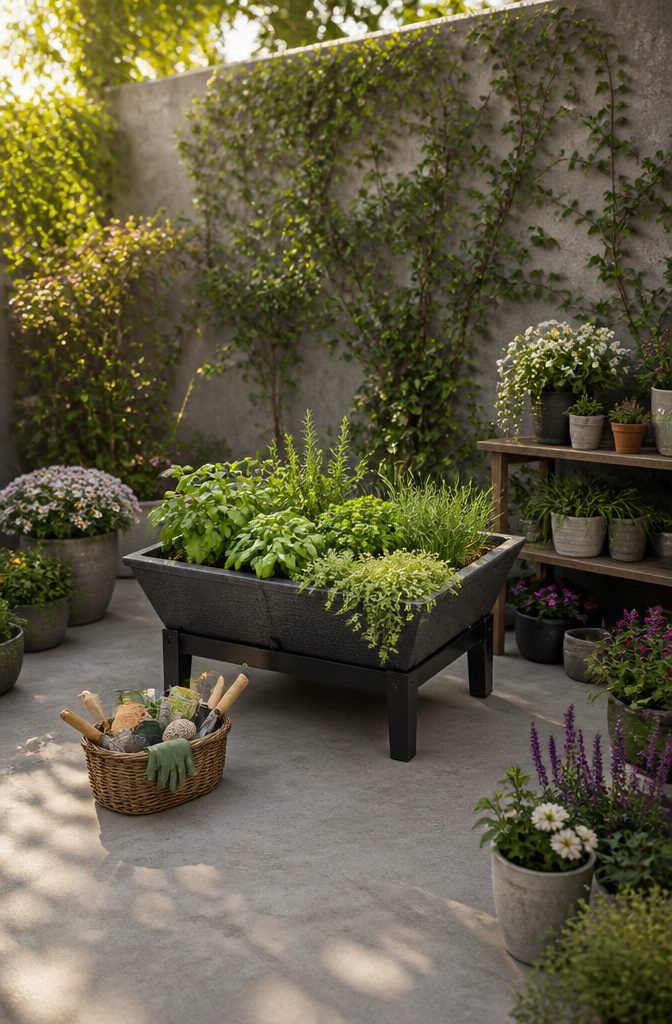
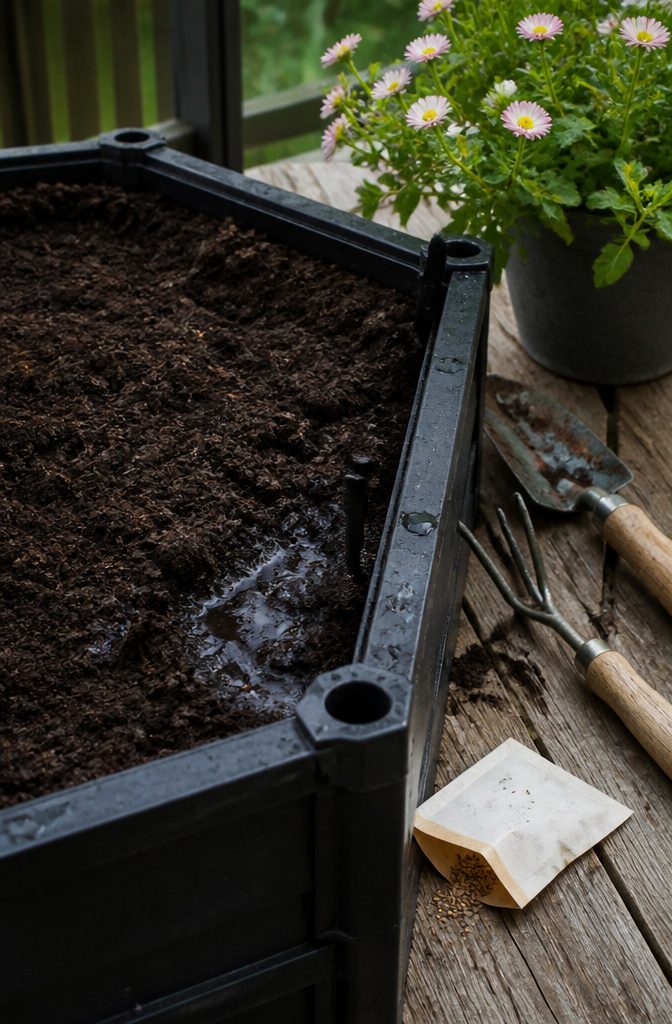
A Vegepod is essentially a large container, which means the soil you fill it with matters more than it would in open ground. Use a high-quality soil-less mix, not the dirt from your yard. Standard garden soil compacts in a raised bed, drains poorly, and invites pests or disease that a contained system has nowhere to shed. I learned this the expensive way my first season, when I skimped with a couple bags of cheap topsoil mixed with what I had on hand. The peppers sat there, yellow and stunted, for weeks before I gave up and replaced the whole batch.
Sunlight is the other non-negotiable. Most vegetables and herbs want full sun, and heat-lovers like tomatoes, peppers, and basil need at least eight hours of it daily. Without that, you are limited to the shade-tolerant crops, and even those will produce less. Scout your patio or yard in advance, because once the Vegepod is filled and planted, moving it is not a job you want to repeat.
Indoor Kitchen Garden Version
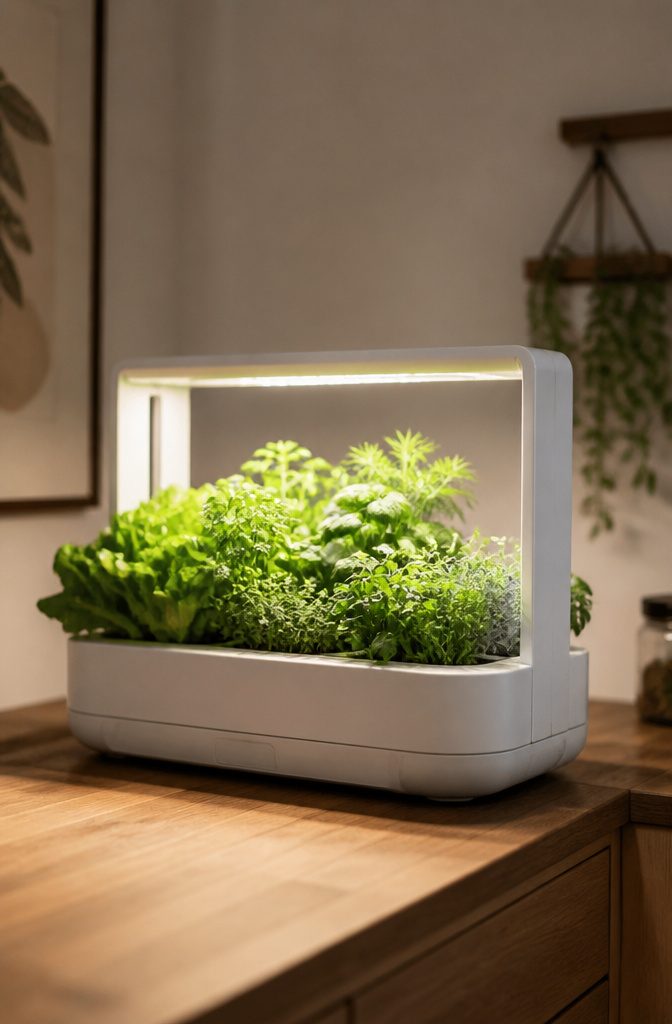
Vegepod also makes an indoor soil-based kitchen garden version aimed at small greens and herbs. The unit is designed to grow without sunlight, which means placement options open up beyond the windowsill. It fits up to eight varieties of greens or herbs at once, and the same design works for seed raising.
I have not tested this indoor model myself. The outdoor beds are what I have hands-on time with, so I cannot speak to how the grow lights perform or how the reservoir translates to an indoor environment. If you are working with a dark apartment or a basement kitchen, it is worth looking into, though I would treat the claims with the same skepticism I bring to any all-in-one system until I have run it through a full season.
Frequently Asked Questions
What is a Vegepod?
A Vegepod is a raised garden bed built around a self-watering reservoir and a mesh pest cover, designed for growing vegetables, herbs, or flowers in small outdoor spaces like patios, balconies, and decks. The sealed system lets established plants go weeks between waterings, and the zippered cover keeps animals out while letting sunlight and rain through.
What sizes do Vegepods come in?
Vegepods come in three sizes: small at 19 by 39 inches with 5.1 square feet of growing space, medium at 39 by 39 inches with 10.6 square feet, and large at 78 by 39 inches with over 21 square feet. Reservoir capacity scales with each: 4.2 gallons for the small, 8.5 for the medium, and 16.9 for the large.
How does the self-watering system work?
Water sits in a sealed reservoir at the base of the Vegepod, and the soil above draws it upward through capillary action as the mix dries. Roots grow down toward this steady moisture source, letting deep-rooted established plants feed themselves for weeks without any top watering in typical summer conditions.






