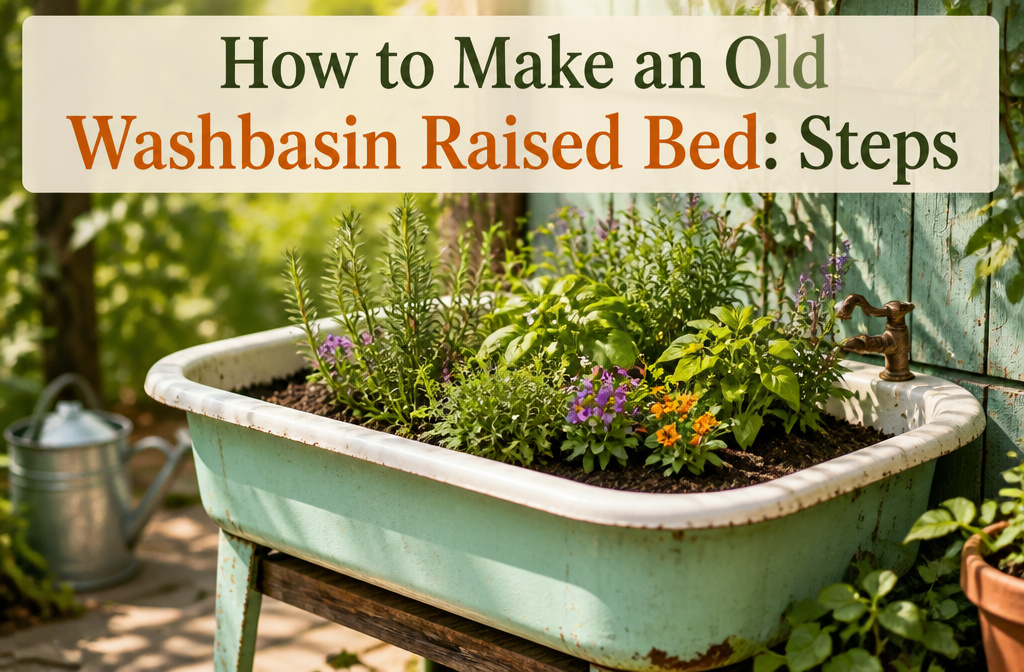
An old washbasin raised bed is a planter built from a vintage sink or basin, usually sitting above ground on legs or a platform.
It only works if the basin holds at least nine inches of soil depth; anything shallower limits you to shallow greens. A Belfast sink runs 103 pounds empty, so weight is the first real constraint most people miss.
1. Pick the Basin
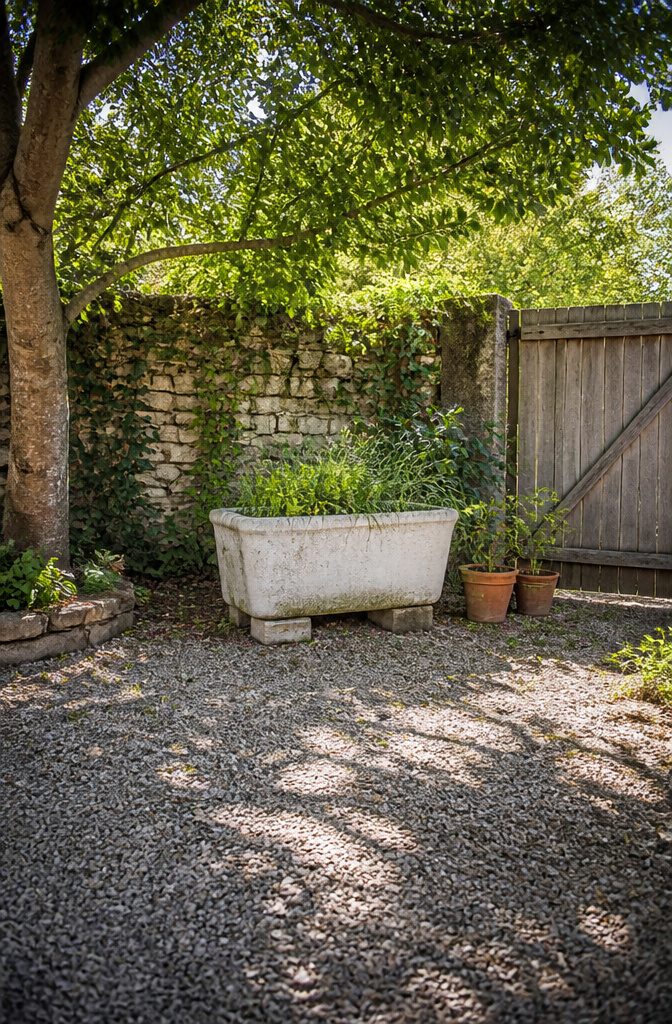
A nine-inch depth is the workable minimum for an old washbasin raised bed.
That gives you enough soil for patio tomatoes or peppers above ground, or beets, carrots, and radishes if you prefer root vegetables. Anything shallower and you are limiting yourself to shallow-rooted greens.
Weight matters more than most people expect. A vintage Belfast sink runs 103 pounds of dead weight, which is enough to scrape a car door frame and strain a back.
Ceramic and stoneware basins hold soil without cracking, but they are not light. Plastic washbasins are easier to move and still hold up fine; I have seen them mounted on carts outside restaurants in LA, full of herbs and kale.
The basin needs a drain hole already, or it needs to accept one you drill. Do not block the drain once it is planted.
Most plants will rot if their roots sit in water, and a sealed basin turns into a pond after every rain. Check the bottom before you commit: one hole is enough, but none is a dealbreaker.
2. Clean and Clear the Drain
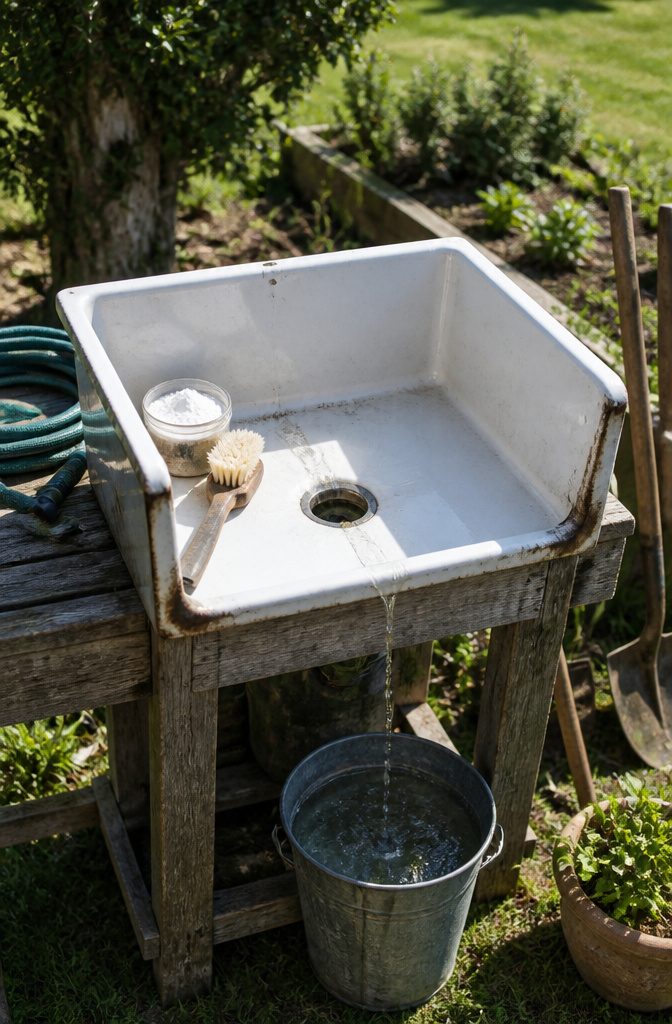
Old enamel washbasins can harbor decades of soap scum, rust around the rim, and whatever the previous owner left in the trap.
I start every conversion with a stiff scrub brush and a paste of baking soda, working the drain hole last so the grit runs out rather than settling back in.
The drain has to stay open; this is not the step to seal it or cover it with mesh.
A Belfast sink I read about sat in a greenhouse for years, weighed down simply by being heavy and by the mass of compost it held, with water running through that original drain to keep greens alive through storms.
If the basin sat in a barn, the pipe threads may be rusted shut or packed with leaf litter. A coat hanger straightened and worked down the throat clears most blockages without tools.
Run water through after and watch where it exits. One gardener I followed attaches tubing to route that runoff away from her foundation, which matters more than people think when the bed ends up near the house wall.
The basin is clean, the drain breathes, and only then do I flip it over to mark new holes.
3. Drill More Drainage Holes
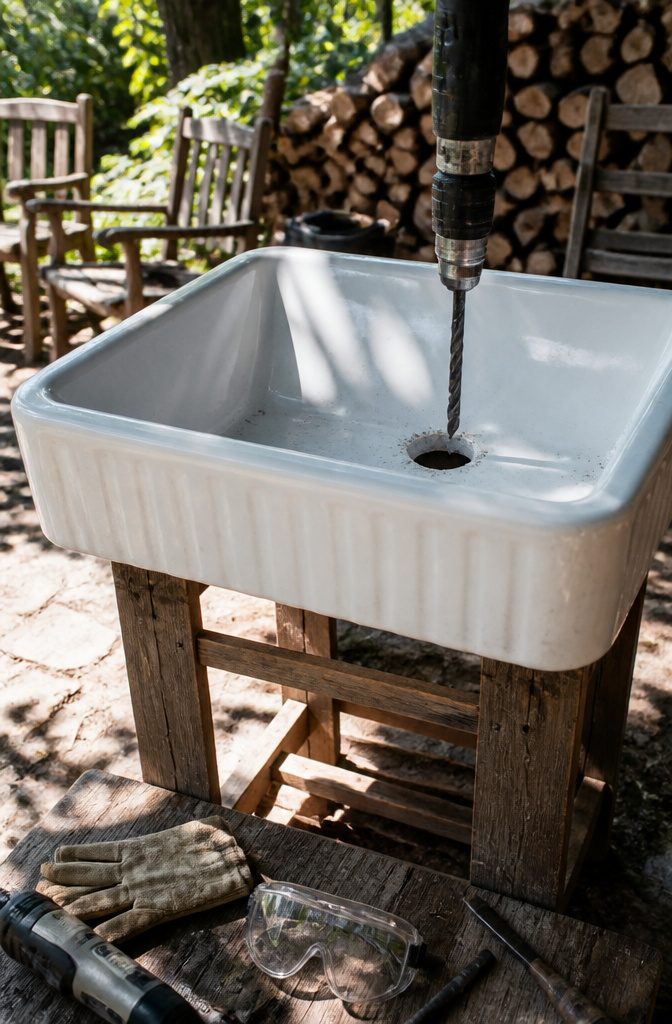
Old washbasins usually come with one drain hole, maybe two if you’re lucky.
That is not enough for a raised bed. Water needs paths out, or roots sit soggy and rot.
A high-speed steel (HSS) drill bit cuts through the enamel and metal cleanly. I have seen people try masonry bits and chew the finish.
The right bit matters. Work on a scrap of wood so the back side does not burr.
Wear gloves, eye protection, and ear protection. The metal sings, and chips fly.
Space holes four to six inches apart across the entire bottom, not just the center.
A washbasin holds more soil than a pot, so water collects at the edges too. I drill a ring near the rim as well, low enough that soil covers them but high enough that a slight clog still drains.
If the basin will sit on the ground, the holes still matter. Earth contact blocks flow.
On a stand, they matter even more. Either way, this step is what keeps plants alive past the first heavy rain.
4. Build or Add Legs
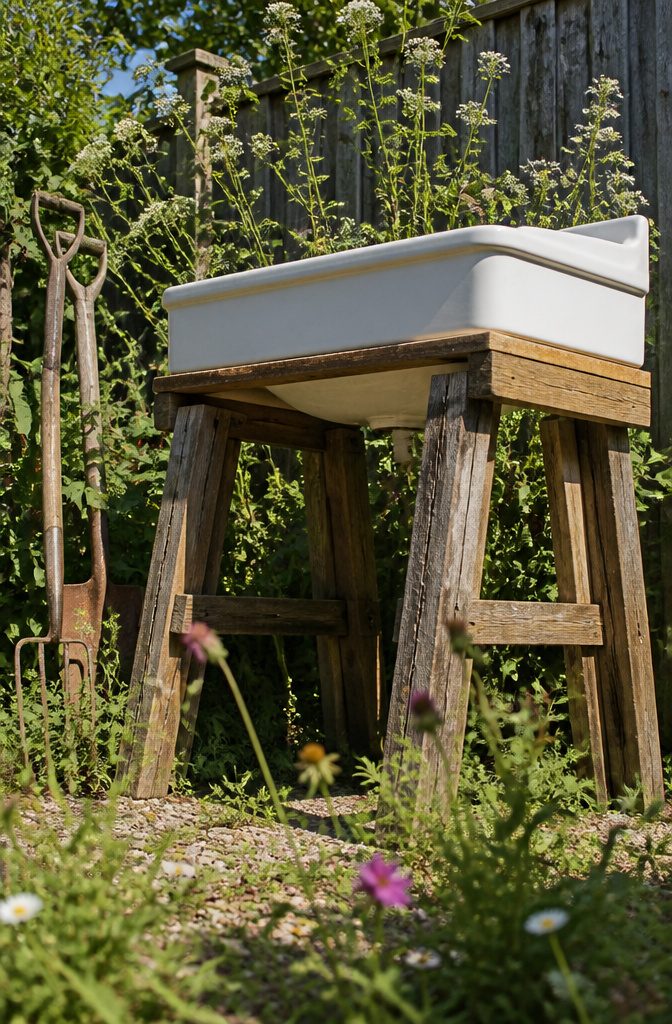
Raising the washbasin off the ground keeps rabbits and raccoons from helping themselves to your peppers.
One gardener I read about learned this the hard way, returning from a weekend away to find something had taken a huge bite out of a nearly ripe pepper.
The simplest way to do this is with a pair of old sawhorse legs and a platform built from scrap.
A 2×4 runs between the sawhorse brackets, screwed through the premade holes, with a piece of plywood fastened across the ends to create a flat surface for the basin to sit on.
You want the basin stable enough that a bump from a raccoon won’t tip it.
You could also set the washbasin right on the ground, which saves the trouble of building legs but leaves your plants more vulnerable to critters.
The choice depends on what you have on hand and what your yard tends to attract.
5. Layer Gravel and Soil
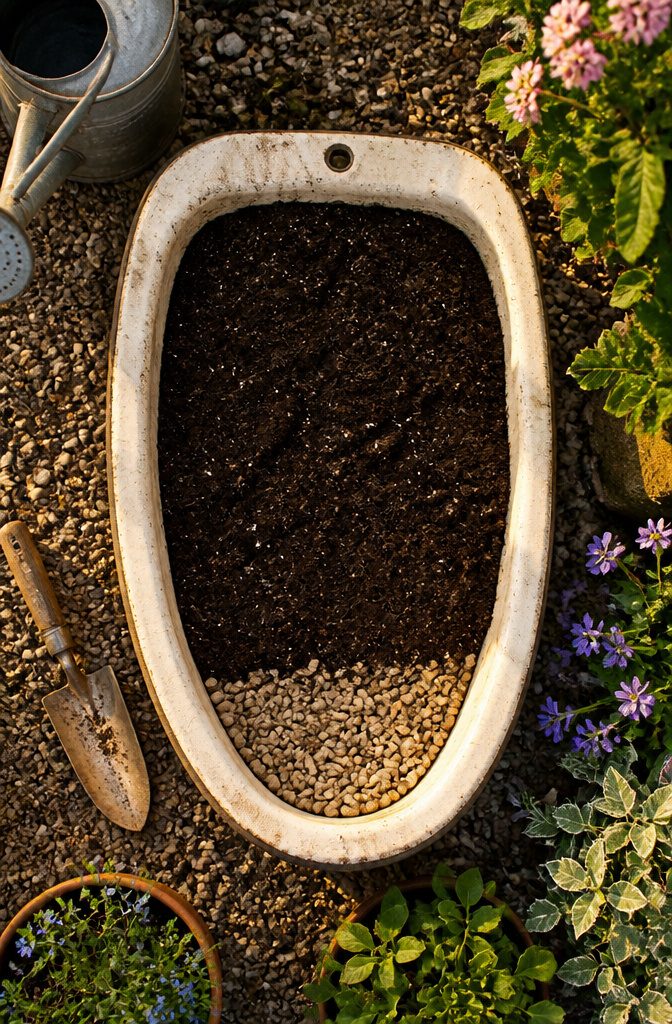
Old potting soil from last season works fine here; just break up any clumps before you mix it. Lay 1–2 inches of gravel across the bottom of the basin so water has somewhere to go instead of pooling around roots.
I used bagged drainage rock from the garden center, but broken crocks or pebbles from the yard do the same job.
On top of that gravel, fill the basin to about an inch below the rim with a 50:50 mix of potting soil and compost.
The compost feeds whatever you plant, and the potting soil keeps the texture light enough for drainage. If your basin has an overflow drain on the side, stop the soil just below it so heavy rain has an escape route.
6. Choose Plants for the Depth
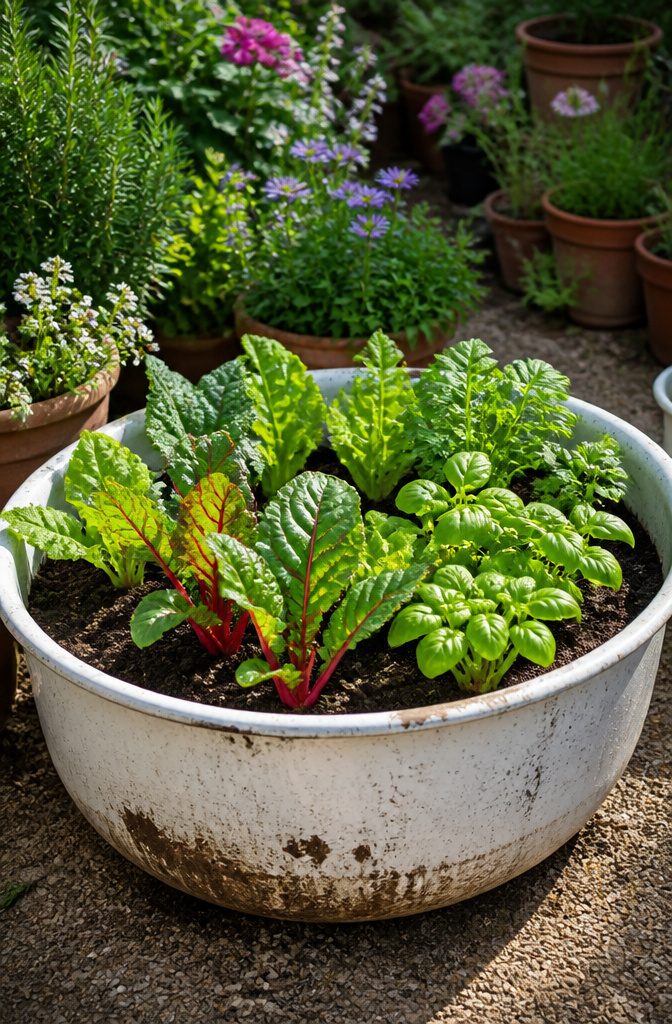
A nine-inch basin depth rules out anything that needs serious root run, but it still leaves room for more than you’d think.
Leaf lettuce and Rainbow Swiss chard are the easiest wins; they ask for little more than soil and regular water. Root vegetables work too if you pick the right varieties.
Early Wonder Tall Top beets, Romeo baby carrots, Red-Cored Chantenay carrots, and White Icicle radishes all formed usable roots for me that first autumn, and warm weather stretched the harvest into late October.
For herbs, the usual suspects like basil and parsley stay compact enough. Flowers and succulents are where I get less specific: the sources don’t name particular ones, and I won’t invent favorites.
The one pepper I can confirm is Gold Standard, which produced in my basin in 2017. Fingerling potatoes?
I tried them once. The harvest was decent, but mounding soil around the plants once they grew tall was awkward enough that I wouldn’t repeat it.
7. Water and Watch
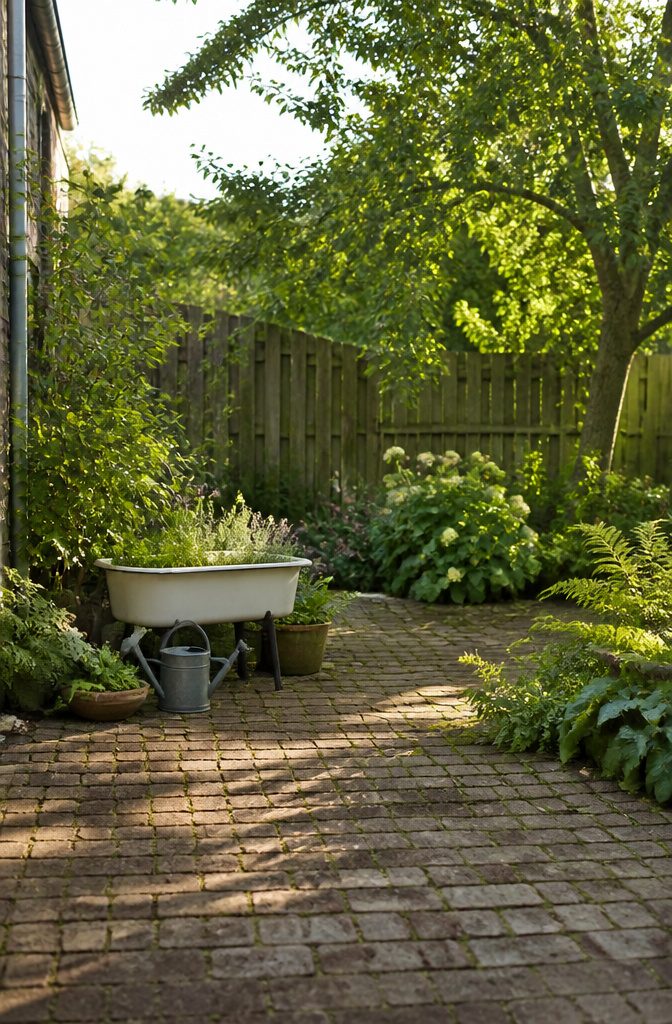
The first season I ran an old washbasin raised bed, I watered it on the same schedule as my in-ground tomatoes and nearly lost the chives to root rot.
The basin holds moisture differently than open soil, and that built-in drain only helps if water actually reaches it.
Now I check the top inch of soil with my finger before adding anything. Dry means water; damp means wait.
Paper coffee filters over the drain hole keep soil from washing through while still letting water escape, a trick I picked up after watching gravel alone clog in a hard rain.
I pair that with a layer of stones underneath, and I still check the drain monthly for blockages.
Pest watching in a raised basin is almost easier than at ground level. The elevation puts leaves at eye height, so I spot aphid clusters or chewed mint leaves fast.
Bunnies stay mostly on the ground, which is why my herbs survived when the border planting got demolished. I walk by with my coffee most mornings and look for holes, discoloration, or the sticky residue aphids leave behind.
Catching it early means a spray of water or a pinch of the worst leaves usually handles it; letting it go means deciding whether to pull the plant or fight harder.
What Grows Best in a Basin
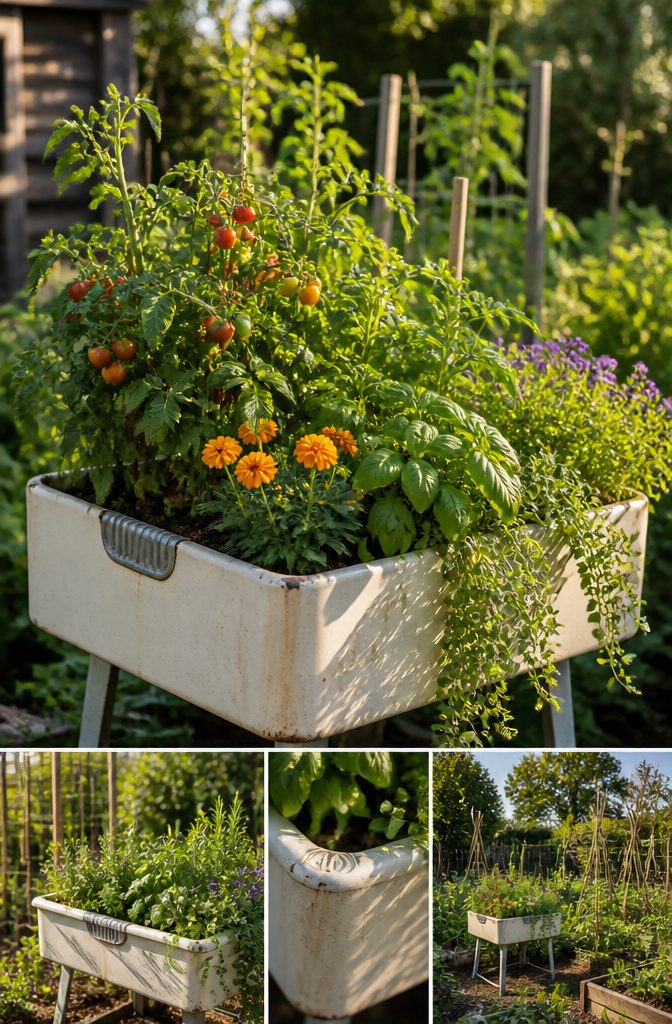
A washbasin’s depth, usually around nine inches, opens more options than you’d expect. That single measurement decides whether you’re growing shallow-rooted herbs or pulling full-sized carrots by Halloween.
Vegetables do especially well. Patio tomatoes and compact peppers sit happily above the soil line, while Early Wonder Tall Top beets, Romeo baby carrots, and Red-Cored Chantenay carrots all develop properly in the confined space.
One grower I followed even managed fingerling potatoes, though she admitted the experiment had limits: once the plants grew tall, mounding soil around them became awkward, and she wouldn’t repeat it.
Herbs are the obvious fit.
Basil, thyme, rosemary, and mint all thrive with the drainage a sink provides. A restaurant in Los Angeles mounted plastic washbasins on rolling carts and filled them with herbs, tomatoes, and kale for a movable kitchen garden.
Flowers soften the utilitarian look.
Geraniums and alyssum handle the heat, and spring bulbs planted in layers can return for two years before needing division. The stoneware itself insulates roots against temperature swings.
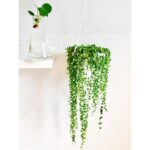
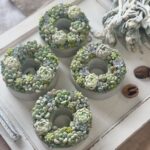
Succulents like hen and chicks or string of pearls suit shallow basins or the portion where soil depth runs thin.
Less expected: plug the drain and you have a mini pond; add grit and you have an alpine garden; leave it unmown, a contained wildflower meadow.
Ground or Raised: Placement Options
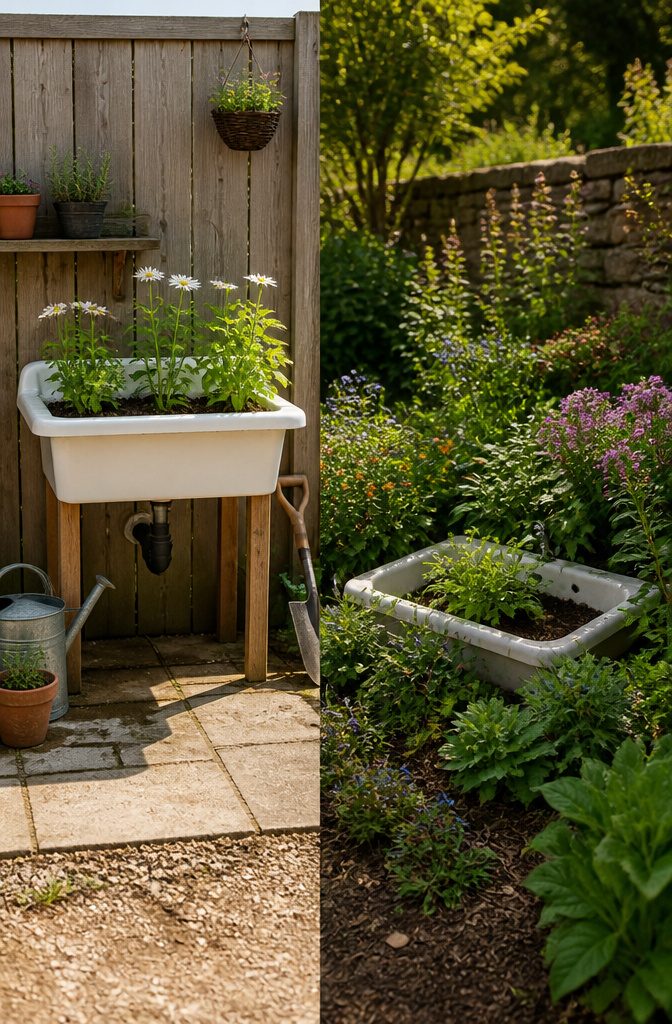
A washbasin sitting flat on dirt works like any in-ground bed, only the porcelain walls keep roots warmer in winter and the built-in drain lets water escape.
The catch is that the drain only clears water if the basin is lifted an inch or two on bricks or blocks; otherwise the hole presses against soil and plugs.
Weight matters too. Wet soil in a stoneware sink runs heavy fast, and moving it after planting is back-breaking work.
| On the ground | Raised on legs or a platform | |
|---|---|---|
| Drainage | Needs bricks or blocks to keep drain open | Drain hangs free; add gravel layer inside |
| Pest access | Vulnerable to rabbits, raccoons | Keeps out most critters |
| Soil weight | Slightly less critical | Requires sturdy support; 2×4 and plywood platform works |
| Accessibility | Bend or kneel to reach plants | Easier on back; sawhorse height is typical |
I have planted both ways. Ground-level basins blend into the garden like they were always there, but I lost half a pepper to something with teeth the summer I tried it.
Raised on a sawhorse platform, the same basin stayed clean and reachable, though building that base took an afternoon and a trip to my dad’s shed for scrap lumber.
Why Upcycle a Washbasin
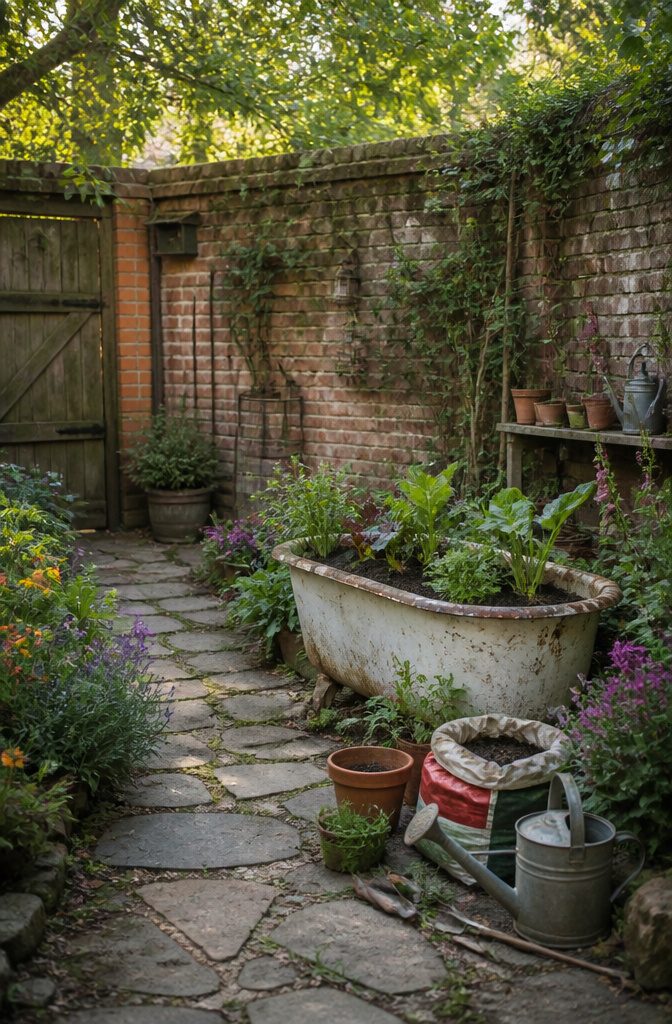
An old washbasin headed for the landfill already has everything a planter needs. The porcelain or stoneware walls insulate roots against temperature swings, and the drain hole is already there, so you are not drilling drainage after the fact.
I have walked past enough curbside piles on bulk-trash day to know how many of these sinks get tossed simply because the bathroom got remodeled.
The environmental math is straightforward. Quarrying new stone or firing new ceramic consumes fuel and water; keeping a used basin in service does not.
One Belfast sink I read about sat beside an allotment path for six months before someone claimed it. That is six months of rain and frost the material survived, proof it will outlast any plastic pot you could buy.
There is also the plain satisfaction of it. A washbasin carries the marks of its first life, the worn enamel, the hairline cracks, the yellowed rim where decades of hands rested.
Turning that into lettuce or beets or a drift of alpine strawberries feels less like shopping and more like rescue.
The basin was built to last. Your garden might as well be the place where it does.
Frequently Asked Questions
What plants can I grow in a washbasin?
Vegetables, herbs, flowers, and succulents all grow well in a washbasin.
Good choices include patio tomatoes, compact peppers, Early Wonder Tall Top beets, Romeo baby carrots, leaf lettuce, Rainbow Swiss chard, basil, thyme, rosemary, and mint. Root vegetables need at least nine inches of depth to form properly.
How do I ensure proper drainage in my washbasin planter?
Keep the drain hole clear and add one to two inches of gravel, broken crocks, or pebbles at the bottom so water has somewhere to go.
Drill extra holes four to six inches apart across the bottom if the basin only has one original drain. Paper coffee filters over the drain keep soil from washing through while still letting water escape.
Can I use an old sink for planting?
Yes, old sinks work well for planting because they already have a built-in drain hole. Most basins have porcelain or stoneware walls that insulate roots against temperature swings, and they hold up to weather better than plastic pots.
Just make sure the drain stays open and the basin is at least nine inches deep for most vegetables.