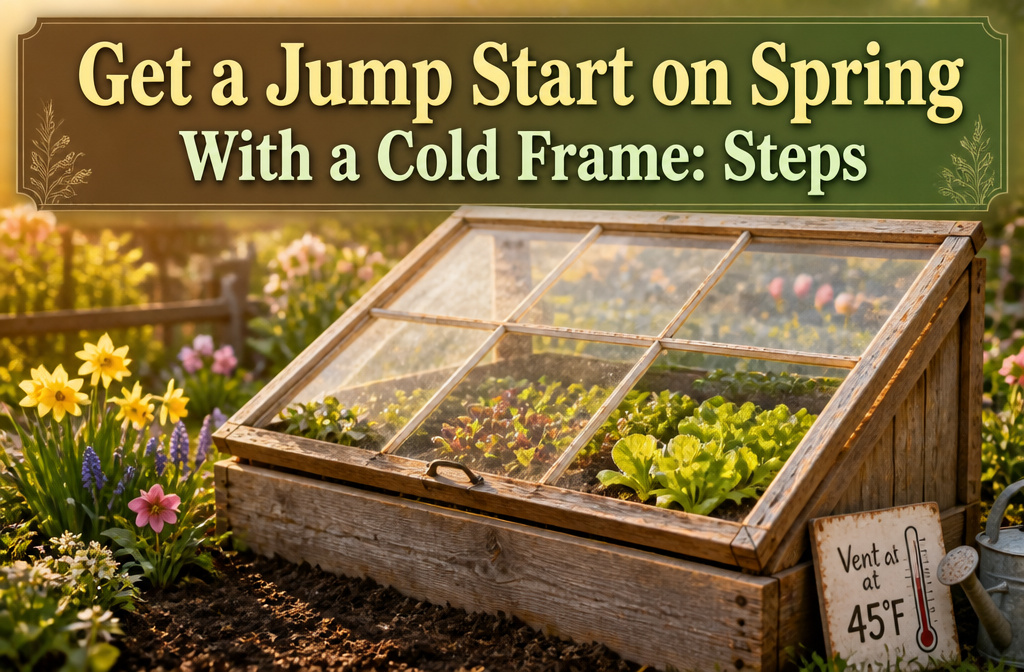
A cold frame is a bottomless box with a sloped transparent lid that traps solar heat to keep soil 10 to 20 degrees warmer than the outside air. It only works if you vent the lid once the interior hits 45 degrees; forget this step and a sunny March day will cook your seedlings. I built mine from scrap lumber and an old window, then lost a flat of lettuce learning that thermometer reading the hard way.
What a Cold Frame Actually Does
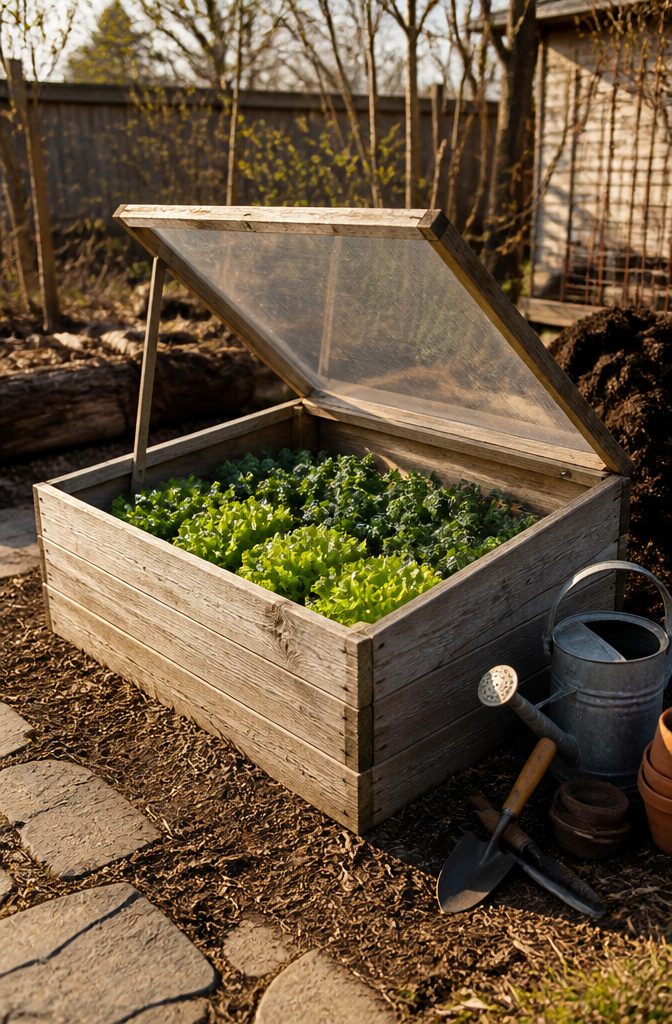
A cold frame is basically a bottomless box with a angled lid of glass or polycarbonate that faces south to catch the sun. The transparent cover acts as a passive solar collector, trapping heat beneath it so the soil and air inside stay 10 to 20 degrees warmer than the uncovered ground outside. That temperature buffer is what lets you move lettuce, spinach, and kale into the soil weeks before your last frost date would normally allow.
The structure itself can be built from lumber and an old window, wood and plexiglass, or even stacked concrete blocks and straw bales for extra insulation. What matters is that sloped top, angled somewhere between 25 and 55 degrees, capturing the low spring sun and holding that warmth through the night. Without any supplemental heat, the cold frame buys you time; with it, you are working with the season instead of waiting for permission from the calendar.
1. Build or Buy the Frame
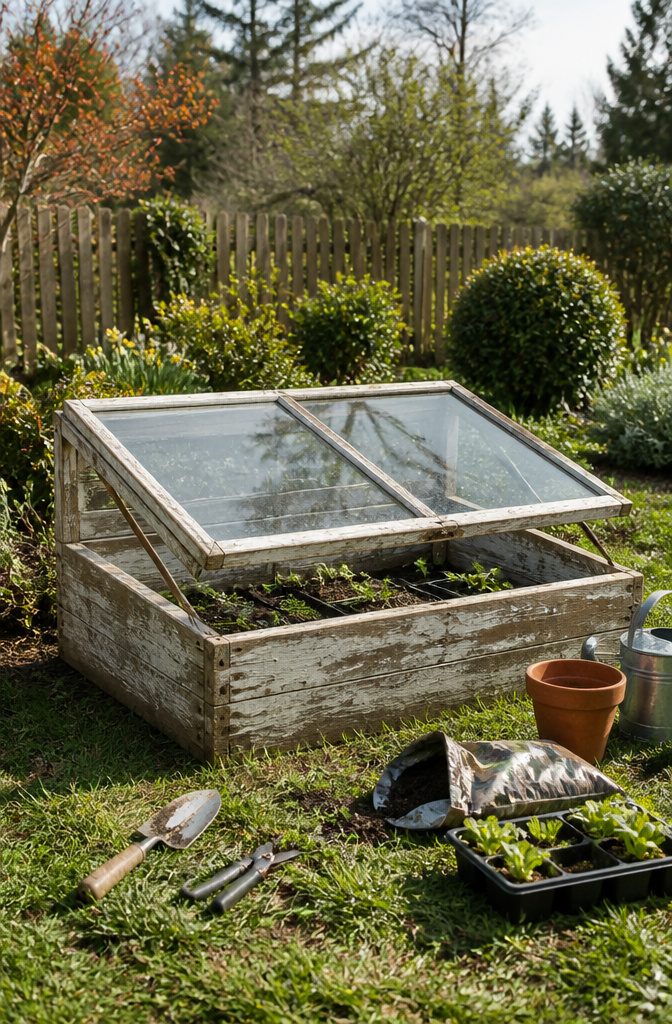
A cold frame starts as a bottomless box, most often four boards nailed into a rectangle about three feet by six feet, with the back wall sitting higher than the front so the lid slopes toward the sun. I have seen the back at fifteen inches and the front at eight, though some builders run the back up to three feet for deeper crops and easier access. The lid is where the trapping happens: an old window hinged along the top, or a sheet of polycarbonate or acrylic if glass is scarce.
Ready-made frames save the weekend. Traditional wood-and-glass models blend into a bed and last years if the hinges hold. Metal frames are lighter to move and shrug off rot. Pop-up portables unfold in minutes for renters or balcony gardeners who need to pack away after spring. Hay bale frames are the rough-and-ready outlier: stack bales into a square, lay a salvaged window across the top, and you have a temporary shelter that goes back to the compost heap once night temperatures settle.
2. Set It Where the Sun Hits
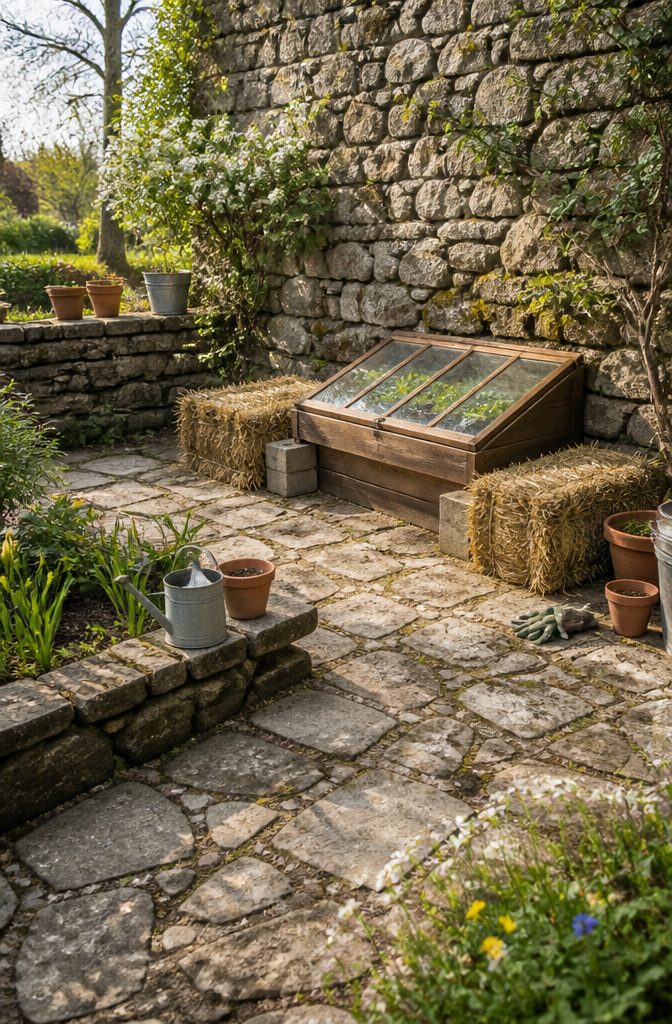
South-facing placement collects the most sun, though east-facing works if that is where your light lands. The sloped lid should angle toward that southern exposure, roughly 25 to 55 degrees, so the low March sun hits the glass directly rather than sliding off flat. I have seen growers on tight balconies wedge a frame against the railing where it catches morning light and blocks the wind off the building. Concrete blocks or straw bales can form the back wall if you need to shield plants from a cold northern draft, and the whole assembly can sit on a patio slab or even a table if in-ground space does not exist.
Keep the front-to-back depth to no more than three feet; anything deeper and the center stays shaded by its own walls, and you will struggle to reach seedlings without leaning across the glass. A thermometer inside lets you track what that sun actually delivers, because a south-facing cold frame in a cramped yard surrounded by fences heats differently than one in open ground. Watch where shadows fall at 9 am and again at 3 pm before you commit.
3. Fix the Soil Before Planting
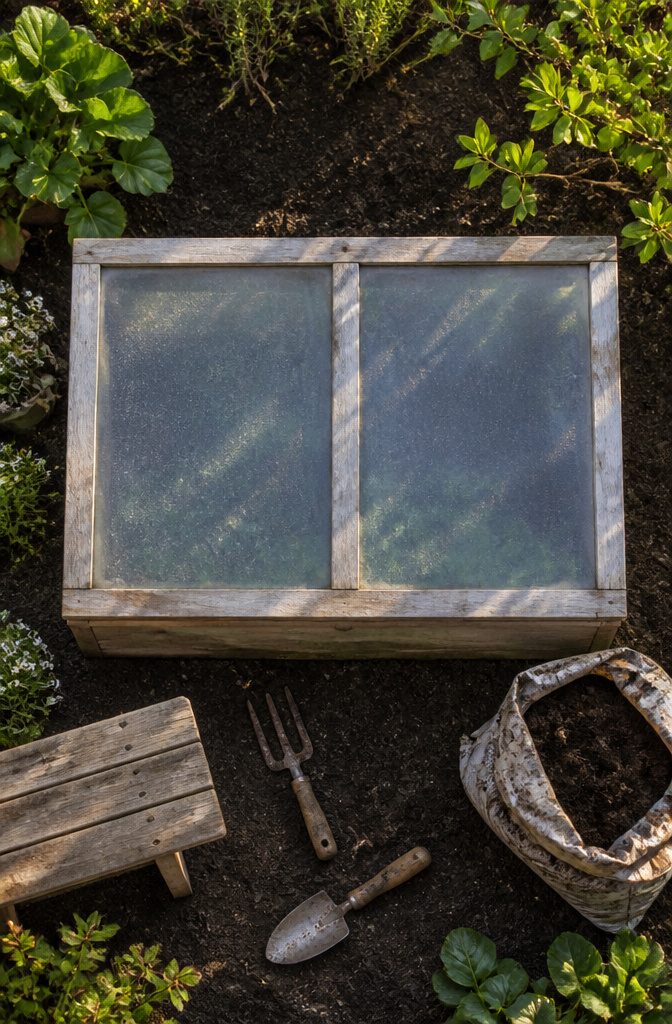
A cold frame is essentially a bottomless box that sits directly on your existing soil or a raised bed, which means whatever is underneath becomes your planting medium. That existing dirt might be compacted, depleted, or just not fertile enough to support the extra weeks of growth you’re trying to squeeze out.
Mixing in compost or aged manure before you plant fixes this in ways that matter for such a contained space. Organic matter loosens tight soil so roots can move, holds moisture without waterlogging, and feeds the slow release of nutrients that cool-season crops need during those shoulder-season weeks when the frame is working hardest. The box traps heat and blocks wind, but it cannot manufacture fertility from nothing.
I put my frame in place at least two weeks before sowing spinach or radishes, partly to warm the soil but partly so I have time to fork in a couple inches of compost and let it settle. The soil thermometer then reads consistently around 45°F before I commit any seeds to the ground. Without that amendment, the frame just warms up poor soil faster, and the results show it by mid-April.
4. Sow Cool-Season Crops Four to Six Weeks Early
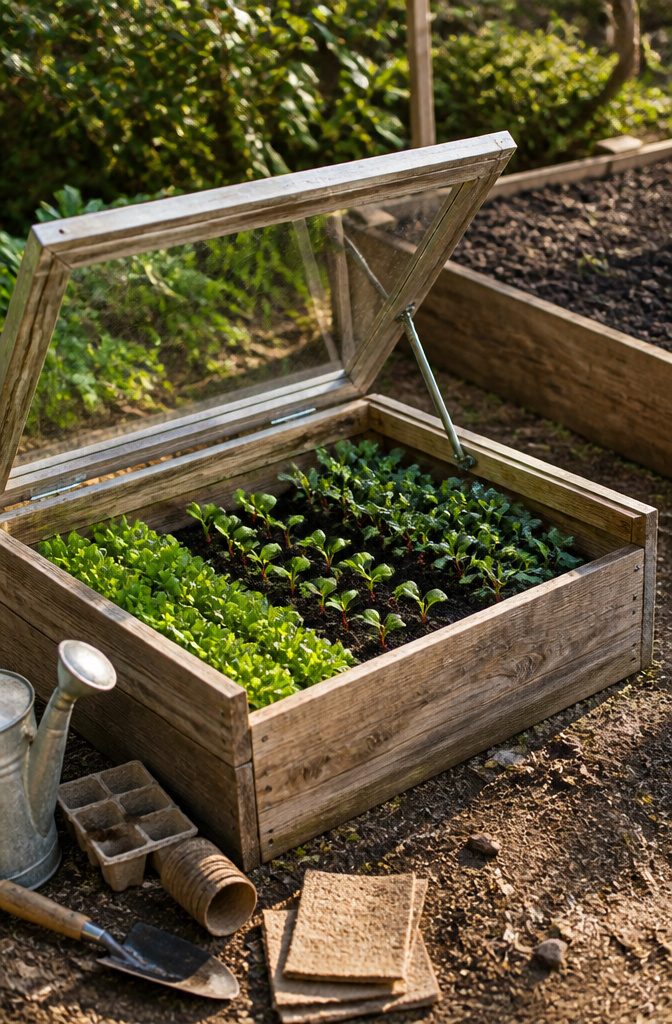
Lettuce, spinach, kale, radishes, carrots, beets, onions, scallions, parsley, and cilantro all go straight into the cold frame soil four to six weeks before your last frost date. These are cool-season crops: they germinate in soil as cool as 40°F and keep growing when nights dip into the mid-20s°F inside the frame. I sow them directly because transplant shock sets back timing I do not have to spare this early in the year.
Cool season crops (like lettuce, spinach and peas) prefer air temperatures to be lower, about 50 to 60 degrees Fahrenheit.
That temperature range is what your cold frame delivers on sunny March and April days. Warm-season crops, meanwhile, need days at 70 to 75°F to germinate and nights that stay well above freezing. Tomatoes, peppers, eggplant, and zucchini stall out in a cold frame, their seedling roots sitting cold and wet until they rot or simply refuse to grow. Start those indoors under lights, or wait until the frame itself warms and the calendar flips to late spring.
5. Watch the Thermometer and Vent Before Forty-Five
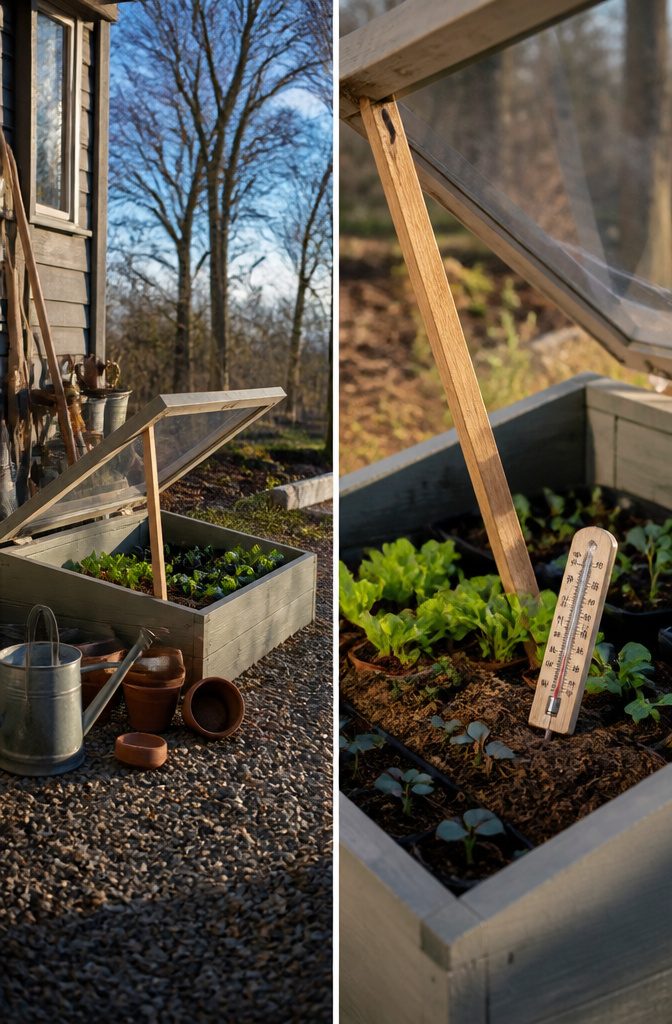
A min-max thermometer inside the frame takes the guesswork out of morning rounds. Air temperatures for cool-season crops want to stay between 40 and 60°F, and the margin for error on the high end is thinner than most beginners expect. Once the interior reads above 45°F, prop the lid open a few inches with a scrap piece of wood or a wooden block. The sun even in late winter can push the air inside 40 degrees above whatever the thermometer says in the yard.
Forget to vent on a bright day and the heat builds fast. Plants grown too warm turn soft, and soft tissue snaps when a cold front drops the temperature back to freezing that same night. I check the thermometer before coffee, set the prop, and circle back to close the lid before sunset so the trapped warmth carries through until morning. An automatic vent opener exists if your schedule keeps you away from the garden for days at a time, though the scrap-wood method costs nothing and has worked fine for me.
6. Harvest and Feed the Soil Again
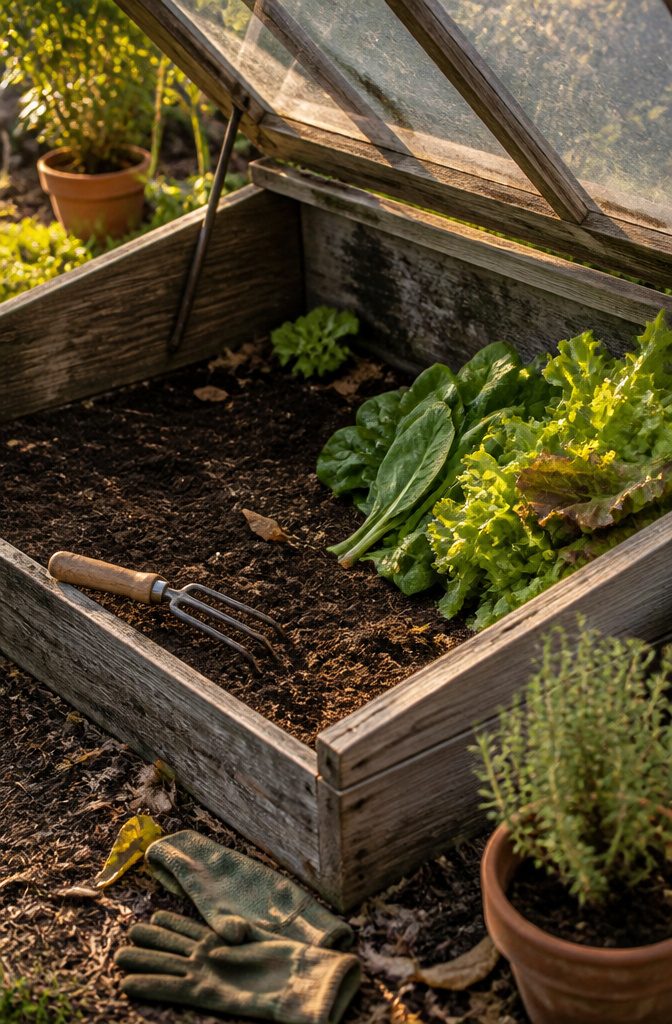
The first round of lettuce and spinach I cut at soil level with a sharp knife left the roots in place, which meant the bed stayed mostly intact when I lifted the lid to rake in a fresh inch of compost. Compost between plantings keeps the soil from running on empty after those early crops pull what they need to grow fast in a cold frame’s cramped heat.
By late March my frame had warmed enough that the radishes I sowed next matured in half the time of the first batch. The season changes quickly inside that box, and the same spinach that sat frozen-solid happy in February would bolt before Easter if I left it too long. I learned to read the frame instead of the calendar: when daytime temperatures under glass start brushing past 50°F consistently, the window for another round of arugula or kale narrows fast. Succession planting in a cold frame is less about spacing seeds weeks apart and more about catching the soil while it still holds the cool moisture those crops want, before the spring sun turns your protected patch into something closer to summer.
Cold Frame or Greenhouse
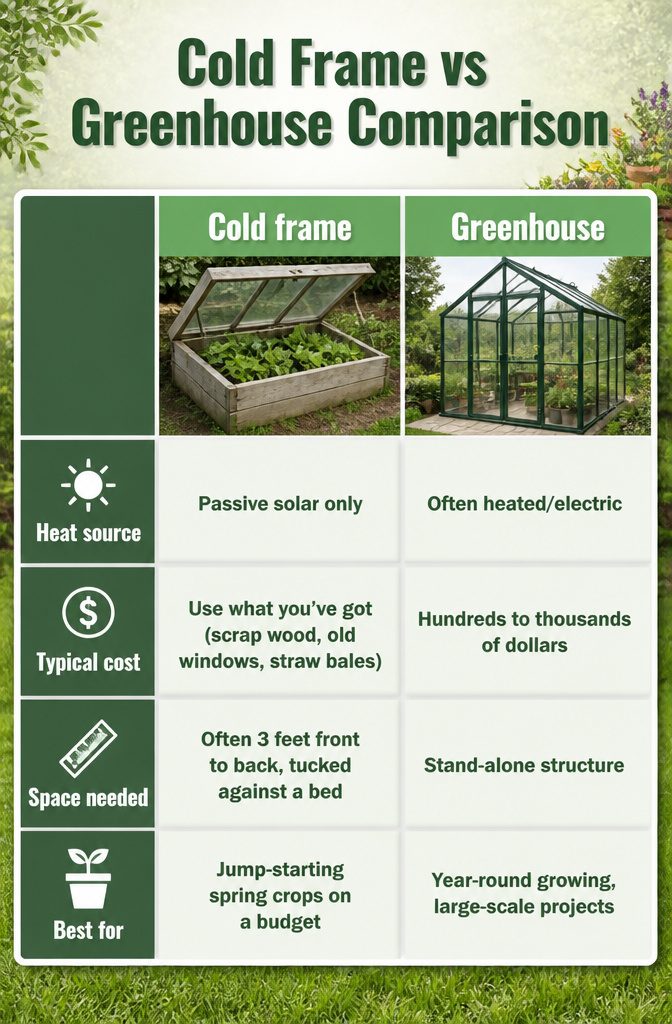
A cold frame is basically a bottomless box with an angled transparent lid facing south, trapping solar warmth without plugs or fuel bills. A greenhouse gives you finer temperature control and room to walk in, but that control costs money and square footage most patio gardeners do not have.
| Cold frame | Greenhouse | |
|---|---|---|
| Heat source | Passive solar only | Often heated/electric |
| Typical cost | Use what you’ve got (scrap wood, old windows, straw bales) | Hundreds to thousands of dollars |
| Space needed | Often 3 feet front to back, tucked against a bed | Stand-alone structure |
| Best for | Jump-starting spring crops on a budget | Year-round growing, large-scale projects |
If your yearly garden spending sits around $500–$800 and your growing space is a patio or small yard, the cold frame wins. It extends the season by several weeks at both ends, and you can bank soil against the walls or paint the interior black for extra warmth. A greenhouse makes sense later, if you outgrow the frame and want tomatoes in January.
What I Planted and What Survived
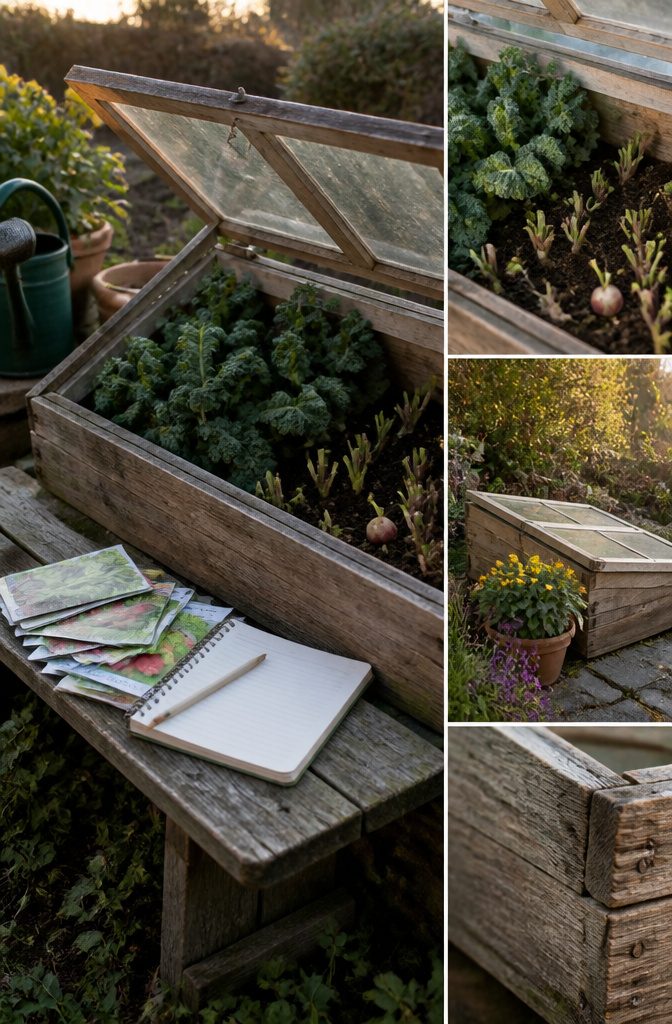
I planted spinach, kale, and radishes in my cold frame the last week of February, figuring the 20°F nights would not bother them under glass. The spinach came up unevenly; half the rows never germinated, probably because I watered the day before and the soil stayed too wet and cold for too long. What did sprout grew slowly but steadily until a stretch of sunny days in mid-March cooked the frame before I vented it. Lift the lid when the inside hits 45°F, not when you notice wilting. I learned that after losing a flat of lettuce to heat stress.
The kale survived everything, even a late snow. The radishes were another story. Something ate the tops off three days before I planned to pull them, likely rabbits that squeezed under the frame’s edge. Of the twelve feet of row I sowed, I harvested maybe four feet. The rest fed the neighborhood.
By April the soil in the frame had warmed past 40°F, and I direct-seeded more spinach and a row of arugula. Those second plantings did better than the first because I finally stopped overwatering.
Three Mistakes I Made With Temperature
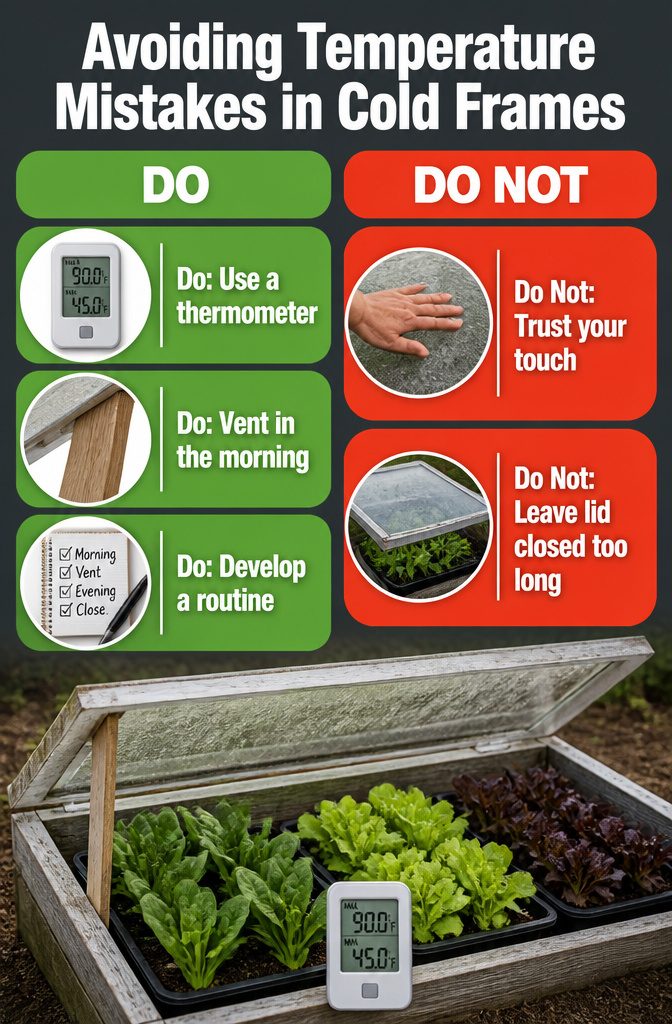
On a sunny March afternoon the thermometer outside read seventy, and the spinach and lettuce seedlings inside my cold frame read dead. I had left the lid shut tight, figuring the air still felt cool to me. A min-max thermometer would have shown the truth: interior temperatures can spike forty degrees above ambient on a clear day, pushing well past the ninety-degree mark that damages fragile seedlings. That batch cost me two weeks of growth and a full flat of starts.
Trusting touch instead of a thermometer cost me again in April. The frame felt pleasantly warm when I pressed my palm to the glass, so I waited another hour to prop the lid. By then the soil surface had cooked to a crust and half the arugula had wilted past recovery. A simple stick or wooden block would have vented it in time.
The third mistake was not developing a routine. I now vent in the morning whenever the interior hits forty-five to fifty degrees, then close the lid before sunset to trap that warmth overnight. The five-dollar min-max thermometer has outlasted every tray of seedlings I ever lost to guessing.
Frequently Asked Questions
What crops can I plant in a cold frame?
Lettuce, spinach, kale, radishes, carrots, beets, onions, scallions, parsley, and cilantro all grow well in a cold frame. These cool-season crops germinate in soil as cool as 40°F and keep producing when nights drop into the mid-20s°F under glass. Skip warm-season crops like tomatoes and peppers; they need days at 70 to 75°F and will stall or rot in the cold, damp soil.
How do you build a cold frame?
A cold frame is a bottomless box with a sloped lid facing south, usually about three feet by six feet, with the back wall higher than the front so the lid angles between 25 and 55 degrees. The lid can be an old window, polycarbonate, or acrylic. You can also use stacked concrete blocks or straw bales for the walls and lay a salvaged window across the top for a temporary version.
When should I start seeds in a cold frame?
Sow cool-season crops four to six weeks before your last frost date. In zones 5 through 7, this often means late February or early March. Check that the soil inside the frame reads consistently around 45°F before planting, and put the frame in place at least two weeks early so you can amend the soil and let it settle.