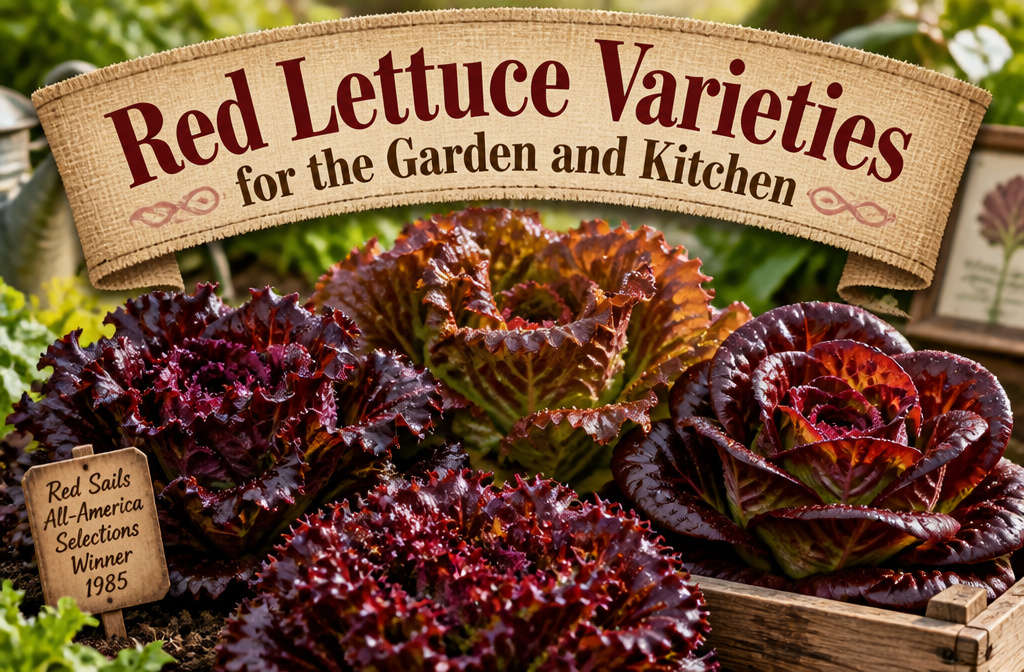
Red lettuce is leaf lettuce whose leaves carry anthocyanin pigments in shades from bronze to near purple-black. The catch is that those pigments fade and the plants bolt fast once soil temperatures climb above 75°F, so variety choice and timing matter more than with green types. Red Sails, a 1985 All-America Selections winner, stays crisp even after other reds have turned bitter and run to seed.
Red Sails
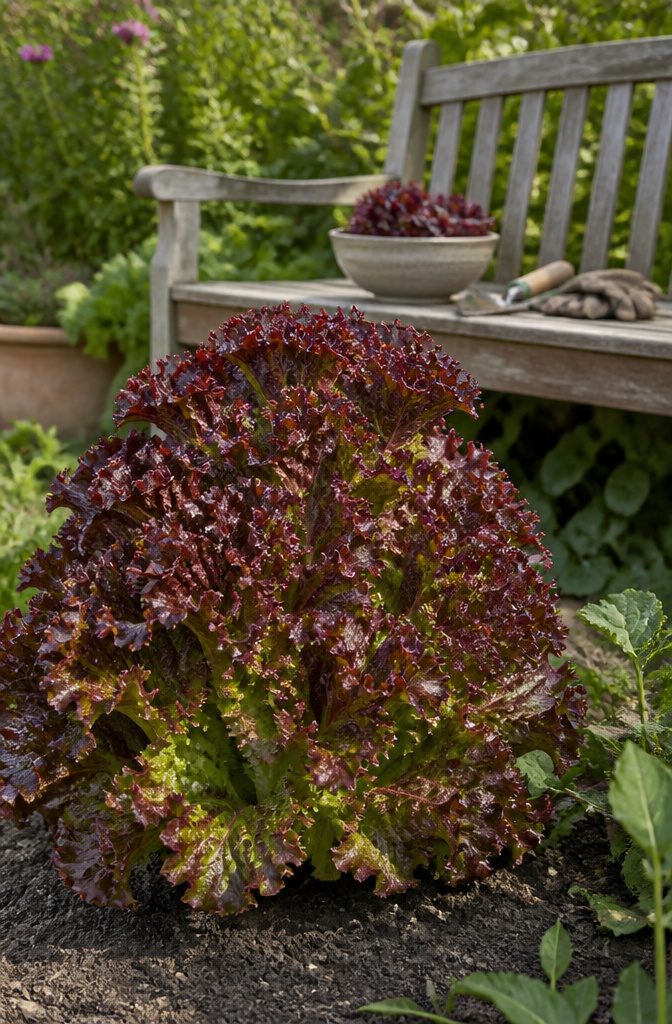
Red Sails has been around since 1985, when it won an All-America Selections award, and it remains one of the most widely grown red lettuces for good reason. The heads spread up to a foot across, with frilly, deep burgundy leaves that lighten to green at the base. That size makes it one of the more substantial leaf lettuces for a small garden bed or patio container.
What sold me, reading grower accounts, was the range this variety covers. Red Sails handles cold snaps that would slow other lettuces, then keeps producing through heat that pushes most red varieties straight to bitterness and bolt. One gardener noted hers stayed crisp and mild-tasting even after the plants had technically started to bolt, which is the point where I usually pull lettuce and reseed. For a gardener working one small space who wants salad greens across seasons without constant replanting, that tolerance matters more than any color description.
Ruby Gem
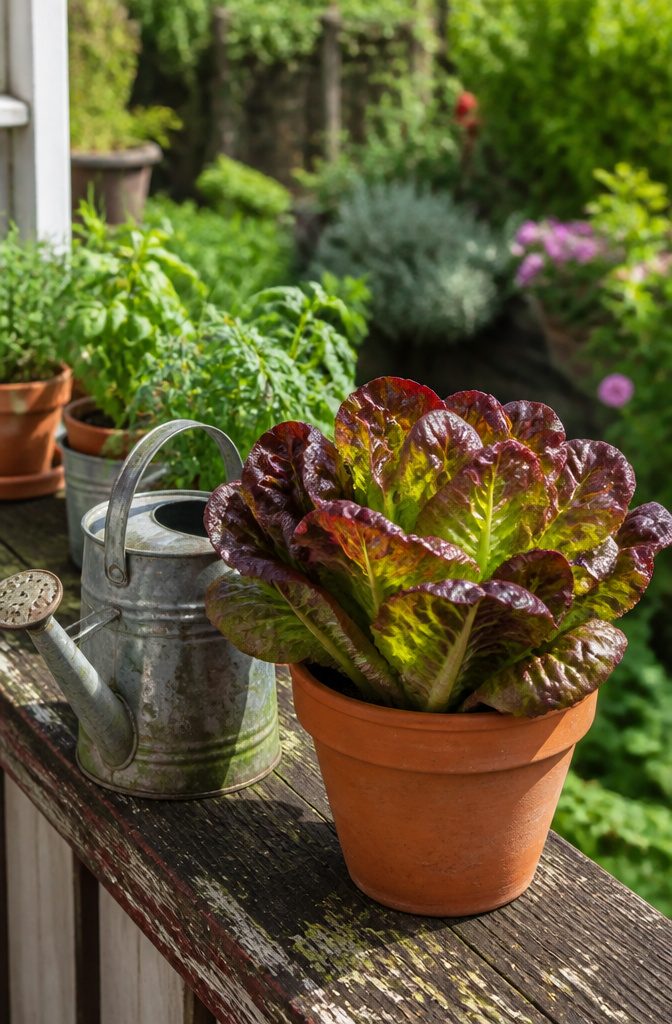
Ruby Gem lettuce forms tight, round rosettes that sit neatly in a pot, the outer leaves shading from green at the heart to a dark ruby at the tips. That contrast makes it one of the prettier red lettuces to grow where space is tight; a single container on a balcony rail gives you a full bouquet effect without the sprawled footprint of heading types.
The color holds even as days lengthen, which matters for anyone who has watched spring lettuce turn bitter and shoot to seed by Memorial Day. My first season, I lost two entire flats to bolting before I understood what "slow to bolt" actually meant on a seed packet. Ruby Gem gives you more margin; the rosette keeps filling out while others are already rising on stalks.
A six-inch pot works for one plant if you feed it, though an eight-inch gives better depth for the root ball and cuts your watering from daily to every other day in July heat. Harvest outer leaves as you need them and the center keeps producing, or cut the whole head at once if a recipe calls for bulk. Either way, the flavor stays mild; no sharp edge that needs balancing with sweet dressing.
Red Deer Tongue
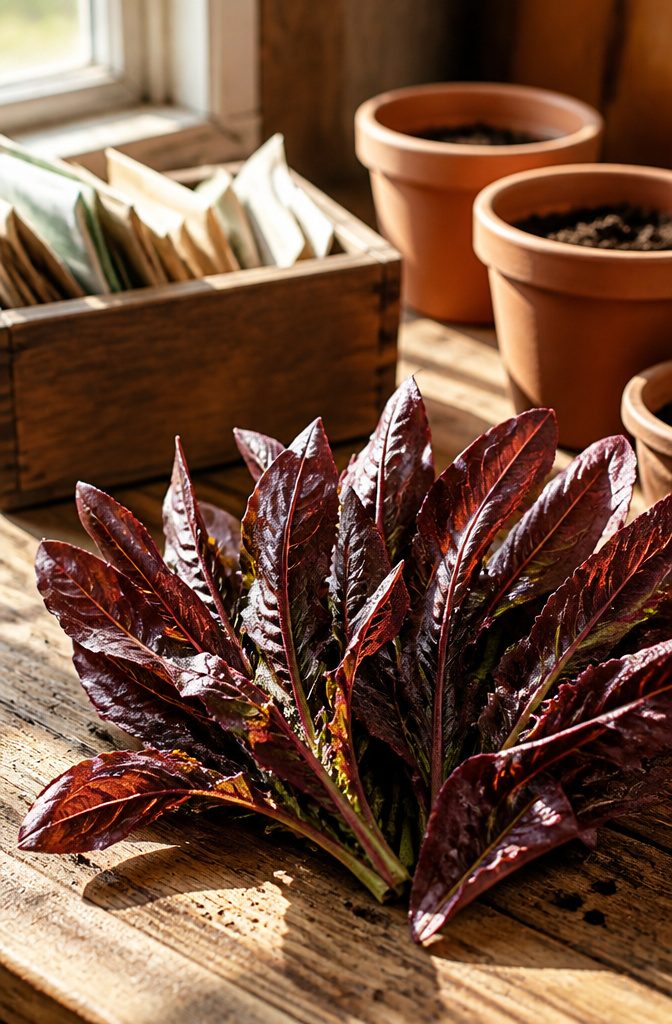
Among red lettuce varieties, Red Deer Tongue stands out for its long, pointed leaves that look nothing like the rounded, frilly heads most people picture. The name comes from the shape: each leaf narrows to a distinct tip, almost like a stretched oval, and the whole plant grows in an open, loose-leaf form rather than heading up.
This is an heirloom variety, which means the seed has been saved and passed down for generations rather than bred recently for uniformity or shelf life. That lineage shows up in the flavor, which tends toward the nutty and slightly bitter side of the lettuce family, and in its habits. Red Deer Tongue prefers cool weather and will bolt fast once summer heat arrives. The window for tender leaves is narrow; plant it early in spring or again in late summer for a fall crop. Once those 4–6 inch leaves are ready, cut them just above the soil line and the plant will keep producing until the temperature climbs too high.
New Red Fire
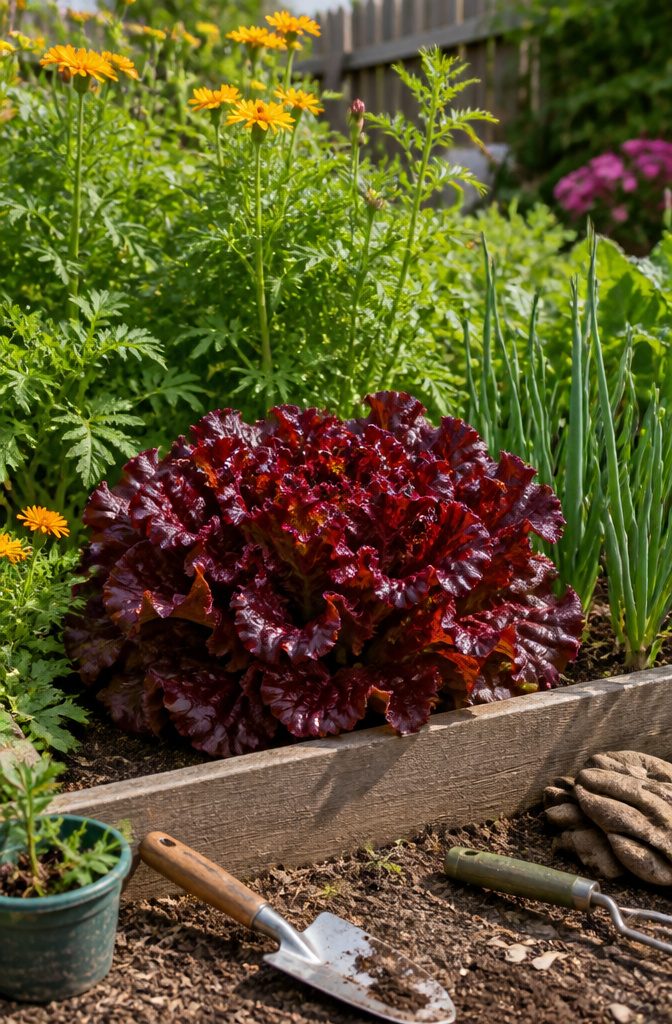
New Red Fire lettuce earns its place in the garden on color alone. The leaves carry a deeper, more saturated red than most loose-leaf varieties, and that intensity holds from the seedling stage through harvest. In my experience, the color signals something useful: the same anthocyanins that paint the leaves also give them a slightly nuttier, more complex flavor than green lettuce, though the overall taste stays mild enough for everyday salads.
The texture splits the difference between tender and crisp, which matters when you’re building a sandwich that needs to hold together or a salad that shouldn’t wilt before it reaches the table. I treat it as a base lettuce with personality, not a background filler.
For a gardener working a small space, the plant stays compact enough to tuck between taller crops, and the cut-and-come-again habit means one sowing produces over several weeks. The red color also makes it easy to spot against soil and mulch, so thinning and harvesting go faster. A full six hours of sun keeps the color from fading to bronze, though it will tolerate some afternoon shade in hotter zones where bolting becomes the bigger risk.
Lollo Rosso
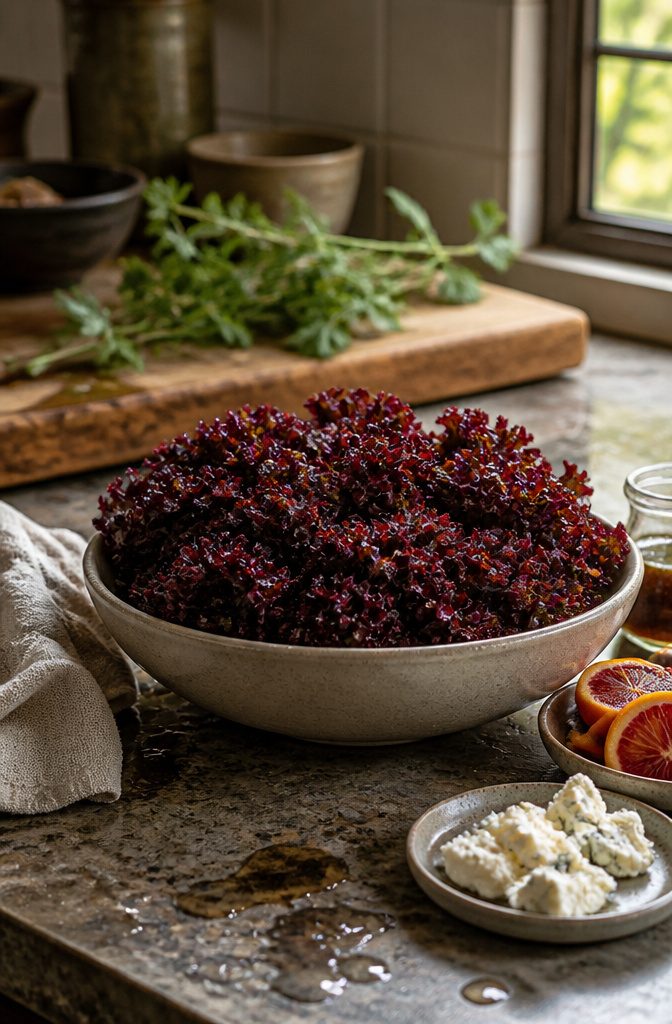
Lollo Rosso carries its color with an almost theatrical excess. The leaves unfurl in dense, coral-like ruffles that hold their deep maroon right through to the center, so a whole head reads as solid burgundy from a few steps back. That density of curl matters in the kitchen: the frilled edges catch dressing and hold it, which makes the lettuce more than just color on the plate.
Most seed packets and produce displays sell it as an ornamental first, a salad ingredient second, and the description fits. I have used it where the point was visual, torn into a bowl of pale butterhead to break up all that green, or laid under grilled fish so the plate looked considered rather than accidental. The flavor is mild, slightly sweet and nutty with a faint bitterness at the ruffled margins, less aggressive than radicchio but enough to remind you it is not iceberg.
The leaves grow loose and open, typical of the leaf-lettuce group, so harvesting is a matter of pulling outer leaves as you need them rather than waiting for a formed head. In a small garden or a patio container, that habit works in your favor: the plant keeps producing for weeks if you stay ahead of bolting, and the ruffled silhouette looks intentional even when the neighboring tomatoes are still green sticks.
Red Romaine
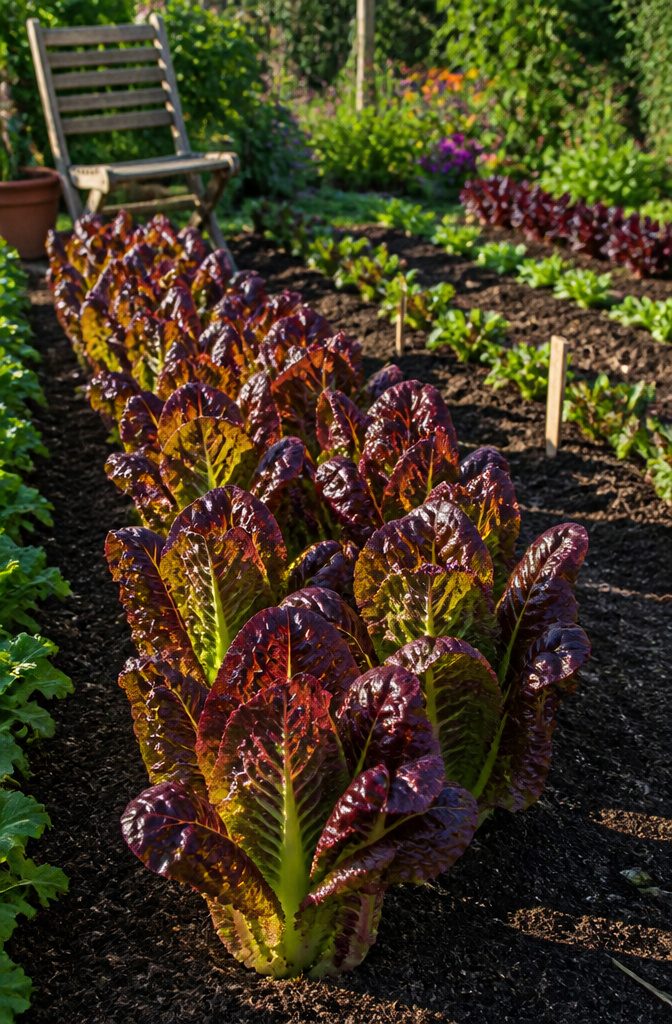
Red Romaine carries the same tall, crinkled leaves as its green cousin, but these start out green and shift to a reddish-purple as they develop. That color change works best in cool weather, which is worth timing for if you want the deeper tone in your bowl. The leaves run about 12 inches tall on a plant that spreads 10–12 inches wide, and they mature fast: 40 days from sowing to cutting makes this one of the quicker options for repeat plantings through spring and fall.
The crunch holds up better than most leaf lettuces, so it is the variety I would pick for a Caesar salad where you want the leaf to stay intact under dressing. The color also does the work of making the bowl look intentional rather than accidental. At roughly $3 for a packet of 500 seeds, a single purchase covers multiple sowings even in a small space, and the plants work as an edible border if you are mixing vegetables into flower beds.
Red Salad Bowl
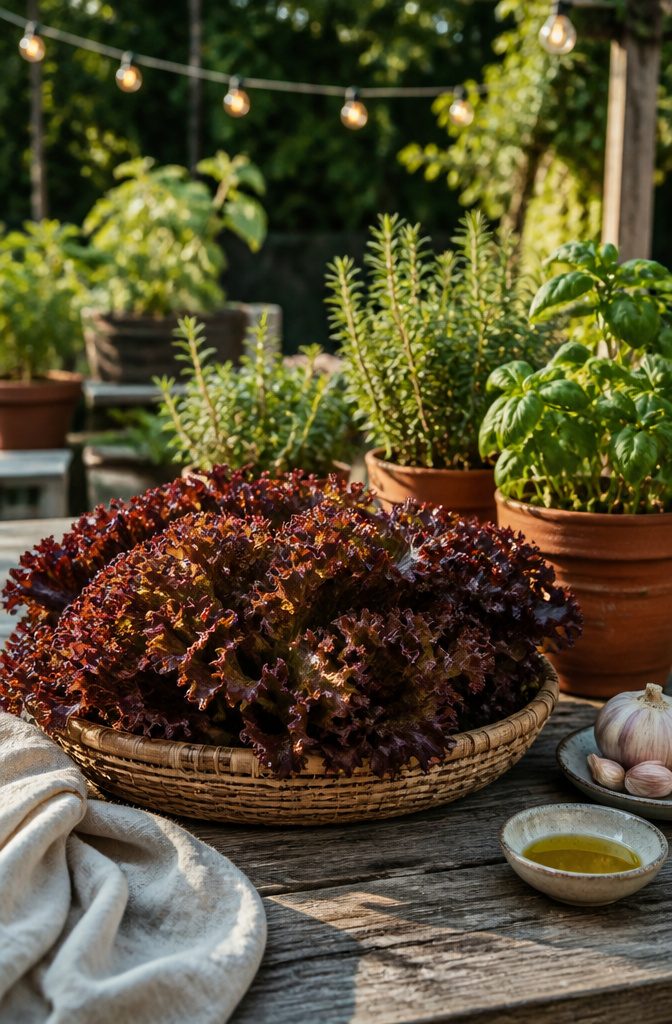
Red Salad Bowl carries the same deeply cut, finely divided leaves as its green namesake, only in a bronze-red that deepens toward the margins. The frilling is pronounced enough that a full head looks almost like a loose flower, and the leaves stay tender even as the plant fills out.
What sold me on this variety was the combination of slow bolting and early maturity. In my own beds, Red Salad Bowl has consistently reached cutting size a few days ahead of other leaf types, yet it hangs on weeks longer once the weather turns warm. That gap matters in late spring, when a sudden hot stretch can turn a promising row bitter overnight.
The color develops best in cool conditions, so I sow this one early: as soon as the soil can be worked, direct into the ground or into shallow trays for transplanting. Even a small patio container will produce enough for regular salads, provided you cut the outer leaves and let the center keep producing.
Galactic Lettuce
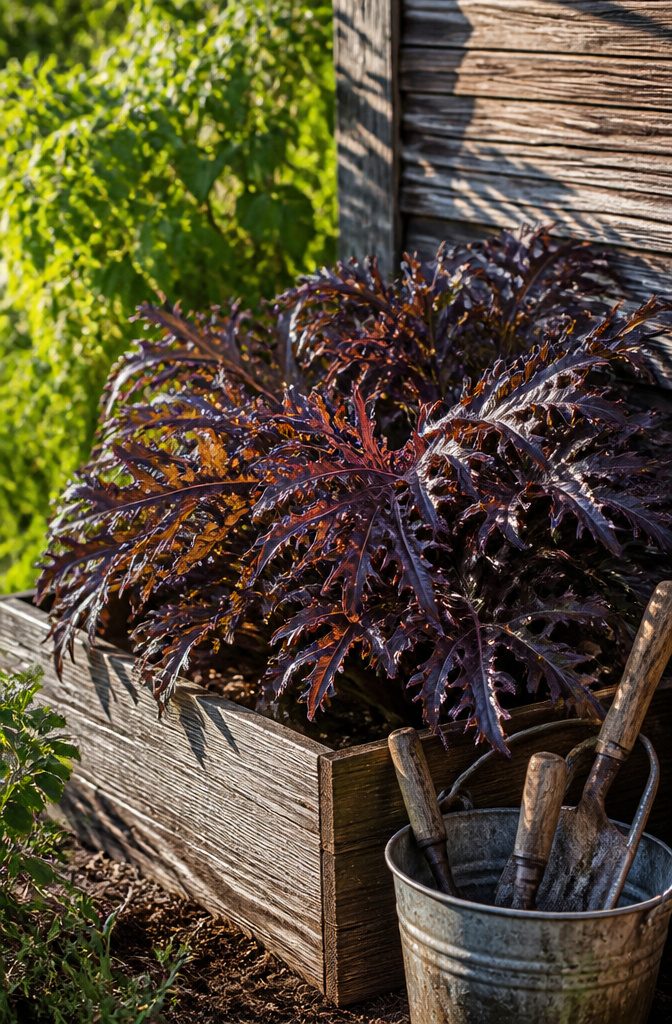
Galactic lettuce looks like someone crossed a salad green with a fern and then dipped it in burgundy. The leaves are deeply incised, almost frilly, and they darken from bronze at the base to a color near purple-black at the tips. I first spotted it tucked into a row at a small farm stand where the grower admitted she only plants it because her regulars ask by name; it never shows up in the grocery store mixed clamshells.
The leaf shape is what makes this variety worth hunting down. Where most red lettuces give you a broad, flat plane to work with, Galactic’s narrow, twisted lobes catch dressing differently. Vinaigrette pools in the crevices instead of sliding off, and the texture stays crisp longer than you’d expect from something this lacy.
It is slow to bolt in my experience, though "my experience" here means watching my neighbor’s patch outperform my own Red Sails two Junes in a row. She starts hers indoors in late March and transplants before the soil truly warms, which runs counter to the direct-sow habit most of us picked up. Start Galactic indoors if your springs swing hot fast; the head forms tighter and the color stays darker when the plant isn’t fighting early heat stress as a seedling.
What Red Leaf Lettuce Offers
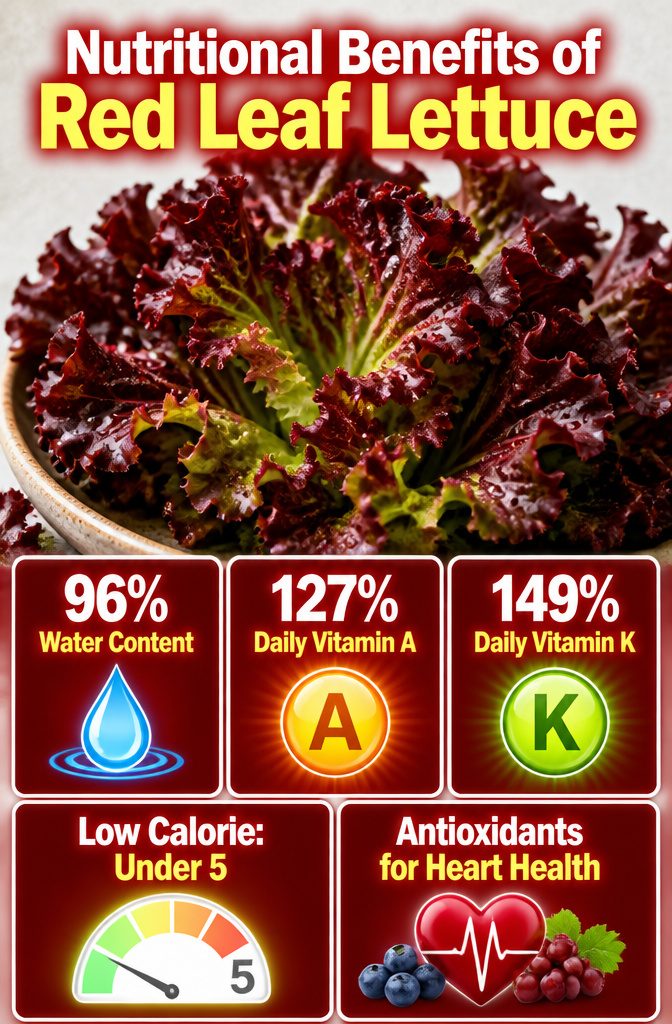
Red leaf lettuce is mostly water, about 96%, yet the remaining few percent packs a surprising load. Three cups of shredded leaves, roughly 85 grams, delivers 127% of your daily vitamin A and 149% of your vitamin K while clocking in at under 5 calories per serving. The FDA treats it as calorie-free for labeling, which explains why a big bowl fills you up without weighing you down.
That deep burgundy color signals something useful. Anthocyanins, the same pigments behind red wine and blueberries, give the leaves their color and function as antioxidants with anti-inflammatory effects. The high water content helps hydration, and the folate content supports cell growth and metabolism. For heart health, the vitamin A plays a role in normal organ function that extends to the heart itself.
Red leaf lettuce is chock-full of vitamin A, providing 127% of the RDI in just 3 cups (85 grams) of shredded leaves.
What this means practically: a few servings weekly covers your vitamin A needs without any planning. The low calorie count and high volume make it a genuine tool for weight management, not just diet culture filler.
How to Grow It
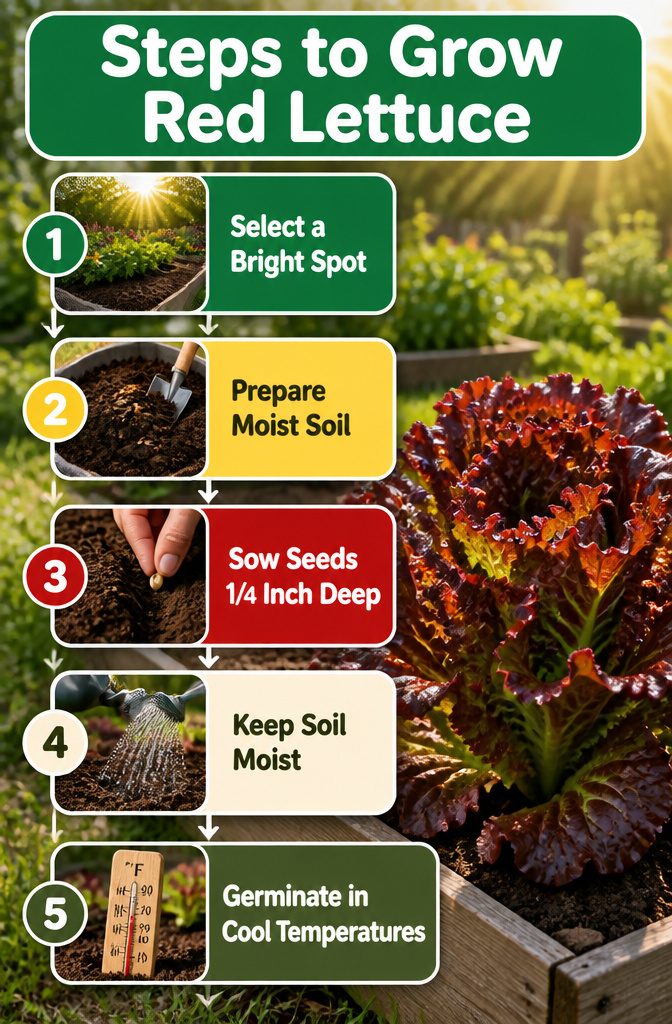
Red lettuce asks for the same basic conditions as its green cousins, with one difference worth noting from the start: the red pigment develops best in cool temperatures and bright light. A spot that gets about six hours of sun daily will keep the color strong without pushing the plant to bolt.
Soil matters more than fussing over the seed. I work compost into whatever bed or pot I’m using until it drains well and holds moisture without staying soggy. In containers, a standard potting mix does fine; the root system is shallow, so a pot eight inches deep is enough for full-sized plants.
Sow seeds roughly 1/4 inch deep and give them room. Six to twelve inches between plants lets each head size up properly, or thin to about six inches if you want baby leaves instead. The soil needs to stay consistently moist, which in practice means checking the top inch with a finger and watering when it feels dry. Dry spells turn leaves bitter fast.
Lettuce germinates poorly once soil temperatures climb above 75°F, so I skip the heat mat entirely and sow when the soil reads 60–65°F. For a steady supply, succession plant every three weeks through the cool season. In hot-summer areas, that window closes quickly; choose heat-tolerant varieties or plan on containers you can move to afternoon shade when temperatures spike.
Using Red Leaf Lettuce
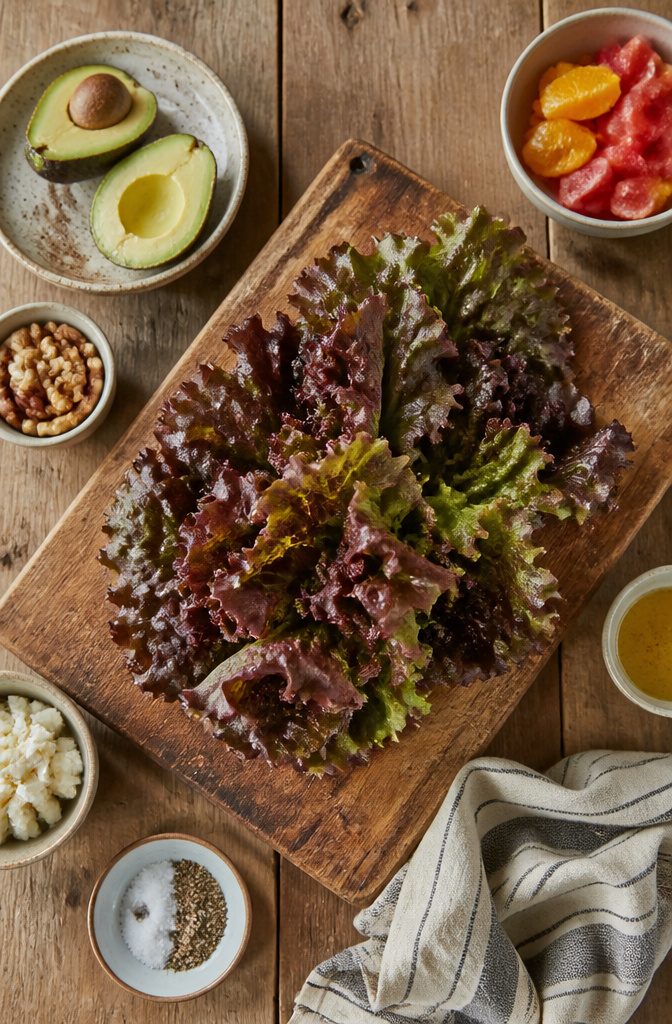
Red leaf lettuce earns its keep in the kitchen mostly raw, where that tender, slightly crisp texture and mild, nutty sweetness get to do their job. The maroon edges carry a faint bitterness, less sharp than radicchio, which makes the leaves flexible enough for a simple salad or a splash of color tucked into wraps, sandwiches, even tacos.
I usually tear the leaves rather than slicing, since the ragged edges catch dressing better. A basic vinaigrette works, though the sweetness in the lettuce plays especially well with citrus, creamy cheeses, and toasted nuts. The crunch holds up in a sandwich without shredding, and the broad, pliable leaves make decent stand-ins for taco shells or wrap bases when you want to cut carbs.
For a more substantial meal, pair it with grilled chicken, avocado, black beans, and something sharp like cilantro-lime dressing. The leaves wilt fast under heat, so add them at the end or keep the dish cold. Price-wise, it’s one of the cheaper greens at most grocery stores, so experimenting costs little.
Keeping It Fresh
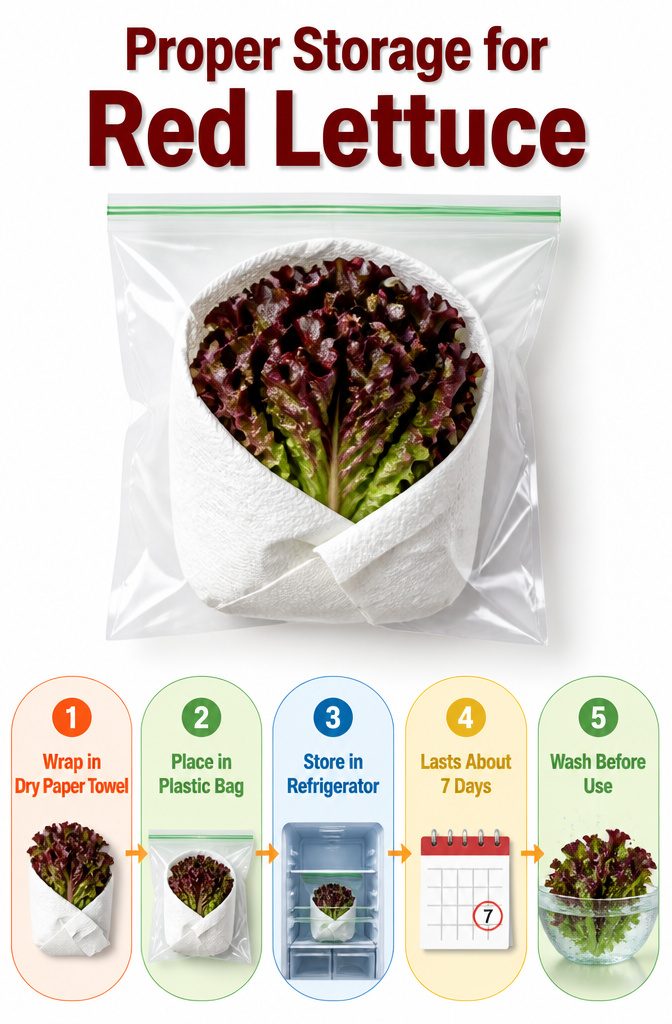
Red lettuce leaves are thin and tender, so they go downhill fast once they’re picked. The best defense is a dry paper towel wrapped loosely around the bunch, then slipped into a plastic bag in the refrigerator. The towel pulls away extra moisture before it can settle on the leaves and start the rot.
I’ve skipped the paper towel step before and paid for it with a slimy clump by day three. Stored right, the lettuce holds about a week, though five days is where it starts looking tired. Washing comes last, right before you tear it into a bowl; damp leaves in a cold drawer spoil twice as fast.
Frequently Asked Questions
What are the health benefits of red leaf lettuce?
Three cups of shredded red leaf lettuce delivers 127% of daily vitamin A and 149% of daily vitamin K for under 5 calories per serving. The anthocyanins that give the leaves their burgundy color also act as antioxidants with anti-inflammatory effects, while the high water and fiber content helps with hydration and weight management.
How do you grow red leaf lettuce?
Plant red lettuce in soil that drains well and holds moisture without staying soggy, with about six hours of sun daily to keep color strong. Sow seeds roughly 1/4 inch deep, space plants six to twelve inches apart, and keep the top inch of soil consistently moist; germination drops above 75°F soil temperature, so sow when soil reads 60–65°F.
How do you store red leaf lettuce?
Wrap the bunch loosely in a dry paper towel, then slip it into a plastic bag in the refrigerator. Stored this way it holds about a week, though five days is where quality starts to fade; wash only right before use, since damp leaves spoil twice as fast in cold storage.