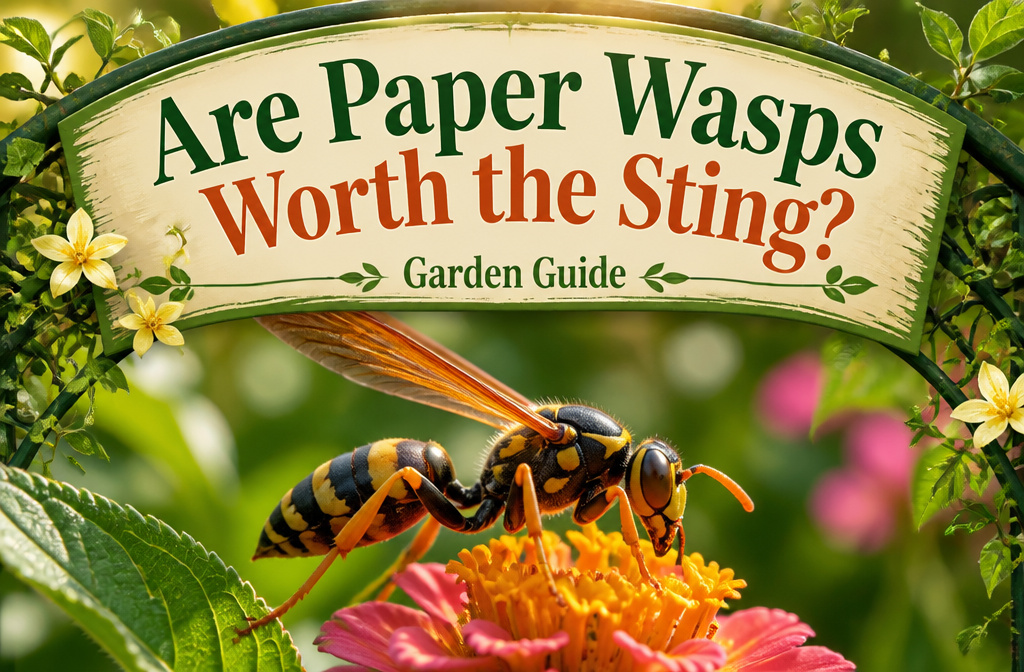
Paper wasps are garden predators that hunt caterpillars, beetle larvae, and flies to feed their young, cutting pest damage without chemicals. The catch is the stinger they will use if you brush their open, umbrella-shaped nest by accident. A single colony holds up to a hundred wasps, so the pest control scales fast, but the same nest can balloon a forearm into cellulitis.
What Paper Wasps Do in a Garden

Paper wasps earn their keep in a garden by hunting caterpillars, beetle larvae, and flies to feed their young. That protein diet means fewer pests chewing through your tomatoes and beans without a single spray. Adult wasps also visit flowers for nectar, moving pollen as they go. A single nest can hold up to a hundred individuals, so the pest control scales up fast. I have watched them patrol the same tomato bed where hornworms used to strip leaves overnight, and the difference was clear. The tradeoff is real: they are not pets, and they will defend the nest. But for gardeners trying to cut chemicals and keep plants intact, that stinger is doing work you would otherwise pay for or spray for.
How Bad a Paper Wasp Sting Actually Is
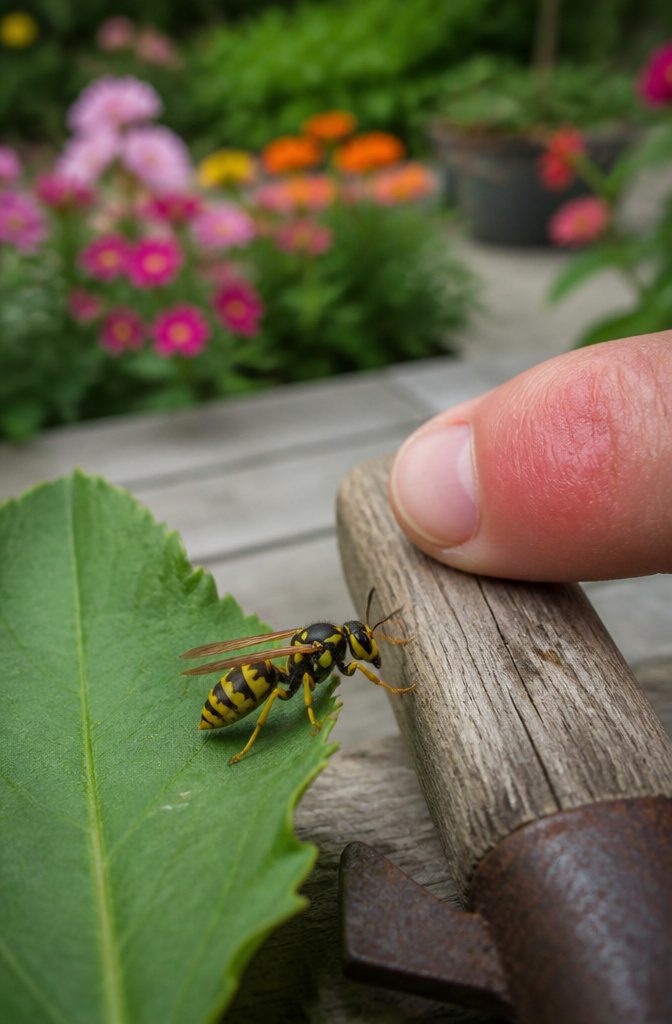
The Schmidt Pain Index rates a paper wasp sting at a 2, described as caustic and burning. That sensation differs from a honeybee’s sharper, more piercing sting. A honeybee leaves its stinger behind and dies, so you get hit once. Paper wasps keep theirs, which means one wasp can sting you multiple times in a single encounter.
Individual reactions swing widely. A sting on the finger might swell for a day and fade. The same venom on an elbow or forearm, where I have seen reported reactions, can balloon the whole limb and land you in the ER with cellulitis. Some people shrug off honeybees entirely yet swell like a watermelon from any wasp. Location on the body, your personal immune response, and whether you have been stung before all shift the outcome.
When Paper Wasps Sting and When They Do Not
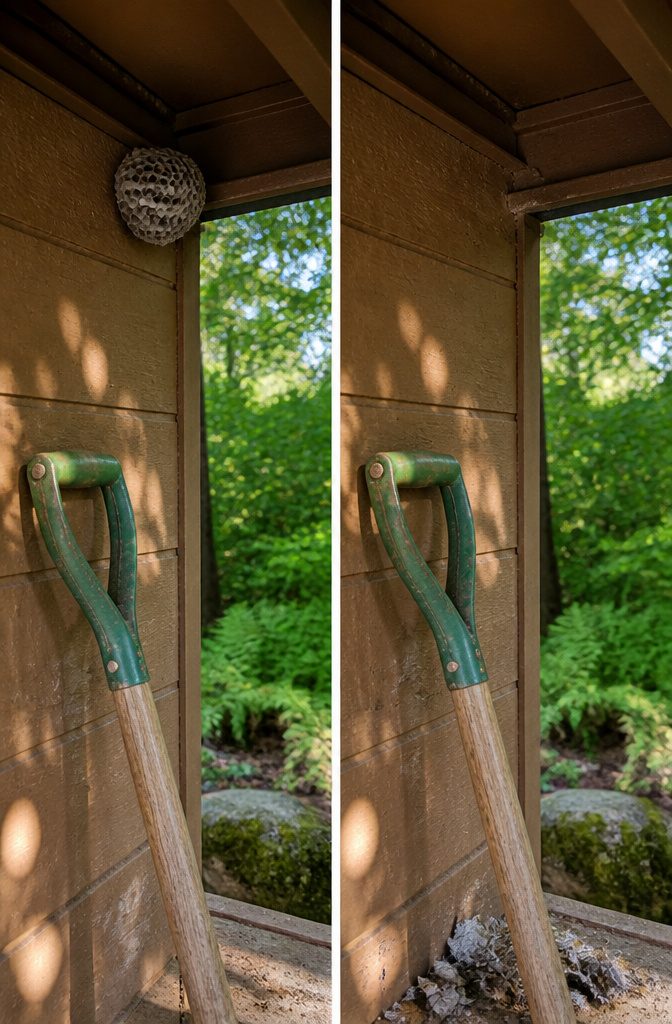
Paper wasps are generally docile and rarely sting unless provoked, which is worth defining because "provoked" means something different to a wasp than it does to us. Vibrations near the nest, swatting at one that lands on your arm, or even sudden movements within a few feet of their home read as threats. Most stings happen when someone leans against a porch ceiling or grabs a tool hanging near an eave without noticing the gray, open-comb nest above.
Yellowjackets are the ones that crash your picnic and chase your sandwich. Paper wasps are not interested in your food. They build in protected spots, porch overhangs, shed corners, the underside of deck railings, places where a bare arm or an unsuspecting forehead can brush against the nest by accident. That accidental contact, not aggression, accounts for nearly every paper wasp sting I have heard described.
The nests themselves are small, rarely larger than a teacup, with maybe a few dozen residents rather than thousands. A colony of 200 is large for the species. Their size and the wasps’ calm demeanor mean you often share space without incident. I have sat four feet from an active nest for hours without a problem, and the same holds for most gardeners who simply leave the nest alone and move slowly near it.
Living With a Nest Nearby
Paper wasps prefer to build under protected eaves or inside dense shrubs, so the habit to build is glance up before you reach. I learned this after nearly brushing a nest tucked behind a fence rail; the sting came sharp and faded fast, but the surprise lasted longer. Most colonies stay small, between a dozen and two hundred individuals, and the workers die off once cold weather arrives. Only new queens survive winter, and they start fresh nests elsewhere in spring, so a single season of tolerance usually solves itself.
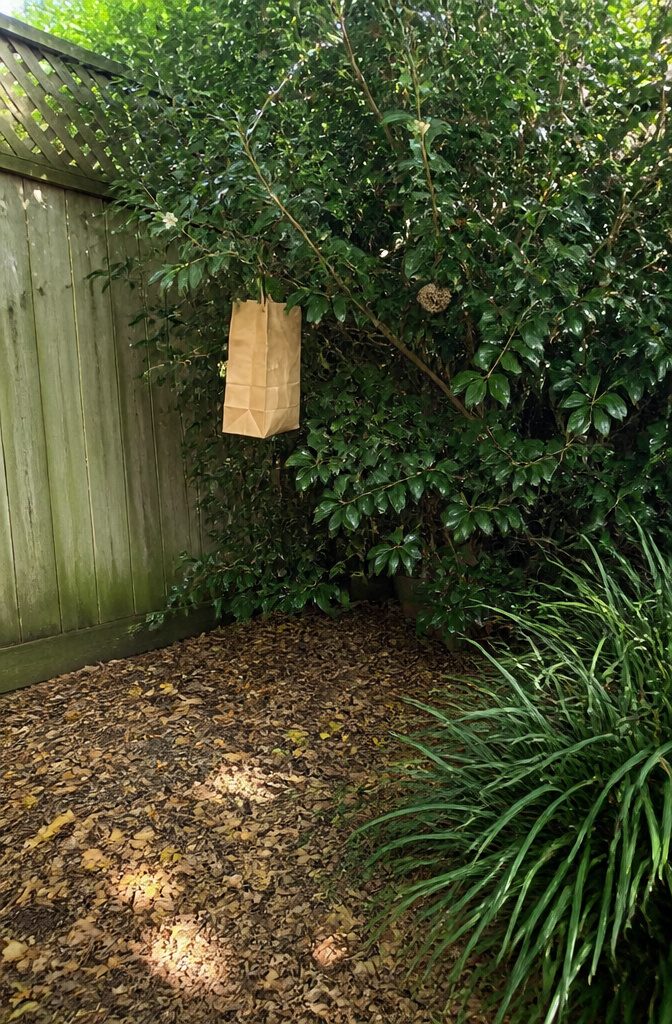
If the location still makes you nervous, some gardeners hang puffed paper bags where they do not want nests. The idea is that wasps avoid spots that already look occupied, though I have not tested this myself and the results I have heard are mixed. It costs nothing but a lunch bag and a string, so the risk of trying is low. The real work is simpler: give them a few feet of clearance, move slowly near the nest, and let the cold finish the job.
Telling Paper Wasps From Yellowjackets
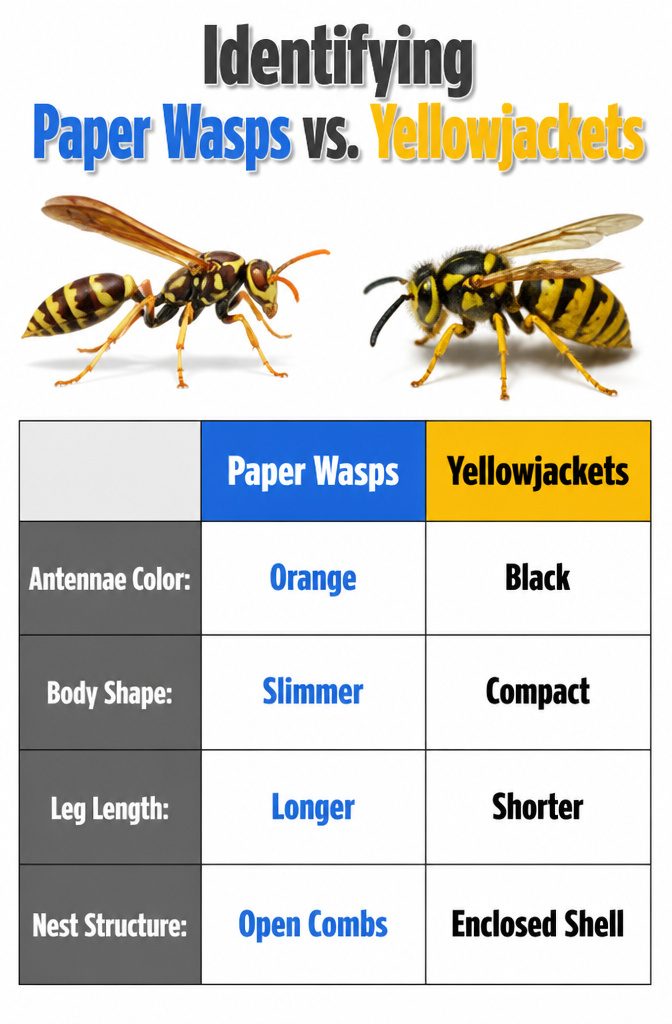
Orange antennae are the first giveaway for a paper wasp, where yellowjackets carry black ones. That detail alone has saved me from misidentifying a nest twice now. The paper wasp’s body is slimmer through the waist, and its legs hang longer in flight, giving it a gangly, almost drifting look compared to a yellowjacket’s compact darting.
Their nests tell the rest of the story. Paper wasps build open, umbrella-shaped combs with the hexagonal cells exposed underneath, usually tucked under eaves or deck railings. Yellowjackets enclose theirs in a papery shell, often underground or inside wall voids where you cannot see the structure at all.
The mistake matters because behavior follows from nest type. An open nest means paper wasps can see you coming, and they generally will not bother you if you do not bother them. Yellowjackets, defending a hidden nest you might step on or disturb without knowing, are quicker to swarm. Treating one like the other leads to bad surprises on both sides.
What to Do If You Need Them Gone
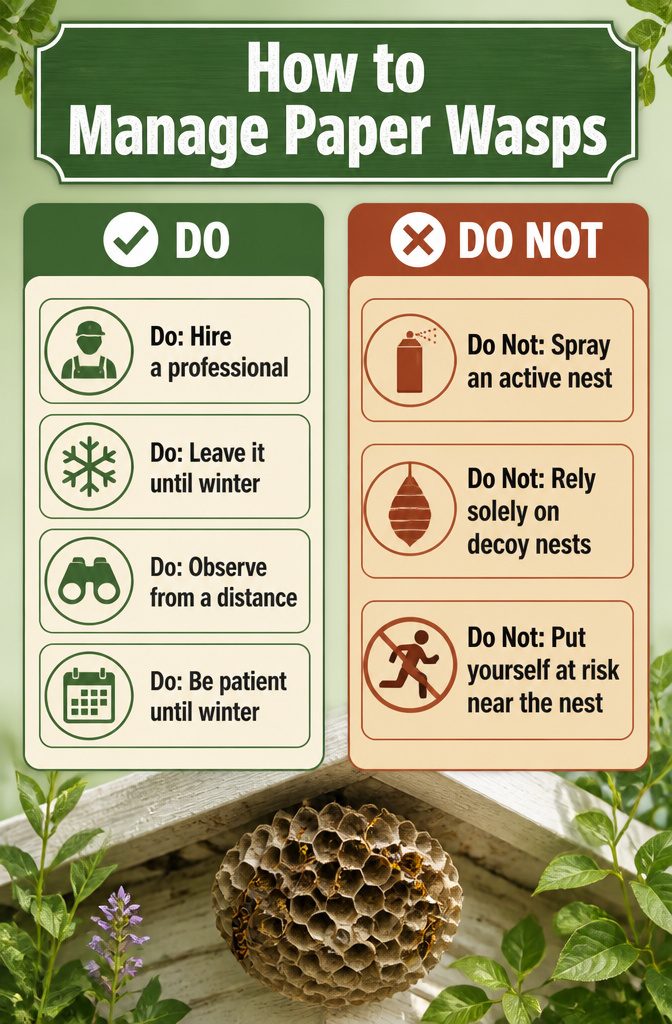
Paper wasp colonies abandon their nests every winter and never reuse them. The nest dies with the cold, so a problem that seems urgent in August often solves itself by Thanksgiving. That single fact kept me from doing something stupid last September, when I found a nest tucked into the eave above my back door.
Spraying an active nest is risky and usually unnecessary for a garden-tolerant species. The spray kills slowly enough that wasps boil out, and paper wasps remember faces well enough to hold grudges. I have seen neighbors sprint across their lawns after a dusk attack gone wrong.
Hire a professional if the nest sits where people pass daily: a doorway, a play structure, a narrow path you walk with groceries. They have the gear and the evening timing down.
Decoy nests, the brown paper bags hung to mimic a rival colony, have thin evidence behind them. Some gardeners swear by them; others watched wasps build inches away. I tried one once, hung carefully in a corner where nests recur. The wasps returned anyway. Spend the five dollars if you want, but do not count on it.
Frequently Asked Questions
Are paper wasps aggressive?
Paper wasps are generally docile and rarely sting unless provoked. They only attack when vibrations, swatting, or sudden movements near their nest signal a threat. Most stings happen by accident, like brushing against a hidden nest under an eave or porch ceiling.
How painful is a paper wasp sting?
A paper wasp sting rates a 2 on the Schmidt Pain Index, described as caustic and burning. Unlike honeybees, paper wasps keep their stinger and can attack multiple times in one encounter. Individual reactions vary widely; some people swell for a day, while others experience severe reactions like cellulitis requiring emergency care.
What do paper wasps eat?
Paper wasps feed their young protein from hunted caterpillars, beetle larvae, and flies, which reduces garden pests without chemicals. Adults also consume nectar from flowers, providing pollination as they move between blooms. A single nest can hold up to a hundred wasps, making their pest control impact significant for vegetable gardens.