Three quick steps to winter carrots means waiting for frost before harvest, cutting the greens without scrubbing, and choosing between fridge, cellar, or freezer storage. The catch is timing: pull too early and you get starchy supermarket flavor, but wait past 28°F and hard freeze splits the roots. That half-inch of green stem left on top is what keeps moisture in for months.
Wait for Frost Before You Pull
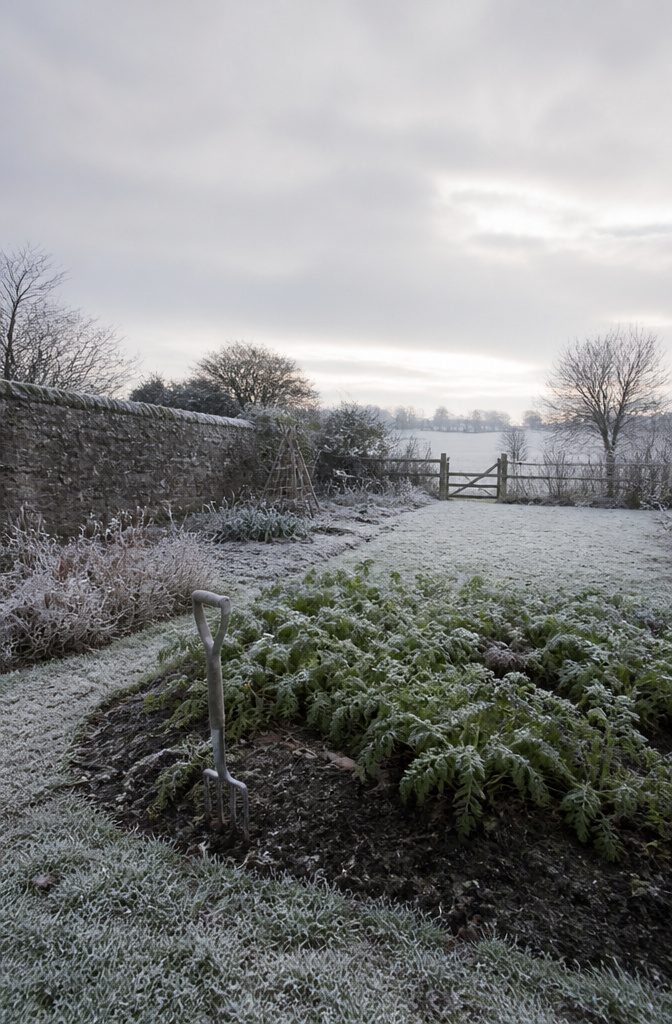
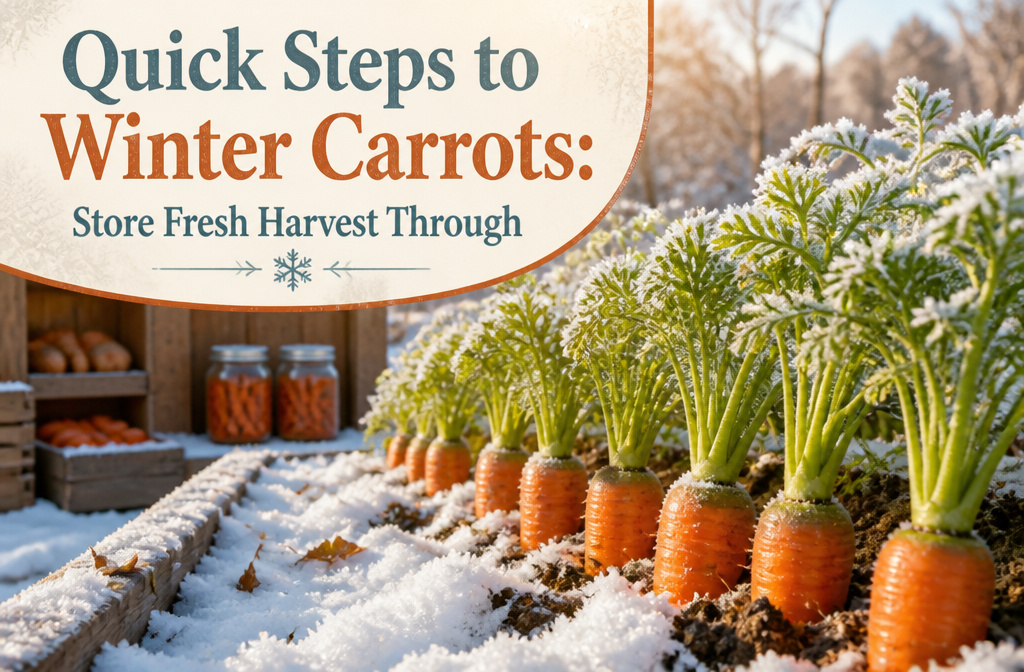
Carrots left in the ground through a few light frosts turn noticeably sweeter. The cold triggers them to convert stored starches into sugars, a kind of natural antifreeze that protects their cells. That sweetness is the whole point of a winter carrot, but timing matters. The ideal window runs between 32°F and 40°F, after frost has touched the tops but before a hard freeze locks the ground or damages anything above the soil line. A hard freeze, anything below 28°F, risks splitting the roots or making them impossible to dig.
Some varieties handle this waiting game better than others. ‘Bolero’ and ‘Nantes’ both hold well in storage once they do come out, with ‘Bolero’ especially reliable for long-term keeping.
I learned the hard way one November when I pulled a bed too early. The carrots were technically mature, but the flavor was flat, still starchy, basically a supermarket carrot with better soil on it. Two weeks later, after a few nights in the high 20s, the neighbors’ harvest was unmistakably sweeter. Now I watch the forecast, not the calendar, and wait for that first light frost to pass before I reach for the fork.
Cut the Greens, Skip the Scrub
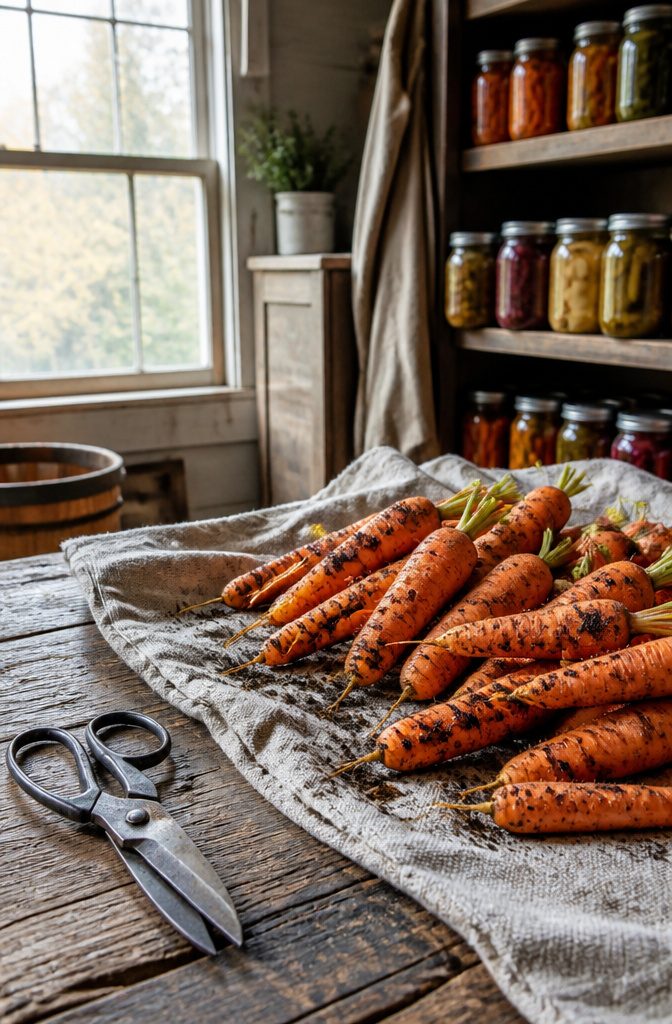
Carrot greens pull moisture straight out of the root, so the first move after harvest is snipping them down to about half an inch above the crown. Garden scissors work fine. The greens can go to pesto or compost, but they cannot stay attached if you want firm carrots in January.
A light rinse is all the washing carrots get. Heavy soil comes off with a hose in the garden or a quick pass under the tap indoors, enough to keep grit out of storage. Scrubbing breaks the protective skin and invites rot, which is why I skip it entirely. Spread the carrots on a towel for maybe fifteen minutes to shed surface water; you want damp, not dripping.
Stored carrots need 90–95% humidity to stay crisp. The catch is that damp conditions also favor bacteria, so airflow matters as much as moisture. Overwashing makes that balance harder to hit, because soaked skin in a humid bag is where trouble starts. Let the garden soil you missed do part of the work; it dries to a thin, breathable layer instead.
Pick Your Storage Method
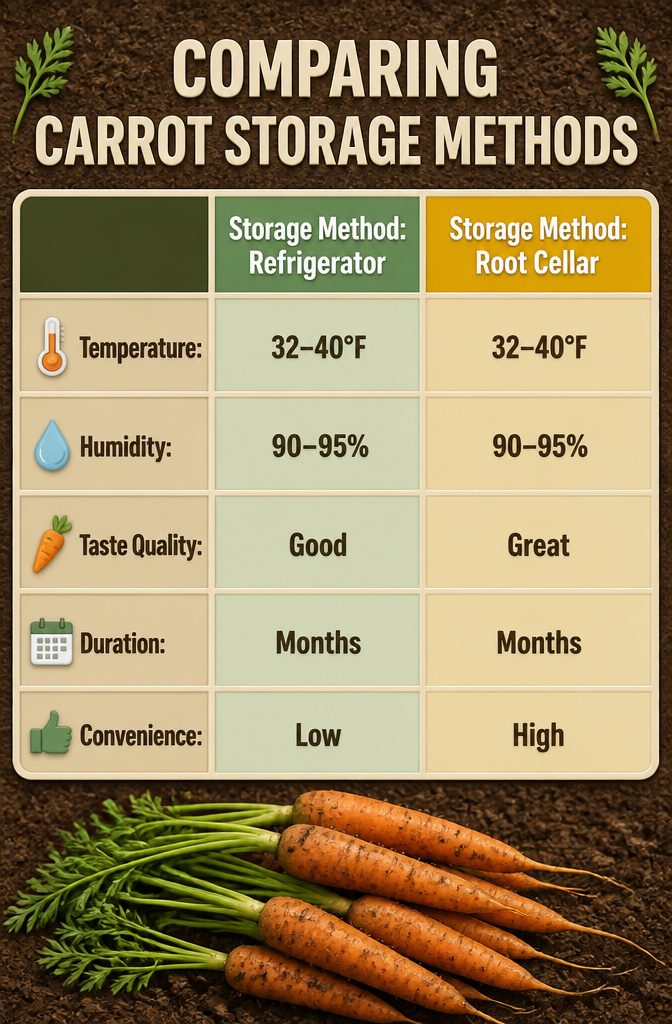
The refrigerator is the path of least resistance for most of us. I leave the carrots unwashed, poke a few holes in a plastic bag for airflow, and tuck the bag in the crisper drawer or back corner where it stays coldest. With a damp paper towel at the bottom to manage moisture, I’ve kept them crisp for several months, though the flavor stays merely good, not great.
A root cellar demands more setup but pays back in sweetness and storage life. Layer carrots in damp sand or soil inside a crate, keeping them at 32–40°F with 90–95% humidity, and they’ll hold for months tasting better than anything from the fridge. No proper cellar? A garage corner or even a covered outdoor spot can approximate the same conditions.
Freezing is my choice when space is tight or I want carrots ready for soups without thawing planning. Blanch whole carrots for about five minutes, diced pieces for two to three, then plunge into an ice bath before bagging. The process stops enzyme activity that degrades color and texture, and the result keeps eight to twelve months.
The in-ground method is the true low-effort winner where winters permit. A thick mulch of straw or leaves lets you dig through and pull carrots as needed into early spring. The cold soil converts starches to sugars, so these taste sweetest of all, and there’s no container to monitor. The catch is geography: once the ground freezes solid, you’re locked out until thaw.
Check What You Stored
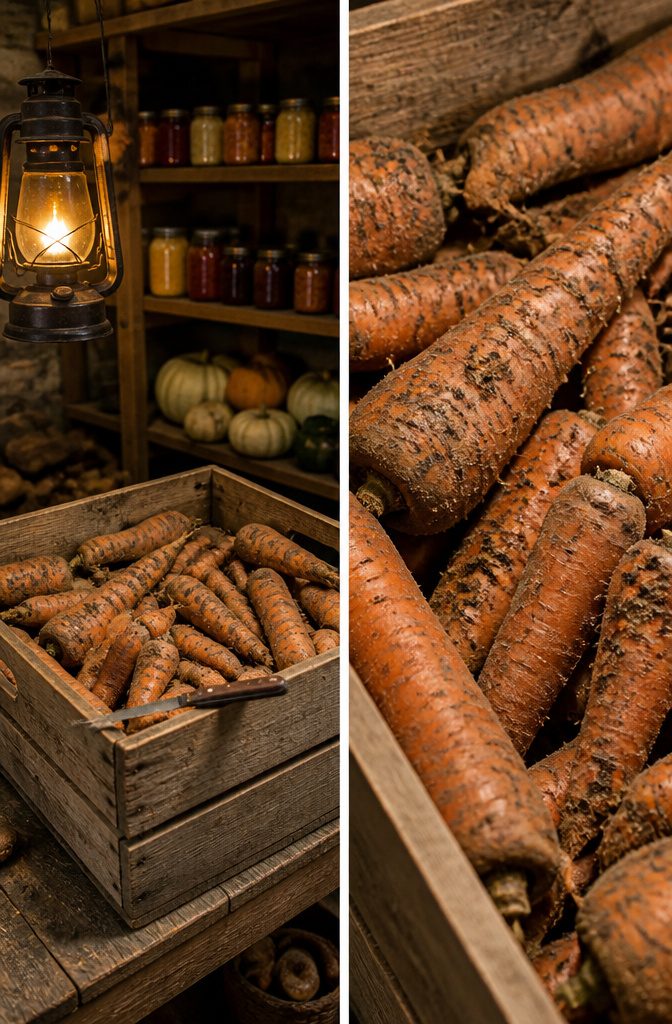
Rot spreads fast in storage, so you need to open whatever container you chose and look through the carrots every few weeks. Pull out anything with soft spots, mold, or a slimy film before it can touch the rest. This matters whether your carrots are in a refrigerator bag, a root cellar box, or buried in damp sand.
Last January I found one carrot going soft in a five-gallon bucket of sand. It had been pressed against the layer below, and the moisture was already starting to darken the sand around it. Removing that single carrot cost me maybe thirty seconds; leaving it would have meant sorting through a much larger mess a week later. The smell of a rotting carrot in cold storage is exactly as bad as you would guess, so catching it early saves both produce and your nose.
Best Varieties for Keeping
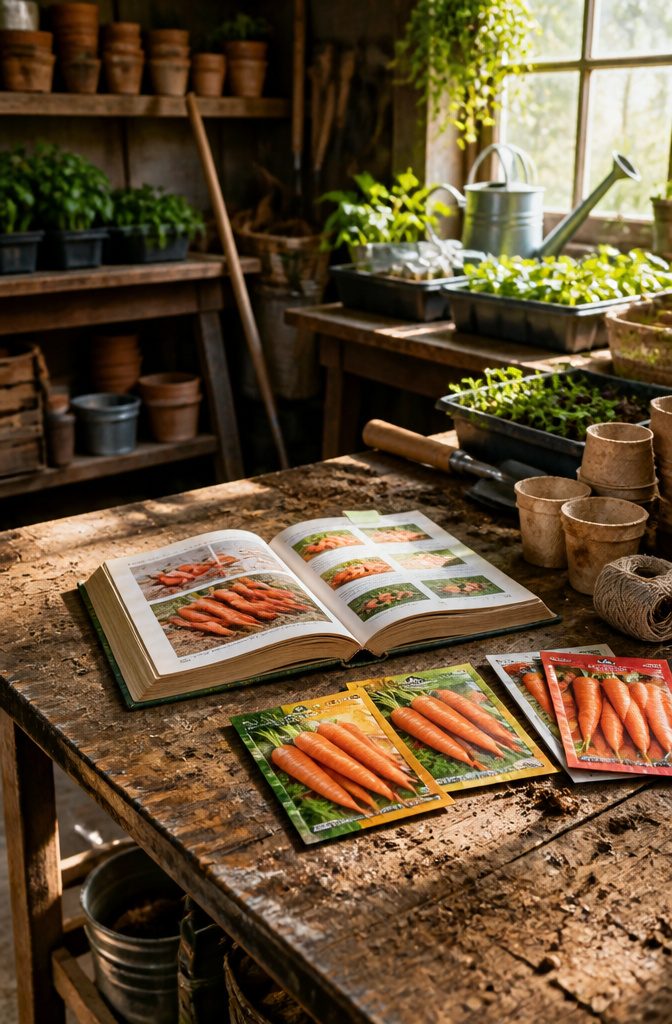
Not every carrot bred for the garden holds up once it leaves the soil. For storage through winter, texture and flavor retention matter far more than that first crisp bite out of the ground. Bolero and Nantes are the two varieties that keep their character longest, and the difference between them is worth knowing before you order seed.
Bolero is the one seed catalogs return to year after year: a reliable performer with excellent eating quality both fresh and after months in storage. Its texture stays intact rather than turning rubbery or woody, and the sweetness doesn’t fade into that stale carrot taste that makes you want to compost the rest. Nantes, a broader type that includes Bolero as one variety, shares that storage reputation. Gardeners who grow only one carrot for winter often land here after testing others that looked fine in September but disappointed by February.
Most lists of "good storage carrots" stop at the name without explaining what "good" means in practice. The distinction is simple: some varieties hold sugar and structural integrity, others merely survive. For a small garden where every square foot counts, choosing a variety actually bred for long-term keeping, not just fresh harvest, means fewer surprises when you open the bin in March.
What 90% Humidity Actually Means
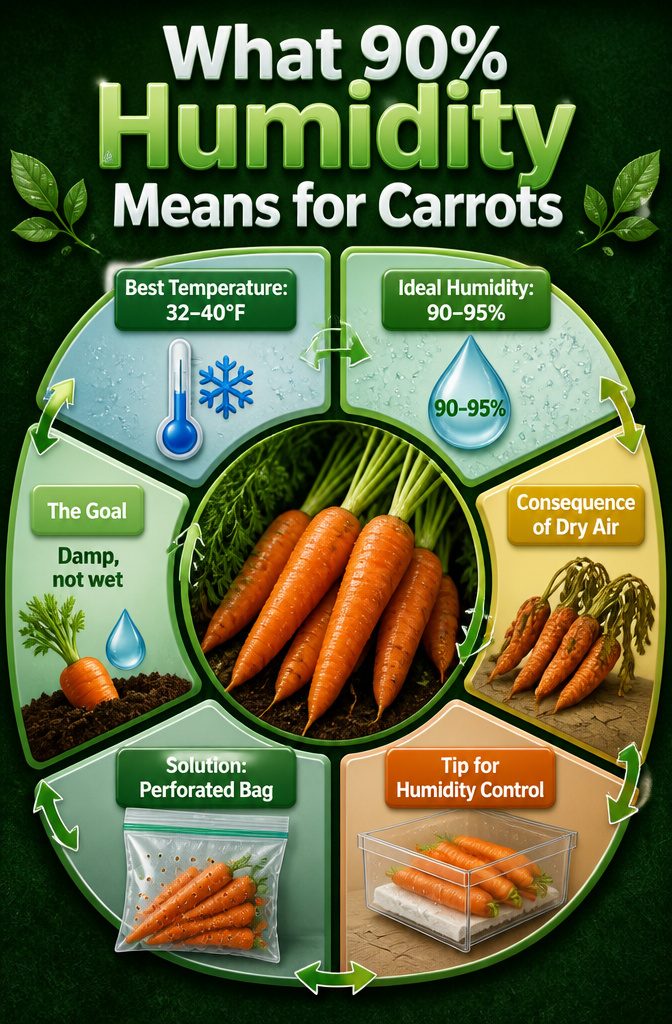
Carrots store best at 32–40°F with 90–95% humidity, a range that mimics the cool, damp soil they grew in. Hit that balance and they stay crisp for months; miss it and you will notice the difference quickly.
Dry air pulls moisture from the root, turning a firm carrot rubbery and limp in a matter of weeks. Wet air without airflow does the opposite, inviting soft rot and fuzzy mold that ruins the whole batch. The goal is damp, not wet.
You do not need a hygrometer to get there. A perforated zip-top bag with about twenty holes punched through both sides traps enough moisture while letting excess escape. The crisper drawer works too, especially with a damp paper towel tucked underneath to raise the humidity. For those with a cool basement or garage, layering carrots in damp sand inside a box keeps conditions steady the old way, insulating the roots like they never left the ground.
Keep Carrots Away from Apples
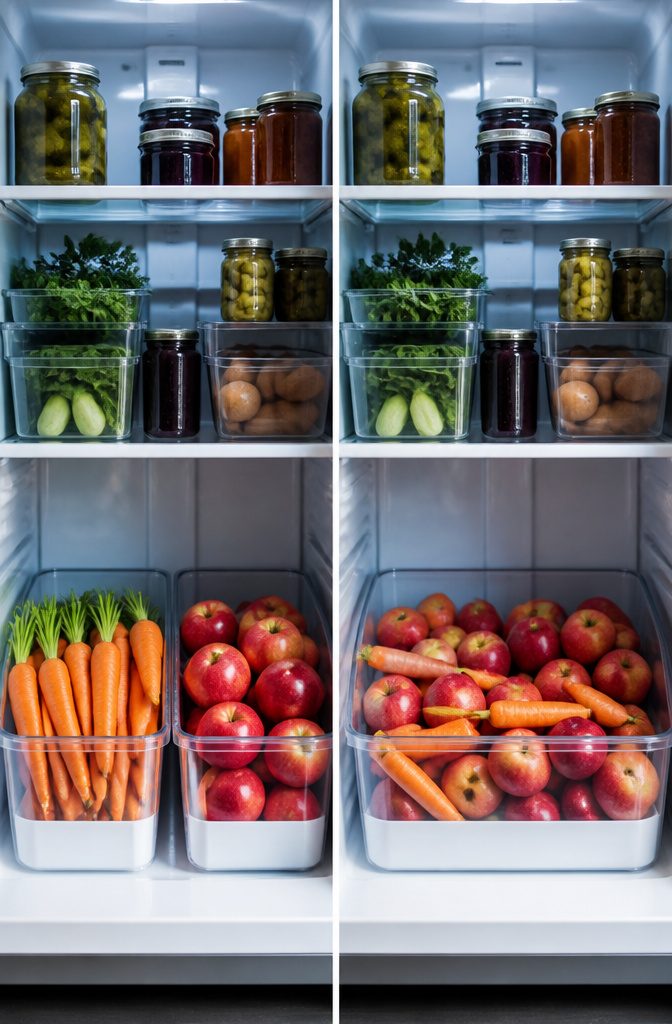
Apples and pears share a crisper drawer with winter carrots at your own risk. Ethylene gas from these fruits speeds sprouting and turns carrots bitter, something I pieced together only after a batch went harsh on me one February. I had packed a dozen homegrown roots alongside a bag of Galas, figuring cold storage was cold storage. By March they had regrown pale whiskers and tasted like parsley gone wrong.
The same gas hits pears and a few other fruits, so carrots get their own bin or a separate bin bag with a few air holes punched in. In my small fridge that means the bottom drawer for roots and the top for fruit, full stop. It costs nothing and it saves the sweetness you grew them for.
Frequently Asked Questions
How do you store carrots for the winter?
Carrots keep through winter in the refrigerator, a root cellar, or the freezer after blanching. For fridge storage, snip the greens, give them only a light rinse, then bag them in perforated plastic with a damp paper towel. A root cellar with damp sand or soil and temperatures between 32–40°F preserves flavor best, while freezing requires five minutes of blanching for whole carrots before bagging.
What is the best way to keep carrots fresh?
The best storage mimics cool, damp soil: 32–40°F with 90–95% humidity and some airflow. In a refrigerator, that means a perforated zip-top bag in the coldest corner or crisper drawer, with a damp paper towel underneath to raise humidity. Check every few weeks and pull out any carrots going soft before rot spreads.
Can you leave carrots in the ground over winter?
Yes, if you cover the bed with a thick mulch of straw or leaves. The cold soil keeps converting starches to sugars, so these carrots taste sweetest of all, and you harvest as needed into early spring. This only works where the ground does not freeze solid; once it does, you are locked out until thaw.