
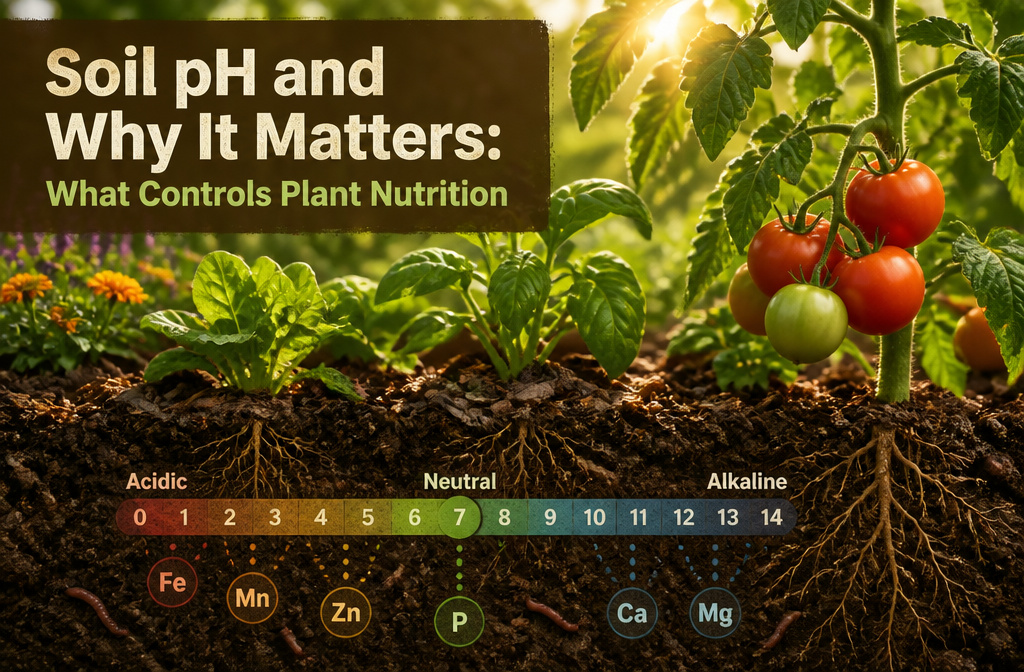
Soil pH measures how acidic or alkaline your ground is on a scale of 0 to 14, with 7 as neutral. The catch is that the scale is logarithmic, not linear, so a drop from 6 to 5 means ten times more acidity, not just a little less. That is why tomatoes can yellow and stall in soil that holds plenty of iron, but at a pH where roots cannot absorb it.
What Soil pH Measures
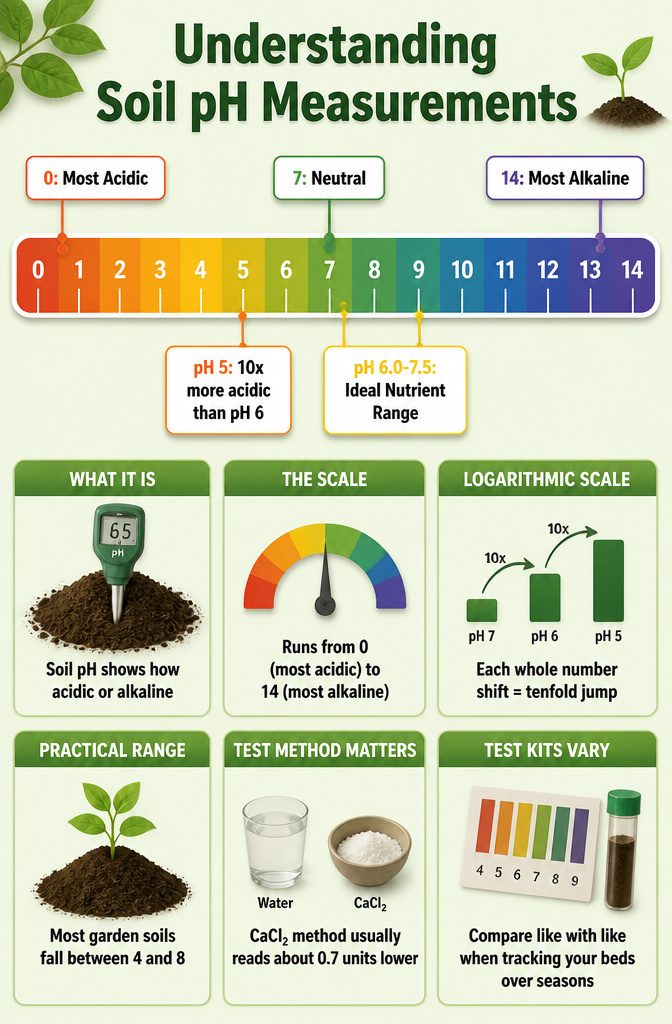
Soil pH is a measurement of how acidic or alkaline your soil is, running from 0 (most acidic) to 14 (most alkaline). A reading of 7 sits right in the middle as neutral. Anything below 7 means acidity; anything above means alkalinity. The scale is logarithmic, not linear, so each whole number shift represents a tenfold jump in acidity. Soil at pH 5 is ten times more acidic than soil at pH 6, and a hundred times more acidic than pH 7. That is why a seemingly small drift from what your plants prefer can matter more than the number suggests.
In practical garden terms, most soils you will actually work fall between 4 and 8. Acidic soils typically read 4–6.5, while alkaline soils run 7.5–9. I have seen labs report pH in water and others use a calcium chloride solution; the CaCl2 method usually reads about 0.7 units lower. Home test kits vary too, so compare like with like when tracking your beds over seasons.
Why pH Controls What Plants Can Eat
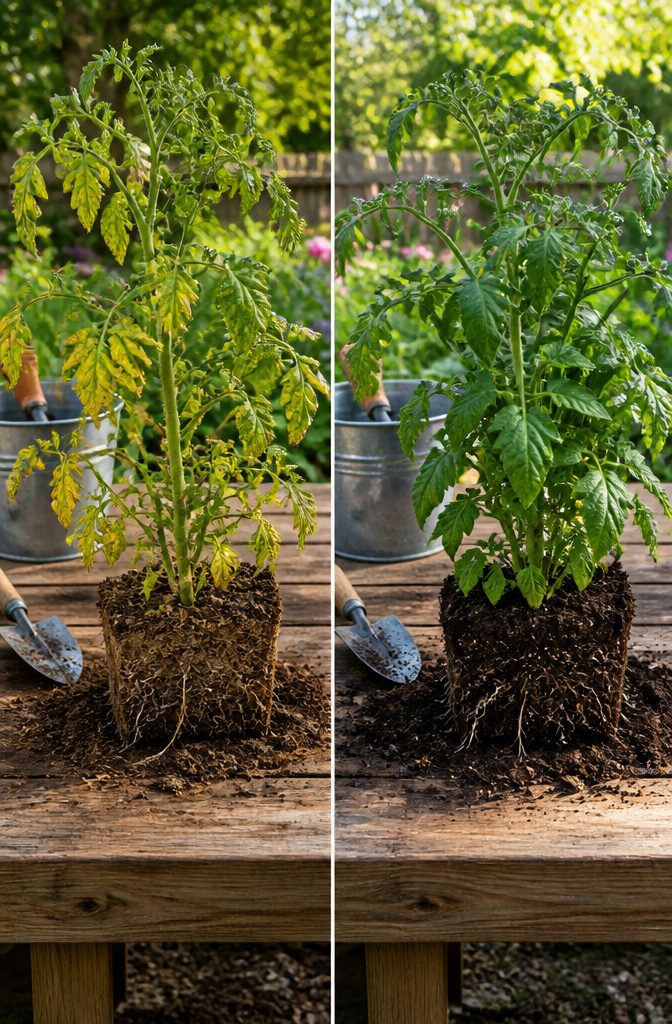
The nutrients sitting in your soil do your plants no good if the chemistry keeps them locked away. A pH between 6.0 and 7.5 keeps most nutrients soluble enough for roots to actually drink them up. Push much below 6.0 and phosphorus starts binding with aluminum and iron into forms plants cannot touch; push well above 7.5 and it locks up with calcium instead. I have watched perfectly fed tomatoes yellow and stall because the soil chemistry made the banquet unreachable.
That same middle range, roughly 6.0 to 7.5, is where soil bacteria and fungi do their best work decomposing organic matter and cycling nitrogen. Dip below 5.5 and microbial diversity crashes; nitrogen-fixing bacteria slow, organic matter piles up instead of breaking down, and the nitrogen tied inside it stays stuck. The soil food web keeps running on chemistry more than we like to admit.
Structure suffers too. Balanced pH helps soil hold its crumb and let water move through; extremes speed the buildup of salts and can leave ground tight or waterlogged where it should breathe. Most garden plants, vegetables and flowers and turf grasses alike, ask for that 6.0 to 6.8 band. The exceptions prove the rule: blueberries and rhododendrons need the low pH not for acidity itself, but because iron only stays soluble enough for their high demand when the numbers drop.
Nutrients That Lock Up or Run Loose
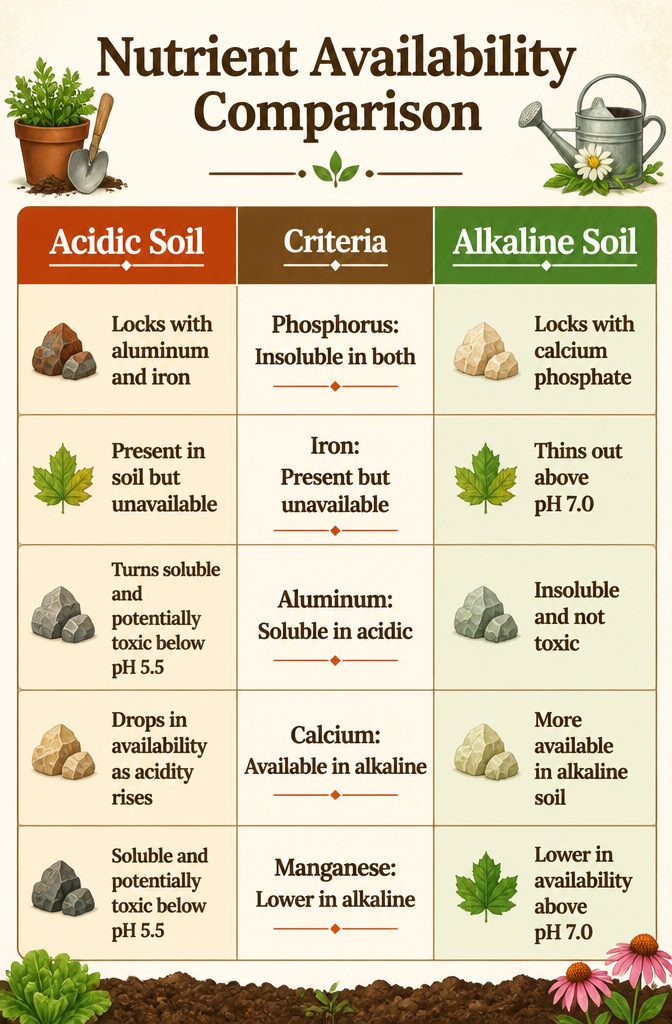
Nitrogen, phosphorus, and potassium sit in their sweet spot between pH 6.0 and 7.5. Stray outside that band and plants start missing meals even when the nutrients are technically present.
- Phosphorus binds with aluminum and iron in acidic soil, forming insoluble phosphates plants cannot take up; in alkaline soil it locks into calcium phosphate with the same result.
- Iron, manganese, and boron all thin out above pH 7.0, which is why pin oaks yellow in high-pH Midwestern soils despite plenty of iron in the ground.
- Aluminum and manganese turn soluble and potentially toxic below pH 5.5.
- Calcium and magnesium both drop in availability as acidity rises.
The width of a nutrient’s usable pH range matters as much as its center point. Phosphorus runs narrow; nitrogen and potassium forgive a little more drift.
Acid Against Alkaline
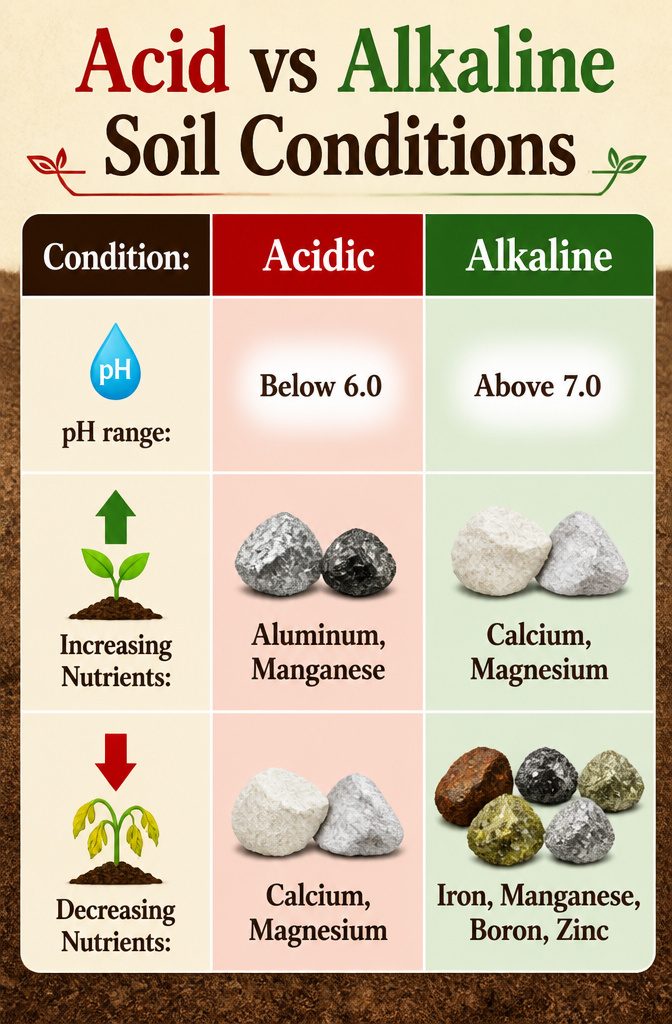
Soil chemistry swings hard in either direction from neutral, and the problems look almost like opposites. In acidic ground below pH 6, aluminum and manganese become soluble enough to damage roots directly, while calcium and magnesium drop out of reach even when the soil holds plenty. Swing alkaline above pH 7 and the mirror flips: iron, manganese, zinc, and boron all lock into forms roots cannot pull in, while calcium and magnesium now sit there in excess. Iron shortage in alkaline soil shows up as interveinal chlorosis, the leaf yellowing between green veins that I have watched spread through a row of tomatoes while the soil test insisted iron was present.
| Condition | pH range | Nutrients that increase | Nutrients that decrease |
|---|---|---|---|
| Acidic | Below 6.0 | Aluminum, manganese | Calcium, magnesium |
| Alkaline | Above 7.0 | Calcium, magnesium | Iron, manganese, boron, zinc |
The Wikipedia entry on soil pH puts the aluminum danger plainly:
Because roots are damaged, nutrient uptake is reduced, and deficiencies of the macronutrients (nitrogen, phosphorus, potassium, calcium and magnesium) are frequently encountered in very strongly acidic to ultra-acidic soils (pH<5.0).
That damage threshold matters for gardeners because liming to raise pH is slow, and a season spent below 5.0 can leave roots too stunted to recover even after chemistry improves.
How I Test My Beds
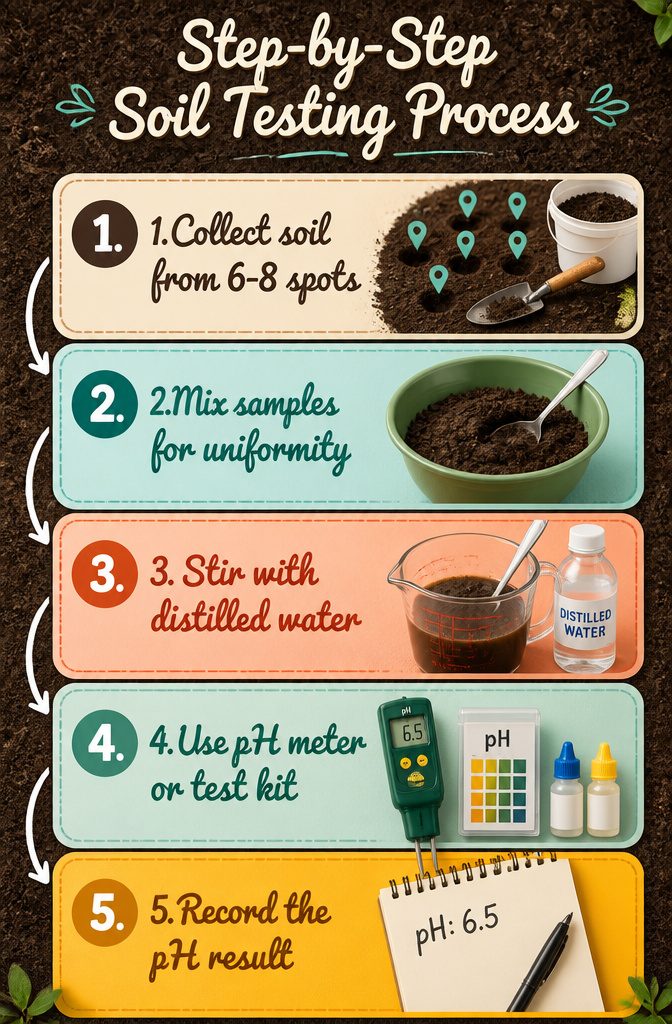
I test my beds once a year, usually late fall when the vegetable garden is cleared out. The routine is simple enough to finish before lunch.
-
Collect soil from six to eight spots across the bed, not just one. I dig down six inches with a trowel and drop the soil into a clean bucket. Surface dirt alone tells you almost nothing.
-
Mix those samples together until the texture looks uniform, then pull out about a cup. This blended sample represents the whole bed, not one lucky or miserable corner.
-
Stir the soil with distilled water to make a thin slurry, the consistency of loose pancake batter. Some kits call for a pinch of salt instead; either works, but pick one method and stay with it so your numbers track year to year.
-
Dip in a pH meter or add the indicator drops from a home test kit. Meters run $12–25 and last several seasons if the probe stays wet in storage.
-
Write the number down. If you want a full lab analysis with nutrient levels and lime recommendations, county extension services charge around $17 plus shipping. That second report tells you how much reserve acidity sits in the soil, not just the surface reading, which is what you need for calculating lime.
Raising pH With Lime
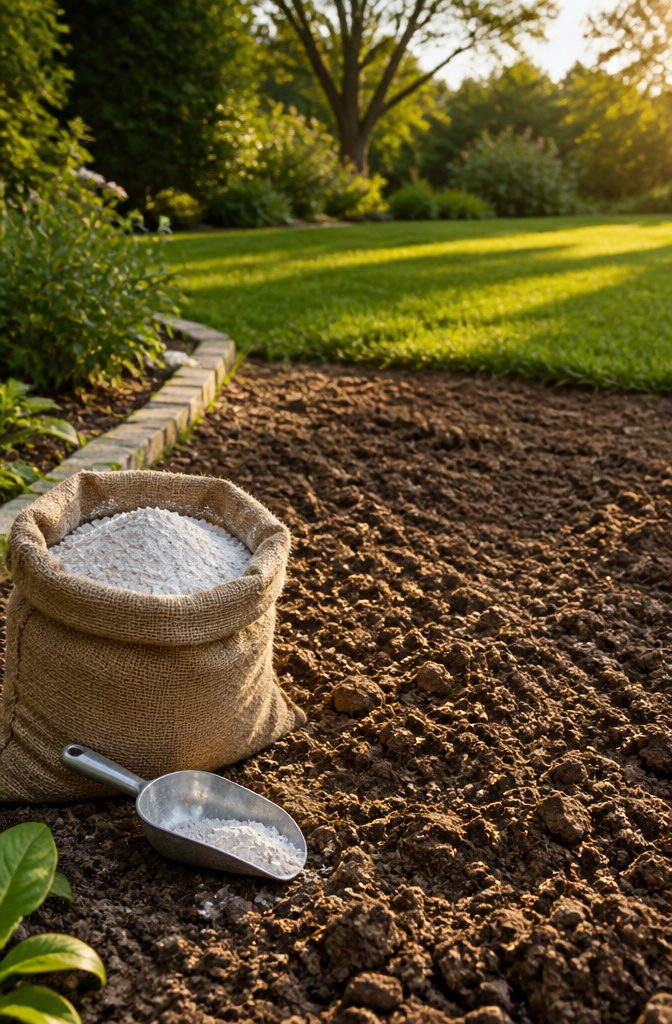
Most garden lime sold by the bag at garden centers is finely ground white limestone, either calcitic or dolomitic. The difference matters: calcitic lime is mostly calcium carbonate with 3% magnesium or less, while dolomitic limestone adds significant magnesium into the mix. Your soil test results should steer the choice, not guesswork.
Fall is the time to apply lime, right after you get your test back. Turn or rototill it into the soil to the depth your plants’ roots will actually reach. The material moves slowly downward, roughly half an inch to one inch per year, so surface sprinkling on an established bed wastes patience. Pelletized lime works with a spinner spreader; pulverized needs a drop spreader or careful hand application if you do not mind dust.
Both forms take six to twelve months or more to shift pH, depending on conditions. Hydrated lime acts faster but burns skin and plant tissue alike; skip it for home use. The standard recommendation runs one to four tons per acre, scaled to your yard size and current acidity, though heavy or clay soils need more than sandy ones to move the same notch. Too much does real harm, so match the amount to the test rather than eyeballing it. Wood ashes work in a pinch at about one and a half times the limestone rate, but wash them off leaves immediately or you will scorch what you meant to feed.
Lowering pH With Sulfur
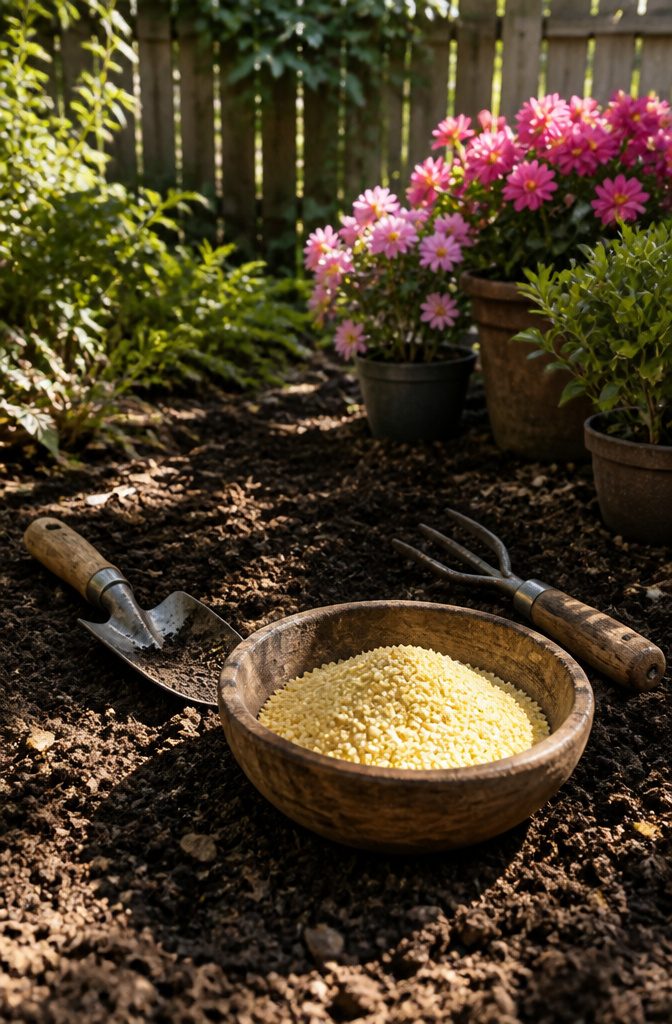
Elemental sulfur and aluminum sulfate are the two amendments that reliably pull alkaline soil downward. Aluminum sulfate works the moment it dissolves, which sounds like the obvious choice until you learn the catch: the aluminum that makes it fast can also poison roots if you add too much. I treat it like a spot treatment, not a yearly habit.
Sulfur is the slower, safer bet. Soil bacteria have to convert it to sulfuric acid before the pH shifts, and that biological step takes several months. Apply sulfur a full year before you plant acid-lovers like blueberries, azaleas, or rhododendrons, and work it into the top layer of soil rather than dusting it on top. The bacteria need contact and moisture to do their job.
Either way, nudge the pH in stages. A swing of more than half a point in a single season can shock roots and lock up nutrients you were trying to free. Test, amend, wait, test again. Organic matter helps buffer the change, so I always add compost alongside sulfur and let the soil settle before I put anything in the ground.
Plants That Want What Your Soil Is Not
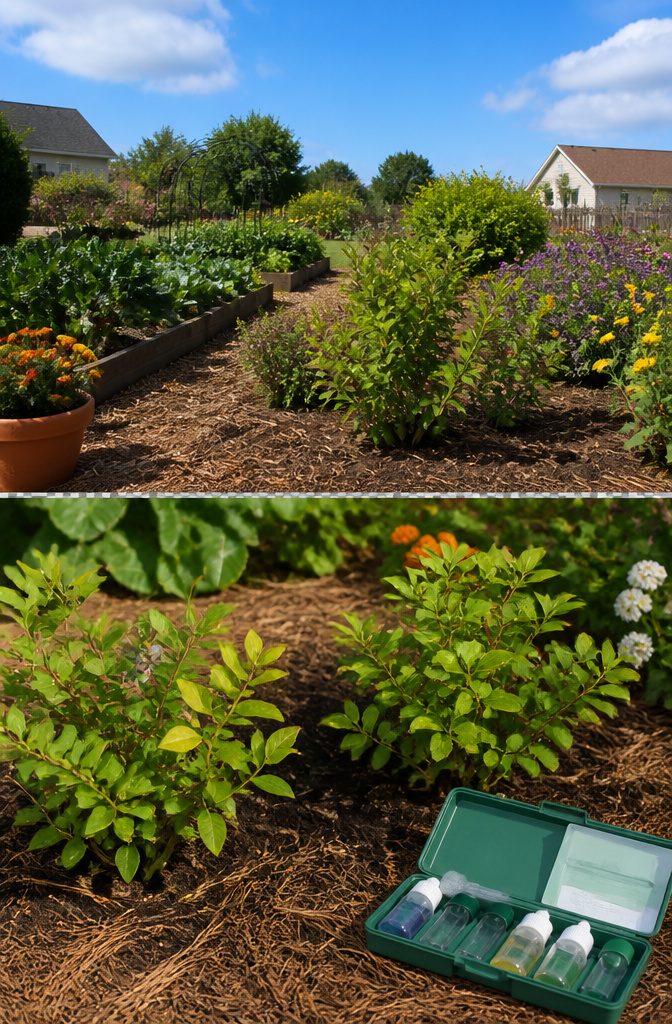
Blueberries taught me this the hard way. I planted two bushes in my Chicago backyard, amended the bed with compost, mulched with pine needles, and still watched them yellow and sulk for two seasons before I tested the soil. pH 7.2, straight out of the tap and straight out of the limestone belt. Blueberries want 4.5 to 5.5. Nothing I added by way of fertilizer could bridge that gap because the chemistry was wrong, not the nutrition.
The same rule governs azaleas and rhododendrons, which share that 4.5 to 5.5 range. Tomatoes sit happier at 6.2 to 6.8. Brassicas such as cabbage and broccoli tolerate slightly higher, up toward 7.0 but not past 8.0. Lawn grasses mostly ask for 6.0 to 7.0, with cool-season types like fescue and bluegrass favoring the middle at 6.5.
The choice is simpler than it looks. Match the plant to the ground you have, or commit to years of amendment. I have done both. The blueberries went into containers with an acidic potting mix; the vegetable beds stayed where the soil already landed in the sixes. Chasing a full-point pH shift across a whole bed is slow, expensive, and never quite finished. Picking a potato over a blueberry when your soil runs neutral saves that fight entirely.
Rain, Region and What Starts in Your Ground
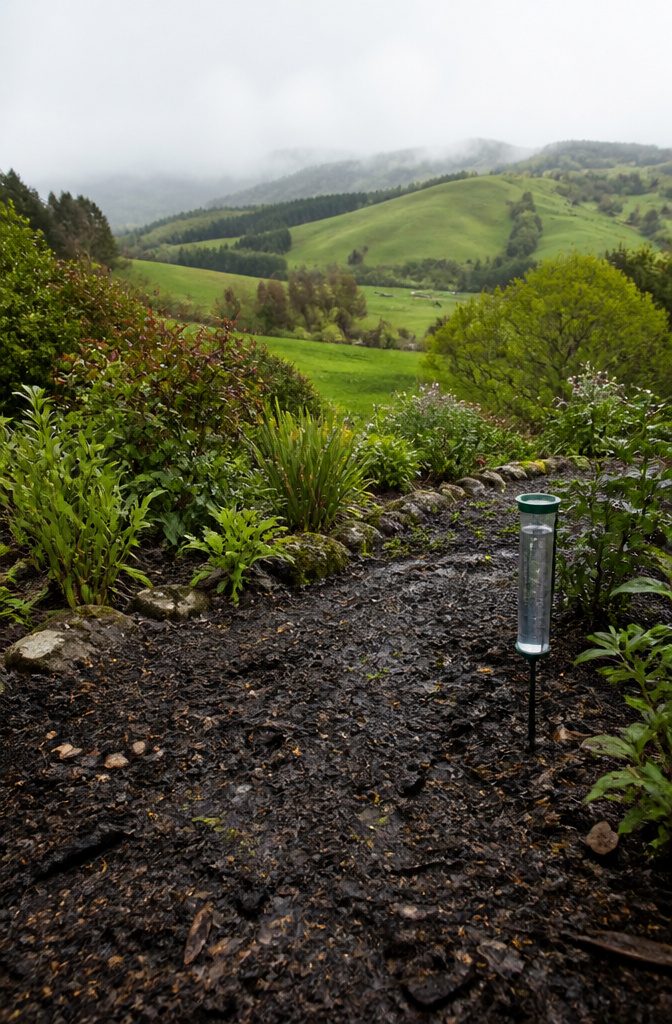
Water falling from the sky is what starts most pH stories. In places where forty inches or more come down each year, that rain pulls calcium and magnesium down through the soil and out of reach of plant roots, a process called leaching. The ground turns acidic over time. Much of the eastern United States fits this pattern, which is why gardeners there often reach for garden lime.
The opposite happens where moisture stays scarce. Arid western states see calcium carbonate accumulate rather than wash away, pushing pH toward alkaline. Western gardeners often fight soil that locks up iron and other micronutrients their tomatoes need.
Parent material matters too. Limestone bedrock tends toward alkaline soil; granite and sandstone usually start acidic before climate even enters the picture. Knowing your region’s geology helps you guess what you’re walking into before you test.
The Range Where Most Plants Thrive
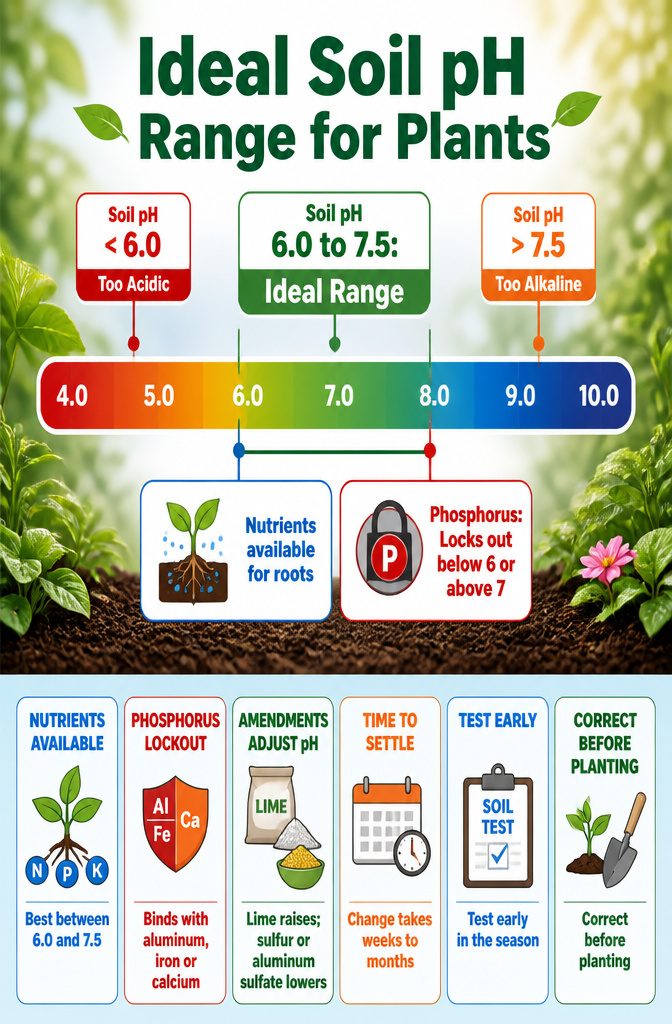
Most plants pull nutrients best when soil pH sits between 6.0 and 7.5. In that window, nitrogen, phosphorus, and potassium stay soluble enough for roots to actually take them up. Stray lower or higher and those same nutrients bind to other minerals and lock out. Phosphorus is the classic example: drop too acidic and it ties up with aluminum and iron; go alkaline and it binds with calcium instead. Either way, the nutrient is in the ground but the plant cannot use it.
If a soil test comes back outside that range, amendments will shift it. Lime raises pH on acidic ground; elemental sulfur or aluminum sulfate nudges it down where things are too alkaline. The change takes weeks to months to settle, so testing early in the season gives time to correct before planting.
Frequently Asked Questions
Why is soil pH important?
Soil pH controls whether nutrients in your soil are actually available for plants to absorb. A pH between 6.0 and 7.5 keeps most nutrients soluble enough for roots to take them up, while also supporting the bacteria and fungi that cycle nitrogen through organic matter. Push outside that range and plants can starve even in soil that technically holds plenty of nutrients.
How do I test my soil pH?
Mix a soil sample with water and measure the resulting solution with a pH meter or home test kit. Labs sometimes use a calcium chloride solution instead, which usually reads about 0.7 units lower, so compare like methods when tracking your beds across seasons. You can also get a soil test kit from your regional Extension office for more detailed guidance on amendments.
How can I raise or lower my soil pH?
Add garden lime to raise pH, or apply sulfur, iron sulfate, or aluminum sulfate to lower it. Lime comes in forms that differ in speed and application method, some pelletized for spreaders and others fine and dusty; sulfur-based amendments also vary in how long they last and which plants they suit best. Sandy soils need less material than clay soils to achieve the same shift, so follow product labels and retest every couple of years since pH drifts over time.






