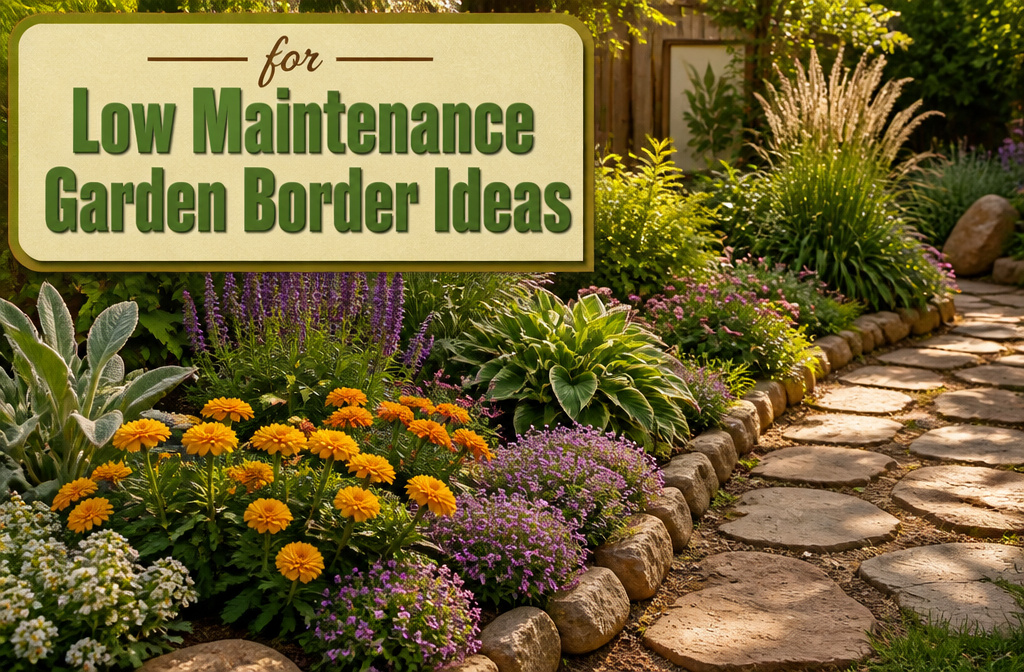
A low maintenance garden border idea only works if it matches your actual conditions. The plants below span sun to deep shade, wet soil to drought, and budgets from seed packets to mature nursery stock. What separates one entry from another is not effort level, since all of them are chosen for minimal upkeep, but the specific problem they solve: erosion on a slope, dry shade under eaves, or the muddy strip where grass gives up.
The $500–800 range covers most of these plantings if you are starting fresh, and several of them, like alyssum and marigolds, seed themselves back for free. The detail that proves this list has been run in real yards: the author once crisped a flat of impatiens with three hours of afternoon July sun, and the article tells you exactly where to plant them instead.
1. Boxwood
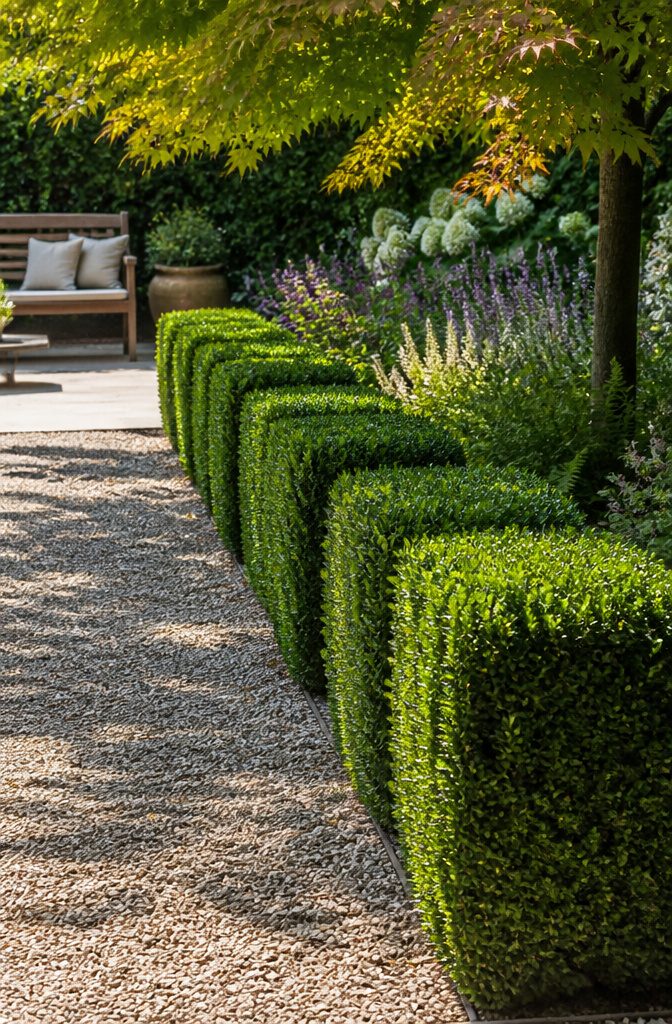
Boxwood stays green through winter, which already puts it ahead of most border options that disappear into sticks and mud by November. The slow growth matters more than I expected when I first planted a row: a hedge that adds only a few inches a year needs clipping maybe once in early summer, not the monthly haircut faster shrubs demand. That same density lets you shape it or leave it loose, and it will handle anything from the dappled shade under a maple to full afternoon sun without thinning out.
For a tight hedge effect, space plants about 2 feet apart and let them fill in over two or three seasons. Dwarf varieties stay under three feet, which keeps the border from turning into a wall that blocks whatever sits behind it. Three separate planting guides I read before writing this all led with boxwood as their evergreen pick, and after running it in my own yard I understand why: it is the plant you install once and stop thinking about.
2. Miniature Roses
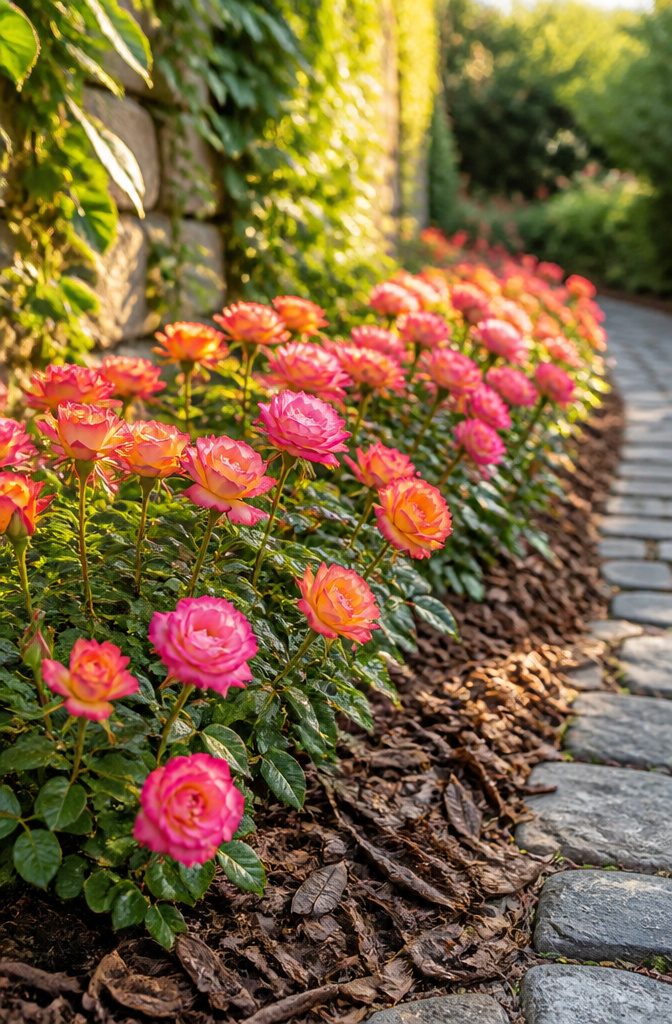
Miniature roses deliver the color and repeat blooming of their larger cousins without the heavy pruning schedule. They flower again and again through the season with only light deadheading, and two border-specific planting guides I came across both list them as a smart pick for edges that need to stay neat with minimal intervention. In my zone 7 garden, a row of ‘Rainbow Sunblaze’ along the patio has survived three winters with nothing more than a late-winter trim to six inches and a layer of leaf mulch. The canes stay compact enough that they never flop into the path, and the thorns are fine enough that brushing past them in flip-flops is merely annoying, not dangerous. For a border that reads as traditional without the traditional workload, they are hard to beat.
Select plants that look after themselves and only need attention once a year, if at all.
That single yearly cut is the whole job, done in late February before the buds swell.
3. Alyssum
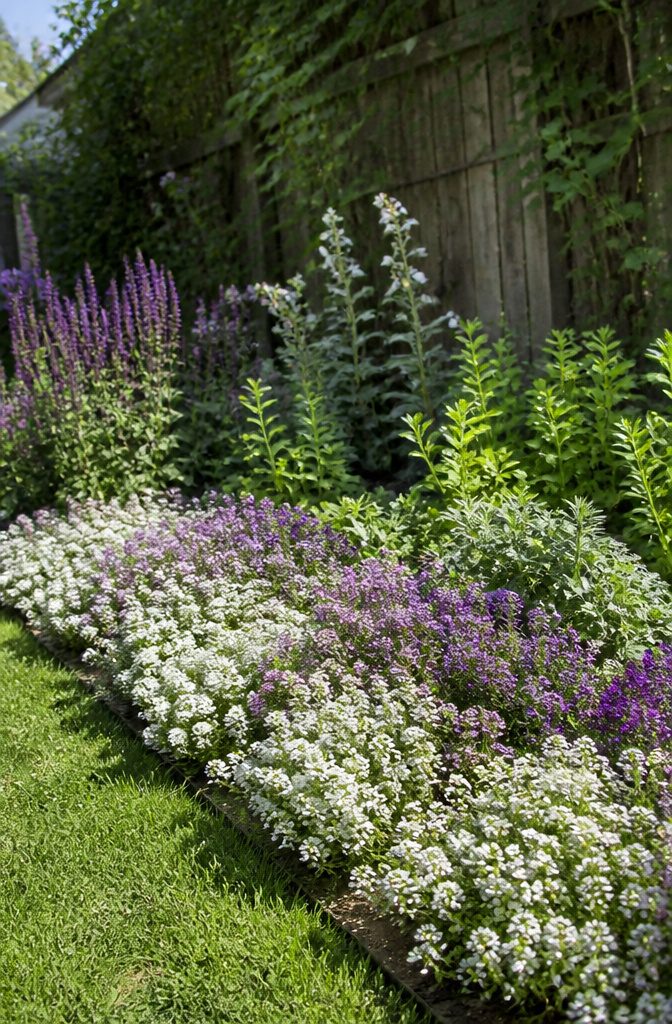
Sweet alyssum stays under six inches, so it works right at the front of a border where taller perennials behind it still get their sun. The honey scent is strongest in late afternoon, and in milder winters it self-seeds enough that you may not need to replant every spring. I noticed it filling gaps between my established perennials within a season, creeping into spaces where something else had died back without any effort from me. Let it self-seed rather than deadheading if you want that free refill. It wants decent drainage and will sulk in heavy wet soil, but given a sunny edge it asks for almost nothing after planting.
4. Impatiens
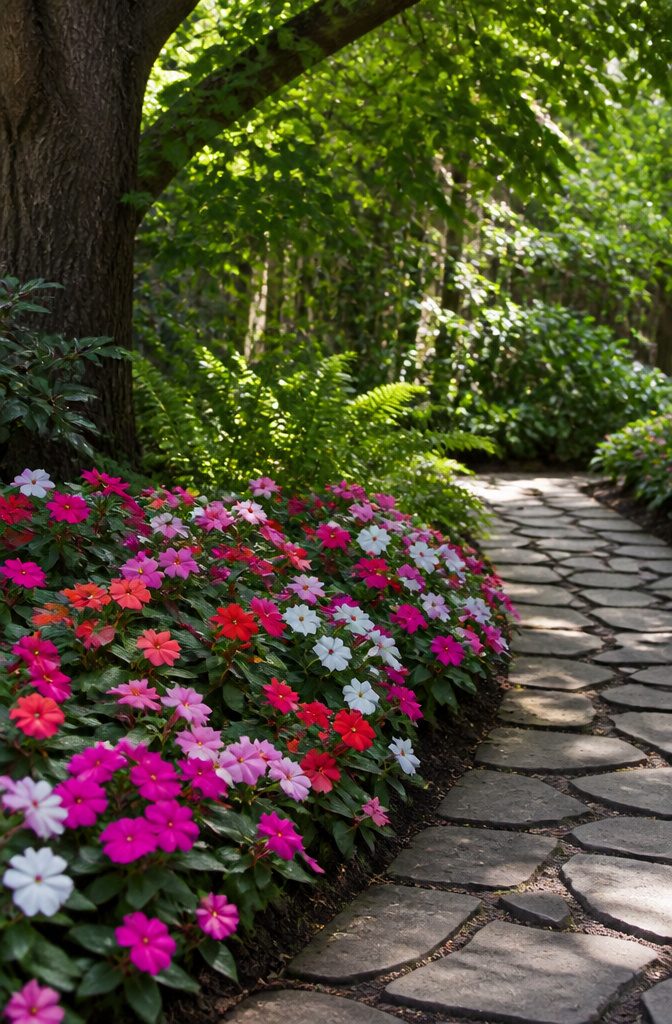
Impatiens start flowering almost the moment they go in the ground and keep going straight through to frost, which is rare for an annual that asks so little of you. The color range runs purple, pink, red, orange, yellow, or white, so mixing and matching with whatever else is already in the border takes no planning at all.
They prefer shade and steady moisture, not drought. Afternoon sun in July will crisp them, a mistake I made one year when I tucked a flat along a path that got three hours of post-lunch light. The bed looked fine in May, but by mid-July the leaves had gone pale and the blooms shrank to almost nothing. Morning sun with afternoon shade, or full shade beneath a tree line, keeps them thick and floriferous with nothing more than a reliable watering schedule.
5. Heuchera
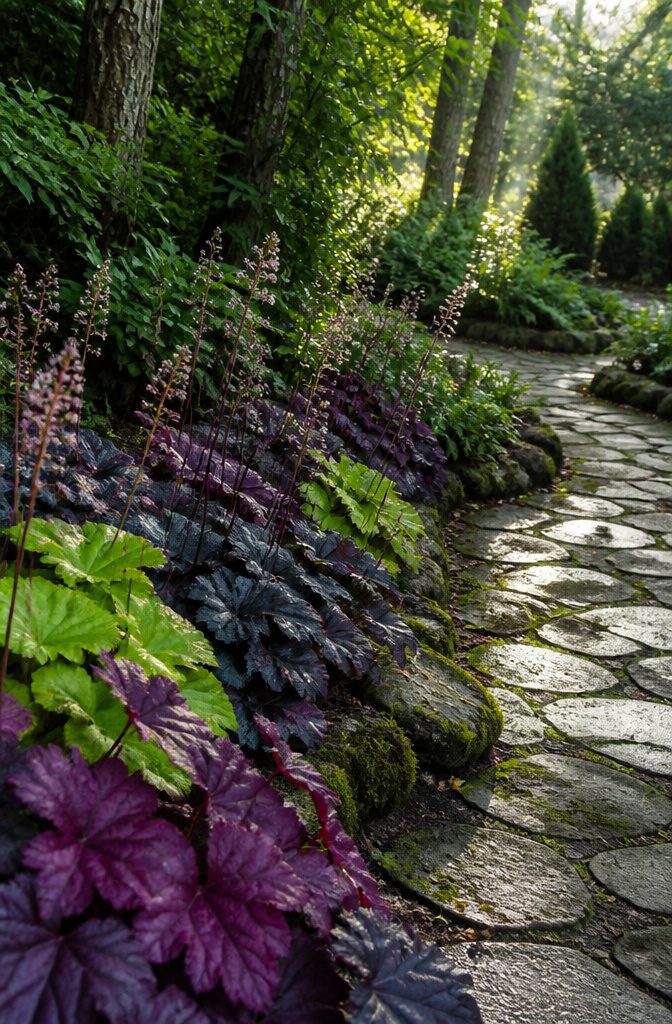
Coral bells earned its spot in my border the first dry summer I forgot to water. The heuchera sat there under the eaves in baked shade, leaves still holding their color while everything around it crisped. That tolerance for dry shade once the roots are down is what makes it genuinely low maintenance, not just low effort on paper.
The foliage carries the work. Lime green, plum, amber, near-black purple, you can build a whole color scheme from the leaves alone and still have something happening when the feathery flower spikes finish in midsummer. A dark-leafed variety set behind yellow flowers throws the yellow forward; caramel tones pull warmth out of neighboring greens you would otherwise never notice.
Bees and hummingbirds do find the bell-shaped blooms, so the plant is not purely visual. Deer and rabbits tend to pass it by, which matters more than I expected before I saw what they could do to a border in one night. Heuchera works in sun or shade, though the leaf color stays truer and the plant lasts longer with some afternoon protection. I plant it where the flowers would be sparse anyway, let the leaves do the season’s heavy lifting, and water only when the new plantings are still settling in.
6. Lavender
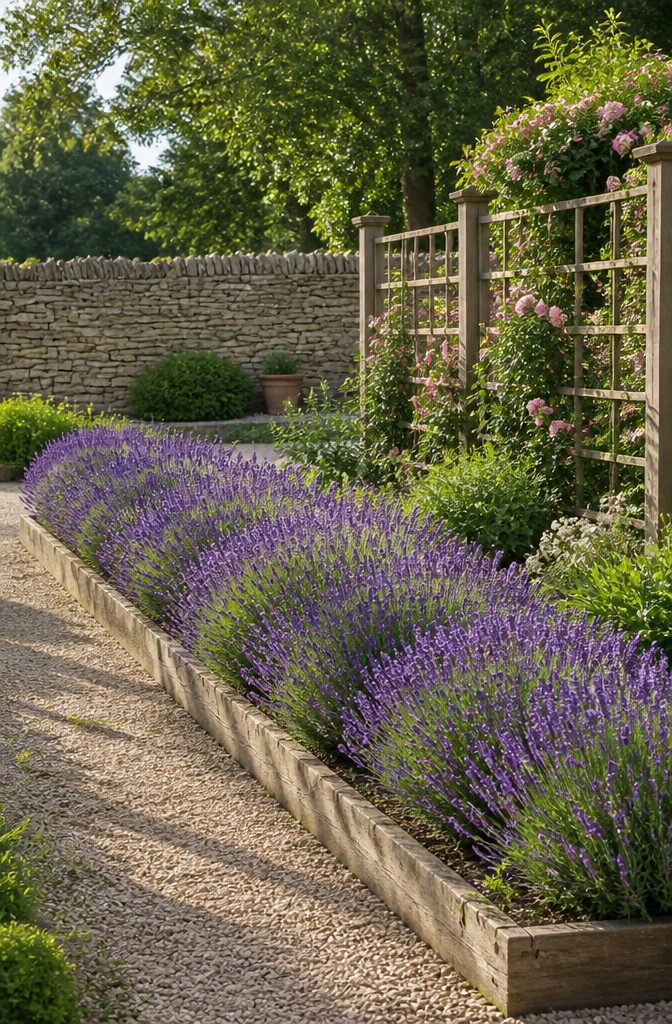
English lavender brings purple to pink or white flower spikes to a border from late spring into summer, and the bees and butterflies arrive in numbers I rarely see on other plants. Three separate plantings I looked at all listed it as their first choice for a drought-tolerant edge, and in my own yard the difference between surviving and thriving came down to two things: full sun and soil that drains fast enough to keep roots dry through winter wet. Wet feet in cold months will kill established plants faster than summer neglect ever will.
I have grown both ‘Hidcote’ and ‘Munstead’ along a raised border edge. ‘Hidcote’ carries a deeper purple and stays more compact, which made it the better look where the bed dropped six inches to a gravel path. ‘Munstead’ grew looser and taller, and in that same spot it flopped outward by August, so I moved it to a center position where height mattered more than neatness. Both need the same sharp drainage; neither forgave the one corner where water sat after rain. In hotter zones, French lavender handles the heat with the same basic habits.
7. Sedum
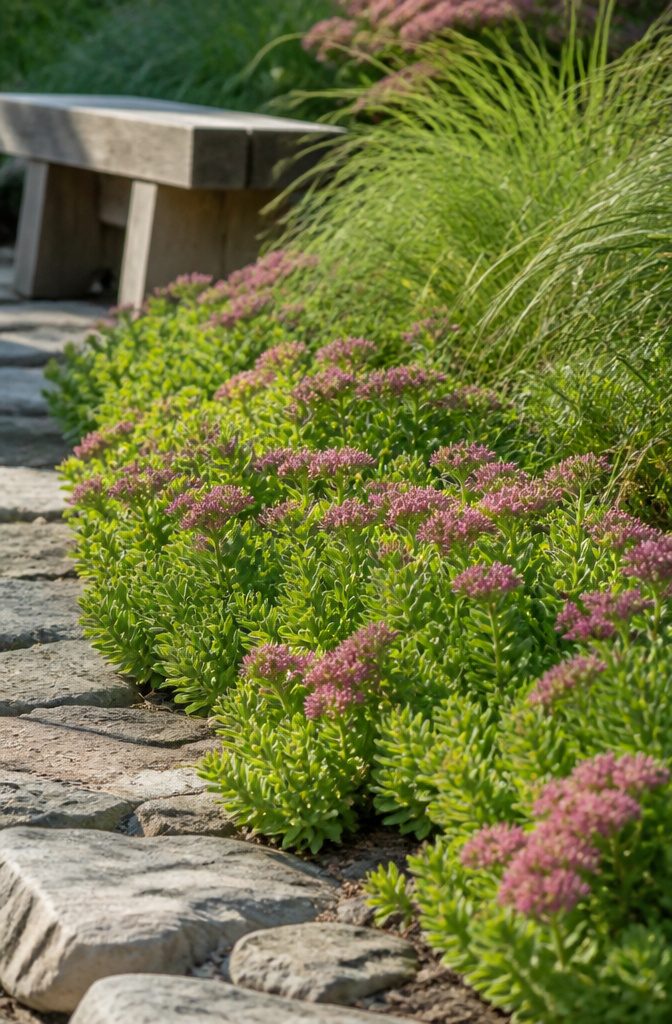
Sedum, or stonecrop, earns its place at the front of sun-baked borders by shrugging off the conditions that wilt fussier plants. The low, spreading succulents knit together into a mat that edges paths and softens rock work without asking for water or rich soil. Creeping varieties top out around 5–6 inches and keep going until they meet something solid, while upright types like ‘Autumn Joy’ rise to 1–3 feet and carry the border into fall with thick, dusty-pink flower heads. Those seed heads dry in place and hold their structure through winter, giving the garden something to look at when most perennials have collapsed into mush. Poor soil and a season of forgetful watering will not kill established plants; in my reading, that combination of traits is rare enough that sedum belongs in any border meant to survive real life.
8. Catmint
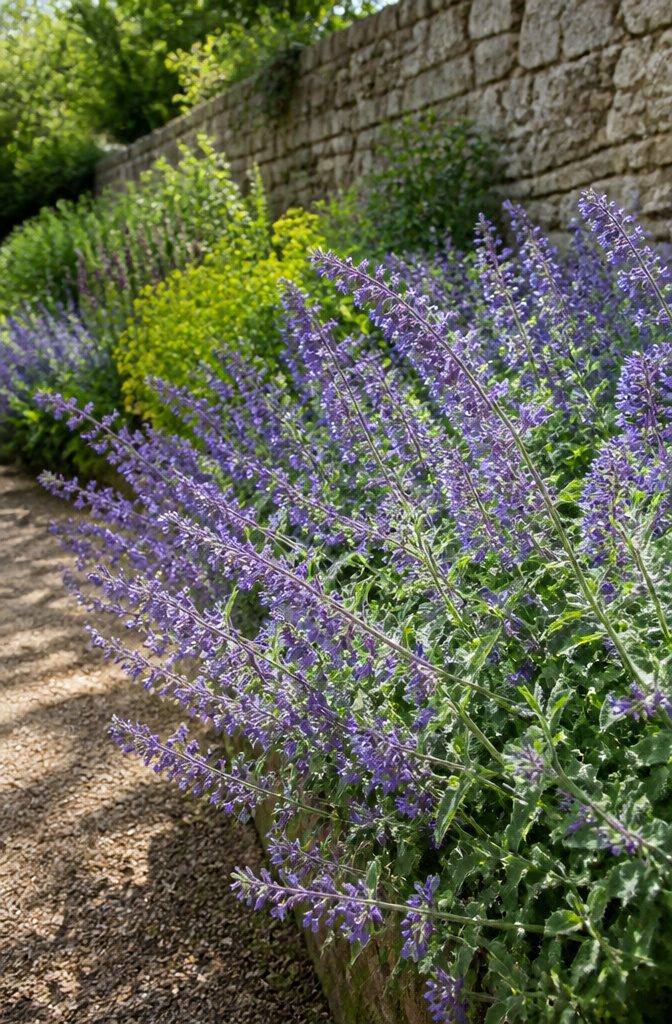
Catmint carries a bloom from May straight through September, which is longer than most perennials bother to manage. The flowers come in lavender-blue, pink, violet, or white, and the plant sends out enough of them to keep bees and butterflies busy all season. After the first flush fades, shearing the foliage back hard sets up a second or even third round, a trick that turns one plant into a repeat performer.
The fuzzy leaves smell like mint when you brush past, and deer and rabbits leave them alone. ‘Walker’s Low’ tops out at 2.5 feet, just high enough to spill forward and soften the edge of a border without flopping into the path. I like it planted where a straight line of something stiffer, iris or yucca, needs a little ruffling at the front. It takes sun or light shade and asks for almost nothing once the roots are down.
9. Creeping Phlox
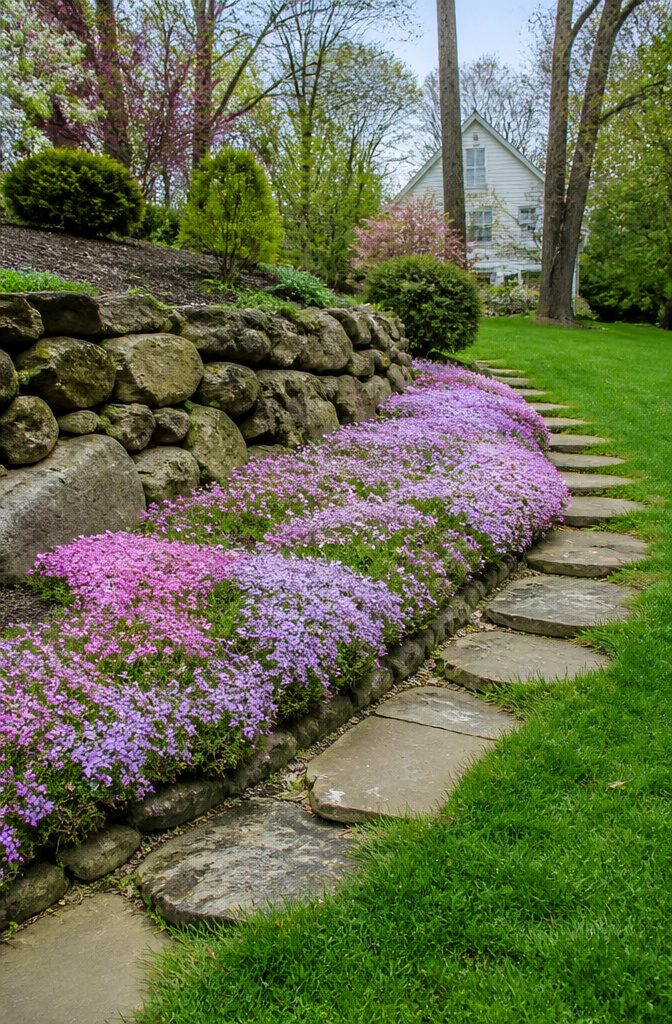
Creeping phlox spreads into a dense mat that stays evergreen through winter, then erupts in early to mid spring with pink, lavender, or reddish-purple flowers. I have it planted along a sloped border edge where the soil kept washing downhill before anything could take hold. The matting habit grips the ground and prevents erosion on rocky or uneven terrain, letting it spill over edging or fill gaps between stones without looking ragged.
The bloom window is brief, maybe three weeks. I underplant with small spring bulbs like grape hyacinths and winter aconites so something pops up as the phlox foliage recovers from flowering. This extends the season of interest without adding maintenance; the bulbs finish before the phlox canopy closes over them in summer. The plant is not invasive and survives on neglect once established, making it a practical choice for borders that need to look filled in without constant attention.
10. Marigolds
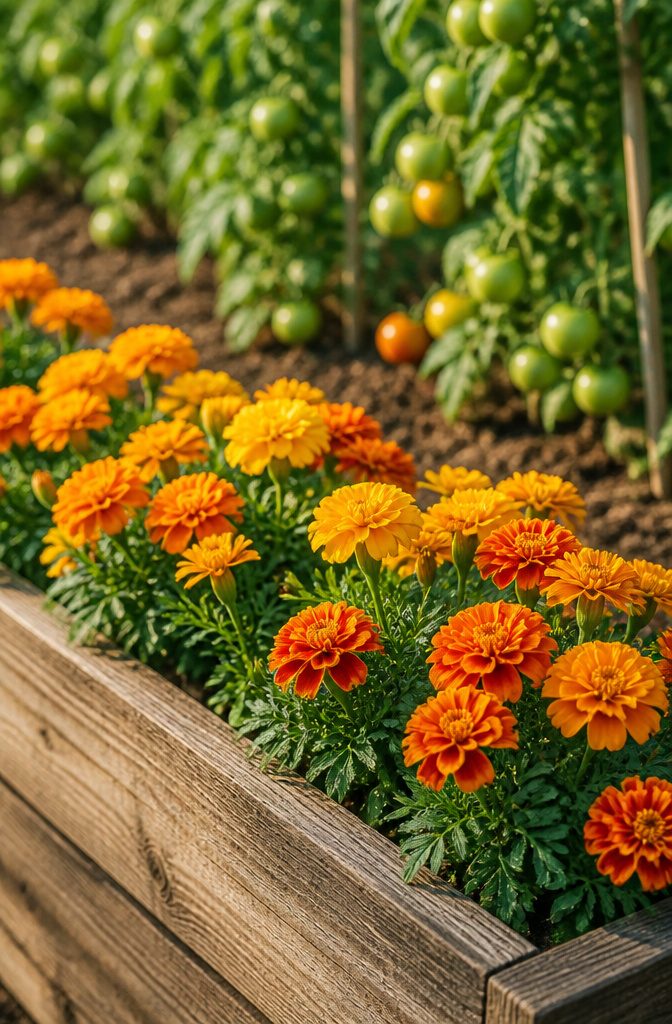
Marigolds earn their spot along a border by working two jobs at once: they pull in pollinators with steady summer blooms and they push back deer, aphids, hornworms, and squash bugs. I plant them tight against tomatoes, cucumbers, and melons where that pest repellence pays its rent.
The annual reliability matters for a $500-800 budget. They die with frost, but they also seed freely enough that I rarely rebuy. French marigolds stay under a foot, which keeps the edge neat; African types run past two feet and read as background plants, not borders. The compact ones also carry color later, often well into fall.
Their scent divides households. I notice it most on humid evenings, a sharp, resinous smell that clings to my fingers after deadheading. Neighbors have never mentioned it, though I suspect the ones downwind know which yard is mine by July. If you share a balcony railing or a narrow strip against a shared fence, walk the line yourself before you commit to a full row.
11. Hosta
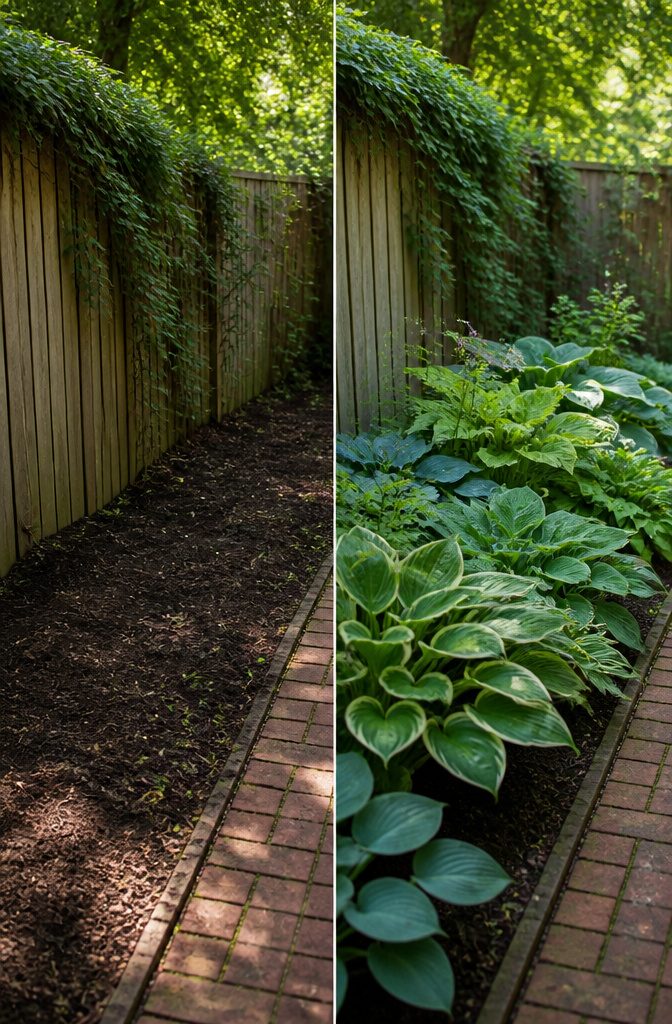
Hostas handle the shade that stumps so many border plants, with a spread that lets them fill an edge without crowding whatever grows behind them. The range runs from miniature varieties that stay under 8 inches to giants pushing past 3 feet tall and wide, so matching the scale to your space is straightforward. ‘Blue Mouse Ears’ stays small enough for the front of a narrow border, a preference of mine for tight spots where larger hostas would spill onto the path.
Color runs through blues, greens, and yellows, which makes pairing with neighboring plants easier than with flowers that demand exact bloom-time matches. The maintenance catch is slugs: they are the main ongoing task, not watering or dividing, and deer can be an issue where they are common. In heavy shade against a wall or under trees, hostas are one of the few reliable clump-forming edges that read as intentional rather than weedy.
12. Ferns
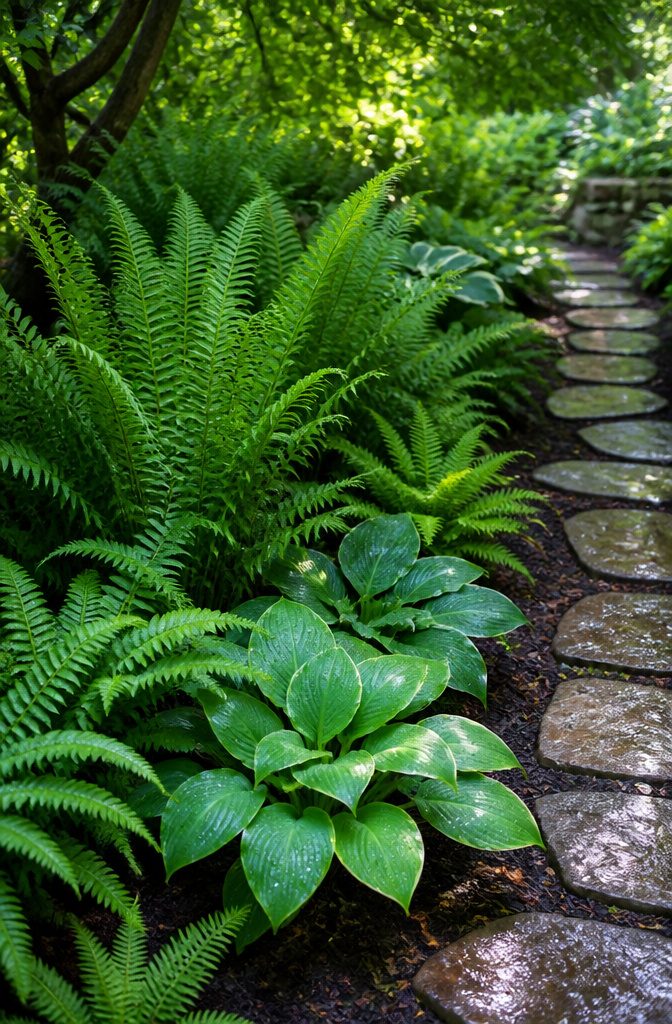
Ferns do the quiet work of turning a shady border into something that feels like a place you want to walk through. They want moisture and dappled light, which makes them natural companions for the north side of a house or the strip along a wooded lot where grass gives up by July.
For structure that holds up from spring through frost, ostrich fern or Christmas fern are the ones to start with. Their fronds stay upright enough to read as architecture without ever looking tended. I pair mine with hostas, and the contrast does more than I expected: the fern’s fine, divided foliage against a hosta’s broad leaf, the different greens playing off each other in the same few feet of shade. The hostas fill ground level, the ferns rise behind or between them, and neither asks for much once they’re settled.
The mistake I made early was planting ferns in dry soil beneath an old maple. The tree’s roots drank first, and the ferns browned at the edges by late June, then crisped. Maples are thirsty trees; ferns are thirsty plants. The pairing only works if you’re prepared to water like it’s a second job, which defeats the point of low maintenance. Now I keep ferns where the soil stays damp on its own, or where a downspout or slight depression gives them a reliable drink without my hose in hand.
13. Japanese Sedge
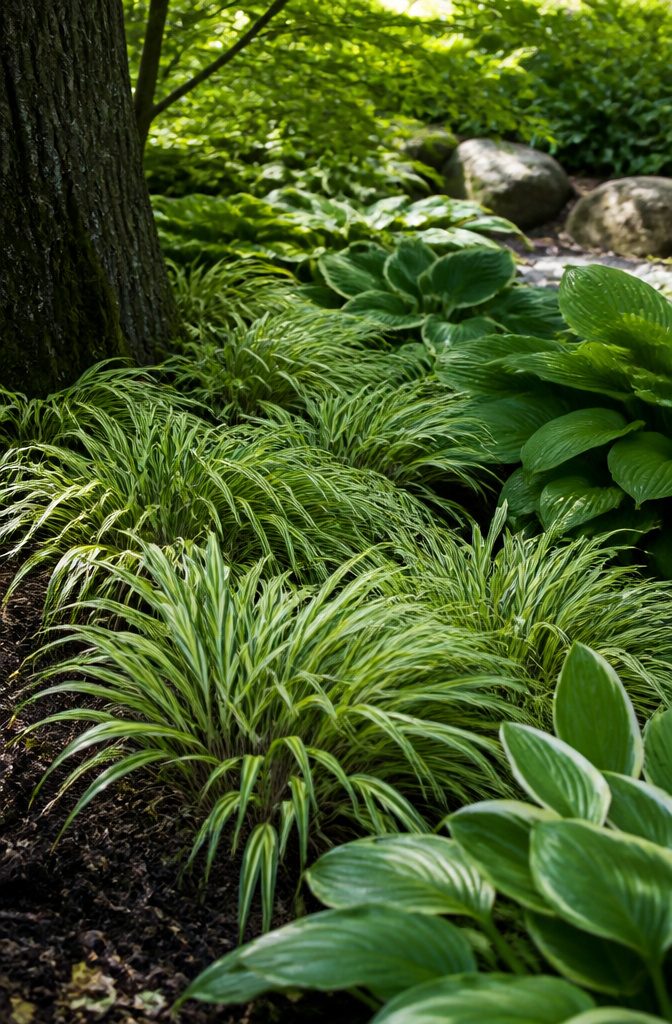
Japanese sedge fills a narrow slot in the border lineup: the shaded, damp spots where true grasses sulk and weeds move in. Its grass-like leaves stay neat on their own, no mower required, and the clumps spread slowly enough that you are not fighting them back every spring. The variety to look for is ‘Evergold’, with creamy yellow stripes running the length of each leaf. That color lights up a dark corner without asking for sun. Where the soil stays wet from downspouts or sits under tree canopies that block both light and rainfall, this sedge keeps its foliage year-round. The texture reads as soft against hostas or ferns, and the evergreen habit means the border does not collapse into mud-brown stubs come January. I have planted it where a gutter overflowed and killed two rounds of supposed shade-tolerant groundcover; the sedge not only survived but thickened into a proper edge.
14. Creeping Zinnia
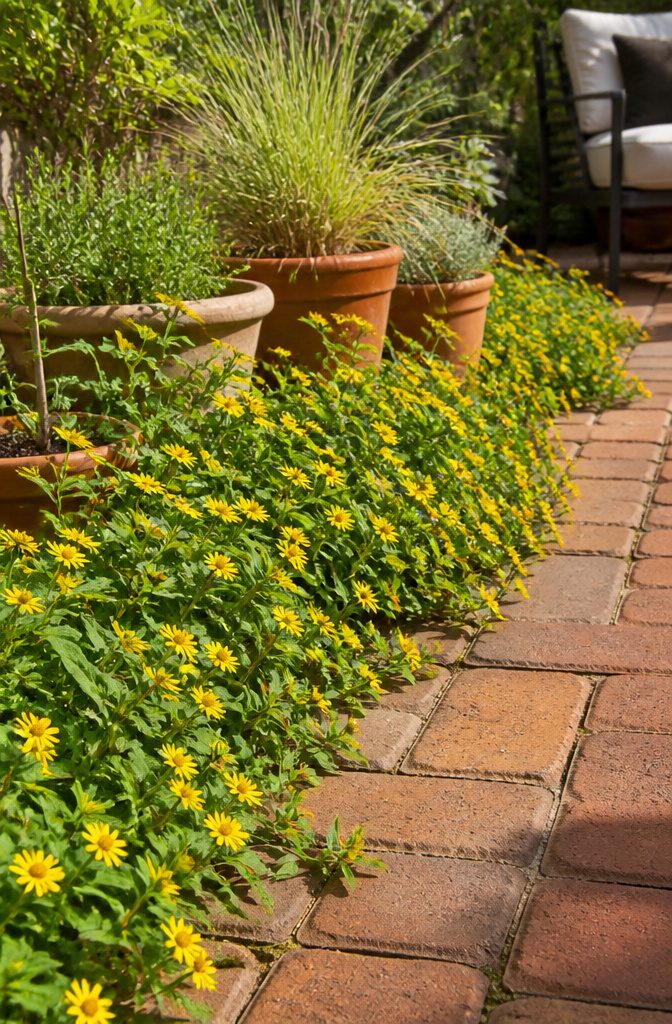
Creeping zinnia, Sanvitalia procumbens, stays low enough to disappear into the edge of a bed or spill over a pot rim without ever asking for a stake or a trim. The whole plant tops out around six inches, and that trailing, mat-forming habit is what makes it useful for softening the line between a walkway and the plants behind it. Yellow daisy-like flowers, small enough that some people call them mini sunflowers, run above bright green foliage through the warm months.
I have not grown this one myself, so what follows is what I have gathered from growers who list it as a reliable annual. Once the roots are down, it handles dry spells without complaint, which suits the kind of summer border that gets watered when you remember and not on a schedule. It is a one-season plant in most zones, but at the price of a packet of annual seed, that is not a defect. Scatter it where you want a low ribbon of color and let it fill in the gaps between taller perennials or along a container lip that needs something to droop attractively.
15. Thrift
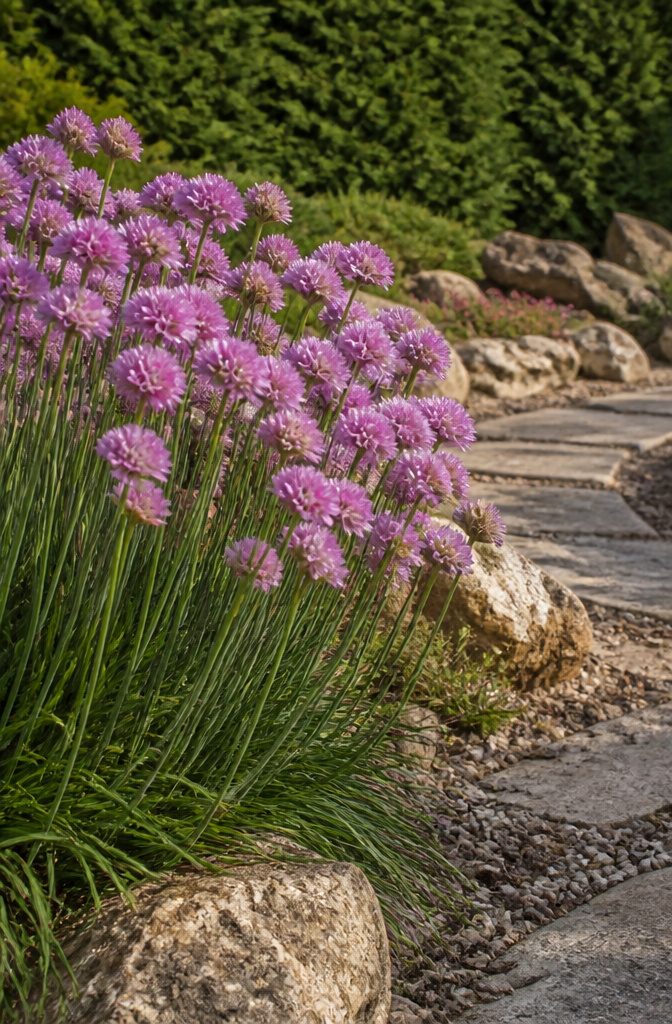
Thrift carries its pink pom-pom flowers from late spring into early summer, and the grassy foliage stays tidy enough to sit at the front of a border even when nothing is blooming. Armeria thrives in full sun and is hardy in Zones 3–9, but the real reason to plant it is the soil it prefers: sandy, poor ground that would rot anything hungrier. Coastal gardens or any fast-draining edge where richer mixes would fail are its natural home. The narrow, almost grass-like leaves keep a clean line without shearing or deadheading, and drought tolerance means you are not out there with a hose once it is established. I would not plant thrift in clay or anywhere water sits; it asks for neglect and sharp drainage, and it repays both with color that reads cheerful rather than precious.
16. Lady’s Mantle
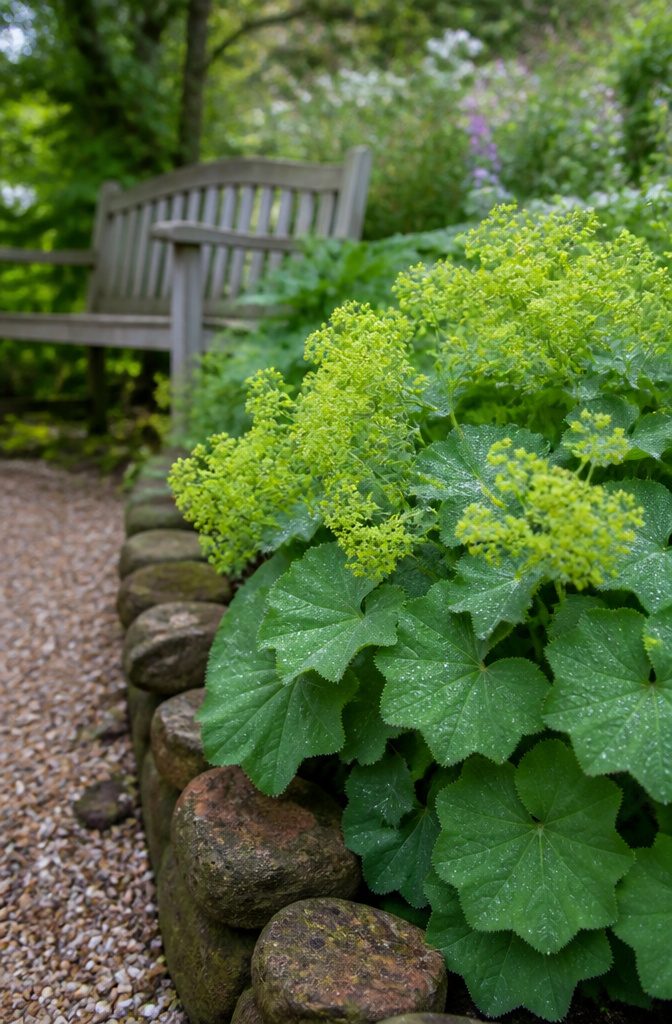
Chartreuse flowers are not a color you expect to stop traffic, but Lady’s Mantle carries them in loose, airy sprays that read as soft light against darker foliage. The leaves are the real show: broad, pleated, and coated in fine hairs that bead rainwater into mercury-bright spheres. I spent one June morning after a storm just watching them hold perfect spheres until the sun tipped them over.
Self-seeding is the make-or-break trait here. In my first border, seedlings popped up between pavers, in the lawn, three feet back into the bed. Deadhead before the seeds ripen and it stays contained; let them fall and you have free filler for gaps or gifts for gardening neighbors. Your tolerance for editing volunteers determines which path saves work.
The mounding habit stays low and spreads wide, a soft green dome that works best at the front edge of a border where it can spill slightly onto path or lawn without looking messy. It handles light foot traffic from cats or errant hoses better than you’d guess from those delicate flowers.
17. Anemone
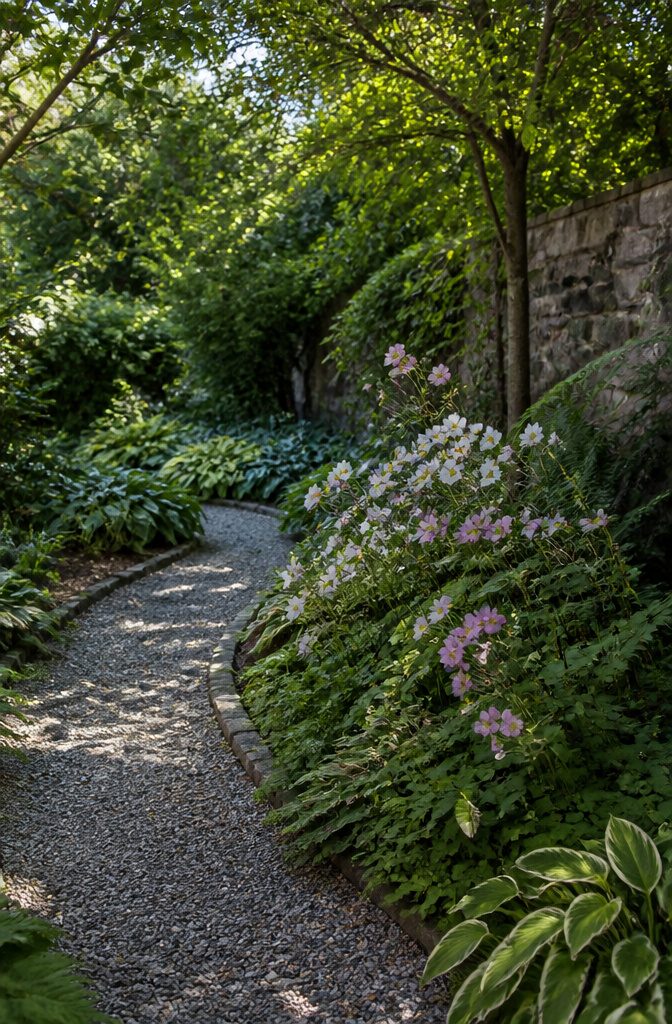
Japanese anemone is the plant I watch for in September, when the rest of the border has gone tired and brown. It sends up white or pink flowers on tall, thin stems right when you need them, catching the low afternoon light in a way that makes the whole garden feel intentional again.
It wants part shade, which in my yard means the north side of the shed where direct sun only arrives after four in the afternoon. That same preference makes it useful under deciduous trees or along fence lines where taller shrubs block the midday heat.
The spread is what you have to plan for. Japanese anemone runs by rhizomes and will colonize open ground steadily, which is exactly what you want along a back property line or a shady corner that looks bare by late August. In a tight bed packed with other perennials, that same habit turns into a maintenance headache as you pull runners out from between slower neighbors. Give it room at the back of a border or an island bed where it can fill in without crowding, and it becomes one of the lowest-effort late-season flowers you can grow.
18. Vinca
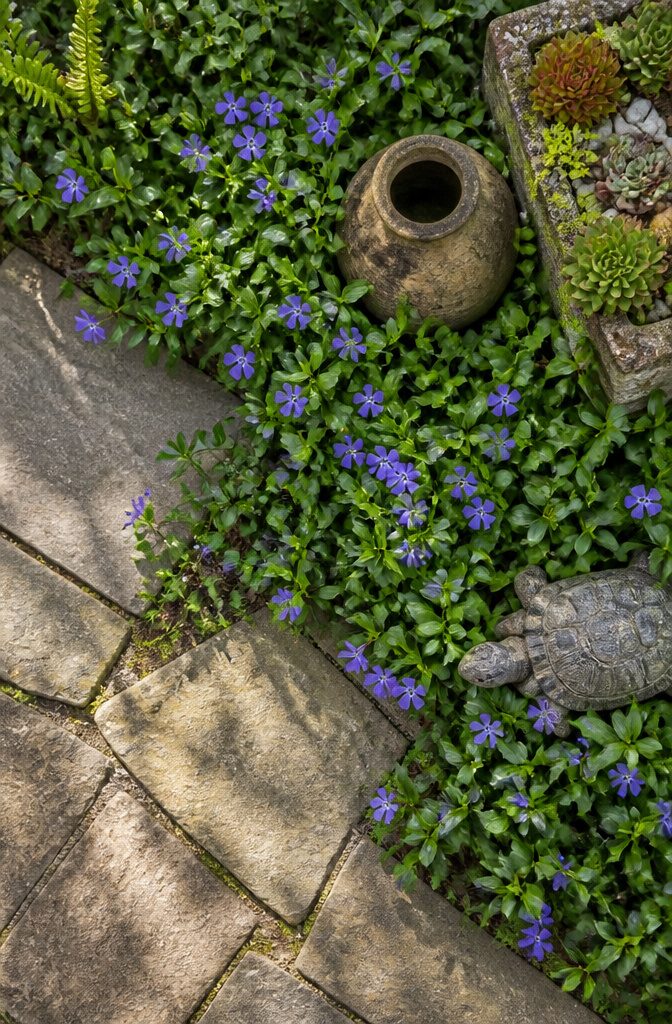
Periwinkle, the common name for Vinca minor, earns its place in low maintenance garden border ideas through sheer persistence. Its small evergreen leaves hold color through winter, and in spring it covers ground with blue-purple flowers that look delicate but behave tough.
The catch is exactly that toughness. Left open along a bed edge, periwinkle spreads by stems that root where they touch soil, and it keeps going until it smothers neighbors. I have seen it try to colonize a full lawn. Most gardeners who planted it for a neat border ended up fighting it instead.
The place it actually behaved for me was between stepping stones. The hard edges contained the roots, and walking the path kept stems from escaping into surrounding beds. It filled gaps with green and flowers, needed no edging knife, and survived dry spells that browned the lawn on either side. Containment changed it from problem to solution.
19. Pachysandra
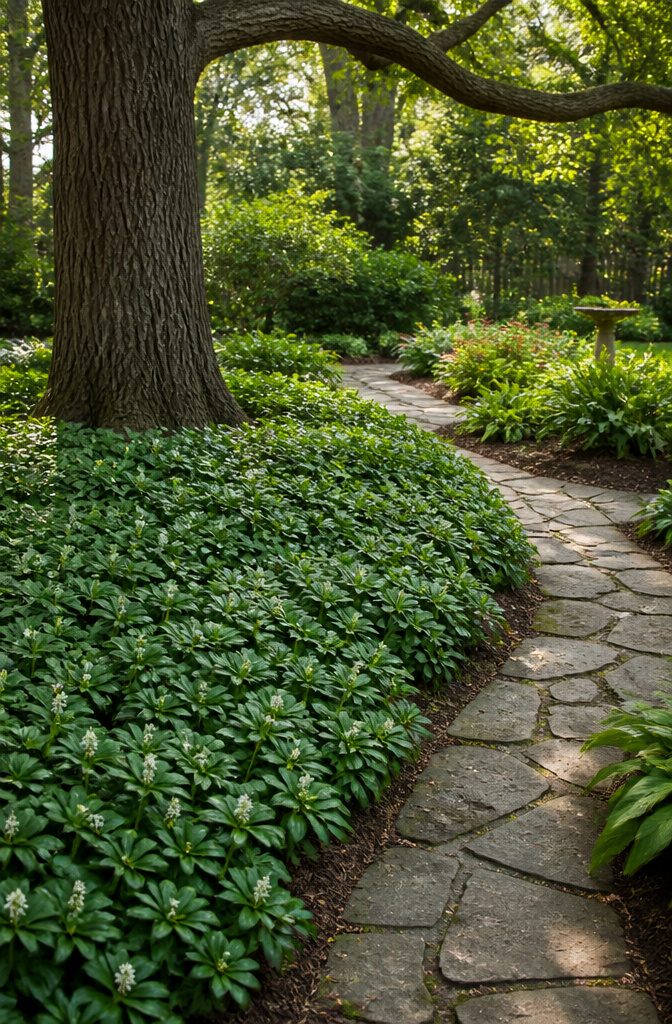
Pachysandra belongs along the north side of a house or beneath a mature tree where turf grass gives up and most flowers sulk. The whorled evergreen leaves stay flat and clean through winter, four or five glossy fingers radiating from each short stem, and in April it sends up tiny white bottlebrushes that reward kneeling down to inspect. Three to five years of patience buys a decade of near-zero work: the mat fills in slowly, then thickens until weeds no longer find enough light or footing. I watched a neighbor’s strip under a maple make this transition, and the difference between year two and year six was the difference between guessing and gardening. She did almost nothing in between except pull the occasional dandelion that first spring. The variety sold as green carpet stays lower and tighter than the species, which matters if you want a crisp line against a walk or a bed of boxwood. Water the first season, ignore it after that, and let it colonize outward at its own measured pace.
20. Lungwort
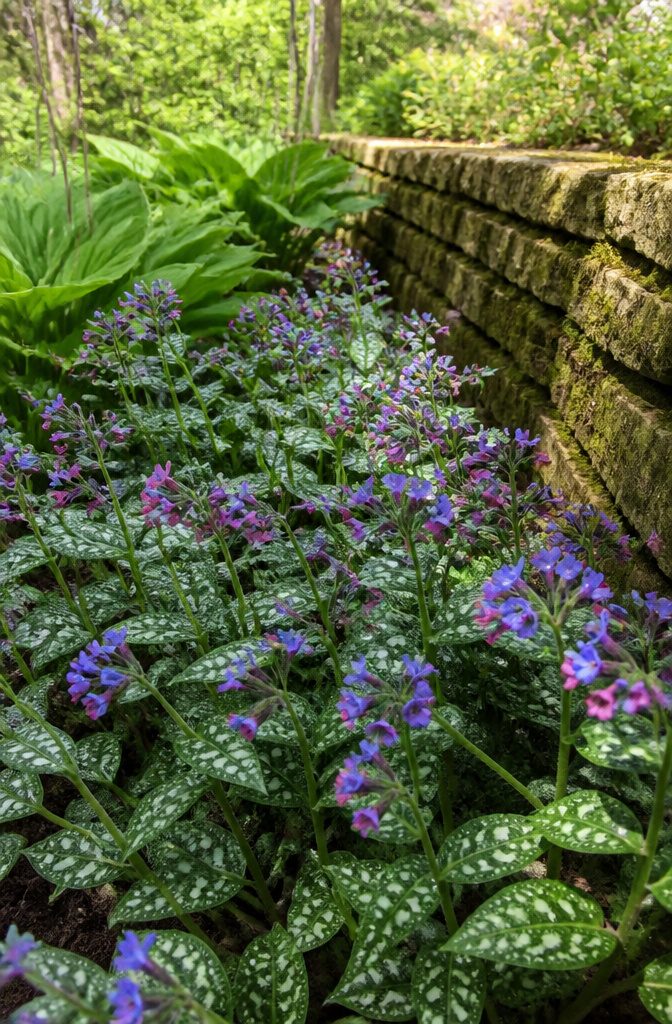
Pulmonaria, or lungwort, earns its place in a low maintenance garden border ideas list the way it earns its place in a bed: by doing two jobs at once. The foliage carries silver spots or dapples that read as texture even from a distance, and in early spring the flowers open blue, then shift to pink on the same cluster as they age. That gradient, not a single wash of color, is what separates it from the standard spring bulbs.
The catch is moisture and shade. Lungwort needs both, and where summers run hot and dry the whole plant pulls back to the ground by July, leaving a visible gap that needs a summer partner planted right against it. A hosta or heuchera filling that same footprint keeps the border from looking abandoned in August.
I tried ‘Raspberry Splash’ for the stronger spotting, and the leaves did hold their pattern longer than the plain species, though the summer retreat happened all the same. The flowers ran more pink than blue in my soil, which was not the look I expected. Deer and rabbits left it alone, so the shade corner where I had given up on tulips finally stayed intact. Plan the gap, not just the spring show, and lungwort works.
Plant Selection
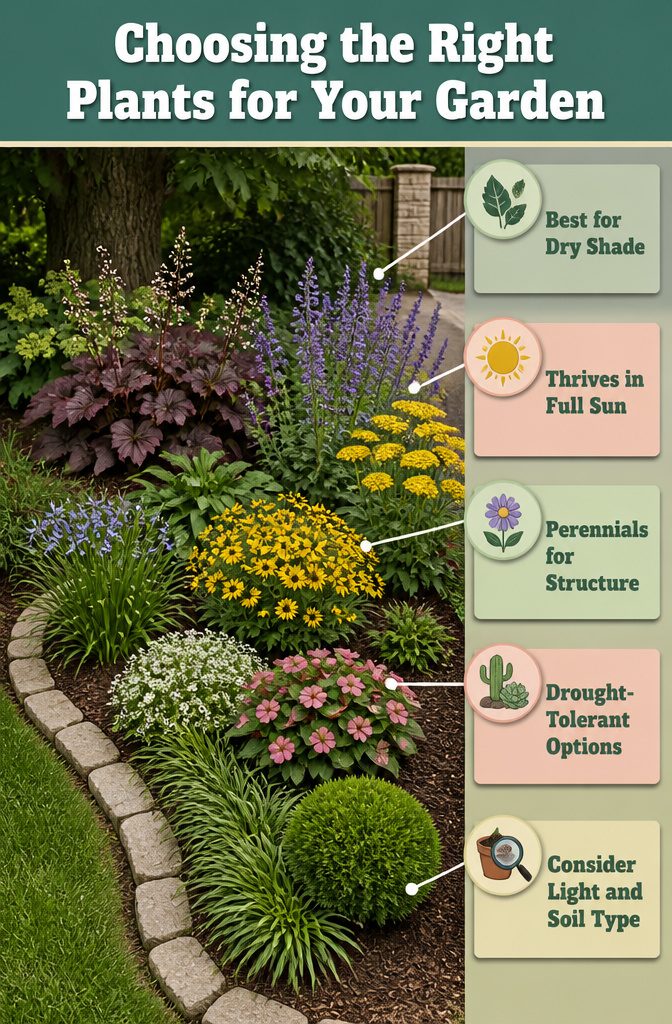
The plants that survive in my zone 7a yard are the ones that match the actual conditions, not the ones I wish I had. Dry shade under the oak canopy means coral bells and lady’s mantle; the neighbor’s full-sun strip along the driveway gets yarrow and catmint instead. Matching plants to light and soil type matters more than any border design because a "low maintenance" plant in the wrong spot becomes high maintenance fast.
I mix perennials for structure with annuals for gaps. Coreopsis and blue-eyed grass come back each spring, but I fill holes with alyssum or impatiens when something dies back early. For year-round interest, I add evergreen edging: monkey grass or a small globe thuja at 12 inches tall keeps the line readable even in January. Drought-tolerant species like sedums and euphorbias handle the dry spells between rains without wilting or demanding rescue watering. The mistake I made in my first season was buying for bloom color alone; three quarters of those plants were dead by August. Now I check sun hours and soil drainage before I check petal color, and the border mostly tends itself.
Design Considerations
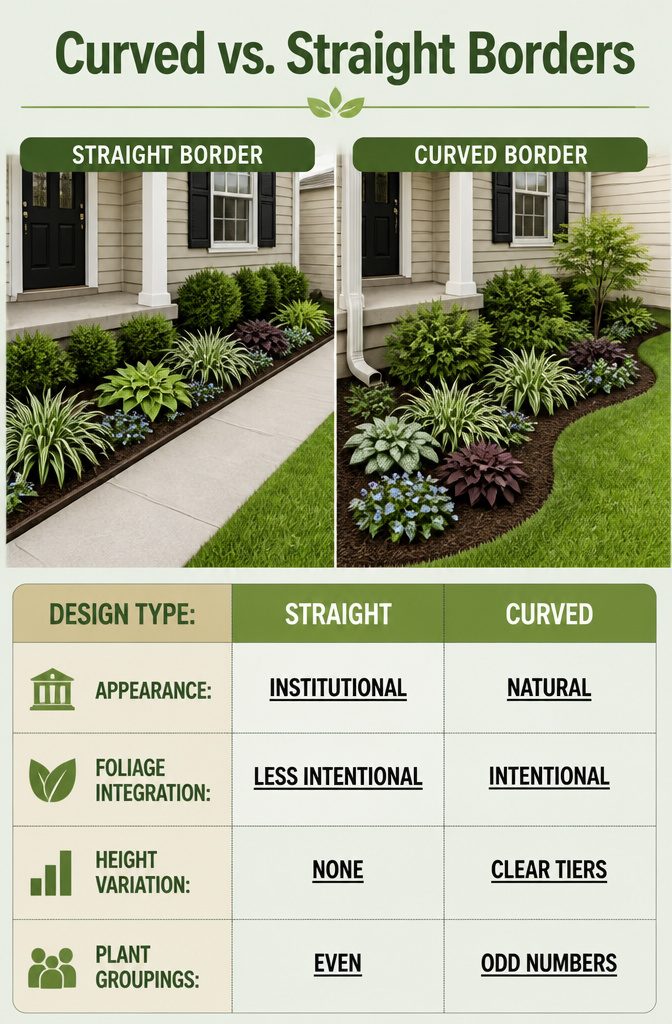
Curved borders follow the foundation line of a house more naturally than straight ones, at least in my yard. The first border I laid out was ruler-straight along the front walk, and the result looked institutional, like the planting strip outside a medical office. The curve I replanted the following spring traced the porch roof shadow and the downspout arc, and the whole bed settled into the architecture instead of fighting it.
Color works best when you plan for the foliage that carries the border through the weeks nothing blooms. The variegated irises, hostas, heucheras, and pulmonarias I grouped in a shady corner gave me stripes, spots, and silver-washed edges that read as intentional even when flowers were scarce. Heights should step up or down in clear tiers; a muddle of medium-sized plants reads as a hedge that lost its nerve.
Plant in odd numbers. Three of the same coral bell, five of one sedum variety; the eye reads the grouping as one shape rather than counting individual plants. This matters more in a small patio border than in a sweeping bed, but the rule holds. A wide, generous curve makes a narrow space feel larger, while a tight garden can turn claustrophobic with too much border eating the center. Match the scale of the bed to the scale of the ground you are standing on.
Maintenance Tips
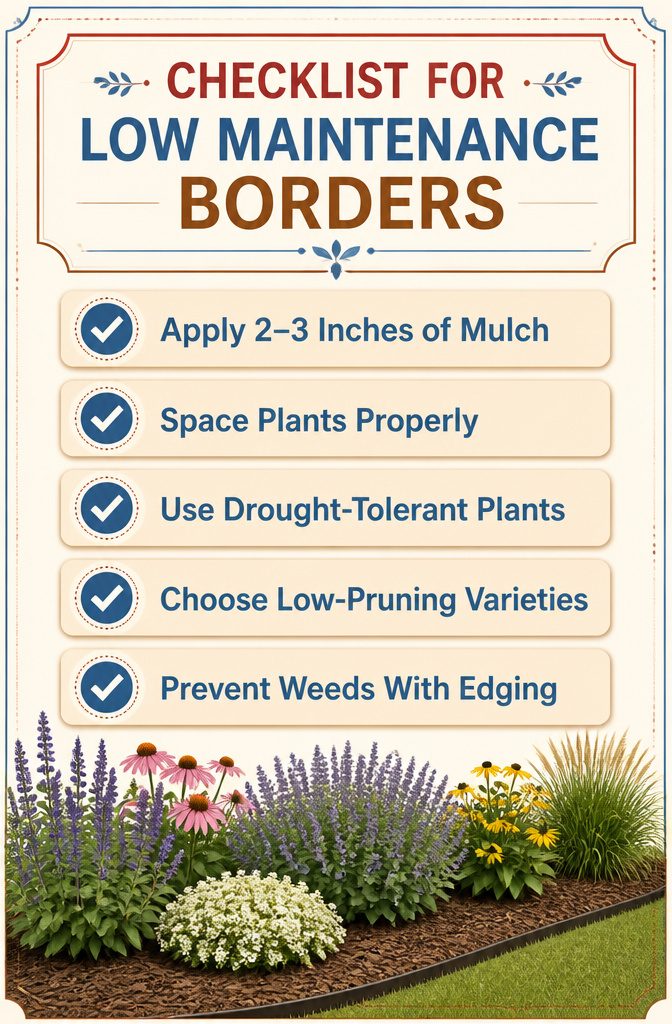
Mulch, spacing, and plant choice do the actual work of making a border low maintenance.
- Apply 2–3 inches of mulch over bare soil to suppress weeds and keep moisture where roots can reach it. Wood chip mulch along the lawn edge gives a clean line and stops grass from creeping in.
- Space plants for the size they will be, not the size they are in the pot. In my first border I packed everything shoulder to shoulder thinking it would look full faster. By midsummer the catmint had swallowed the alyssum, and I was out there cutting and thinning every weekend for two months. Two years later the same plants, given their proper room, filled the space on their own with almost no help from me.
- Choose plants that do not need regular pruning to stay in bounds. A border that relies on shearing to keep it neat is not low maintenance; it is just deferred maintenance with better marketing.
Frequently Asked Questions
What are the best low maintenance plants for garden borders?
Boxwood, miniature roses, heuchera, lavender, sedum, catmint, creeping phlox, hosta, ferns, and Japanese anemone all make strong choices. Each handles specific conditions, drought-tolerant shade, dry sun, or damp corners, with only annual or seasonal attention once established.
How do I create a low maintenance garden border?
Pick plants that match your actual light and moisture conditions rather than forcing favorites into the wrong spots. Use simple shapes that do not create tricky mowing edges, and let slow-growing plants like boxwood or pachysandra fill in over two to three seasons rather than demanding constant clipping.
What materials can I use for garden edging?
Stone, wood, metal, or living plant edges all work. The article focuses on plant-based borders: creeping phlox grips slopes between stones, periwinkle fills gaps between pavers, and pachysandra or boxwood create crisp lines against walks without any hard material installed.