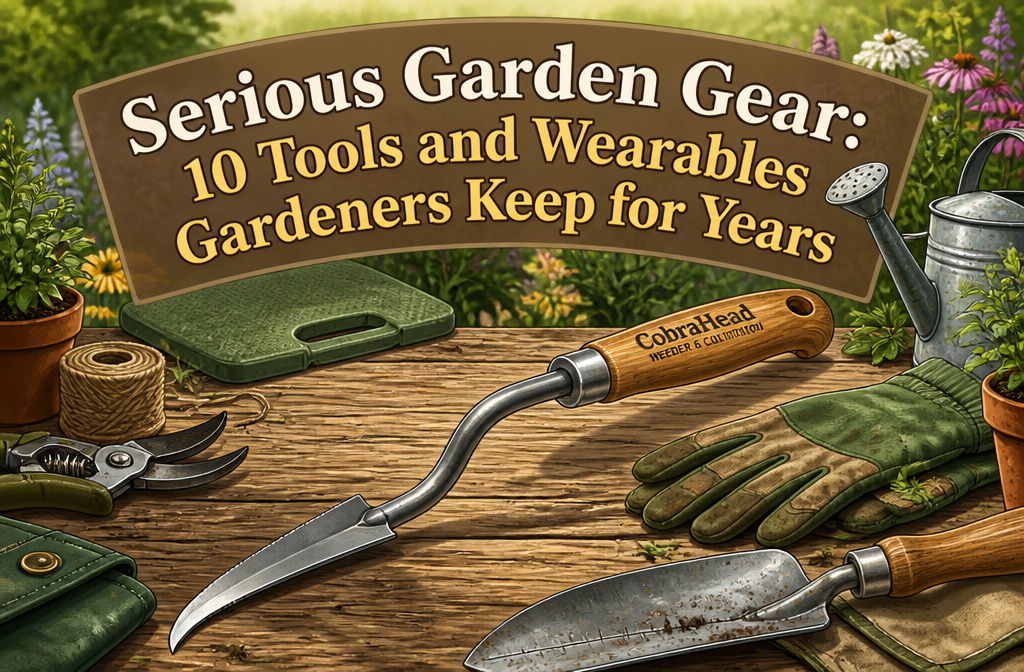
The CobraHead Weeder and Cultivator wins its place first because a 13-inch tempered steel blade slices through clay soil that flatter tools fight against, and the curved neck gives leverage a straight trowel cannot.
Skip it if your garden is soft, sandy loam or if you work large beds where a full-length hoe covers ground faster; the CobraHead rewards close, repetitive work in tight spaces, not broad strokes across open soil.
CobraHead Weeder and Cultivator
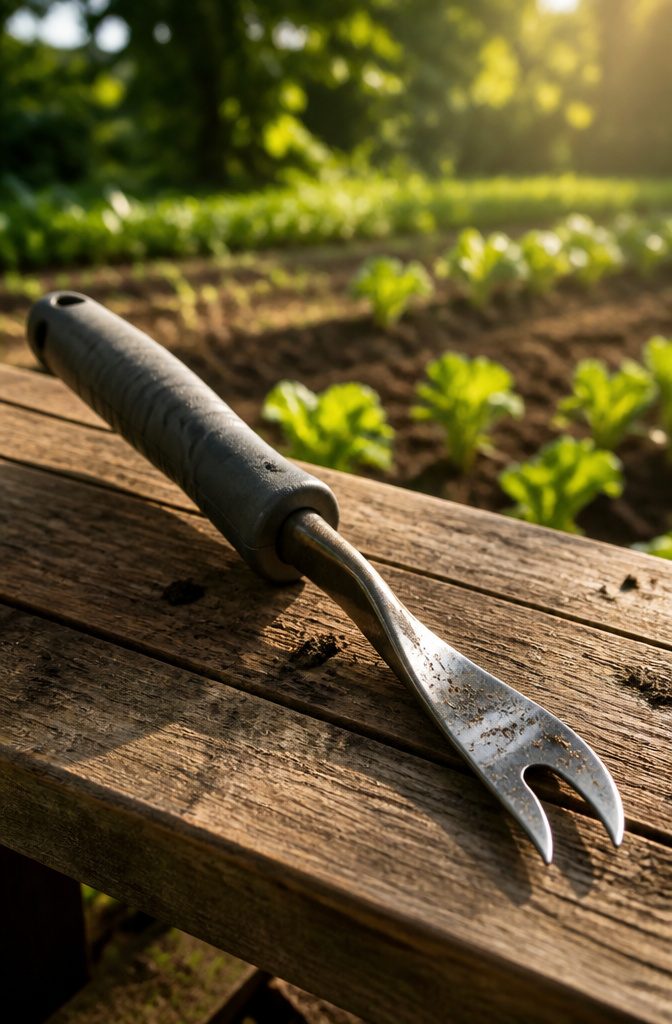
A sharp steel blade makes the difference between fighting clay soil and slicing through it.
The CobraHead Weeder and Cultivator runs $39 for the 13-inch model, with a tempered steel head narrow enough to pry out dandelion taproots yet strong enough to break up compacted ground.
The recycled composite handle sits comfortably for long weeding sessions without the wrist strain that flatter tools cause after twenty minutes.
Three separate uses keep this in hand: weeding, light digging, and cultivating around established plants where a full spade would cause damage.
The near-perfect 4.8-star rating from over 2,000 buyers matches what the shape promises; the curved neck gives leverage a straight trowel cannot.
Skip it if your garden is mostly soft, sandy loam or if you work large beds where a full-length hoe covers ground faster. The CobraHead rewards close, repetitive work in tight spaces, not broad strokes across open soil.
Hori Hori Knife
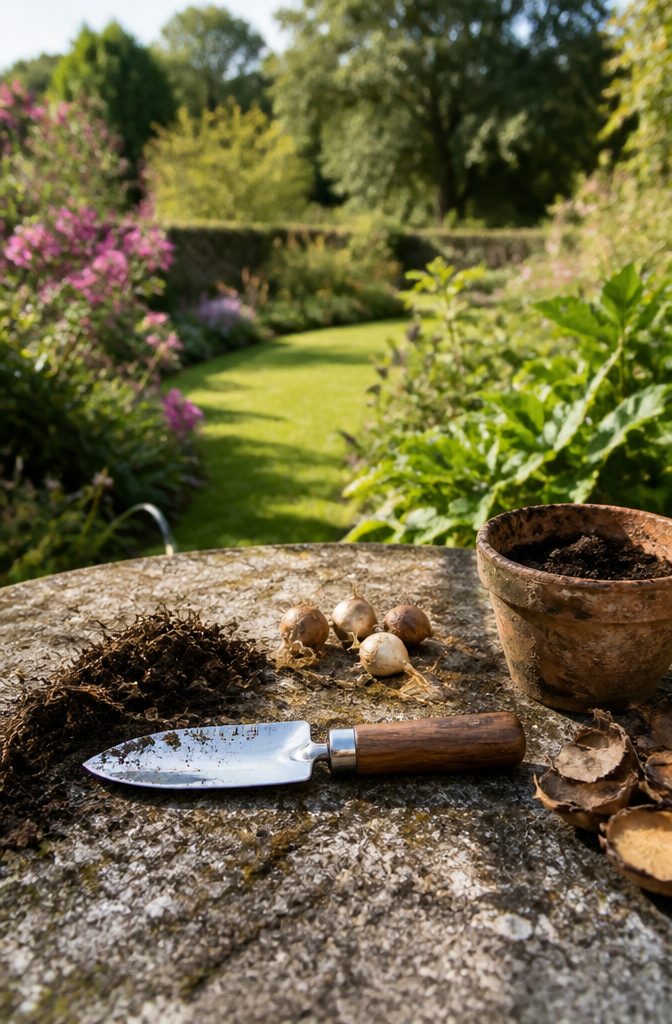
A 7.25-inch stainless steel blade sits at the center of why the hori hori knife outlasts most garden tools.
The straight edge on one side and serrated edge on the other let it cut through roots, divide clumps of hostas, and open soil hard enough to stop a trowel.
Depth markings stamped into the blade take the guesswork out of burying bulbs or setting transplants at the right level.
I keep mine in a sheath on my hip, which sounds like affectation until you spend twenty minutes hunting a brown wooden handle in mulch.
The squared-off wood grip that comes on traditional models can chew into your palm during long sessions, especially in rocky soil where you are levering more than slicing.
Anyone who needs an ergonomic handle for joint comfort should look at soil-knife variants with shaped plastic grips instead.
For the rest of us, one tool that digs, cuts, plants, and harvests is worth the belt space. I have not found a faster way to pop out a dandelion taproot whole.
Folding Pruning Saw
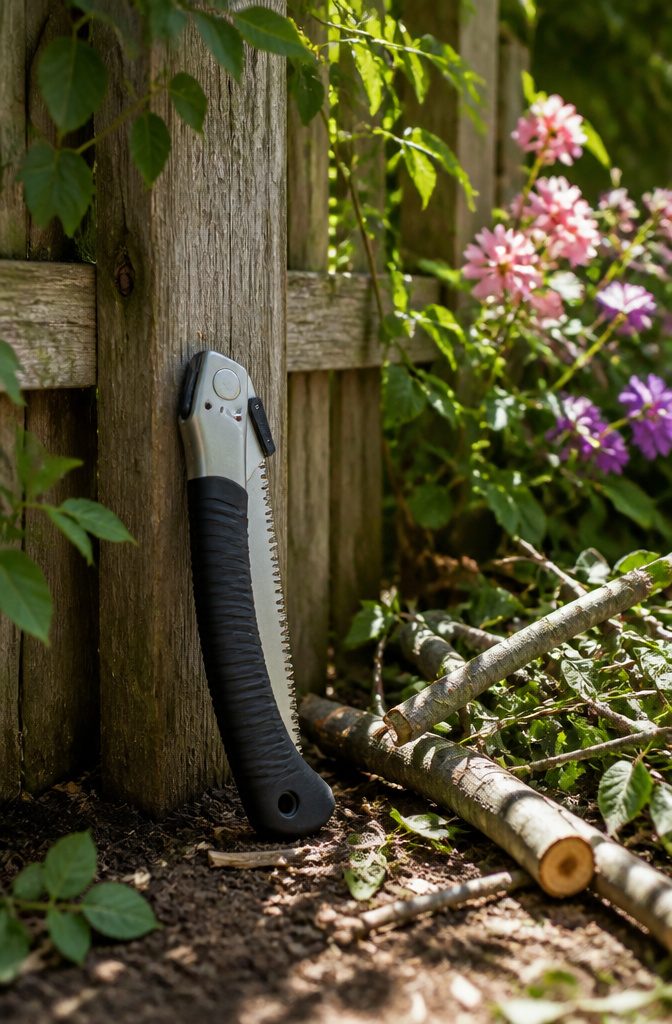
A folding pruning saw earns its place in serious garden gear the moment you meet a branch your pruners laugh at.
Hand pruners top out around a quarter-inch to an inch of diameter. For anything thicker, the tool you want is a 10-inch blade that folds into its own handle and rides on your hip in a sheath.
The compact design matters more than it sounds. A saw that collapses to the length of its handle stays out of the way until you need it, and you will need it less often than pruners.
That is exactly why keeping it portable beats owning a full-length handsaw that lives in the garage. Corona Tools makes a 10-inch RazorTOOTH model that cuts on both the push and the pull, then folds flat.
Loppers can handle some of this work; depending on the pair, they reach two or even three inches of diameter.
Past that, or past what your arms can force through green wood, the saw takes over. This is also where you should be honest about your yard.
If your entire garden fits on a balcony and your "trees" are patio maples in nursery pots, skip the saw and borrow one the single time a decade you need it.
The rest of us, with actual woody growth to keep in bounds, use ours enough to justify the belt space.
Diamond Hoe
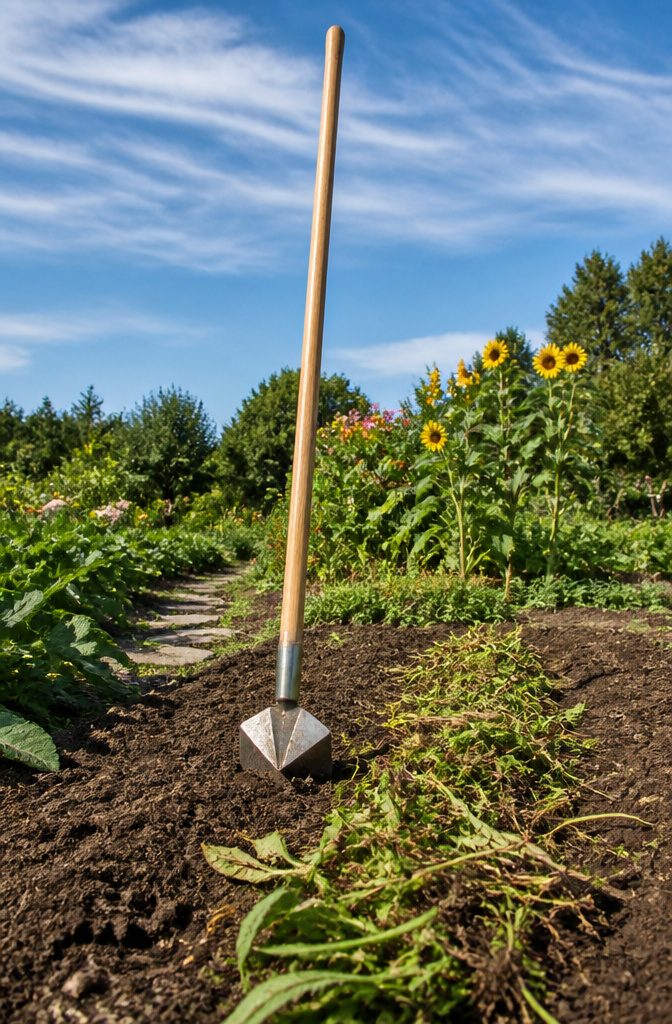
The 60-inch shaft on a diamond hoe is what keeps your back straight while the blade does the work.
The head is a flat diamond of stainless steel, sharp on all four sides, so a push-and-pull motion slices through surface-rooted weeds without the chopping motion a standard hoe demands.
That pistol grip at the end of the shaft gives you leverage in both directions; you feel the difference in your shoulders after twenty minutes.
Surface-rooted weeds are the majority of what most of us fight. The diamond hoe cuts them cleanly, though tap-rooted weeds like dandelions need something else since the blade skims rather than digs.
You will need to resharpen the blade eventually, but stainless steel on a hardwood handle holds an edge long enough that this is a once-a-season task, not a weekly one.
Skip this tool if your weed problem is mostly deep-rooted perennials or if you garden in tight raised beds where the long shaft becomes a liability.
For open ground and the usual mix of annual weeds, the efficiency is hard to match.
Water Right Hose
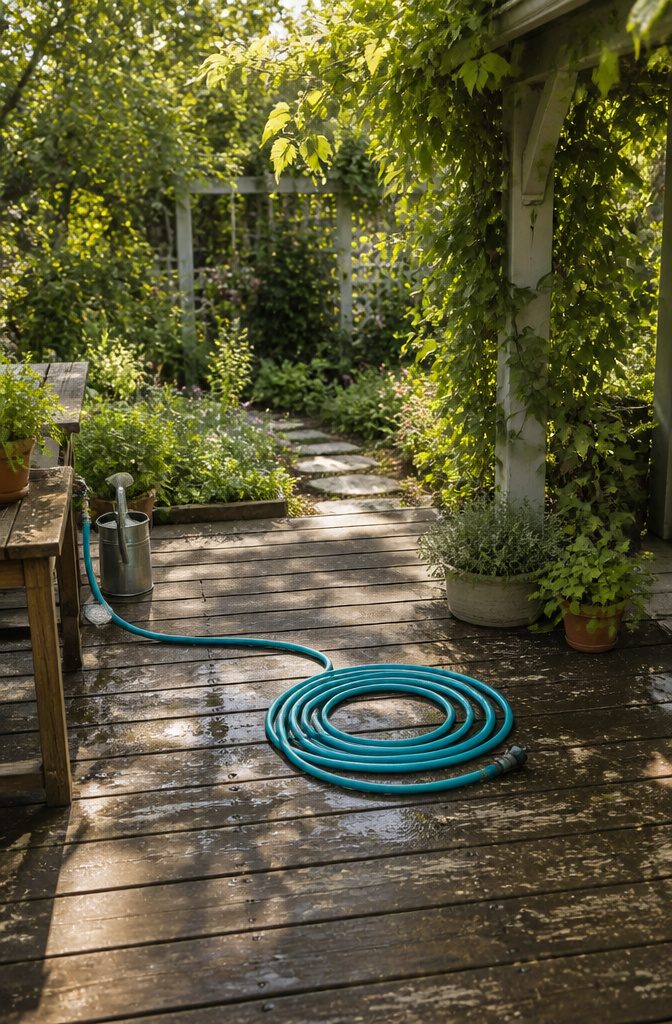
A hose that weighs next to nothing and still refuses to kink sounds like one of those claims you test the first afternoon and regret by evening.
The Water Right Hose surprised me here. It is built from food-safe polyurethane, which keeps it light and gives it resistance to UV and ozone exposure without the rubber heft.
You can pick it up in 25-foot, 50-foot, or 100-foot lengths, so matching the run to the job beats chaining together mismatched pieces that always leak at the coupling.
The small diameter winds easily onto a standard reel, and storage stops being the battle it is with half-inch rubber.
For gardeners working a patio or small yard, the 25-footer handles most jobs without excess hose flopped across the path. The 100-foot run suits anyone threading water through a larger vegetable plot or around to the side yard.
The catch is the price set against how you garden. If you drag hose across sharp stone or let it sit under vehicle traffic, the polyurethane jacket will not outlast heavy reinforced rubber.
And gardeners in zones with hard freezes will still need to drain and store it; it is not rated for winter service left out.
Skip it if your definition of "putting the hose away" is leaving it under the truck tires until April.
AccuSharp Blade Sharpener
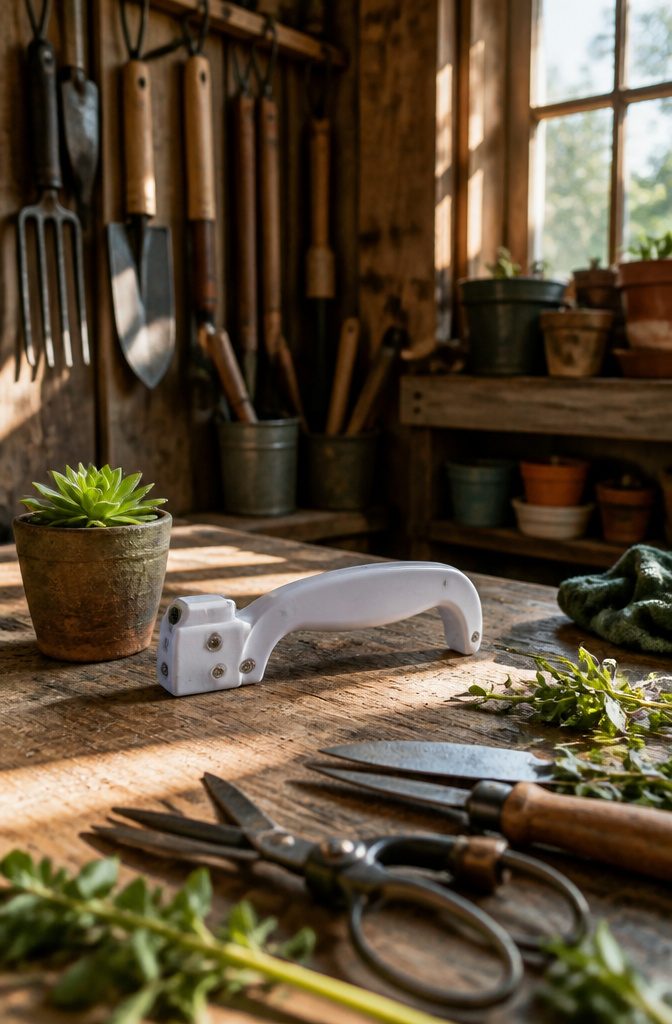
Dull pruners and shovels turn thirty-minute jobs into an afternoon of strain. The AccuSharp blade sharpener fixes that with a tungsten carbide edge housed in a plastic case with a finger guard.
Three or four passes restore a crisp edge to pruners, loppers, mower blades, even shovels. I keep one in the shed and another in the kitchen for knives and scissors; the tool is that useful across blades.
The guard matters more than I expected. Running a sharpener along a blade without protection is asking for a slip, and the casing keeps skin clear.
Someone who already owns a whetstone setup they trust, or who sharpens freehand on a bench grinder, will not find anything new here.
For the rest of us, this is the sharpener that actually gets used because it sits in a drawer and takes ten seconds.
Farmers Defense Sleeves
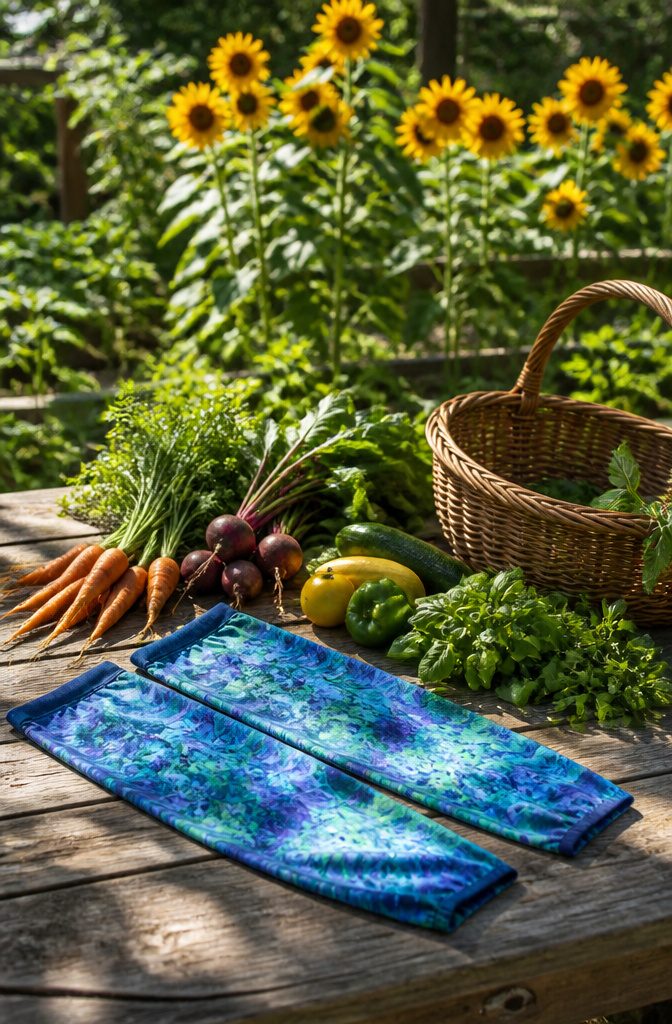
Farmers Defense sleeves block both UV and thorns without the bulk of a long-sleeve shirt in July heat.
The fabric carries UPF 50+ protection, which means reapplying sunscreen to your arms becomes optional rather than a recurring interruption. A thumb hole keeps each sleeve anchored from wrist to mid-bicep, and the material wicks sweat instead of trapping it.
I ignored these for two seasons because the patterned ones looked like gym gear, not garden gear.
That was a mistake. The first afternoon I wore a pair while harvesting okra, the difference was immediate: no stings from the leaf hairs, no scratch marks, and my arms stayed cooler than bare skin would have.
The sleeves also wash clean of plant sap and dirt without losing shape.
Four pairs now live in my tool bucket: two solids and two prints. They come in enough colors that you can match your worst work shirt or hide the stains entirely.
Who should skip them?
Gardeners already committed to lightweight long-sleeve work shirts with built-in sun protection gain nothing here. The sleeves are an add-on for short-sleeve days, not a replacement for a full coverage system you already own.
Gardening Gloves
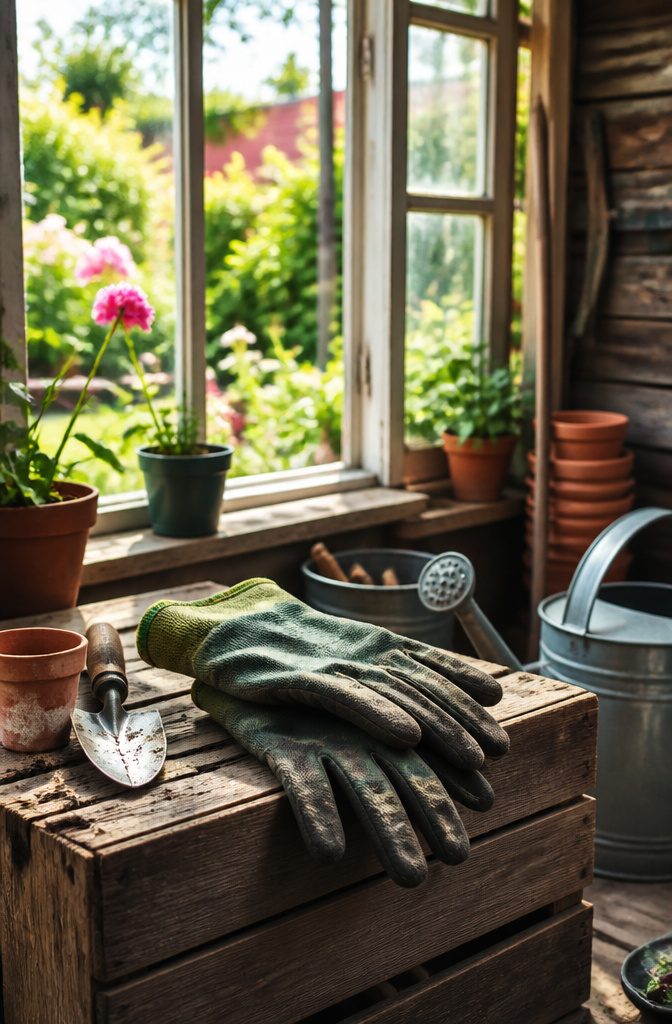
Gardening gloves are the most backed protective item among serious garden gear, and they matter most when the work turns rough.
A nitrile-coated palm and reinforced fingertips separate the pairs that last from the ones that shred on the first rosebush.
Watson’s Jade gloves run about $8, use a smooth rather than textured nitrile coating, and still held up to sandpaper abrasion in testing.
The nylon knit breathes enough for summer potting, and the Reclaim additive means they biodegrade in roughly five years in landfill rather than the decades standard synthetics take.
They run slightly large and do not repel water, so wet morning soil goes straight through.
Some gardeners skip gloves entirely, and that choice makes sense for certain work. Bare fingers catch the texture of soil moisture and root health that fabric dulls.
Anyone with chronically dry skin, or who handles irritants like okra or certain weeds, risks more than discomfort going without. The Felco F-2 pruner gets the attention, but gloves are what keep you working tomorrow.
Electric Wheelbarrow
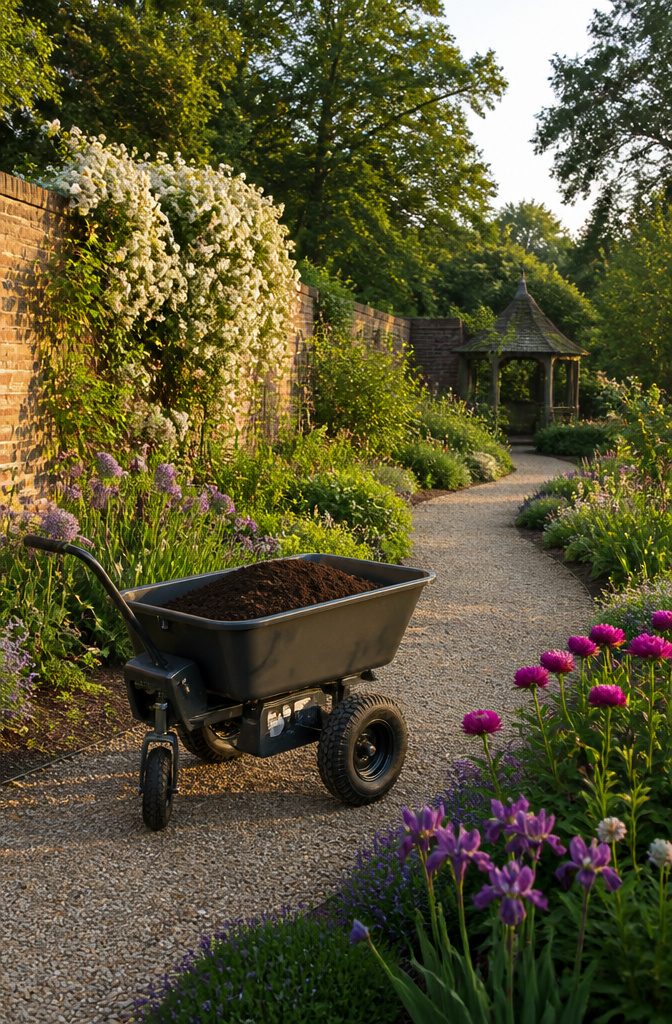
An electric wheelbarrow hauls up to 200 pounds with a 24V battery-operated drive system, 13-inch pneumatic tires, and a steel frame.
Push a button and it goes forward, backward, or hits a power burst for hills. It turns compost, gravel, rocks, mulch, and soil into something you actually look forward to moving.
This is not a tool for the casual once-a-season mulcher. The price and storage footprint only pay off if you are regularly hauling heavy material across a yard with enough open path to drive it.
Small balcony gardeners or anyone working tight corners and narrow gate gaps should skip it; the machine needs room to turn and a surface smooth enough for those pneumatic tires.
If your space is measured in feet rather than yards, a standard wheelbarrow or even a sturdy cart stays the better call.
Tubtrugs
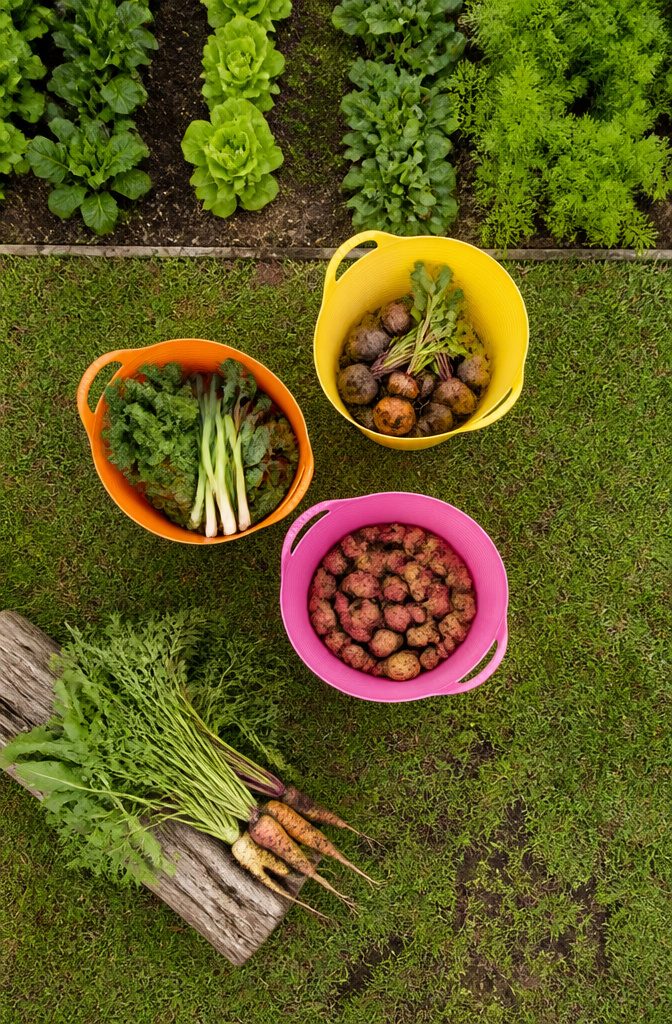
Tubtrugs hold their shape when empty but flex enough to tip with one hand, a combination that sounds minor until you spend a season wrestling with a rigid bucket full of wet compost.
The plastic is thick enough that I have only snapped one handle in years of use, and that was after hauling countless heavy loads.
A 15-gallon size mixes a full batch of fish emulsion without slopping, and the smaller ones nest when stored.
Red Gorilla now makes what used to be called Tubtrugs, branding them Gorilla Trugs. Sizes run from a few liters up to large mulch movers, all at prices that do not punish experimentation.
I keep one for fertilizer mixing, one for weeds, and one for harvested produce, which sounds excessive until I try to combine any two jobs and end up with compost on my tomatoes.
The limits matter.
These are not load-bearing tools for stone or concrete, and the flexible walls collapse if you try to stack heavy material high. Someone working mostly in pavers or bagged gravel should skip them and use a rigid contractor tub instead.
For everyone else hauling organic matter, mixing amendments, or washing produce, the light weight and forgiving shape earn their space in the shed year after year.
What Makes a Tool Worth Keeping
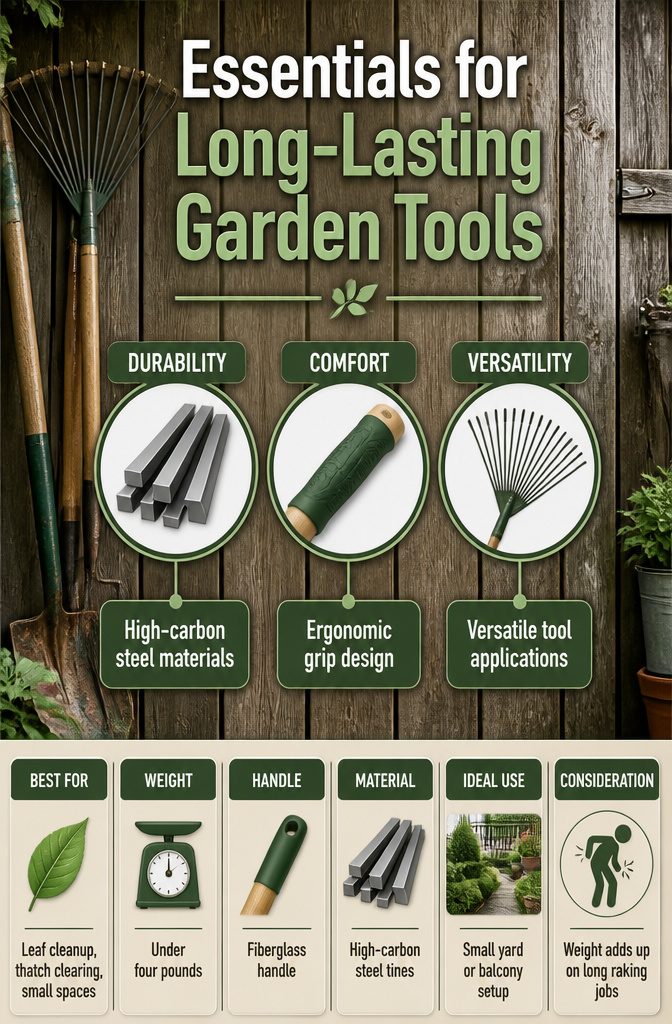
A tool earns its place in your shed when it survives three tests I borrowed from how the serious garden gear gardeners actually sort their kit.
Durability comes first: high-carbon steel tines that flex without snapping, a fiberglass handle you could not break if you tried, materials chosen to take weather and impact year after year.
The Bully Tools leaf rake passes this at under four pounds, though some shoppers find that weight adds up on long raking jobs.
Comfort matters next, because a tool that fatigues your hands or back gets left in the corner. Ergonomic grips and balanced weight distribution let you work longer without the ache.
Versatility closes the case. A smaller rake head slips under shrubs and breaks up thatch, not just gathers leaves; one tool covering multiple tasks saves money and storage space in a small yard or balcony setup.
I weighed each pick in the list above against these three criteria, and the keepers were the ones that scored on all counts rather than excelling at one and failing another.
Protective Gear That Saves Skin
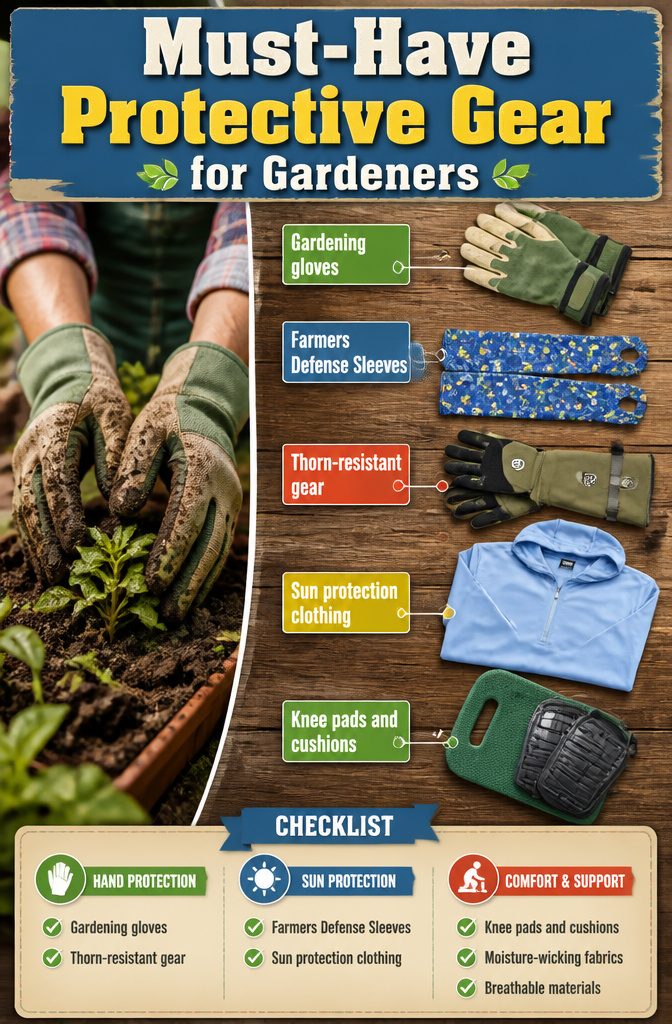
The first time I harvested okra without gloves, my hands itched for two days. That rash taught me what the plant’s fine hairs can do, and I have not worked barehanded since.
A good pair of gardening gloves belongs in every small-space gardener’s kit, not as an afterthought but as the first thing you reach for.
Dry soil, thistle roots, and the sap of half the plants on a patio plot all take a toll on skin that washing later will not fix.
For arms, Farmers Defense Sleeves run SPF 50 from wrist to mid-bicep with a thumb hole that keeps them in place while you prune or haul pots.
They come in solids and patterns, several sizes, and they wash clean after a day in the dirt.
I wear mine even when brambles are not the threat, because in July they keep my arms cooler than bare skin. The sun protection is the reason I bought them; the temperature drop is why I keep reaching for them.
Lesser-Known Tools Worth a Look
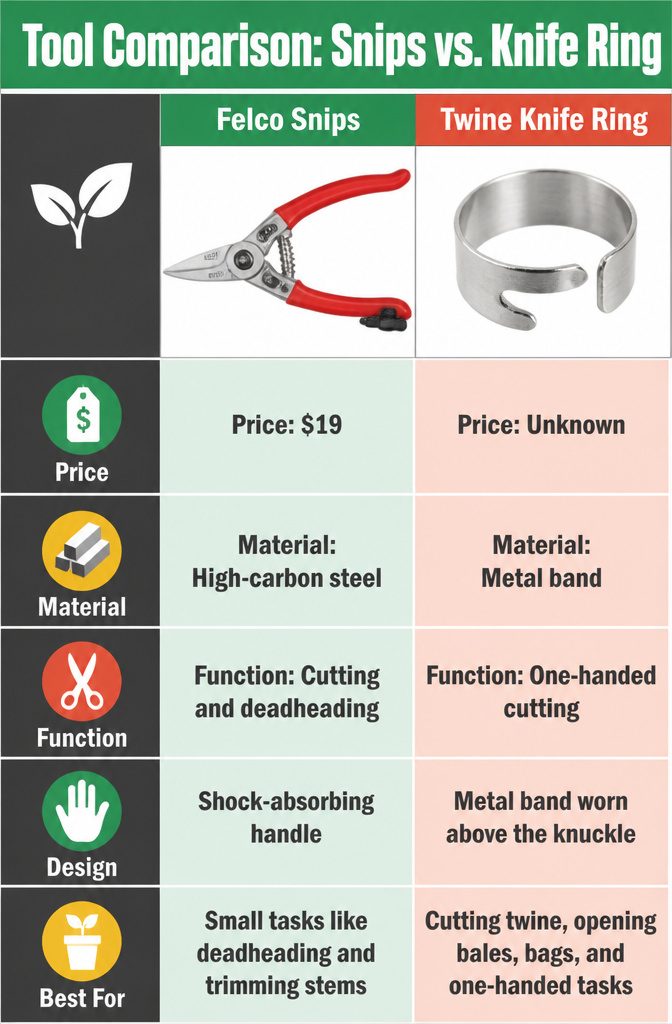
Felco’s garden snips run about $19, a fraction of what their full pruning shears cost, and they handle the small tasks those bigger blades butcher.
The thin, high-carbon steel blades slip between tomato stems and flower stems alike, and the shock-absorbing handle keeps your hand from cramping during a long deadheading session.
The blade lock at the handle end annoys some users; it snagged on my glove once or twice before I learned to let it sit below my grip.
The twine knife ring is stranger and smaller, a band of metal worn above the knuckle with a C-shaped blade hooking inward.
I saw one first on a tree farmer cutting baling twine, and the logic is immediate: both hands stay free to hold the plant and manage the string, then one quick pull severs it.
The same blade opens straw bales, feed bags, potting soil sacks. It solves the specific problem of working one-handed with material that frays or tangles against scissors.
Corona’s ComfortGel scoop lands in a similar category: not universal, but right for the gardener who moves a lot of amendment or potting mix by hand.
The gel-filled handle matters less on a single trowel of compost than on the fiftieth.
How to Choose What You Actually Need
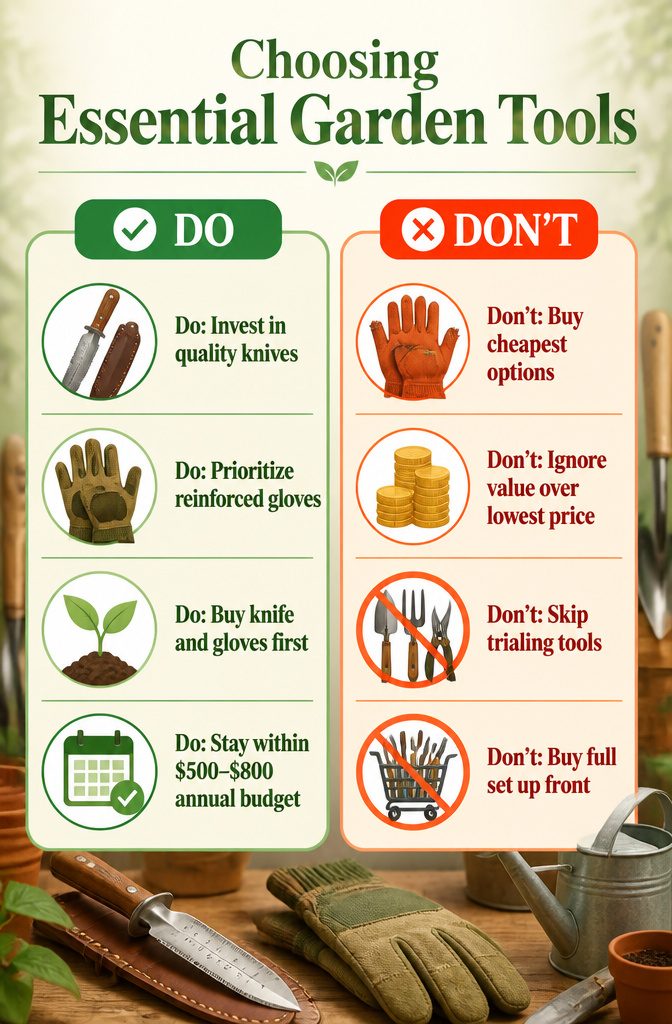
A Hori Hori knife is the one tool that keeps coming up when you ask what actually earns its spot in a small garden.
The Nisaku runs about $23 and handles weeding, dividing hostas in spring, bulb planting with its depth markings, even harvesting. One blade is straight, the other serrated, and the leather sheath means it lives in my tool bucket without argument.
The square handle can grate against your palm in rocky soil, so if you grip hard for hours, that $23 may feel like a compromise.
Gloves sit at the opposite end of the decision. The Firm Grip general purpose pair costs $19, which leaves room in a tight annual budget for something else that same season.
I spent my first two years buying the cheapest pair on the rack and replacing them twice a summer when the fingertips split.
Reinforced palms and fingertips are worth the few extra dollars if you are working thorny canes or pulling established weeds; breathable material matters less in March than in July, but July always arrives.
For the $500–$800 annual budget, my rule is simple: buy the knife and the gloves first, then let the season reveal what you reach for and borrow.
A full set of serious garden gear gardeners keep for years is built one solved problem at a time.
Frequently Asked Questions
What are the best gardening tools?
The best tools for serious garden gear gardeners include the CobraHead Weeder and Cultivator, the Hori Hori Knife, a folding pruning saw, the diamond hoe, and the Water Right Hose.
Each earns its place through durability, comfort, and versatility across multiple tasks. A Hori Hori knife is the single most recommended starting tool for small gardens, handling weeding, dividing plants, bulb planting, and harvesting at about $23.
How do I choose gardening gloves?
Look for a nitrile-coated palm and reinforced fingertips, which separate pairs that last from ones that shred on the first rosebush.
Watson’s Jade gloves run about $8, breathe enough for summer potting, and biodegrade in roughly five years. If you work thorny canes or pull established weeds, spend the extra dollars for reinforced construction rather than buying cheap pairs twice a summer.
What is a Hori Hori knife used for?
A Hori Hori knife digs, cuts, plants, and harvests with its 7.25-inch stainless steel blade, straight edge on one side and serrated edge on the other.
Depth markings stamped into the blade remove guesswork for bulbs and transplants. The tool outlasts most garden gear because one blade handles soil hard enough to stop a trowel, root cutting, and dividing clumps of hostas.