The ten upcycling ideas garden projects below range from a single afternoon to a full weekend, and the deciding factor is not skill but drainage: every planter that fails, fails because water has nowhere to go.
A quarter-inch bit through the sole of an old boot or the base of a dresser drawer costs ten minutes and saves the planting.
The HT stamp on a heat-treated pallet, not the MB-marked alternative, is the one detail that actually matters when soil contact is involved.
1. Pallet Planters
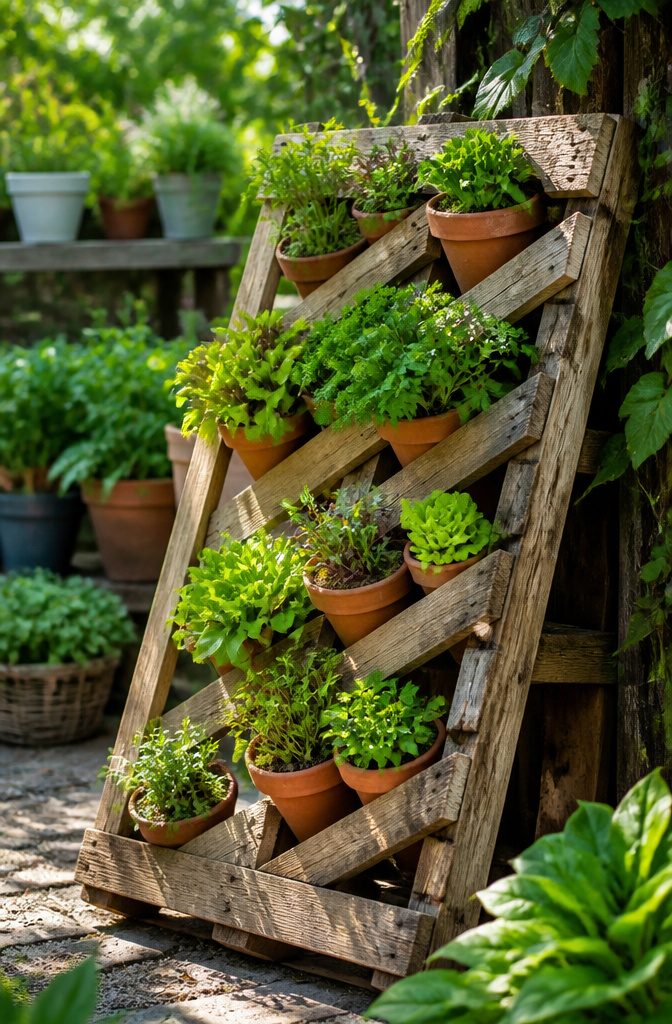
Old pallets are everywhere once you start looking for them, and most can be had for the asking at garden centers, grocery stores, or construction sites.
The ones worth taking home carry an HT stamp, meaning heat-treated rather than chemically fumigated; avoid MB-marked pallets entirely.
I wash mine down with soapy water and let them dry before doing anything else, since road grit and warehouse grime transfer straight to your lettuce.
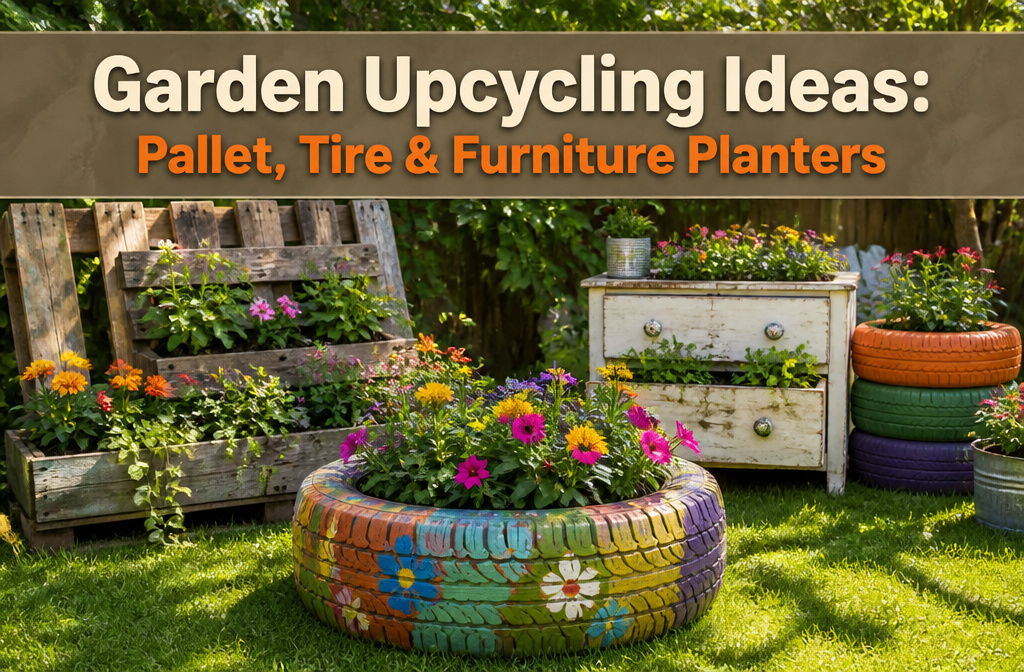
Repurpose a pallet into a mini, bespoke vertical garden by wedging plants in their existing pots between the slats, roots and all.
A frothy mix of spare bedding plugs and young salad plants fills out the face by midsummer and actually produces something you can eat.
The slats hold the pots at a slight angle, so water drains rather than pooling against the wood.
For vegetables that need deeper soil, disassembling the pallet gives you raw lumber for a raised bed.
The boards are thin, so line the frame or the soil will wash through the gaps. Either way, the rustic look costs nearly nothing and keeps one more pallet out of the chipper.
2. Tire Planters
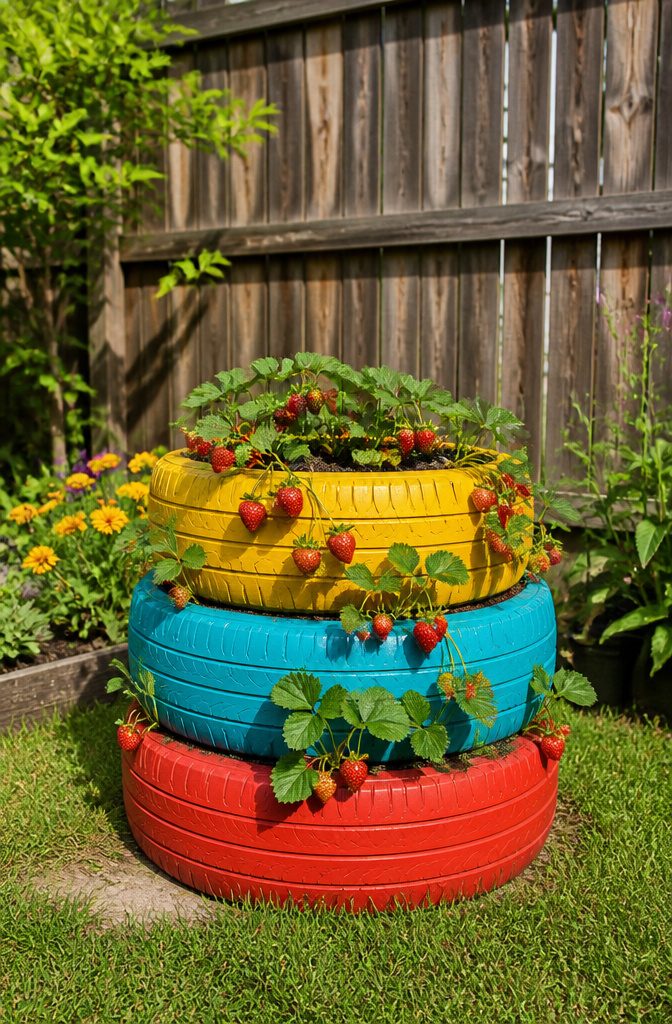
Used tires can find a second life as colorful, playful planters, and the durability that makes them a headache in landfills becomes an asset in a garden bed.
I stacked three for a tiered strawberry patch two summers ago, painting each rim a different shade so the whole thing reads as sculpture from the driveway.
The rubber insulates soil better than clay or wood, which helped my plants ride out a late cold snap that killed blooms in my neighbor’s raised beds.
Sourcing them takes some asking. Local tire shops often pay to dispose of cast-offs, so they’ll sometimes set aside a few if you catch the manager on a slow afternoon.
Mine came from a shop near the highway, already worn smooth enough that they didn’t need much scrubbing before paint.
For wall-mounted versions, rope and a heavy-duty hook through the rim let you hang a single tire planter vertically, turning the hollow center into a pocket for trailing flowers.
The weight is real, so check your hardware against the load or keep them ground-level if you’re unsure.
3. Wine Bottle Edging
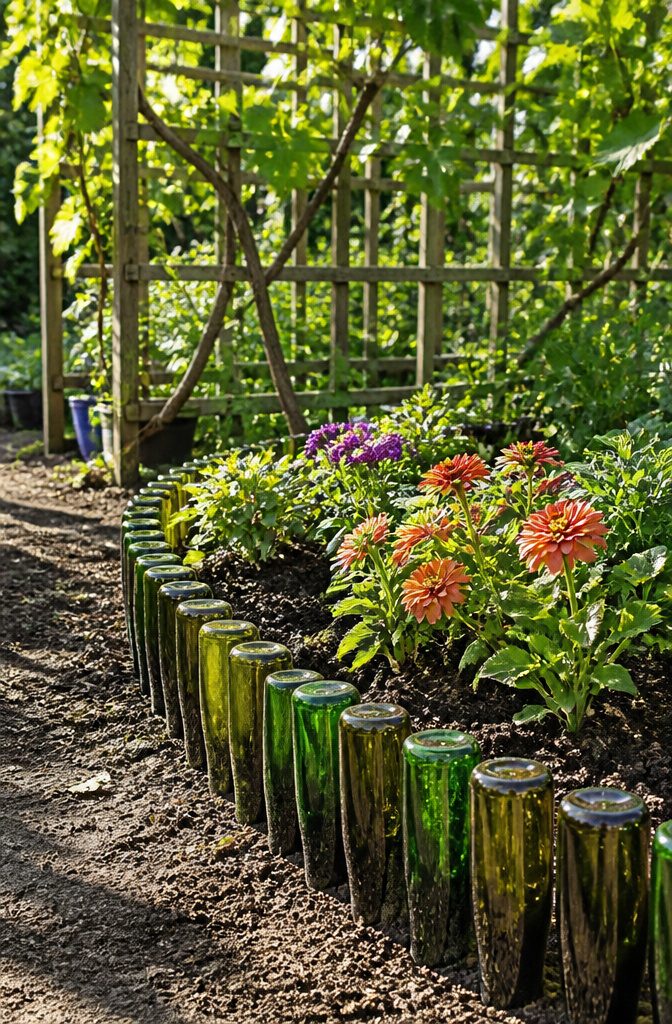
Burying wine bottles upside down along a bed edge gives a garden border that catches morning light like stained glass.
I first saw this done at a cottage garden open day, where green and amber bottles alternated in a wavy line that had clearly been there for years.
Dig holes with a bulb planter or post hole digger, turn each bottle neck-down, and set them side by side with little to no gap.
Tamp soil around the bases to lock them in place. The necks drain rainwater away from the bed, which helps more than you’d expect in heavy clay.
Some gardeners cut the bottom 10 cm or so off each bottle with a bottle-cutting kit and set the pieces into building sand as if laying bricks.
That version sits flatter and looks more finished, though it takes longer and the sand base needs leveling.
I prefer the full-bottle method for a first project; you can always switch to cut sections once you’ve tested the look against your own beds.
4. Old Furniture Planters
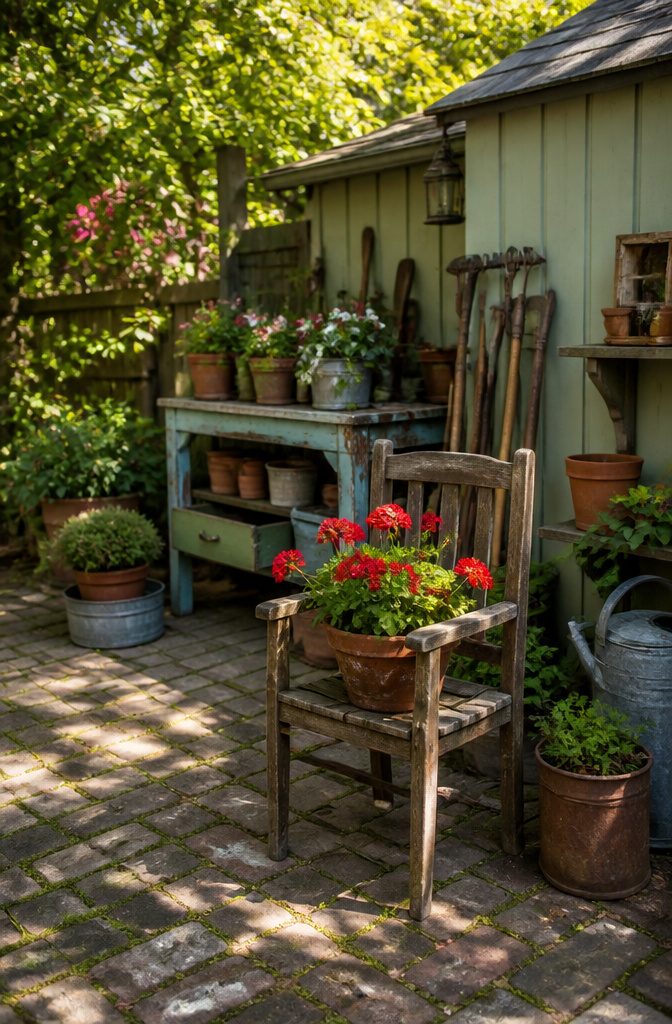
Old chairs and tables left on the curb carry more planting potential than most people notice.
A wooden chair with a rotted seat becomes a frame for a potted geranium or a trailing vine; the backrest still stands, and the arms hold the pot steady against wind.
I have seen dressers converted the same way, drawers pulled out to staggered depths so each tier holds its own soil and its own plants.
Turn a discarded dresser into a tiered planter by leaving the drawers partly extended, lining them with landscape fabric, and filling from the top down so water drains through each level to the next.
Drainage is where these projects live or die. Furniture built for dry living rooms has no holes; without them, a week of rain rots the roots and the wood together.
A half-inch bit, bored through the base of every drawer and the main carcass underneath, costs ten minutes and saves the planting.
Tables work the same way: the flat surface is a raised bed once you add a box and those holes, and the legs keep harvest height friendly to backs that bend less easily than they used to.
Paint meant for exterior trim lasts two to three seasons on legs and sides before it starts to flake; touch-up is easier than rebuilding.
5. Mason Jar Hanging Vases
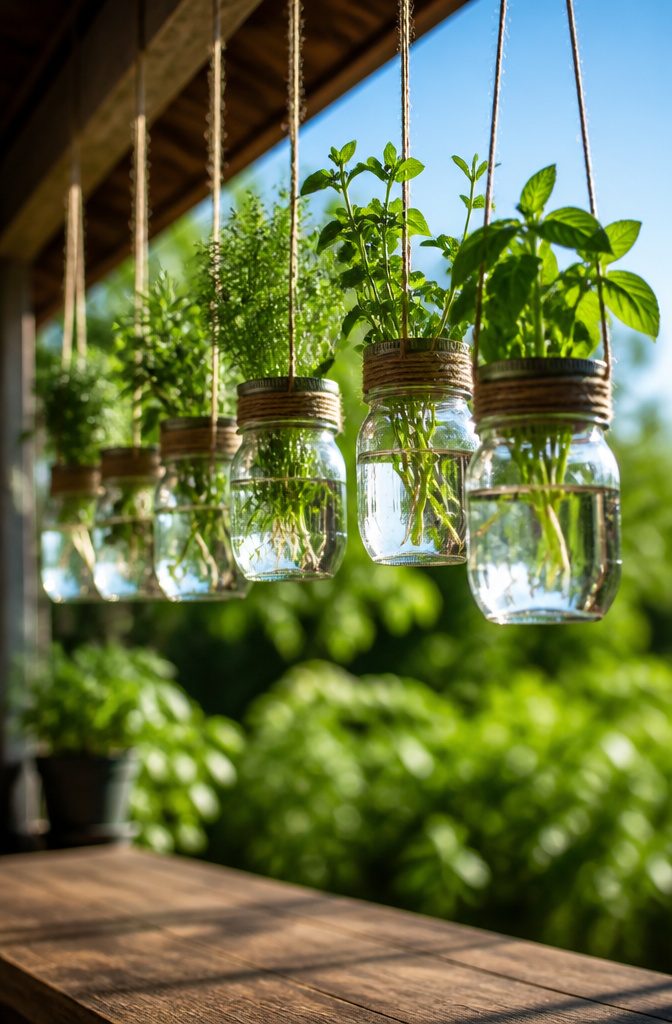
Mason jars hang well along a fence or under a porch eave when you fasten string to the lids, not the glass itself.
The metal ring holds the weight, and the jar slips in from below where it can be swapped out for cleaning or replanting without untying anything.
I use the regular-mouth quarts for this, the kind that once held store-bought pasta sauce. A single screw puncture in the lid center feeds the twine through; a knot underneath keeps it from pulling through.
Two holes, two strings, and the jar hangs level. Watering means lifting the jar free, which is easier than it sounds once the routine is set.
These work for herbs or small cuttings too.
Basil stems root fast in water, and a row of jars along a kitchen window gets you through the first frost without buying anything new. The glass shows when roots are ready for soil, and when they are not.
6. Bicycle Planters
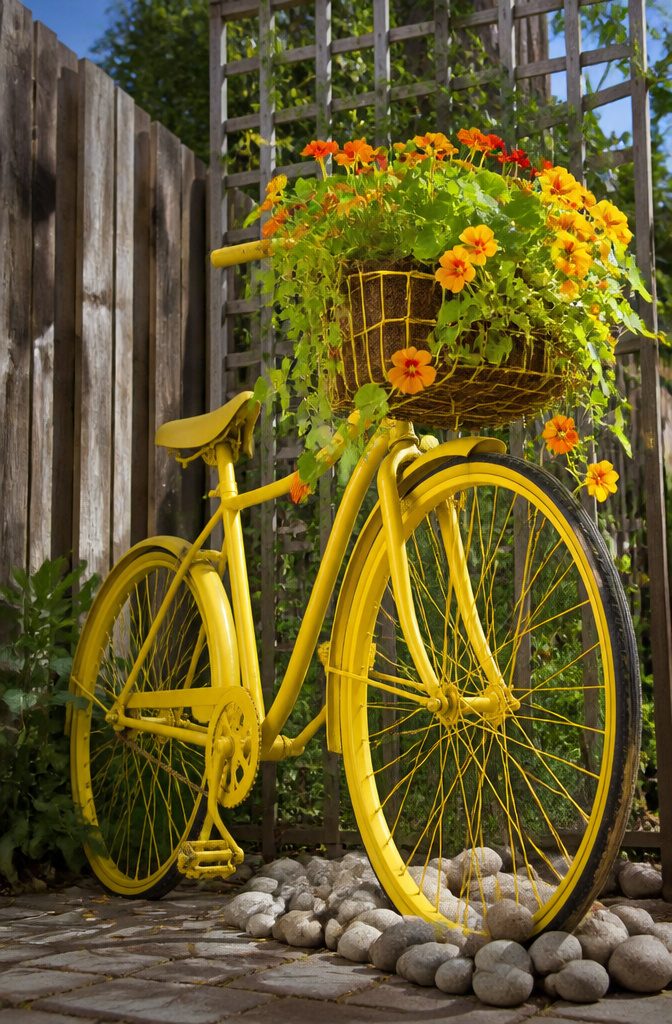
Old bicycles left in garages make surprisingly good garden focal points once you strip the drivetrain and let the frame hold pots instead of pedals.
A coat of bright paint, something glossy and loud like sunflower yellow or fire-engine red, keeps the metal from rusting and turns the whole thing into deliberate art rather than forgotten junk.
I have seen this work beautifully with a simple wire basket bolted to the handlebars, lined with coconut fiber, and planted with trailing nasturtiums that spill over the sides as if the bike is still in motion.
The front wheel wants to tip, especially once the basket is wet and full of soil.
You either need to wedge the wheel into a bed of gravel, remove it entirely and sink the fork into the ground, or brace the frame against a wall.
A freestanding bicycle planter in anything more than a gentle breeze is a lawn ornament that will be on its side by morning.
I learned this the hard way after setting one up in an open corner of my yard, where a June thunderstorm flipped it before the roots had even settled.
7. Colander Planters
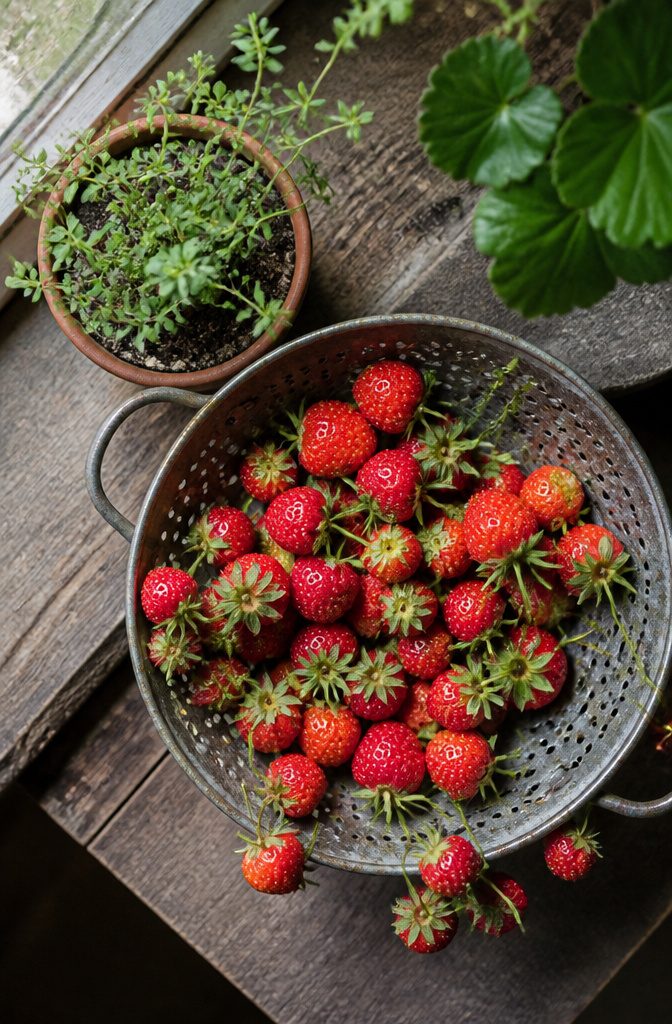
A colander from the thrift store or the back of your kitchen cabinet already has the one thing most planters force you to add later: drainage holes.
The perforations are sized right, too. Water escapes without dumping soil.
You can upcycle colanders into beautiful baskets by threading twine through the handles or the rim holes and hanging them from a porch bracket.
They sit flat on a table if the legs are splayed enough, or you can nestle one into a wire stand from a broken hanging basket.
The metal ones weather to a soft rust; enamel-coated ones hold color for a couple of seasons before chipping shows.
I line mine with a thin layer of coconut fiber or a scrap of landscape fabric to keep the potting mix from washing out the first week. After that, root mass does the job.
Strawberries cascade well through the holes. Thyme and creeping jenny drape over the rim.
A single colander planted with a dwarf tomato and a basil understory has lived on my fire escape, though the basil wanted more water than the tomato preferred and I had to split them by July.
8. Old Boots as Planters
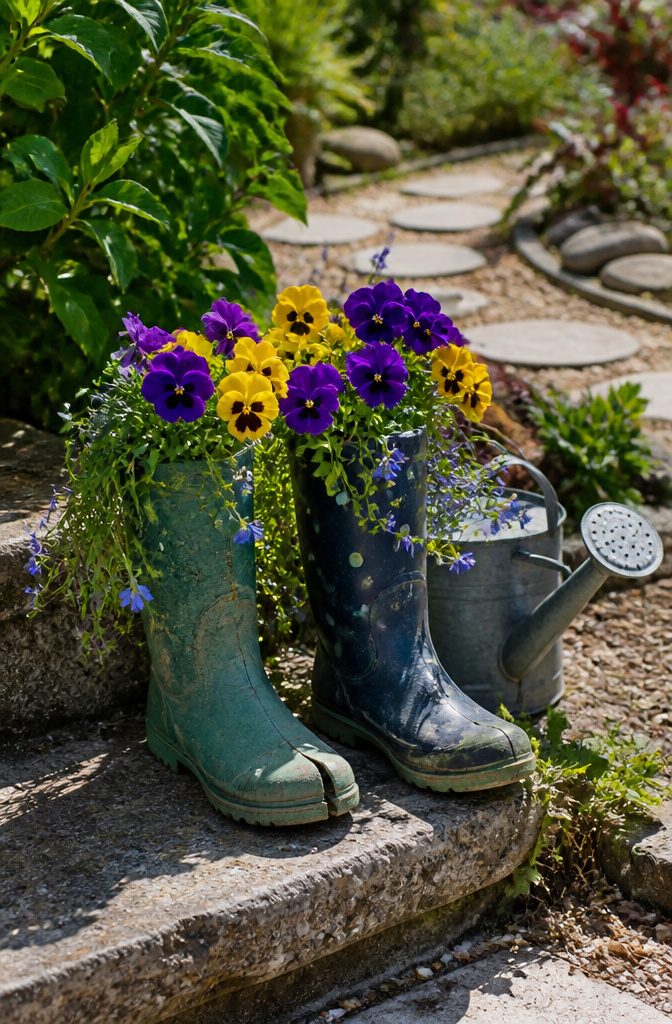
Old boots make planters with built-in personality. A pair of cracked leather work boots or faded rain boots the kids outgrew can sit right on a porch step or tucked beside a garden path, no building required.
The one non-negotiable step is drilling drainage holes in the sole. Without them, water pools at the bottom and the roots rot in a week.
I learned this the hard way with a pair of canvas ankle boots that looked charming for about four days before the mint inside turned to mush. A quarter-inch bit through the heel and toe is enough.
Fill the foot first with gravel or broken crockery so the soil does not pack tight against the holes, then add potting mix.
Shallow-rooted annuals like pansies or a trailing lobelia work better than deep growers. The boot keeps its shape longest if you set it somewhere that gets afternoon shade; full sun dries the leather to cracking and fades rubber to chalk.
Rain boots hold moisture longer and suit thirstier plants.
Leather drains faster and pairs well with succulents or creeping thyme. Either way, the odder the boot, the better the conversation it starts.
9. Garden Art from Junk
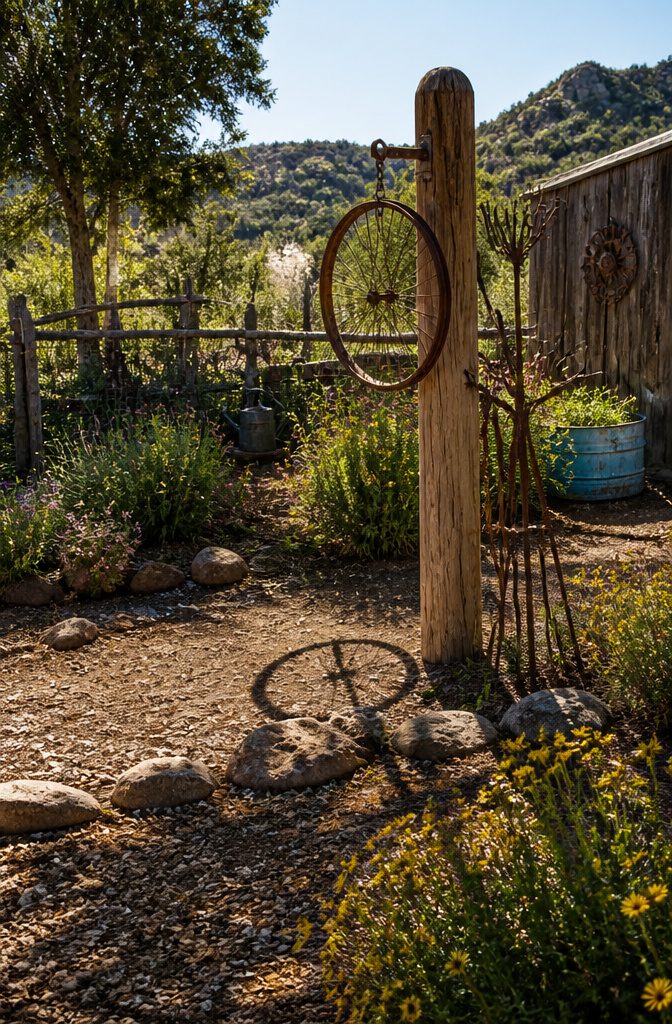
Metal that would otherwise rust behind a shed can become eye-catching garden art with almost no budget.
A bicycle wheel, stripped of its tire and spokes if you want the rim alone, spins slowly on a fence post and catches light like a slow disco ball.
Old hand forks and trowels, bent into hooks or welded into abstract shapes, read as sculpture once the rust turns that particular burnt orange.
Welding holds pieces permanently: two garden forks crossed and welded at the handles become a trellis that outlasts the wood it supports.
Wire ties work for lighter assemblies, a wheel to a stake or small tools to a frame, but they loosen over a season of freeze and thaw. The wheel will wobble by October.
Upcycling involves repurposing something so it has a greater value than it had originally. Many common and household items can be upcycled for use in the garden, rather than be discarded at landfill or downcycled into something of lower value.
This means the rustier the find, the better the story, and the less you spend on paint pretending to age it.
I leave scrap metal raw; my neighbor wire-brushes and clear-coats hers. Both work, though hers needs redoing every three years while mine just gets more believable.
10. Rain Barrel Systems
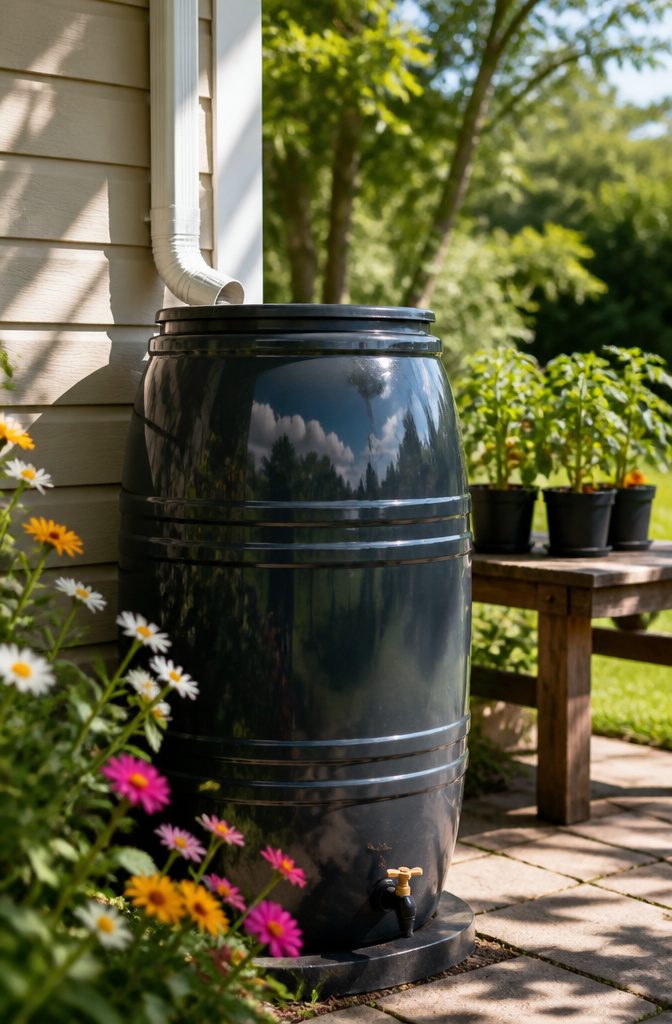
Old barrels, plastic tubs, and even large buckets can be repurposed into rainwater collection systems that keep your garden watered through dry spells.
I set mine up in late March, before the spring rains start in earnest, so the first good downpour fills them rather than running off into the yard.
The conversion is straightforward: drill a hole near the base for a spigot, seal it with a rubber washer, and set the container on a few concrete blocks so gravity does the work.
A fine mesh over the top keeps out leaves and mosquitoes. One 55-gallon barrel under a downspout collects enough in a single storm to water my patio tomatoes and peppers for a week.
The water comes free, untreated, and slightly soft, which the plants prefer.
The only catch is remembering to drain them before a hard freeze in fall. Cracked plastic taught me that the first year.
Benefits of Upcycling
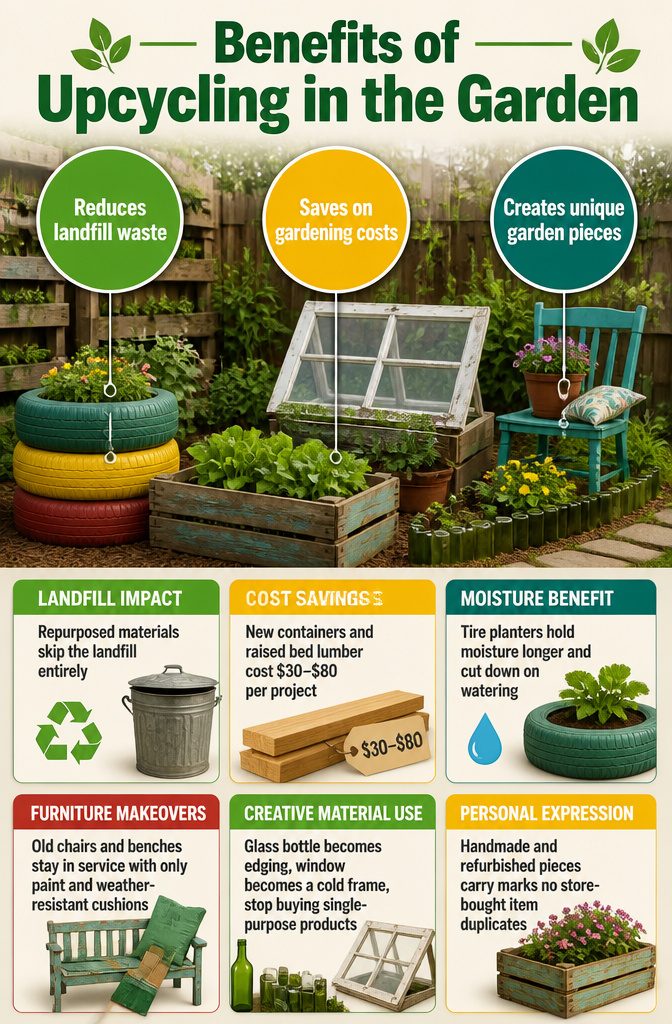
Upcycling in the garden works on two registers at once: the landfill gets less, and your wallet stays heavier. I started noticing this when I began rethinking what "trash" meant around the yard.
The environmental case is straightforward. Repurposed materials skip the landfill entirely, and every pallet or tire you plant in is one fewer new plastic pot or timber bed demanding fresh resources.
Some upcycled setups, like tire planters with their thick walls, even hold moisture longer and cut down on watering.
The economics matter just as much on a tight garden budget. Here is what upcycling actually saves you:
- New containers and raised bed lumber, which can eat $30–$80 per project at the garden center, get replaced by items you already paid for once or found free.
- Furniture makeovers let old chairs and benches stay in service with only paint and weather-resistant cushions instead of full replacement.
- Creative material use means a glass bottle becomes edging, a window becomes a cold frame, and you stop buying single-purpose garden products.
The personality piece is harder to measure but impossible to miss.
Handmade planters and refurbished pieces carry marks no store-bought item duplicates. Your garden ends up looking like one person’s vision rather than a catalog page.
Materials to Source
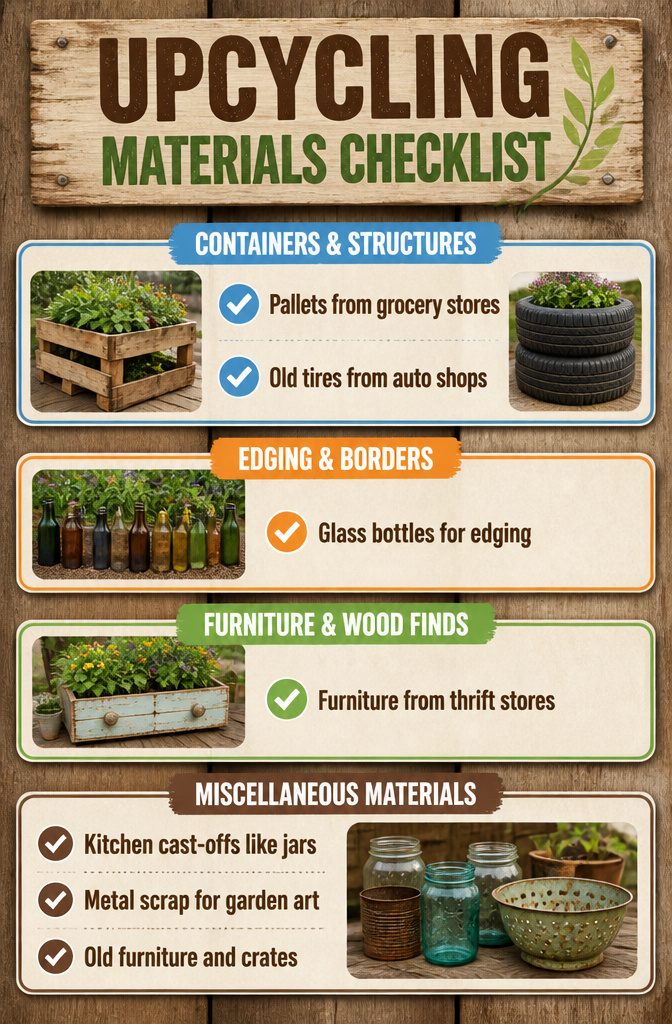
Most of what I pull into a garden project comes from the same five or six categories. Here is where I look and what I bring back.
- Pallets — Grocery stores, hardware stores, and warehouses often have stacks out back. Ask before you take. I look for the HT stamp that means heat-treated rather than chemically treated; the wood is safer for edibles and it is the one detail that actually matters for soil contact.
- Tires — Auto shops will hand over old ones if you ask. They insulate soil well, which helps regulate temperature and moisture through the season. One stacked tire gives you a single planter; three stacked and you have a tiered bed.
- Glass bottles — Wine bottles work for path edging if you cut the bottom 10 cm off with a bottle-cutting kit and set them in building sand. Whole bottles buried neck-down make a simpler border. The light through colored glass is what you are after.
- Old furniture and crates — Thrift stores and yard sales are the obvious sources, but curbside on trash day is where the free stuff sits. Wooden crates, disassembled pallets, and solid dresser drawers all become planters with drainage holes drilled in.
- Kitchen cast-offs — Jars, cans, colanders, and vintage snack sets. Thrift stores are lousy with these; I have walked past twenty snack sets in a single aisle. Cans and mason jars suit herbs and cacti. Colanders already have drainage built in.
- Metal scrap — Bike wheels, old tools, license plates. Neighbor trash piles and scrap yards round out the hunt. This is garden art material, not planters, but it fills the same upcycling brief.
Basic DIY Approach
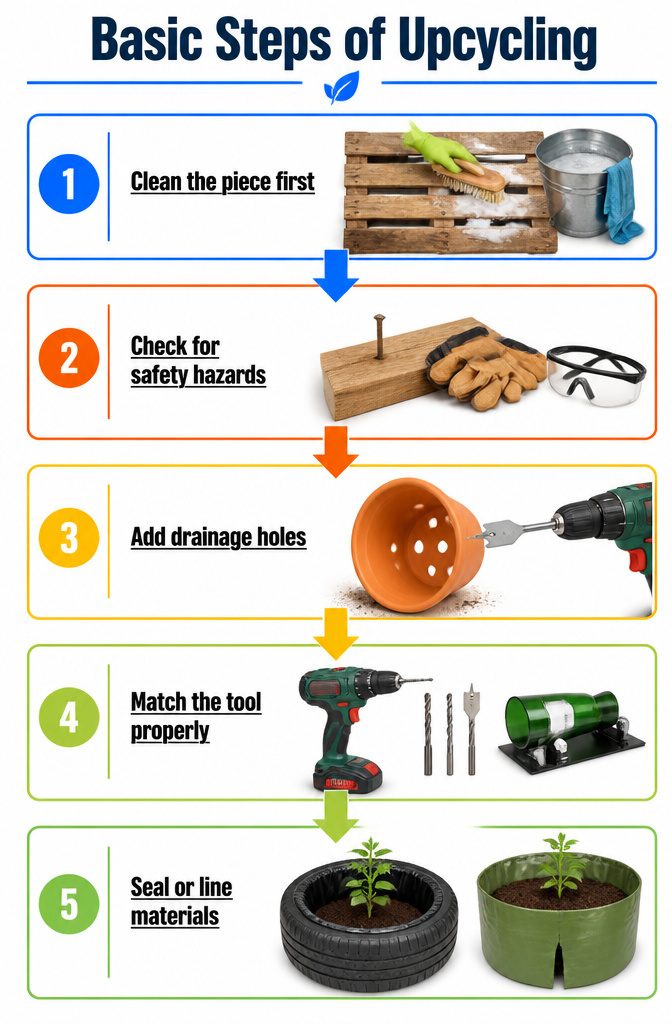
Every upcycling project starts with the same few moves, and skipping them is where things go sideways.
- Clean the piece before you cut or drill. Dirt, grease, or old finish will fight whatever paint, sealant, or soil contact comes next. A pallet or tire that looks dry can still harbor moisture that rots wood or rusts exposed metal from the inside out.
- Check for safety hazards. Splintered wood, protruding nails, or chemical residue in old furniture need addressing first. I pull every fastener I can see and sand the rough spots that remain.
- Add drainage. A drill with a spade or masonry bit handles most materials; glass calls for a bottle-cutting kit. Without holes, water sits and roots rot.
- Match the tool to the material. Drills for wood, metal, and thick plastic. Bottle-cutting kits for glass edging projects. The right bit matters more than the drill’s price.
- Seal or line when the material demands it. Tires leach compounds over time; a food-safe liner or heavy-duty barrier between the rubber and soil keeps edibles clean. Old potting soil bags, cut to fit, work as liners or as mulch sheeting with a slit for the plant stem.
Frequently Asked Questions
What can I upcycle for my garden?
Pallets, tires, glass bottles, old furniture, mason jars, bicycles, colanders, boots, metal scrap, and barrels all work well as garden upcycling materials.
The article covers ten specific ideas ranging from vertical pallet gardens to rainwater collection systems, with most items sourced free from curbside, thrift stores, or local businesses.
How do I make a pallet planter?
Wash the pallet with soapy water and let it dry, then wedge potted plants between the slats for a vertical garden, or disassemble it for lumber to build a raised bed.
Look for the HT stamp meaning heat-treated, not the chemically fumigated MB mark, and line any raised bed since the thin boards let soil wash through gaps.
What are some creative uses for old tires?
Paint them in bright colors and stack them for tiered strawberry or flower beds, or hang a single tire vertically with rope and a heavy-duty hook for trailing plants.
The rubber insulates soil better than wood or clay, helping plants survive temperature swings, and local tire shops often give away worn cast-offs for free.