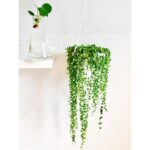
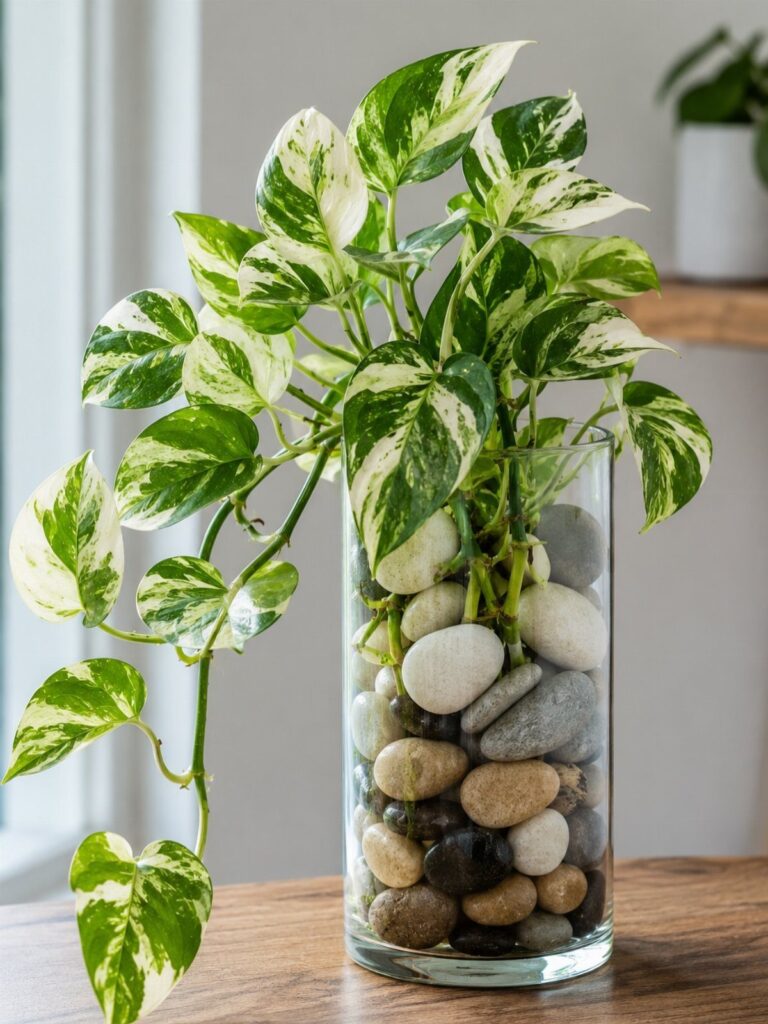
A clear glass vase with river stones or a cut water bottle on a windowsill roots pothos in under a week; a half-barrel pond in full sun carries Louisiana iris through zones 5 to 9.
The single thing that decides which plant is yours is whether you want green inside year-round or a seasonal bloom outside in a container or pond.
Duckweed multiplies from a single tablespoon to a full carpet before you know it, and that pace of growth is the range this list spans, from the nearly invisible to the outright theatrical.
1. Pothos
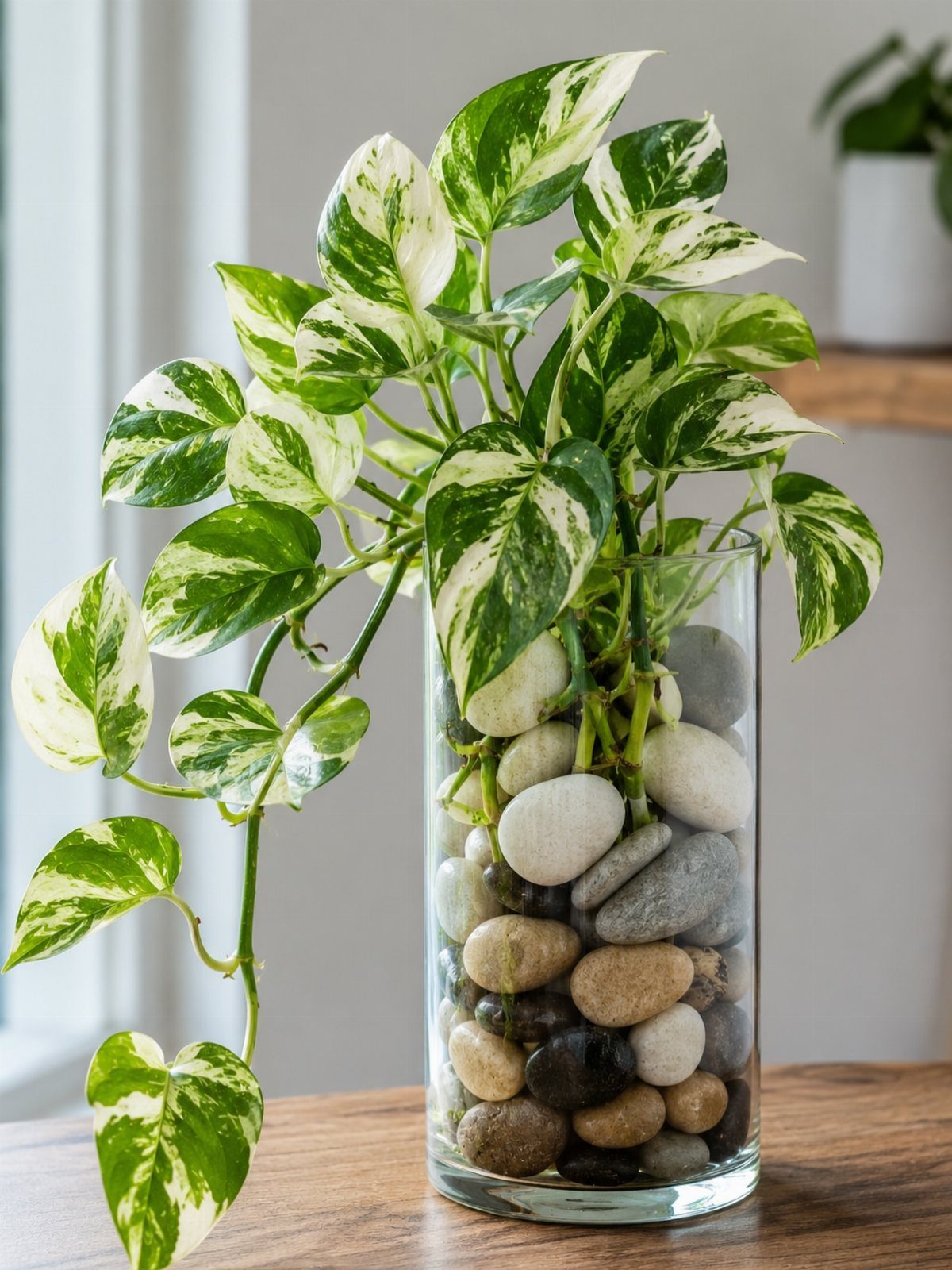
Pothos handles neglect better than almost any houseplant I know. A cutting dropped in water will root in days and live for years with nothing more than an occasional top-up and a drop of liquid fertilizer now and then.
Variegated pothos, with cream-splashed green leaves, wants a little more light than the plain green kind to keep that pattern sharp.
I keep mine in a clear glass vase with a few river stones to steady the stems; the roots themselves are worth watching, thick and white against the glass.
Change the water when it clouds, or don’t, and the plant forgives you either way.
2. Lucky Bamboo
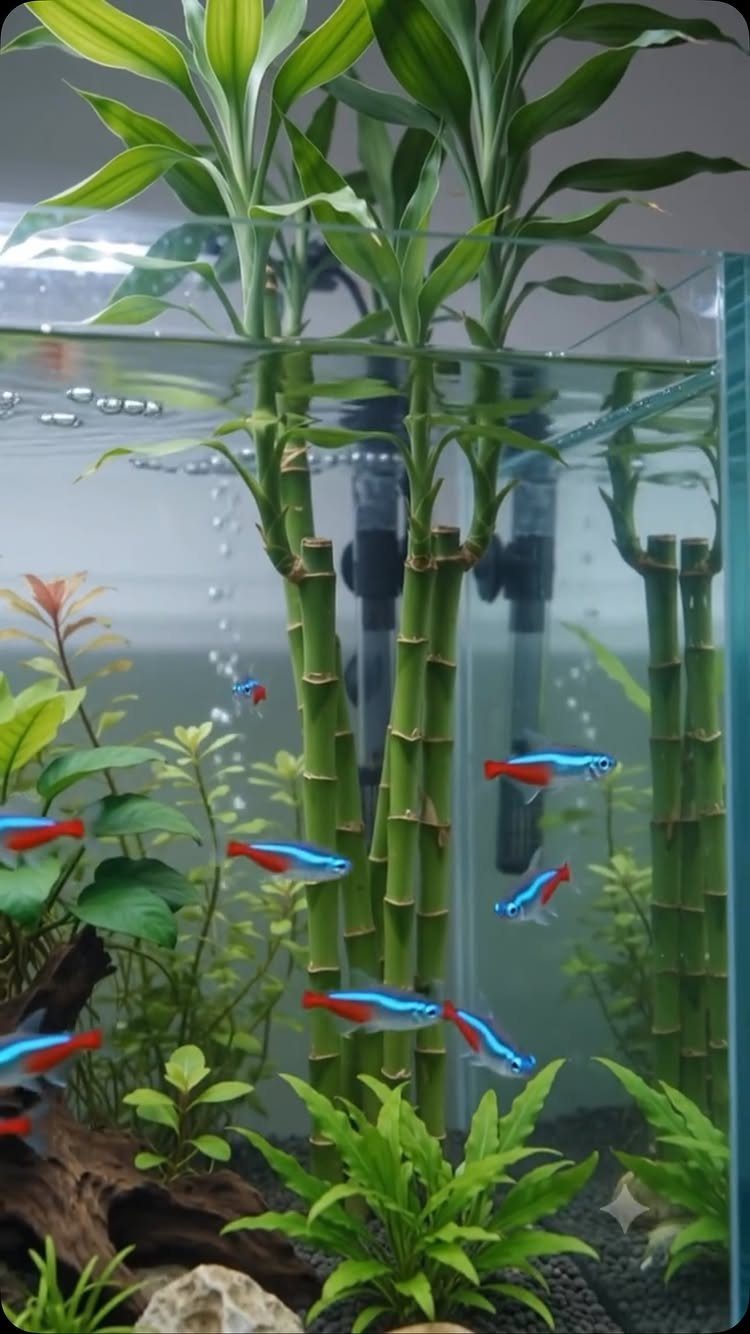
Lucky bamboo is not bamboo at all; it is a Dracaena, and that matters mostly because true bamboo rots standing in water while this plant prefers it.
Straight green stalks can sit in a tank with fish, which is one way to run it, though a simple vase on a desk works just as well.
I like the stalks kept to a single layer, not the crowded bundles shops sometimes sell, since rot spreads fast when stems touch.
Roots want indirect light; leaves handle less. If the stalk yellows from the bottom up, that section is already gone, and I cut well above the damage.
3. Chinese Evergreen
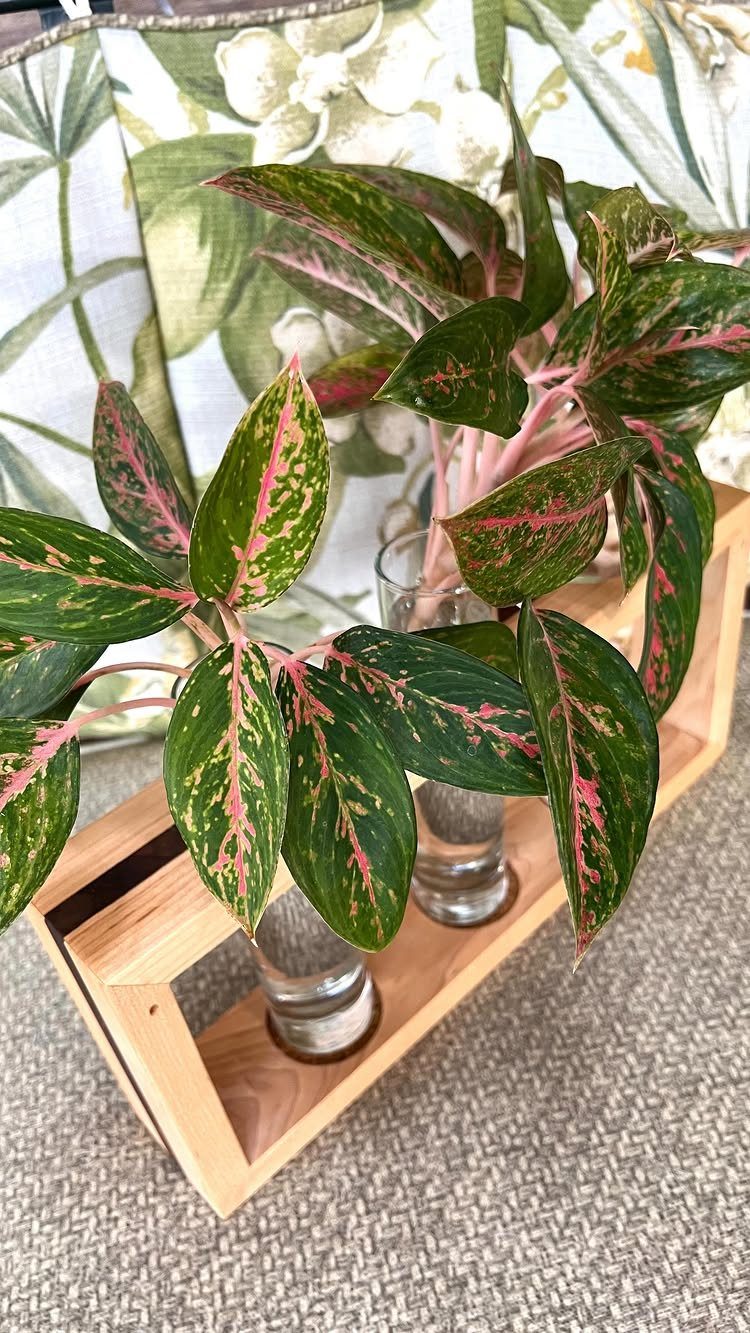
Pink-veined Chinese Evergreen in water still surprises me. The plant is sold as a soil-dweller, yet cuttings root readily and the color holds in a vase for months, sometimes years.
Low light, which bleaches out the pink in soil, actually preserves it here because growth slows and the leaf does not need to replace itself as fast.
Paired vases on a wooden stand give a symmetry I would not choose myself; I prefer one larger vessel where the roots can spread without crowding.
Top up with rainwater or distilled if your tap runs hard; mineral crust on the roots chokes them slowly.
4. Louisiana Iris
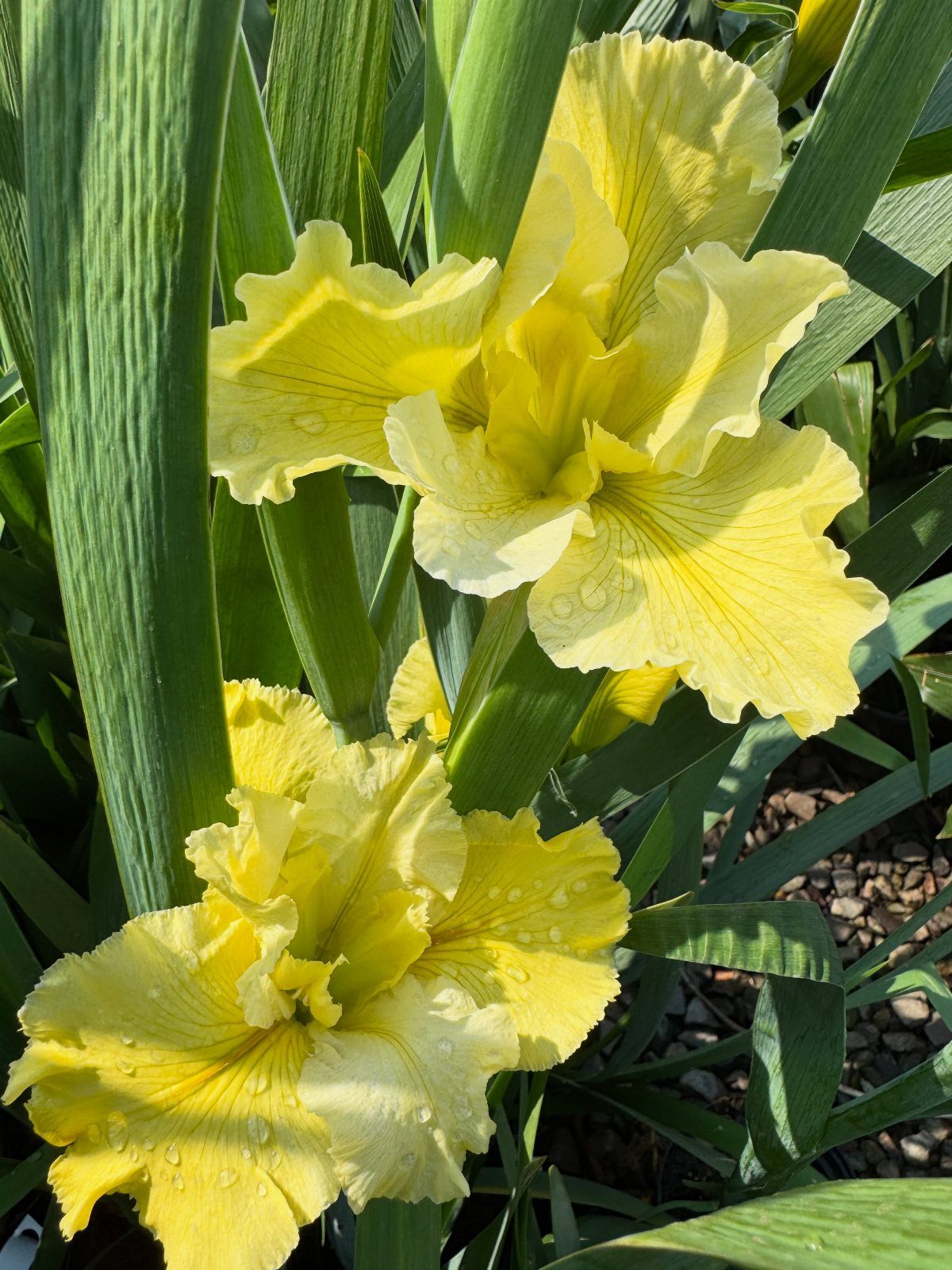
Louisiana Iris is the one entry here that belongs outside, in a pond margin or a bog garden where its rhizomes sit wet through spring bloom.
The yellow ruffled flowers stand at a medium height, and the plant wants full sun to part shade through USDA zones 5 to 9.
I have seen it used as a true submerged plant in shallow water features, though it blooms heavier with some rhizome exposed to air.
In a small yard, a half-barrel or lined trough with a few inches of standing water gives the moisture without the pond.
5. Water Hyacinth
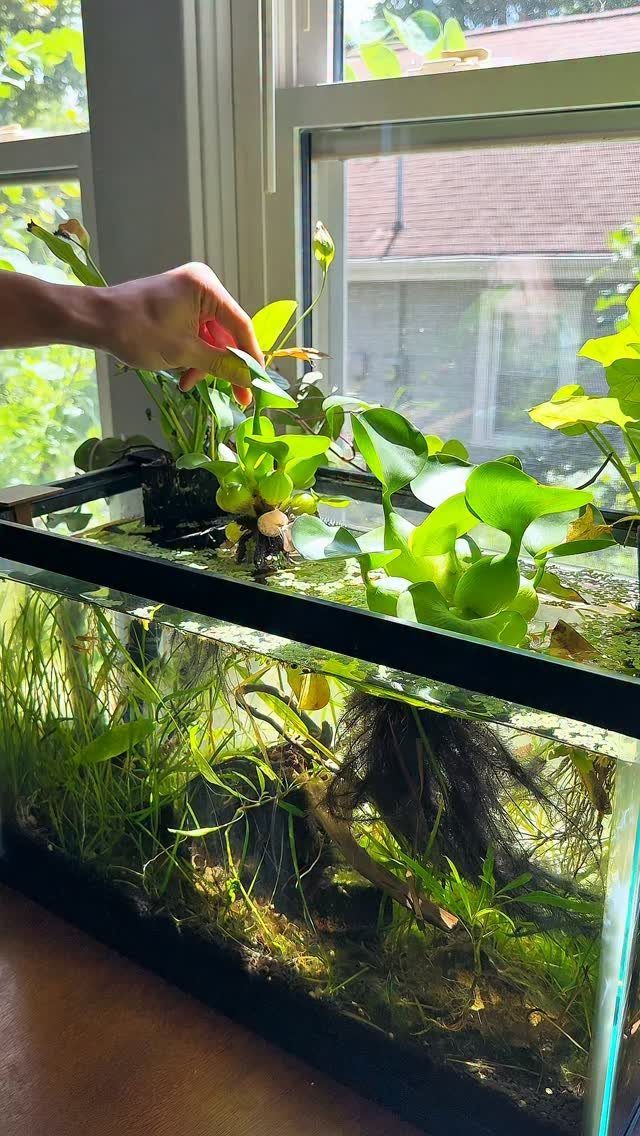
Water hyacinth is the fastest cover I know for any open surface. Rosettes float free, roots dangling below to filter the water and shelter small fish or tadpoles.
In warm summer weather it can multiply fast, which is useful if you want shade for a pond, a problem if you want to see the water.
Indoors through winter in a bright window it sulks and shrinks but usually survives.
Never release it into natural water. It is banned in many states for good reason, and a single plant can choke a waterway in a season.
6. Hornwort
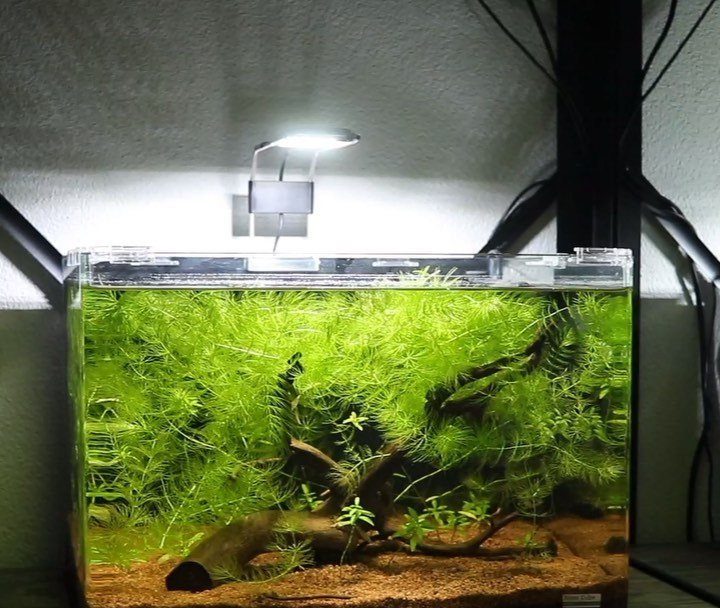
Hornwort is an underwater plant with no true roots; it simply drifts or anchors lightly to whatever it touches.
The dense green tangle is doing what hornwort does best, pulling nitrogen and phosphates from the water and releasing oxygen in daylight.
I add it to new aquariums to outcompete algae while the tank finds its balance, then thin it heavily once a month since growth is relentless.
It tolerates cold better than most aquarium plants, so a small unheated bowl on a windowsill suits it fine. No substrate, no CO2, no special light; this is the plant I hand to beginners who have killed everything else.
7. Elodea Canadensis
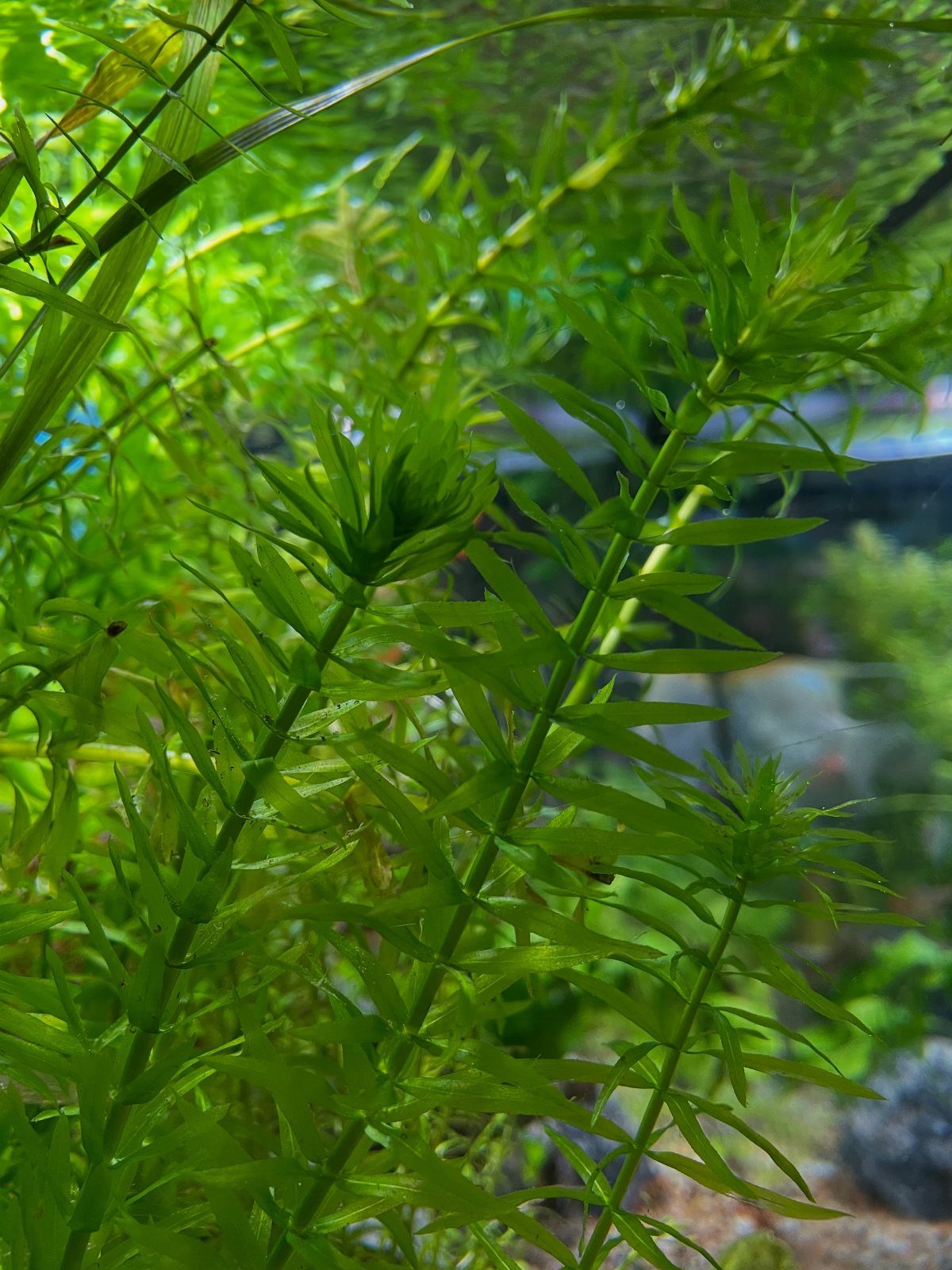
Elodea canadensis is the thin-leaved green tangle filling the tank, each stem crowded with 3 narrow leaves at every node. It grows fast enough to outpace algae in a new setup, and fish will graze it without killing the plant.
I use it in unheated tanks where fussier plants brown and melt; it asks only for some daylight from the window and a trim when it hits the surface.
Snip the tops and the bottoms keep growing, or replant the cuttings to thicken the wall of green.
8. Water Lotus
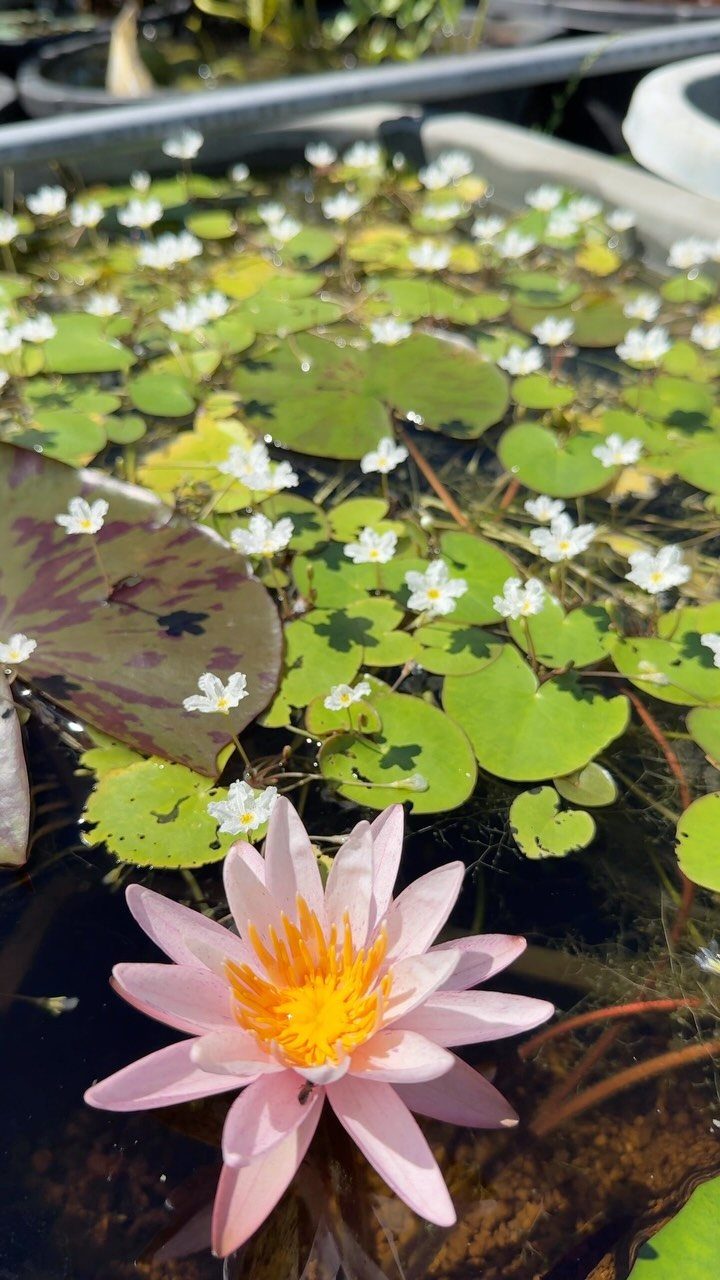
A water lotus in bloom is the most theatrical plant you can float on a dark surface.
A water lotus needs a container with no drainage holes, full sun, and enough depth for the pads to spread and the pink flower to rise above them.
I have never grown one indoors successfully; the tuber wants summer heat and winter dormancy in a cool basement or garage.
For a small yard, a half-barrel or stock tank is the practical middle ground between a true pond and doing without.
9. Anthurium Growing in Water
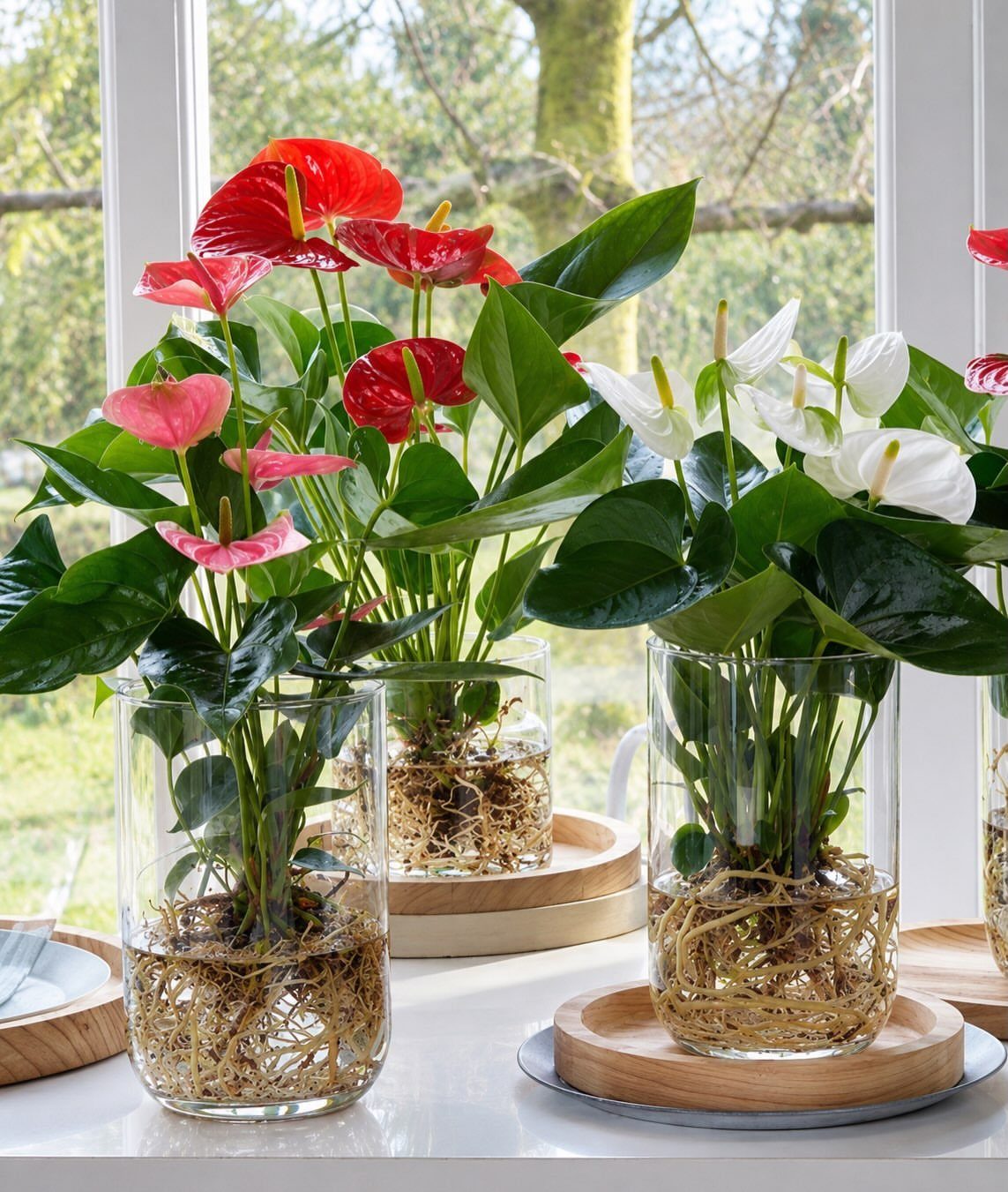
Anthurium in glass turns the plant into a display of both blooms and roots. The heart-shaped spathes in red, pink, or white hold for weeks, and the aerial roots adapt to full submersion faster than most aroids.
I change the water on a regular schedule with liquid fertilizer at quarter strength; the roots stay healthier and the color stays truer than in the soggy soil these plants often rot in.
A wooden coaster beneath each vase keeps the sill dry and gives the setup a deliberate look I would not skip.
10. Floating Plants in Ceramic Bowl
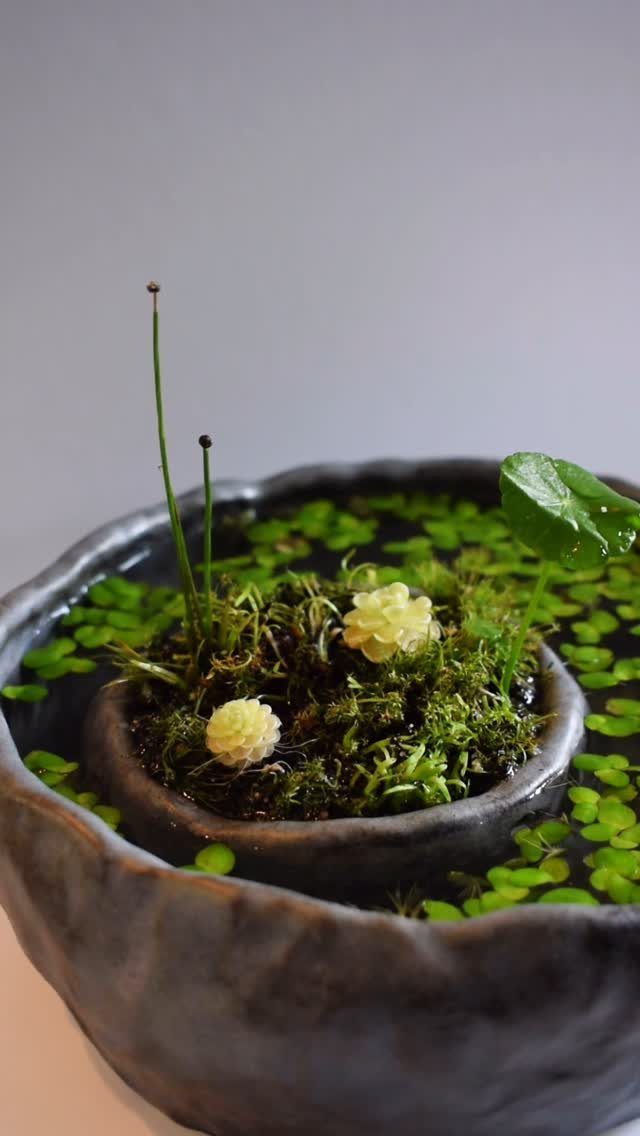
A dark ceramic bowl of water with small floating plants and moss is the quietest indoor water garden I know. The grey-green palette and 2 white blooms suit a desk or shelf where a louder arrangement would fight the room.
I top up with rainwater to keep the mineral film off the surface, and move it to bright indirect light since moss without enough sun turns stringy and brown.
No pump, no soil, no feeding; this is the setup for someone who wants living green without the schedule.
11. Water Bottle Plant Propagation
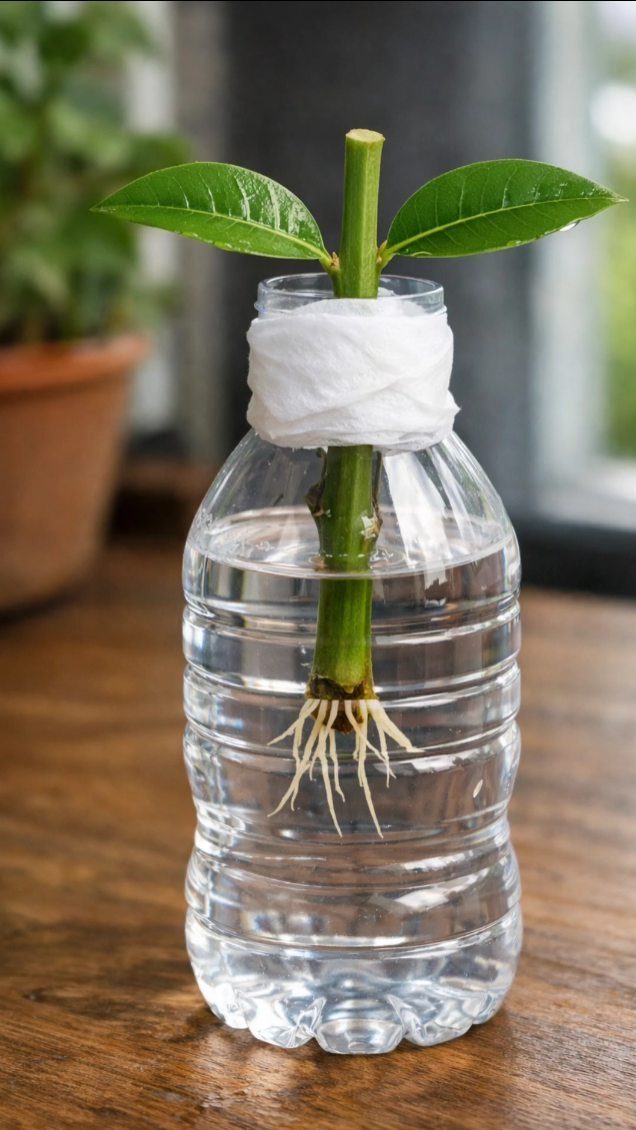
A clear water bottle with the top cut off is the propagation vessel I use most.
The plastic is free, the narrow neck holds a cutting upright, and the clear walls let you watch white roots form without disturbing the plant.
I leave one or two leaves above the water line, change it when it clouds, and pot up once the roots look substantial or the cutting starts to stall.
A bottle on a windowsill roots faster than one across the room; light matters more than warmth for most houseplants.
12. Monstera Adansonii in Water
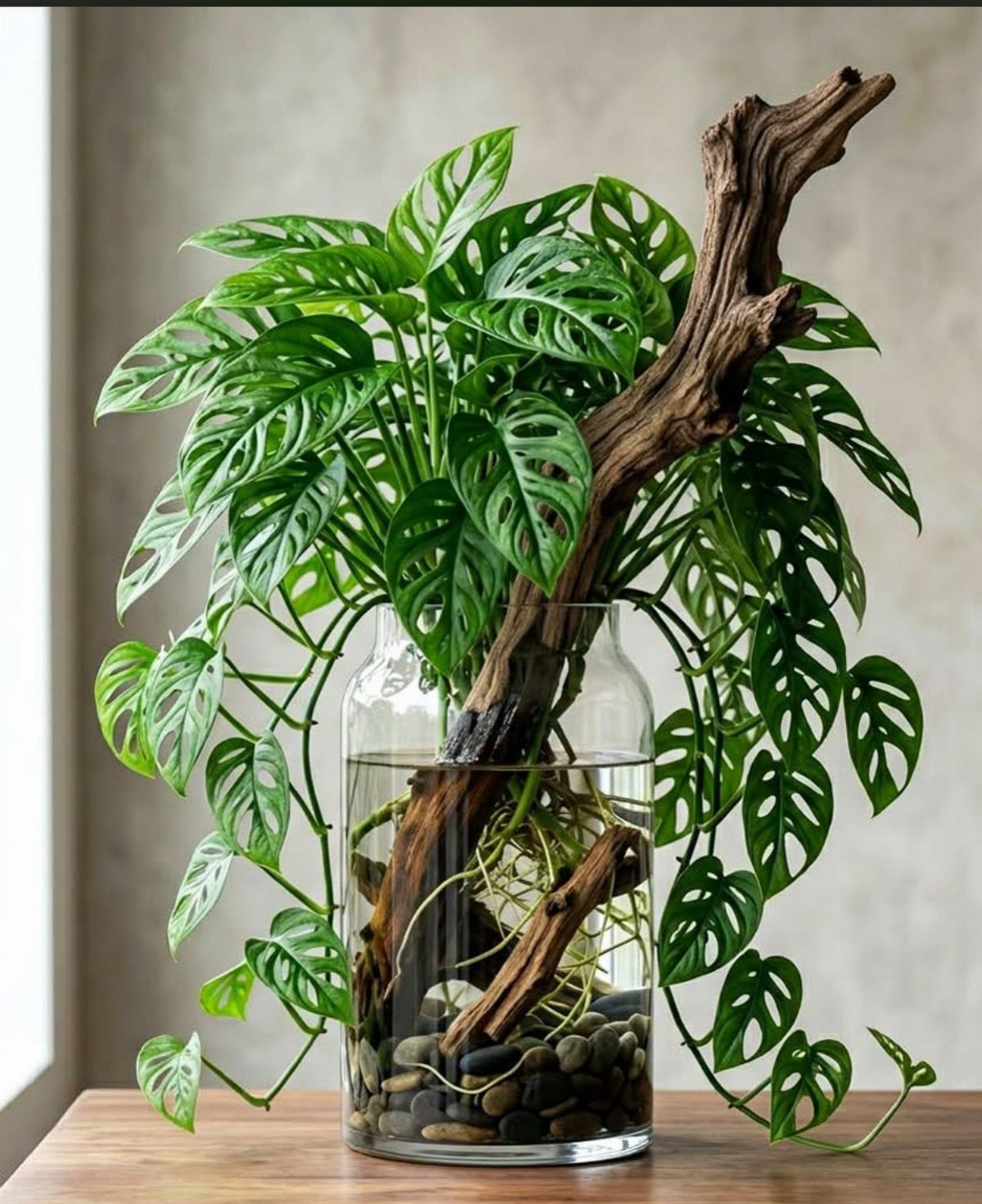
Monstera adansonii with its Swiss-cheese leaves looks right in a glass vase with pebbles and a piece of driftwood to climb.
The roots tangle fast, so I use a vessel wide enough to let them spread without crowding into a solid mass that traps debris.
A single stem in water will vine and leaf for a year or more, though the holes in new leaves shrink if the light is too dim.
I add a drop of fertilizer with every other water change; growth slows without it, but the plant does not die.
13. Duckweed on Water Surface
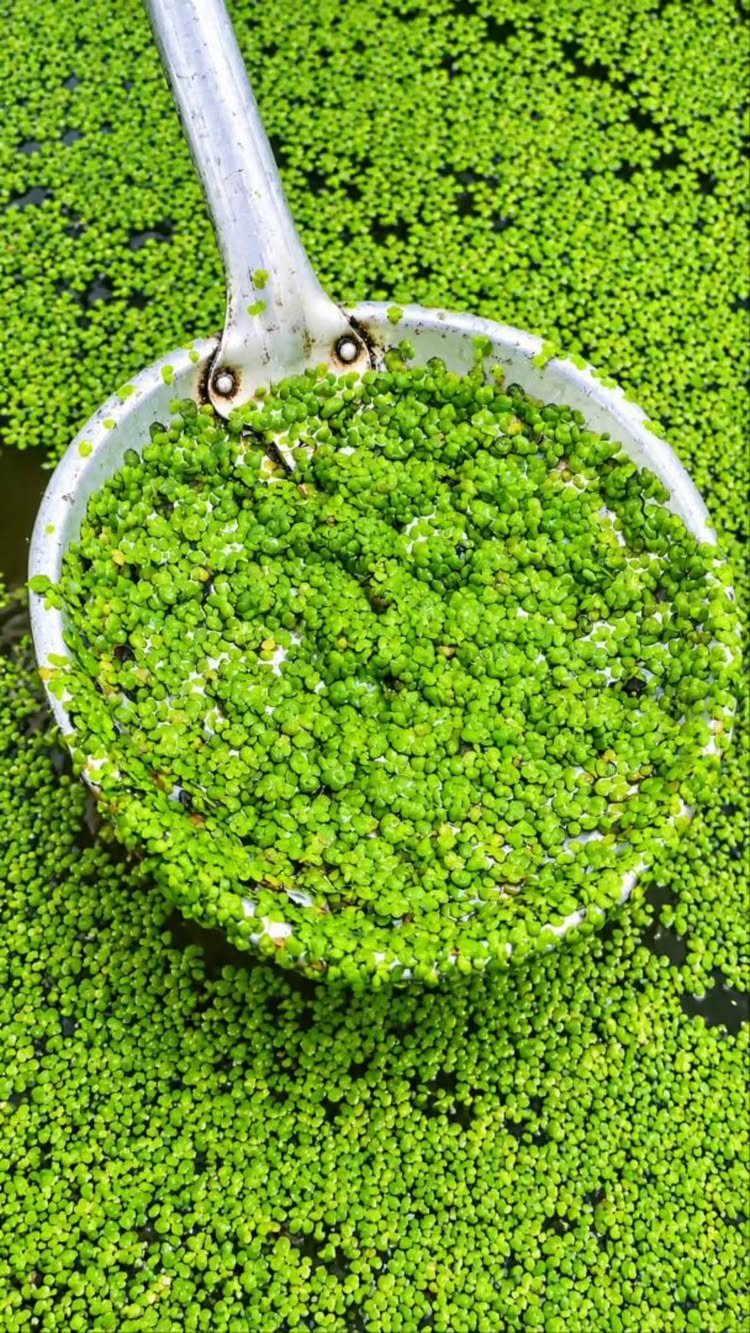
Duckweed is the smallest plant here and the most aggressive cover. A single scoop holds thousands of individual fronds, each one a complete plant with a root hair or two trailing beneath.
I use it in propagation bowls where it shades the water enough to slow algae, and in small aquariums where fish pick at it through the day.
It multiplies so fast that a tablespoon becomes a carpet before you know it; I thin it weekly with a net and compost the excess.
The bright green mat suits a reader who wants instant surface cover and does not mind the discipline of keeping it in bounds.
Care Tips for Water Plants
Stagnant water starves roots of oxygen and invites algae.
I change mine when it clouds, or sooner for plants that tolerate less neglect. Pothos and lucky bamboo forgive a lapse; anthurium and Chinese Evergreen show brown roots faster and get stricter attention.
Tap water varies. Hard water leaves mineral crust on roots, and that buildup will slowly choke a Chinese Evergreen.
Rainwater or distilled is safer for long-term growth, though I fill bottles from the tap and let them sit overnight to let chlorine dissipate when distilled is not on hand.
In a pond or tank with fish, plants do work that would otherwise fall to you.
Submerged growth pulls nitrates from waste and releases oxygen through daylight hours. Without fish, a drop of liquid fertilizer at quarter strength replaces what the water lacks.
Propagation Methods
A cutting roots when the node sits in water, not just the stem end. The node is the slightly swollen band where a leaf meets the stem; white initials emerge from there in days or weeks depending on the plant.
I cut just below it with clean shears and strip any leaf that would sit submerged and rot.
Rosemary takes longer than most houseplants, two to six weeks, and wants bright light through the wait. Most others root faster; pothos shows white threads in under a week.
Many aroids and pothos live for years aquatically.
The transition to soil is the riskier move; water roots are softer and adapt slowly to the shift. Glass containers suit some plants permanently; the roots stay visible and the setup stays clean.
Light Requirements
Bright indirect light is the baseline for most of these plants. Direct sun through a south window heats the water and burns leaves; I set vases back a few feet or use an east-facing sill where morning rays are weaker.
Some plants want more.
Others tolerate less than you might expect. Lucky bamboo leaves handle less light than its roots prefer; the stalk stays green while the root mass struggles in a dark corner.
I move struggling cuttings closer before I adjust any other variable.
Frequently Asked Questions
What are the easiest plants to root in water?
Pothos is the one I point beginners toward: stick the cutting so the node sits below the surface, and you will see the first pale roots before you have had time to worry.
Lucky bamboo and Chinese Evergreen also root readily; lucky bamboo stalks sit straight in a vase, while Chinese Evergreen cuttings keep their pink color for months. These three forgive cloudy water and skipped fertilizer better than most.
What plants thrive in lots of water?
True aquatics like water hyacinth and duckweed live floating free, roots dangling below. Hornwort and Elodea canadensis grow fully submerged, pulling nitrogen and phosphates while releasing oxygen.
Louisiana Iris wants its rhizomes wet through spring bloom in a pond margin or bog garden. For indoor growers, pothos and lucky bamboo handle permanent water culture for years with only occasional topping up.
What plants can grow in water without soil?
Pothos, lucky bamboo, Chinese Evergreen, anthurium, and Monstera adansonii all live for years in clear vases with no soil at all.
Hornwort and Elodea canadensis need no substrate in aquariums; they drift or anchor lightly and pull nutrients straight from the water.
Floating plants like duckweed and water hyacinth never root in soil. The small ceramic bowl garden runs on floating plants and moss alone, no potting mix beneath.
How do you propagate plants in water?
Cut just below the node, the swollen band where leaf meets stem, with clean shears. Root initials show up at different speeds depending on the plant; pothos is the one I watch for first, while rosemary asks for more patience.
What is the best container for water plants?
Clear glass shows roots and makes it easy to spot clouding or brown rot.
A narrow-necked water bottle steadies cuttings for propagation; a wide vessel lets Monstera or pothos roots spread without crowding into a debris-trapping mass. Dark ceramic suits quiet indoor bowls where the plant, not the container, should draw the eye.