
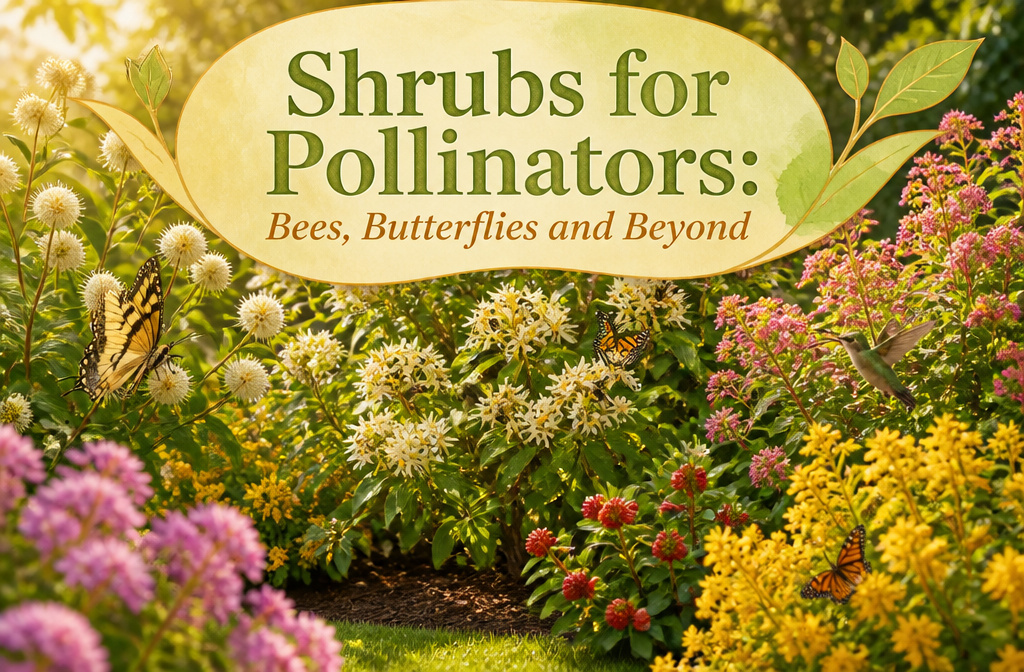
Shrubs for pollinators bees butterflies are woody plants that feed bees, butterflies, moths, and hummingbirds through nectar, pollen, or larval host tissue. The catch is that native species matter far more than the butterfly bushes most gardeners reach for first: native shrubs and local insects grew up together, and many caterpillars can eat only the specific plants they co-evolved with. A single buttonbush in a damp corner can host sphinx moths, feed adult bees through late summer, and still feed birds with its red nutlets come winter.
Why Native Shrubs Feed Pollinators Best
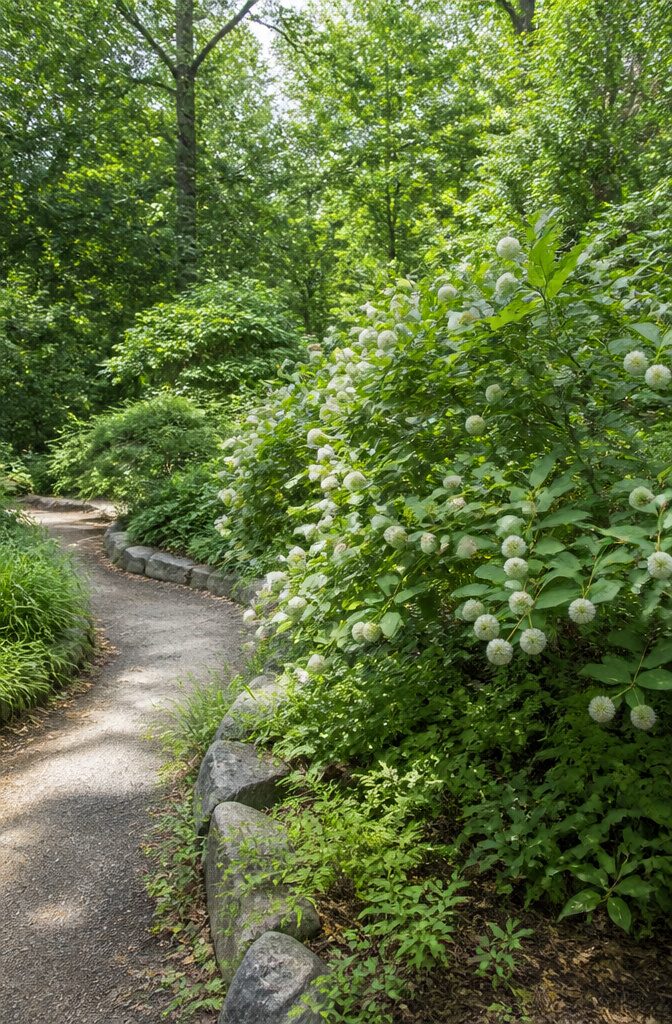
Native shrubs and local pollinators grew up together, which is why a buttonbush in Virginia feeds the bees that actually live there. The nectar and pollen match what native insects can process, and many native bees are specialists that cannot touch non-native pollen at all. Butterfly caterpillars face the same limit: most can only eat the host plants they co-evolved with, so a butterfly bush from Asia may draw adult butterflies to sip but leaves them nowhere to raise the next generation.
The practical payoff shows up in maintenance. Natives shrug off local pests and weather patterns that non-native ornamentals struggle against, which means less intervention on your end. I have watched the same non-native shrub need spraying two seasons running while the spicebush three feet away handled itself.
This is the foundation the rest of the garden builds on. Native shrubs feed the right insects, and they do it with less work. Exotics can fill gaps or extend bloom time, but they should layer around a base of natives rather than replace them. Start here, and the bees and butterflies you attract will actually stick around to breed.
Nectar Plants vs. Host Plants
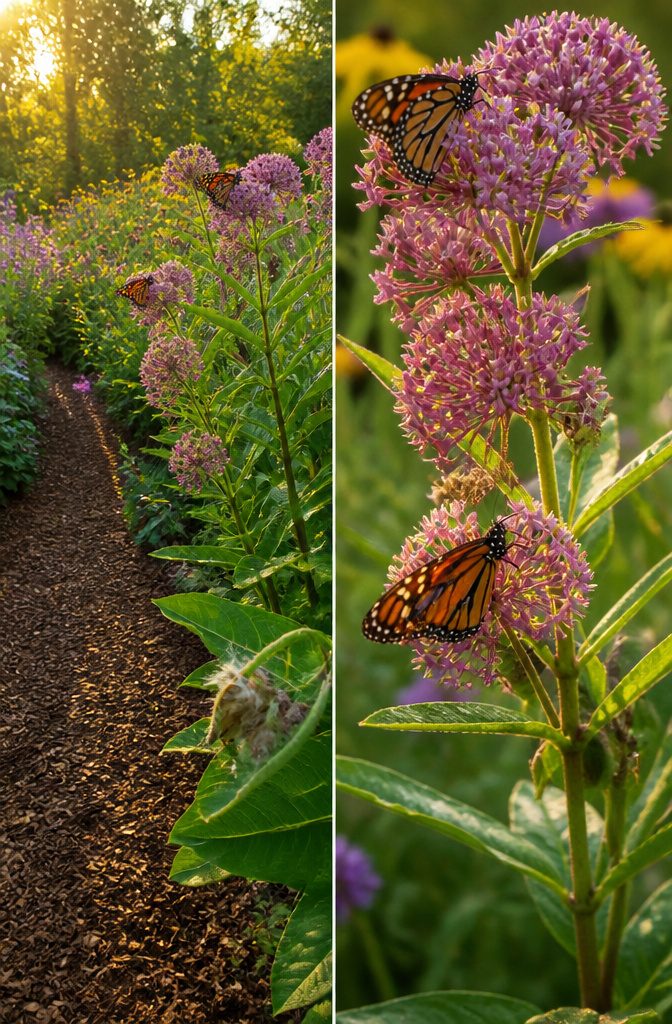
Nectar plants feed adult bees and butterflies; host plants feed their caterpillars. A garden that offers only one is a garden that strands pollinators halfway through their lives.
Milkweed makes the point as clearly as any plant can. Adult monarch butterflies sip nectar from dozens of flowers, but their caterpillars eat milkweed leaves and nothing else. No milkweed means no monarchs, no matter how many nectar-rich blooms you pack in. The same pattern repeats across dozens of butterfly species, each tied to its own particular host plant.
I see yards full of butterfly bush and coneflower that never produce a single new butterfly. The adults visit, tank up, and leave to lay eggs somewhere else. A yard full of nectar flowers is essentially a gas station. Add host plants and it becomes a nursery too.
For shrubs, this usually means choosing natives. Native shrubs tend to carry the specific chemical signatures local caterpillars recognize. A complete pollinator garden needs both kinds of plants working together, supporting the full life cycle from egg through adult.
Funshine Abelia
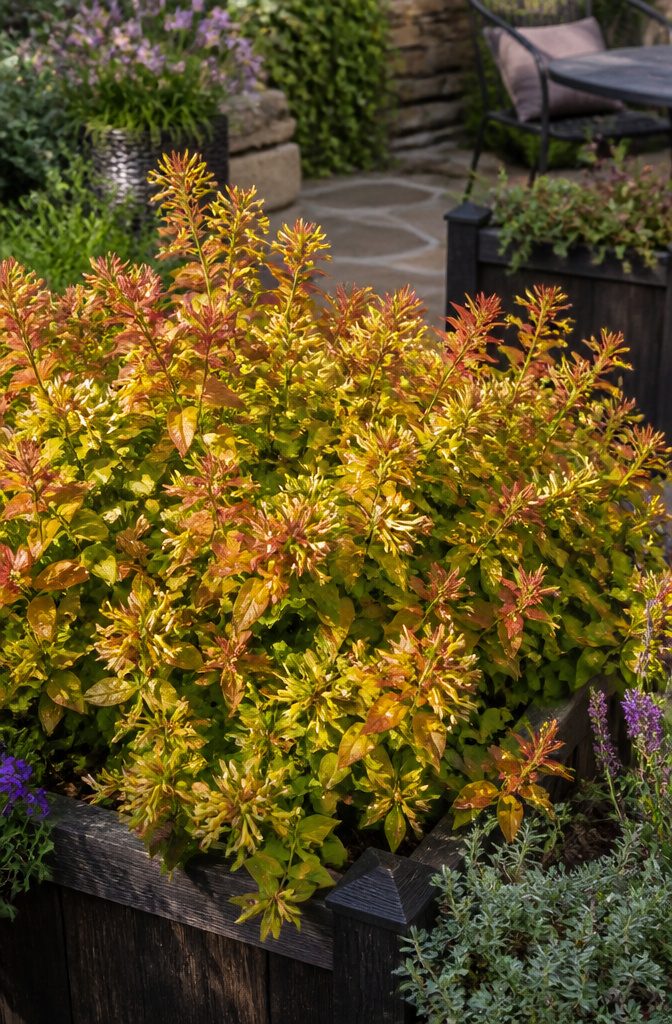
The first Abelia I planted was the old-fashioned type, and the bees found it within a week. Funshine® Abelia keeps that same long bloom season the genus is known for, with fragrant, tubular flowers that open from spring straight through frost. Monarch butterflies and hummingbirds both work those tubes for nectar, and the dense branching gives smaller pollinators a place to rest out of the wind.
It stays compact enough for a patio border or a medium pot, maybe 3–4 feet around with the same spread, so you are not pruning it into submission every June. The foliage on this one shifts from yellow-green in spring to orange and red once nights cool, which means the shrub earns its keep even after the last hummingbird heads south. Full sun gives the heaviest flower set, though mine in half-day shade still flowered, just more sparsely.
If you are deciding between this and a butterfly bush, the tradeoff is bloom shape against bloom length. Buddleia packs more flowers into each spike, but Funshine® Abelia’s season is longer and the shrub itself is less brittle in a hard rain. For a small yard where one plant has to pull weight for months, that steadiness matters more than a single spectacular month.
Ground Hug Aronia
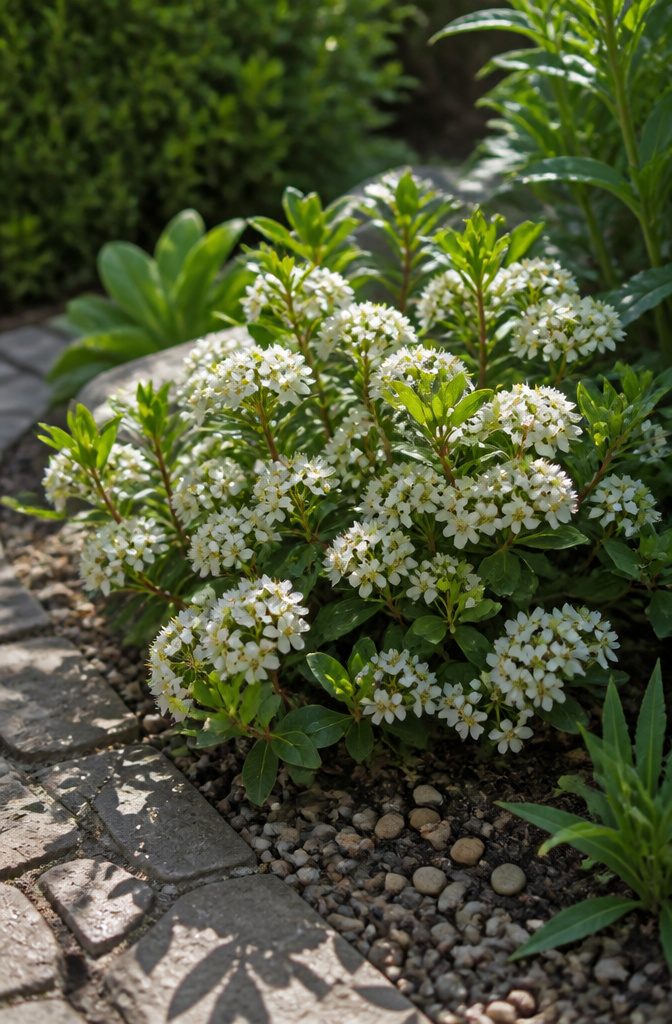
Ground Hug™ aronia stays low enough to work where the regular species never could, topping out at a height that reads more ground cover than shrub. I saw it first on a slope planted by a neighborhood association, the kind of spot where a full-size aronia would have swallowed the walkway inside three years. The flowers came in mid to late spring, white with a pink pollen crown that drew early bees still waking from dormancy. Those same berries turn dark purple by late summer and bring in birds, so the plant pays out across two seasons. For anyone gardening a patio border or a narrow strip between sidewalk and foundation, this is the aronia that actually fits.
Miss Violet Butterfly Bush
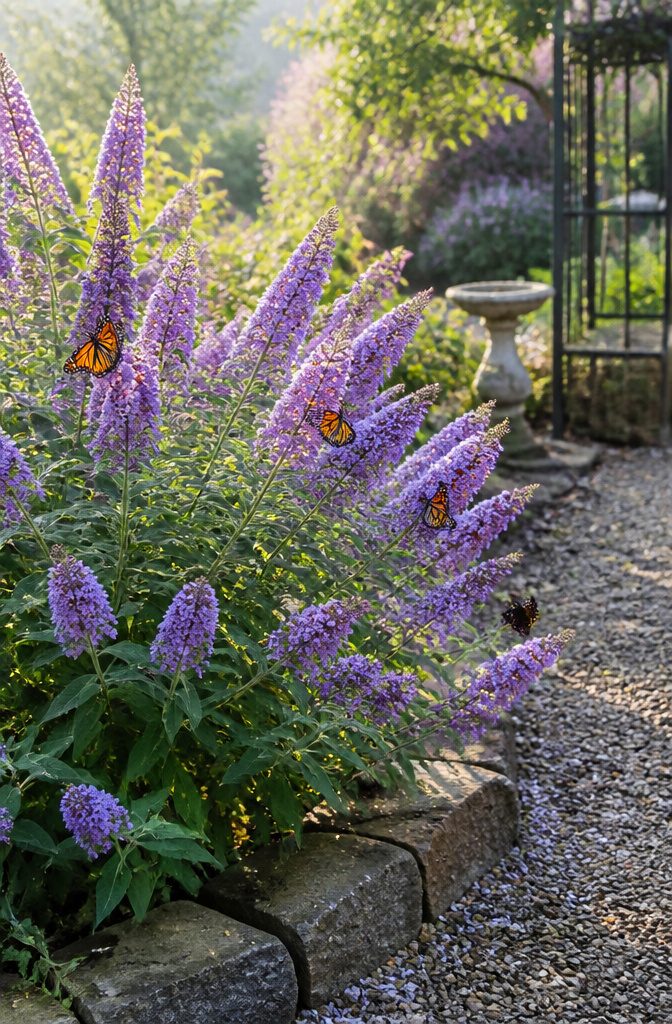
‘Miss Violet’ butterfly bush draws swallowtails and monarchs in a way the old, rangy varieties never quite managed for me. The blooms cluster along stems that stay compact, about knee-high in my garden, so butterflies work the flowers at eye level instead of overhead where you’d need a ladder to watch them feed. That size matters on a patio or small yard where a standard butterfly bush would swallow the bed.
I plant ‘Miss Violet’ where it gets morning sun and sharp drainage. Wet winter roots kill more butterfly bushes than cold ever does, so I mound the soil a few inches and let fallen leaves stay sparse around the crown. The color reads purple from a distance, up close a soft violet that shows well against the silver-green foliage without shouting for attention.
The real payoff comes in repeat bloom. Deadheading keeps new flower spikes forming through August, and each fresh flush brings another wave of butterflies off the migration path. I skip the fertilizer after July; soft late growth doesn’t harden off in time and the first hard frost takes it. Even with that neglect, ‘Miss Violet’ comes back reliable in my zone 6 garden, though I lose it to rot the years I get lazy about drainage.
Sugar Shack Buttonbush
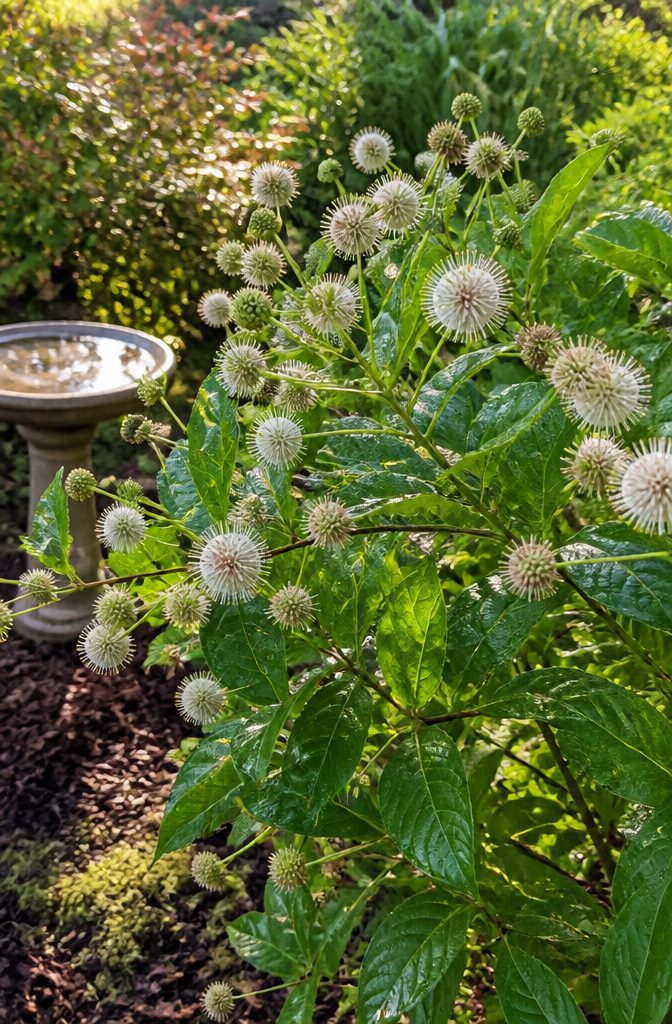
Sugar Shack® buttonbush arrived in my garden plans after I noticed how quiet late summer felt compared to June’s buzz. This compact cultivar of the North American native keeps the activity going when a lot of shrubs have finished. The pincushion-like blooms open late in the season and draw bees, butterflies, moths, and hummingbirds to a yard that might otherwise be running low on nectar.
What sold me was the dual purpose: the flowers feed adult pollinators, and the foliage hosts butterfly and moth larvae. By fall those flower heads turn to bright red nutlets, which birds pick through during winter. A single shrub can feed pollinators through late summer and birds through winter, stretching that $500 annual budget across seasons.
The species naturally wants wet feet and can spread to 6–12 feet, but this trademarked compact form fits a small patio bed without swallowing the space. If you’ve got a damp corner or even a spot that pools after rain, that is where it earns its keep.
Bloomerang Dwarf Reblooming Lilac
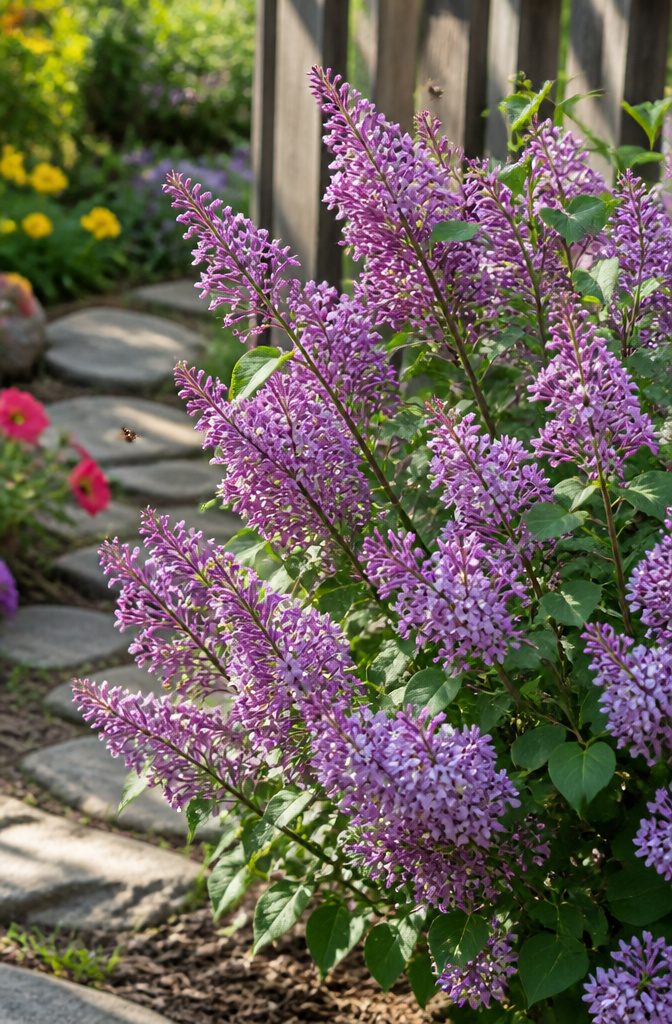
The Bloomerang Dwarf Reblooming Lilac gives you two full rounds of flowers in a single season, which means bees and butterflies get nectar when most other lilacs have already finished. That second flush usually arrives in late summer, right when pollinators are scrambling to stock up before fall.
I planted one in a narrow bed along my driveway where a standard lilac would have swallowed the walkway. The dwarf habit kept it polite, topping out around three feet or so, and it still pumped out enough scent to stop me on the way to the car. The first year I got the spring show I expected. The rebloom that August caught me off guard; I had not planned on butterflies using that bed so late.
The tradeoff is smaller flower clusters than an old-fashioned common lilac, and the fragrance, while present, does not carry as far. For a patio gardener working tight quarters, that is usually a fair exchange. Give it full sun and decent drainage. In shade the second bloom tends to fizzle, which defeats the whole point of choosing this cultivar over a one-and-done type.
Gatsby Pink Oakleaf Hydrangea
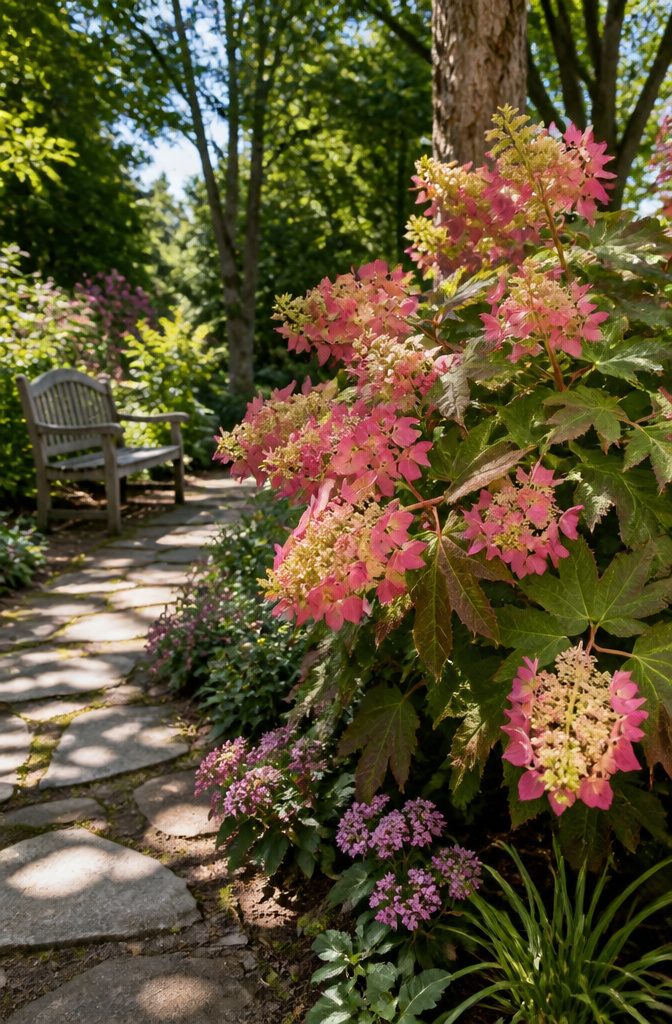
Gatsby Pink Oakleaf Hydrangea carries a sweet, honey-like fragrance that drifts on warm summer air, and those lacecap blooms age to a deep pink that keeps pollinators coming back. The wooly hairs on new leaves and the peeling winter bark both give insects and birds material for nests, while that same bark shelters dormant pollinators through cold months. Unlike other oakleaf hydrangeas, this one keeps pushing fresh flowers into fall, which extends the season by several weeks. It is a North American native, a trademarked cultivar, and it fits neatly into a pollinator-focused yard without the rangy look some natives get. I would plant it where the afternoon sun hits, since the blooms need some light to develop that color shift, and I would leave the old flower heads standing through winter rather than tidying them in fall. The insects you are feeding need those stems more than you need the neatness.
Golden Shadows Pagoda Dogwood
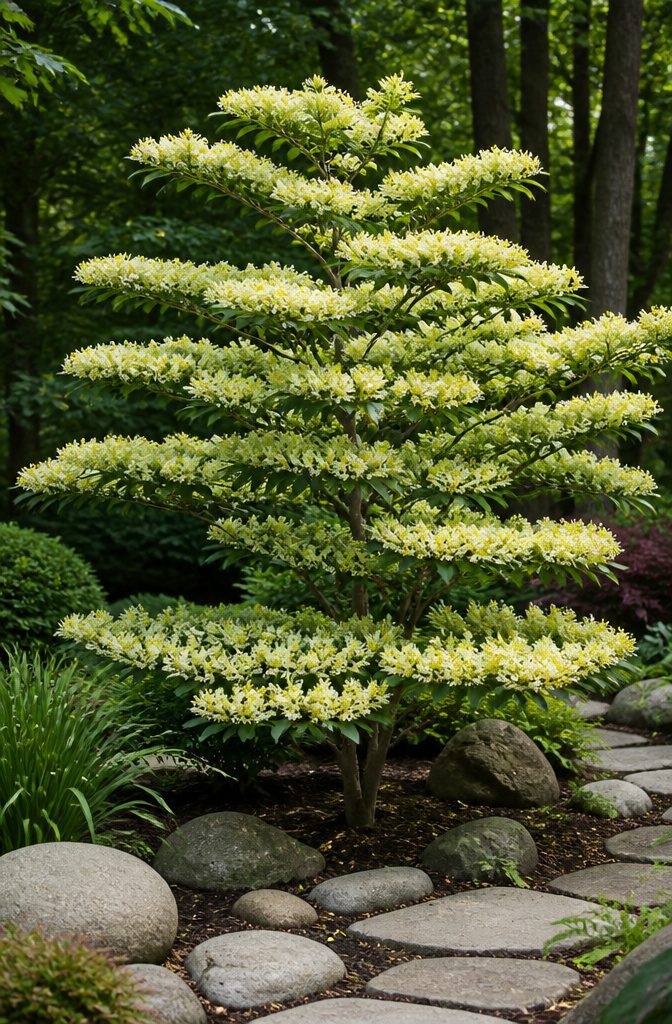
The layered green-and-gold foliage on Golden Shadows Pagoda Dogwood catches light differently every hour of the day, which is why I keep mine where morning sun hits it from the side. That same branching, the horizontal tiers that give this Cornus alternifolia cultivar its pagoda name, also creates landing platforms bees and butterflies actually use. In my yard the flat-topped clusters of creamy flowers draw more pollinator traffic than I expected from a variegated plant, since heavy variegation sometimes means less nectar.
This shrub stays small enough for a patio border, topping out around 15–20 feet in most gardens though you can keep it smaller with selective pruning of the tiered branches. The trademarked name belongs to Walter’s Gardens, and the plant is sometimes sold under the full name Cornus alternifolia ‘Wstackman’ Golden Shadows. I have seen it labeled simply as Golden Shadows at independent garden centers, so check the tag for the patent information if trademark integrity matters to you.
The leaves emerge almost lime in spring, shift to chartreuse with darker green centers by June, and turn a clear purple-red in fall. Mine took three years to settle in and start that tiered architecture; the first season it looked like an ordinary green dogwood with odd yellow edges. Shade in hot afternoons keeps the gold from bleaching to cream, which is the main limit I have found. Wet or dry, clay or loam, it has adapted without the fuss I expected.
Little Quick Fire Panicle Hydrangea
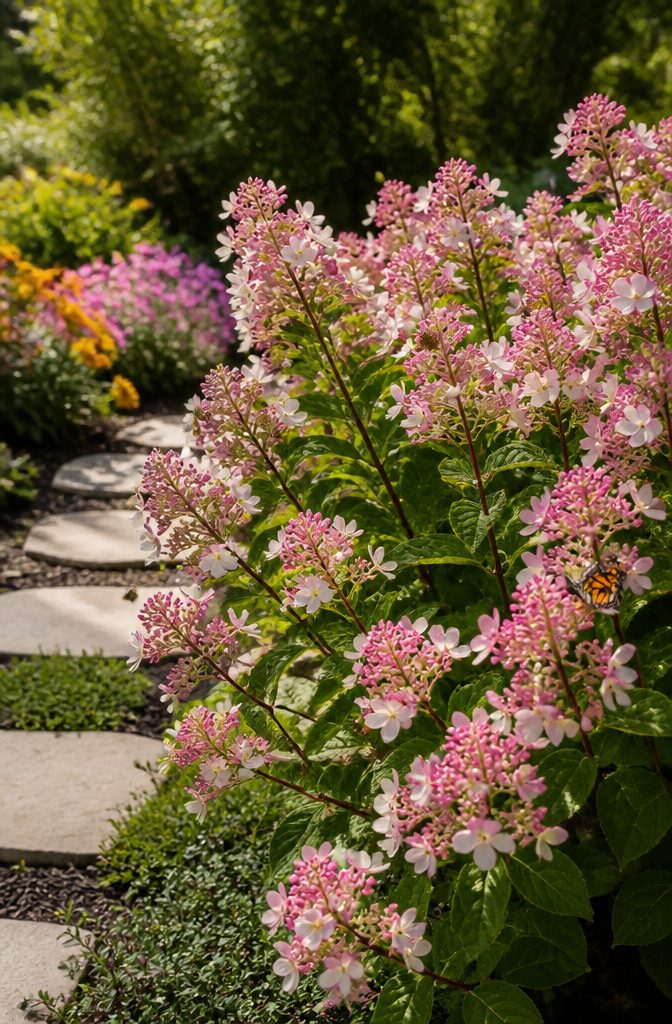
Little Quick Fire® panicle hydrangea opens weeks ahead of most hydrangeas, and that early start matters for pollinators when little else is in bloom. The flowers are lacecap style, not the tight mophead balls that draw most of the attention at garden centers; those flat, open clusters give bees and butterflies actual landing room and reachable nectar.
Mine went in three years ago on the south side of the patio, a spot that bakes by July and still froze hard last April. It survived both without fuss, which is what panicle hydrangeas do. The shrub stays compact enough, around three to five feet, that it does not swallow a small yard whole.
If you are choosing between hydrangeas for pollinators, lacecap blooms beat mopheads every time for insect traffic. The trade is visual volume. You will not get the big snowball heads that stop sidewalk traffic, but you will get steady bee and butterfly visits through summer while the plant still reads as a hydrangea from across the yard. For a patio border or a balcony-sized bed, that exchange has felt fair to me.
Paraplu Pink Ink Rose of Sharon
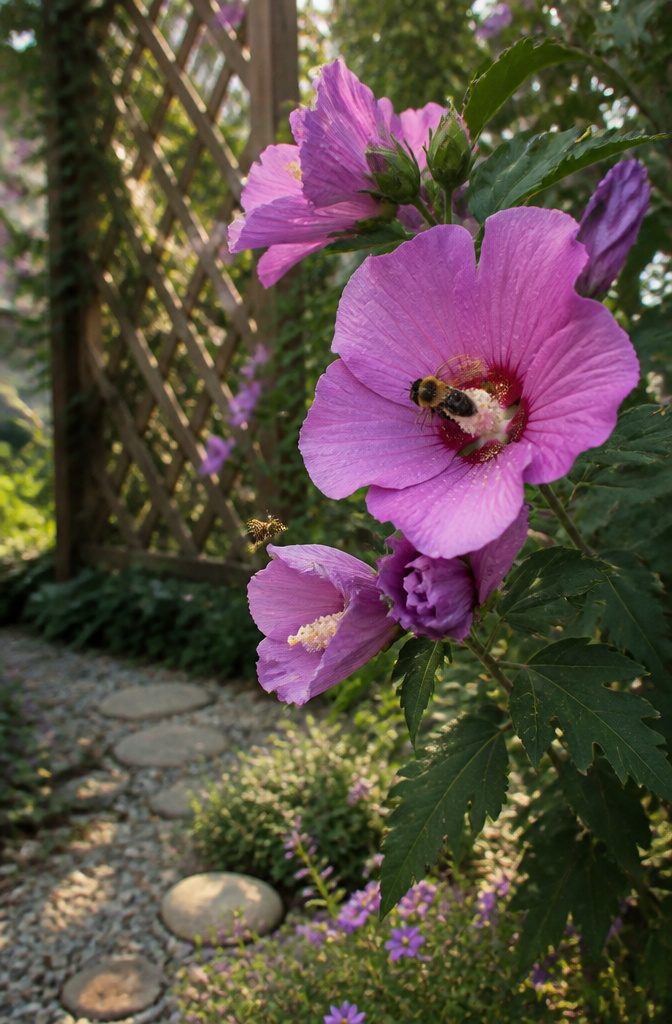
Paraplu Pink Ink Rose of Sharon fills a gap most pollinator gardens leave open. By late August the coneflowers and bee balm are spent, but this Hibiscus syriacus cultivar is just hitting its stride with pink-lavender blooms that keep coming until the first hard frost. The trademark belongs to Proven Winners, and the plant was bred for a compact habit that tops out around eight to ten feet, which matters when you’re working a small yard and don’t want something that crowds the patio by year three.
I planted one in the corner of my back border two seasons ago, partly because the catalog photo showed a color I hadn’t seen on the older white and blue varieties my grandmother grew. The bees found it the same week it opened. Not the frantic early-summer swarm you get on a butterfly bush, but a steady traffic of bumblebees and the smaller solitary bees that are still foraging when goldenrod starts up. The flowers are single, not double, which means the pollen and nectar are actually accessible. A double Rose of Sharon looks lush in a catalog but reads as a food desert to anything with wings.
The foliage is nothing special, dark green and a little coarse, so I wouldn’t make it your sole screening shrub. What it offers is timing. If you want pollinators in your garden from March to November, you need something deliberate for the back half of that calendar. Paraplu Pink Ink is that plant for the shrub layer. It takes sun, tolerates the dry spells my clay soil dishes out in late summer, and once established it does not need the watering schedule that keeps me tethered to the hose in July.
Temple of Bloom Seven-Son Flower
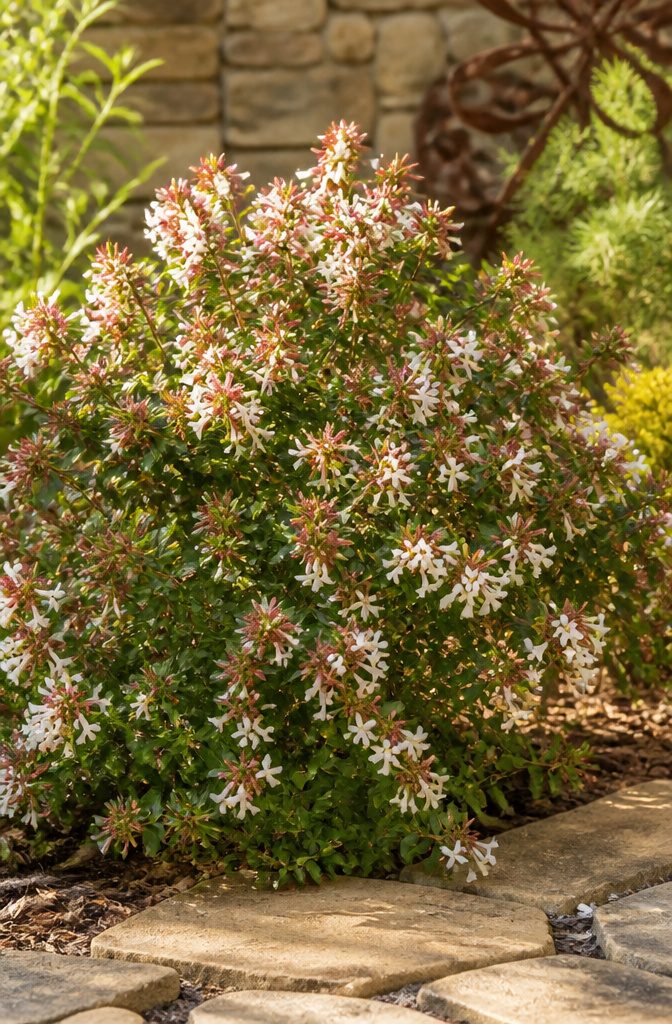
Late summer is when pollinator pantries start looking bare, and Temple of Bloom® Seven-Son Flower steps in exactly then. This Heptacodium cultivar opens hundreds of fragrant white flowers in August and September, a period when few shrubs are still offering nectar. The trademarked variety blooms earlier than conventional seven-son flower, so an early cold snap is less likely to cancel the show before pollinators get their fill.
Bees and butterflies work the blossoms, and hummingbirds have been known to nest in mature specimens, at least in trial gardens with enough structure to support them. Once the petals fall, the calyces turn bright cherry-red and carry the display deep into fall. That two-part act, late nectar followed by fiery color, is what justifies the space this shrub needs, roughly five to six feet in either direction at maturity. Plant it where you can watch the traffic on a September afternoon; the fragrance carries, and the pollinator activity is concentrated enough to see from a lawn chair.
Spicebush
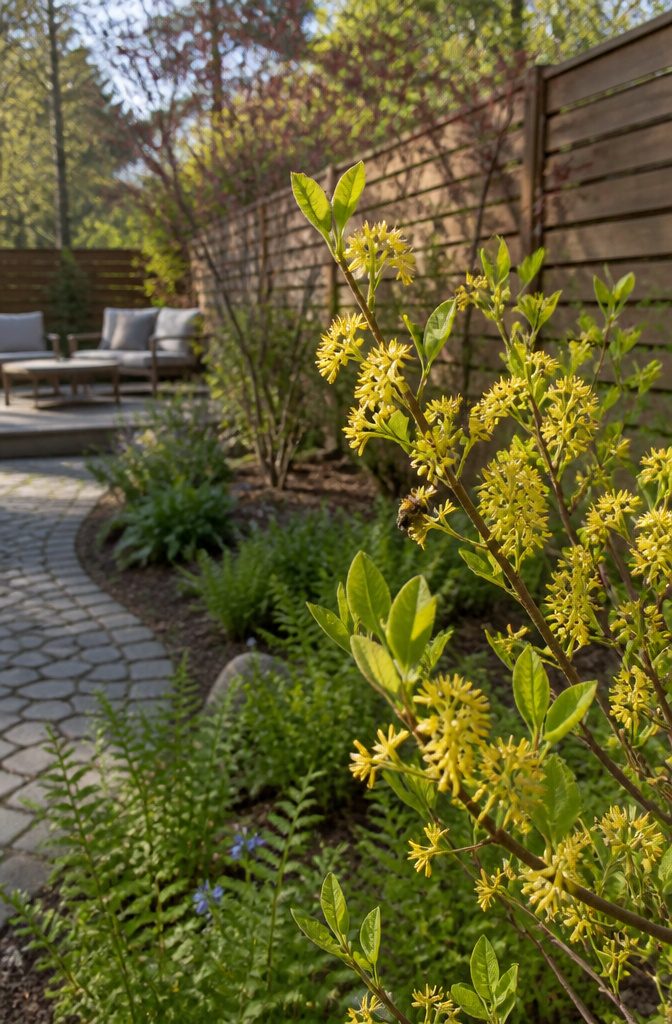
Spicebush, Lindera benzoin, is one of the first shrubs I look for when I’m trying to time a pollinator garden right. Its pale yellow flowers open in March or April, when almost nothing else is offering nectar, so bees and flies that have been waiting out winter descend on it immediately.
The shrub itself is understated: a broad, rounded deciduous plant, 6 to 12 feet tall, with light green leaves that turn bright yellow in fall. It prefers moist, well-drained soil and partial shade, though it will take full sun if you keep the roots from drying out. What sold me on making space for it is the swallowtail connection. Spicebush swallowtail butterflies need it, specifically, to raise their caterpillars, and so do Palamedes swallowtails and Promethea silkmoths. No spicebush, no spicebush swallowtails, simple as that.
You do need to plan for berries if you want them. The plant is dioecious, so a female needs a male pollinator nearby to set the red drupes birds go after. One male can cover several females if you cluster them, which also happens to make a better visual mass in a small border.
Buttonbush
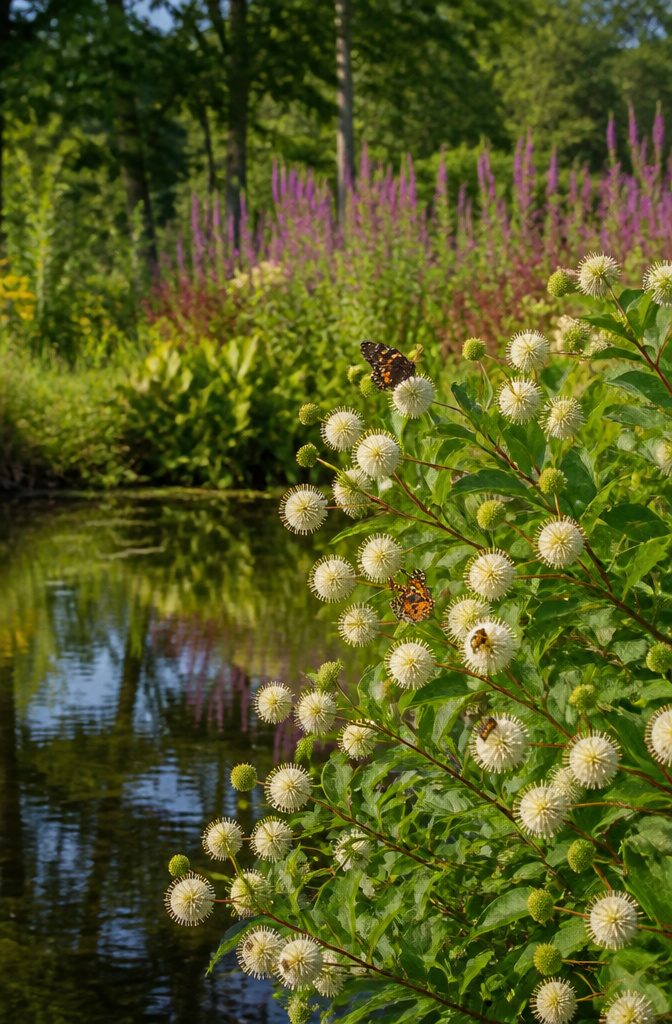
Buttonbush, Cephalanthus occidentalis, carries the folk name "honey ball" for a reason. The spherical, pincushion-like flower heads open in mid-summer and draw native bees, honey bees, butterflies, moths, and hummingbirds in numbers that make the shrub hum with activity. For gardeners working a damp corner, a low spot that pools after rain, or even a true wet area, this is the plant that turns a problem site into a pollinator station.
The shrub runs 6 to 12 feet, multi-stemmed and loose in habit, so it needs room. Light shade to full shade suits it best, and "wet feet" are not a liability here; they are the condition it expects. One thing that convinced me, reading through the sources, was the specificity of the moth list: adult titan sphinx and hydrangea sphinx moths feed on these flowers, not just the usual generic pollinator label. That kind of detail signals a plant with real ecological weight.
After flowering, the heads turn to red fruit with clustered nutlets. Waterfowl and songbirds, more than 50 species documented, pick them through fall and winter. Plant buttonbush where the soil stays moist, and it will outwork most of your dry-land choices for pollinator value.
Winterberry
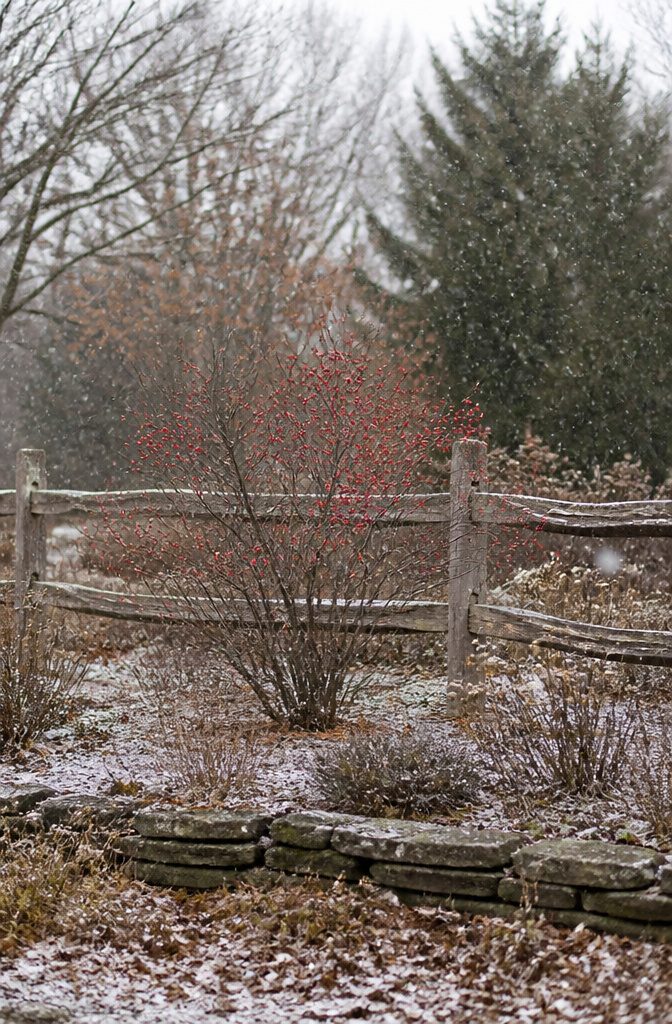
Ilex verticillata, the winterberry, taught me the hard way that pollinator shrubs can serve two masters. The first year I planted one, I waited through fall for berries that never came. A neighbor clued me in: winterberries are dioecious, so you need both a male and a female plant for fruit. The greenish flowers that open in late spring and early summer are easy to overlook, but butterflies, honey bees, and other small pollinators find them anyway. Henry’s elfin butterfly uses the shrub as a host plant.
A mature winterberry hits 6 to 10 feet and handles anything from shade to full sun, though it roots naturally along damp woodland edges. The berry display is worth the planning: once pollinated, female shrubs hold those bright red fruits through winter, feeding cedar waxwings, grosbeaks, and orioles when little else remains. For a small yard, check the University of Connecticut Plant Database for named cultivars sized to tighter spaces.
Summersweet
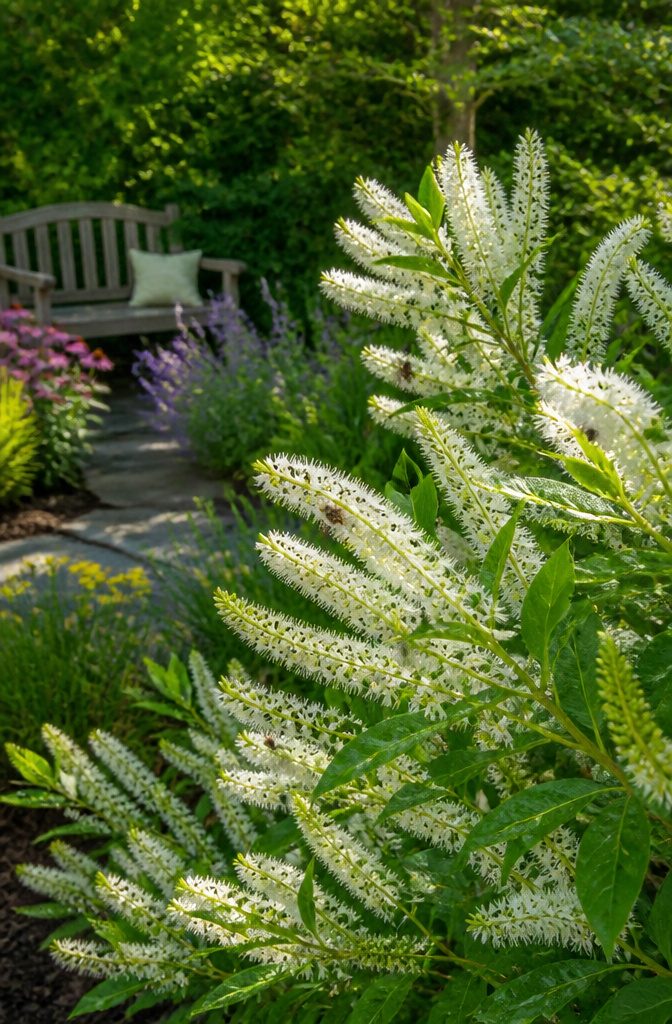
Clethra alnifolia, the shrub most people know as Summersweet or sweet pepperbush, earned both names from the same trait: a sweetness in its nectar that draws pollinators in when little else is blooming. White or pink flower spikes, 3 to 6 inches long, open from mid-summer to late summer and carry both nectar and pollen at a time when the early-season shrubs have already finished.
The plant supports bees, butterflies, and hummingbirds, and its clumping habit typically reaches about 6 feet, though it can stretch to 12 feet when conditions are ideal. Moist, acidic soil in full sun to partial shade is what it wants, and because flowers bud on new growth, a hard pruning every year or two keeps it vigorous rather than leggy. It stays largely free of pests and disease, though dry spells will weaken it fast enough to notice.
Itea Virginia Sweetspire
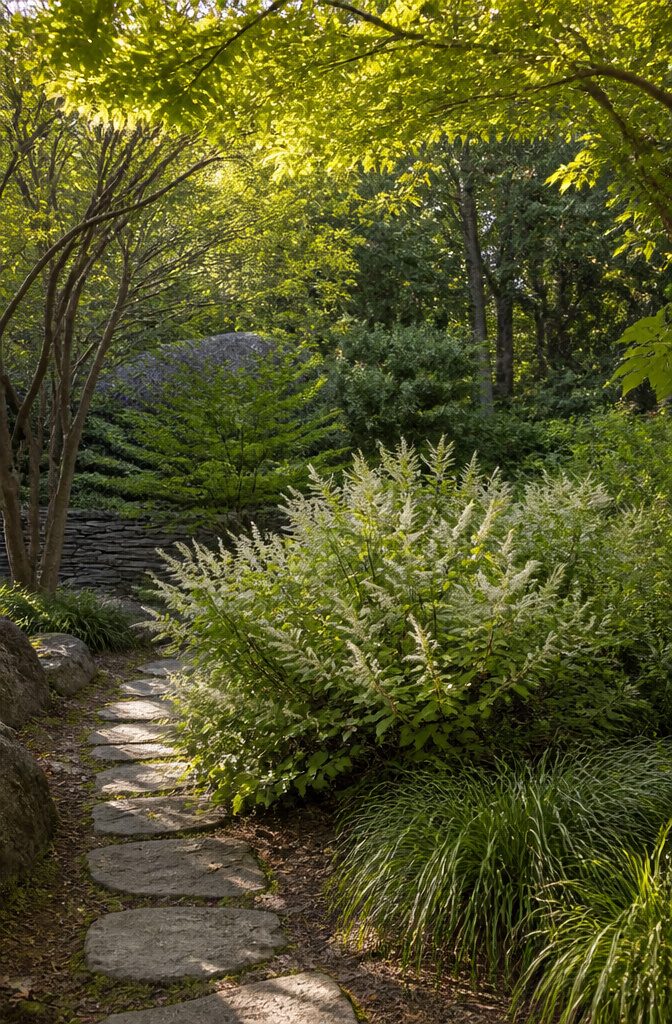
Itea virginica, the Virginia sweetspire, sends out fragrant white flower spikes in early summer that pull in bees steadily through June. The straight species can stretch 6 to 12 feet, which puts it out of reach for most patio plots, but growers have shrunk it down without sacrificing the pollinator appeal. ‘Henry’s Garnet’ holds to 4 or 5 feet, while ‘Scentlandia’ and ‘Little Henry’ pack the same flower power into 2 to 3 feet, a scale that actually fits a small border or a balcony edge.
The fall color is where this shrub earns its keep after the bees move on. Sources note the foliage turns red, giving you a second season of interest when other early-summer bloomers have gone dull.
I treat the height spread as the real decision point here. The straight species belongs at the back of a larger bed where it can arch and spread; the dwarf cultivars slot in where space is tight and you still want that June buzz. Either way, you are getting a native that feeds pollinators when spring flowers are already spent and feeds your own eye come October.
Ninebark
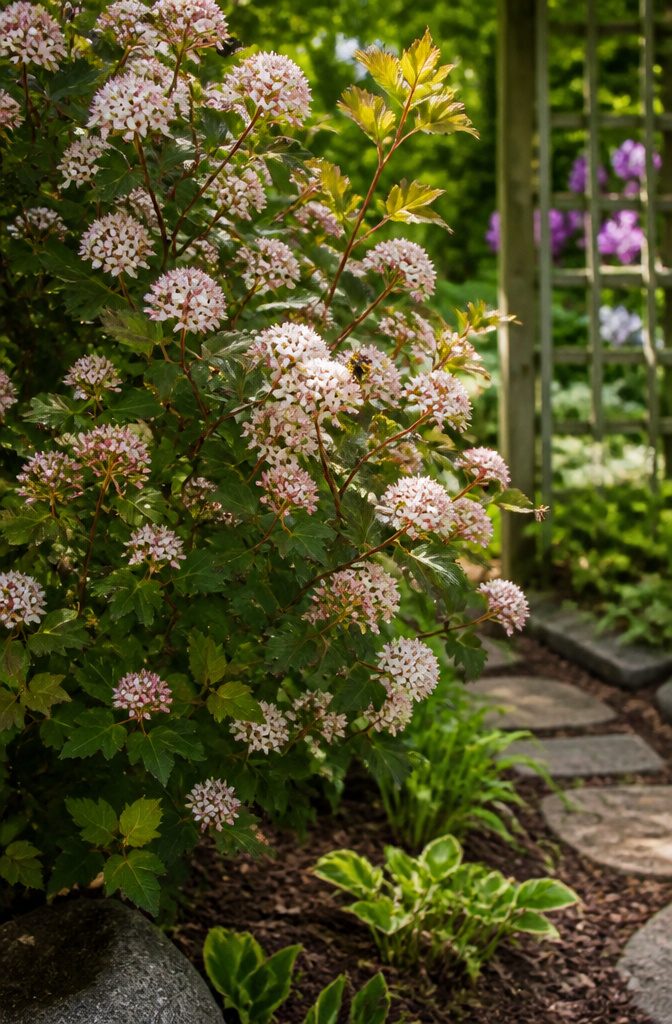
Common ninebark, Physocarpus opulifolius, flowers in May and June with clusters of white to pink blooms that bring in bees and other pollinators right when the early-summer garden is hitting its stride. The straight species can reach 6 to 12 feet, which is a lot of shrub for a small yard, though nurseries do stock compact cultivars if you need something tighter. I have not grown this one myself, but the timing of its bloom window appeals to me; it fills that gap after the spring rush and before the late-summer perennials kick in. If you are working a patio or a narrow border, check the tag for mature height before you plant, or you will be pruning away the very flowers you put it in for.
Serviceberry
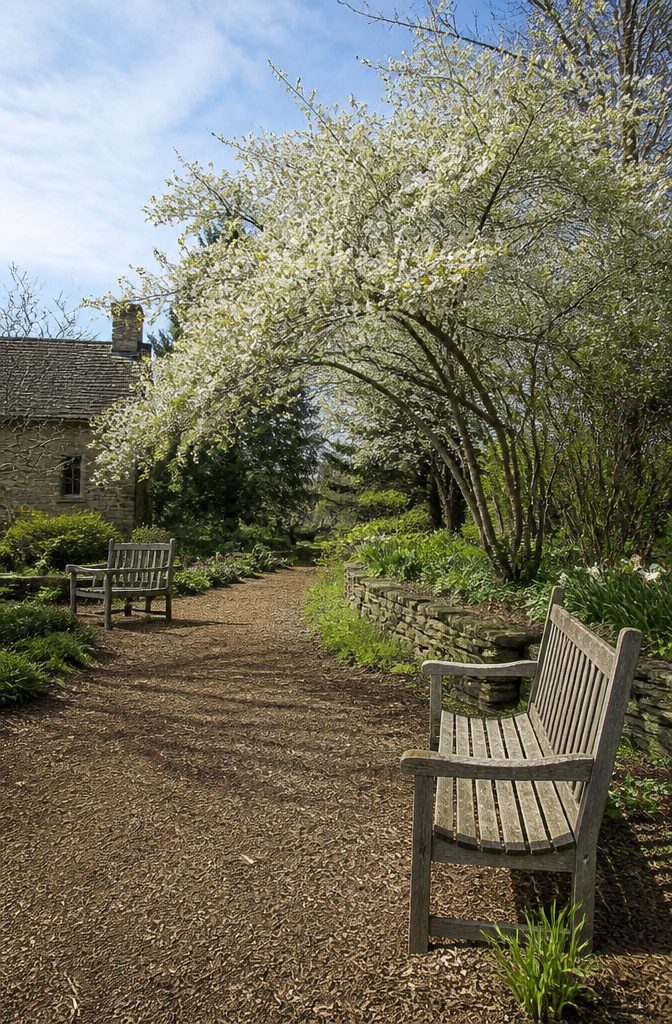
Amelanchier species, commonly called serviceberry, open with white blossoms in early spring when the garden calendar still looks bare. That timing matters: native bees emerge on cool March and April mornings before most perennials have broken dormancy, and the nectar and pollen those flowers carry can be the first reliable meal an emerging colony finds. A single shrub or small tree carries more bloom than a whole bed of later perennials, and the woody structure itself gives ground-nesting bees the bare soil and leaf litter they need for shelter through the year.
The fruit that follows in June is edible, though in my yard the birds usually announce ripeness before I do. Serviceberry runs 15 to 25 feet, tolerates sun to part shade, and fits comfortably against a patio edge or as an understory layer where taller trees already cast light shade. In USDA Zone 7a and colder zones it is fully hardy, and the seasonal sequence, flower to fruit to fall color, gives you something to track across months rather than weeks.
Eastern Redbud
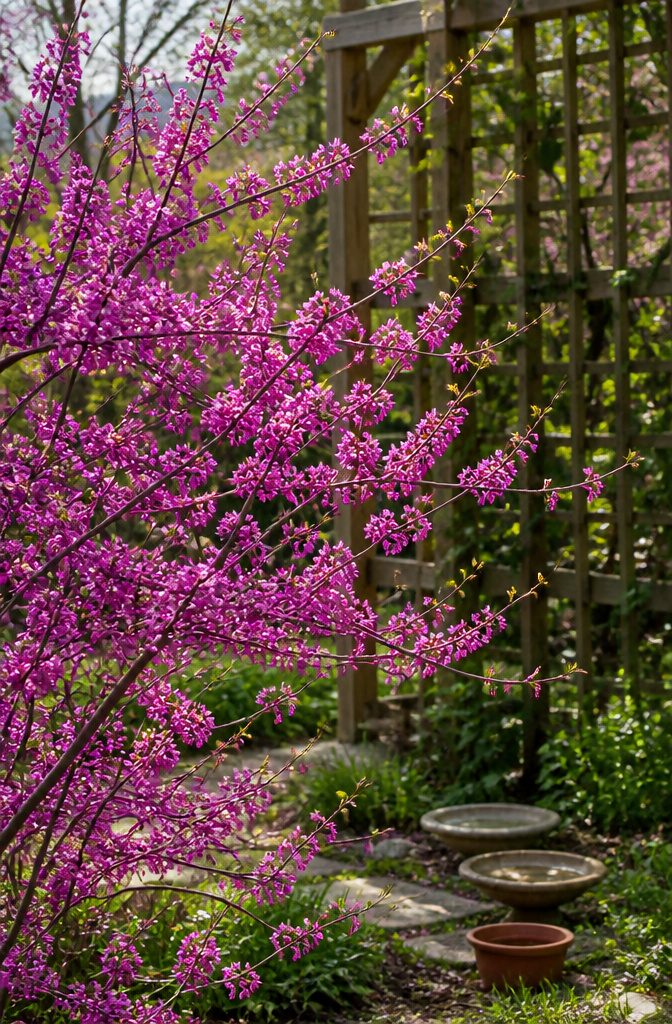
Cercis canadensis is the shrub-sized tree that solves the early spring problem most pollinator gardens face: nothing is blooming yet. Before my perennials even break dormancy, the eastern redbud’s rose-purple flowers open directly on bare branches, giving carpenter bees, leafcutter bees, mason bees and other solitary bees their first reliable nectar source of the year.
The tree stays small enough for patio gardens at 20 to 30 feet, and it handles partial shade where many flowering shrubs would sulk. I plant it where I can see it from the kitchen window, because the bloom window is brief and easy to miss if you are not watching for it. The butterflies arrive a few days after the bees, once the temperature steadies.
Sun to part shade suits it, and the native range covers much of the eastern United States. One warning from my own impatience: buy the smallest specimen you can find. A redbud in a pot looks tempting at five feet, but the smaller ones establish faster and catch up within two seasons.
Black Chokeberry
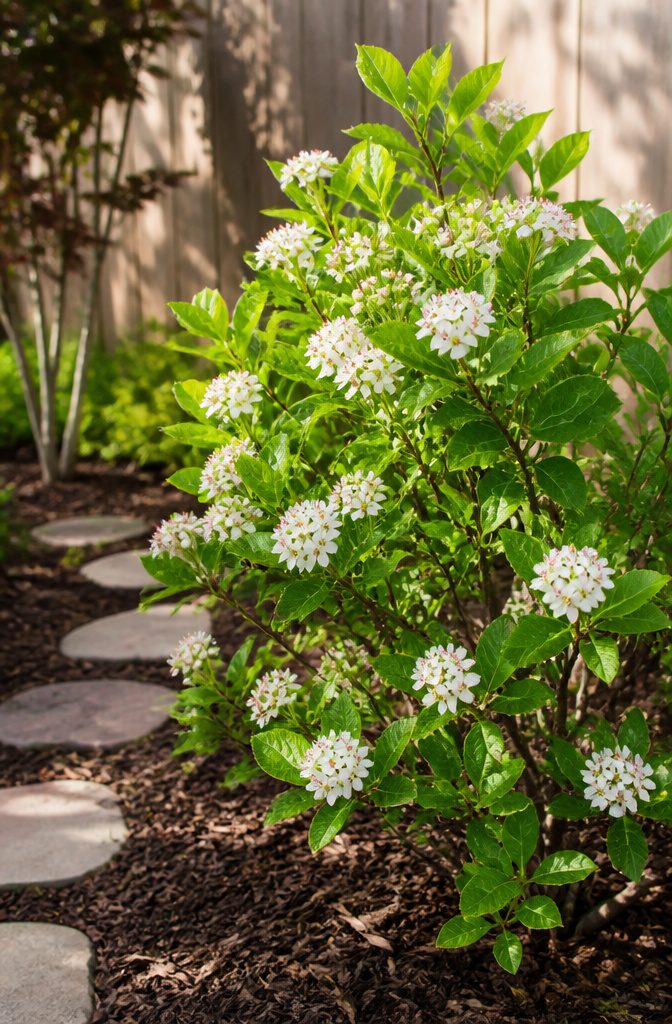
Aronia melanocarpa, the black chokeberry, is one of the earliest shrubs to open its flowers in spring, blooming from March to April when few other plants are offering nectar. Those clusters of white flowers draw bees and other pollinators at a hungry moment in their season, and the pink pollen that crowns each bloom makes the plant easy to spot in garden centers.
I planted a straight species chokeberry three years ago without checking its mature height. It is now pushing past six feet and shading a corner I had meant for sun-loving perennials. For smaller yards or border plantings, the ‘Low Scape Mound’ cultivar stays at 1–2 feet, solving the space problem I created for myself.
The dark purple berries ripen late summer and hang into fall, feeding birds and, if you beat them to it, supplying fruit notably high in antioxidants. The foliage turns red as the berries darken, so the shrub earns its ground for months after the pollinators have moved on.
Viburnum
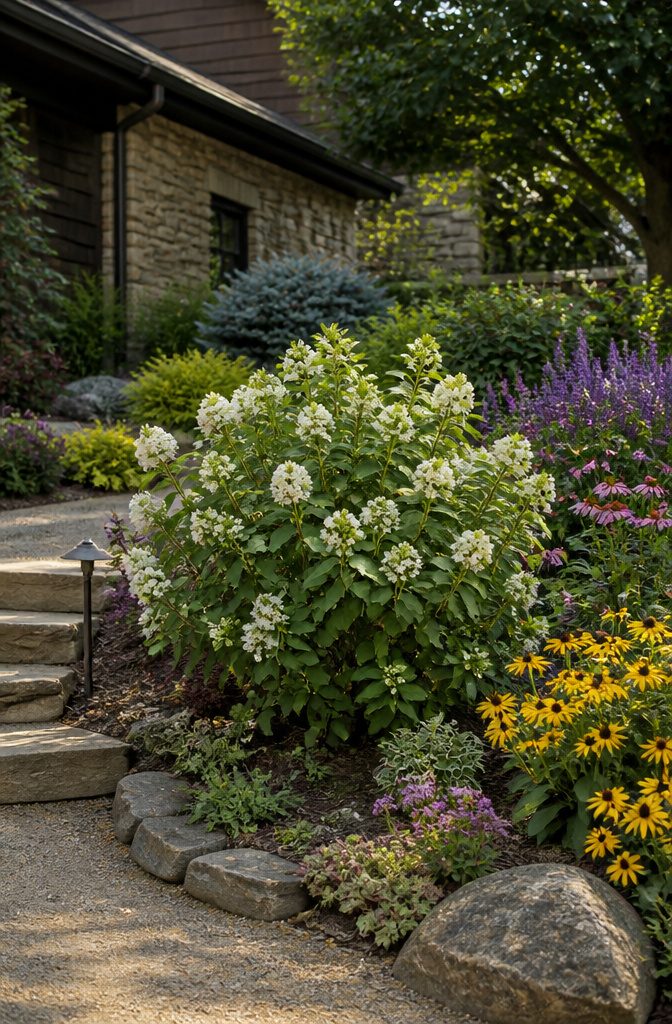
Viburnum is a genus with enough variety to fill several seasons. Black haw, Viburnum prunifolium, opens early, flowering from March to April when little else is available for pollinators emerging from winter. The flat-topped clusters of tiny white blooms are built for access; bees and butterflies land and feed without gymnastics.
Later species carry the same structure through May and June. The flat-topped flower clusters make every floret reachable, which matters more than flower size for the small pollinators doing the actual work.
What sold me on making room for one was the second act. After the bloom, viburnum sets fruit that ripens to blue-black drupes birds strip by late summer. One shrub feeds two guilds of visitors in sequence, which stretches the value of limited space. The straight species run 6 to 12 feet, so I keep mine in a corner where height is an asset, not a pruning problem.
Wild Rose
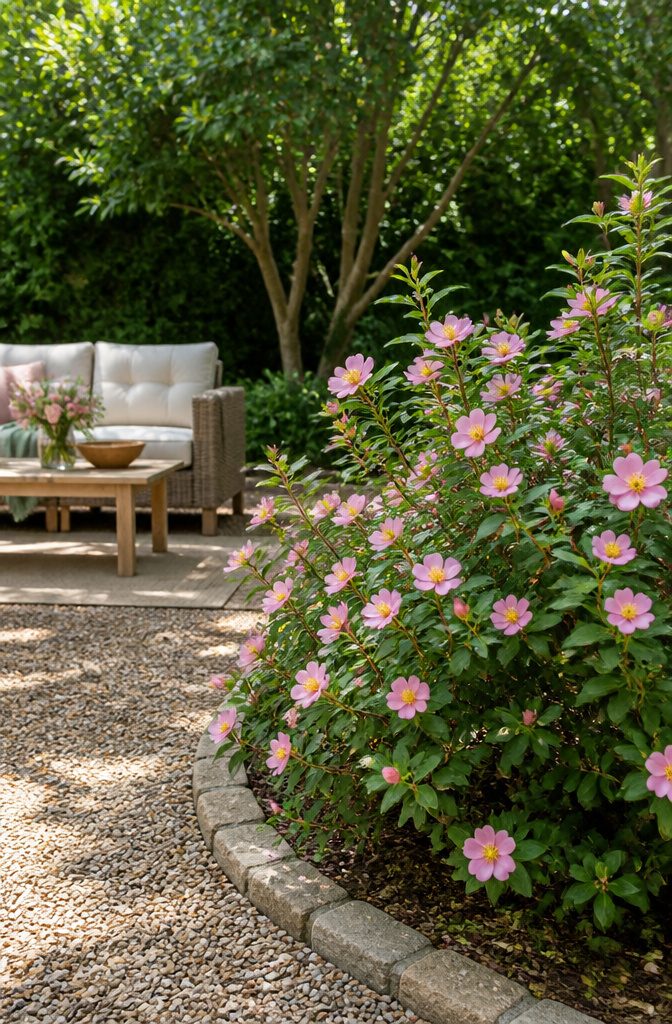
Rosa species carry single, open blooms with just five petals, and that simple structure is exactly what makes them accessible to native bees in a way double-flowered garden roses are not. Those packed modern cultivars force insects to fight through layer after layer of petals for pollen and nectar that may not even be there anymore after so much breeding. Wild roses like Rosa gallica or Rosa rugosa leave the food right on display. Bees and bumblebees arrive in numbers, and the shrubs finish the season with hips that feed birds while the dense branching shelters hedgehogs through winter. The low-maintenance habit helps too, especially for a gardener still learning what survives on a small budget. Plant one where it can spread a little, and let it stay standing through fall rather than cutting it back clean.
Mock Orange
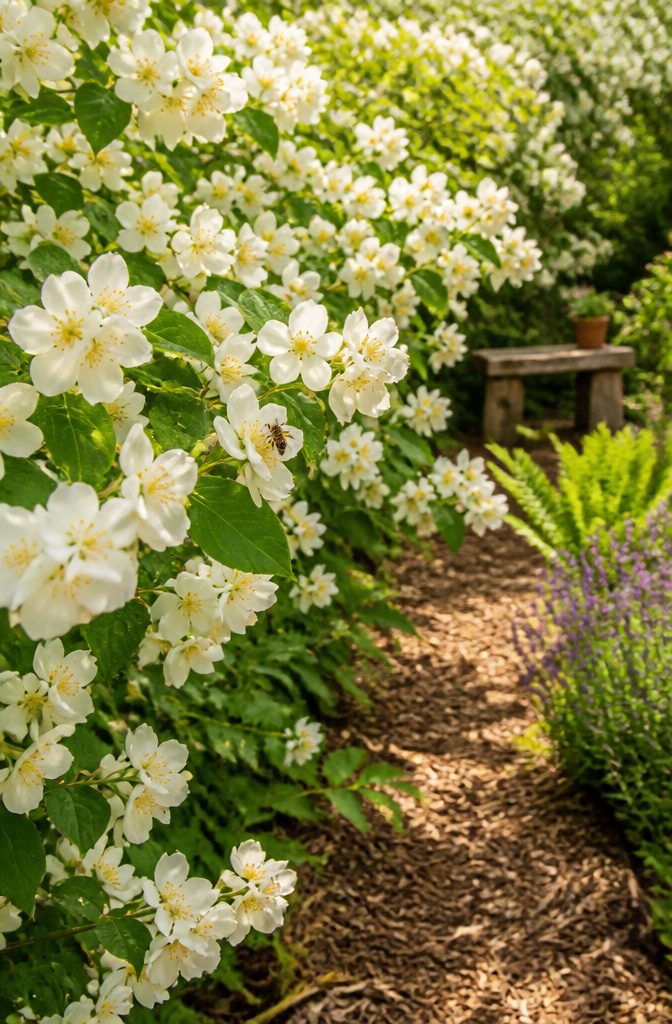
Philadelphus coronarius, the mock orange or English dogwood, fills a late-spring slot that few pollinator shrubs manage. The white flowers open in late May with a fragrance heavy enough to carry across a small yard, and the bees arrive in numbers that make the shrub audible before you see it.
I planted mine too close to the patio door the first time. The scent pooled against the house and turned cloying by the third morning. Six feet of clearance on the open side of a bed gives the fragrance room to drift and the bees their own airspace. The plant wants that space anyway; its branches arch and spread to about six feet across once settled, and cramming it against a wall just means more pruning for you and fewer flowers for them.
The flowers last roughly two weeks, which sounds brief until you notice what else is blooming in that gap between spring bulbs and summer perennials. In my yard it bridges the lull when the early fruit trees finish and the butterfly bush is still thinking about opening. The mock orange carries that handoff alone.
Hardiness runs to zone 4, though a late freeze after a warm spell can brown the buds. Mine has shrugged off two such years with only the top third affected; the lower branches bloomed on schedule and the bees never noticed the difference.
Bluebeard
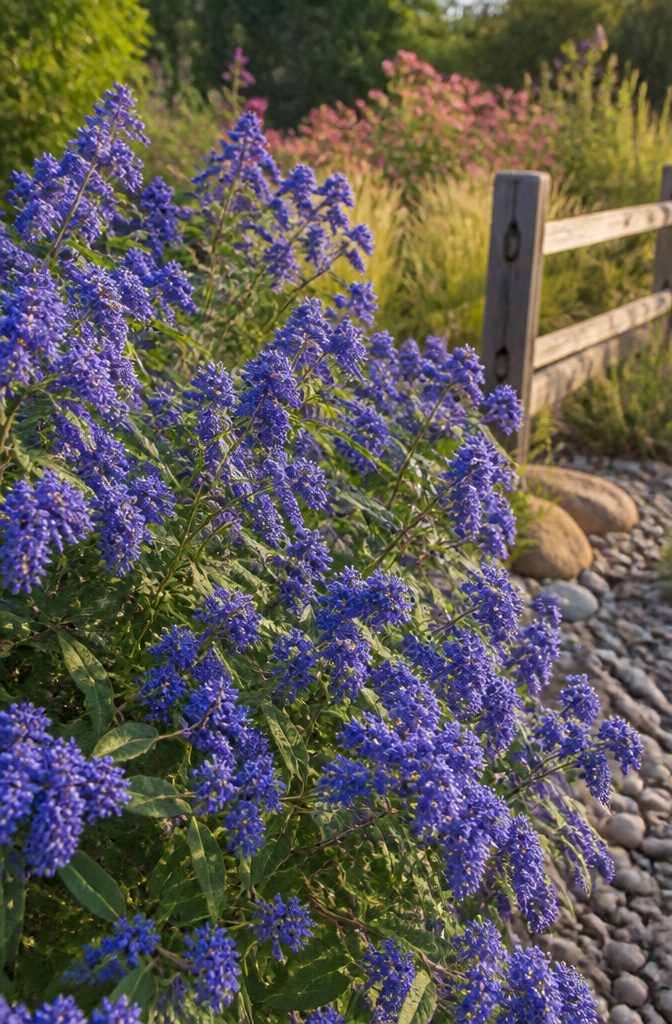
Caryopteris clandonensis, the bluebeard I planted along my patio edge three years ago, finally answered the question of what keeps bees fed after the coneflowers quit. From July until first frost, this shrub covers itself in clusters of small blue flowers so dense the stems disappear. The scent carries, something between mint and camphor, and the grey-green leaves underneath stay tidy enough that I never feel guilty about the space it takes.
The timing matters more than the color. By late August my yard has mostly seedheads and tired annuals. Bluebeard is just hitting its stride then, offering nectar and pollen when competing sources have dried up. I have watched bumblebees work the same flower cluster for ten minutes straight, methodical and apparently unworried by me nearby.
It wants sun and soil that drains, nothing special beyond that. I shear mine back hard in spring, almost to the ground, because flowers form on new wood and the shrub gets leggy otherwise. The regrowth is fast; by June you would never know I cut it.
Hawthorn
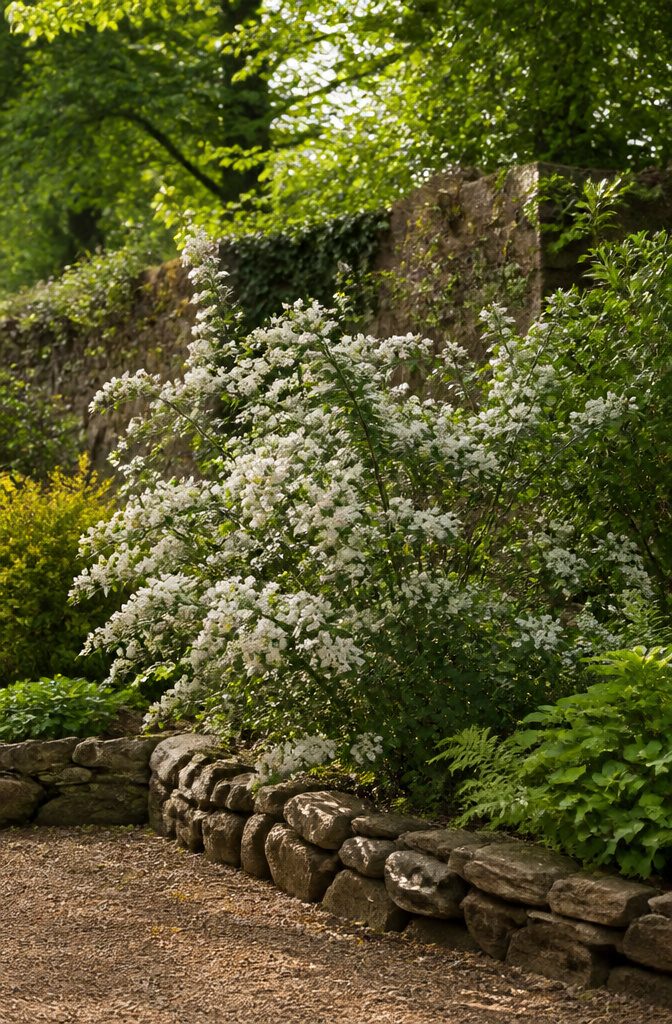
Crataegus species, the hawthorns, carry dense clusters of small white flowers in late spring that pull in bees and other pollinators by the dozens. The flower structure helps: single to semi-double rows of petals leave the reproductive parts exposed, so insects can reach pollen and nectar without fighting through a ball of petals.
The thorny branches are half the reason I keep hawthorn on my list. Songbirds nest in the dense, spiny cover and feed on the fall fruit. One shrub, two functions; that matters when every square foot of a small yard has to earn its place.
Hawthorn also tolerates poor soil, heat, and drought once established. In my reading, that combination of toughness and heavy bloom makes it one of the more low-maintenance shrubs for pollinators bees butterflies gardeners can add without babysitting through summer dry spells.
Snowberry
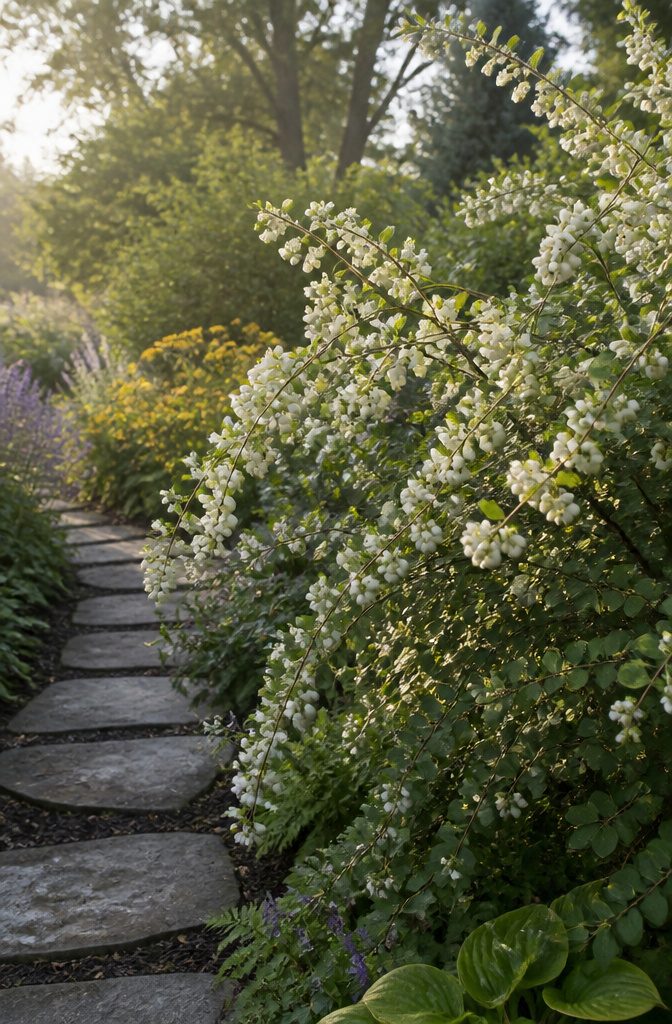
Symphoricarpos albus var. laevigatus, the common snowberry, carries its weight in pollinator gardens with a quiet usefulness that took me a while to appreciate. The small, bell-shaped flowers that open between June and September are easy to miss at first glance, almost hidden under the long, arching branches. Bees and bumblebees find them anyway, drawn to nectar that makes up for what the blossoms lack in showiness.
What sold me was the second act. Those flowers give way to clusters of white berries starting in June, and the fruit does not drop. It stays on the shrub through winter, turning a bare garden into something alive when everything else has gone dormant. Birds will pick at them eventually, though the berries are not their first choice, which means the display lasts longer than it would with a more popular fruit.
Snowberry spreads by suckers, so give it room or be ready to pull runners. It tolerates shade, poor soil, and dry spells once settled, making it one of the few pollinator shrubs that thrives in the awkward corners of a small yard where nothing else wants to grow. For a gardener working a tight space on limited time, that forgiving nature matters as much as the bee traffic.
Cornelian Cherry
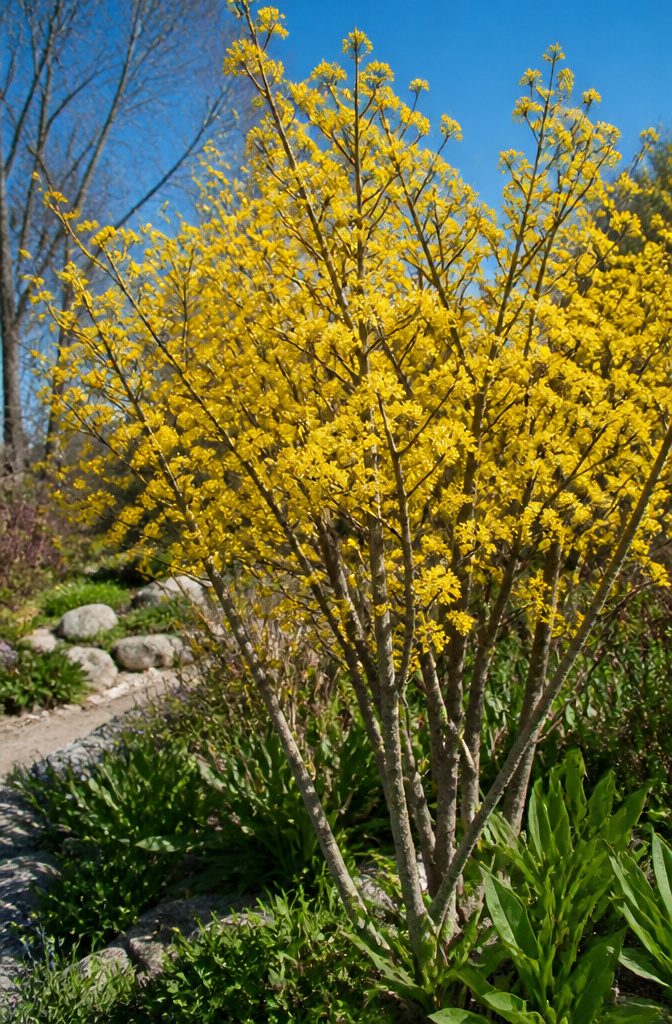
Cornus mas, the Cornelian cherry, is one of the first shrubs I look for when I’m trying to extend the season backward for bees in my own planning. Its lemon-yellow flower umbels open as early as February, a point in the year when few other plants are active and overwintered bees are desperate for both pollen and nectar to rebuild colony strength.
The common name is misleading; this is a dogwood, not a true cherry, though the summer fruits do turn a glossy red like one. What matters to pollinators is that February bloom time. I’ve stood in garden centers in March wondering where all the foraging bees were, and the answer is often that the early bloomers got planted too far apart or not at all. A Cornelian cherry in the right spot can bridge a six- to eight-week gap when natural forage is essentially absent.
Hardiness is broad, generally zones 4–8, and the shrub matures to roughly 15–20 feet if left unpruned. I treat mine as a small tree with lower branches removed, which puts the early flowers at eye level for watching bee activity on still-cold mornings. The fruit is edible but tart; I leave it for birds and focus my own use on the wood and the spring show. One placement note from watching mine: south-facing sites speed that critical February bloom by a week or two versus shaded positions, which can push flowering into March and narrow the advantage.
Blackberry
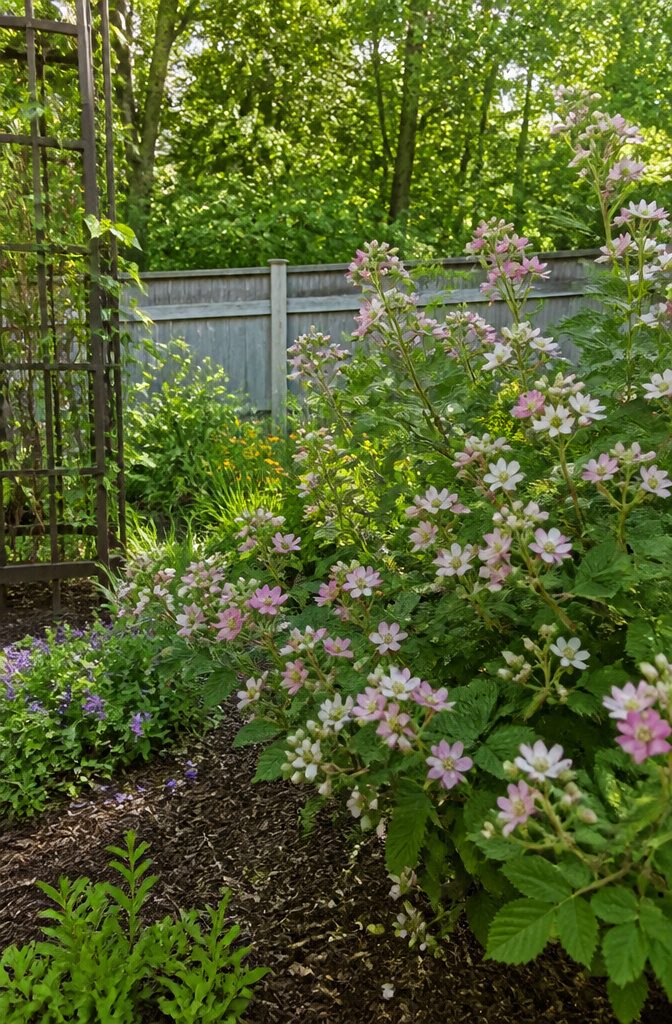
Blackberry can be an awkward plant to work into a small space, but the payoff is a shrub that feeds you and the pollinators both. Rubus species send out white or pink blossoms in spring that draw bees in large numbers; the flower structure leaves the reproductive parts exposed, which makes access easy rather than forcing bees to wrestle with layered petals. What follows is a long season of fruit.
The practical challenge is the thorns and the spreading habit. A single cane roots where the tip touches soil, so a two-foot planting becomes a six-foot thicket in two seasons unless you cut back hard or grow against a fence you can tie canes to. I have seen growers keep blackberries productive for fifteen years on the same row by shovel-pruning the suckers every March and cutting spent canes to the ground after harvest.
The pollen and nectar value ranks high among berry bushes, and the flowering period runs from May into August on established plants. That span overlaps with early and late bee species both. If your budget has room for one fruiting shrub and you want pollinator traffic, blackberry covers both needs without extra planting space.
Planting for Season-Long Bloom
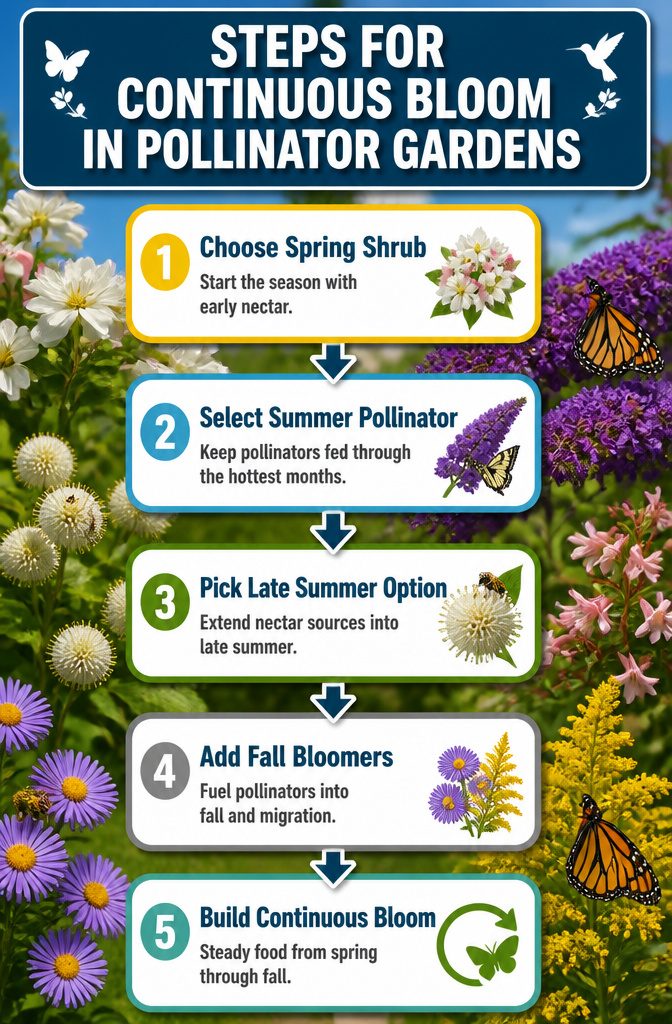
The single most important rule of a pollinator garden is continuous bloom. Pollinators are active from the first warm days of spring through the first hard frost, and they need food the entire time. A garden that peaks for two weeks in July and goes quiet the rest of the year does far less good than one with steady, season-long bloom.
Ground Hug aronia opens the season in mid to late spring with nectar-rich white flowers dotted with pink pollen, providing an early meal for insects just emerging from dormancy. For summer’s main stretch, ‘Miss Violet’ butterfly bush carries the load; its purple blooms run long enough to feed butterflies and hummingbirds through the hottest months. Come late summer, Sugar Shack buttonbush takes over with its own nectar supply, while abelia’s tubular flowers keep nectar flowing throughout the growing season.
Fall bloomers are the most overlooked and among the most important. Aromatic aster and showy goldenrod carry purple and yellow blooms into September and October, fueling native bees building winter reserves and migrating monarchs heading south. These keystone plants support more pollinator species than almost any other group when little else is open.
Choose at least one shrub from each window: spring, summer, and fall. Three well-chosen plants beat a dozen that all flower at once.
Clustering and Garden Layout
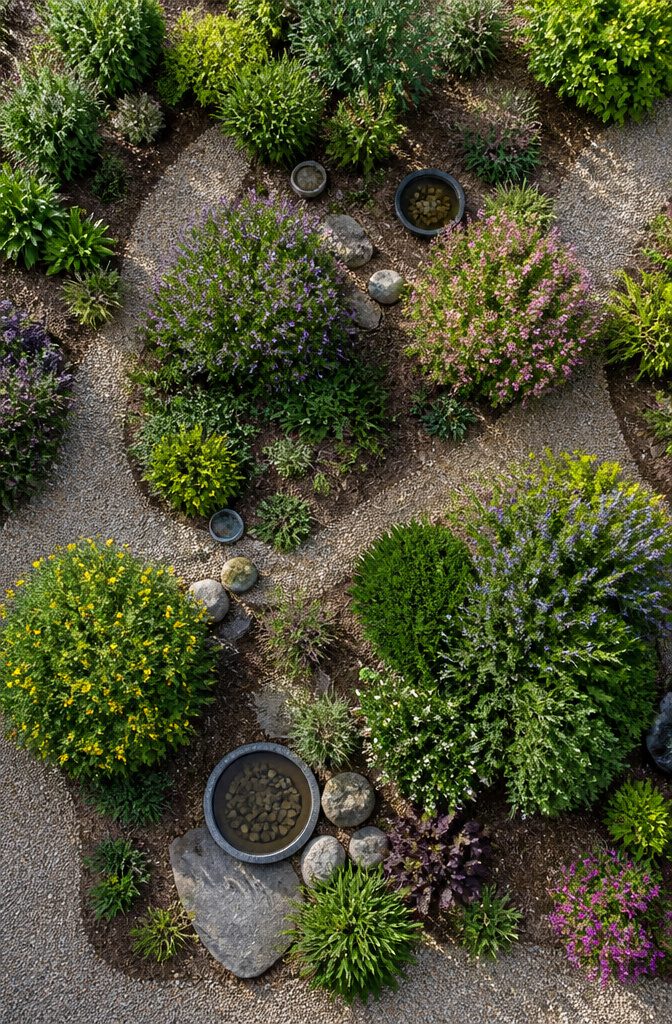
One blueberry bush in a corner of the yard is a pretty sight, but from a bee’s point of view it might as well be invisible. Cluster shrubs in patches large enough to register, roughly three feet across or more, so pollinators can spot the color and scent from the air and land with purpose. I learned this the hard way after spacing my first shrubs like fence posts, each one lonely and rarely visited; the year I grouped three viburnums together, the buzz started before the coffee was ready.
Leave some ground bare on well-drained slopes, undisturbed and unmulched, for the solitary bees that nest in soil. A shallow dish or birdbath with an inch of clean water, refilled regularly, gives bees and butterflies a place to drink without the drowning risk of a deep bowl. If mosquitoes are a worry, a small solar circulator breaks the surface just enough to keep them from laying eggs.
Pesticides stay off the list entirely. What convinced me, reading through a dozen of these guides, was how little chemical intervention a shrub border actually needs once it is established. The shrubs themselves attract the predatory wasps and beetles that handle pest control for you.
Matching Shrubs to Your Conditions
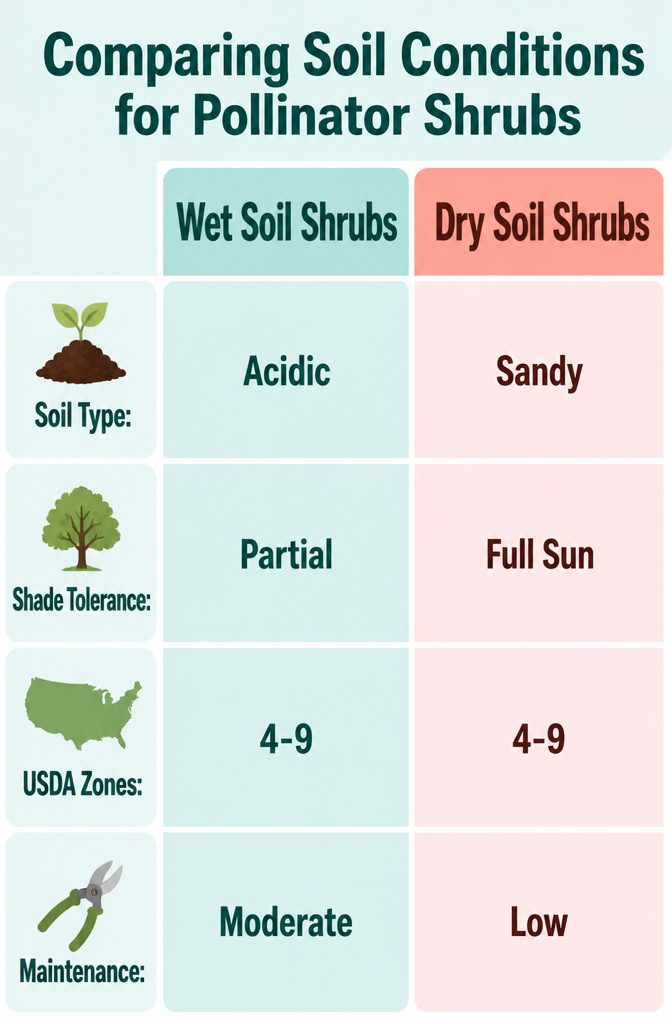
Soil that stays soggy after rain and soil that drains in hours need different shrubs, and guessing wrong means replacing a dead plant the next spring. Start with a shovel test: turn over a patch and squeeze a handful. Clay holds its shape; sand falls apart. Your county’s soil mapper fills in what the eye misses.
Summersweet handles wet, acidic ground and partial shade, which makes it one of the few pollinator shrubs for that troublesome corner where nothing else thrives. Buttonbush also tolerates moisture but wants more sun. New Jersey Tea and American Holly sit at the other end: they take drier soil and full sun. Spicebush bridges the gap, growing in partial shade with moderate moisture.
USDA zones matter as much as soil. Most of these shrubs cover Zones 4 through 9, but southern gardeners in Zone 7a and warmer should check heat tolerance before buying a plant labeled only to the cold end. I match the shrub to the spot, not the spot to the shrub: the right plant in the wrong conditions just becomes expensive compost.
Frequently Asked Questions
What are the best native plants for pollinators?
The best native shrubs for pollinators include buttonbush, spicebush, winterberry, summersweet, Virginia sweetspire, ninebark, and serviceberry. These plants evolved alongside local bees and butterflies, so their nectar, pollen, and leaves match what native insects can actually use. Many also serve as host plants for butterfly and moth caterpillars.
Why are native plants better for pollinators than non-native plants?
Native plants evolved alongside local pollinators, so they provide the exact nectar, pollen, and habitat those insects need. Many native bees are specialists that can only process pollen from specific native plants, and most butterfly caterpillars can only eat host plants they co-evolved with. Native shrubs also shrug off local pests and weather better than non-native ornamentals, which means less maintenance for you.
What is the difference between a host plant and a nectar plant?
A nectar plant feeds adult bees and butterflies with sugary nectar, while a host plant feeds caterpillars with its leaves. Milkweed is the classic example: monarch adults sip nectar from many flowers, but their caterpillars eat milkweed leaves and nothing else. A complete pollinator garden needs both kinds so it supports the full life cycle from egg through adult.
When should I plant a pollinator garden?
Spring or fall is the best time to plant so shrubs have time to establish roots before extreme weather hits. In either season, get plants in the ground while temperatures are moderate and rainfall is more reliable. Avoid planting in the heat of summer or when the ground is frozen.
Do I need a big yard to help pollinators?
No, even a small patio border or containers can support pollinators. Compact cultivars like Funshine Abelia, Ground Hug Aronia, Miss Violet Butterfly Bush, and Bloomerang Dwarf Lilac are bred to fit tight spaces while still feeding bees and butterflies. The key is choosing plants scaled to your space rather than skipping pollinator plants altogether.






