SunPatiens are hybrid impatiens bred for full sun tolerance and downy mildew resistance, but they still need at least four hours of direct light daily to bloom well. Less sun means leggy growth and few flowers, no matter how well you water. I learned that the hard way after planting them under a tree like the old shade impatiens my grandmother grew.
Where SunPatiens Want to Live
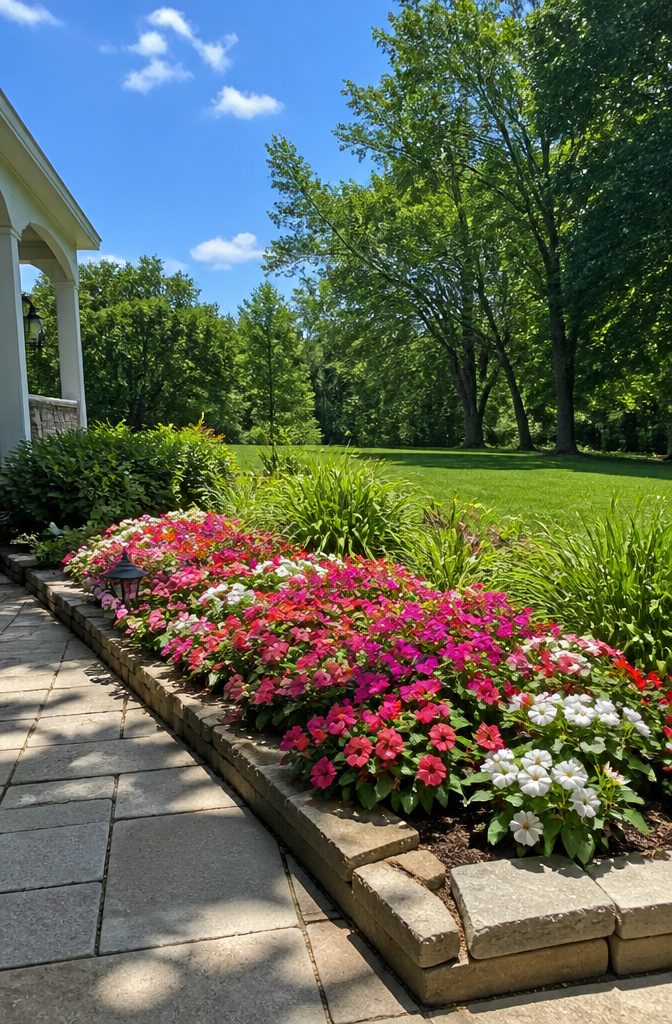
SunPatiens need at least four hours of direct sun each day to keep the flowers coming. Less than that and the blooming drops off fast. Full sun is where they really hit their stride, pumping out color from late spring straight through the first hard frost.
The name is the giveaway, but I still see gardeners tucking them under trees like the old shade-loving impatiens their grandmothers grew. That is the fastest way to end up with leggy stems and a handful of petals. Four hours is the floor, not the recommendation.
If your only spot is partial shade, the variegated leaf varieties still earn their keep. The foliage carries the show when the light is too thin for steady blooms.
SunPatiens bloom best with at least four hours of direct sunlight a day or in dappled sunlight. Expect fewer blooms in the shade.
So count the hours your target bed actually gets before you buy. Morning sun counts the same as afternoon, and dappled light through a high canopy can be enough. Deep shade under a porch or a dense maple is not.
Soil That Holds Water Without Drowning Roots
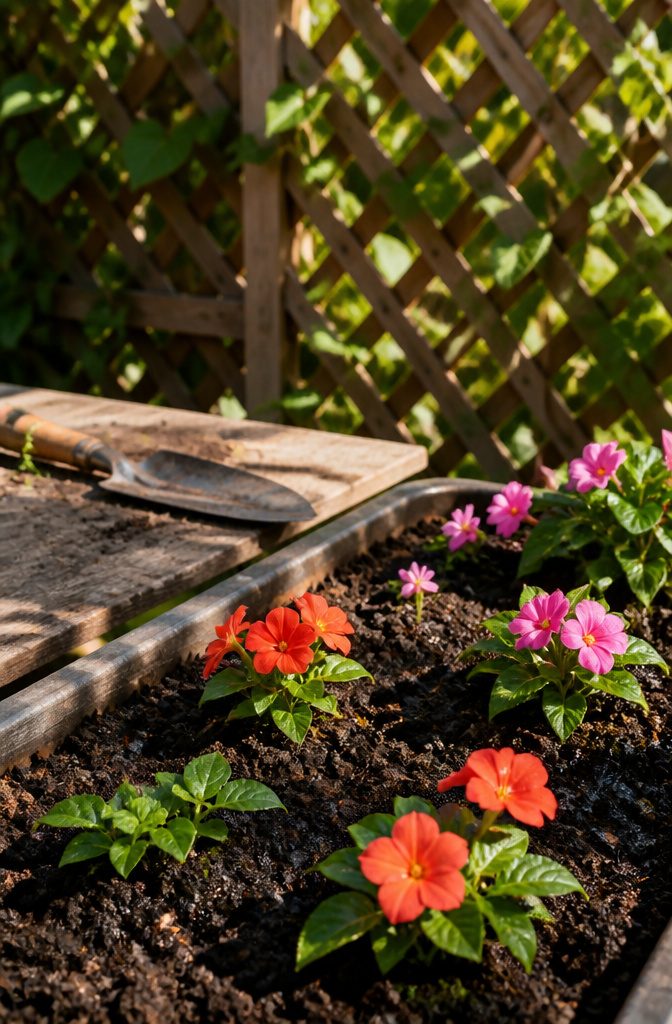
SunPatiens tolerate clay or sandy soil, but only after you amend it. Organic matter is what makes the difference between surviving and thriving. I loosen the bed six to eight inches deep, then work in compost, peat moss, or pine bark until it makes up roughly a tenth to a fifth of the volume. In heavy clay, that organic material opens up drainage; in loose sand, it slows the water down long enough for roots to drink.
The pH should sit between 5.8 and 7.0. Drift too far outside that window and the plant locks out nutrients no matter how much you feed. A cheap meter from the garden center settles any question in seconds.
If your ground is stubborn clay, coarse sand helps alongside the compost. If it is pure sand, extra compost is the only amendment worth bothering with. Skip the temptation to measure exact ratios; soil varies block by block, and your hand in the dirt tells you more than a recipe. When the amendment is right, the soil squeezes into a ball that crumbles when you poke it.
Planting After the Last Frost
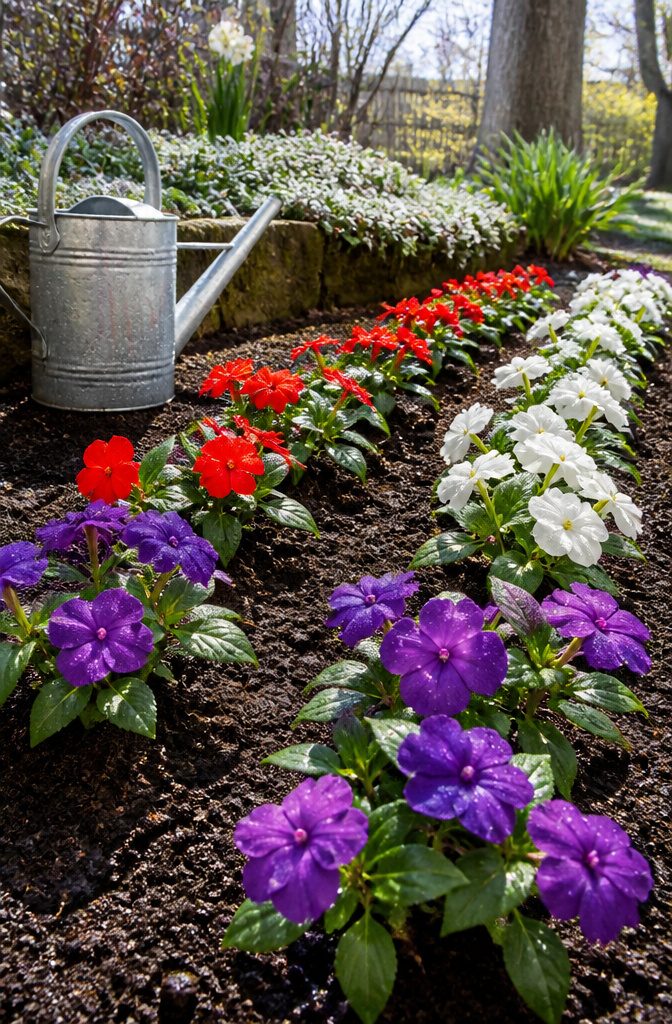
Soil temperature matters more than the calendar date. I wait until the ground has warmed to at least 60°F before setting out SunPatiens, even if the last frost date has technically passed. Cold soil stalls root growth and the plant never quite recovers.
Spacing depends on which series you bought. Compact varieties need 12–18 inches between plants, Vigorous types want 18–24 inches, and Spreading types need 24–36 inches to fill in properly. Crowding them buys mildew and leggy growth later.
The first two weeks after planting are when roots either take hold or fail. I water daily during this stretch, keeping the soil consistently moist without drowning the roots. After that fortnight, the roots have found their footing and I can back off to a normal schedule. Skip this early attention and the plant may limp through the season without ever thriving.
Watering Without the Mistakes I Made
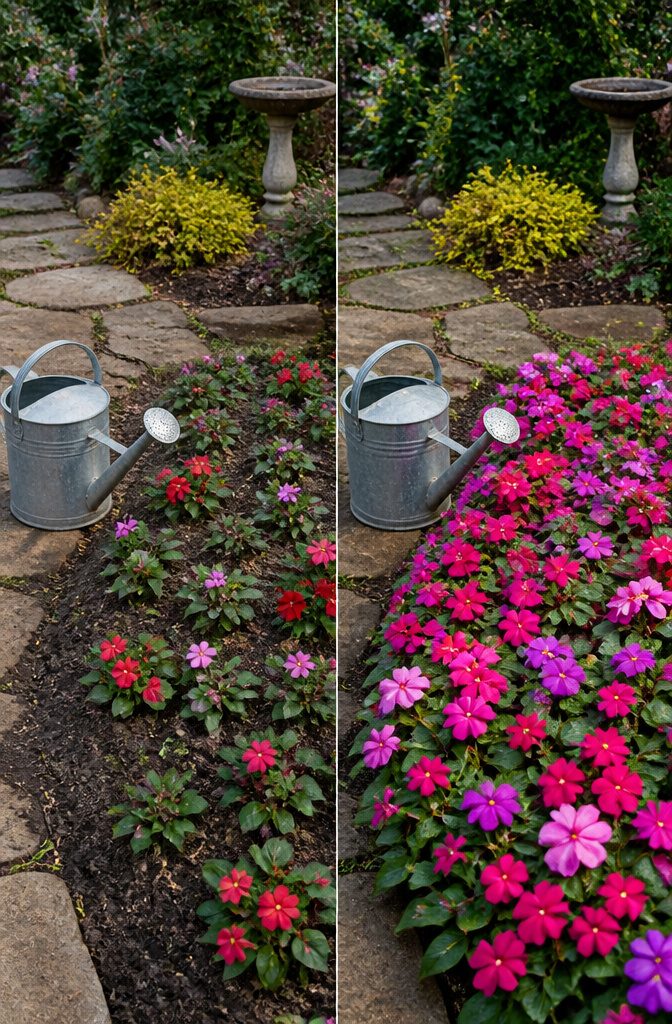
Water SunPatiens daily for the first two weeks after planting. That schedule gave me more trouble than any other part of growing them, because once those two weeks passed, I kept right on with the daily can out of habit. The roots had established by then, and I was drowning the soil while telling myself I was being attentive.
After those first weeks, check the soil surface before adding water. Let the top two or three inches dry. SunPatiens need less than traditional impatiens, which took me a while to trust. Letting them dry out completely is the other side of the mistake; the leaves will wilt by midday and brown patches will follow if you push it too far.
Morning watering works best. Water at the base of the plant, not overhead. Wet foliage in hot afternoon sun will scorch the leaves white at the edges, a bleached look that does not recover. I learned that after losing half a bed to what I thought was some new disease. It was just water sitting on leaves in sun.
Containers and hanging baskets dry fastest; in heat or wind, they may need water twice a day.
Feeding Lightly and Often Enough
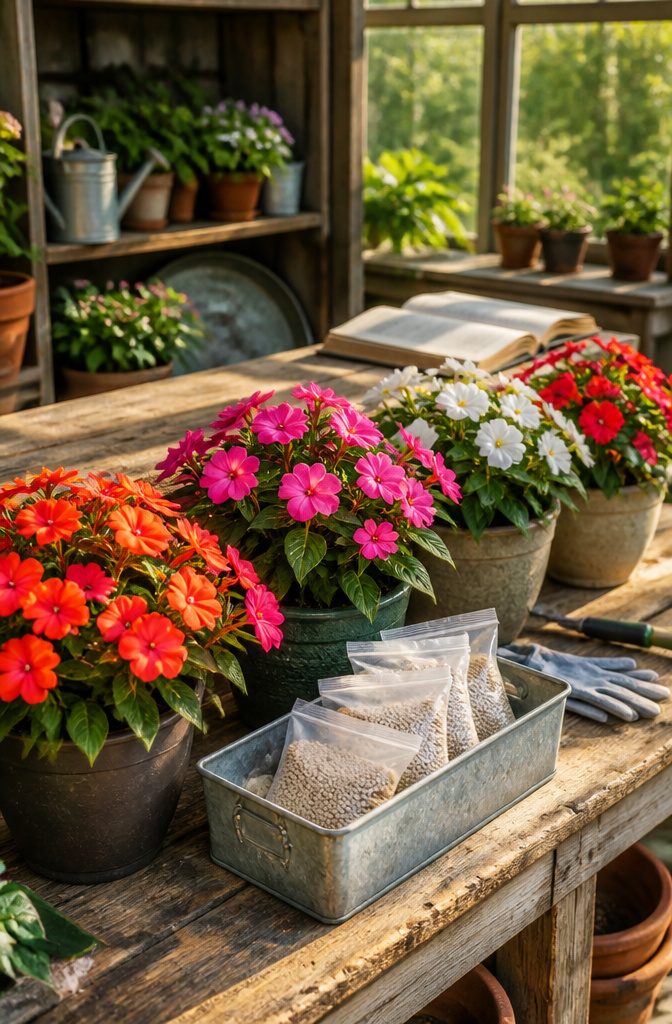
SunPatiens are hungrier than they let on, but the mistake is feeding them like a tomato plant. A complete slow-release formula such as 15-9-12, scratched in at half the labeled strength, carries them about four months without the boom-and-bust cycle that pushes stems long and flowers scarce. The first season I grew them in pots, I used the full rate the bag suggested; by August the plants were all leg and no bloom, and I spent September wondering what went wrong.
Liquid feed works too, though it asks more of your memory. A 12-4-8 or similar water-soluble product, cut to one-third strength and applied every two to three weeks, keeps the color coming without that stretched, tired look. The schedule matters more than the brand. Miss a couple of doses and the plant shrugs; overdo it and the leaf tips brown.
The cutoff is the part easy to forget. Six weeks before your expected first frost, stop feeding entirely. New growth pushed out late stays soft and takes the cold badly, and SunPatiens that should have sailed through a light freeze instead turn to mush at the stems.
What Actually Goes Wrong
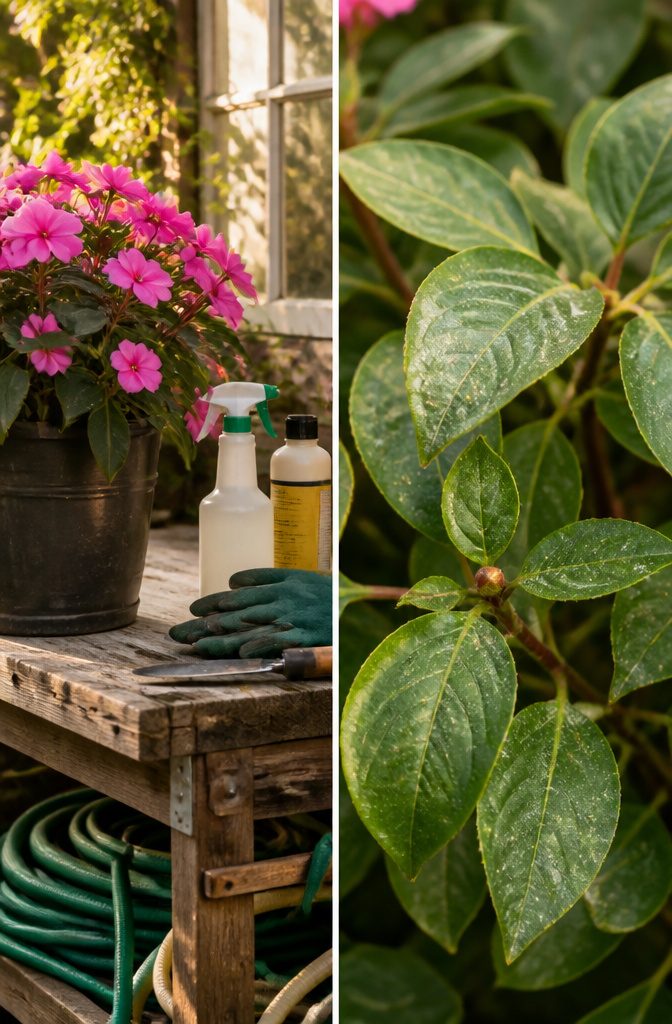
Downy mildew resistance is the reason most of us switched to SunPatiens in the first place, and it holds up. The bigger headaches in my experience are spider mites and thrips. Spider mites show themselves through pale stippling and fine webbing on the leaves before you ever spot the actual bugs. A hard spray of water knocks them back if you stay on it, though I have not found clear guidance on whether horticultural oil or miticide works better here than on standard impatiens. Thrips scar and deform the flowers, and they are harder to miss once the damage starts: long, straw-colored insects, sometimes winged. Keeping weeds down and the lawn cut short helps suppress them, and spinosad or horticultural oil sprayed directly on the insects is the usual response, repeated over a week. Do not spray open flowers, whatever you use; pollinators visit these blooms steadily.
The plants need no deadheading. New flowers layer over the old ones naturally. I do give the Vigorous types a light trim around midsummer if they are crowding their neighbors, but that is shaping, not maintenance.
When Cold Weather Arrives
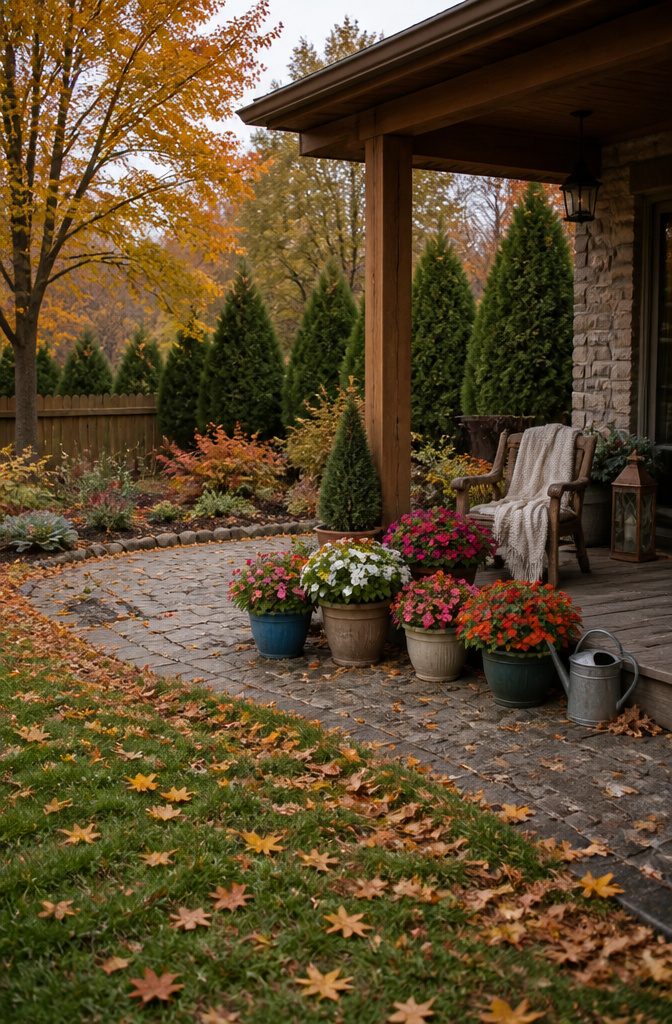
SunPatiens are grown as annuals in most USDA zones, which means the first hard frost ends the season no matter how healthy the plants looked in September. In zones 10–11, they can behave as short-lived perennials, though a single cold snap below about 40°F will damage tissue enough that starting fresh in spring usually gives better results.
Container plantings have the only real flexibility. A pot on casters or a light plastic planter can shift to a garage, covered porch, or any spot that stays above freezing through the worst nights. The soil mass in a container chills faster than ground soil, so even a brief dip to 32°F can kill roots that would have survived in a border. I have wheeled mine under an overhang and lost them anyway during a week of lows in the mid-30s; the shelter helped, but not enough.
In-ground plantings in zones 9 and below are done when frost hits. The breeder bred these for heat and sun tolerance, not for surviving winter dormancy, and no amount of mulch or frost cloth changes that basic limit. Pull the plants, compost the debris if it looks clean, and plan on fresh stock after your last frost date.
Compact, Vigorous, or Spreading
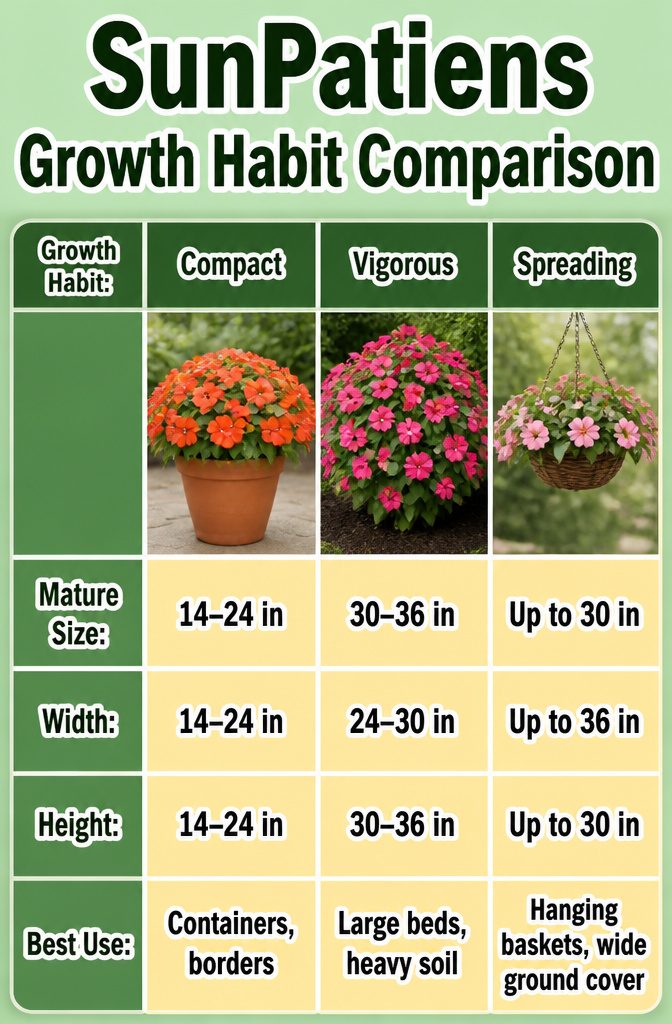
SunPatiens come in three growth habits, and the one you pick changes how much space it fills and where it performs best. Compact types stay 14 to 24 inches tall and wide, making them the natural fit for pots and front-of-border planting where you want controlled color without constant trimming. Vigorous types shoot to 30 to 36 inches tall and 24 to 30 inches wide, growing fast enough to blanket a large bed but demanding room so they do not smother neighbors. Spreading types mound outward to 36 inches wide while staying lower, which is why they drape well from hanging baskets and need wider spacing in the ground.
| Growth Habit | Mature Size | Best Use |
|---|---|---|
| Compact | 14–24 in tall, 14–24 in wide | Containers, borders |
| Vigorous | 30–36 in tall, 24–30 in wide | Large beds, heavy soil |
| Spreading | Up to 30 in tall, up to 36 in wide | Hanging baskets, wide ground cover |
I start with Compact for my patio pots because the size stays predictable, but I switch to Vigorous when I need to fill a bare corner fast. Spreading wins in hanging baskets where the width becomes the whole point.
Colors That Last the Season
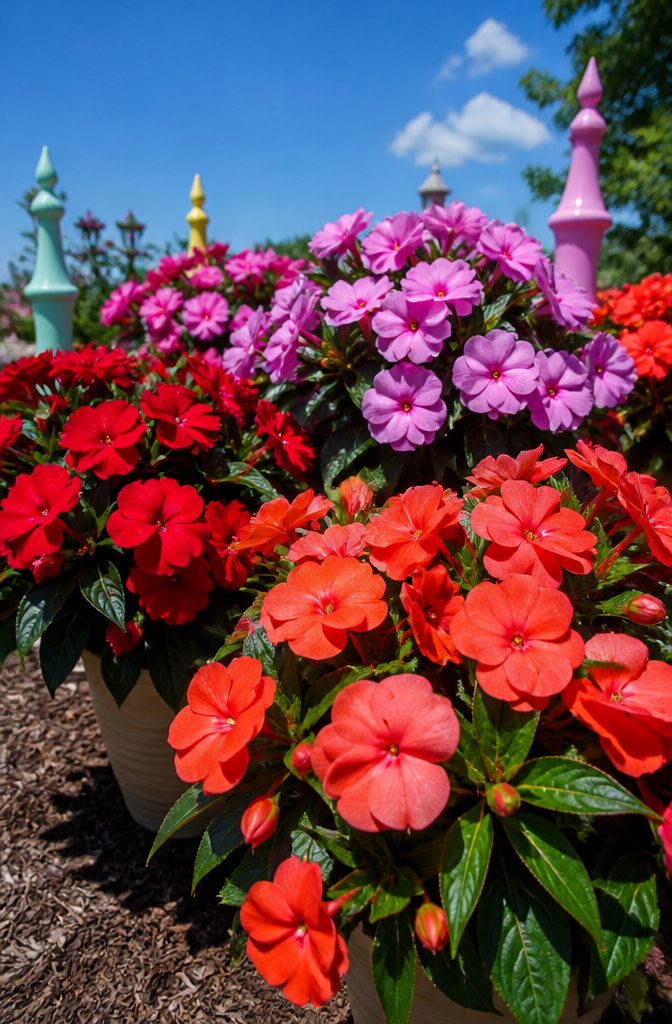
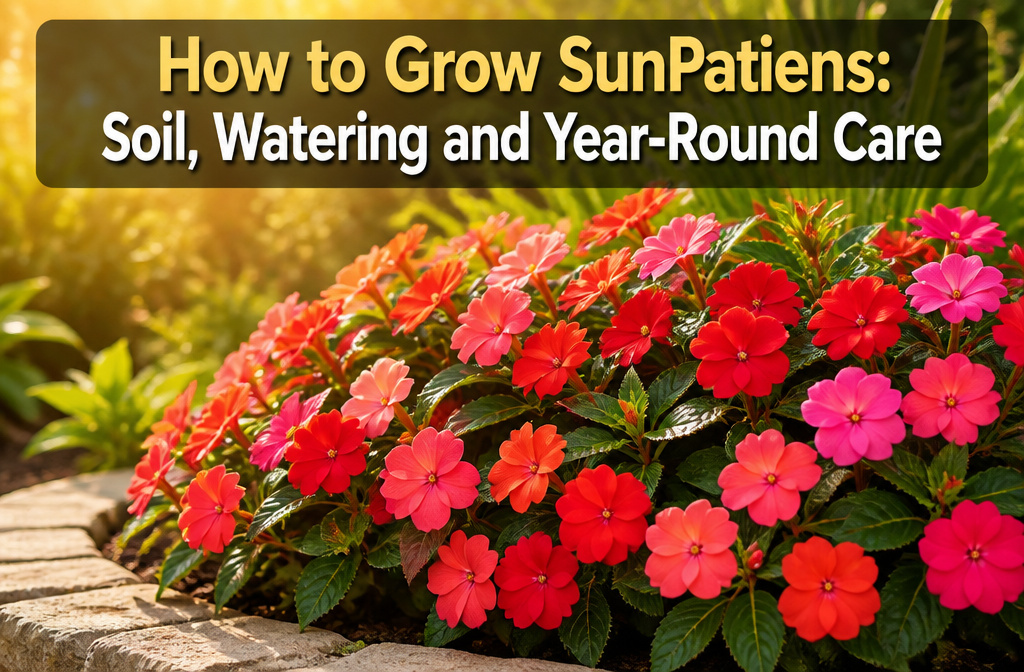
SunPatiens color range is wide enough that I rarely feel limited at the nursery. The compact varieties alone run from blush pink and coral through electric orange, hot coral, and deep red, with purple, lavender, lilac, and clean white rounding out the cooler side. A few carry variegated foliage, which I have learned to treat as a secondary feature; the leaves are nice, but the flowers are why I plant them.
What matters more than hue is timing. Planted after the last spring frost, these bloom straight through to the first hard freeze. No deadheading required, no midseason lull where the bed goes quiet for weeks. That continuity matters more to me than chasing the longest-lasting single variety, because in my experience no color outlasts another. The coral does not outlast the white; the deep red does not fade faster than the lavender splash. They all hold until cold shuts them down.
If I am deciding between two flats, I pick by what the rest of my containers need rather than by which label promises endurance. The promise is the same across the board.
Why SunPatiens Exist at All
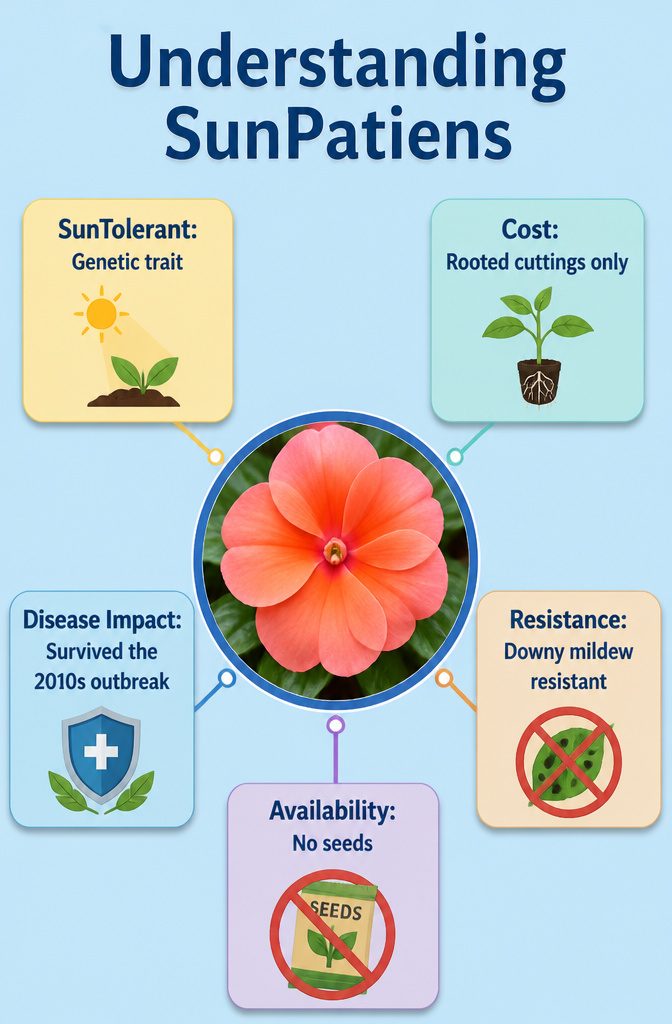
Traditional impatiens collapse in full sun, which is exactly where I kept trying to plant them. The hybrid SunPatiens line was bred by Sakata Ornamentals to solve that failure: sun tolerance built into the genetics, not just a variety that tolerates a little more light than the rest.
The timing mattered. In the 2010s, downy mildew wiped out garden impatiens across much of the country, and the familiar shade-bed staple became a gamble. Sakata’s breeding work produced plants that carry resistance to that disease, which is why they survived the season when my neighbor’s standard impatiens turned to blackened stems by July.
Because SunPatiens is trademarked and patented, you will not find seeds. The only way to grow them is from rooted cuttings sold through licensed growers, which keeps the genetics consistent and the disease resistance reliable.
Starting From Cuttings
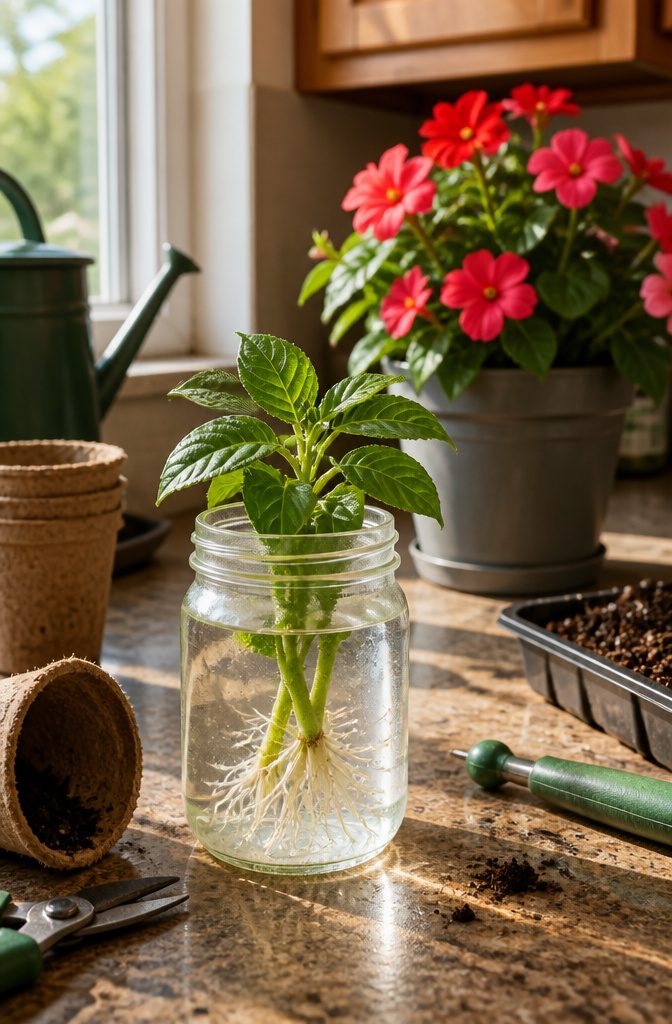
SunPatiens are trademarked, so you won’t find seeds for sale. The only legal way to start your own is from a cutting, and only for personal use.
Last spring I noticed one of my vigorous white SunPatiens had snapped at a fork in the stem. Instead of tossing it, I took a 6-inch tip cutting, stripped the lower leaves, and stuck it in a jar of water on the kitchen counter. Roots appeared in about two weeks; by three it was ready for soil. A moist seed-starting mix works just as well if you prefer not to transplant from water.
Commercial propagation is off limits. Sakata Seed Corporation holds the rights, and only their authorized growers can produce cuttings for sale. What you root at home stays at home. That cutting I rooted replaced the plant that broke, which kept me inside the lines. If you want more SunPatiens than you can propagate yourself, buying new plants is the only path.
What I Do When Blooms Slow Down
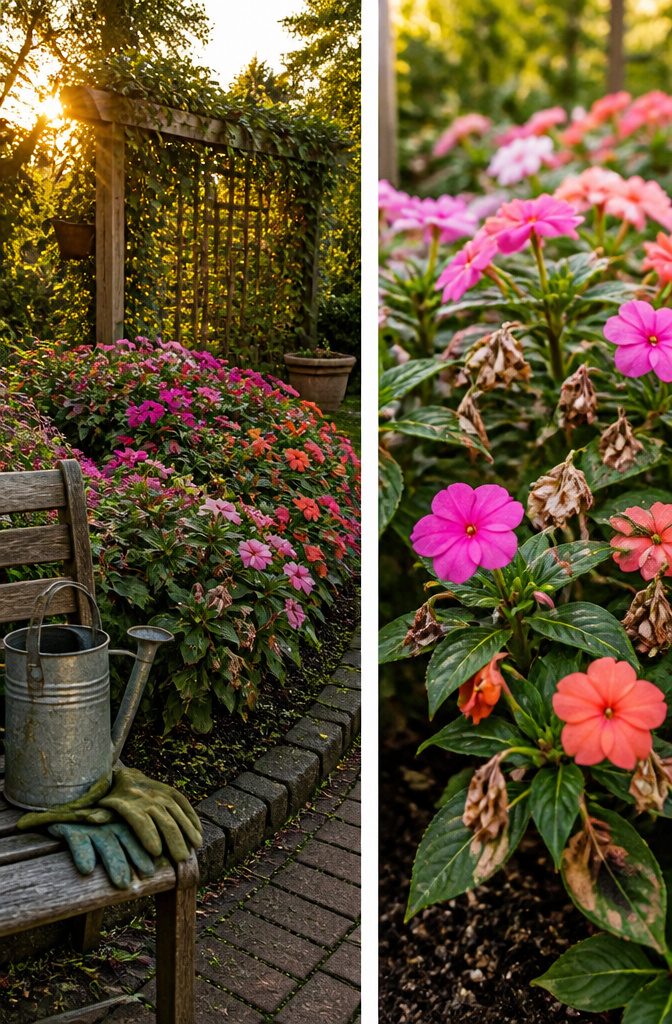
When my SunPatiens slow down in July, I check sun hours first. Four to six hours of direct light is the minimum for steady flowering, and a tree that leafed out in June can steal that without you noticing. Heat stress or sustained humidity will stall buds too; the plant looks healthy but stops setting new ones.
Watering is the next place I look. These plants want consistency, not a flood after a drought. Letting the root ball dry to the point of wilting, then soaking it, confuses the plant and costs blooms.
A light feed restart sometimes pulls mine out of a midseason slump. I look for a formula with higher middle and last numbers than the first; too much nitrogen pushes leaves at the expense of flowers. I water the day before, feed early morning, then water again to wash it to the roots.
If nights stay above 70°F, some varieties simply pause. Nothing is wrong; the plant is waiting for cooler evenings to set buds again.
Frequently Asked Questions
Are SunPatiens perennials and will they grow in the shade?
SunPatiens are treated as annuals in most USDA zones, though they can behave as short-lived perennials in zones 10 to 11. They need at least four hours of direct sun daily; anything less and blooming drops off fast. Deep shade leaves you with leggy stems and few flowers, though variegated varieties still add foliage interest in partial shade.
How can I keep SunPatiens blooming?
Give them full sun or a minimum of four hours of direct light daily, and let the top two to three inches of soil dry between waterings. A light feed with a formula higher in phosphorus and potassium than nitrogen, applied every two to three weeks at reduced strength, keeps flowers coming without pushing leggy growth. Nights above 70°F can pause some varieties temporarily; the plant will resume when evenings cool.
Why won’t my SunPatiens bloom?
Heat stress, sustained humidity, or insufficient light are the usual culprits. A tree that leafed out in June can steal hours of sun without you noticing. Inconsistent watering also stalls buds; roots that cycle between dry and soggy get confused and stop setting flowers. Check your actual sun hours first, then even out your watering before reaching for fertilizer.