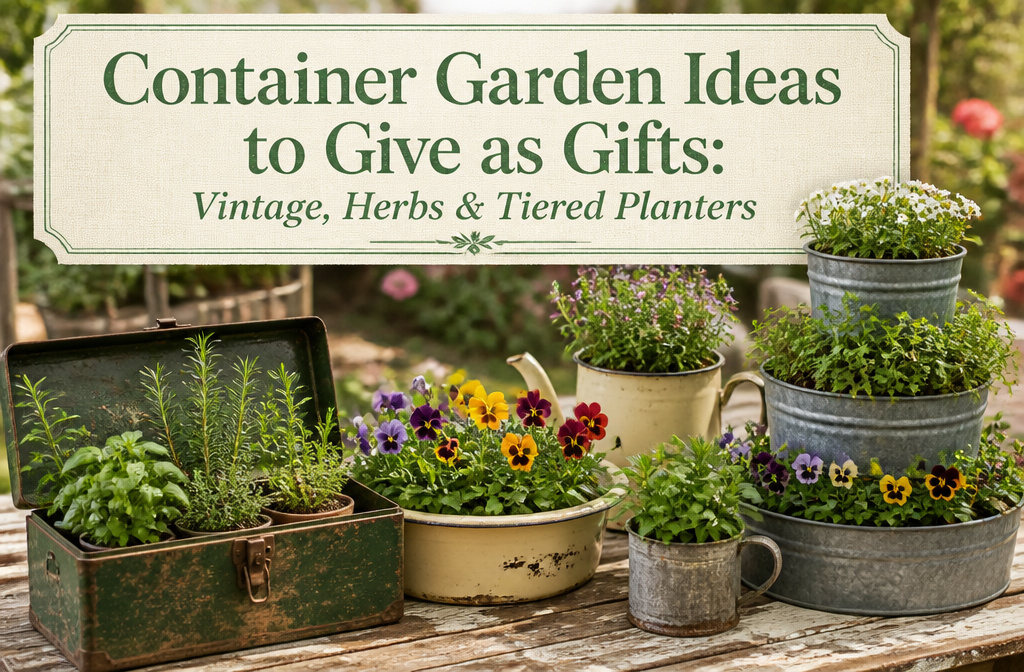
A vintage toolbox, a chipped enamel basin, or a stack of galvanized buckets can each become a living gift, but the dividing line between charming and deadly is drainage. Most vintage pieces arrive without a single hole, and soil straight in means roots sitting in water. I have cracked teapots rushing the masonry bit, and I have learned to drill slow or line with punched plastic instead.
1. Vintage Containers With Built-In Drainage
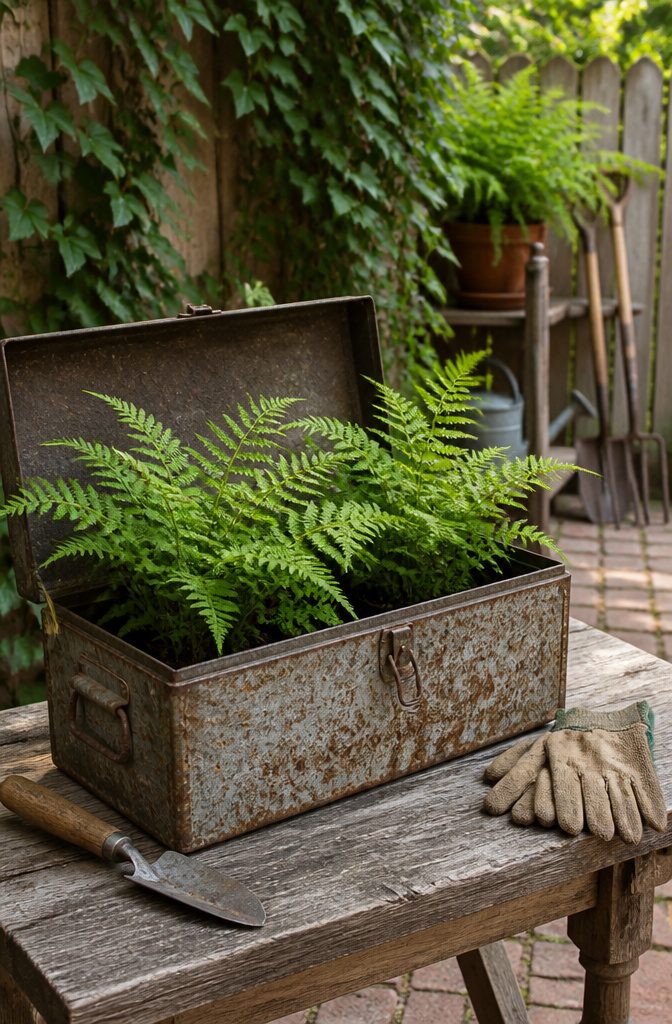
A rusty galvanized toolbox with its handle still intact makes a planter that feels found rather than bought. I like the weathered metal against soft foliage, the same contrast that draws me to old colanders with their pattern of holes already punched through. The catch is drainage, or the lack of it. Most vintage pieces come without any holes at all, and soil straight in means roots sitting in water.
For metal toolboxes, a drill with a bit meant for the material opens the bottom without much trouble. Wood is easier still. Clay or glazed ceramics need a masonry bit and a slow hand; I’ve cracked more than one teapot rushing that step. When drilling seems too risky, a liner pot slipped inside the vintage shell works fine, though the fit matters: about two inches of clearance around the root ball gives the plant room without crowding the container walls.
The thrifty appeal is real until you realize the modification needed. That rusty toolbox I spotted at a flea market last spring sat in my cart while I worked out whether I could drill the base, and whether the rust had eaten too thin. Lining with landscape fabric or black plastic punched with holes, the same approach used for wine crate gardens, saves pieces too fragile to bore through. Disinfecting first with a three-parts-water to one-part-vinegar rinse keeps old residues from lingering in the soil.
Move the empty container to its final spot before you add dirt. A loaded metal toolbox is heavier than it looks, and the handle only helps so much.
2. Herb Gardens in Repurposed Kitchenware
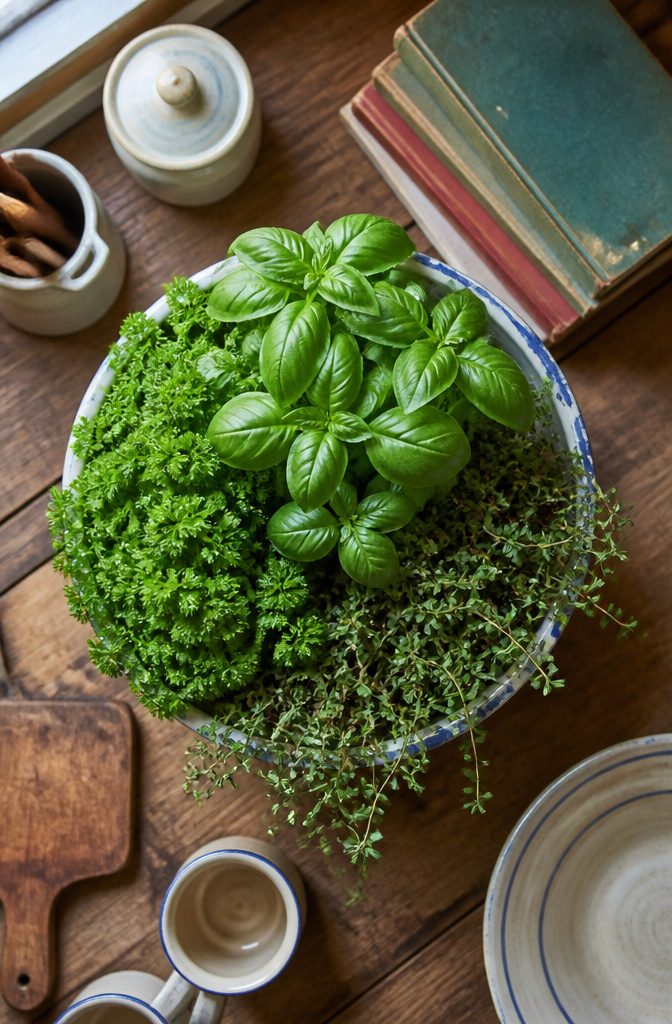
A chipped enamel basin from a garage sale last spring became the starting point for my favorite herb gift. The thrill-fill-spill rule works just as well with kitchen herbs as it does with flowers: a tall Genovese basil as the thriller, a bushy Italian parsley filling the middle, and creeping thyme spilling over the rim. Old crocks and cracked teapots suit this same layout, and the mismatch of patina against fresh green growth is what makes the gift feel considered rather than bought.
The catch is water. Small kitchen containers hold little soil, and in summer heat they can dry to dust by afternoon. Sources note that porous terracotta may need daily watering, while glazed or enamel surfaces hold moisture longer, letting you stretch to every two or three days. A standard potting mix with a slow-release fertilizer at planting gets you through the first months; after that, a water-soluble feed every two weeks keeps the leaves full enough to cut from.
What I like about giving herbs this way is that the container already has a story, and the recipient gets to keep telling it every time they snip parsley for soup.
3. Tiered Bucket Planters for Small Spaces
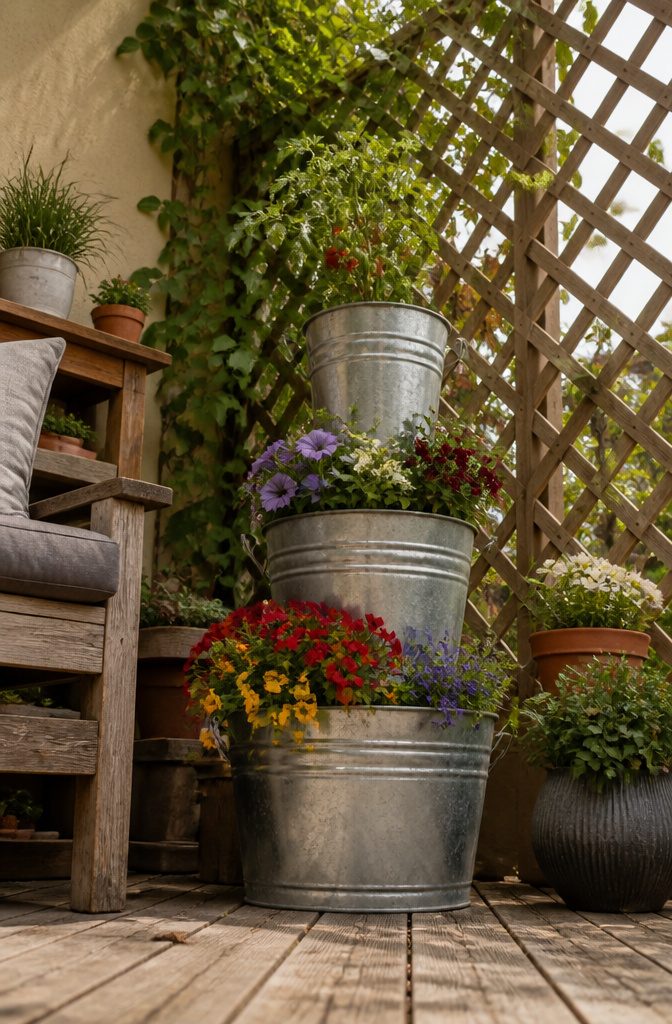
Stacked galvanized steel buckets give a corner of a patio or deck real presence without eating square footage. The look borrows from stock-tank raised beds but shrinks it to balcony scale. What convinced me, reading through a dozen builder accounts, is that the smallest bucket sits on top, so soil volume shrinks fast as you climb. A cherry tomato in that top tier looks cute for three weeks, then topples the whole stack once the fruit sets and the soil dries. I made that mistake with a patio arrangement two summers ago, or rather, I would have if I had not read the warning first.
Weight is the other sleeper problem. Wet potting mix in three nested buckets runs heavier than it looks, and the bottom vessel carries all of it. Place the tower before you fill, because shifting it afterward is a two-person job. For planting, pair annuals with edibles at one tier, like a Garden BFF combo, and keep the thirstiest plants in the largest, lowest bucket where roots have room and the water weight stabilizes rather than threatens.
What Makes a Container Gift-Ready
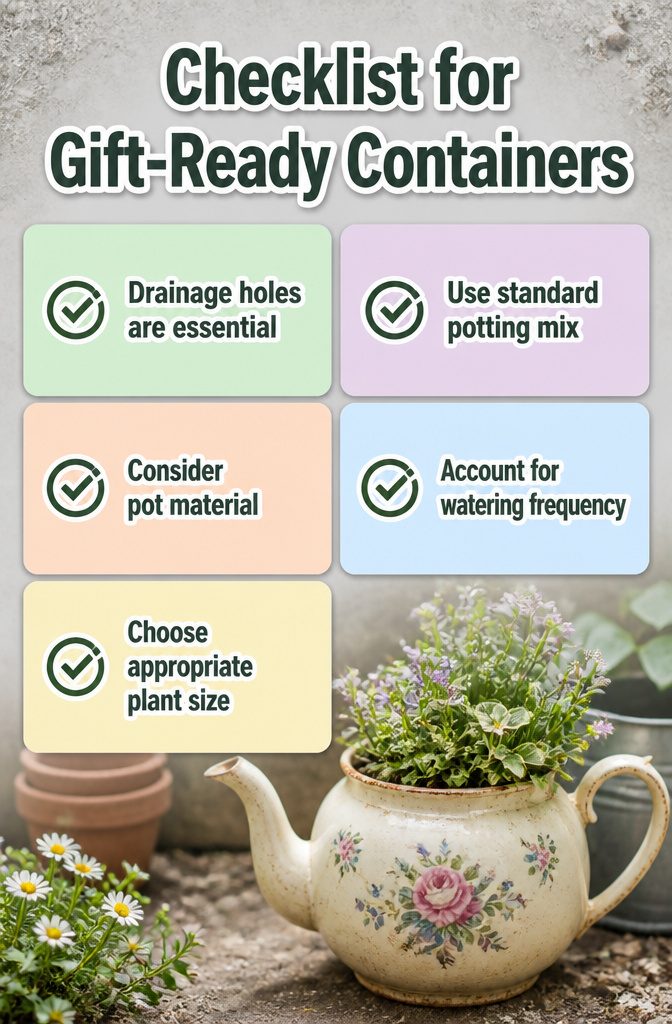
A container that looks charming on the shelf can become a death trap once it leaves with your friend. Drainage holes are non-negotiable. If the vintage teapot or galvanized bucket you have in mind lacks them, drill them yourself or nest a liner pot with proper drainage inside the decorative shell. Waterlogged roots will rot before the recipient has a chance to enjoy the gift.
Garden soil belongs in the ground, not in a container. It compacts, chokes roots, and blocks the very drainage you just worked to create. A standard potting mix, the kind sold in bags for container use, costs more but keeps the plant alive.
The watering reality shifts dramatically with pot material and summer heat. Unglazed terracotta dries out fast enough to need daily attention in July. Glazed ceramic holds moisture two to three days. Plastic sits somewhere between, retaining water longer than either. Small pots dry faster than large ones because they hold less soil volume. Whoever receives your gift needs to know which schedule theirs demands, or the thoughtfulness of the gesture wilts along with the leaves.
Frequently Asked Questions
What are the best plants for container gardening?
Choose plants that match your lighting conditions and stay small enough for their pot. For gift-ready herb containers, pair a tall basil as the thriller, bushy parsley as the fill, and creeping thyme to spill over the rim. In tiered bucket planters, keep thirsty plants in the largest bottom bucket and avoid top-heavy fruiting plants like tomatoes in the smallest upper tier.
How often should I water container plants?
Water daily in summer heat, especially for small and unglazed terracotta pots. Glazed ceramic or enamel containers hold moisture longer, stretching to every two or three days. Tiny kitchen containers with herbs can dry to dust by afternoon in July, so match your schedule to the pot material and size.
Do containers need drainage holes?
Yes, drainage holes are non-negotiable to prevent waterlogged roots from rotting. Drill holes in metal, wood, or masonry with the right bit, or nest a liner pot with proper drainage inside a decorative vintage shell if drilling risks cracking the piece.
Can I use garden soil in containers?
No, garden soil compacts and chokes roots in containers. Use a standard bagged potting mix designed for container use instead, and add slow-release fertilizer at planting followed by water-soluble feed every two weeks to replace nutrients the plant cannot draw from the ground.