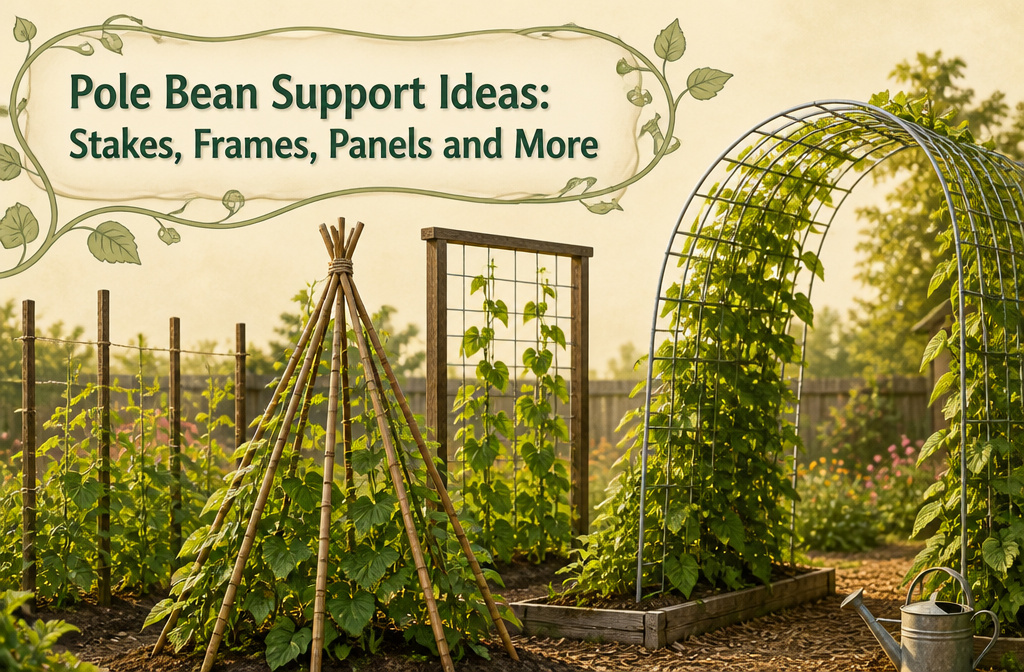
Pole bean support ideas range from a few lashed bamboo poles to a cattle panel arch that survives six seasons of wet winters. The right choice depends on how much wind your garden sees, whether you need to move the harvest under cover, and how much you mind replacing rotted stakes each spring. I build my teepees with five poles, seven feet tall, because that is the size one autumn storm taught me I could still carry whole into the shed.
Teepee Support
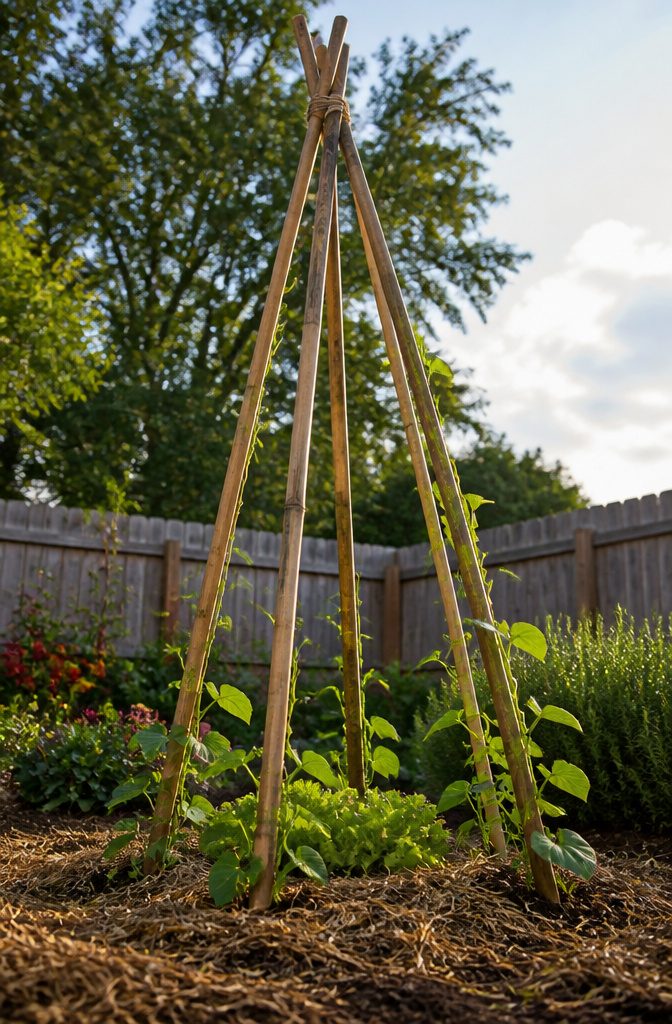
A teepee of three to seven bamboo or wooden poles, each six to eight feet tall, is the simplest support most gardeners will ever build. Push the poles into the ground in a rough circle so they stand two to three feet apart at the base, lean them inward until the tops meet, and lash them with string, baling twine, or garden wire. The cone shape gives pole beans vertical rungs on every side while leaving the center open enough for a quick crop of lettuce or radish if the structure is large.
What sold me on this method was watching a neighbor move her entire bean harvest under cover one autumn. She cut the vines at soil level, carried the whole teepee, poles and all, into her shed to finish drying. That portability matters when an early storm threatens, because a fully loaded teepee is not the strongest structure in high wind. More poles mean a wider base and more planting spots, but also more soil tied up in the center and a heavier sail for the wind to catch.
I build mine with five poles, seven feet tall, and tie the crossing point about ten inches down from the top to keep the peak from spreading. Wire holds longer than twine in my experience, though twine is easier to cut when the season ends.
A-Frame Trellis
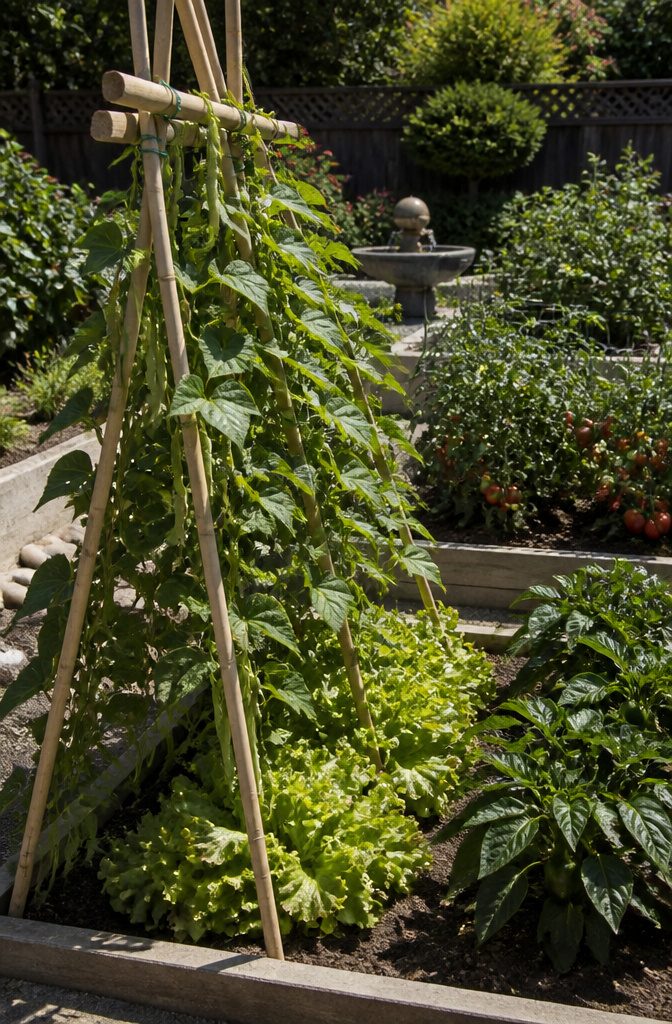
An A-frame trellis gives pole beans a triangular structure they can climb on both sides, which is the main reason I keep coming back to it. The shape turns a single row into two vertical growing surfaces, and the beans hang down through the open sides where you can actually reach them.
I build mine with bamboo canes spaced 15–20 cm apart, roughly 6–8 inches, each pair crossed near the ground in an X and tied to a horizontal cane at the top. That horizontal bar is what holds the whole thing together; without it, the canes splay outward under the weight of full-grown vines. The angle matters more than I expected at first. Too narrow and the center becomes a dark tunnel where pods hide and mildew sets in. Too wide and the canes lose rigidity, especially after a heavy rain when the leaves are wet. I aim for something you can straddle comfortably, about hip-width at the base, which leaves enough room to duck underneath and pick from the inside.
Wood or metal framing works if you want something permanent, though I have seen gardeners stretch boxwire or netting across an A-frame and skip the individual canes entirely. That version shades the ground beneath it, which is a useful side effect I had not planned for: lettuce underneath survives July heat that would otherwise turn it bitter.
Cattle Panel Trellis
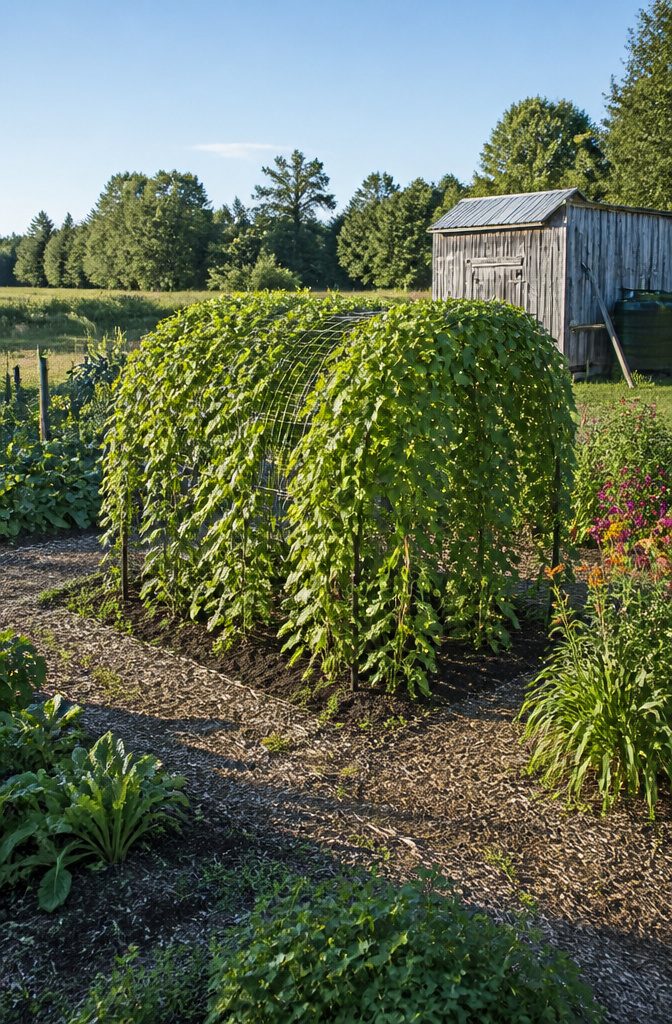
A cattle panel arch is the heaviest-duty support I have seen for pole beans, and the one I am most likely to build next season after watching two neighbors work theirs for five years running. Two T-posts or fencing posts set 6 feet apart anchor each end, with a 16-foot cattle panel bent between them into a tunnel roughly 7 feet tall at the crown. A timber header across the top keeps the panel from spreading.
Farm-supply stores and rural co-ops stock the panels, usually in the fencing aisle; call ahead, because urban locations often do not carry them. You plant a double row on each side, four lines of beans total, and by August the whole structure disappears under leaves. The galvanized wire rusts slowly but holds its shape for years, even through wet winters. My neighbor’s arch is entering its sixth season with no sagging, though she did re-tighten the zip ties after year three.
String Trellis
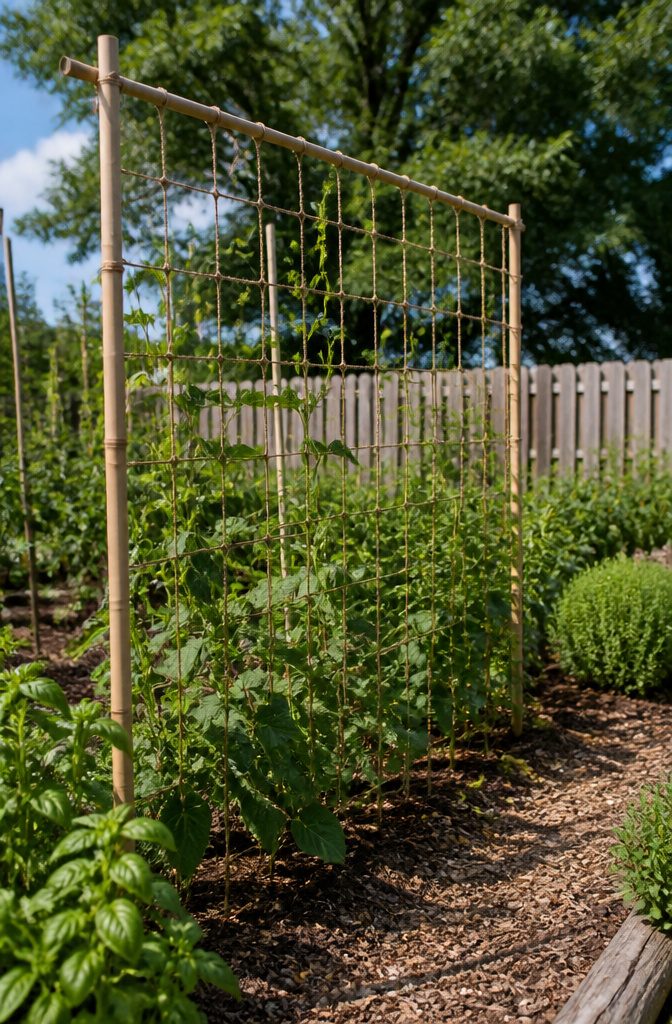
Twine or baling twine stretched between two rows of poles makes a string trellis that costs almost nothing and pulls up clean at season’s end. I space my poles about 9 inches apart in the row, with roughly 18 inches between the two rows, though 2 feet or a touch more buys you better stability on gusty afternoons. An extra pole lashed across the top keeps the frame from racking, and guy lines at each end, like tent ropes, stop the whole thing from sagging once the vines load up.
The real choice is biodegradable twine versus synthetic. Jute or hemp twine rots right along with the bean stalks come fall; you cut everything down and toss the whole bundle into the compost. One season is all you get, though, before the fibers weaken enough to let the vines drop. Nylon or other synthetic twine lasts several years but ends up in the landfill eventually, and beans sometimes want a little encouragement to grip the slicker surface. String tension matters more than I’d expected: too slack and the vines slide sideways in a storm, too tight and the twine cuts into soft bark or snaps the top rail. I pull it firm enough to twang when plucked, no tighter.
Living Trellis
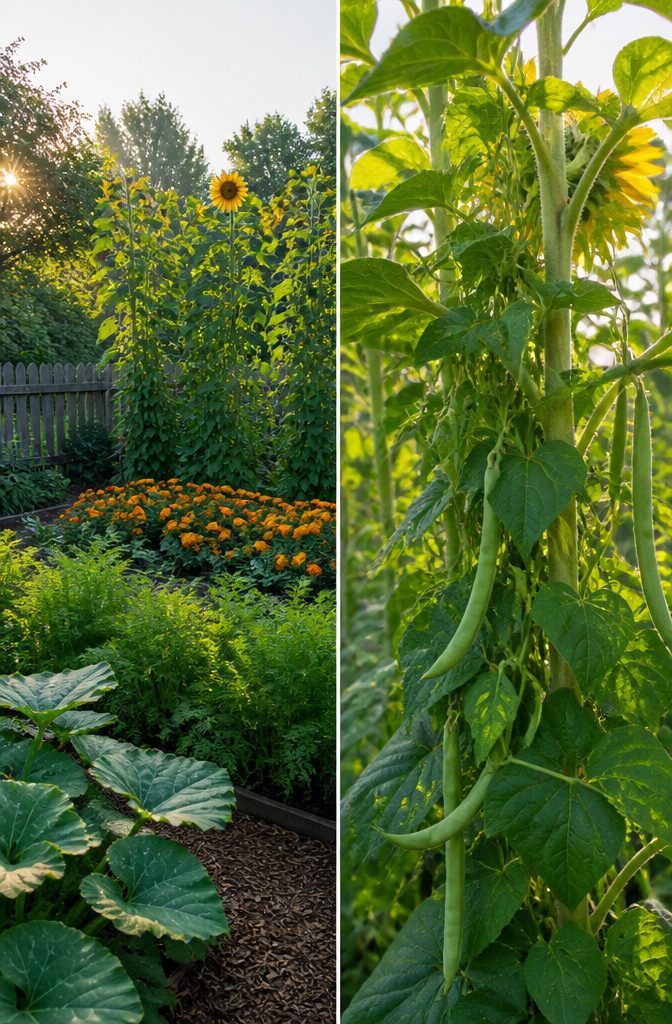
A living trellis lets another plant do the structural work. Corn is the classic partner from the Three Sisters method, with beans winding their stems around the main stalk while their roots fix nitrogen the corn can use. Sunflowers and amaranth work too, and they draw pollinators while they stand.
The support crop needs a head start. Sunflowers and amaranth are more cold-hardy than beans, so they can go in a few weeks earlier. If they are not established before the bean starts climbing, the vine has nothing to grip. I have seen gardeners start both in cell-trays in early May to avoid bird loss and weeding confusion, then transplant once the soil warms.
The catch comes at harvest. Dry beans pair better with this system than fresh snap beans. Snap beans need picking every few days, and by midseason the sunflower or amaranth thicket is too dense to navigate without snapping stems. Dry beans, harvested once when everything has matured and died back, tolerate the rougher passage. If the sunflower heads are ready before the pods, the stalks stay standing long enough to finish the job; the bean vines even bind neighboring stalks together and reduce lodging as the heads get heavy.
Recycled Materials
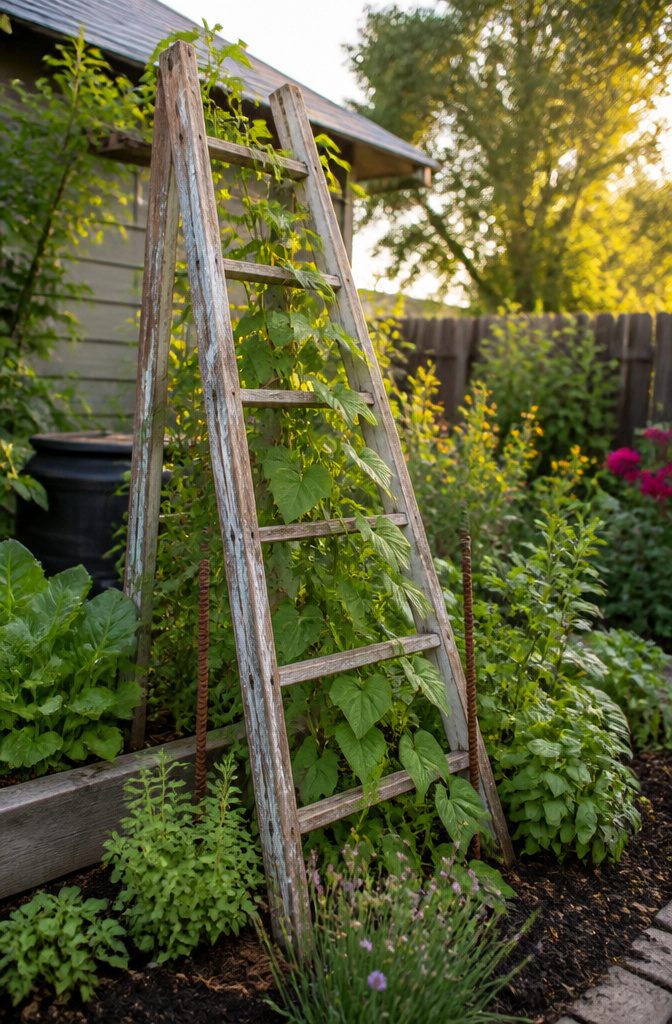
Old metal bed frames and wooden ladders make solid pole bean supports if you check a few things first. The frame my neighbor set up last year looked promising until a July storm folded it onto her tomatoes; the legs were too narrow and she had not driven any stakes beside them. Anchor any freestanding piece with rebar or T-posts at the legs, and test for wobble before the vines climb. Galvanized metal holds up longer than painted steel, which rusts fast where the coating scratches. Old closet organizers work the same way; someone I read about runs string from top to bottom along all four sides so the vines have something to twine. Skip anything with flaking paint you cannot identify; lead paint on old ladders is a real risk, and disturbed chips end up in your soil. Bare mattress springs propped on end will support beans, though the coils are awkward to tie to. Bamboo garden stakes lashed in an X or teepee shape cost little and stay upright if you bury the crossed ends a foot down, but they rot in a season or two and need replacing. Wire fan trellises flipped upside down and tied at the top make a triangle that beans seem to like; the same structure failed for squash in one garden I read about, but the beans grew fine.
Vertical Netting
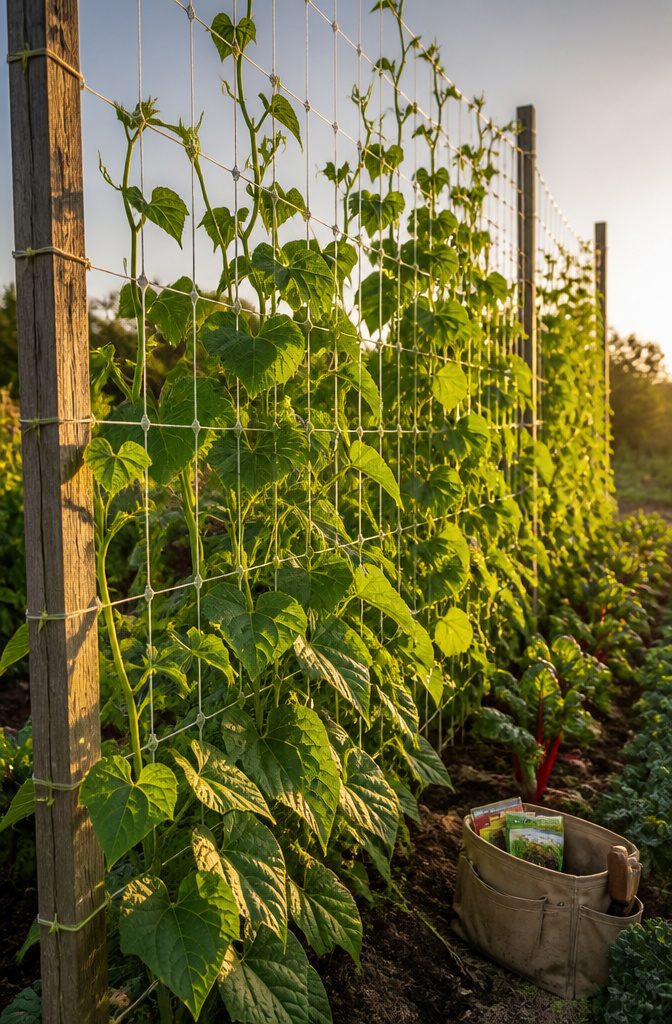
Nylon or monofilament netting hung between poles is the lightest support I have set up for pole beans, and the one most likely to sag by August if I get the tension wrong. A mesh of about six inches square lets bean tendrils catch and climb without slipping through, and the openings are wide enough to reach through for picking from either side.
Posts need to go in at five-foot intervals, with the netting secured to each post in at least four spots. I have seen gardeners use strips of old cloth for this; twine works too. The real strain comes later, once the vines load up. A wooden crosspiece, 2" x 2" or 1" x 2" and about six feet long, tied across the top of the posts and hitched to the netting at intervals, keeps the whole thing from bowing inward.
Most netting I have read about lasts many seasons unless I cut it with clippers during cleanup. It stuffs into a small bag for winter storage, which matters when shed space is tight. Plastic crop netting is common, though some gardeners prefer jute twine netting to reduce plastic use. Either way, the same rule applies: anchor it well, or a heavy curtain of vines will pull it down by Labor Day.
Why Pole Beans Need Support
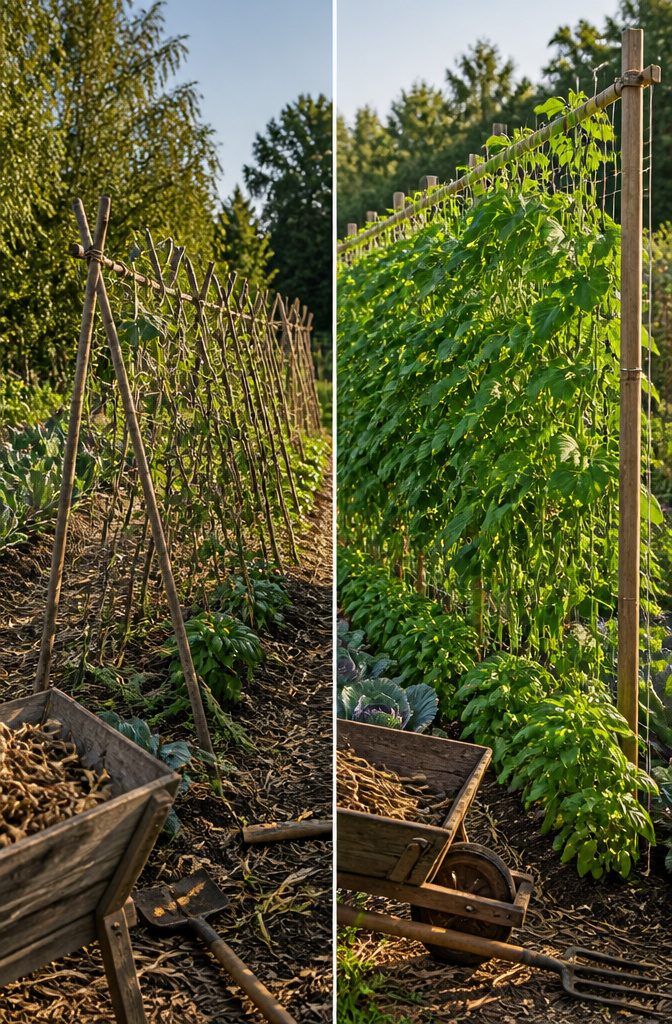
My first year with pole beans, I skipped the support and let them sprawl. The vines tangled into a mat, the lower leaves yellowed with something fungal, and picking meant crouching through damp foliage while slugs worked the pods I missed. Vertical growing fixes all of this: the stems climb to 10 feet when given a stake or frame, and that height buys you air circulation that keeps powdery mildew and bean rust off the leaves. Pests stay easier to spot at eye level, and harvests come standing up.
That vertical habit also opens the ground underneath. I’ve since tucked basil and cabbage around the bases, letting the vines shade the soil and keep weeds down while the roots of both crops stay untangled.
The trade is labor, not just the building but the taking down. Will Bonsall, writing for MOFGA, grows on enough land to harvest his own fir poles and still counts the effort:
A major reason for preferring pole beans over bush types is to save space. By exploiting your garden’s third dimension, you can harvest much more food from a smaller footprint. Of course, all good things come with a price and in this case it is the extra labor.
For a patio gardener, the math still works. A 4-by-2 footprint of soil, run upward, outproduces the same area of bush beans without demanding more ground. The poles store flat in a shed corner once the season ends.
Materials Compared
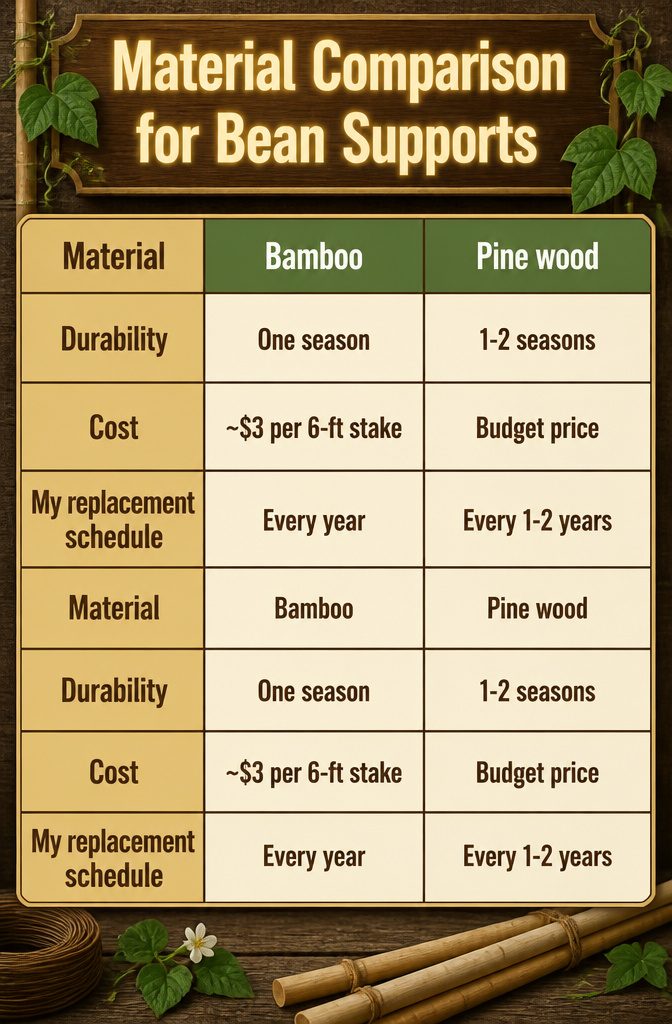
Bamboo is the cheapest way to start, but the 6-foot stakes I bought for $3 apiece at my local hardware store are usually split and gray by October. I replace them every season. Wood lasts longer only if you spend more up front; the cedar poles I splurged on three years ago are still solid, while the pine ones from the same year rotted at the soil line. Metal is where the math shifts. Compact circular metal supports, the tall kind you can move around, cost more initially but they stay upright and they look tidy enough to sit at the back of a flower border. The reinforcing mesh used in building work rusts to a warm color and makes a rigid panel, and I have seen old galvanised sheep panels propped lengthways into a very good frame. Recycled items are free if you have the eye. Two old metal closet organizers, spray-painted every few years with strings run top to bottom, have cycled through snap peas and then pole beans in my garden. Old bicycle tire rims fastened to conduit with strings to the ground work too, though I would skip anything with old lead paint.
| Material | Durability | Cost | My replacement schedule |
|---|---|---|---|
| Bamboo | One season | ~$3 per 6-ft stake | Every year |
| Pine wood | 1–2 seasons | Budget price | Every 1–2 years |
| Cedar wood | 3+ seasons | Higher upfront | Every 3+ years |
| Metal (circular supports, mesh, panels) | Multi-year | $50–$150 range | Rarely |
| Recycled metal (closet organizers, rims, bed frames) | Varies with rust | Free | When rust wins |
Spacing and Planting
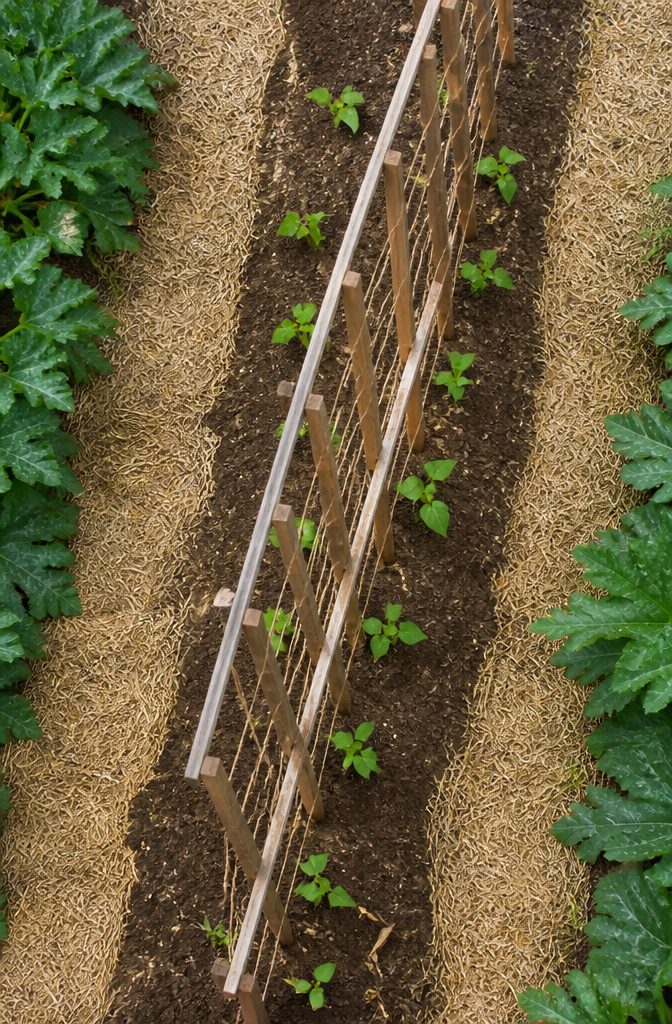
Pole beans look harmless at planting, which is how I ended up with a wall of leaves and about half the beans I should have had. Four seeds per pole, spaced 18 inches apart, is the setup that actually produces. Crowding six or eight around each stake seems generous; the seedlings come up fine, then spend the summer shading and strangling each other instead of fruiting.
Go an inch deep with the seed, and wait until the soil hits 60°F. They will germinate in cool dirt, but they sulk there. Row spacing matters more than the seed packet suggests. Three to four feet between rows leaves room to move once the vines hit six feet and keep climbing. I plant a double row, one on each side of the trellis, which fills the structure without creating the thicket I got that first year.
For poles set 24 inches apart, four to six seeds each is the range. The lower end wins if you want to pick without a machete. Thin to the strongest four once they are up, or don’t and watch the weaker plants die off on their own, slowly, stealing light the whole time.
Companion Planting
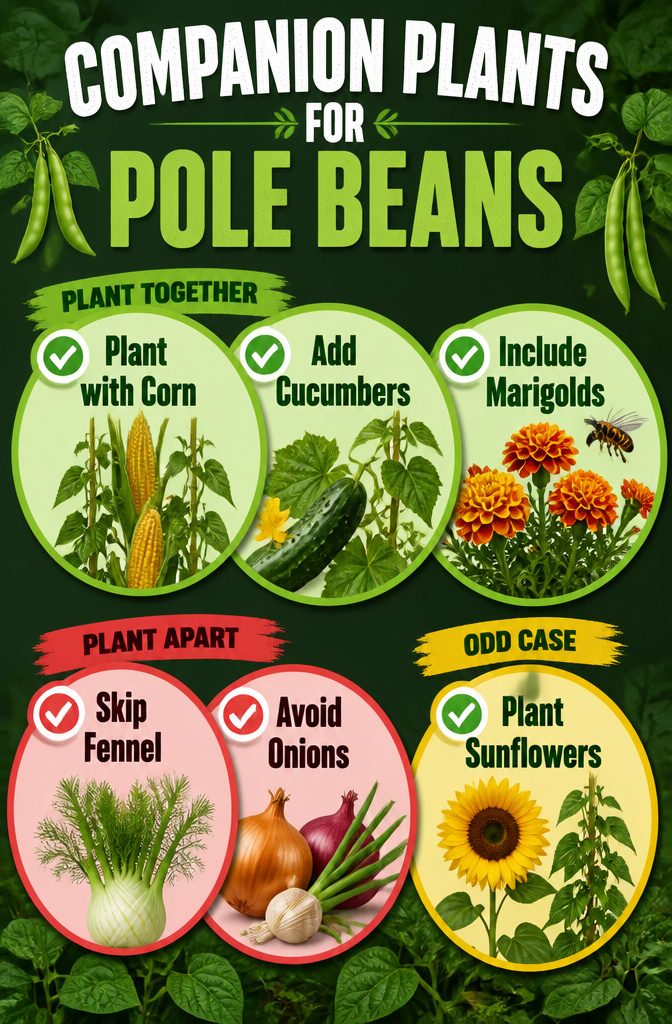
Pole beans play well with some neighbors and badly with others. My experience lines up with the usual lists, with one exception I still test every year.
- Corn feeds the beans while the beans feed the corn. The stalks carry the vines without any stakes to pound, and the beans’ nitrogen-fixing nodules cut the fertilizer bill for both crops. Kentucky Wonder is the variety most often mentioned for this, though I’ve had Rattlesnake climb just as eagerly.
- Cucumbers share the same trellis space without much fuss. They fruit lower while the beans take the top, so harvesting stays simple.
- Marigolds planted at the base draw pollinators and, in my yard at least, seem to keep some of the beetle pressure off the leaves.
What to skip:
- Fennel releases compounds that stunt bean growth. I learned this the hard way with a single row three seasons back; the plants nearest the fennel stayed half the height of the rest.
- Onions and their relatives occupy the same root zone and compete for nutrients the beans need early. The lists flag this, and I keep them a bed apart now.
Sunflowers are the odd case. Most guides list them as poor companions, but the beans in my plot climb them without issue and the pollinator traffic is hard to argue with. I plant them at the north end so shade doesn’t smother the beans, and that compromise has worked two years running.
Frequently Asked Questions
What is the best support for pole beans?
Pole beans grow well on several structures, but the best choice depends on your space and budget. A teepee of bamboo or wooden poles is the simplest and cheapest to start with. Cattle panel arches last for years and handle heavy vines, while nylon netting stores flat and takes up little shed space. The key is securing whatever you choose so it does not tip in wind.
How tall should a trellis be for pole beans?
A pole bean trellis should be at least 6 feet tall, and 7 to 8 feet is better. The vines will climb to 10 feet when given the height, and that extra vertical space buys you air circulation that keeps disease off the leaves. Anything shorter and you will be crouching through a mat of foliage come August.
Can I use recycled materials for bean supports?
Yes, old metal bed frames, wooden ladders, closet organizers, and even bicycle tire rims can all support pole beans. Anchor anything freestanding with rebar or T-posts at the legs, and check for wobble before the vines climb. Skip items with flaking paint you cannot identify, since lead paint on old ladders is a real risk that ends up in your soil.